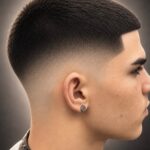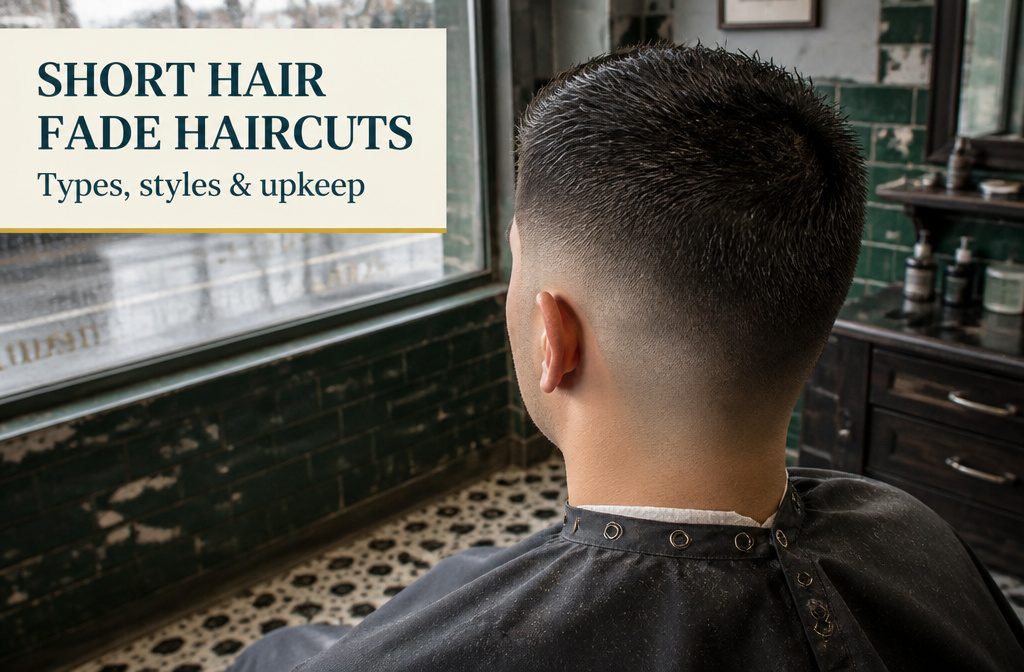
A fade clips the sides and back down gradually, from very short hair to bare skin near the ears and neckline, under a top of 1 inch or less.
Height sets the upkeep: a skin fade looks stale after 10–14 days, while a low taper can go 3 to 4 weeks between visits.
What a Short Hair Fade Is and How It Differs From a Taper
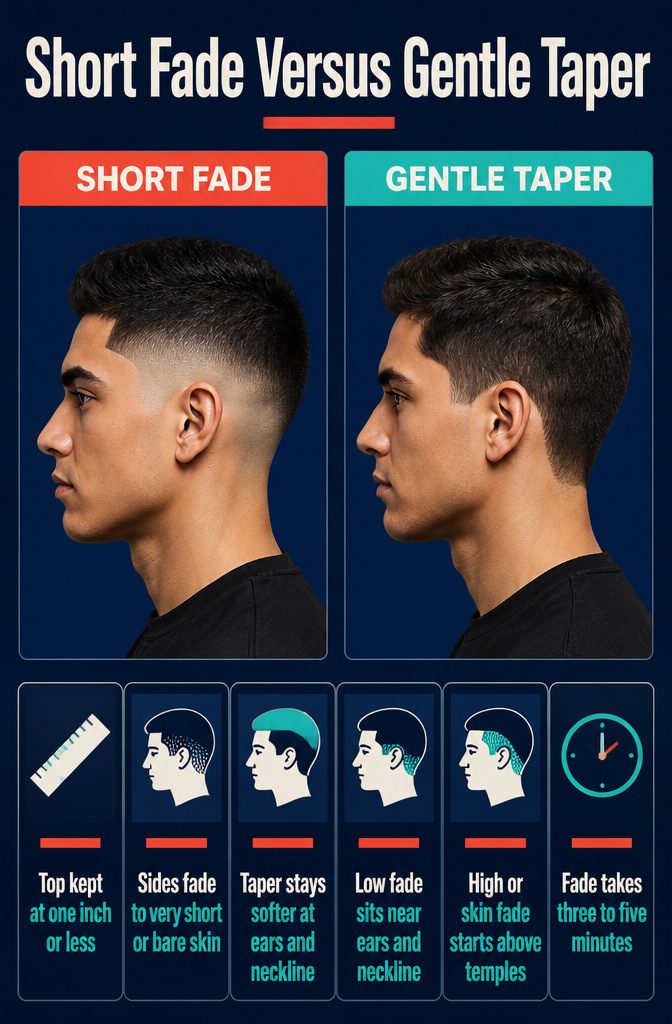
A short hair fade leaves the top at an inch or less while the sides and back step down to very short hair or bare skin near the ears and neckline.
The change in length is gradual, and an abrupt step is a different cut.
A taper is the gentler version.
It starts close to the ear and eases toward the neckline, so the sides stay softer than in a skin fade. I lean toward it for office jobs and busy mornings.
A low fade sits near the ears and neckline and reads subtle.
A high or skin fade starts above the temples and is bolder. Once guard sizes and start points are agreed, the fade itself takes three to five minutes.
Low Fade or Taper Fade
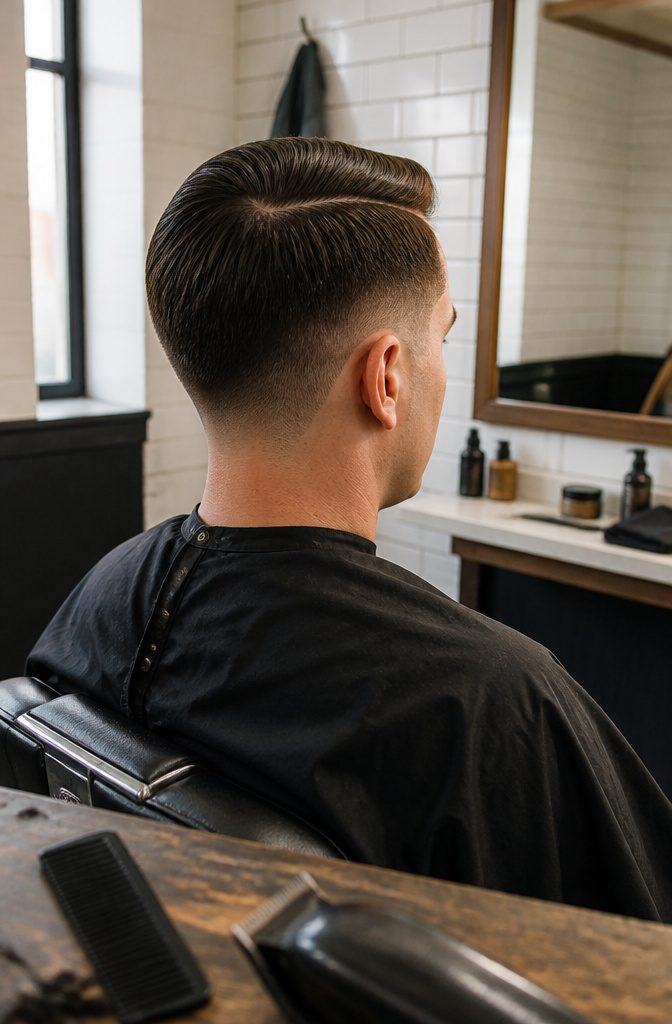
A low fade starts just above the ear and drops to the hairline, so the sides keep more length than on any higher cut.
That softer contrast is why it reads as professional: it works at an office or a wedding without adjustment. It suits oval, square and round faces, and it pairs with a side part, a crew cut or a textured fringe.
Upkeep is where it wins. Most short fades need a touch-up every 2 to 3 weeks, and skin versions closer to 1 to 2.
A softer low taper can stretch to 3 or even 4 weeks before it looks grown out. If I had to pick one fade for a guy who hates scheduling barber visits, this is it.
High Fade or Skin Fade
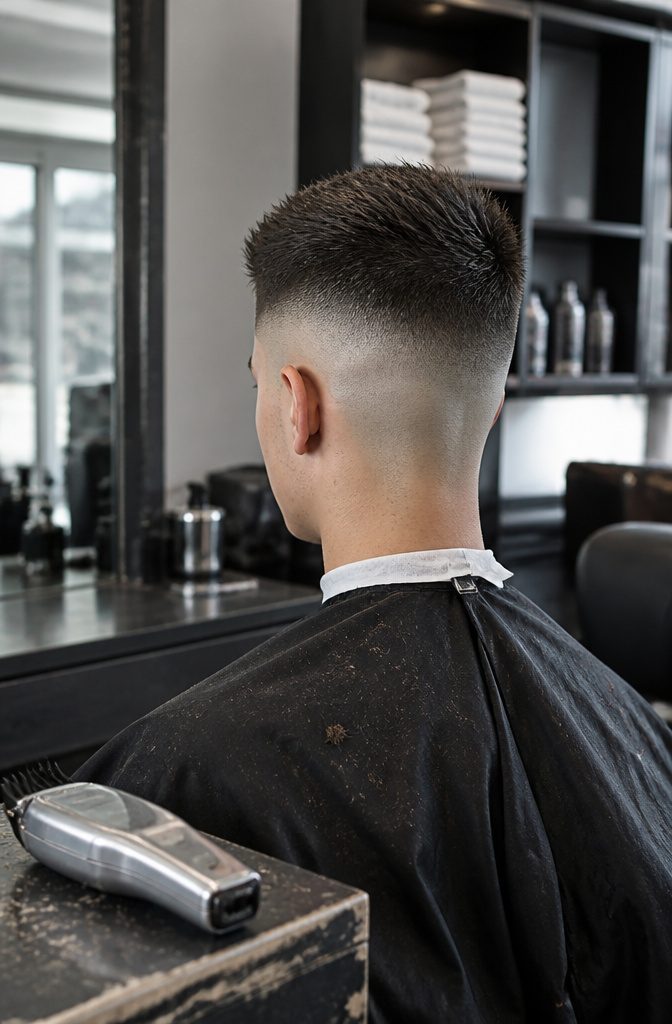
A high fade starts above the temples and drops quickly to the skin, which gives the sharpest contrast between sides and top.
Because the line sits so high, it can change how the shape of your head reads, so I’d ask to see the line on someone with a similar head shape before committing.
Taken all the way to bare skin, the cut shows regrowth within a week. By day 10–14 the contrast has softened enough that it looks neglected instead of sharp.
Plan on a touch-up every 1–2 weeks. If that schedule isn’t realistic for you, I’d skip the skin fade and take a low taper, which can stretch to 3 or even 4 weeks.
Mid Fade
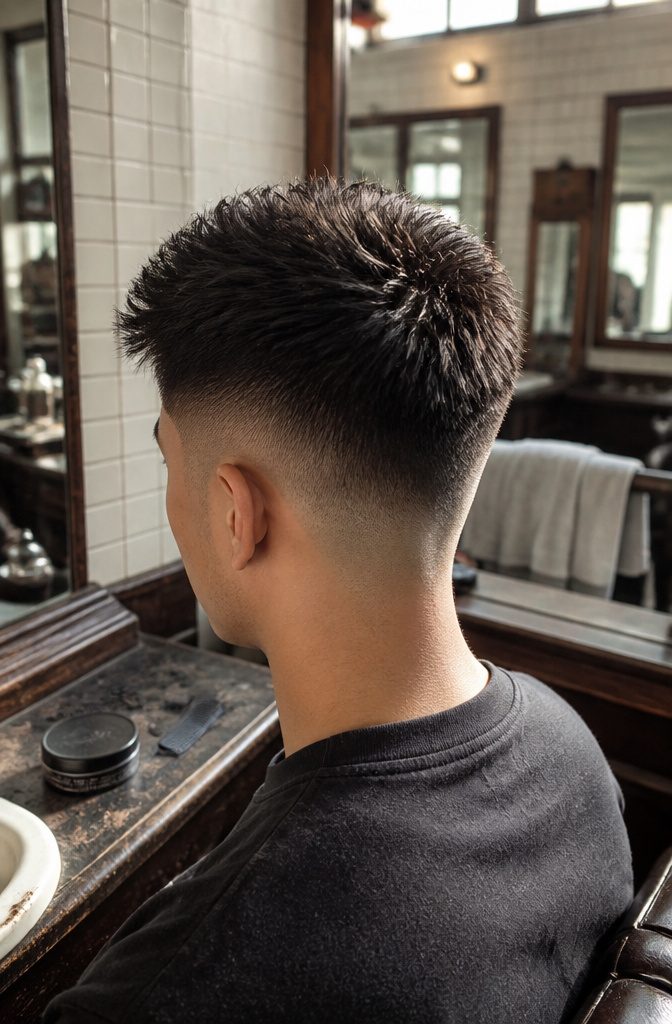
The mid fade starts just above the ears, which puts it between a low fade’s softness and a high fade’s bite.
I’d steer most people toward it first, because it pairs with spikes, loose texture or a quiff, and you can push the top up or down depending on the day.
Spikes need at least an inch of length on top. Shorter than that, and you have short hair with product on it.
Thick, straight hair holds spikes best, and a matte wax or clay keeps them from looking shiny. Book a cleanup every 2 to 3 weeks if you want the fade line to stay sharp.
Drop Fade
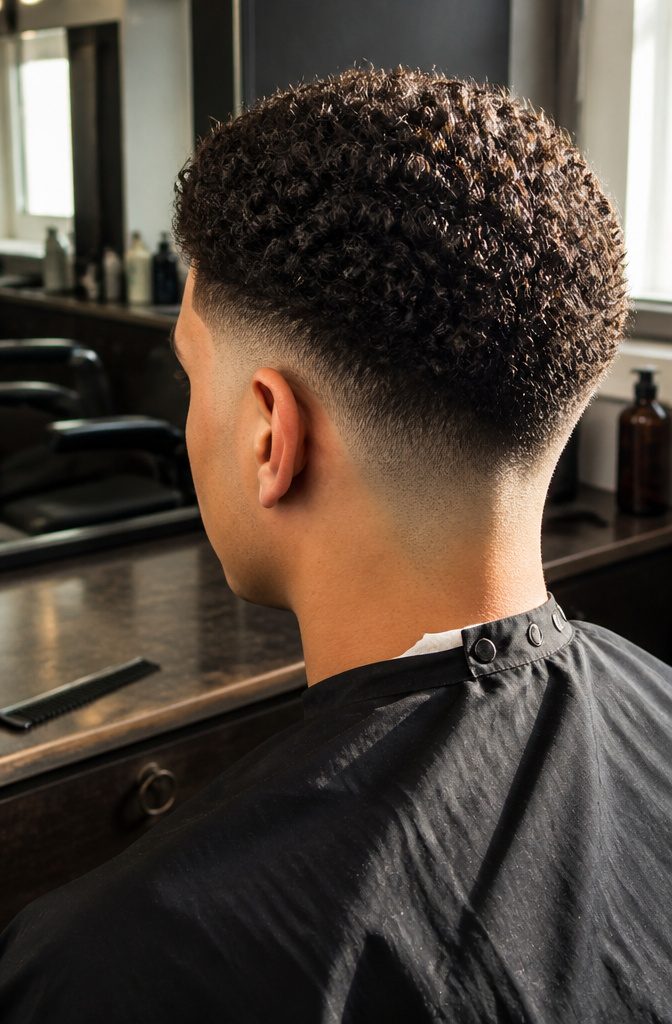
A standard fade runs as a flat horizontal band around the head.
The drop fade breaks from that: it starts at the mid to high temple and curves down behind the ear, leaving a distinct line and a clean, sculpted back.
That curve is why I pair it with curls or a textured top. A hard horizontal edge fights the curls, while the drop echoes their shape, so the sides and top read as one cut.
On a wider or rounder head, I’d pick it over a standard high fade at the same height, since the line follows the skull instead of cutting across it.
Temple Fade
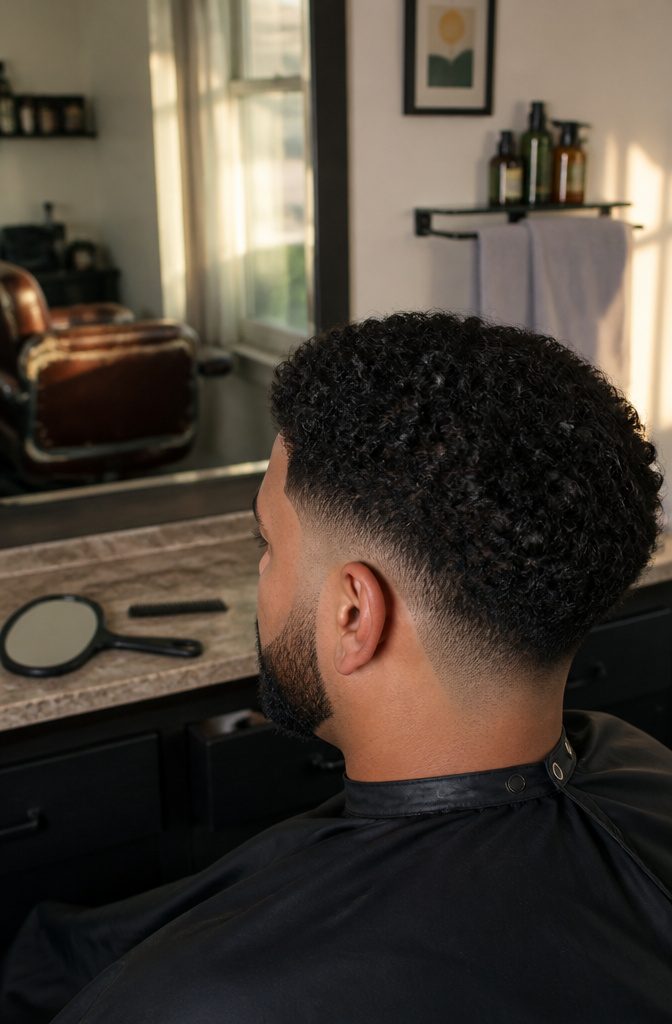
A temple fade works only the area around the temples and leaves the rest of the sides alone.
Length stays on the lower sides and around the back, which confines the fade to the temples, so it’s the most localized cut you can ask for and the easiest to maintain, since only that small patch needs a touch-up.
That precision cuts both ways.
An uneven or too-high temple fade is harder to hide than a flawed full fade, since any asymmetry sits right at the front of your face. I’d check both sides in the mirror before leaving the chair.
It suits a curly or wavy top well, as long as the fade blends smoothly into the hair above. For a sharper contrast, ask for it cut as clean as possible, and pair it with a crisp beard lineup.
Buzz Cut Fade
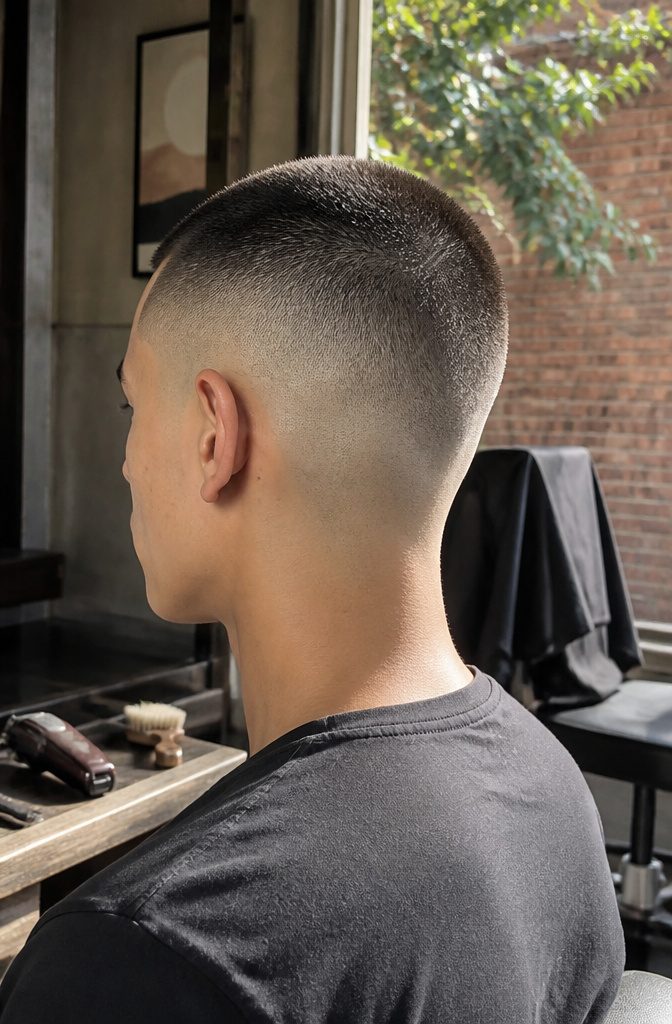
A buzz cut fade pairs a uniform, very short top with sides that graduate to bare scalp, starting just above the ears.
I’d ask for the skin version: shaving the sides to the scalp makes the line against the buzzed top crisp, and on a cut this plain that contrast is the whole look.
Styling is close to nothing, maybe a dab of gel. It’s comfortable in hot weather and puts the jawline on display, so it favors strong features.
Easy still isn’t zero upkeep. Regular touch-ups keep the fade sharp, and with a cut this simple, a rough blend has nowhere to hide.
Crew Cut Fade
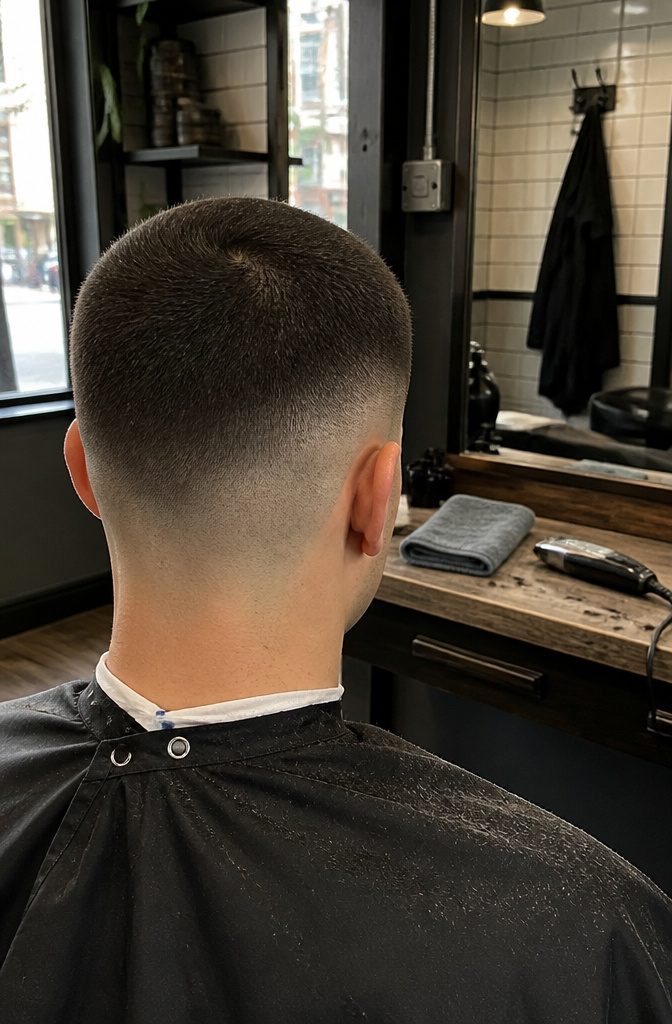
A crew cut fade pairs a short, even top with faded sides, and its military roots are why it stays tidy.
The barber can start the fade low or high. For a high skin fade version, ask for a zero fade with a four up top, or a zero fade with scissors on top for added texture.
A skin fade needs a touch-up about every two weeks, against four to five for a standard crew cut taper. I’d book it only if you’ll keep that pace.
High and tight, with skin sides and a flat top, flatters the right head shape and hairline and punishes the wrong ones. Fine or straight hair suits the crew cut fade best.
Curly, Coily, or Wavy Top With a Fade
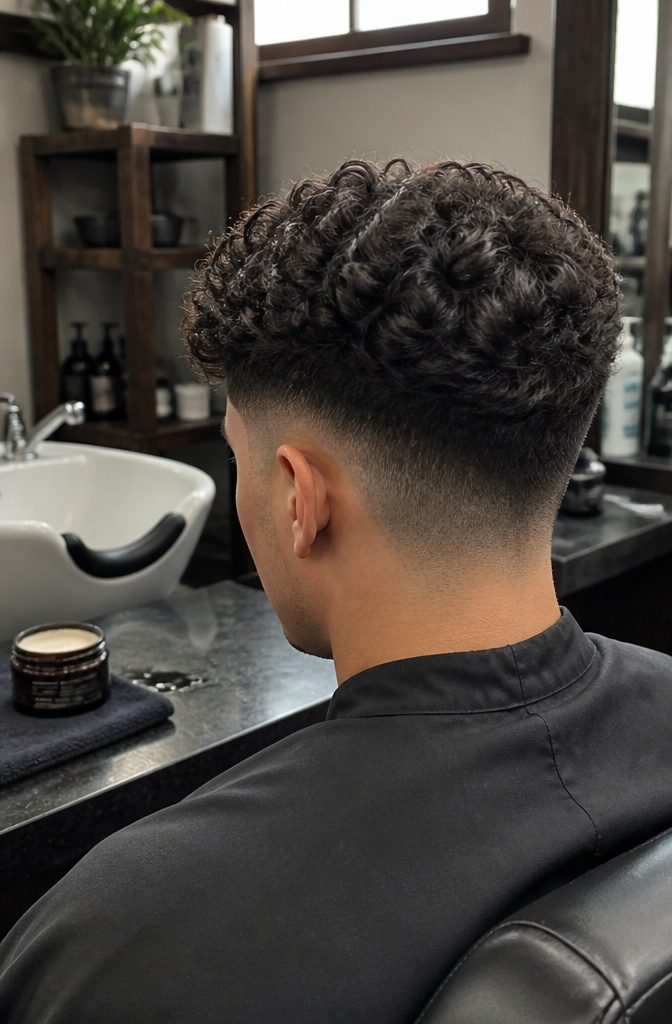
Tight curls shrink as they dry, so a top that measures an inch wet can land at half an inch.
Leave more length than feels necessary, because a fade on the sides makes any shortfall on top obvious. Latest-Hairstyles.com is direct about the working length for a curly crop:
You’ll need some hair length to promote great curls. This is a hairstyle for anyone willing to wear their hair 2-3 inches up top with a mousse for styling.
Plan on 2–3 inches up top, and judge the length only once the curl has dried.
I’d book a barber who cuts curly hair every day, since blending a fade into curls is a different skill than blending it into straight hair. For styling, work curl cream into damp hair, or use a mousse.
Quiff, Pompadour, or Slicked-Back Top With a Fade
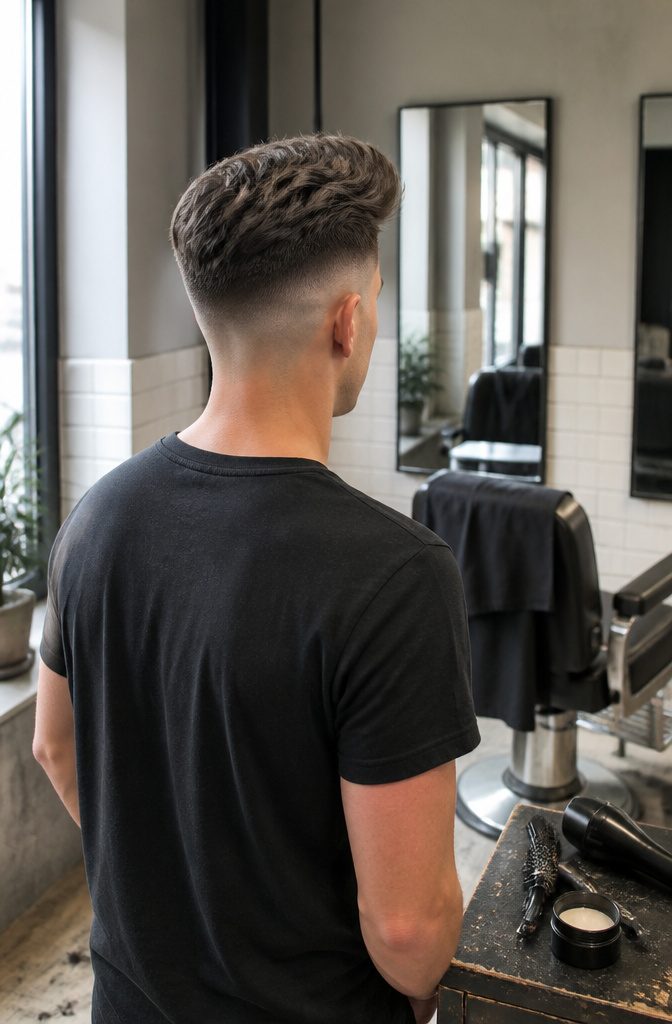
A quiff needs at least 1.5 inches on top to hold its shape.
Much shorter and it collapses by mid-afternoon. A 1–2 inch top is enough to work some gel through and head out the door, though I’d start at the longer end of that range.
More length opens up the pompadour and the slicked-back version, and a blow dryer with a round brush builds lift before any product goes in.
Product decides the finish. Matte clay or paste gives a quiff structure without the shiny, coated look.
For slicking back, a medium-hold gel or styling cream gives the sleek, polished result. A skin fade on the sides gives the most contrast against all three.
Fringe or Crop With a Fade
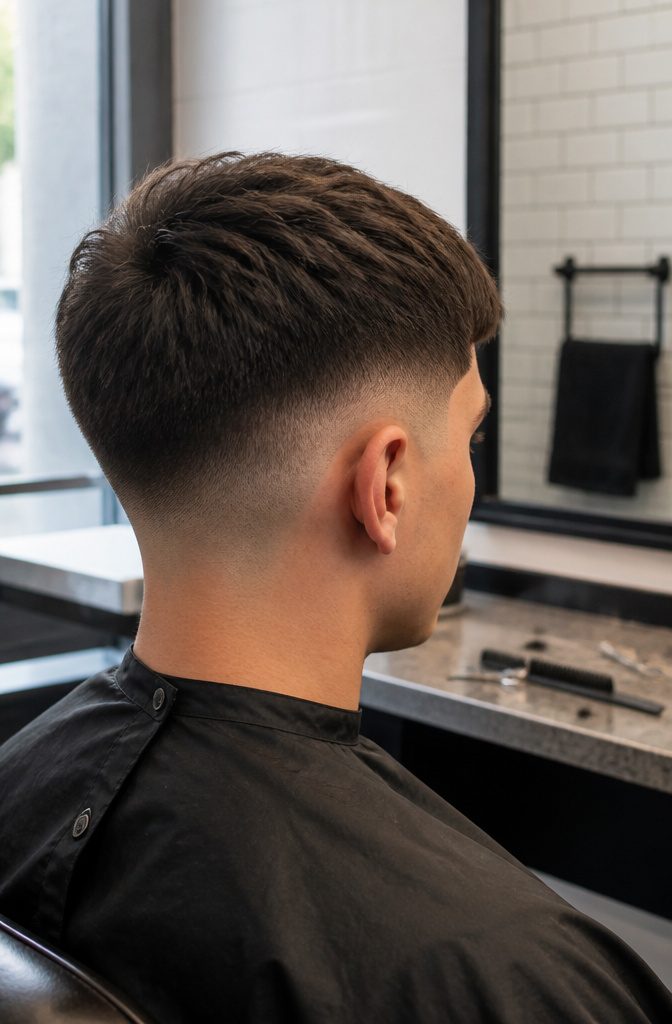
A forward fringe asks more of the fade underneath it than any other short top. A French crop has blunt edges along the hairline and looks sharpest over a zero fade.
Keep the fringe just above the brow and have the barber point-cut it, because a heavy fringe over a high fade looks like two separate haircuts.
I’d choose a textured fringe over a low or mid drop fade: the curved lines match, and it works on straight or wavy hair.
Upkeep is the cost. A crop fade needs a barber visit every 2–4 weeks, and the fringe needs trimming every three to four weeks to stay in position.
Faux Hawk or Mohawk With a Fade
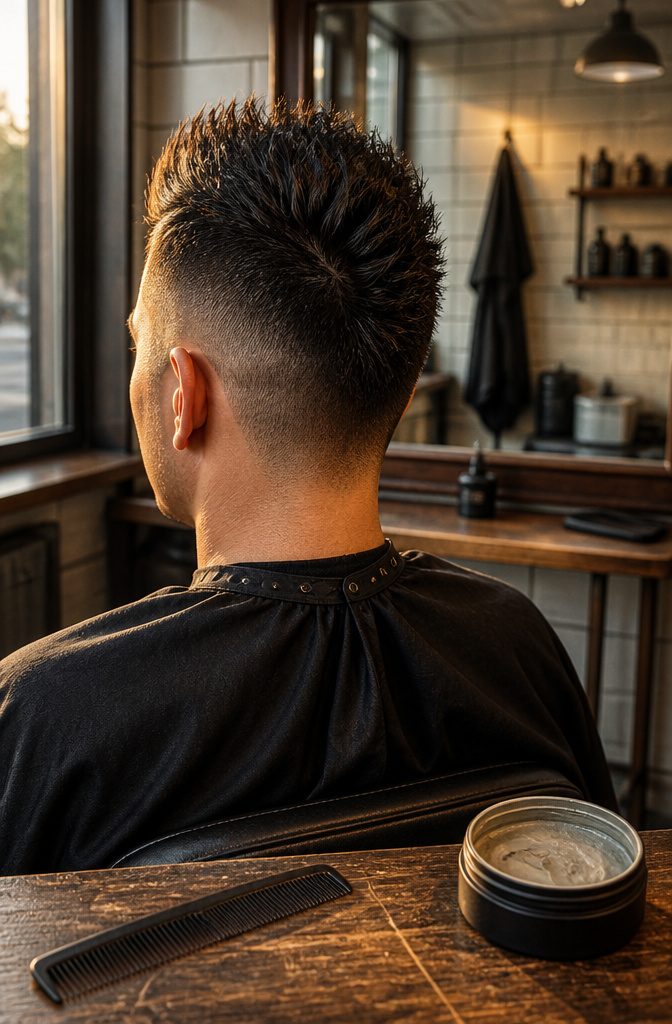
A faux hawk raises or keeps the center longer while the sides fade a touch softer than on a full mohawk, which makes it the less committed choice and an easier one to wear to an office.
A mohawk takes the sides to the skin or a short fade, leaves a long spiked strip, and demands real upkeep. I’d steer most guys to the faux hawk, especially with thick or textured hair.
Both give a bold centerline against faded sides.
On a mohawk, ask for a burst fade; its curve around the ear echoes the strip above. Style with firm matte clay on dry hair, since gel freezes the shape and wax looks greasy by midday.
Mullet With a Fade
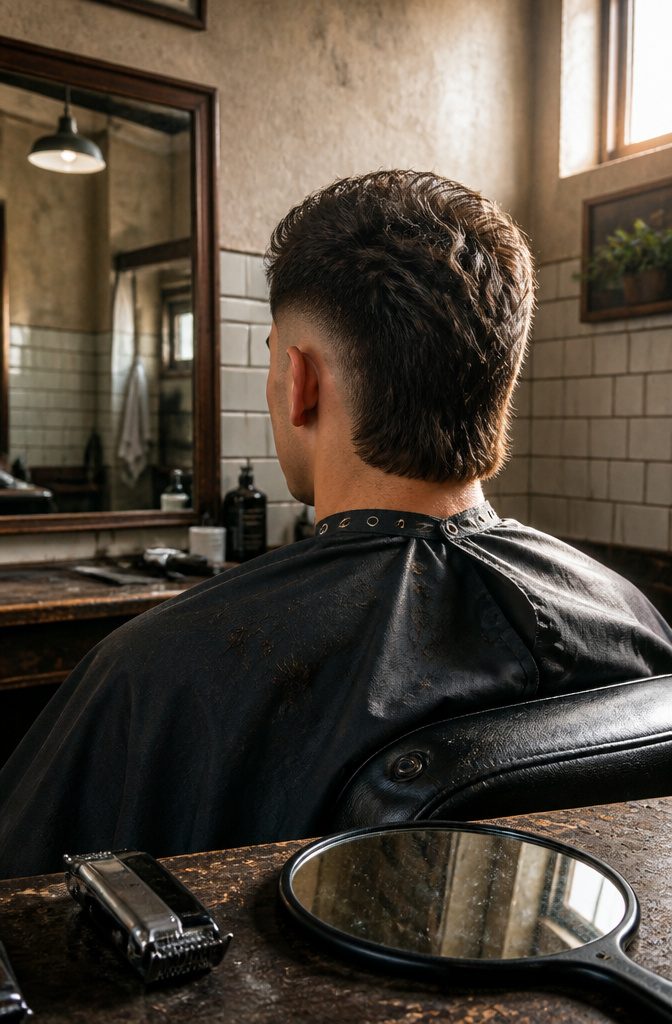
The mullet fade keeps the sides clean and saves the length for the back, so the cut reads as retro without looking like a throwback.
A clean fade on the sides is what makes the longer back look chosen instead of neglected.
Most men fuss over the sides and forget the back, and that is where the cut fails. A well-faded side with a blunt, unshaped back end looks unfinished rather than bold.
Ask how the nape line will be handled, tapered down or squared off, before the clippers start. I’d pick one on purpose; leaving it open is how you end up with that unfinished look.
Matching Fade Height and Top Style to Your Face Shape and Hair Type
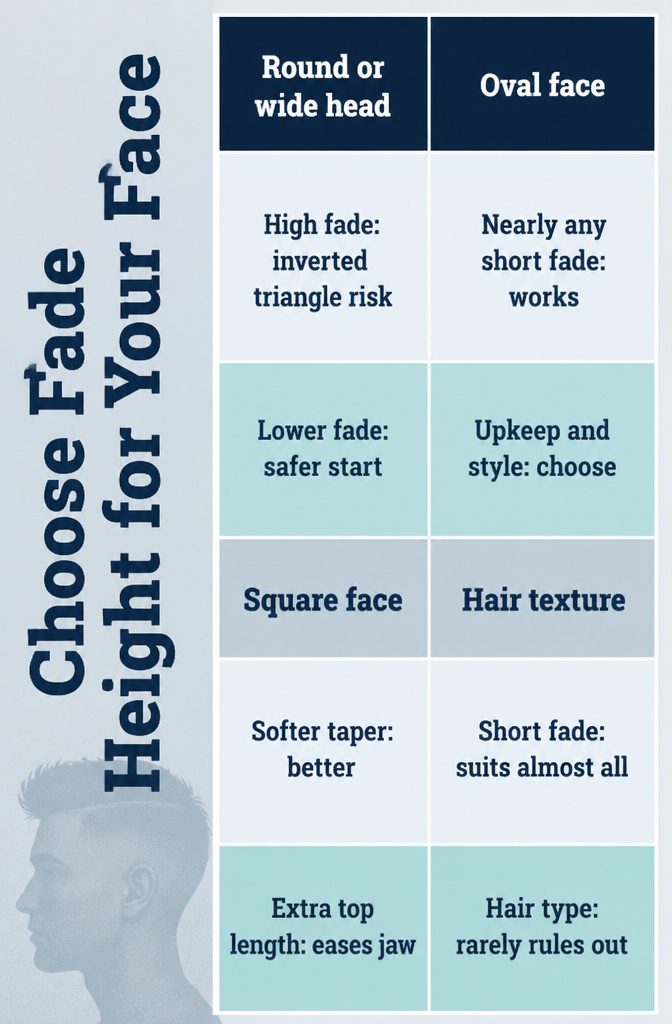
Choose the top first, because the fade is only the frame around it.
Height changes how the whole head reads: a high fade that starts near the crown leaves little side hair, so the top can look heavy and detached, and on a round or wide head it creates an inverted triangle.
I’d start lower than you think you need and move up later, since a fade that is too high is harder to fix than one that is too low.
Oval faces take nearly any short fade, so pick by upkeep and style.
Square faces look better with a softer taper and extra length on top to ease the jaw. Hair type rarely rules a short fade out, and it suits almost every texture.
How Often You Will Need a Touch-Up
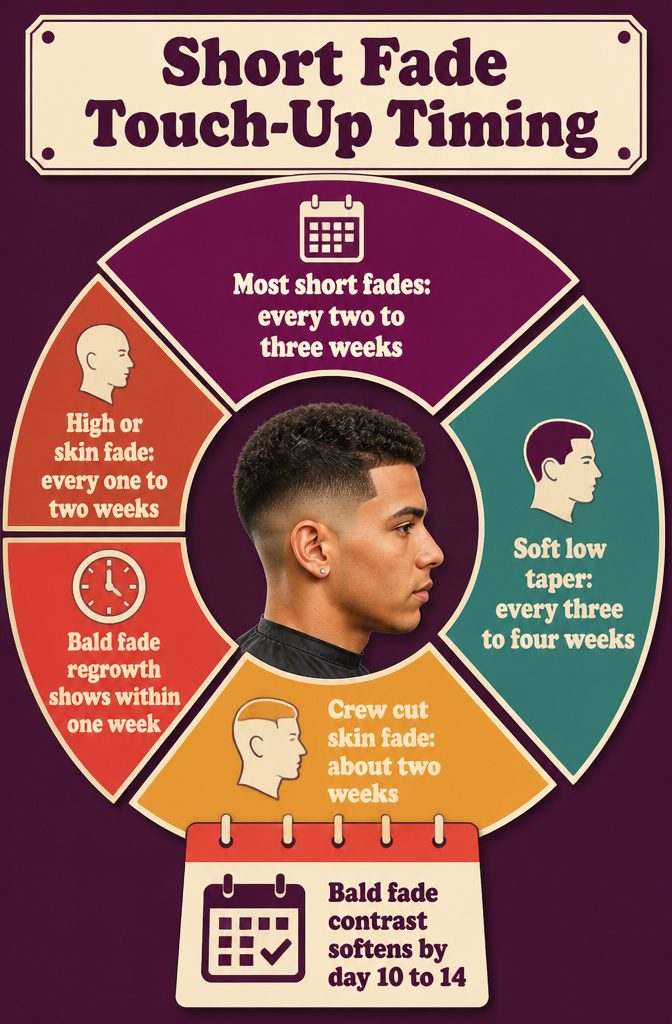
Most short fades need a touch-up every 2 to 3 weeks. Go higher or down to skin and that shrinks to 1 to 2 weeks, since more hair comes off and regrowth shows sooner.
A soft low taper is more forgiving and can stretch to 3 or 4 weeks, which is where a monthly barber visit starts to make sense.
A bald fade shows regrowth within a week, and by day 10 to 14 the contrast has softened enough to look neglected.
I’d book one only if you will really keep a biweekly appointment. A crew cut with a skin fade also drops from four or five weeks between cuts to about two.
Styling Products That Work for Each Top Style
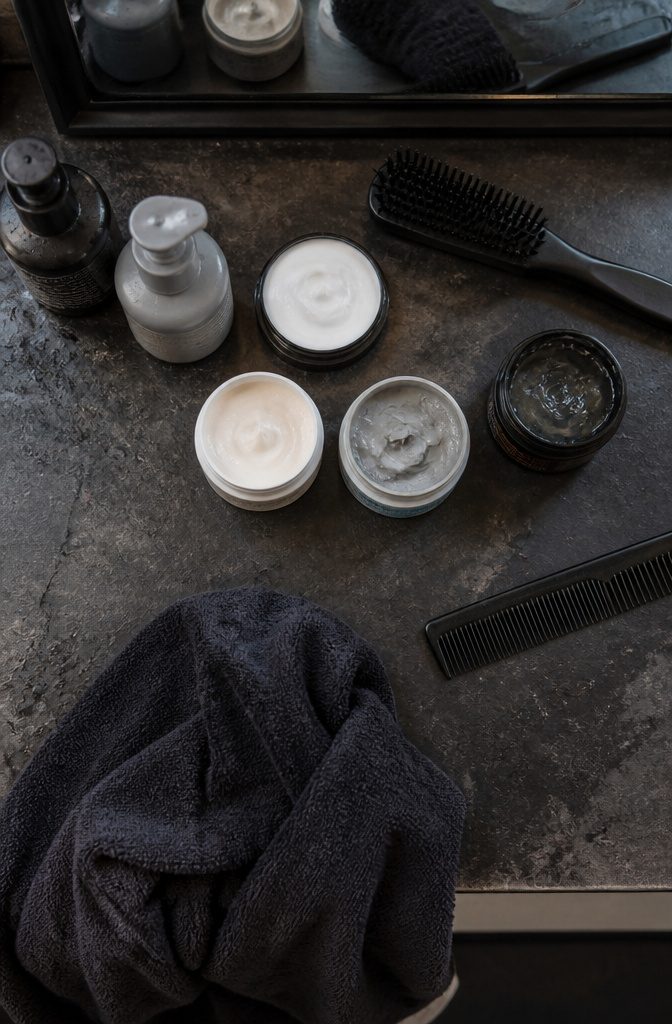
Pick the product for the top, not the fade, and start with clean, slightly damp hair rather than soaking wet.
- Straight hair: a light matte pomade or clay adds texture without weighing it down.
- Curly hair: curl cream or a light mousse defines curls without stiffness.
- Fine hair: stay with lightweight, volumizing products. Heavier ones flatten it.
- Thick hair: it can handle stronger-hold pomades or gels.
- Short quiff (1–2 inches): I’d reach for Johnny B’s Mode Styling Gel. On a taller quiff, matte clay or paste gives structure without the shiny, coated look.
- Faux hawk: use firm matte clay on dry hair. Gel freezes it in place, and wax looks greasy by midday.
- Natural look or heavier hold: wax or pomade covers both.
How to Ask Your Barber for the Fade You Want
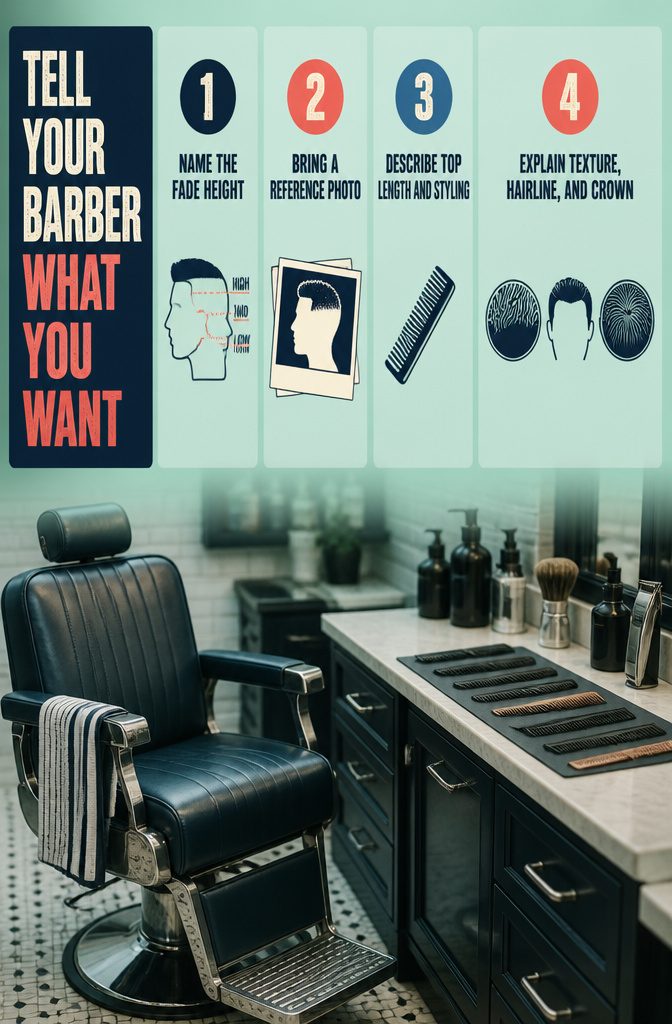
Name the fade height: low, mid or high.
That single detail changes the whole look, so don’t leave it to the barber’s guess. A reference photo removes most of the remaining guesswork.
Then spend the real time on the top. Say how much length you want there and how you plan to style it each morning, and bring up any hair concerns, since the fade isn’t a separate decision from the top.
Once guard sizes and start points are agreed, the fade takes only three to five minutes.
The top takes longer and is where the cut either suits you or doesn’t, so I’d describe texture, front hairline and crown blending before saying a word about the sides.
How a Barber Builds a Fade
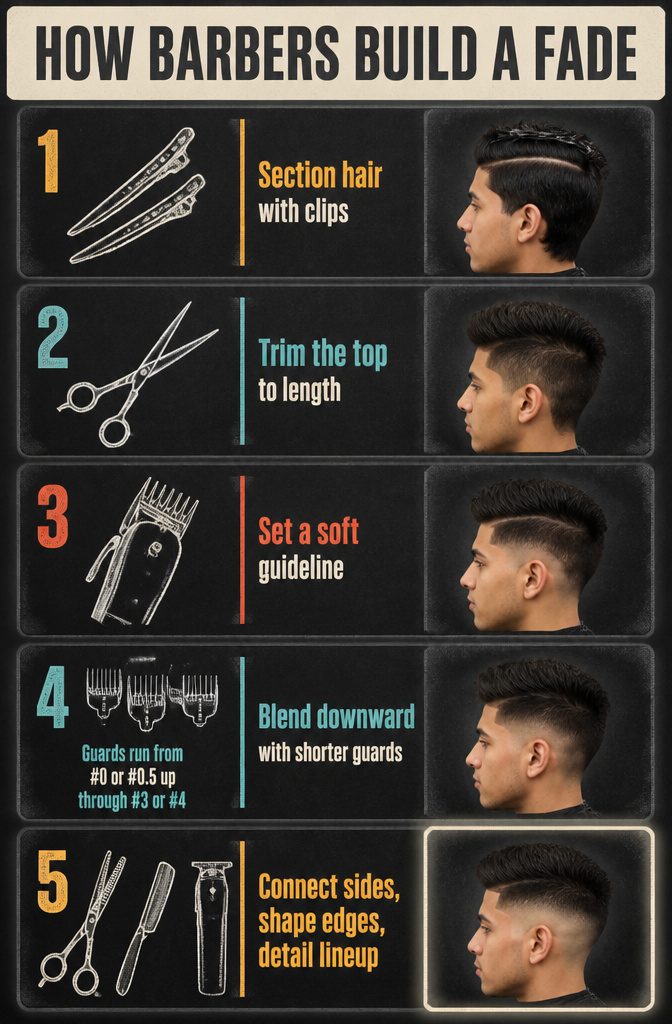
The barber sections the hair with clips, trims the top to length, then sets a soft guideline around the sides with a guard on and the clipper lever open.
I’d say a harsh guideline is the one mistake the finished fade can’t hide.
From there, shorter guards and flicking motions blend each section into the one below it. Guards run from #0 or #0.5 up through #3 or #4.
Thinning shears or clipper-over-comb work connects the sides to the top where bulk needs to come off. Scissors shape the ears and neckline, lever changes soften leftover lines, and a detail trimmer cleans up the lineup and any stragglers.
Scalp and Hair Care Between Visits
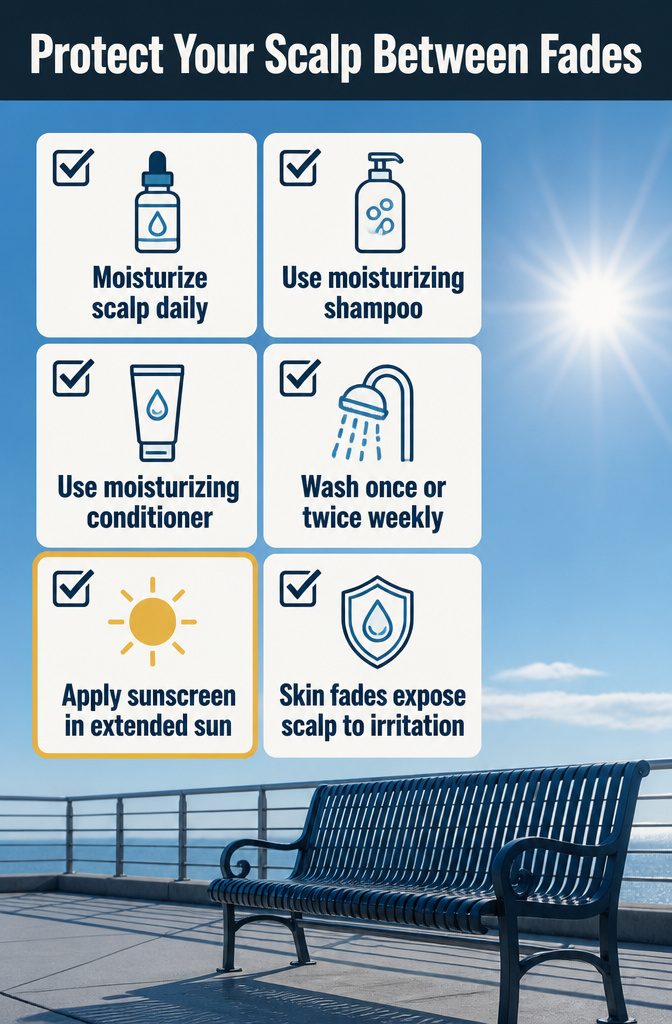
Frequent fades, especially skin fades, leave your scalp exposed, and a few habits between visits keep it from drying out or getting irritated.
- Apply a scalp moisturizer daily. On a very short cut nothing shields the skin, so dryness shows up fast.
- Use a moisturizing shampoo and conditioner between barber visits. I’d rather the skin under the fade stay soft than squeaky clean.
- Wash with a quality shampoo and conditioner at least once or twice a week.
- Put on sunscreen whenever you’ll be outside for extended periods in the sun. A fresh skin fade has no hair to block it, and the scalp burns like any other skin.
Frequently Asked Questions
What is a short hair fade?
A short hair fade keeps the top at an inch or less while the sides and back shrink gradually to very short hair or bare skin near the ears and neckline.
The word describes the smooth blend. If the length jumps with no gradual transition, it is not a fade.
Can you get a fade with short hair?
Yes, a fade works with a top of an inch or less.
Some styles need more: spikes want at least 1 inch, a quiff at least 1.5 inches, and curly hair 2–3 inches. A fade on the sides makes any shortfall on top easy to spot.
What is the best fade for short hair?
It depends on how much contrast you want and how often you will visit the barber. A low fade is subtle and office-friendly, and a soft low taper can go 3–4 weeks between touch-ups.
A high or skin fade is bolder but needs a touch-up every 1–2 weeks. A mid fade sits between the two and works with the widest range of tops.
How do you do a short fade haircut?
Use clippers and work through a sequence of guard sizes, starting longer and blending down in layers rather than jumping to the shortest length.
Set a soft guideline with a guard on and the lever open, then step down with shorter guards, which typically run from #0 or #0.5 up through #3 or #4. Once guard sizes and start points are settled, the fade itself takes about 3–5 minutes.
Which hair trimmers work best for a short fade?
Pick clippers with a wide range of guard sizes and a sharp, precise blade. Add a separate cordless detail trimmer for edging around the ears and hairline.
How short is a 1 fade?
A 1 fade leaves hair about 1/8 inch (3 mm) long.
The number is the clipper guard size, and it puts the fade very close to the scalp. It is common on short skin fades and buzz cut fades.
What is a skin fade?
A skin fade tapers the sides and back all the way down to bare skin. It gives the sharpest contrast, but regrowth shows within a week, so plan on a touch-up every 1–2 weeks.
Can a short fade be done on curly hair?
Yes. Leave 2–3 inches up top, since curls shrink as they dry, and judge the length once the curl has dried.
Book a barber who cuts curly hair regularly, because blending a fade into curls takes different skill than blending into straight hair.
Who can get a short fade haircut?
Men of all ages and nearly every hair type can wear one.
Oval faces suit almost any short fade, while square faces look better with a softer taper and extra length on top. A low fade works equally well on straight, wavy and curly hair.
Can a short fade be combined with other hairstyles?
Yes.
It pairs with a quiff, comb-over, pompadour, side part, crew cut or textured fringe. A quiff needs at least 1.5 inches on top to hold its shape, and matte clay or paste adds structure without a shiny look.
What kind of fade goes with a buzz cut?
A skin fade is the best match. Taking the sides to bare scalp, starting just above the ears, makes the line against the buzzed top crisp, and on a cut this plain that contrast is the whole look.