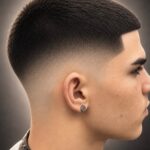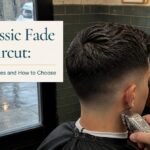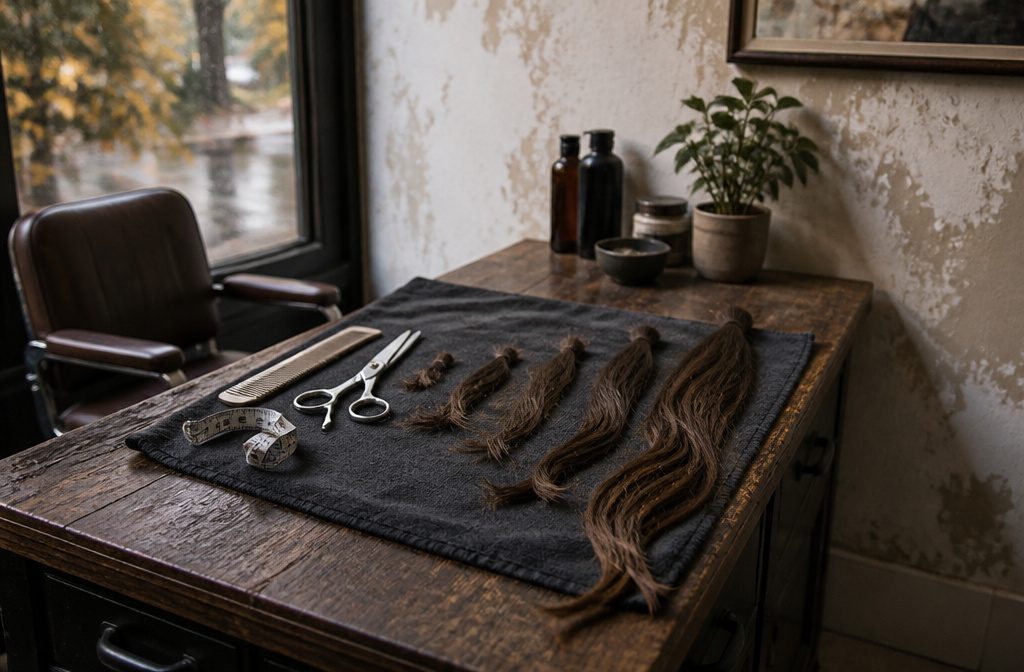
Barbers describe finished length by body landmarks: buzz, ear, chin, shoulder, armpit, mid-back and tailbone. A second scale grades the back and sides from short to extra long, and it measures something else.
A medium taper marks where the clipper stops climbing, not how long your top is. A buzz runs ⅛ to ½ inch.
The Way Barbers and Stylists Divide Length
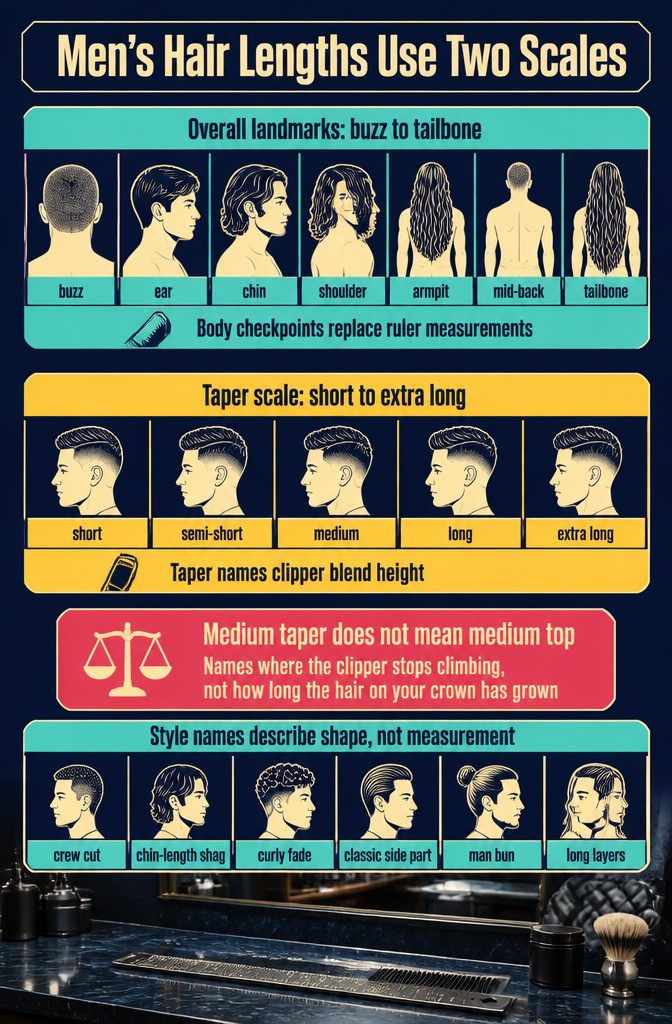
There is no single shared measurement system for men’s hair lengths.
The landmarks you see most often run from buzz to ear, chin, shoulder, armpit, mid-back and tailbone, body checkpoints that let you describe finished length without a ruler. That system works for overall length on top and through the back.
But when you look at taper descriptions for the back and sides of a regular haircut, the scale shifts to short, semi-short, medium, long and extra long, tracking how far up the clipper work travels before it blends into the longer hair on top.
Those two systems do not map cleanly onto one another. A medium taper does not mean medium overall length; it names where the clipper stops climbing, not how long the hair on your crown has grown.
Named styles add another layer of variation, since a crew cut and a chin-length shag both describe shape and technique more than they pin down a single finished measurement.
Buzz to ½ Inch
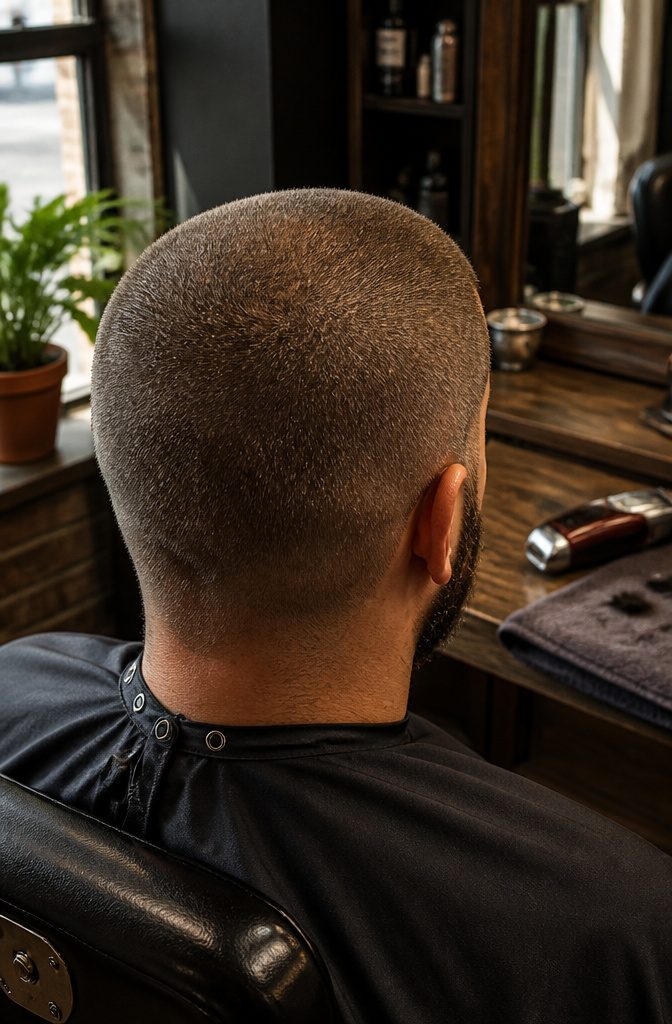
A buzz cut sits between ⅛ and ½ inch, trimmed to a uniform length all over with clippers.
The guard you pick sets the length: a #1 guard leaves ⅛ inch, a #4 leaves ½ inch, and the result is the same from front to crown to sides.
Nothing to comb, nothing to style, and wash time drops to under a minute because there’s barely anything there to lather.
I have seen people towel off in the shower and walk out with completely dry hair before they finish getting dressed.
You’ll need to cut more often. A buzz cut grows out fast enough that you notice the shape softening within a week, so most people who keep one go back under the clippers every seven to ten days.
Miss two weeks and it starts looking like a different cut entirely.
Ear Length

Hair that reaches the ears is where texture and movement start to show up in a way that actually matters.
Buzz cuts and extremely short styles read as uniform coverage; ear-length hair has enough weight to fall, separate and move. That shift is why styling products stop being optional extras and become part of the routine.
A crew cut with the top left around an inch or two, a short crop with slightly longer fringe, or short sides paired with length on top all sit in this range, and each one benefits from a bit of pomade or mousse to hold shape through the day.
The best thing about this length is how texture plays. Longer strands on top paired with close-cropped sides give natural movement without looking scruffy or requiring ten minutes of work in the mirror.
Scrunch the top section with product for a loose, textured finish, or brush it back for something cleaner when the situation calls for it.
Chin Length

Chin length puts hair at or just below the jawline, and it marks the line where grooming shifts from maintenance to styling.
This is where most guys who grew hair through lockdown landed if they wanted to keep length but still needed to look put-together for client meetings or office work.
The natural texture starts to show at this point: loose waves settle in, and you can wear it brushed back or let it fall forward without looking unfinished.
You can towel-dry and go if your hair has some layering and holds its own shape. If you want control, a medium-hold styling cream smooths it down without weight.
The length hides uneven growth better than shorter cuts, so you can push trims to six or seven weeks instead of four. Mornings take longer if you blow-dry, and you need product within reach.
Shoulder Length

Shoulder length is a common target for men growing out, and it only looks deliberate when the ends are even. Regular trims keep that shape clean, even if you aren’t after length.
The awkward stage on the way there is where many men give up and go back to a short cut.
Stylist Winston Parker suggests a better move: ask your barber to clean it up and reshape it instead of starting over.
At the shoulders, hair tends to lie flat and heavy. Layers or added texture break that up, and I’d take them over a blunt, one-length cut.
Armpit Length and Beyond
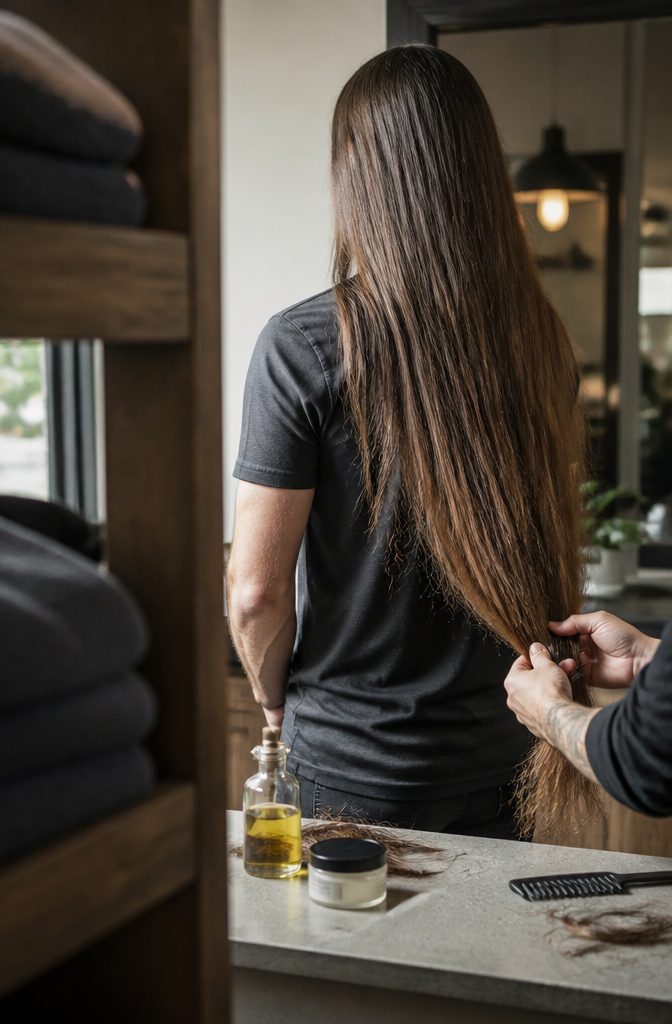
Hair past the armpits counts as long.
A mid-back cut can range in length from an inch or so below your shoulder blades to your waistline or the tops of your hips.
— Hair.com
That is a wide window, so show your stylist exactly where you want it. Oil finishes the job: Kérastase Elixir Ultime L’Huile Original Hair Oil leaves hair up to 10x smoother with 92% more shine than unwashed hair.
Tailbone length works on certain hair types, but breakage is what stops the growth. Biolage Professional Strength Recovery leaves hair 3x stronger with 3x less breakage after one use, and its Deep Treatment Pack mask adds moisture and repair.
How Taper and Fade Lengths Work on the Sides
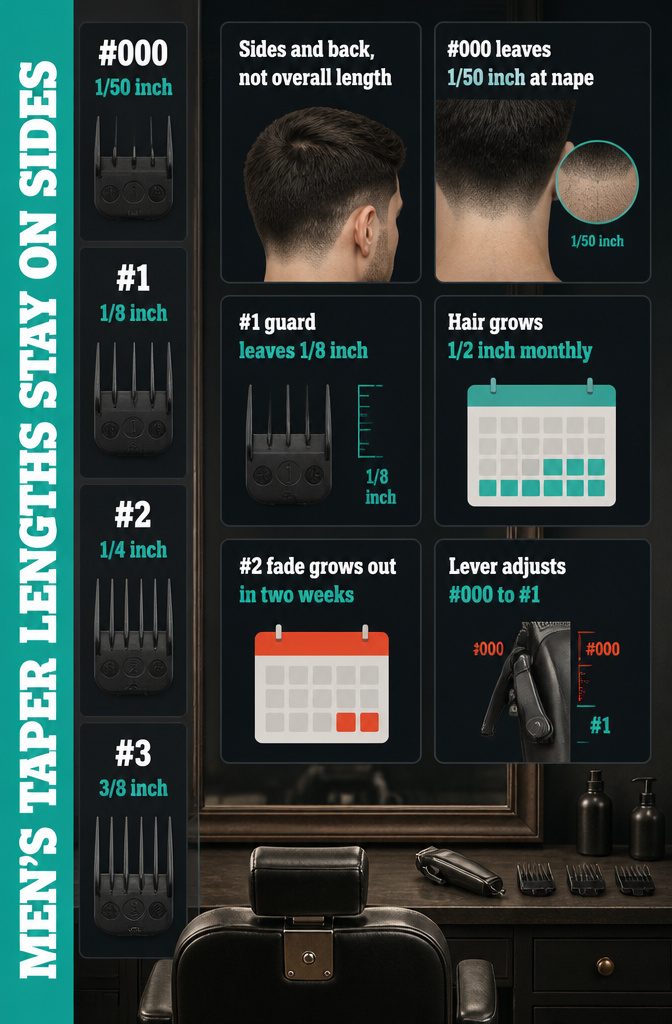
Taper and fade refer to what happens on the back and sides, not the overall length of the cut.
A short taper might bottom out at a #000 blade, leaving 1/50 inch of hair at the nape, and blend up to a #1 (3/32 inch) higher on the head.
A long taper starts higher and blends more gradually, but that describes the transition zone, not the top.
Guard numbers tell you what stays behind: a #1 guard leaves ⅛ inch, a #2 leaves ¼ inch, a #3 leaves ⅜ inch. Hair grows roughly ⅛ inch per week or ½ inch per month, so a #2 fade grows out in two weeks.
The taper lever on most clippers adjusts the cutting length between #000 (shortest) and #1 (longest) without swapping guards, which is how barbers get that tight gradient.
Fade clippers work entirely in the fine range, between 1/125 inch and 1/50 inch, for skin fades that start at nearly bare scalp.
Choosing Length by Hair Texture and Curl Pattern
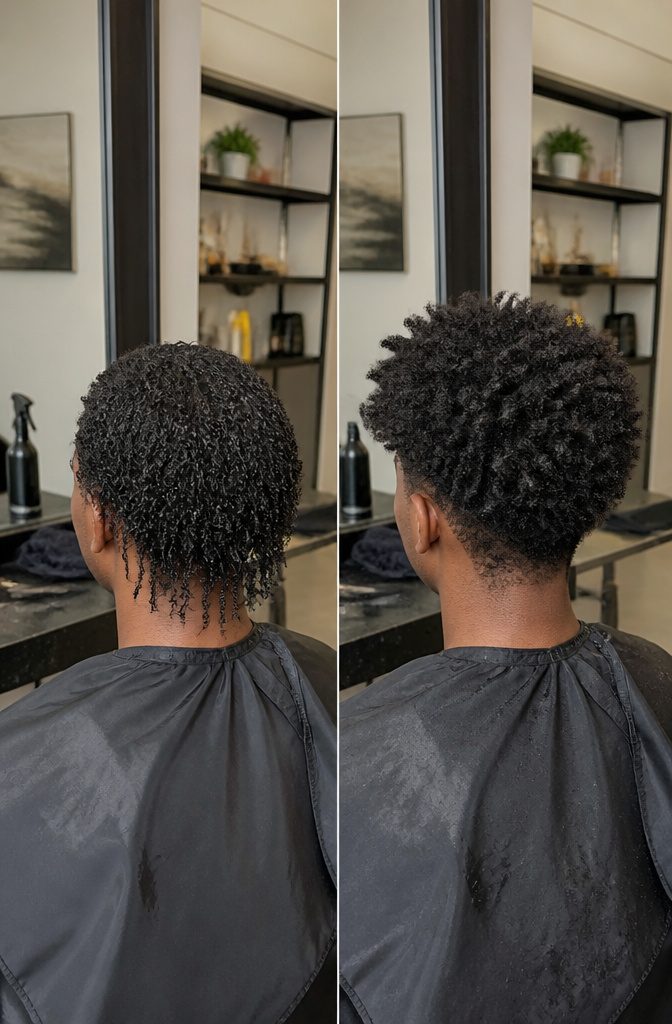
Texture changes how length reads once you leave the chair. Curls and coils shrink as they dry, sometimes dramatically, so what looks like chin length wet can bounce up to earlobe level an hour later.
Tighter curl patterns amplify this: a guy with 4C coils asking for shoulder length may need several more inches of cut length to land there once the hair dries and springs back into shape.
Straight and wavy hair behave closer to what the mirror shows during the cut, though thick straight hair can look heavier and sit lower than fine hair at the same measured length.
Thinning hair narrows the window.
Stylists working with clients who have less density tend to cap length around the jaw, where movement and texture can still give the hair energy. Past that point, thinning hair often lies flat and reads sparse rather than long.
Fine hair faces a similar limit: it needs enough body to avoid looking limp, and that usually means keeping length moderate and leaning on cut and product to build volume.
Showing Your Barber the Length You Want
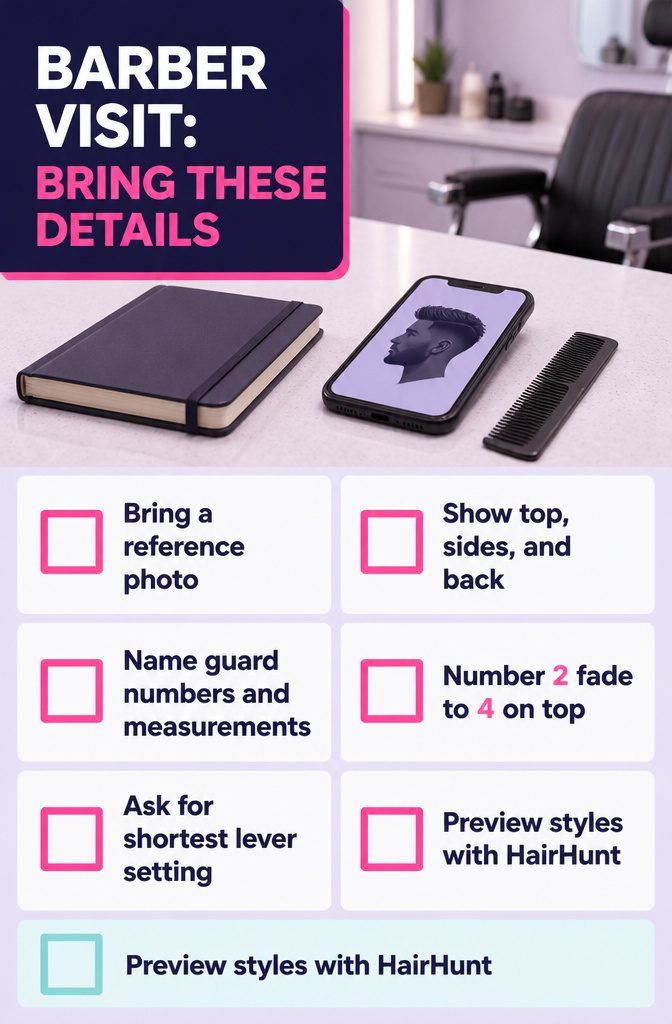
The surest way to walk out with what you wanted is to show your barber a photo.
Describing length in words leaves too much room for interpretation, and what you picture as chin-length might sit an inch shorter or longer than what the barber has in mind.
A reference image pins down not just how much hair you want on top, but how the sides taper, where the bulk sits, and whether the back grows even or stays cropped.
If you want precision on the sides and back, guard numbers and measurements close the gap.
Telling a barber you want a number 2 fade to a 4 on top gives you 1⁄4 inch at the skin line fading to 1⁄2 inch higher up, and there’s no guessing involved.
The taper lever on most clippers adjusts within a range of about 1⁄50 inch to 3⁄32 inch, so if you know you want the fade to start tight, ask for the lever at its shortest setting.
Apps like HairHunt let you upload your own photo and preview styles before you sit down, which helps if you’re choosing between lengths for the first time.
How Face Shape and Features Change Which Lengths Work
How Face Shape and Features Change Which Lengths Work
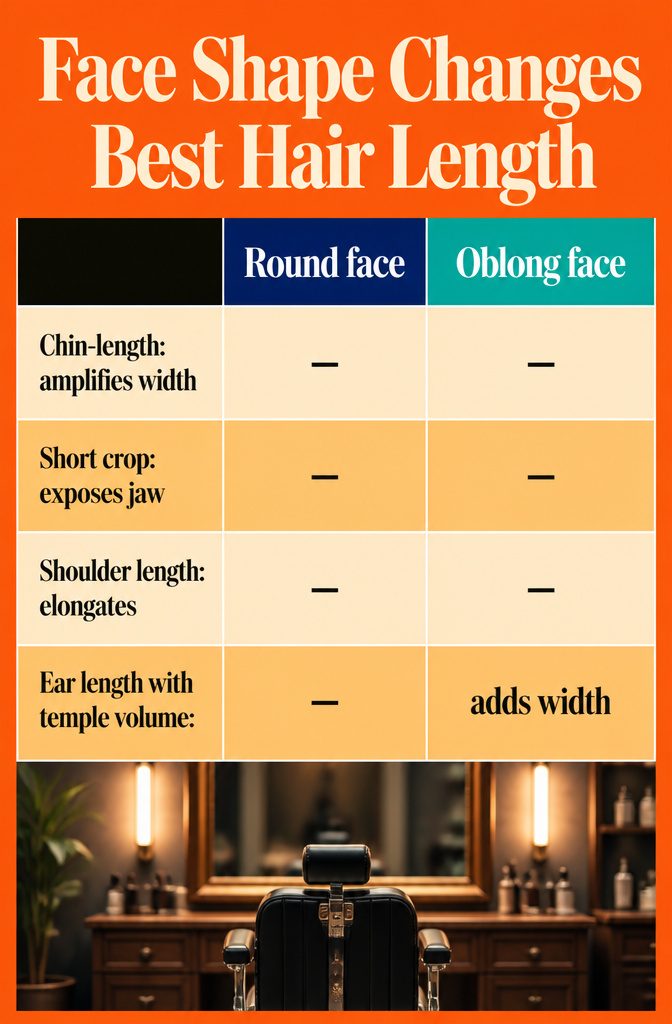
Face shape decides which lengths add balance and which ones amplify what you already have too much of.
A round face reads rounder with chin-length hair that ends right at the widest point, but looks longer with either a short crop that exposes the jawline or shoulder length that pulls the eye down past the curve.
An oblong face benefits from width at the sides, so ear-length cuts with volume or texture at the temples break up vertical height better than anything buzzed tight or grown long and flat.
Sideburn length and where the back edge sits on your neck also shift how your face reads. Longer sideburns and a lower neckline make the face appear shorter and wider, which helps if you have a narrow or tall face.
Shorter sideburns and a higher fade lift everything visually, good for round or square faces that need less width. This is why a barber consultation matters: they see proportions you miss in the mirror.
Products and Styling Time at Each Length
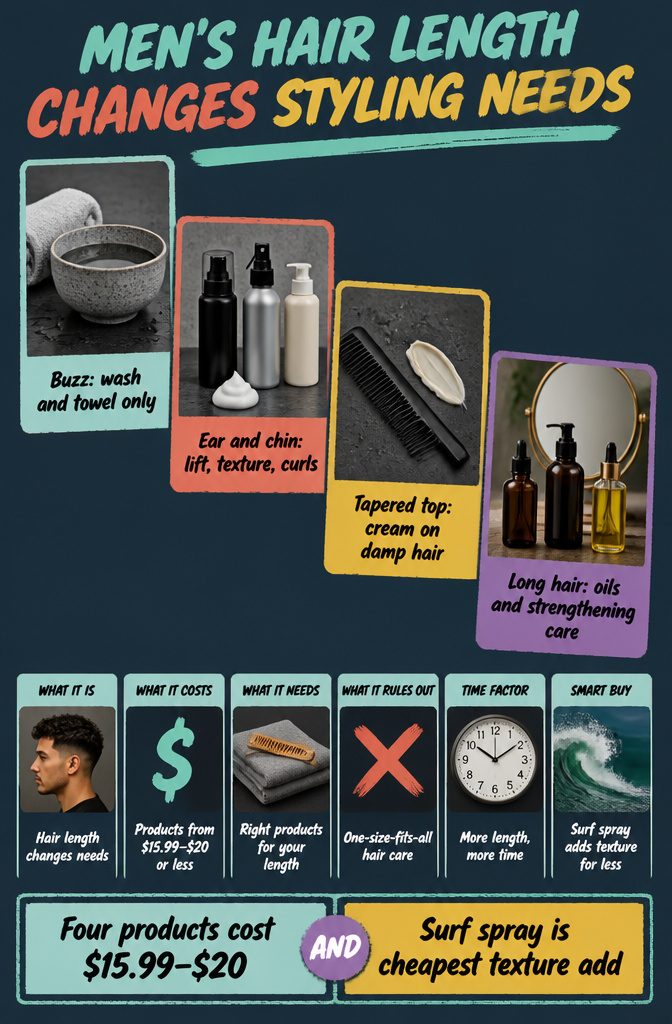
Buzz cuts need little or no product, just a wash and a towel.
Styling time climbs with every inch after that. At ear and chin length, Redken Stay High Mousse adds lift, Matrix Builder Wax Spray brings texture and medium hold, and Mizani True Textures Curl Enhancing Lotion defines curls.
On a tapered cut with length on top, a dab of styling cream on damp hair, combed into place, gives a sleek finish.
Longer hair adds oils and strengthening treatments to the routine, plus more minutes at the mirror.
For the styling side, four products cover most needs: v76 Tonic Hair & Scalp ($18), v76 V Rated Natural Wax ($19), v76 Grooming Cream ($20), and BYRD Texturizing Surf Spray ($15.99).
All four land between $15.99 and $20, and the surf spray is the cheapest way to add texture.
Frequently Asked Questions
How do you describe your hair length to a barber?
Name a body landmark: buzz, ear, chin, shoulder, armpit, mid-back or tailbone.
Then bring a photo, since words like "chin length" can land an inch shorter or longer than what the barber pictures. For the sides and back, add a guard number, such as a #2 for 1/4 inch.
What hair length is considered long for a man?
Hair that reaches past the armpits counts as long. Mid-back sits further down, anywhere from an inch below the shoulder blades to the waist or top of the hips, and tailbone length is the far end of the scale.
Should I grow my hair out?
If you’re curious, yes, since a cut can always be reshaped or taken back short. Weigh the style you want, your hair’s thickness and texture, how the length suits your face, and the products you’ll need to buy.
Men with thinning hair usually do best capping length around the jaw, and your barber can help you through the awkward middle stage without starting over.
How long is 5 inches of hair, or 23 inches, on a man?
An inch count doesn’t point to the same spot on every head, which is why barbers use landmarks instead. Hair grows about 1/2 inch a month, so 5 inches is roughly 10 months of growth.
Curly and coily hair shrinks as it dries, so the same number reads shorter on tight textures. For a long measurement like 23 inches, check where it falls on your body: past the armpits counts as long.