Most short cuts ask for a cleanup every 2 to 5 weeks, but a skin fade shows regrowth within days while a low taper or crew cut can stretch closer to a month.
A round face benefits from cuts that add height rather than width, a long face should skip the brush up, and curly hair holds a fringe or textured crop without much product at all.
1. Buzz Cut
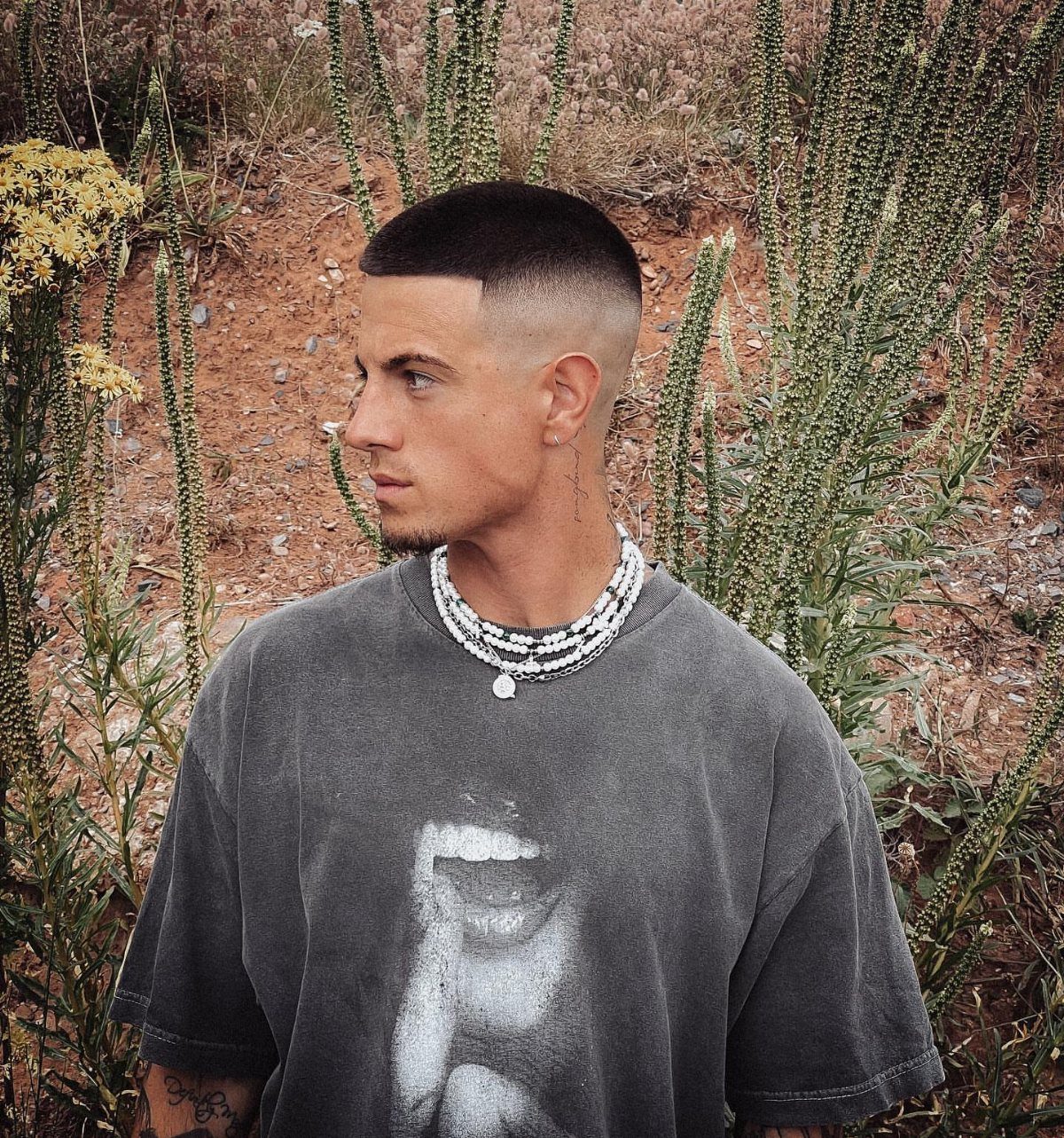
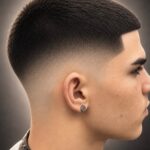
All the hair is clipped to the same guard, usually a 1 or 2, and left uniform across the head.
The version here adds a skin fade on the sides, which sharpens the line and keeps the shape fresh for a week or two before the fade softens.
It asks nothing of you in the morning and dries while you’re still getting dressed. A full buzz needs a pass with clippers regularly to stay tight.
2. Quiff
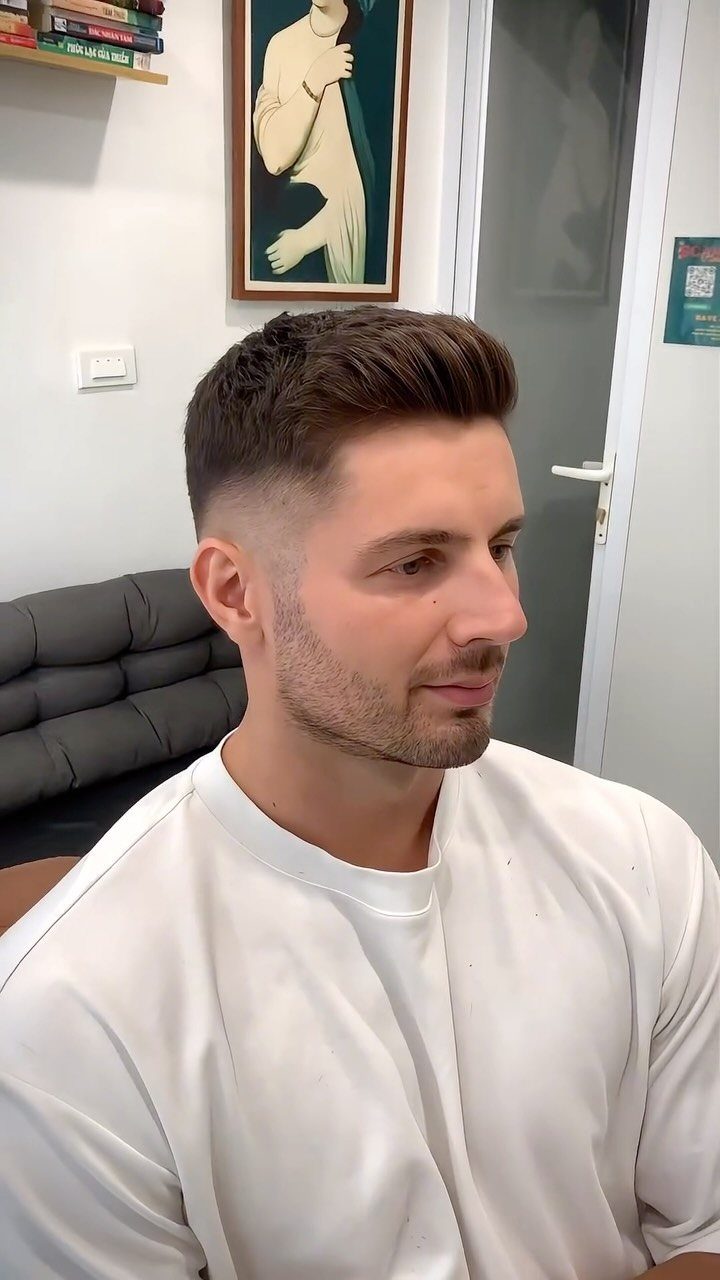
The top is left long enough to push upward and back, building height at the front while the sides stay short or faded.
You shape it with a blow-dryer and a medium-hold product, aiming the airflow up and back to hold the lift.
This cut gives you a polished look that works for an interview or a night out. The quiff needs a trim regularly to keep the proportions right, and styling takes a few minutes most mornings.
3. Textured Quiff
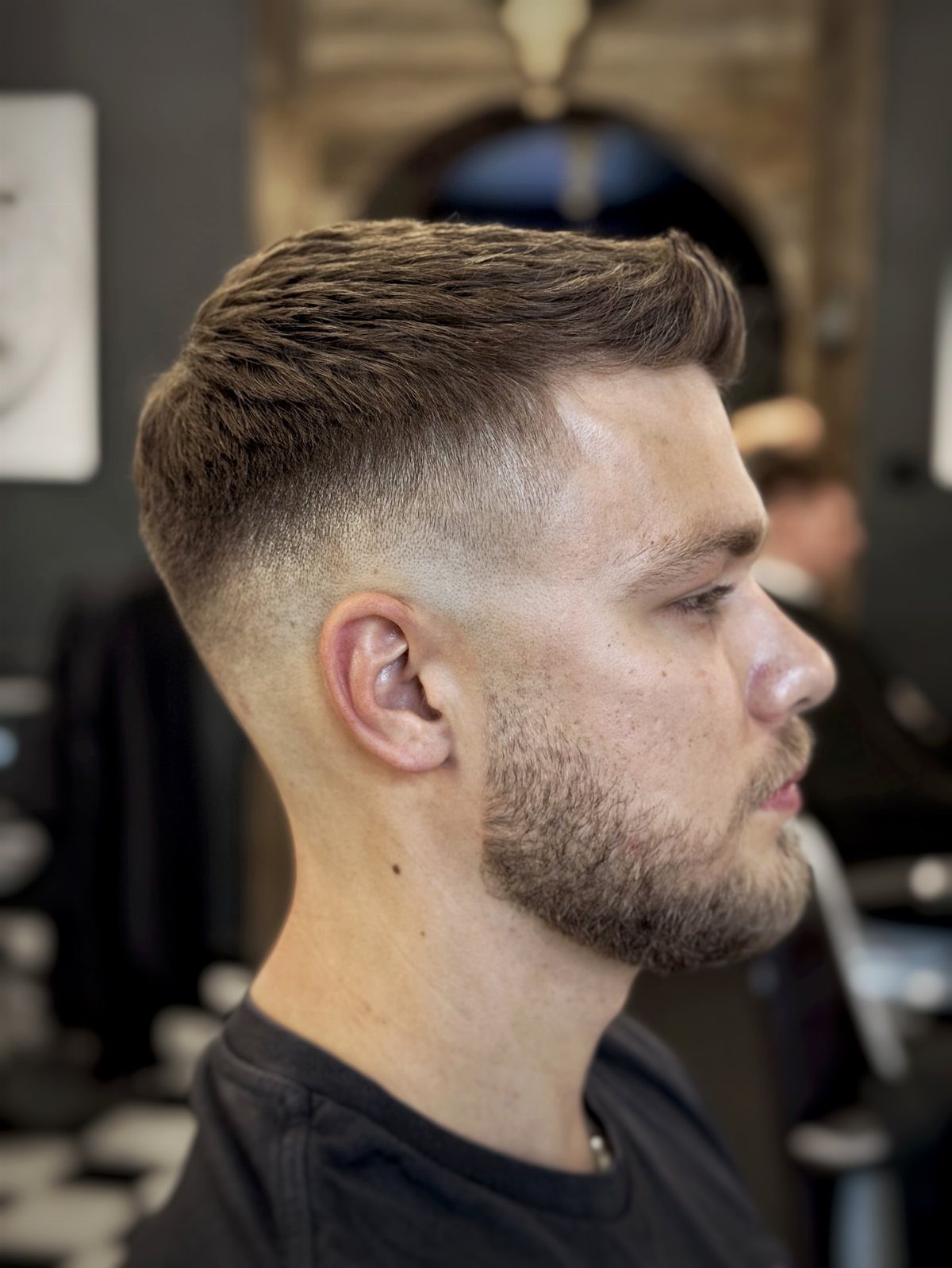
Longer scissor-cut layers sit on top and are styled upward into a piece-y, lifted shape, not slicked smooth. The sides are tapered or faded down, often to skin, which keeps the contrast strong.
Blow-dry the top forward first, then push it back and to one side with a matte clay or paste while the hair is still warm.
The texture makes it more forgiving than a clean quiff: if the shape loosens during the day, it still looks intentional.
4. Crew Cut
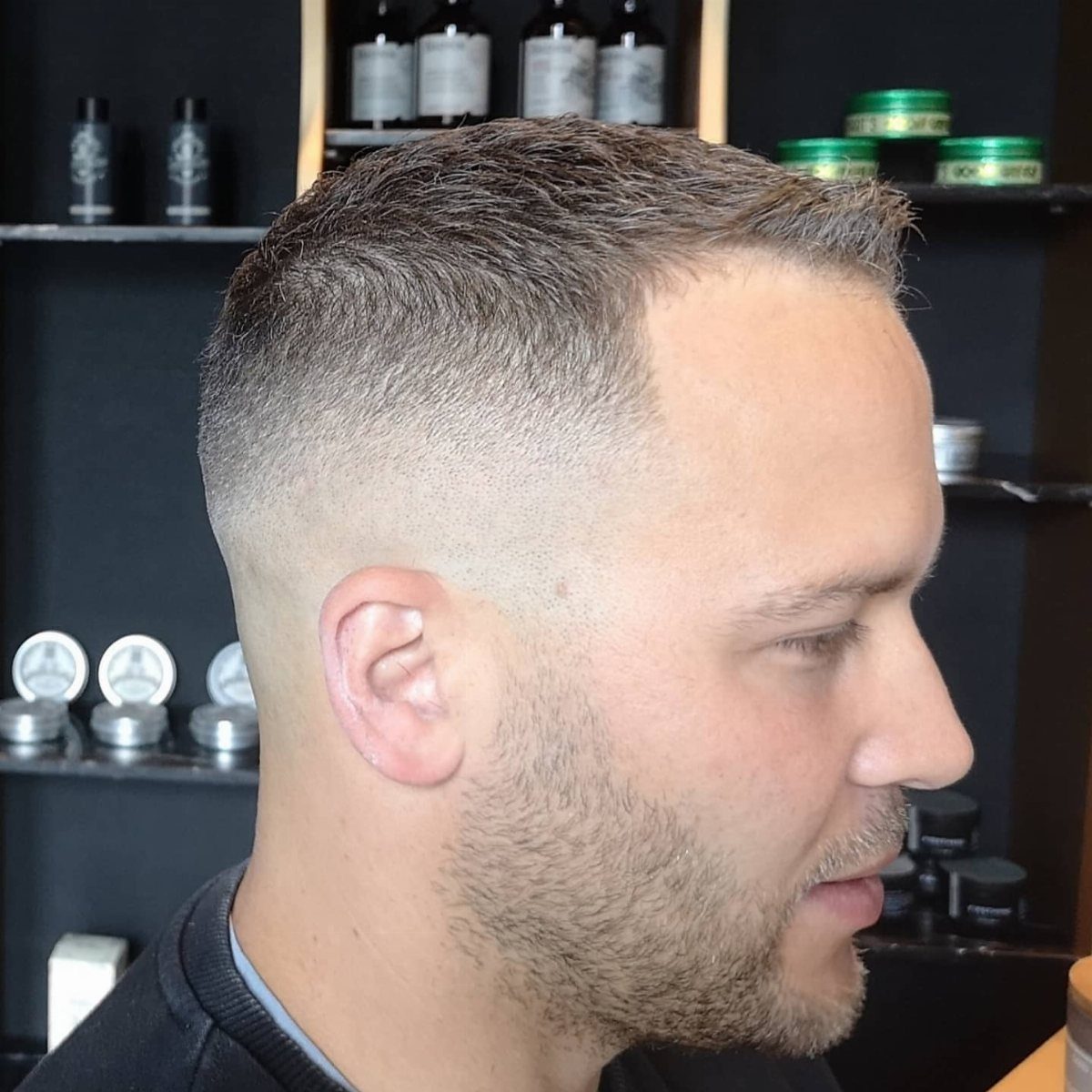
The top is cut short, usually between half an inch and an inch, and tapered down toward the back, while the sides go shorter still. The shape is neat, squared off, and low-maintenance.
A crew cut asks almost nothing of you in the morning.
Most guys leave it as it dries or run a small amount of product through for a bit of control. Regular trims keep the taper clean.
5. French Crop
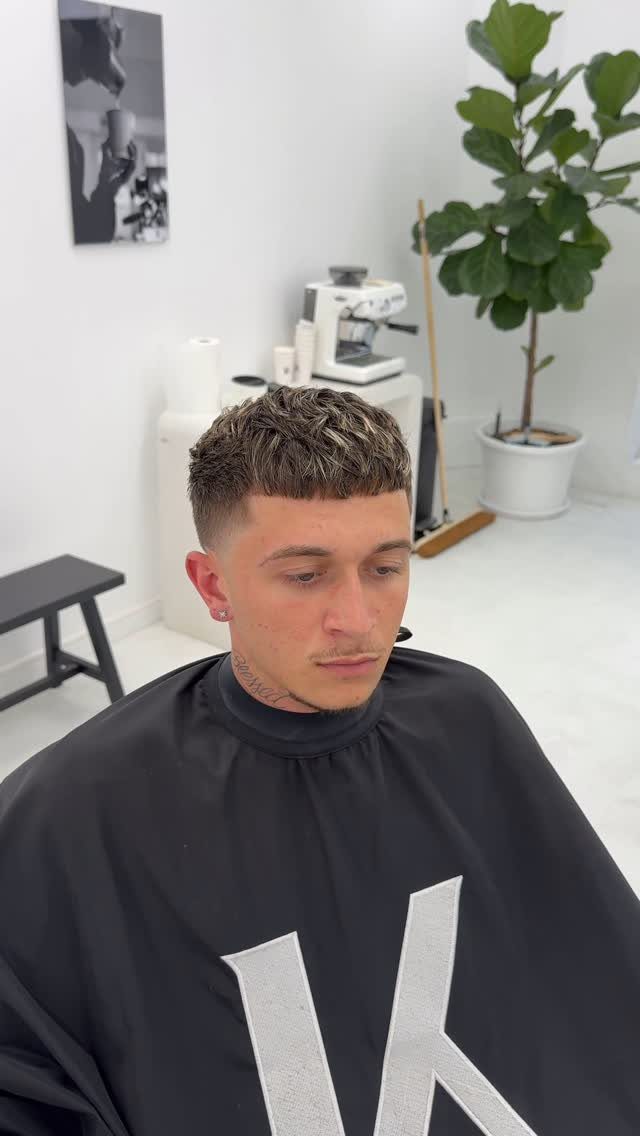
Hair is cut short on top and directed forward into a blunt or choppy fringe that sits just above the eyebrows. The sides are faded or tapered down, and the overall shape is horizontal rather than lifted.
It suits a guy with fine or straight hair who wants something low-effort that still reads as a considered haircut.
Run a small amount of matte product through damp hair and push it forward with your fingers. The fringe holds its line with almost no attention.
6. Textured Crop
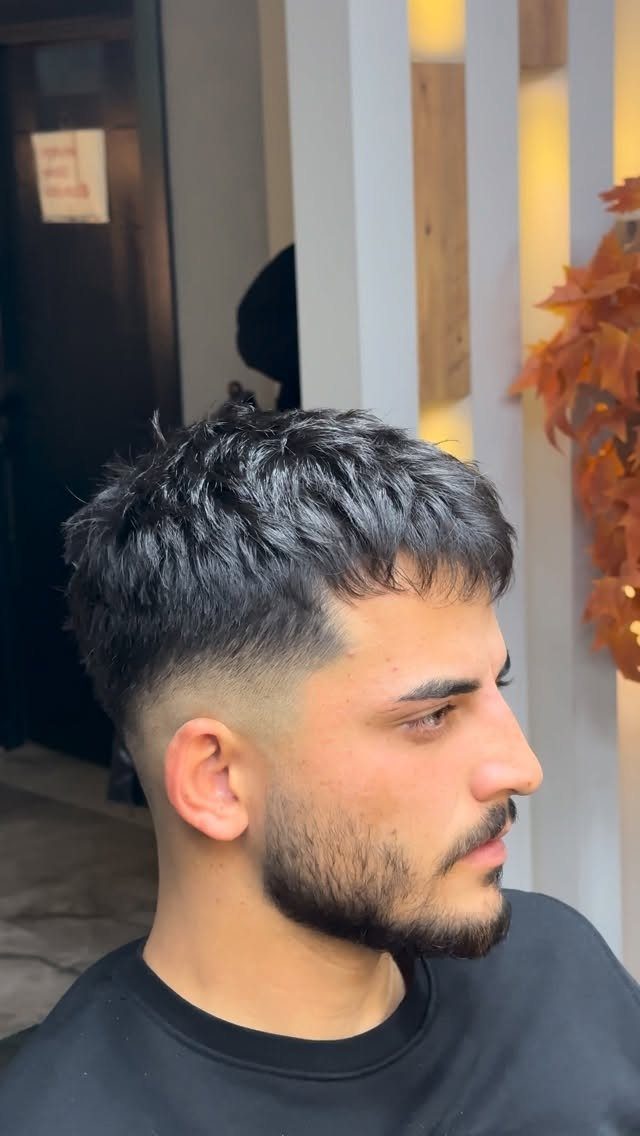
The top is cut with uneven lengths and point-cut ends, then finished forward into a textured, slightly messy fringe.
A textured crop hides a cowlick better than a blunt fringe and grows out without looking ragged.
Work a dime-sized amount of clay or fiber through towel-dried hair, push it forward, and leave it. Styling takes under a minute, and the cut holds its shape between visits.
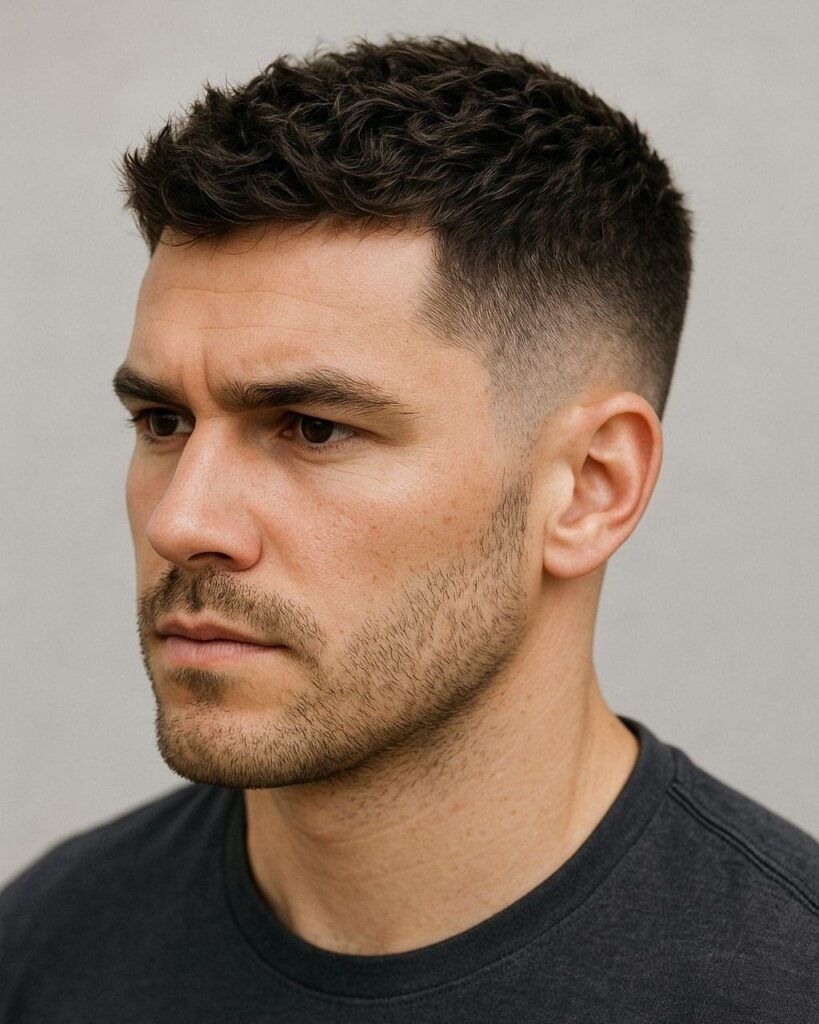
7. Tightly Cropped Fade
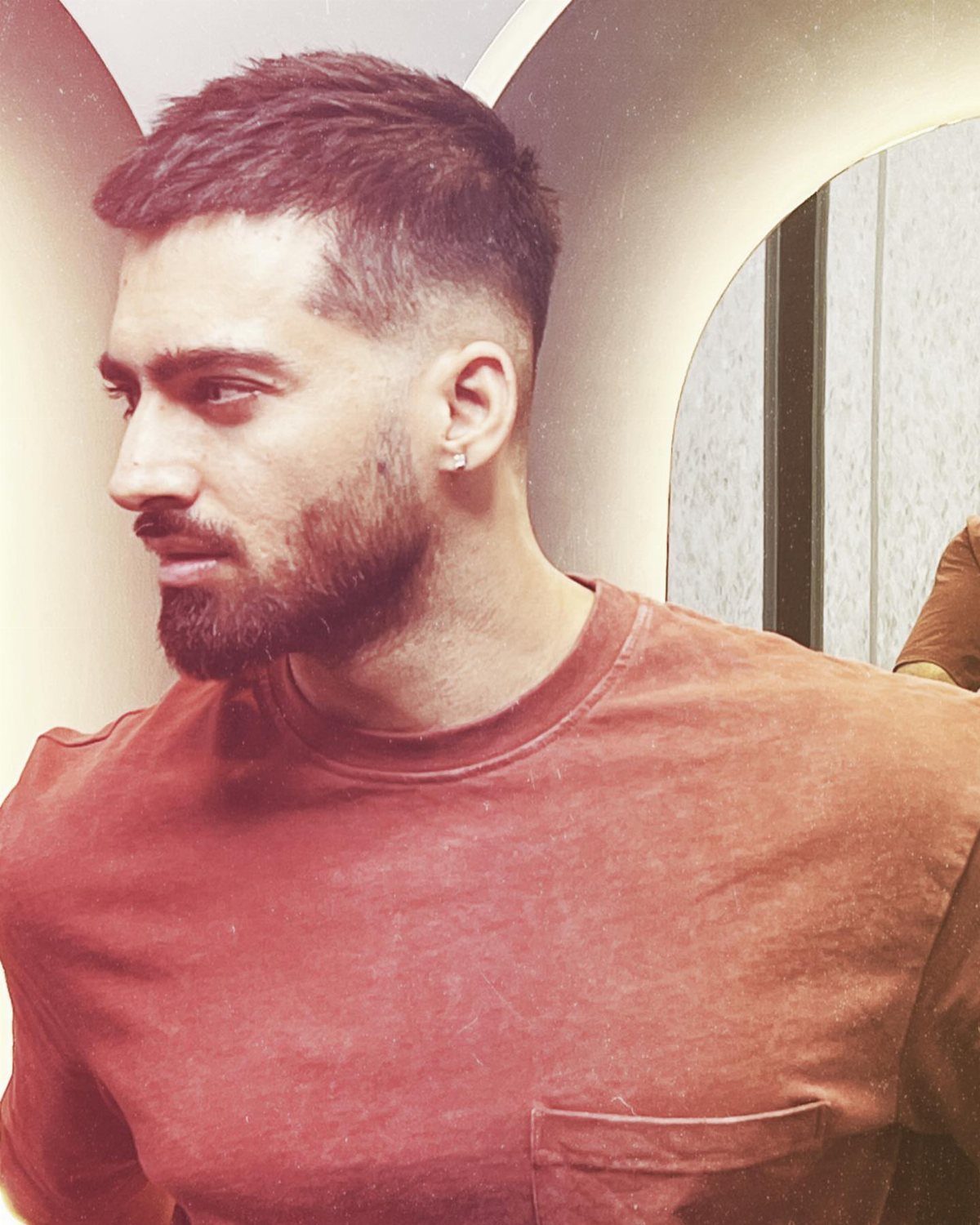
The top sits close to the scalp, while the sides fade down to skin or near it. The result is a compact, clean outline that holds its shape well through the week.
Morning work is minimal. The fade softens quickly, which means frequent visits if you want the line sharp.
8. Side Part
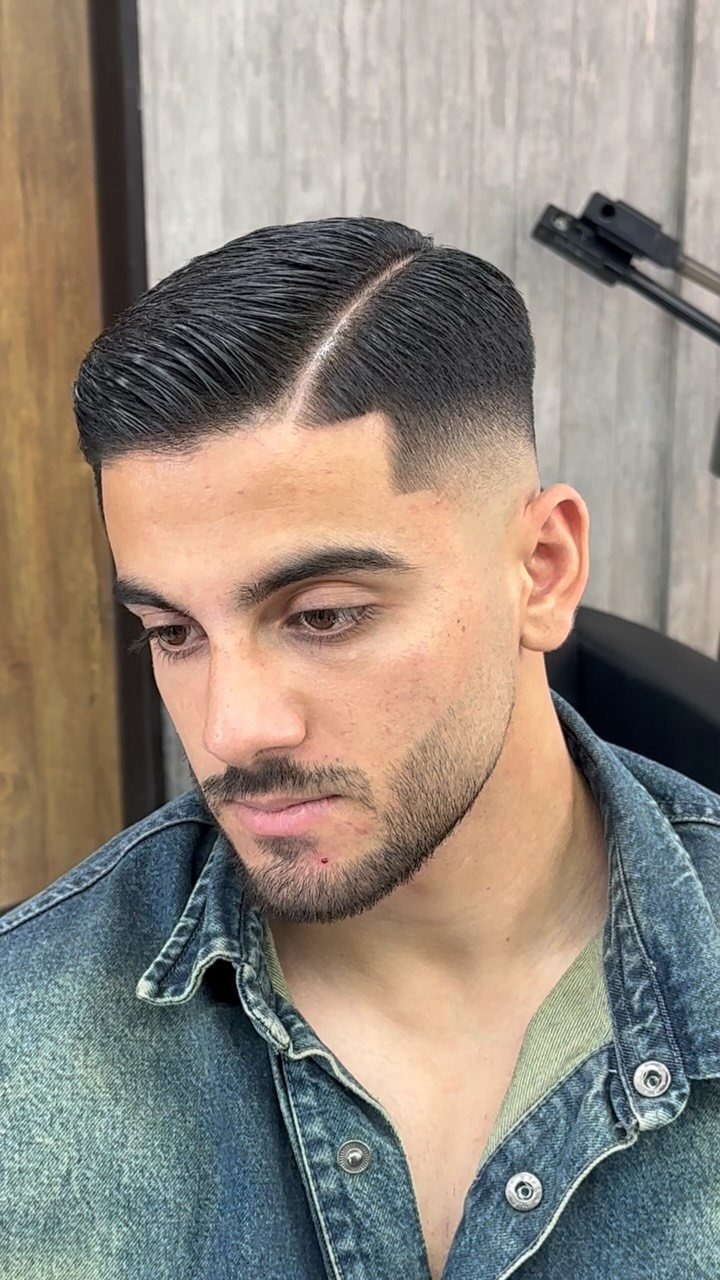
A line is cut or combed into place, dividing the hair to one side. The longer portion is swept across, creating a classic, tidy shape that reads as polished without looking formal.
Comb it into place while the hair is damp, add a light pomade or cream, and you’re done.
The part holds better when it follows a natural division in your hair. A side part grows out cleanly, and most guys get 3 to 4 weeks between trims.
9. High Fade
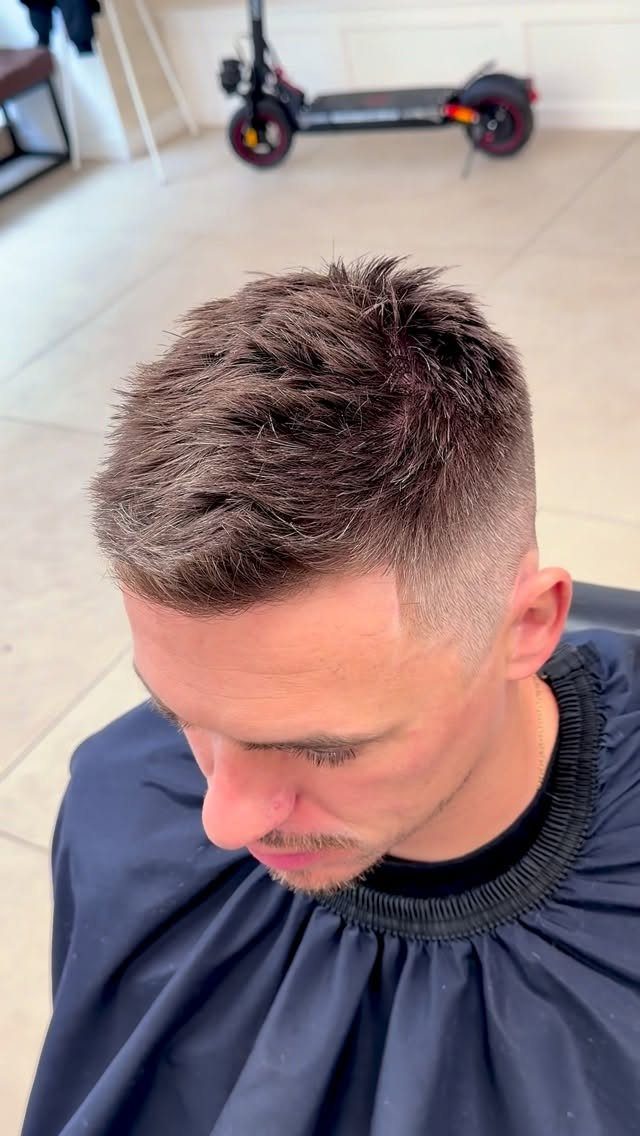
The fade starts well above the ear, leaving very short sides and back that drop to skin within an inch or two. The top retains enough length to style, creating a sharp contrast between the 2 zones.
This cut suits a guy who wants a strong, angular look and doesn’t mind frequent visits.
The high line shows more scalp, which makes regrowth obvious. Plan on a cleanup every week and a half to keep the transition crisp.
10. Textured Fringe
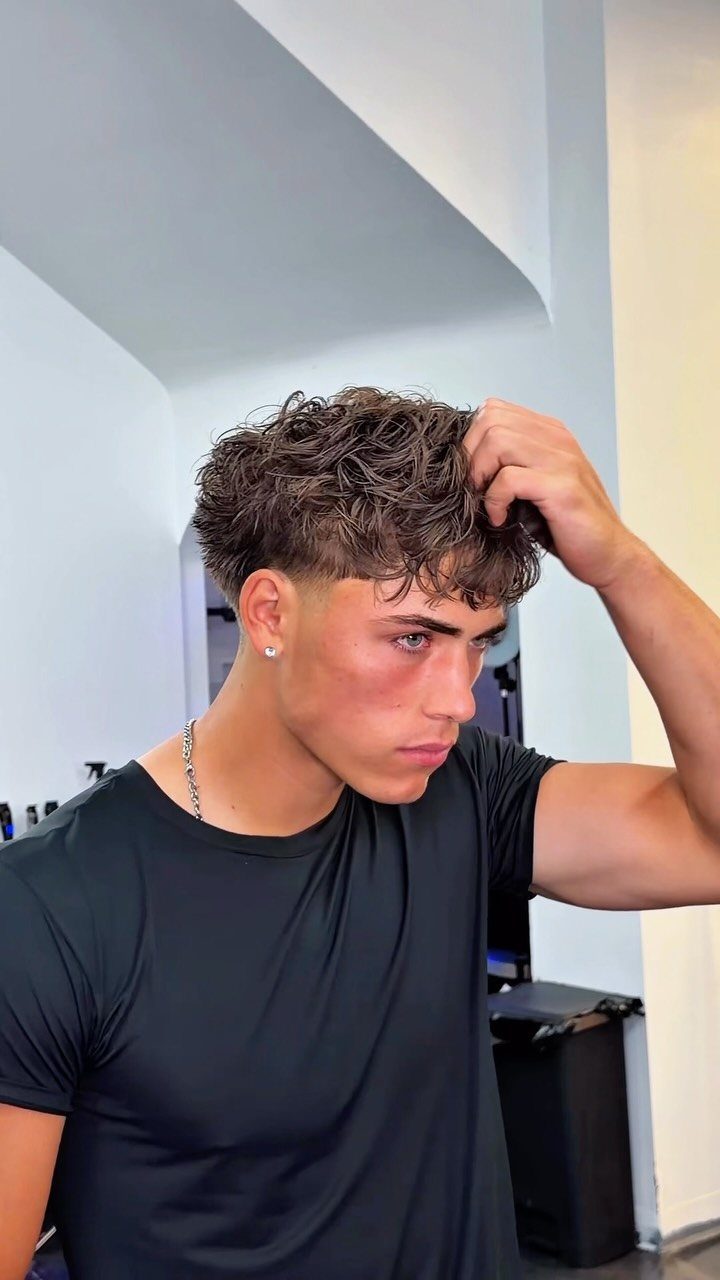
The sides are faded down, and the whole thing reads as relaxed rather than structured.
The texture hides a high forehead or an uneven hairline better than a slicked style, and it holds up through the day without a mirror check.
11. Low Taper
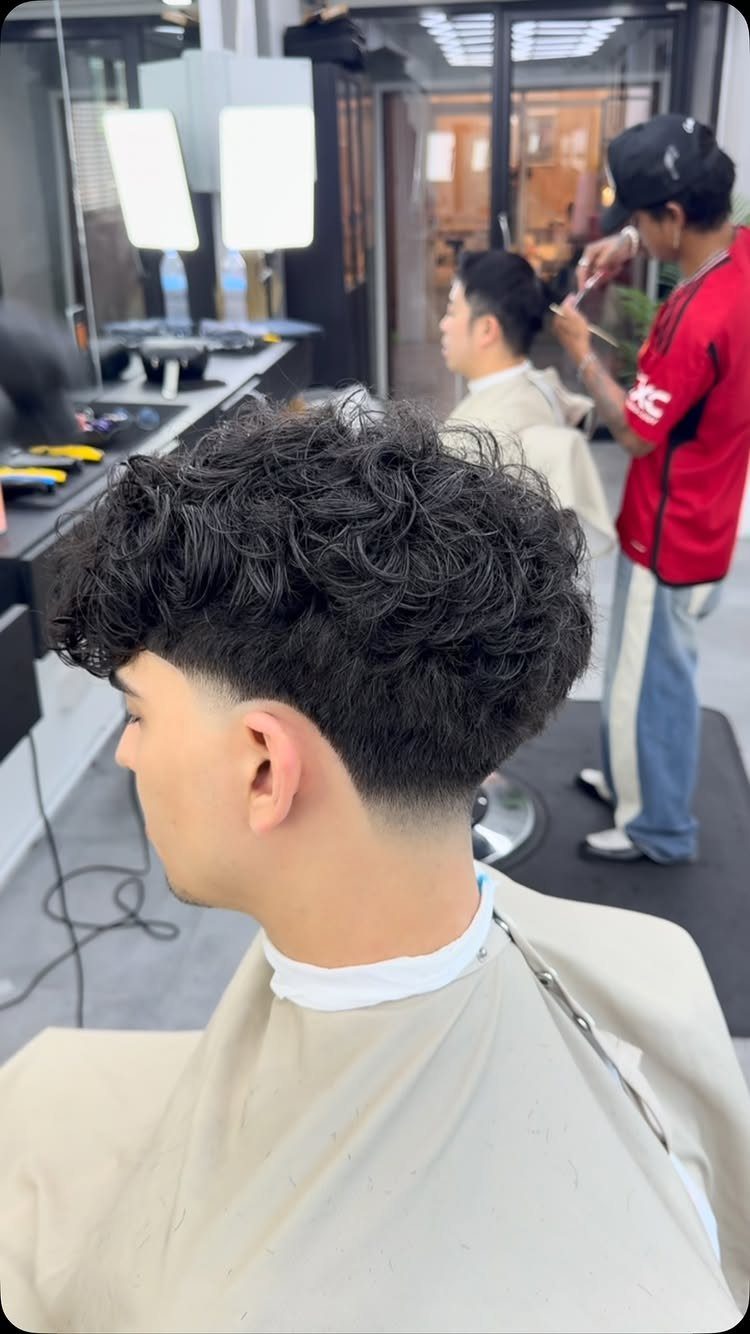
Hair is gradually shortened around the ears, sideburns, and neckline, but the taper stays subtle. There’s no skin showing, and the top connects to the sides without a hard line.
A low taper suits a guy who wants a cleaned-up look without the commitment of a fade.
It grows out gracefully, and you can stretch visits before the shape starts to look loose. Styling depends on what’s left on top, but the taper itself asks nothing of you.
12. Mid Fade
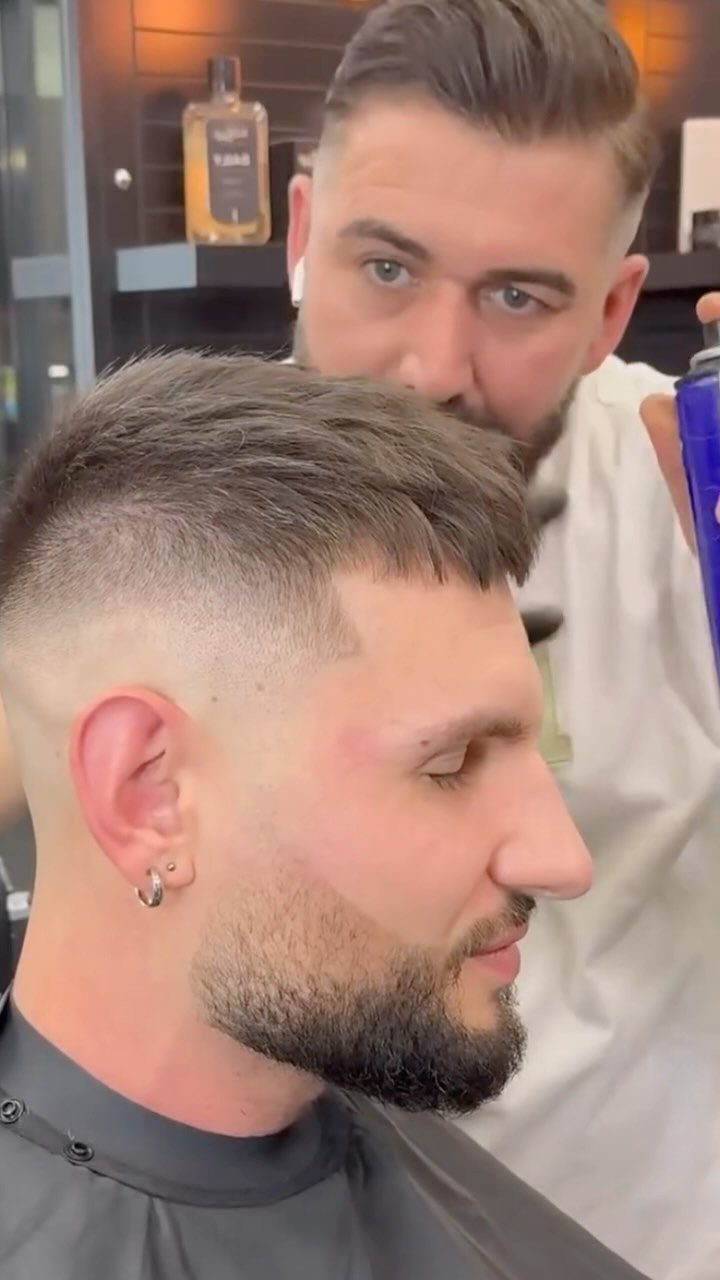
The fade begins around the middle of the sides, roughly level with the temple, and drops to skin over an inch or two.
The top keeps enough length to comb, brush, or push into shape, and the contrast between the 2 is noticeable without being extreme.
This cut suits most face shapes and works in settings where a high fade reads as too sharp. Styling time depends on how you finish the top.
13. Taper Fade
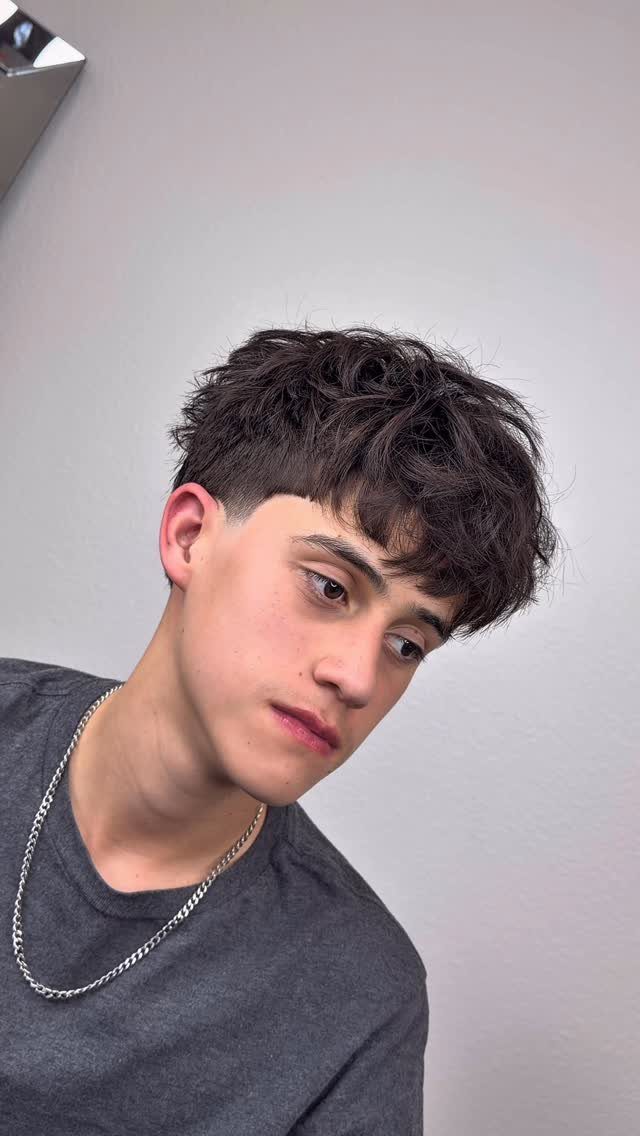
The sides drop gradually from longer hair at the top to skin or near it at the bottom, creating a soft transition rather than a hard line.
The top is left long enough to work with your fingers into loose, separated pieces.
The taper grows out more gracefully than a high fade, which gives you a few extra days between visits.
14. Undercut Side Part
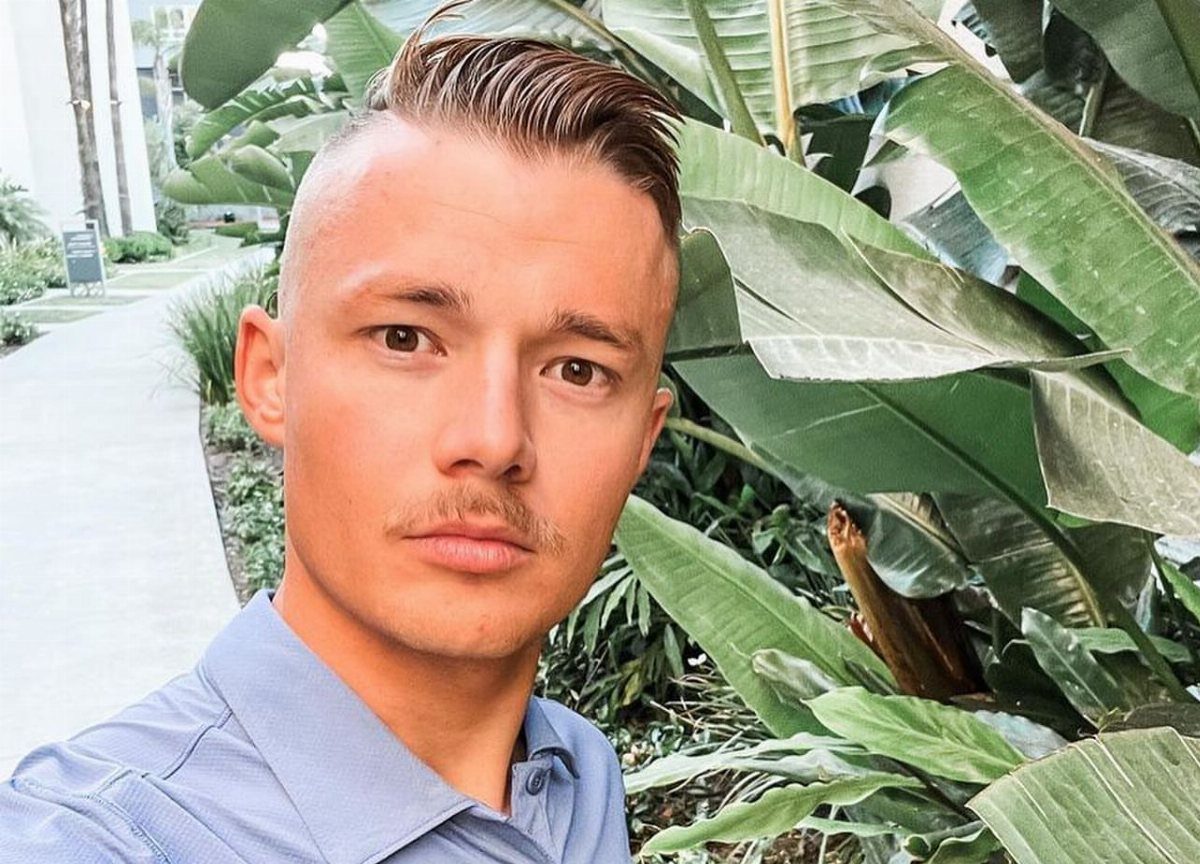
The sides are clipped to one uniform length or taken down to skin, with no taper or fade to soften the transition.
The top is left long enough to comb over to one side, creating a clean division between the two sections.
Apply a light pomade or cream while the hair is damp, comb the part where it falls naturally, and sweep the longer section across.
15. Curly Fringe
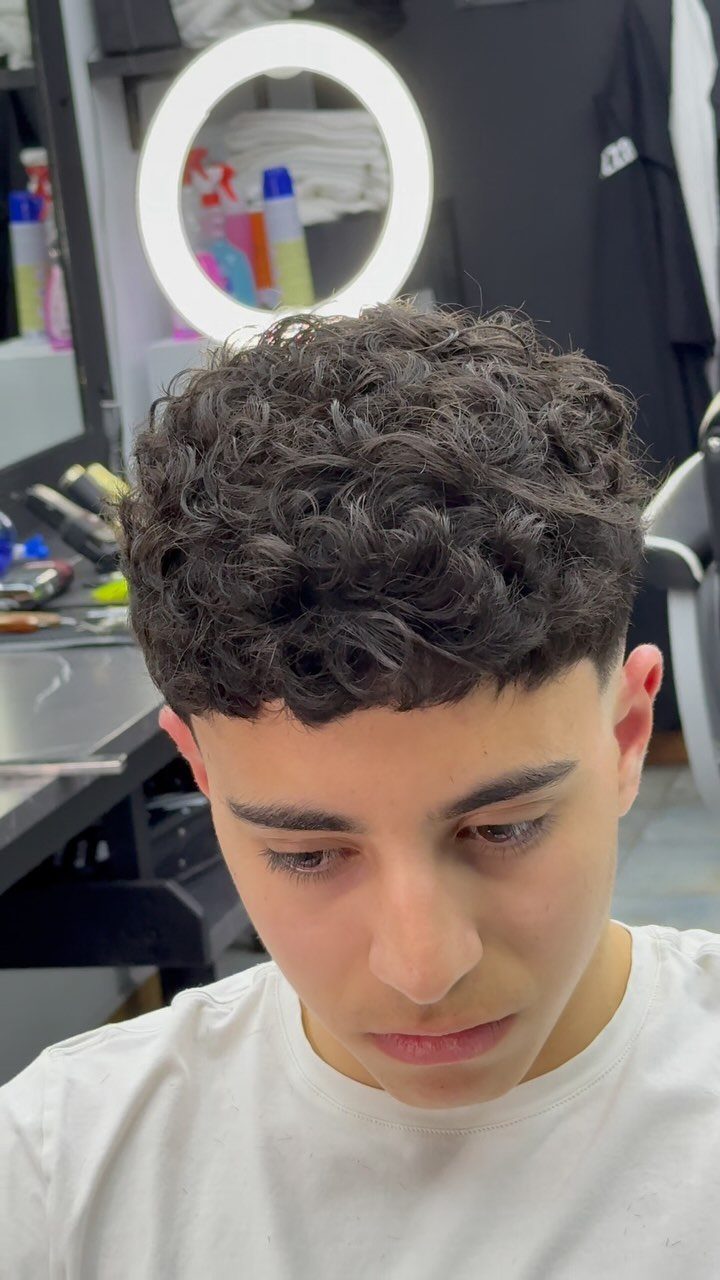
The shape works with the curl pattern rather than fighting it.
Curly hair holds the fringe without product most of the time.
A curl cream worked through while the hair is still wet will bring out the pattern without forcing it into something it’s not. The cut grows out without losing its shape.
16. Fade Short Hairstyles
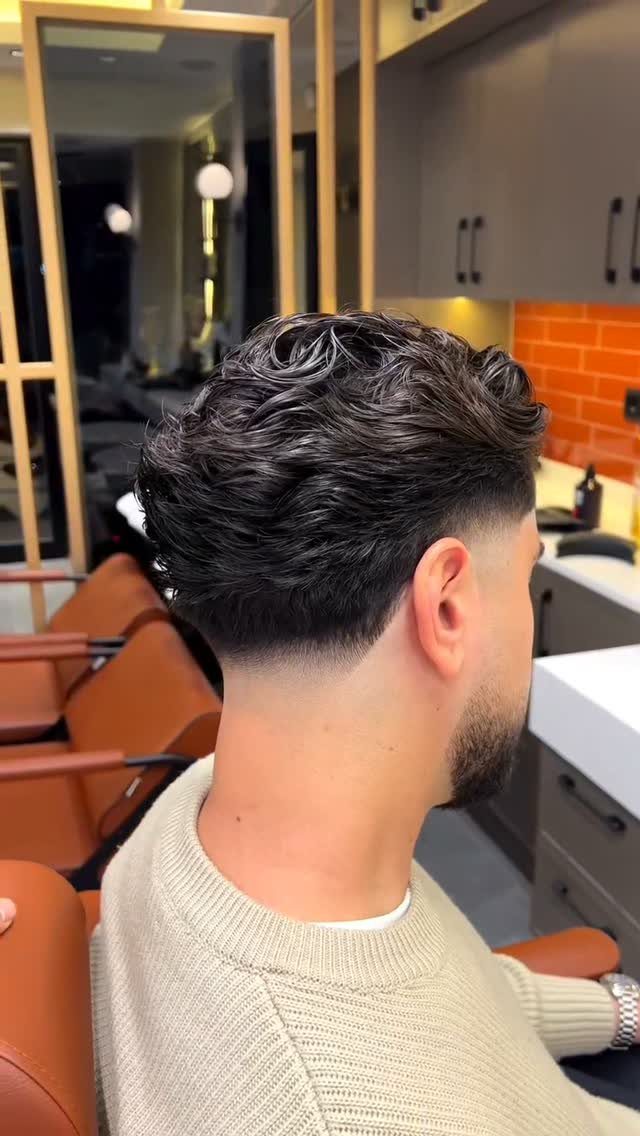
A fade on the sides paired with any short style on top gives you a clean outline and a modern look that works in most settings.
The fade can start low, mid, or high depending on how much contrast you want.
This approach suits a guy who wants a polished appearance without committing to one specific top style. The fade needs regular touch-ups to stay sharp, but the top can be styled several ways as it grows.
17. Short Curls
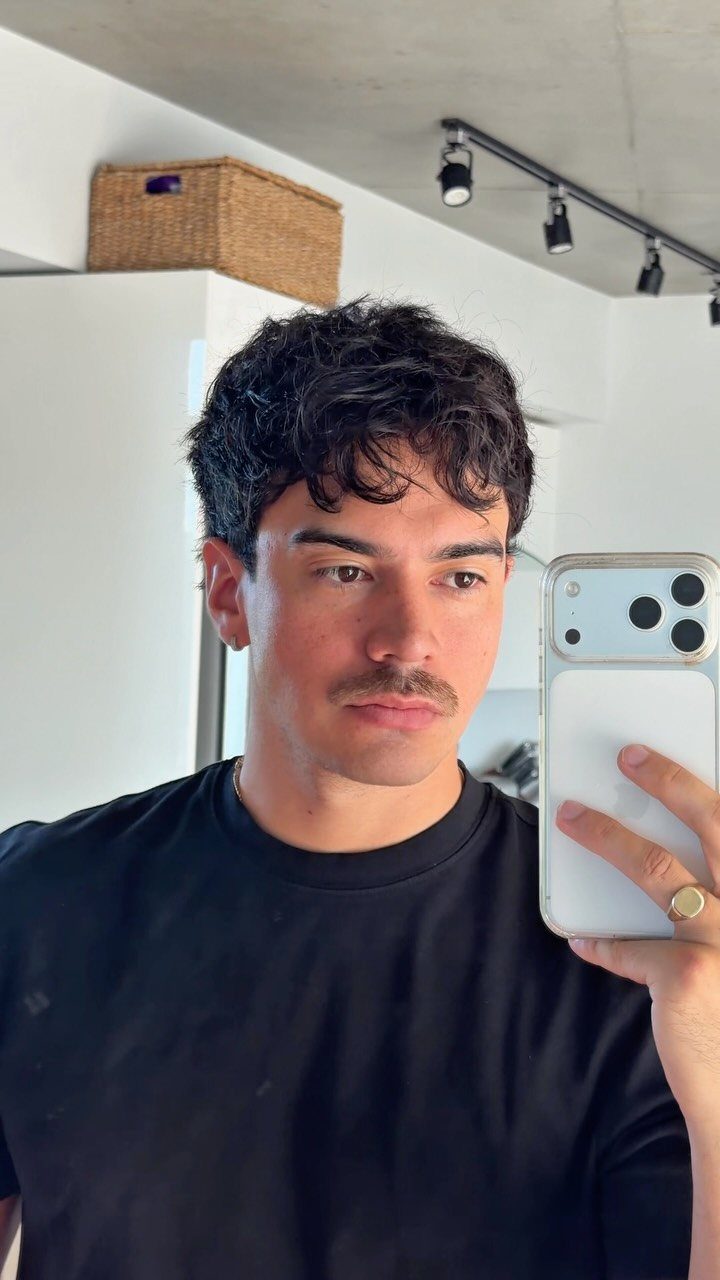
The hair is cut short enough to stay above the collar and off the ears, but long enough that the natural curl pattern shows.
This cut suits a guy with tight curls who wants something that dries on its own and looks finished.
Leave-in conditioner keeps the texture soft and the curl pattern intact without much hands-on work. No blow-dryer, no brush.
18. Caesar Cut
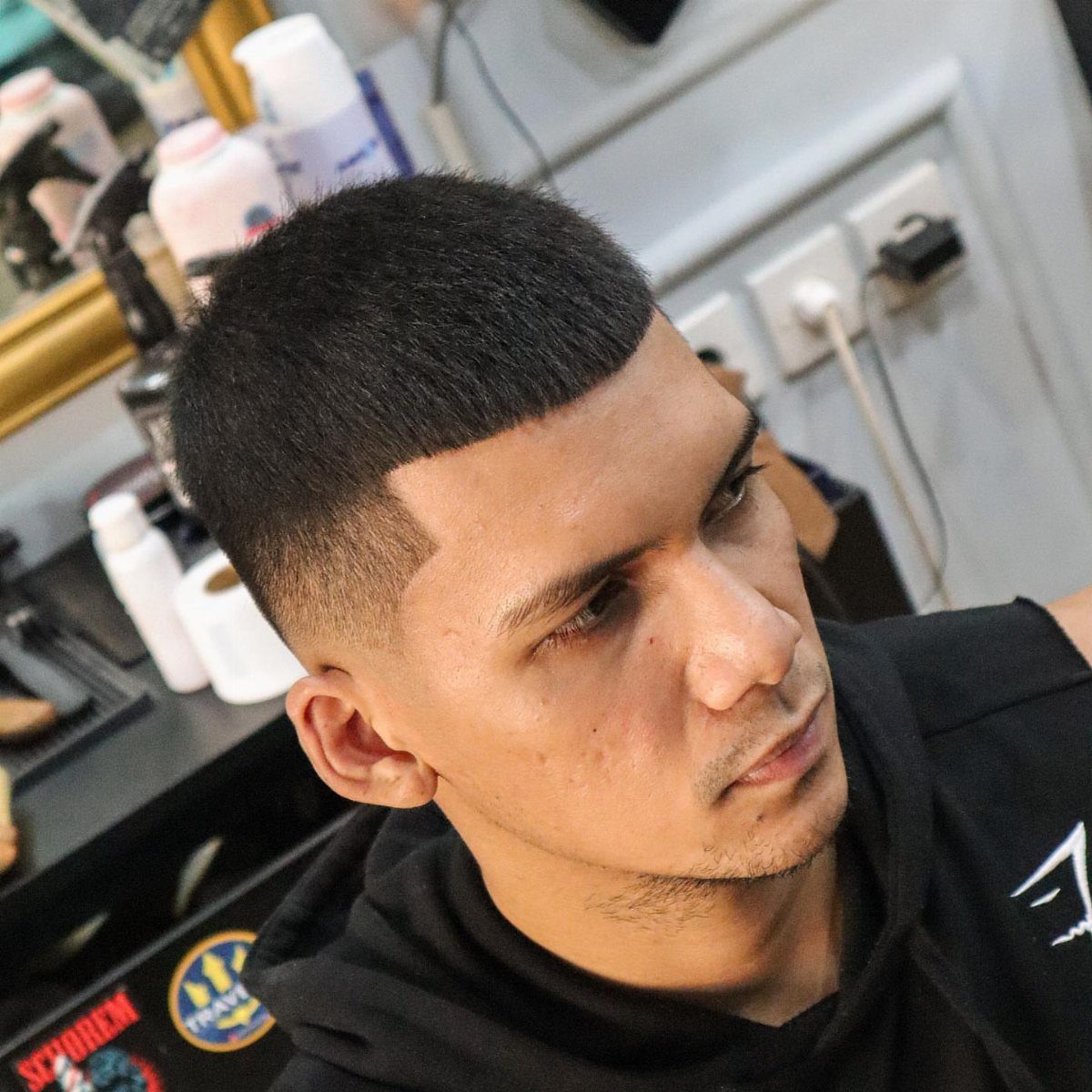
The top is cut to a uniform short length, usually around half an inch to an inch, and combed forward into a blunt fringe that sits just above the eyebrows.
The sides are faded or tapered down, and the whole cut reads as clean and symmetrical.
A Caesar cut suits a guy with fine or thinning hair because the forward shape adds coverage at the hairline.
Morning work is minimal: comb it forward while damp, add a small amount of light hold product if needed, and you’re done.
19. Curly Hair Fade
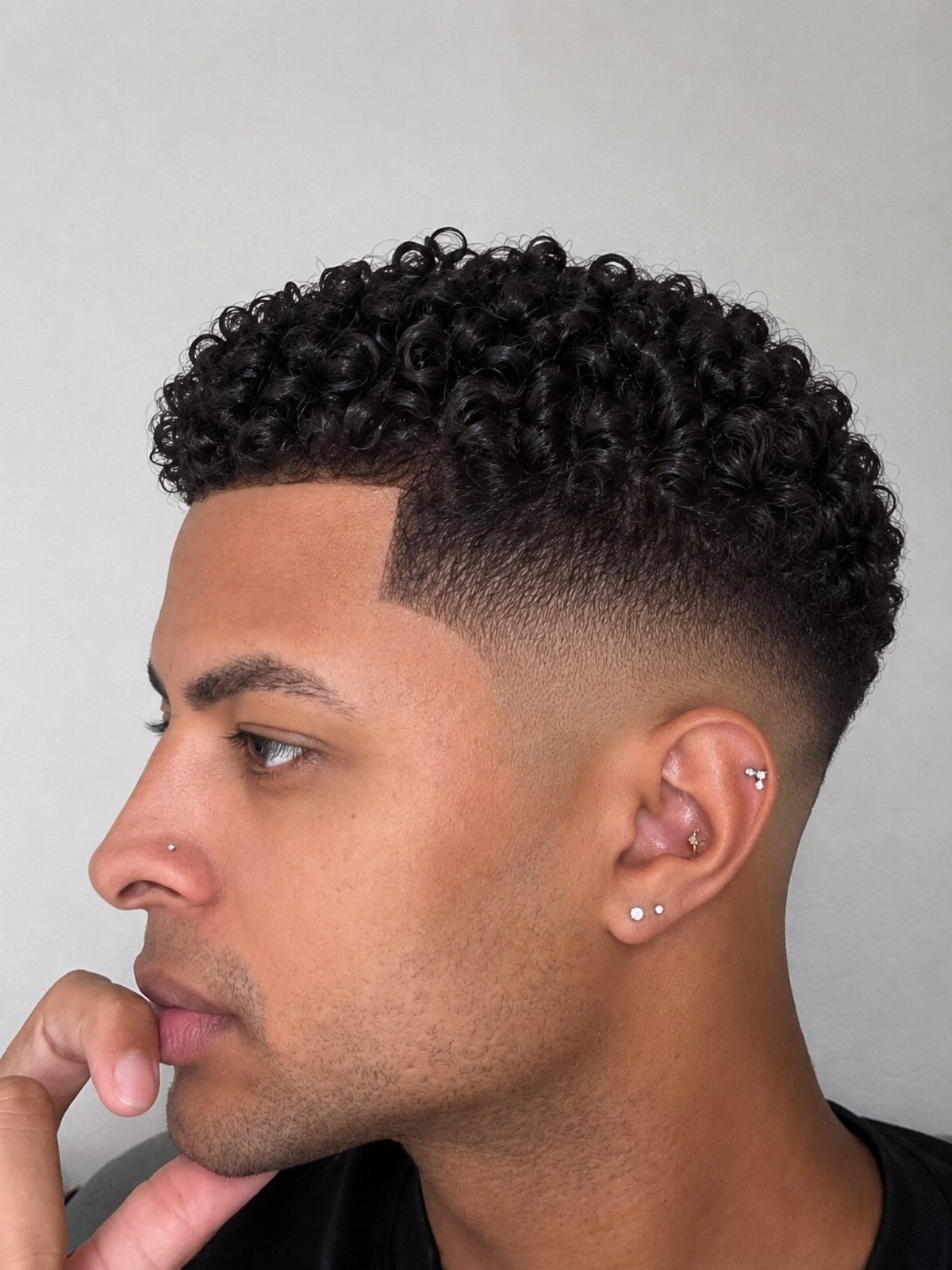
The curls on top stay long enough to hold their shape, while a fade drops the sides and back down to skin. The contrast between the 2 is sharp and intentional.
This cut suits a guy with naturally curly hair who wants a modern shape without fighting the texture. The curls need moisture to stay defined, so a leave-in conditioner or curl cream worked through damp hair keeps the pattern intact.
20. Short Brush Up
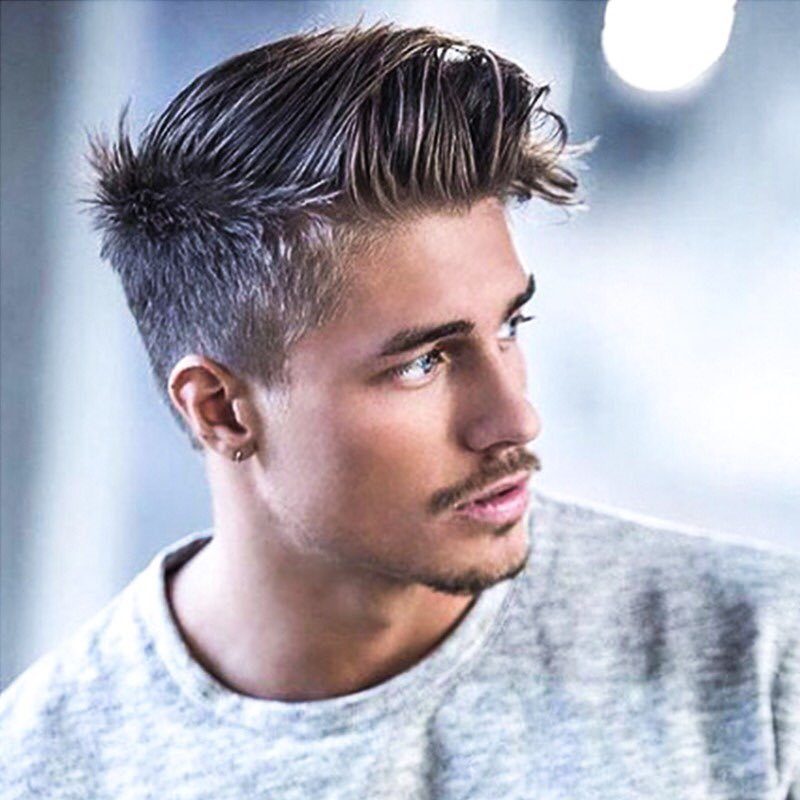
Hair on top is cut short but left with enough length to stand upright when pushed forward and up with a blow-dryer. The sides taper to skin at a high line.
Blow-dry the top upward while it’s damp, then work a small amount of matte paste or clay through with your fingers to hold the lift.
The shape stays put through most of the day without a second look. The fade softens quickly, so plan on regular cleanups.
21. Comb Over Fade
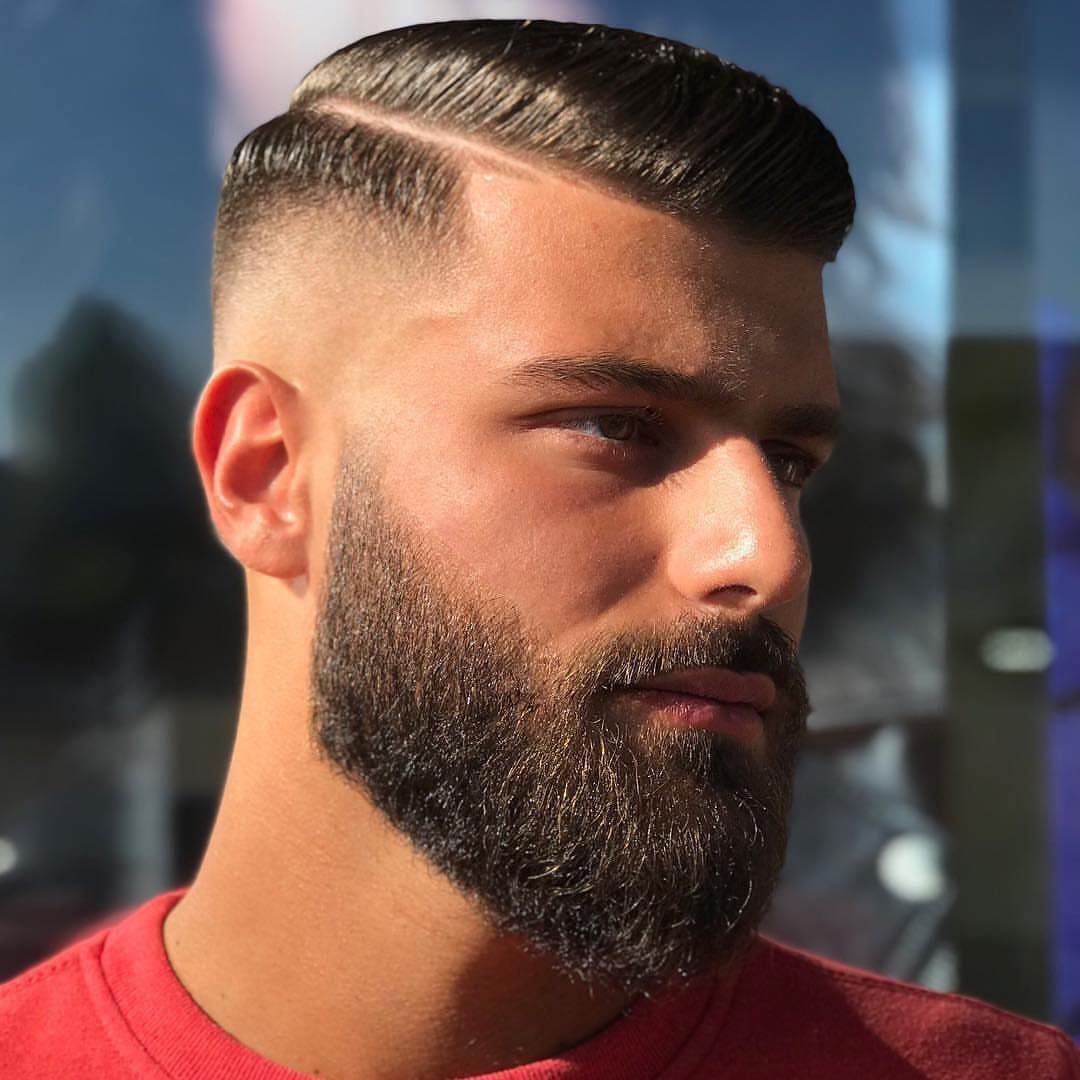
The top is left long enough to sweep to one side in a smooth line, while the sides taper or fade down gradually.
The part can follow a natural division or be cut in, and the whole cut reads as clean without looking stiff.
22. Short Spiky Hair with Fade
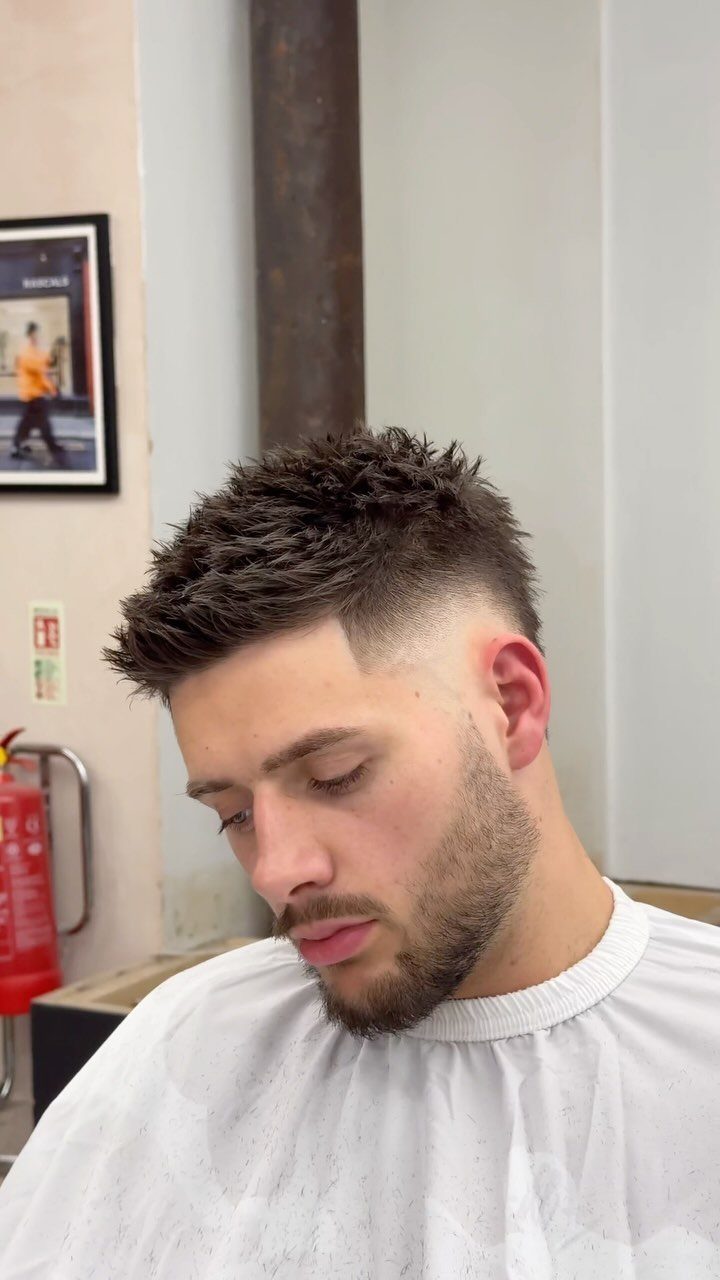
Short hair on top is cut with texture and pushed upward into separated, spiky pieces that stand off the scalp.
Work a fiber or clay through towel-dried hair and push the pieces up and forward with your fingertips.
The spikes hold their shape without looking stiff, and the cut suits a guy who wants something with movement that still reads as deliberate.
Trim and Cleanup Timing
Most short cuts need a trim every 2 to 5 weeks, but the actual interval depends on how much the look relies on precision.
A skin fade shows regrowth fast because the contrast between bare skin and longer hair announces every day of growth.
A number 1 or 2 buzz keeps a clean outline for about 3 weeks. Low tapers and French crops sit somewhere in the middle, usually going longer than anything with a high fade.
How often you need the chair matters more than the 90 seconds you spend with paste each morning.
Face Shape and Hair Type
A short cut with height on top suits a round face because it adds vertical length rather than width at the sides.
If your face reads as long or rectangular, skip the pompadour or quiff. Extra volume on top stretches a long face even further.
Oval faces can carry most short styles without much constraint. Square jaws pair well with buzz cuts, crews, or low tapers, though boxy sides can make a wide jaw look wider still.
Curly and coily hair benefits from a cut that preserves the texture rather than forcing it into something else. Shorter length can reduce the contrast between thinning areas and denser sections, which makes the whole head read as more uniform.
If you have a beard, choose a cut that complements the overall shape rather than competing with it.
Choosing and Describing a Cut
A reference photo saves you from translating words into a cut. Hair terminology gets complicated, and a picture gives your barber a shared reference.
Clipper guard numbers refer to how much hair is left after the cut. Higher guard numbers leave more length.
Say how many minutes you’ll give it each morning. A cut that looks polished in the chair might need product and a blow-dryer to hold that shape at home.
Specify how you want the neckline finished: blocked, rounded, or tapered. Each reads differently, and the choice affects how the back grows out.
Frequently Asked Questions
Does short hair make guys look younger?
A clean, well-maintained short cut can make a guy look sharper and more polished, which often reads as younger.
Styles like a crew cut or buzz cut reduce visual clutter and draw attention to facial structure rather than thinning or graying hair.
The effect depends more on the precision of the cut and how well it suits your face shape than on length alone.
What is a man’s short haircut called?
There’s no single term for all short cuts. A buzz cut, crew cut, Caesar cut, French crop, and undercut are all distinct short styles, each with different proportions and styling needs.
An undercut leaves the top longer while the sides stay buzzed or faded, creating a hard line between the 2 sections.
What men’s haircuts are currently in style?
Fades paired with textured tops, crew cuts, French crops, and buzz cuts are all in regular rotation right now.
Short cuts never fully leave style because they work in most settings and suit different hair types. The choice matters more than the trend: pick a cut that fits your face shape and the time you’ll give it each morning.
What are the benefits of having short hair for men?
Short hair dries fast, asks little of you in the morning, and works in professional settings without looking stiff.
A buzz cut or crew cut needs almost no styling, while a fade or crop gives you a polished look with minimal product.
Short cuts also keep you cooler in warm weather and reduce the time spent on upkeep compared to longer styles.
Are short haircuts suitable for all face shapes?
Most short cuts can be adapted to suit different face shapes by adjusting height on top and the fade line on the sides.
A round face benefits from a cut with little width at the sides, while a long face should skip extra volume on top. Oval shapes handle nearly anything; square jawlines look better with something clean on the sides.
Do I need to use hair products with a short haircut?
A buzz cut or crew cut usually needs nothing, while a quiff or textured crop asks for a small amount of clay, paste, or pomade to hold the shape.
Product choice depends on the cut: if the style relies on lift or texture, you’ll need something to keep it in place. If the cut works on its own as it dries, you can skip it.
Can I change my short haircut style easily?
Short hair lets you switch between styles as it grows, though some transitions take longer than others.
A buzz can grow into a crew cut or textured crop, and a fade can be left to taper as the sides fill in.
Adding product or changing how you push the top lets you shift the look without waiting for length.
What is the best way to choose a short haircut that suits me?
Match the cut to your texture and face shape first, then decide how much time you’ll spend on it before work.
A reference photo helps your barber understand what you want, and saying how often you’re willing to come back for a trim narrows the options.
What is the easiest haircut to maintain for guys?
A buzz cut clipped to one uniform guard is the easiest to maintain because it asks nothing of you in the morning and can be done at home with clippers.
A crew cut is nearly as simple, needing almost no product and drying on its own. The easiest cut is the one that looks finished as it dries and holds its shape between visits.
What counts as a low-maintenance haircut?
Low-maintenance means little styling time, infrequent barber visits, and minimal product, not just short length.
Buzz cuts and crew cuts buy you weeks between visits, skin fades buy you 10 days. The actual work is measured by how long it takes to look finished each morning and how often the shape requires a trim.
What is the most popular short hairstyle for guys?
The side part and undercut are both common because they work in most settings and suit different hair textures.
Textured tops with faded sides show up everywhere for good reason. Popularity matters less than fit: the most popular cut is only the right one if it suits your face shape and the time you’ll give it.