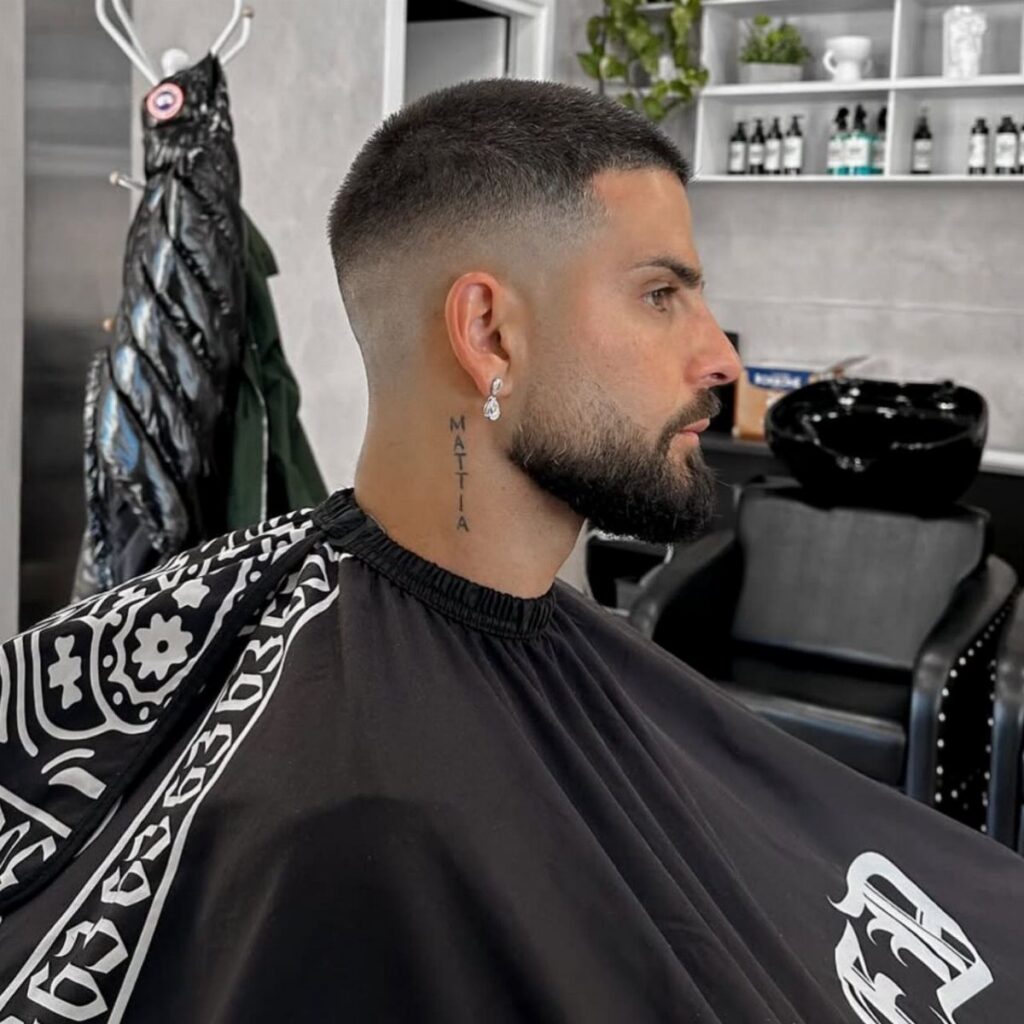
Face shape decides where the fade should start, and the wrong placement will shorten or widen proportions in ways that work against you.
A high fade suits strong, even hairlines because it pulls attention upward; a low fade keeps length on the sides when a rounder face needs it.
Guard length for the top runs from a number 1 to a 4 or higher if texture matters, and the sides can drop to skin for maximum contrast or taper gradually if you want to stretch 3 weeks between cuts.
The line-up fades within a week, the shaved design even faster, and a skin fade needs refreshing every 10 to 14 days.
1. Buzz Cut with Beard
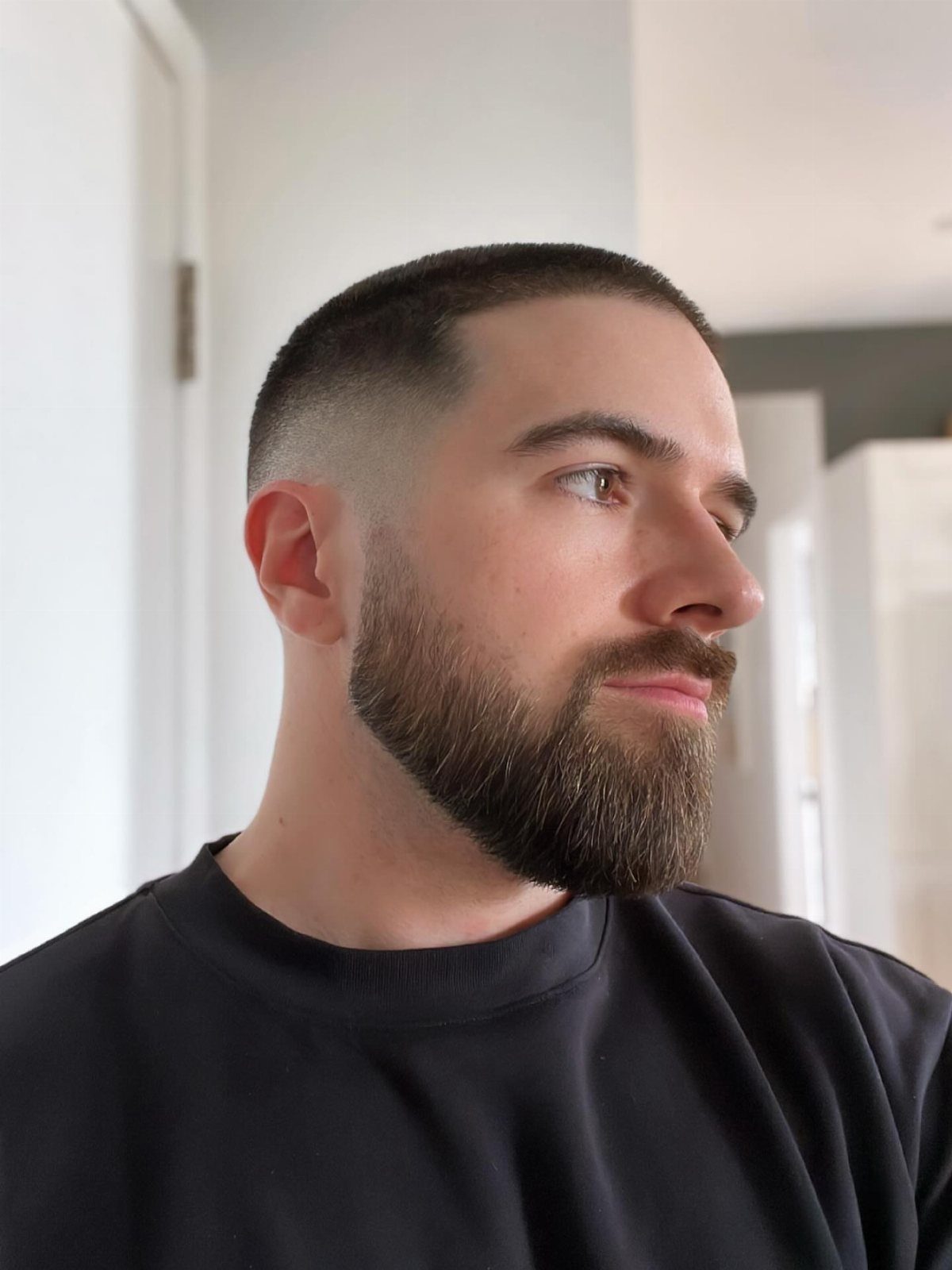
The beard fills in where the fade clears away, and a barber who knows both will blend the temple and sideburn so the transition stays clean.
Guard length depends on how thick your facial hair grows; a number 1 or 4 on top keeps the proportions close when the beard is full.
The cut needs a touch-up every 2 weeks to hold the fade, and the beard wants trimming at the same interval if you keep it shaped. Styling time is zero.
2. High and Tight
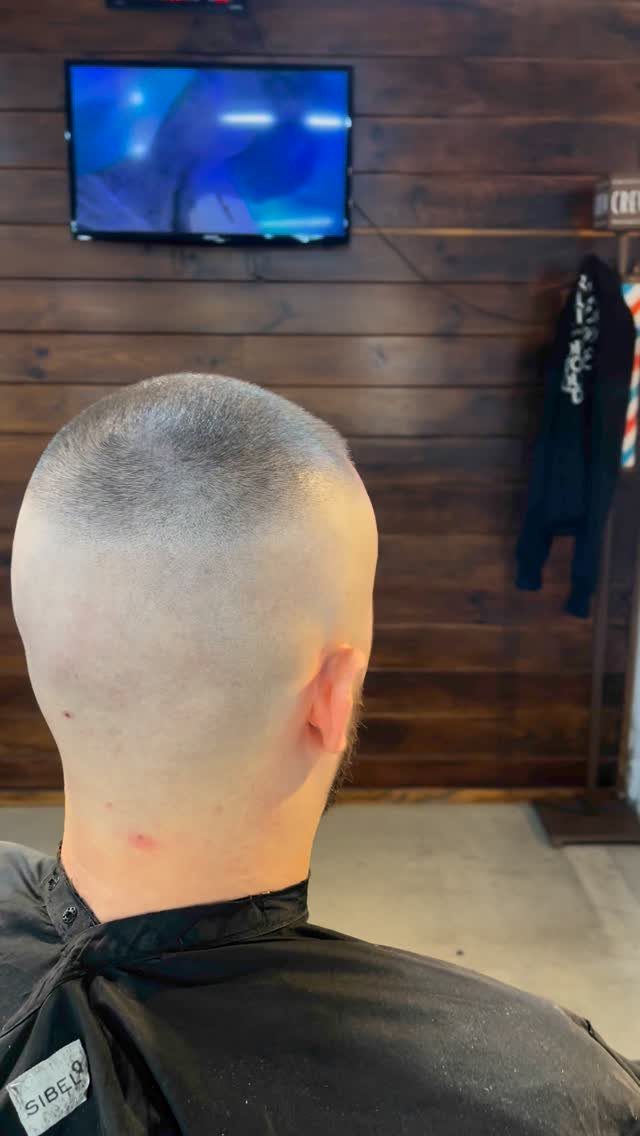
Sides go short or to skin, the top stays clipped to a number 1 or 2, and the line where they meet sits high enough that the contrast reads from across a room. The shape comes from placement more than blending.
Ask for the fade to start above the parietal ridge for the full effect.
It grows out fast because there is so little hair to begin with, so plan on weekly or biweekly trims. No product, no morning routine.
3. Low Fade Buzz Cut
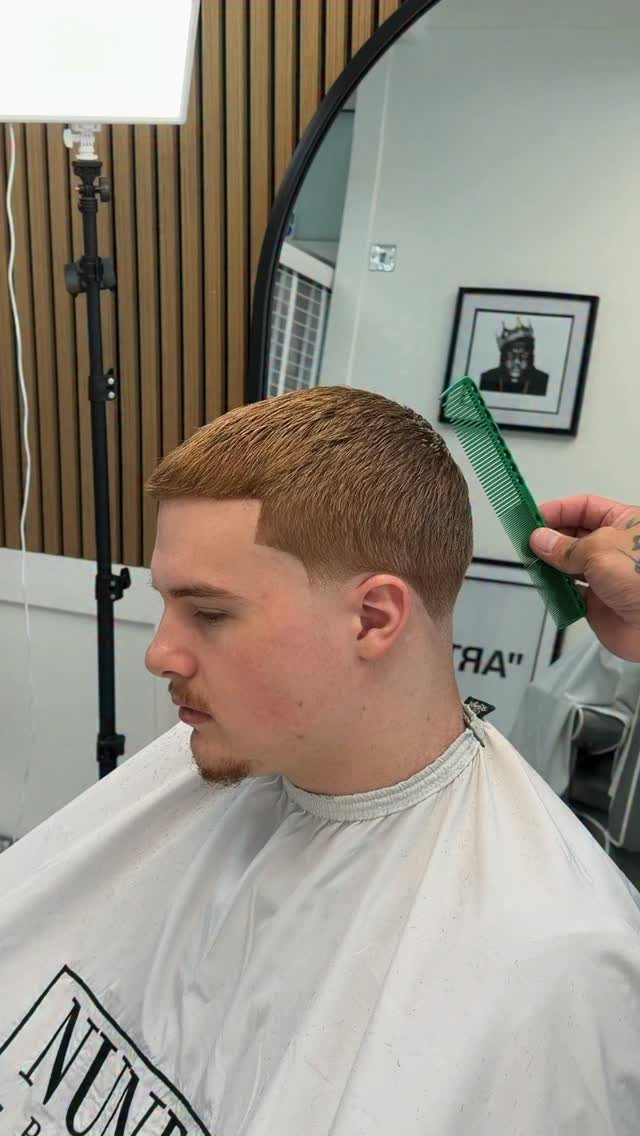
The blend begins near the top of the ear and tapers gradually, so the sides keep more coverage and the change stays understated.
Men with rounder faces get more length on the sides this way, which can help balance proportions.
The top is short enough that you will not need to style it, and the low start means the fade lasts longer between cuts than a high or mid version.
4. Mid Fade
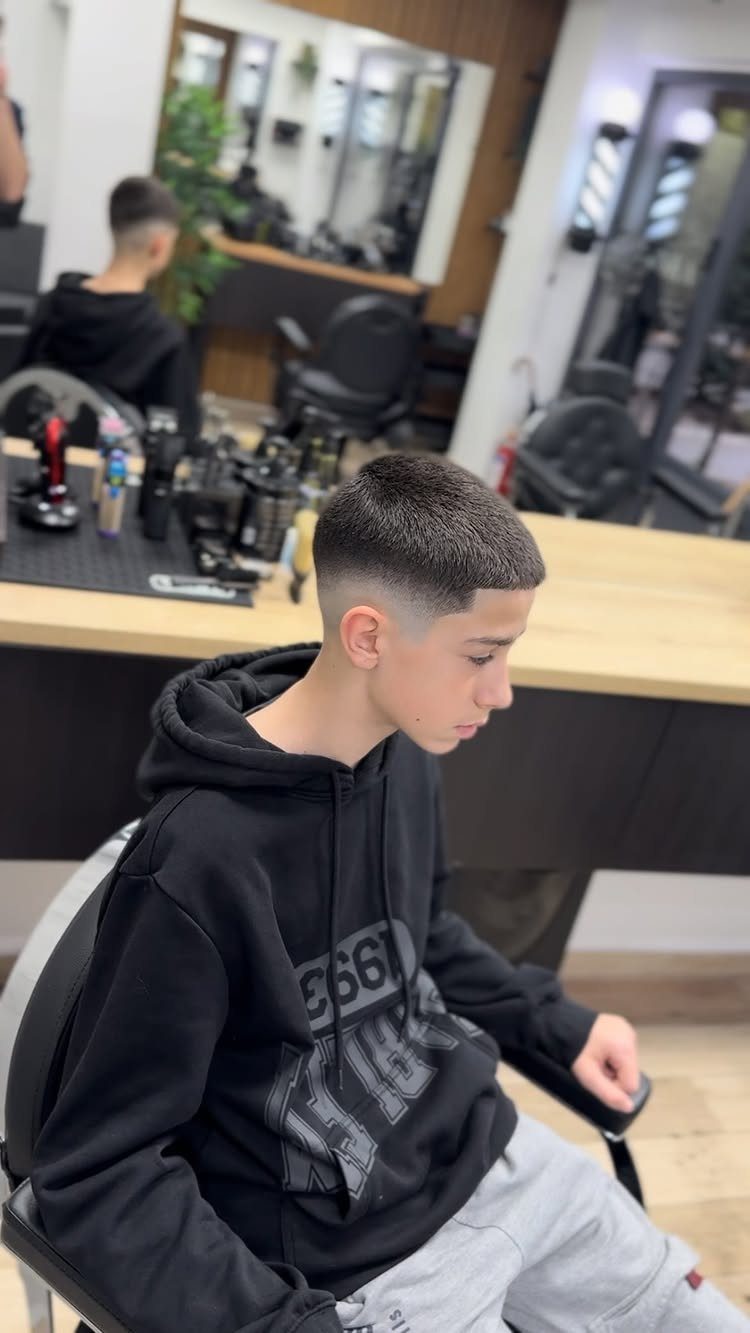
The taper starts around the middle of the sides, roughly halfway between the top of the ear and the temple, which lands it between the restraint of a low fade and the boldness of a high one.
Most face shapes work with this placement because the contrast is there but not extreme.
Expect to see a barber every 2 to 3 weeks to keep the blend crisp. No styling required in the morning, and the grow-out period is forgiving enough that you can stretch it an extra week if you need to.
5. High Fade Buzz Cut
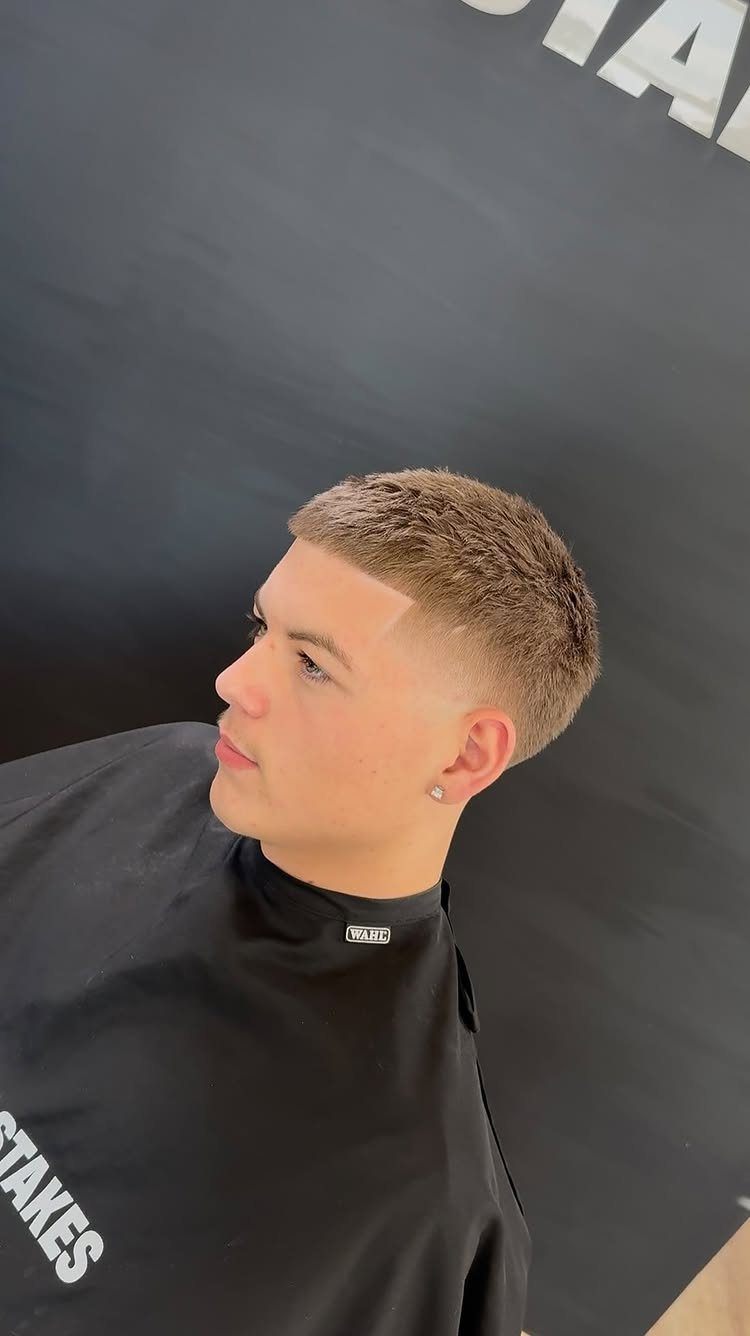
The fade climbs to the temples or higher, carving a sharp boundary between the buzzed top and the tight sides.
That level of contrast suits men who want the cut to make a statement, and it works especially well if your hairline is strong and even.
The blend will blur quickly, so this is a high-commitment choice in barber visits.
6. Classic Buzz Cut Fade
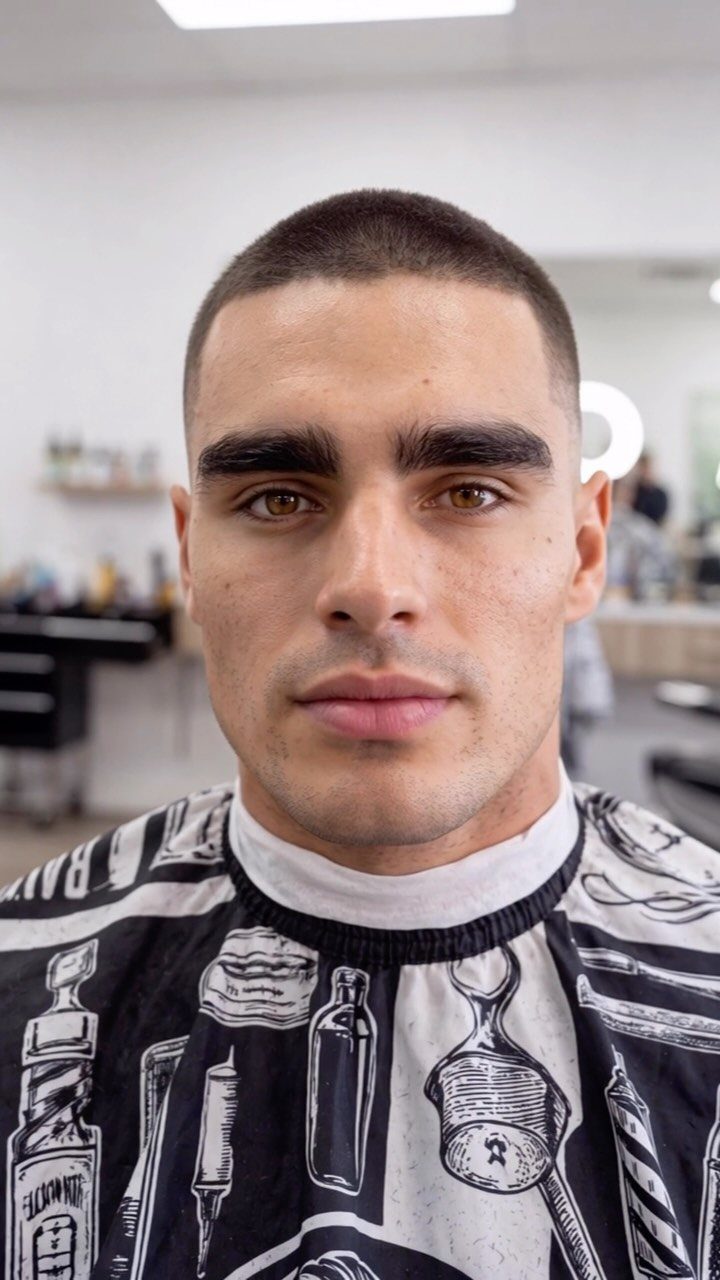
A uniform guard on top meets a gradual taper on the sides, and the whole cut stays short enough that no part of it needs attention in the morning.
The fade is there but subtle, which keeps the look clean without drawing the kind of attention a skin fade or high contrast cut does.
This is the version I would choose if I wanted something that worked in any setting and did not require explaining. It grows out evenly, and you can push it to 3 weeks between cuts if the blend is done well.
7. Skin Fade Buzz Cut
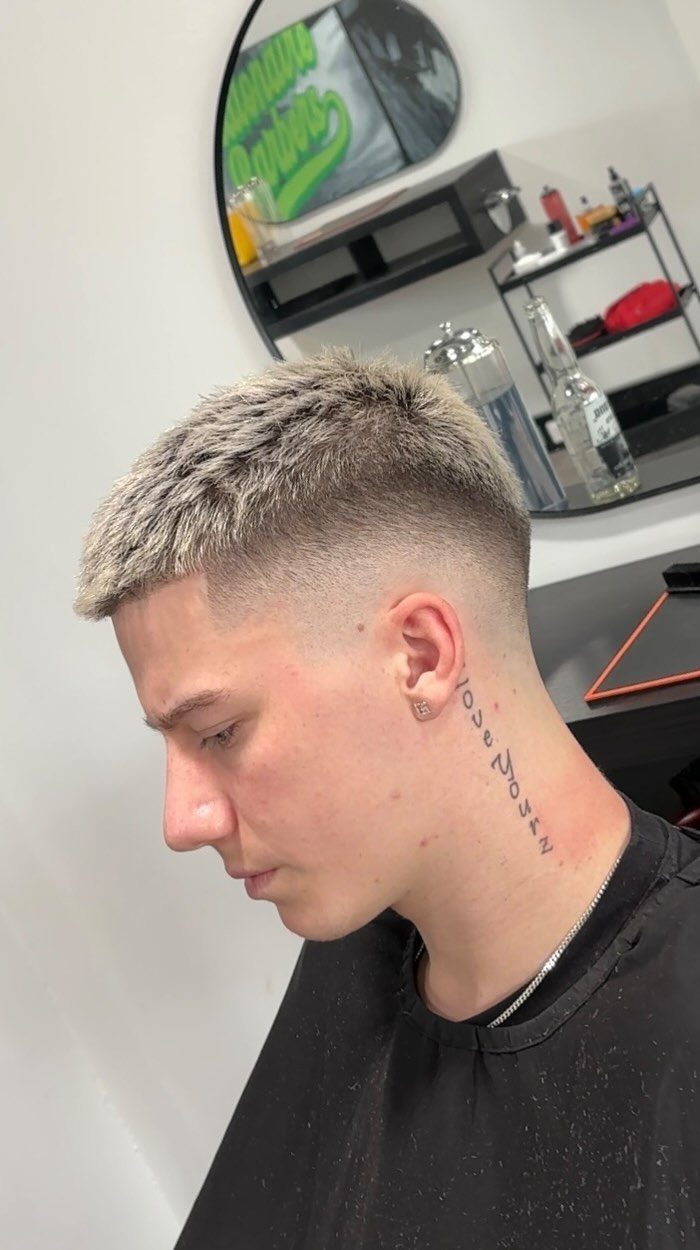
The sides drop straight to skin, and that creates the sharpest line you’ll see between a buzzed top and nothing below it.
That level of contrast makes the cut bold, and it requires precision from your barber to keep the blend smooth.
The fade blurs fast, so expect frequent trips back. No styling time, but the upkeep is frequent.
8. Buzz Cut with Line-Up
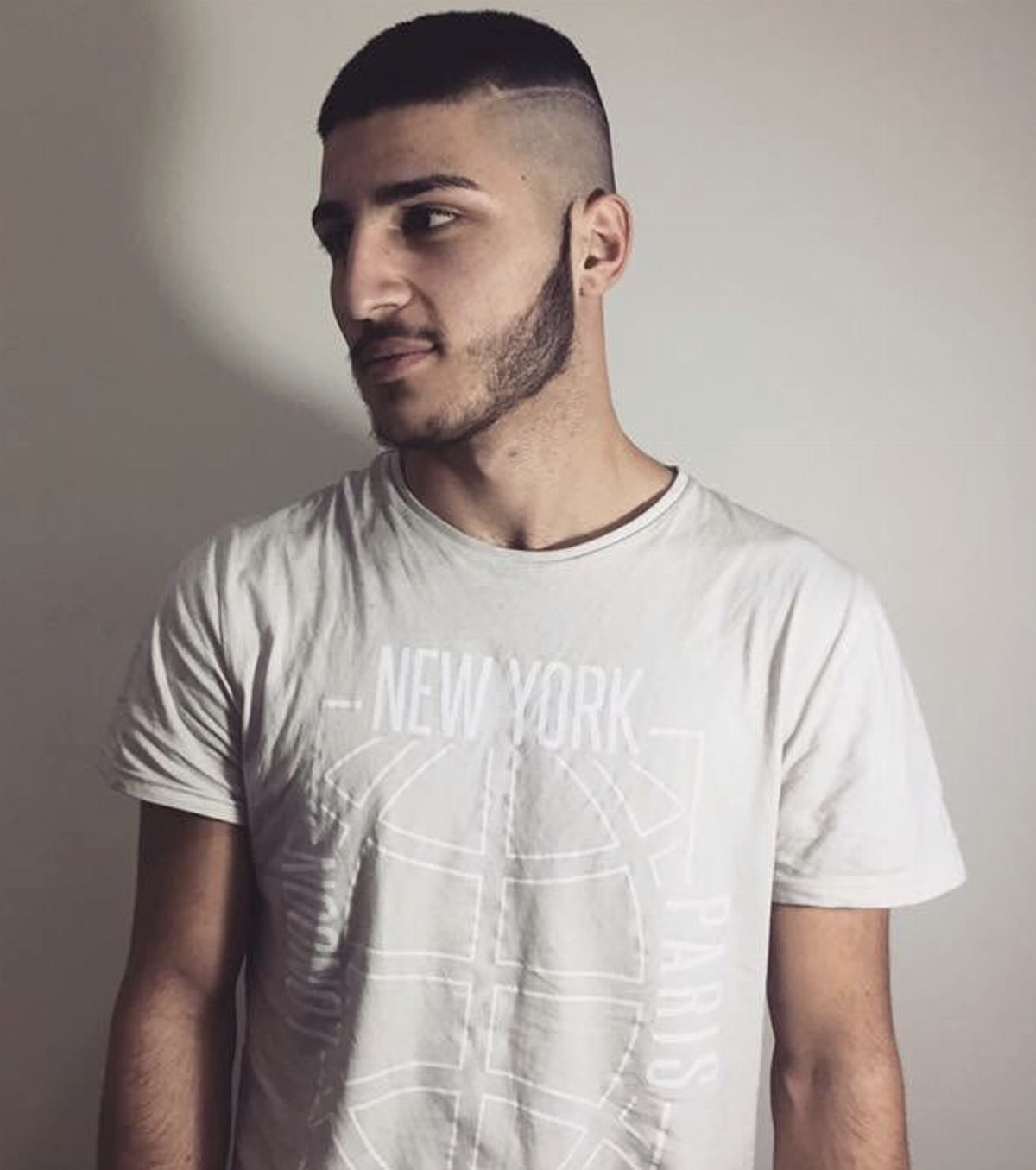
A line-up straightens the hairline and temples into crisp edges that define the face. The barber uses a trimmer or razor to carve the perimeter, and the result is a finished look that stays crisp for about a week.
Ask for it at the same appointment as your fade. The line-up fades faster than the buzz, so keeping it crisp means regular visits.
9. Crew Cut
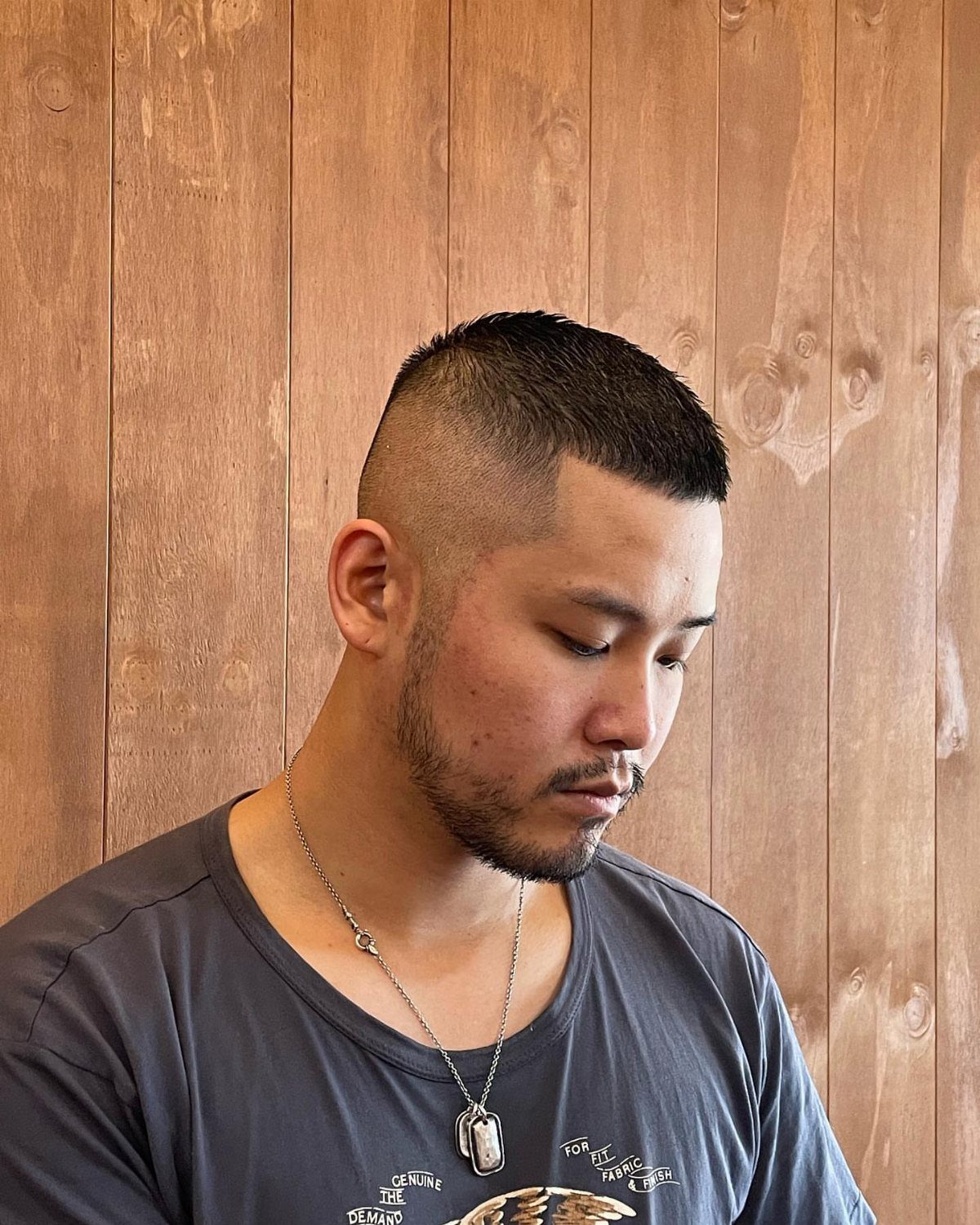
The top keeps enough length to stand upright while the sides stay tight or faded, which separates this from a uniform buzz.
You can leave a little length on top if you want to add texture, or go shorter and skip styling.
Most barbers will taper the back and sides to match the fade height you choose. Styling is optional, and the cut holds its shape for 2 to 3 weeks.
10. Textured Buzz Cut Fade
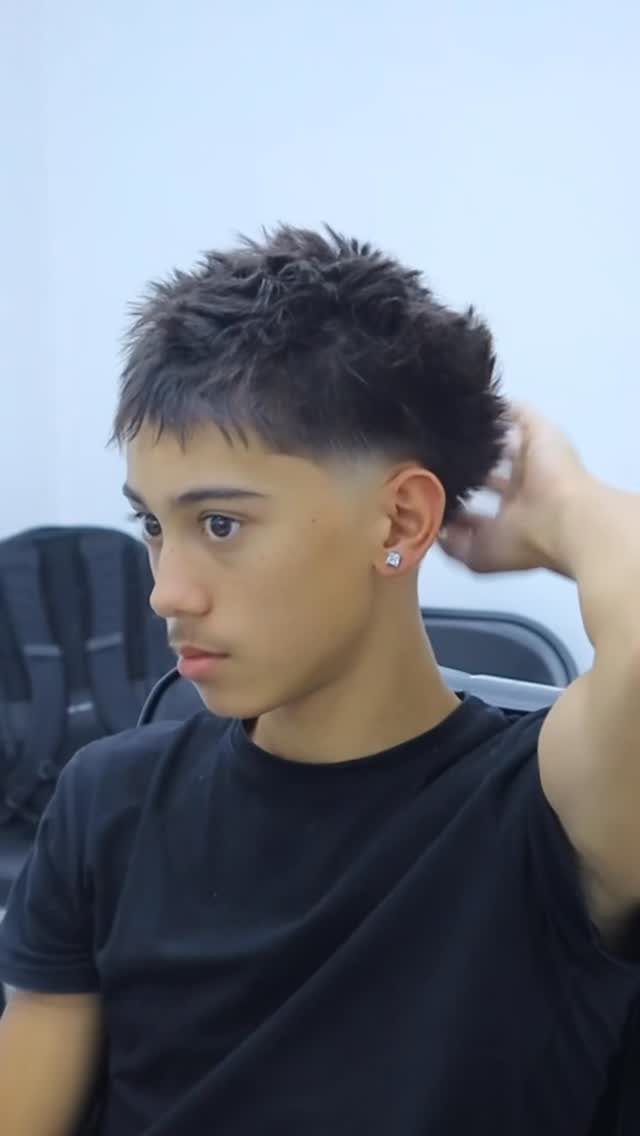
Leaving more length on top, usually a number 4 or higher, gives natural texture room to show through. A light styling product can pull out waves or add definition, but the cut still reads as low-maintenance.
This version works well if your hair has natural movement and you want a buzz that does not flatten it completely. A low taper fades gradually and stretches the time between cuts.
11. Buzz Cut with Shaved Design
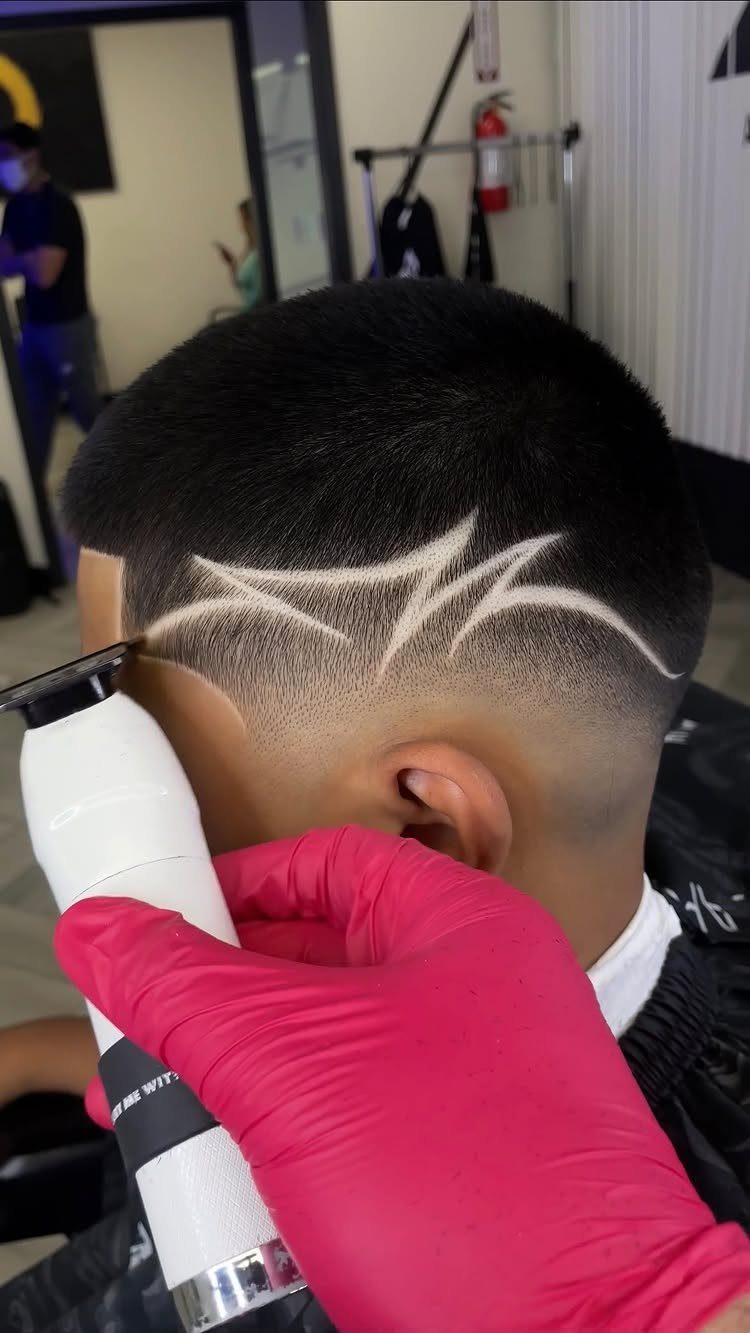
A graphic line or pattern is shaved into the fade, adding a custom detail that stands out against the buzzed length above it.
The design can be geometric, a logo, or freehand, and it sits where the taper is tight enough to show contrast.
The pattern grows out within a week, so this is a short-lived detail unless you go back for a touch-up. No styling required, but the design itself is high-maintenance.
12. Very Short Buzz Cut Fade
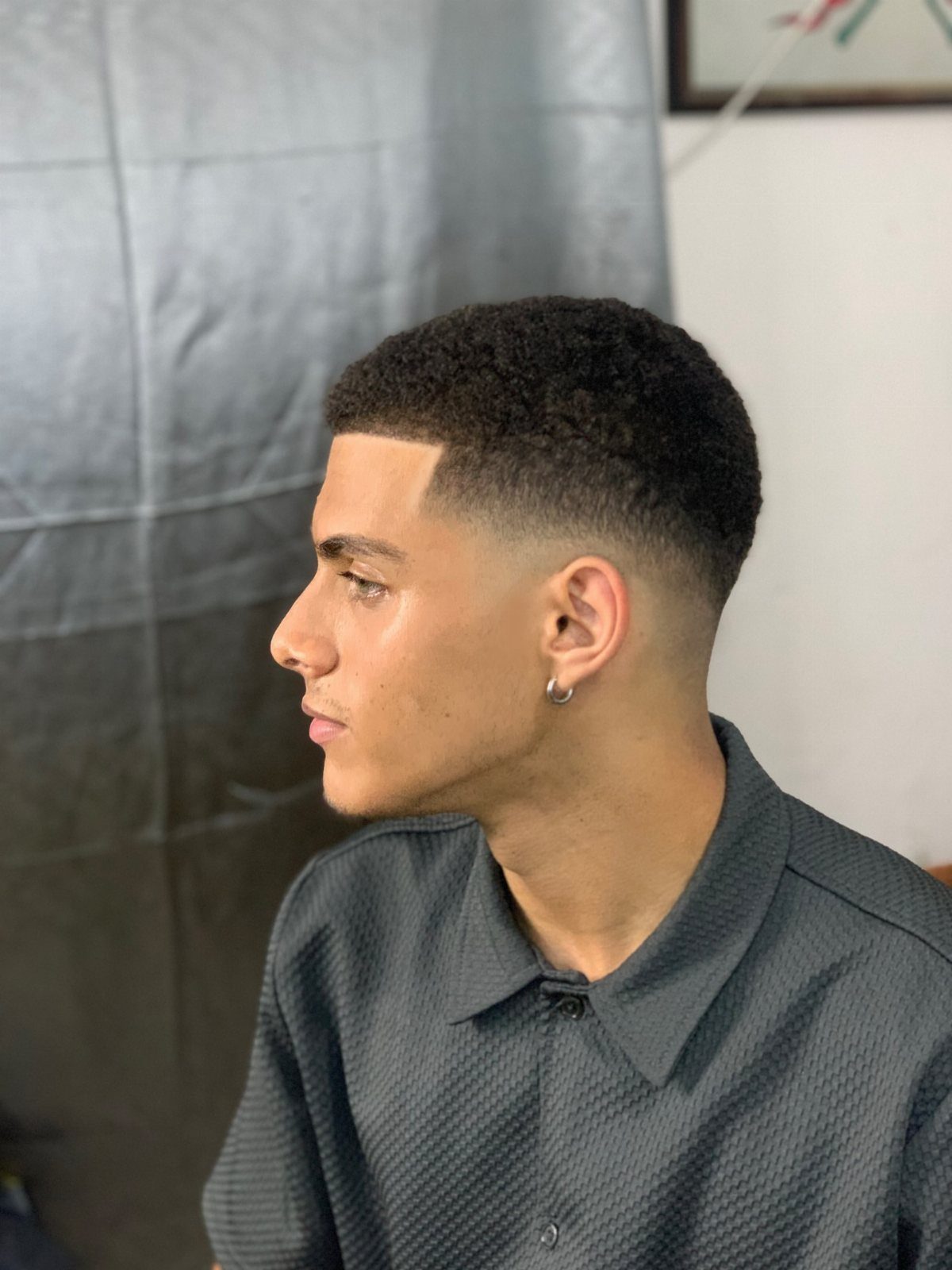
A number 1 or 2 guard over the entire head keeps everything uniform and very short, with a fade on the sides that blends down to skin or near-skin. The result is about as low-effort as a cut can get.
Washing takes seconds, drying is instant, and there is no product involved. The fade will need refreshing every 10 to 14 days, but the top stays consistent because there is almost nothing there to grow out.
13. Curly Hair Buzz Fade
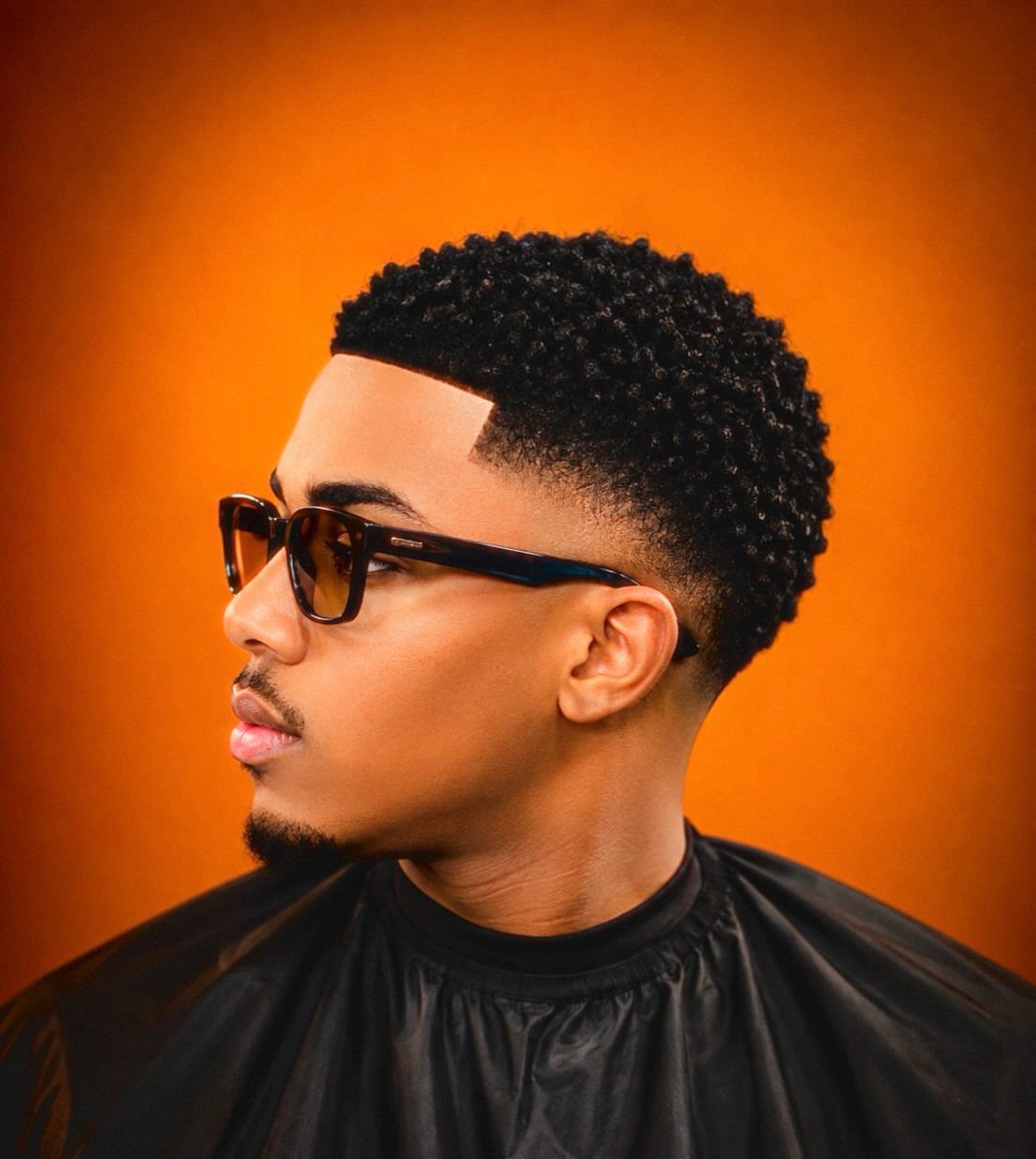
Curly hair holds its pattern better at a longer guard length, usually a number 3 or 4, which gives the top enough bulk to show the curl while the fade on the sides stays tight.
The shape reads cleaner than a uniform buzz because the taper adds definition where curly hair can otherwise look unruly.
If your hair curls tight, this cut skips the flattening that happens with a number 1 or 2.
The fade should drop to skin or near-skin to make the contrast work. Expect to book a cleanup every 2 to 3 weeks.
14. Buzz Cut Fade with Mustache
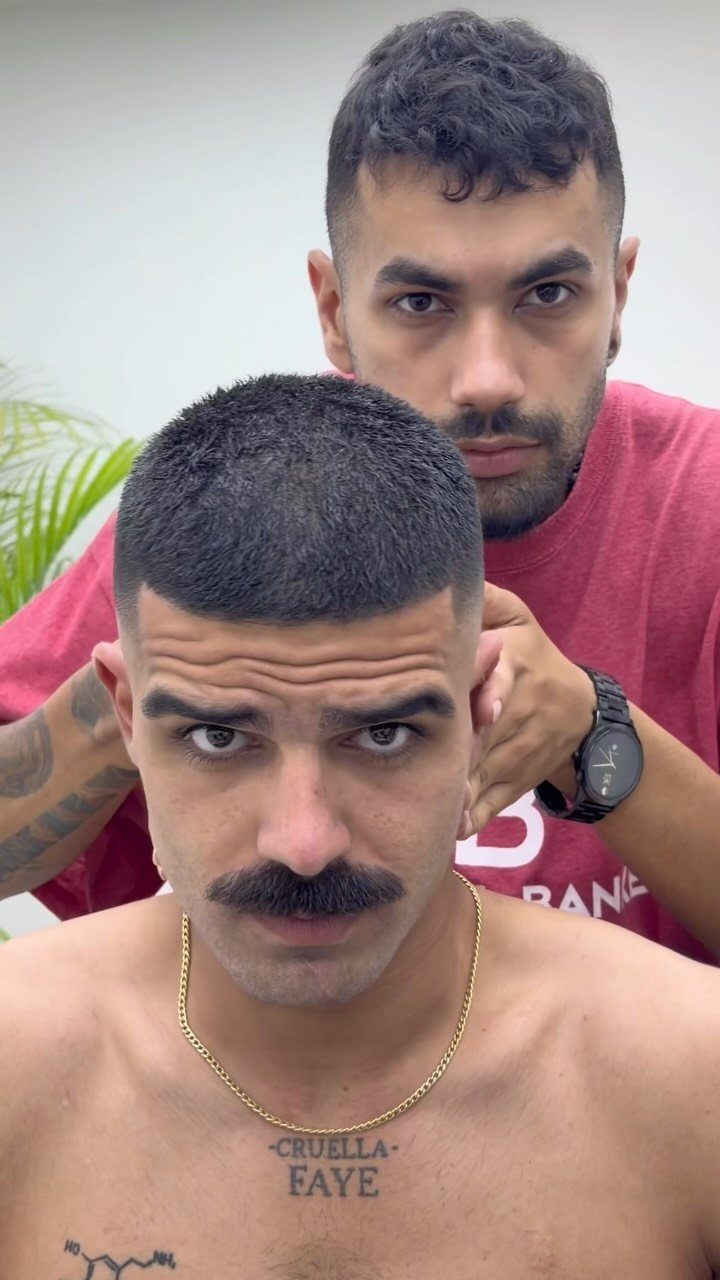
The mustache sits alone without a beard, which pulls focus upward and suits men who prefer facial hair that does not need constant shaping. Keeping the buzz short with a clean fade means the mustache becomes the detail.
A well-trimmed mustache wants weekly attention to hold its line, and the fade itself needs refreshing every 2 weeks.
If the mustache grows thick, it balances the short top naturally; if it grows thin, consider letting the sides stay a bit longer to avoid too much contrast.
15. Blonde Buzz Cut Fade
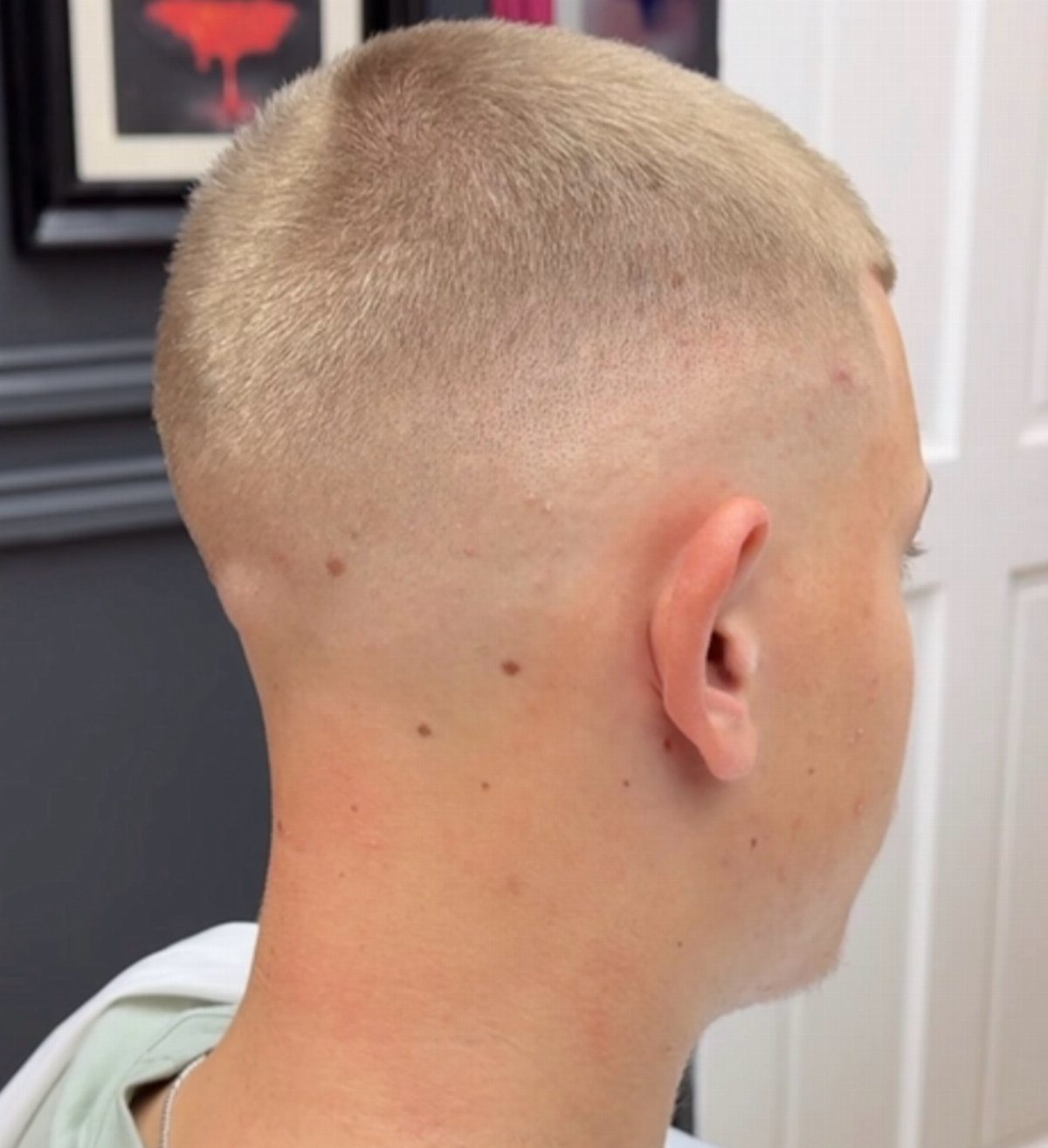
Blonde hair catches light differently, and the fade itself stays visible as the cut grows out.
A skin fade that drops tight around the ears and neck will stand out against blonde in a way that makes the cut look crisper, even as it grows.
No styling time, and the grow-out reads cleanly because blonde softens the shadow line most fades leave behind.
Guard Length and Density
A number 2 guard leaves about 6 mm, a number 3 around 10 mm.
Dense hair holds its shape at a 3 or 4; go shorter and it can lie flat enough that scalp shows through. Fine hair reads thicker at a 2 because there’s less length to spread the strands apart.
If this is your first buzz, start at a 3. Start longer and drop to a 2 after the first cut if the shape suits you, then a 1 if your scalp density allows it.
Guards run a sixteenth of an inch different between brands, so clip a test spot before you buzz the entire head. Moving down one number at a time keeps you from overshooting.
Choosing Fade Versus Taper
A skin fade creates the cleanest line but grows out faster and needs touch-ups every 2 weeks to stay crisp.
A skin fade gives you the sharpest contrast if you can visit every week or two.
A taper stretches to 3 weeks and keeps the silhouette closer to classic barbering. Bring a photo and name the one you want.
Frequently Asked Questions
What is buzz cut style?
Clippers set to one length all over, or run longer on top and faded on the sides.
The length is set by the guard number you choose, and the style requires almost no daily maintenance. With less hair covering the head, the numbers you choose and where the fade sits become the whole shape.
What is a no. 1 haircut?
About 3 mm of hair stays on the head, short enough to see scalp but not skin.
It’s a bold choice that works best when your hair density is high enough that the scalp does not show through. If this is your first buzz, start at a 3 and work down one guard at a time.
Is a buzz fade good for thinning hair?
Yes.
A number 2 or 3 on top gives thin strands enough to stand and cover, while faded sides strip away bulk and lift the eye. Clipping everything short hides the difference between thick zones and sparse ones.
Which guard should I use on top?
Most barbers and home clippers land on a number 2, around 6 mm, as the default.
Is a buzz fade professional?
Low and mid fades especially. A low fade keeps more coverage on the sides and stays understated, while a mid fade offers contrast without going bold.
Both grow out evenly enough to stretch between cuts, which matters in settings where weekly barber visits are not an option.
How often do I need to maintain a buzz fade?
Skin fades and high fades need a cleanup every 1 to 2 weeks before the blend softens.
A low fade or taper can stretch to 3 weeks because the change is more gradual. Line-ups fade within a week and need the most frequent attention.
What guard number is a buzz cut?
It depends on the style. A 1 or 2 leaves very little hair, bold enough that scalp shows between the strands.
Numbers 3 and 4 keep enough length to catch light and show curl or wave, better for fine or textured hair. Start longer and move down one guard at a time.
What is the best buzz cut for a first-timer?
A number 3 guard with a low or mid fade. The shape stays clean, you can drop shorter next time if it works, and it grows out without looking ragged.
Once you know your head shape reads well this short, a 2 works; a 1 only looks right if your hair is dense.
Can I give myself a buzz cut at home?
You can if the clippers are sharp and you start long. Fades are harder to do yourself, so consider a barber for those.