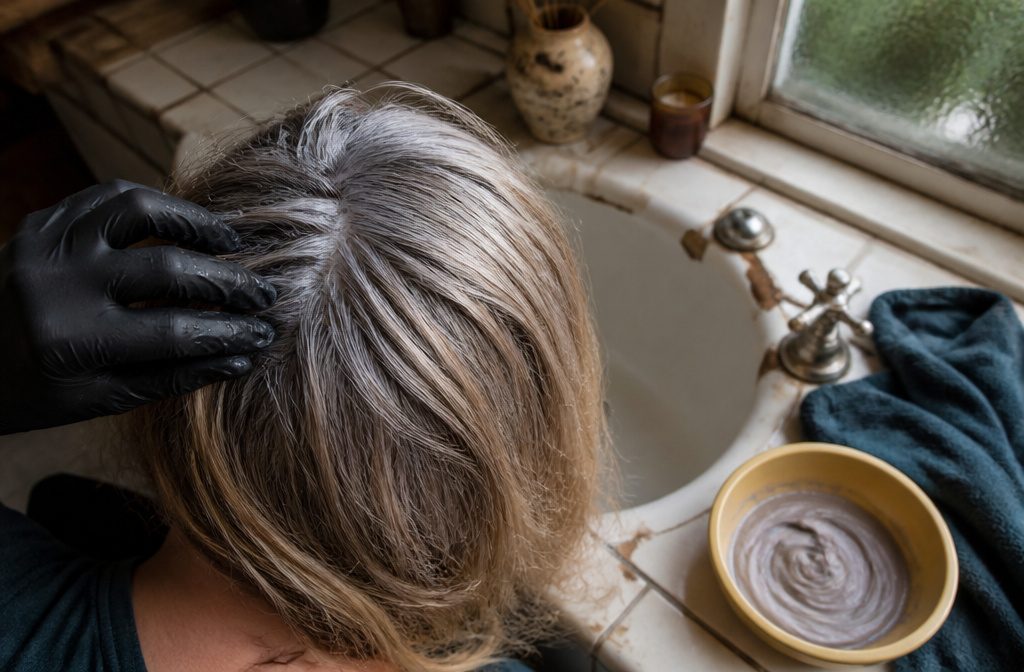
Semi-permanent and demi-permanent formulas blend gray rather than hide it, managing anywhere from 25% to 70% coverage depending on the product.
Fresh gray roots resist color entirely because the cuticle stays closed and non-porous, while older gray lengths take tone more easily. Color Touch from Wella fades over 28 washes, and most formulas last between 20 and 24 before softening noticeably.
What Semi-Permanent and Demi-Permanent Dye Actually Do on Gray Hair
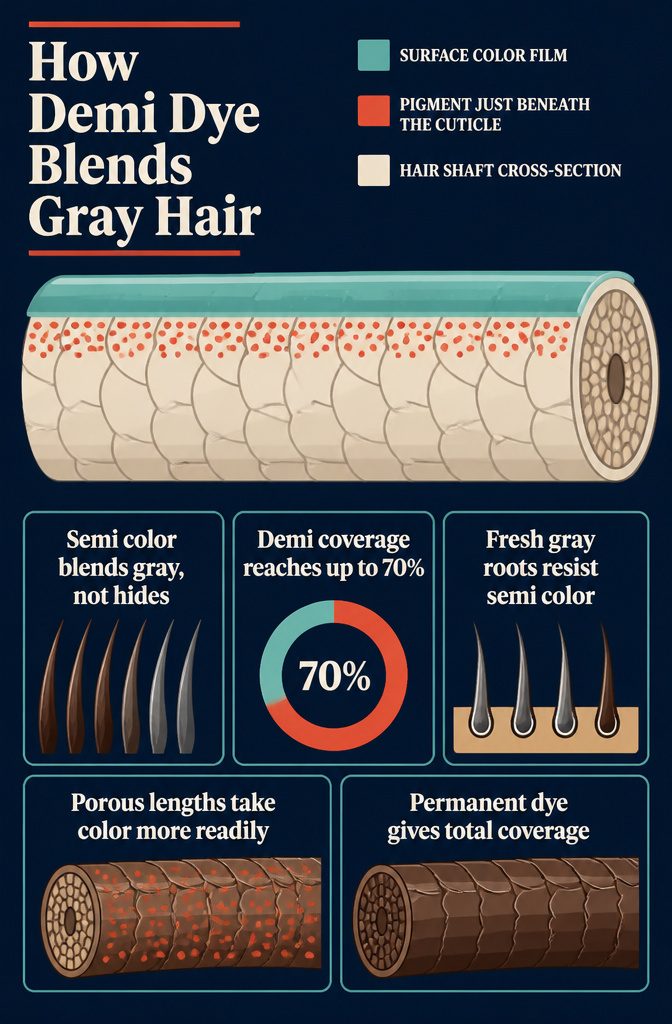
Semi-permanent formulas deposit color on the surface of the hair shaft without penetrating deeply, which means they blend gray rather than hide it completely.
Most demi-permanent products offer up to 70% gray coverage, enough to soften the contrast between gray and your natural color but not enough to erase every silver strand.
One semi-permanent line won’t deposit on fresh gray roots at all, because those roots are non-porous and resist color without the cuticle being opened first.
Demi-permanent formulas fare better. They slip just beneath the cuticle and hold longer, making them the middle ground between deposit-only semi color and full-penetration permanent dye.
One demi product blends up to 25% gray, another up to 70%, depending on the formula and how porous your hair is.
Gray on the lengths tends to take color more readily than fresh root growth, which explains why regrowth lines show up faster than mid-shaft fading.
If you want total coverage, permanent color is still the answer. If you want natural blending with soft regrowth, demi gets you there without committing to a line you’ll notice the week it grows in.
1. How Much Gray Each Formula Can Cover
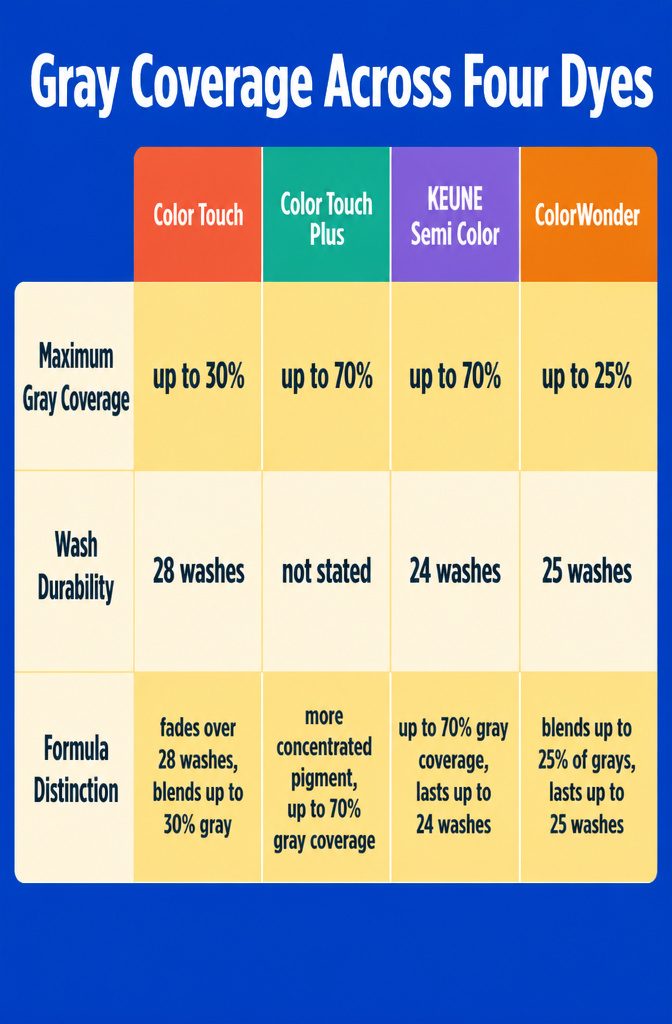
Coverage depends on the formula you pick. Color Touch blends up to 30% gray and fades over 28 washes, which works when gray is light and you want it softened rather than erased.
Color Touch Plus steps up to 70% gray coverage with more concentrated pigment, still demi-permanent but closer to what you’d expect from a permanent formula.
KEUNE Semi Color also covers up to 70% gray and lasts up to 24 washes. ColorWonder sits at the other end: it blends up to 25% of grays and lasts up to 25 washes.
The pattern holds across the category. Semi-permanent and demi-permanent products range from no deposit on fresh gray roots to moderate blending, never full coverage.
If gray has taken over most of your head, these formulas will tone and blend but not hide it completely. For lighter gray volume, they blend enough that the gray reads as dimension rather than age.
2. When Permanent Color Covers More Gray Than Semi or Demi
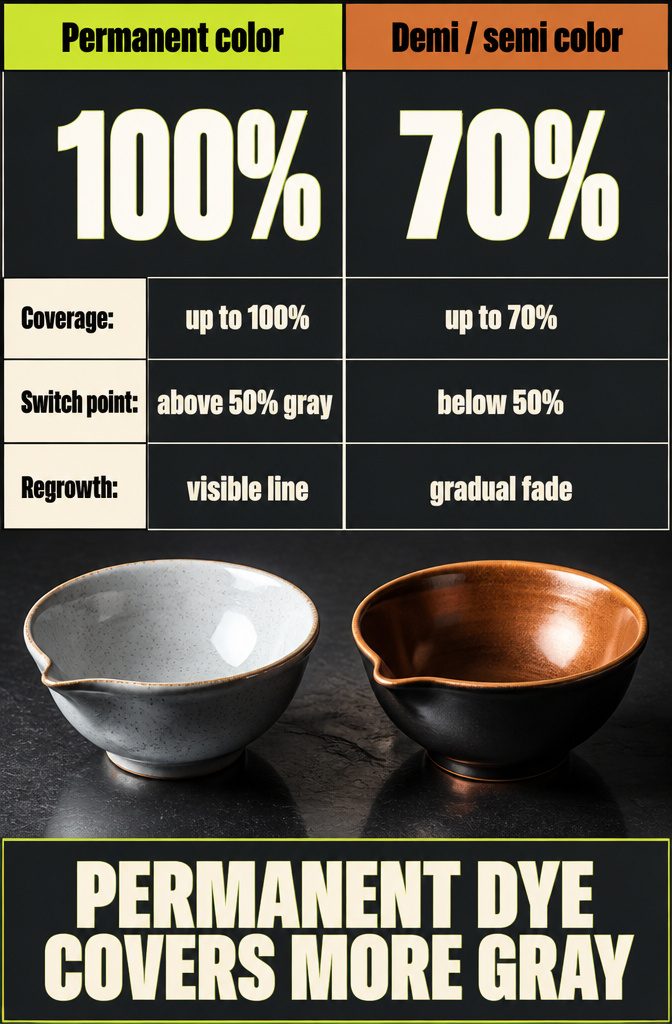
Permanent color wins when you need fuller coverage. Formulas like Koleston Perfect and Illumina Color deliver up to 100% gray coverage, while demi-permanent options (Color Touch, Color Touch Plus) top out around 70% and semi-permanent blends manage 25% or less.
Garnier recommends switching to permanent color once you cross 50% gray, and I think that threshold makes sense: below it, you can blend grays into dimension; above it, you’re fighting visible patches that demi formulas just won’t hide.
The trade-off sits in how color leaves. Permanent dye grows out with a visible line; demi and semi fade gradually, softening regrowth between appointments.
If you want natural blending or a subtle root shadow, demi color gives you easier maintenance. If you need the grays gone and can live with sharper regrowth, permanent color does the job no other formula can match.
Why Fresh Gray Roots Take Color Differently Than Gray Lengths
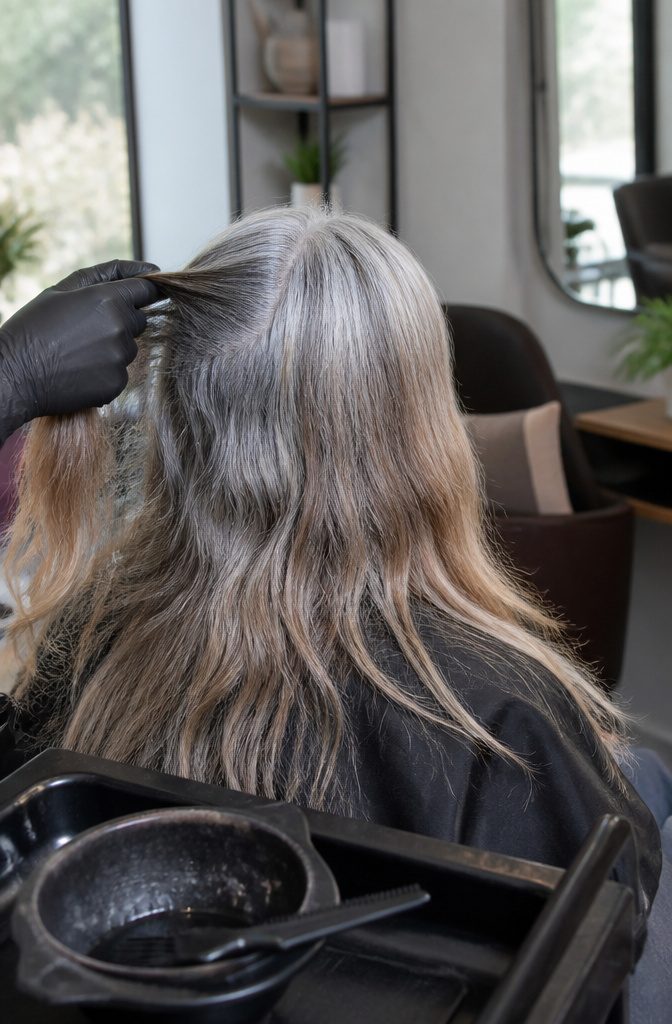
Fresh gray roots are non-porous, which makes them resist semi-permanent color deposit entirely.
The cuticle sits closed, melanin is absent, and the natural oils that help color cling are missing too. One dye maker states plainly that its semi-permanent formula cannot deposit on gray root hair at all.
Gray lengths behave differently. They take color more easily because they have become semi-porous over time, opening enough to let some color molecules settle in.
Demi-permanent formulas work by partially penetrating the hair shaft rather than coating the surface the way semi-permanent dyes do.
They deposit color molecules just beneath the cuticle, which means they can cover gray better than semi-permanent options but still fall short of the full penetration permanent color achieves.
The difference in structure between fresh roots and weathered lengths explains why results vary even within the same head of hair. Some gray takes tone, some stays silver, and the pattern depends on porosity and condition rather than length alone.
3. How Long the Color Lasts and When to Reapply
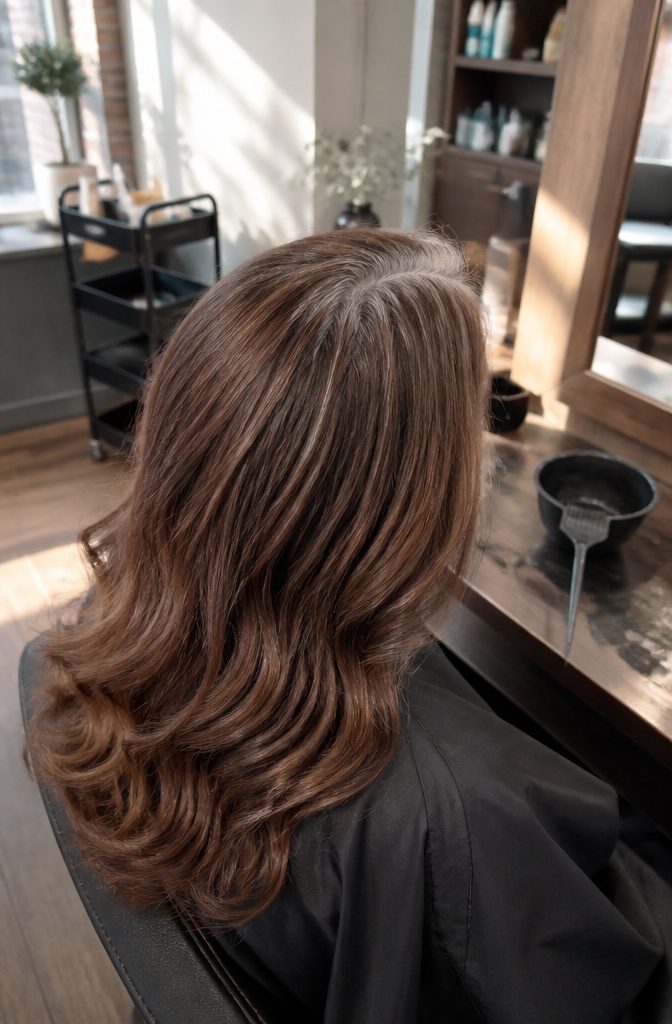
Most semi-permanent and demi-permanent formulas fade somewhere between 20 and 28 washes.
Color Touch from Wella sits at the top of that range and fades over 28 washes, while KEUNE Semi Color lasts up to 24 washes and Madison Reed’s ColorWonder holds for up to 25.
A basic semi-permanent dye will give you around 20 washes before the color softens noticeably. dpHue Gloss+ is lighter still and lasts up to eight washes, which makes it useful for toning or blending early grays between full applications.
Schwarzkopf Keratin Color lasts up to 10 weeks, and Revlon ColorSilk conceals grays for up to eight weeks.
These don’t give such a full grey coverage, but they can do a nice job of softening greys and adding shine.
That softer fade is why the look stays forgiving as it grows out.
Gray regrowth becomes visible on average between 4 and 6 weeks, so most refreshing schedules run every 4–6 weeks for full coverage or every 6–8 weeks for semi- or demi-permanent refreshes.
The longer interval works because demi-permanent color fades instead of leaving a hard line at the root.
4. Apply Color to Regrowth Only, Not the Entire Length Every Time
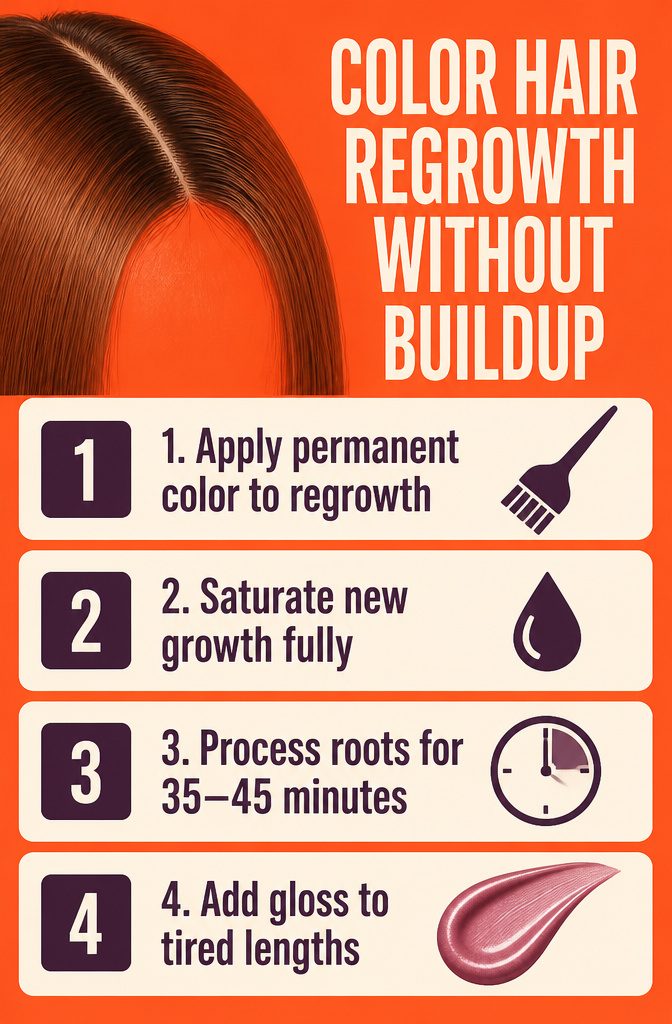
Running permanent color through lengths that are already colored stacks dye on dye. That shows up as dullness, a shade darker than you wanted, or a visible band where old and new overlap.
Color only the regrowth, and saturate it fully. New growth is usually ½ inch or less, so you’re painting a thin strip, not the whole head.
Madison Reed’s root color needs 35–45 minutes to process. If the mids and ends look tired, I’d add Color Reviving Gloss, starting where the root color stops and leaving it on for up to 35 minutes.
Overlap there is fine. When you’re short on time, L’Oréal Magic Root Rescue covers roots in 10 minutes.
Patch Test 48 Hours Before You Color
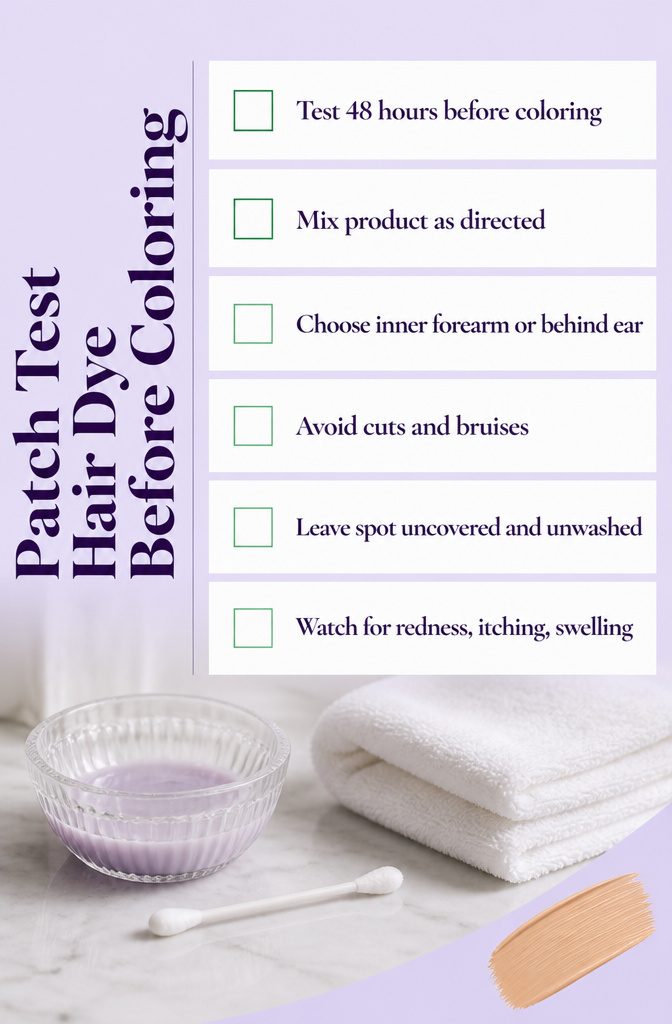
Do a patch test 48 hours before you apply any semi-permanent color, even if you’ve used dye before.
Mix a small amount of the product according to the instructions, then apply it to a sensitive area like the inner forearm or behind the ear. Make sure the skin has no cuts or bruises.
Spread it thinly and watch the spot for 24–48 hours without washing or covering it. You’re looking for redness, itching, or swelling.
Reactions are rare, but skipping this step isn’t worth the risk. If your skin stays clear after the waiting period, you can go ahead and color.
A strand test is also worth doing if you want to see how the shade will actually look on your hair before committing to a full application.
Frequently Asked Questions
Can you cover grays with semi-permanent hair color?
Semi-permanent formulas blend gray rather than cover it completely, and most can’t deposit on fresh gray roots at all because those roots are non-porous.
Gray on the lengths may take color more easily, but you’ll get softer blending instead of full coverage. For more than 50% gray, permanent color is the better choice.
Can I use demi-permanent hair color on gray hair?
Yes, demi-permanent color blends gray by slipping just beneath the cuticle.
Coverage depends on the formula: Color Touch offers up to 30% gray blending, Color Touch Plus reaches 70%, and ColorWonder handles up to 25%. Demi formulas work better than semi-permanent options but still fall short of full permanent coverage.
Which hair dye covers gray the best?
Permanent color delivers up to 100% gray coverage, while demi-permanent formulas top out around 70% and semi-permanent blends manage 25% or less.
Once you cross 50% gray, permanent color is the stronger choice because demi and semi formulas will tone and blend but not hide it completely.
How often should I dye my hair to cover gray?
Gray regrowth becomes visible between 4 and 6 weeks, so most people refresh every 4–6 weeks for full coverage or every 6–8 weeks for semi- or demi-permanent color.
The longer interval works because demi-permanent color fades gradually instead of leaving a hard line at the root.
Is it better to go lighter or darker to cover gray hair?
Lighter shades or colors close to your natural tone blend regrowth more softly and make the line between dyed hair and new growth less noticeable.
Darker shades like black can give bolder coverage but create harsher contrast when gray roots appear.