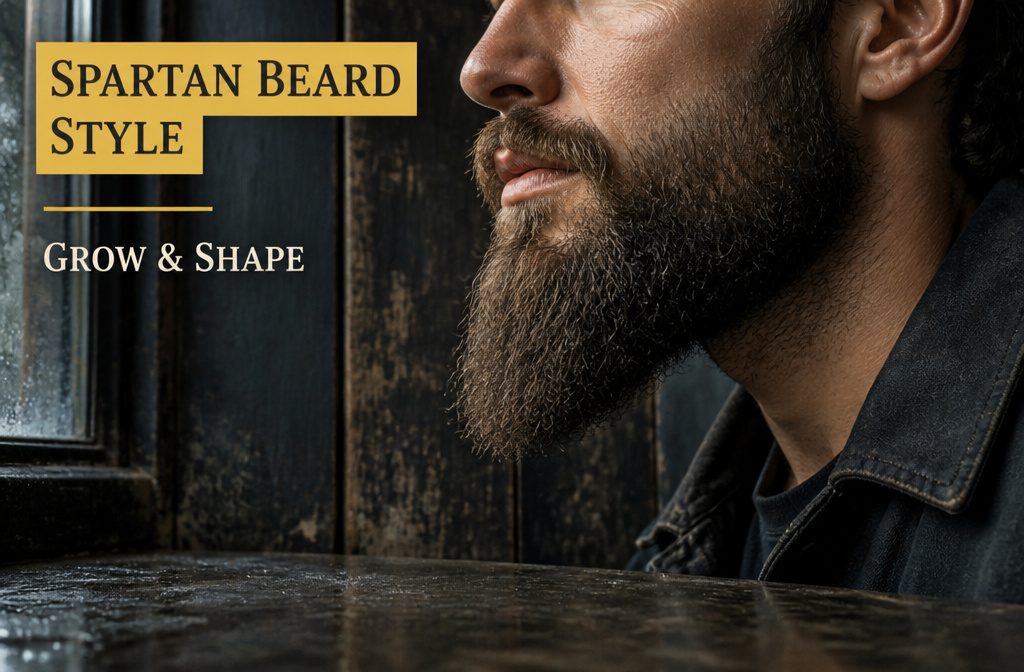
A Spartan beard needs 6–9 months of growth, with the length held at the chin, and it only works if your chin, jaw and cheeks fill in. Thin cheeks show in profile, and extra length makes them look stringy.
In that case, a shorter full beard looks tougher. Most men ruin it around month four by trimming.
What the Leonidas Beard Is
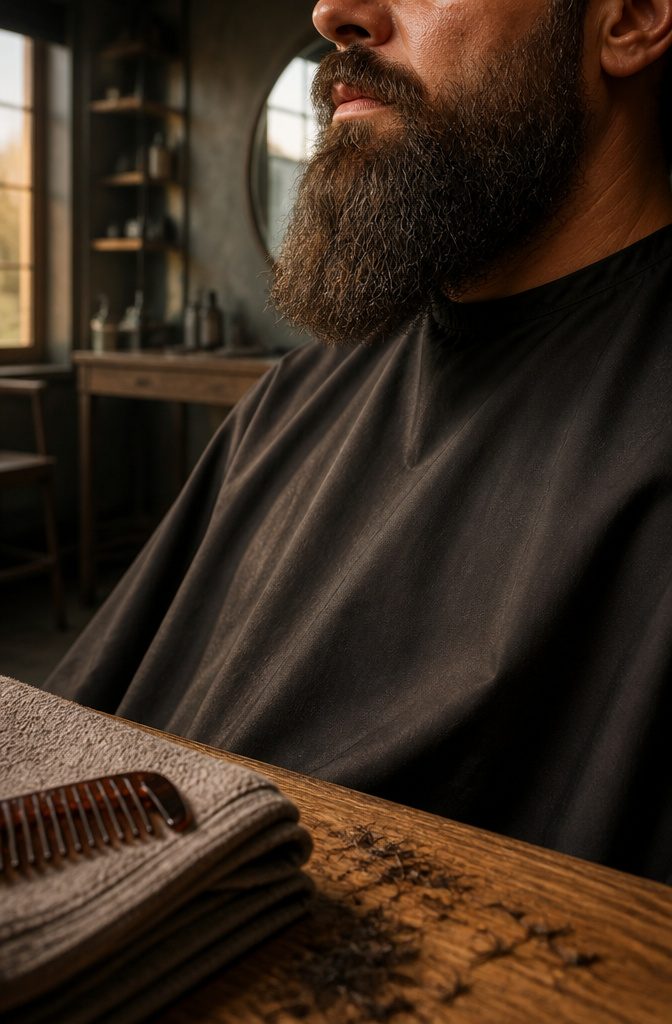
The Leonidas beard, the look tied to the film 300, is built on the lower face.
It runs longer through the chin, sits fuller around the jaw, and looks rougher than a tidy short beard. The cheeks stay more natural, the moustache stays full, and the lower beard does most of the talking.
Size alone doesn’t get you there.
A big beard left to grow is just a big beard. The Leonidas version is rugged but controlled: the sides get managed, the neckline stays low instead of being taken high, and the cheeks aren’t left completely wild.
The line between grit and neglect is where I’d judge it. Rough texture reads as a choice; stray growth just reads as lazy.
Check Your Growth First
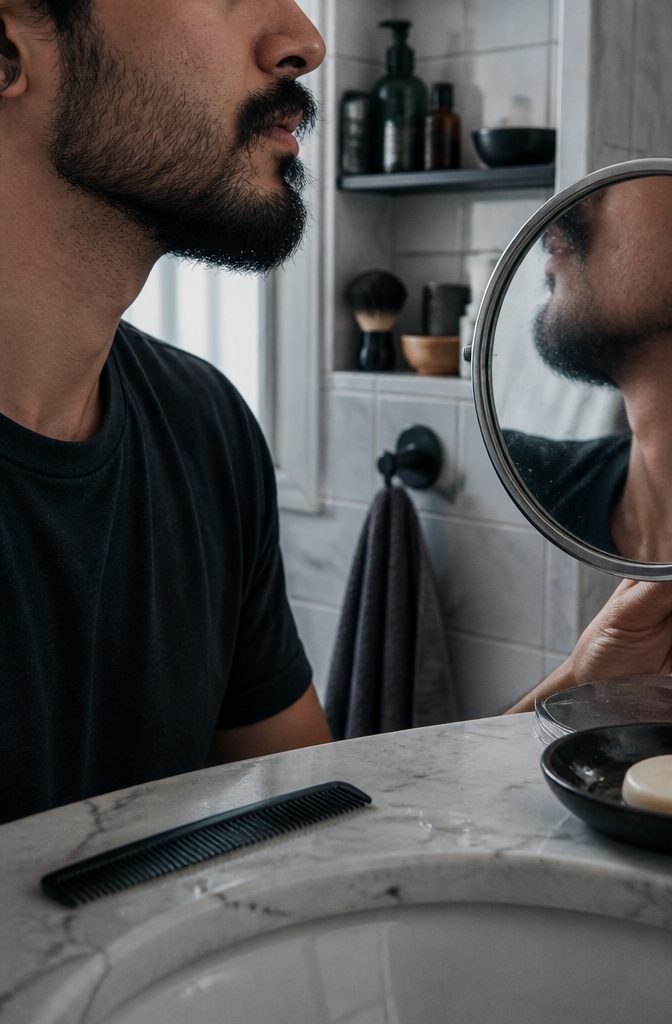
Start with the lower beard.
If the chin and jaw fill in well, you have something to build on. The moustache has to look connected to the beard, not like a separate strip sitting above it.
Cheeks are where this style gets exposed.
Strong chin growth with thin cheeks or a weak jaw can pass from the front, but the side view gives it away fast, and added length starts looking narrow, stringy, or heavy in the wrong places.
I put growth pattern ahead of patience and face shape. A full beard kept shorter often looks tougher than a long one the face cannot support.
Face Shape and Length
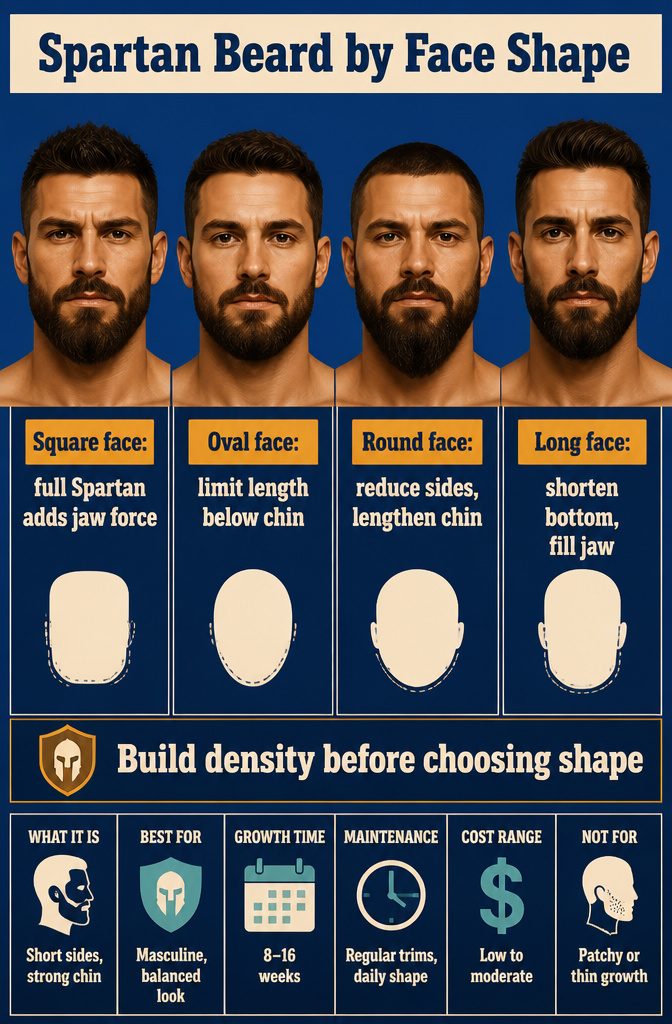
Judge your density first; face shape only tells you where to put the length and bulk once the beard has filled in. If the chin and jaw are patchy, no shape fixes that.
- Square: Go for the full Spartan. It adds force along the jaw, which a square face already carries well.
- Oval: Keep the bottom length limited. Too much hangs off the chin and drags the face down.
- Round: Take bulk off the sides so the face doesn’t read wider, and leave more length through the chin.
- Long: Cut back the length at the bottom and keep the jaw area full.
Six to Nine Months of Growth
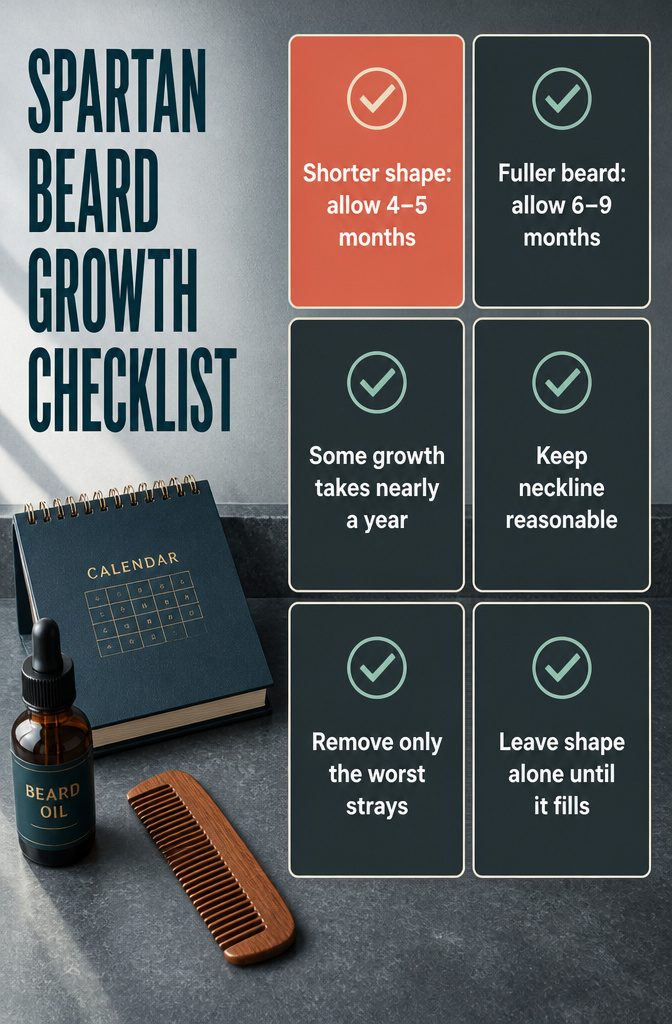
A shorter Spartan beard starts taking shape after 4–5 months. A fuller one needs 6–9 months, and some men will need close to a year, so check the calendar before you judge the result.
The awkward middle is where most men wreck it.
The beard is big enough to look untidy and not big enough to look finished, and that is when the clippers come out: a little off the chin, a little from the sides, a sharper cheek line, another pass underneath.
Repeat that a few times and you have trimmed away the beard you were growing.
Early on, I would do four things only: keep the neckline reasonable, remove the worst strays, use beard oil if your skin gets dry, and comb often enough to stop knots.
Leave the shape alone until the lower beard has built up enough to judge.
Shape It From the Chin
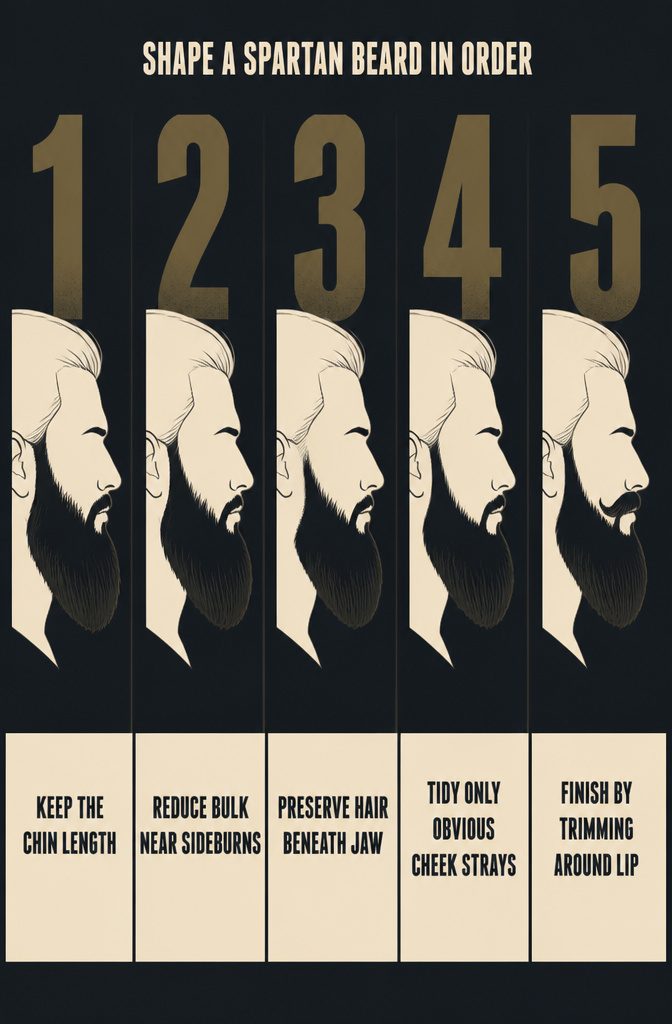
- Leave the chin long first. Keep the chin length, because that is where this beard gets its power. Cut it short and you end up with a regular full beard with a rough finish.
- Take a little bulk out near the sideburns and upper cheeks. Full sides help only while they support the beard; once they puff out, the face reads wider and heavier.
- Hold the neckline back from the jaw. Longer beards need hair underneath, and cutting it away flattens the side view.
- Tidy only the obvious strays along the cheek line. A hard, sharp edge looks too modern and styled, so leave it looser than on a short boxed beard.
- Finish with the moustache. Keep it full to match the beard, and trim around the lip so it stays out of your mouth.
Keep It Rugged
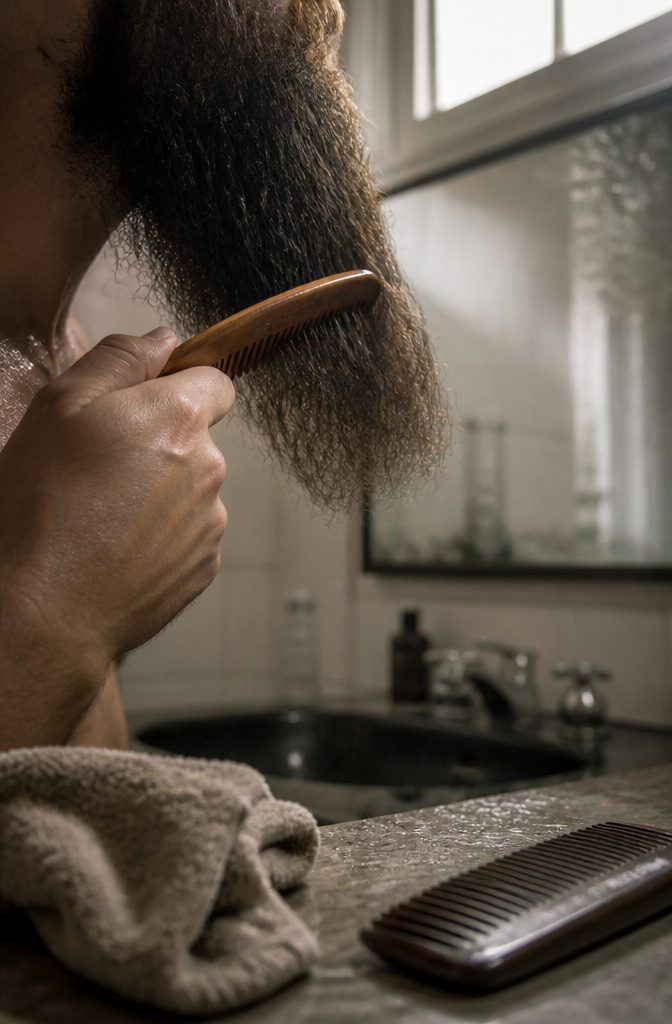
A Spartan beard that looks styled for a wedding has already lost. Too much balm makes it stiff, too much oil makes it greasy, and too much brushing smooths it into something that looks forced.
Wash it when it needs washing, not on a schedule. Once the beard gets longer, use beard oil on the skin underneath.
Comb out knots before they set into tangles, and trim only the hairs that stick out badly. Leave the rest alone.
I would take a slightly rough beard with good shape over a shiny one pushed into place.
Mistakes That Ruin It
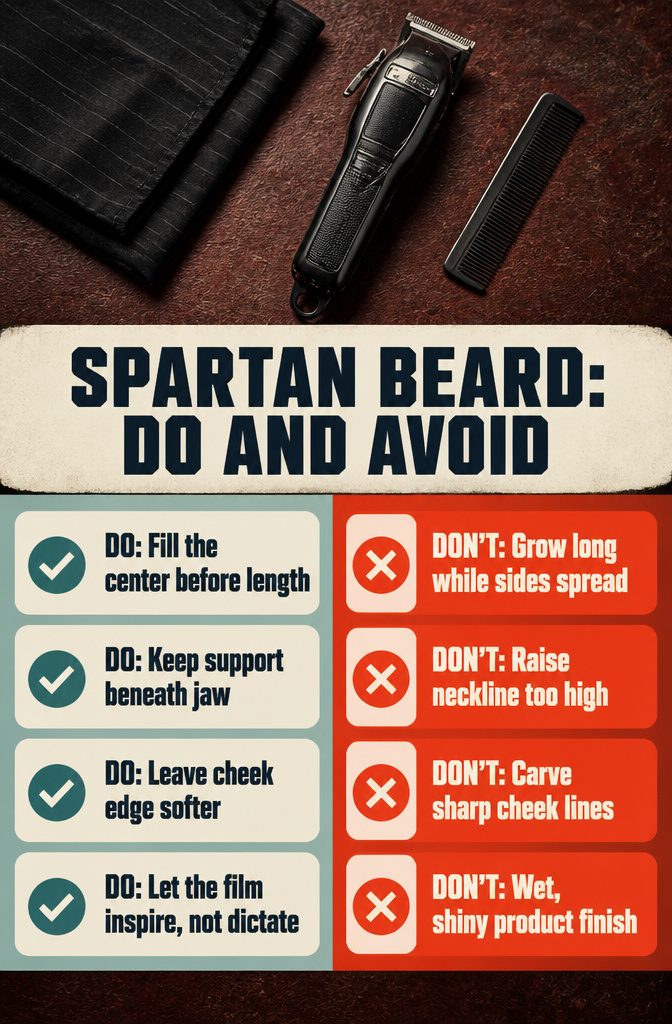
Five mistakes turn this beard from powerful into badly grown out:
- Long at the bottom, wide at the sides and weak through the middle. It reads as overgrown, not strong, so I’d fill the center before adding any more length.
- A high neckline can look fine head-on. From the side, nothing supports the beard under the jaw, and it looks thin.
- Sharp cheek lines make the beard rugged below and overly groomed above, as if it can’t pick one identity.
- Too much product. A big beard shouldn’t look wet, shiny or glued down, and one that looks more styled than grown has lost the look.
- A costume copy of the film. Let Leonidas inspire the beard, not dictate it; once it looks like fancy dress, you’ve gone too far.
Rugged, Not Neglected
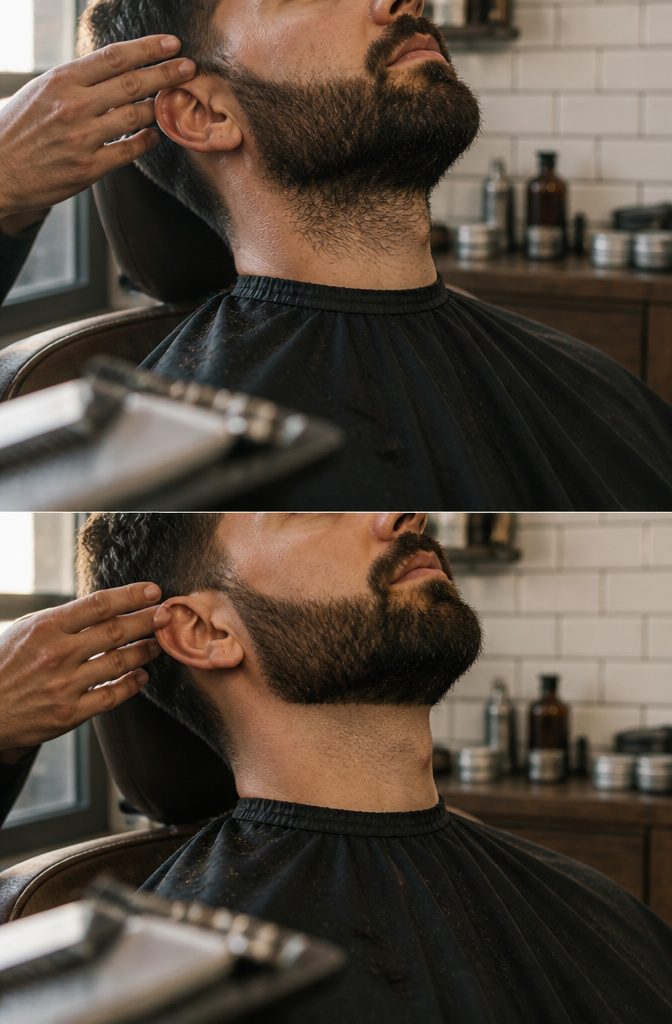
Grit and neglect sit close together, and the gap is control in four places: sides, neckline, cheeks and moustache. Over-groom them and the beard looks forced; skip shaping and it has no direction.
Sides that puff out make the face wider and heavier, so I would rather thin a little bulk near the sideburns and upper cheeks.
Keep the neckline low, since a long beard needs hair under the jaw to hold its depth.
On the cheeks, clear only the obvious strays and skip the hard line, because a sharp edge makes the beard look modern and styled. Trim the moustache around the lip so it stays full without crowding the mouth.
Moustache Proportion
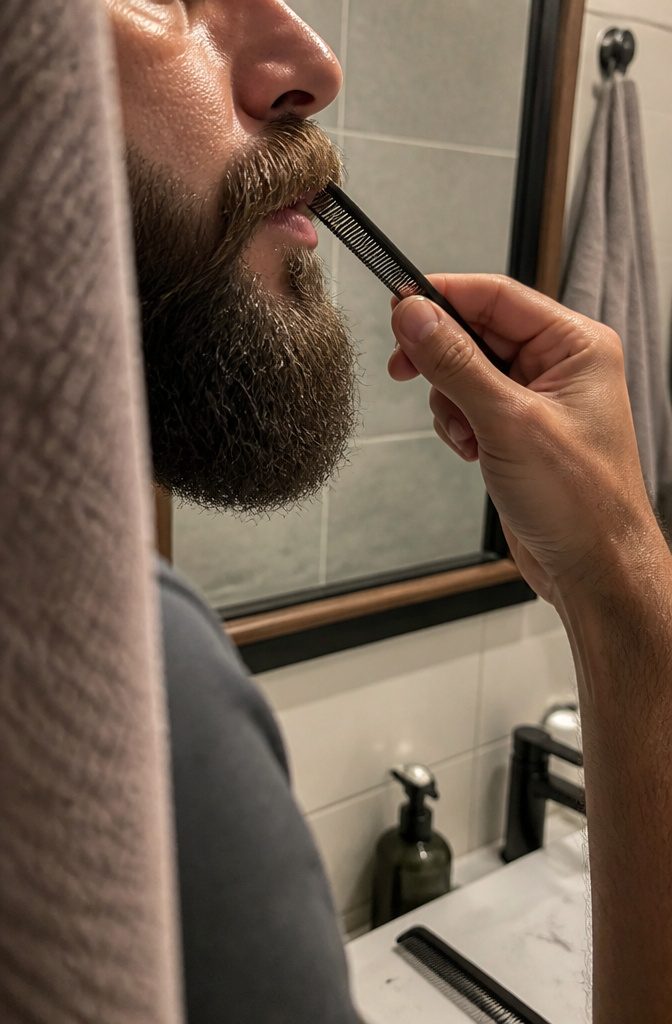
The moustache on a Spartan beard stays full and joins the beard at the corners of the mouth. A moustache cut off from the beard, or shaved clean, breaks the look.
Only the strip right above the lip gets trimmed. Hair that hangs over the lip catches food and drink, itches, and hides the mouth behind a curtain of bristle that makes the whole lower face look heavy.
Comb the moustache downward, then snip along the lip line with scissors so the hair clears the lip. Trim only the overhang and leave the length and bulk above it alone.
I prefer this to thinning the whole moustache, because thinning leaves a gap where it should blend into the cheeks. Recheck the lip line often, since it’s the first spot to look untidy as the hair grows.
Check the Side View
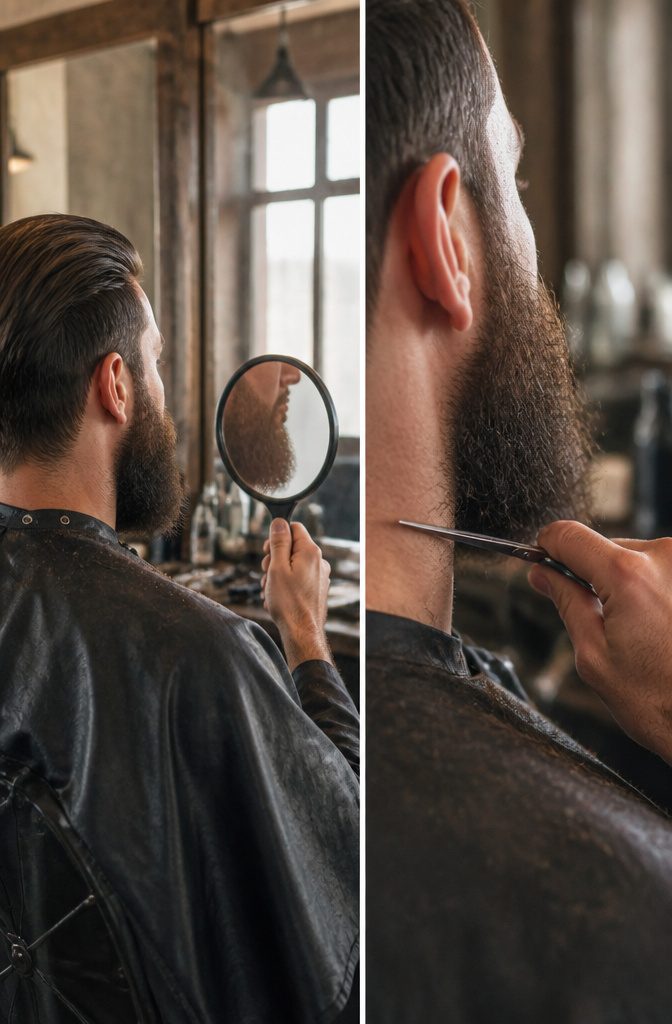
Turn your head and look at the beard in profile before you put the trimmer down. A beard that only looks good from the front is not properly shaped, and the side view shows the problem first.
Thin cheeks and a patchy jaw read as narrow or stringy from that angle, while sides that puff out make the face look wider and heavier.
I would rather take a little bulk out near the sideburns and upper cheeks than let the beard turn round.
Check the underside too.
Hair left beneath the jaw gives a long beard its depth, and a neckline cut up under the jaw leaves the beard flat from the side. Hold a hand mirror at an angle and check both profiles.
Film Versus Real Life
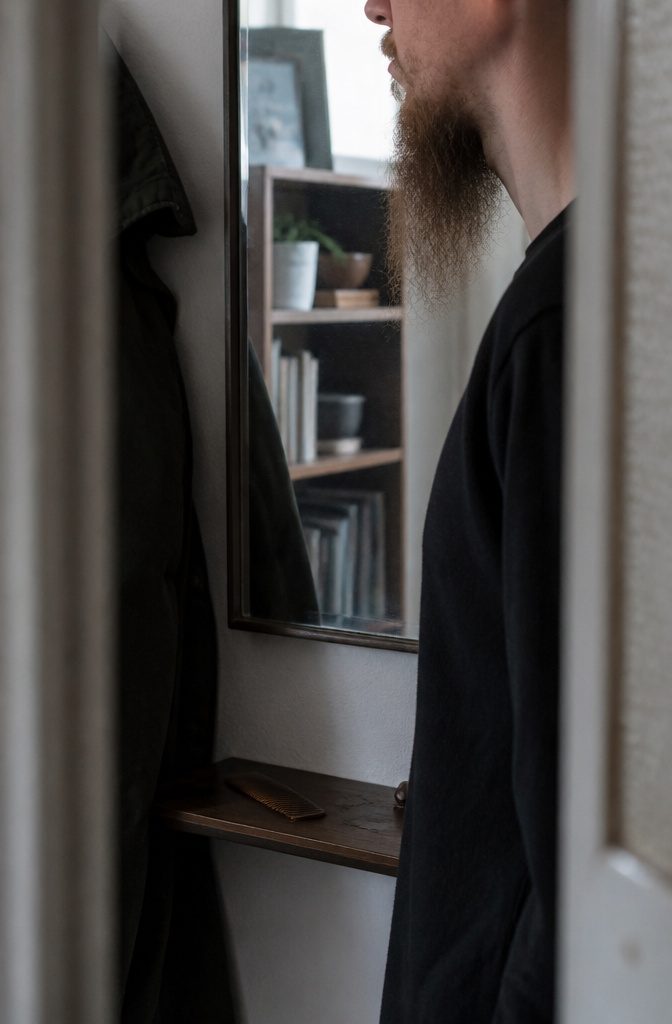
The film version gets help from everything around the beard: the actor’s face, the physique, the styling and the lighting.
Take those away and the same beard on an ordinary man can read as fancy dress. I’d borrow the attitude and skip the costume.
Real life is less forgiving, especially from the side.
A beard that looks decent from the front can show thin cheeks and a light jaw in profile, and extra length makes it worse: narrow, stringy, heavy in all the wrong places.
Patience helps, but growth pattern decides more. If yours won’t fill in, a shorter full beard will look tougher than a long one it can’t support.
A Shorter Beard Instead
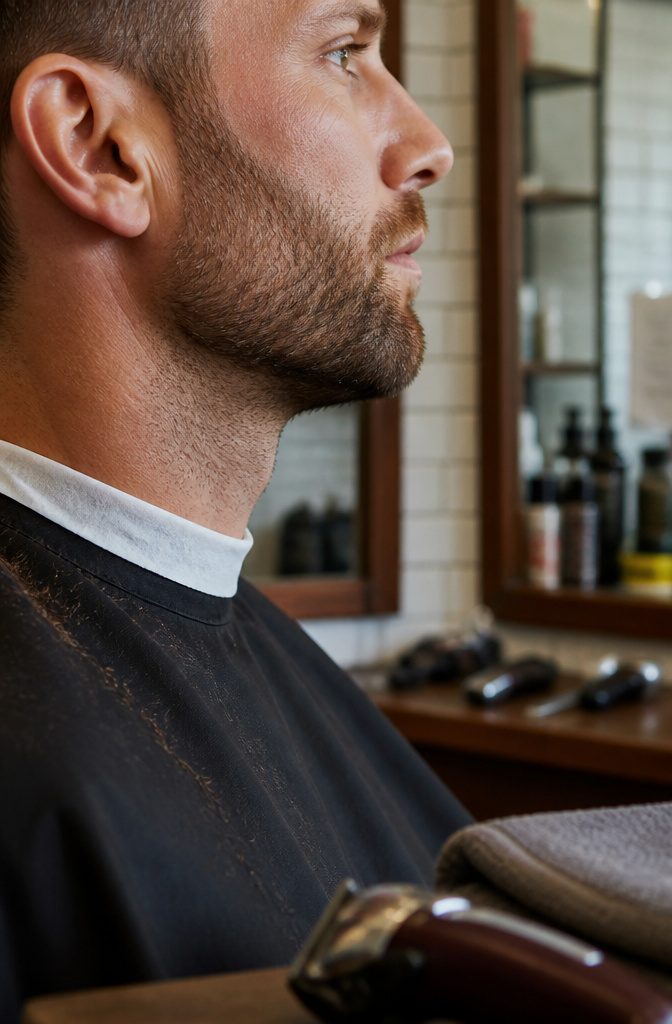
Thin cheeks and a light jaw are what a long Spartan beard exposes first.
From the front it can pass for a while, but the side view shows the gaps fast, and the beard turns narrow, stringy or heavy in the wrong places. Patience helps some men; growth pattern decides it for most.
If your chin fills in but your cheeks don’t, a shorter full beard with clean shape beats a long one that looks stretched.
Keep the rough texture, since overtidying kills the look, but give it a clear outline so it reads as chosen.
Going shorter isn’t failing the style. It’s knowing what your beard can support.
Frequently Asked Questions
How long does it take to grow a Spartan beard?
A fuller Spartan beard needs 6–9 months of growth, and some men will need close to a year.
A shorter version can start taking shape after 4–5 months. The lower beard has to build up enough volume before you can judge the final style.
Who can pull off a Spartan beard?
Men whose chin and jaw fill in well can pull off a Spartan beard, because that is where the style gets its power.
Thin cheeks with a weak jaw show fast in profile, and added length makes the problem worse. Growth pattern matters more than face shape or patience.
How do you shape a Spartan beard?
Keep the chin long, thin out bulk near the sideburns and upper cheeks, hold the neckline back from the jaw, and leave the cheek line natural instead of sharp.
Trim the moustache around the lip so it stays full but clears your mouth. Shape from the side view, not just the front.
Does a Spartan beard look powerful or forced?
It looks powerful when the beard has enough natural fullness and gets shaped without becoming overly tidy. Forcing it on weak growth makes it look thin, stretched, or artificial, especially from the side.
Did Spartan men have beards?
Yes, Spartan men wore beards as a sign of manhood and warrior status in ancient Greece. The style tied to the film 300 is inspired by that tradition but built for a modern look, with controlled roughness instead of historical accuracy.