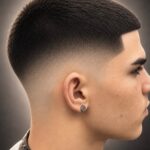
A fade can start just above the ears or high near the crown, and that placement changes how long the cut holds, how often you need a cleanup, and which face shapes it flatters best.
The sharpest option is the skin fade, which tapers all the way down to bare skin and shows stubble within days, so most men book a cleanup every week or two to keep the line crisp.
1. Low Fade
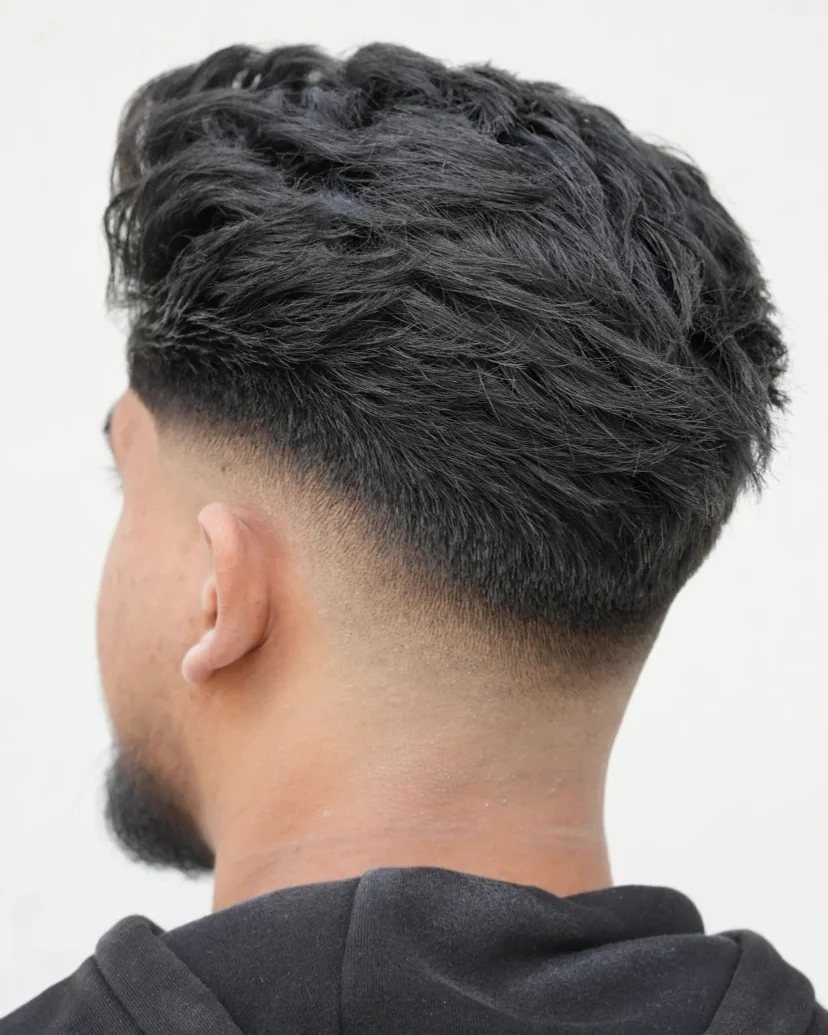
The blend begins low, just above the ears or near the top of the neck, leaving most of the side hair visible before it tapers into skin.
A low fade keeps shape longer than mid or high versions because the contrast grows in slowly, and it suits men who want a clean finish without drawing attention to the sides.
Ask for the fade to start at or just above the ears, and specify whether you want it to go down to skin or stop at a short guard.
The barber blends upward from the baseline, leaving the transition smooth but short. You will need a cleanup every 3 to 4 weeks to keep the line sharp.
2. Mid Fade
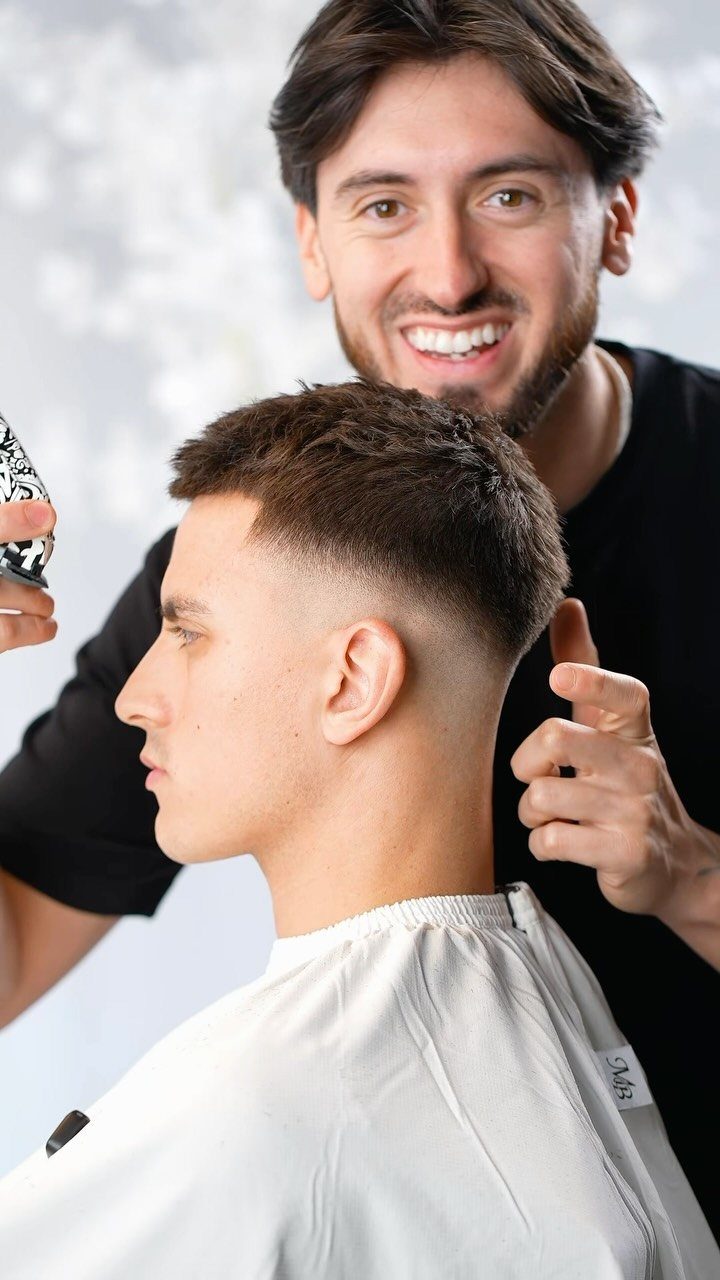
A mid fade starts around the temples or halfway up the sides, sitting between the subtlety of a low fade and the high contrast of a high one.
The placement makes it work across face shapes and hair types, and the blend zone is visible enough to define the cut without overwhelming the top.
Specify where you want the fade to begin, usually 1 to 2 inches above the ear, and how short the bottom should go.
Maintenance sits between low and high: the line softens faster than a low fade but holds better than a high one, so expect to return every couple of weeks.
3. High Fade
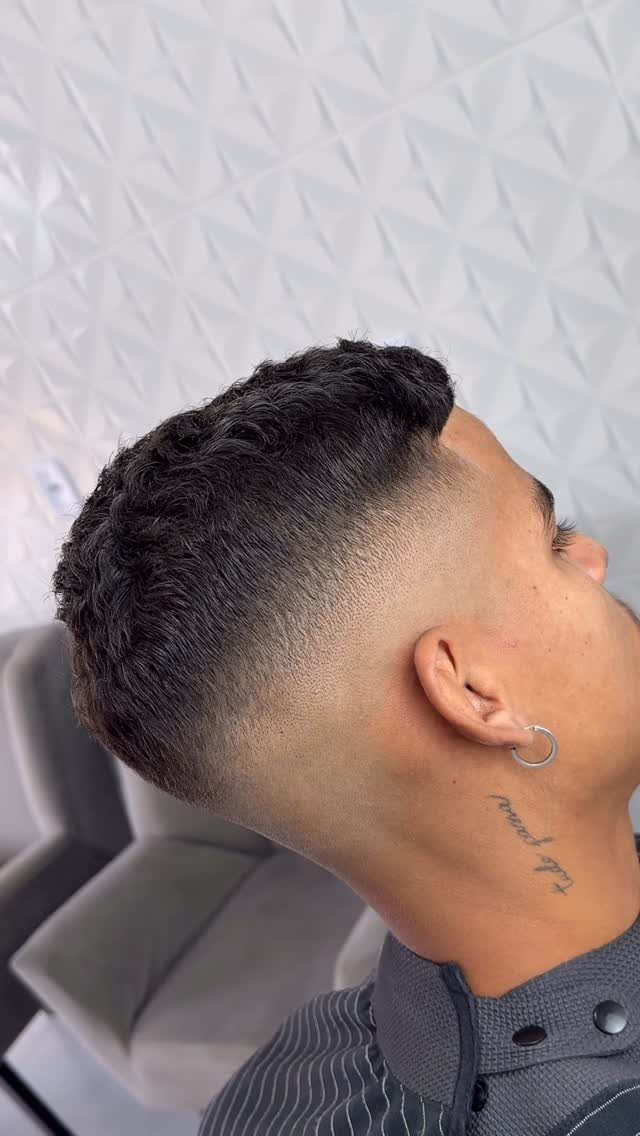
A high fade starts well above the temples, leaving a large area of short or shaved sides that contrasts sharply with whatever length sits above it.
The height pulls attention upward and looks best when the top carries enough length or texture to balance the strong sides.
The transition is quick and the line is visible, because the blend covers less vertical distance than a low or mid fade.
Frequent touch-ups keep the contrast looking intentional, because even a little growth softens the line. If your face is long or narrow, a mid fade usually flatters better.
4. Taper Fade
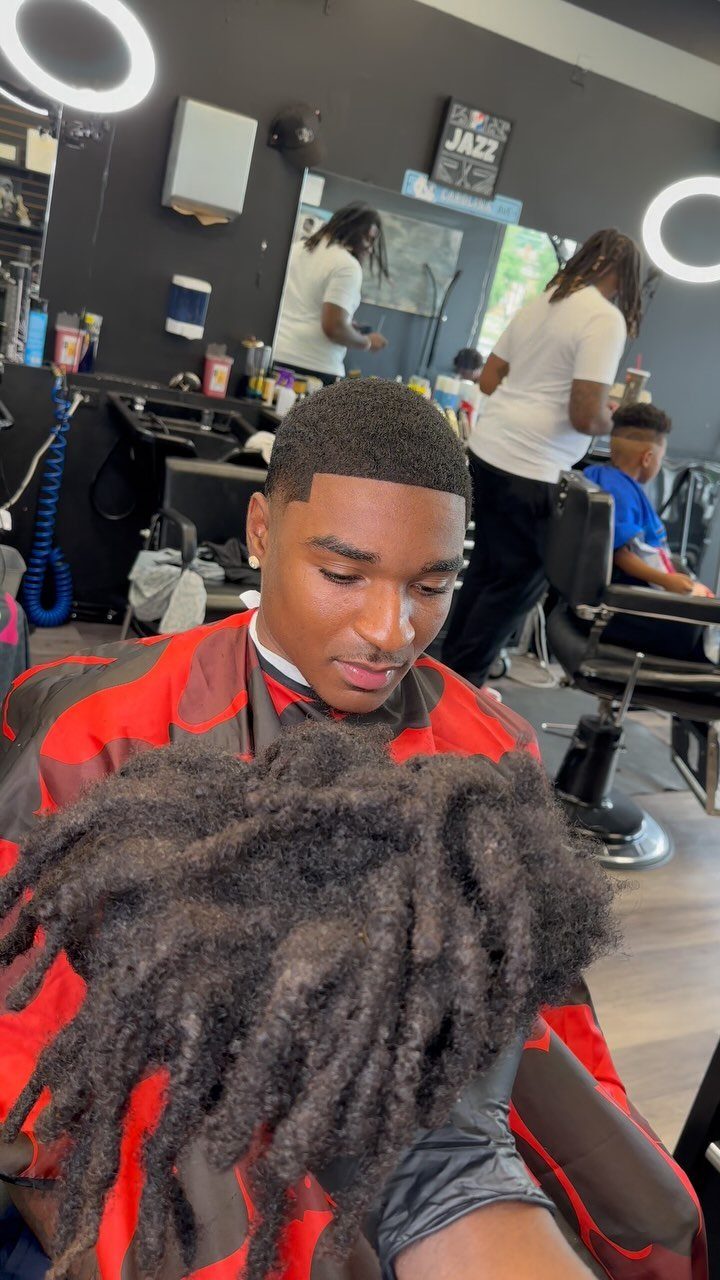
A taper fade keeps more length on the sides than a traditional fade, blending gradually from longer hair at the top down to shorter hair at the edges without necessarily reaching skin.
The result reads more natural and less barbered, and grows out gracefully over several weeks without a hard line forming.
Ask for a taper instead of a fade if the sides should stay visible and textured.
The barber will use scissors or longer guards to blend, and the transition is gentler and less defined than a fade that drops to skin.
This one stretches longer between cuts than most fade styles, so the chair time adds up more slowly.
5. High Skin Fade
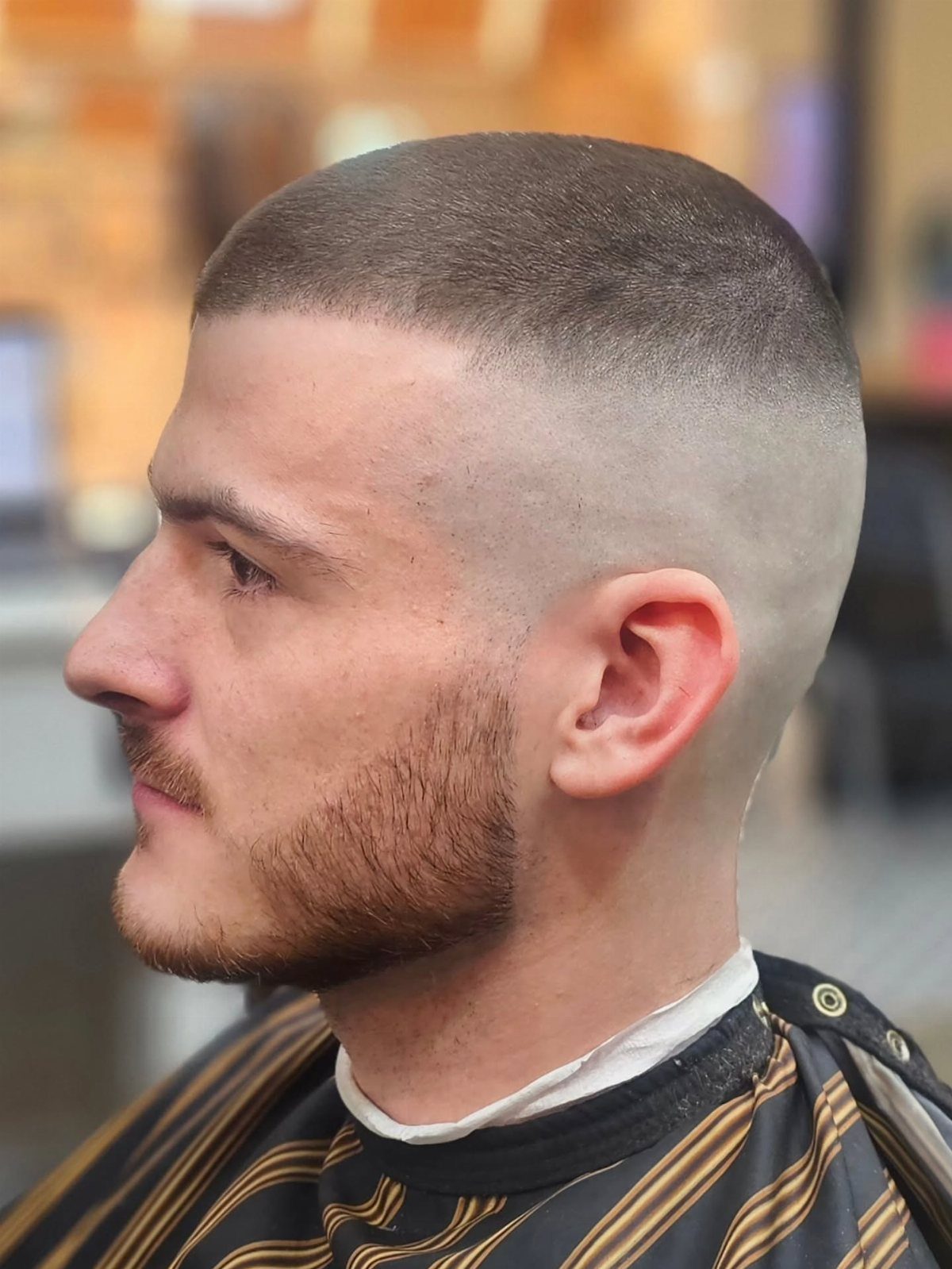
Starting high near the crown or well above the temples, a high skin fade drops quickly to bare skin and leaves a wide strip of scalp visible around the sides and back.
The strong contrast demands a top with volume or length to anchor it, and the look is bold and precise when fresh.
Plan to return often, since the skin portion shows stubble within days and the fade line softens fast.
If you have a round face, the high start can lengthen your profile, but on a long face, it may stretch proportions further than you want. Ask your barber to mark the starting point before the first pass.
6. Skin Fade
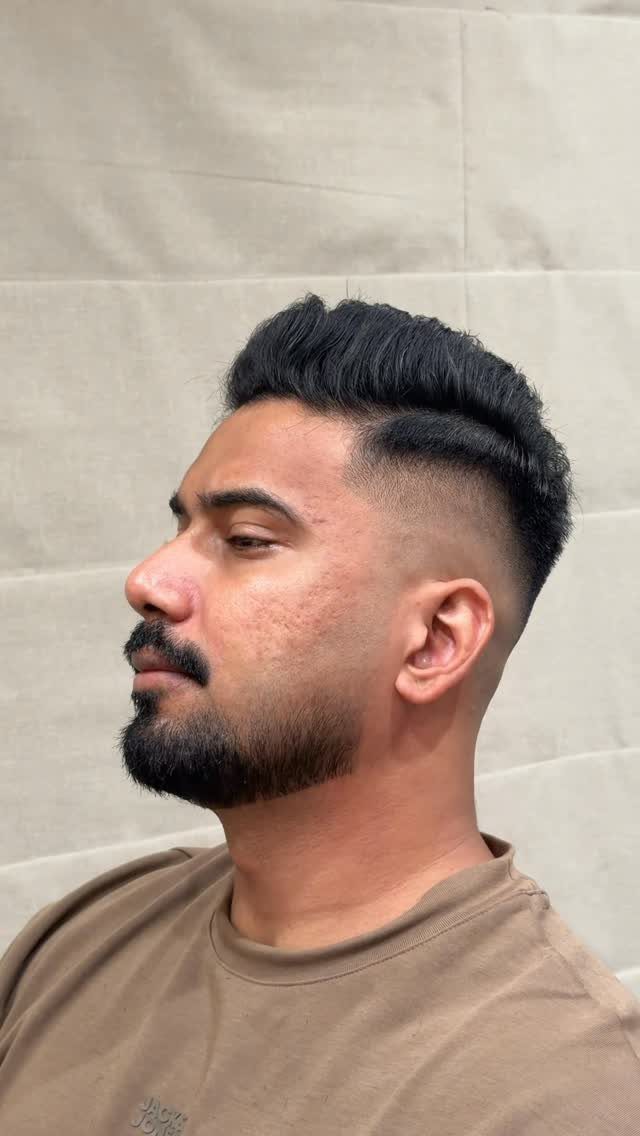
The defining move is taking the sides and back all the way down to skin, usually starting at the neckline and ears and blending upward over 2 to 3 inches.
A skin fade delivers the sharpest contrast and the cleanest edge, and it suits men who want a high-maintenance, high-impact look.
Stubble appears on the shaved portion quickly, so most men return for a touch-up every week or two.
The fade itself can start low, mid, or high, and that placement changes how much scalp shows and where the eye lands. If you have coarse or curly hair, the blend often looks smoother because the texture hides the transition.
7. Curly Fade
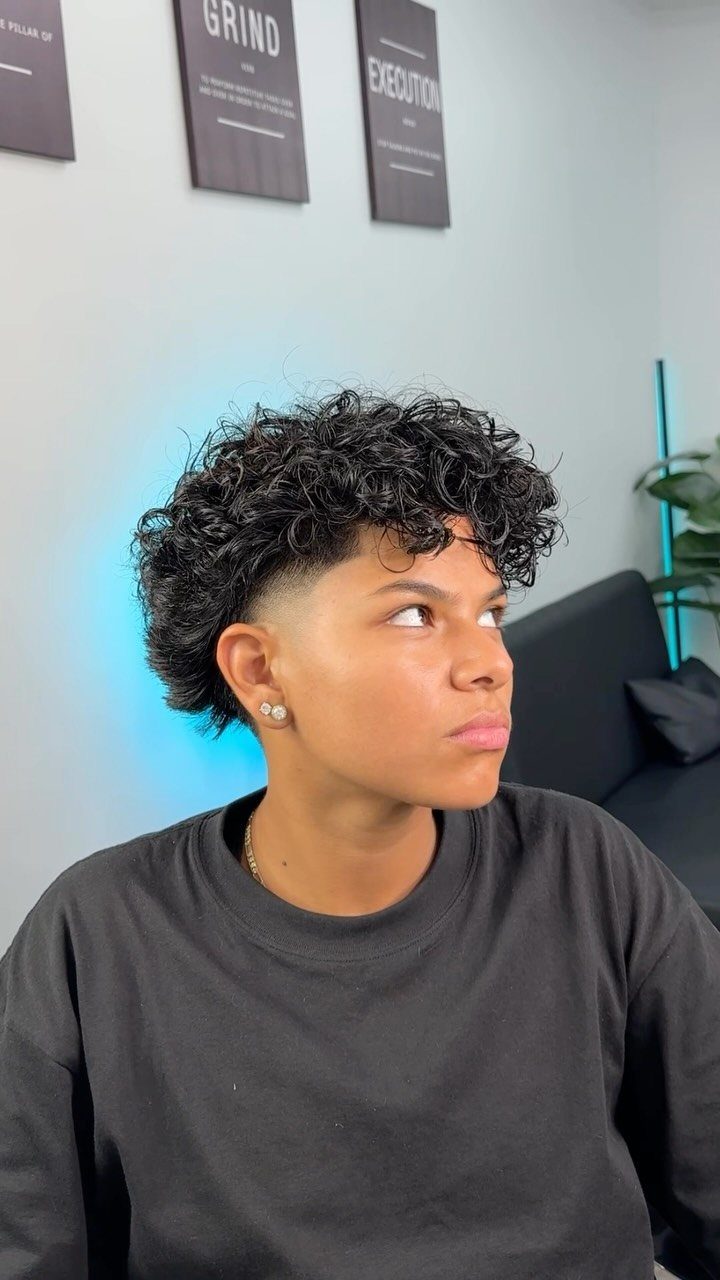
The sides taper or blend to skin while the top keeps its natural curl, giving texture room to move without the bulk that can make curly hair look wide.
The fade cleans up the perimeter and shifts weight upward, where the curl pattern becomes the feature.
Ask your barber to leave enough length on top for the curls to form naturally.
Tighter curls hold shape with less length; looser waves need more to avoid looking flat. Moisture and a light styling product keep the curl defined without crunch, and the fade itself needs a regular refresh to stay clean.
8. Mid Skin Fade
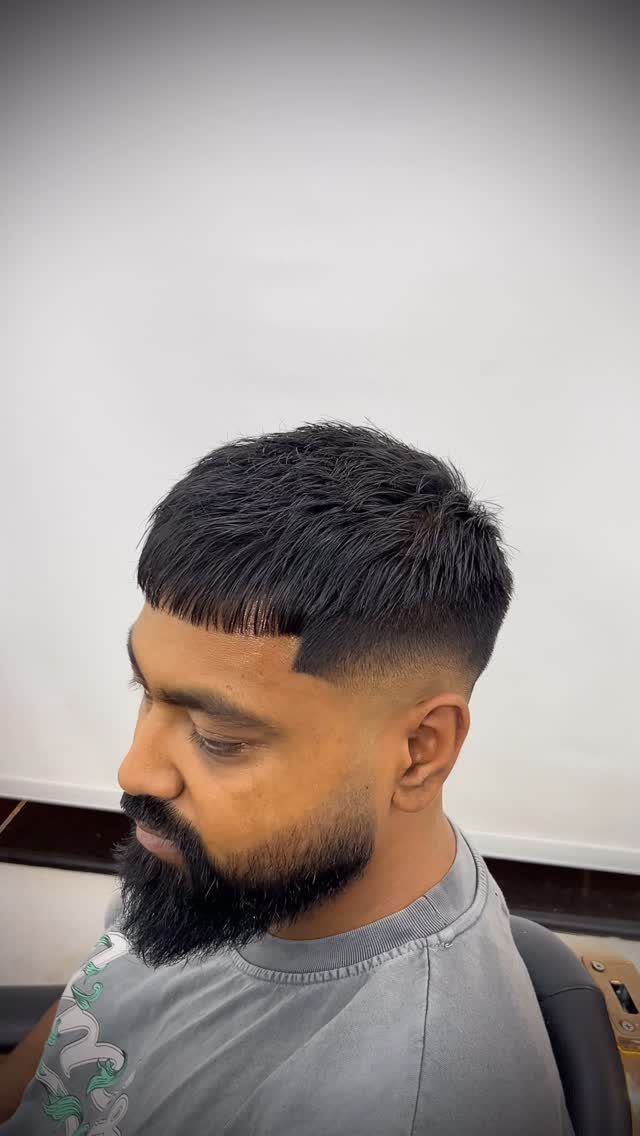
Starting around the temples and dropping to bare skin near the ears, a mid skin fade balances visibility with contrast.
The placement works across most face shapes because it sits in the middle ground, neither as subtle as a low fade nor as stark as a high one.
The shaved portion shows stubble within a few days, so expect to book regular cleanups if you want it to stay sharp.
The blend zone covers enough vertical distance that the transition reads smooth, and the mid height flatters round and square faces by keeping the eye moving rather than stopping at one extreme.
9. Crew Cut
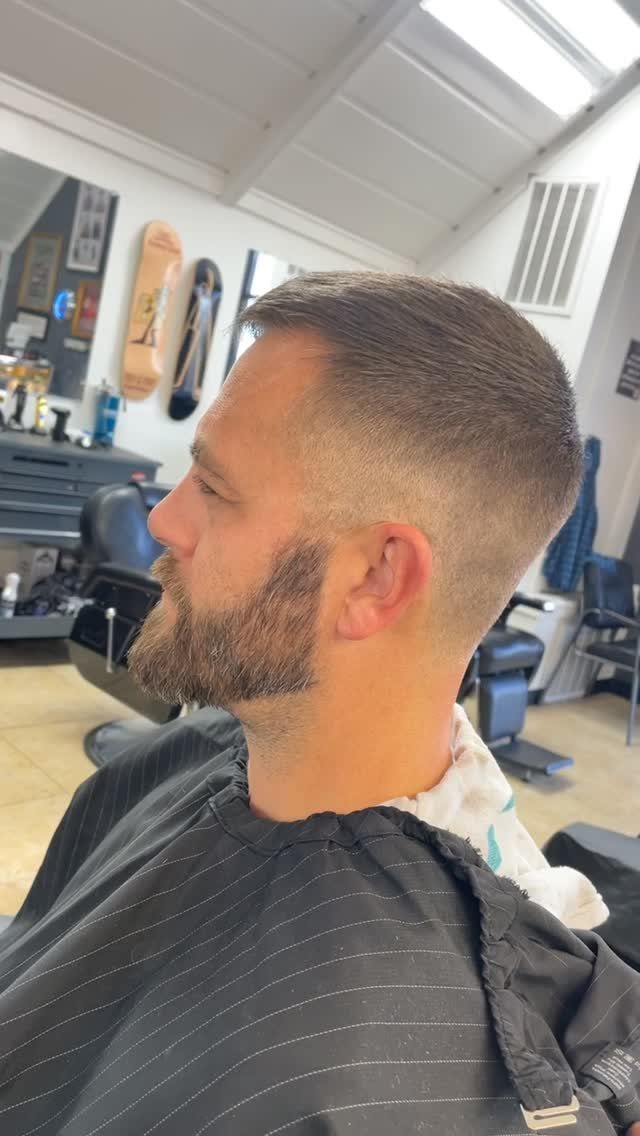
Hair on top is cut short but not uniform, tapering from about an inch at the front down to a quarter inch at the crown, with the sides faded or clipped shorter still.
The result is low-maintenance and clean, and it dries in minutes without product.
Most men can towel off and go, though a small amount of matte paste adds texture if the hair is fine or soft.
The top is short enough that it stands on its own without styling, and the fade keeps the outline tight. A crew cut grows out evenly and stays presentable for weeks before the shape softens.
10. Side Part
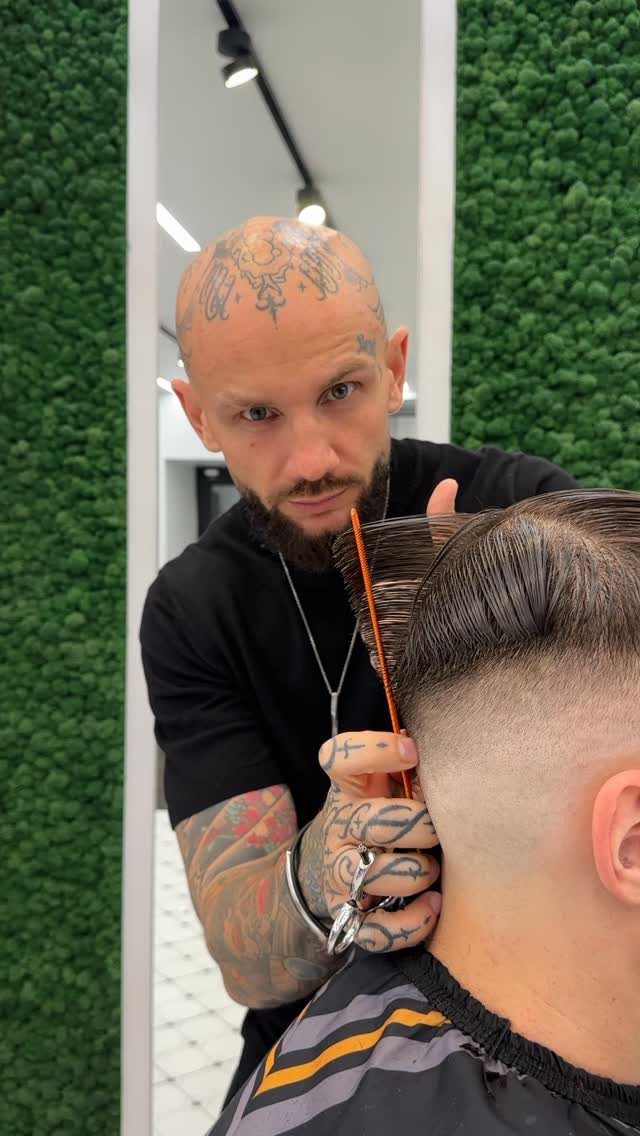
A line is shaved or combed into the hair, usually on one side above the temple, and the hair on top is combed across in the opposite direction.
The part can be subtle or carved in with clippers, and the contrast depends on how much length the top carries and how tight the fade runs underneath.
Comb and a medium-hold pomade or cream set the hair in place, working outward from the part.
The carved version holds a sharp line for about a week before it grows soft, and the combed version needs restyling each morning. A side part works best on straight or wavy hair that lies flat when combed.
11. Quiff
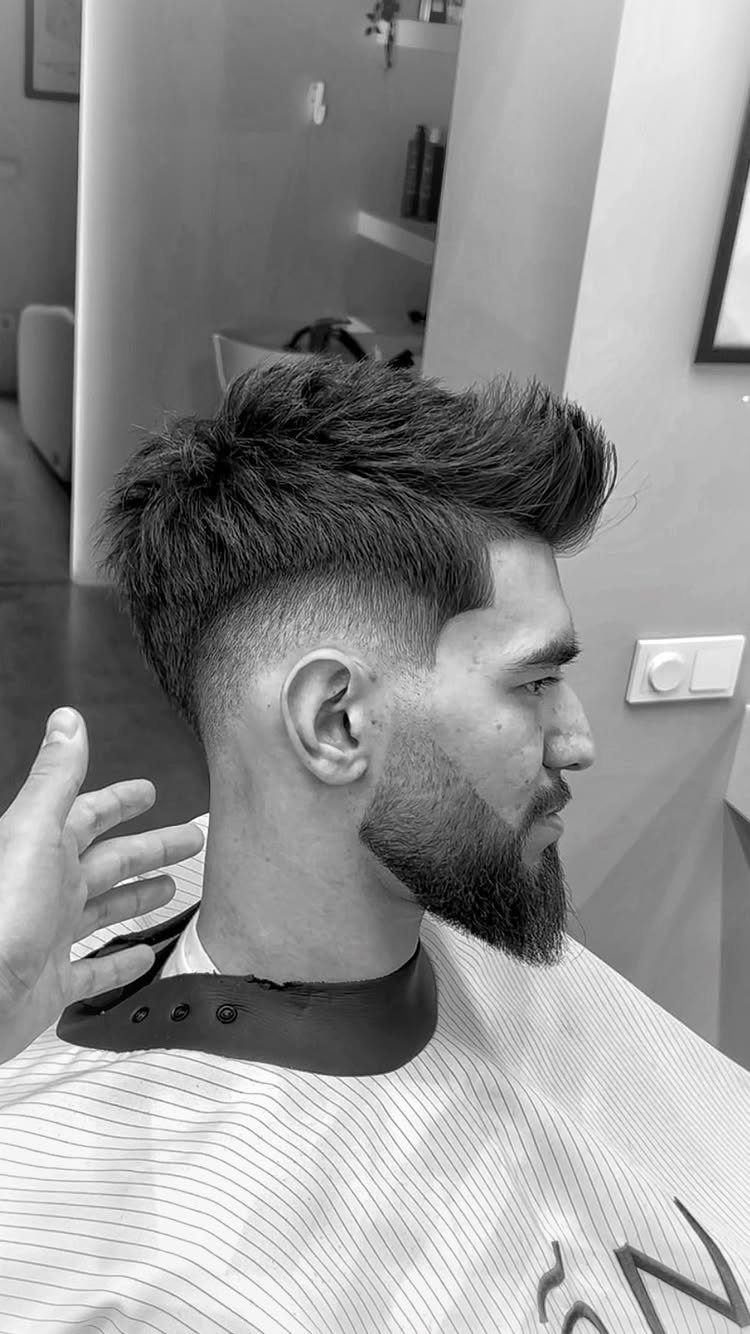
The front is styled upward and slightly back, creating height and forward volume that sits above a tighter or faded side.
A quiff needs enough length on top to lift, and works best when the hair has some natural body or hold.
Blow-dry the front upward while it is damp, then set it with a medium or strong-hold product. Fine hair may need a pre-styler or mousse for grip, and thick hair often holds the shape with less product.
The style takes a few minutes each morning, and the fade underneath keeps the sides from competing with the volume on top.
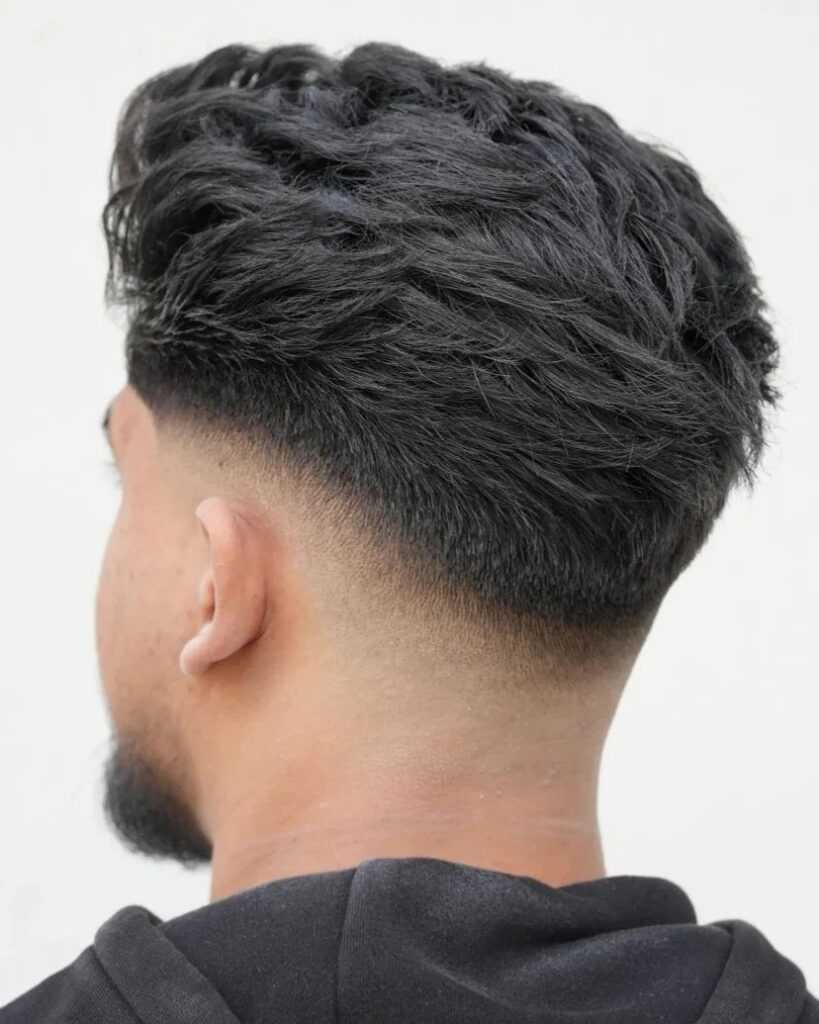
12. Drop Fade
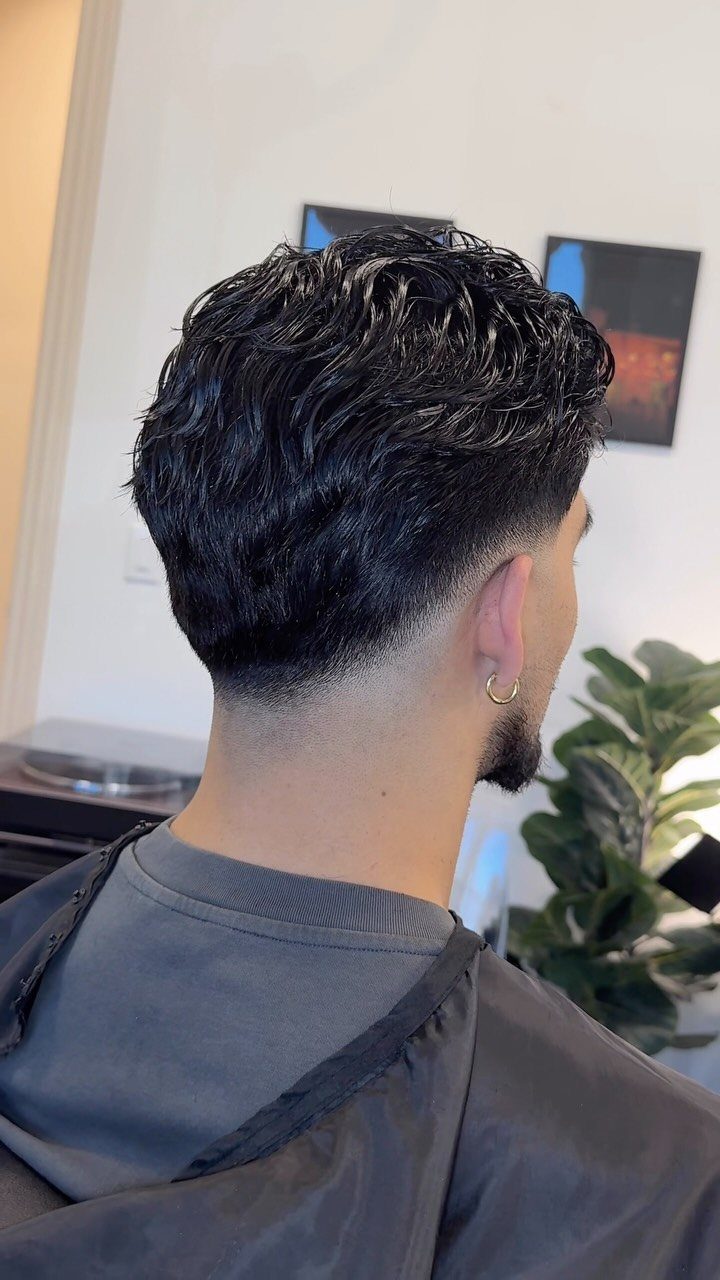
Instead of following a straight line around the head, the fade curves down behind the ear and continues lower at the back, tracing the natural shape of the hairline.
The drop creates a rounder silhouette and suits men who want the fade to follow the head rather than cut across it.
The curve is most visible from the side and back, and it flatters rounder face shapes by elongating the profile.
The fade still blends to skin or a short guard, and the drop adds a few days to how long the shape holds because the lower portion grows in less noticeably.
Specify the drop when you book, since not every barber defaults to it.
13. Burst Fade
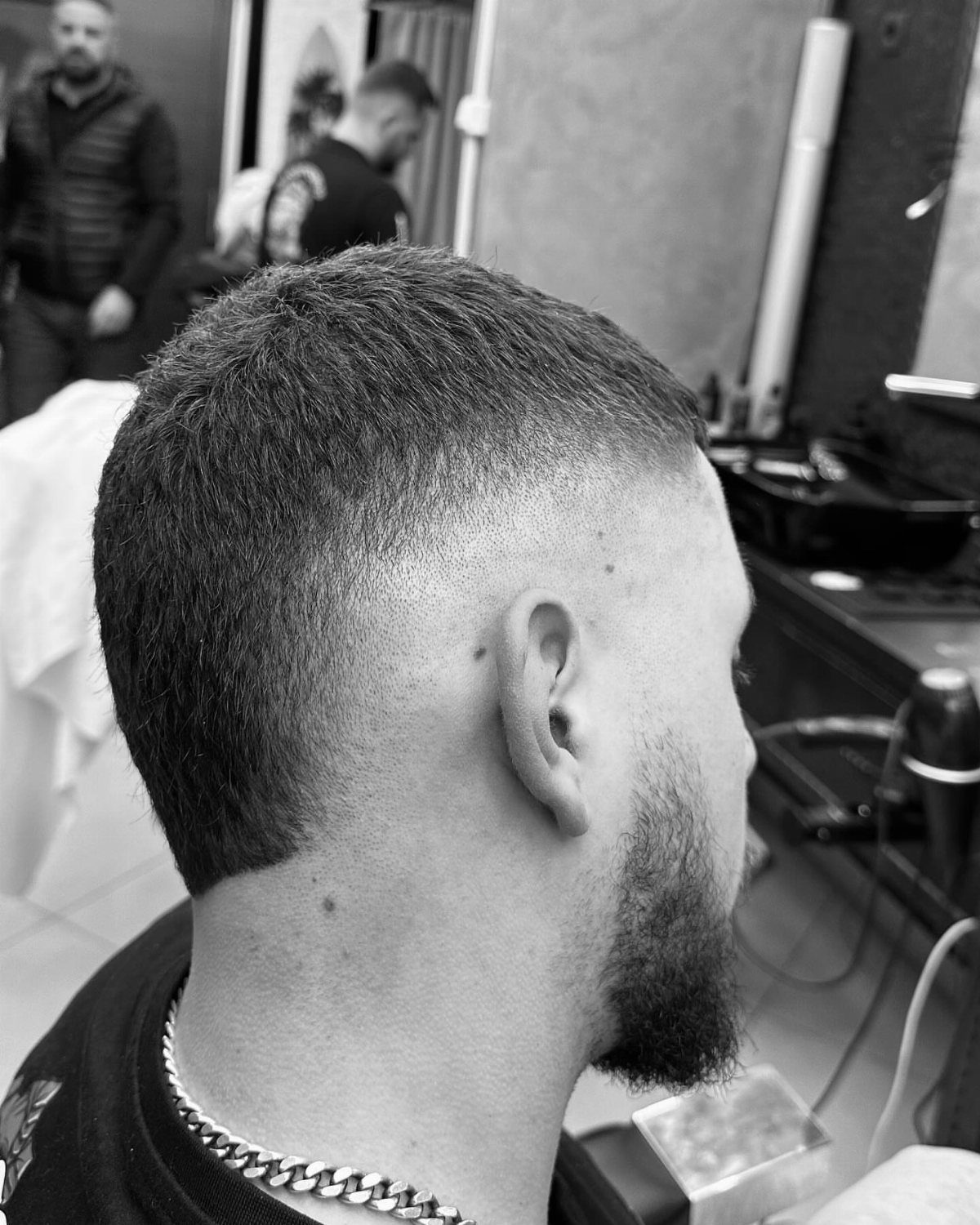
The fade arcs around the ear in a semicircle and then stops, leaving the hair at the back longer and unblended.
A burst fade frames the ear without the full commitment of a fade that wraps the entire head, and it pairs well with longer styles on top or textured cuts that carry volume.
The curve is visible from the side and sits where a drop fade would turn downward. Most barbers blend it to skin at the tightest point of the arc, and the unblended back means fewer touchups than a full fade.
If you want clean sides but prefer to keep length at the nape, this one splits the difference.
14. French Crop
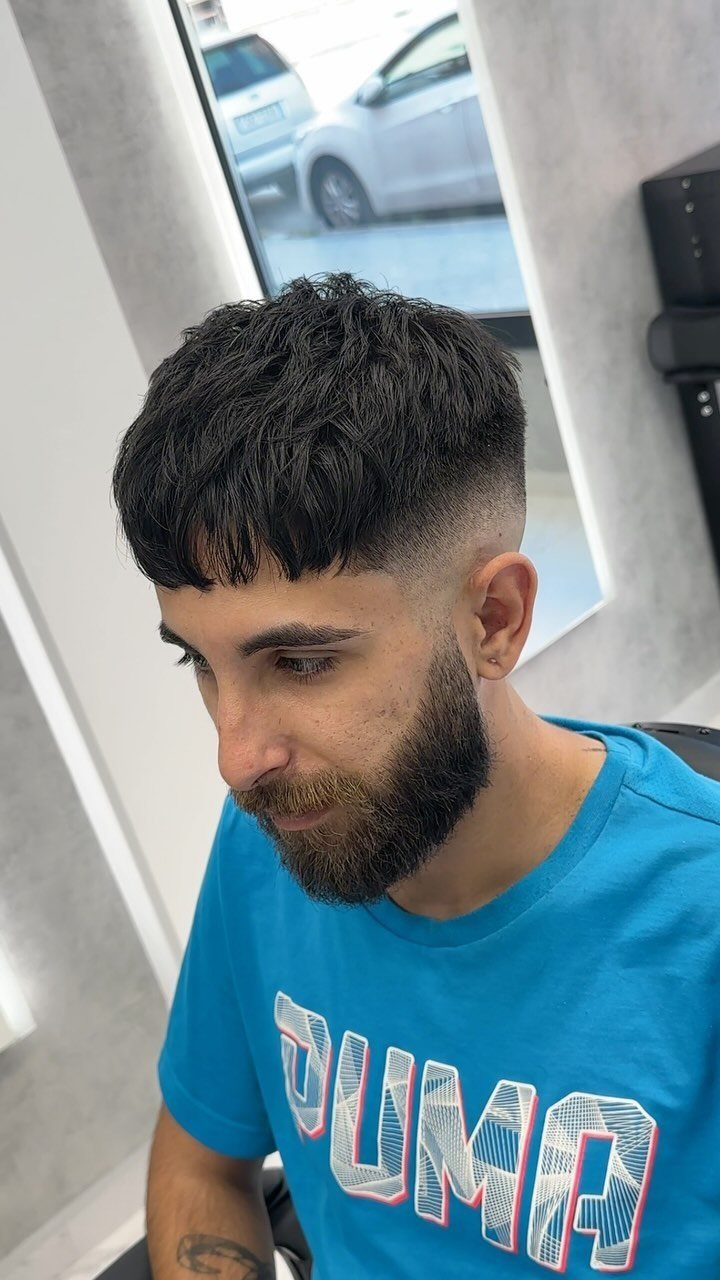
The hair on top stays short and textured, and the fringe is cut straight across so it sits flat over the forehead.
A French crop keeps styling time low because the fringe sits naturally without needing to be lifted or blown into place, and the faded sides keep the overall shape tight.
The fringe can sit at the hairline or slightly above it depending on face length.
Most men work a small amount of matte product through damp hair and let it air dry, and the cut holds its shape until it needs a trim.
15. Pompadour
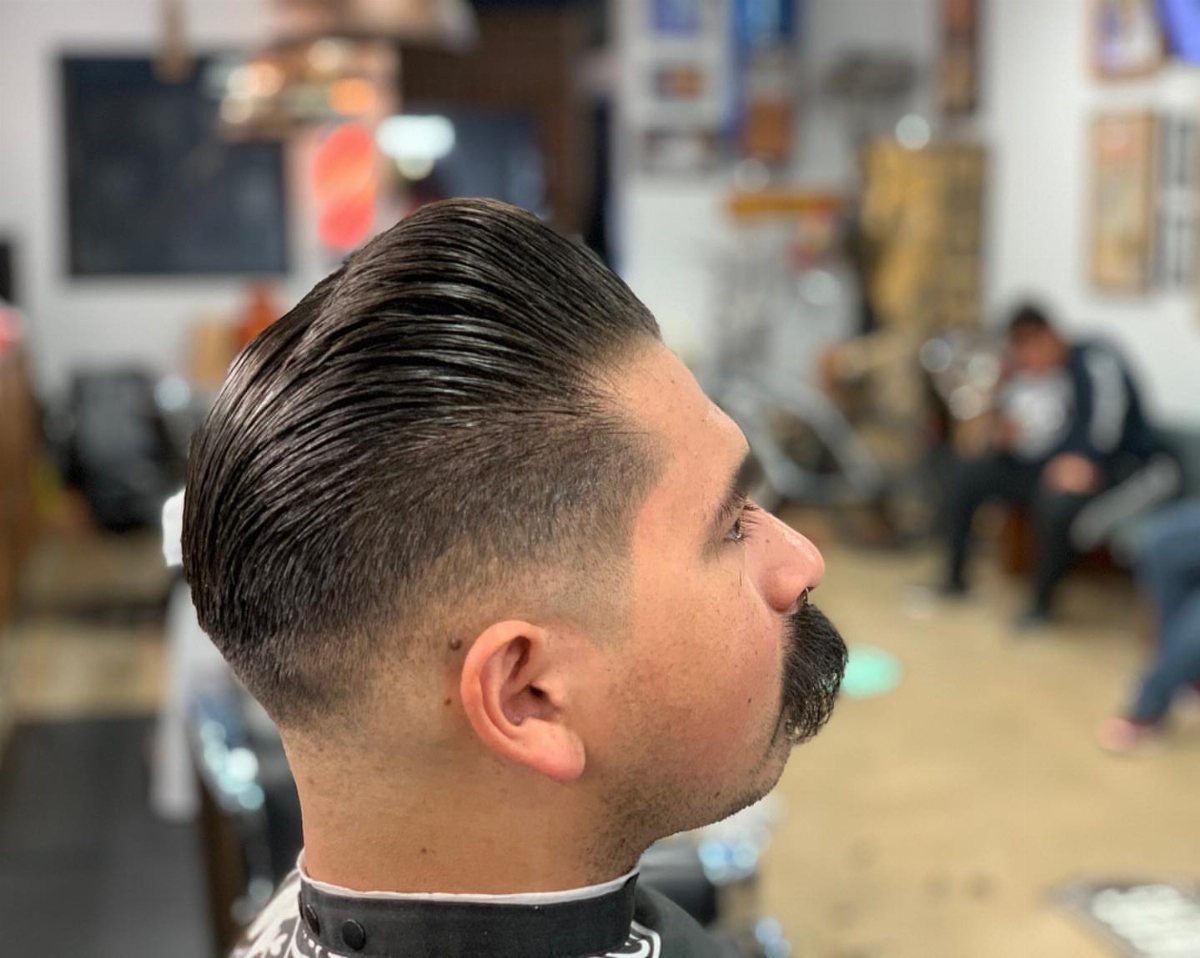
Length on top is swept upward and back, creating height at the front and volume through the crown.
A pompadour needs several inches to form the shape, and the sides are usually faded or clipped short to keep attention on the styled top.
The front should lift without collapsing forward, and the height can range from subtle to exaggerated depending on how much length you start with.
Plan on a few minutes of styling each morning and a trip back to the barber when the top gets too long to work with.
16. Mid Fade Hard Part
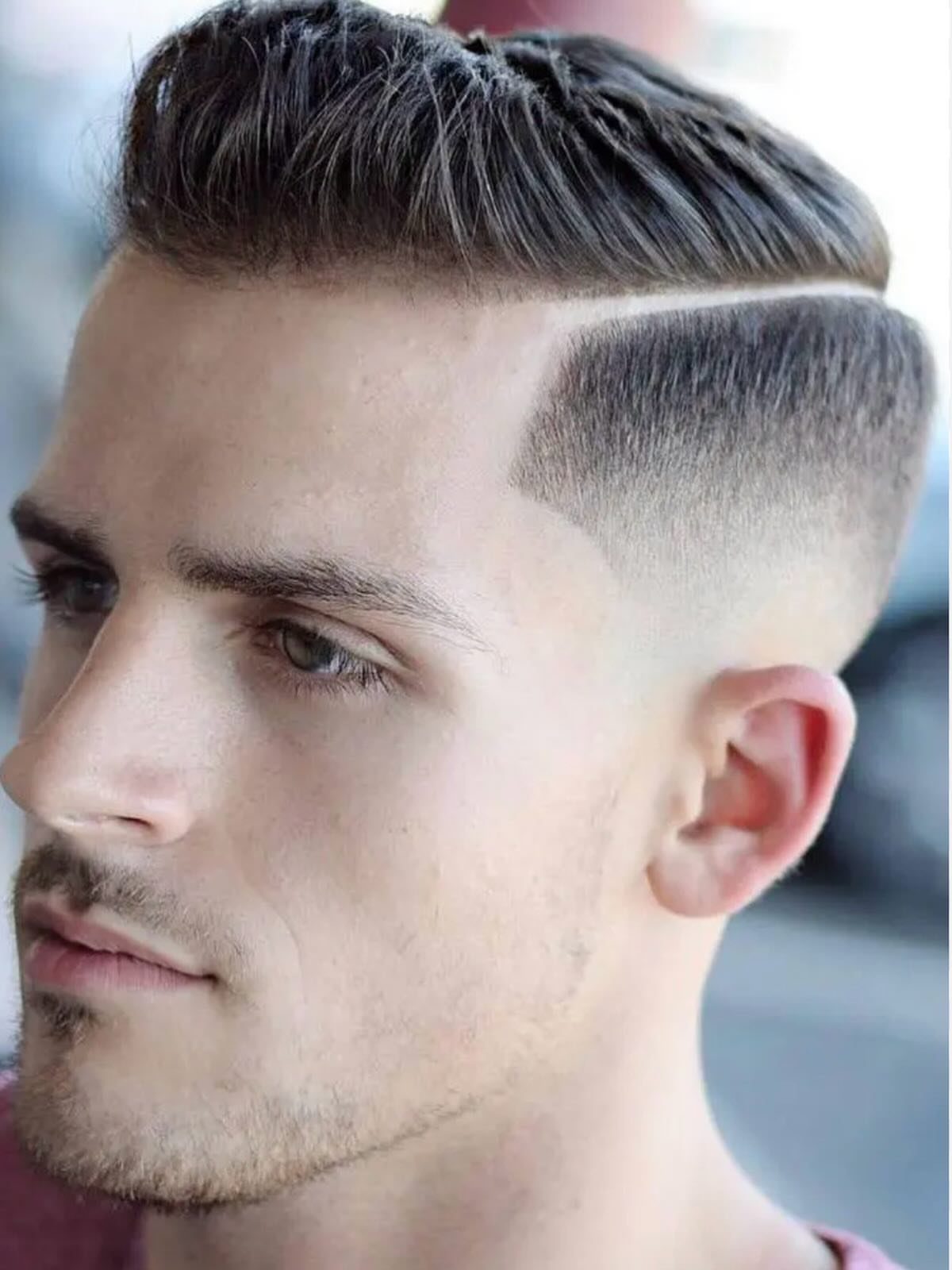
A shaved line runs above the temple, marking where the longer hair on top meets the fade.
The hard part adds definition and gives the cut a polished edge, and it works best when the top is combed across or styled to one side so the line stays visible.
The fade underneath can be taken to skin or stopped at a short guard, and the placement of the part should follow the natural line where your hair would break if combed.
A hard part flatters most face shapes because it draws a vertical line that balances width.
17. Mid Fade Short Fringe
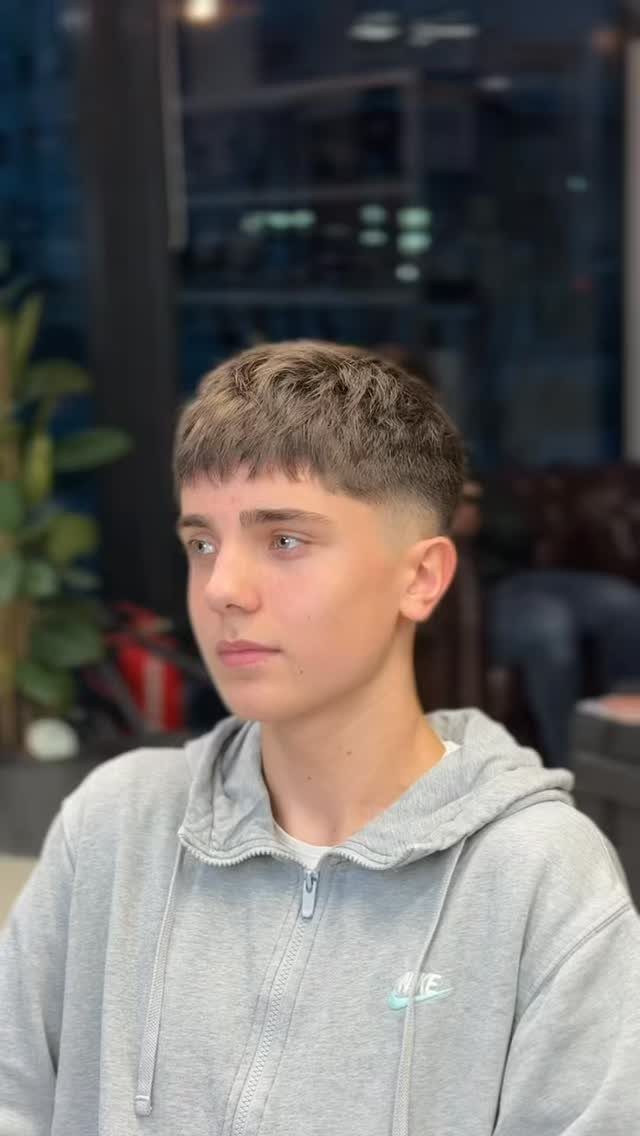
The top sits longer than the sides but short enough to fall forward as a clean fringe, usually an inch or two at most.
The mid fade keeps the sides tight without going too high, and the fringe adds a finished look without the styling time a quiff or pompadour demands.
The fringe can be cut blunt or textured depending on how soft you want it to look.
Most men push it forward with a small amount of product or let it fall naturally, and the cut grows out evenly without losing shape quickly. If your forehead is long, the fringe shortens it visually.
18. Mid Burst Fade
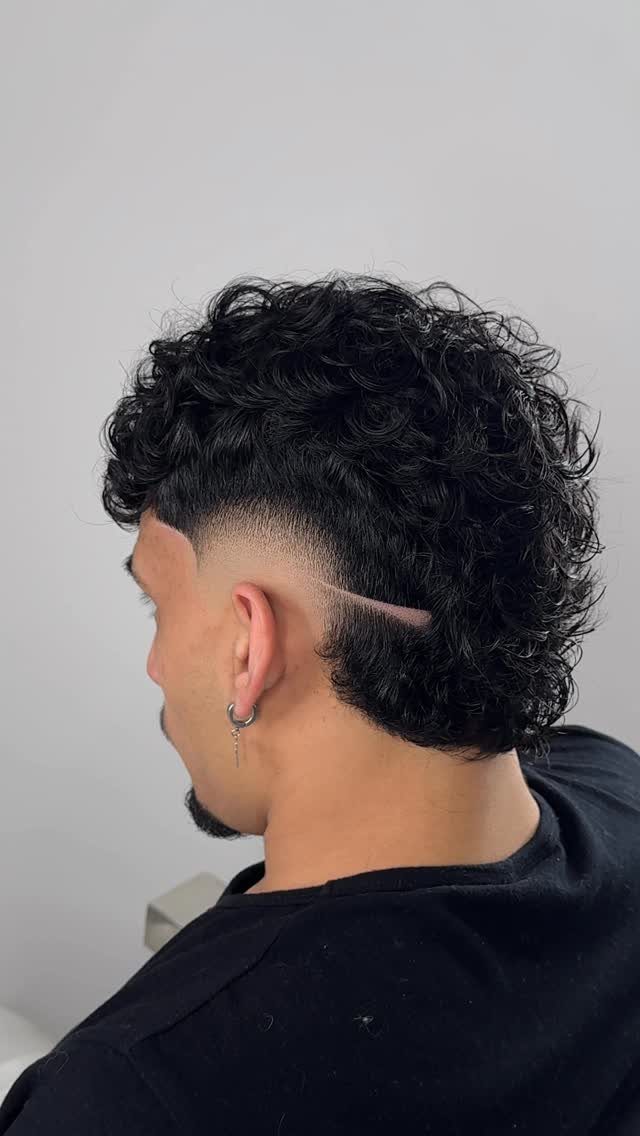
The fade curves around the ears and stops, leaving the back longer, while the top is cut with enough texture or curl to add movement.
A mid burst fade sits between subtle and bold because the fade itself is visible but not extreme, and the choppy or curly top keeps the look from reading too uniform.
The blend starts around the temples and arcs downward, and the contrast depends on how short the fade drops. The back stays longer than a full fade, so maintenance stretches a bit further between visits.
19. Bald Mid Fade
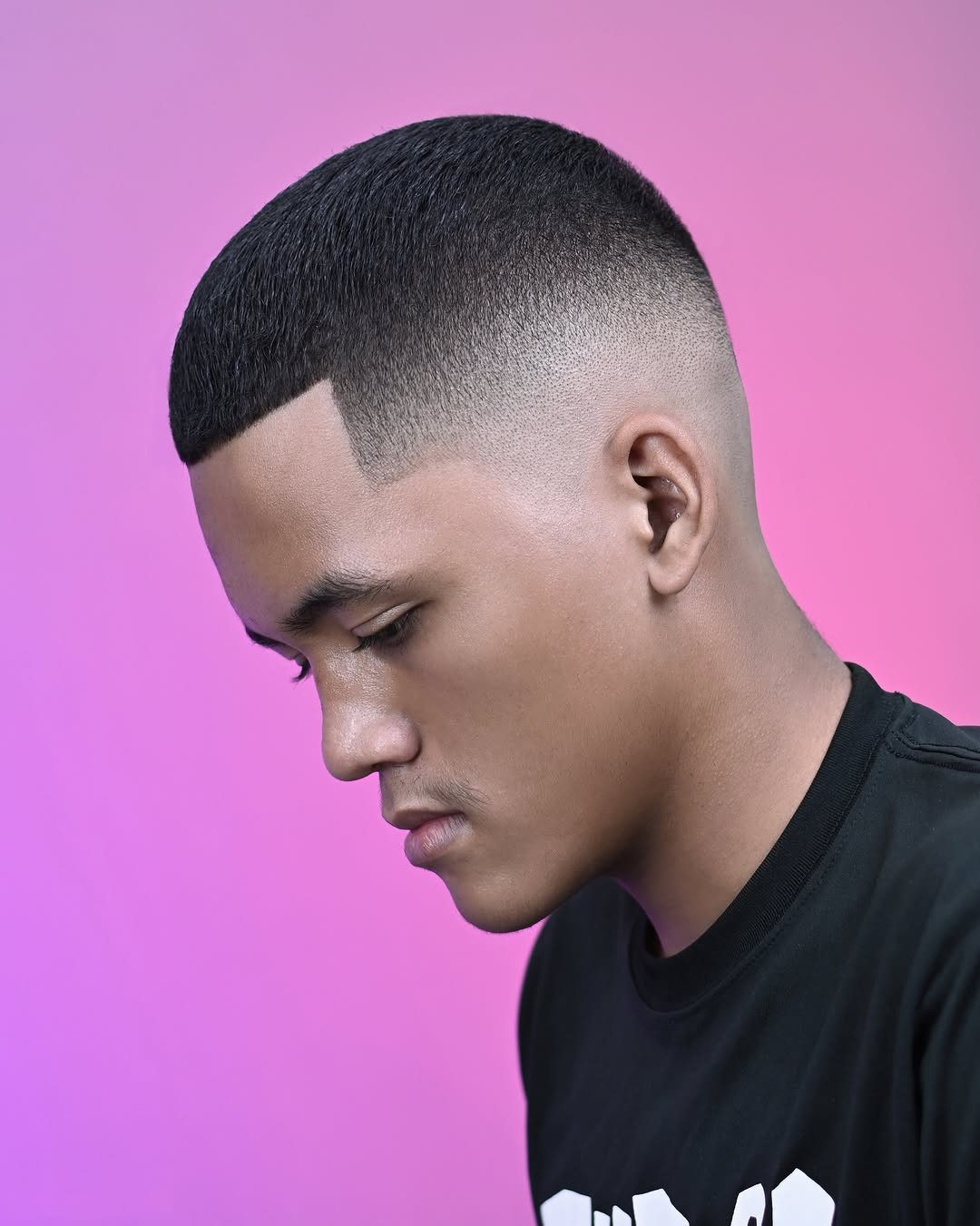
Clippers take the sides to bare skin, and the top is left short and uniform, often a half inch or less.
The sharp division between shaved sides and cropped top gives the cut its contrast, and the look stays clean and deliberate.
The top needs almost no styling, just a quick towel dry or a small amount of matte paste if you want texture. The bald portion shows stubble fast, so count on returning regularly to keep the fade crisp.
20. Temple Fade
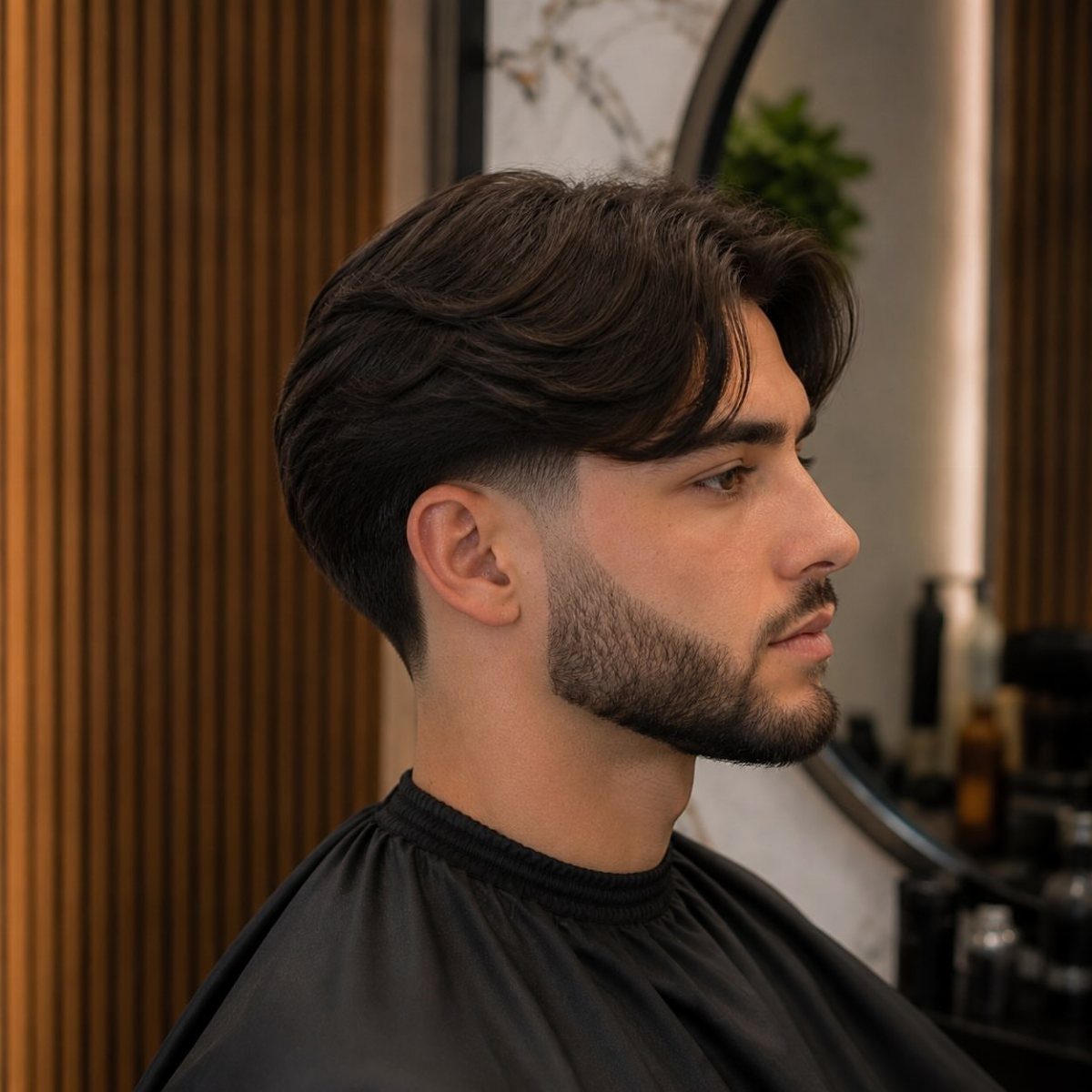
The fade concentrates around the temples and tapers outward from there, leaving the rest of the head longer or blended more gradually.
A temple fade reads subtler than a full fade because the shaved portion stays small, and the transition sits where it frames the face without wrapping the whole head.
The style suits men who want definition near the hairline but prefer to keep length everywhere else.
Maintenance is lighter than a full skin fade since less area needs to be touched up, and the back can stay scissor-cut or blended with guards rather than taken to skin.
21. Messy Fade
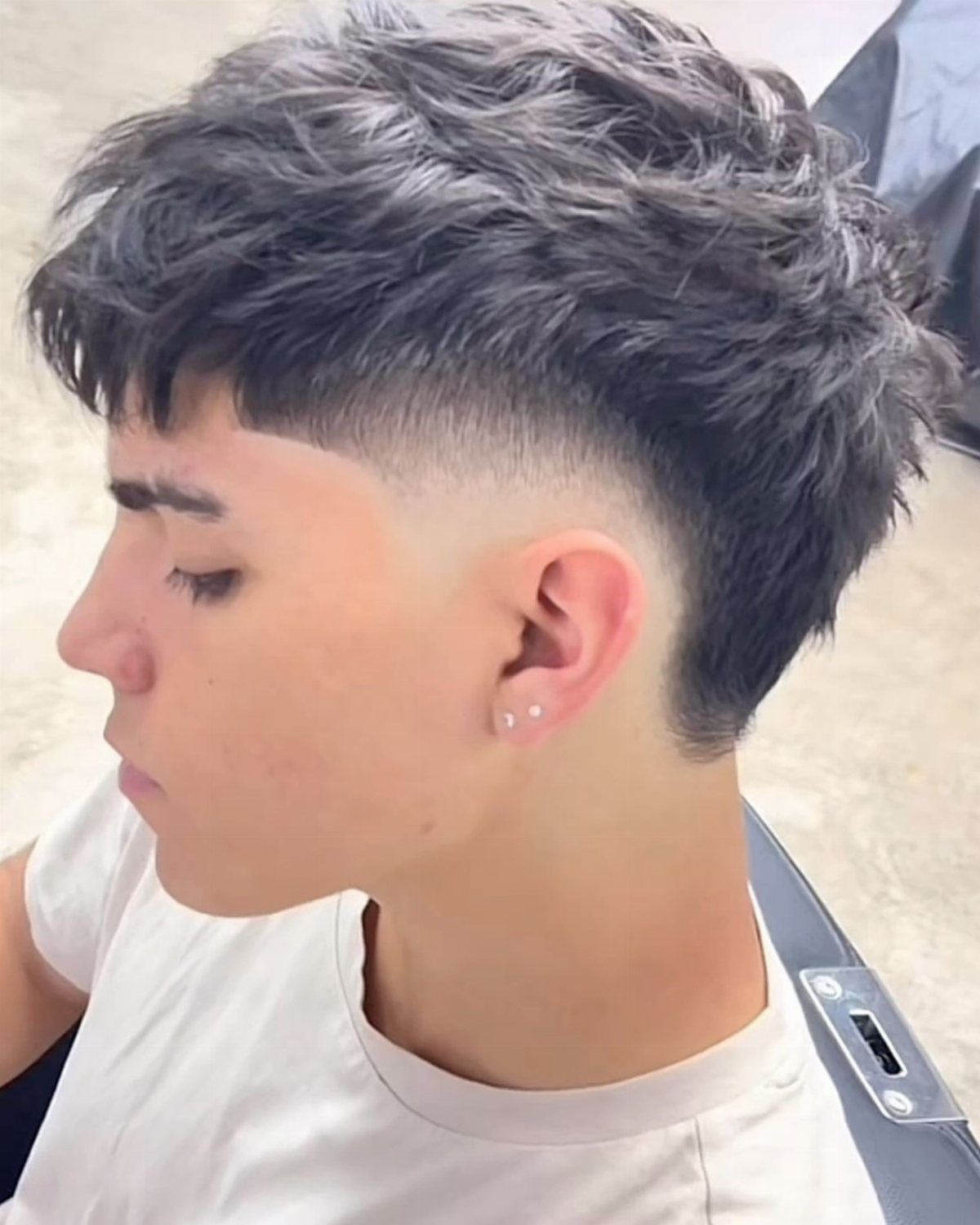
Choppy texture and irregular length on top sit above a fade that keeps the sides tight. The messy finish works because the fade provides structure, and the contrast between controlled sides and loose top gives the cut its shape.
Run a small amount of matte paste or sea salt spray through damp hair and let it dry naturally, or rough it up with your fingers while blow-drying.
The texture hides fine or thinning hair better than a smooth style, and the cut grows out without looking unkempt because the fade keeps the perimeter defined.
22. Mid Fade Slick Back
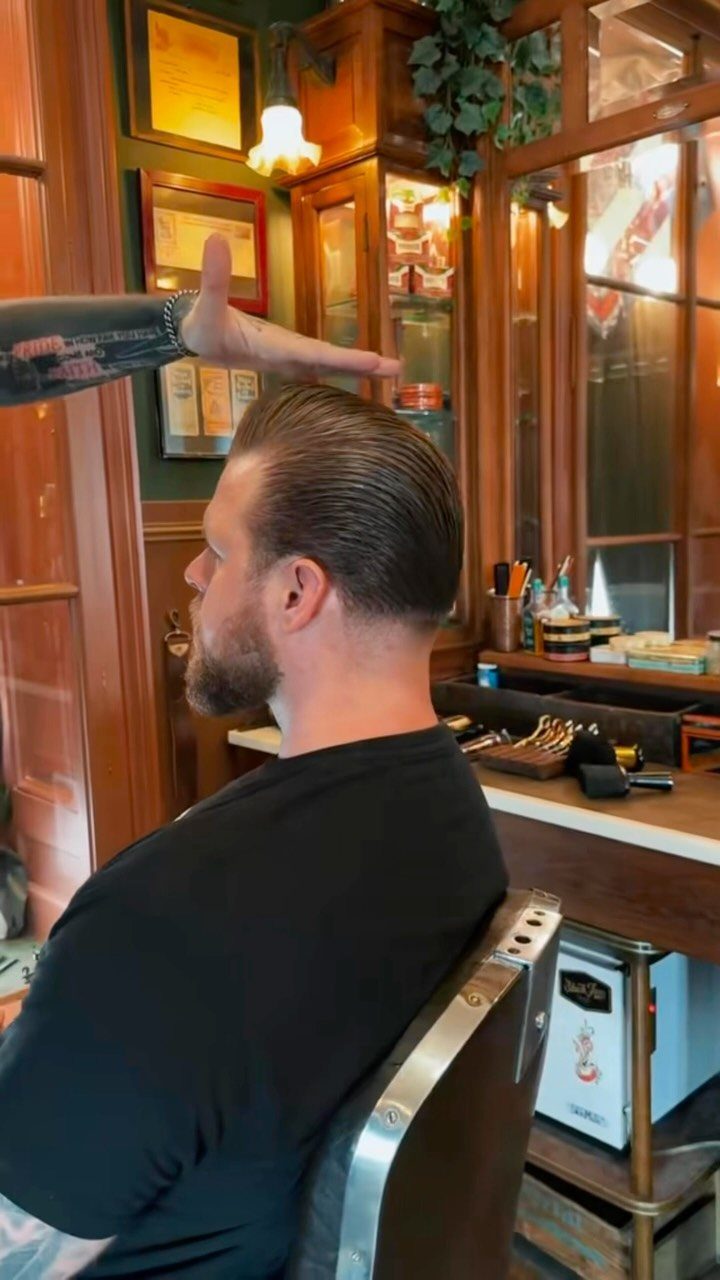
Combed straight back from the forehead, the hair on top lies smooth and flat, and a mid fade underneath keeps the sides from adding width. The slicked look depends on enough length to comb back without standing up.
I work pomade or gel through damp hair, combing from front to crown.
The finish can be high-shine or matte depending on the product, and the style holds all day if you use enough. Paired with a clean taper fade, the slick back balances traditional grooming with a modern outline.
23. Fade with Line Up
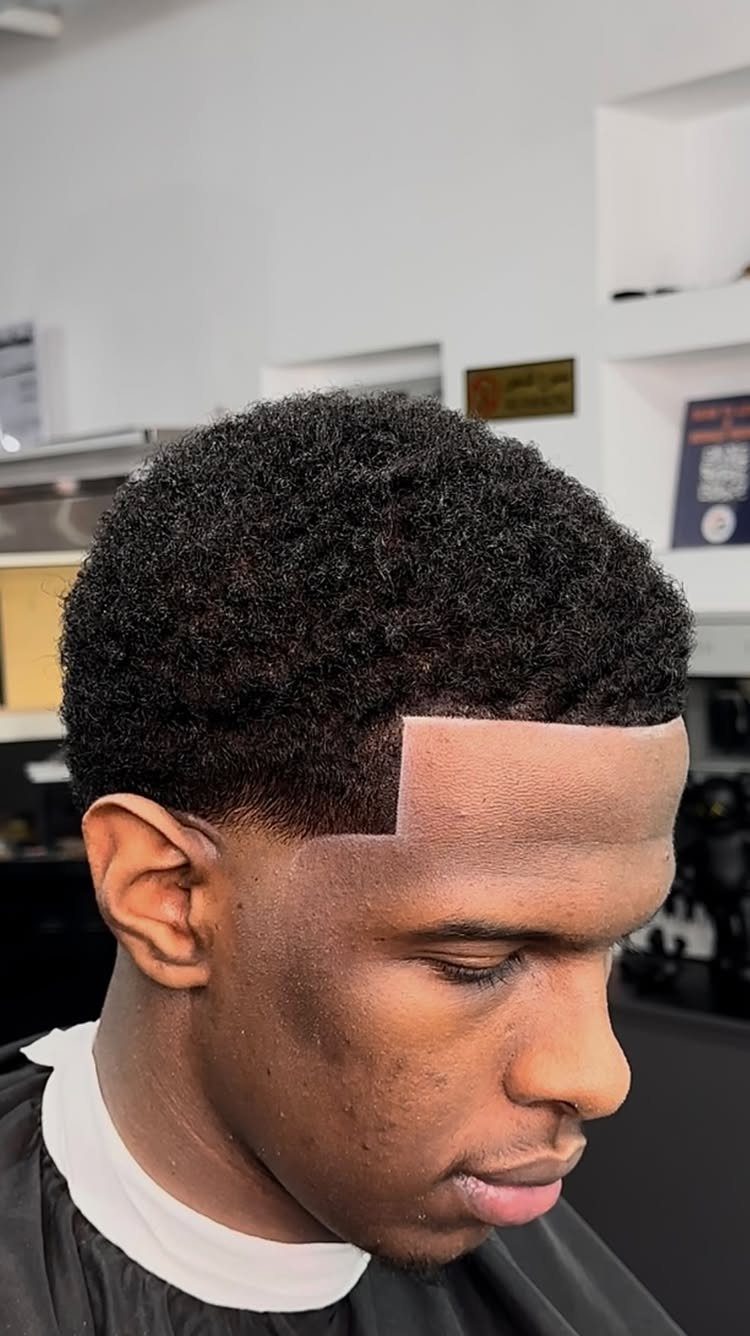
The hairline at the forehead and temples is edged into a sharp, straight line, and the fade tapers the sides down from there.
The line-up sharpens the perimeter and gives the cut a finished edge that makes even a simple fade look deliberate.
Ask your barber to shape the hairline with clippers or a razor, and expect the crisp edge to soften within a week.
The line-up flatters most face shapes because it defines the frame, and it pairs well with short or curly tops where the clean edge contrasts with textured hair.
24. Wavy Top Fade
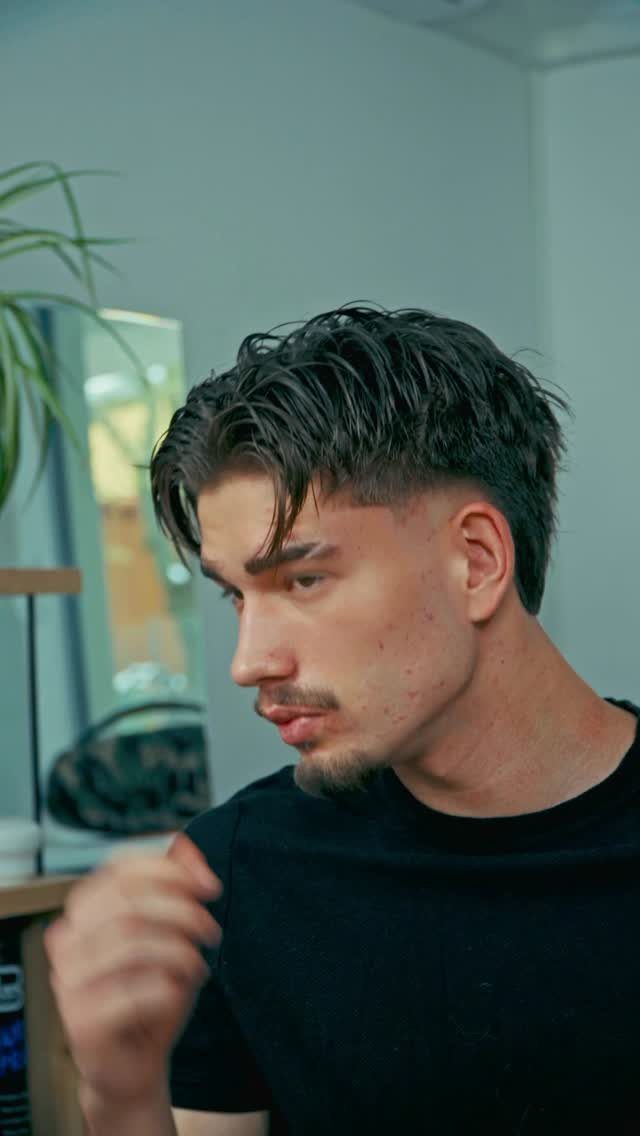
Natural waves on top are left long enough to form their pattern, and the sides fade down to keep the shape from spreading wide.
The waves add movement without bulk, and the fade underneath shifts the focus upward where the texture sits.
Wave cream or light mousse brings out the pattern without weight; air drying works, or a diffuser set low.
The style works best on hair with a natural wave, and the fade keeps the sides clean so the top stays the main feature.
25. Fade with Beard
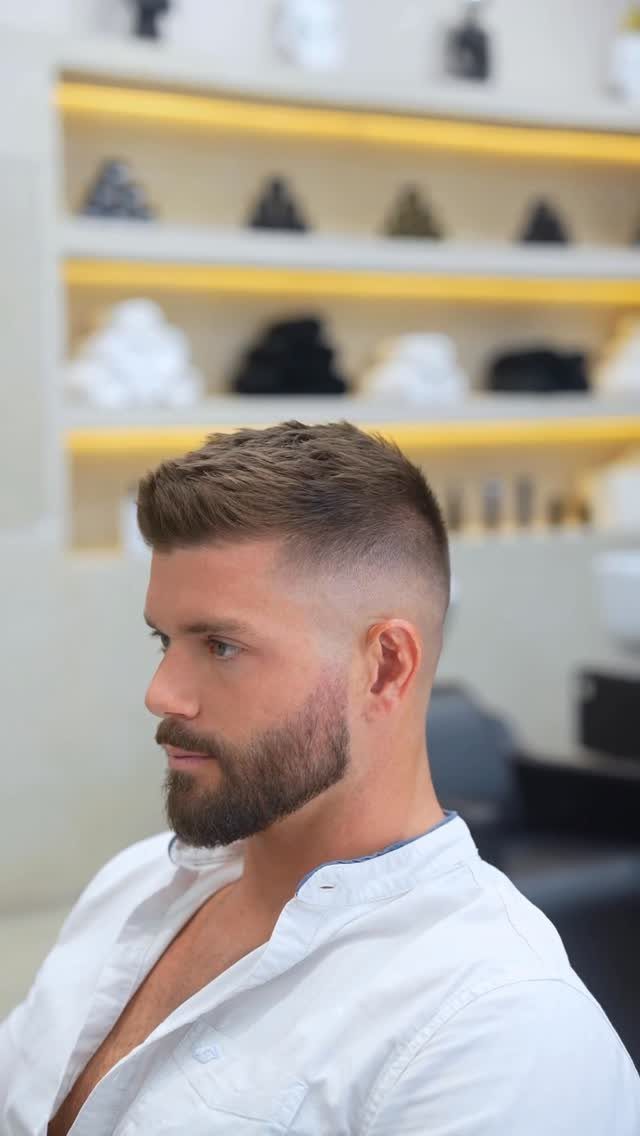
The fade runs down into a groomed beard without a hard stop, and the barber blends the sideburn area so the transition reads smooth rather than separated.
The beard should sit at a similar level of maintenance as the fade: trimmed to an even length, lined up at the cheeks and neck, and shaped to follow the jawline.
Ask for the fade and beard to be shaped in the same visit so the proportions match.
A full beard balances a high or mid fade by adding weight below the jawline, and the pairing works best when both are kept sharp.
Plan on touching up the beard every few days and returning for a fade cleanup between barber visits.
Choosing a Fade Height
Rectangular and oval faces carry low fades well, where the longer sides balance proportions without stretching the face further.
Thick hair benefits from taking volume off the sides with a higher fade, keeping the cut from looking wide.
Thin hair reads fuller when the top is left longer and the fade sits lower, directing attention upward rather than exposing the scalp.
The choice still turns on how much contrast you want and how often you can return.
Fade Maintenance Intervals
Mid fades stretch to every 3 to 4 weeks, since the blend zone covers more vertical distance and regrowth at the baseline is less obvious.
Low fades can wait 3 to 4 weeks or longer because the fade sits near the ears and neckline, where new growth blends into the surrounding hair rather than standing out.
Buzz cuts go longest, up to 8 weeks, since the uniform length grows out evenly without disrupting the cut.
Explaining the Cut to a Barber
Describe the top separately: how much length you want and whether it should be textured, blunt, or left long enough to style.
A reference photo removes guesswork and shows the barber the proportions you have in mind, especially where the fade meets the longer hair.
Blending quality depends on smooth transitions without visible lines, so check the fade from multiple angles before you leave the chair.
“From a barber’s perspective, the biggest difference is where the graduation begins,” Aaron Chan, cofounder of Kings Domain barbershop in Melbourne, Australia. “The higher you move the fade, the more contrast you create.”
— GQ
Frequently Asked Questions
What is the best fade for guys?
Which fade suits you comes down to face shape, hair texture, and whether you mind a barber visit every other week.
A mid fade works across most face shapes and hair textures because it sits between subtle and bold, while a low fade lasts longer between cuts and a high fade delivers maximum contrast if you’re willing to book frequent touch-ups.
Is a taper or fade better?
A taper keeps more length on the sides and blends gradually without reaching skin, growing out gracefully over several weeks with a softer, more natural look.
A fade drops to skin or very short guards and delivers sharper contrast but needs more frequent maintenance. Choose a taper for a polished, low-maintenance cut and a fade for a high-impact, barbered edge.
What are the types of fades?
Low, mid, and high refer to where the blend begins: near the ear, at the temple, or well above it.
Popular variations include the drop fade, which curves down behind the ear; the temple fade, which concentrates around the temples; and the burst fade, which arcs around the ear and stops without wrapping the full head.
What is the most popular fade in 2026?
Mid fades paired with short fringes or quiffs are the current standard because they balance visibility with contrast and suit most face shapes.
Fades combined with natural texture on top, rather than stiff or overworked styles, continue to dominate, along with personalized details like shaved parts or V-shaped finishes.
What is a fade and why is it still in fashion?
A fade gradually shortens hair from longer on top to very short or shaved near the ears and neckline, with no sharp lines or steps in the transition.
The style remains popular because it works across hair types and face shapes, delivers a clean modern finish, and pairs well with everything from crew cuts to curly tops.
What type of fade is most flattering for a round face?
A mid or low fade with some volume on top helps visually lengthen a round face by keeping the sides controlled without going too high.
A high fade can also work by creating height and pulling the eye upward, but avoid styles that add width at the sides.
What clippers should I use to achieve a perfect fade?
Look for clippers that hold consistent guard heights and cut through dense hair without stalling. The quality of the blend depends more on technique and keeping the blades sharp and lubricated than on any single brand or model.
Can I have a fade if I have a receding hairline?
A mid fade or a fade with longer hair at the front can balance a receding hairline by shifting attention upward and blending the perimeter smoothly.
Many fades help conceal or integrate a receding hairline rather than emphasizing it, so the cut often improves the overall shape.
How do I ask for a fade haircut?
Specify where you want the fade to start (low, mid, or high), how short the bottom should go (skin or a specific guard number), and how much length you want on top.
Bringing a reference photo helps your barber see exactly what you mean, and mentioning how the fade should blend into your beard or hairline adds clarity.