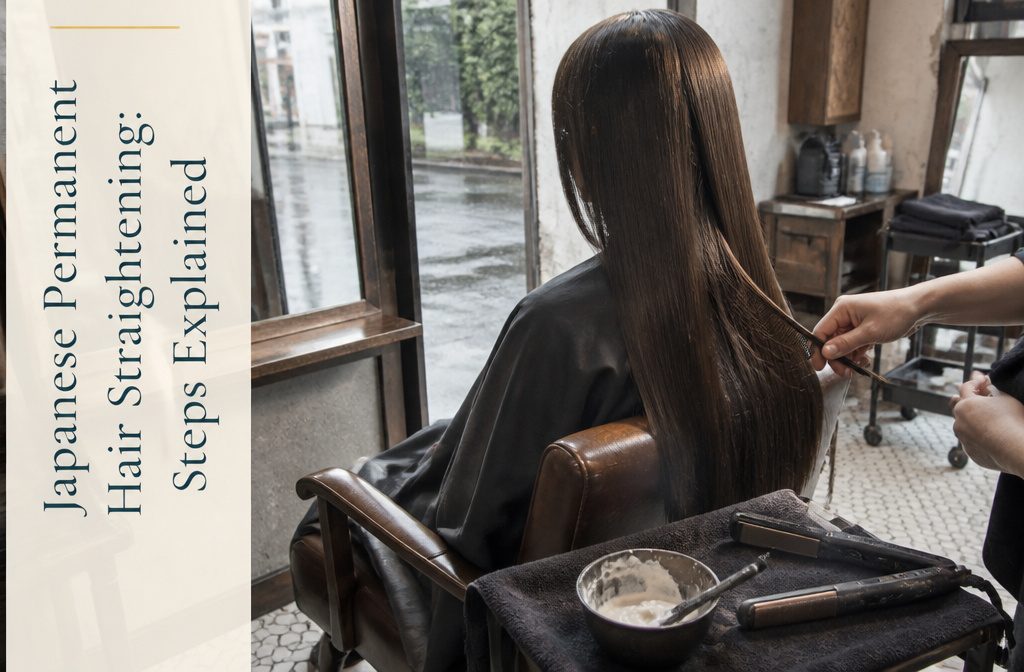
Japanese permanent hair straightening is a chemical treatment that breaks down the natural bonds in your hair and reforms them in a straight pattern using heat.
The result is permanent on treated hair, but new growth comes in with your original texture, which means touch-ups every six to twelve months.
The process takes three to five hours and runs $500 to $900, with application of the activator cream alone stretching up to an hour.
What Japanese Permanent Hair Straightening Does
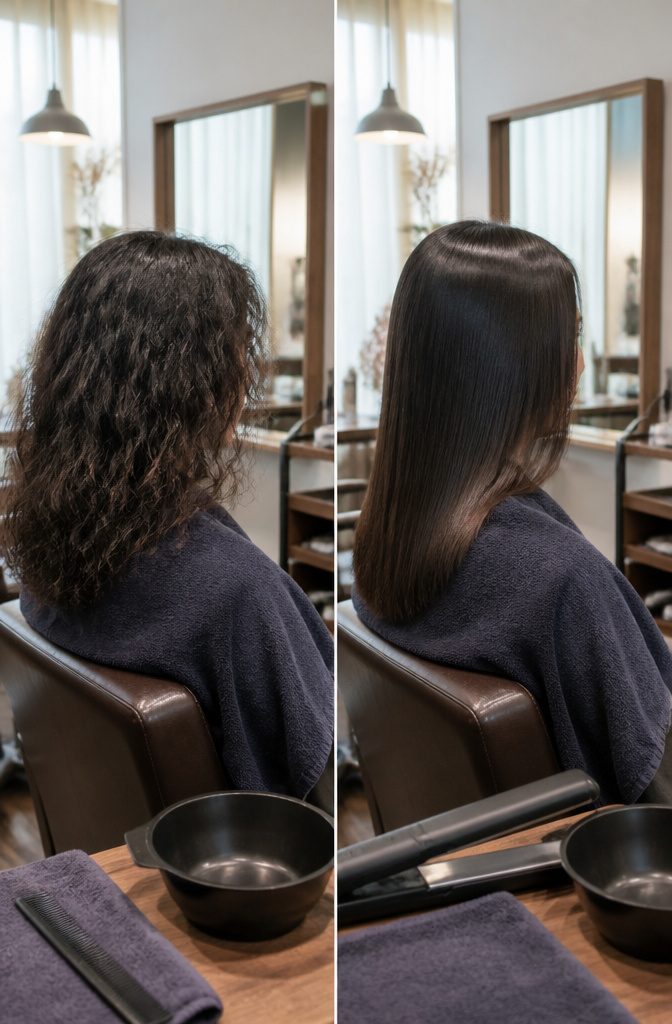
Japanese permanent hair straightening chemically restructures the bonds inside your hair using a combination of solution and heat. The process breaks down the natural bonds that hold curl or wave, then reforms them in a straight pattern.
It’s also called thermal reconditioning, and the name tells you most of what you need to know: the chemistry does the softening work, the flat iron locks in the result.
Japanese hair straightening—or thermal reconditioning—is a permanent straightening treatment that removes 70 to 90 percent of curl, hair volume, and frizz by chemically restructuring your hair bonds.
That restructuring is permanent. Hair that has been treated stays straight until you cut it off.
New growth comes in with whatever texture you were born with, which means you’re looking at a touch-up every six to twelve months depending on how fast your hair grows and how much contrast you can live with at the root.
The treated section doesn’t revert, so morning styling drops to almost nothing once the treatment is done.
1. Hair Analysis and Consultation
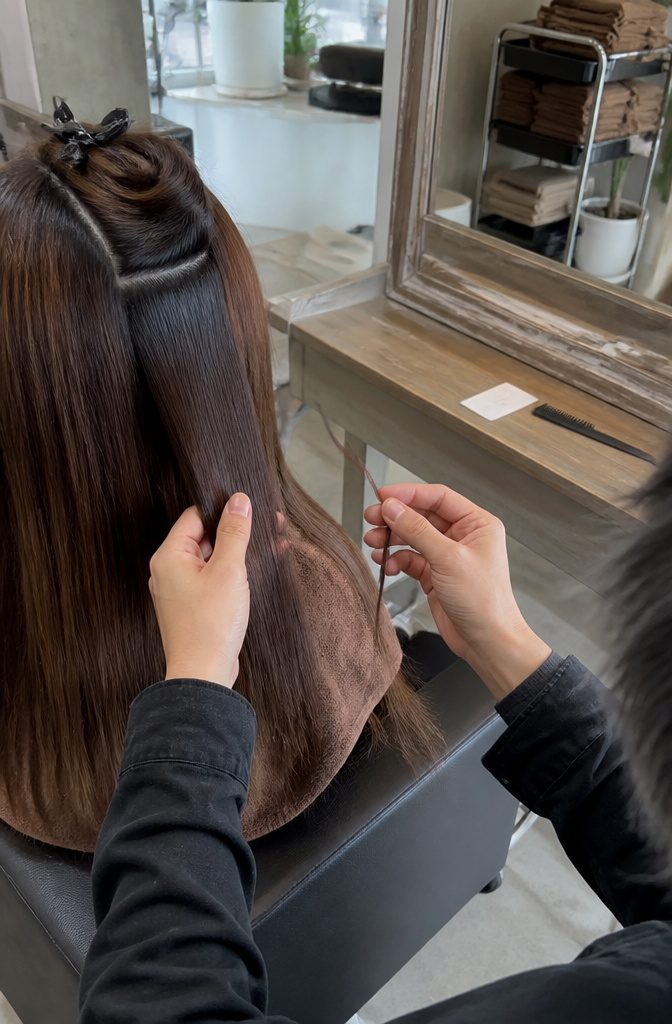
The stylist evaluates hair type, texture, thickness, and condition before anything begins. Chemical treatment history matters most: prior relaxers, perms, color, or bleach can rule out the process entirely or require different handling.
Some salons refuse to straighten over sodium hydroxide relaxers except on new growth. Hair should be at least 5–6 inches long to qualify.
Dryness and damage levels get checked to avoid worsening brittle or over-processed hair. People of Middle Eastern descent sometimes see slightly less dramatic results due to hair resistance, though the treatment still works.
The stylist asks direct questions about past treatments and current hair condition, then sets realistic expectations for what the finished result will look like.
A strand test from multiple sections of the head confirms the hair will respond well before committing to the full appointment.
2. Shampooing
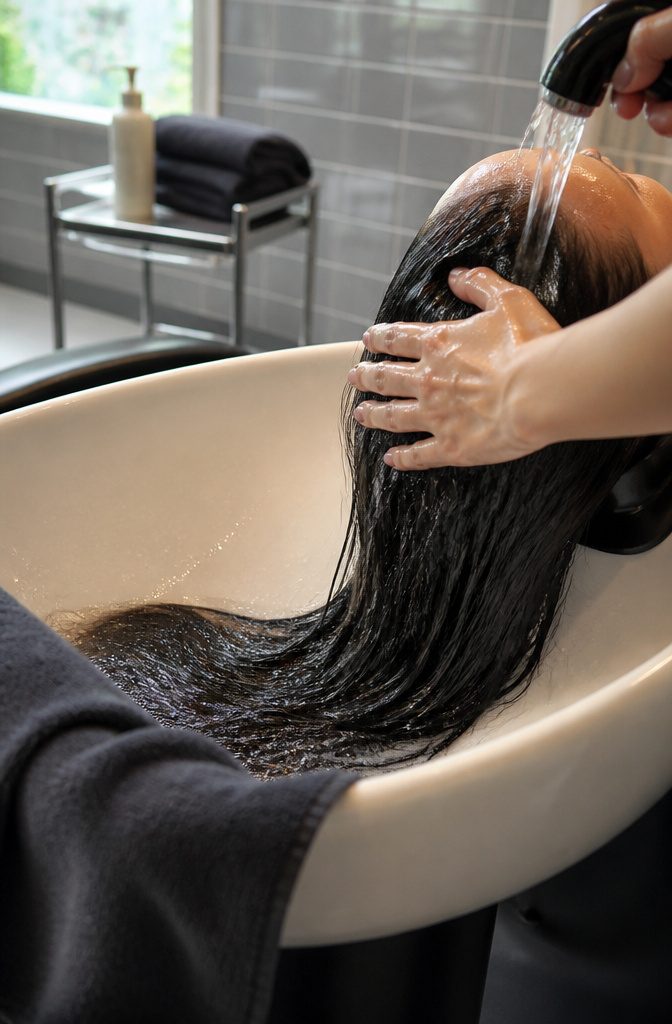
The first wash is deliberately gentle.
The stylist massages your scalp with a soft touch and rinses with warm water rather than hot, so the strands take no unnecessary damage before the straightening solution goes on. Nothing here is a deep clean or a hard scrub.
Rinsing matters more than lathering.
In a Shiseido Professional video walkthrough of a similar straightening service, the stylist checks perm and color history, hair type and damage level first, then shampoos the scalp and hair and keeps rinsing until no shampoo residue remains.
I’d hold any salon to that standard, and it’s fair to ask how they confirm it.
3. Pre-Treatment
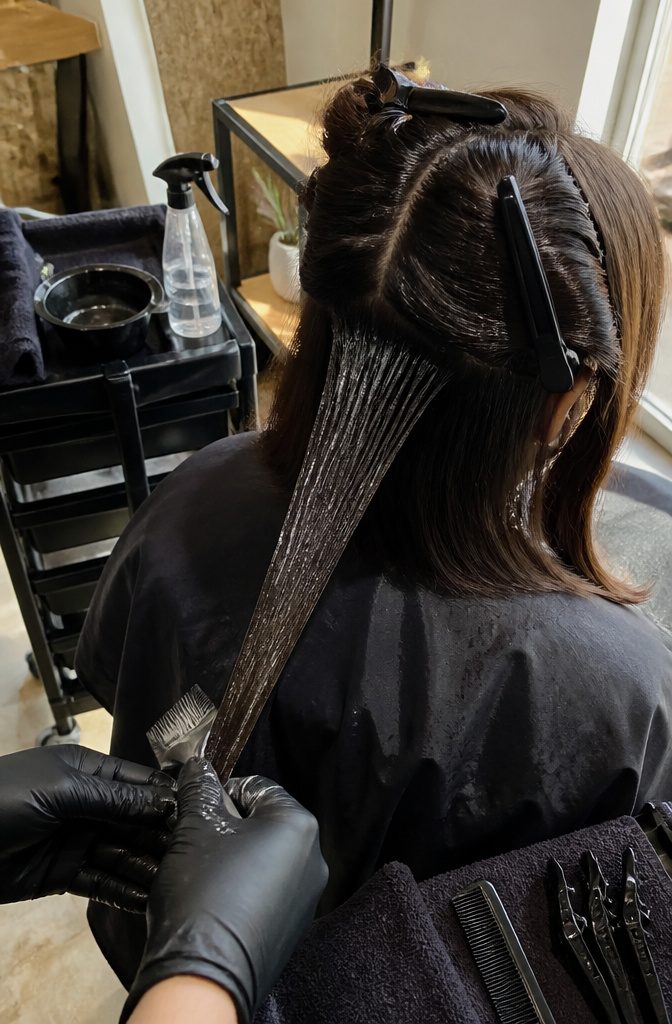
Porosity decides how the stylist preps your hair before any straightening solution goes on.
The hair is sprayed with water high in minerals, then coated in a heat-resistant gel that keeps both scalp and strands from getting chemically burned. How much protection each area needs follows how porous it is.
The gel goes on one small lock at a time, which is slow. I’d treat that slowness as a good sign and be wary of any stylist who rushes it.
Gel applied in small sections is what keeps the results accurate, especially if your hair has many damaged areas. If the chair time feels long at this stage, this is a big part of why.
4. Apply the Activator
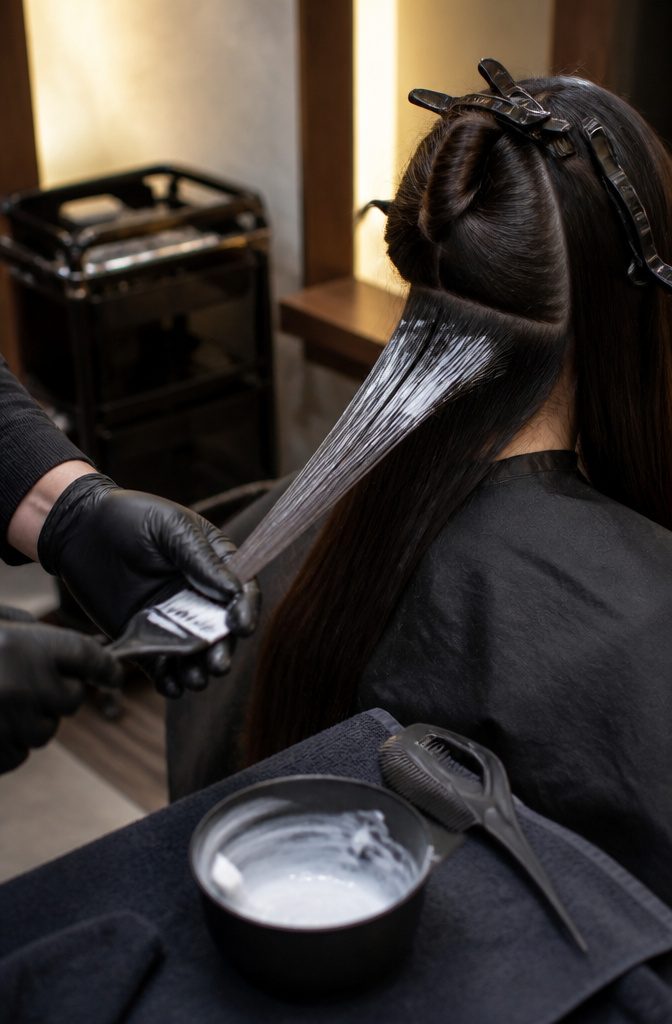
The activator is a cream that breaks down the bonds holding the hair in its natural shape. It goes on in thin sections, working through the whole head so every strand gets a similar coat.
Salons use products such as Liscio Crystal Cream by Milbon, and the active ingredients in this kind of formula are Ammonium Thioglycolate and Cysteine, with concentration capped at 15.2%.
Application alone takes at least 15 minutes and can run an hour or more, depending on how thick, long or dense the hair is.
Don’t let a stylist rush this step, because a patchy coat leaves some strands straight and others bent.
Processing time before the rinse ranges from 5 minutes to an hour, and a strand test checks how the hair responds before the full head commits.
5. Rinse the Solution
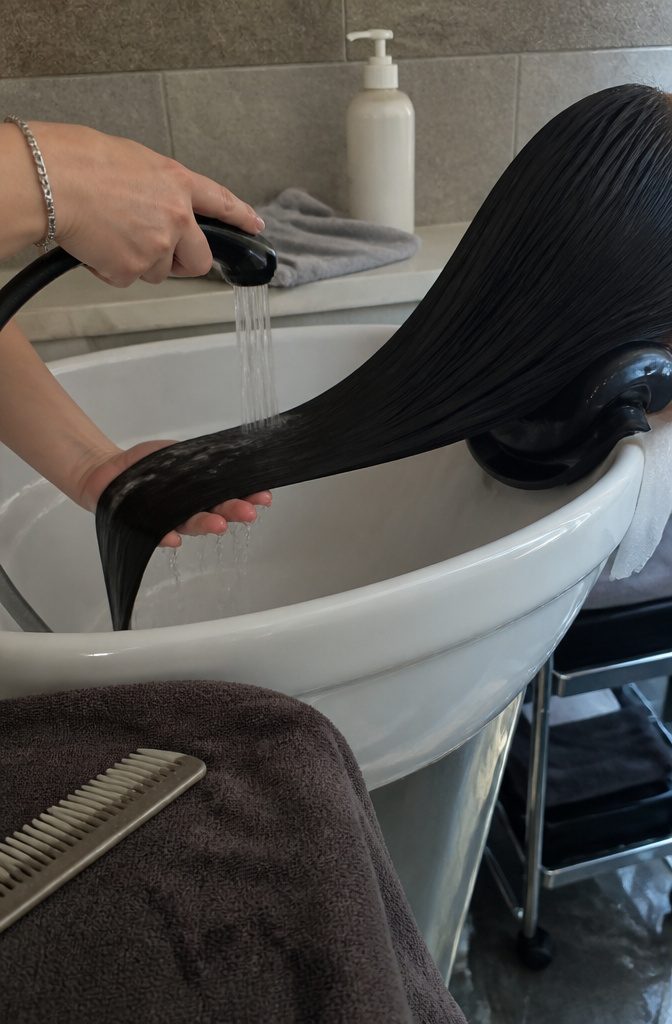
Once the solution has done its work, the stylist rinses it out gently and prepares the hair for the heat stage.
This is where rough handling can undo careful work: combing needs to stay light, and any towel drying should skip the scrubbing motion that pulls at the bonds you just softened.
The rinse stage doubles as deep conditioning. The conditioner used here is not the generic bottle most people keep at home; it is a specialized product built for chemical treatments, often carrying keratin, anti-freeze properties, or extra cleansing power.
Brands such as TRESemmé, Garnier, Moroccanoil, and Sephora show up in many salons.
Getting every trace of the activator out matters. If the solution lingers too long or leaves residue, the result shifts from straight to damaged or uneven.
6. Blow-Dry and Iron
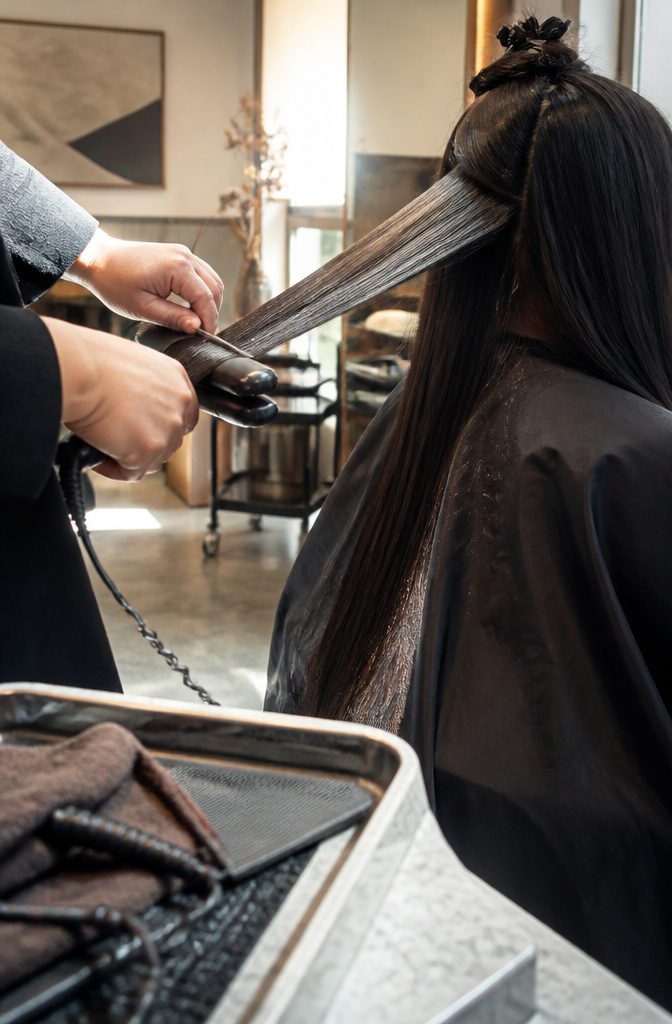
Once the solution comes out, the hair is blown mostly dry but not completely.
Leaving a bit of moisture in the shaft matters for the ironing that follows, which is where the hair actually gets reshaped into its new straight form.
Flat irons set upwards of 350°F work through the hair in small sections.
This stage takes time. Depending on your hair’s length and thickness, ironing can run up to an hour and a half.
Some stylists bring in an assistant to keep the pace moving. The heat and tension applied at this point are what lock the straightened structure into place, so precision here decides how smooth the result looks.
Different salons choose different tools.
Some prefer blow-drying, but most opt for flat-ironing because it keeps hair straighter through the process. Ironing gives more control over each section, and brushes made specifically for this treatment help guide the hair as the plates glide through.
The whole straightening stage can stretch past two hours depending on the stylist’s technique and the tools they use.
7. Apply Neutralizer
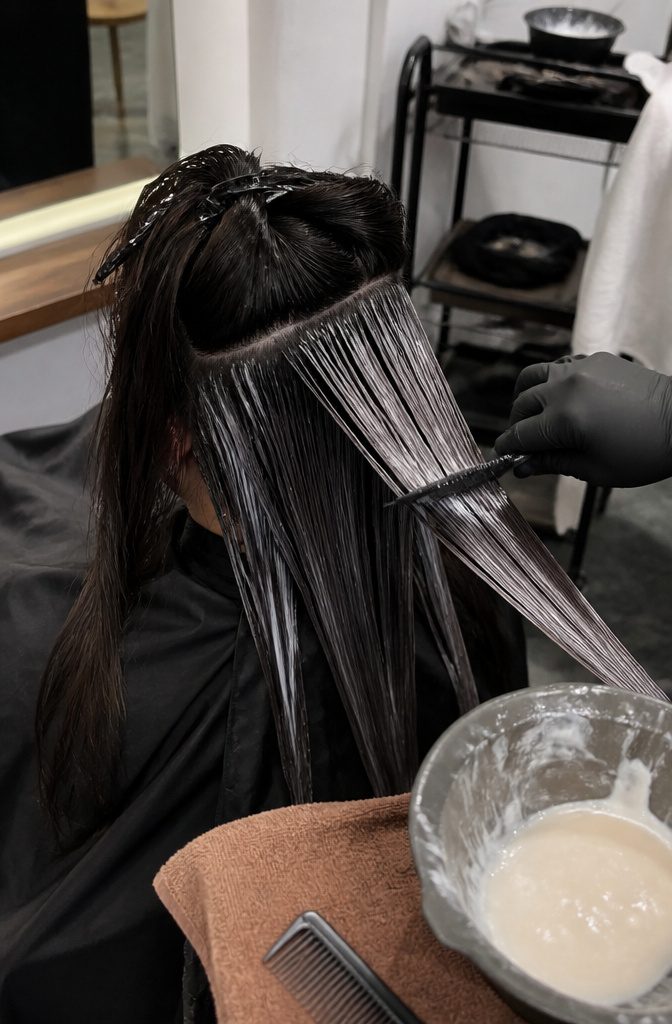
The neutralizer locks in the new structure and brings your hair’s pH back to neutral after the alkaline solution broke the bonds.
At least ten minutes is typical for a neutralizing agent to finish its work, though some stylists pull it at five if the formula is quick-acting or the hair is especially fine.
The cream sits on every section the iron straightened, and during that window it reforms the disulfide bonds in their new alignment so the result holds.
Most salons that use a specific branded system for the activator will match it with the same brand’s neutralizer. That pairing keeps the chemistry consistent and minimizes the chance of a reaction between incompatible formulas.
Since only two steps in the entire process involve chemical input, the quality of both the activator and the neutralizer matters more than almost anything else you can control.
8. Rinse Neutralizer and Condition
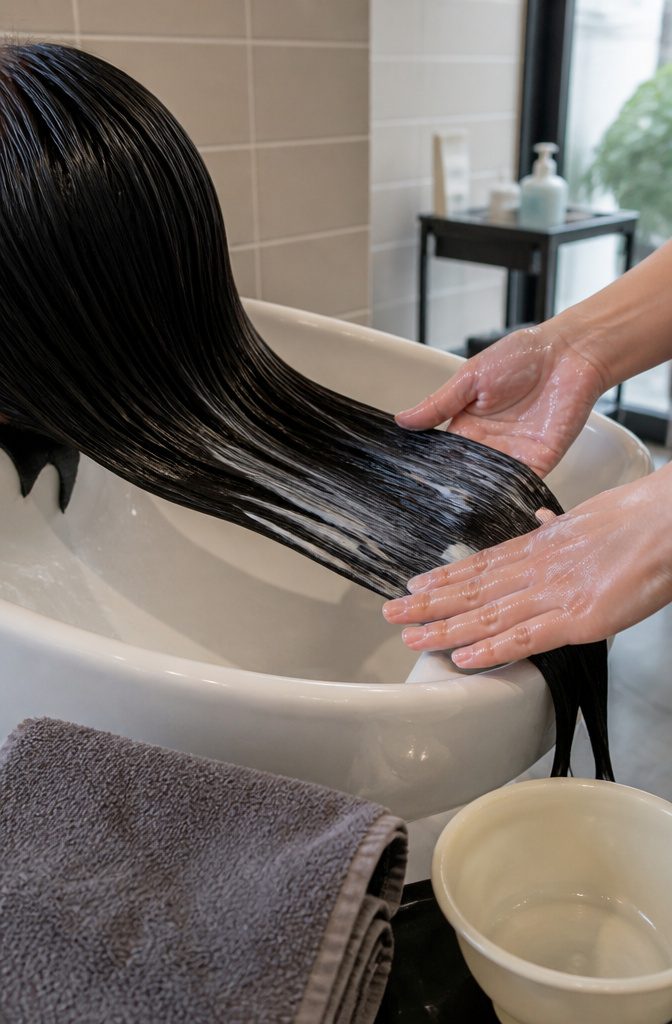
The neutralizer gets rinsed out with lukewarm water, and a treatment conditioner matched to what your hair needs goes on next.
That could be a formula built to repair damage from the chemicals or one that locks in color if your hair is dyed.
The conditioner needs to be strong enough to pull any residual solution completely off the hair, which is why salons use products formulated specifically for chemical straightening rather than something you’d buy at a drugstore.
The deep conditioning technique here is different from what most people do at home in the shower.
Different salons stock different brands, but the conditioners typically carry labels like anti-frizz, deep cleansing, or keratin conditioning.
TRESemmé, Garnier, Sephora, and Moroccanoil are common names on the shelf. When you book the appointment, ask which products the salon uses and check that they’re designed for the treatment.
9. Blow-Dry
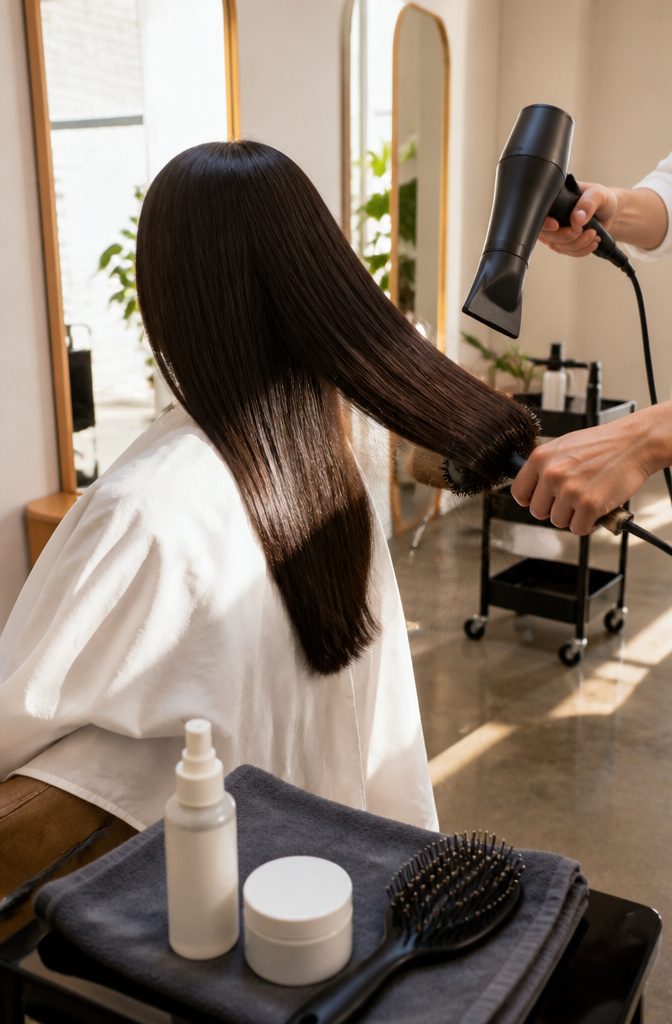
Once the hair is set, the stylist works mineral water and a controller cream through it, then dries it. This is the second drying pass, and it’s easy to wave off as routine.
I wouldn’t. Dry in the direction of the cuticles, because going against them can distort the new shape and dull the shine the treatment just produced.
In the chair, the thing to watch is the dryer’s angle.
The nozzle should follow each strand from root toward tip. If the stylist is roughing the hair back up toward the scalp, speak up and ask them to dry with the cuticle instead.
10. Finish With an Iron
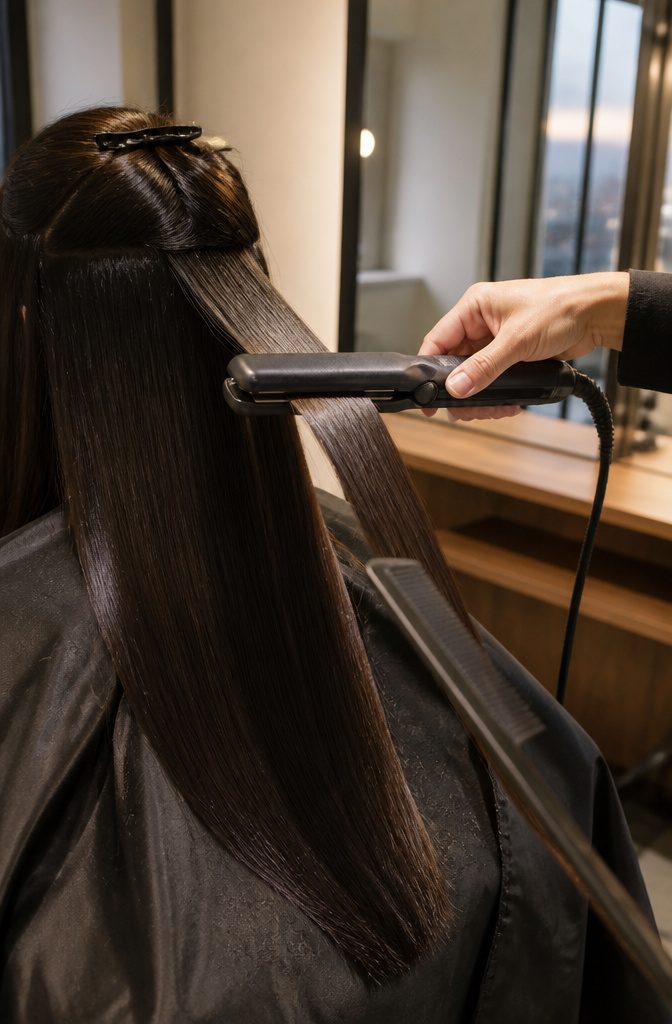
The final step is a flat iron pass over any spots that haven’t come out completely straight. The phrase that matters is "where needed": the stylist works only the patches that still bend, not every strand.
I’d be wary of a salon that irons the whole head again, since heat on top of a chemical treatment is exactly the extra stress you want to limit.
Being out of the chair doesn’t mean the treatment is finished.
Keep your hair dry for the next 48 to 72 hours. That rules out washing it, and it’s worth checking the forecast before you book the appointment.
How Long Results Last
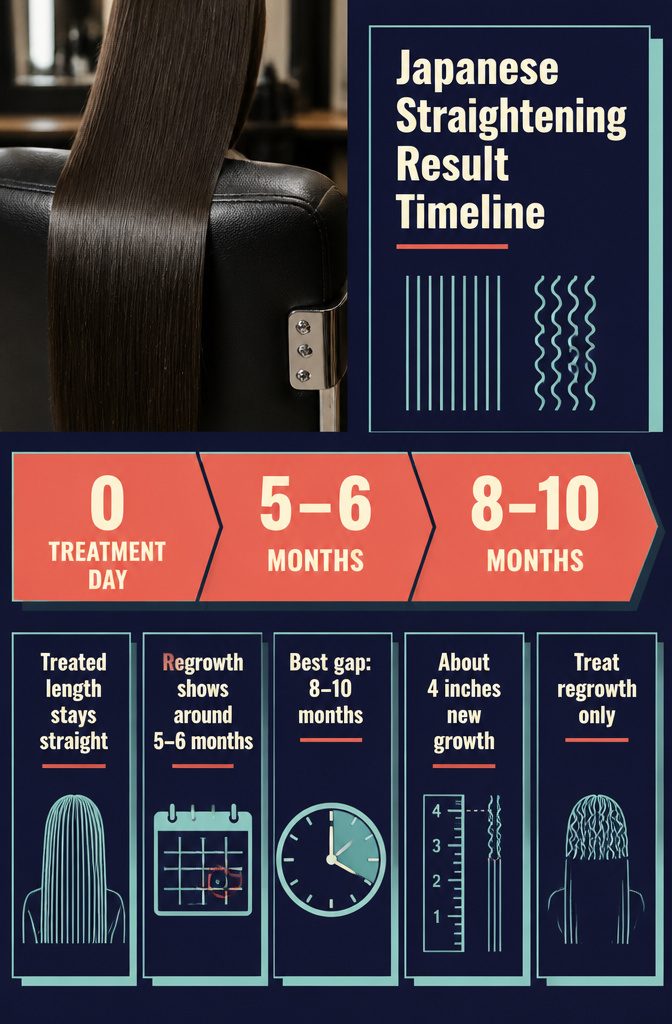
Treated hair stays straight for good; what changes is the new growth, which comes in with your original wave or curl.
Regrowth tends to show around 5 to 6 months, and the straight length holds its look for roughly 6 to 9 months before the contrast bugs most people.
Salons schedule touch-ups every 6 to 8 months, but the longer wait is the better call: 8 to 10 months, or about 4 inches of new growth, gives the stylist enough length to apply product and flat-iron properly.
I’d lean toward that longer gap if your texture is looser at the scalp, since the line between old and new blends better. Only the regrowth gets treated each visit.
Aftercare and Maintenance
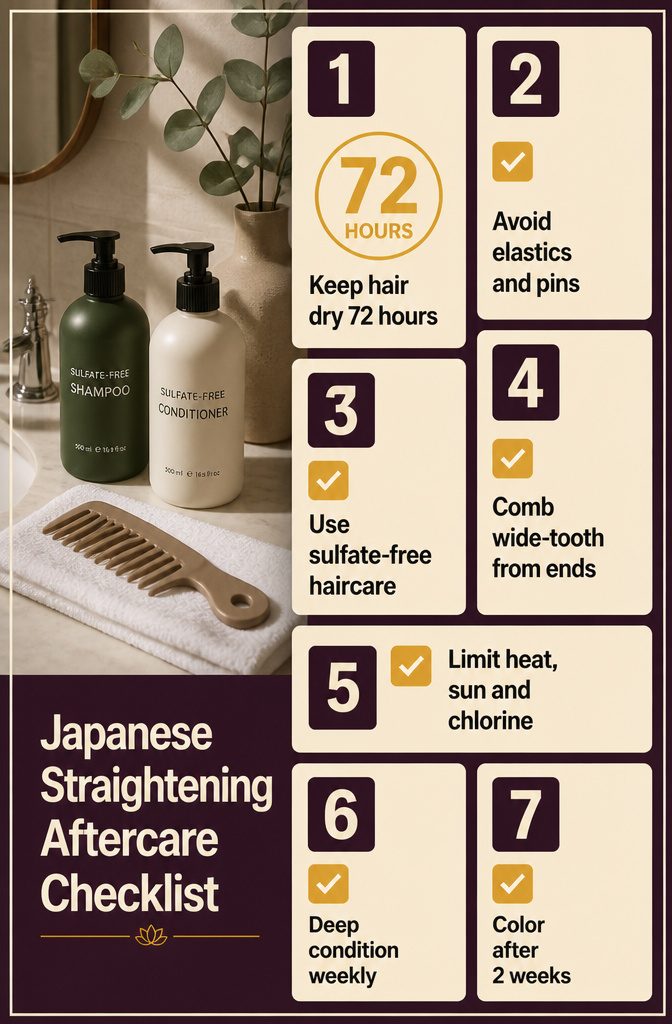
The longer window wins: I’d hold to 72 hours instead of 48, since a crease set while the hair is neutralizing can stay for good. After that:
- Keep hair dry, straight and down for 72 hours. No washing, rain or heavy sweating.
- Skip elastics, bobby pins and headbands, and don’t tuck or pin anything.
- Switch to sulfate-free shampoo and conditioner. Comb with a wide-tooth comb, starting at the ends.
- Go easy on heat styling, direct sun and chlorinated pools.
- Deep condition once a week with a formula made for chemically treated hair.
- Trim every 6–8 weeks.
- Wait 2 weeks before coloring.
Japanese Straightening vs Keratin
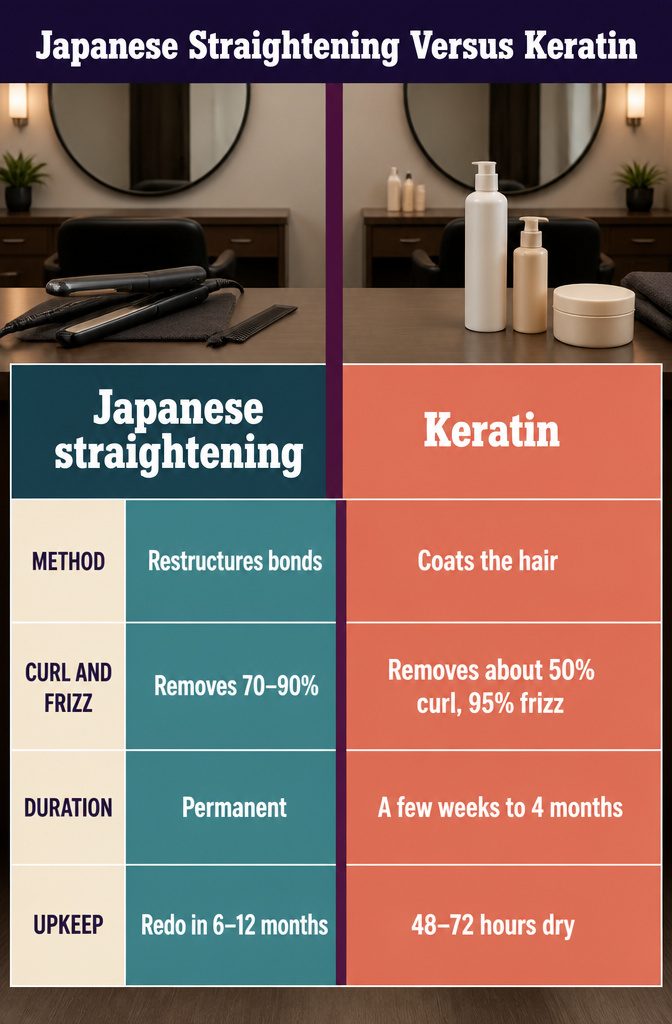
Keratin coats the hair and washes out, while Japanese straightening breaks and rebuilds the bonds, so it lasts until the treated hair is cut off.
Keratin leaves some curl and volume, which suits you if smoother is enough. I’d choose Japanese straightening only for pin-straight hair you’re ready to commit to.
| Japanese straightening | Keratin | |
|---|---|---|
| Method | Restructures bonds | Coats the hair |
| Curl and frizz | Removes 70–90% of curl, volume and frizz | Removes about 50% of curl, 95% of frizz |
| Duration | Permanent; regrowth shows in 5–6 months | A few weeks to 4 months |
| Upkeep | Redo in 6–12 months; owners report 48–72 hours dry | n/a |
Potential Damage and Professional Skill
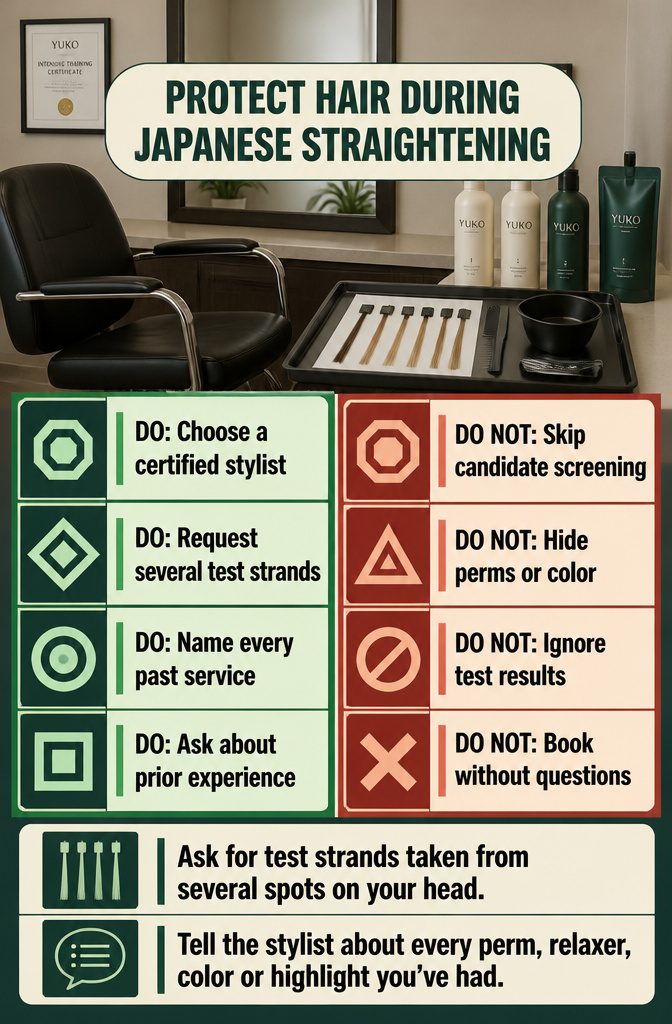
Every bond-breaking chemical service carries risk. Poor application, hair that was never a good candidate, or the chemistry itself can leave strands dry and sensitive to heat.
Experience is the best protection: with a certified stylist, a quality solution and the manufacturer’s directions followed, hair should stay relatively healthy.
The process is tedious and has a learning curve, and the Yuko intensive training course alone runs 2 weeks. I’d ask any stylist how many of these they have done before I booked.
Ask for test strands taken from several spots on your head.
Tell the stylist about every perm, relaxer, color or highlight you’ve had, because those can rule you out. If the strands come out well, the full treatment usually goes well too.
Price and Salon Time
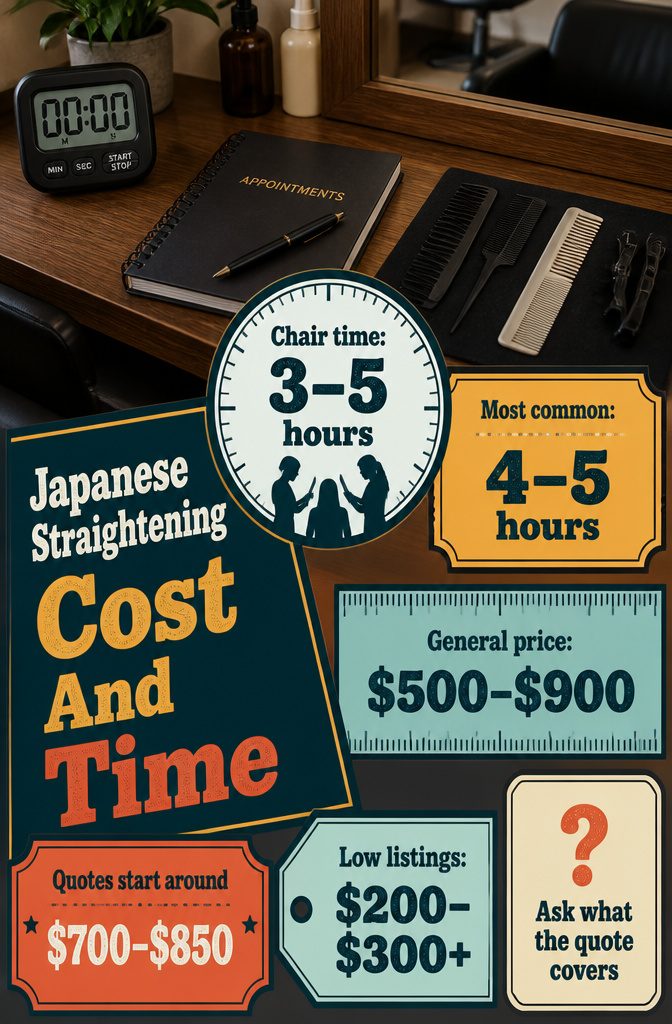
Plan on 3 to 5 hours in the chair, with 4 to 5 the most common answer.
Length, thickness and how curly or unruly the hair is all stretch the clock. One salon puts 2 certified stylists on the same head at once, which raises the hourly rate but cuts the time in the chair.
Prices spread wide.
Quotes start around $700 at some salons and $850 at others, and a general range is $500 to $900, higher with a locally popular stylist. Cheaper listings exist: $300+ in one place, around $200 in another depending on length.
One client paid $200 plus tip for hair about 4 inches below the shoulders. I’d question the low end at the consultation and ask exactly what it covers.
Frequently Asked Questions
What is Japanese hair straightening?
Japanese hair straightening is a chemical treatment that breaks down and rebuilds the bonds in your hair to create a permanently straight structure.
Also called thermal reconditioning, it uses solution and heat to remove 70 to 90 percent of curl, volume, and frizz. The treated hair stays straight until you cut it off, though new growth comes in with your natural texture.
How long does Japanese hair straightening last?
The straightening itself is permanent on treated hair, but new growth shows your original texture.
Regrowth typically becomes noticeable around 5 to 6 months, and most people schedule touch-ups every 6 to 12 months. Waiting 8 to 10 months, or about 4 inches of new growth, gives the stylist enough length to work with at each touch-up.
How long does Japanese hair straightening take?
Plan on 3 to 5 hours in the chair, with 4 to 5 hours most common.
The exact time depends on your hair’s length, thickness, and texture. Some salons assign two certified stylists to the same head, which raises the hourly rate but cuts the appointment time.
How much does Japanese hair straightening cost?
Prices typically range from $500 to $900, with some salons starting at $700 or $850.
Lower-end quotes around $200 to $300 exist but warrant questions about what they cover and the stylist’s experience. Cost depends on your hair’s length, thickness, and condition, as well as the salon and stylist.
Will Japanese hair straightening damage my hair?
Any bond-breaking chemical service carries risk, and poor application or unsuitable hair can leave strands dry and sensitive. With a certified stylist, quality solution, and the manufacturer’s directions followed, hair should stay relatively healthy.
Ask for test strands from several spots on your head and tell the stylist about every prior perm, relaxer, color, or highlight, since those can rule you out or require different handling.
Can I color my hair after Japanese straightening?
Wait 2 weeks before coloring, and consult or use a professional colorist. The treatment restructures your hair’s bonds, and adding color too soon can cause damage or uneven results.
Which is better, Japanese straightening or keratin?
Japanese straightening is permanent and removes 70 to 90 percent of curl and frizz, while keratin coats the hair and lasts a few weeks to 4 months, removing about 50 percent of curl and 95 percent of frizz.
Choose Japanese straightening if you want pin-straight hair you’re ready to commit to, and keratin if smoother texture with some body is enough.
Should you wash your hair before Japanese hair straightening?
Arrive with clean, air-dried hair in its natural texture. The process takes around 4 hours, and coming in with prepped hair cuts down your time in the chair.
Can you undo Japanese hair straightening?
Treated hair does not revert to its original texture. The only way to undo the straightening is to grow out your natural hair and cut off the treated section.
Is Japanese straightening suitable for me?
Suitability depends on your hair’s condition, treatment history, and the stylist’s assessment.
Prior relaxers, perms, color, or bleach can rule out the process or require different handling, and salons often refuse to straighten over sodium hydroxide relaxers except on new growth.
Your hair should be at least 5 to 6 inches long, and a consultation with strand tests confirms whether your hair will respond well.
How often do you need Japanese straightening?
Touch-ups address new growth only, and most people return every 6 to 12 months.
Waiting 8 to 10 months, or about 4 inches of regrowth, gives the stylist enough length to apply product and flat-iron properly. Treated hair never reverts, so only the roots need retreatment.