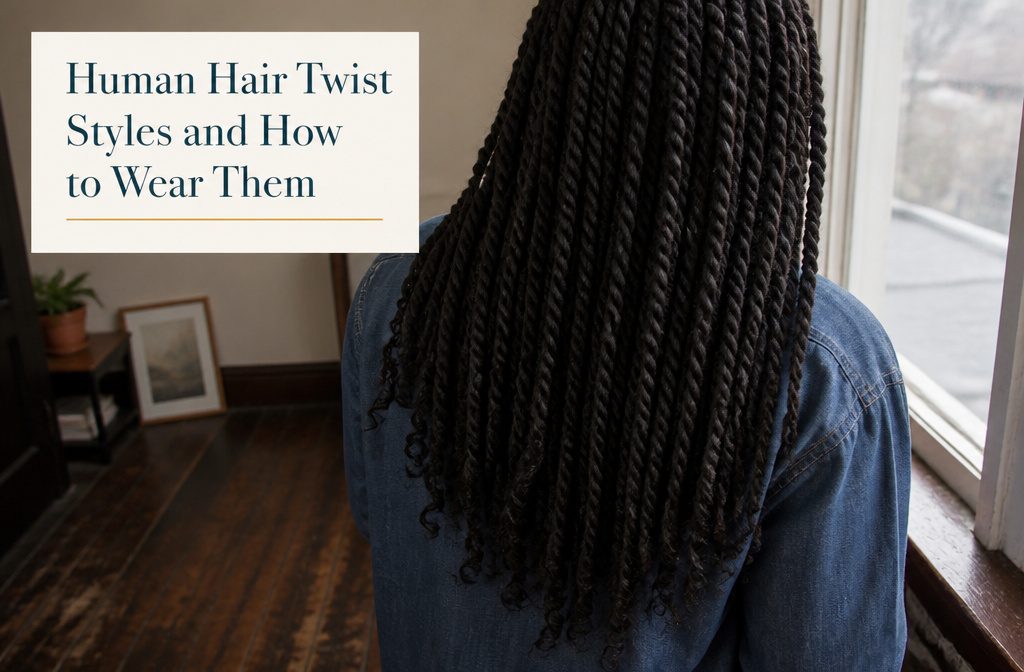
Kinky twists are human hair extensions two-strand twisted into rope-like cords, worn for 4–8 weeks as a protective style.
They grip best on tightly coiled 4A–4C hair; on straight or fine hair they slip and won’t fill out. Textured bulk hair starts at $39.90, and pre-twisted crochet hair from $99.90 skips the twisting.
What Kinky Twists Are and How They’re Made
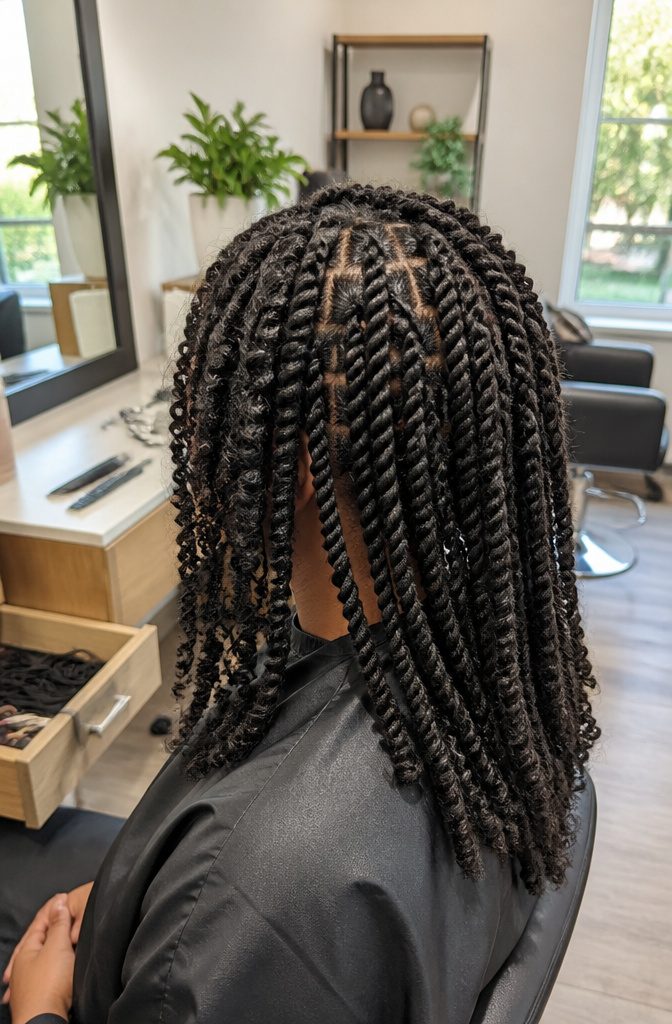
Kinky twists are built using a two-strand rope-like twisting technique that stacks hair over itself to form a defined, textured cord.
The result mimics the coarser texture of natural coily hair, giving the style a matte, structured finish rather than a soft one. Each twist holds its shape tightly, and the rope-like ridges run the full length of the extension.
Spring twists follow a different path.
They spiral looser, with bounce and volume baked into the curl pattern. The texture reads softer, the body fluffier, and the overall look lands somewhere between a twist and a corkscrew curl.
Kinky twists stay tighter and closer to the scalp, which makes them read cleaner and hold longer before they start to fuzz.
1. Goddess Kinky Twists
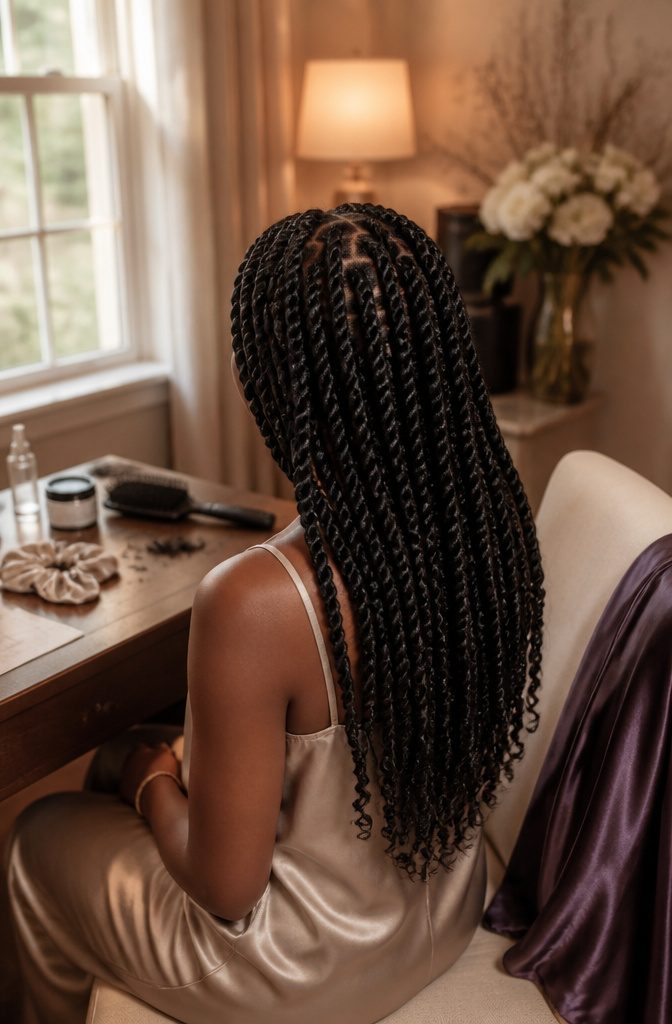
Goddess kinky twists are one of the 14 ways to wear a human hair twist, and they’re the one I’d point to when you want the set to look finished rather than just installed.
The name signals a dressier take on the standard kinky twist, so it works for a night out, a wedding or any day you’d rather not look like you did the bare minimum.
Pick the hair before the style. With a look this dependent on texture, the quality of the human hair decides how well the twists hold their shape as the days go by.
Cheap hair that frizzes or flattens will ruin it faster than a clumsy install would.
2. Short Kinky Twist Bob
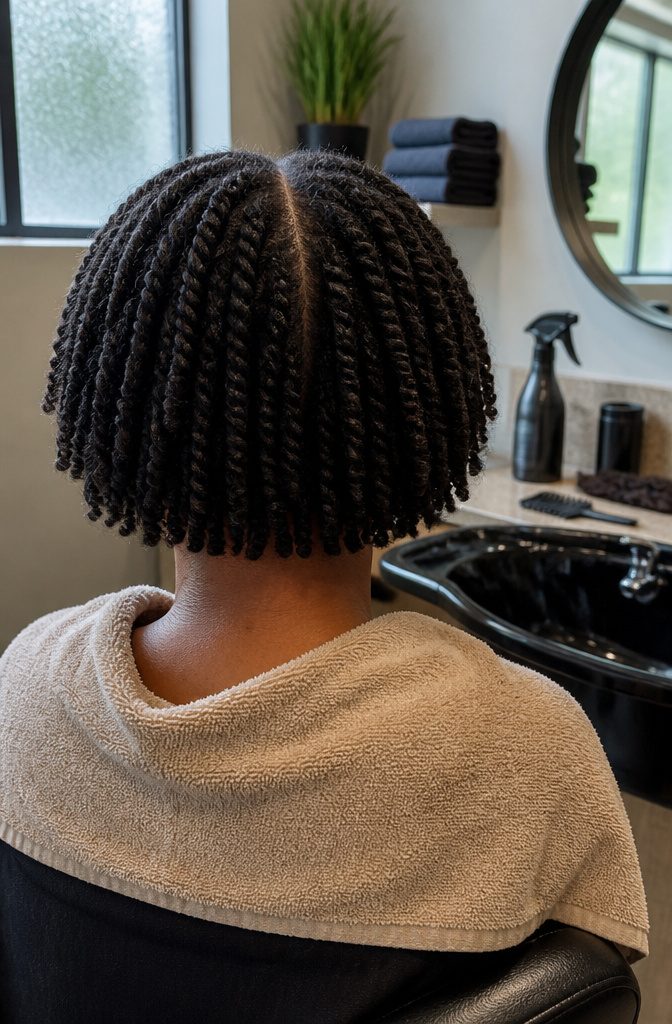
Short kinky twists cut to bob length sit somewhere between the jawline and the collarbone, which makes them lighter to wear and faster to install than the longer versions.
The shape reads clean and symmetrical, a neat frame that works whether the hair is center-parted, swept to one side, or left blunt across the forehead.
The shorter length shaves time off the morning routine. There’s less hair to manipulate when shaping it into a style, and it dries faster after washing.
That same brevity means you’ll see your scalp grow out sooner, usually around the four-week mark, so plan for touch-ups or tie-ins if you want to stretch the look past six weeks.
Shorter twists also limit styling options compared to mid-back length, but they sit light on the neck and don’t pull at the hairline the way a waist-length install can.
3. Medium-Length Kinky Twist
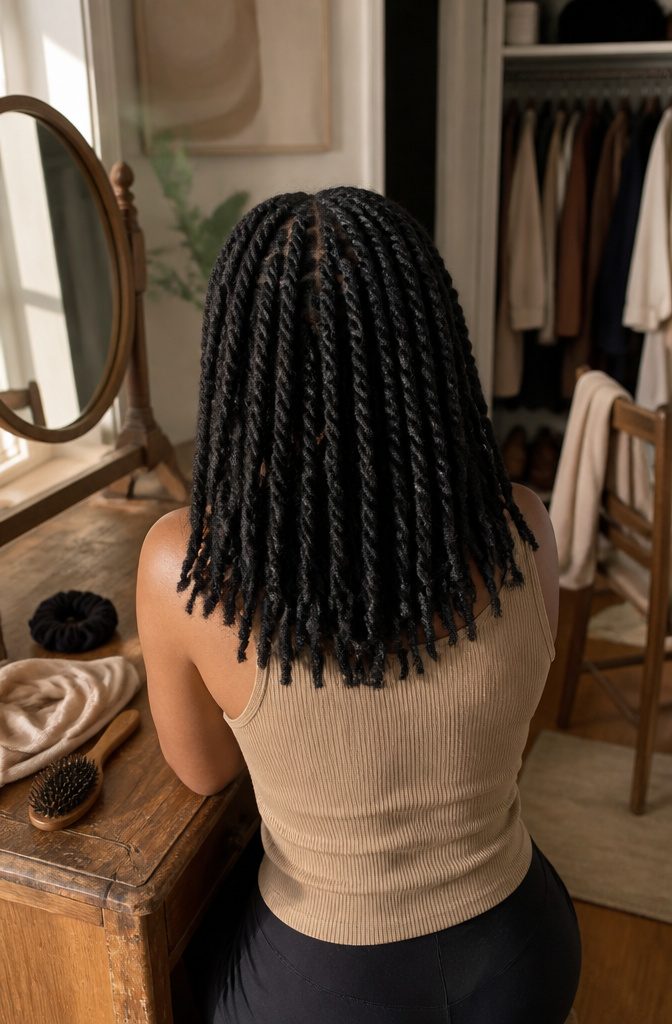
Medium-length kinky twists hit somewhere around shoulder to mid-back and give you room to move between looks without committing to waist-length hair or a cropped bob.
The extra length means you can pull them into ponytails, buns, or half-up styles without running out of hair halfway through, and they still sit light enough that your neck isn’t carrying the weight all day.
I like this length because it reads as intentional rather than transitional. Short twists can feel like you’re growing them out, and very long ones sometimes look heavy in photos even when they feel fine to wear.
Medium lands in the middle: long enough to style a dozen ways, short enough to dry without sitting under a dryer for hours.
If you want one install that covers casual days and dressier nights without re-twisting or adding extensions, this is the length that delivers.
4. Half-Up, Half-Down Kinky Twist
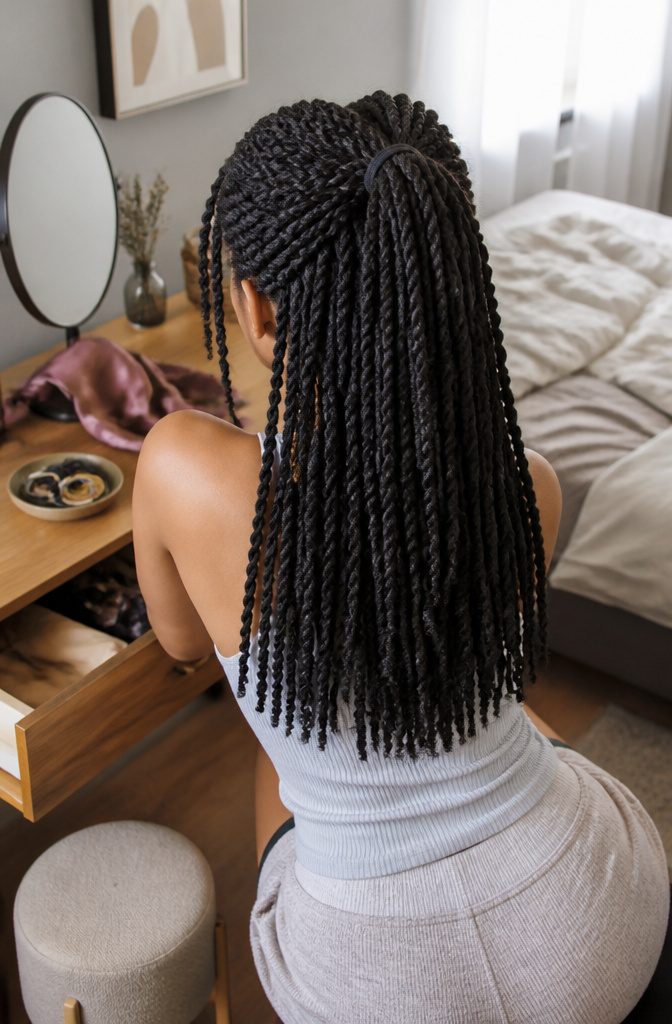
The half-up, half-down kinky twist splits the install into two zones: the top gathered or pulled back, the rest left loose. You get the frame and lift of an updo without losing movement at the sides and back.
The styling takes under five minutes once the twists are in, which matters when you want something deliberate without spending morning minutes on it.
Pull the top section straight back into a ponytail or bun, or gather it loosely and pin it at the crown. Leave enough at the front to frame your face if that is the look you prefer.
The contrast between structured and loose reads well whether the twists are shoulder-length or longer, and it solves the practical problem of keeping hair out of your face without committing to a full updo.
It grows out evenly because nothing is pulled tighter than anything else.
5. Mini Kinky Twist High Ponytail
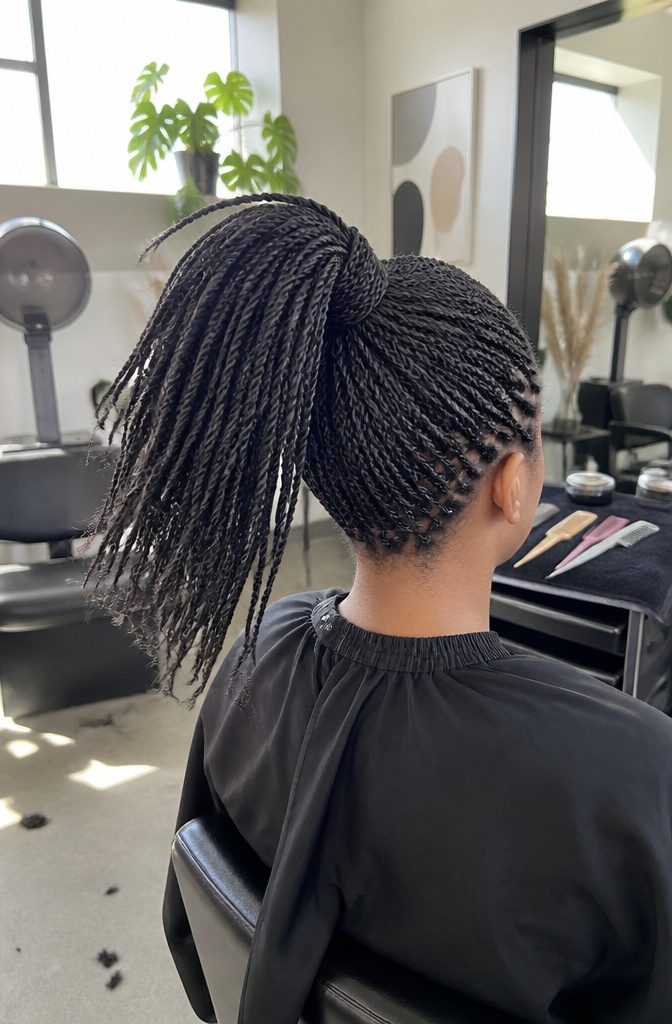
Smaller twists change how this ponytail behaves. Mini kinky twists are thinner and lighter than standard ones, so they gather up high without the heavy pull at the crown that chunkier twists can cause.
They also swing more, which gives the ponytail movement instead of a stiff, bundled look.
For a ponytail meant to sit high, I’d choose minis over larger twists. Set the tie at the top of the head, centered, and wrap one twist around the base to hide the elastic.
Mini twists give the cleanest, most lifted ponytail because the bundle stays proportionate to your head instead of overwhelming it. The cost is time: smaller twists mean more of them, so plan on a longer appointment.
6. Kinky Twist Half Updo
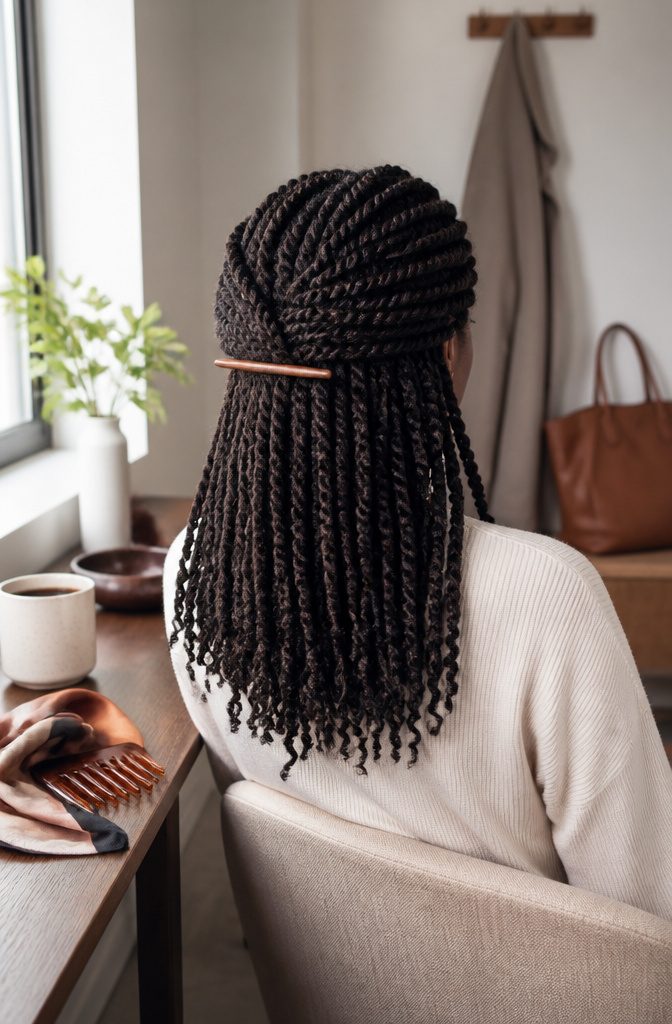
The half-updo takes some of the twists off your neck while leaving the rest down, and it works whether the twists fall past your shoulders or stop at the nape.
You gather the twists from the temples and crown, pull them back, and secure them with a hair tie or pin them flat.
The gathered section can sit as a small bun, a twisted knot, or simply pinned horizontal across the back of your head.
I find the balance practical: your face stays clear without giving up the movement and coverage the loose twists provide.
It reads casual enough for errands and controlled enough for work, and you can adjust how much goes up depending on how much neck ventilation you want that day.
If the twists are long, the contrast between the pinned section and the length below gives the style more definition than wearing everything down.
7. Kinky Twist Side Ponytail
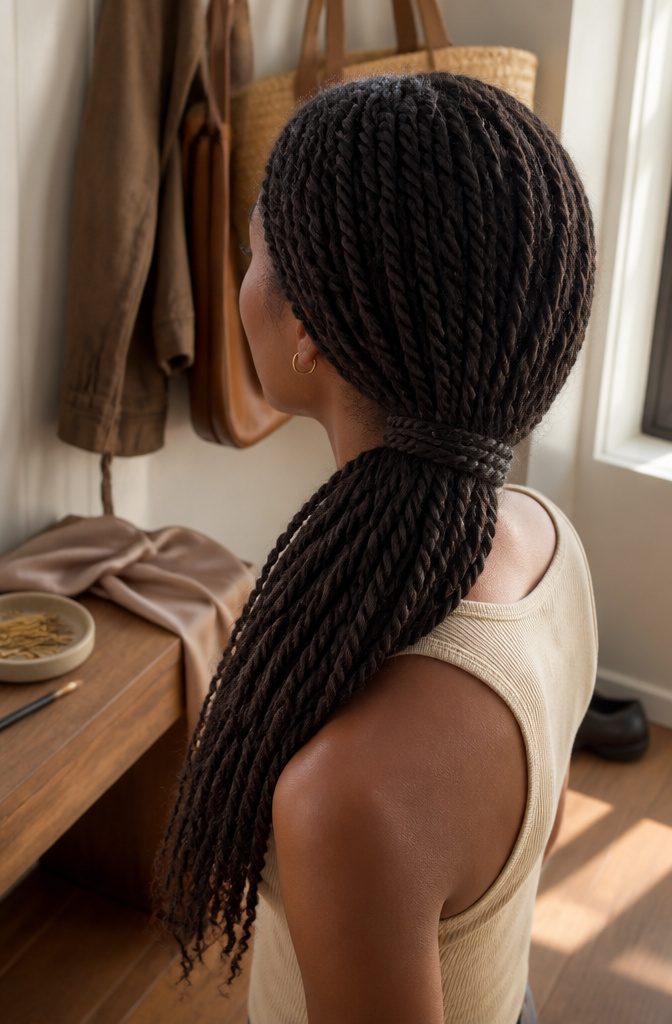
Sweeping the twists to one side, just behind the ear and down toward the shoulder, gives this style an asymmetry a center ponytail never has.
Set the tie low or mid-height on one side of the head, and the twists fall over a single shoulder in one thick rope.
I’d pick it over a high ponytail when the twists are heavy, since weight at the side pulls less on the crown and front hairline.
Part the hair on the opposite side and the face looks framed rather than dragged back.
Wrap a thin section of twists around the elastic to hide it, then pin the wrap flat. Keep the hold snug, not tight, because the edges show strain first.
8. Long Kinky Boho Twist
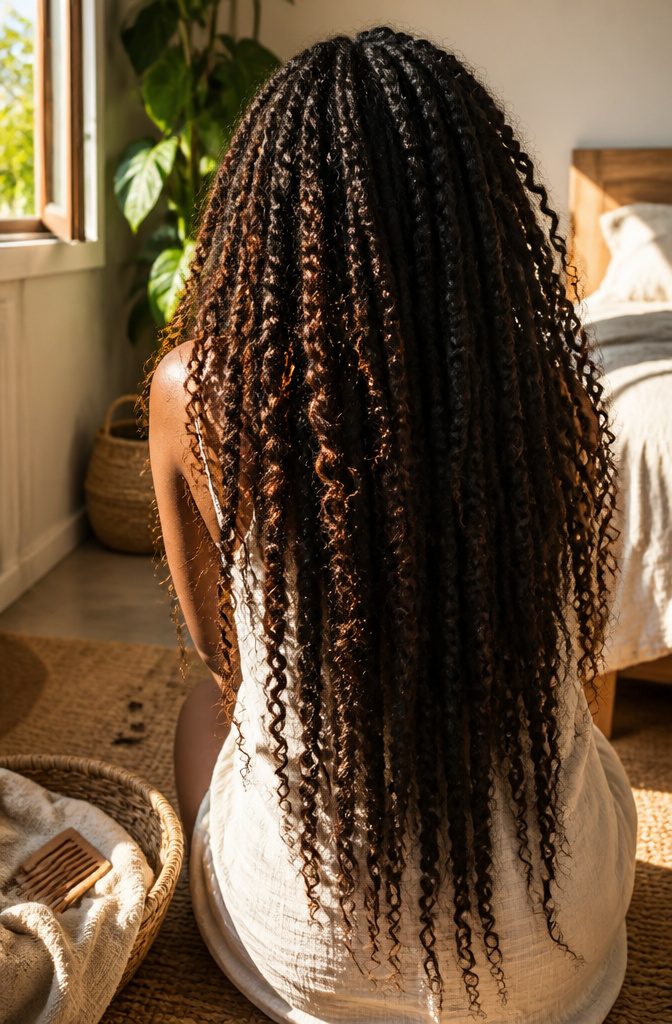
Long Kinky Boho Twist lands past the shoulders and often runs to waist length, giving you plenty of texture to work with.
The boho styling means the twists are left loose and deliberately imperfect rather than uniform, sometimes with flyaways or frizz left visible, and the ends are often left unsealed or lightly curled instead of dipped in hot water for a neat finish.
Length matters here because you can pull these into ponytails, buns, or half-up styles without losing the boho character, and you still have enough twist showing to justify the install time.
Twists this long sit heavier on the scalp than a bob or medium length, and they take longer to dry after washing. If styling variety is the goal, long kinky boho twists deliver more options than any shorter version.
9. Kinky Twist High Bun
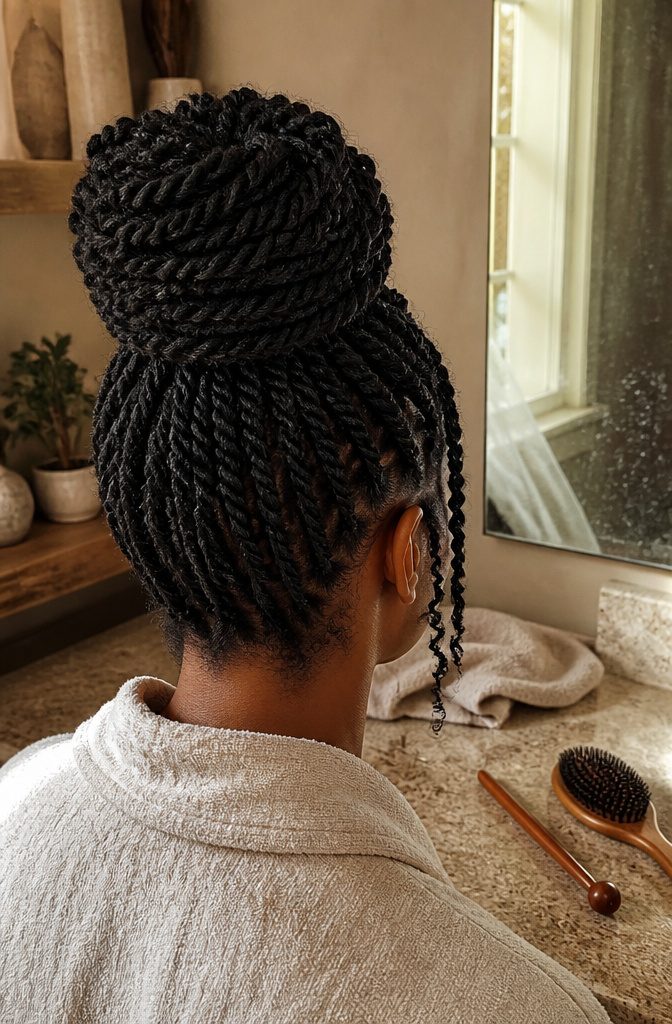
The kinky twist high bun gathers every twist at the crown and coils them into one rounded knot, which lifts the whole style off the neck.
Placement decides how it reads. Set at the top of the head, the bun looks deliberate; dropped toward the nape, it becomes an ordinary low bun.
I’d choose it over a ponytail when you want the length out of the way but still want volume, since the twists stack on themselves and give the knot real body.
For structure, gather the twists into one tight base, then wrap them around it in a single direction and tuck the ends under.
Keep the base snug at the crown so the weight doesn’t tug the bun sideways as the day goes on. A few twists left loose at the front frame the face softly.
10. Kinky Twist Double Buns
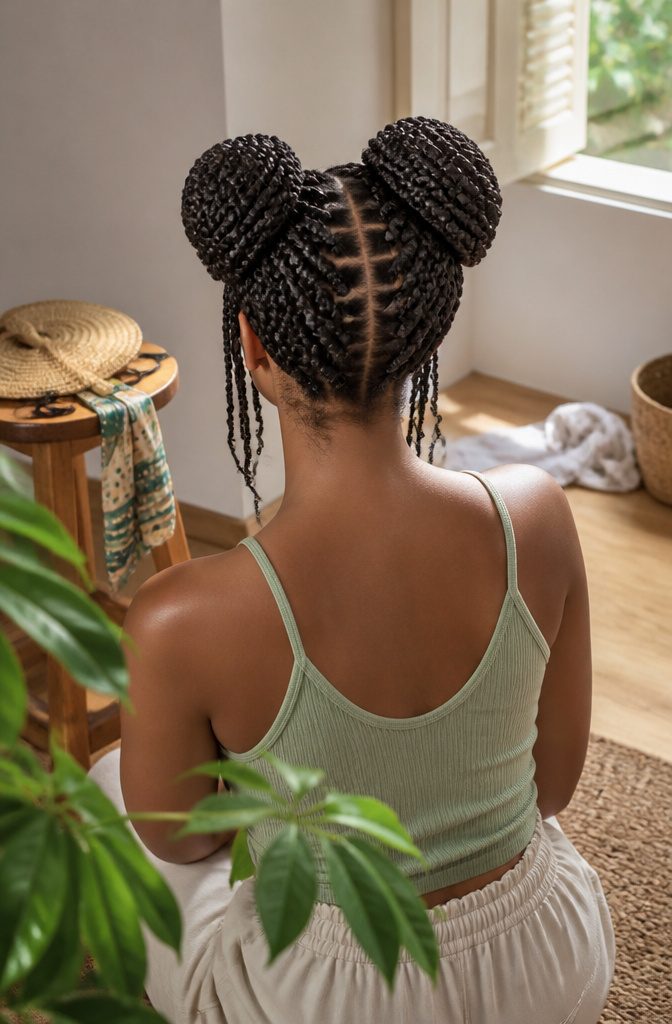
Two buns split the twists into matching halves, one on each side of the head, usually divided by a center part.
Each half is gathered and wound around itself so the twists coil into a knot instead of hanging loose. The style also keeps the length off your neck, which makes it a practical pick in warm weather.
For this look I’d go with medium or large twists. Thicker twists coil into a rounded, clearly defined bun, while mini twists wrap tighter and can read as small knots.
Set the buns high near the crown for a playful shape, or lower toward the nape for something calmer. A few loose twists left out around the face soften the symmetry.
11. Side-Swept Bangs Kinky Twist Updo
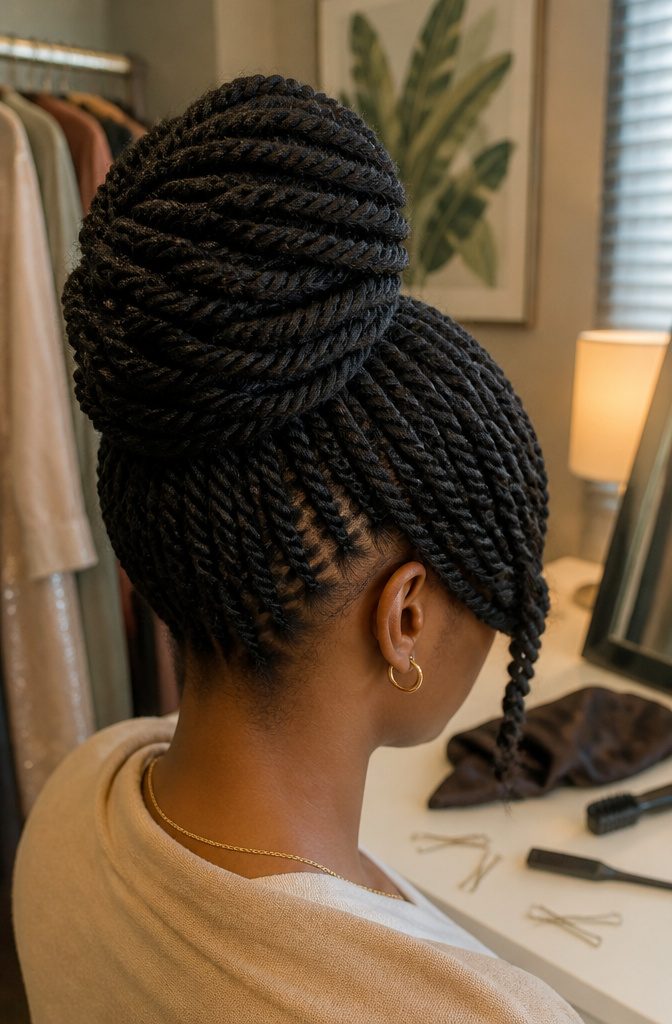
Side-Swept Bangs Kinky Twist Updo
Pulling most of the twists up into a bun or coiled updo and leaving a section of bangs swept to one side gives the style somewhere between polished and playful, depending on how tightly you pin the crown.
The bangs frame one side of the face without covering it, which balances the volume sitting at the back of the head.
You can pin them loosely or slick them across with a bit of edge control if you want a sharper look.
The updo itself can sit high, mid-crown, or low at the nape. A higher placement shows more of the twist texture; a lower one reads more formal.
The bangs make it easier to style this for an event without looking too severe, and you still have the full length of the twists available when you want to wear them down the next day.
12. Burgundy Kinky Twist Puff
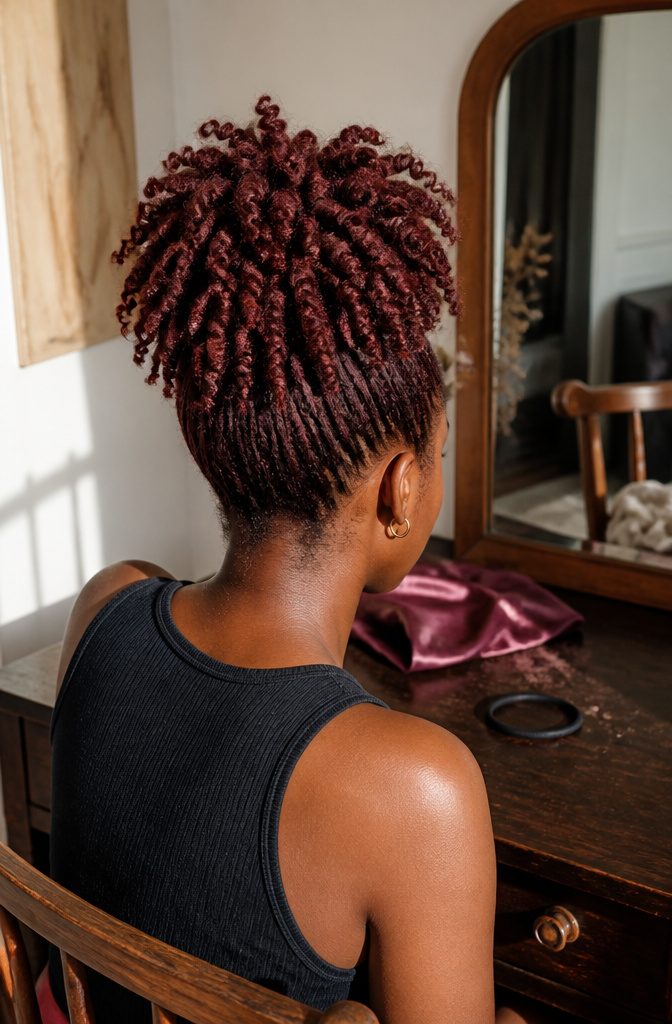
The burgundy shade turns a standard kinky twist puff into something that reads warmer and less expected than jet black.
Burgundy sits somewhere between deep wine and burnt copper, close enough to natural tones that it doesn’t announce itself from across a room but distinct enough that people notice it in direct light.
The puff itself gathers the twists high on the crown and leaves them loose above the band, which gives you height without length dragging on your neck.
This style works well when you want the texture of kinky twists but need the hair off your shoulders. The puff keeps the volume compact and centered, so it grows upward rather than outward.
Burgundy on dark brown or black hair creates contrast without requiring bleach, and the color holds longer in human hair than it does in some synthetics that fade toward orange after a few weeks in the sun.
13. Mixed-Color Side Kinky Twists
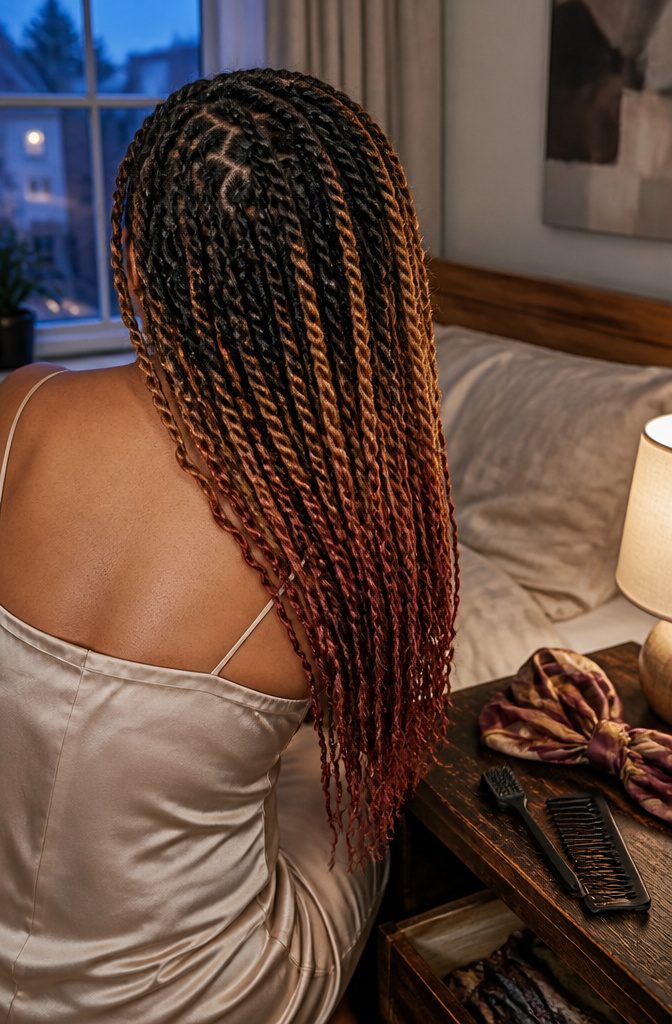
Mixed-color side kinky twists pull all the visual weight to one shoulder, and the two-tone or ombré effect makes the asymmetry work harder.
The color shift gives you gradient depth without adding actual volume, which matters when you’re wearing the whole style swept over.
Darker roots transitioning to honey, copper or auburn ends are common starting points, though the combination depends entirely on what reads well against your skin tone.
The side placement means you’ll feel the weight differently than a center part or all-back style.
Most of that bulk sits on one side of your neck and shoulder, so if you sleep on that side regularly, expect some flattening overnight.
Rotating which shoulder carries the twists every few days spreads out the tension and keeps the shape from compressing in one spot.
The mixed color also shows frizz more noticeably than a single shade, so edge control and a satin scarf at night are not optional if you want clean-looking roots past the first week.
14. Curled Cornrow-Root Kinky Twist
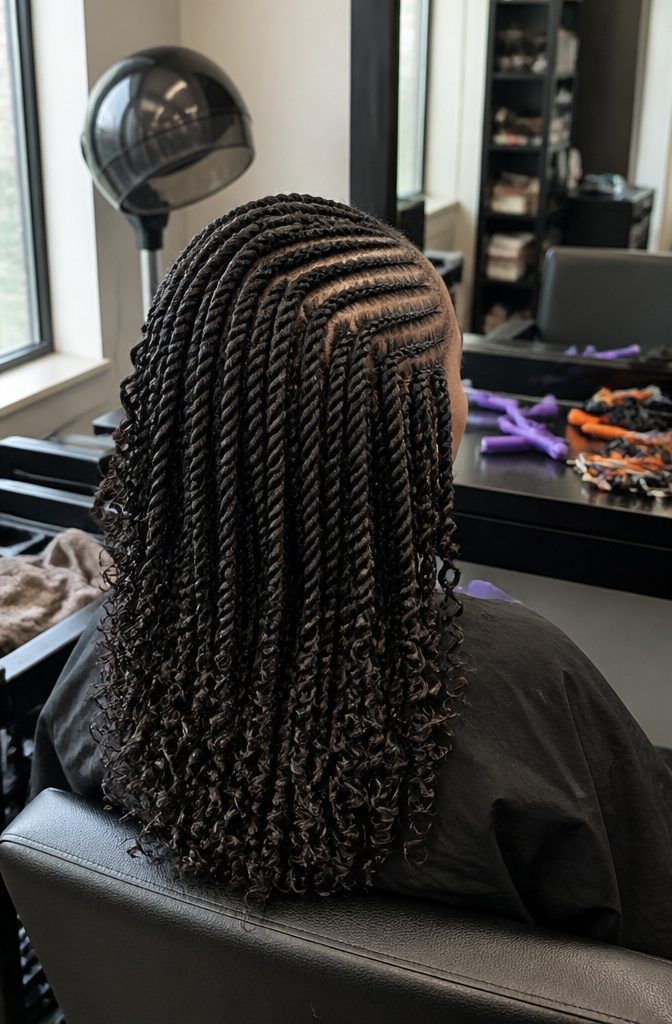
Curled Cornrow-Root Kinky Twist starts with cornrows laid flat against the scalp at the roots, then switches to loose kinky twists for the rest of the length.
The ends are curled, usually with perm rods or flexi-rods, so you get three textures in one style: sleek scalp, textured mid-lengths, and spiral ends.
The cornrow base keeps the front and crown tighter to the head than an all-over twist would, which means less bulk if you want a neater profile or plan to pull the style up into a bun or ponytail.
The curled ends add movement without looking too polished, and they stay springy for weeks if you wrap them at night.
Installation takes longer than standard twists because of the cornrow work, but the roots hold tension better and the style grows out cleaner.
Which Hair Types Hold Kinky Twists Best
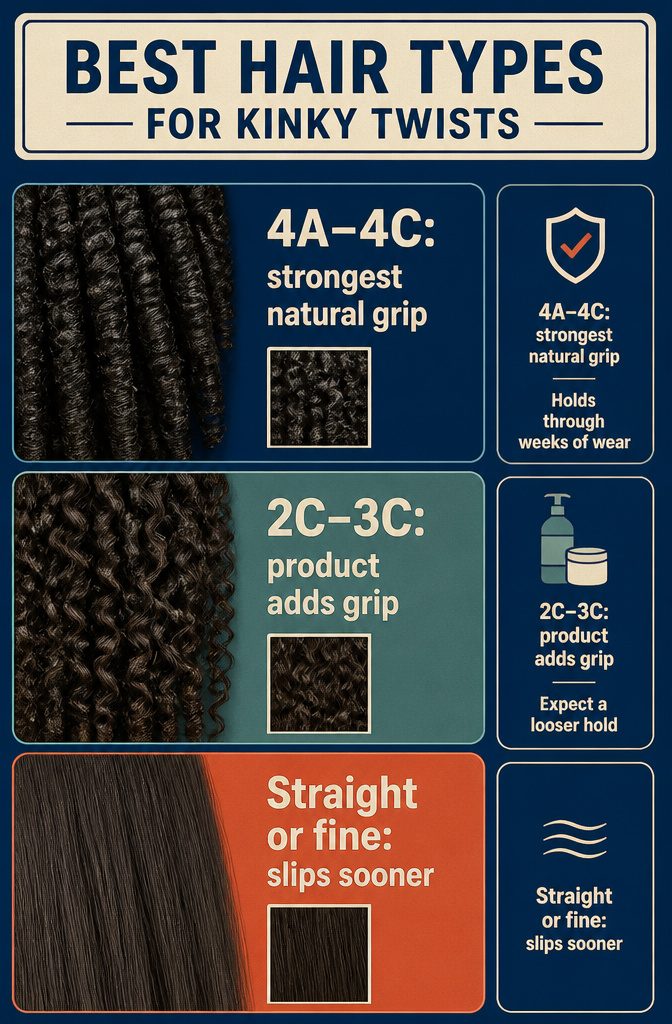
Kinky twists hold best on tightly coiled 4A–4C hair because the natural texture gives the twists enough grip to stay in place without sliding.
The coil pattern locks onto the extension hair, which is why kinky twists work so well as a protective style on type 4 textures. They settle in and hold through weeks of wear.
Wavy or curly hair in the 2C–3C range can take kinky twists, but installation takes more work.
You’ll need product to add grip, and the twists may not lock as tightly. They still create volume, but expect looser hold than you’d get on coiled hair.
Straight or fine hair struggles with kinky twists. Without a natural curl pattern, the twists slip and don’t fill out the way they should.
Texturizing products and extensions help, but the style won’t last as long or look as full. If your hair is straight, other twist styles may serve you better.
Human Hair vs. Synthetic for Kinky Twists
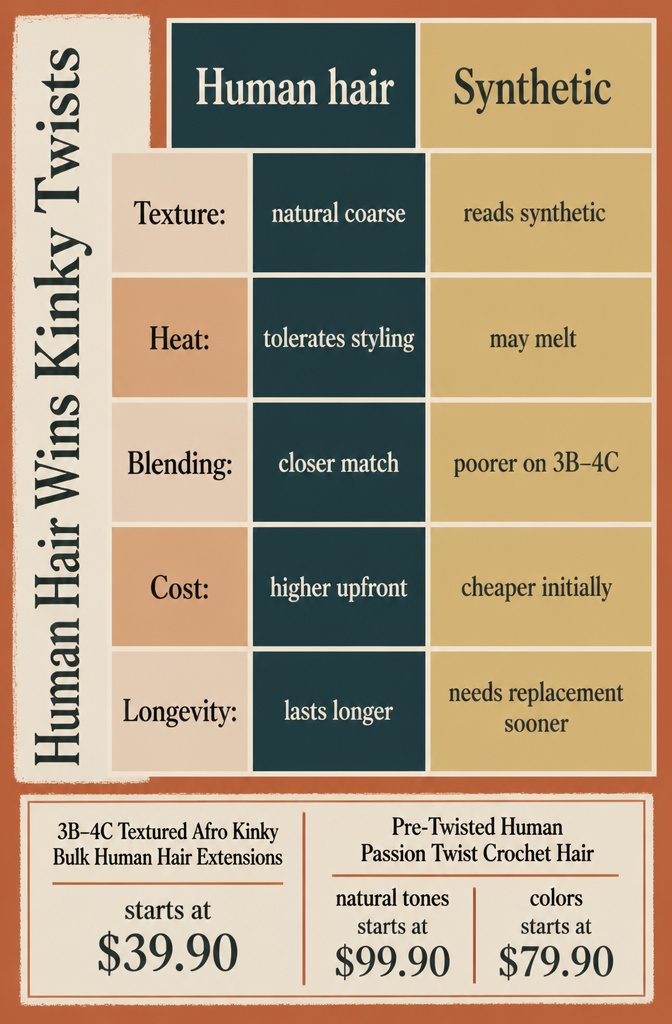
Human hair wins for kinky twists if blending and styling flexibility matter more than upfront cost. Human hair looks closer to natural coarse texture, takes heat without melting, and lasts longer with proper care.
Synthetic hair runs cheaper but reads as synthetic under most light, blends poorly with 3B–4C natural textures, and limits what you can do with a flat iron or curling wand.
The choice shows up clearest when you part the twists or pull them into an updo: human hair moves and catches light the way your own does, while synthetic sits stiffer and reflects differently.
That difference matters less in a short bob where movement is minimal, more in longer styles where every shift is visible.
For kinky twists specifically, textured bulk hair designed for coily patterns does most of the work. The 3B–4C textured Afro Kinky Bulk Human Hair Extensions start at $39.90 and give you raw hair to twist yourself.
Pre-Twisted Human Passion Twist Crochet Hair starts at $99.90 for natural tones, $79.90 for colors, and cuts installation time by arriving already twisted.
Human hair costs more once, synthetic costs more over time in replacements and in how quickly it stops looking fresh.
How to Care for Kinky Twists
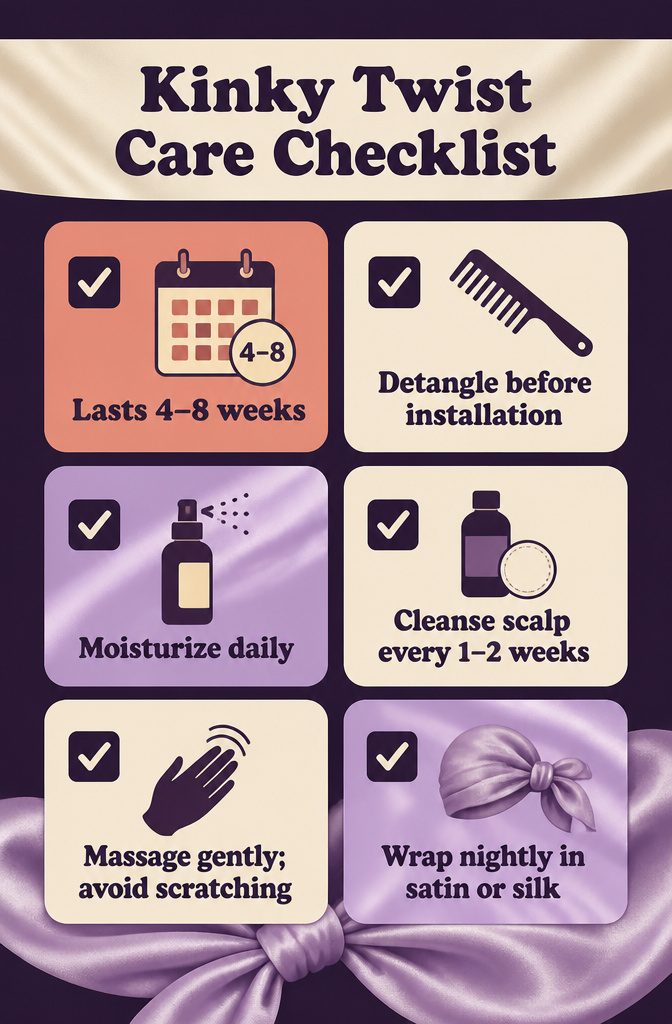
Kinky twists last 4–8 weeks with little maintenance, but a few simple habits keep them looking clean and protect your scalp.
- Clean and detangle your hair thoroughly before installation to give yourself a smooth base and prevent breakage once the twists are in.
- Moisturize daily with a light leave-in spray or oil to stop the twists from drying out and getting frizzy.
- Gently cleanse your scalp every 1–2 weeks using a cotton round and diluted shampoo, focusing on the roots without soaking the twists.
- Avoid scratching your scalp. Use your fingertips to massage gently if you need to relieve tension or stimulate circulation.
- Protect the twists at night by wrapping them in a satin or silk scarf to prevent frizz and breakage while you sleep.
Why Kinky Twists Are Popular
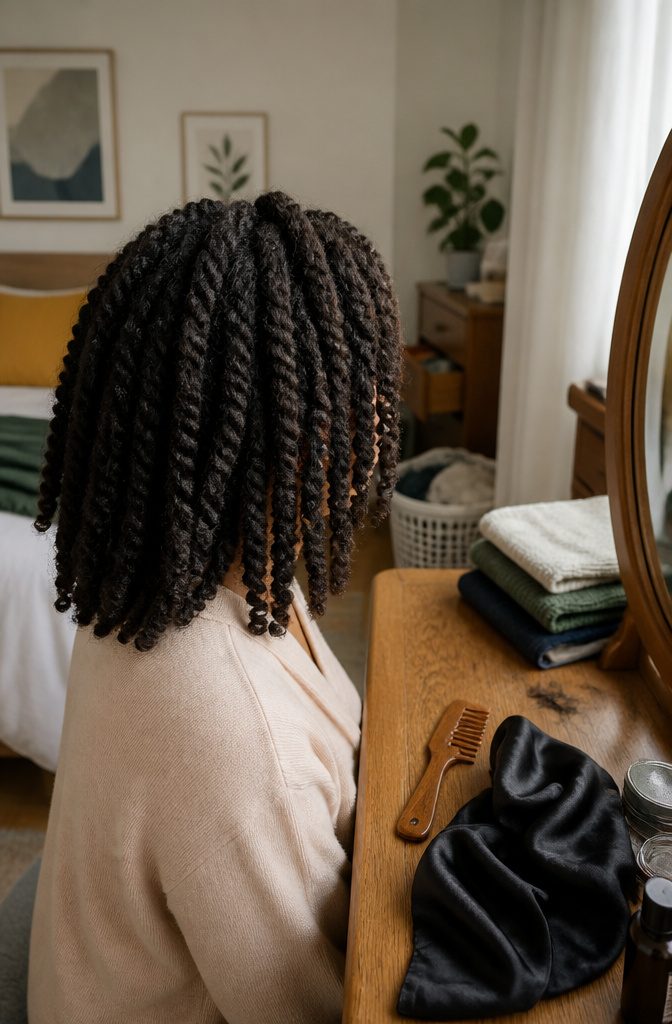
Kinky twists protect natural hair from daily manipulation and environmental stress, reducing breakage and giving hair a chance to grow without constant styling.
The two-strand rope technique tucks hair away for weeks at a time, cutting the morning routine to almost nothing and saving the kind of damage that shows up after months of heat tools and tight combing.
The style works in different lengths and sizes and can be worn loose, pulled into a ponytail, stacked in a bun, or left half-up when the mood shifts.
Afro kinky hair extensions give the twists their distinctive texture, and the result highlights natural curly and coily patterns rather than smoothing them down.
Rooted in African heritage, kinky twists let wearers celebrate that texture and feel more connected to their roots, which often translates to more confidence in how the style sits.
Pre-Twisted Crochet Braids for Faster Installation
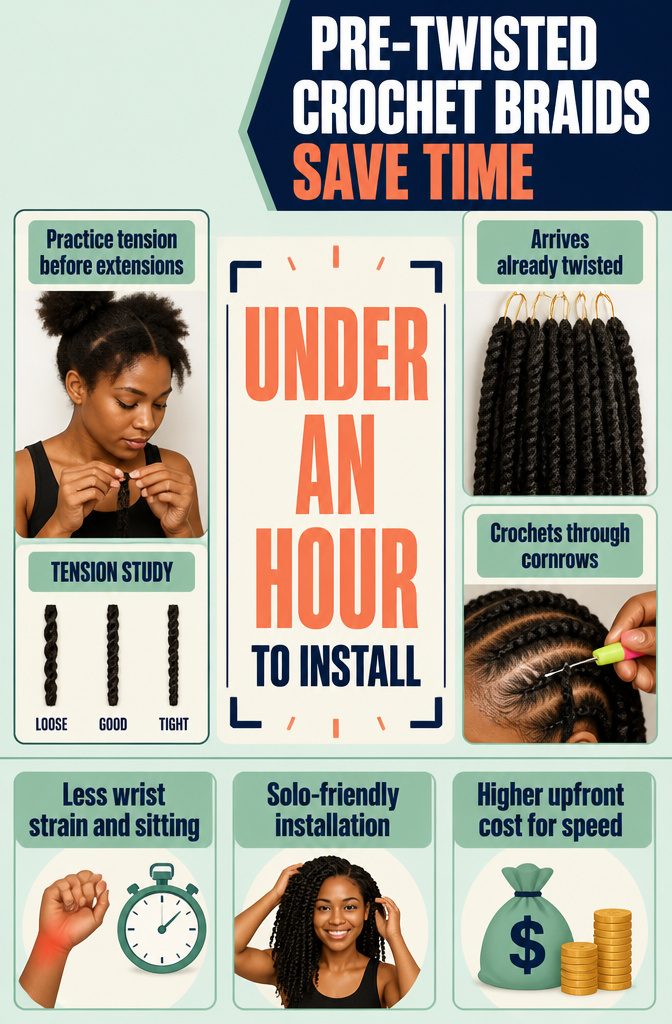
If twisting technique still feels unfamiliar, practice on your own natural hair first before adding bulk extensions.
The motion becomes second nature after a few rounds, and working with what is already growing from your head lets you figure out tension and hand placement without wasting material.
Pre-twisted human-hair crochet braids cut installation time to under an hour. The twists arrive already formed in kinky texture, so the work reduces to crocheting them through cornrows rather than twisting each section by hand.
That saves the repetitive wrist strain and the multi-hour sessions most two-strand twist installs demand, and the finished style reads exactly the same once it is in.
The pre-twisted route trades a bit of upfront cost for speed, which makes sense if your own schedule leaves little room for sitting still or if you are installing solo without help.
Frequently Asked Questions
Why are kinky twist styles so popular?
Kinky twists protect natural hair from daily manipulation and environmental stress, which reduces breakage and gives hair time to grow without constant styling.
The style works in multiple lengths and sizes, can be worn loose or pulled into ponytails and buns, and celebrates natural curly and coily textures.
Rooted in African heritage, kinky twists let wearers feel more connected to their roots while cutting the morning routine to almost nothing.
Which hair types are best for kinky twists?
Tightly coiled 4A to 4C hair holds kinky twists best because the natural texture grips the extension hair and locks it in place.
Wavy or curly hair in the 2C to 3C range can take kinky twists but needs added product for grip, and the twists may not hold as tightly.
Straight or fine hair struggles with kinky twists because it lacks a natural curl pattern, so the twists slip and don’t fill out properly.
Should I use human hair or synthetic hair for kinky twists?
Human hair wins if blending and styling flexibility matter more than upfront cost. It looks closer to natural coarse texture, takes heat without melting, and lasts longer with proper care.
Synthetic hair costs less upfront but reads as synthetic under most light, blends poorly with 3B to 4C natural textures, and limits what you can do with heat tools.
How do I install kinky twists with bulk human hair?
Practice the two-strand twisting technique on your own natural hair first before adding bulk extensions.
Start by braiding a small section a few times until you feel comfortable, then split the hair into two parts, twist each side, and continue twisting down the full length.
Pre-twisted crochet braids cut installation time to under an hour by arriving already formed, so you only need to crochet them through cornrows instead of twisting each section by hand.
What are the different types of hair twists?
Kinky twists use a two-strand rope-like technique that stacks hair over itself for a matte, structured finish. Spring twists spiral looser with bounce and volume, landing somewhere between a twist and a corkscrew curl.
Passion twists are pre-twisted and arrive ready to crochet in, cutting installation time. Each type differs in texture, hold, and how tightly the twist sits against the scalp.