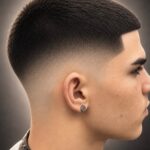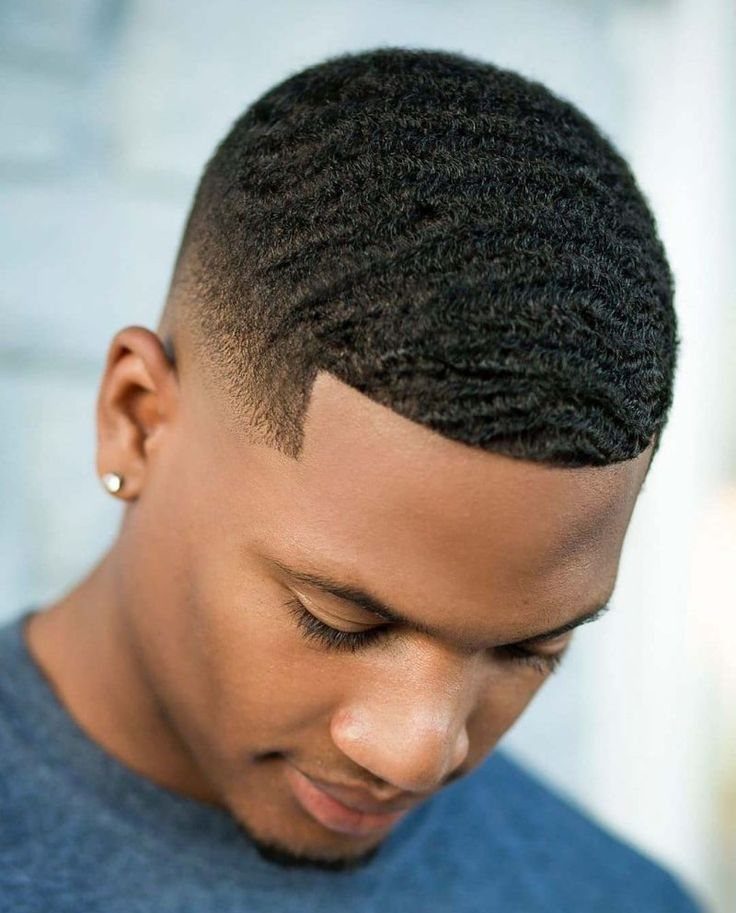
Fade height decides how much contrast sits between the top and the sides, and the choice runs from a low taper that starts near the ear to a skin fade that drops all the way to bare scalp.
A short afro with a fade holds texture without the length that demands heavy maintenance, while 360 waves take weeks of daily brushing to train the ripple pattern in.
1. Buzz Cut with Skin Fade
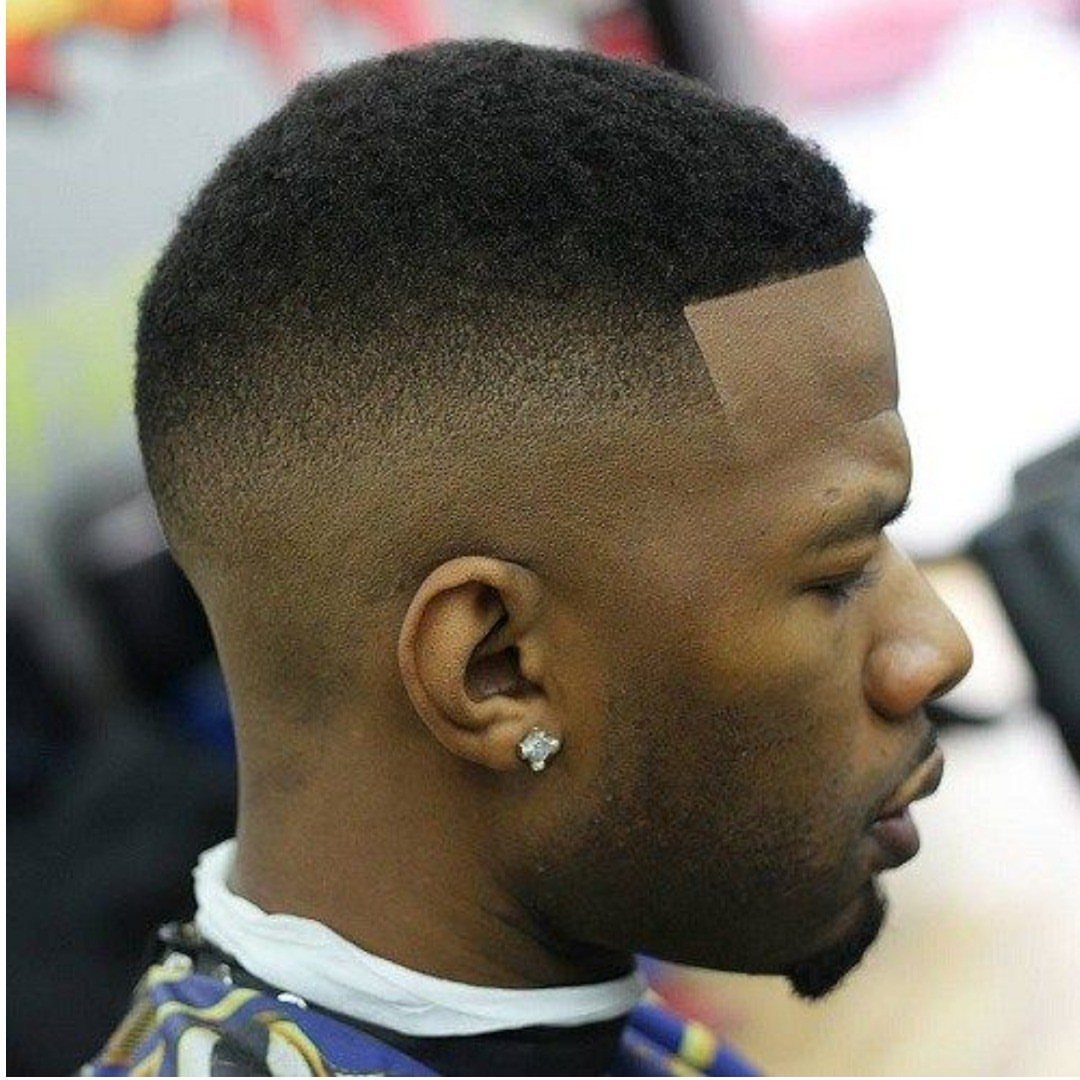
A buzz cut keeps the top short and uniform, usually clipped to the same guard length all over, while a skin fade tapers the sides down to bare skin. That gap gives you definition with almost no styling work.
Ask for your preferred guard length on top (commonly a 2 or 3) and specify fade height: low, mid or high.
Morning routine is seconds: no product, no brushing, just go.
2. High-Top Fade
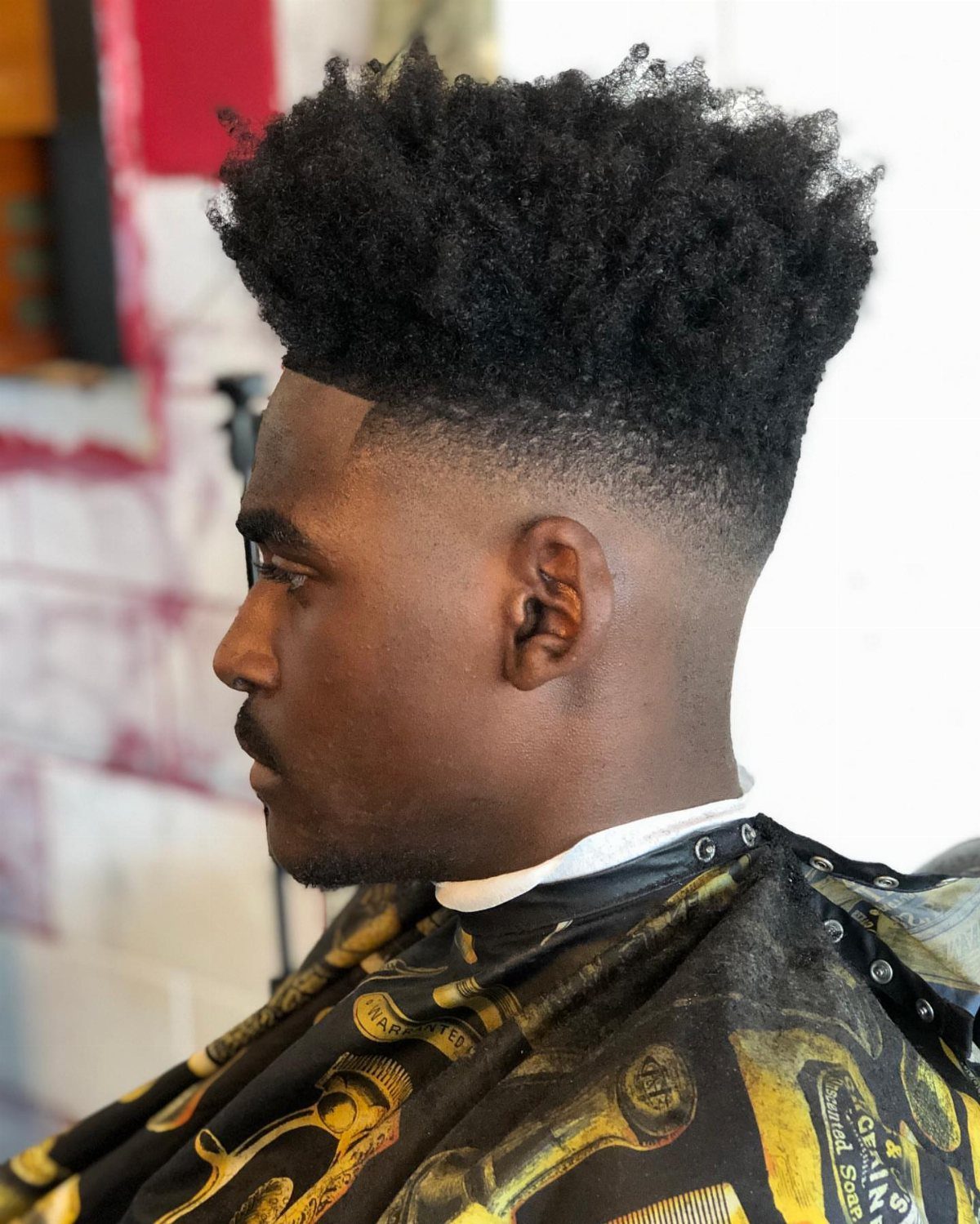
The high-top trades easy mornings for presence.
You get a tall, structured crown with clipped or faded sides that emphasize the height. Some versions square off the top; others keep it rounded or angular based on how the barber shapes it.
How much hair sits at the crown determines whether you need product to hold shape or just lift at the roots.
Shorter high-tops stay put with a pick run through them; taller versions may need a light holding foam to maintain the silhouette through the day.
Sides need regular cleanup. The top can go longer, but regular shaping keeps the proportions right.
3. Short Afro with Fade
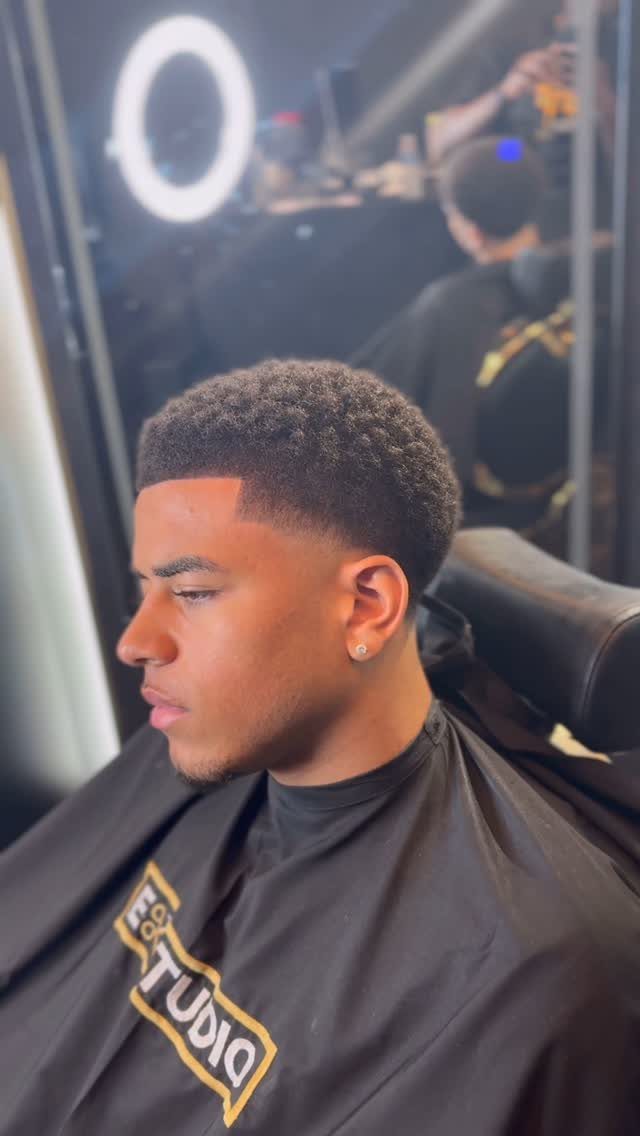
A short afro paired with a fade gives you texture up top and clean structure around the edges.
The natural volume stays visible without the length that requires heavy maintenance, and the fade frames it tightly enough that the whole cut reads as deliberate rather than grown out.
Ask for fade height based on how much contrast you want between the top and sides. A low fade keeps the transition subtle; a high or mid fade sharpens the difference.
Moisturize the top to keep texture soft and definition clear. Sides need a touch-up regularly; the afro itself can go longer between trims if you keep the shape picked out.
4. Cornrows
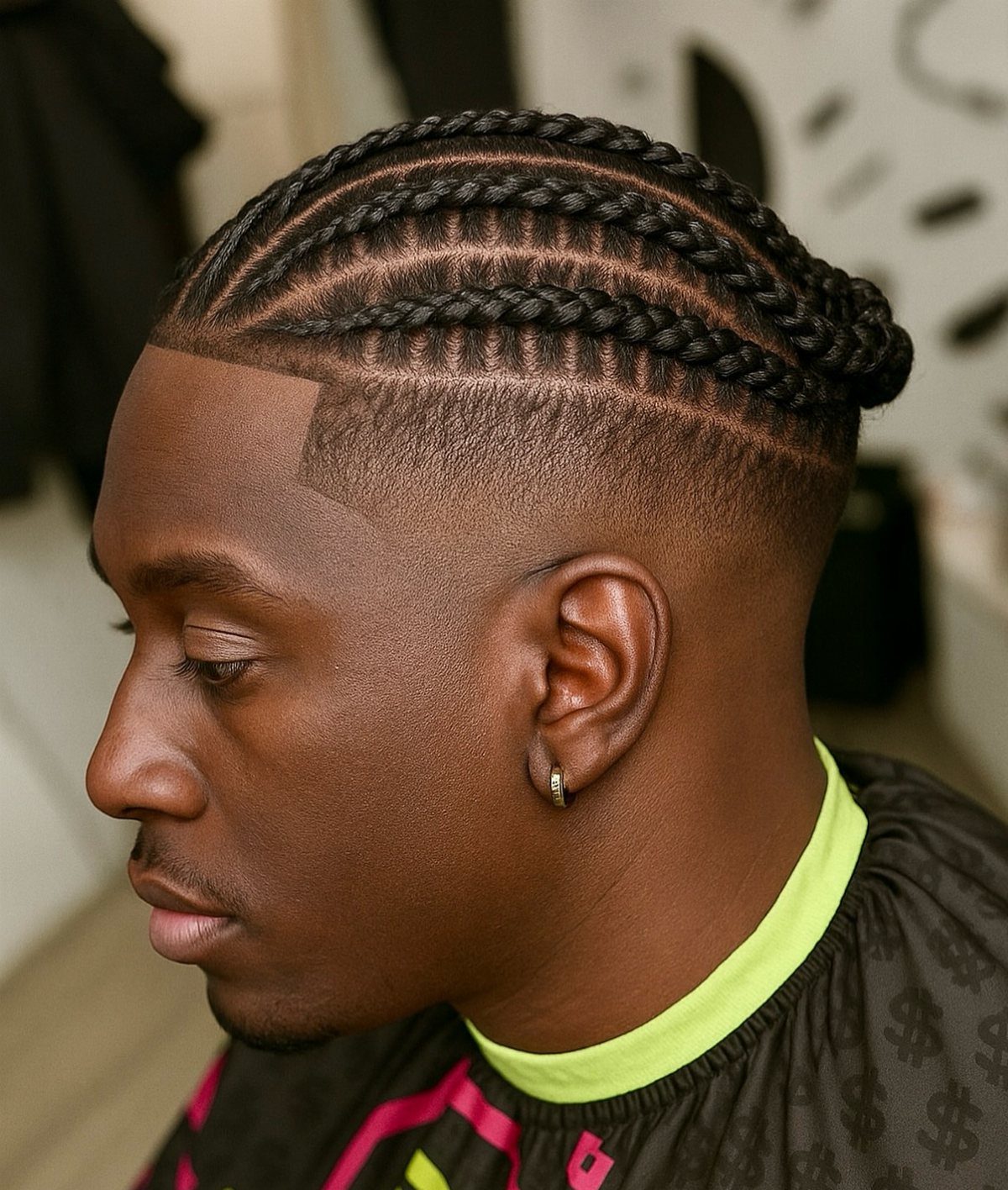
Cornrows sit flat to the scalp in parallel or patterned rows, creating a smooth, low-maintenance style that lasts as long as your hair grows slowly and you protect it at night.
Paired with a fade, the contrast between the braided top and bare sides reads sharp and clean.
The rows can run straight back, curve, or form geometric designs. Tightness matters: too tight causes tension and discomfort, while too loose means the braids unravel faster.
Wrap or tie your hair at night to preserve the rows.
Moisturize your scalp between the braids every few days to prevent dryness. When edges start lifting or frizz appears, it’s time to redo them.
5. Twists with Fade
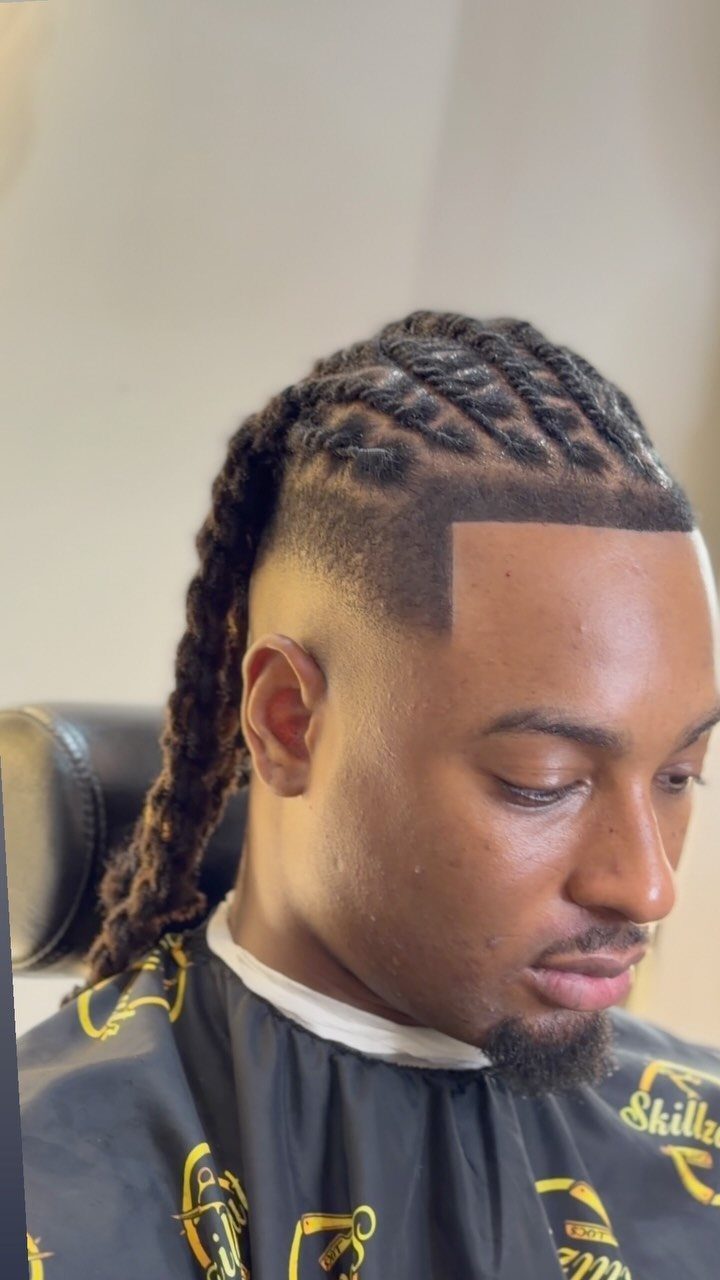
Twists on top paired with faded sides keep your natural texture visible while the fade adds structure.
Each twist is formed by dividing a section of hair in two and winding the strands around each other, locking in place without heavy product or heat.
The length of the twists changes how the style sits: shorter twists stand upright and give a tighter silhouette, while longer ones can hang or be styled into a different shape.
The fade requires a touch-up regularly; the twists themselves last longer if you wrap them at night.
Retwist with a light holding cream or butter when roots start to loosen. Moisturize regularly to keep the hair soft and prevent breakage at the twist points.
6. Freeform Locs
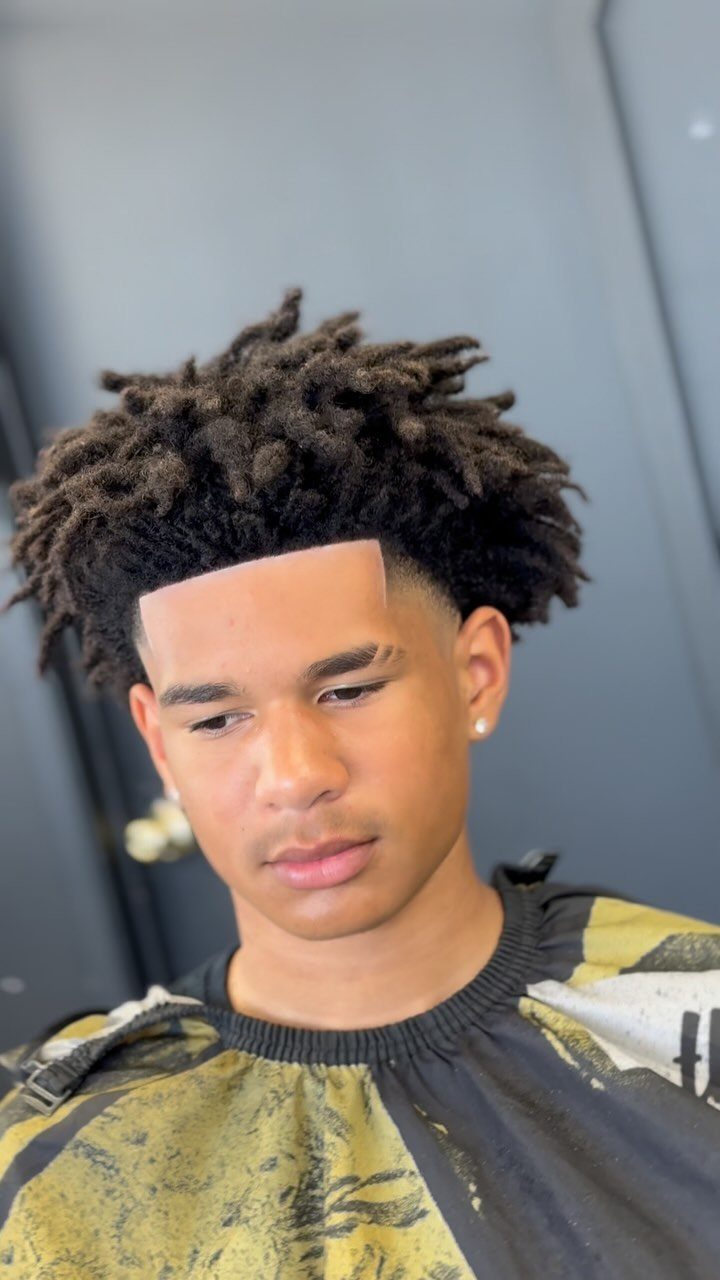
Freeform locs grow without a fixed parting grid or frequent retwisting, so each loc forms its own size and path.
Starting freeform means washing, moisturizing, and letting the hair lock naturally over months.
You can encourage the process by sponging or finger-twisting occasionally, but the defining feature is minimal intervention. Locs mature over a year or more, moving through a fuzzy stage before they tighten and settle.
Line-ups keep the edges clean and make the style look maintained even when the locs themselves are left alone. Schedule a shape-up regularly if you want the contrast between structured edges and free-growing length.
7. Short Afro
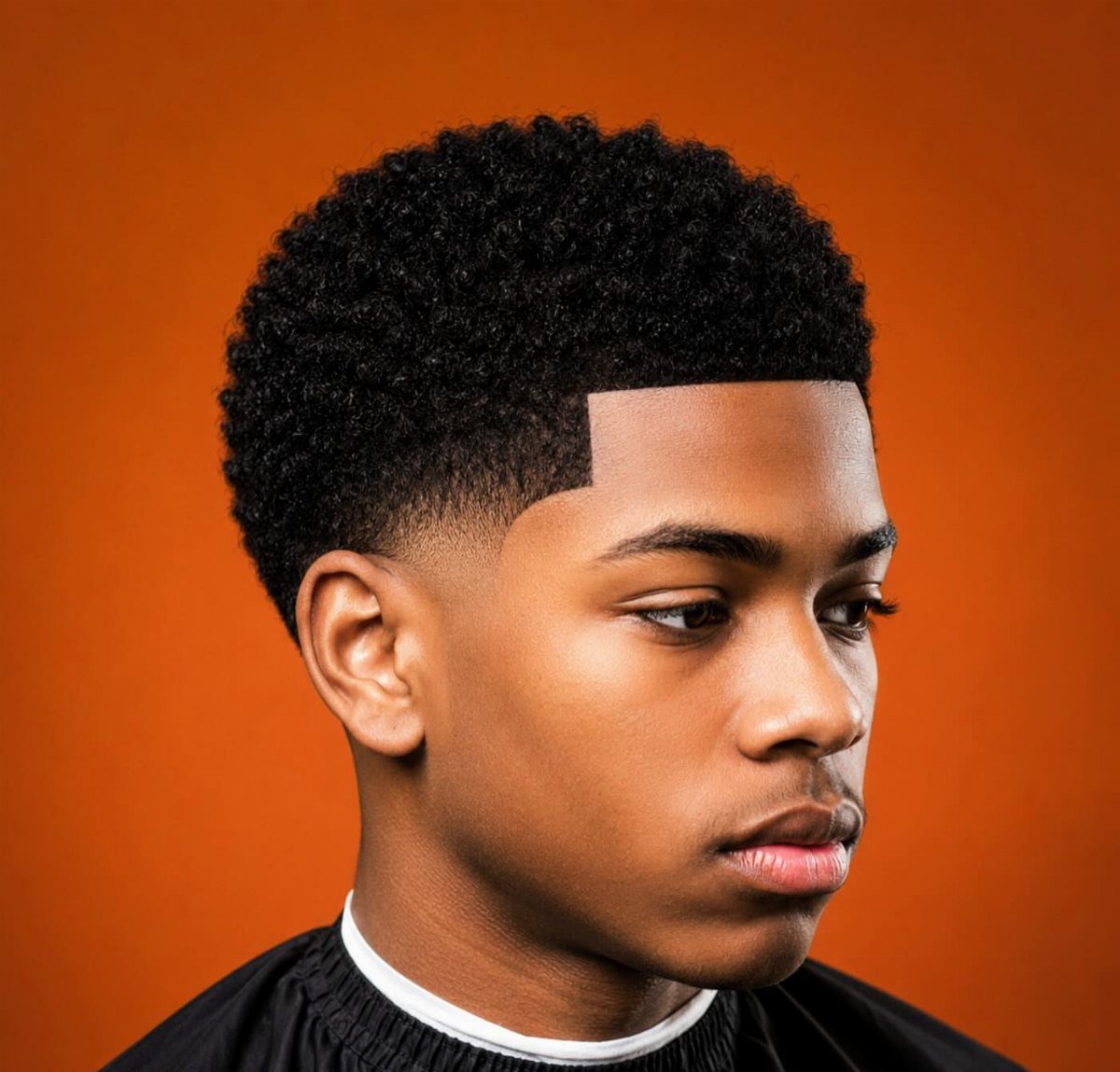
The short afro keeps natural texture compact and shaped, sitting close enough to the head that it holds its silhouette without product.
A sharp line-up at the hairline and temples gives the cut definition and keeps it from looking like it just happened.
Pick it out after washing to lift the roots evenly and maintain the round shape.
The shape needs a trim every few weeks to stay tight, and the line-up requires a touch-up at the same interval to preserve the crisp edges.
But, while obedience isn’t this hair type’s forte, there are plenty of excellent haircuts for black men to experiment with. That’s because, when treated right, afro hair can shape up sharp and has an unrivalled ability to hold shape well.
8. Short Locs with Fade
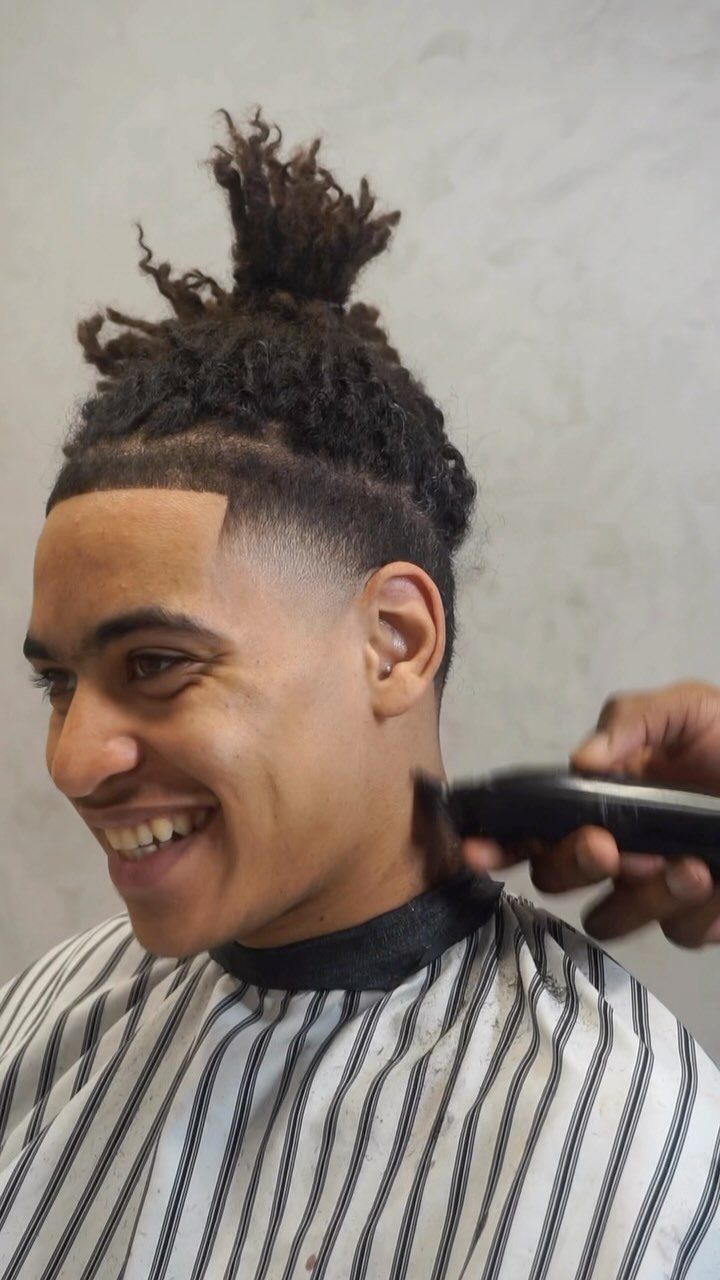
Short locs with a fade give you the weight and texture of locked hair on top with clean, tapered sides.
The fade around the sides keeps the focus on the locs themselves and cuts down the bulk where hair meets the ears and nape.
Retwist the locs when new growth loosens the base. The fade needs a cleanup more often to hold the contrast.
Moisturize the locs and scalp to prevent brittleness and keep the hair healthy as it matures.
9. Clean Line-Up
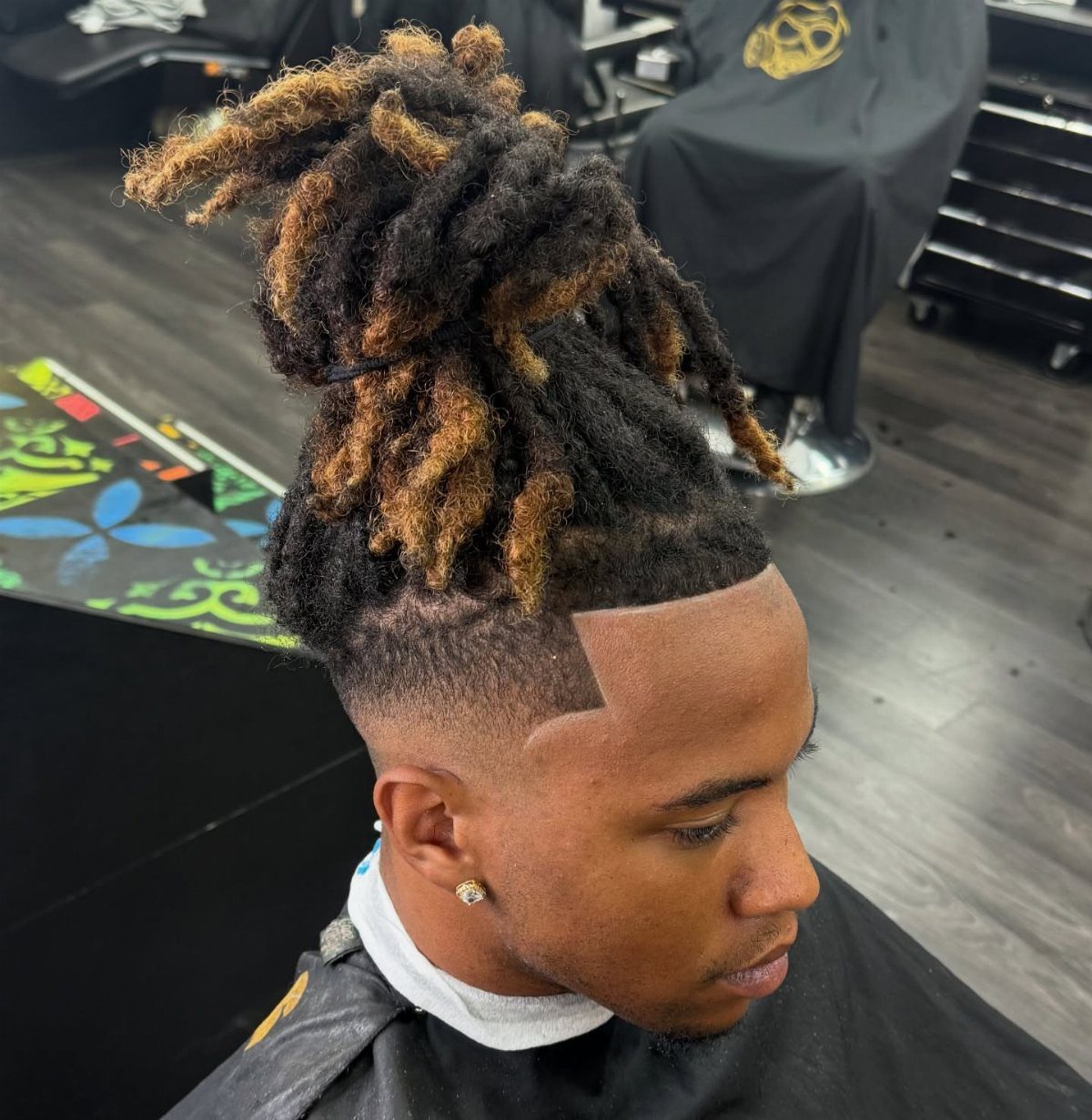
A line-up defines the hairline, temples and sideburns with a razor or trimmer, creating a sharp geometric edge that frames the face.
It works with any style on top, from locs to a low cut, and the precision of the outline is what makes the whole look finished.
Ask your barber to edge up the hairline and temples to a straight or gently curved shape. Some barbers add small details at the corners or part lines for extra definition.
The edges blur as hair grows, so touch them up regularly to keep the lines crisp.
10. Box Braids
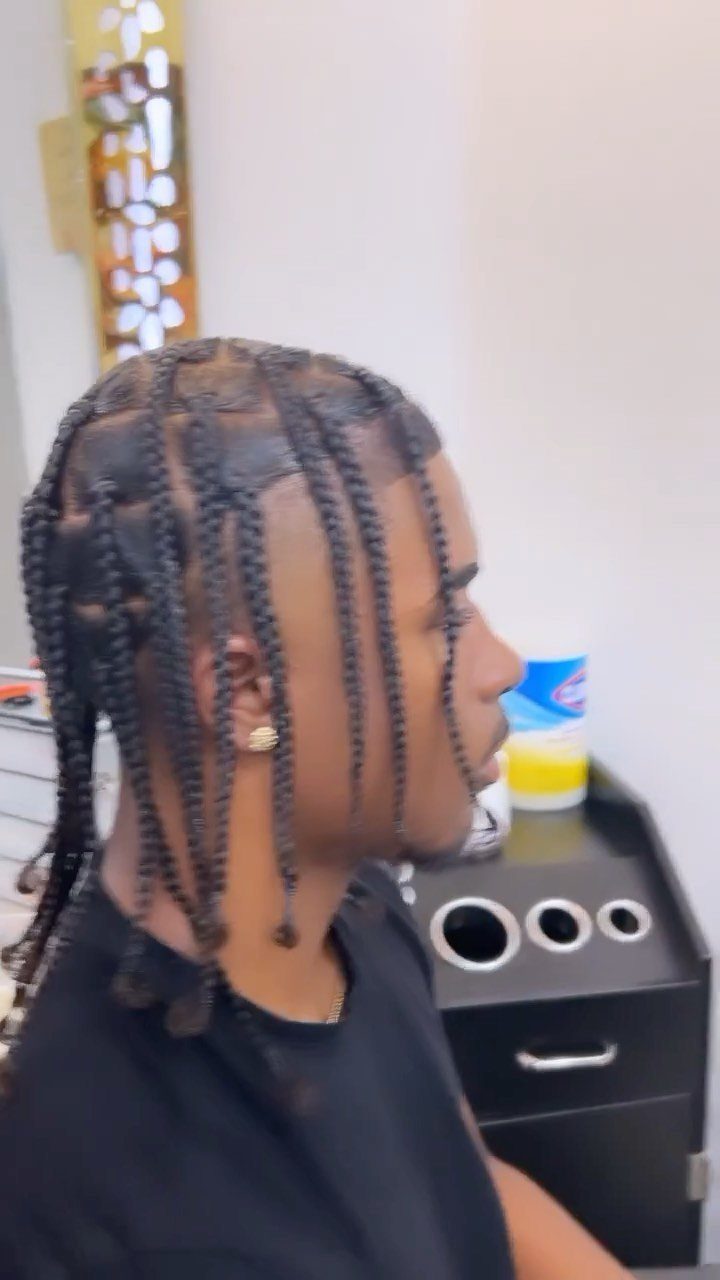
Box braids are sectioned into squares across the scalp, then each section is braided from root to tip.
The square parting is what distinguishes them from other braid patterns and allows each braid to move independently, so you can wear them down, tied back, or in a bun.
Braid size affects how long they last and how much weight sits on your scalp. Smaller braids take longer to install but tend to hold their shape longer; larger braids go faster and feel lighter.
Wrap them at night to prevent frizz.
11. Long Afro
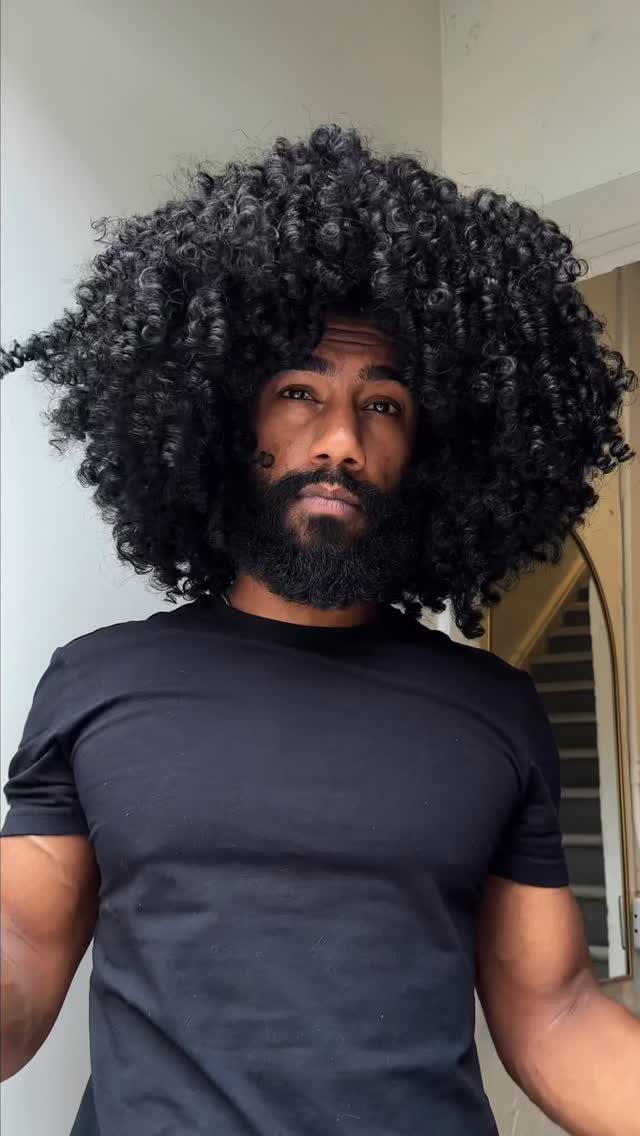
A long afro grows outward in all directions, creating a rounded or oval silhouette that emphasizes volume and natural texture.
The density and curl pattern determine how much shape it holds on its own, and the longer it gets, the more weight pulls it down unless you pick it out regularly.
Trims keep the perimeter even and remove split ends that make the afro look frizzy rather than full. A long afro requires patience during the grow-out phase and regular hydration to stay healthy.
12. Twists
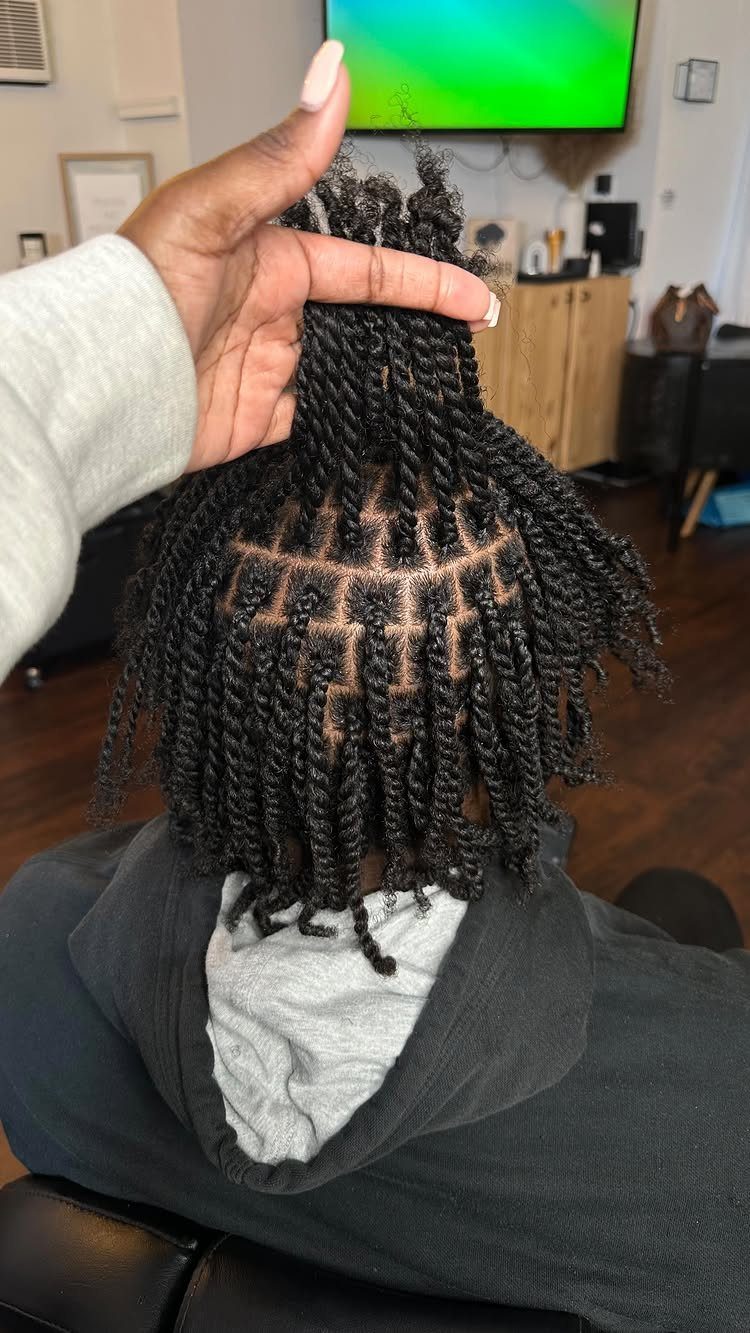
Twists form when you divide each section of hair into 2 strands and wind them around each other from root to tip, creating a rope-like texture that holds without braiding or heat.
They sit as a finished style or work as a base for twist-outs when you unravel them after a day or two.
Length and section size change how the twists behave.
Shorter sections give you more definition; larger sections go faster but produce a looser texture. Apply a light cream or butter while twisting to help the strands grip and stay in place.
13. Tapered Afro
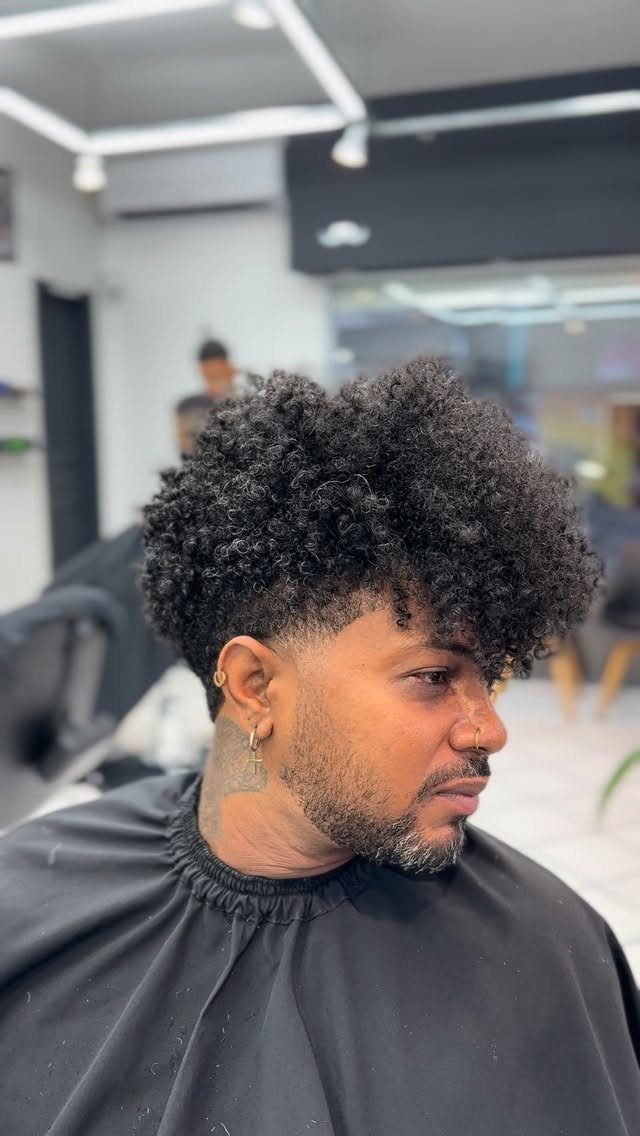
A tapered afro keeps the natural volume on top while the sides graduate down gradually, creating a silhouette that feels full without the bulk sitting heavy around the ears and nape.
The taper can stop just above the ear or climb higher depending on how much contrast you want.
Pick out the top to maintain the round shape and keep the texture lifted evenly. The taper needs regular trims to hold the clean transition before it starts to blend back in.
14. Clean-Shaven Head with Beard
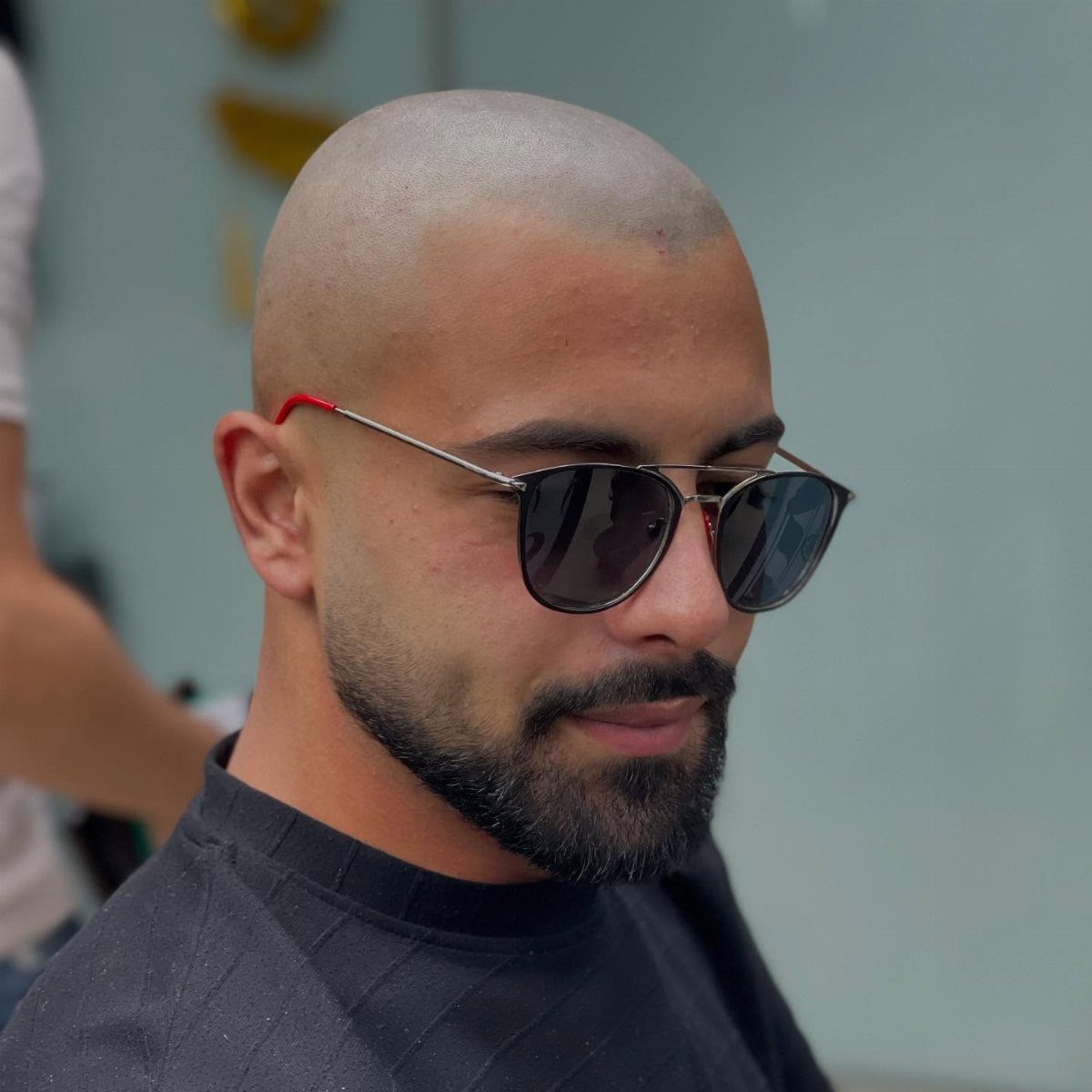
Shaving the head completely and growing the beard full shifts all the texture and definition below the jawline. The contrast works because the two elements balance: one surface is bare and smooth, the other is dense and shaped.
Maintain the shave with clippers or a razor every few days to keep the scalp smooth. The beard needs regular trimming to hold its shape and prevent the proportions from drifting.
15. Short Cut with Beard
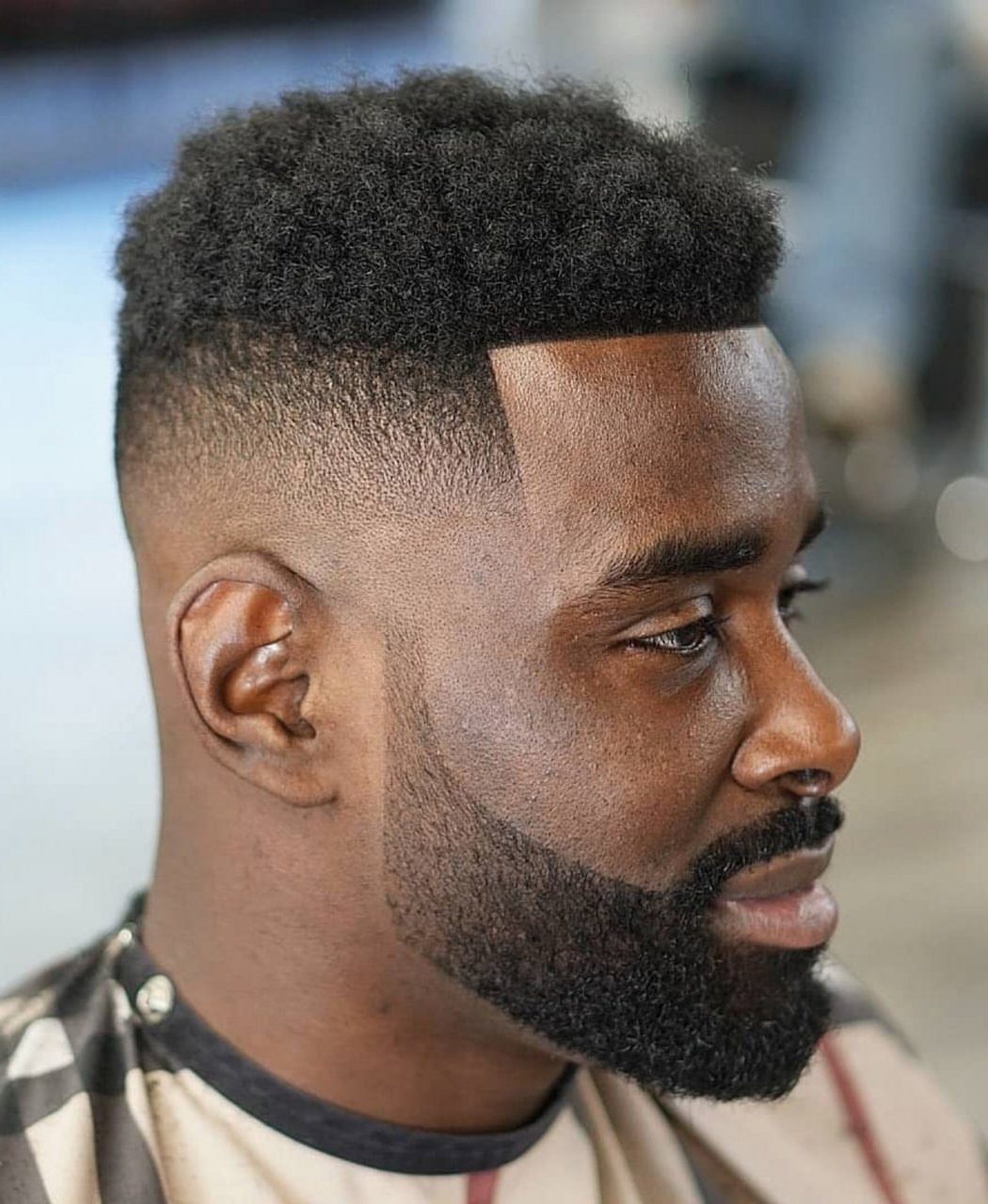
Pairing a short natural cut with a shaped beard keeps both elements low-maintenance while giving you definition at the hairline and jawline.
The hair sits close enough that it requires minimal styling, and the beard adds structure to the lower face without needing length that demands daily grooming.
A fade on the sides sharpens the look further, though the cut works without one if you prefer an even length all around. Touch up the beard and line-up regularly to keep the edges crisp.
16. Low Taper Fade
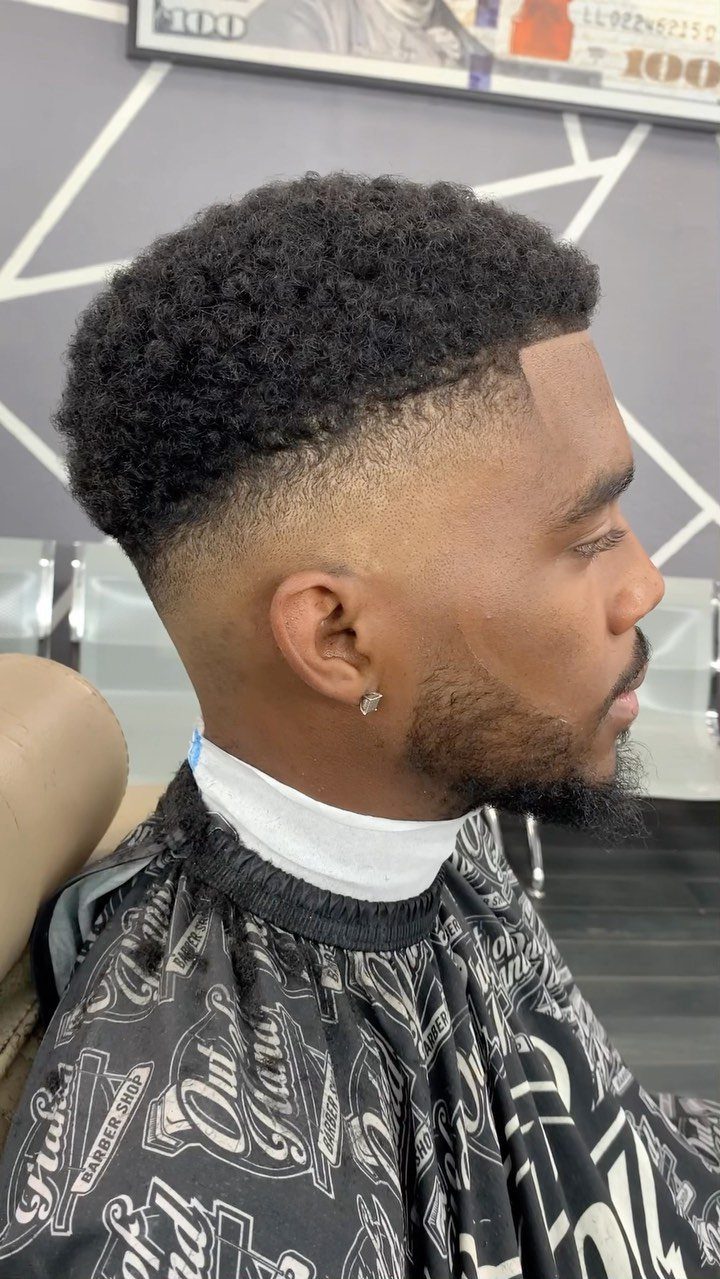
The low taper fade starts the transition close to the ear and neckline, keeping most of the head at full length before the hair gradually disappears near the bottom.
That restraint makes it the quietest fade option and the one that grows out with the least visible shift in shape.
Ask for the fade to begin low and specify how tight you want the taper. A gradual blend stays subtle; a faster drop reads sharper but still keeps the transition below the temple.
Touch up regularly to maintain the clean line where the taper begins.
17. Skin Fade with Waves
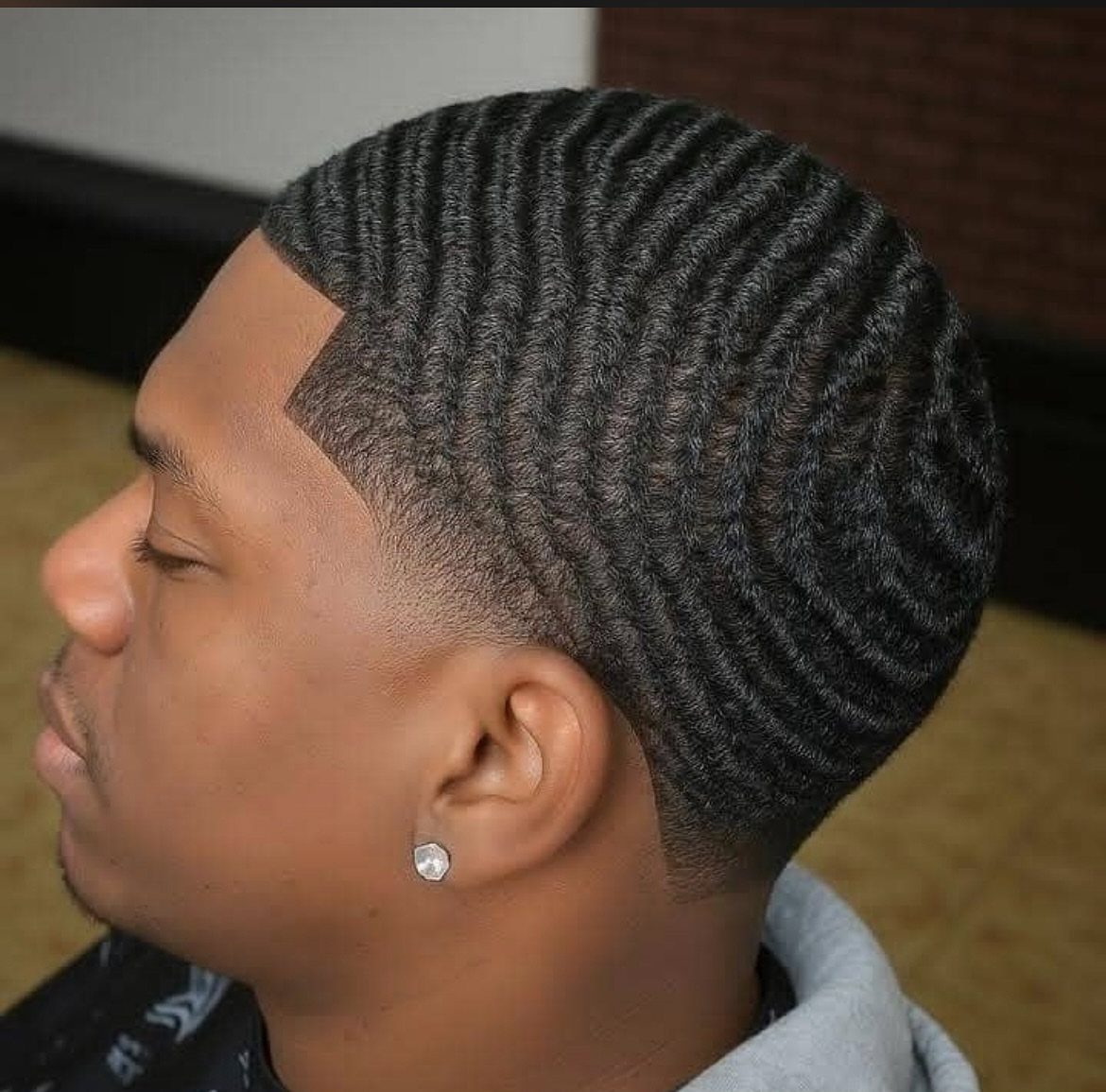
A skin fade dropping the sides to bare skin while waves sit brushed into a tight pattern on top gives you two kinds of precision in one cut.
The fade requires barber work; the waves require daily brushing and a durag at night to train the curl pattern into the ripple effect.
Start with a short even cut on top, then brush in the same direction daily using a wave brush and a light pomade or wave cream. Wrap your hair with a durag overnight to hold the pattern as it forms.
The fade needs a touch-up regularly. The waves take weeks to develop and daily brushing to maintain once they appear.
18. Blowout Afro
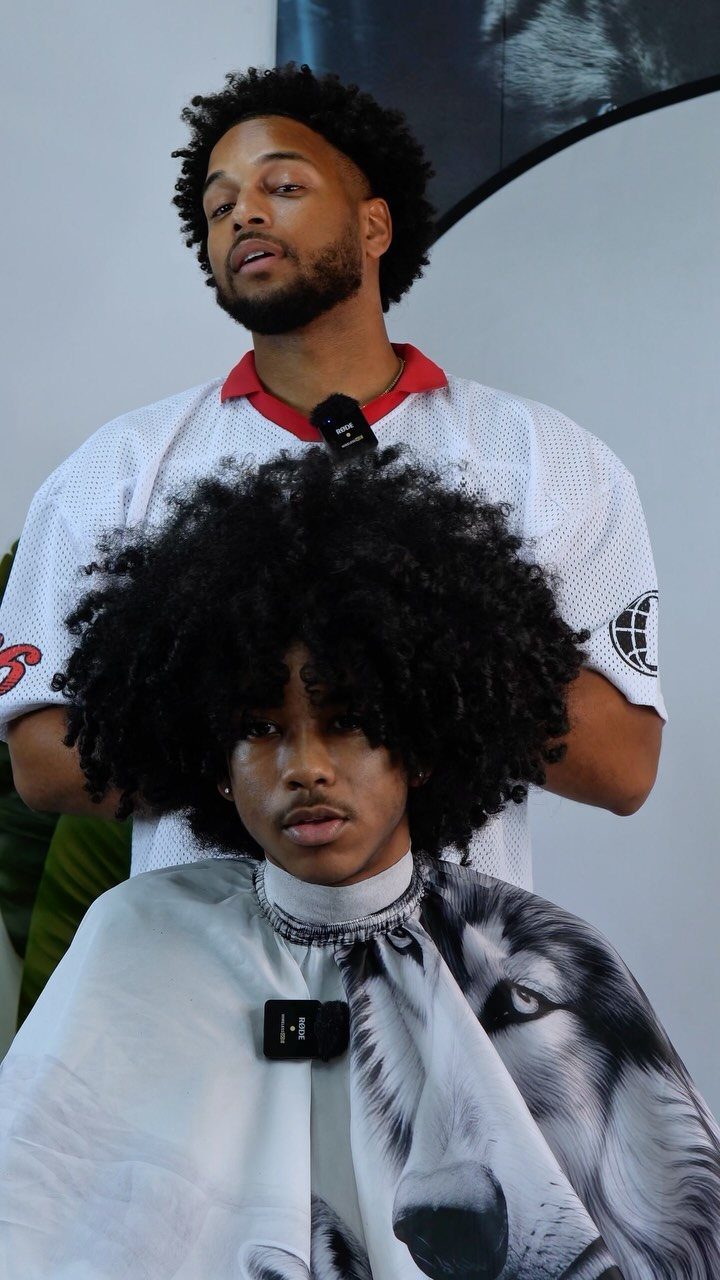
Stretching the afro with a blow dryer and a comb attachment creates maximum lift and volume, elongating the curl pattern without using heat to straighten it.
The result is a round, cloud-like silhouette that sits larger than a natural afro of the same length.
After washing, blow-dry on low or medium heat while picking through the hair with the comb attachment, lifting from the roots outward. The stretched texture holds its shape longer than air-dried hair and responds better to picking.
The shape deflates as the hair returns to its natural curl over days, so plan to blow out again after each wash if you want the full volume maintained.
19. Flat Twists
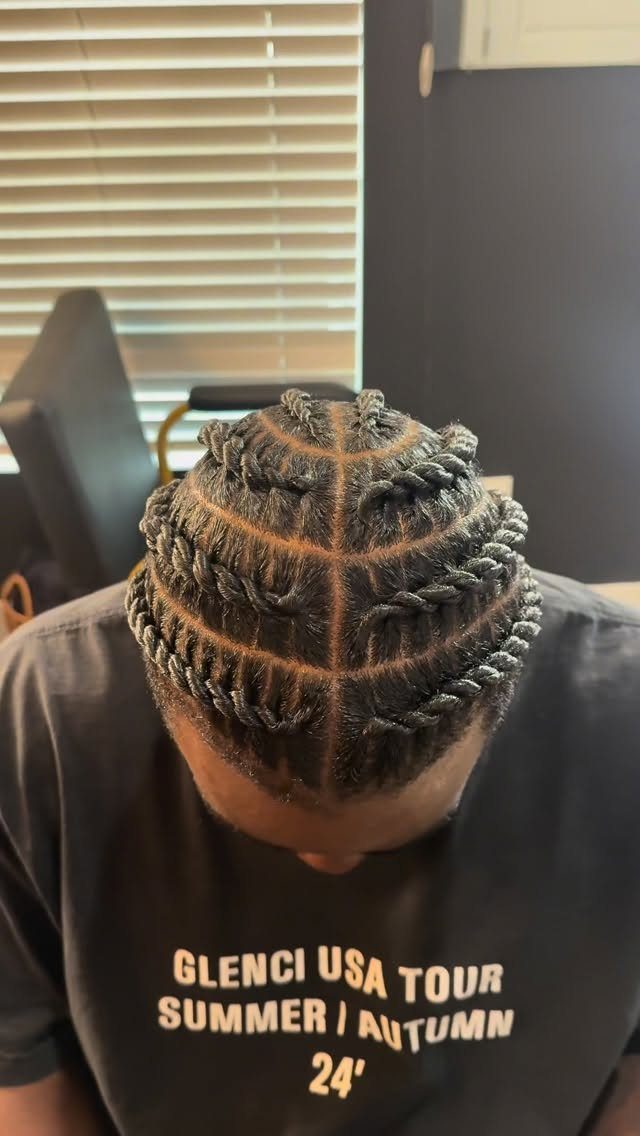
Flat twists follow the same two-strand technique as regular twists but stay pressed against the scalp in rows, like cornrows with a twist instead of a braid. The result sits flatter and tighter, holding the pattern close to the head.
Part the hair into sections, then twist 2 strands together while picking up more hair as you move along each row.
Redo when frizz starts to creep in or the parts widen.
20. Sponge Curls with Taper
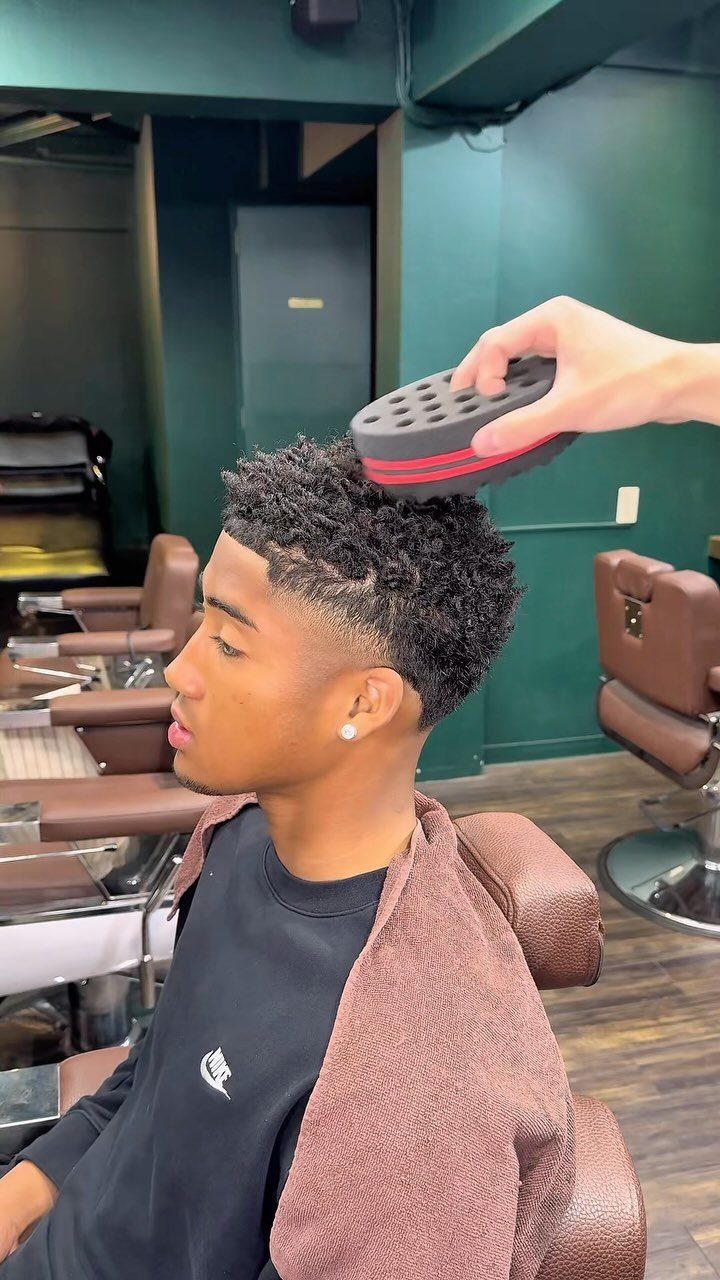
A hair sponge worked in circular motions over short textured hair pulls the curls into small, defined coils that stand upright.
Pair that with a taper on the sides and you get textured volume on top with a clean fade below.
Start with damp hair and rub the sponge in circles across the top until the curls tighten into individual spirals. The taper needs regular touch-ups to maintain the contrast between the sides and the coiled top.
Pick out the curls lightly between sponging sessions to keep the shape lifted without flattening the definition.
21. Low Cut
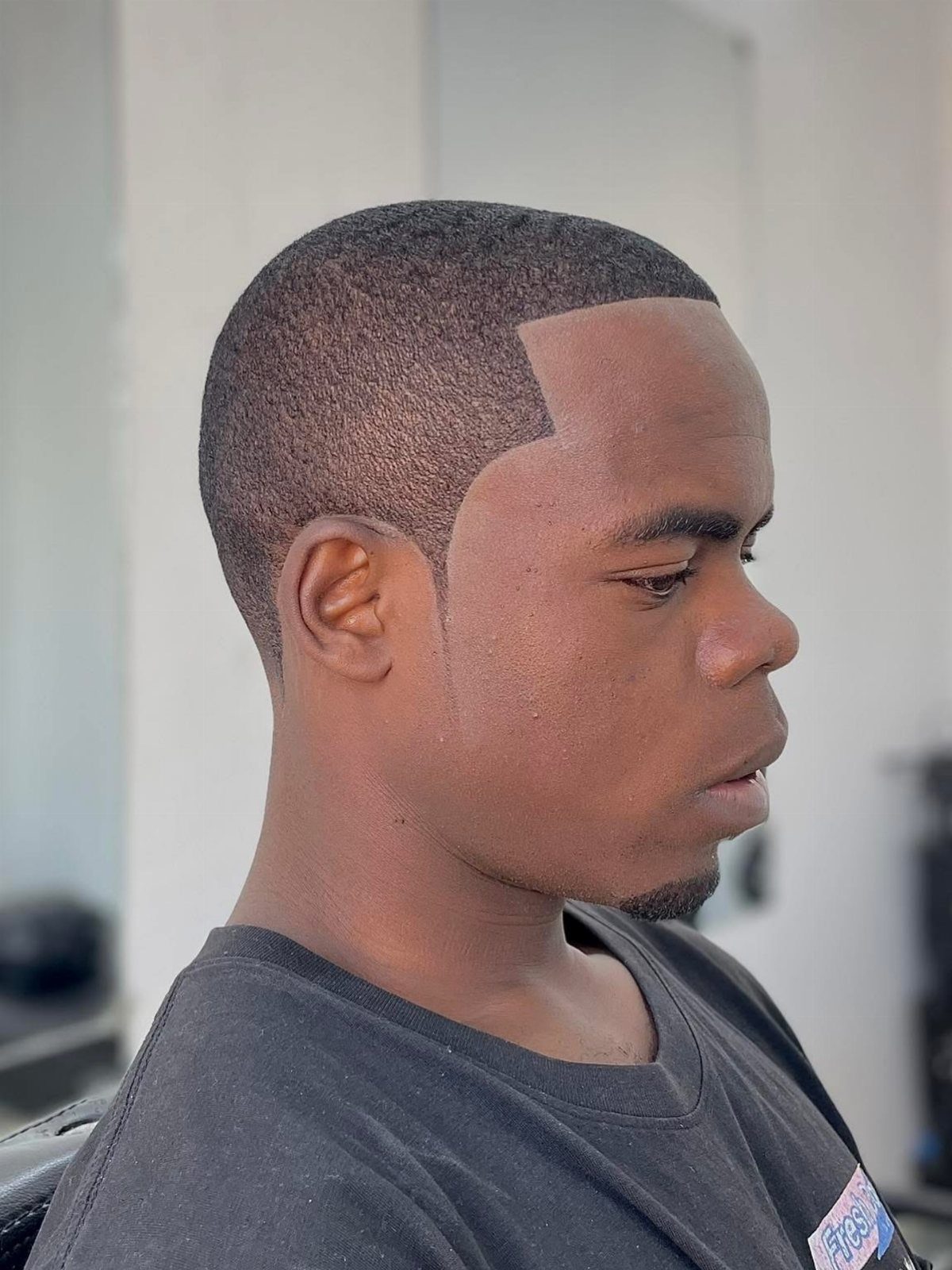
The low cut keeps hair at an even short length all over, usually trimmed with clippers set to a single guard number.
A line-up around the hairline and temples sharpens the edges and keeps the cut looking deliberate rather than halfway grown out.
The length stays short enough that styling takes nothing and drying happens on its own. Book a shape-up every 2 weeks or the line blurs fast.
Moisturize the scalp to avoid dryness, since short hair offers less coverage.
22. 360 Waves
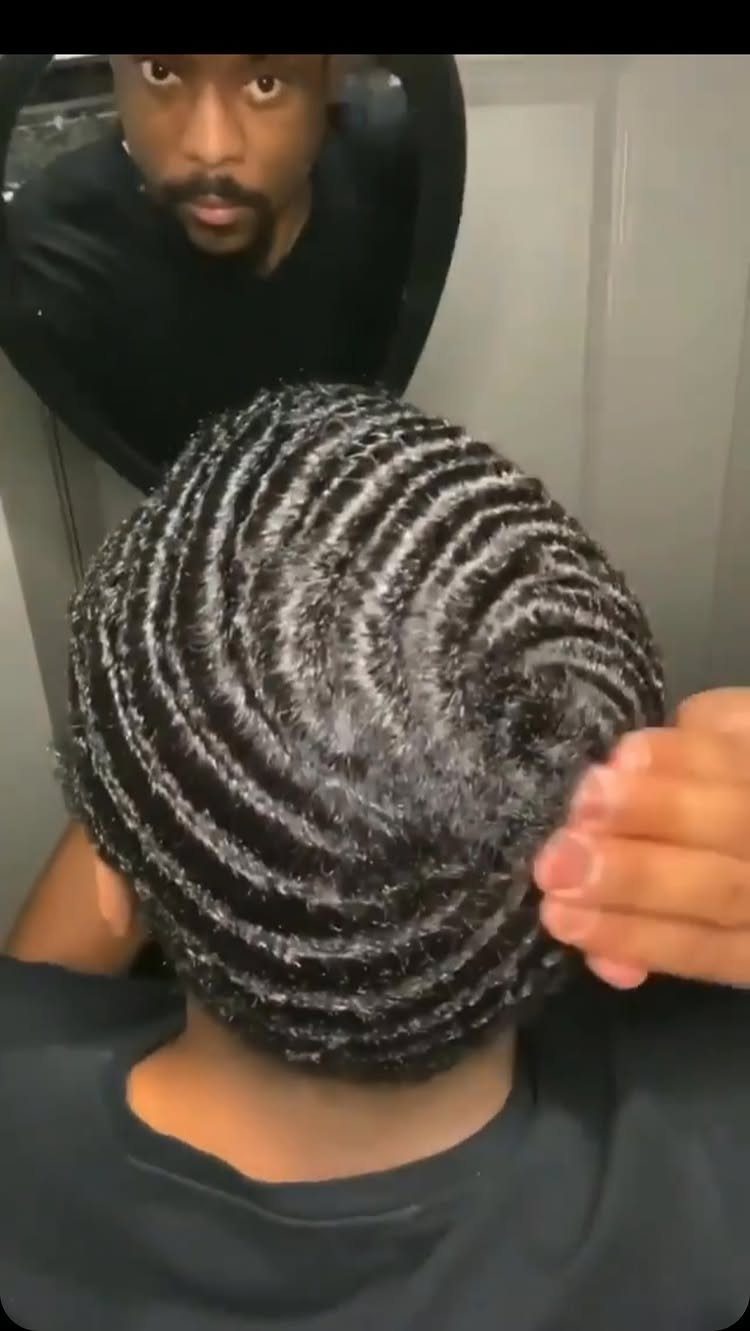
360 waves form a rippled pattern that radiates from the crown in concentric circles, visible all the way around the head.
The waves appear after weeks of daily brushing in the direction the hair grows, training the curl pattern into the ripple.
Start with hair cut short and even. Brush with a wave brush in the same direction daily, applying a light wave cream or pomade to help the hair lay down.
They take weeks to train in and need brushing every day after that.
23. Frohawk
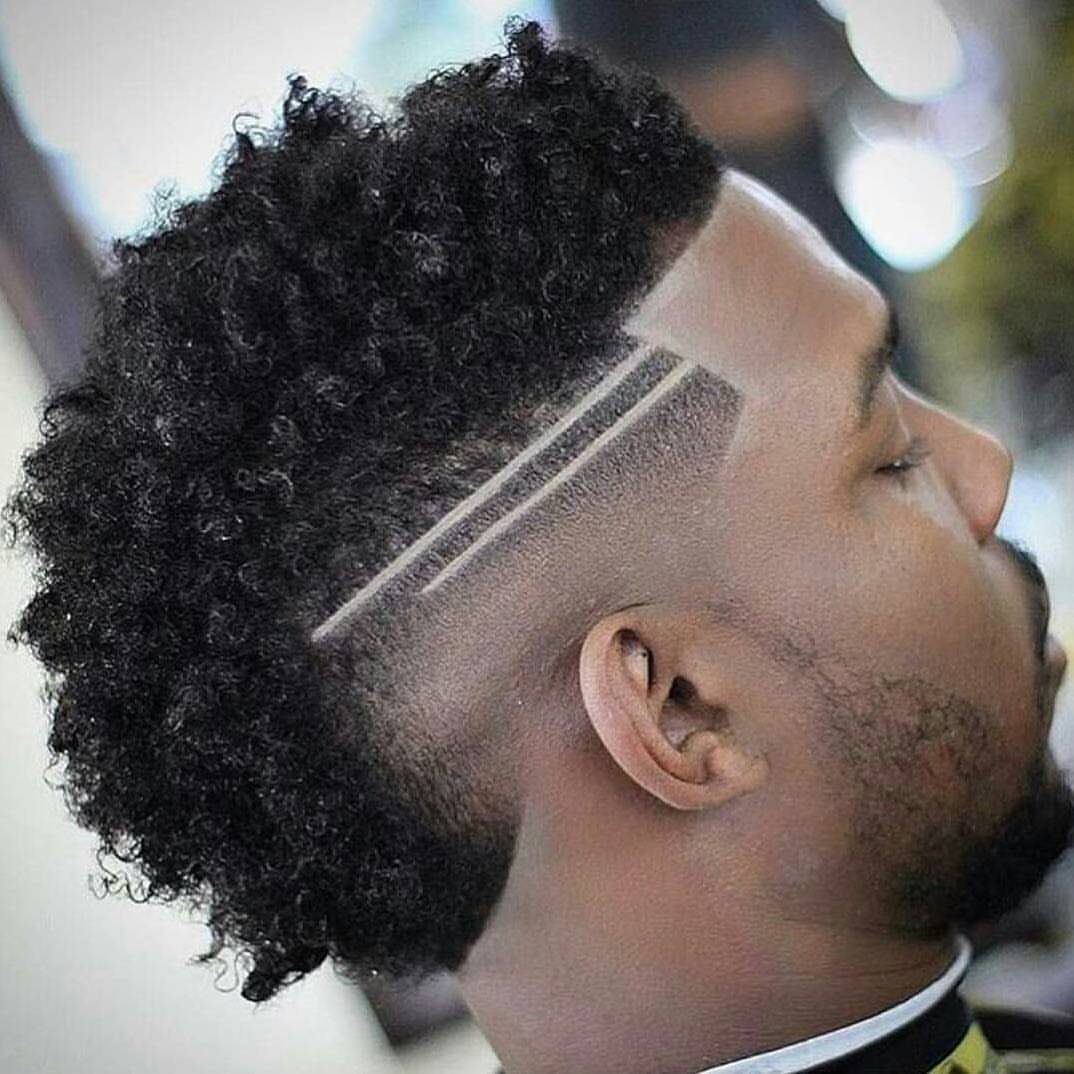
The frohawk concentrates volume through a strip running from the forehead to the crown, while the sides fade down or stay trimmed short.
That central ridge of texture can sit rounded and natural or stand taller depending on how much length you leave and how high you pick it.
Ask your barber to fade the sides and leave length on top, then pick out the center section to lift it into shape.
The fade requires regular touch-ups; the top can grow longer or stay short depending on how much height you want.
24. Cultivated Locs
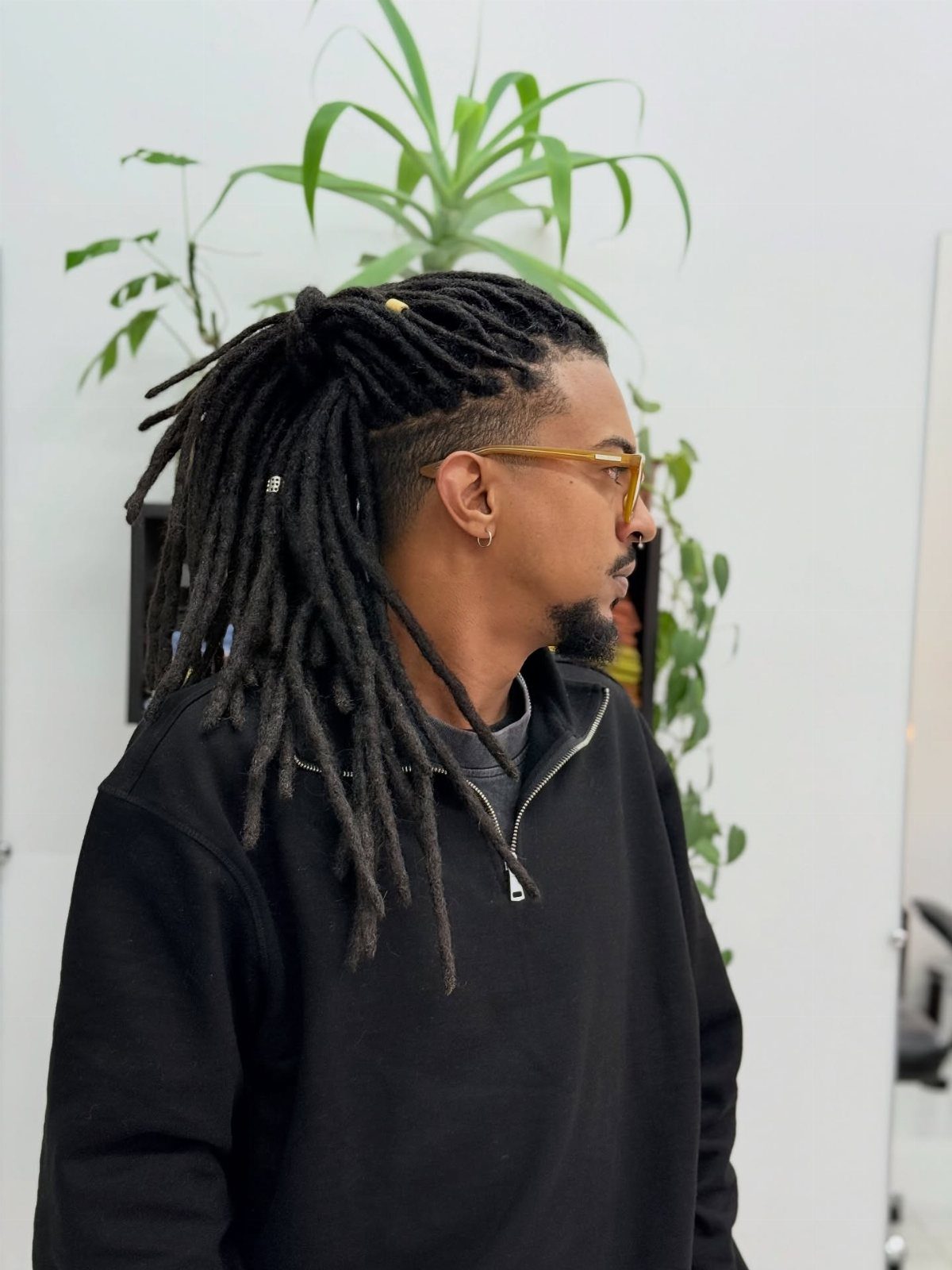
Cultivated locs are maintained through regular retwisting and careful sectioning, creating locs that follow a uniform size and pattern across the scalp.
The difference between these and freeform locs is the level of control: cultivated locs are parted deliberately and retwisted at the roots to keep each one neat and consistent.
Retwist the roots regularly as new growth appears to maintain the defined sections and prevent the locs from merging or thinning unevenly. Schedule maintenance with a loctician if you want the grid pattern and uniform diameter preserved as they mature.
25. Long Locs with Ponytail Fade
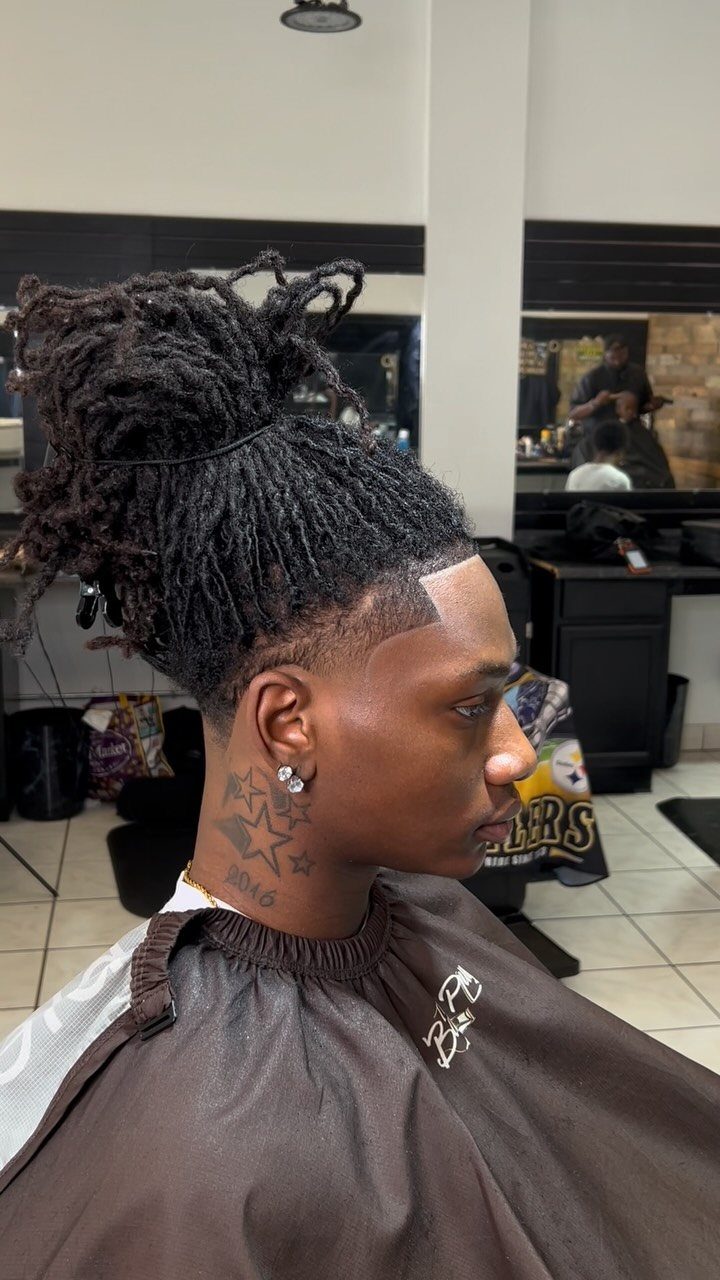
Long locs tied into a high ponytail with faded sides and a sharp line-up pull the weight off the neck while keeping the length visible.
The ponytail sits at the crown or higher, and the fade drops the sides clean so the contrast between the loc texture and bare skin reads immediately.
The fade needs touch-ups regularly to hold the transition. The locs themselves need retwisting at the roots as new growth comes in, and keeping them moisturized prevents the ends from drying out and looking frayed.
26. Textured Fade with Shaved Line
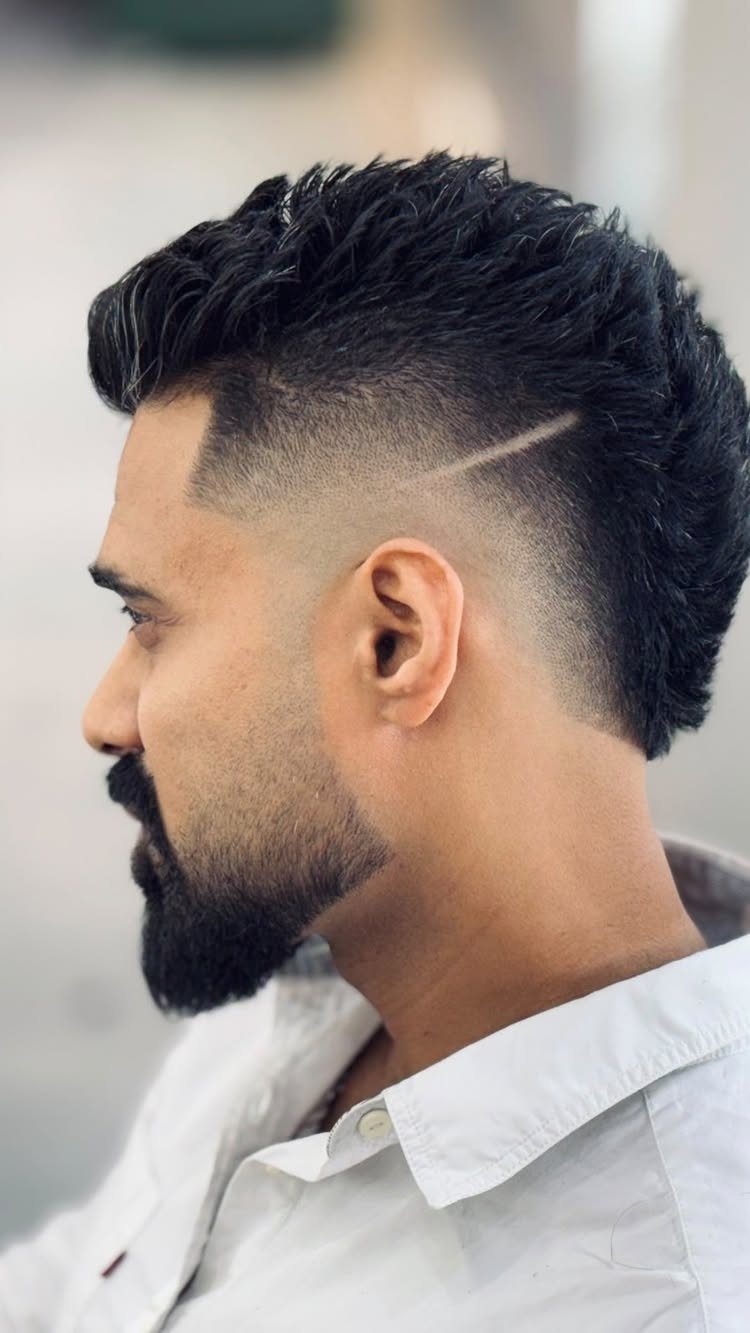
Pairing a textured top with a fade and adding a thin shaved line through the side gives you a surgical detail that sharpens the whole cut.
The line sits along the temple or just above the fade and reads as one deliberate stroke rather than a full design.
Ask your barber to etch a single line once the fade is complete. A shaved line lasts about a week before new growth fills it in, which means you’re back in the chair often or accepting that it fades away.
27. Long Dreadlocks

Long dreadlocks grow past the shoulders and frame the face with weight and movement that shorter locs cannot match.
The length takes years to reach and requires patience through every stage before the locs hang the way you want them to.
Retwist the roots regularly to keep each loc defined and prevent new growth from matting unevenly. Moisturize the length to avoid dryness, and tie them back or wrap them at night to reduce friction while you sleep.
28. Shaved Nape Hair Design
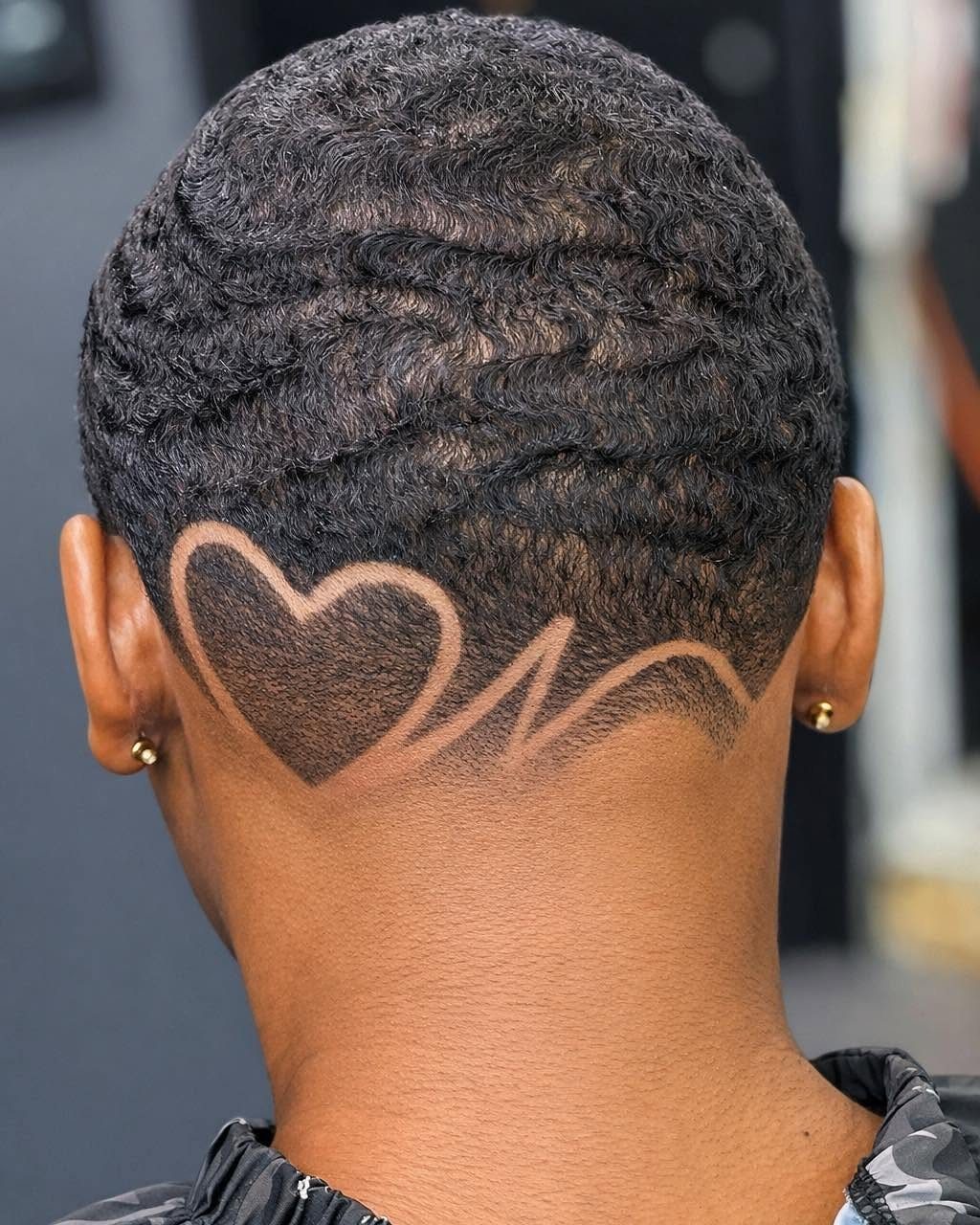
Shaving custom shapes into the nape turns the back of the head into a detail most people miss unless the hair is tied up or you turn around.
Hearts, stars, initials and geometric patterns all work, and the design sits below the occipital bone where short hair grows fast.
The shape blurs within days as the shaved section grows back in, so treat it as temporary unless you plan to visit the barber weekly. A fresh design each time keeps the nape sharp without committing to one pattern long-term.
Moisture and Scalp Care
The cuticle structure means coils and curls lose water faster than straight hair does, which is why leave-in conditioner, jojoba oil, castor oil and curl cream earn their place in the cabinet.
Dryness leads to breakage, and frequent washing strips the oils that keep hair healthy.
Wash once a week or less, and skip shampoos with sodium lauryl sulfate.
Lather at the scalp and let the runoff carry cleanser down the length instead of working it through from root to tip. Seal the ends with oil before bed.
Wrapping with a silk or satin scarf, tying a loose durag, or swapping to a silk pillowcase cuts the friction that snags and splits hair while you sleep.
Protective styles like cornrows, twists, or braids keep hair low-maintenance for weeks, but the scalp still needs moisture between the sections to prevent dryness and flaking. Apply oil or a light spray every few days.
Choosing by Hair Texture
Black hair textures mostly fall within Type 3 curls and Type 4 coils, and each responds differently to the same cut.
Type 3 hair loosens enough that textured crops and looser styles hold shape without heavy product, while Type 4 coils support the structure needed for afros, locs, twists, and high-tops.
Shrinkage makes hair look shorter than it measures when stretched, so a cut that sits at shoulder length when wet may appear much closer to the head once dry. That’s normal, not a mistake.
Type 4 hair tends toward dryness, so styles that minimize daily manipulation and protect the ends last longer and reduce breakage. Choosing a cut starts with knowing your curl pattern and how much daily work you’re willing to put in.
Barber Terminology
Either one works with clippers or shears.
A clean line-up—that sharp geometric edge along the hairline and temples—frames the face and makes any style on top look deliberate.
Guard numbers tell the barber what length to leave on top, with a 2 or 3 being common starting points.