1. Low Taper with Stubble
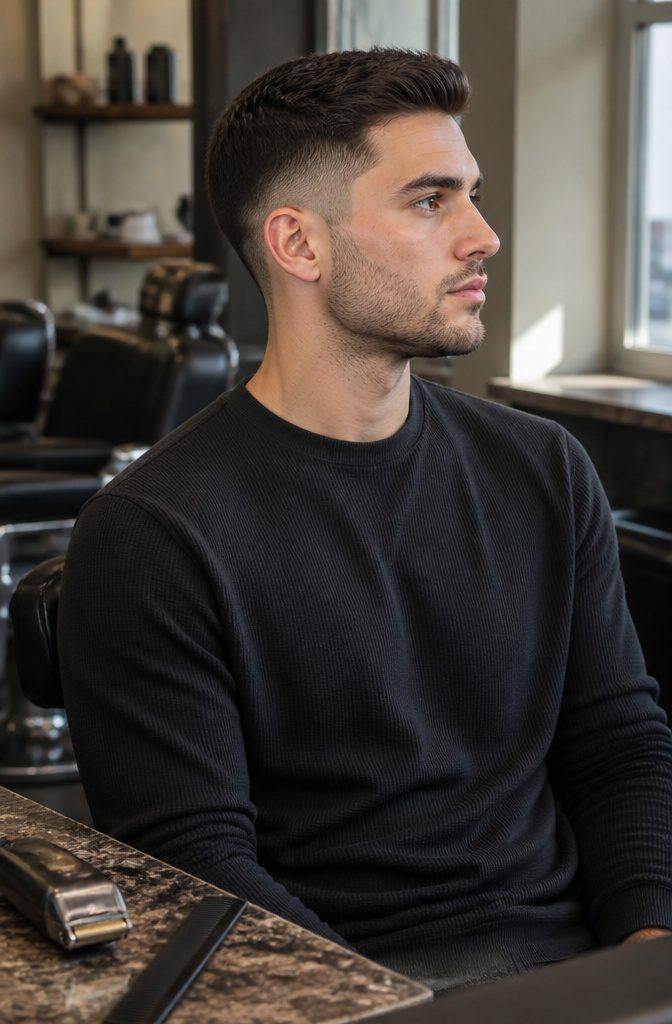
Low Taper with Stubble
Stubble between 1mm and 4mm gives you a shadow-line along your jaw with almost no daily commitment.
The low taper keeps the transition clean around the sideburn, and three to five days of growth is usually enough to reach that density without crossing into short-beard territory.
The combo works on all hair types and keeps the morning simple.
Run a 3mm guard over the stubble every three days. The hair taper needs a barber visit every three to four weeks, and the cheek and neck lines want a cleanup every two days to hold the sharp edge.
That neck shave is what makes or breaks the look—skip it past forty-eight hours and the whole thing reads lazy rather than intentional.
Owners on Reddit who keep tight lines report touching up every three or four days once growth starts showing, and a foil shaver handles that faster than clippers for the detail work around the arch and neckline.
2. Low Taper with a Short or Short Boxed Beard
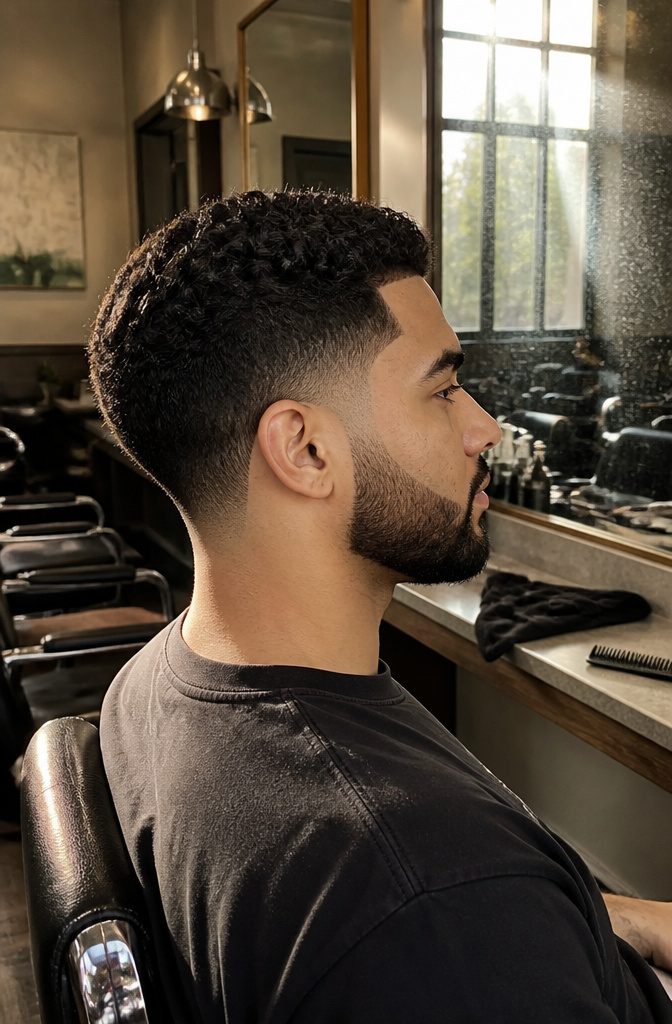
A beard kept between half an inch and 1 inch gives the jawline structure without adding length, and it looks tidy enough for an office.
It also adds some volume to a thinner face. The beard meets the taper at the sideburn, and that join decides whether the cut looks planned or like two haircuts stacked together.
Book the barber every 2 to 3 weeks. In between, trim the beard edges about every 4 days.
Owners on Reddit say a tight beard looks disheveled after three or four days without a touch-up, especially when the hair grows out rather than down. I’d take a quick edge pass often over a big cleanup late.
3. Low Taper with a Full Beard
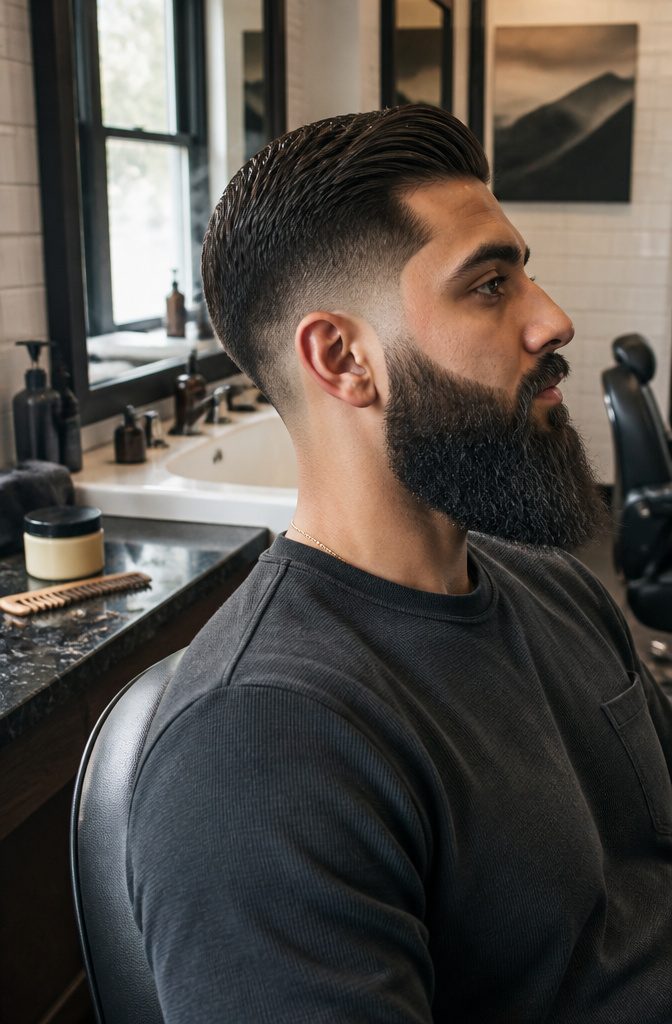
A full beard at 2 inches or longer holds its own against the tight taper and adds weight to the lower half of your face.
The contrast works: short sideburns that fade down to skin meet thick beard hair below the jawline, so the transition stays clean instead of blending into one shapeless mass.
If your face is round, the added length below the chin pulls the eye downward and balances the proportions.
The sideburn transition decides whether the look holds together or falls apart. Fading the sideburns to skin creates a smooth hand-off into the beard, and that break in texture is what keeps the combination from reading as overgrown.
Touch up the taper every 3 weeks to keep the fade sharp, and trim split ends on the beard once a month so the fullness stays dense rather than wispy at the ends.
Daily washing and combing keep the beard from matting, and beard balm holds stray hairs in place if you blow-dry downward on low heat.
4. Low Taper with a Long Beard
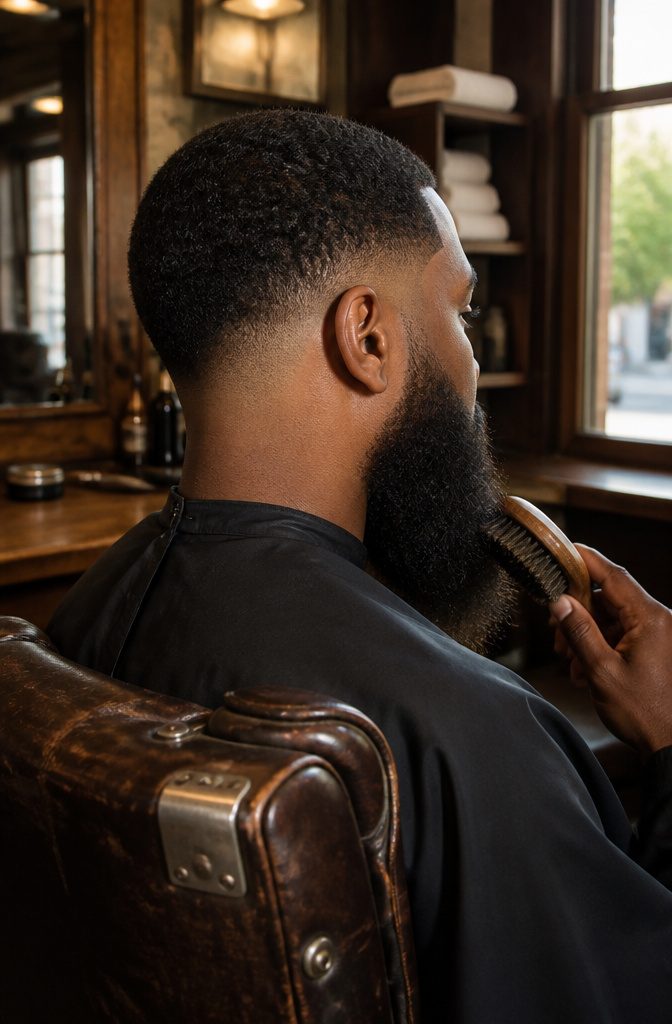
A long beard punishes a lazy sideburn. If the hair above the cheek stays short and the beard goes full right beneath it, you get a hard shelf where scalp hair stops and density starts.
Shorten the upper sideburn in steps so the full length only begins lower on the jaw. That gradient makes the beard look grown out of the haircut instead of stuck onto it.
A tight taper around the ears also keeps the head from reading too wide, which leaves the beard as the focus.
I’d keep the fade low here. Plan on a taper cleanup every 2–3 weeks, a monthly trim for split ends, and a daily pass with a boar bristle brush and a little balm.
5. Low Taper with a Medium Beard
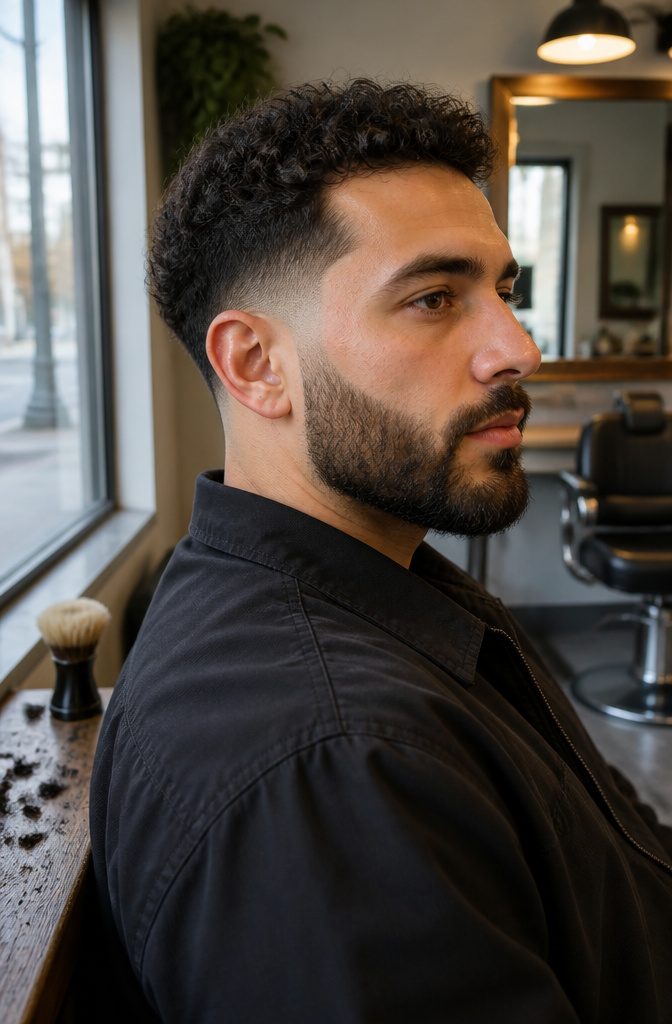
A beard at 1 to 2 inches is long enough to shape and short enough to keep the jawline readable, which is why it pairs so well with a low taper.
The taper keeps sideburns light, so the face doesn’t look wider than it is. I’d call it the best match for round or oval faces.
Ask the barber for a fade line that sits close to the ear and low on the neckline. That way the hair thins gradually into the beard instead of stopping at a hard edge.
Plan on a weekly taper cleanup. Fast growers may need one 2–3 times a week, and a missed visit shows quickly as a fuzzy blend.
6. Low Taper with a Patchy Beard or Intentional Gap
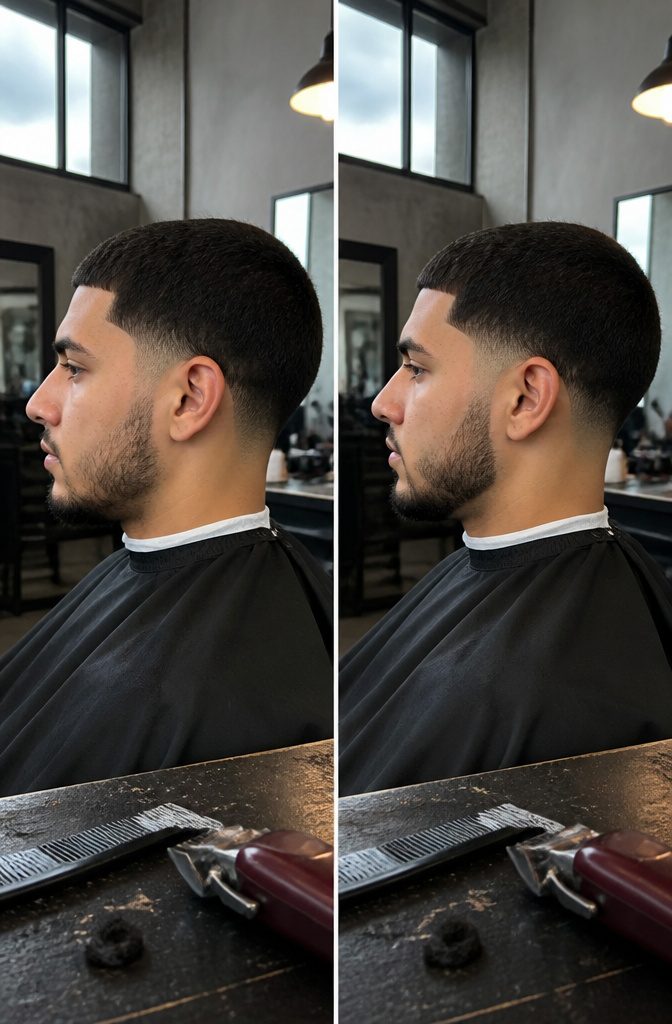
Patchy growth does not need to be blended if the blend will not hold.
A barber who knows what they are working with will shorten uneven patches to a consistent length, reshape the beard around the areas that grow thickest (goatee, beardstache, or jawline), or leave a deliberate gap between the taper and the beard rather than forcing a fade across thin coverage.
A clean intentional break reads as a design choice. A forced fade over sparse growth just looks like the barber tried something that did not take.
The low taper keeps the sideburn short enough that the disconnect stays subtle, and no haircut changes the way your beard grows. Shape around what you have.
7. Low Taper with a Goatee or Circle Beard
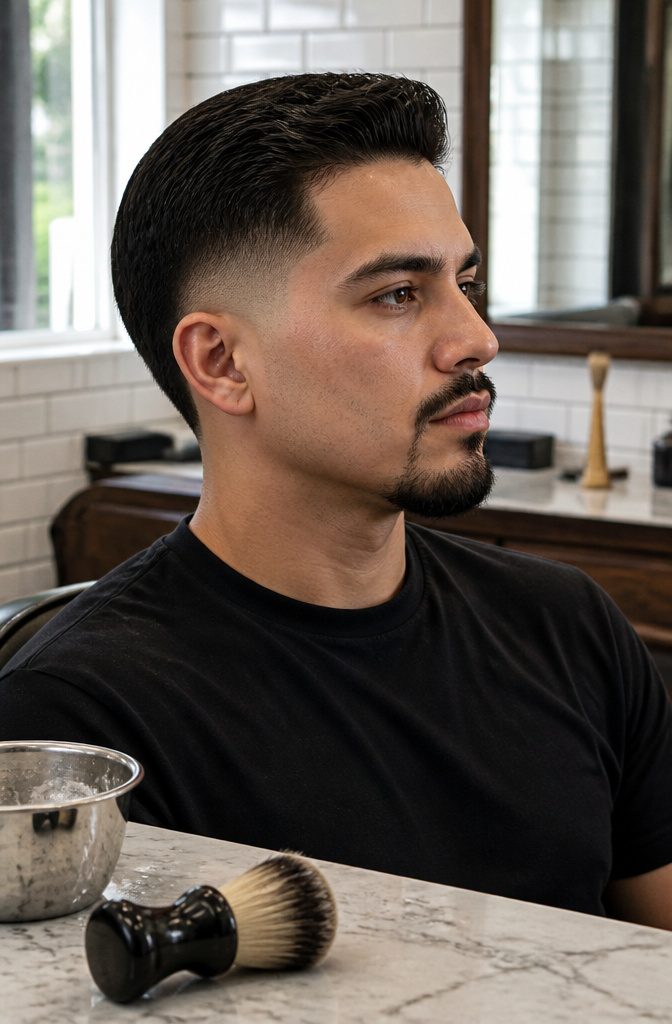
A goatee or circle beard keeps all the definition around the mouth and chin while the cheeks stay bare or lightly stubbled.
The sideburn is trimmed short or blended out entirely where a low taper would otherwise carry hair down to meet the beard, because there is no beard to meet.
That perimeter choice matters more than it looks. A sideburn that ends too abruptly reads as unfinished, but one that trails down onto clean cheeks contradicts the entire logic of the goatee.
The low taper keeps the transition subtle, fading out near the temple and letting the sideburn taper to nothing before it reaches mid-ear.
The pairing suits faces that want an angular chin without committing to full cheek coverage, and it solves the practical problem when cheek growth is patchy or unwanted.
Clean cheeks also mean less daily upkeep than a full beard, though the goatee perimeter still needs regular shaping to hold its edge.
8. Low Taper with a Beardstache or Mustache
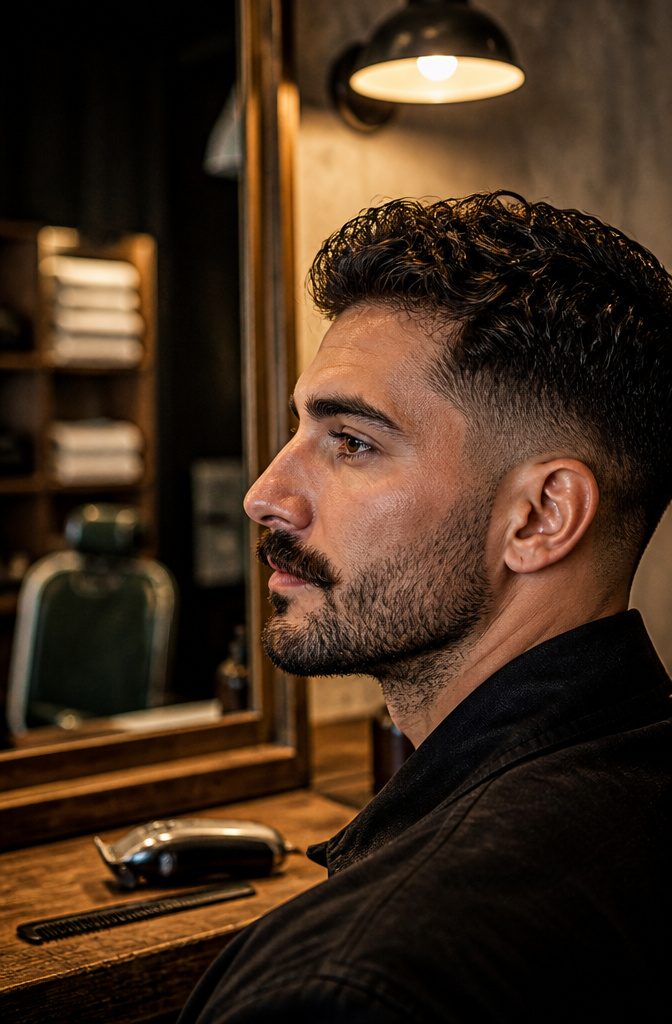
A beardstache hands the mustache the job of focal point, so the taper beside it should stay quiet.
Keep the fade subtle and the cheeks short, because two competing focal points is one too many. A bold, high fade would fight the mustache for attention, which is why I’d stay low here.
Down the cheeks, the fade should melt into a soft gradient, not a hard edge.
If the beard normally sits at a 4, a 3 cuts an inch-long strip along the cheek line, then a 2 goes back over half the width of that strip.
Leave the mustache connectors untouched, and cut with the grain so the gradient stays gentle.
9. Low Taper with a Textured Crop or Fringe
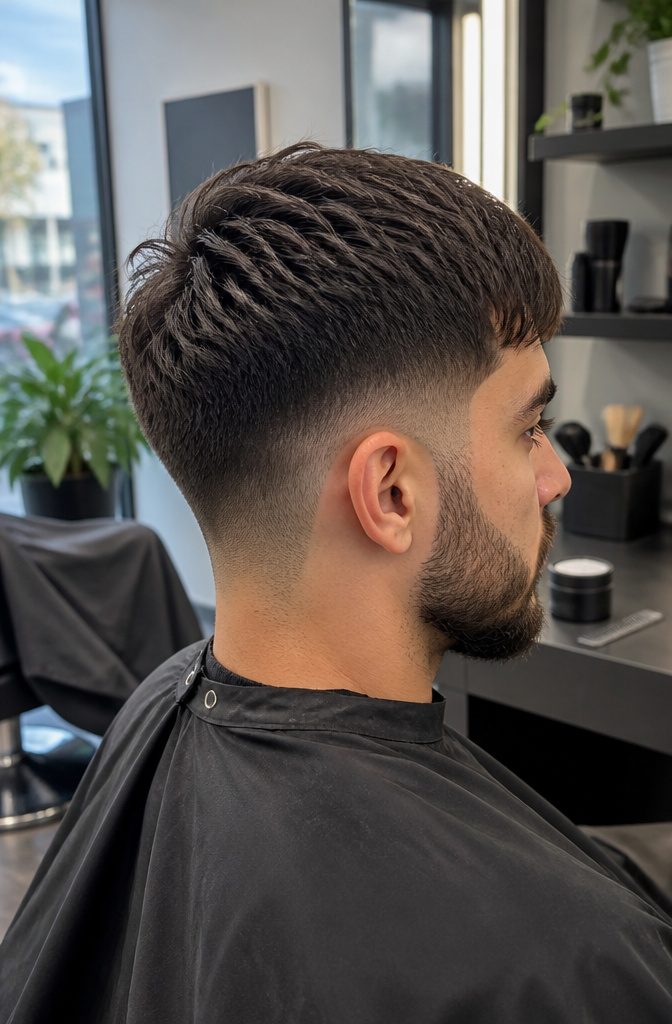
A textured crop or fringe gives the low taper something to play against: the sides stay close and tidy, and the top carries the movement.
Sideburns step down into a slightly denser cheek and jaw, so a short beard reads as a continuation of the taper and balances the forehead coverage a fringe creates.
For texture without weight, work a dime-sized amount of sea salt spray or matte powder into dry hair. For a fringe, I prefer powder on damp hair, pushing strands forward with your fingers.
Budget a minute each morning, since this top doesn’t fall into place on its own. Book a trim every 3 weeks, or the top goes flat and the fringe drifts into your eyes.
10. Low Taper with Curly, Coily, or Afro-Textured Hair
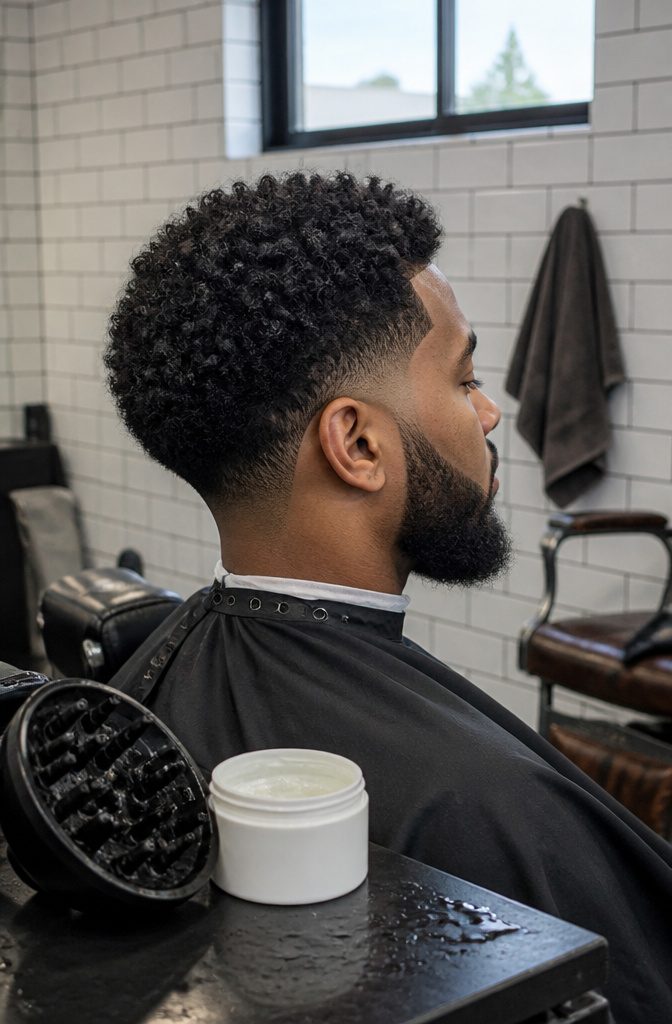
The curl pattern stays untouched on top, so all the structure comes from two clean edges: the low perimeter and the beard outline.
Keep the taper genuinely low, because going higher fights the bulk near the crown instead of framing it. Ask for scissors on top so the curls don’t flatten.
After washing, work in a lightweight curl cream, then air dry or use a diffuser on low heat to hold the shape and cut frizz.
On coily hair I’d run the sideburn straight into the beard outline so the two edges read as one frame, and moisturize the beard against dryness. Cleanups run every 3–4 weeks.
11. Low Taper with Wavy Hair
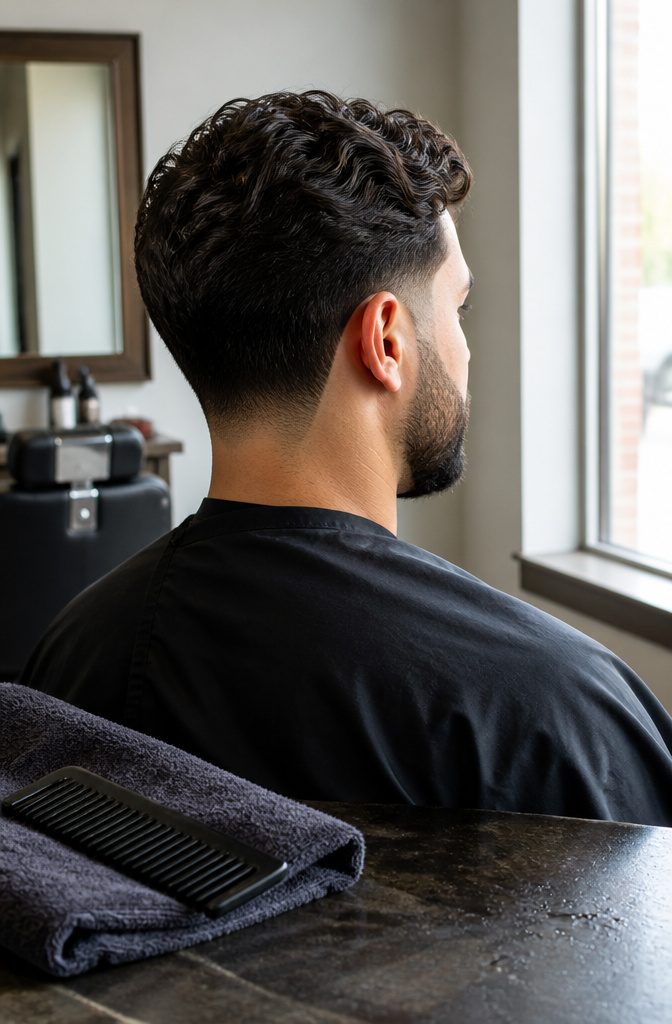
Wavy hair paired with a low taper adds natural movement without needing heavy styling products.
The waves sit naturally on top while the taper cleans up the nape and ears, stopping the sides from flaring out. A short-to-medium beard anchors the look and keeps the silhouette balanced.
Waves shrink less than curls, so the contrast between the longer top and the faded sides reads sharper. The sideburn transition stays subtle when the beard is evenly blended and kept shorter rather than long or patchy.
For styling, work a flexible cream into damp hair, scrunch lightly, and let it air dry. Beard cream softens facial hair without weighing it down.
This works best for naturally wavy or S-pattern hair. Plan on barber visits every three to four weeks to keep the wave shape intact and the edges sharp.
12. Low Taper with Straight Hair
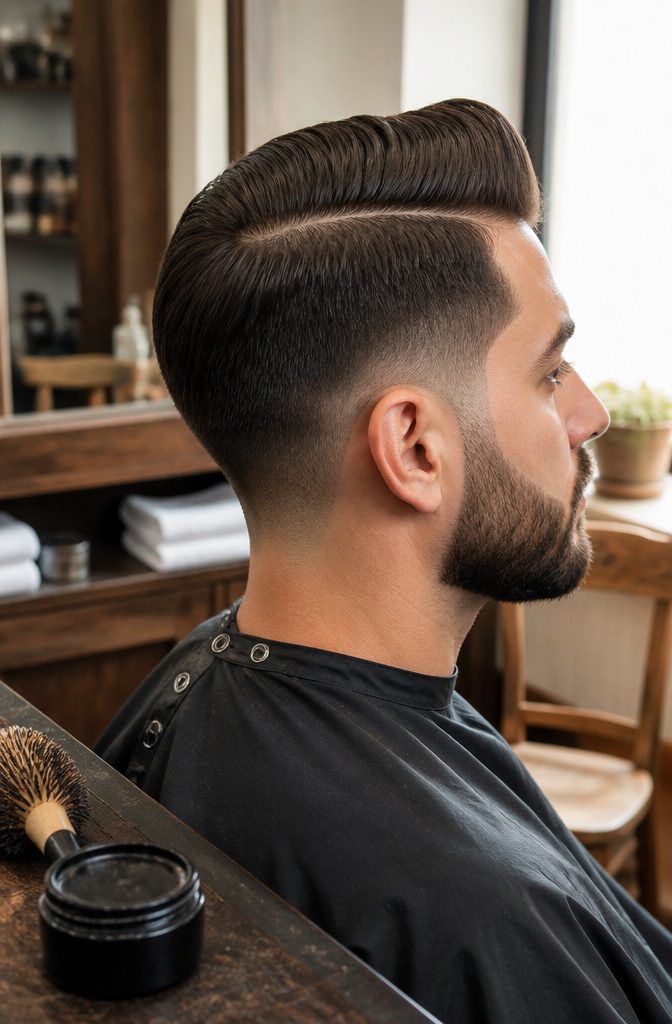
Straight hair sits flat against the head, so the line where the low taper meets the beard reads as sharper and more defined than it does with wavy or curly textures.
That clarity cuts both ways: when the blend is smooth, the result looks tailored and deliberate. When the barber misses the transition or leaves guard lines, straight hair shows every one.
On top, straight hair combs, parts, and slicks back without much resistance, which makes morning styling faster than it is with coarser textures.
The challenge is volume. Without texture to lift it, straight hair can fall flat at the roots by midday.
A blow-dryer and round brush at the roots before styling solves that, and a light wax or pomade seals the shape without stiffness. Skip the dryer and the style loses height within an hour or two.
Maintenance runs tighter with straight hair.
Growth shows cleanly along the taper line, so the fade needs a cleanup every two to three weeks to stay crisp. Let it go a month and the line blurs into the beard instead of framing it.
13. Low Taper with Thick Hair
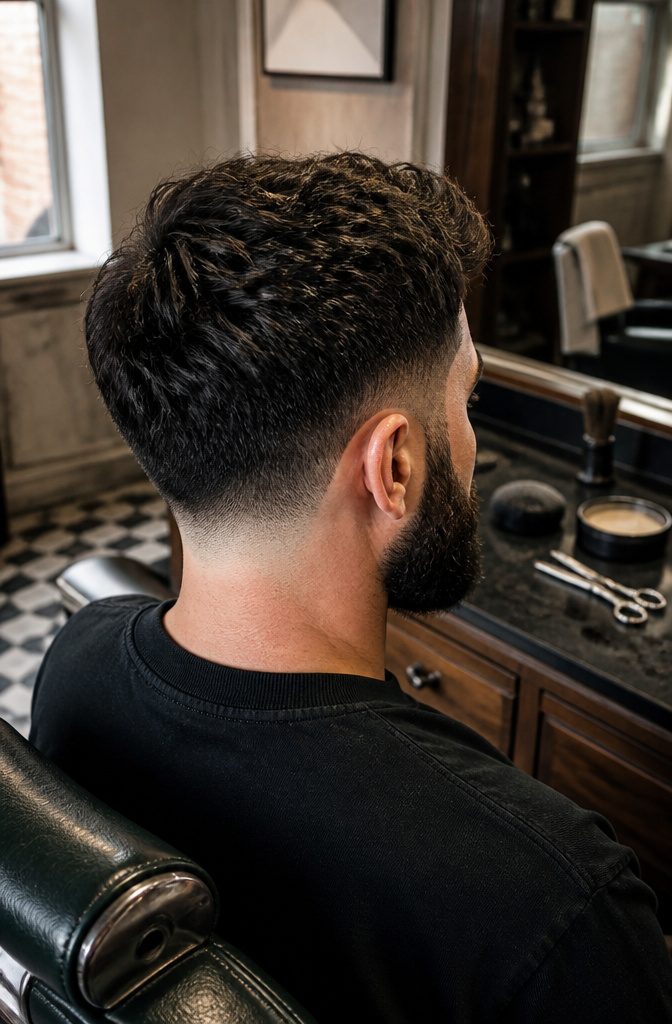
Thick hair adds weight that changes how a low taper reads, particularly where the fade meets the beard.
Without thinning or texturizing through the top and crown, the transition from dense hair to clean skin can look abrupt rather than gradual.
A barber who knows thick hair will remove bulk from the top during the cut, either by point-cutting or using thinning shears, so the taper stays smooth instead of stacking into a shelf above the ears.
The beard line needs the same attention. If facial hair is dense, the low taper keeps sideburn bulk from overwhelming the jawline and creates a clean bridge into a heavier beard shape.
Thick facial hair grows fast along the cheek and neck lines, so plan to trim beard lines every 3 to 5 days to hold the shape.
A matte clay with strong hold controls the top without adding shine, and beard butter softens coarse strands while keeping the skin underneath from drying out.
14. Low Taper with Thin or Fine Hair
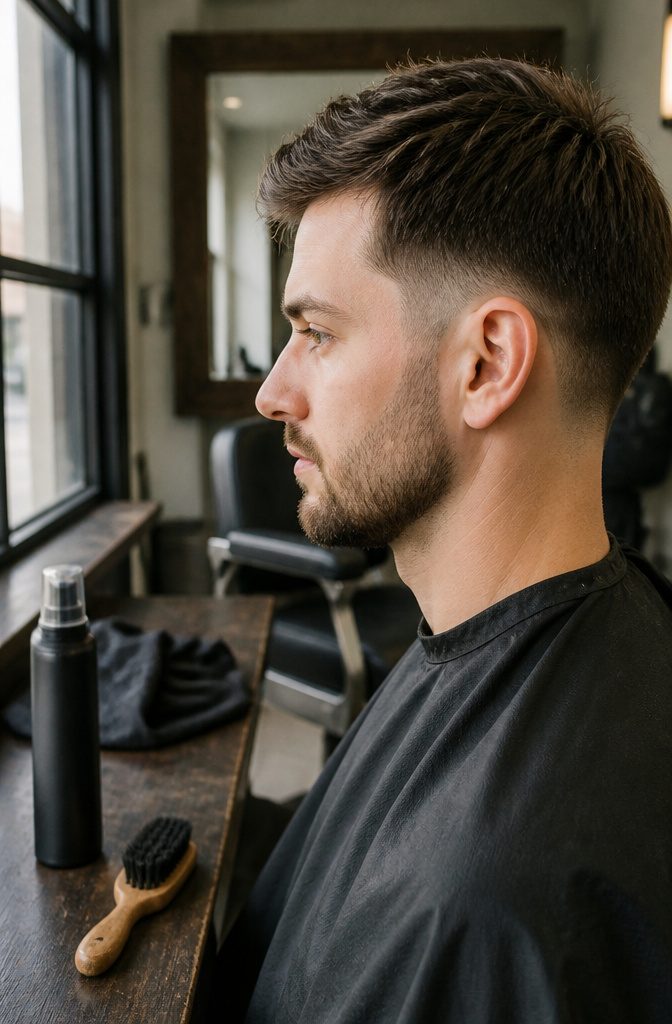
High fades make fine hair look sparser, so I skip them. A low taper keeps density around the upper sides, which is where fine hair needs the help.
Ask your barber to work up from a longer guard and stop early, because every extra pass over the temple thins the area the taper is meant to protect.
Keep extra length on top, since it creates the look of volume, and the shorter sides make it read fuller by contrast.
The beard handles the rest. A light beard pulls attention down to the jawline and away from the crown, and a neat line adds structure.
Style with thickening powder or a lightweight mousse; heavier products weigh fine strands down. Book a cleanup every 3 to 4 weeks.
15. Low Taper with a Line-Up
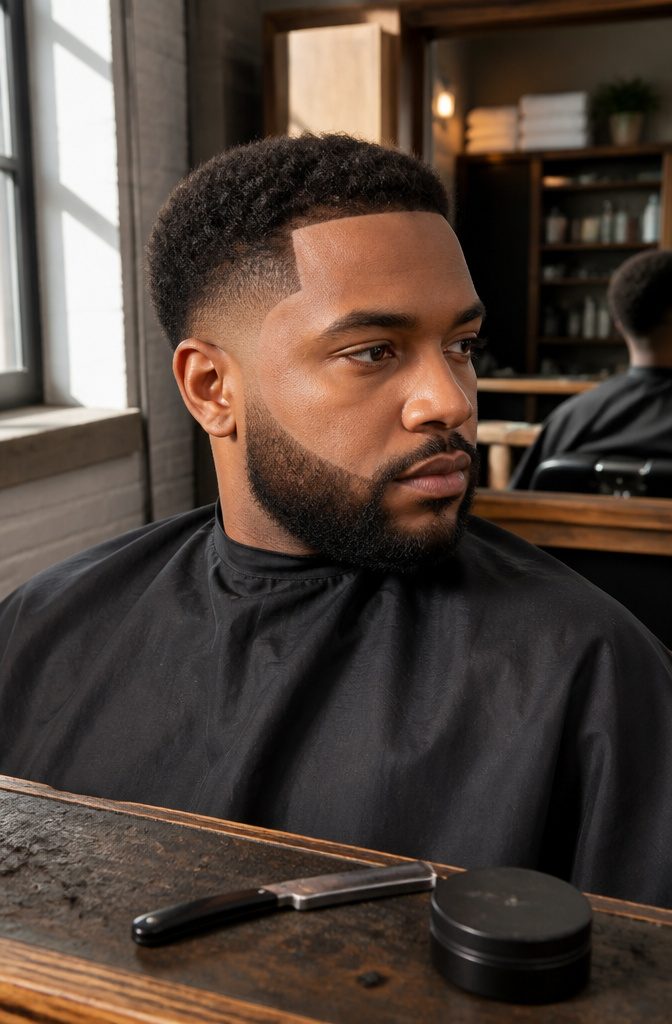
A line-up draws a hard, geometric edge across the forehead and temples, then carries it down the cheek.
Against the soft gradient of a low taper, that edge reads even sharper. Temple corners turn square, the hairline stops wandering, and the beard below looks like part of one shape.
Edge control pomade or hairspray locks the line in place for the day, and a razor blade keeps the beard lines crisp.
Book a touch-up every week or two, because the line-up is the first thing to blur as hair grows back.
Heavy growers may need the edges cleaned 2–3 times a week. It suits every hair type, though I’d rank it highest for coily or thick hair, where the contrast shows most.
16. Low Taper with a Hard Part
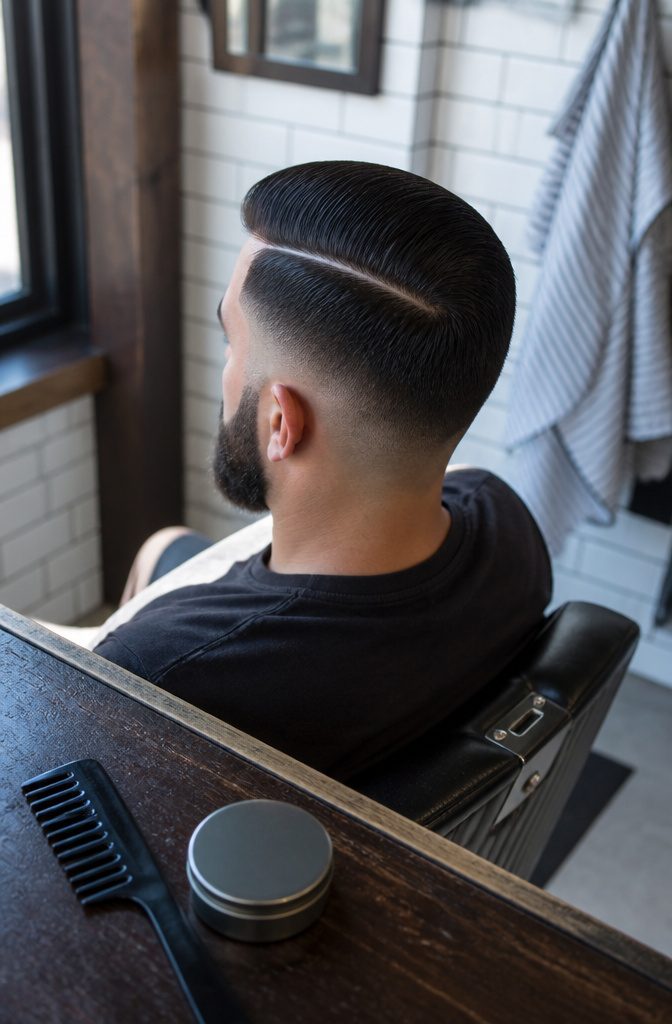
A hard part is a line shaved straight into the scalp to separate the top from the sides.
On a low taper with a trim beard, it gives you a classic side part with a sharper, more modern edge, and the bare skin of the line repeats the clean edges of the beard below it.
I’d choose it for straight, wavy, or fine hair, where the line stays visible and the comb tracks cleanly away from it. Work in a high-shine pomade and comb the hair away from the line for a sleek finish.
Upkeep is the cost.
Re-shave the hard part every 2 weeks to keep the line crisp and defined. Let it go longer and stubble softens the edge, which is the whole reason you cut it in.
17. Low Taper with a Slick Back
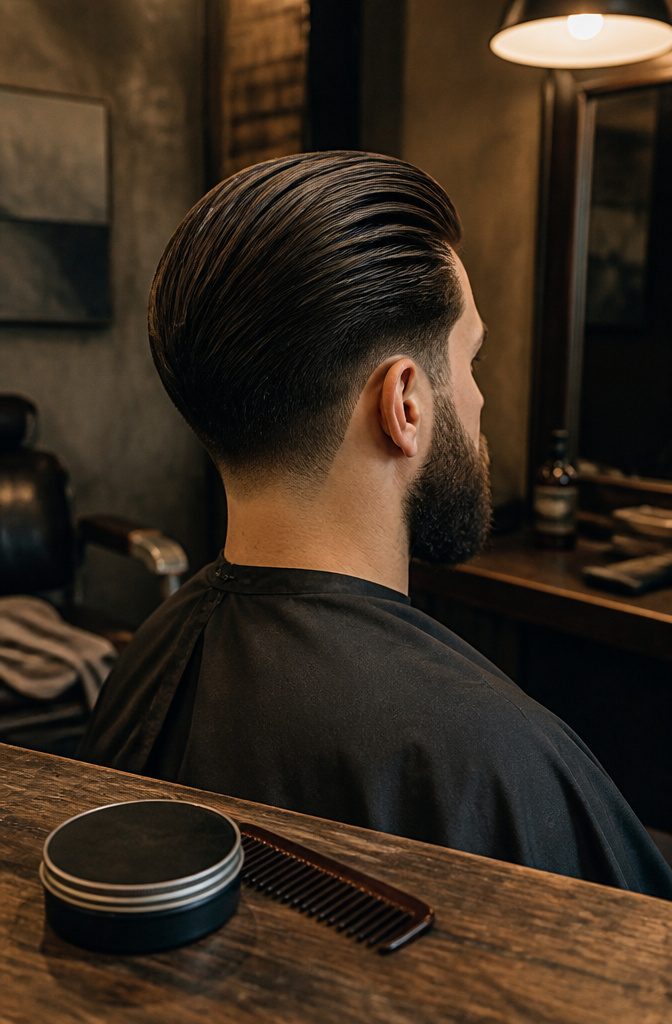
A slicked-back top gives the low taper a dressed-up edge, and the way you polish it sets the contrast against the beard. Blow-dry hair backward after towel-drying, then apply medium-shine pomade from front to back with a wide-tooth comb.
Pomade holds the shape and adds gloss; clay keeps it matte if the shine reads too formal. The smooth, combed surface up top plays off the natural texture in a well-kept beard better than anything messy or piecey would.
This look leans on medium to long straight or wavy hair. The fade sits low enough that sideburns and neck stay clean without adding bulk, and the line blends straight into the beard.
You’ll need a barber visit every three weeks to keep sideburns and the neckline from creeping up and breaking the profile.
18. Low Taper with a Quiff or Pompadour
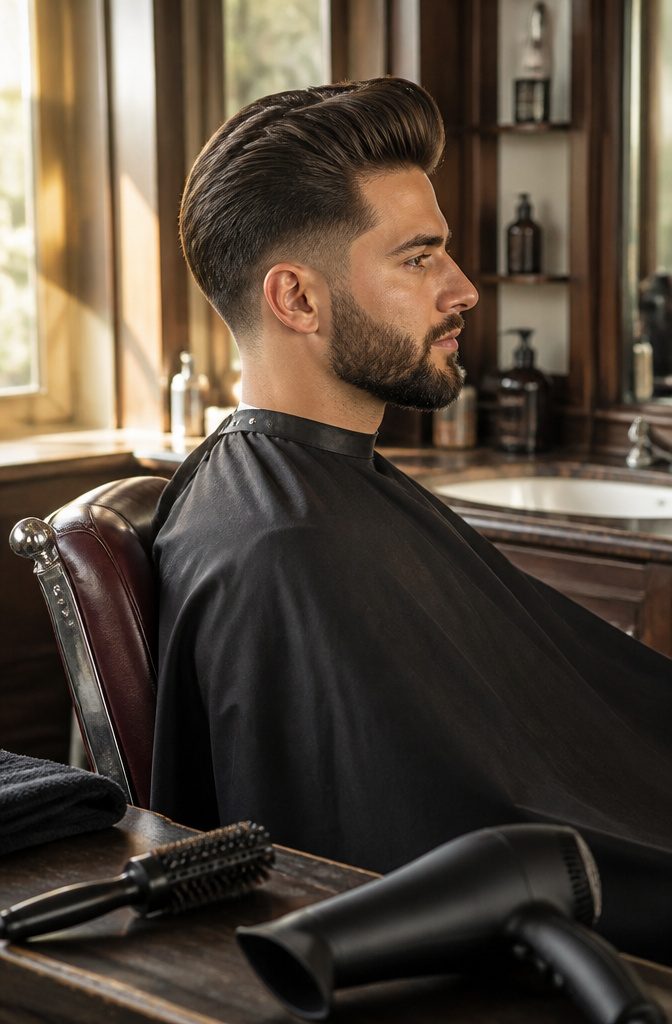
Volume on top balances a low taper and beard by creating a tall vertical line that lengthens the face and draws attention upward.
A quiff sweeps hair back and up from the forehead in a controlled wave, while a pompadour lifts the front section higher and rolls it back in a more pronounced arc.
Both styles trace their roots to 18th-century European court fashion and surged in popularity again in the 1950s with rockabilly and greaser subcultures.
Styling either look requires a round brush and a blow dryer.
Lift small sections at the root while directing heat upward and back, then set the shape with a lightweight hold product. Mousse or a styling cream works better than heavy pomade here, since you want lift without stiffness.
The beard below can run short or full depending on how much contrast you want, but keeping it groomed prevents the combination from looking unbalanced or too busy.
19. Low Taper with Messy Hair
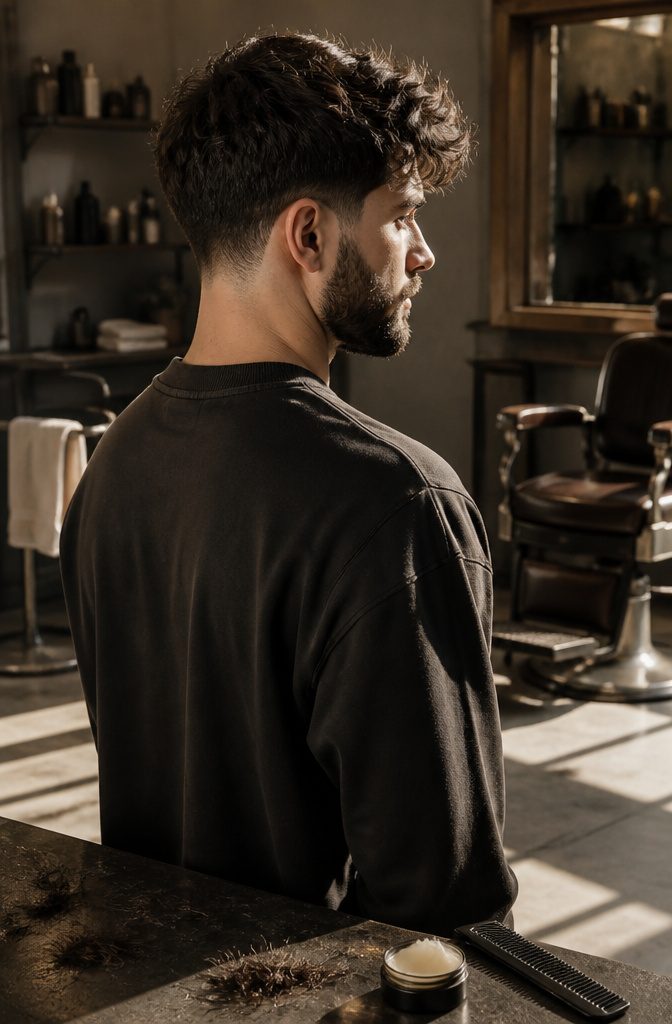
Bedhead on top works with a low taper because the hairline stays crisp around the ears and nape, so the mess looks like a choice.
A groomed beard does the same job from below and keeps the loose top from looking lazy.
Rub a pea-sized amount of styling paste between your palms, then work it through dry hair with no pattern.
Combing it in one direction pulls the look toward neat, which defeats the purpose. I’d stop at one pea, because extra product weighs the top down.
This suits wavy, straight, and thin to medium hair best.
Book a cleanup every 3 to 4 weeks. Once the taper grows fuzzy, the top stops looking intentional and just looks unkempt.
How the Haircut Connects to the Beard
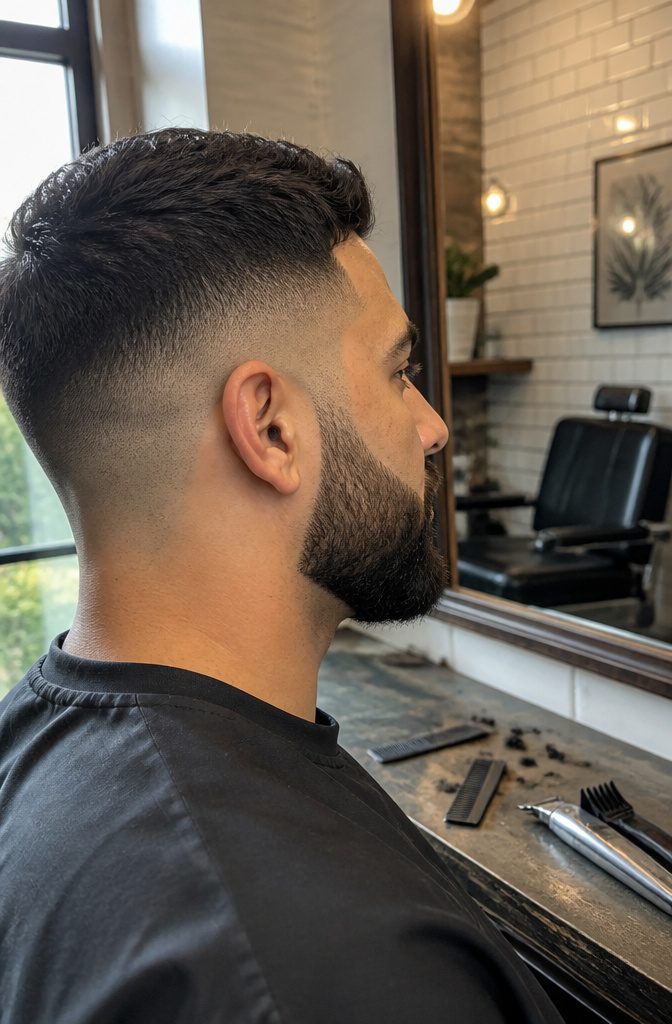
The gradient at the sideburn is what makes this pairing work.
A taper fade drops the hair length gradually toward the skin, and the barber fades that same transition back up into your beard rather than stopping at a hard line.
That blend keeps the sides of your face looking intentional and shaped, not like two separate grooming choices that happen to meet at the ear.
The mistake that breaks the look is an abrupt sideburn shelf, where the length drops in one step instead of several.
You get a ledge where the haircut stops and the beard starts, and no amount of careful blending below will hide it. Heavy cheek hair sitting directly against a tight taper produces the same collision.
The sideburn area needs to fade down and then fade back up, creating a gradient that lets the facial hair look like it belongs with the cut above it.
Choosing Fade Height and Beard Shape for Your Face
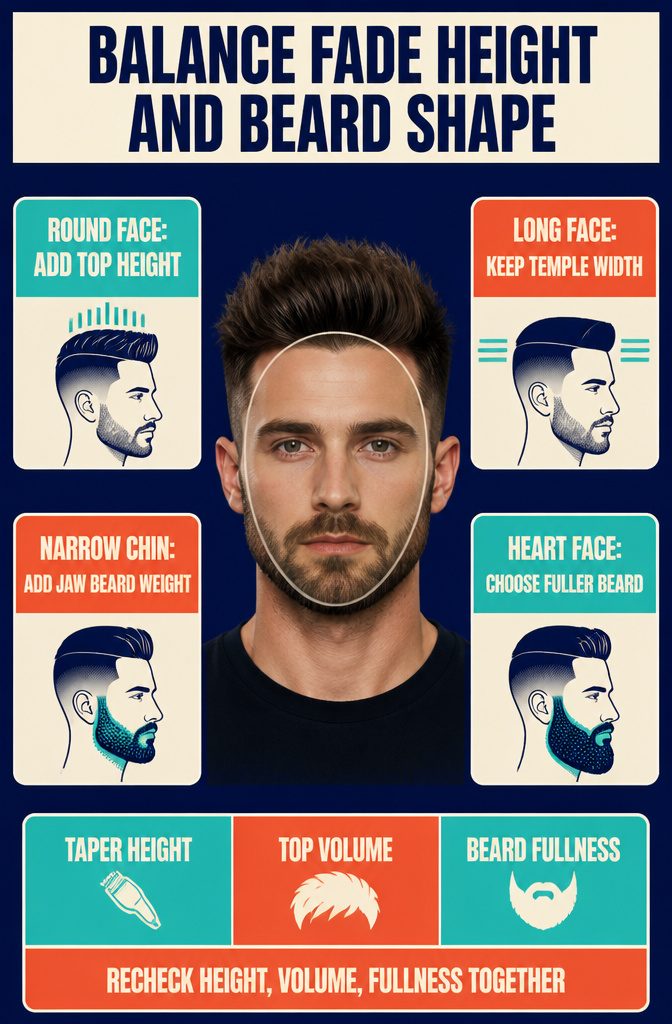
Face-shape charts give your head a name and not much else.
Three things decide the fit: how your hair behaves, how your beard actually grows, and the outline you want. Sort those and the placement adapts to almost anyone.
A rounder face gains length from more height on top.
A longer face needs width kept at the temples, which is why I’d lean toward a low taper there. A narrower chin squares off with beard weight along the jaw.
A heart-shaped face, with a broad forehead and narrow chin, gets the same fix from a fuller beard. Taper height, top volume, and beard fullness work as a set, so change one and recheck the other two.
Upkeep Schedule and Products
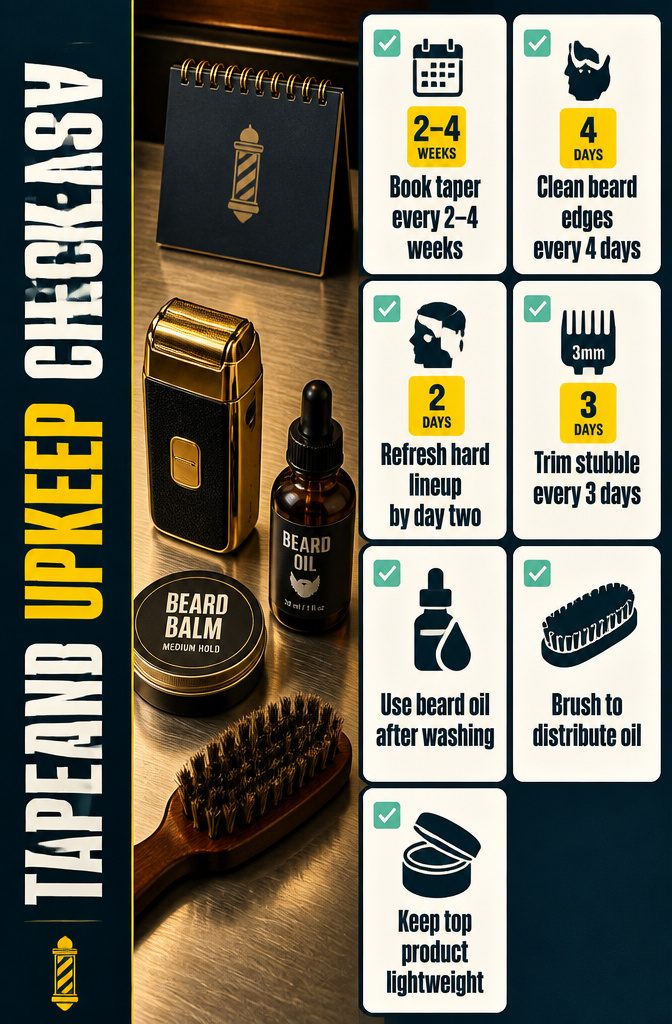
The taper and the beard run on different clocks, and neither one aligns with the other.
Most guys book the barber every 2 to 4 weeks for the taper, depending on how fast hair grows and how tight the fade was cut.
A mid taper holds its shape longer than a high skin fade, which starts looking soft after ten days.
Stubble sits at the lowest-effort end: trim it every 3 days with a 3mm guard, edge the neckline with a foil shaver, and the whole routine takes less than five minutes. Beardlines need more frequent attention.
Cheek and neck edges blur fast, so I clean them up every 4 days. If you wear a lineup that connects into the beard, that hard line shows blur by day two.
Product-wise, the short list works:
- Beard oil daily, right after washing, to keep the hair soft and the skin underneath from flaking
- Beard balm for hold and shape on anything past stubble length
- Matte pomade or clay on top, lightweight formulas only so the fade stays clean and nothing weighs it down
- Boar bristle brush to train the beard and distribute oil evenly
- Foil shaver for neck and cheek edges between barber visits
Briefing the Barber and Checking the Result
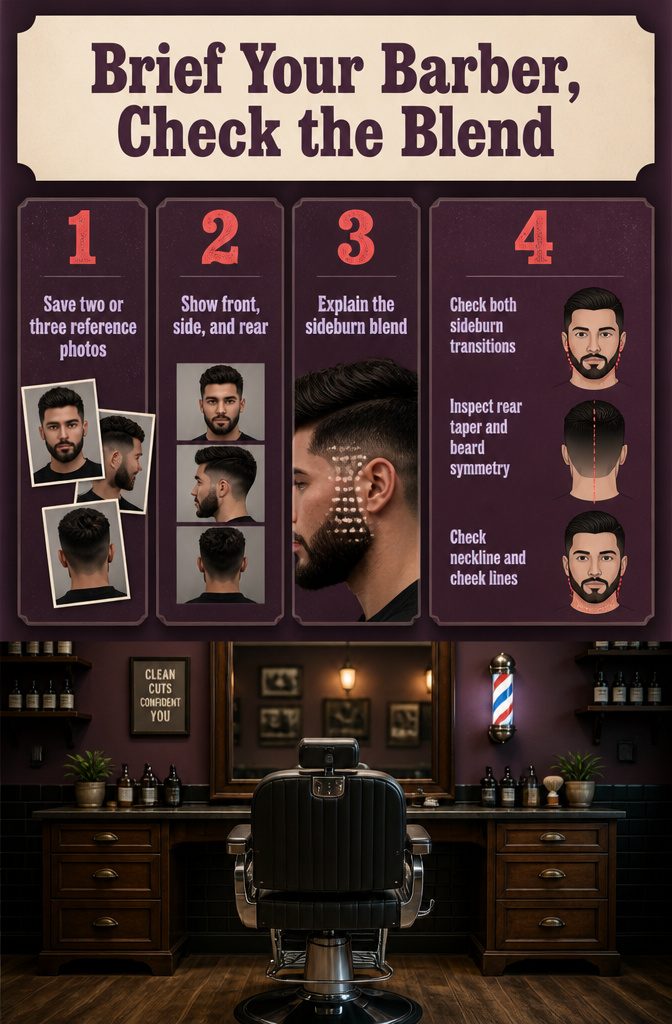
Save two or three reference photos that show front, side, and rear views of the fade height and beard shape you want.
Photos remove guesswork. The barber sees your goal in seconds instead of translating vague requests like "clean on the sides" into a guess about guard numbers and blend zones.
The sideburn is where the haircut meets the beard, and that gradient decides whether the whole thing reads as one intentional shape or two separate ideas that happen to share a face.
A low taper fades the sideburn area down toward skin and then fades it back up into the beard. That connection keeps the sides of your face looking lean while the beard adds fullness to your jawline and chin.
Before you leave the chair, check both sideburn transitions, the rear taper, beard symmetry, and where the neckline and cheek lines land.
Styling product and a walk home make small asymmetries much harder to spot, and much more annoying to live with for three weeks.
Blending the Taper into the Beard at Home
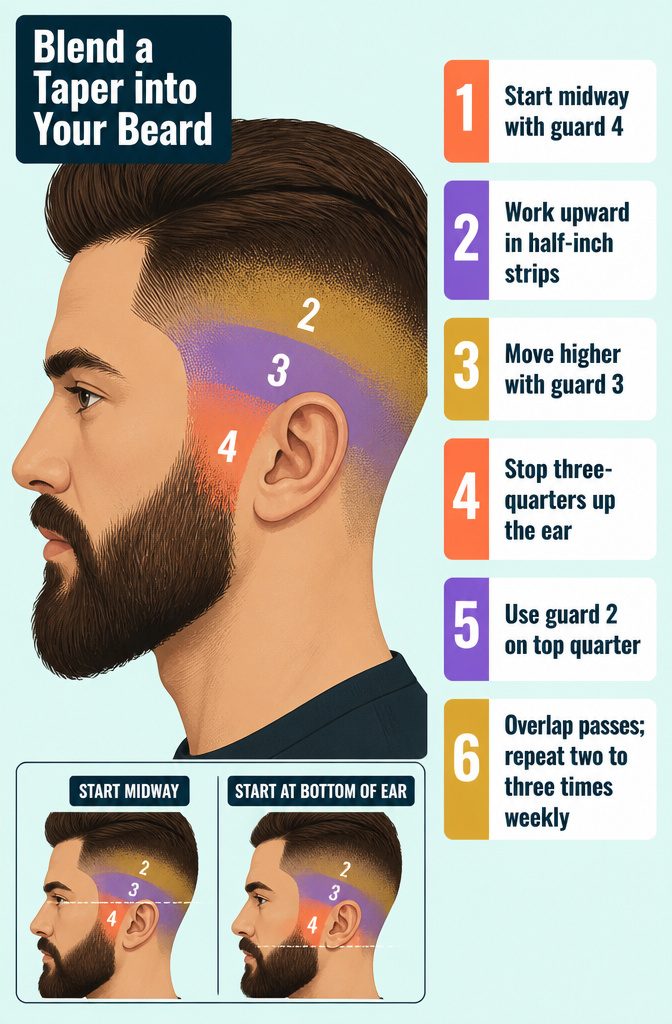
- Start at the midpoint of the sideburn with a guard one number down from your beard length, such as a 4. Work upward in half-inch strips until you reach just below the top of the ear.
- Drop to the next guard, a 3, and start a little higher than where the 4 began. Stop about three-quarters of the way up the ear.
- Use a 2 on the top quarter so the length keeps shortening as it meets the hair.
- Overlap each guard slightly onto the last, and run the sideburn straight into the beard so no hard line shows where one length ends.
- For a lower fade, repeat the same steps but start at the bottom of the ear instead of halfway up the sideburn.
- Go slowly, since this is the part of the face everyone sees. Clean precision takes practice, and I’d expect to repeat the pass two to three times a week until your hand learns it.
Avoiding the Three Common Blend Mistakes
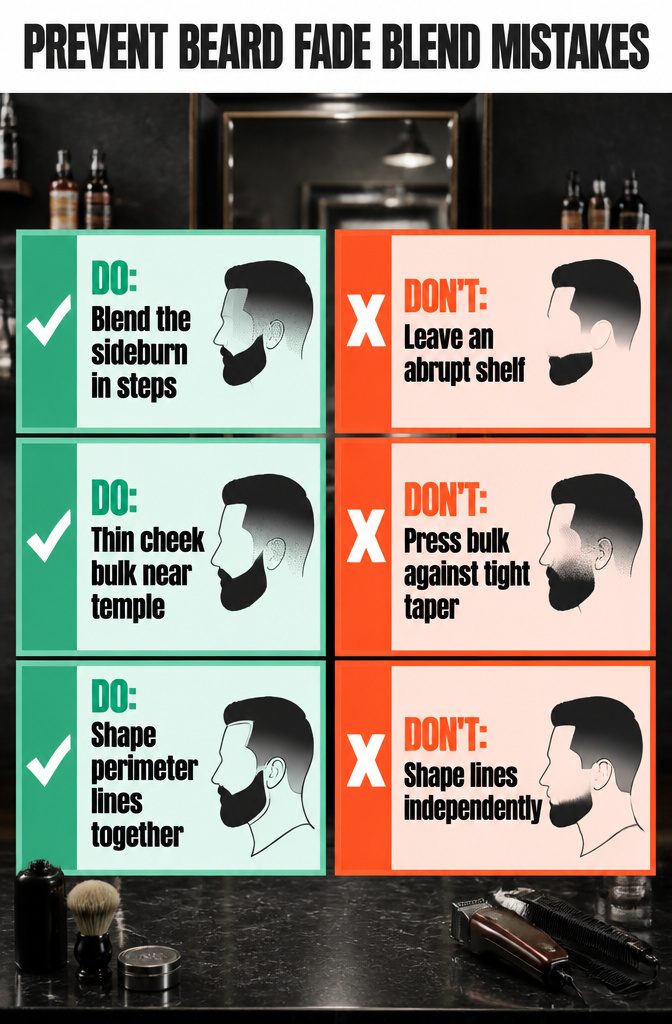
Three mistakes cause nearly every disconnected look, and a clean fade rescues none of them:
- Abrupt sideburn shelf. The length drops in one step instead of several, leaving a ledge where the haircut stops and the beard starts. I’d rank it first, since it causes most disconnected looks.
- Beard bulk at the temple. Heavy cheek hair sitting directly against a tight taper makes an edge instead of a gradient. Blending lower down can’t hide that collision above it, so thin the cheek hair before anything else.
- Mismatched perimeter lines. If the hairline, cheek line, and neckline are shaped without reference to each other, the result looks like two haircuts stitched together at the ear, even when the fade itself is flawless.
Skin Irritation Around the Ears, Neckline, and Cheek Line
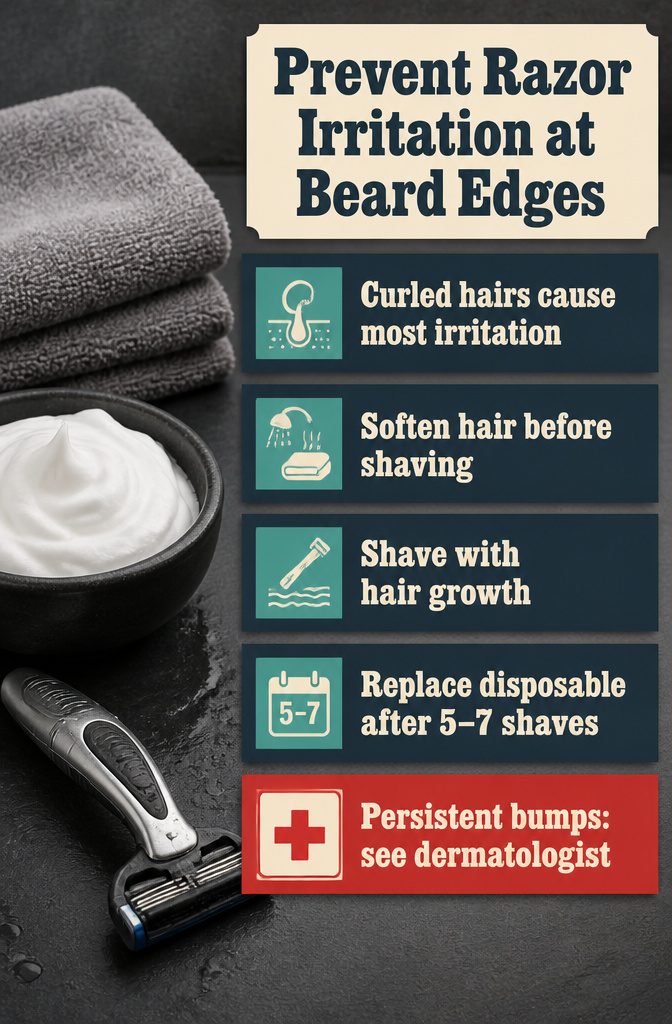
Shaved hair that curls back into the skin causes most of the irritation around the ears, neckline and cheek line.
The American Academy of Dermatology advises softening the hair first: shave at the end of a shower, or hold a warm, damp washcloth on the area.
Shave in the direction the hair grows with a moisturizing shaving cream, finish with a cool, damp washcloth, then moisturize. I’d treat the razor swap as non-negotiable: replace a disposable after 5–7 shaves and store it somewhere dry.
Anthony Rossi, MD, FAAD, notes that untreated razor bumps can scar. If they persist after you change how you shave, see a dermatologist, not your barber.
Frequently Asked Questions
What is a taper fade with beard?
A taper fade with beard is a haircut that gradually shortens the hair toward the ears and neckline, then blends into the beard at the sideburns.
The fade creates a smooth gradient that connects the scalp hair to facial hair without a hard line. It works with any beard length from stubble to full.
Can you get a taper fade with a full beard?
Yes. A full beard at 2 inches or longer balances the tight taper and adds weight to the lower half of your face.
The contrast between short sideburns that fade to skin and thick beard hair below the jawline keeps the transition clean. Touch up the taper every 3 weeks and trim split ends once a month.
How often should you get a taper fade?
Most people need a barber visit every 2 to 4 weeks to keep the fade sharp.
Fast growers and tighter fades blur sooner, sometimes within 10 days. The beard runs on a separate schedule: trim stubble every 3 days, and clean cheek and neck lines every 4 days.
What beard suits a taper fade?
Almost any beard style works, from 1mm stubble to a full beard over 2 inches, as long as the edges stay clean.
The sideburn gradient decides whether the pairing looks intentional or disconnected. Patchy beards can be shaped around stronger growth areas or left with an intentional gap rather than forced into a blend.
How long does a taper fade last?
A taper fade holds its shape for 2 to 4 weeks before the gradient softens and the line blurs.
A mid or low taper lasts longer than a high skin fade, which starts looking soft after 10 days. Growth rate and how tight the fade was cut both affect how long it stays crisp.
What products are best for a taper fade with beard?
Beard oil daily after washing keeps the hair soft and prevents flaking.
Beard balm adds hold and shape for anything past stubble length. Matte pomade or clay works on top without weighing the fade down, and a boar bristle brush trains the beard and spreads oil evenly.
Can a low taper fade work with a patchy beard?
Yes. A barber can shorten uneven patches to a consistent length, reshape the beard around areas that grow thickest like a goatee or beardstache, or leave a deliberate gap instead of forcing a fade across thin coverage.
A clean intentional break reads as a design choice, and no haircut changes the way your beard grows.