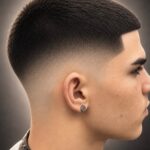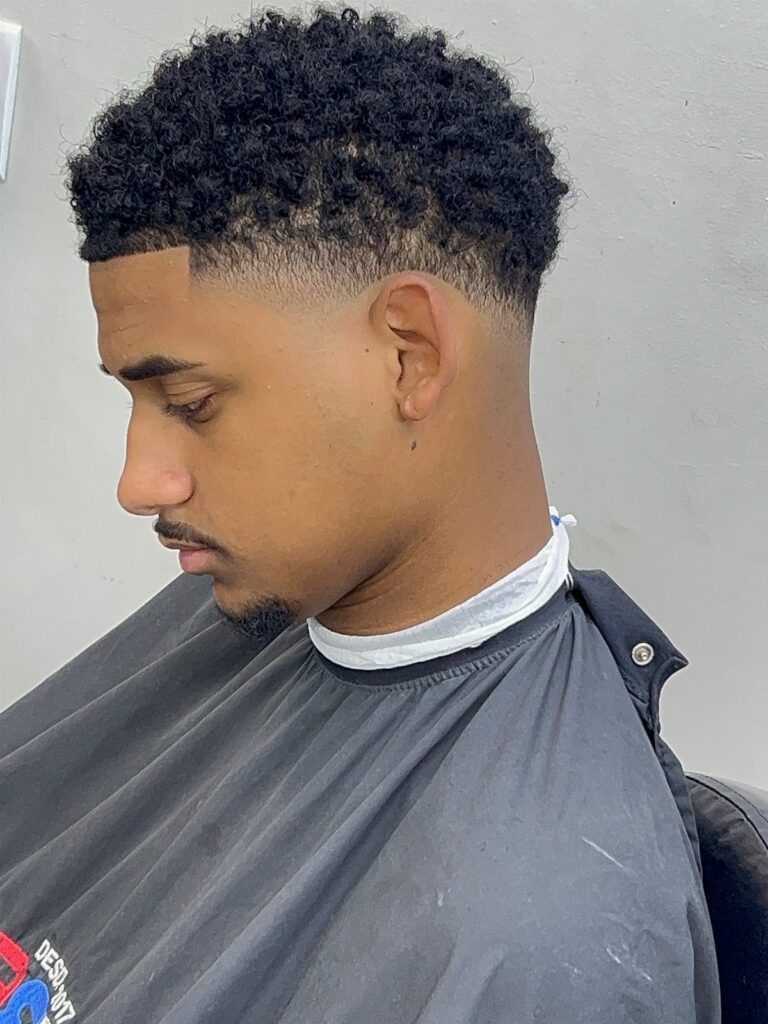
The taper can start at temple height or just above the ears, and the top ranges from a short buzz to dreads or twists long enough to tie back.
1. Afro Taper
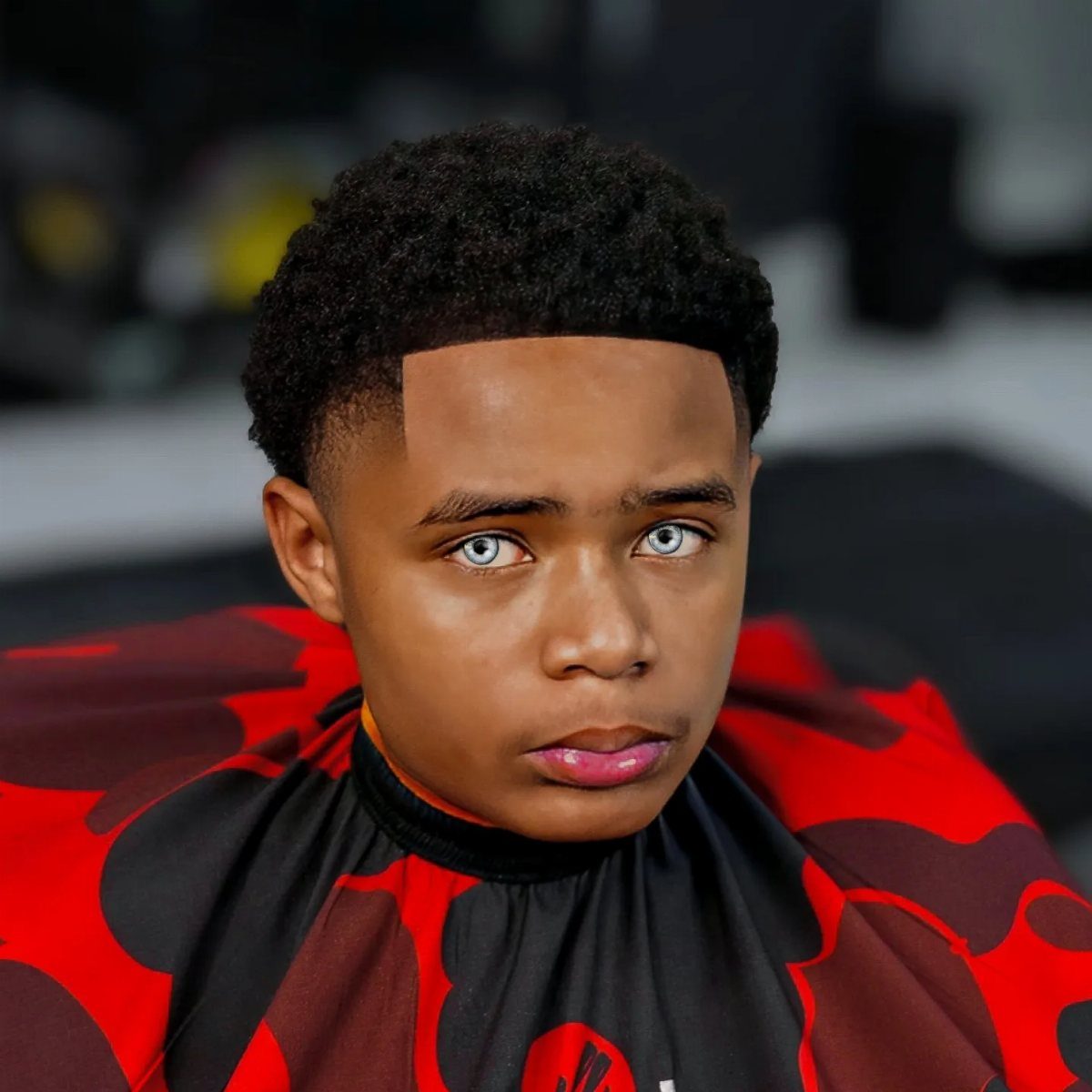
A rounded, full afro on top contrasts with clean, tapered sides and edges. The shape preserves natural volume while the taper keeps the sides and back neat enough for formal settings.
Moisture is the deciding factor here.
Curls need leave-in conditioner or a curl cream to hold shape without frizz, and the tapered sections dry faster than the top. A sponge or pick lifts the crown after drying.
The taper line needs a touchup as it grows. Between visits, the top fills in without changing the silhouette.
2. Pompadour Fade
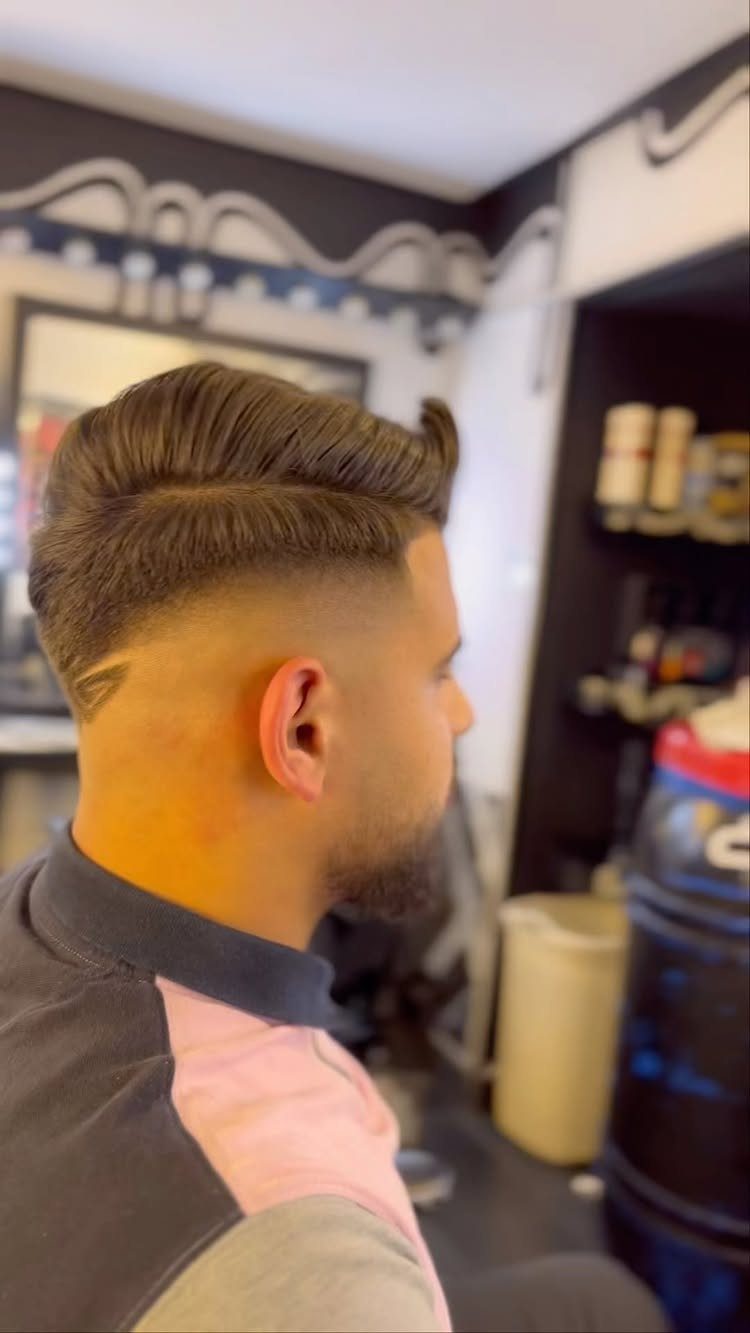
A voluminous front is brushed upward and away from the face above the high fade. The height at the front draws attention upward, which lengthens the appearance of the face.
This one asks for daily styling. Hair needs to be damp, worked with a blow dryer on medium heat while brushing upward, then held with pomade or a medium-hold gel.
Round or square face shapes benefit most from the vertical lift. The fade keeps the sides tight, so all the weight sits at the top and front.
3. Textured High Taper Fade
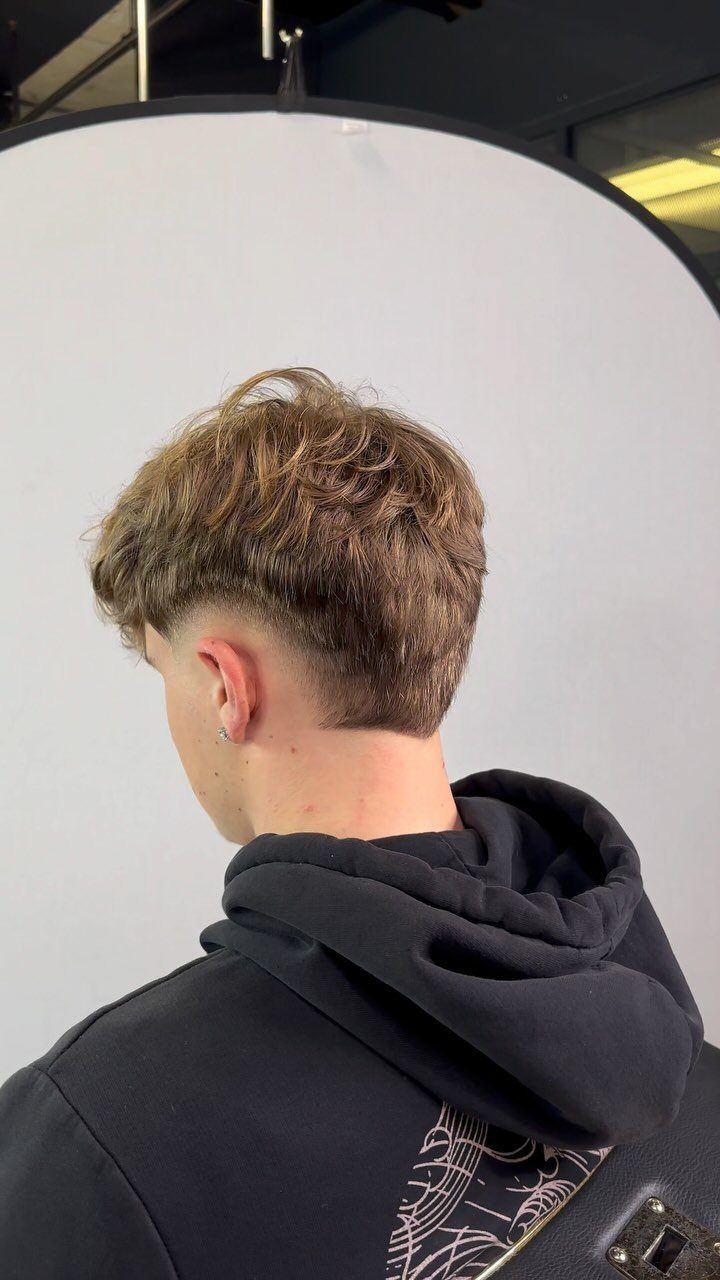
Choppy or tousled top layers add visible separation and movement above clean tapered sides. The texture comes from point cutting or razoring during the cut, not from styling product alone.
Styling time is short. A matte clay or fiber paste worked through damp hair gives enough hold to keep the pieces apart without shine.
Fine or medium-density hair reads the texture more clearly than thick, coarse strands.
4. High Taper Fade
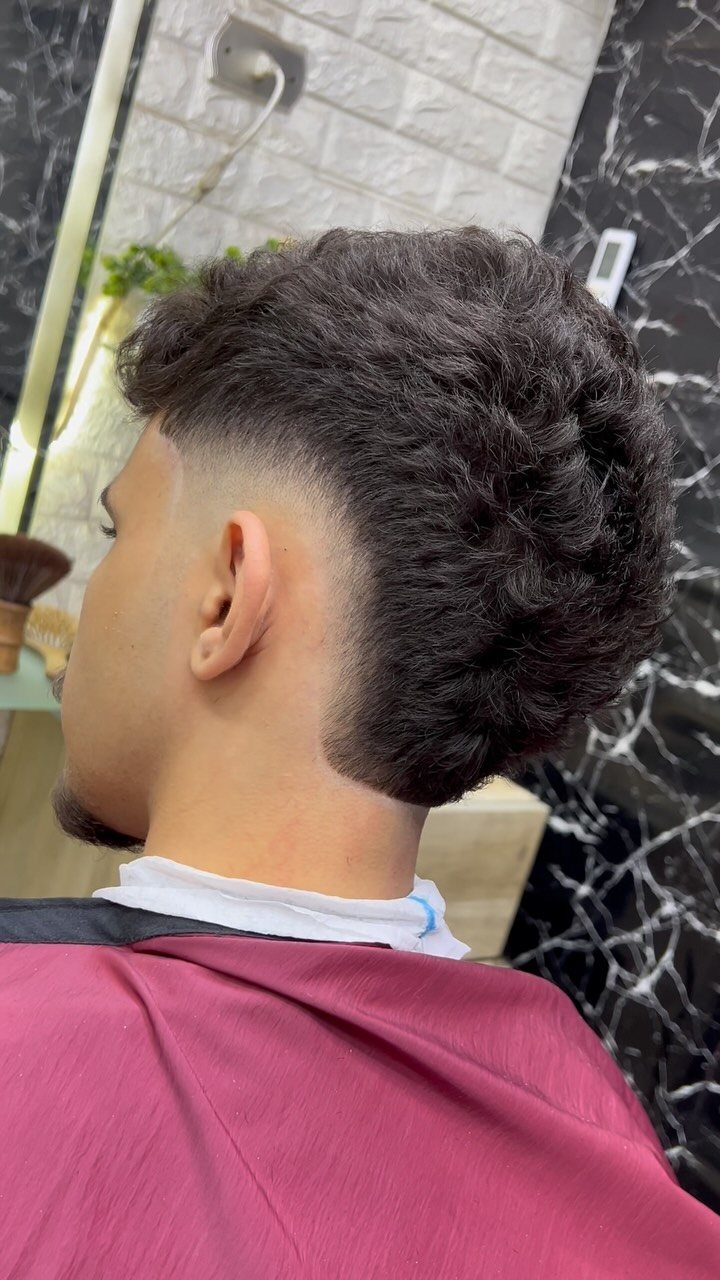
The high taper fade sits between a mid taper and a high skin fade in how much hair remains on the sides.
Ask for the taper to start at temple height and blend upward.
The top can be any length, but shorter tops need less daily upkeep. Curly hair like this holds its shape with minimal product.
The higher the taper starts, the more often it needs a trim.
If you’re not sure which taper haircut to ask for, start lower. A good barber can always take the fade higher, but once the blend is sitting halfway up your skull, there is no polite way to put the hair back.
5. Curly Fade
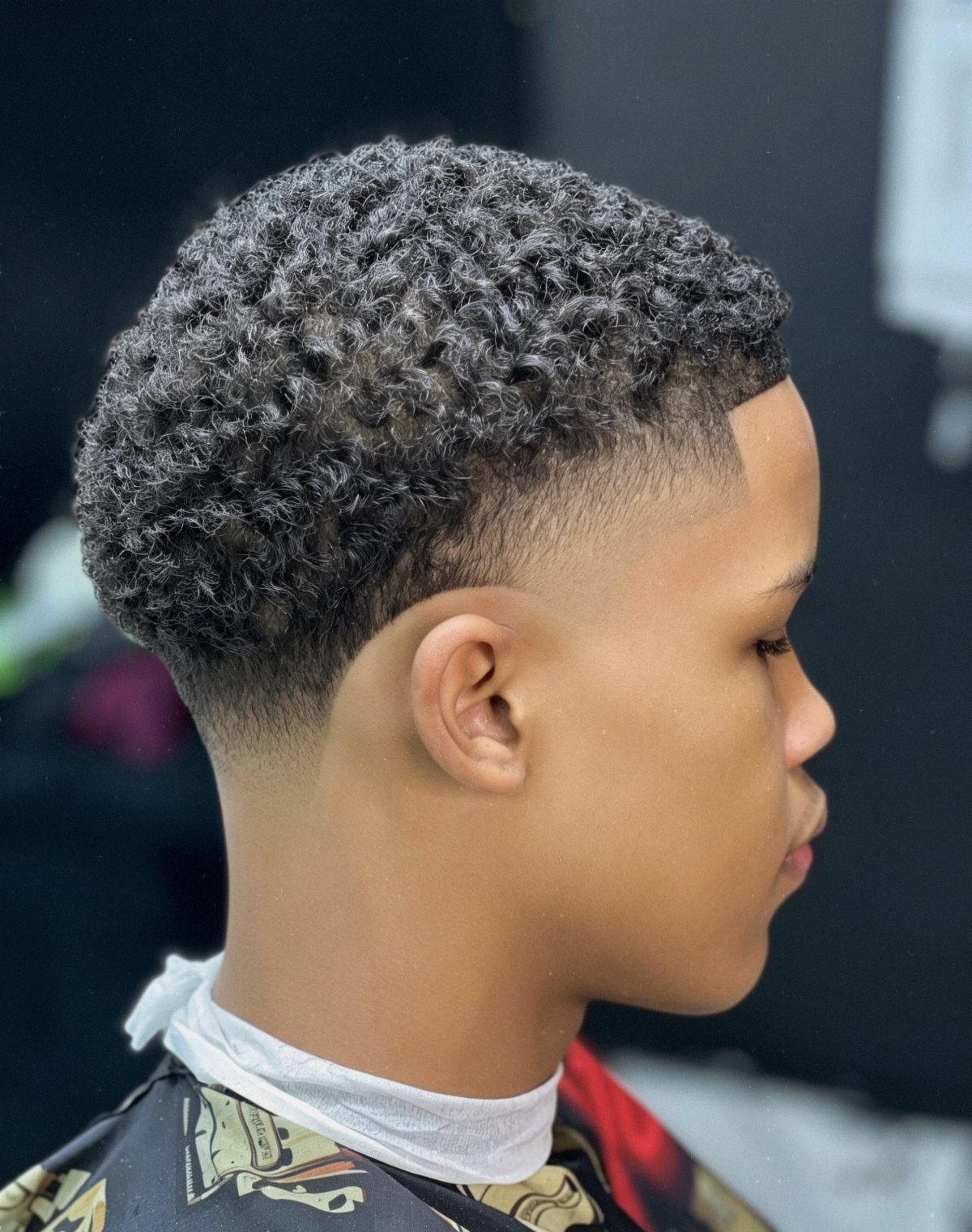
A high taper keeps the sides and neckline neat while natural curls remain full and prominent on top. The taper blends into the curls without flattening them, so the top keeps its natural bounce and coil pattern.
Curls need hydration to avoid frizz. A leave-in conditioner or curl cream applied to damp hair defines the coils, and air drying works better than a blow dryer for maintaining curl integrity.
The taper grows out cleanly before the sides start to lose definition. Curly tops grow outward rather than downward, so the shape stays balanced longer than straight hair.
6. High Taper Fade Side Part
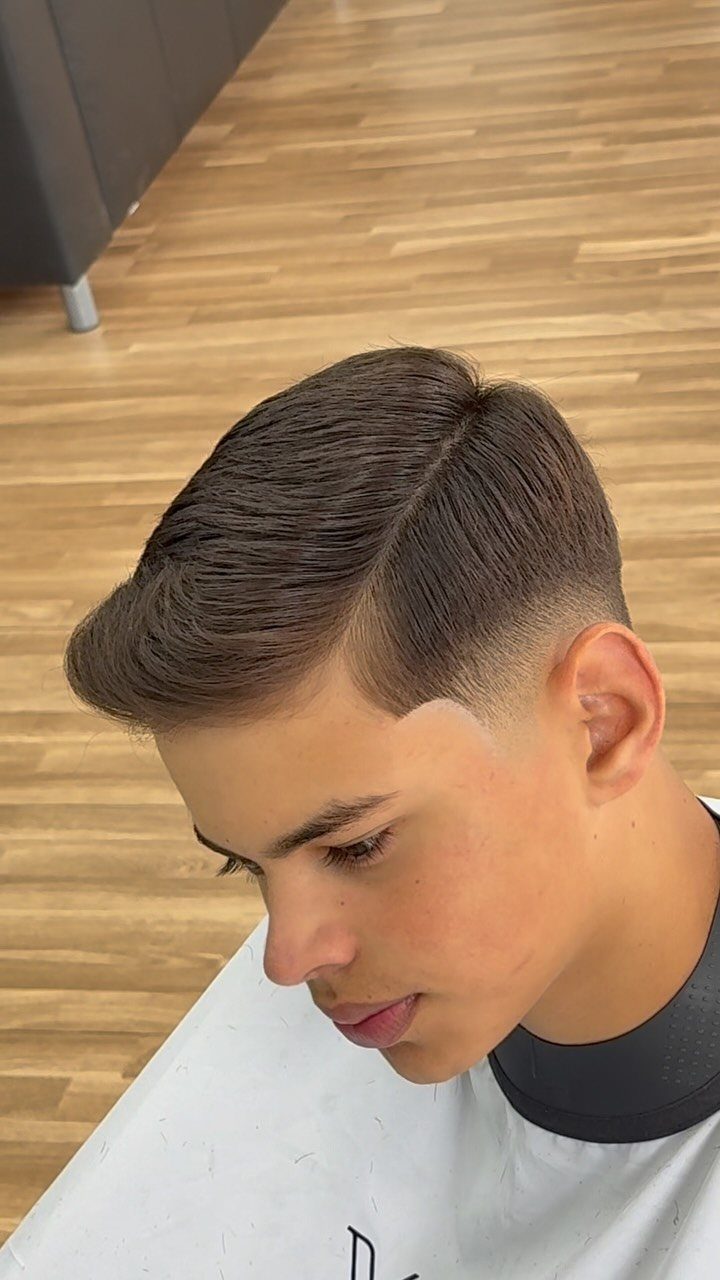
A defined part and longer top create a structured style above tightly tapered sides. The part itself can be shaved in with clippers or combed into place, and the choice changes how formal the cut reads.
Hair on top needs to be long enough to comb over.
A light pomade or cream gives hold without stiffness. The part stays visible all day if you comb it in the same direction each morning.
Oval and rectangular face shapes suit this cut well because the horizontal part breaks up vertical length. A shaved part grows out within a week, so that detail needs frequent maintenance.
7. Slicked Back Fade
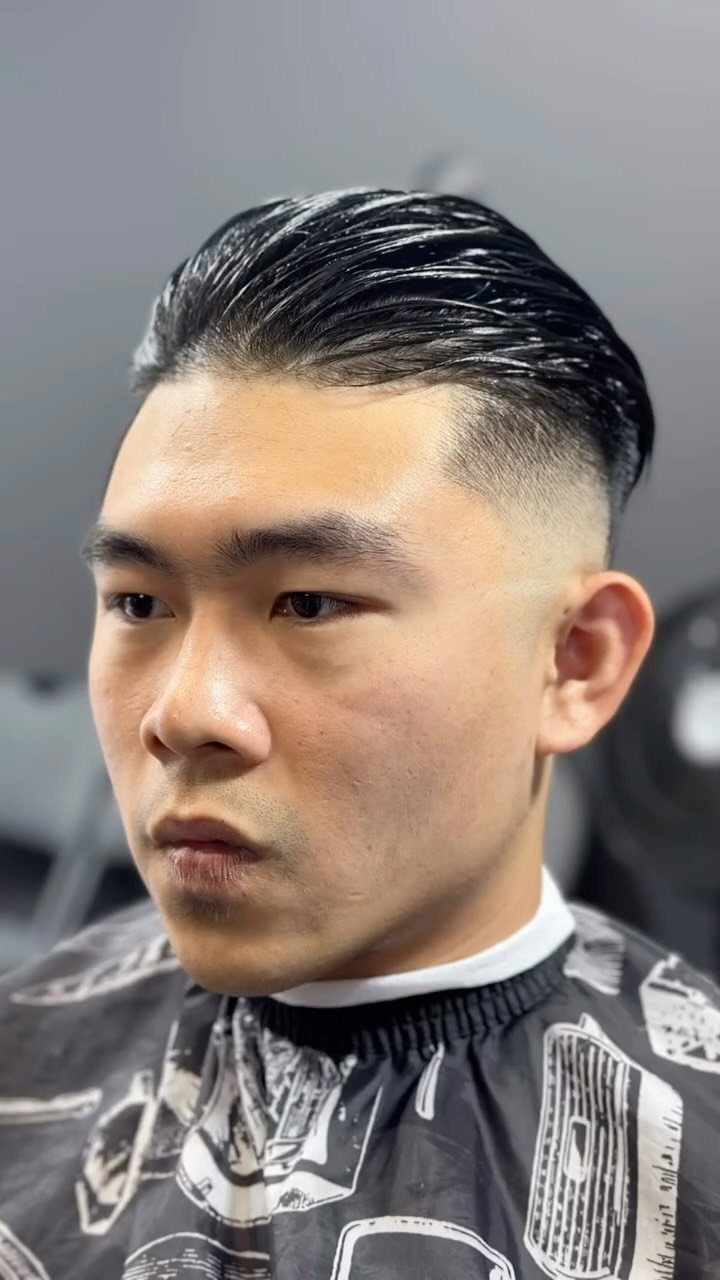
Hair long enough to comb back creates a streamlined silhouette above the taper. The look depends on having enough length on top to hold its shape once styled.
A medium-hold pomade or gel locks it down.
Work the product through damp hair, comb straight back, and let it dry. The style holds all day without a second pass.
Oval faces suit this cut because the smooth top doesn’t add width. Hair needs to be thick enough to avoid showing scalp when combed flat.
8. High Taper Fade with Beard
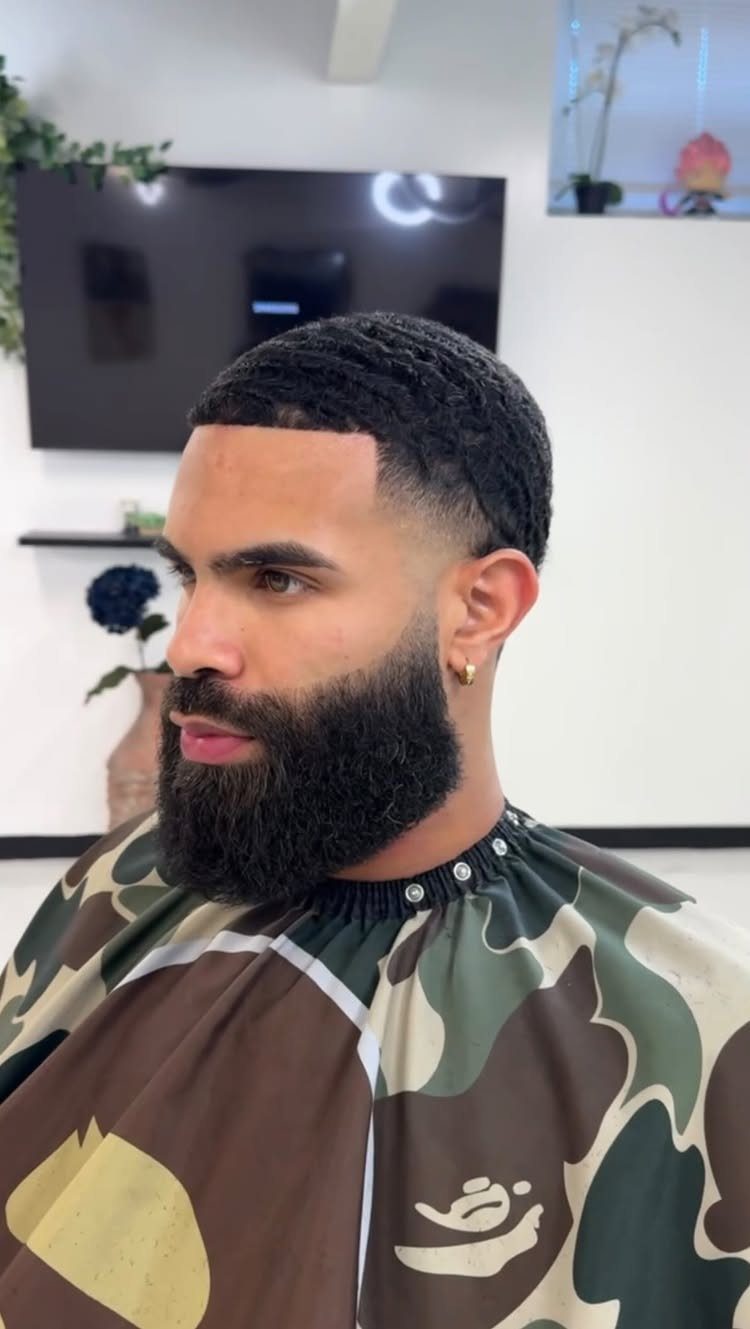
The beard extends the tapered line or stops cleanly at the jawline, depending on whether you want the fade to flow into the beard or stay separate. A clean line reads sharper but needs more precision during the trim.
Both pieces need regular upkeep.
The taper blurs quickly, and the beard line grows out just as fast. If you want a softer transition, have your barber blend the fade into the beard.
This pairing works when facial hair grows evenly. Patchy growth shows more against a tight fade.
9. High Taper Fade Dreads
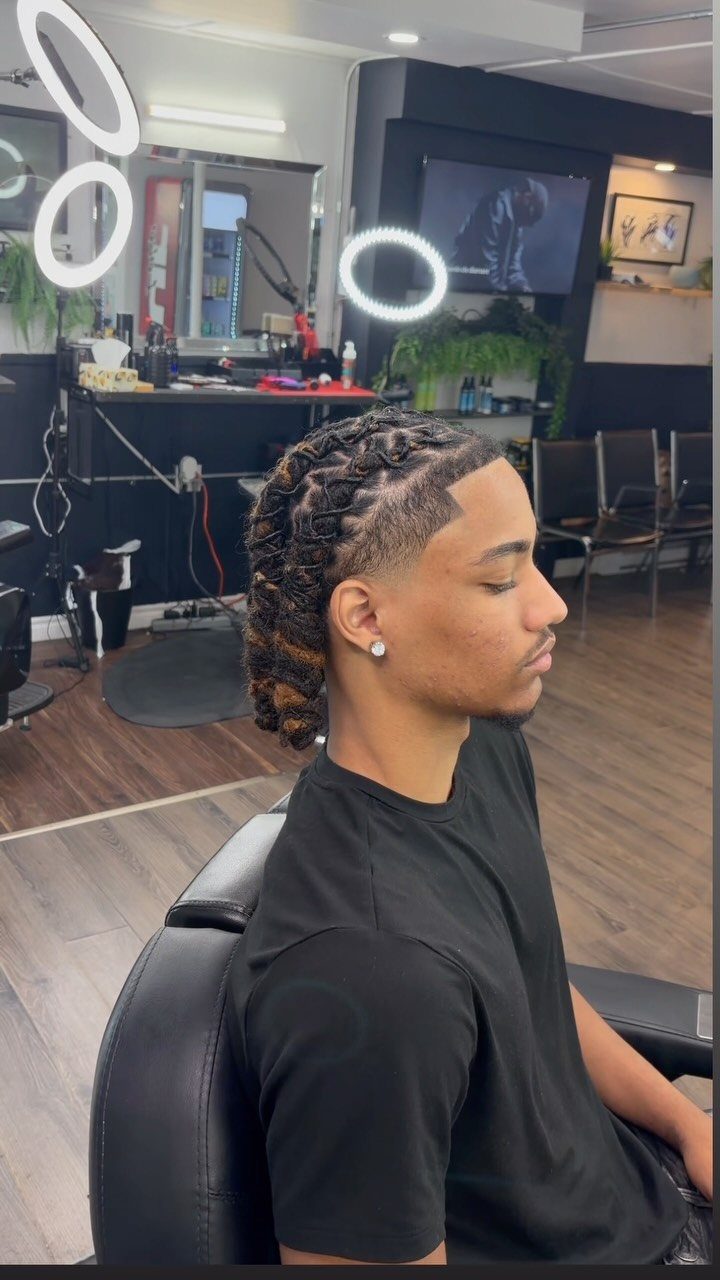
Locs on top stay long and textured while the sides taper clean at the temples and back. The contrast keeps the locs visible without bulk building up on the sides.
Locs need moisture to stay healthy.
A light oil or leave-in spray prevents dryness, especially where the tapered sections expose more scalp. The taper itself grows out cleanly, so the shape holds before needing a lineup.
This cut suits anyone growing locs who wants a polished look. The taper shortens styling time because the sides require no upkeep beyond the trim.
10. High Taper Fade Twists
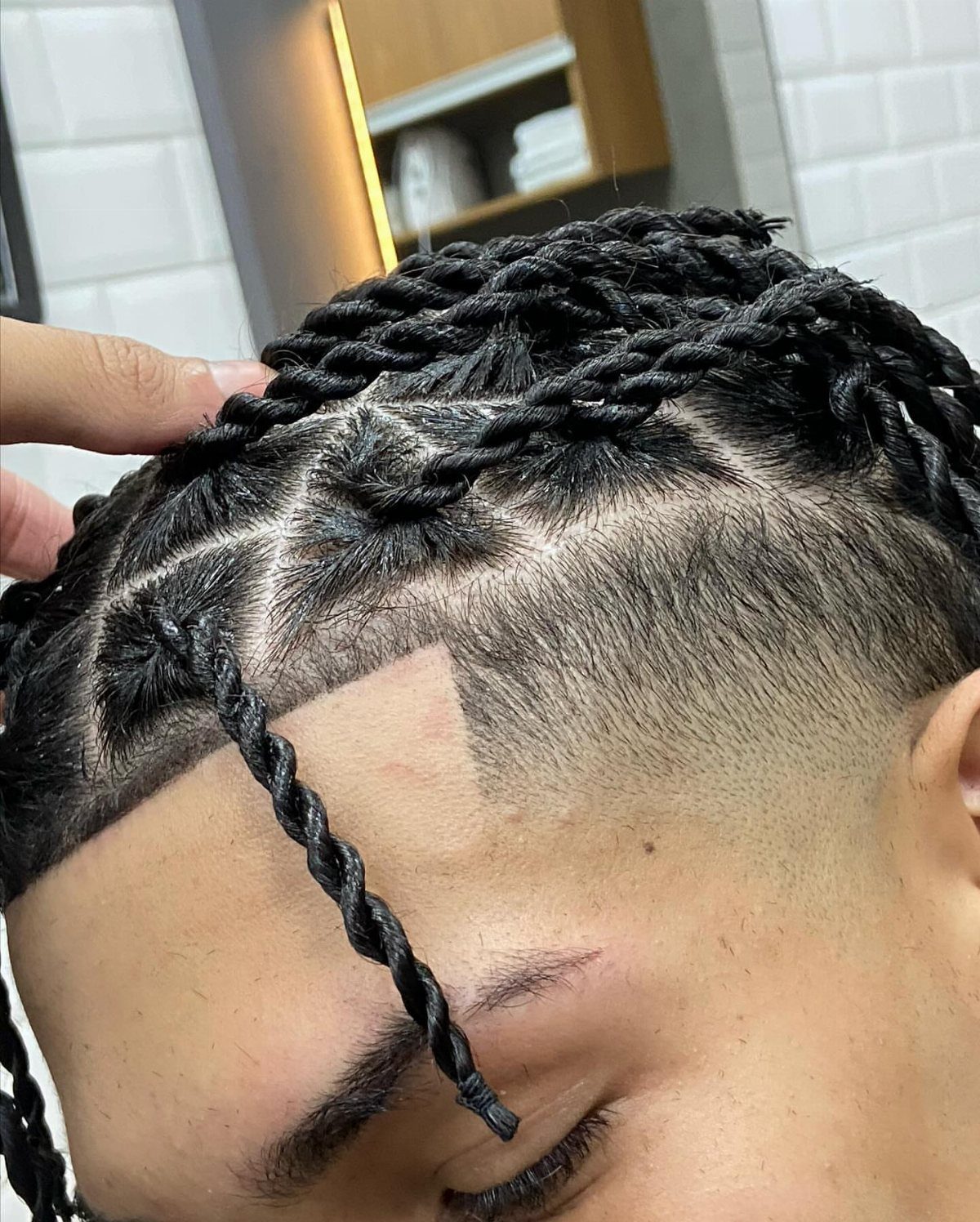
Two-strand twists sit on top while the sides taper tight. The twists add vertical height, which lengthens the face and draws the eye upward.
Twists hold for several days if you wrap them at night.
A moisturizing cream applied before twisting keeps the hair pliable and prevents frizz. The taper needs a touch-up as it grows, but the twists themselves stay intact between visits.
This style suits textured hair that twists cleanly. Fine hair may not hold the twist pattern as long.
11. High Taper Fade with Side Swept Top
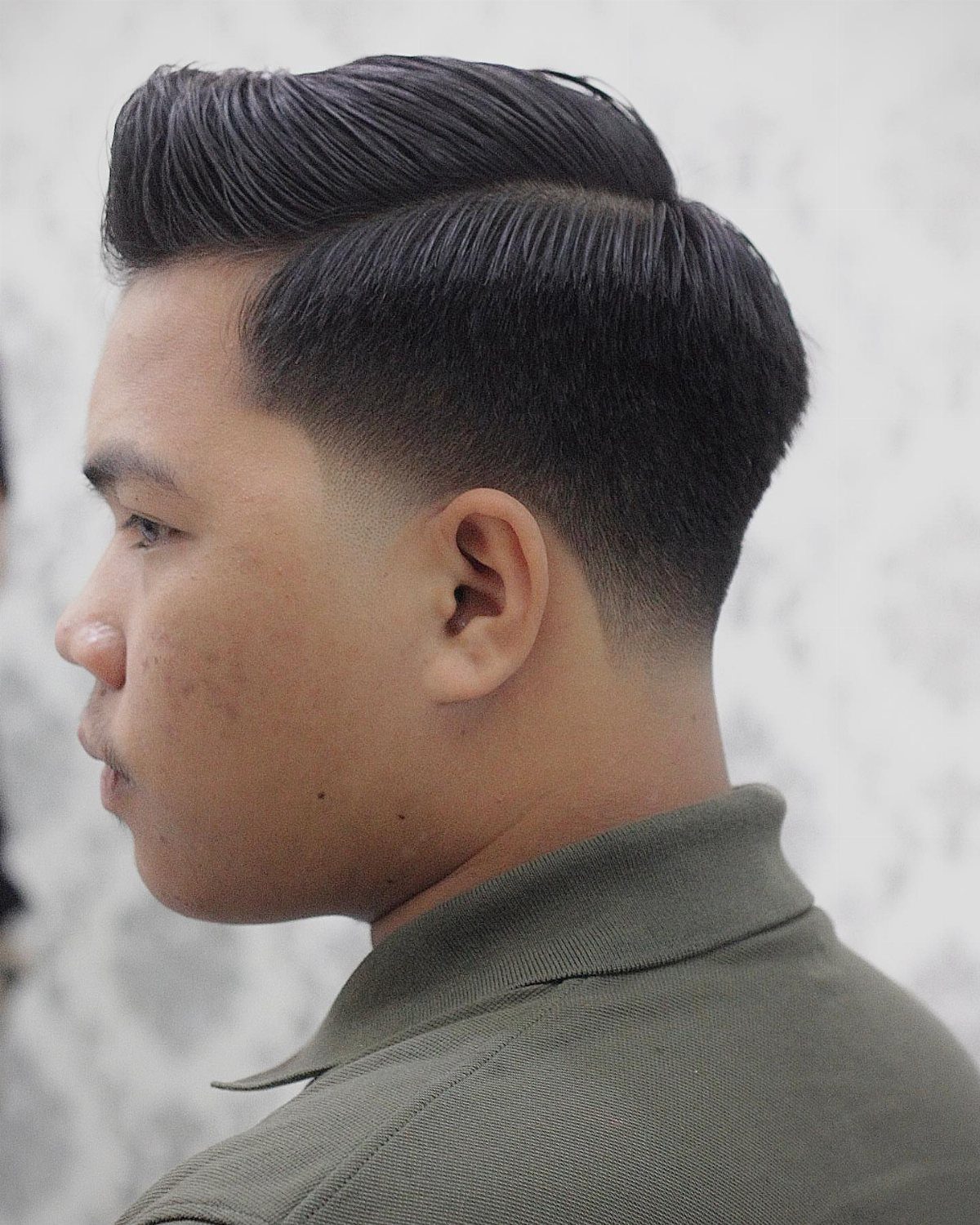
Longer hair is combed across the top to one side, creating a diagonal line that breaks up the face. The part can sit naturally or be carved in with clippers for a sharper contrast.
Comb the hair to the side while damp, and it sets as it dries. The swept top adds width, so rectangular and oval faces balance better with this style than round ones.
Hair needs to be at least 2 inches on top to sweep cleanly. Thinner hair benefits from this cut because the side sweep creates the illusion of more density.
12. Quiff Fade
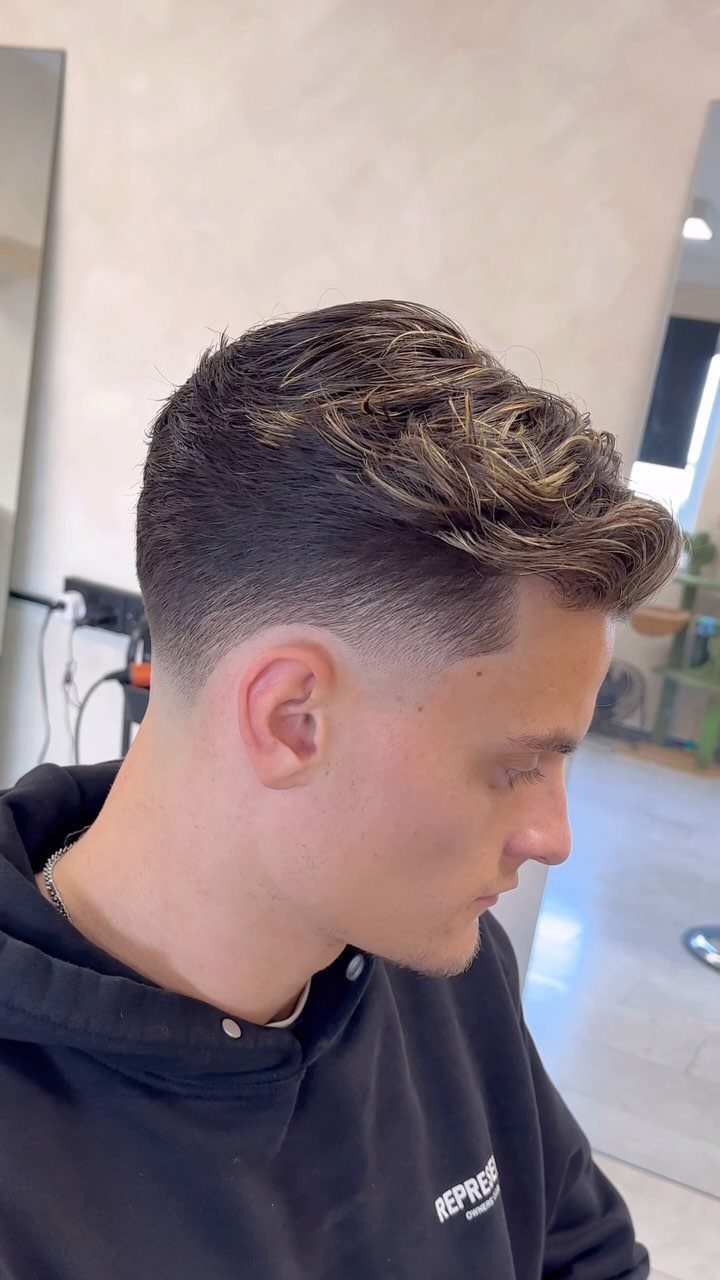
The front section is lifted and swept back slightly, creating volume without the full height of a pompadour. The quiff sits lower and reads more casual.
Blow dry the front upward and back on medium heat, then finish with a medium-hold pomade. The style sets quickly and holds through the day.
This cut works best on hair with some natural body.
Straight, fine hair may need more product to hold the lift. The taper keeps the sides clean, so all the volume stays at the front where it lengthens the face.
13. High Taper Fade Waves
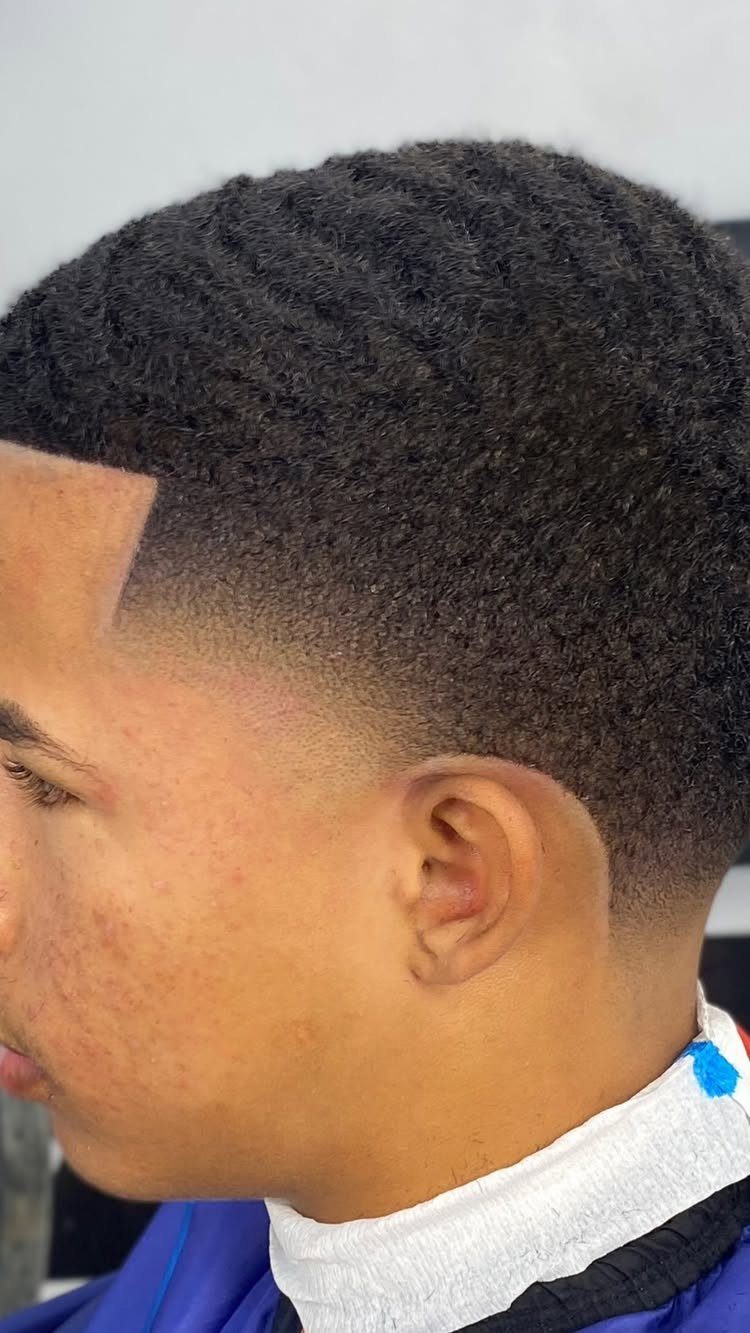
The taper runs high at the temples and neckline, letting the wave pattern hold the eye. The wave pattern needs consistent brushing to hold its shape, usually with a wave brush and durag worn overnight.
Brush in the direction the waves flow, working outward from the crown.
The high taper fade with waves suits coarse or textured hair that holds a wave pattern naturally.
14. Buzz Cut
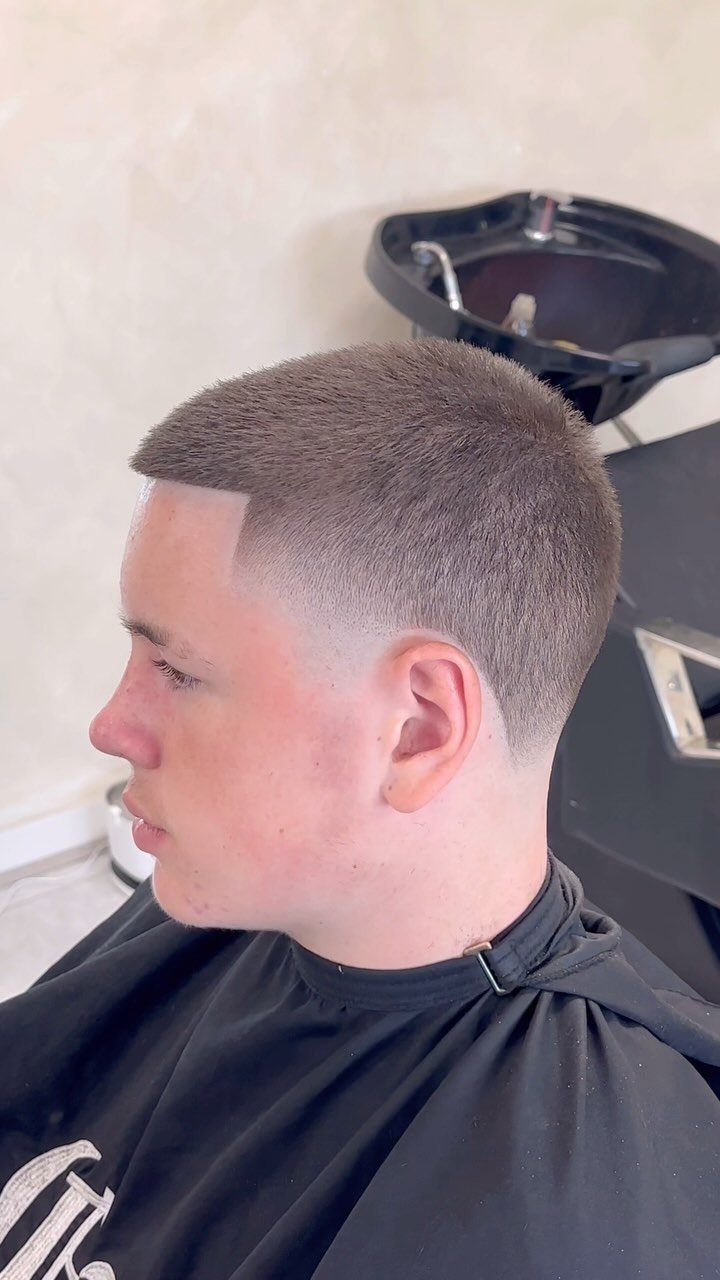
A short, uniform top pairs with tightly tapered sides for a simple, high-contrast cut. The top is clipped to one guard length across the entire crown, usually a 1 or 2, while the sides fade down to skin or near-skin.
Styling time is zero. Wash, towel dry, and it’s done.
The contrast between the buzzed top and faded sides sharpens as the taper sits higher. This cut grows out evenly, but the fade loses its edge quickly.
15. Short High Taper Fade
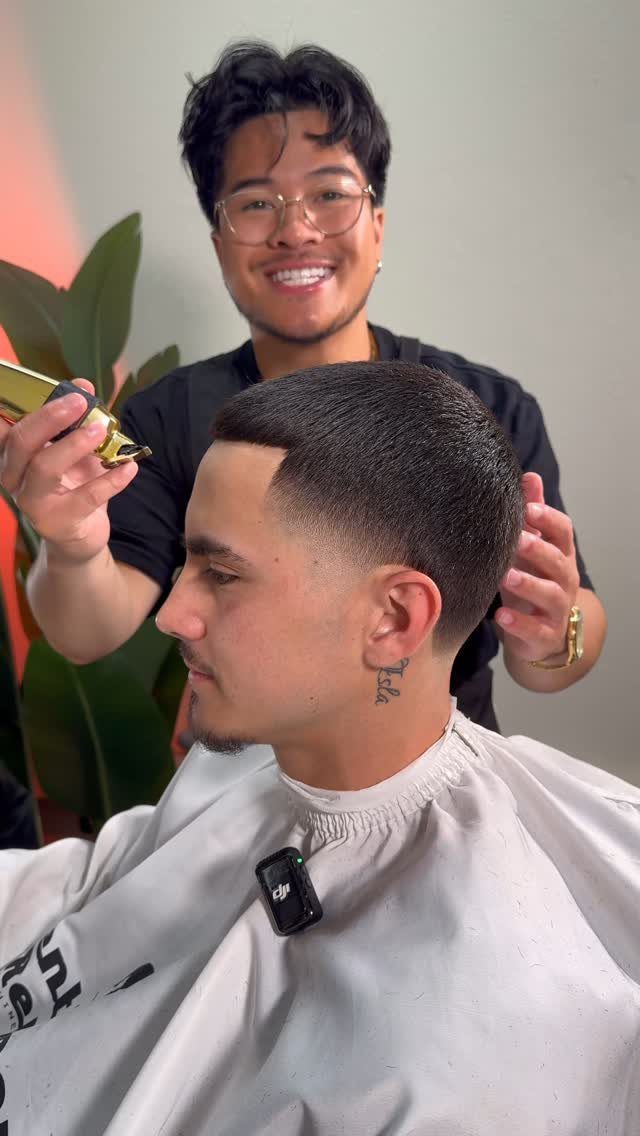
Short, even hair on top keeps the overall cut clean and low-maintenance. The top stays uniform in length, usually trimmed to a half inch or less, while the taper starts high at the temples and blends down.
No product required. The short length holds its shape without styling, and drying takes seconds after a shower.
Face shape matters less here because the proportions stay balanced.
16. High Taper Fade Spiky Top
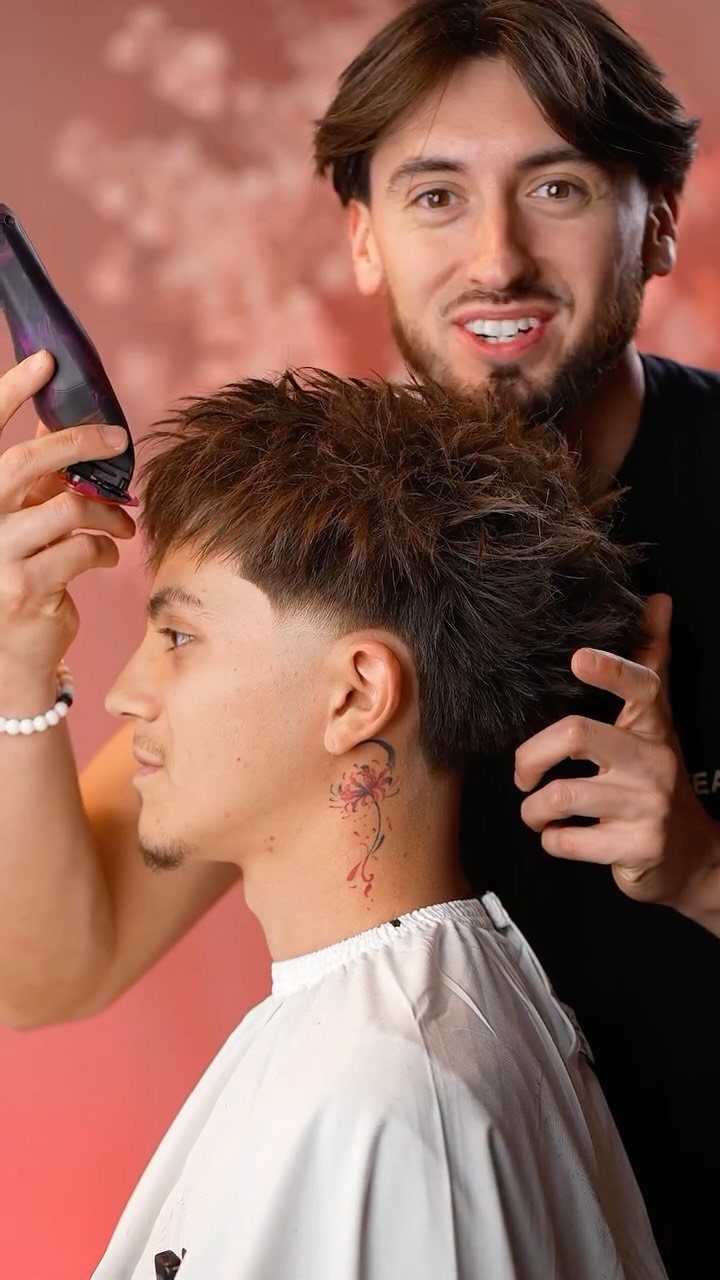
A strong-hold product lifts the hair straight up and holds it there all day. The top needs enough length to stand upright, and gel or pomade locks the spikes in place.
Work product through damp hair and push sections upward with your fingers. The spikes set as the hair dries.
This style adds height, which lengthens round or square faces. The taper keeps the sides tight so the spikes stay the focal point.
17. High Taper Fade with Wavy Hair
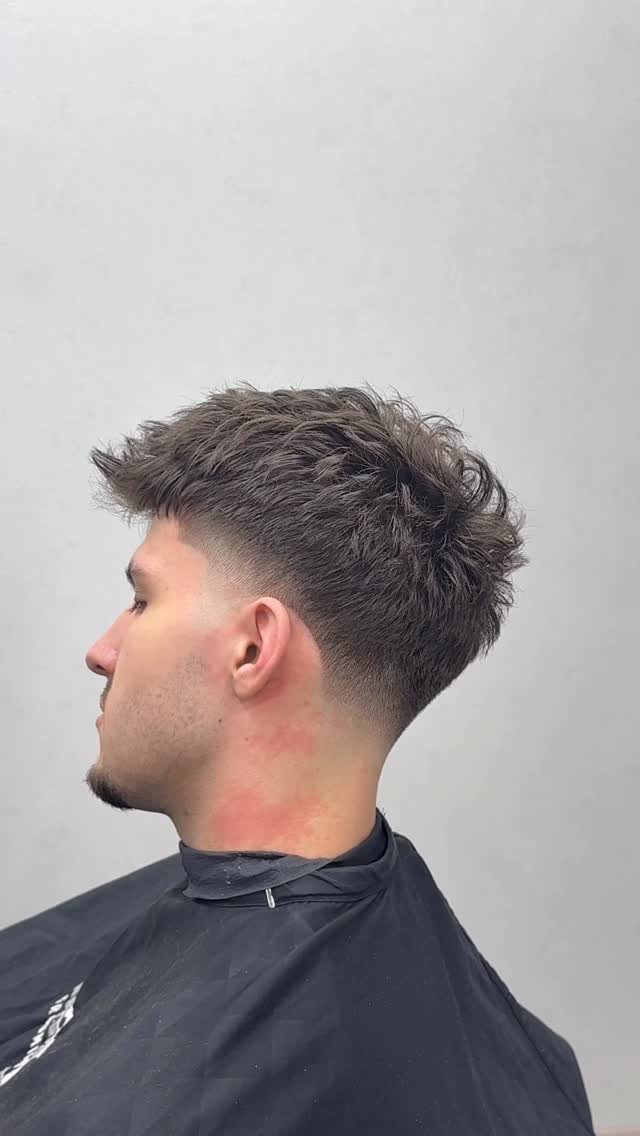
The waves give the cut movement without requiring much styling effort.
A light cream or sea salt spray enhances the wave pattern without weighing it down.
Wavy hair holds this cut’s shape longer than straight hair because the waves add volume as they grow. The taper needs a trim every 2 to 3 weeks.
18. Bleached Blonde High Taper Fade

Bleached blonde hair on top creates a stark contrast against the faded sides. The color draws attention upward and makes the texture more visible, especially when the top is left choppy or tousled.
Blonde hair needs regular toning to avoid yellowing.
A purple shampoo used once or twice a week keeps the tone neutral. The bleach dries hair out, so a conditioner or leave-in treatment prevents brittleness.
The high taper keeps the look sharp while the blonde adds edge. Root growth shows quickly, so touch-ups keep the color consistent.
19. High Taper Fade with Goatee
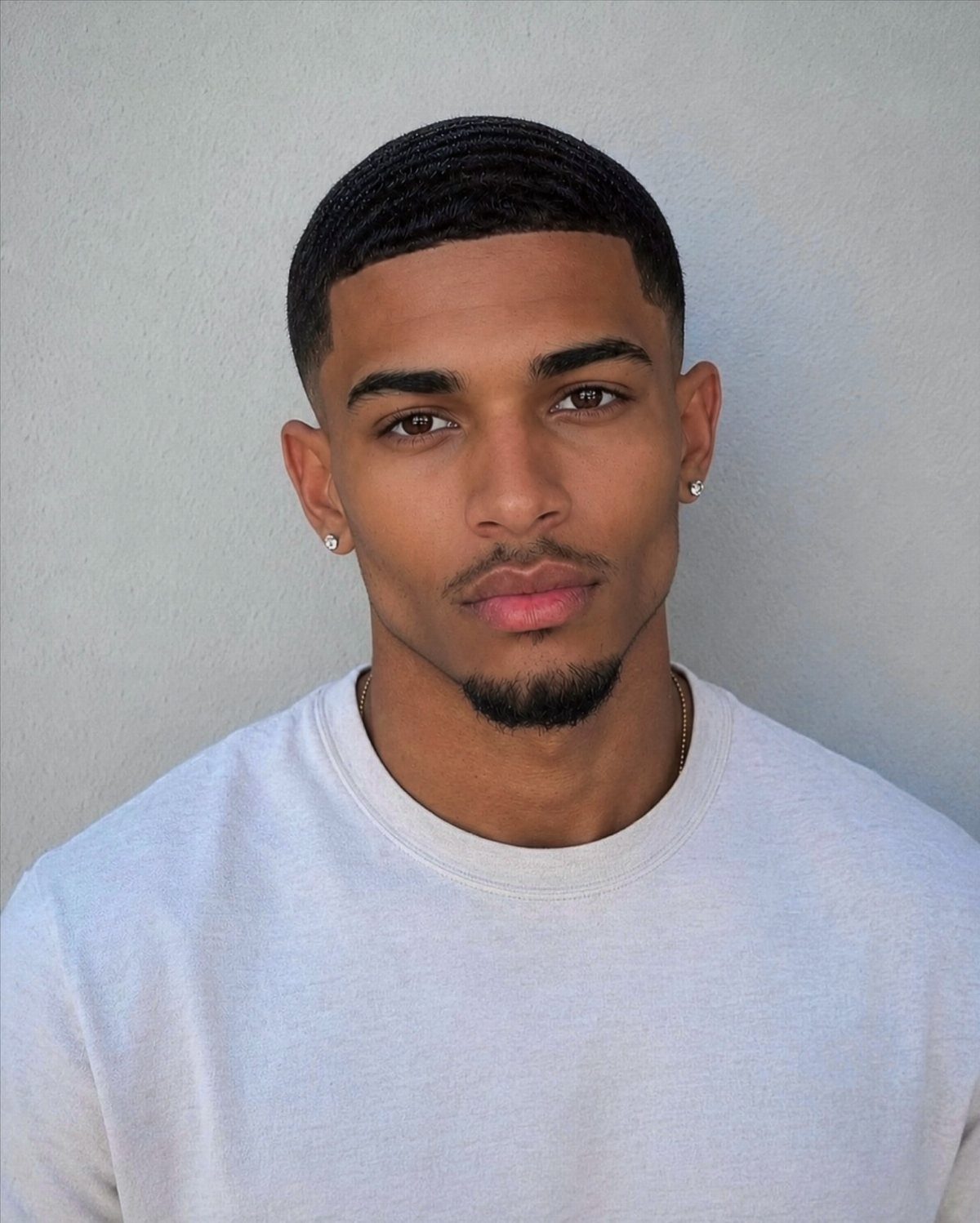
The goatee anchors the face below the taper and adds definition to the jawline without extending down the neck. Both pieces stay short and shaped, so the overall look reads clean rather than heavy.
Trim the goatee every few days to keep the edges sharp. The taper grows out faster than the beard, so plan on regular barbershop visits to maintain the contrast.
Round faces gain structure from the vertical line a goatee creates. Patchy cheek growth is less of an issue here because the goatee stays isolated around the mouth and chin.
20. High Taper Fade with Line-Up
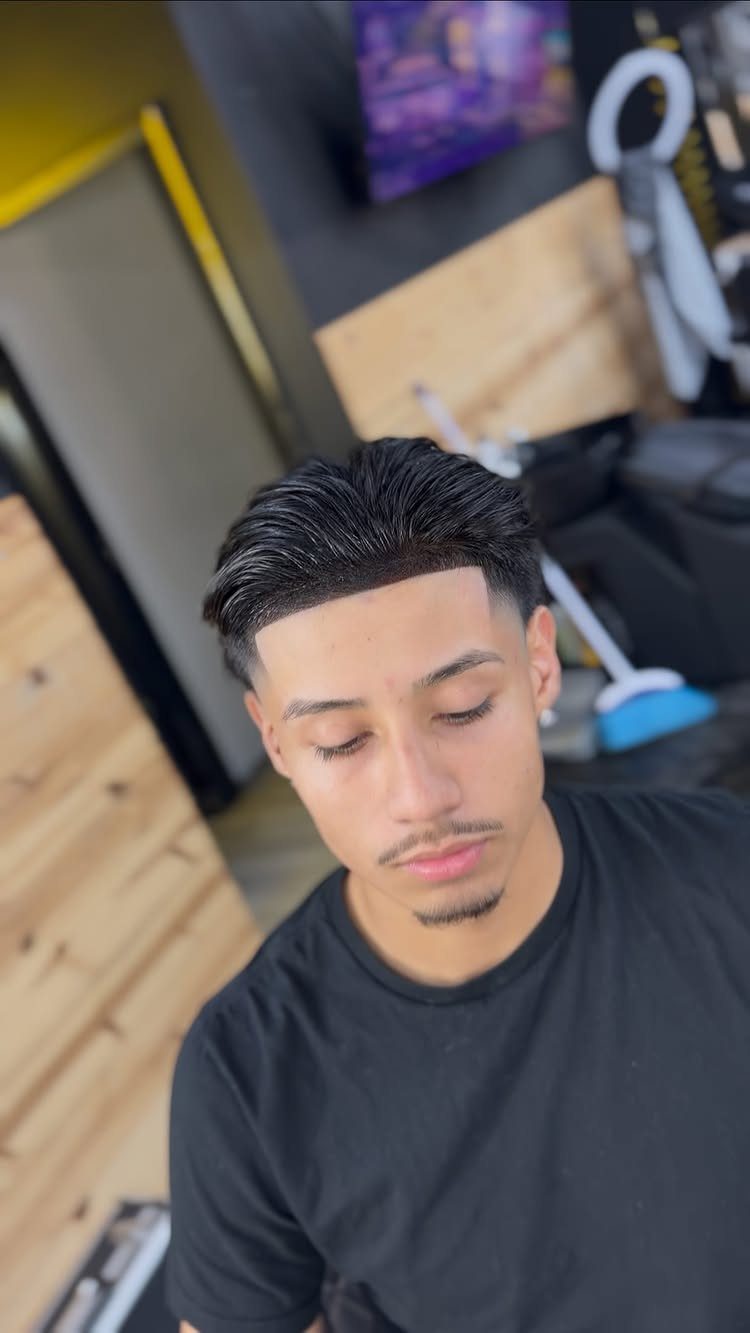
A crisp edge runs along the hairline at the forehead and temples, creating a sharp border where the hair meets the skin. The line-up frames the face and tightens the overall cut.
Ask your barber to edge up the hairline with a trimmer or razor. The line stays visible for about a week before it softens.
This detail suits angular face shapes because it emphasizes structure.
The sharper the line, the more upkeep it demands. Hair that grows quickly at the hairline loses the edge fast.
Fade Height and Side Coverage
Either can be cut close at the bottom, so the real question is how much side hair you want to keep.
Published definitions differ. Describe the desired result to your barber rather than relying on the name alone.
Trim Timing and Regrowth
You get about 2 weeks before a high taper stops looking fresh.
I schedule touch-ups every 2 to 3 weeks to hold the shape. A high fade telegraphs regrowth sooner than a low taper because the blend starts farther up the head.
If you’re pushing the cut longer, clean up the neckline between appointments. Skip heavy, wet-finish products on top.
Hair Texture and Density
Your curl pattern controls how the top behaves and how visible the blend becomes. Hair density and strand thickness determine how much side bulk disappears and when scalp begins to show.
Finer or thinner hair benefits from preserving more length above the fade and easing the transition, since skin appears faster.
Curly hair requires a longer guard to account for shrinkage, and the taper should stay tight to the fade zone so the curls keep their shape. Straight, dense hair tolerates aggressive side removal and delivers a clean line without fuss.
Point out cowlicks or uneven growth to your barber. Placement around those zones should follow the head shape rather than a fixed mark.
Frequently Asked Questions
What is a high taper fade?
The blend starts high on the head, usually around or above the temples, and gradually shortens the hair down toward the skin. The fade starts high and runs tight around your temples and ears, leaving most of the side untouched.
How do you ask your barber for a high taper fade?
Tell your barber where the blend should start, how short the lowest point goes, how much side coverage to keep, and what length you want on top.
Bring front, side, and back photos to avoid confusion, since shops define the cut differently.
Will a high fade suit me?
A high fade can elongate the head, so rectangular faces may want to keep the top short to avoid adding vertical length.