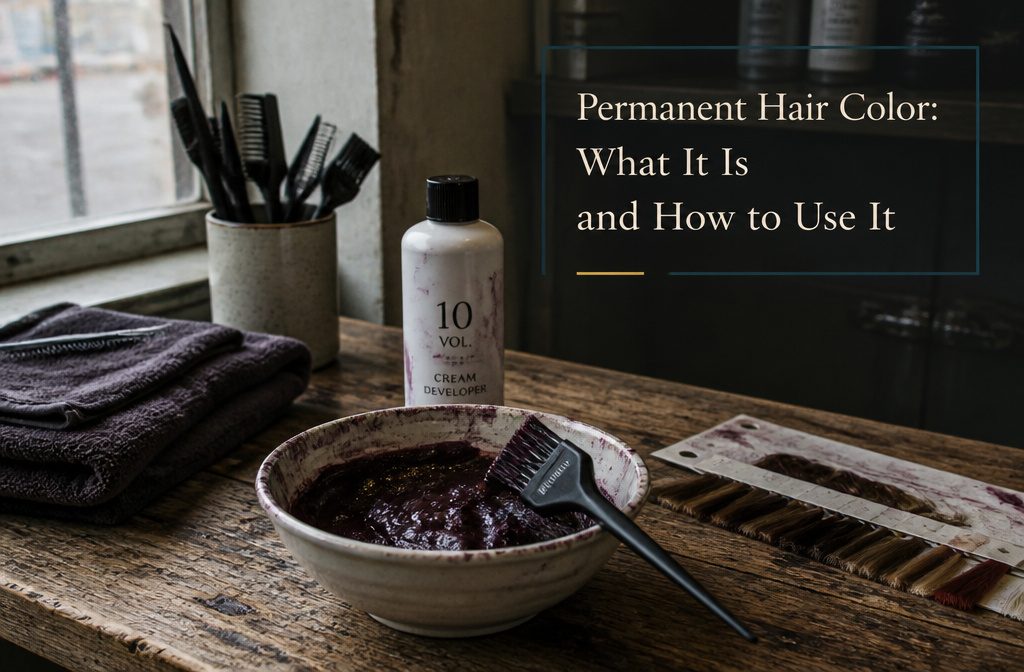
What Permanent Hair Color Is and How It Works
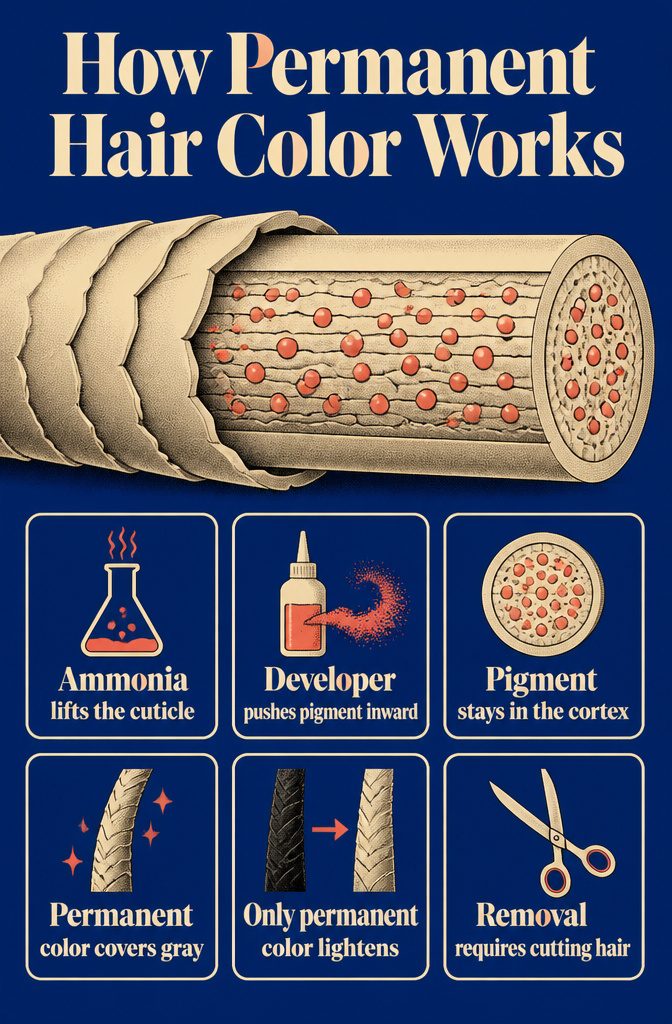
Permanent hair color reaches deeper than anything you can wash out in a week.
The chemistry depends on two things working together: ammonia lifts the cuticle so the developer can push pigment into the hair’s cortex, where it stays regardless of how many times you shampoo.
That permanence is the point if you want full gray coverage or a dramatic shift in shade, because the color molecules are locked inside the strand rather than sitting on the surface.
Demi-permanent formulas use a small amount of developer but no ammonia, so they deposit color without lifting your natural tone. Semi-permanent dyes skip the developer entirely and coat the hair’s surface, fading within 8 to 12 washes.
Permanent color is the only category that can lighten your natural shade and the only one that needs to be cut off rather than shampooed out.
Allergies and Patch Testing Before You Color
Permanent hair color contains chemicals that can trigger skin reactions, and the range runs from mild tingling to blistered scalps or hair loss.
Reading the ingredient list before you buy tells you what formula you’re working with and whether anything in it has caused problems for you before.
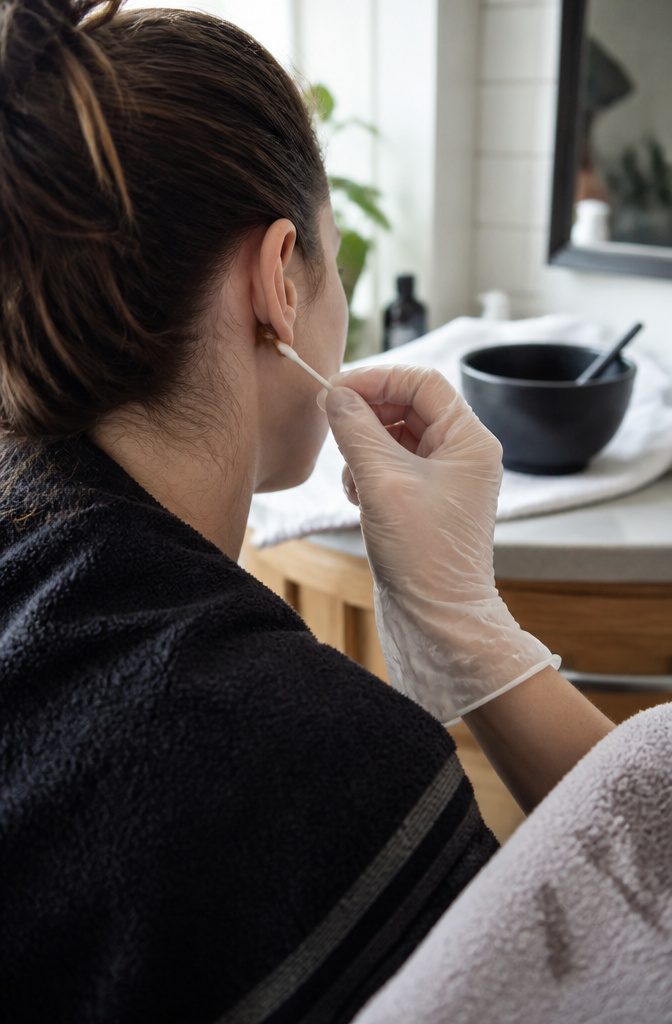
To minimize injury or hair loss, hair color manufacturers stress the importance of patch testing. This means trying the color in a small area (namely behind your ear) to see how your hair and skin take to it.
Patch testing behind the ear gives you a read on how your scalp will respond without committing to a full-head application.
If the test area looks fine after the recommended development time, you can move forward. If it reddens or itches, consider gentler formulas or skip permanent color altogether.
Following Product Directions: Timing, Gloves and Rinsing
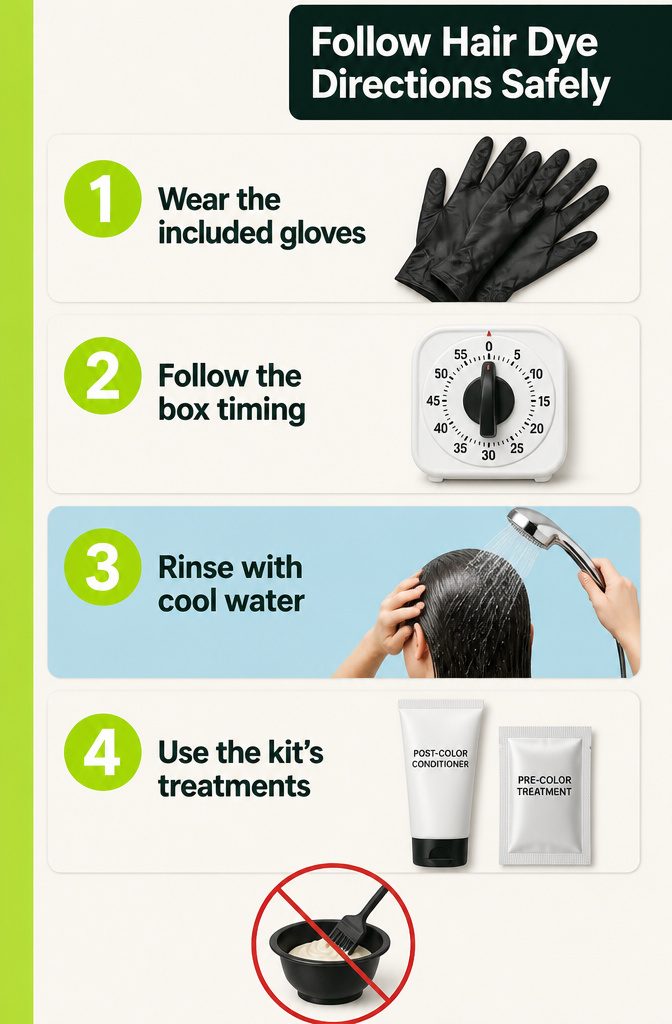
The box directions set the timing you need to follow, and following it exactly is how the color comes out matching the shade on the packaging.
Leaving dye on longer than stated does not make the color deeper; it just risks irritation or uneven deposit. Gloves keep the dye off your hands, and the kit includes them for that reason.
Once the time is up, rinse with cool water until it runs clear. Hot water opens the cuticle and lets freshly deposited pigment slip back out before it has locked in.
Directions also walk through any pre-color treatment or post-color conditioner that came in the box, and those steps matter as much as the dye itself.
One thing the instructions will not cover is mixing formulas from different kits or brands. Activator ratios differ, and combining them ruins the result.
If you have leftover dye after mixing, throw it out. Once the developer and color cream are combined, the chemical reaction has started, and storing it will not stop that process.
What Comes in the Box
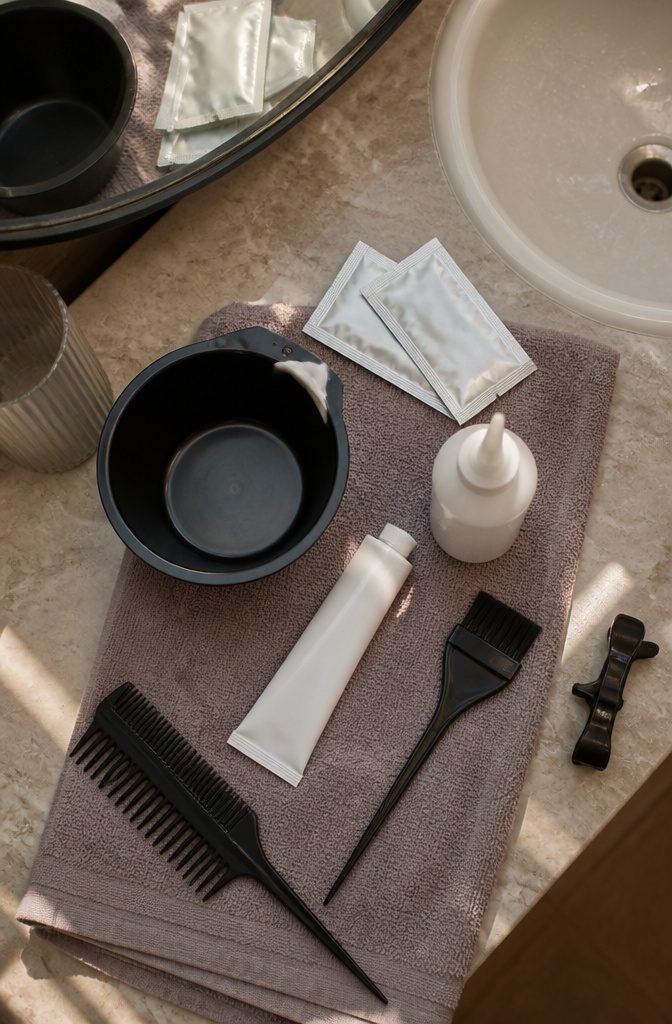
Boxed permanent color comes as a single-use kit with everything you need for one application.
The dye itself arrives in a tube or bottle that you mix with a developer, usually in a small applicator bottle with a tapered tip or attachment brush for working the color through sections.
Some kits include a separation comb to help part hair cleanly as you go.
Pre-color treatment may come in the box to prep hair and help the dye take evenly, though not every brand includes it.
Post-color conditioner is standard, and the packet usually holds enough for at least weekly use after the initial rinse.
That conditioner is formulated to lock in color and keep it from shifting tone over the first few washes, so it’s worth using until it runs out rather than switching straight to whatever you already have on the shelf.
Price Tiers and Product Recommendations
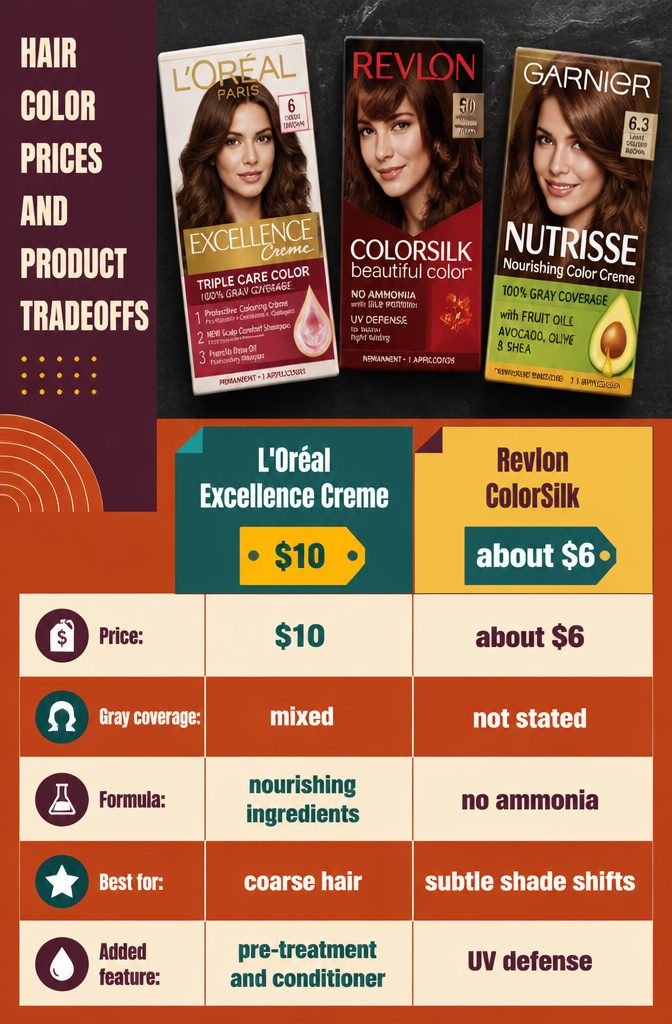
Boxes run about $6 at the budget end, closer to $10 for mid-range formulas that include nourishing ingredients, and as much as $30 per application for premium products that promise minimal damage and stronger color deposit.
The question is how much conditioning you want built in and whether gray coverage matters enough to pay for it.
L’Oréal Paris Excellence Creme packs collagen, ceramide, and pro-keratin into the formula, and the box includes both a pre-color treatment and a post-color conditioner.
The pre-treatment helps the dye set better, which matters if you’re working with coarse or resistant hair. The downside is mixed results on gray and a tendency for some shades to pick up cool tones you didn’t ask for.
Revlon ColorSilk skips ammonia, which makes it easier to tolerate if strong chemical smells bother you, and adds silk proteins for shine.
It includes UV defense technology to slow fading. The formula works well for subtle shade shifts, but it’s better for changing your color by a few levels than for a complete overhaul.
Garnier Nutrisse brings avocado, olive, and shea oil to the mix and offers 100% gray coverage.
The application tube is easy to handle, and the broad color range covers most natural and fashion shades. Color can fade faster than expected on gray hair, though the conditioning formula helps offset some of that.
Shade Range Across Professional Lines
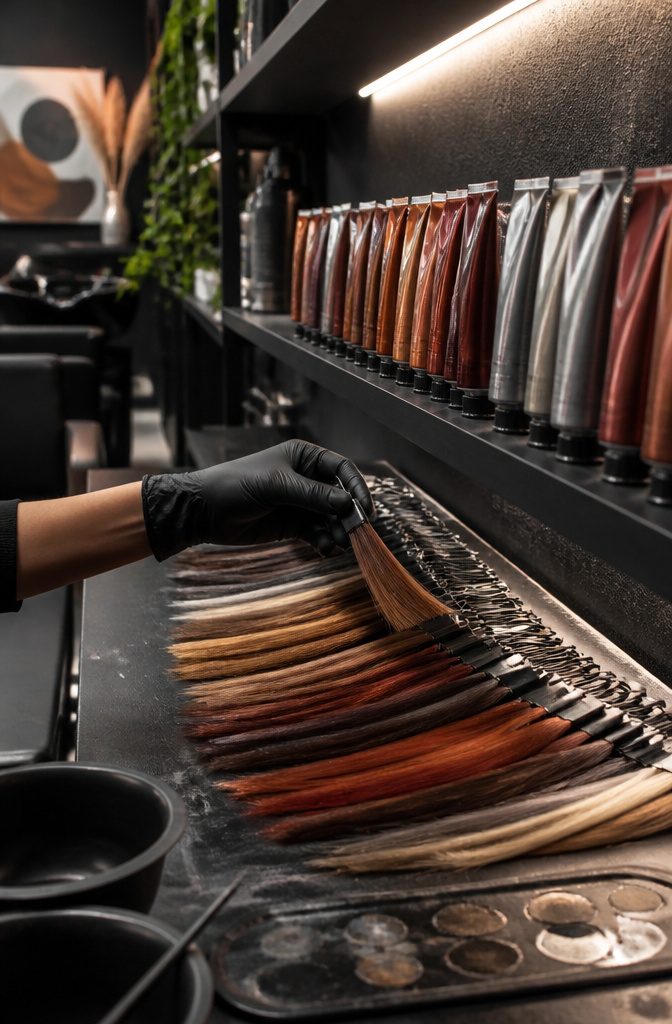
Professional permanent color lines run deep. Wella Koleston Perfect offers over 140 shades with up to 100% gray coverage, formulated with bond protection built in.
Wella Illumina Color takes a different route: dimensional, natural-looking results with a technology that lets light enter and radiate back out, plus a metal purifier to guard against extra damage where metals are present. Both lines handle full gray coverage.
Schwarzkopf IGORA ROYAL, Goldwell Topchic, Pravana ChromaSilk, Kenra Permanent Coloring Creme, Joico Lumishine, Matrix SoColor and Redken Color Gels Oils all hold shelf space in professional catalogs.
Beauty Plus Salon stocks 382 hair color products across brands; SleekShop returns 174 results filtered to permanent alone.
The range means you can find something precise, whether you need a specific tone or want to blend shades to build a custom color that does not exist in a single tube.
Color-Safe Shampoo and How It Helps Hair Hold Color
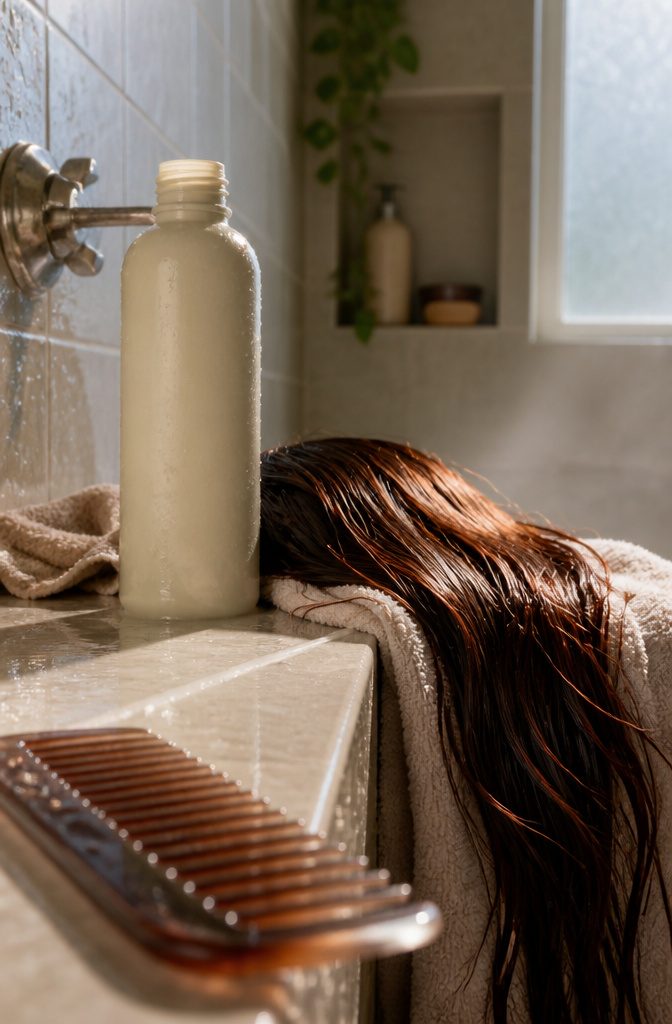
Color-safe shampoo keeps dye molecules locked in the cuticle instead of washing them down the drain.
The difference shows up most after week three or four, when hair washed with regular shampoo starts to look dull or shifts warmer (blondes go brassy, brunettes pick up orange).
A color-safe formula skips the harsher sulfates that strip pigment and may include UV filters to block sun fade, plus conditioners that seal the cuticle after every wash.
Does it make a big difference?
Yes, if you plan to stretch the color past a month. I would not skip it on permanent color, especially if the shade sits far from your natural base.
The investment is small compared to what you spent getting the color right in the first place, and the return is measurable: color that still looks intentional six weeks in rather than faded by week four.
Waiting Four to Five Weeks Between Root Applications
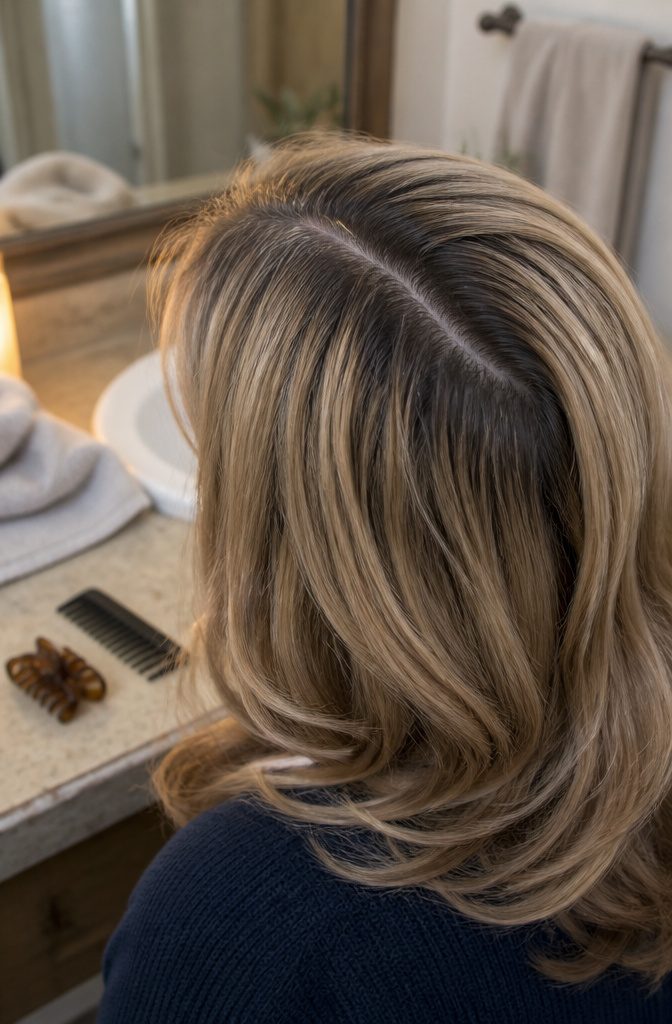
Plan on 4–5 weeks between root applications. That window catches regrowth before it starts to look unnatural and unkempt.
Earlier than that, there’s hardly any new growth to cover, so you’re making extra work for no visible gain.
Waiting too long is the more common mistake. The regrowth widens, and a clear line shows where the new hair meets the colored length.
If you’re unsure, I’d rather touch up a week early than a week late. Mark the date on your calendar the day you color, so the next application doesn’t slip.
What Makes Demi-Permanent Color Fade Faster
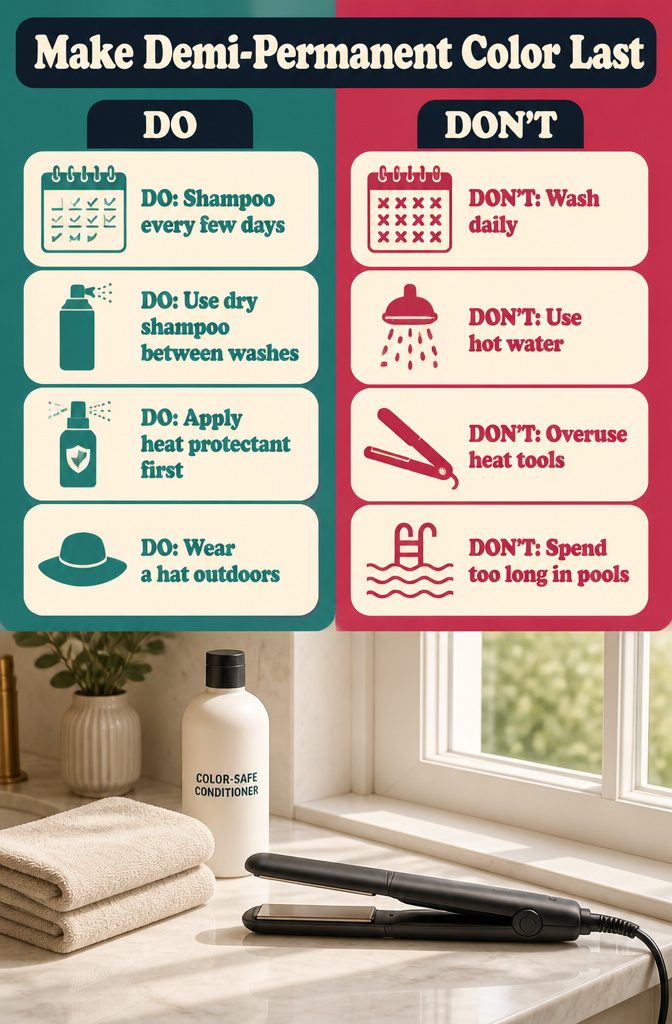
Every shampoo takes a little color with it, which is why demi-permanent dye is counted in washes rather than days. Expect 24–28 washes, roughly a month to a month and a half, so a daily washer lands at the short end.
I’d stretch it by lathering once every few days and using dry shampoo on the in-between mornings to handle greasy roots.
A flatiron or hot blow-dryer dulls color faster, so spray a heat protectant first, or skip the tool when the style allows. Sun and chlorine do similar damage: wear a hat outdoors and cut back on pool time.
Hot showers strip color too, and lukewarm water costs you nothing. Swap in color-safe shampoo and conditioner.
Frequently Asked Questions
Does color-safe shampoo make a big difference?
Yes. Color-safe shampoo keeps dye locked in the cuticle instead of washing it out, and the difference becomes visible after 3 or 4 weeks when regular shampoo starts stripping pigment.
Hair washed with color-safe formulas holds tone longer and avoids the shift toward brassy or orange that shows up around week 4.
How long should I wait between applications to cover my roots?
Wait 4 to 5 weeks between root touch-ups.
That window catches regrowth before it looks unnatural, and going earlier means you’re reapplying when there’s barely anything to cover. Waiting longer leaves a visible line where new growth meets colored length.
How do I choose the right hair color?
Start with how far you want to shift from your natural shade and whether you need gray coverage.
Permanent color is the only option that can lighten your base tone, while demi-permanent deposits without lifting. Read the ingredient list for anything that has caused reactions before, and patch test behind your ear 48 hours ahead to check for irritation.
Which hair color is best for permanent hair?
L’Oréal Paris Excellence Creme includes collagen, ceramide, and pro-keratin with both pre-color treatment and post-color conditioner, though some shades pick up unexpected cool tones.
Garnier Nutrisse offers 100% gray coverage with avocado, olive, and shea oil for conditioning. Revlon ColorSilk skips ammonia and adds UV defense, making it easier to tolerate if chemical smells bother you.