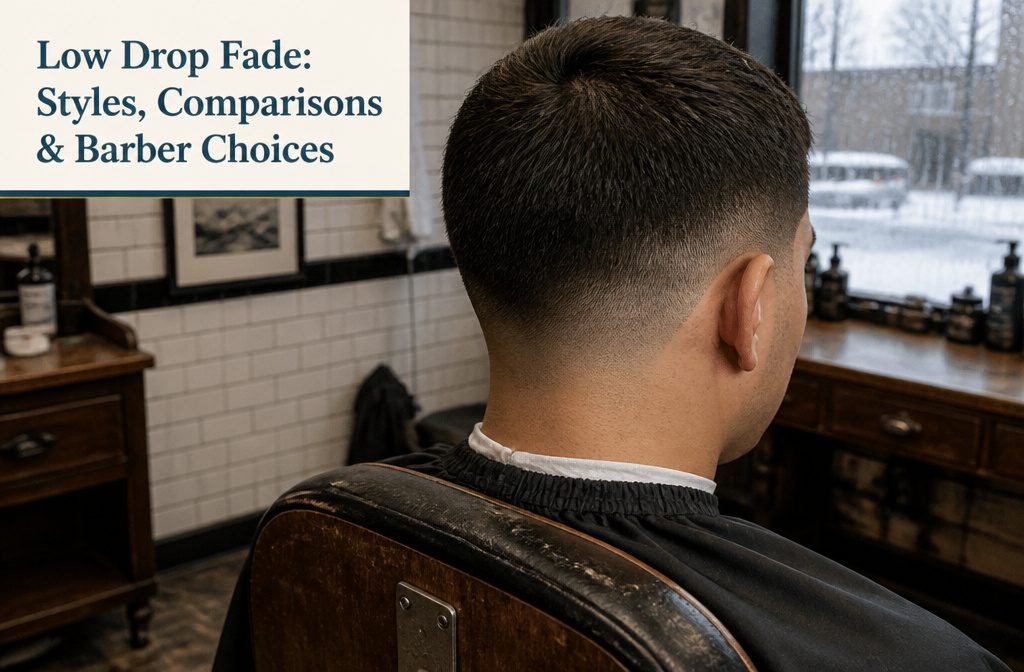
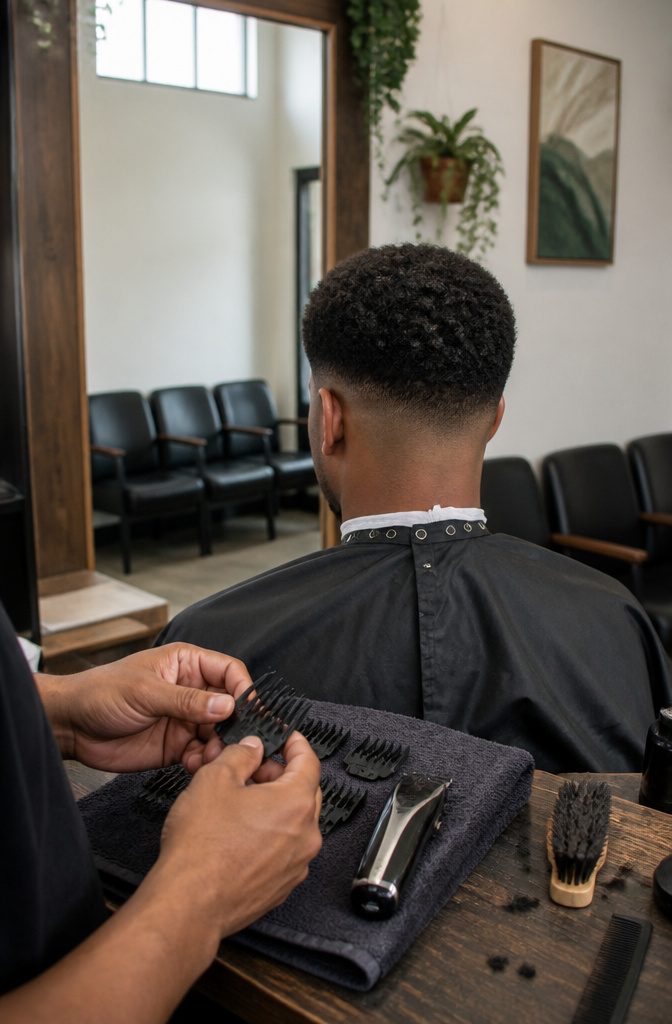
A low drop fade starts just above the ear and curves down behind it toward the neckline, following the shape of your head instead of running level all the way around.
The curve can be subtle or pronounced, and "low drop fade" alone does not settle how short the base finishes: you can drop to skin, a #½ guard at 1/16 inch, or a #1 at 1/8 inch.
1. What Low and Drop Each Mean
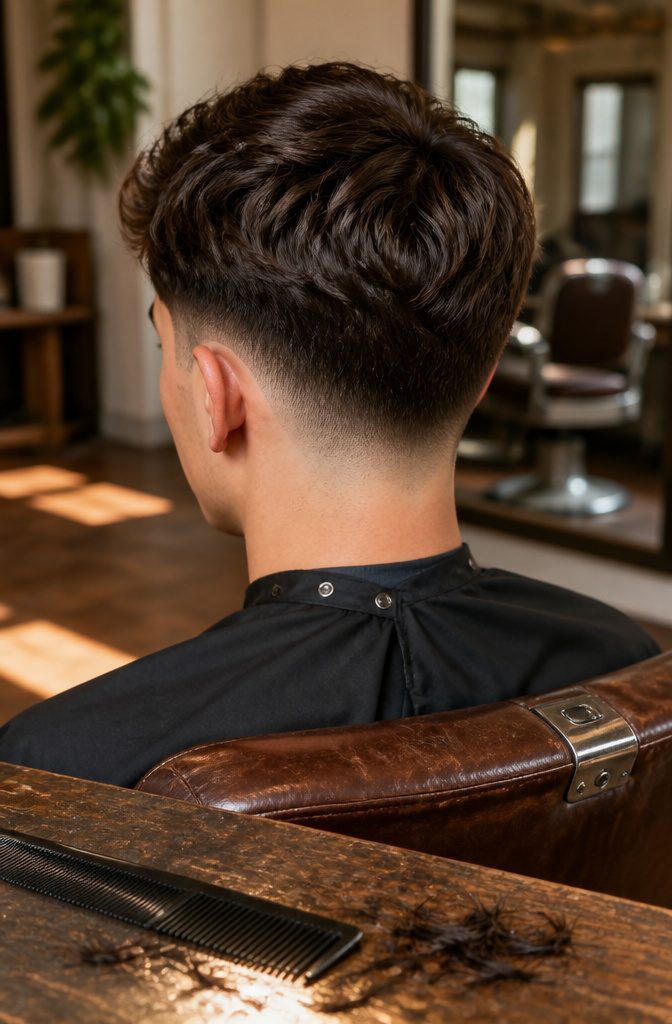
Low tells you where the fade starts, and drop describes the path it takes.
Low means the blend begins just above the ear, keeping most of your side length intact. Only the lower quarter to third of the sides sits inside the fade zone, so the cut stays subtle.
Drop is the curve: instead of running level all the way around, the line dips down behind the ear and sweeps toward the back of your neck.
That curve follows the natural shape of your head rather than cutting straight across it, giving the fade more contour and a sculpted look without making the whole thing dramatic.
Both terms describe placement and the line’s path, not the shortest guard you’ll hit at the bottom or what style sits on top.
2. How It Differs From a Level Low Fade
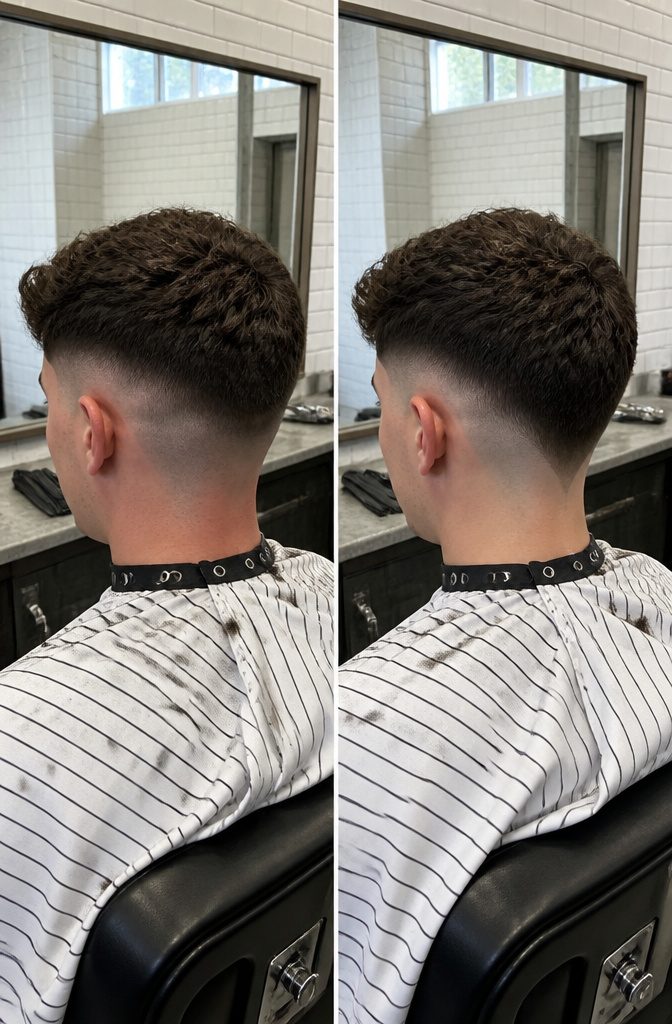
From the front, a low drop fade and a standard low fade can look identical, because both begin just above the ear. The split shows at the side and back.
A standard low fade holds a level line around the head, while a low drop fade bends downward behind the ear and follows the curve toward the neckline, exposing skin near the neck.
Some barbers cut a hybrid: level at the temples, then a turn into the drop behind the ear.
I’d name the depth when I sit down, level, slight or deep, since "drop fade" alone leaves the arc up to the barber. Slight is the safest first request; it shows a curve without a dramatic swoop.
3. Low Drop Fade Against Low Taper
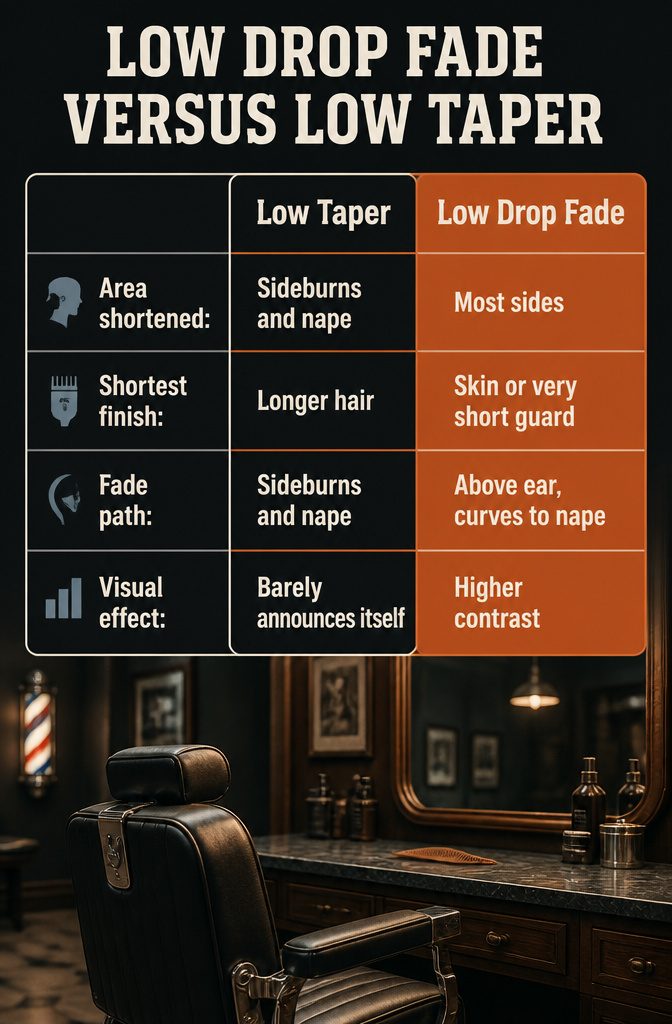
A low taper shortens hair mainly at the sideburns and nape, so most of the side keeps its length.
A low drop fade takes off far more: it blends to skin or a very short guard, starting just above the ear and curving down behind it toward the nape.
I’d pick the taper for a cut that barely announces itself, and the drop fade for contrast.
Curve a low taper behind the ear and you get a low taper drop, which has more definition than the straight version.
Barbers use "taper" and "fade" loosely, so describe the result and point to the line behind your ear instead of leaning on the label.
4. Mid and High Drop Fades
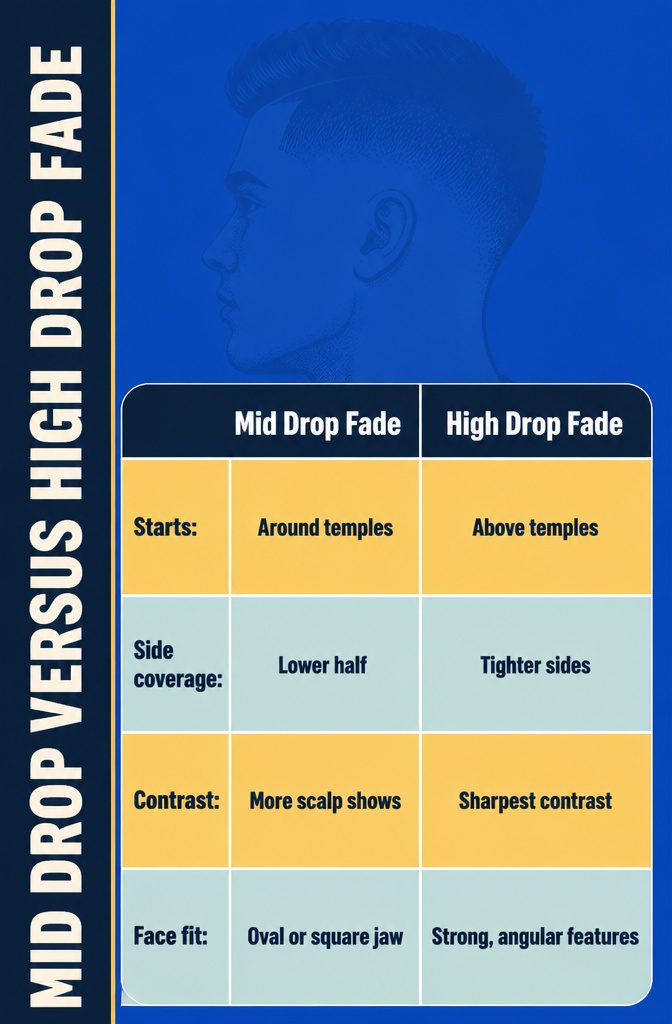
A low drop starts near the ear and keeps the most length on the sides.
Move up to a mid drop and the fade begins around the temples, covering about the lower half of the side, so more weight comes off and more scalp shows.
A high drop begins above the temples, which gives the sharpest contrast and the tightest sides.
Face shape matters too. Low suits almost any face and helps round ones in particular, mid works on oval and square jawlines, and high leans into strong, angular features.
If you’re undecided, I’d start low: a barber can raise a fade in the same appointment, but nobody can lower it until it grows.
5. Burst Fade Against Drop Fade
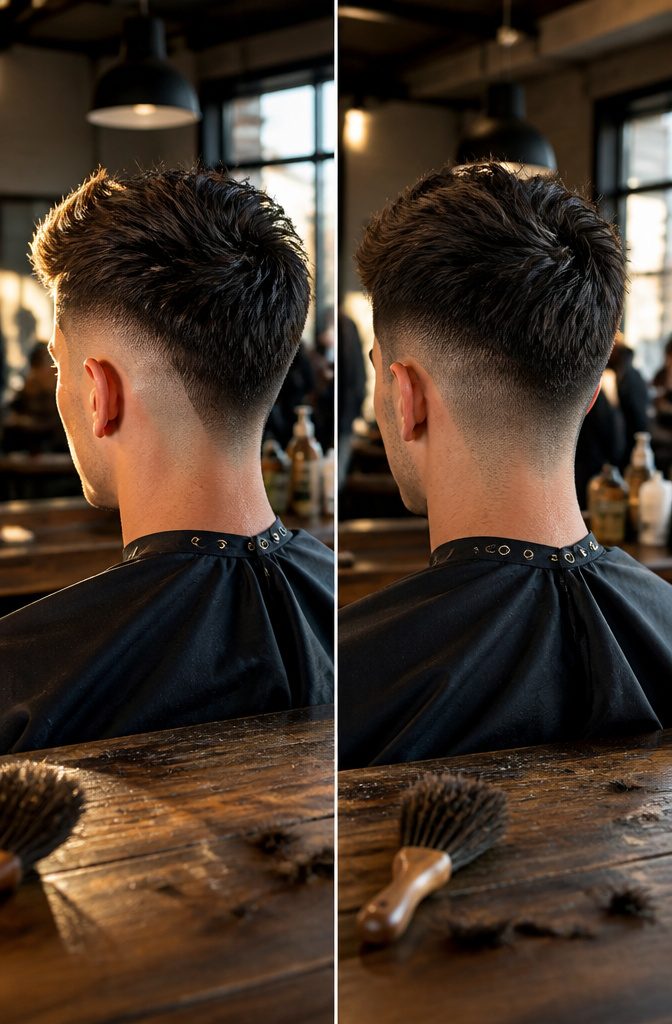
A burst fade curves in a semicircle around the ear and leaves more length at the back, while a drop keeps falling toward the neckline.
The burst stops where it started its arc; the drop doesn’t stop until it meets the natural hairline behind the ear or lower.
Both follow a curve rather than holding one level around the head, but the burst wraps the ear and quits, and the drop commits to a downward path.
The choice changes what happens to length at the back. A burst keeps it, which makes it the usual pairing for a mohawk or faux hawk where you want volume through the crown and rear.
A drop takes length all the way down behind the ear, so it works when the back needs to taper short or when you’re running the fade into a taper at the neckline.
6. How Hair Type, Density and Growth Pattern Affect the Blend
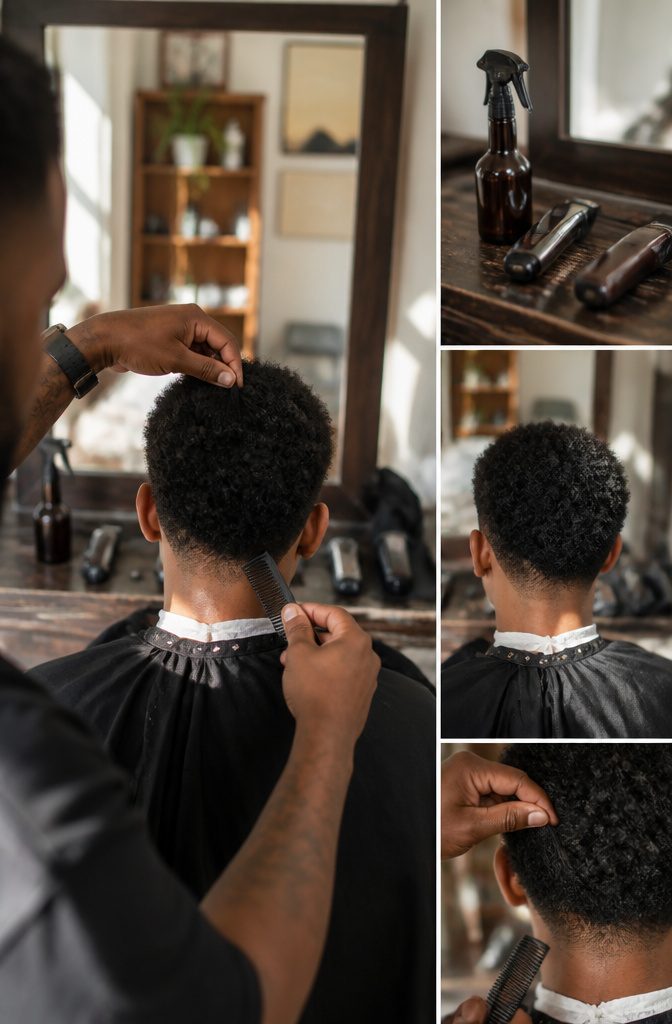
The fade adapts to straight, wavy, curly and coily hair without fighting what you already have. What changes is how the blend meets the top, and density matters more than texture when choosing how low to start.
Lower-density hair shows scalp sooner, so a skin finish exposes more of the head than it would on someone with thick coverage.
Tight coils can shrink by half or more once dry, which affects how much length the barber leaves and where the fade arc finishes.
Cowlicks and strong nape growth patterns shift where the drop can end cleanly. Mention them early so the barber can adjust the line before clippers touch skin.
The back of your head and how your hairline sits also guide the arc, since a drop that works with your skull shape holds the blend longer than one imposed against it.
7. Top Styles That Pair With a Low Drop Fade
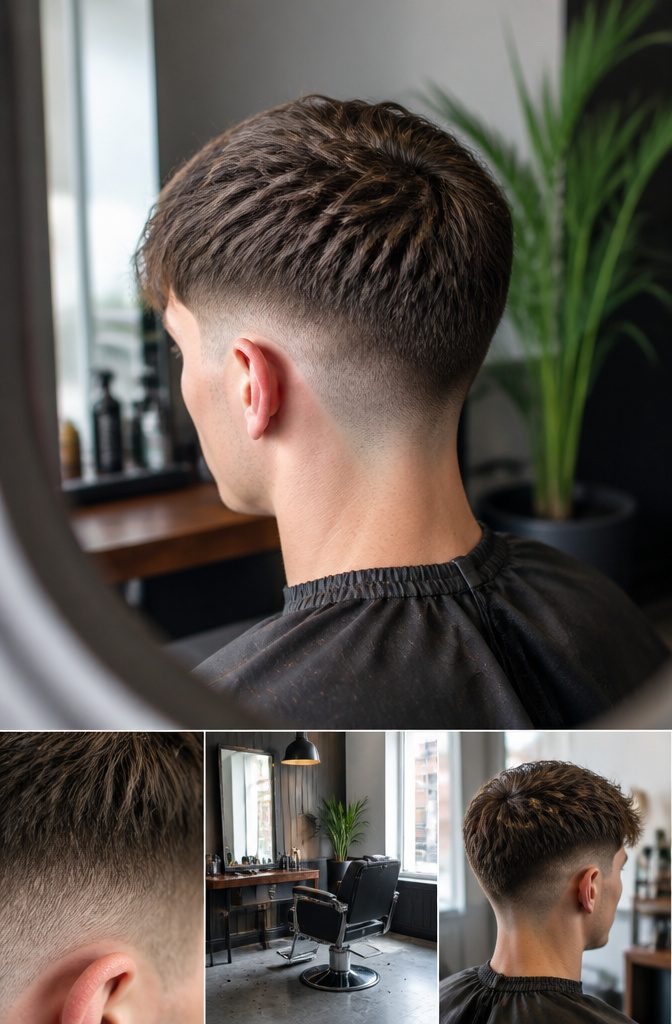
Here are the most common tops paired with a low drop fade, each offering a different balance of texture, volume, and daily upkeep:
- Curls: The fade makes natural curls pop by adding clean contrast at the sides. The structured blend keeps the curly top from looking overgrown. Avoid over-shampooing to reduce frizz.
- Waves: A sleek option that enhances natural wave texture while the drop fade adds sharp definition around the sides and back, creating a smooth taper effect.
- Slicked back: Merges classic polish with modern edge. Works best on medium to thick straight hair and suits longer face shapes. Expect daily pomade or gel work to hold the sleek finish.
- Textured crop or fringe: Short, broken pieces on top add movement and depth. A textured fringe is longer, with pieces falling toward the eyebrows. Both pair well with the low drop and read modern without much fuss.
- Bulk or longer styles: The low drop draws attention to length and texture on top without overwhelming the haircut. The fade accentuates the bulk rather than competing with it.
8. Five Choices to Clarify With the Barber
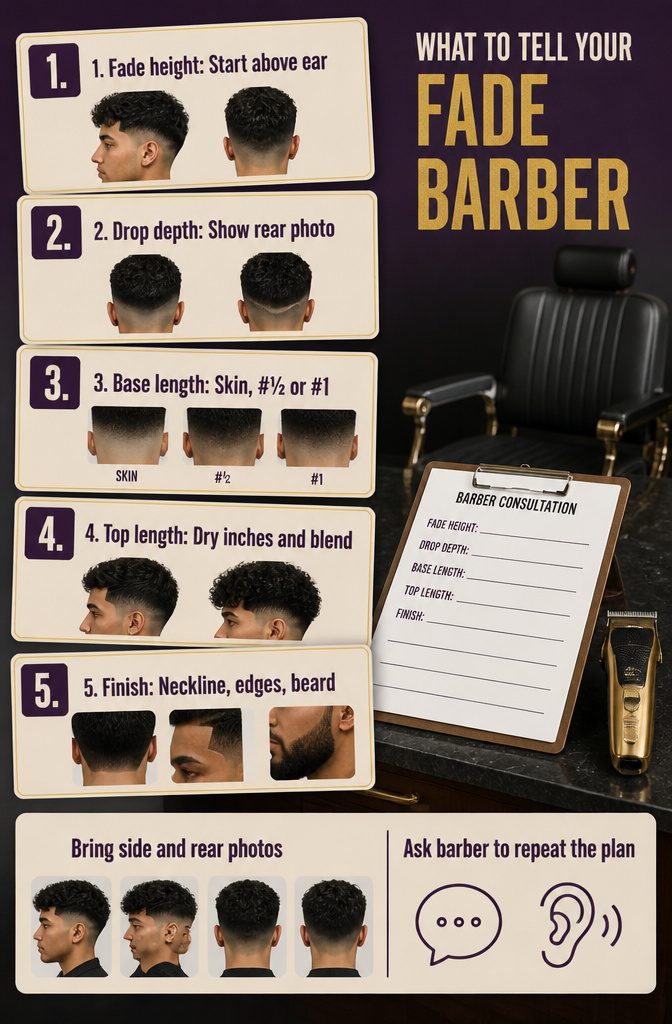
- Fade height: Say the blend begins just above the ear and stays low, then point to the spot.
- Drop depth: Choose a subtle or pronounced arc and show it in a rear photo, since two barbers can read the same words very differently.
- Shortest length: Name the base finish (skin, #½ or #1) and say it applies to the bottom only.
- Top length: Give inches, judged dry, and say whether it blends into the fade or stays disconnected.
- Neckline, edges and beard: Pick squared, rounded or tapered, a natural edge or line-up, and whether the beard connects.
Two sample briefs: "#1 at the base, 3 inches on top," or "#½ at the base, about 3 inches of dry curl." Bring side and rear photos, and ask the barber to repeat the plan back before the first pass.
How to Style the Top
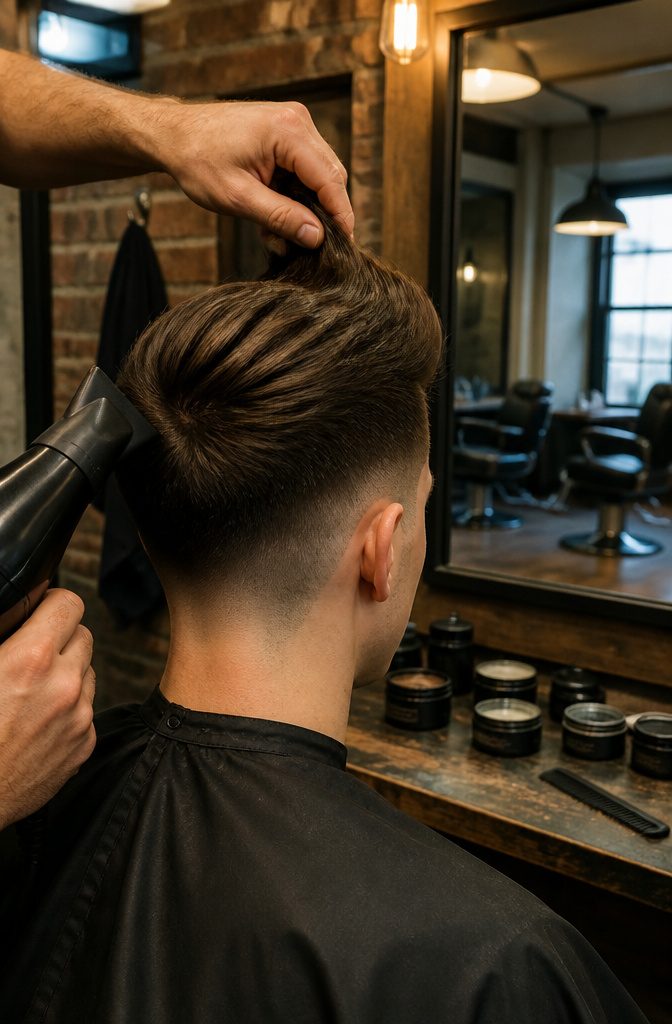
The fade grows itself; styling happens on top.
A quiff needs blow-drying upward for height, then a small amount of cream or pomade worked through to hold the shape. Long textured tops take texture clay for grip after the blow-dryer adds volume.
A short crop or fringe wants clay or paste applied to dry hair, just enough to add definition without weight. Curls get cream or light paste on damp hair, combed or finger-raked into place.
Fine hair loses badly with heavy products.
Stick to lightweight clay or paste, used sparingly, or the top flattens and the fade does all the work alone. Pomade suits classic shapes like a side part or slicked-back look, where you need control and shine.
Wash two to four times a week to clear product buildup without stripping natural oil. The top decides your morning routine and the product shelf behind it; the fade just frames it.
How Often the Fade Needs a Cleanup
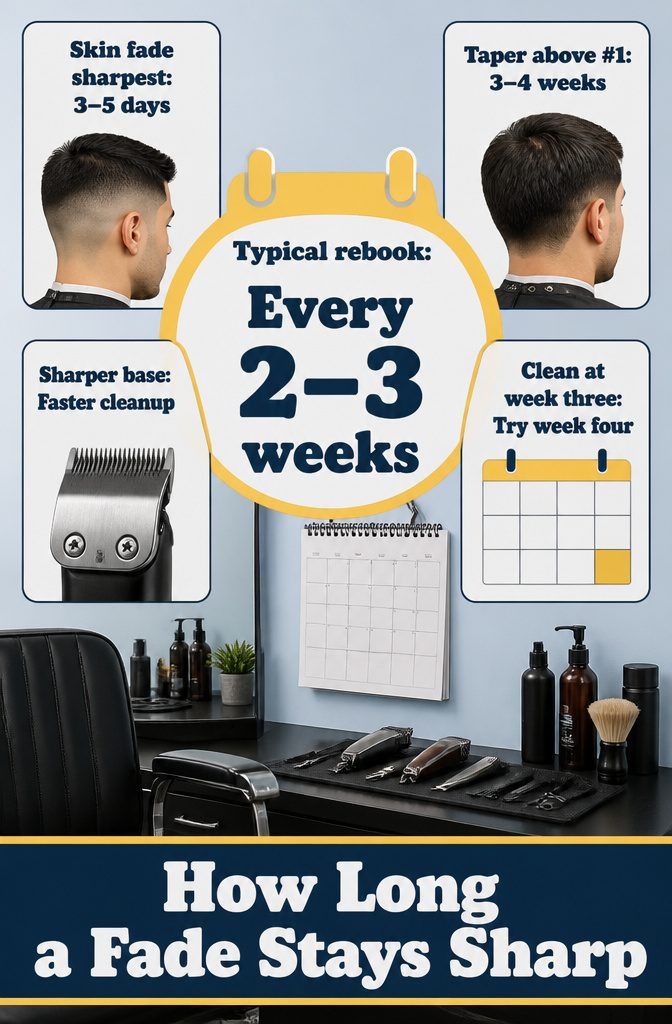
A skin fade looks sharpest for about three to five days, but most wearers book their next visit every two to three weeks.
Taper versions that end above a #1 stretch longer, holding shape for three to four weeks before regrowth becomes obvious. The sharper the base, the faster you’re back in the chair.
I rebook just before regrowth bothers me and note how long that took. If your fade still looks clean at the three-week mark, you’ve bought yourself a fourth week; if it looks fuzzy by day ten, plan for every two.
Brushing the sides upward between cuts emphasizes the fade line even as hair grows out, buying a few extra days before the blend softens too much.
Base Length Is a Separate Choice
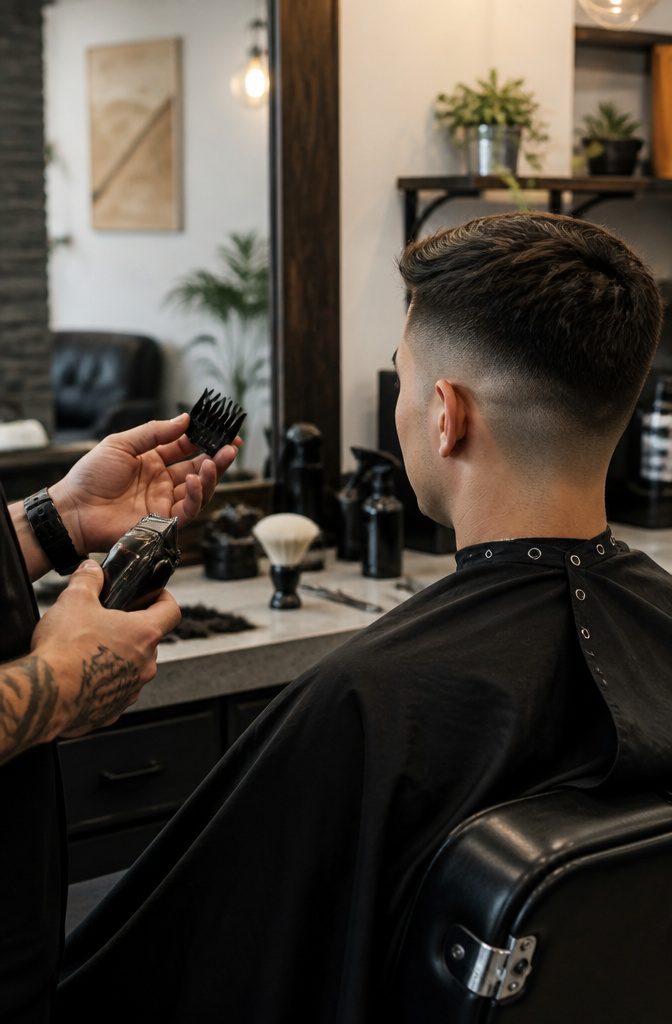
"Low drop fade" alone does not settle how short the base finishes.
The curve describes the line’s geometry, not its closeness, so you can drop to bare skin or stop at a guarded length. A skin finish shows the highest contrast and visible stubble within about a week.
A #½ guard leaves very short stubble at 1/16 inch (about 1.6 mm) with softer contrast. A #1 guard leaves short visible hair at 1/8 inch (about 3.2 mm), the lowest contrast and most forgiving option as it grows.
Those sizes follow Wahl’s guard chart. Other brands differ, and shops use "zero" and "shadow" to mean different things, so name the finish length you want when you book.
A guarded base grows out more gradually and suits anyone rebooking every three to four weeks or whose skin reacts to a bare finish.
Checking the Arc Before the Blend Begins
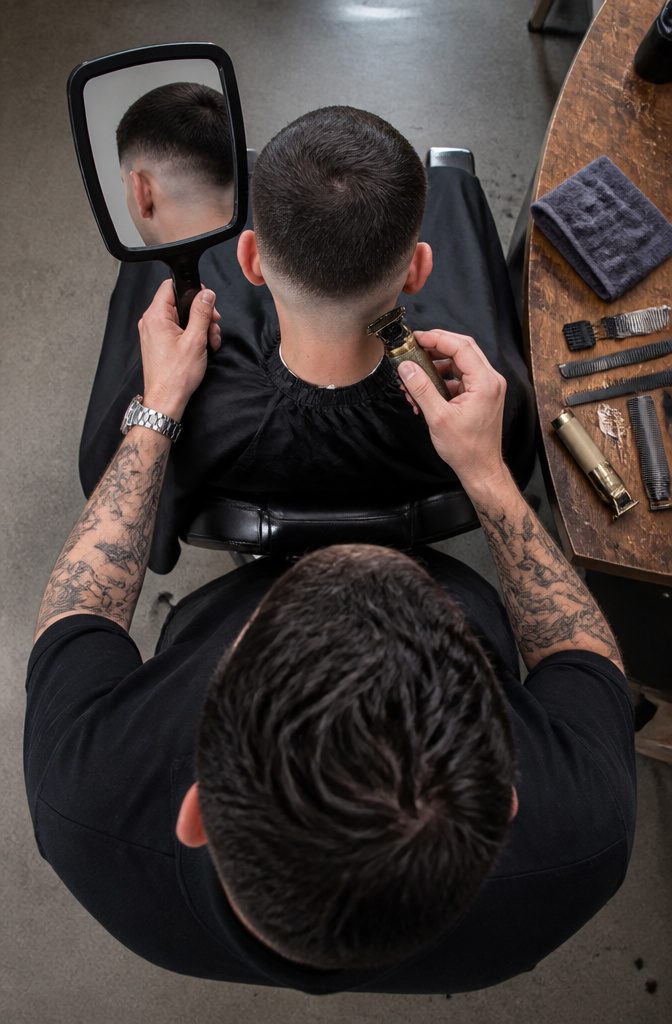
The arc should be marked and checked on both sides before any blending starts, because an uneven guideline cannot be blended away.
A barber marks the curve with the clipper’s outline edge or a detailing pass, then steps behind the chair to confirm symmetry.
An arc that sits lower on one side is one of the most common failures, and the fix is redrawing the line or waiting for regrowth.
The order matters. A sound low drop fade starts with the curve, not the blend.
The barber marks the arc, confirms both sides match, then graduates the lengths to follow it. That tells you when to speak up: ask for a hand mirror before blending begins, not after.
Why a Very Short Top Makes the Drop Less Noticeable
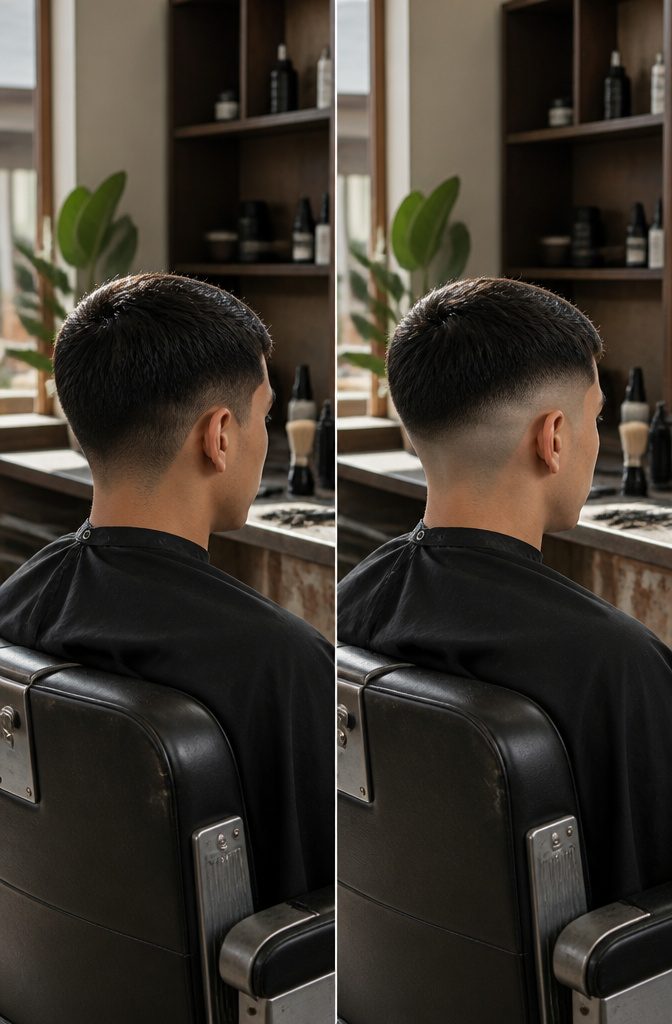
A drop fade announces itself through contrast: the line dips behind the ear and the eye follows it against the length above.
Cut the top to half an inch to an inch and there is little hair for that curve to frame, so the drop reads as a soft arc instead of a statement.
Less contrast between top and sides also keeps the whole cut looking clean rather than choppy. I’d pick this route for anyone who wants the shape without the attention, or whose fine hair won’t hold texture at length anyway.
Leave the top longer and the opposite happens. The curve pushes texture and volume toward the crown, and the drop shows up sharply behind the ear.
Skin Finish and Razor Bumps on Coarse or Curly Hair
Skin Finish and Razor Bumps on Coarse or Curly Hair
Very close shaving can cause razor bumps, particularly with coarse or curly hair. The American Academy of Dermatology explains that hairs cut very short can curve back into the skin, and it advises against shaving too closely.
The guidance targets the beard area, but the same mechanism applies to fades. A guarded base is the simple fix if you want a tight fade but want to avoid irritation on the neck or behind the ears.
Bumps that keep returning on the neck or scalp may be acne keloidalis nuchae, which the AAD says can scar without treatment, so see a board-certified dermatologist if the problem persists.
Frequently Asked Questions
What is a low drop fade?
A low drop fade is a fade that starts just above the ear and curves downward behind the ear toward the nape, rather than holding a level line around the head.
The term describes the line’s path and starting point, not how short the base finishes or what style sits on top.
From the front it can look identical to a standard low fade, but the curve shows at the side and back.
What does drop mean in a fade?
Drop describes the curve the fade takes behind the ear. Instead of cutting straight across at one level, the line dips down behind the ear and sweeps toward the back of the neck, following the natural shape of your head.
That curve adds contour and a sculpted look without making the whole cut dramatic.
How do I ask for a low drop fade?
Tell the barber the blend begins just above the ear and stays low, then describe the arc you want (subtle or pronounced) and show it in a rear photo.
Name the base finish (skin, #1/2 or #1), give top length in inches judged dry, and specify neckline and edge preferences. Ask the barber to repeat the plan back before the first pass.
How often does a low drop fade need a trim?
Most people book every 2 to 3 weeks to keep the fade looking sharp.
A skin finish shows regrowth within 3 to 5 days but typically holds acceptable shape for 2 to 3 weeks. Taper versions that end above a #1 stretch longer, holding shape for 3 to 4 weeks before regrowth becomes obvious.
Is a low drop fade the same as a burst fade?
No. A burst fade curves in a semicircle around the ear and leaves more length at the back, while a drop keeps falling toward the neckline.
The burst stops where it started its arc, but the drop commits to a downward path and continues until it meets the natural hairline behind the ear or lower.
Can a low drop fade end at a #1 instead of skin?
Yes. The curve and shortest length are separate choices.
A #1 guard leaves short visible hair at 1/8 inch (about 3.2 mm) with softer contrast, while skin shows the highest contrast and visible stubble within about a week. A guarded base grows out more gradually and suits anyone rebooking every 3 to 4 weeks.
What is the difference between a low drop fade and a mid or high fade?
A low drop starts near the ear and keeps the most length on the sides.
A mid drop begins around the temples, covering about the lower half of the side, so more weight comes off. A high drop starts above the temples, giving the sharpest contrast and tightest sides.
Does a low drop fade work on fine or thinning hair?
Yes, usually with a guarded base rather than skin.
Lower-density hair shows scalp sooner, so a skin finish exposes more of the head than it would on someone with thick coverage. A #1/2 or #1 base offers a tight fade with softer contrast that suits finer hair better.