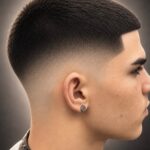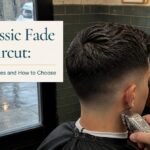
A low fade sits about an inch above the ear and drops from there, while the top can run anywhere from a uniform buzz at 3/8 inch to a pompadour tall enough to need blow-drying and strong-hold product.
The fade height decides how much contrast you get between the top and the sides: low keeps the transition subtle and pushes most of the regrowth time past 2 weeks, high and burst cuts show every day of growth the moment they start coming back.
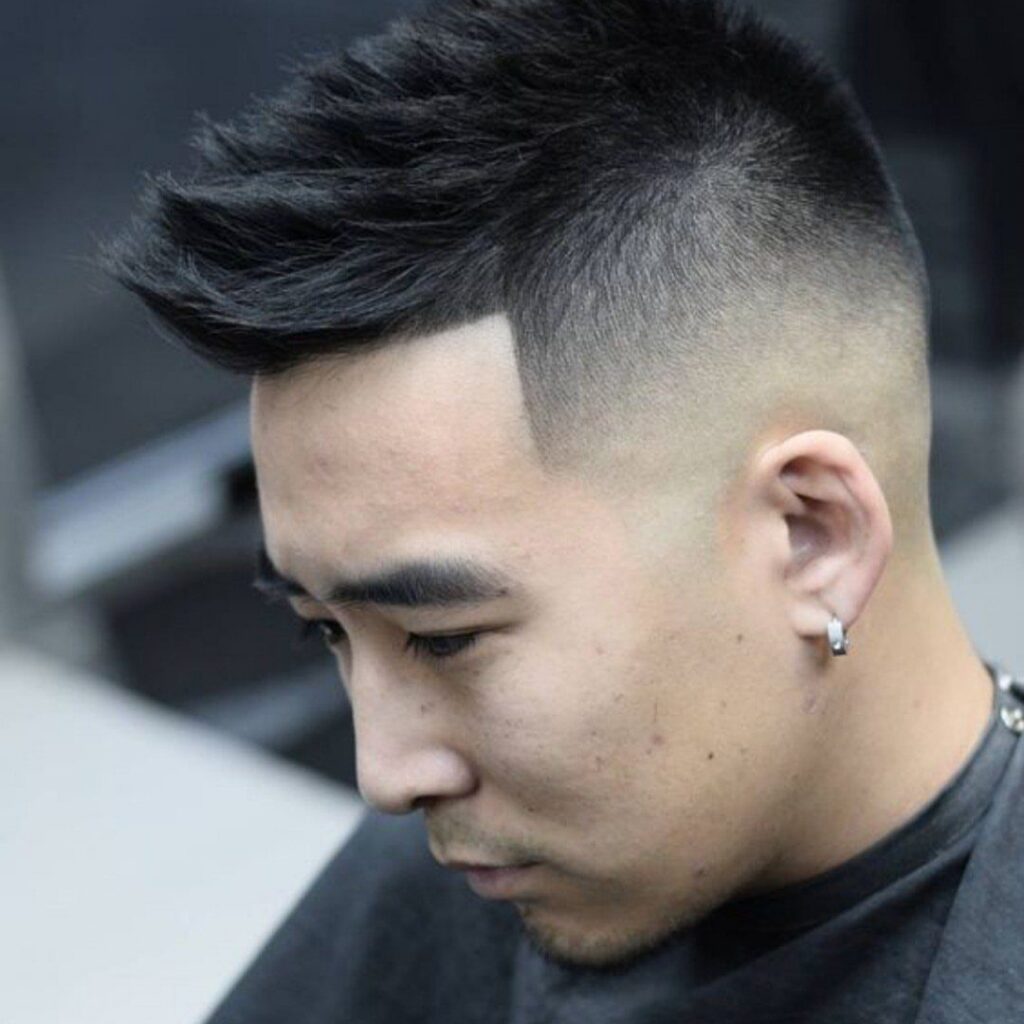
1. Faux Hawk
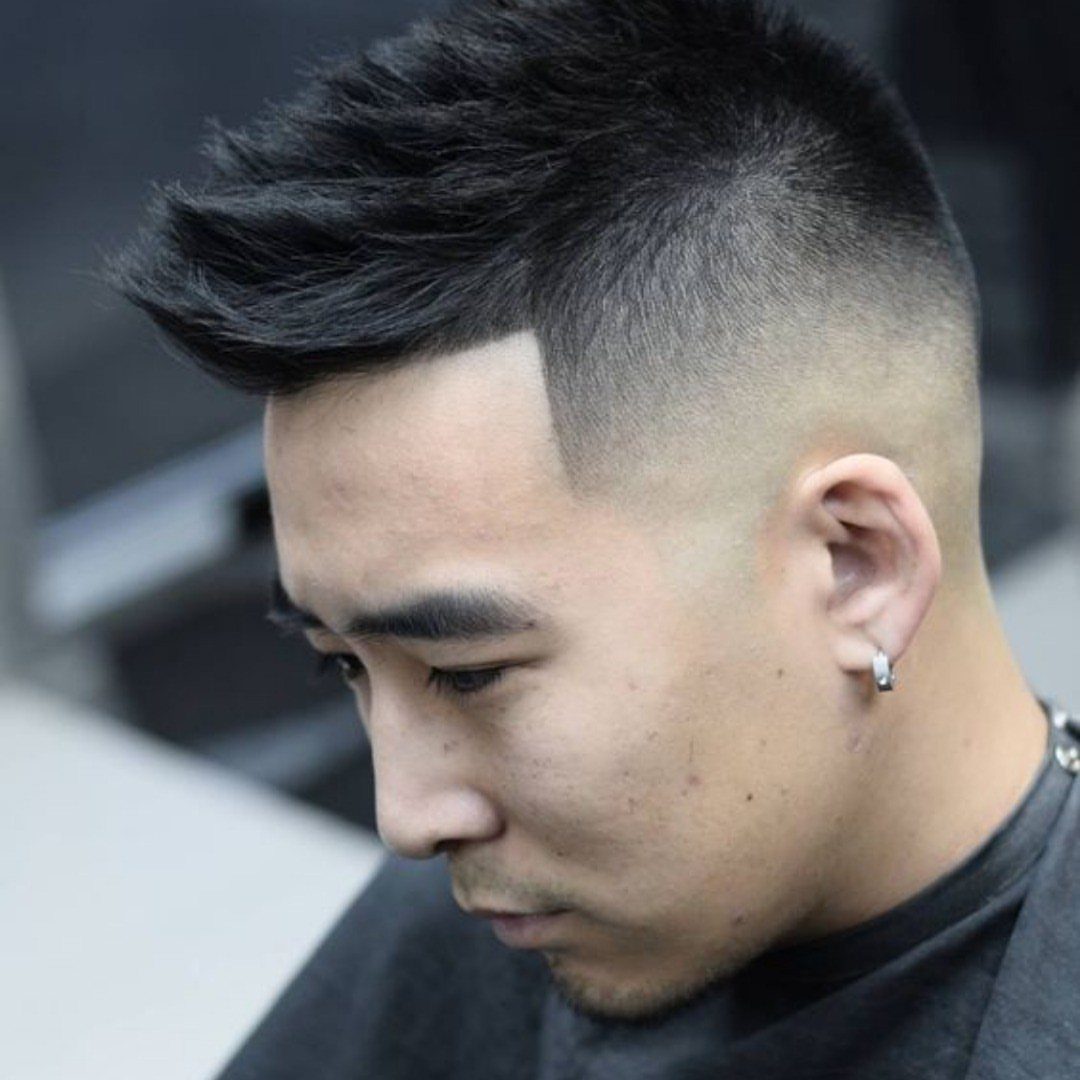
A strip of hair along the center of the head lifts upward and peaks at the crown, while the sides fade low.
The shape lands somewhere between styled and dramatic, cleaner than a full mohawk but more defined than just combing everything back.
Styling takes product with hold.
Gel or pomade works through damp hair, and fingers or a comb push the center strip up and slightly toward the middle. The sides stay tight with a fade that starts an inch or so above the ear.
2. Curly Top Low Fade
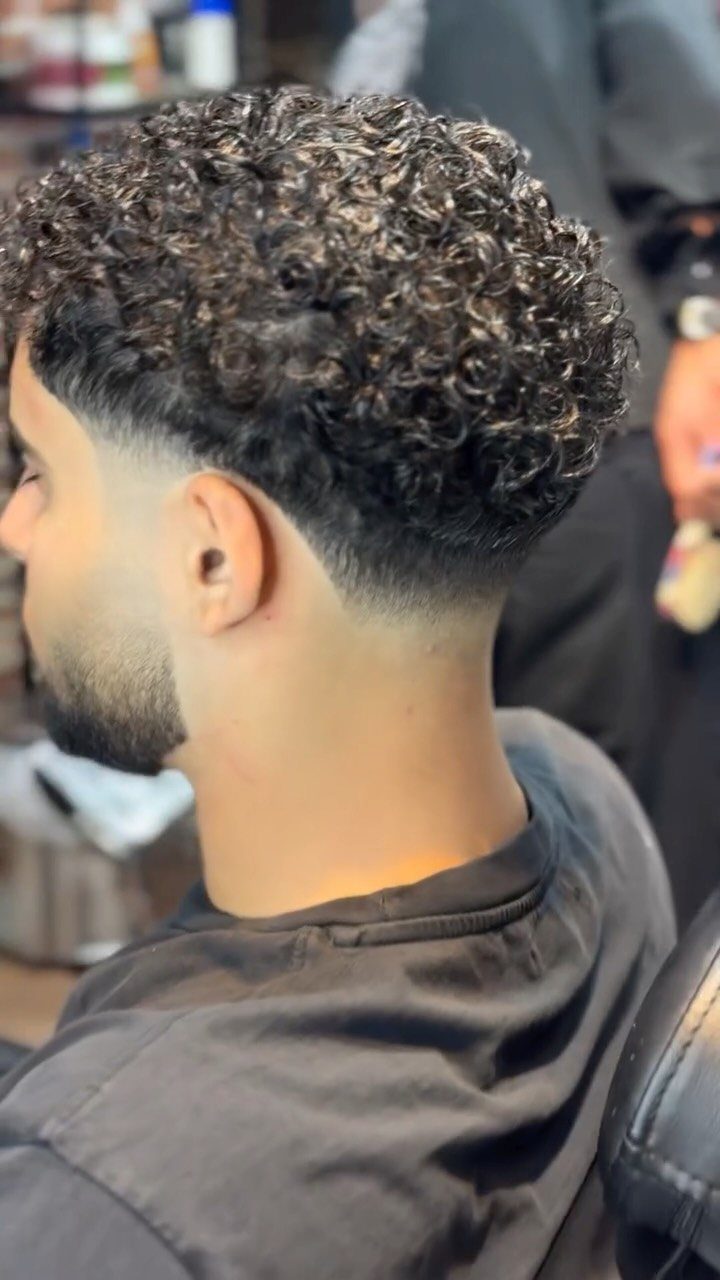
Natural curl sits on top, full and textured, while the sides fade low and clean.
Curl cream or leave-in conditioner keeps the top from drying out, and fingers work through it to separate the curls.
No brush, no comb. The fade does the shaping work, so the curl can stay loose and natural.
3. Buzz Cut
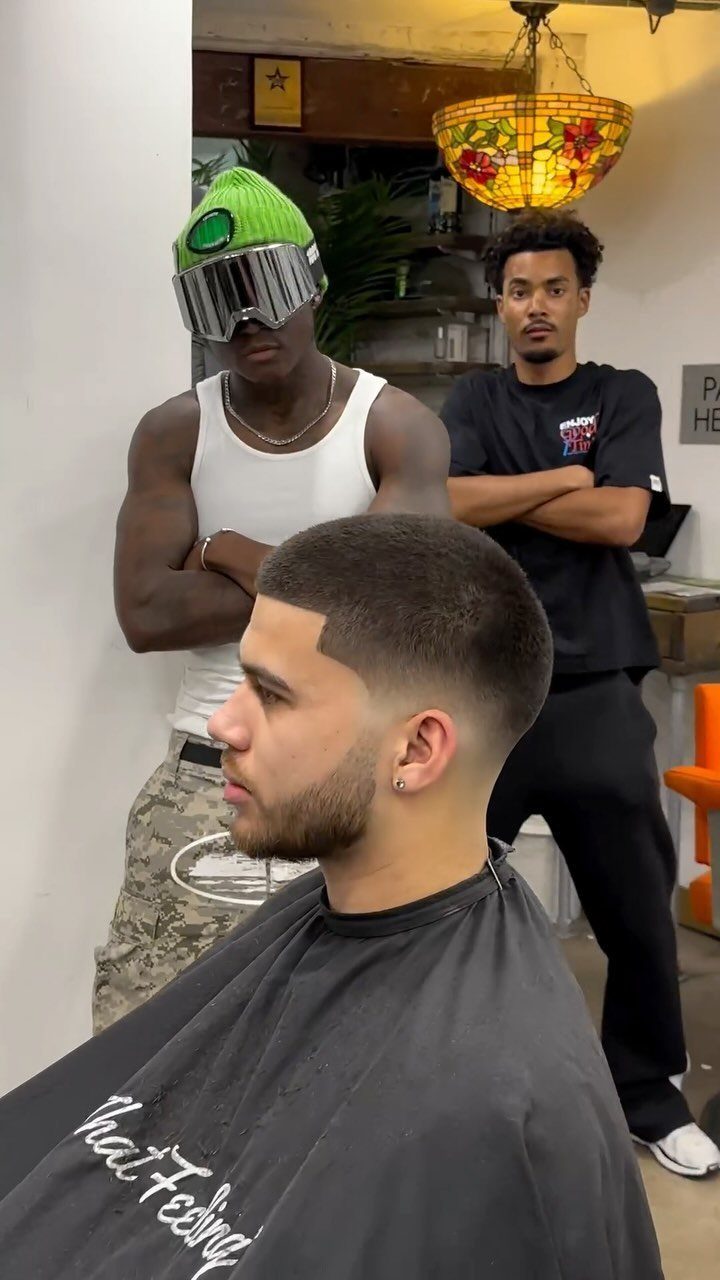
The top stays uniform and short, clipped to one guard length across the entire crown, while the sides fade down low. The result is clean, fast to maintain, and about as low-effort as hair gets.
A #3 or #4 guard on top is common, leaving around 3/8 to 1/2 inch of hair. The fade sits low, starting an inch or less above the ear and running down to skin or a whisper above it.
No product needed. Wash it, dry it, done.
4. Spiky Low Fade
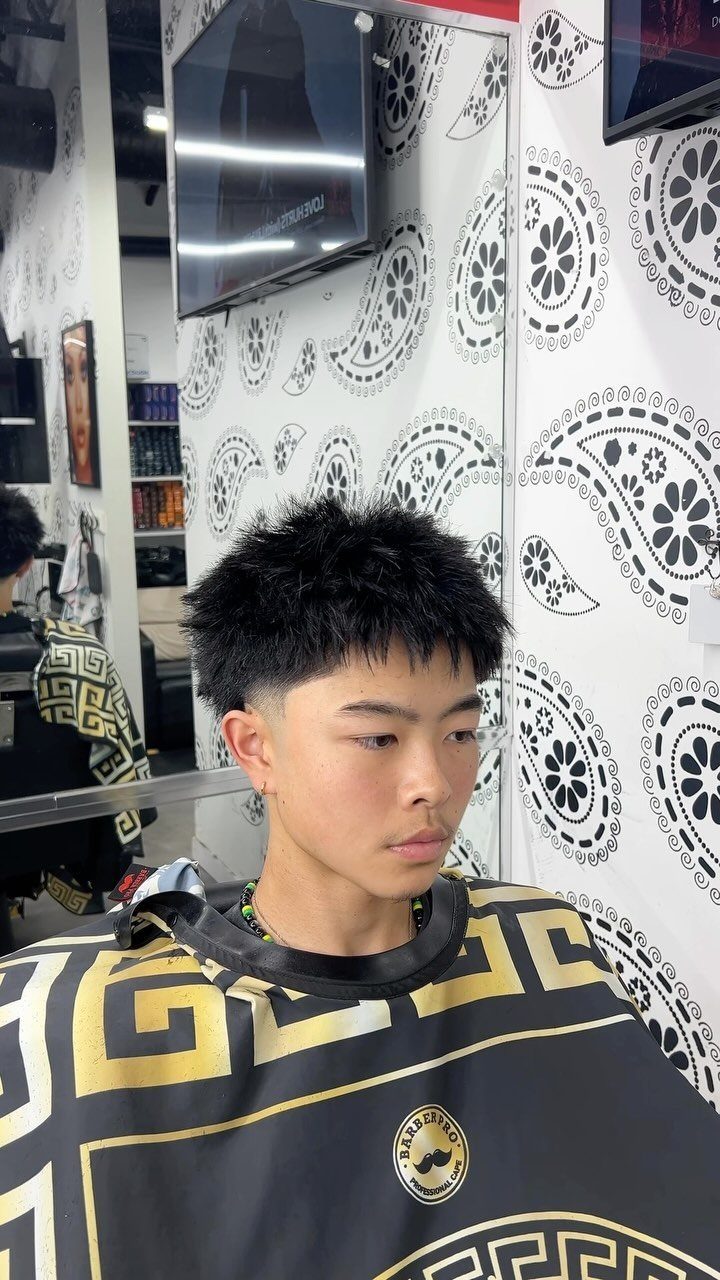
The top is cut in short, separated pieces that stand upright, while the sides fade low and tight. Texture sits in every strand, and the spikes stay defined without looking stiff or overdone.
Styling takes matte paste or clay.
A small amount goes through damp or dry hair, lifted and separated as you apply it. You want spikes that hold their direction but still have some give.
Ask for point cutting or razor work on top to create the texture, and a low fade that keeps the sides clean without pulling attention away from the spikes.
5. Taper Fade
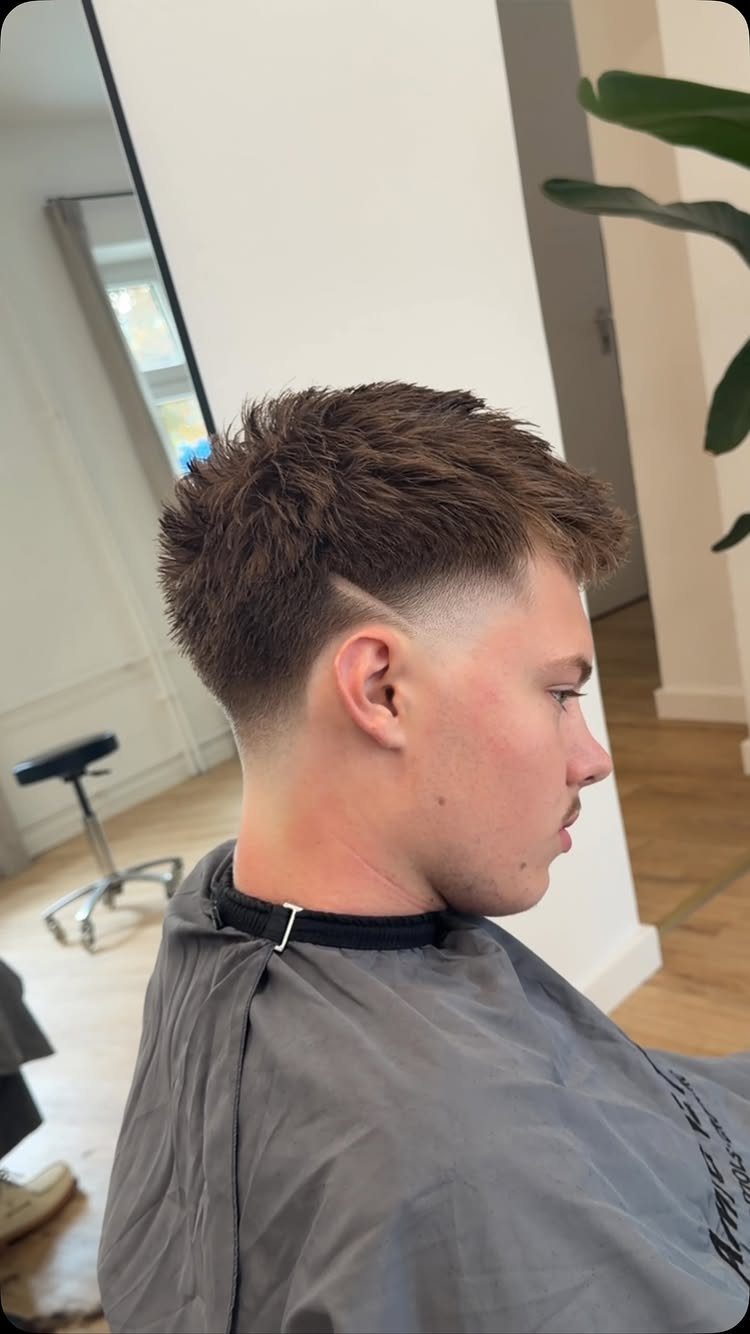
The sides taper gradually rather than fading to skin, leaving more hair at the edges and a softer line between top and sides. The transition is gentler, and the overall shape reads less stark than a skin fade.
A taper works well when the hair on top has length and texture, since the sides stay present enough to balance it. Styling depends on the top: fingers and product for texture, a comb for something cleaner.
Tell the barber where to start the taper. Low means it begins just above the ear, and the blend happens over a longer distance than a fade.
6. Wavy Low Fade
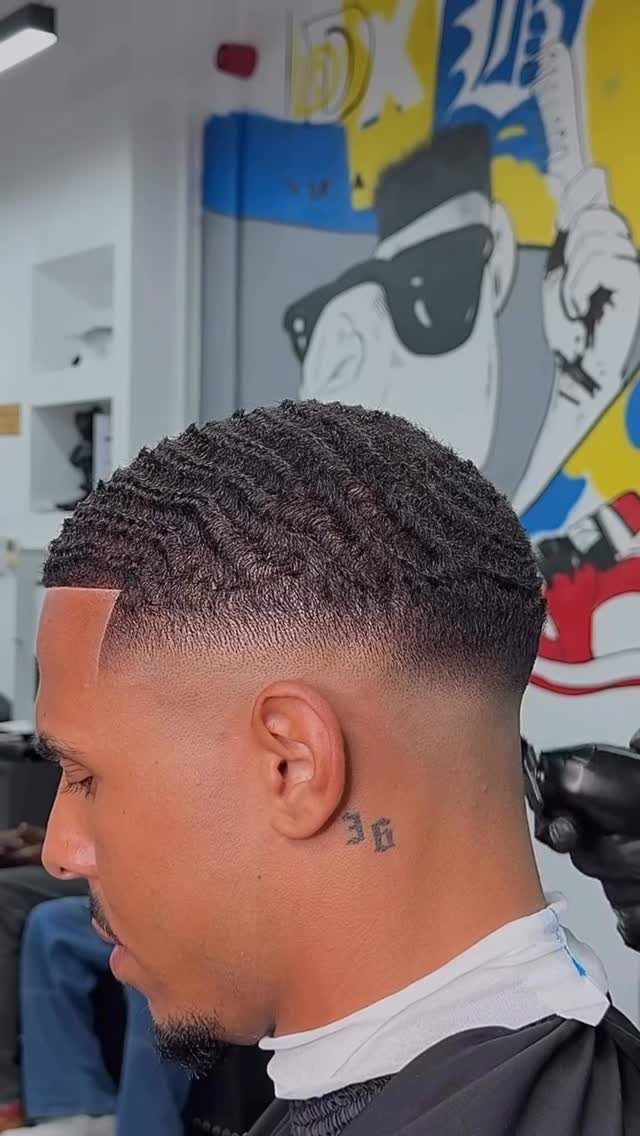
Wave remains visible on top, textured and loose, while the sides fade low and stay out of the way. The natural movement does most of the styling work, and the fade keeps the shape clean without flattening everything.
Sea salt spray or light mousse defines the wave without weighing it down. Apply to damp hair, scrunch or twist sections with your fingers, and let it air dry or use a diffuser if time is short.
7. Fringe with Low Fade
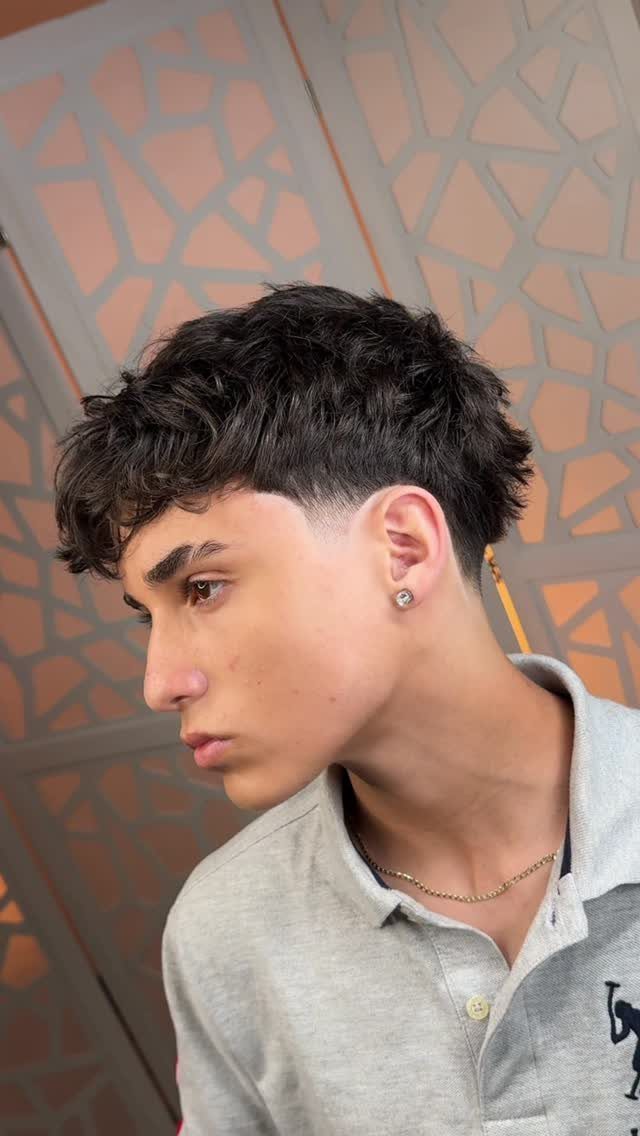
The top falls forward, textured and long enough to cover the forehead, while the sides fade low and stay clean. The fringe can sit straight across or angle slightly to one side, depending on how you comb it.
Styling takes light paste or cream worked through damp hair, then combed or finger-brushed forward. The fade keeps the sides out of the way, so all the weight and movement stay up front.
Ask for length on top, enough to reach past the eyebrows, and a low fade that starts just above the ear.
8. Low Fade with Design
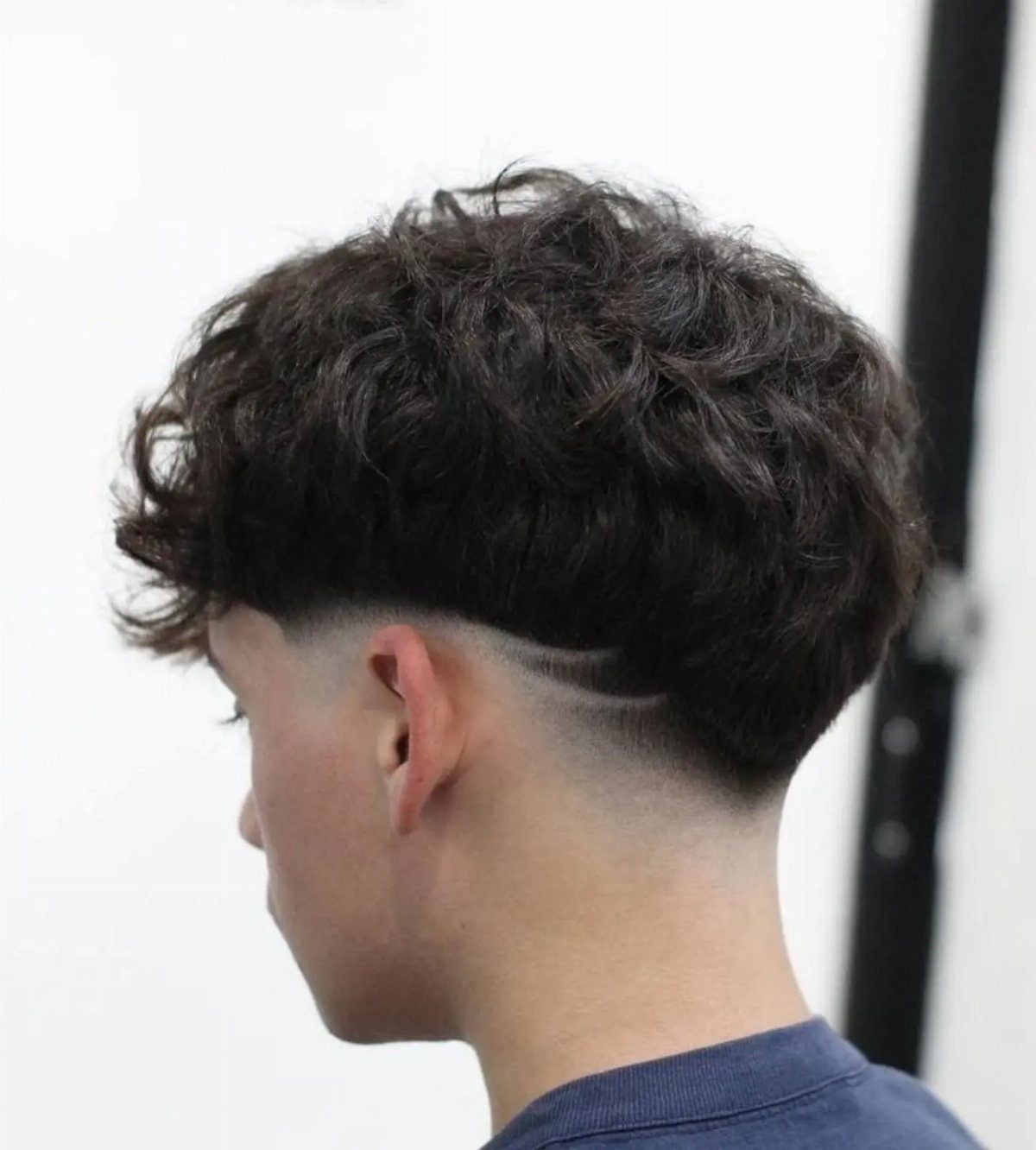
The design sits where the fade is shortest, most often at the temple or an inch above the ear. The design can be a single stripe, 2 parallel lines, or something more detailed like a geometric shape.
The barber uses clippers or a trimmer to carve the design once the fade is finished. It stays visible for about a week before it blurs and needs a touch-up.
Show your barber a photo if the pattern is more involved than a single line. Simple lines are easier to maintain than intricate patterns.
9. Low Burst Fade with Curly Top
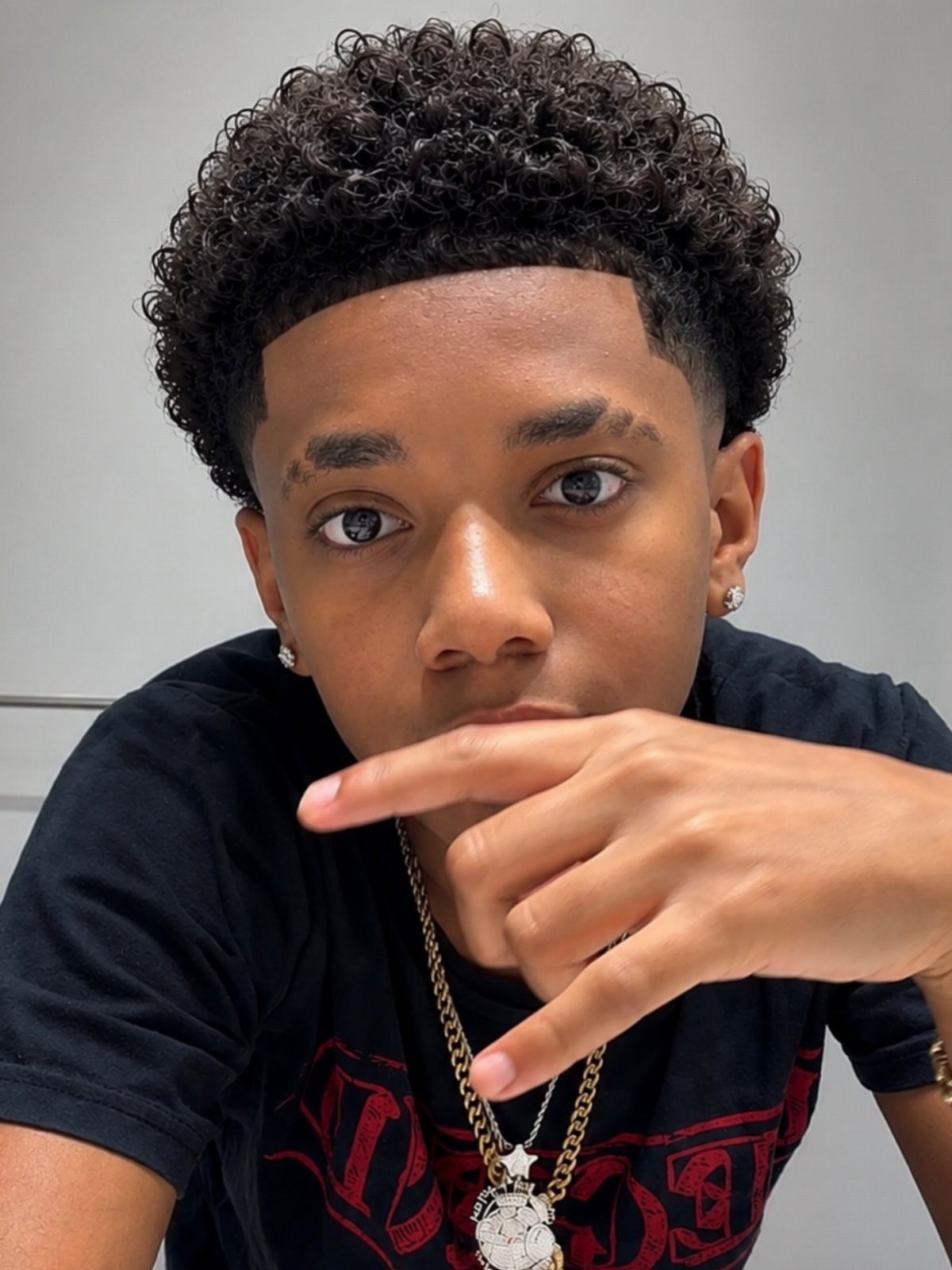
The fade curves around the ear instead of running straight down, following the natural arc of the hairline.
Tell the barber to follow the ear contour with the fade, leaving the back longer than a traditional low fade would.
10. Burst Fade Textured Fringe
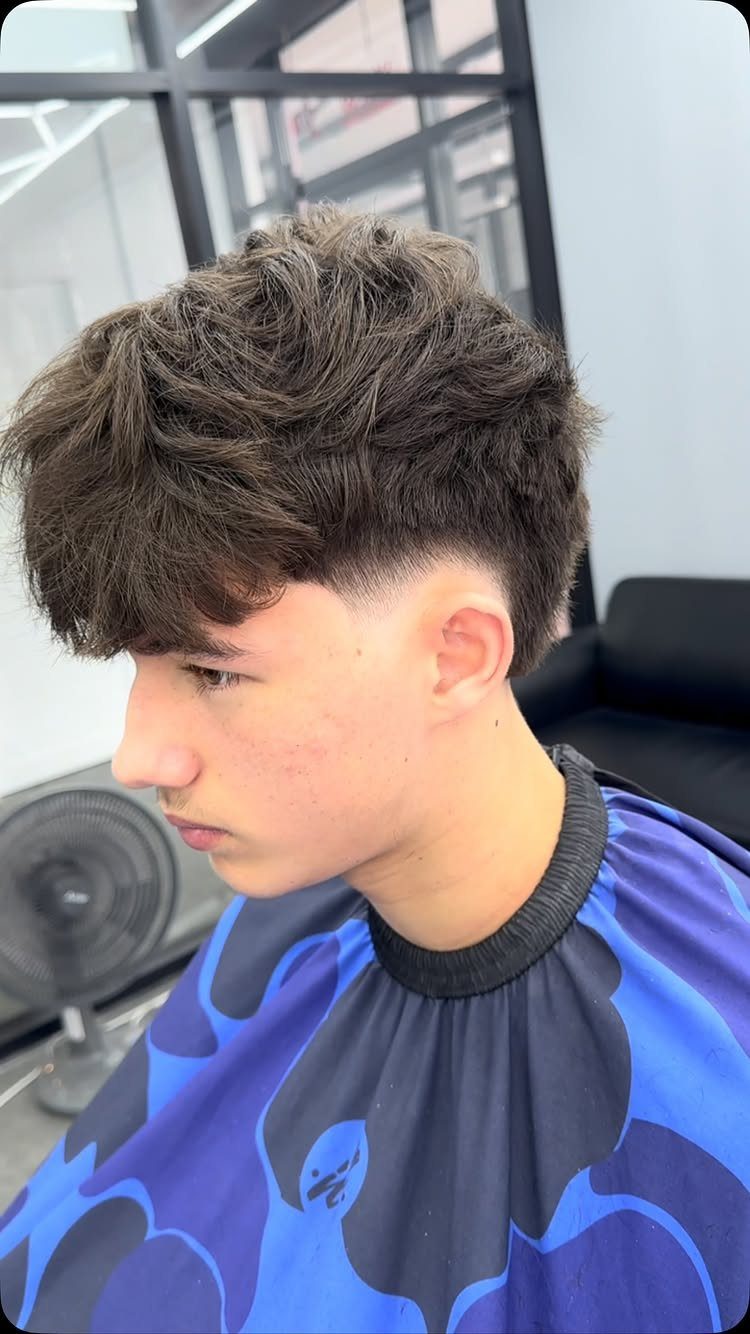
The fringe hangs forward across the forehead with enough weight to hold its shape, and the fade arcs around the ear to keep the sides clean.
The top has separation in every strand, so the fringe looks deliberate rather than flat.
Matte clay or paste goes through damp hair, pushed forward and slightly to one side. Fingers create the texture, lifting and separating as you work the product in.
Ask for point cutting or texturizing on top to avoid a blunt edge, and a burst fade that arcs around the ear rather than dropping straight down.
11. Spiky Mohawk Burst Fade
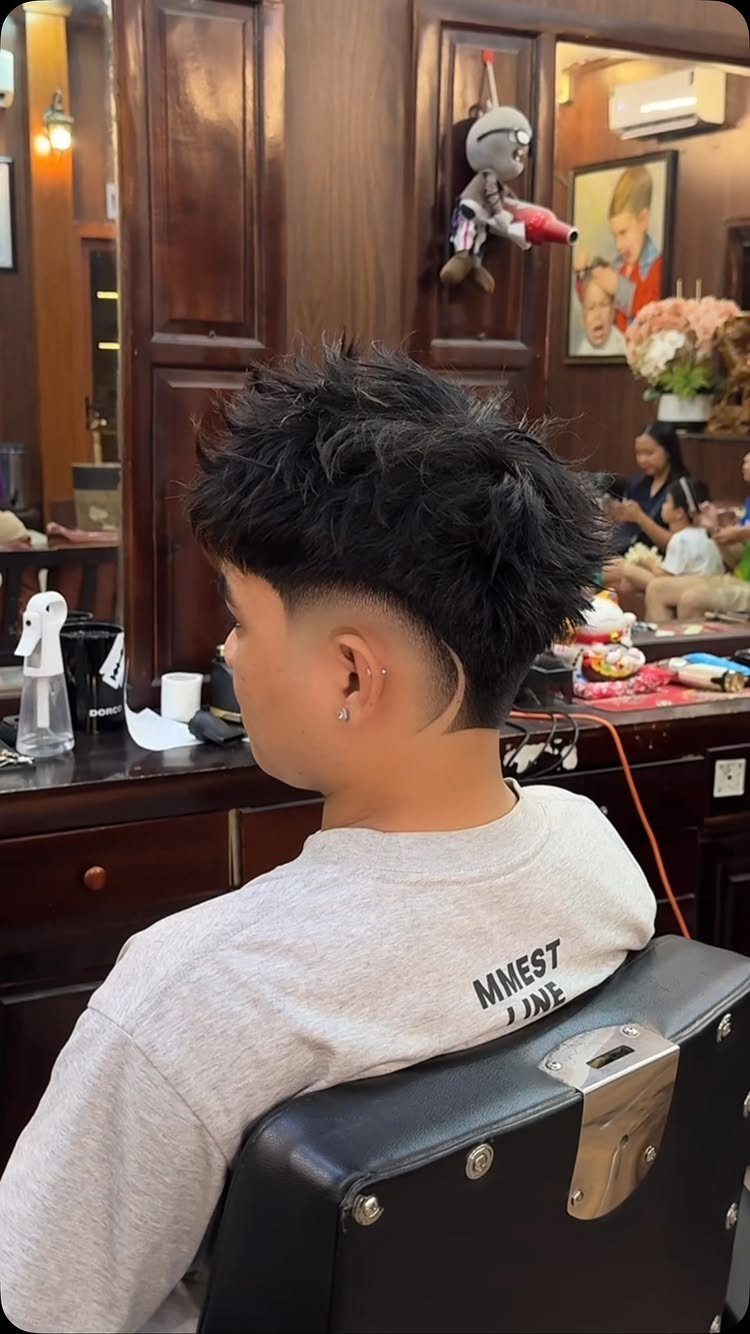
Spikes run along the center of the head, lifted and separated, while a burst fade curves around the ears and keeps the sides tight. The shape is bold, with clear definition between the raised top and the faded sides.
The spikes should hold their shape without looking wet or crunchy.
The fade follows the ear contour, so the transition from short to long arcs rather than running in a straight vertical line.
12. Burst Taper Fade
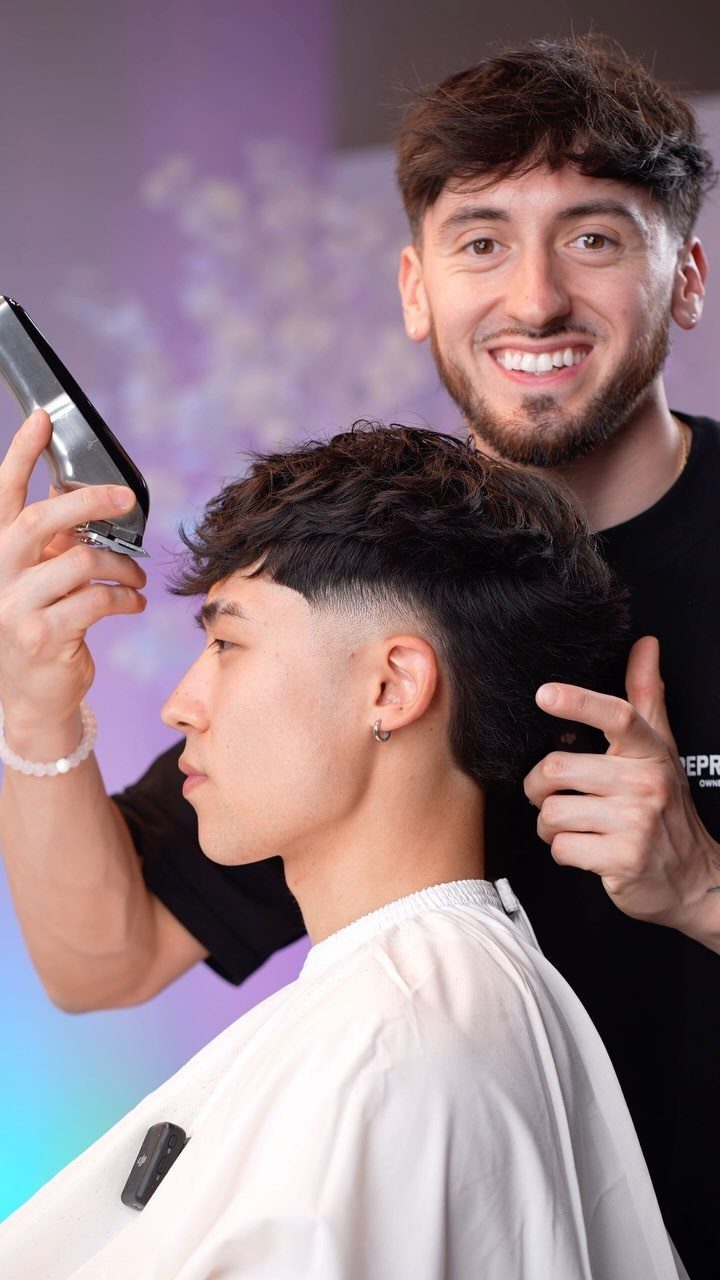
The fade curves around the ear and tapers down gradually, leaving stubble or short hair at the edges rather than taking it to skin.
This works well when you want the shape of a burst fade without the maintenance of shaving the sides every few days. The taper still defines the contour but leaves enough hair that regrowth is less obvious.
Tell the barber you want a burst taper, not a skin fade, and specify how short the sides should go at their lowest point.
13. Classic Low Fade
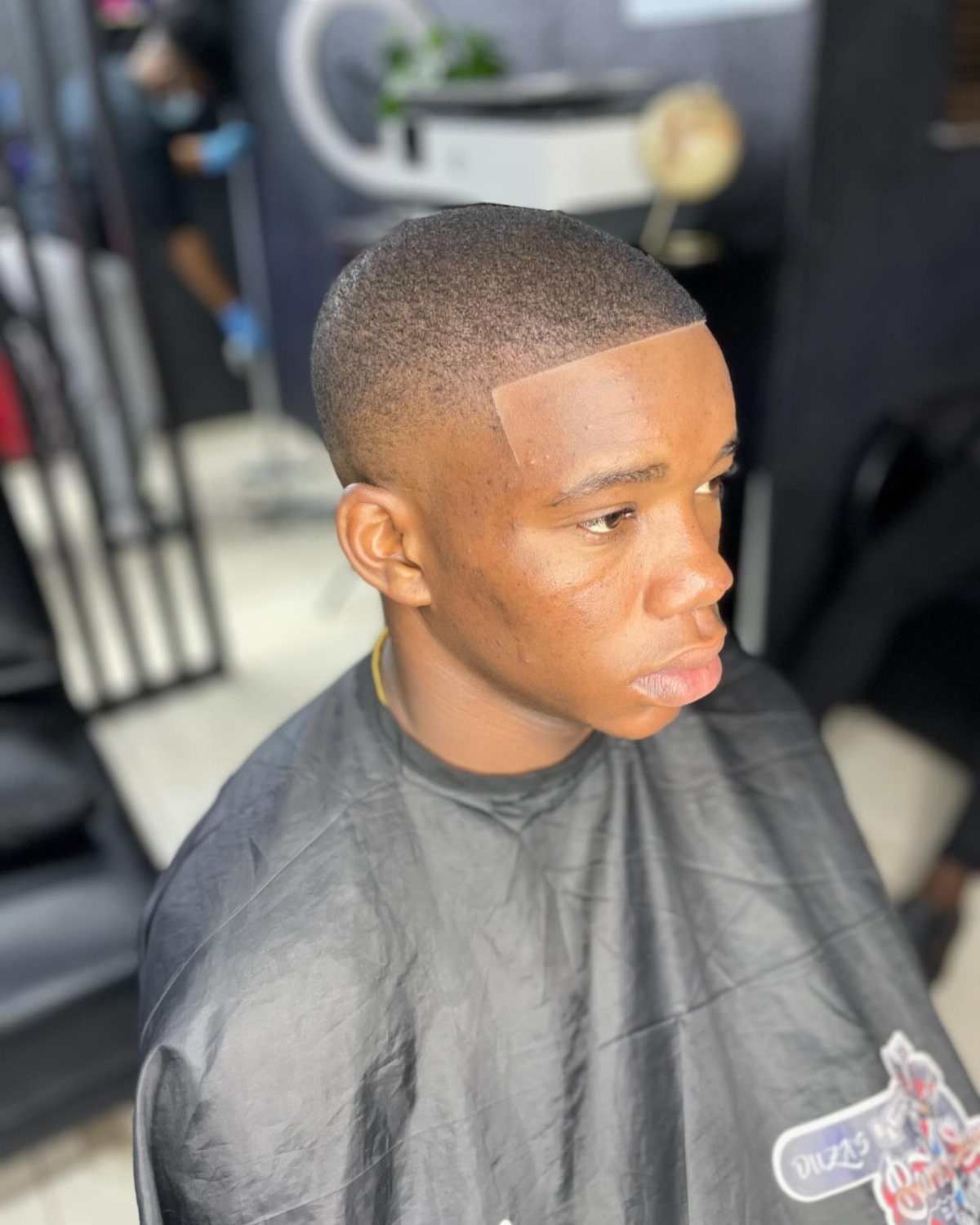
The top sits short and even, blended down to clean sides that fade low. No drama, no angles, just a neat silhouette that works anywhere.
Styling time is minimal.
The length on top is short enough that it dries in place, and a small amount of light pomade keeps it smooth if you want polish. Otherwise, wash and go.
Ask for a low fade that starts just above the ear and blends smoothly into the top, with the crown left uniform and short.
14. Pompadour with Low Fade
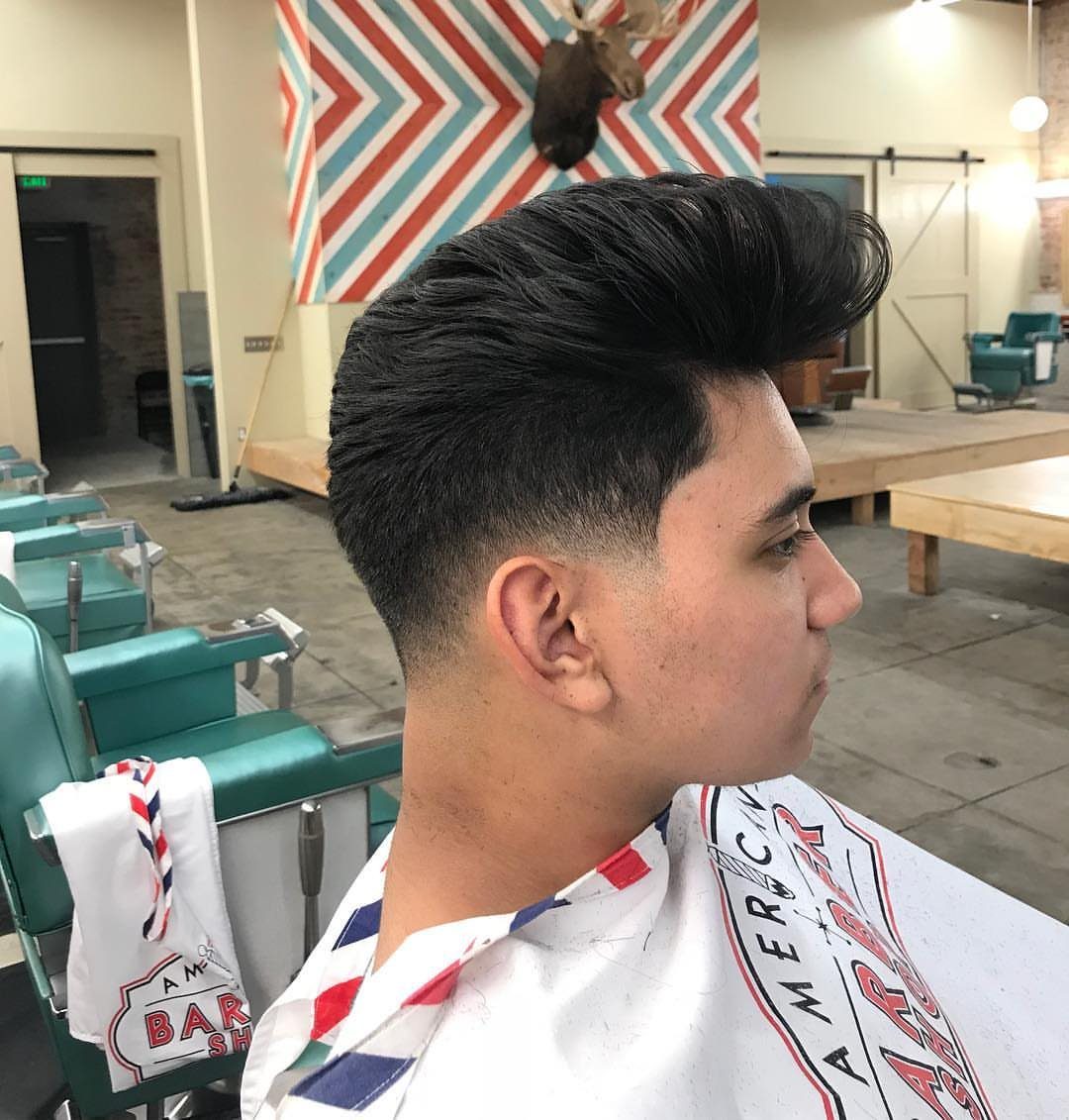
The front sweeps up and back while the sides drop away low enough that nothing competes with the volume. The pompadour sits higher than most styled tops, and the fade keeps the shape from getting too heavy.
Blow-drying is part of the routine.
Towel-dried hair gets worked with a round brush or your fingers as you dry it, lifting the front and pushing it back. Once it holds the shape, pomade or gel locks it in.
You need enough length on top to build real height, or the whole shape collapses. The fade starts low, keeping the transition gradual even when the top carries this much volume.
15. Comb Over
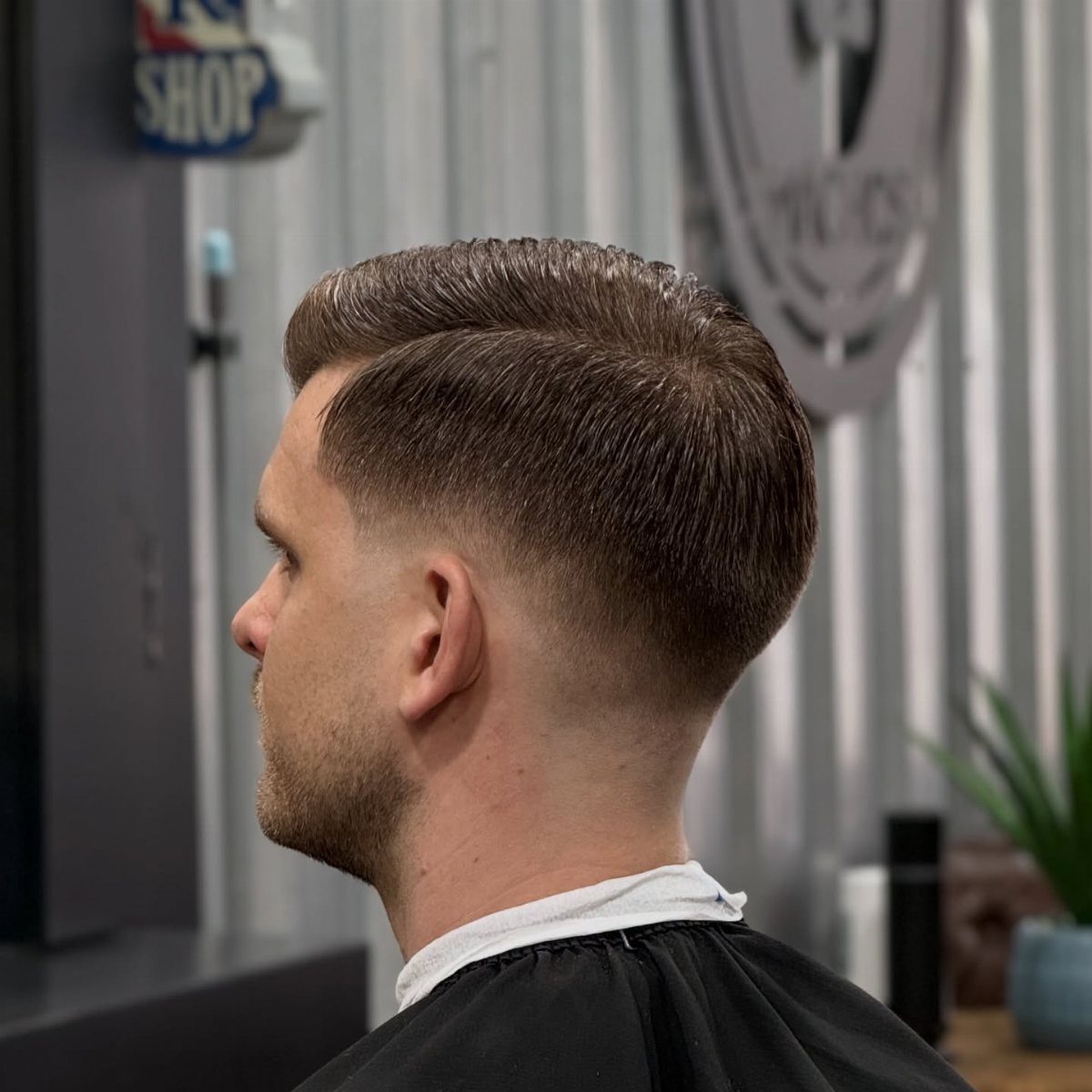
Hair parts on one side and sweeps across the top, falling neatly toward the opposite side. The low fade underneath keeps the comb over from looking heavy or unbalanced.
A comb and light paste do most of the work.
Part the hair where it naturally wants to split, apply product to damp hair, and comb it across. The fade handles the structure, so the top stays smooth without needing much hold.
This reads polished enough for professional settings but stays casual enough for daily wear.
16. Low Fade with Beard
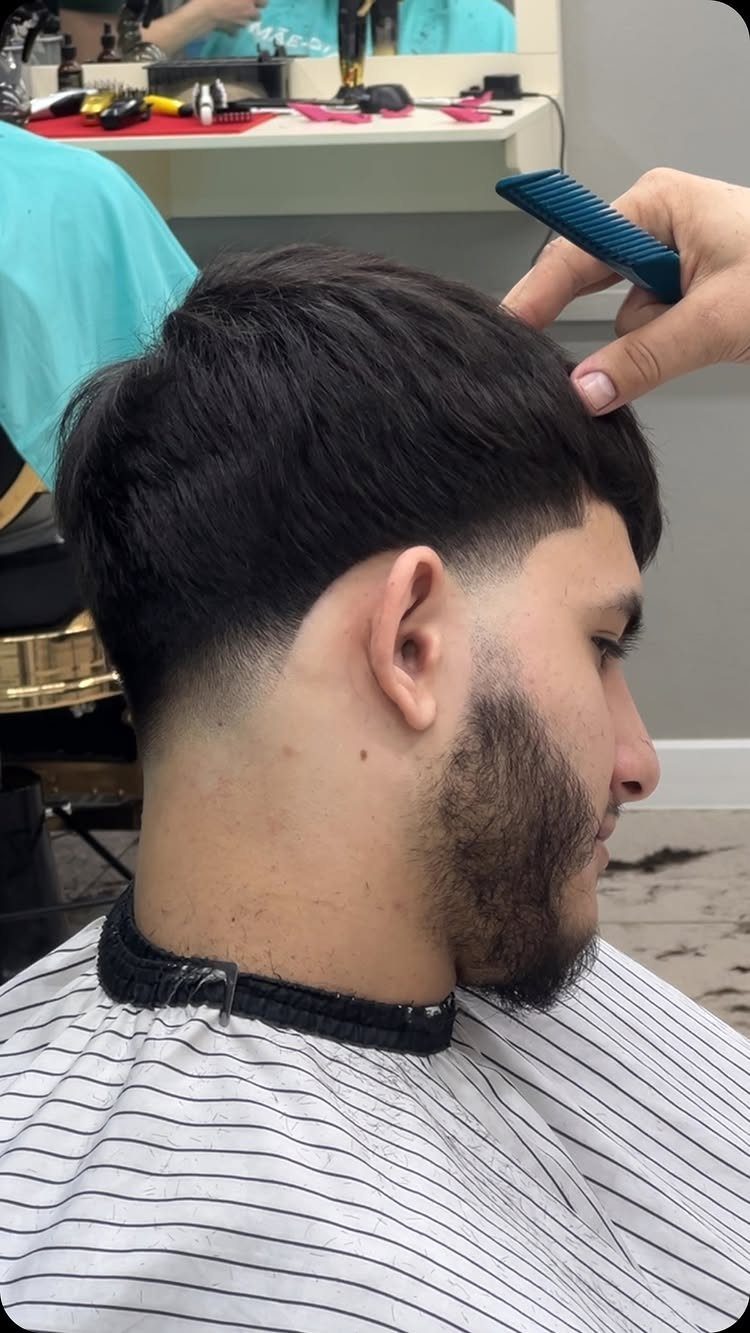
The beard ties into the sideburn and the fade, so there is no hard line where facial hair ends and the cut begins. The connection makes the whole shape feel deliberate rather than like two separate grooming decisions.
The barber should taper the fade into the beard line so the sideburn disappears instead of stopping cold. The fade should end where the beard begins, not above it.
Beard trimming becomes part of the upkeep. Every few weeks, the fade and the beard both need attention to keep the line clean.
17. Low Skin Fade
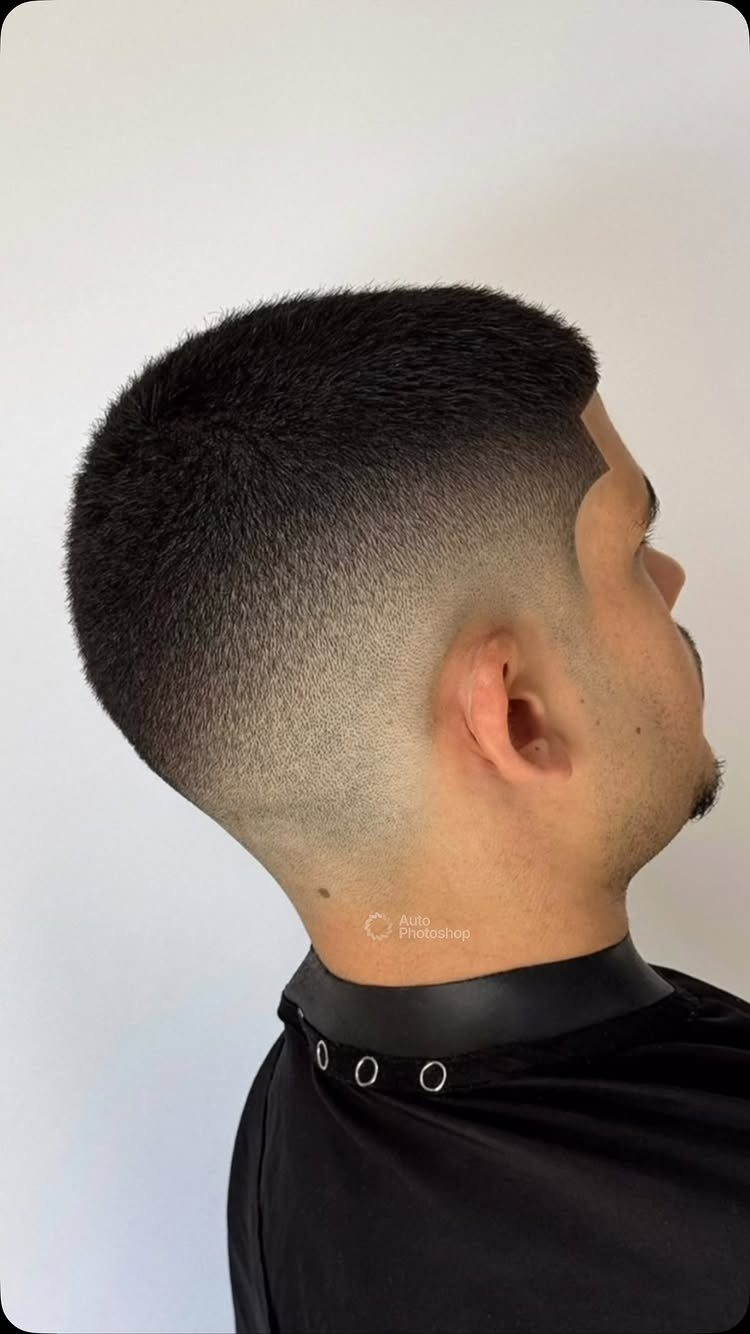
It tapers all the way to skin at the bottom, then graduates into longer lengths as it climbs. The contrast between the shaved section and the top is as clean as a fade gets.
Maintenance is frequent. Skin shows stubble within days, so expect a touch-up every week or two if you want the fade to stay sharp.
18. Low Burst Fade Pompadour
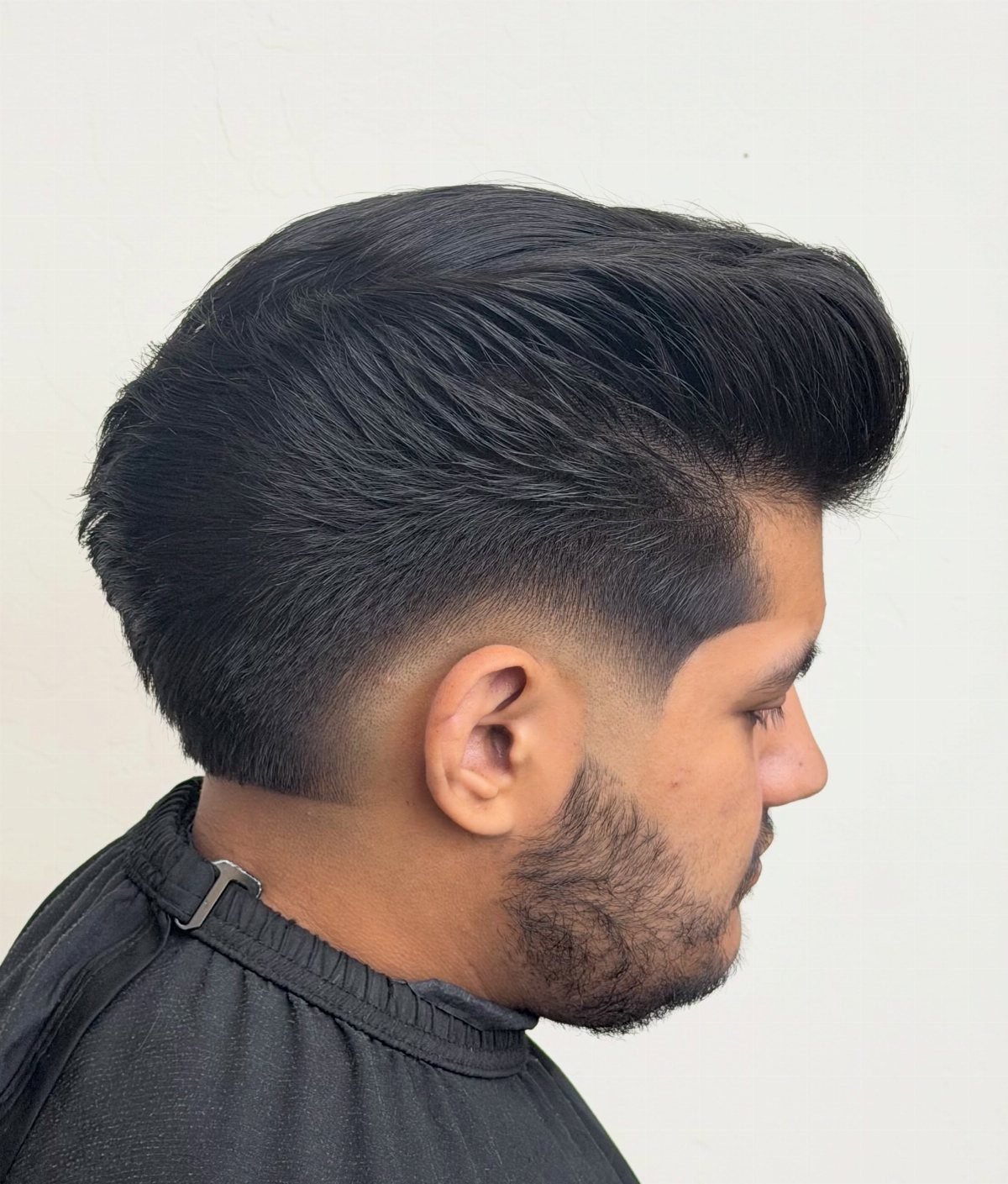
The burst shape follows the natural contour, and the pompadour adds volume without looking forced.
Pomade or a strong-hold cream locks it down once you have the volume where you want it.
Ask for 3 to 4 inches on top and a burst fade that curves around the ear, leaving the back slightly longer.
19. Low Burst Fade Comb Over
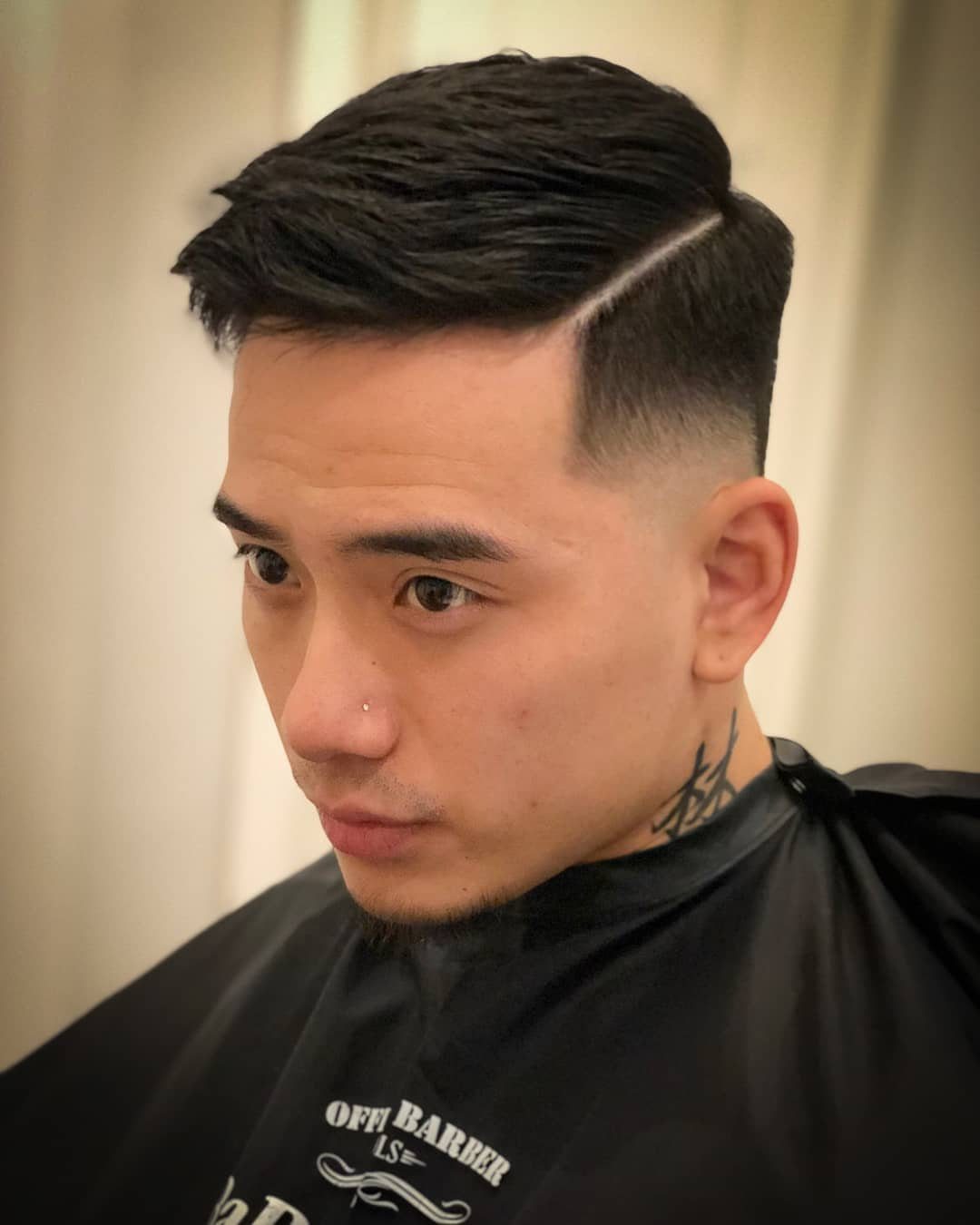
The part defines one side, then the hair sweeps cleanly across to the other, while the fade curves around the ear and follows the natural line.
The burst shape softens the whole look compared to a straight fade, and the comb over stays polished without reading stiff.
Part it where your hair already falls, rub in a dab of pomade while it’s still damp, then comb over. The fade does the structural work, so the top needs just enough hold to stay in place.
This balances formal and approachable. It works in professional settings but does not look like you tried too hard.
20. Low Burst Fade with Beard
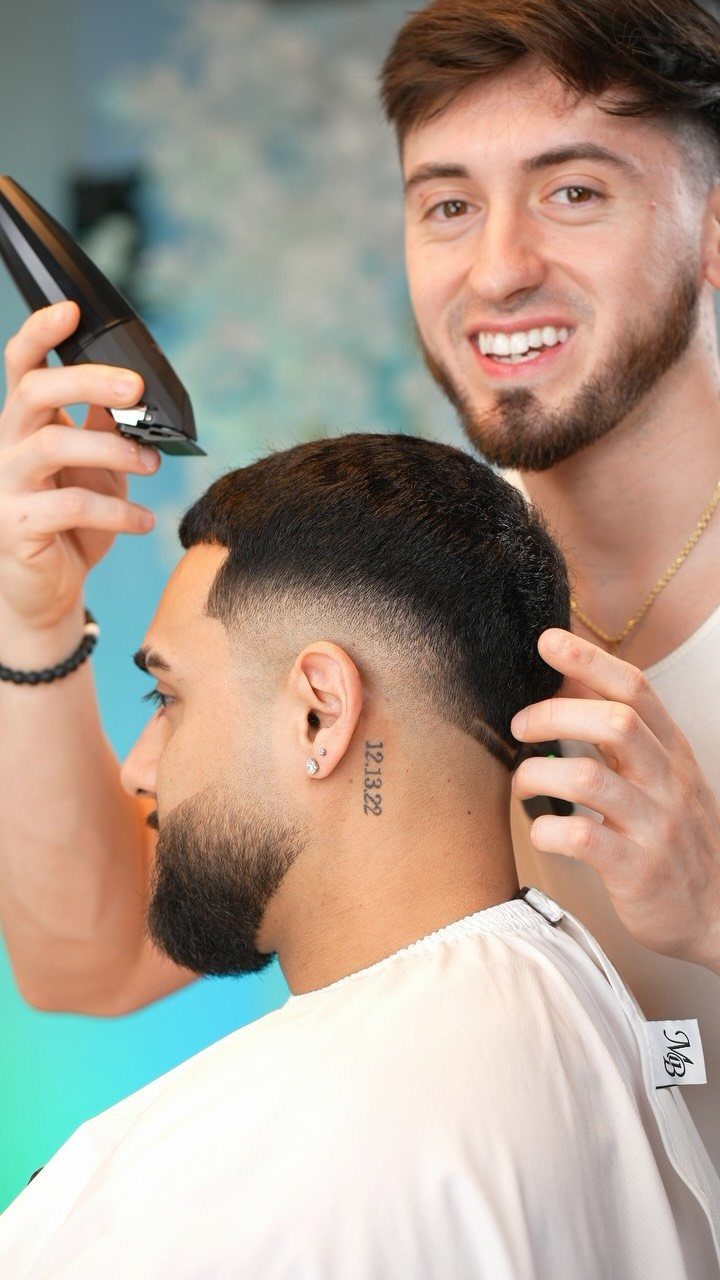
The beard and the fade become one shape, not two separate decisions.
Tell the barber to blend the burst fade into the sideburn and beard, leaving no visible line where one ends and the other starts.
Beard oil or balm keeps the facial hair from looking dry, and trimming the beard to match the fade’s taper keeps the whole shape balanced.
21. Skin Low Burst Fade
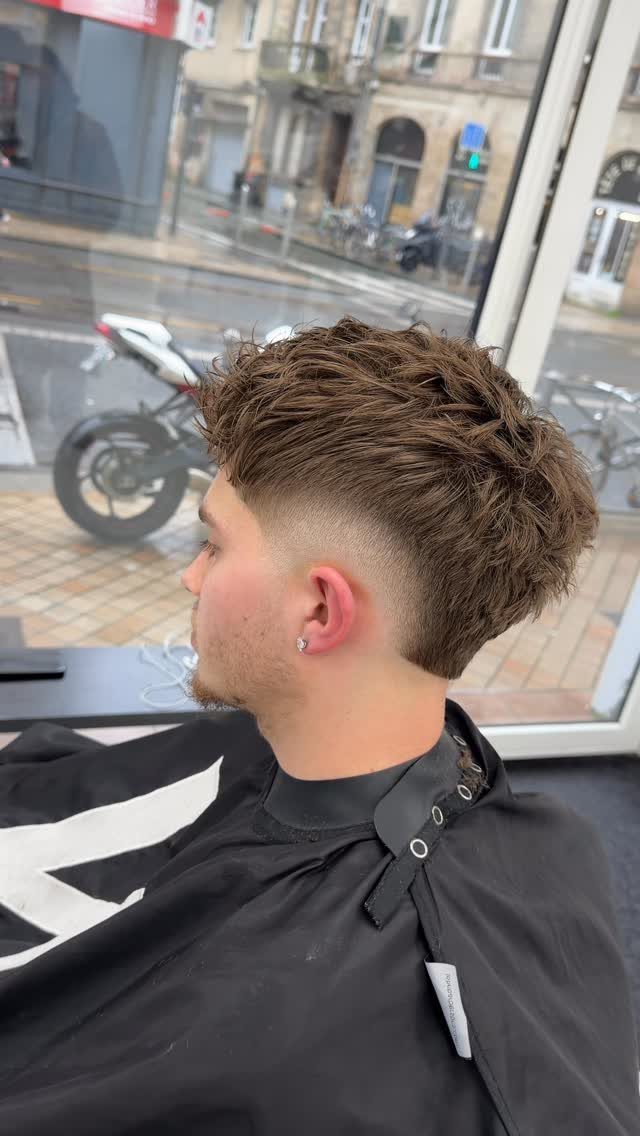
The fade drops all the way to bare skin along the curve, leaving no stubble at the bottom.
Maintaining this means frequent touch-ups. Between cuts, the line blurs and the shape softens.
Ask for a skin burst fade that follows the ear contour, and make sure the top has enough length to balance the shaved sides.
22. Textured Low Burst Fade
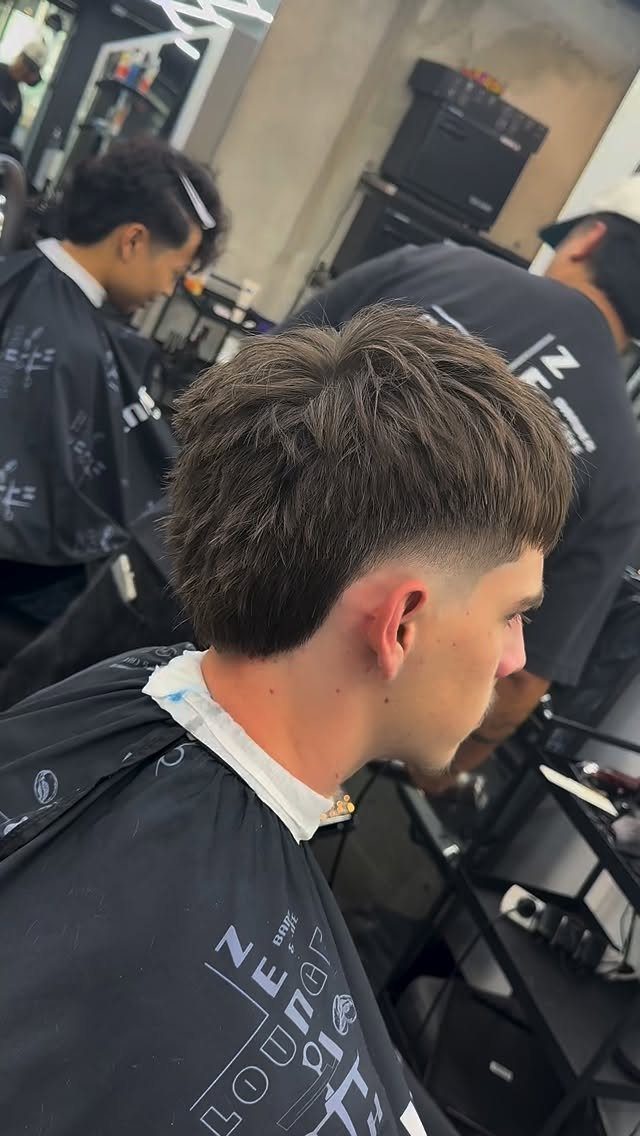
The top is cut with choppy, separated strands that create movement and definition, while the burst fade arcs around the ear and keeps the sides clean. The texture sits in every piece, so the top never looks flat or uniform.
Thick or straight hair benefits most since it tends to lie flat without help. The texture lightens the weight and gives the top some personality.
23. Textured Top Low Fade
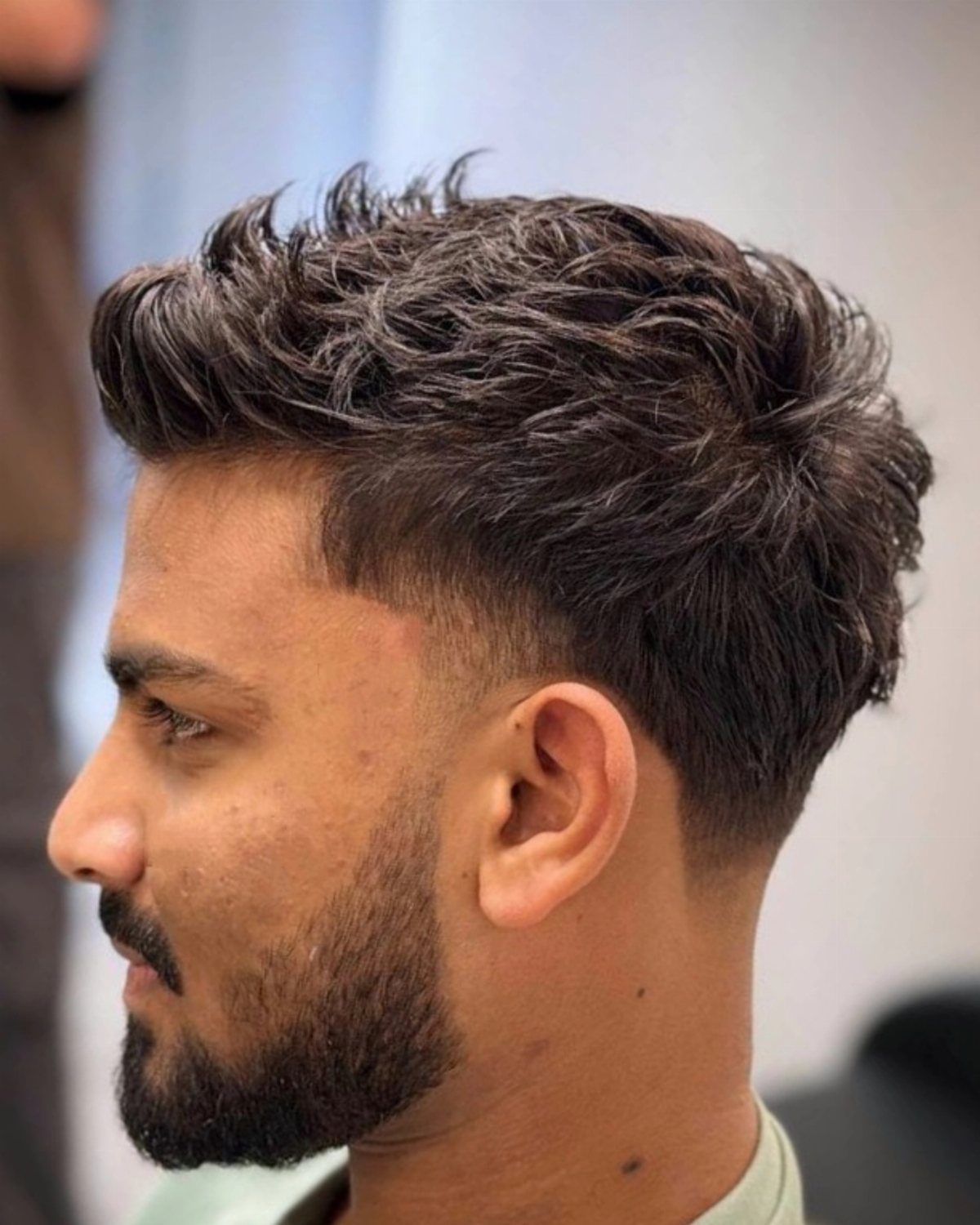
Layers or choppy cuts sit on top, creating separation and movement, while a straight low fade keeps the sides tight. The texture breaks up the weight, so the top has dimension instead of sitting flat.
Matte paste or clay goes through damp hair, worked in with your fingers to lift and separate the strands. The texture should look natural, not forced or overworked.
Ask for texturizing on top, with scissors or shears that remove weight and create separation.
24. Afro Low Fade
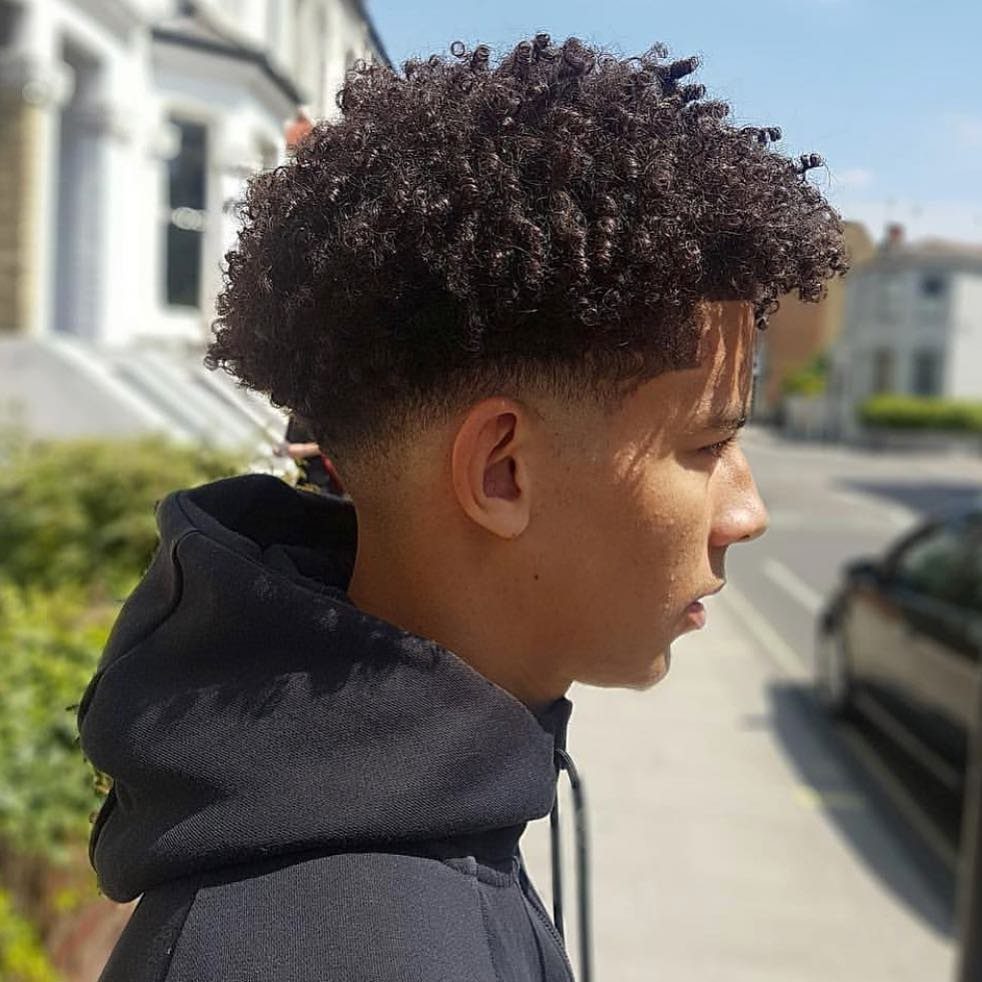
Natural coils fill the crown, rounded and full, while the fade drops low and tight along the sides. The afro shape stays intact, and the fade carves clean edges that define the silhouette without cutting into the volume.
Moisture is everything.
Leave-in conditioner or curl cream keeps the coils soft and prevents dryness. Pick or finger-comb the top to shape the afro, and let the fade handle the structure.
The fade should stay tight enough to frame the coils but not so high that it cuts into the volume on top.
25. Low Fade with Swept-Back Straight Hair
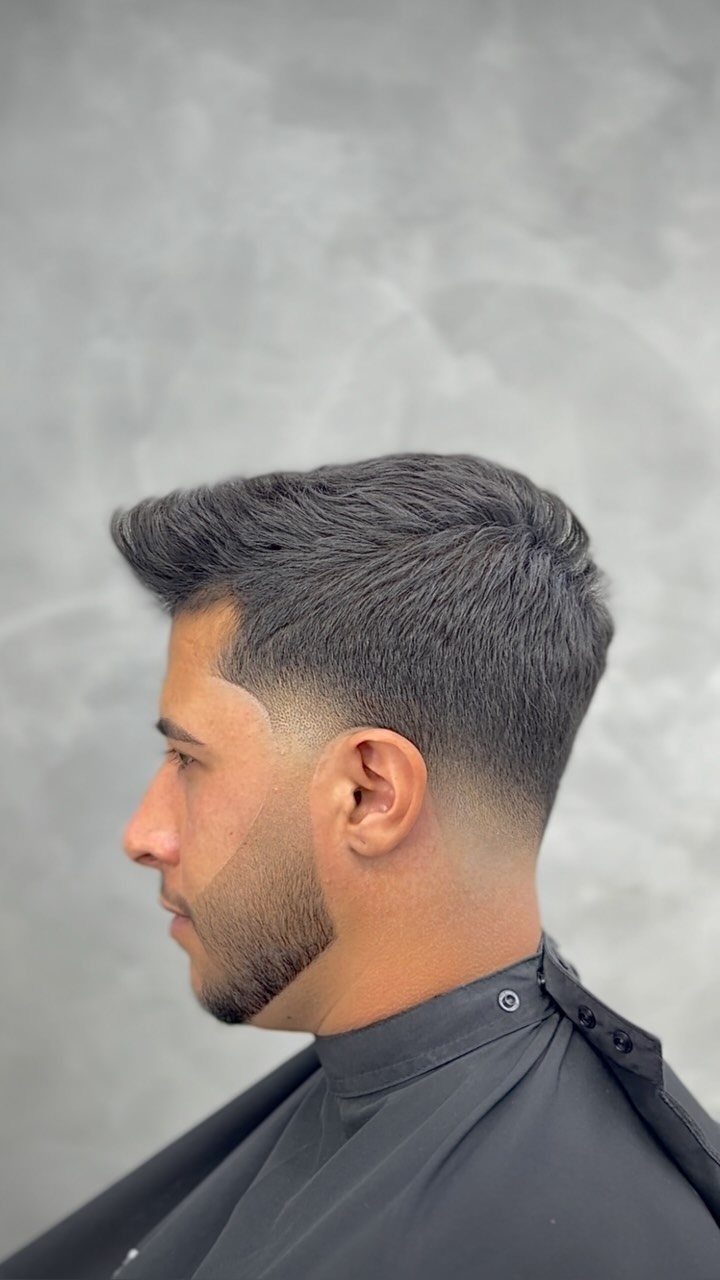
Straight hair shows the fade blend more clearly than curls or waves, so the taper stays visible all the way up. Sweeping the top back keeps it off the forehead and shows the full shape without needing much length.
The fade starts low enough that the swept style reads clean, not severe.
This suits thick straight hair that holds direction without heavy product. Finer hair may need a bit more hold to stay back all day.
26. Mohawk-inspired Low Fade
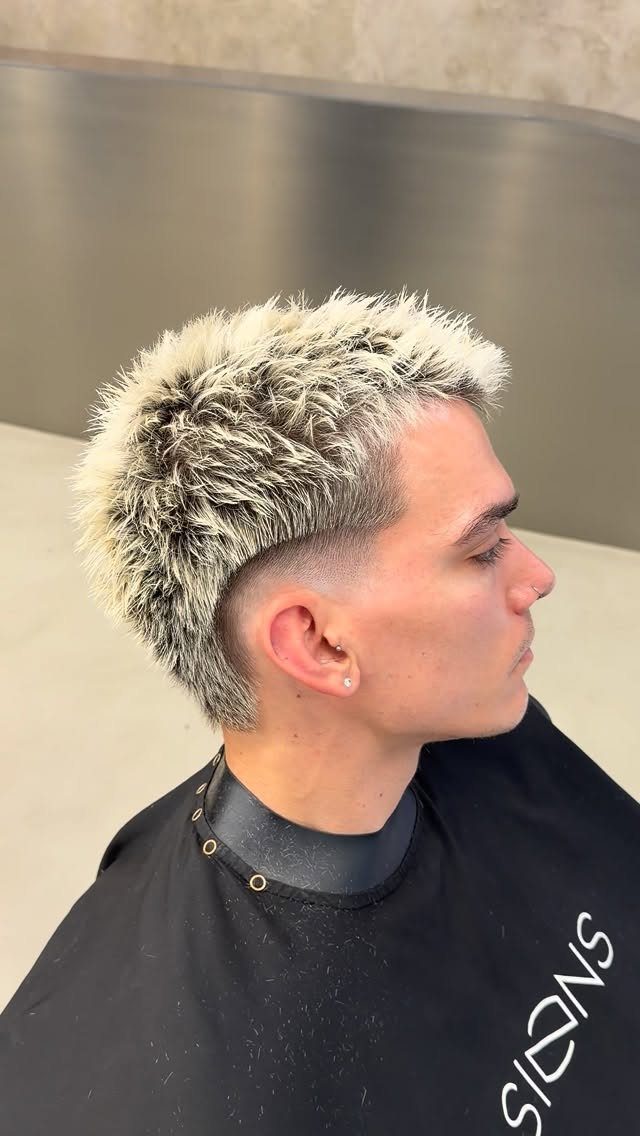
The shape is bolder than a standard fade but stops short of a full mohawk, leaving enough width on top to look balanced.
The center strip stays textured or spiked up, and the fade follows the ear contour instead of running straight down. This gives the mohawk profile without shaving the sides completely bare.
You’ll need paste or gel with serious hold to get the center up and lock it there.
27. Low Burst Fade Afro Top
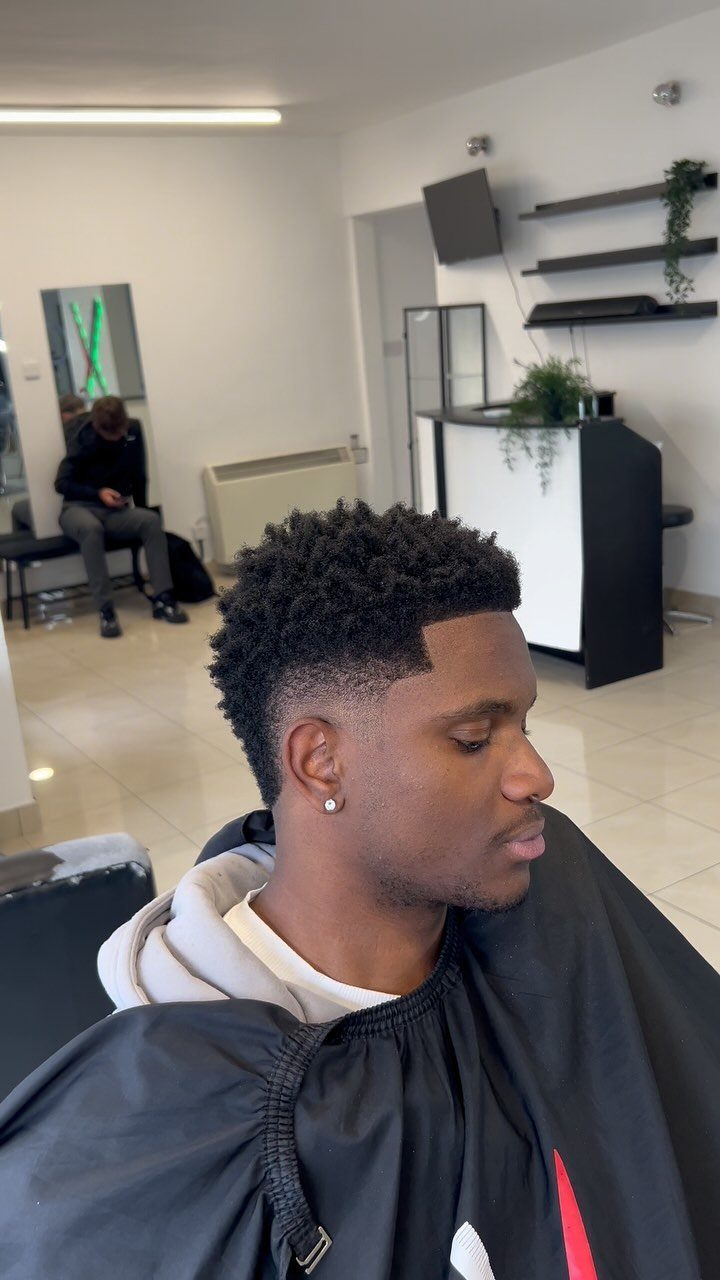
Coils sit full and rounded on top, while the burst fade arcs around the ear and drops low. The fade arcs with the head instead of slicing across, so the afro holds its shape and the sides taper clean.
Moisture is still the priority. A pick lifts the top into shape, and leave-in or curl cream keeps the texture defined.
The burst fade works well here because it carves definition without competing with the rounded afro shape.
28. Burst Fade
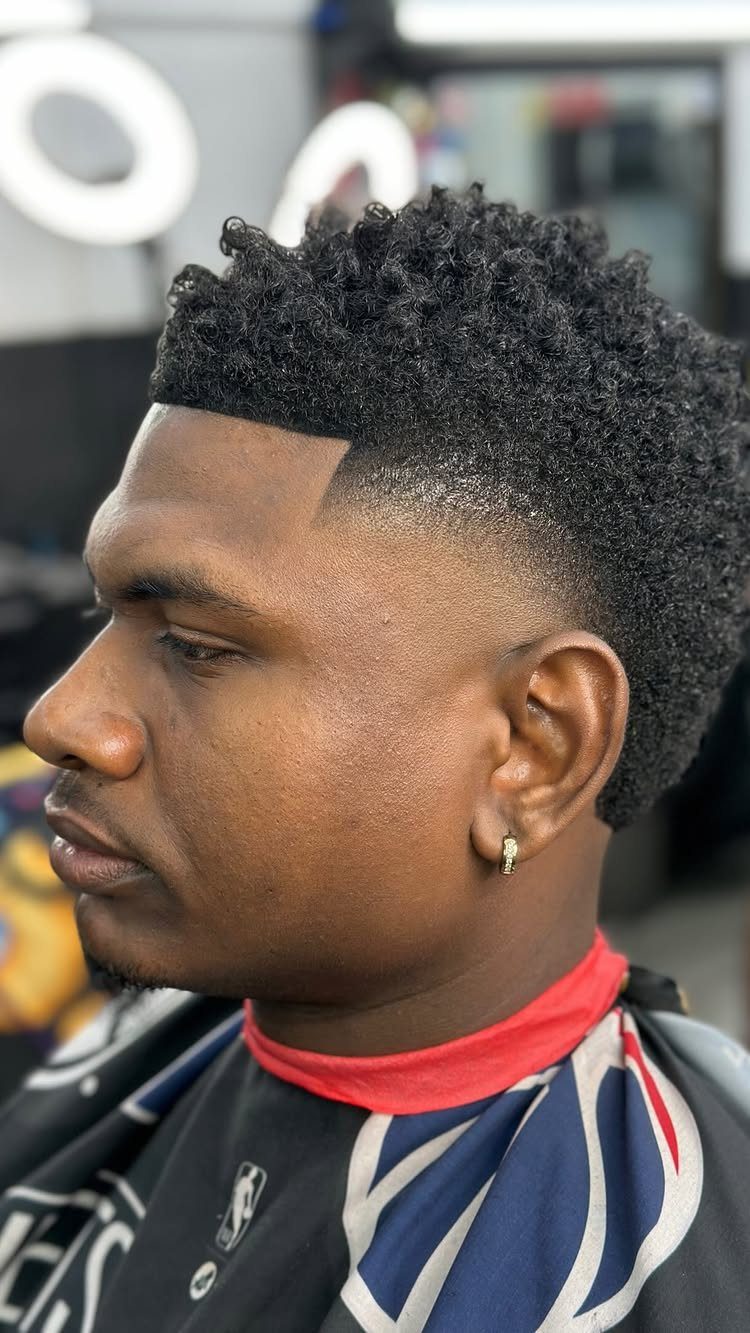
The fade follows the curve of the ear rather than dropping straight down, creating an arc that softens the transition between the top and the sides. This shape works with the natural contour instead of cutting across it.
A burst fade suits most tops since it adds shape without taking too much length off the back. The curve is subtle enough that it reads clean but not as sharp as a straight drop fade.
29. Low Burst Fade Mullet
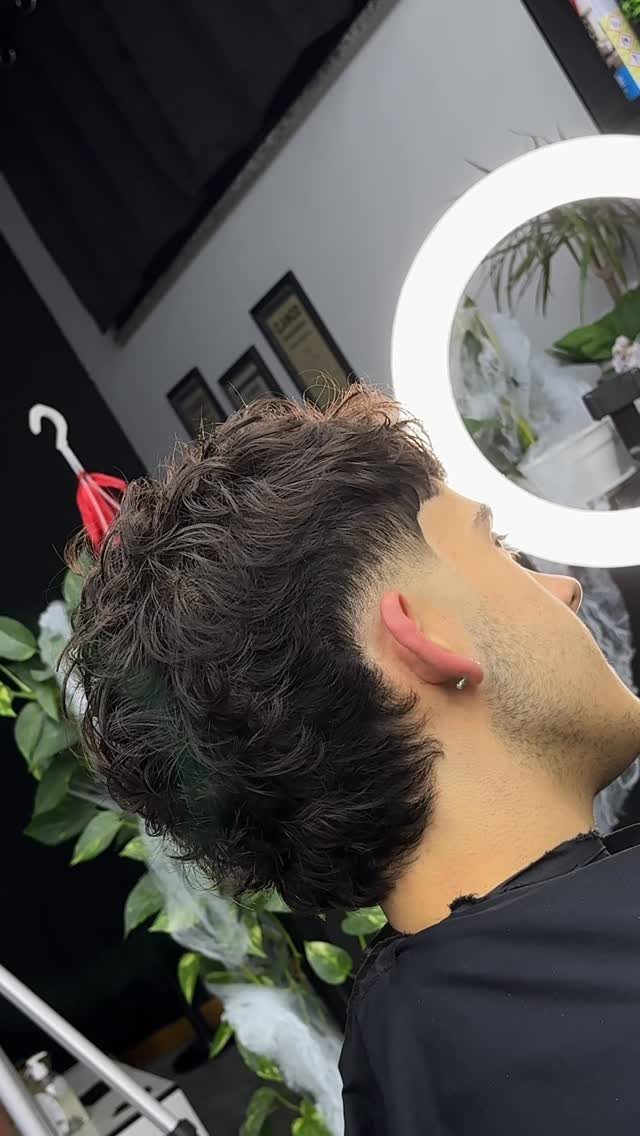
The fade arcs around the ear while the back grows out. The mullet silhouette becomes more defined when the fade is low and curved, since the back stands out without the sides competing.
If it’s curly, leave-in cream or mousse defines the texture. If it’s straight, a light paste keeps it in place without flattening the length at the back.
This works when you want the mullet shape but prefer clean sides over letting everything grow out evenly.
30. Low Burst Fade Short Quiff
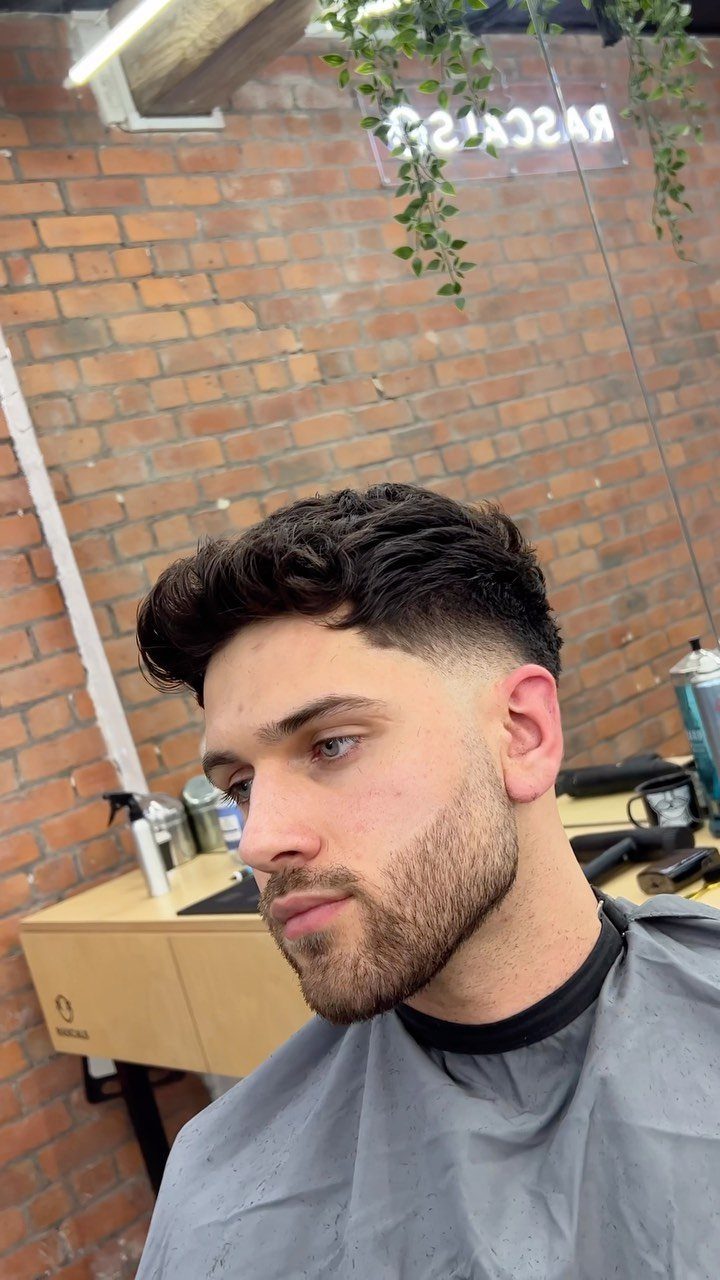
The quiff lifts slightly at the front but stays short enough that styling takes under a minute. The fade arcs around the ear and clears the sides, giving the quiff room to sit up without pushing too far.
A small amount of matte clay or paste goes through damp hair, lifted at the front with your fingers or a comb.
This balances polish and ease. It works in professional settings without needing a full styling routine.
31. Low Burst Fade Short Dreads
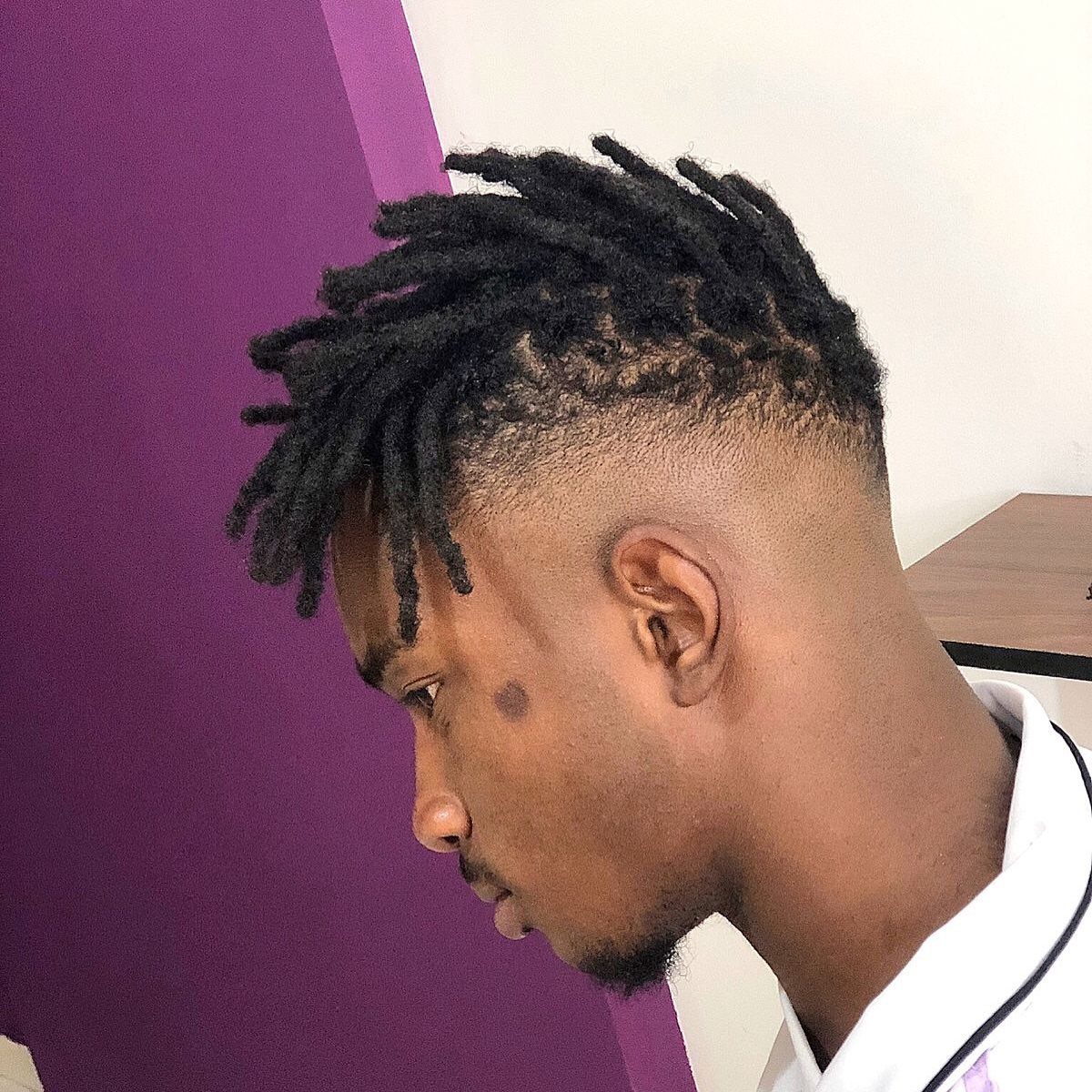
Short locs stay above shoulder length while the fade curves around the ear and drops low, keeping the sides and back clean without cutting into the locs themselves.
Maintenance splits between 2 routines.
The locs need regular palm rolling or retwisting to keep them tight and defined. The fade needs its own touch-up to stay sharp, since skin or near-skin fades blur quickly as hair grows back.
Ask the barber to fade around the locs, not through them, and specify how low the fade should start.
Fade Height and Shape
Height and shape are separate choices. Mid begins near the temple, high starts closer to the crown.
Shape matters too. A standard fade runs diagonally from sideburn to nape.
The line is rounded rather than straight. Both can be low, mid, or high.
Trim Timing and Regrowth
Because the fade sits lower, regrowth blends in more gently than a mid or high that announces itself the moment it starts filling back in.
Skin fades demand more frequent upkeep.
If you want the fade to look fresh, plan for a touch-up closer to the 2-week mark. A taper that stops at stubble instead of skin buys you a bit more time between cuts.
Barber Consultation Details
"Low" means around the top of the ear. Specify whether you want it curved around the ear or running straight, and whether the bottom goes to skin or stops at stubble.
Mention the length on top, either in guard numbers or inches.
Clippers on top usually run a #4 to #6, then step down through #2, #1, and #0 or skin as the fade drops. Guard lengths shift by brand, so check the actual length with your barber before the first pass.
A photo removes most of the guesswork, even a screenshot from a phone.
Frequently Asked Questions
What is a low fade in a haircut?
The cut starts its blend right at ear level and stays close to the sides, never climbing past the temple.
This creates a clean shape with less contrast than fades that start higher, and it works across most hair types and lengths.
What is a burst fade?
Instead of running vertically, the fade wraps the ear in an arc and stops short of continuing down the nape.
The shape follows the natural contour of the head, so the fade wraps around instead of slicing across, and it pairs well with mohawks, mullets, and textured tops.
What are the most popular men’s hairstyles with a burst fade?
Mohawks, textured mullets, pompadours, and curly tops show up most often paired with a burst fade. The curved shape adds definition to bold styles without flattening volume or competing with the length at the back.
How should you ask your barber for a low burst fade?
Say ‘low burst fade’ and point just above your ear to show where the fade starts, then specify the top length and whether you want the neckline tapered or lined.
Mention if the fade should blend into a beard, and bring a photo if the look is specific.
Low burst fade haircut vs. taper fade?
The burst follows the shape of the ear and ends there; a taper runs diagonally all the way from sideburn to nape and fades out slower. The burst reads as a deliberate shape, and the taper stays subtle.
How often should I trim a low fade?
Every 2 to 3 weeks keeps the fade looking sharp, with skin fades needing the more frequent end of that range since stubble shows sooner.
Low fades grow out less noticeably than mid or high fades, so timing depends on how tight you want the line.
Can older men wear a fade haircut?
A low fade works at any age since it stays controlled and understated rather than dramatic.
The technique adapts to different top lengths, textures, and grooming preferences, so the same fade can look professional or casual depending on how the top is styled.