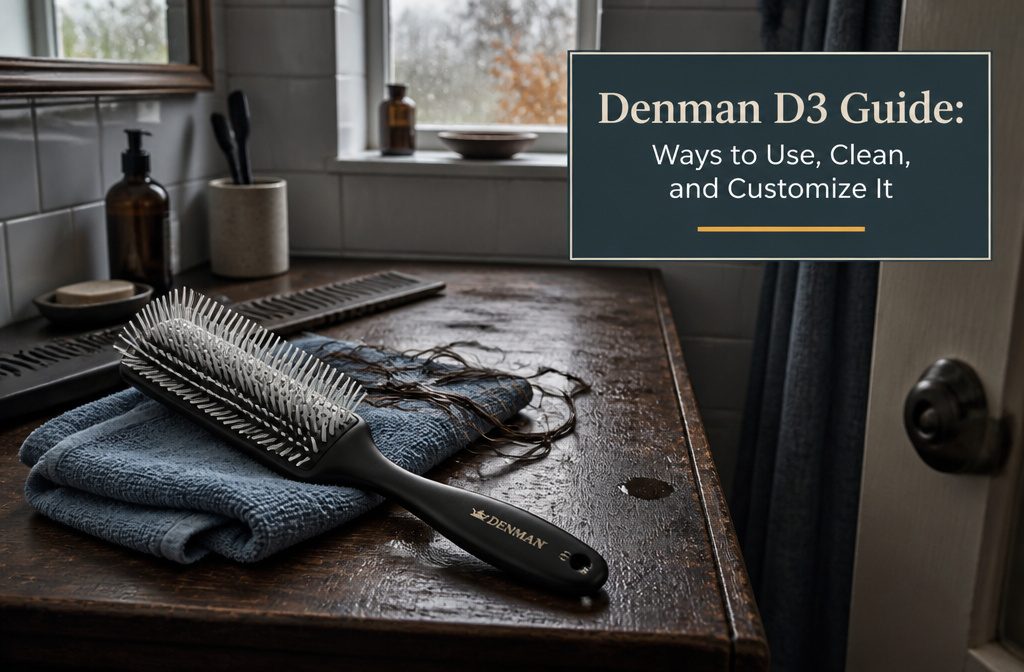
The Denman D3 Original Styler is a 7-row nylon-pin styling brush invented over 80 years ago, now used both for defining curls and for blow-drying hair straight.
Most curly-hair users remove one or more rows to let wider clumps pass through, but thin hair often needs all 7 rows left in place for the brush to grip and define smaller sections without losing control.
1. What the D3 Is and What It Does
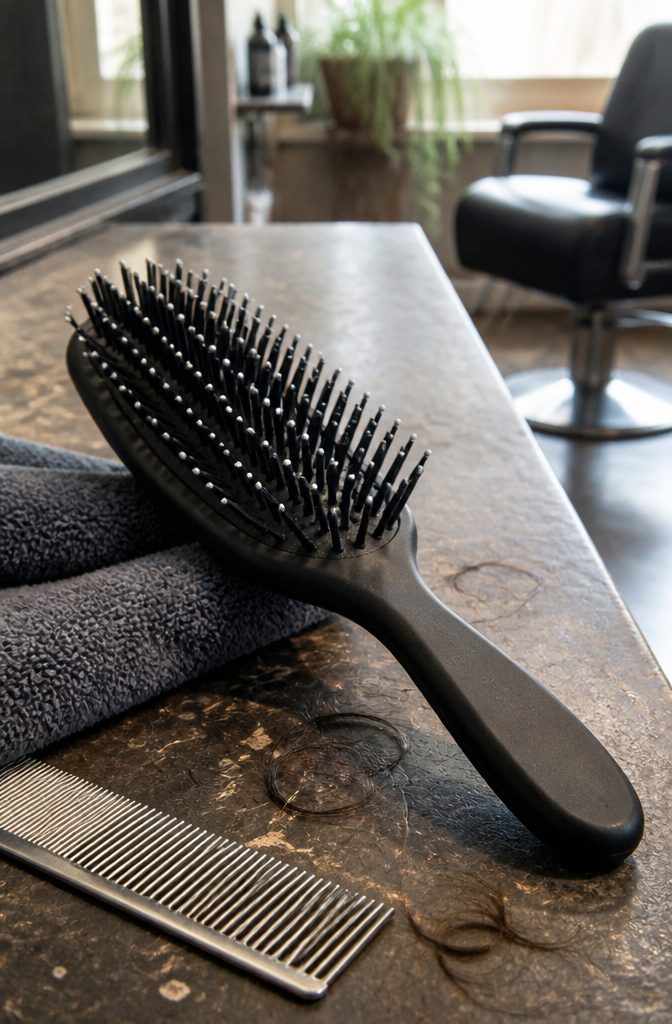
The D3 Original Styler 7 Row is the brush that built Denman’s reputation, invented over 80 years ago by John Denman Dean and still the one most people picture when they hear the name.
Denman makes over 100 brushes now, but the D3 remains the icon.
In the 1960s, Vidal Sassoon used it to create the super-sleek, smooth bob cuts that defined the era, and for decades after that it stayed the go-to styling brush for blow-drying hair straight and glossy.
Every hairdresser, stylist, and barber learned their trade with a D3 in hand.
Today the brush has found a second life with curly hair.
The same rigid nylon pins and rubber pad that gave Sassoon his precision now define curls and waves with clean separation, and the D3 has become a staple in curly-girl routines worldwide.
2. How to Use the D3 for Curl and Wave Definition
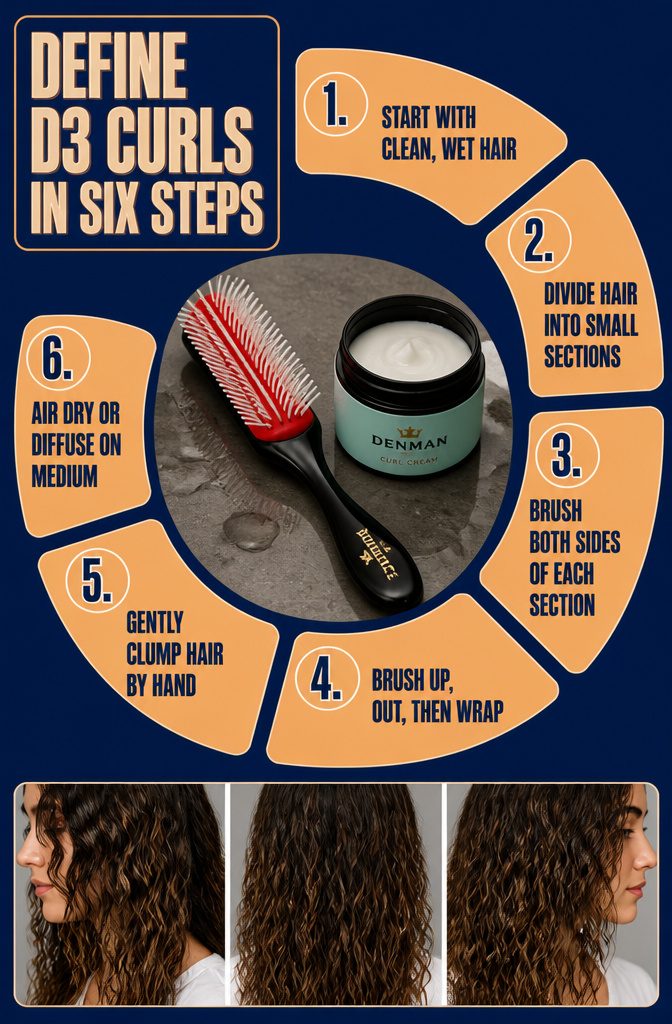
- Start with wet, clean hair and work in your leave-in conditioner, curl cream, or treatment masque. Distribute the product with your fingers before picking up the brush.
- Separate hair into small sections. How small depends on your hair thickness, but thin hair often stays defined with all seven rows intact.
- Brush each section from both the topside and underside to distribute product evenly.
- Brush up and out, starting as close to your roots as you can, then curl the section around the back of the brush. For tighter coils, wrap hair around the handle instead.
Different styling techniques suggest wrapping your hair around the handle of the brush to form tight coils and even curling your hair around the brush itself for looser coils.
— POPSUGAR
The technique you pick changes how much spring you get, so try both and see which one your hair responds to.
- Gently clump the brushed hair by hand, then move to the next section.
- Let it air dry or diffuse on medium heat and medium speed, scoping each section into the diffuser rather than pointing it at your scalp.
The result leans defined. POPSUGAR’s reviewer found her waves verged on curls once dry.
3. Removing Rows to Change Texture
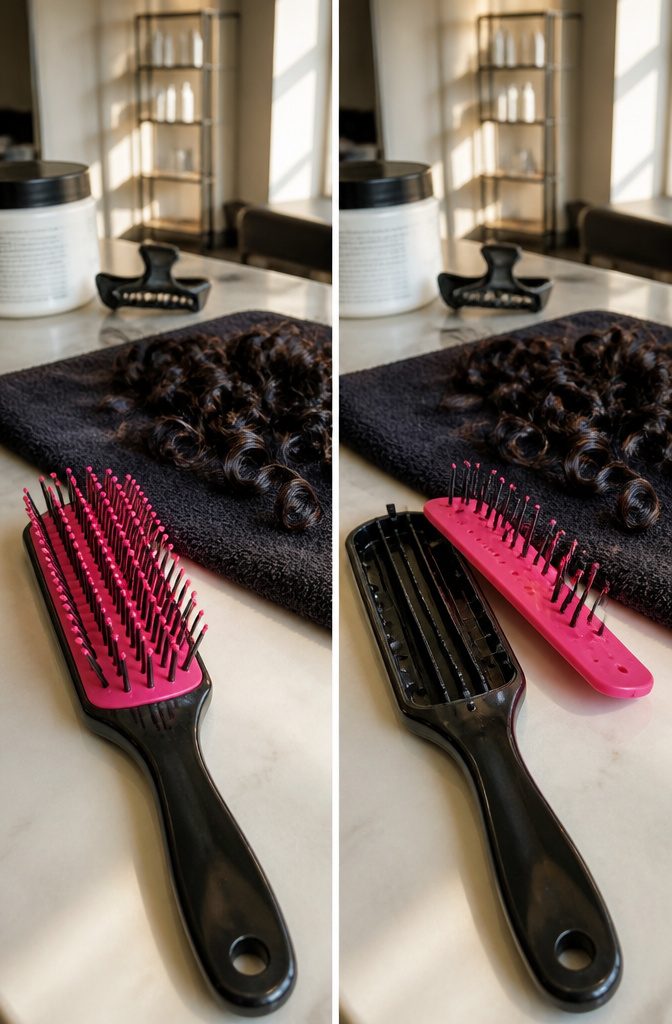
The hot-pink rubber pad lifts straight off the handle, and each row of pins can be removed individually.
Removing one or more rows changes how the brush groups hair: fewer rows mean wider gaps between the pins, and wider gaps let bigger clumps of hair pass through together.
That makes for looser, more separated waves or curls rather than tightly defined spirals.
The POPSUGAR reviewer kept all seven rows in place because her hair was thin. Thin hair benefits from the full pin count; it grips and defines smaller sections without losing control.
Thicker or coarser hair often works better with rows removed. In one video walkthrough, the styler was used with three rows taken out, leaving four rows active.
The result was more volume and wider curl clumps, though you sacrifice some of the precision you get from a full set of pins.
4. Basic Cleaning
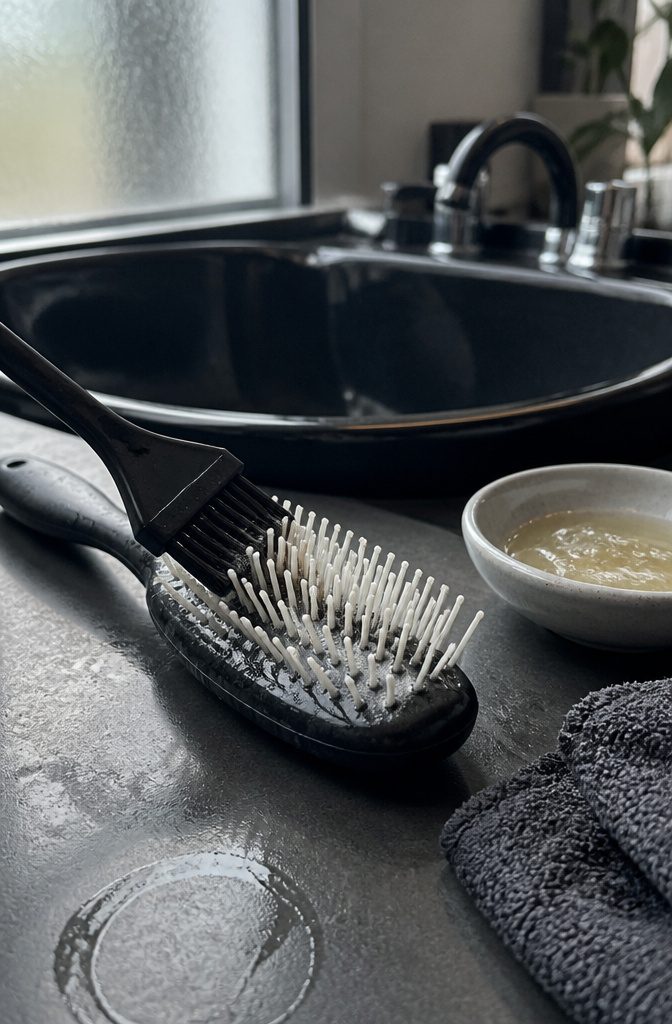
The D3 stays clean longer when you rinse it after every few uses, but product buildup and shed hair still collect in the rows. Warm water, a drop of hand soap, and a soft-bristled brush handle most of it.
An old tint brush works well because its bristles fit between the rows without bending the nylon pins. A soft toothbrush does the same job if you already have one near the sink.
Run the tint brush along each row in both directions to lift out trapped hair and dissolved styling cream.
The pins are stiff enough that scrubbing them won’t bend them out of alignment, but you’re cleaning the rubber pad between them as much as the pins themselves.
Rinse under warm running water until the runoff is clear, shake out the excess, and let it dry bristle-side down on a towel. This quick wash keeps the brush usable between the deeper cleans that pull the pad out entirely.
5. Deep Cleaning the D3
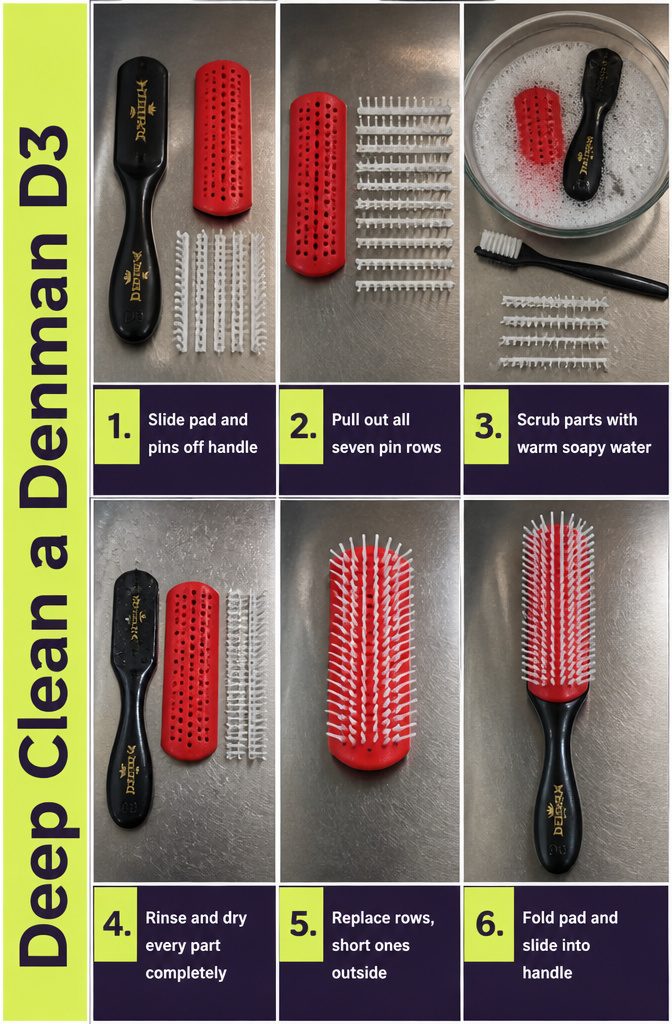
Deep Cleaning the D3
- Slide the pad and pins off the handle by pushing up from the bottom.
- Remove each of the seven pin rows individually, grabbing them by the bobble end at the bottom and pulling them out of the pad.
- Scrub the empty pad, the rows of pins, and the handle with warm soapy water. Use an old tint brush or soft toothbrush to get built-up product off the pins.
- Rinse all parts thoroughly and dry each one completely before reassembling.
- Replace the pin rows through the holes in the pad, bobbles at the bottom. The two shorter rows go on the outside.
- Fold the pad back up and slide it into the handle, crowned D facing up. Use a little liquid soap in the grooves to help it slide back into place, then rinse once more if you do and leave to dry.
Before you start, the DCB1 Cleaning Brush and DPC1 Pin Tail Comb both work for pulling hair out of the pins during routine cleaning between deep cleans.
Anything long and pointed does the job, but skip using your finger—you can catch a pin under the nail.
Blow-Drying and Smooth Styles
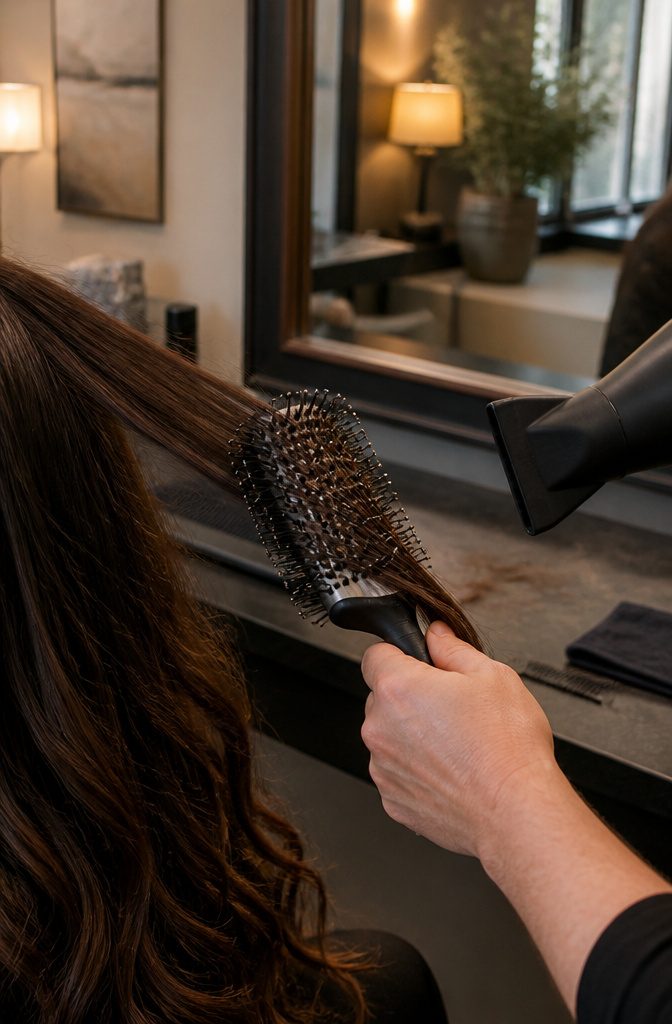
The D3 earned its reputation in the hands of barbers and hairdressers decades before anyone thought to use it on curls.
Vidal Sassoon relied on it in the 1960s to create the sleek, precise bobs that defined an entire era of cutting, and salon professionals still reach for it when a blow-dry needs to come out smooth and controlled.
The brush works through sections without snagging, the rubber pad gives enough grip to pull hair taut under heat, and the seven rows of nylon pins distribute tension evenly from root to end.
That combination makes it ideal for straightening wavy or textured hair into a polished finish, which is exactly what stylists needed it to do long before the curl community discovered it could define texture just as well.
Replacing the Pad and Pins
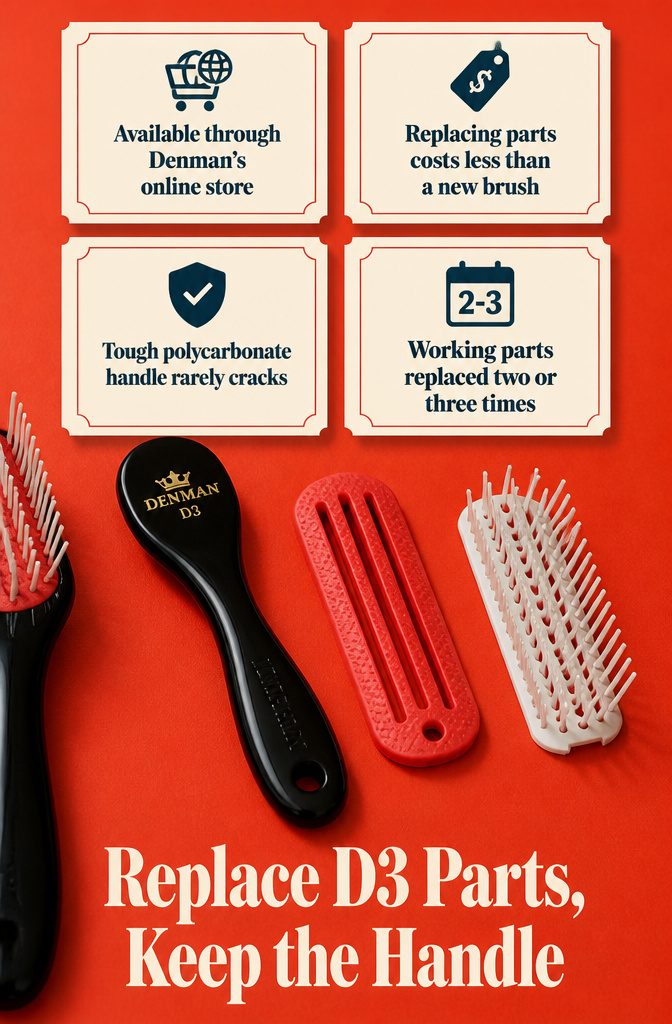
Replacement pads and pins are available on Denman’s online store, so you can keep the handle and swap out worn parts instead of buying a whole new brush.
Denman positions this as both a cost saver and a way to cut down on waste, since the handle outlasts the bristles by a wide margin.
Once the pins start bending or the pad loses its grip, ordering just those two pieces runs less than buying new.
The handle itself is tough polycarbonate and rarely gives out, so most people end up replacing the working parts two or three times before the handle ever cracks.
Frequently Asked Questions
How do I use a Denman brush?
Start with wet hair and apply your leave-in or curl cream, then separate hair into small sections.
Brush each section from top and underside to distribute product, then brush up and out from the roots and curl the section around the back of the brush or handle.
Clump the brushed hair gently by hand and air dry or diffuse on medium heat.
What are the benefits of using a Denman brush?
The D3 defines curls and waves with clean separation thanks to its rigid nylon pins and rubber pad, making it a staple in curly-girl routines.
It also works for blow-drying hair smooth and straight, which is what salon professionals relied on it for decades before the curl community adopted it.
Can you remove rows from a Denman D3?
Yes, each of the 7 rows of pins lifts out individually once you remove the rubber pad from the handle.
Fewer rows create wider gaps between pins, which lets bigger clumps of hair pass through for looser, more separated waves instead of tight spirals.
Can you replace Denman brush parts?
Replacement pads and pins are sold on Denman’s online store, so you can swap out worn parts instead of buying a new brush.
The polycarbonate handle outlasts the bristles by a wide margin, and replacing just the pad and pins costs less than a full replacement.