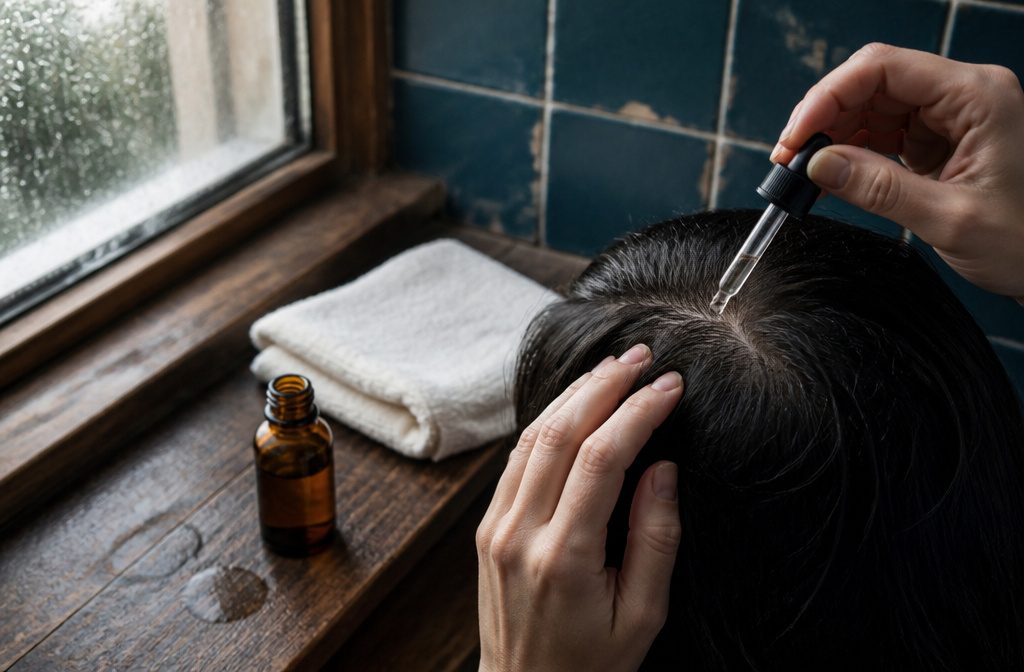
Treatments that regrow hair range from over-the-counter minoxidil to transplants and platelet-rich plasma, and which one works depends on why the hair is thinning.
Pattern loss rarely reverses without medical help, while stress shedding often clears in 3–6 months on its own. Minoxidil 5% shows results after 3–6 months.
Why Hair Loss Happens and Why Treatment Depends on the Cause
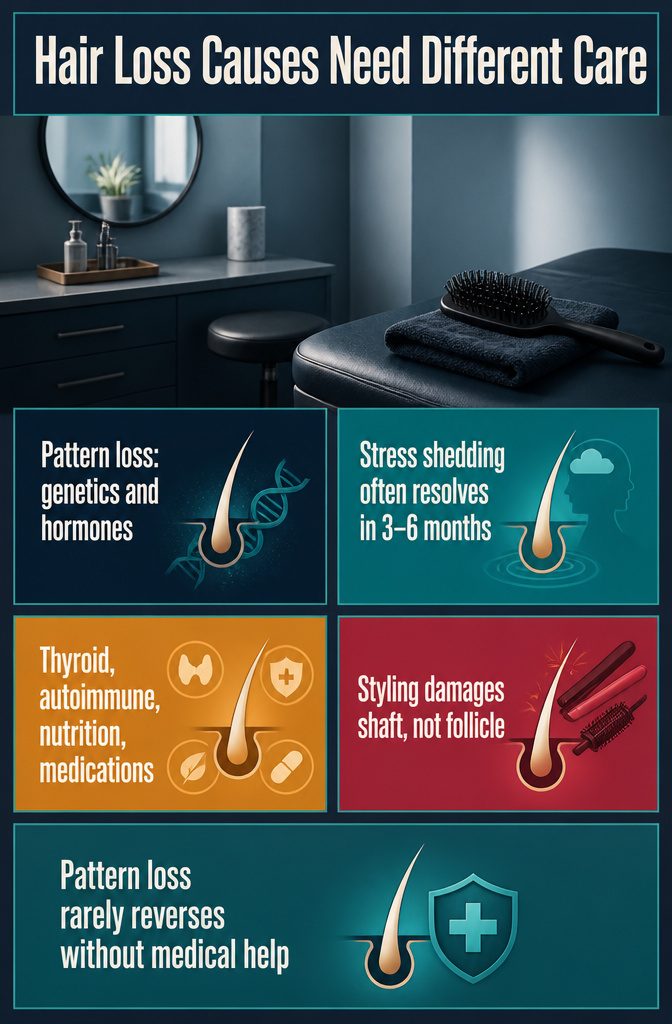
Hair follicles shrink or stop producing strands for reasons that vary by person.
Pattern hair loss, driven by genetics and hormones, accounts for most cases in men. Stress can push follicles into a resting phase that triggers shedding.
Thyroid conditions, autoimmune diseases, nutritional gaps, and certain medications each affect the growth cycle differently. Aggressive styling, tight hairstyles, and chemical treatments damage the hair shaft at the surface rather than the follicle itself.
The cause determines whether hair comes back on its own, needs treatment, or requires a different approach entirely.
Hair loss from stress often resolves without intervention once the trigger passes, usually in three to six months. Pattern hair loss rarely reverses without medical help.
Some autoimmune conditions respond to specific drugs; others cycle unpredictably. Identifying the underlying reason means you can skip treatments aimed at the wrong target and focus on what actually fits the problem you’re dealing with.
1. Medical Treatments and Medications
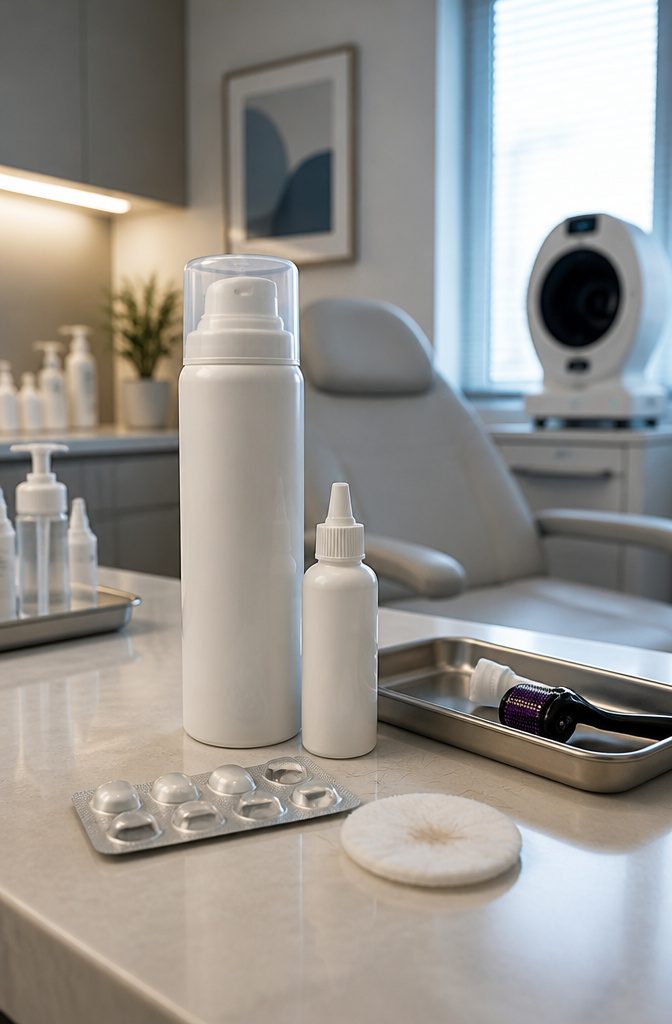
Minoxidil is the most consistently named option for hair regrowth, available over the counter in 2% and 5% strengths.
You apply it directly to the scalp daily, and it increases blood flow to hair follicles. Expect some shedding in the first 2–6 weeks as new hairs push out old ones.
Results typically start after three to six months, though the full picture takes six to nine months. Virtue Flourish Minoxidil 5% Foam runs $32.00, Walgreens offers women’s 5% foam as a 180-day supply, and men’s topical solution comes in a three-pack for $40.00.
Finasteride works for male pattern hair loss by blocking the enzyme that converts testosterone to DHT. It can cause birth defects, so anyone who may become pregnant should avoid it.
Spironolactone and corticosteroids treat other types of loss. The best fit depends entirely on what caused the thinning in the first place, which makes a dermatologist’s assessment worth the visit.
2. Procedures and Devices
Hair transplants move follicles from one part of your scalp to areas where growth has stopped.
The two main methods are follicular unit transplantation, which removes a strip of hair from the back of your head, and follicular unit extraction, which takes individual follicles. Extraction scars less.
New hair usually begins growing between 6 and 9 months, with full results in 12 to 15 months. Insurance won’t cover it.
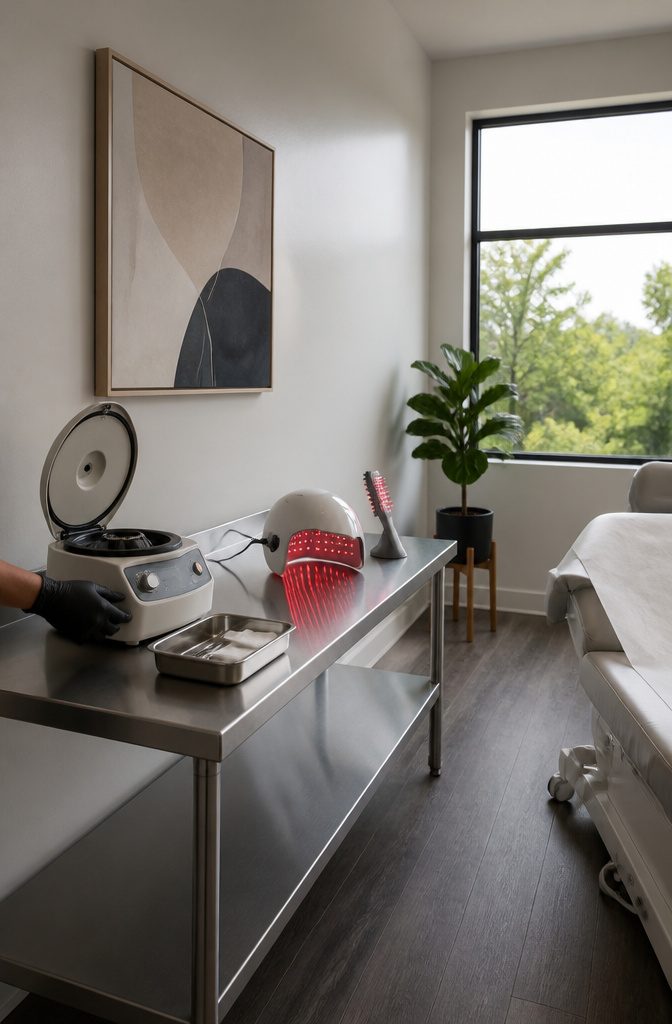
Platelet-rich plasma therapy takes a blood sample, spins it in a centrifuge to separate the plasma, and injects it back into your scalp. Growth factors in the plasma are thought to stimulate follicles.
Typical protocol is monthly treatments for 3 months at $500 to $1,500 or more per treatment, with follow-up treatments every year. The evidence for PRP isn’t proven yet.
For any of these treatments, the key is starting them as soon as you detect hair loss. Once hair follicles stop working, the only option is hair transplant surgery.
That window matters more than most guys realize. Once follicles quit, you’re looking at surgery or nothing.
Low-level laser therapy uses LED light directed at the scalp to stimulate regrowth.
Devices come as combs or helmets you use at home and range from a few hundred to a few thousand dollars. The mechanism isn’t fully understood, and research is limited, but it’s FDA-cleared and safe to combine with other treatments.
Scalp reduction removes non-hair-bearing skin and stretches the remaining hair-bearing scalp to cover the bald area. It can reduce as much as half of the bald area, though it doesn’t help the frontal hairline.
3. Scalp-Applied Natural Remedies and Products

Scalp-Applied Natural Remedies and Products
Scalp massage shows up in a few small studies as something that might help hair come in thicker.
One study tracked daily four-minute massages over 24 weeks and found some benefit. Whether that ties directly to growth or just reduces stress—which itself contributes to hair loss—remains unclear, but massages feel good and the downside is nonexistent.
You can use a scalp massaging tool or press and stretch the scalp yourself for a few minutes each day.
Onion juice has a 2014 study behind it showing promise for patchy alopecia areata, and a 2015 animal study pointed to improved keratinocyte growth factor, which matters for follicle development.
Blend a few onions, squeeze out the juice, apply it to your scalp and hair, and leave it in for at least 15 minutes before shampooing. The smell is the trade-off.
Geranium oil showed hair growth and better circulation in a 2017 animal study.
Mix three drops of geranium essential oil with eight drops of carrier oil, apply it directly to your hair, or add a few drops to your shampoo and conditioner.
Other oils mentioned include peppermint, rosemary, jojoba, coconut, and tea tree, though evidence for most remains limited.
Aloe vera gets attention, as do caffeine shampoos, melatonin applied to the scalp, and products containing biotin, zinc, collagen, or azelaic acid.
Hair growth shampoos and serums fill shelves, but the honest read is that evidence varies widely and many natural options lack strong proof. They are unlikely to cause harm, but anyone expecting fast or dramatic results will be disappointed.
4. Supplements and Nutrition

Supplements fill gaps, not healthy stores. Biotin, B12, collagen and other vitamins help hair growth only when someone is deficient.
Plenty of research backs that limit. Take extra biotin when your levels are already adequate and hair stays exactly where it was.
The same holds for B12 and collagen. Blood work answers whether a supplement is worth the cost, and without a known deficiency most of the popular bottles do nothing.
Viviscal combines shark and mollusk powder, organic silica, vitamin C from acerola cherry, biotin and zinc. The regimen runs twice daily for at least six months before results show.
One collagen and vitamin C supplement study lasted 12 weeks and found improvement in hair shedding. Omega-3s appear in a 2015 study paired with antioxidants, where hair density, diameter and loss all improved.
Iron and zinc matter when levels drop low enough to interfere with the growth cycle. None of them bypass the deficiency rule.
5. Hair-Care Practices That Limit Damage and Breakage
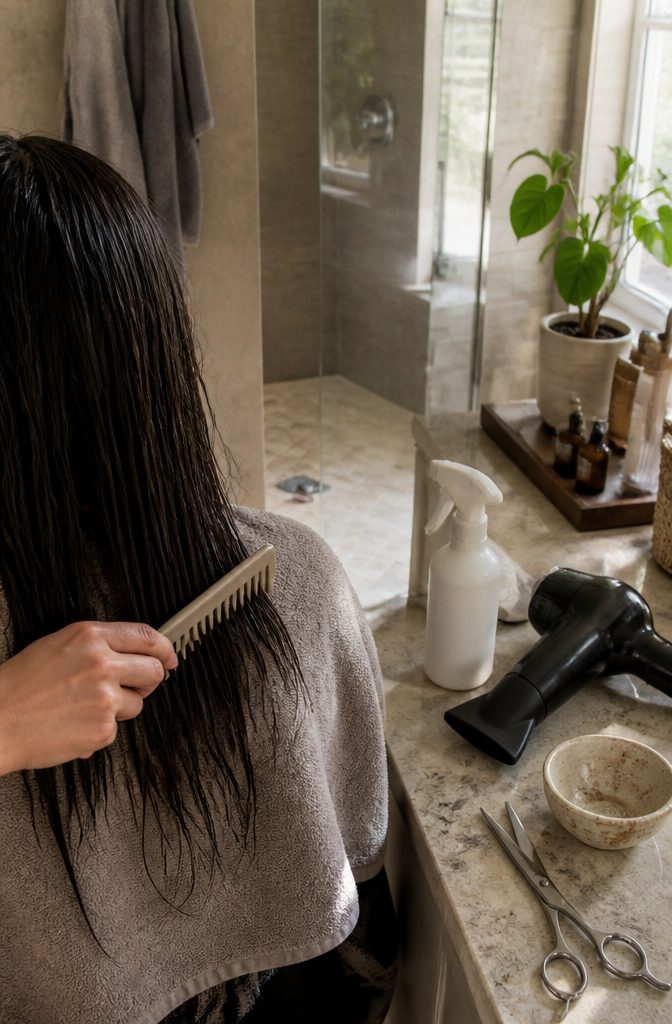
Heat styling breaks hair before it reaches the length you want.
Blow-dryers, curling irons, straighteners and hot combs all leave strands brittle enough to snap. If you do use heat, spritz on a heat protectant first, pick the coolest setting that works, move quickly and skip days when you can.
Bleach and chemical treatments like permanents weaken hair the same way.
Staying within three shades of your natural color calls for less damaging peroxide. Always spot-test store-bought dye on a small patch before covering your whole head.
Wet hair stretches more than dry, so brushing it dripping can break strands or damage the cuticle. Using heat tools on soaking hair creates bubbles in the shaft that make it snap later.
For straight hair, let it air-dry and then run a wide-tooth comb through gently. Textured or curly hair handles a wide-tooth comb better while still damp.
Extensions and weaves might look like a shortcut, but don’t wear them longer than 2-3 months at a time.
If they hurt when the stylist puts them in, they’re too tight and will damage your scalp. Never yank them out yourself.
Hair grows about half an inch a month, so a quarter-inch trim every three months keeps the ends from splitting and traveling up the shaft without cutting off the length you gained.
These practices help you keep what grows; they don’t make follicles produce hair faster or treat thinning at the root.
6. Natural Regrowth Without Treatment

Some hair loss tied to temporary stress or change improves without any treatment at all as your body works through what triggered it. Hair loss following childbirth, surgery, rapid weight loss, or a stressful period often falls into this category.
The cause is usually telogen effluvium, a condition where more hair than normal shifts into the shedding phase at once. In most cases it corrects itself in three to six months once the underlying trigger has passed.
This is context more than a choice you make. If the hair loss stems from something temporary and your body is already resolving it, waiting is the right move.
A healthcare provider can help you figure out whether what you are seeing fits that pattern or needs active treatment instead.
When to See a Healthcare Provider
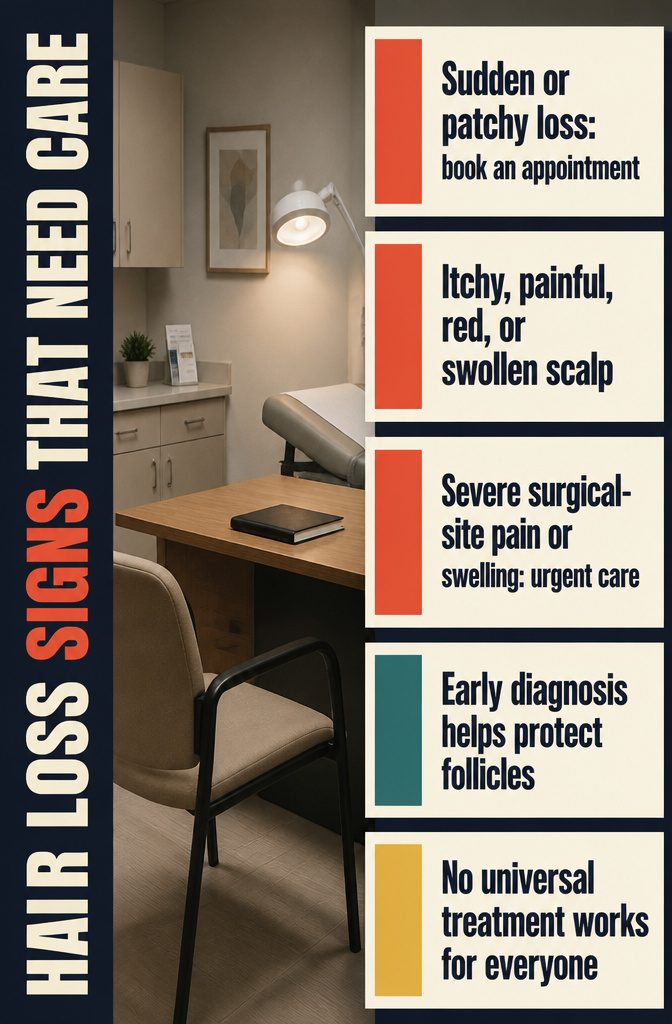
When to See a Healthcare Provider
Your primary care doctor or a board-certified dermatologist can figure out whether an underlying condition, medication, or hormone shift is driving the loss. Blood work may follow, along with a treatment plan that fits what they find.
That matters because no universal treatment works for everyone, and early diagnosis helps. Treatments work better before follicles take permanent damage.
You should call for an appointment if hair loss is sudden or comes in patchy spots, if your scalp itches or hurts, or if redness and swelling appear.
After a surgical procedure, severe pain or swelling at the site needs attention right away. If you have been using a treatment for several months without visible results, that is another reason to check back in.
A dermatologist specializing in hair loss knows the full range of options and can steer you toward what will actually help.
Results Take Time and Evidence Varies
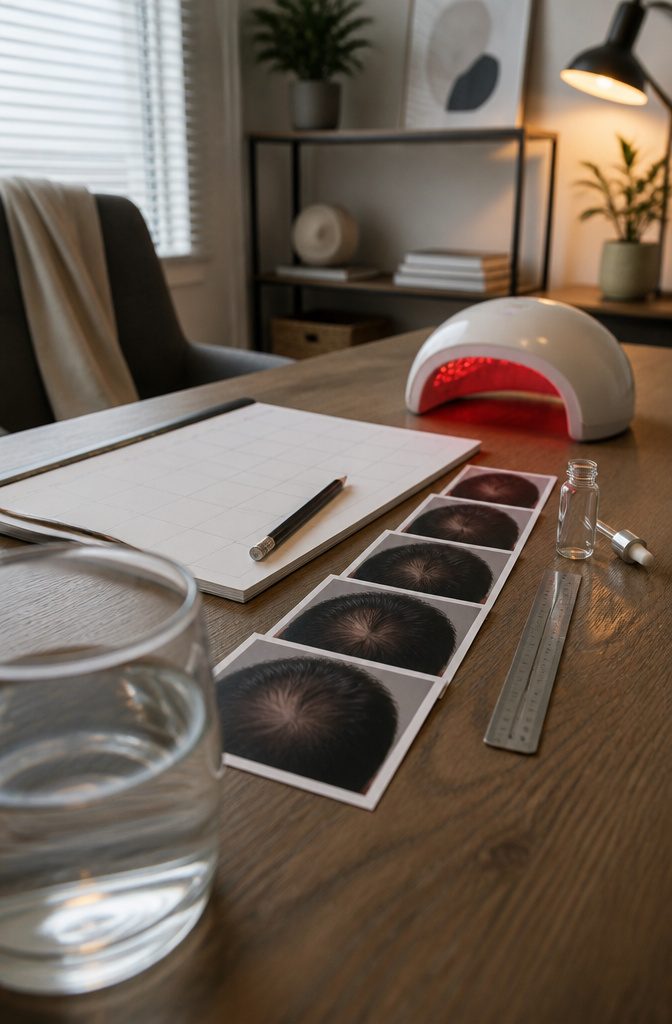
Plan on three to six months before anything shows, since results come from regular use over several months.
Some treatments also need repeating: platelet-rich plasma is given monthly for three months, followed by yearly touch-ups, at $500 to $1,500 or more per treatment, and its effectiveness is still unproven.
Support for the rest is uneven.
Light therapy has FDA clearance, but the studies are limited and mostly cover pattern hair loss. Aloe vera rests on limited animal studies.
A 2024 review found no good evidence for biotin, and zinc helps mainly if you’re deficient. I’d start with the better-supported options and start early, because once follicles stop working, transplant surgery is the only route left.
Frequently Asked Questions
What are the best hair treatments for growth?
No single treatment is best for everyone, because the right one depends on what is causing the loss.
For pattern hair loss, minoxidil (sold over the counter in 2% and 5% strengths) is the most consistently named option, and finasteride is used for male pattern loss.
Plan on 3–6 months of regular use before anything shows. Platelet-rich plasma is still unproven.
What causes hair loss?
Genetics and hormones drive pattern hair loss, which accounts for most cases in men. Stress, thyroid problems, autoimmune diseases, nutritional deficiencies, certain medications, and hormonal shifts from pregnancy, childbirth, or menopause can also cause it.
Tight hairstyles, heat, and chemical treatments damage the hair shaft and add to the problem. The cause decides whether hair returns on its own or needs treatment.
How do I stimulate natural hair growth?
No natural method has been shown to make hair grow faster. Scalp massage and supplements such as fish oil are the usual suggestions.
One study used daily 4-minute massages over 24 weeks and found some benefit, but it is unclear whether that came from growth or from lower stress. Treat these as low-risk extras, not a replacement for medical treatment.
Can you regrow hair naturally?
Sometimes, and it depends on the cause. Loss after childbirth, surgery, rapid weight loss, or a stressful stretch usually corrects itself in 3–6 months once the trigger passes.
Pattern hair loss rarely reverses without medical help. A healthcare provider can tell you which group your hair loss falls into.
Can I combine natural hair regrowth methods with other treatments?
Often yes, since many people use more than one approach.
Talk with a healthcare professional first so any concerns or contraindications get caught. Low-level laser devices, for example, are FDA-cleared and safe to use alongside other treatments.
Can biotin, vitamin B12, or collagen stop hair loss?
Only if you are deficient.
These supplements help hair growth when your levels are low, and there is no research showing extra helps when levels are already adequate. A blood test can show whether a supplement is worth buying.
What shampoo is best for thinning hair?
No shampoo has strong proof that it regrows hair. Caffeine shampoos get the most attention, but the evidence is mixed, and medicated dandruff shampoo is another option sources mention.
Volumizing shampoo can make thin hair look fuller, though it may dry hair out. Results from any shampoo are unlikely to be dramatic.
When should I see a healthcare provider about hair loss?
See one if the loss is sudden or comes in patches, if your scalp itches or hurts, or if redness or swelling shows up.
Severe pain or swelling at a surgical site needs attention right away. Also check back in if you have used a treatment for several months with no visible results.