Curly hair can sit in a tight crop that takes 30 seconds to style or grow past your shoulders and demand leave-in conditioner and air-drying time that stretches past an hour.
The cut you pick depends on how much length your curl pattern needs to show its shape and how much morning time you’re willing to spend on it.
A curly fade or crop asks for almost no morning work since the curls never get long enough to knot, but once you let them reach your shoulders the routine expands to include leave-in conditioner, careful combing while wet, and air-drying that can take an hour.
1. Curly Undercut
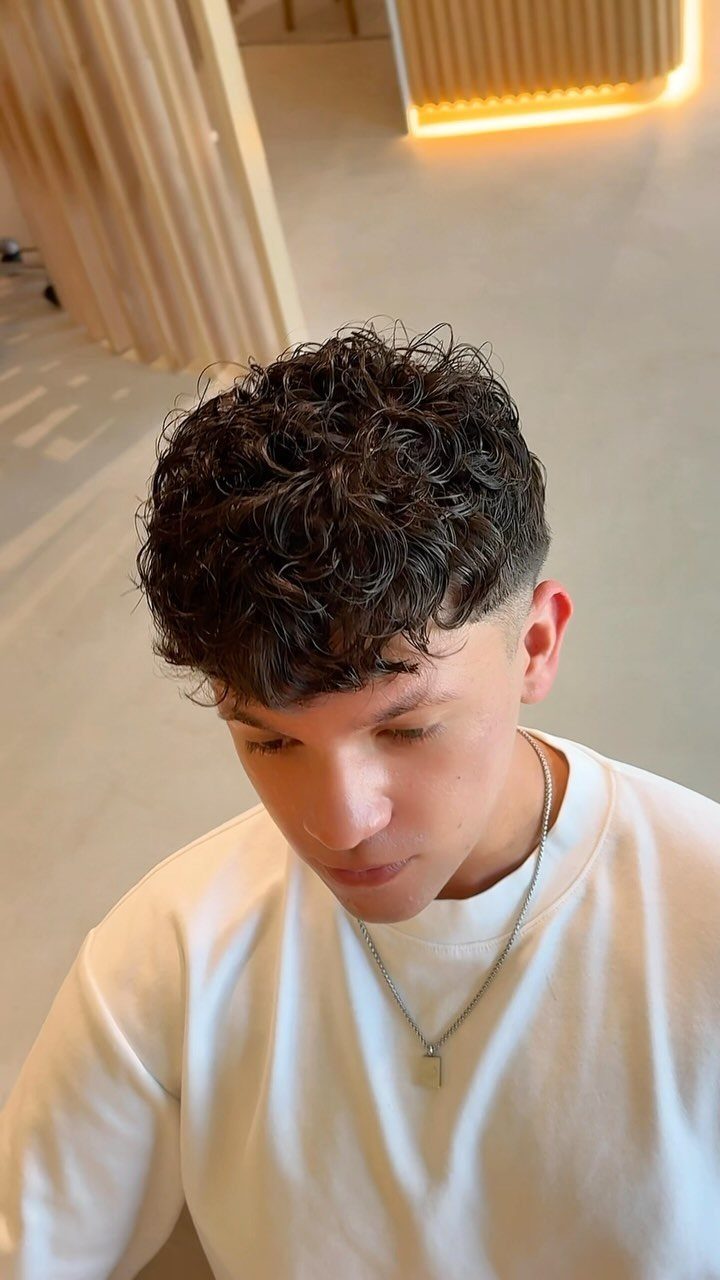
The sides buzz down short or disappear entirely while the top keeps enough length to let the curls do what they do. The contrast sharpens up the whole shape without asking for much work in the morning.
You can run this tight with a hard line where the top meets the sides, or let it blend gradually depending on how much drama you want.
Either way, the cut does most of the work and the curls stay the focus.
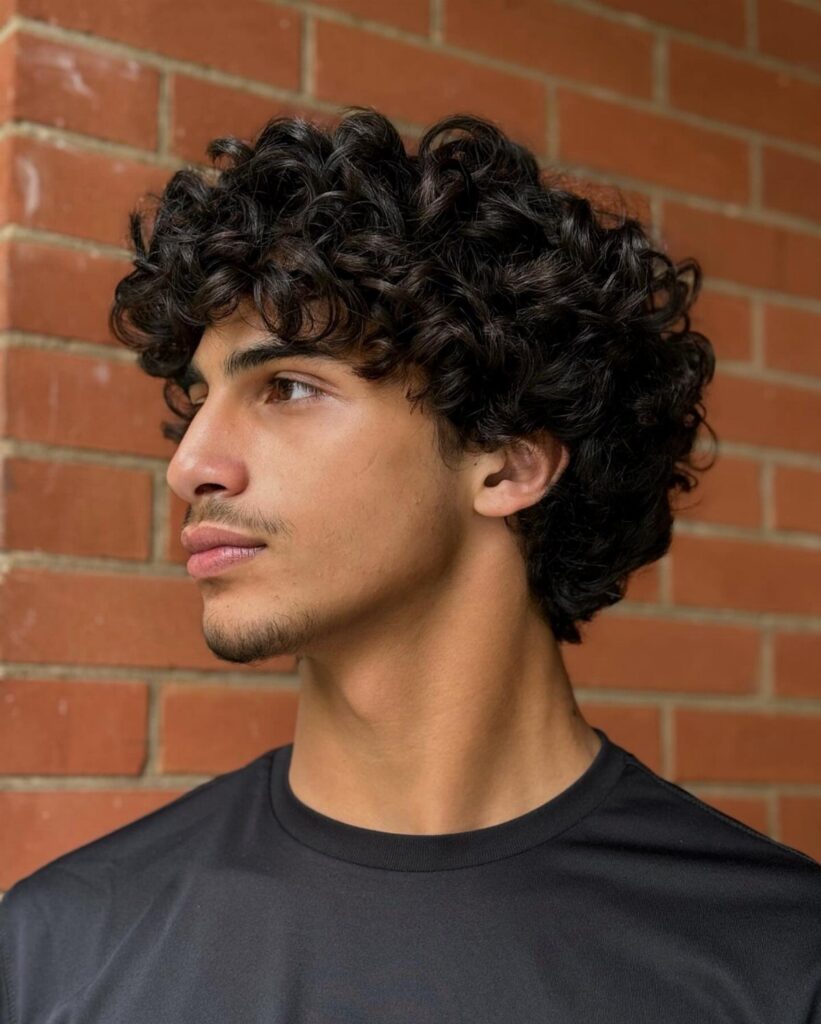
2. Medium-Length Curls
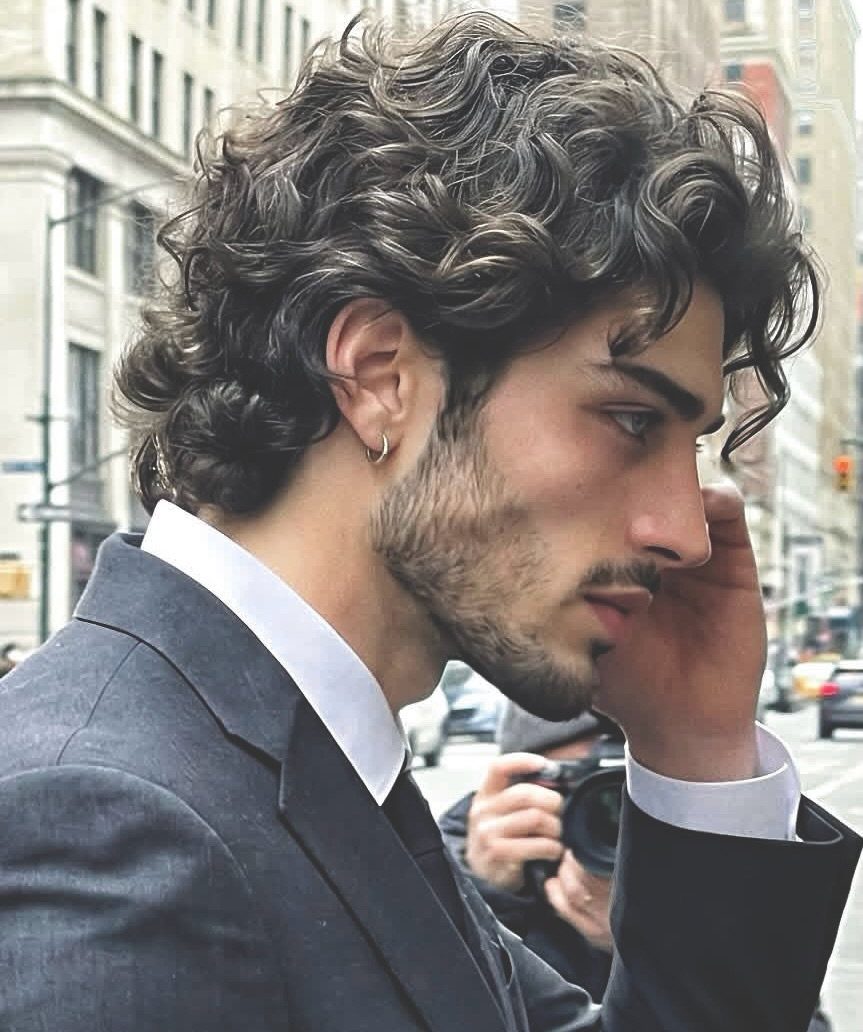
This sits somewhere past your ears but shy of your shoulders, long enough that the curl pattern can form full spirals instead of just sitting tight to the scalp. The sides grow out with the top, so everything moves together.
It takes a minute or two with leave-in conditioner and finger-styling after you wash it.
Beyond that, the cut mostly asks you to let it be. If your curls go wavy instead of tight, this length shows that off better than anything shorter.
3. Curly Shag
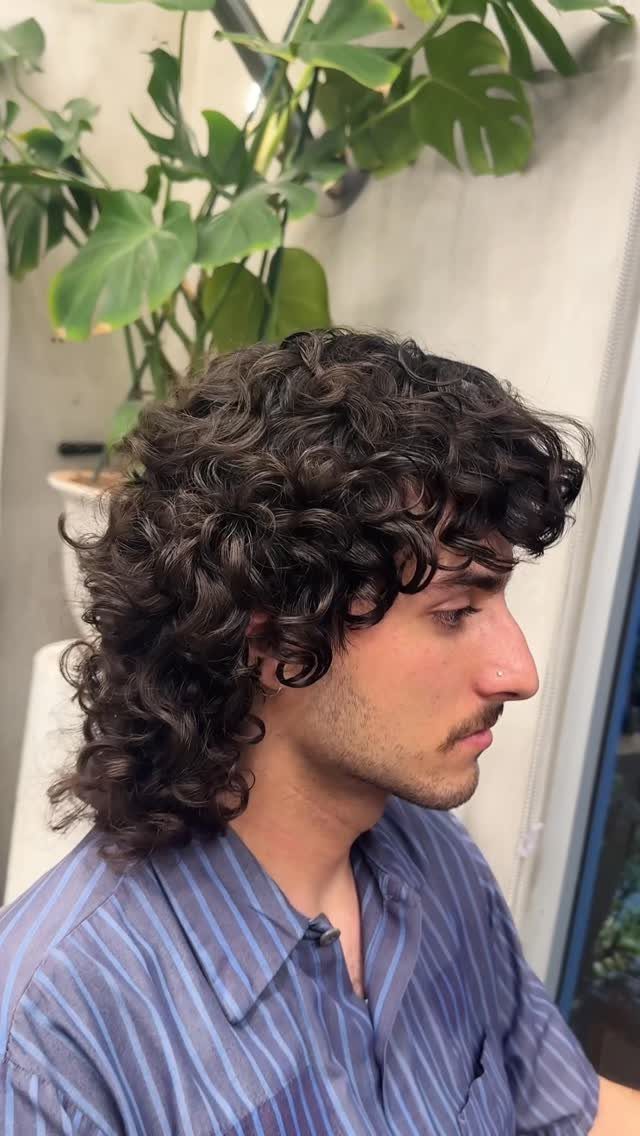
Layers break up the bulk through the mid-lengths, so instead of one solid mass you get pieces that fall at different lengths and move independently. The result looks a little undone even when you just towel-dried and walked out.
It grows out well because the shape was loose to begin with.
Morning routine is whatever you put in damp hair and let air-dry, and it still reads as intentional. If your curls clump unevenly or your hairline sits awkward, the texture covers it.
4. Curly Taper
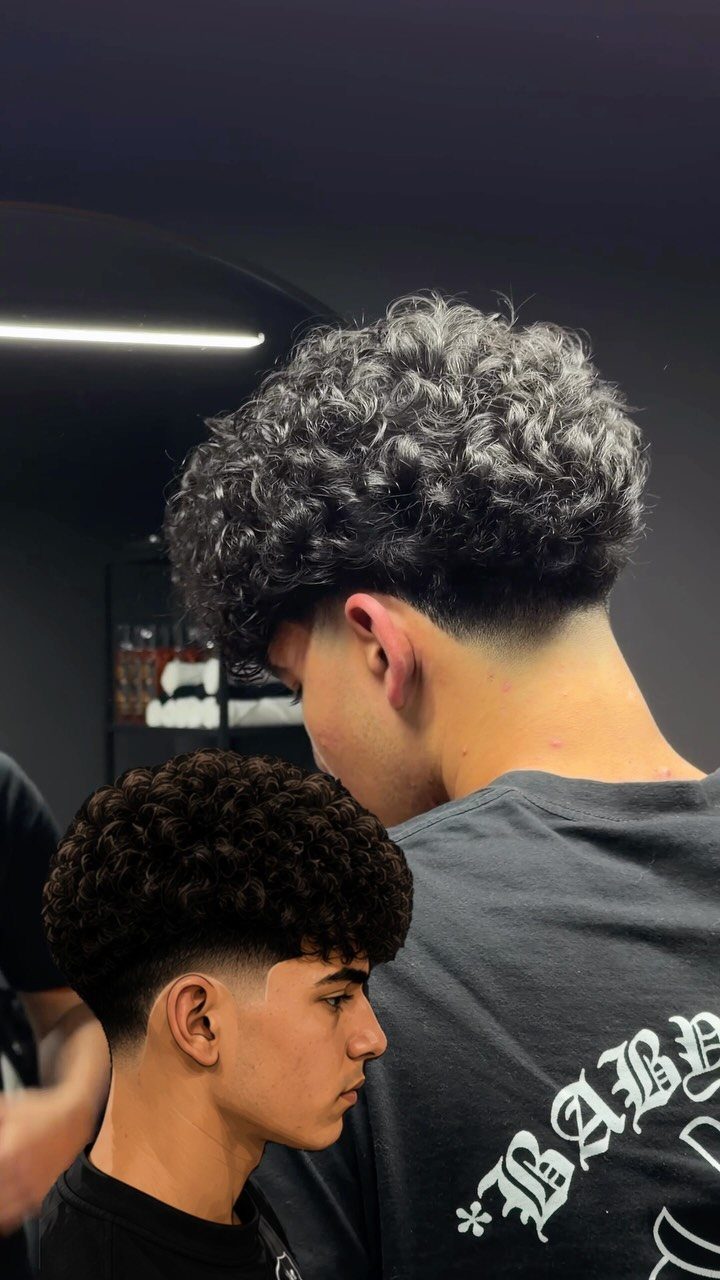
The taper takes the sides down gradually but leaves more hair than a fade would, so you still see some wave or curl texture even at the shortest point. The top stays full and the transition feels softer overall.
This works when you want a cleaned-up look but your curl pattern gets patchy or thin if you go too short on the sides.
Ask for a taper that blends into the top without a hard line, and specify how high you want the shortest part to start.
5. Tapered Sides with Wavy Top
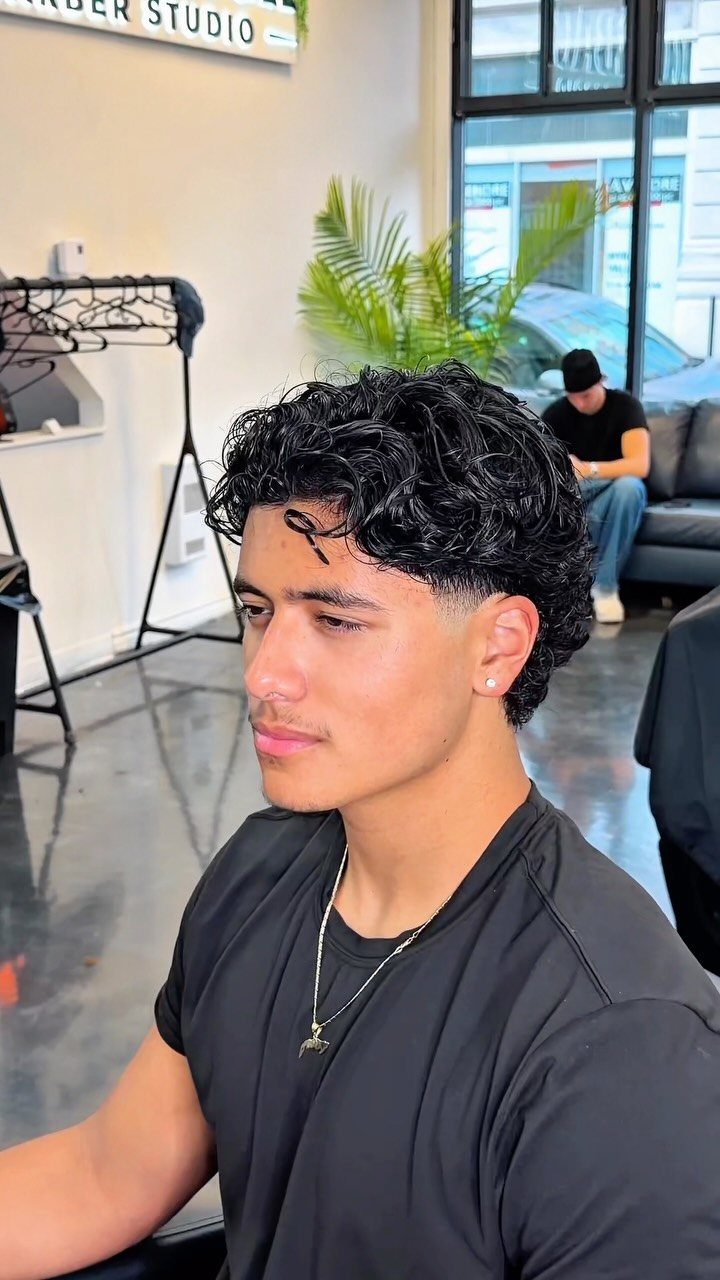
The top runs long enough to show off looser waves while the sides taper down to keep everything proportional. The wavy section can fall forward or get pushed back depending on what your morning looks like.
A light styling cream keeps the waves defined without weighing them down. The taper cleans up the sides so the waviness on top reads as a choice instead of just hair that needs a cut.
If your hair goes wavy only when it hits a certain length, this keeps that length where it matters.
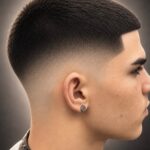
6. Curly Fade
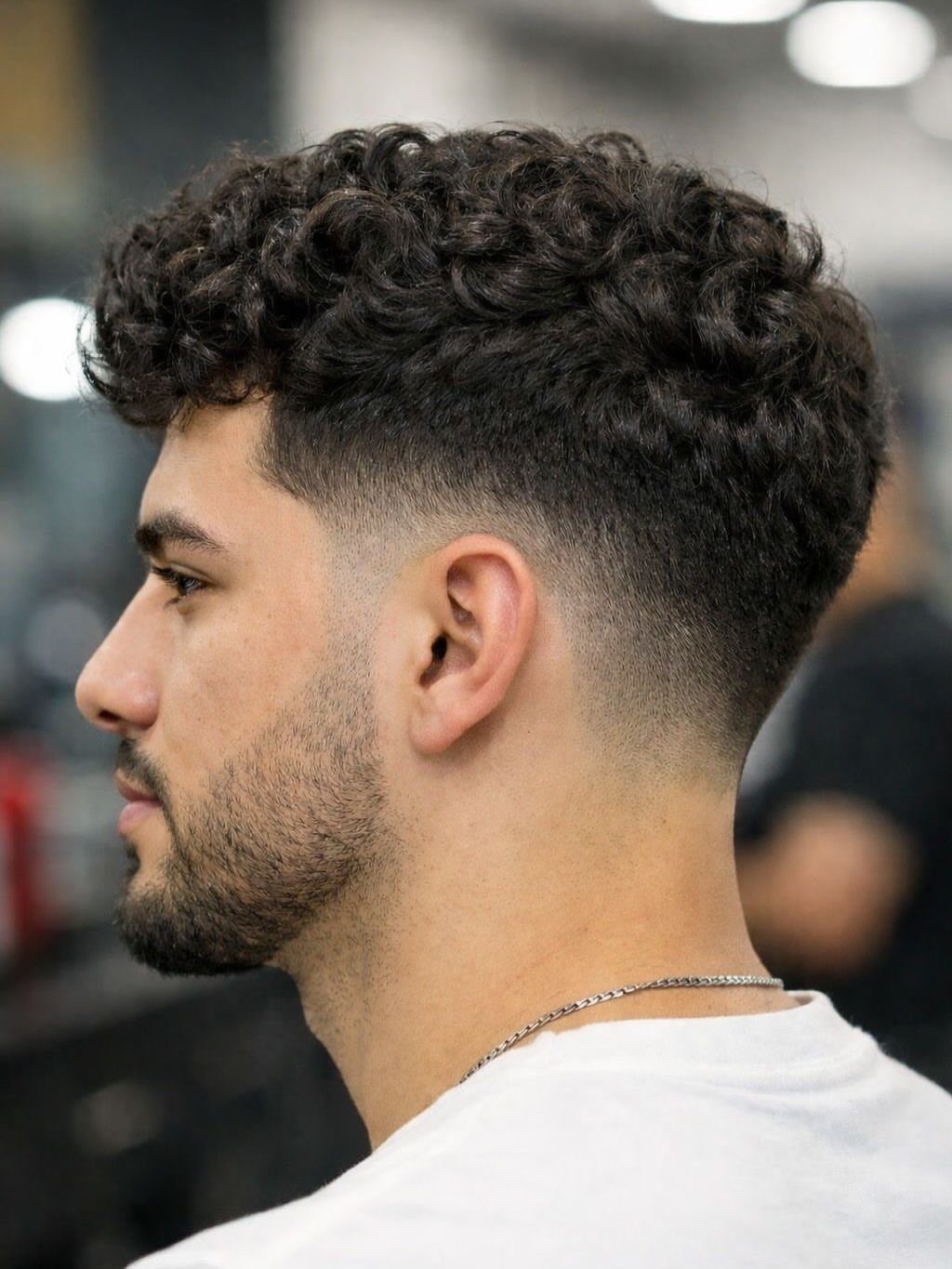
The fade takes the sides down to skin or close to it, and the curls on top sit against that clean backdrop.
You can run the fade low near the ears, mid at the temple, or high past the round of the head depending on how much curl you want showing.
A skin fade needs regular touch-ups to stay sharp, so factor that into your barber budget. The top needs enough length to let the curls form, and you style it the same way you would without the fade.
If your curls thin out as they get longer, a high fade keeps the fullest part front and center.
7. Shoulder-Length Curls
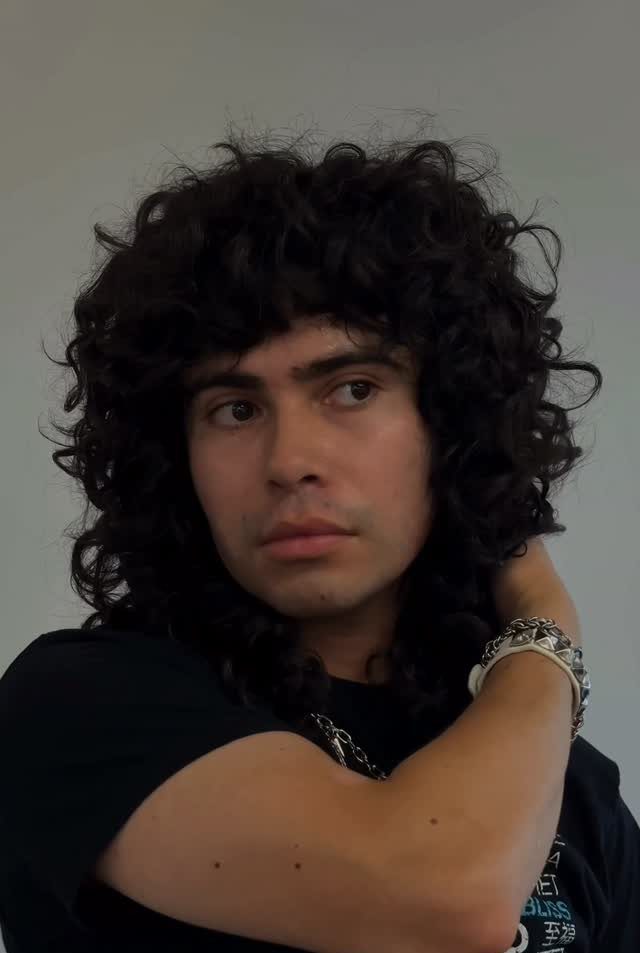
The length sits right at your shoulders, long enough that the curls can spiral all the way down instead of stopping short. Layers keep the weight from pulling everything into one flat curtain.
This takes some patience to grow out, and the in-between stages can look awkward.
Once it gets there, you style it with leave-in conditioner on wet hair and let it air-dry. If your curl pattern loosens as it grows, this length shows off whatever wave or spiral you end up with.
8. Curly Fringe
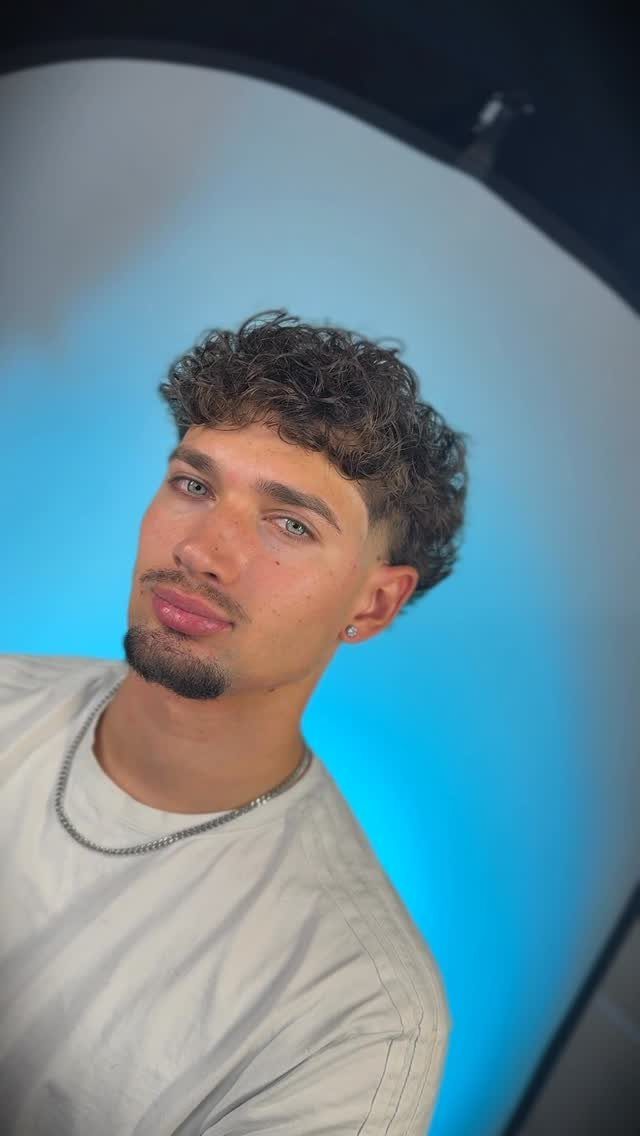
The curls on top fall forward across your forehead while the sides stay short or tapered. The fringe sits long enough to show texture but not so long it covers your eyes.
You can push it to one side or let it sit center, depending on where your hairline naturally parts. The tapered sides keep the proportions balanced so the fringe reads as the main event instead of just overgrown top growth.
9. Curly Crop
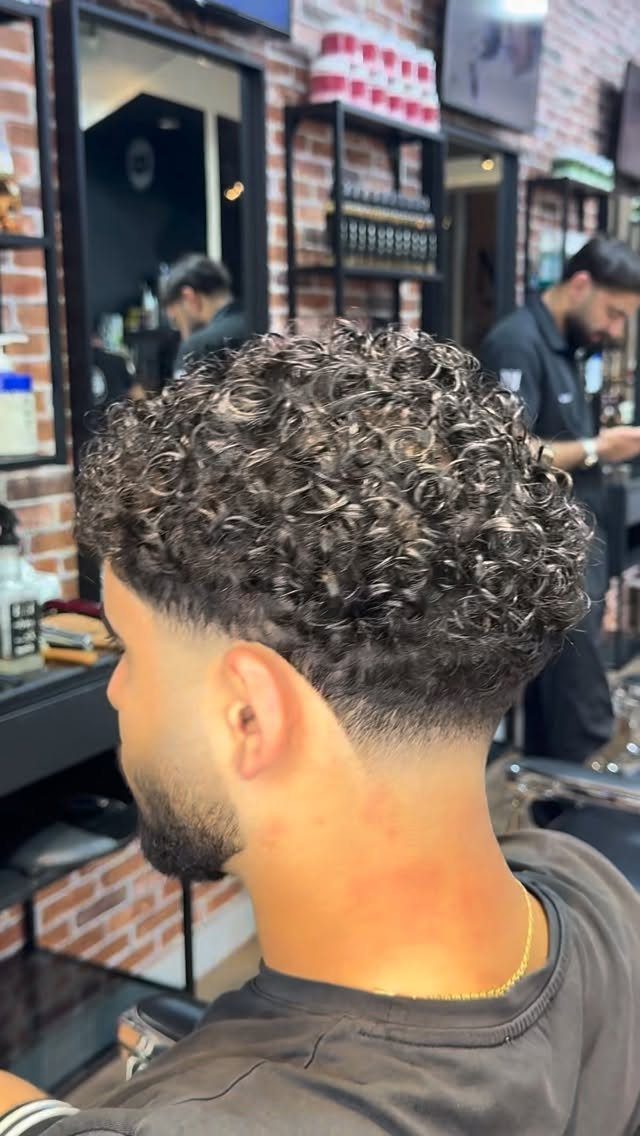
Short curls sit tight to the scalp, shaped close but still textured enough to show the curl pattern. The sides fade or taper down, and the top stays compact without much length.
This cuts down morning styling to almost nothing because the curls are too short to tangle or clump unevenly.
Ask your barber to leave enough length on top for the texture to show but keep it short enough that it holds its shape without product. Grows out fast, so plan on regular trims to keep the shape clean.
10. Curly High Taper
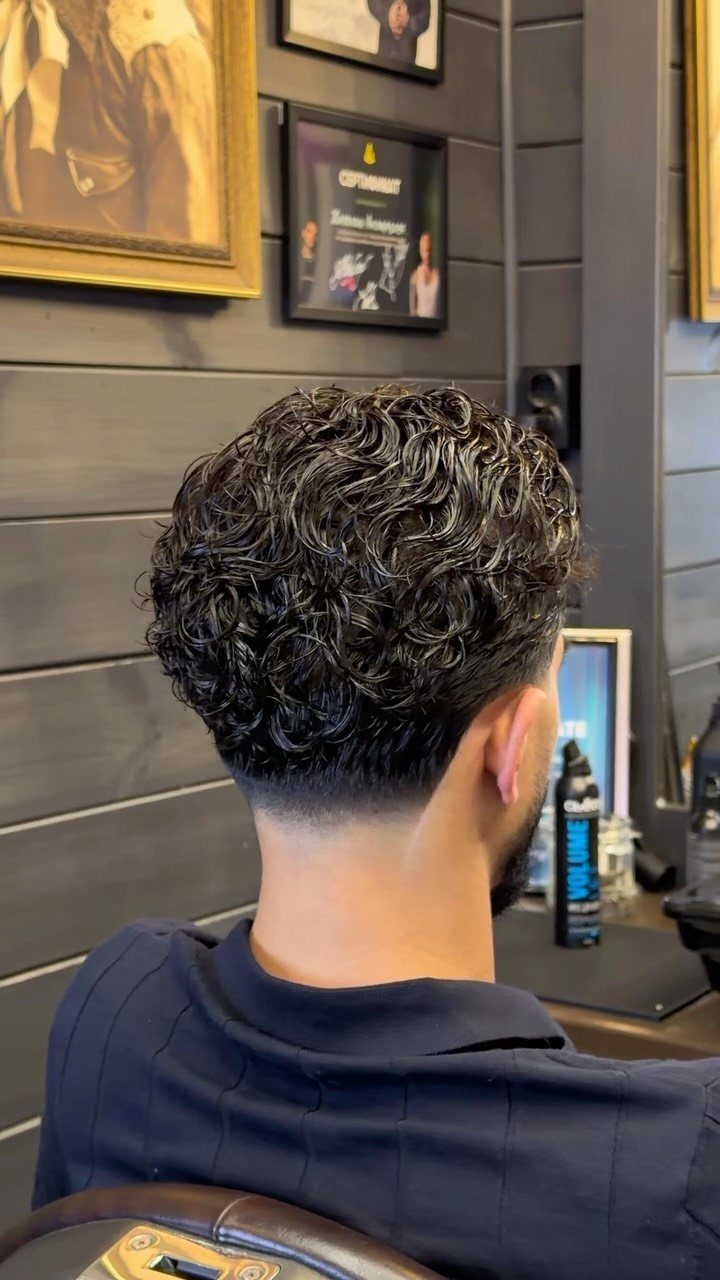
The taper starts high, past the temple, and fades down to skin. The sides still show some texture, and the curls on top get most of the volume.
This cleans up the silhouette without the upkeep a fade demands. Ask for the blend to start above the round of your head and specify how much length you want left through the sides.
11. Textured Curly Top with Buzzed Sides
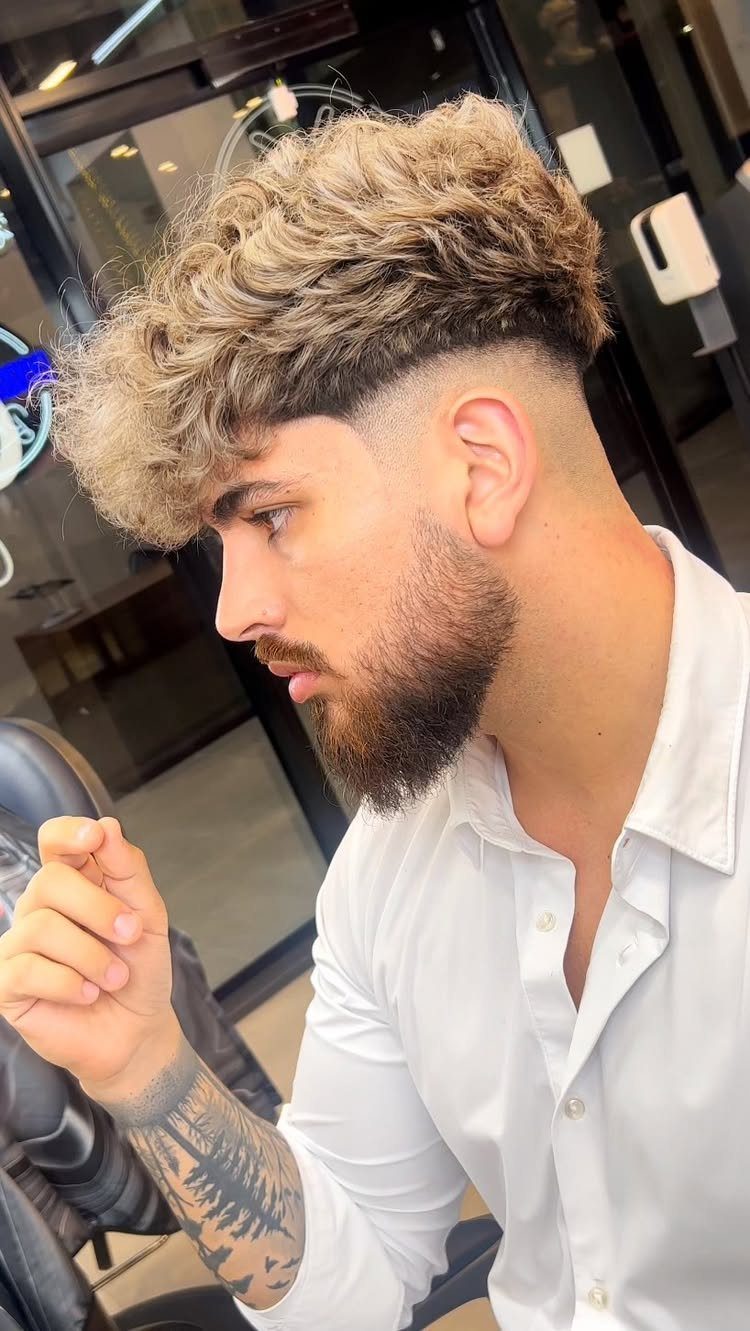
The top keeps some curl length while the sides buzz down short, usually with clippers. The contrast between the textured top and the clean sides makes the curl pattern stand out.
You can run the top longer or shorter depending on how much volume you want.
The buzzed sides need regular touch-ups, but the top styles itself if you use a light cream on damp hair. If your curls get unruly when they grow past a certain point, this keeps them contained while still showing texture.
12. Curly Man Bun
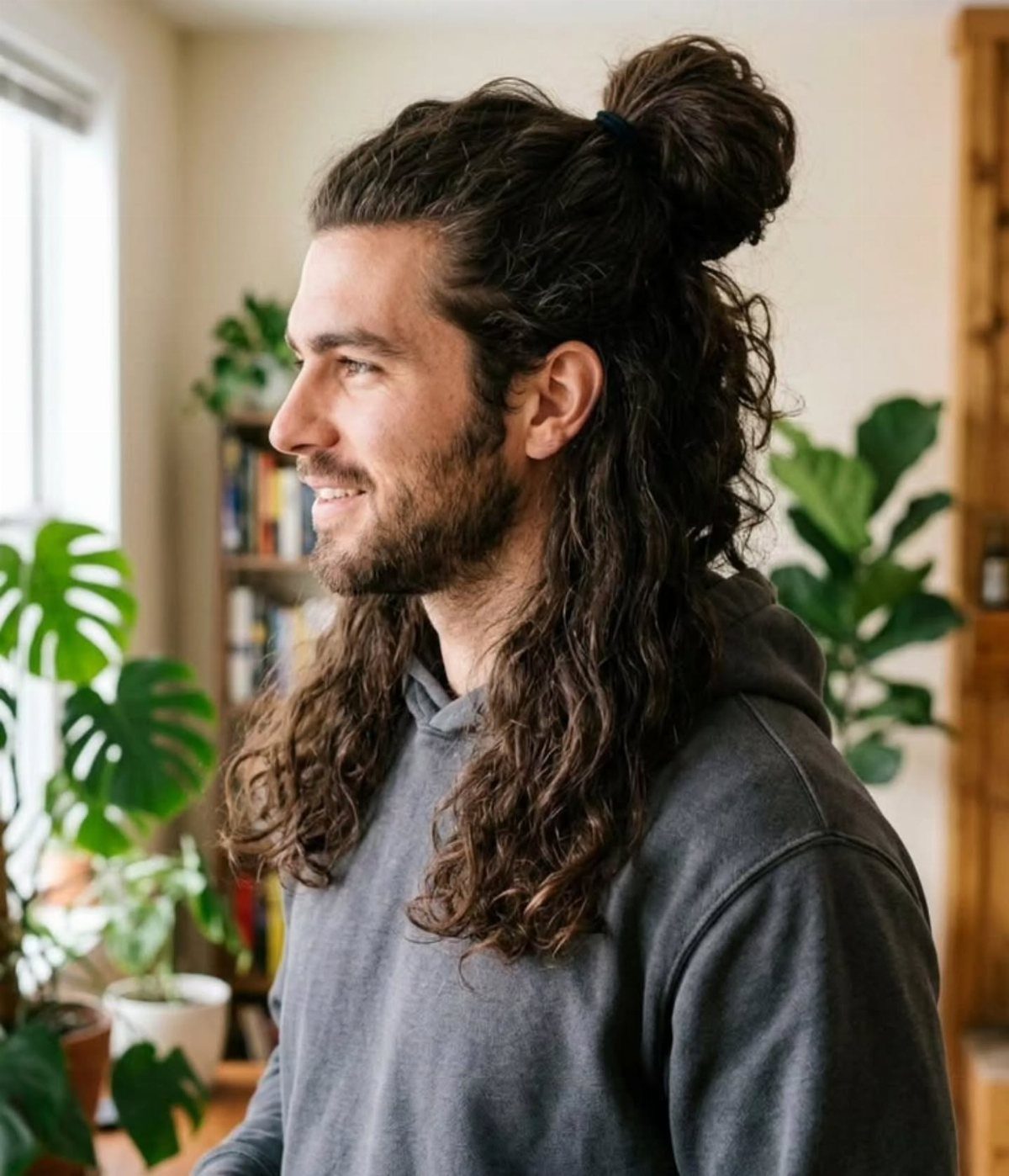
Long curls pull back and gather into a bun at the crown or higher. The sides can stay long and pulled back with the rest, or you can taper them for contrast.
This needs enough length to hold the bun without a lot of pins or ties.
A hair tie or elastic secures it, and you can leave some curls loose around the face if your hairline sits better that way. The bun keeps hair off your neck and out of your face without cutting it short.
13. Curly Mullet
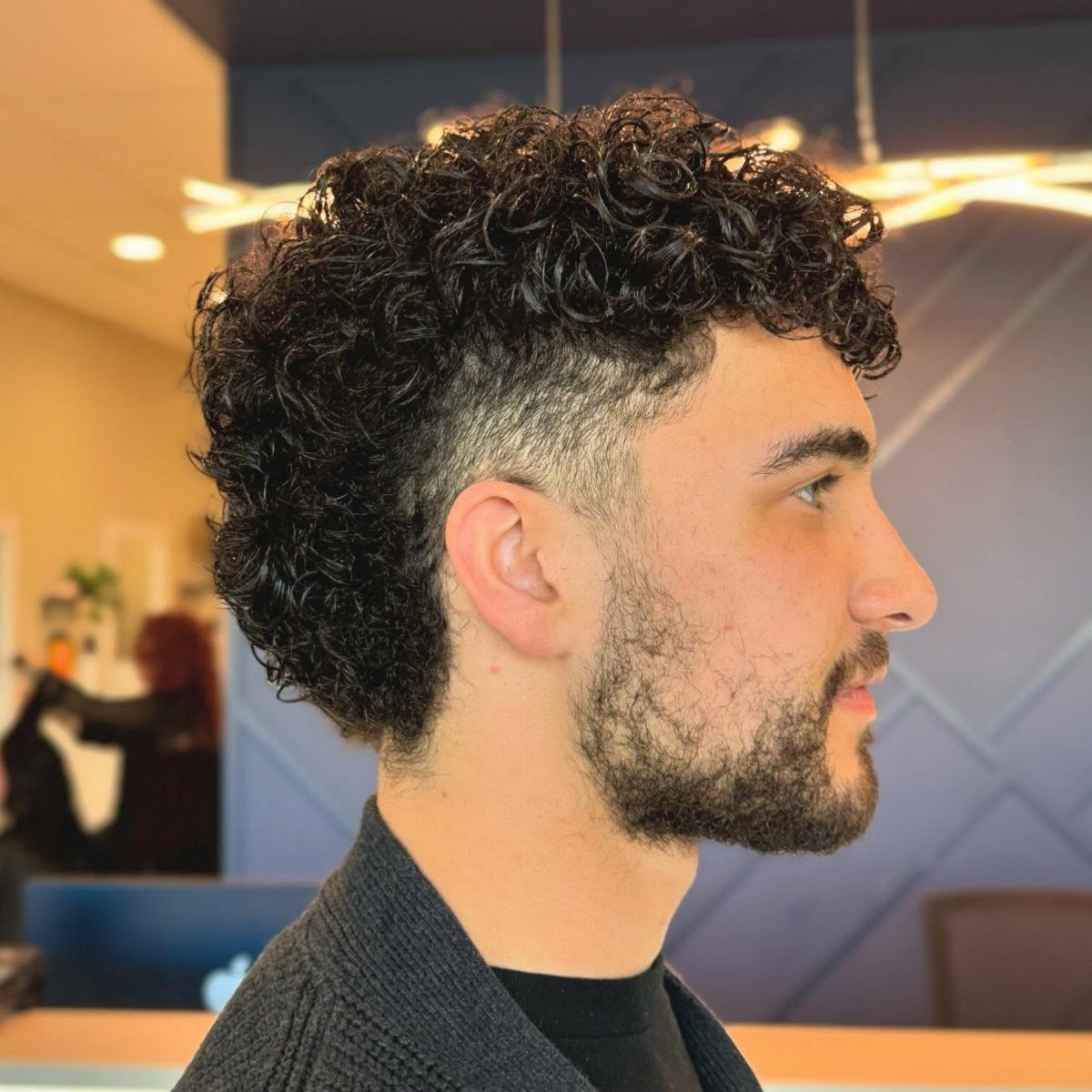
The sides go short or fade down while the back keeps several inches of curl length. What makes it work is the contrast between the trimmed perimeter and the longer back.
If your curls sit loose and wavy, the back will hang differently than tight coils would, but either way the shape stays recognizable.
Ask your barber how short you want the sides and how much length to leave in the back. The back needs regular trims to keep it from looking like you just forgot to cut it.
14. Curly Mohawk
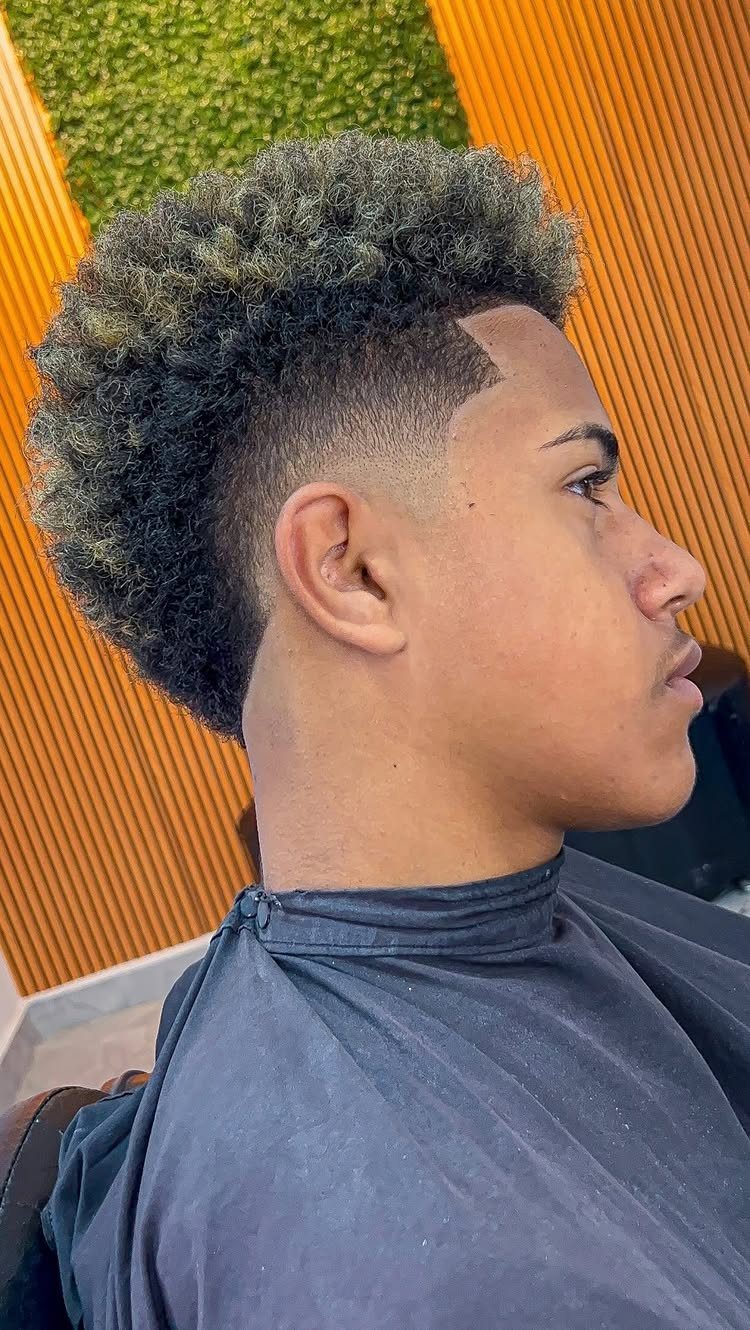
A strip of curls runs through the center from front to back while the sides fade down to skin or close to it.
The center section can sit tall if your curl pattern has enough spring, or fall to one side if the curls are looser.
Morning styling is usually just wetting the center section and letting it curl back up.
The fade needs touch-ups every couple weeks to stay clean. If your curls thin out when they grow long, keep the center section shorter so it holds its shape without product.
15. Curly Afro
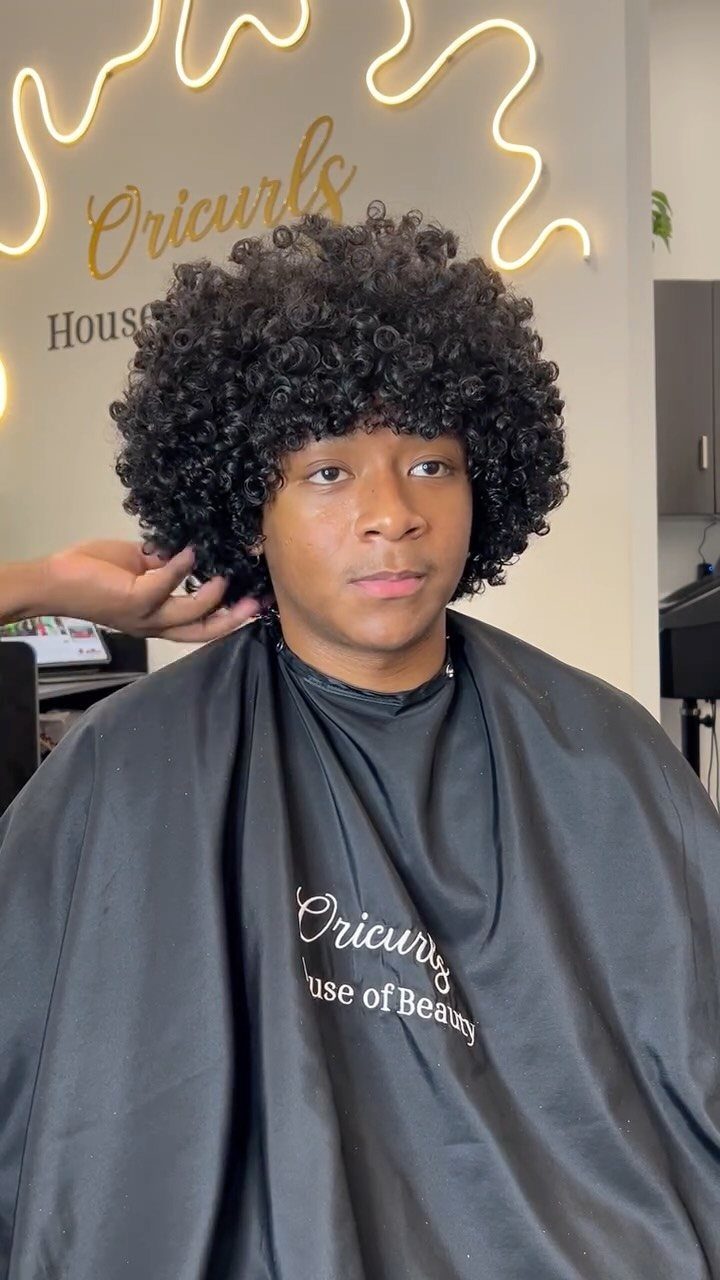
The curls grow out evenly in all directions and get shaped into a round silhouette. The barber trims the perimeter to keep the shape symmetrical, but the fullness comes from the curl pattern itself.
Maintenance is mostly about keeping the curls hydrated so they hold their spring. A pick lifts the roots if the shape starts to flatten.
This works best when your curl density is high enough to fill out the round shape without leaving gaps. If your curls loosen as they grow, the shape will sit softer but still read as intentional.
16. Long Flowing Curls
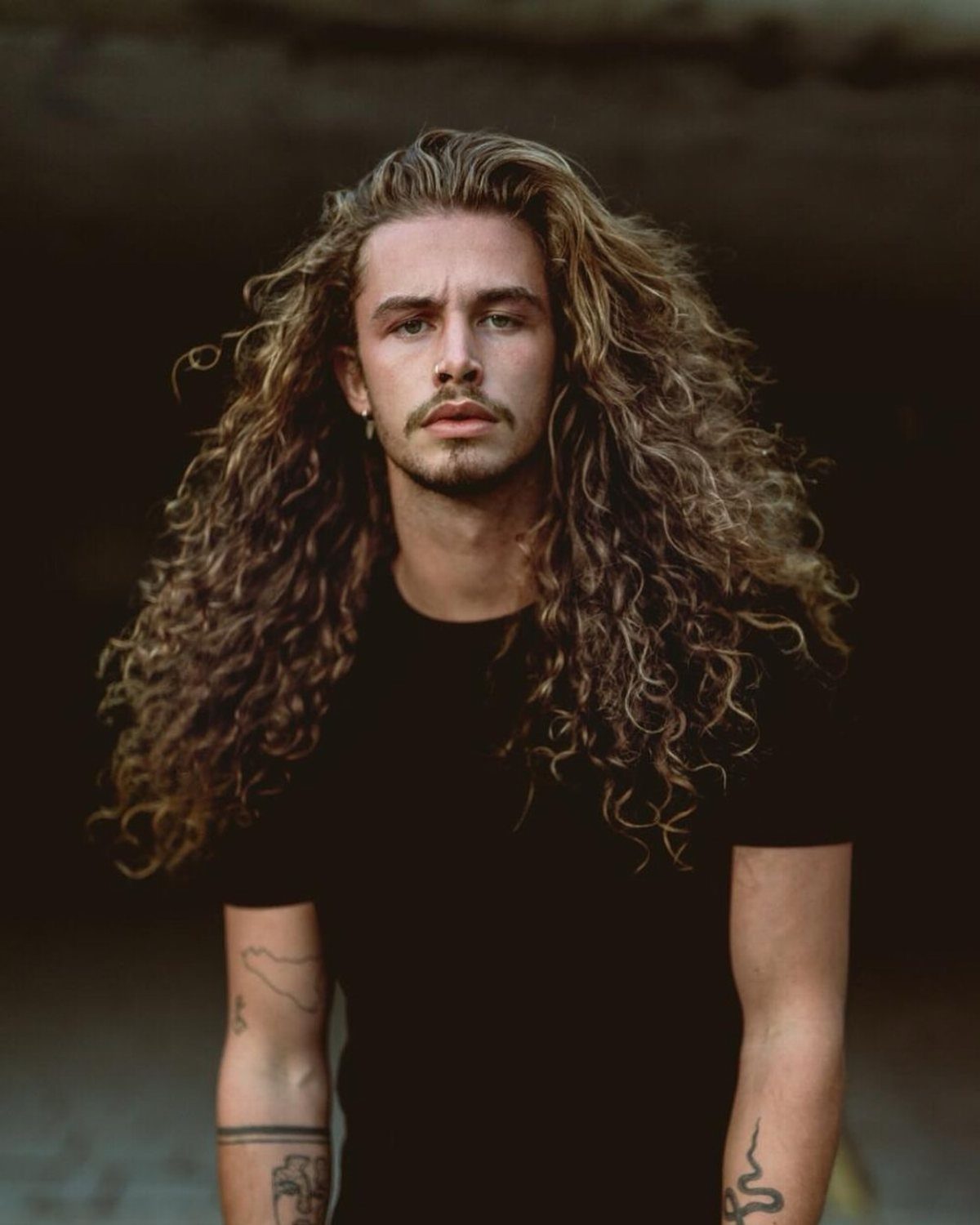
The curls grow past your shoulders and fall without much shaping or layering. The length shows off whatever spiral pattern your hair naturally forms, and the volume builds as it grows.
You need leave-in conditioner or curl cream to keep the spirals from frizzing out, and air-drying takes longer than shorter cuts.
The length also means more weight, so if your curls pull straight when they get too long, this only works up to a certain point. Plan on trimming the ends every few months to keep them from splitting.
17. Faux Hawk
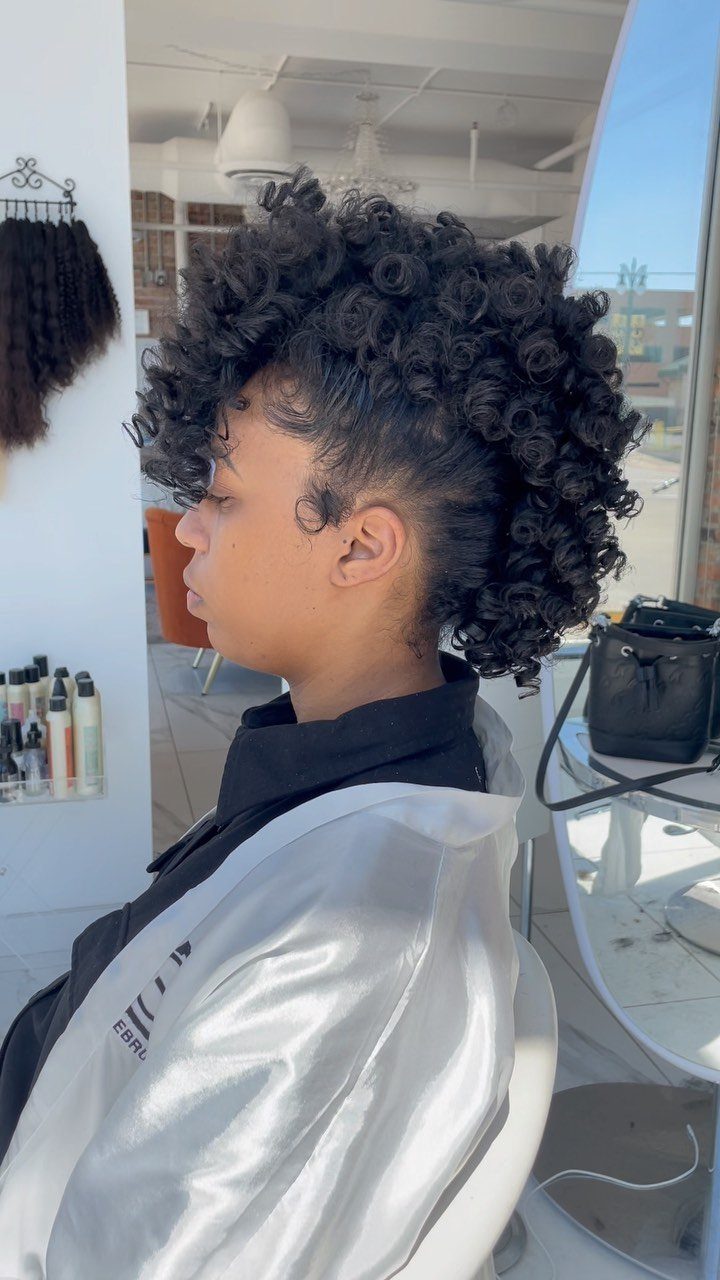
The sides taper or fade while the curls through the center sit higher and fuller, running from the forehead back. The raised center gives the illusion of a mohawk without shaving the sides down to skin.
Styling takes a minute with mousse or gel on damp hair to hold the height.
The sides need regular fades to keep the contrast sharp. If your curl density thins out at the sides, this cut works in your favor because the taper hides that and keeps the focus on the center section.
18. Modern Mop Top
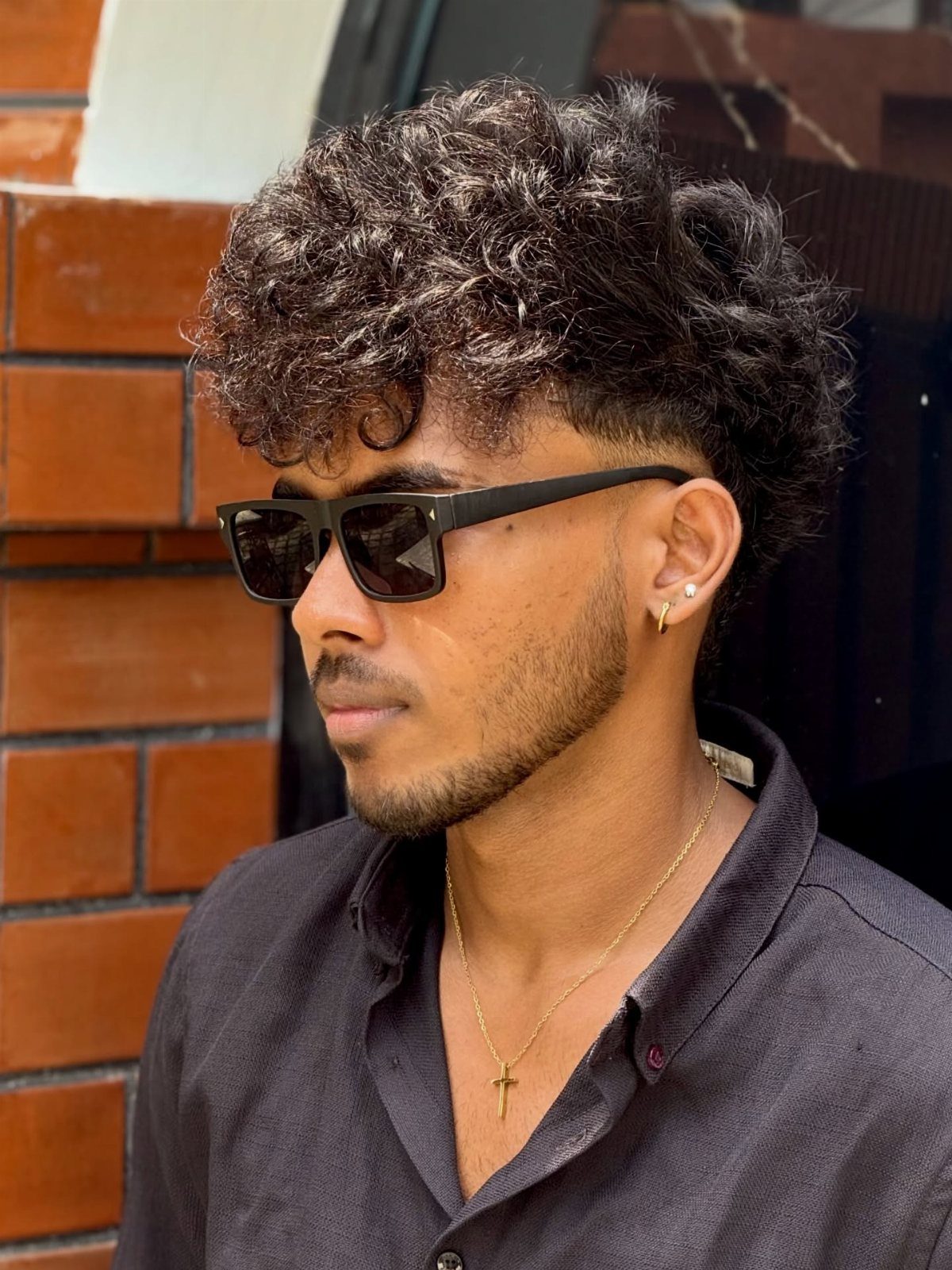
Curls sit longer on top and fall forward or to the side, while the sides can fade or taper to keep the proportions balanced. The top has enough length to show off the curl texture without looking overgrown.
A styling cream on damp hair keeps the curls defined, and you can push them in whatever direction your hairline naturally wants to go.
If your curls get heavy and lose their shape past a certain length, ask your barber to keep the top just long enough to curl but short enough to hold volume.
19. Curly Burst Fade
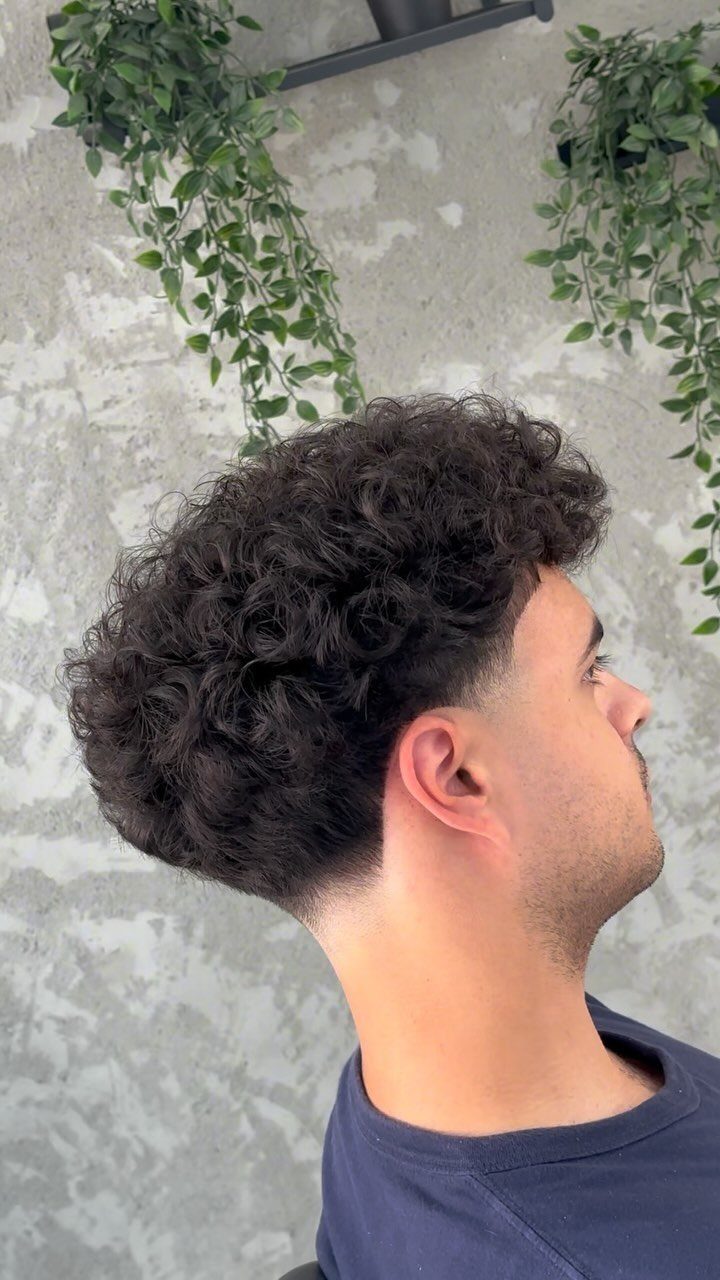
The fade curves around the ear in an arc instead of running straight up, so the hair toward the back of your head stays longer while the area around the ear drops to skin.
The curl volume sits mostly on top and carries through toward the nape.
This keeps the back a little fuller if your curl pattern works better with some length there.
Ask your barber for a burst fade and specify how tight you want the curve around the ear. The fade still needs touch-ups every couple weeks to hold the shape.
20. Short Curly Haircut
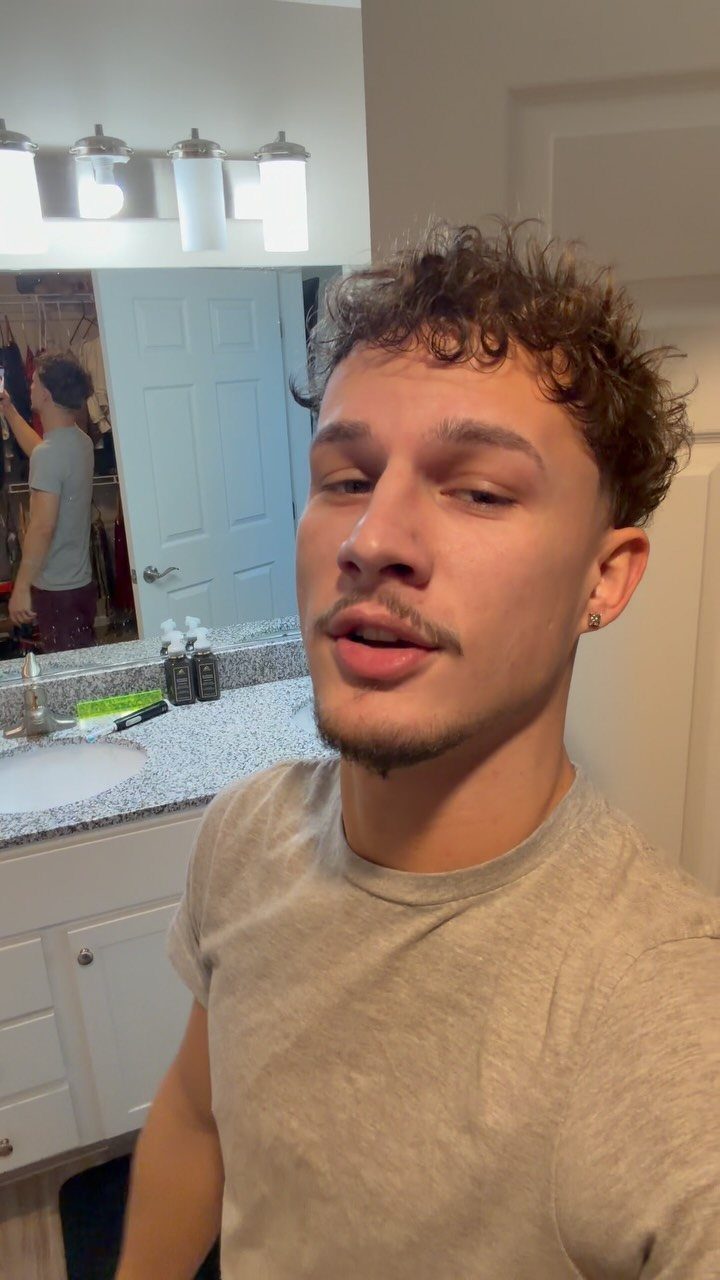
Curls sit close all over, trimmed short enough that the texture shows without much length or volume.
If your curls get unruly past an inch or so, this keeps them controlled without losing the pattern.
A barber can trim this with scissors or clippers depending on how tight your curls sit. Plan on cuts every few weeks since short styles show growth faster.
21. Voluminous Curly Top
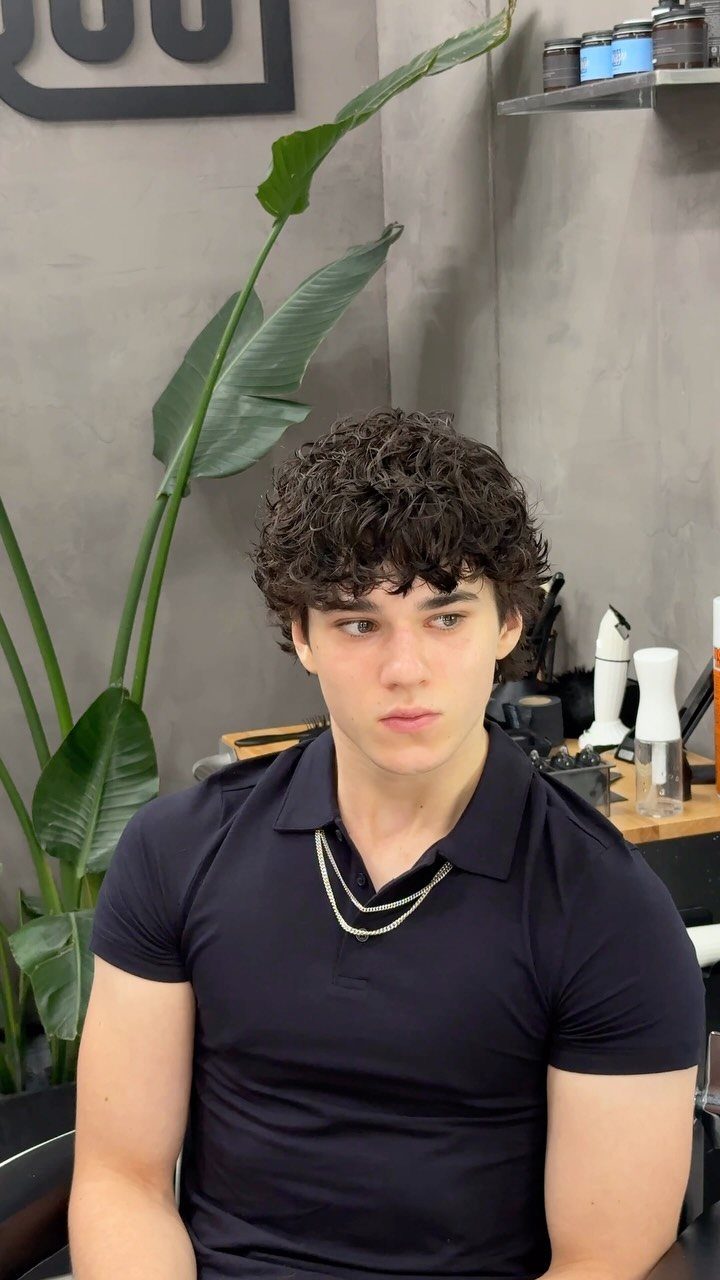
Shorter sides frame the volume without letting the whole cut turn into a sphere. The volume comes from the natural curl pattern, not from pushing it upward with product.
A curl cream on damp hair helps define each spiral without flattening the shape.
If your curl density runs high, this cut gives you somewhere to show it off. The height means more surface area, so drying takes longer than a tight crop would.
Curl Care and Daily Styling
Washing 2 to 3 times a week keeps natural oils in place instead of stripping them out with daily shampooing. Curls need more moisture than straight hair does, so shampoo and conditioner that actually hydrate are worth the shelf space.
A wide-tooth comb on damp hair detangles without breaking up the curl pattern the way a brush would. After washing, blot with a microfiber towel or a cotton T-shirt instead of rubbing, which cuts down frizz before it starts.
Too much product flattens the shape, so start with less than you think you need and add more only if the curls look undefined.
Air-drying takes longer but keeps the curl intact.
A diffuser attachment on low heat dries curls fast without turning them into a cloud. High heat loosens the pattern and adds frizz you’ll spend the rest of the day trying to fix.
Dry Cutting and Curl Shrinkage
Cutting curly hair dry lets the barber see where each curl lands and how much it lifts off the scalp.
Wet curls hang longer than they will once dry, so any length decision made on soaked hair is a shot in the dark.
Shrinkage can pull curls up anywhere from 10% to 50% shorter than their wet length, depending on how tight the curl pattern sits.
A barber working on dry hair can account for that before making the cut instead of discovering it after you leave.
Cutting curls dry also lets a barber work scissor-over-comb in controlled passes rather than chopping through a section and hoping for the best. The result blends softer and holds its shape better after you wash it at home.
Ask your barber to cut the hair while it’s dry because Singh notes that shrinkage can occur between 10 to 50% if it’s cut wet.
— GQ
Frequently Asked Questions
What are some good hairstyles for men with curly hair?
Fades, tapers, undercuts, crops, shags, and longer shoulder-length cuts all work depending on how much contrast and maintenance you want.
Fades and undercuts give sharp lines with the sides buzzed short, while tapers and medium-length styles keep more texture through the sides. Shags and longer curls need less frequent cuts but take more styling time each morning.
How often should curly hair be cut?
Short styles with fades or tapers need touch-ups every 2 to 4 weeks to keep the contrast sharp, while longer curls can stretch to 6 or 8 weeks between cuts.
The sides start to look off first because curls stack on themselves and hide uneven length until the fade line blurs.
How do I ask my stylist for a curly or wavy haircut?
Mention how you style it now, how many minutes you have in the morning, and whether you’re trying to keep the length or cut it back.
Bring a photo if you have one that shows the curl pattern and contrast you’re after. A barber working on curly hair should look at your growth pattern and cut it dry so the shape matches what you described.
Is a fade or a taper better for curly hair?
A taper leaves more hair through the sides and blends gradually for a softer, more classic look, while a fade drops to skin or close to it for sharper contrast against the curls on top.
Both work, and the right choice depends on how much drama you want and how often you’re willing to get touch-ups. Fades need maintenance every 2 weeks to stay clean, while tapers can stretch longer.