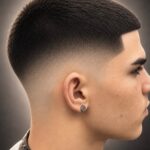
A taper can start low, mid, or high; a fade can drop, burst, or cut straight to skin.
The choice comes down to how much contrast you want between the top and sides, how often you’re willing to clean it up, and how your face shape reads with different lengths.
A pompadour needs 5 minutes of blow-drying every morning, a buzz cut takes none, and a skin fade grows back to stubble in a few days.
Match the cut to your face shape: round faces need vertical height, long faces want length that sits close to the head, and square jaws soften with a side part.
1. Pompadour
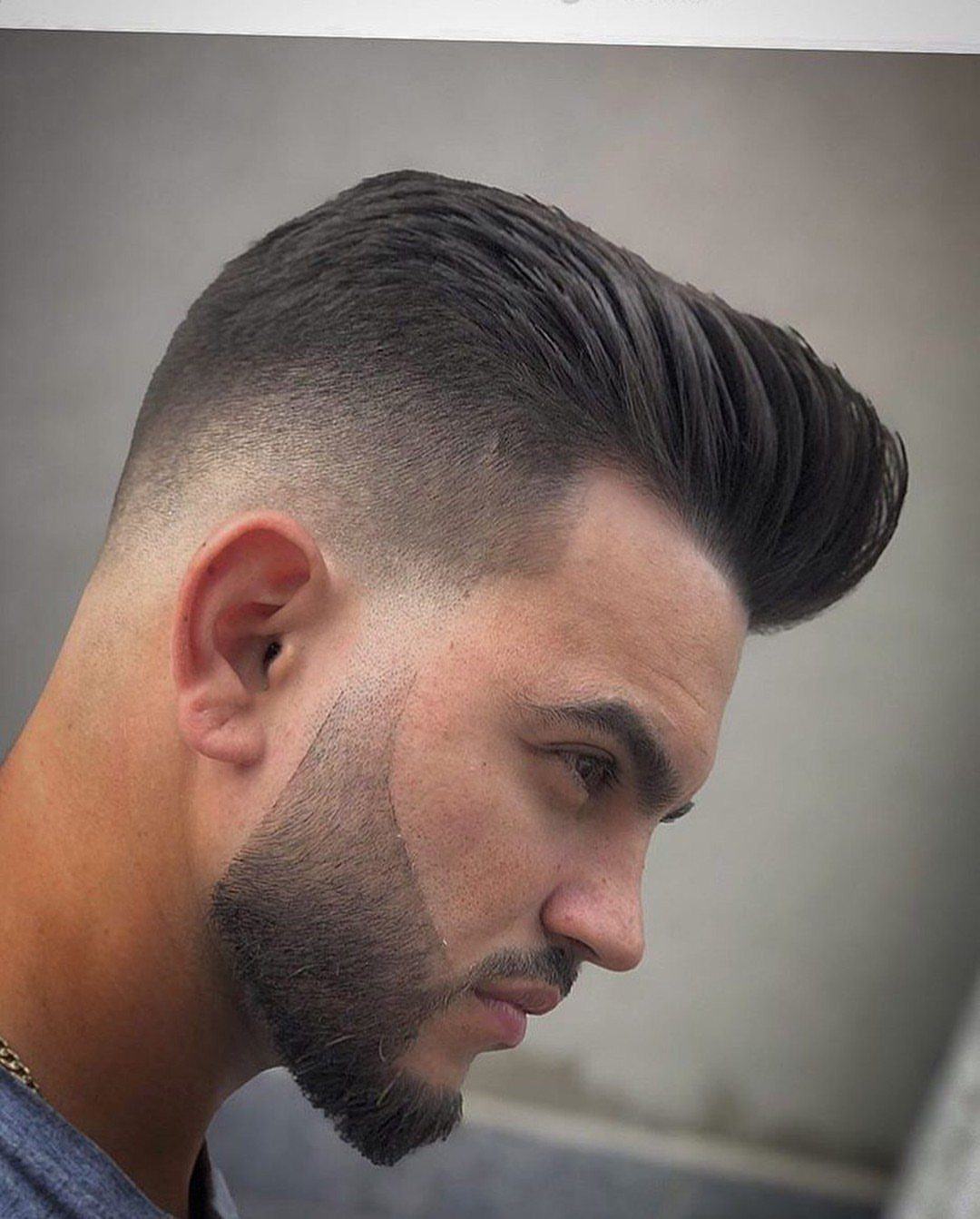
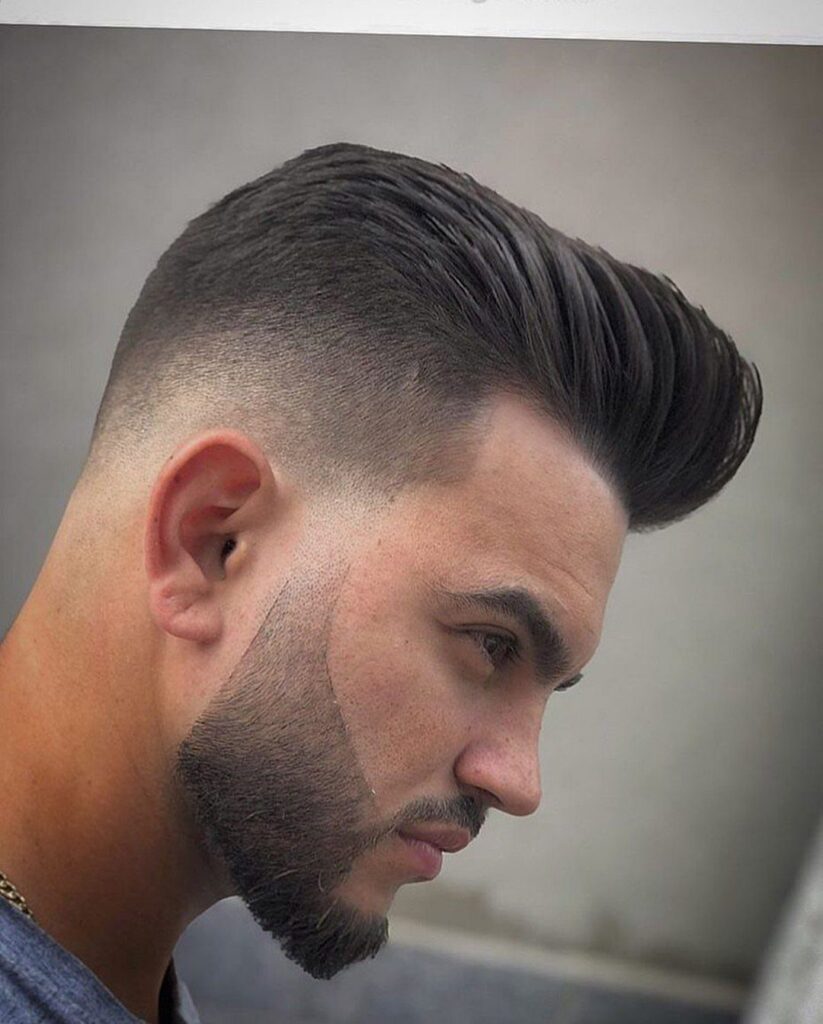
The top is swept back and up, with enough length to hold volume. Sides stay short, often faded, to keep the height from looking unbalanced.
The shape works best with thick or medium-density hair that can hold lift without going flat by lunch.
Plan on 5 minutes of blow-drying and product every morning.
A strong pomade or mousse locks the volume in place. Without styling, the cut loses its shape fast.
2. Undercut
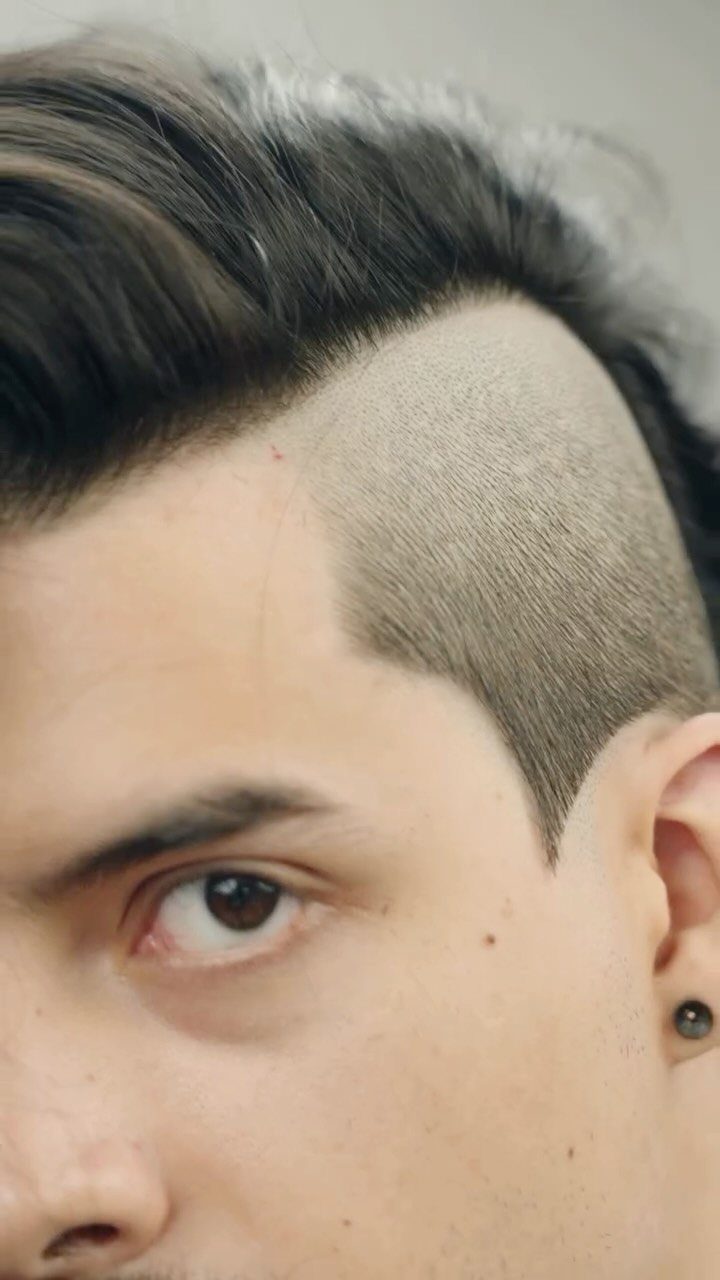
Sides and back are clipped short or shaved clean, while the top keeps enough length to sweep, slick, or style in any direction. The disconnect between the 2 is sharp, not blended.
Thick hair shows the contrast best. Fine hair can work if the top has enough length to weigh down and avoid looking patchy against the shaved sides.
Styling depends on how long the top is. Shorter versions need product to add texture or hold a side sweep.
Longer tops can be slicked back or left loose. The sides need regular cleanups to stay sharp.
3. Crew Cut
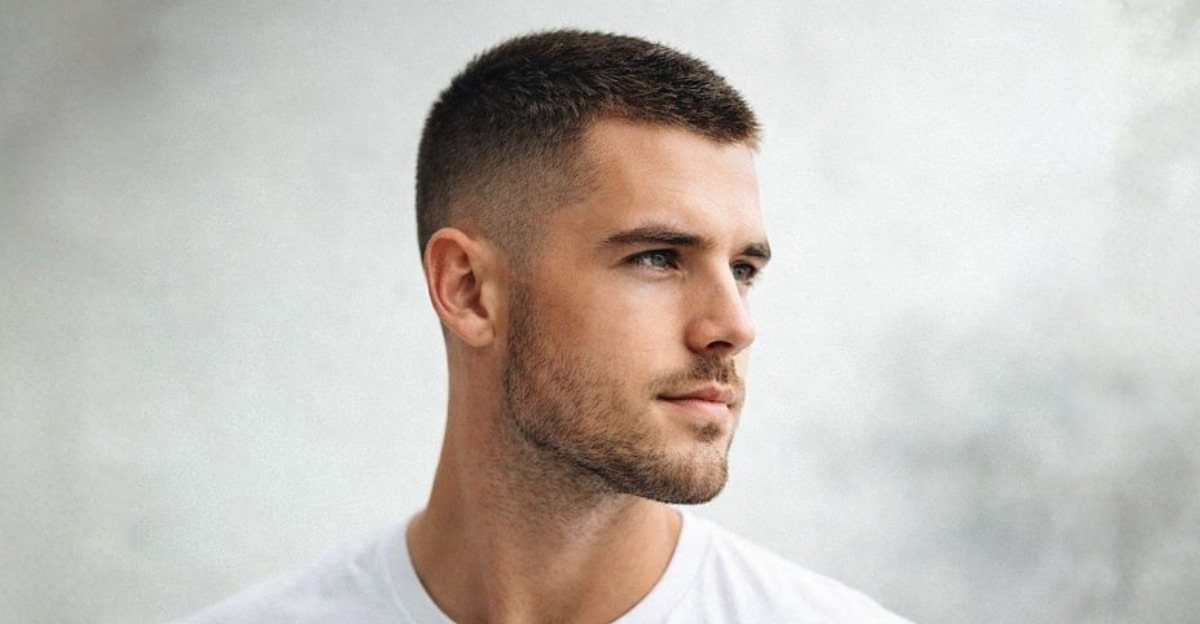
Sides taper short while the top is clipped to about half an inch or slightly longer, just enough to brush forward or leave flat. The whole cut stays short and easy.
Clipper guards run from a 3 or 4 on top down to a 1 or 2 on the sides, with a gradual blend.
Dense hair holds the shape cleanly. Fine or thin hair can look too close to the scalp if the top is cut too short.
No styling required.
Run your hand through it in the morning and you’re done. The cut grows out evenly, so you can stretch time between trims if the taper stays clean.
4. Textured Crop
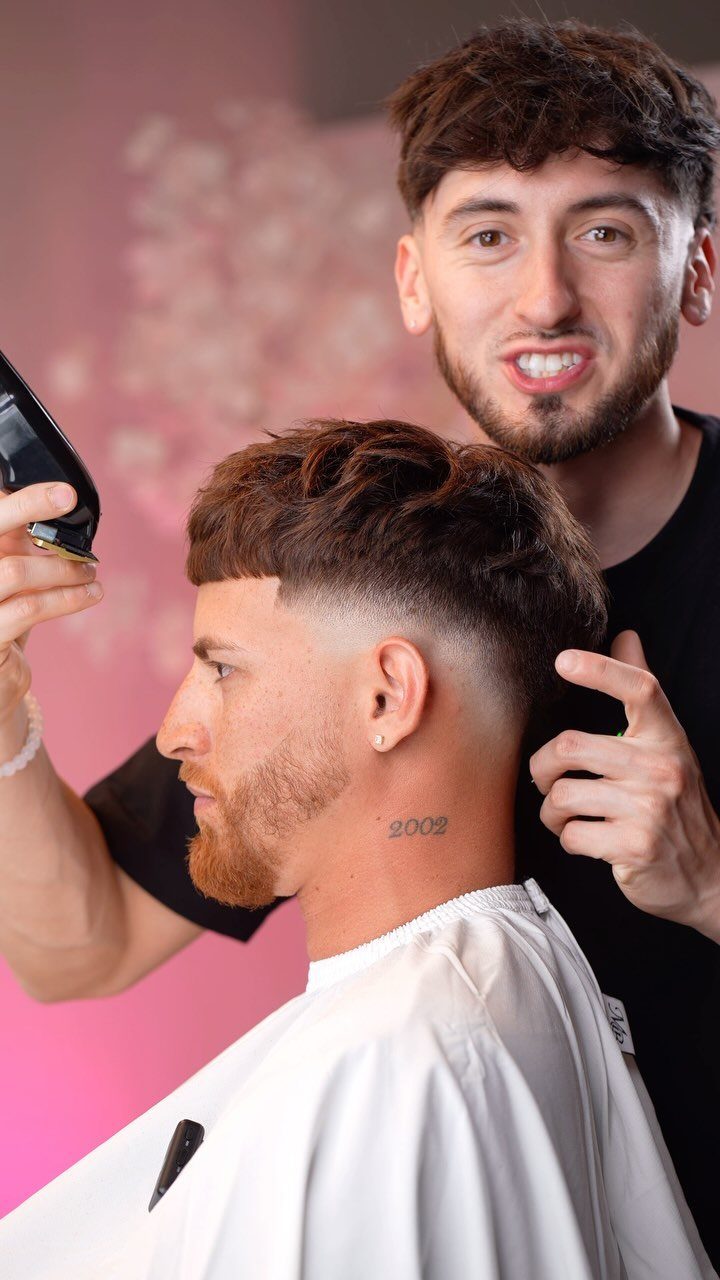
The top is cut short and choppy, with uneven lengths that create texture and movement. A fringe sits forward at the hairline, and the sides fade tight to keep the focus on the textured top.
Point-cutting or razor work gives the rough, separated strands.
A small amount of matte paste or clay worked through damp hair brings out the texture without making it look styled. Dense hair gives the most definition; fine hair needs a lighter product to avoid clumping.
The fringe makes this one of the lower-maintenance options. No combing or blow-drying, and the intentional messiness means it looks right even when it’s slightly grown out.
5. Quiff
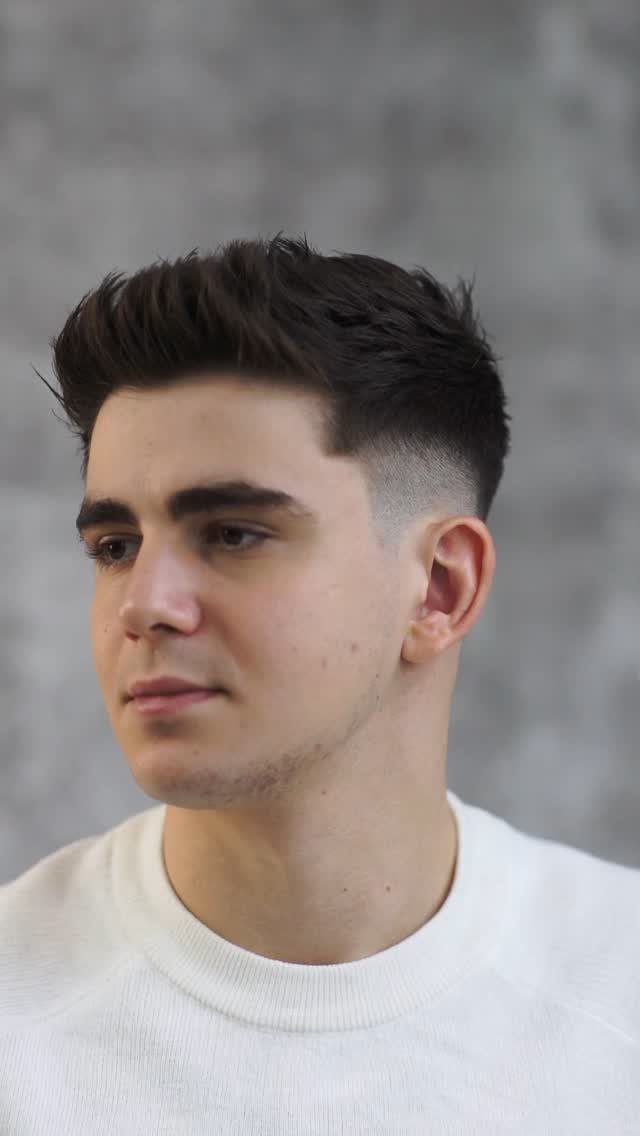
Volume and lift sit at the front, with the hair swept back or to one side rather than straight up. Sides are faded or tapered to keep the proportions balanced.
Leave length on top and ask for texture or layers so the front can be shaped without looking stiff.
Blow-dry forward and up, then push it back with a medium-hold product. The shape is looser than a pompadour and takes less effort to hold.
Wavy or thick hair lifts naturally. Fine hair needs more product and heat to get the same height, and you’ll rework it if wind or humidity flattens it.
6. Low Taper
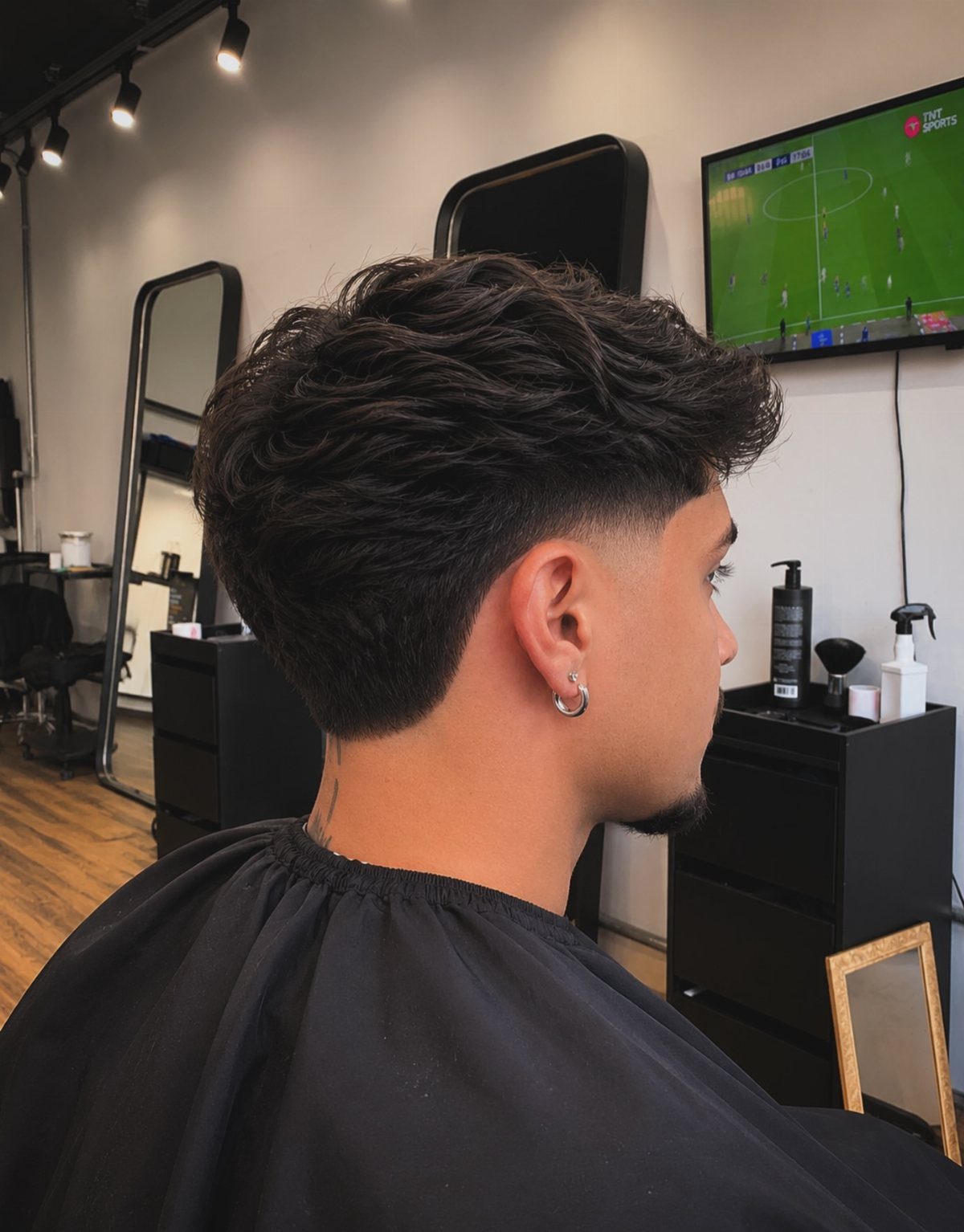
The taper starts low, around the ear or just above it, and fades gradually into the longer hair on top. The blend is subtle, without the sharp contrast of a mid or high fade.
This cut works across most hair types and face shapes because the taper is gentle.
Barbers usually start the fade around a 1 or 2 guard and blend upward. The top can be left long enough to style or kept short and low-maintenance.
Regrowth is forgiving.
You can go longer before the taper looks grown out, compared to higher fades that lose their shape quickly. Styling depends on the top length; shorter versions need almost nothing, longer ones take product and a few minutes.
7. Buzz Cut
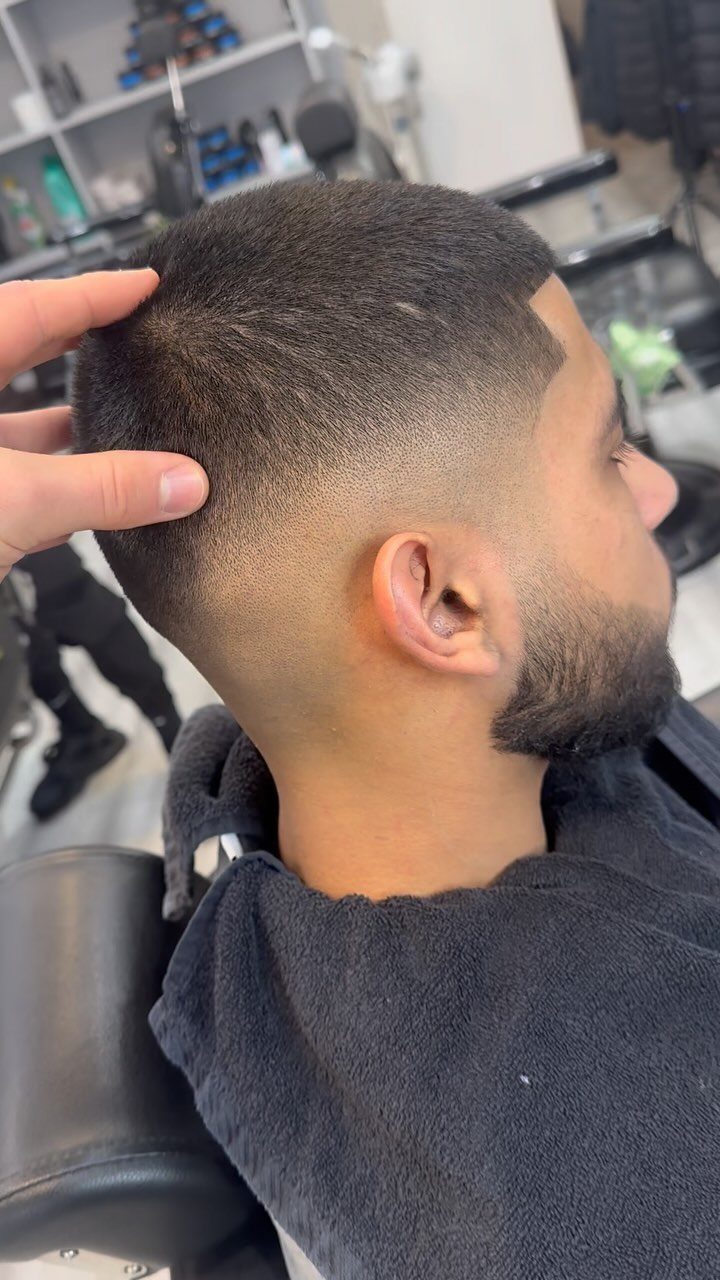
All the hair is clipped to the same short guard, usually a 1 through 4, or paired with a fade that takes the sides even shorter. The result is uniform, low-effort, and grows out evenly.
Fine or thinning hair benefits from going shorter, where the scalp shadow is less noticeable.
No styling.
Wash it, dry it in seconds, and you’re done. The cut needs a trim often to stay tight, but you can do it yourself with clippers once you know the guard number.
8. Side Part
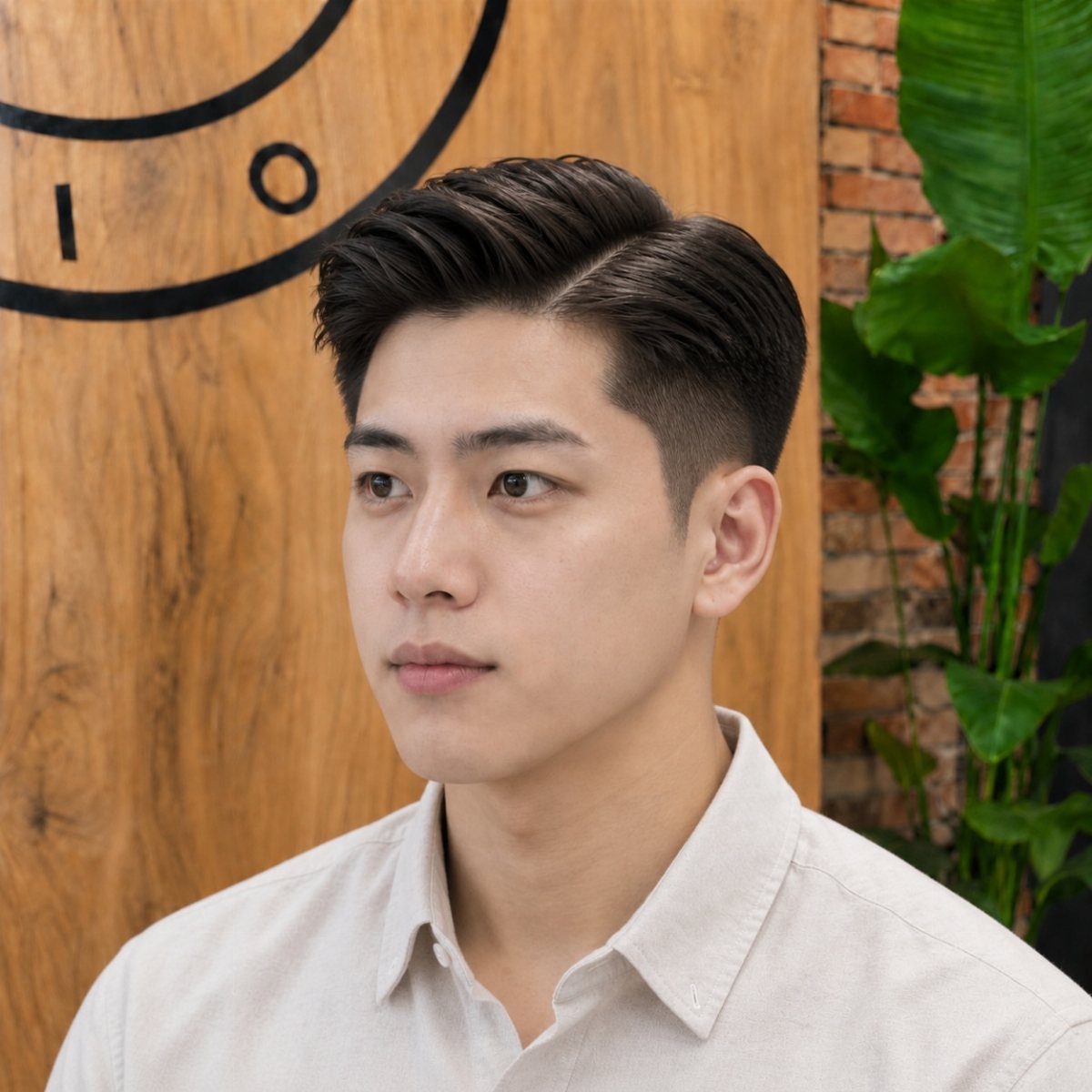
A line is combed or razored into the hair, dividing one side from the other, with the longer portion swept across.
The part can be soft or hard.
A soft part is combed in and disappears as the hair dries. A hard part is razored or clipped in and stays visible until it grows out.
Styling takes a comb and a medium-hold product.
Dry the top toward the direction of the part, then set it with a comb. The look stays sharp for a day and holds up better with thicker hair.
9. Taper Fade
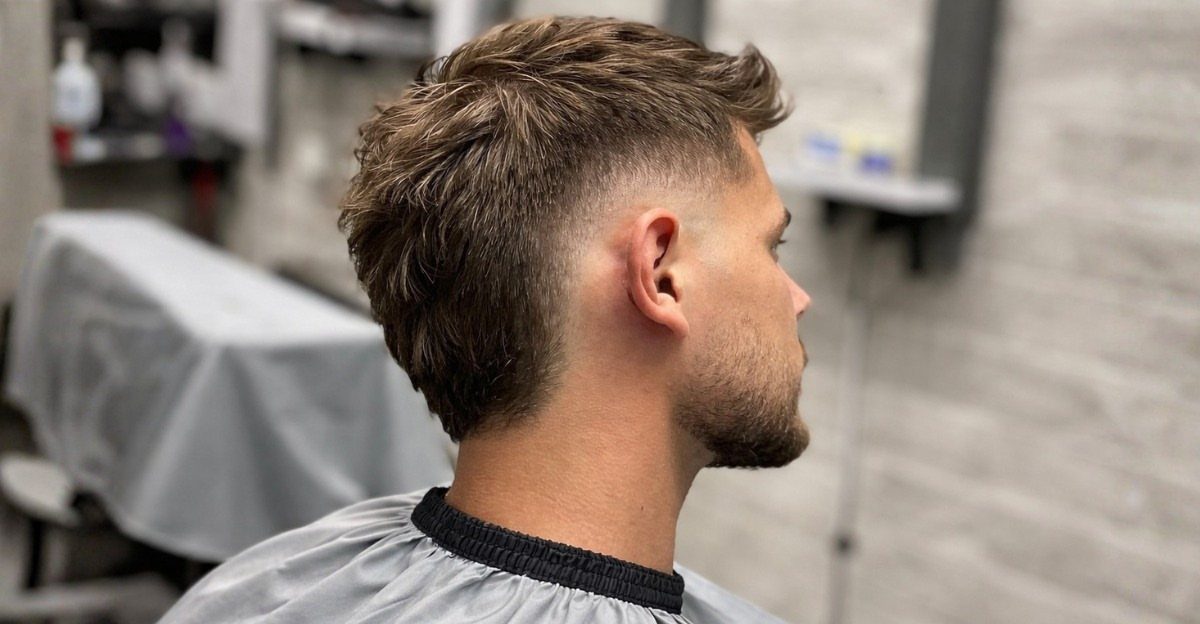
Hair shortens gradually down the sides and back, blending from the longer top down to skin or close to it at the neckline and ears. The blend is gentler and stretches over more distance than a high fade.
Ask for the fade to start low, mid, or high depending on how much contrast you want. A mid taper is the most common.
The fade grows out faster than a simple taper, so plan on a cleanup often.
10. French Crop
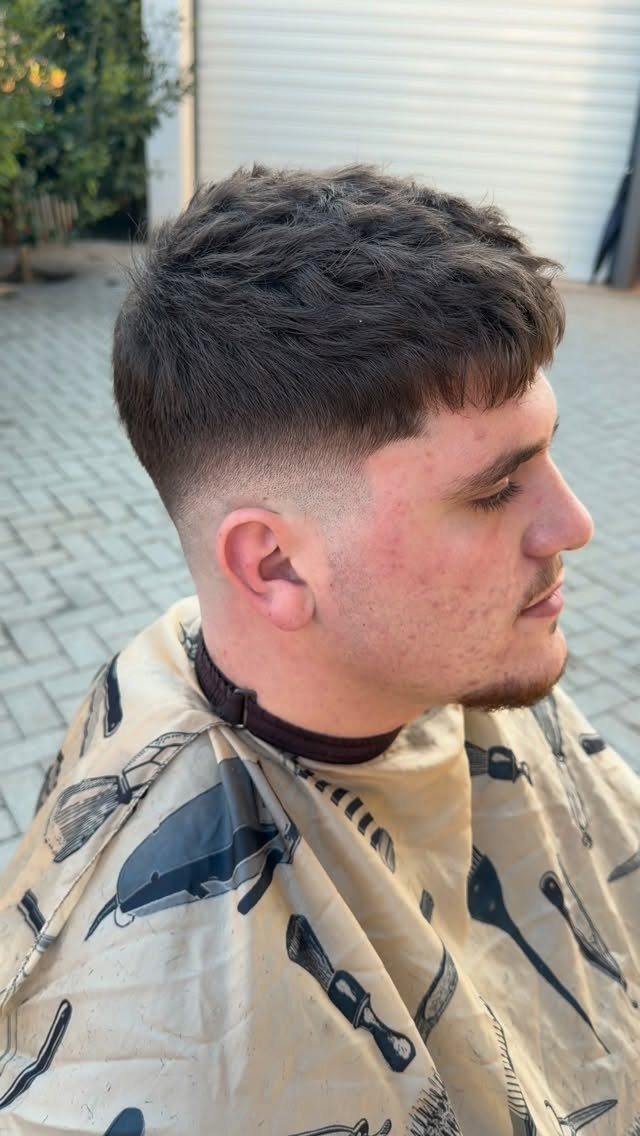
The fringe is cut short and sits forward at the hairline, either blunt or textured. Sides and back drop tight, and the top stays short without much variation in length.
The fringe is the defining feature.
Ask for it to be cut straight across or point-cut for a softer, more textured edge. The top is usually clipped or scissor-cut to a uniform length, around an inch or slightly less.
Styling is minimal. The fringe sits forward on its own, so no blow-drying or combing required.
Messy fringe styles are best suited to short hair as longer styles will naturally fall and part due to the weight. As a result, you should look to clipper the sides to a 2 or 3, leaving around two to four inches of hair on top.
11. Caesar Cut
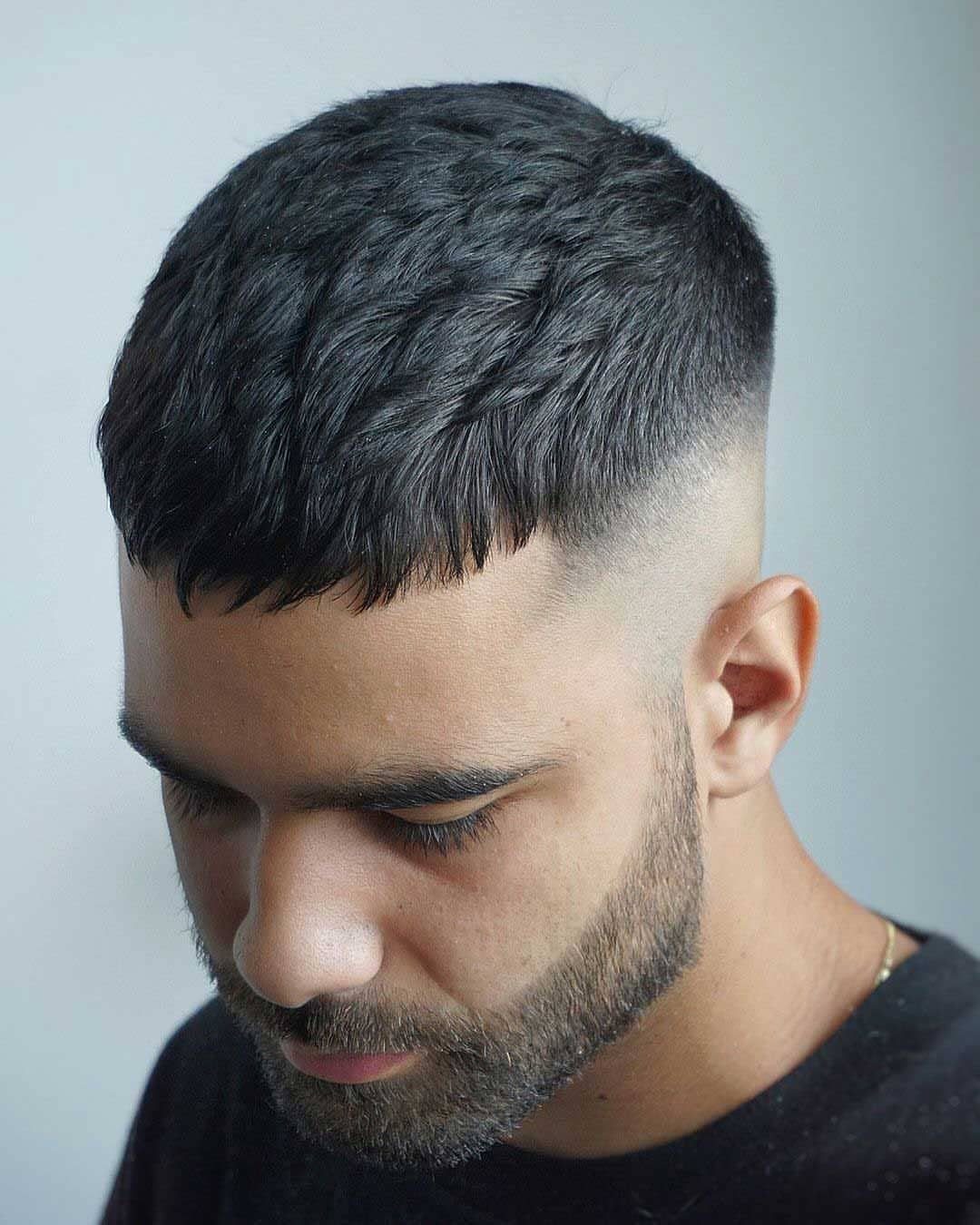
The hair is cut short all around, with a fringe that is trimmed horizontally and sits flat against the forehead. Sides and back are usually faded or tapered, but the fringe stays level and blunt.
The top is kept short enough that it sits flat without styling.
No product needed.
The cut holds its shape on its own, and the short length means it dries in seconds. The fringe works best with straight or slightly wavy hair; curly hair can push the fringe up and break the horizontal line.
12. Modern Mullet
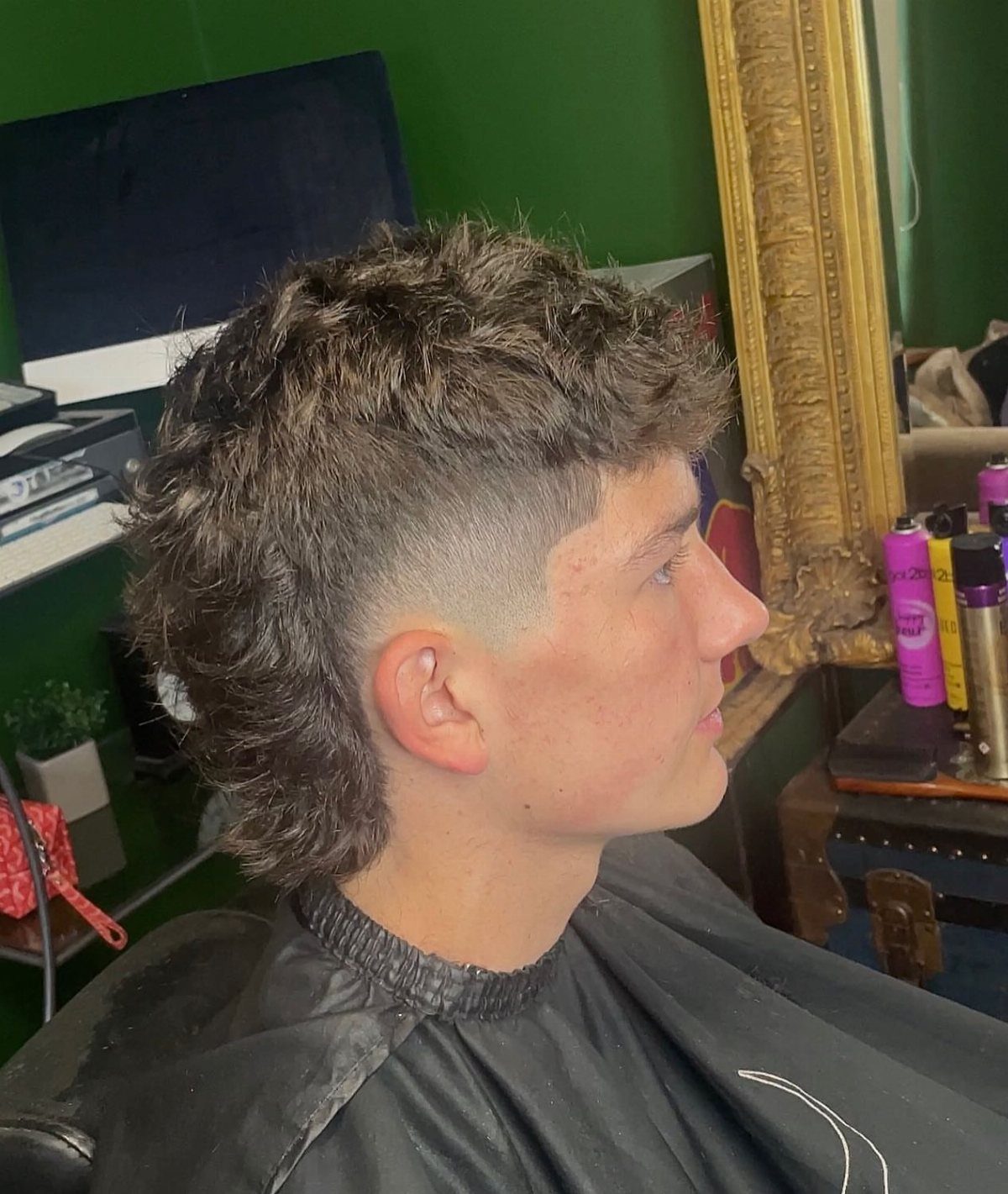
Length is left in the back, while the sides are faded or tapered and the top is cut shorter or layered for texture. The contrast is deliberate but not as severe as the older versions.
Layering the top gives movement and prevents the cut from looking blocky. Wavy or textured hair adds to the layered effect; straight hair shows the length difference more clearly.
Textured tops take a matte paste or clay to separate the layers. The back can be left loose or tied up if it grows long enough.
13. Messy Hairstyle
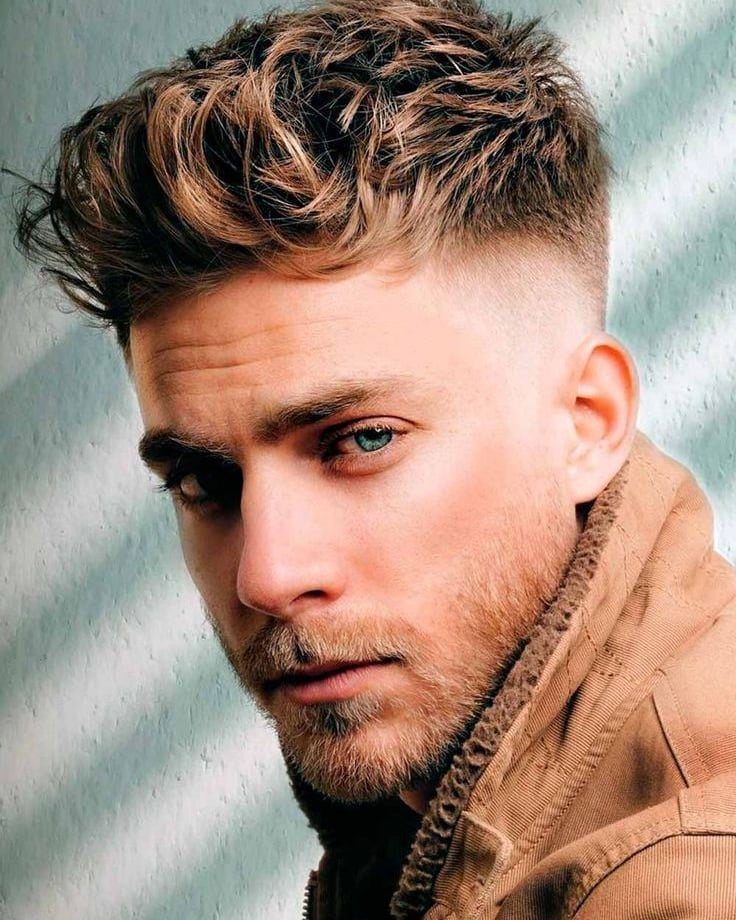
The top is left long enough to separate into uneven, piece-y strands, styled with product to look intentionally rough rather than combed into place. Sides are faded to keep the texture from looking overgrown.
Work a small amount of matte clay or paste through damp hair, then use your fingers to pull sections apart and push them in different directions.
You want it to look like it settled that way, not like you arranged it.
Fine hair can look flat if you use too much product or try to force too much separation.
14. Side Swept Fringe
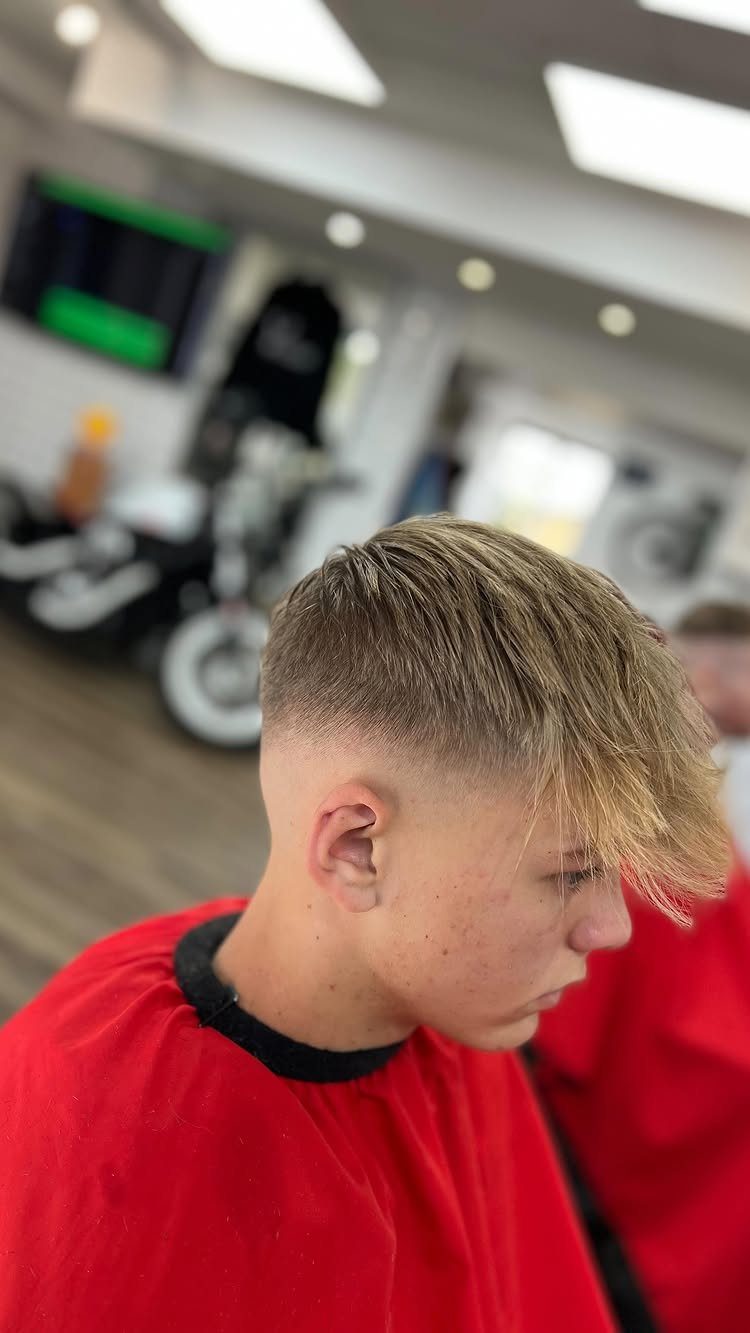
Length is left on top, long enough to sweep diagonally across the forehead and rest to one side. Sides fade short to keep the fringe from weighing the whole cut down.
The fringe should sit naturally without stiffness.
Straight or wavy hair falls cleanly across the forehead. Curly hair tends to lift and can break the diagonal line unless you use more heat and product to hold it down.
15. Mid Fade
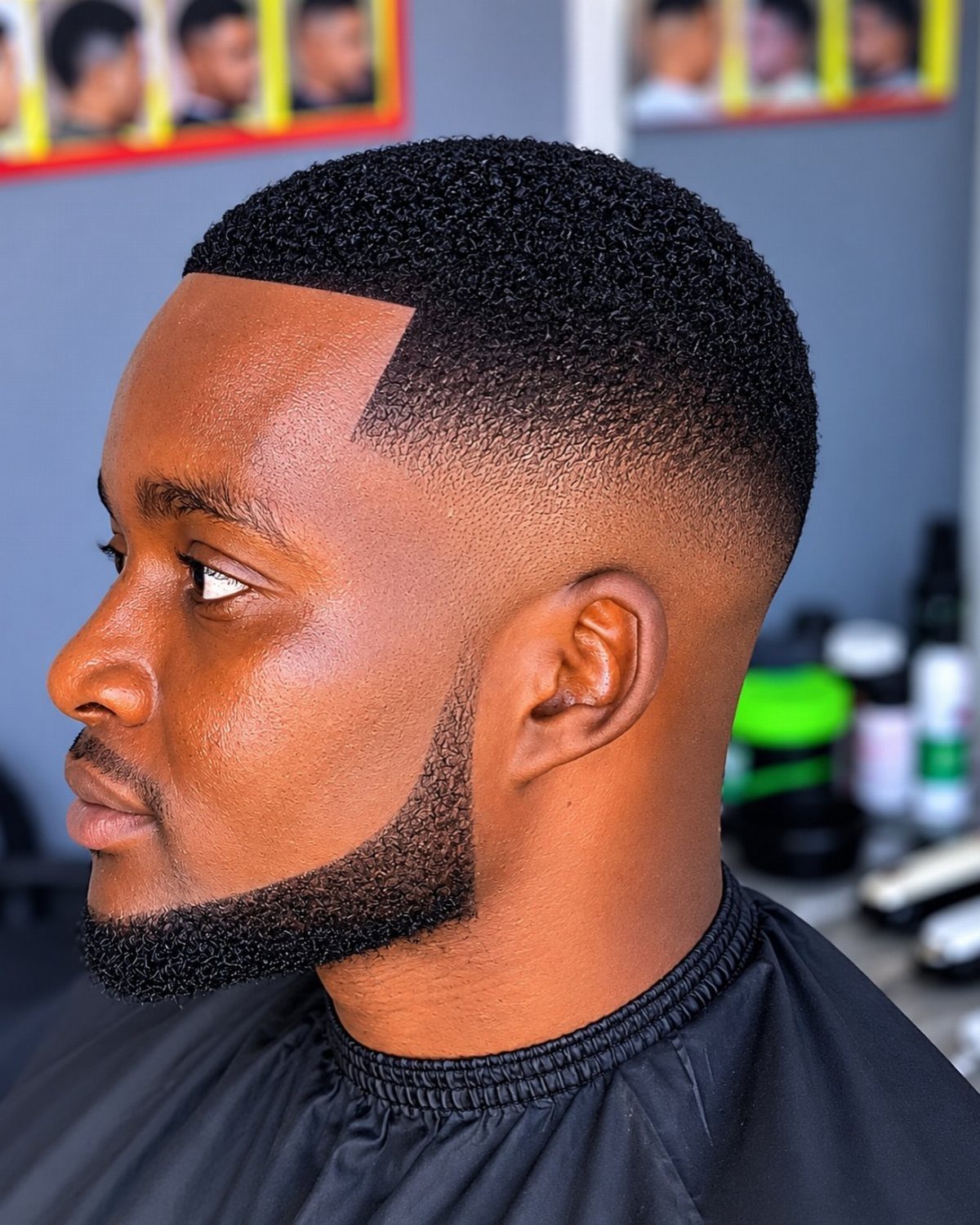
The transition is tighter than a low fade and shows more contrast.
Most barbers start the fade around temple height and work down. Guard numbers drop from a 3 or 4 at the start of the fade to a 1 or skin.
The mid fade suits most face shapes because the transition sits in a balanced spot. Maintenance is similar to other fades: the blend softens within 2 weeks, so frequent cleanups keep it sharp.
16. Bro Flow

Hair is grown out past the ears and worn loose, with natural wave or texture left in. Sides can be trimmed shorter or left the same length as the top, depending on how much volume you want.
The cut relies on natural movement, so styling is light.
Wavy hair shows the flow best. Straight hair needs more length to get the same loose shape, and fine hair can look limp if it’s grown too long without layering.
17. Curtain Haircut
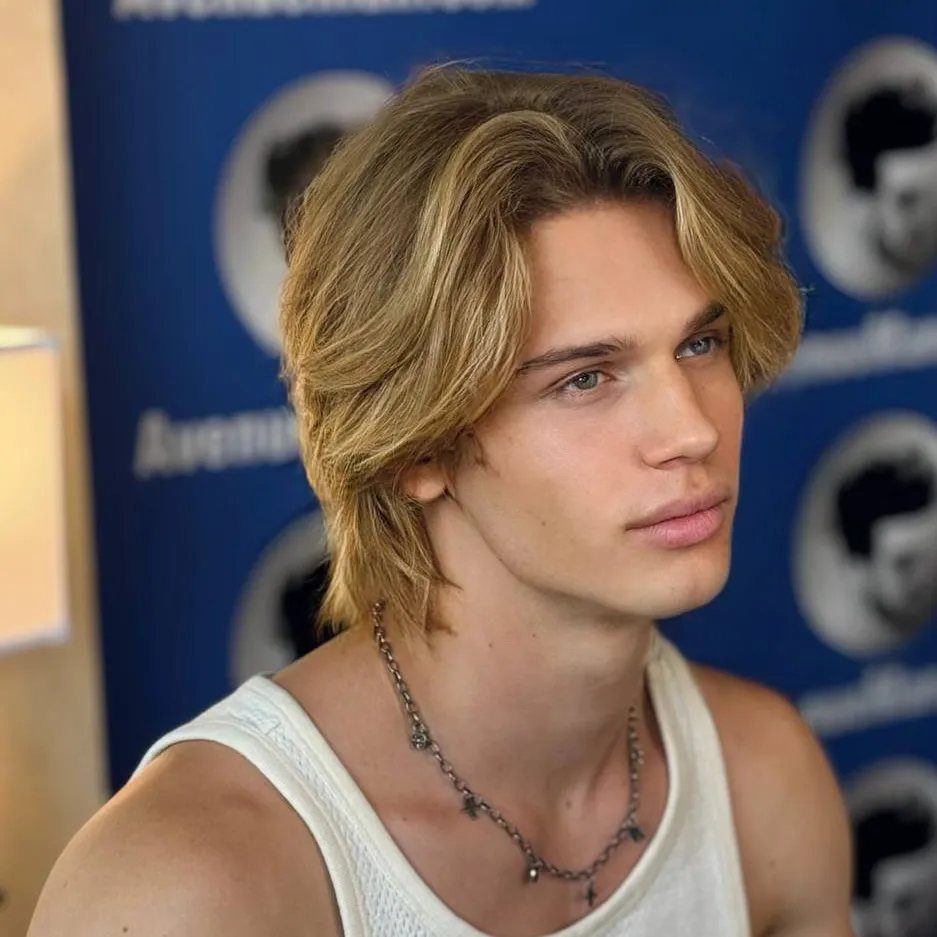
Hair is parted down the center and falls forward on both sides, framing the face. Length usually reaches the eyebrows or slightly below, and the sides are left long enough to match the front or faded shorter for contrast.
A light styling cream keeps the curtain effect in place without making it look stiff.
Thicker hair gives more body; fine hair may need a texturizing product to keep the curtain from falling flat.
18. High and Tight
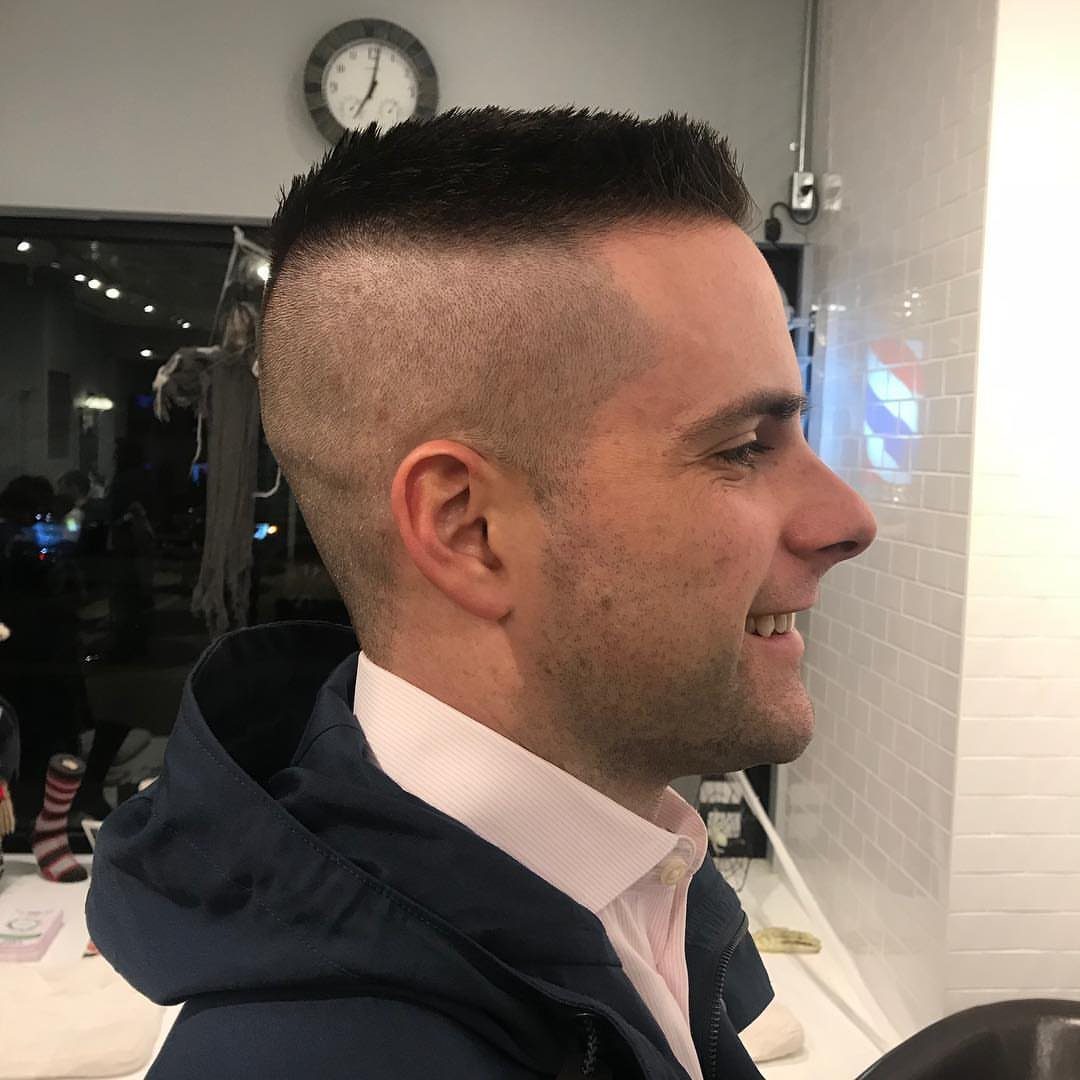
The contrast is sharp and the maintenance is minimal.
A small amount of pomade or wax can add control, but the cut works fine without it.
Hair with body keeps the short top in place. Thinner hair reads better when the top goes shorter, closer to the fade.
19. Burst Fade
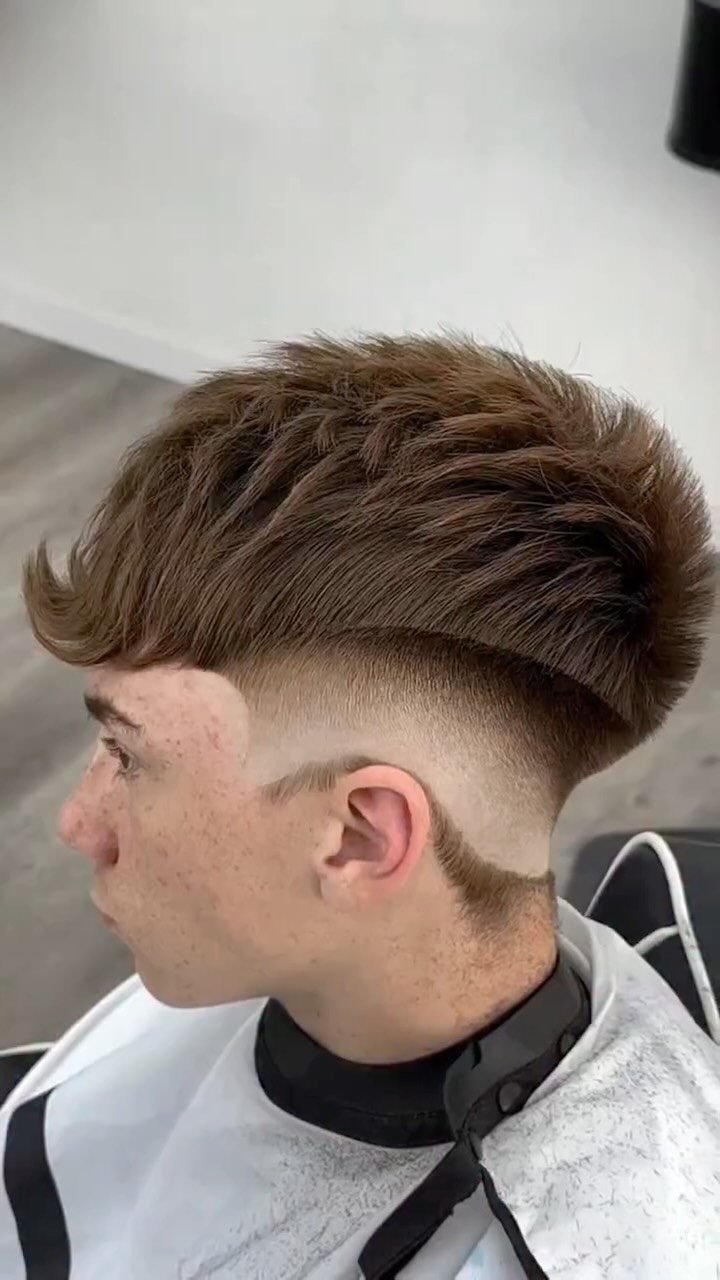
The fade arcs around the ear in a curved line instead of dropping straight down.
Clippers follow the shape of the ear, creating a semicircle that wraps from temple to nape while leaving more length behind the ear than a standard fade.
The curve keeps the fade visible from the front and side without taking the back down to skin. Most barbers start the burst at a 0 or 1 guard and blend up to a 2 or 3.
Hair on top can be textured, slicked, or left natural. The curve loses its shape quickly and wants a barber visit often.
20. Drop Fade
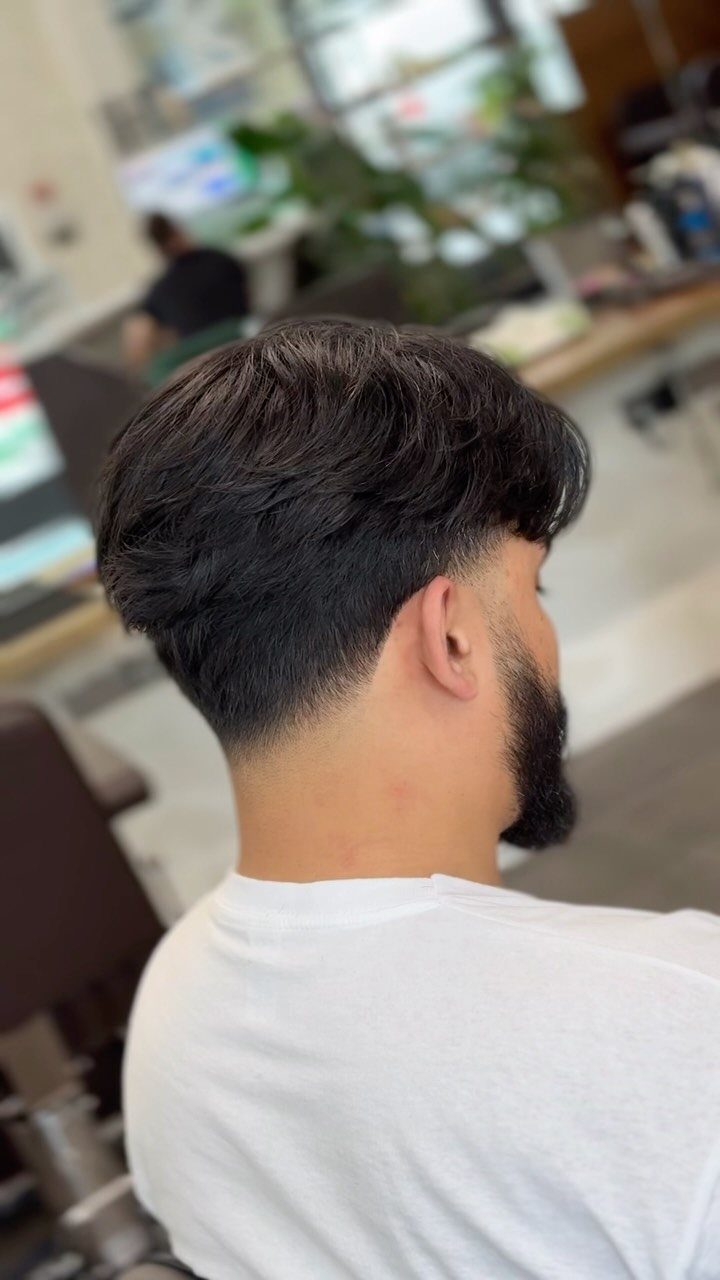
The fade follows the natural curve of the head and drops lower as it moves behind the ear, creating a downward arc rather than a horizontal line. The back stays longer than the sides.
The drop works well with hair worn on top that has volume or texture, since the fade keeps the sides clean without taking length off the crown.
Barbers typically start the fade at temple height and curve it down toward the nape, blending from a 1 or 0.5 guard to skin.
Regrowth shows quickly.
21. Skin Fade
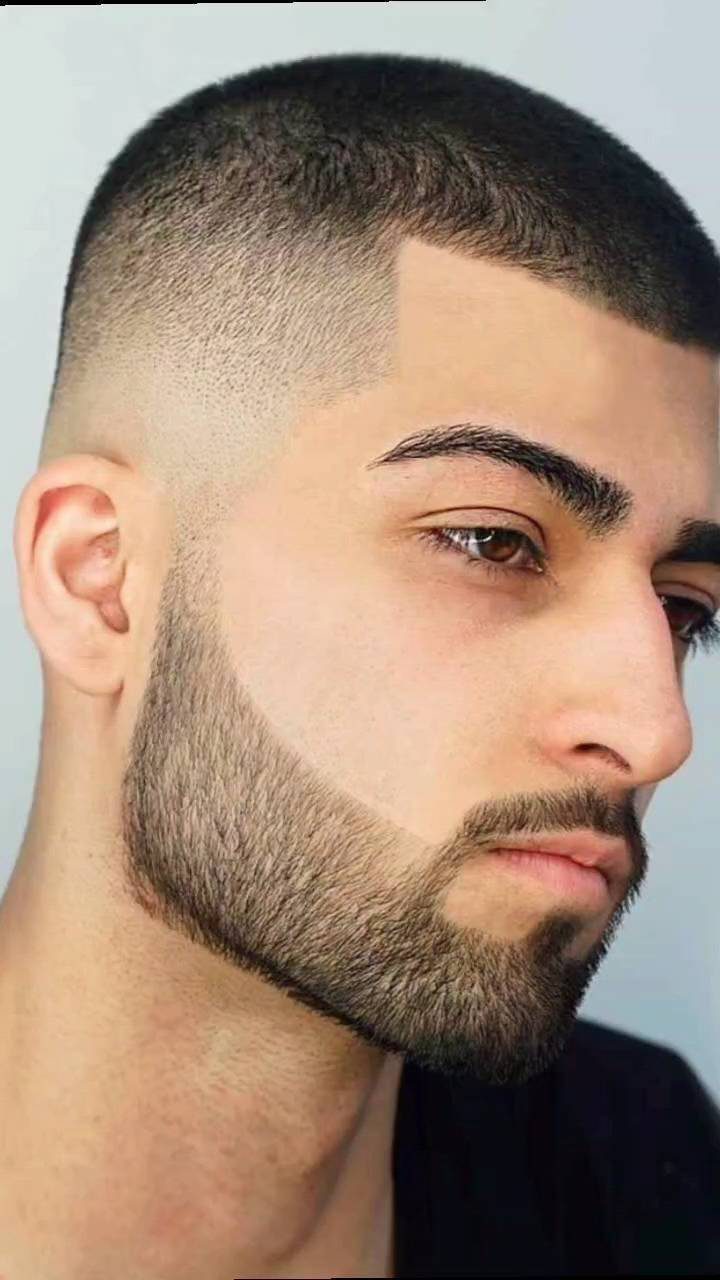
Hair tapers to skin at the neck and ears, leaving no visible stubble. The contrast between the longer top and the shaved base is sharp and clean.
Clippers work down through progressively shorter guards until the final pass goes bladeless, leaving smooth skin. The fade can start low, mid, or high depending on how much of the head you want shaved.
Maintenance is frequent.
The skin line grows back within a few days, and the fade loses its sharpness after a week. Styling depends on the top length, but the sides stay zero-maintenance as long as the fade is fresh.
Match Cut to Face Shape
Round faces need volume up top to add length. A pompadour or quiff adds vertical length that balances width, while a buzz cut amplifies roundness.
Long or rectangular faces want the opposite: short cuts that sit close to the head rather than adding inches above. Skip the pompadour if your face is already tall.
Square faces suit a side part. The diagonal line softens the angles at the jaw.
Oval faces work with most cuts. The proportions are balanced enough that you can choose based on hair type and how much time you want to spend styling.
Texture changes what works. Thick, straight hair holds a blunt fringe cleanly.
Describe the Cut to Your Barber
Name the cut first, then specify the top length. Most classic cuts sit between 1 and 3 inches on top.
Tell the barber how short the baseline should go. A 1 guard leaves visible stubble, a 0 or blade pass takes it to skin.
If the cut relies on texture or layers, say so. Point-cut ends give separation, blunt cuts stay uniform.
A reference photo removes guesswork. Show it from multiple angles if the back or sides matter.
Mention how often you plan to return.
Choose Styling by Finish
Pomade and gel both leave shine, the slicked-back look. Use them for slick backs, quiffs, and pompadours where shine and hold matter more than texture.
Clay and paste dry matte.
They separate strands and add grip without making the hair look styled. Pick these for textured crops, messy styles, and anything choppy.
Sea salt spray adds body and rough texture, usually applied to damp hair before blow-drying. It works when you want separation without the weight of a cream or the stiffness of a gel.
Start with a small amount. Too much product clumps fine hair and makes thick hair look heavy.
Frequently Asked Questions
What is the most popular male haircut?
Fades and tapers dominate right now, with the textured crop and mid fade showing up most often in barber chairs.
These cuts balance clean sides with enough texture on top to style quickly, and they suit most face shapes without much effort. Shorter styles like the crew cut and buzz cut stay popular for anyone who wants minimal maintenance.
What is the most low-maintenance haircut?
The buzz cut requires the least effort: no styling, no product, and it dries in seconds.
A crew cut runs a close second, needing only a quick hand run-through in the morning. Both stay short enough that you can skip the mirror and still look clean.
How often should men get a haircut?
Skin fades and high fades lose their sharpness within a week and need a cleanup every 2 weeks to stay tight. Low tapers and crew cuts grow out more forgivingly, so you can stretch to 3 or 4 weeks before the shape softens.
Longer cuts like the bro flow or curtain style can go 6 to 8 weeks between trims if you don’t mind the added length.
What’s the easiest haircut to give a man?
A buzz cut with a single guard number is the simplest cut to do yourself, since it requires no blending or variation in length. Run the clippers over your whole head at one setting and you’re done.
The guard clicks on, you run it over your head in any direction, and the result stays even without a second mirror or anyone else in the room.