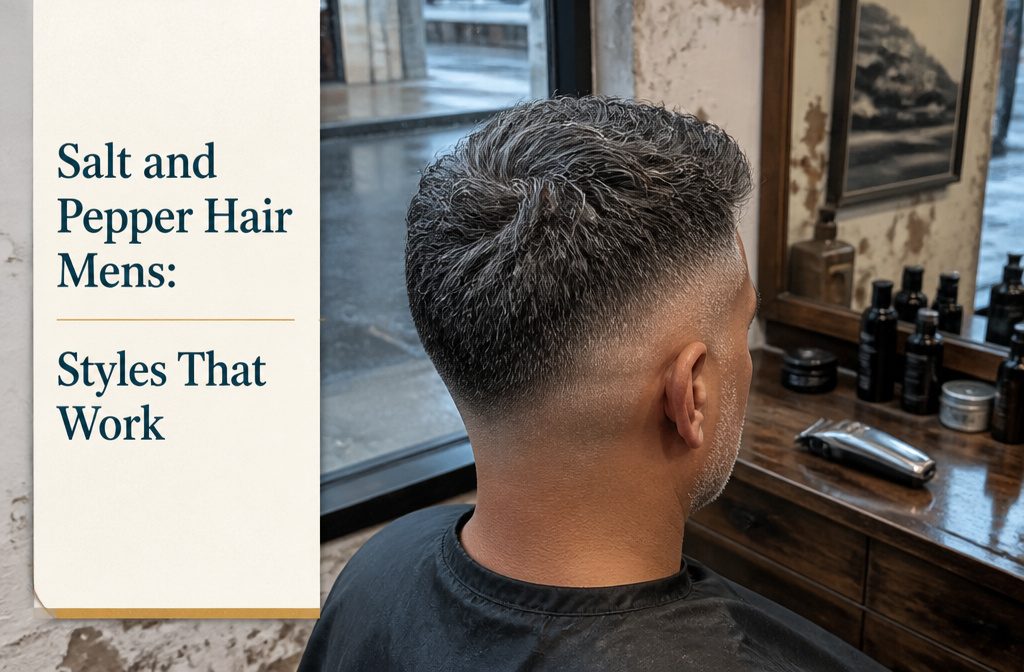
Salt and pepper hair on men is a natural mix of gray and darker strands, and the cut decides whether it reads as dimension or as one flat tone.
Texture and length on top show both shades; a high skin fade clears the sides so the gray stands out, but it needs cleanup every 10–14 days.
1. Quiffs and Pompadours for Volume on Top
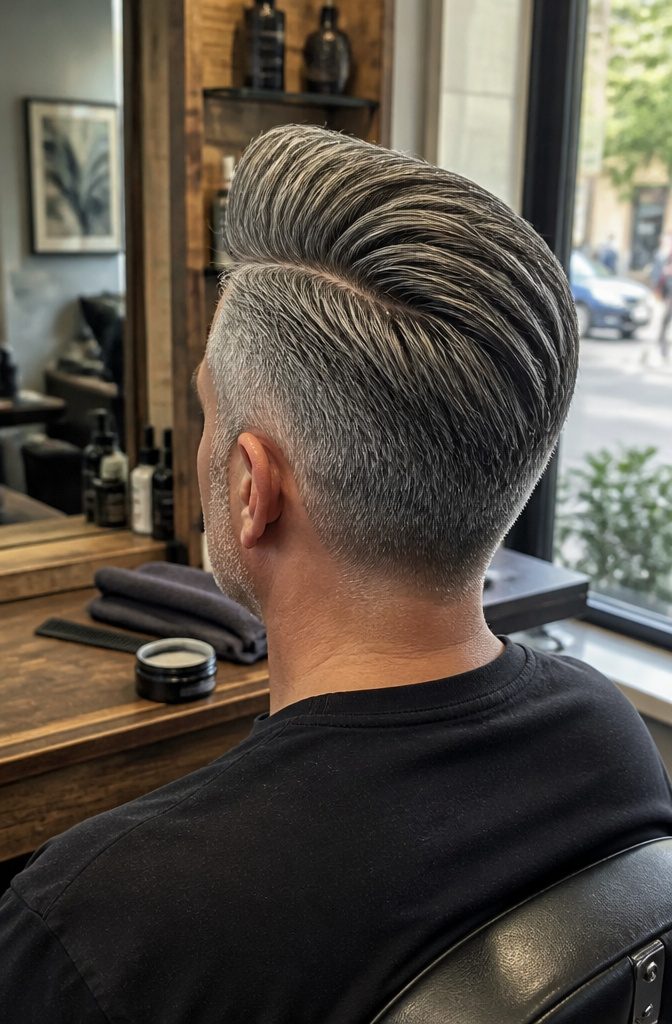
A quiff suits salt and pepper because the lifted length shows the gray and dark strands side by side, so the mix reads as streaks with dimension instead of one flat tone.
Straight, dense hair carries it best. The pompadour-like version, a side sweep with a little fluff, is built for straight strands: big volume on top, taper-faded sides to keep the shape tight.
On the side-swept quiff, a sharp line up is what makes it look like a gentleman’s cut.
For the morning, start with damp hair after a shower and work a strong-hold pomade or wax through it. Then push the front up and back.
I’d choose a product that doesn’t weigh gray hair down, because a heavy one flattens the lift. Regular trims keep the edge clean.
2. Fades and Tapers That Control the Sides
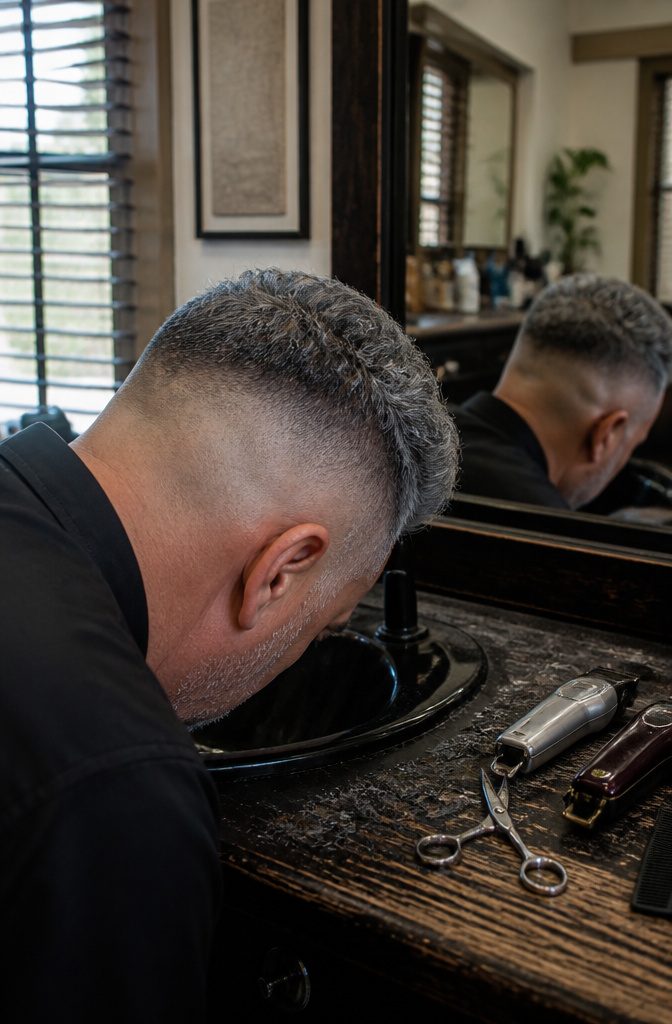
Fades and tapers put the gray front and center by clearing the sides, and that contrast is exactly the point.
A high skin fade starts the blend above the temples and takes the sides down to bare skin, which makes the salt-and-pepper on top read as intentional rather than accidental.
Skin fades need cleanup every ten to fourteen days because the line between skin and hair moves fast.
A temple fade keeps the fade lower and tighter to the hairline, leaving more length through the sides if you want a gentler step.
Scissor fades skip the clipper entirely and use shears to graduate the length, which softens the transition and stretches time between visits to three weeks.
Guard numbers matter less than the height of the blend: a high fade can start at a two or a three, but where it starts decides how much gray stays visible as it grows out.
3. Crops and Short Textured Cuts
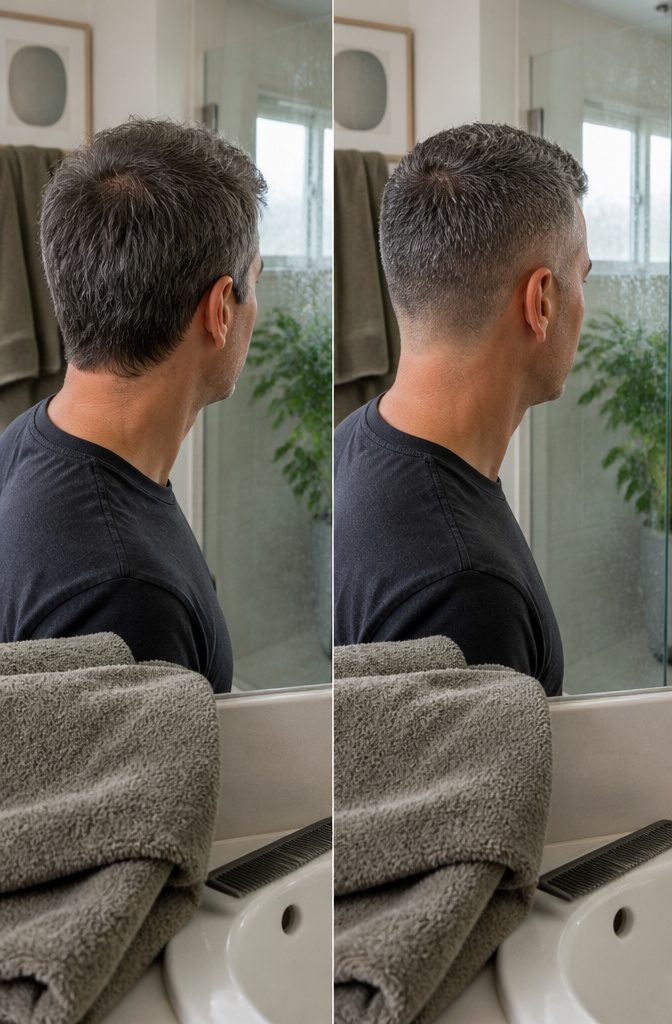
Texture is what makes salt and pepper read as two tones instead of one flat gray. Cut the top into varying lengths and the light and dark strands catch light at different heights.
Straight hair takes this best, with close-cropped sides to strip bulk. Wavy and curly hair brings its own texture, and keeping it short cuts frizz and breakage, so mornings need little more than a towel dry.
Add a fade and a straight fringe over the upper forehead for something dressier. The Caesar is the pick for thin or thinning hair: the short fringe needs little density, and gray sides against a darker top suggest fuller hair.
4. Side Parts, Side Sweeps, and Comb-Overs
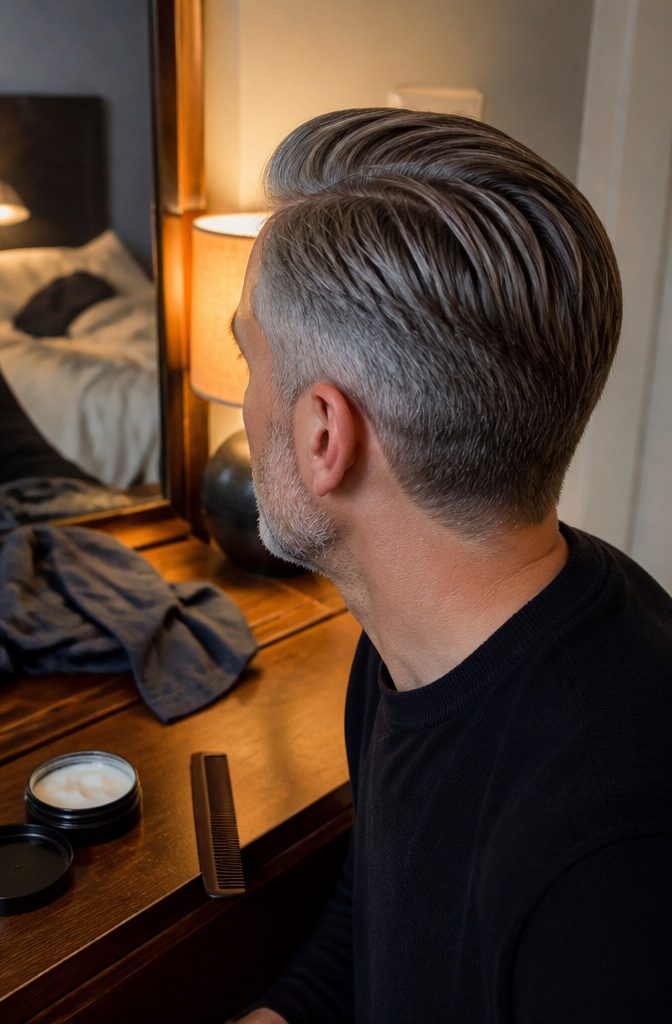
Hair directed to one side plays well with salt-and-pepper contrast because the longer top catches more light than the trimmed sides, and that difference reads clearer when the color is already split between gray and brown.
A side part with soft tapering keeps gray sides shorter and leaves length on top to show the darker tones, giving you two visible layers instead of one blended field.
The comb-over suits thinning hair particularly well. A short version that follows the natural part line and combs slightly to one side keeps things controlled without trying to hide what isn’t there.
Pair it with a groomed beard and the gray frames the face instead of fighting it.
For a sleek finish, work a pomade or gel through damp hair and brush the top section over. The classic version offers plenty of styling variation, so you can go minimal or polished depending on the day.
5. Crew Cuts for Low Maintenance
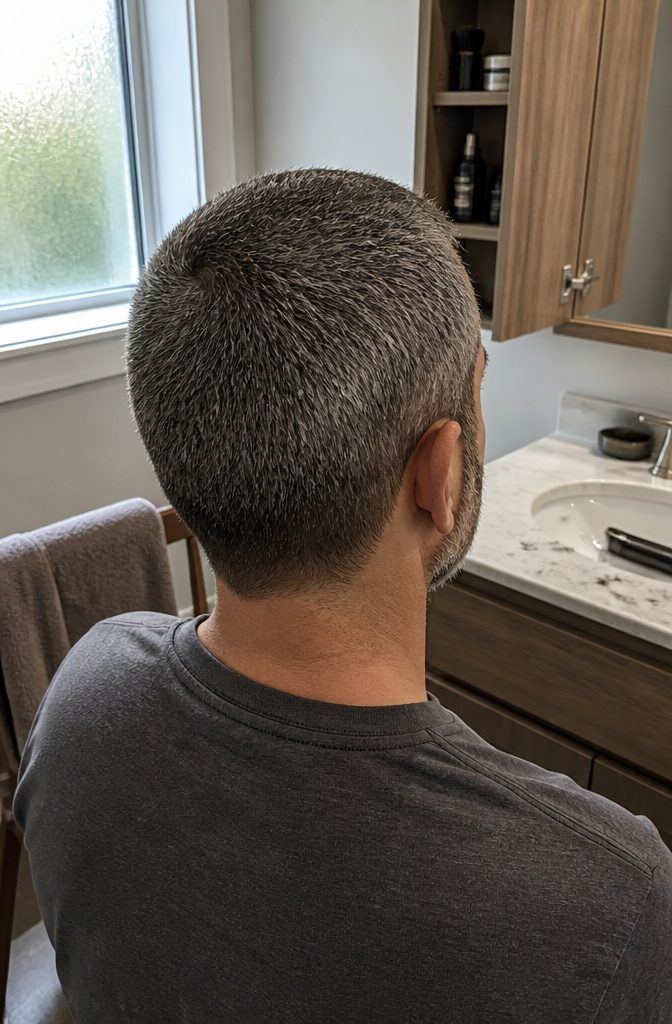
A crew cut paired with salt and pepper keeps things short, neat, and built for minimal morning work. The hair sits close to the head all the way around with no hard lines, letting texture show without requiring product.
Styling time is measured in seconds: towel dry, run a hand through if you want, and you are out the door. Most guys book a cleanup every two to three weeks to keep the shape tight.
The cut grows out cleanly because there are no stark contrasts to blur. As length creeps up, the proportions shift gradually rather than flipping from sharp to shaggy overnight.
Round faces can pull this off particularly well when sideburns blend down into the beard line, letting the face read as longer without adding bulk on top.
The gray reads as intentional rather than patchy, and the whole thing skips the daily maintenance that longer textured cuts demand.
6. Mullet Variations That Keep Length in Back

The length difference between front and back makes a mullet one of the clearest ways to show how gray distributes through your hair.
If the pepper sits mostly in the back, keeping length there gives the contrast real territory to cover.
The classic mullet runs short on top and around the ears, long past the collar, and the two-tone effect reads from across a room.
A mod mullet keeps the length but thins out denser areas so the cut sits closer to the head through the crown and sides.
The shag mullet version cuts shorter than the traditional shape and breaks the back length into piece-y strands that frame the ears, giving you more ways to style it.
Curly mullets let natural texture fill the back section without looking uniform, and a mohawk mullet pushes all the length to the center strip for bolder contrast top to bottom and side to side.
7. Long or Medium-Length Styles

Longer hair lets salt-and-pepper transition gradually, because the mix of tones spreads down the length instead of sitting in one tight crop where every gray thread shows.
If you’ve already got light hair starting to gray, wavy and grown-out locks read as one continuous shift rather than a line of demarcation.
The style asks almost nothing of you each morning and skips the weekly cleanup that short fades demand.
Medium layered cuts hold texture differently than clippered sides. A loose razor and square layering leave enough weight that grays catch light as dimension rather than wiry outliers.
For maximum movement, style with a hair cream that defines without stiffening. Longer strands trimmed at the front bring color variation forward, and the right styling product turns a casual cut into something that looks intentional rather than overgrown.
8. Mohawks and Edgy Styles
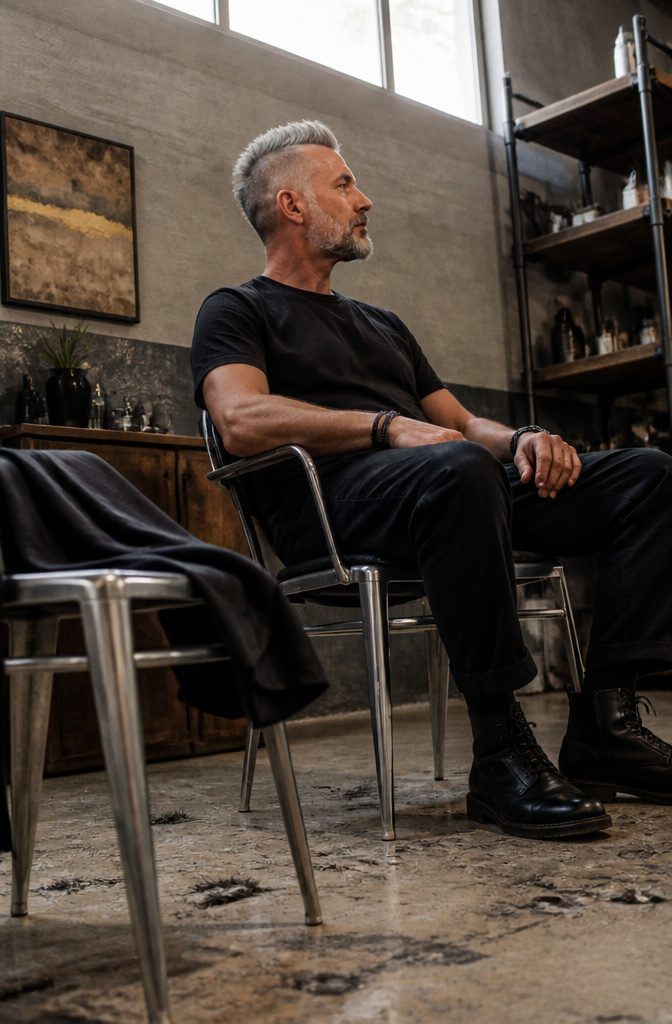
A clean-edged mohawk brings contrast into sharp focus. The shaved sides put all attention on the textured strip running center, and gray reads brighter against bare skin or a tight fade than it does next to more gray.
Height decides how much of the look you own: a subtle strip stays versatile enough for most workplaces, while a taller mohawk with defined edges announces itself the moment you walk in.
The shape holds better when gray hair runs coarse.
Finer strands need more product to stand upright without collapsing by midday. Lightweight waxes and creams give structure without the stiff residue that dulls gray.
If the mohawk sits low and textured rather than spiked, a matte paste worked through damp hair gives enough hold to last through a full day without reapplication.
Pairing a mohawk with a layered beard or shaped mustache balances the angles. The beard anchors the look and keeps the focus distributed across your whole head rather than isolated on top.
9. Beards Paired with Salt-and-Pepper Hair
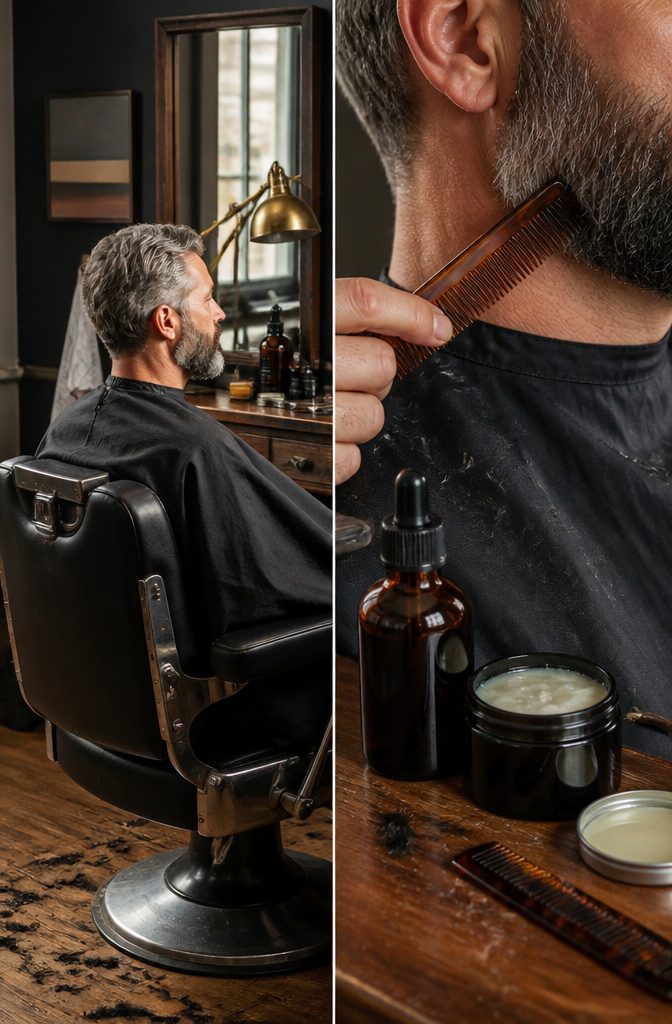
A full beard works with salt-and-pepper hair whether the gray runs through both or shows up only in your facial hair.
The combination reads as deliberate rather than unkempt if the beard is shaped and trimmed on a schedule. Regular trimming keeps the shape tight, and a high-quality trimmer makes that easier to maintain between barber visits.
Beard oil and balm keep the texture soft and prevent the wiry feel that gray facial hair picks up faster than pigmented hair.
Combing distributes the oil evenly and trains the hair to grow in the direction you want, which cuts down on strays and ingrown hairs.
If your beard grows thin in spots, a shorter length hides the gaps better than letting it grow long and patchy.
The gray tones themselves need no color correction; leaving them natural adds more character than trying to match them back to your scalp.
Matching the Cut to Your Hair Texture and Face Shape
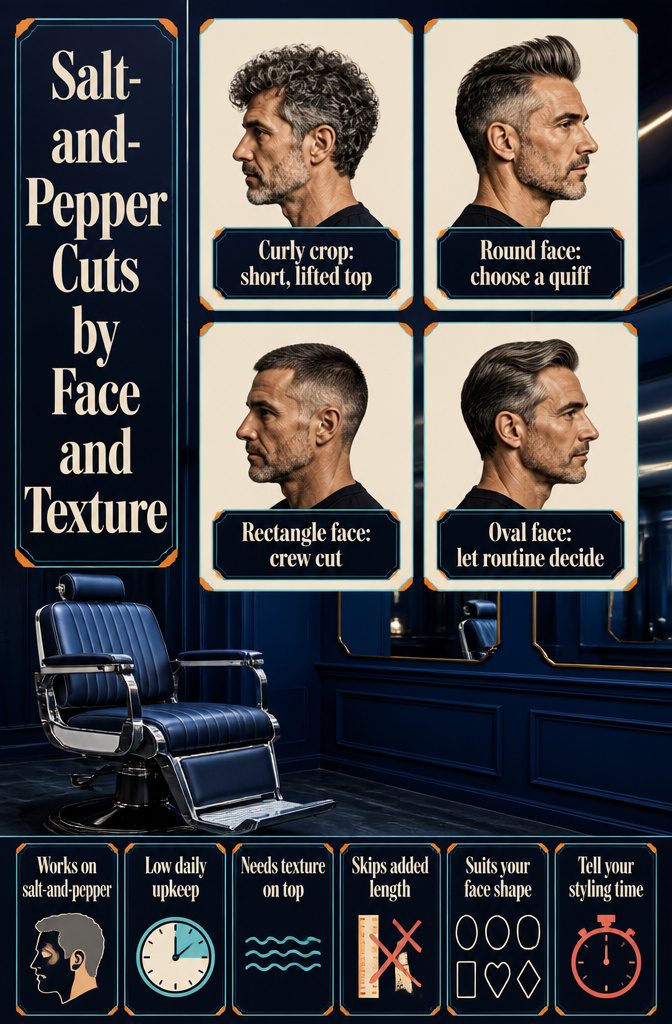
Oval faces suit almost any style, from pompadours to buzz cuts, so an oval face lets texture and routine make the call.
Curly salt-and-pepper hair belongs in a curly crop: short enough to manage thick hair, with volume on top that draws the eye upward.
Wavy hair costs the least morning time when you cut with the wave. For other shapes, round faces want height, like a quiff or a slicked-back high fade.
Square faces soften with layers. Rectangle faces should skip added length, which makes a crew cut a safe pick.
Heart-shaped faces suit medium-length, side-swept hair, and diamond faces need texture. Tell your barber how many minutes you’ll really spend styling.
How Gray Hair Needs Different Care
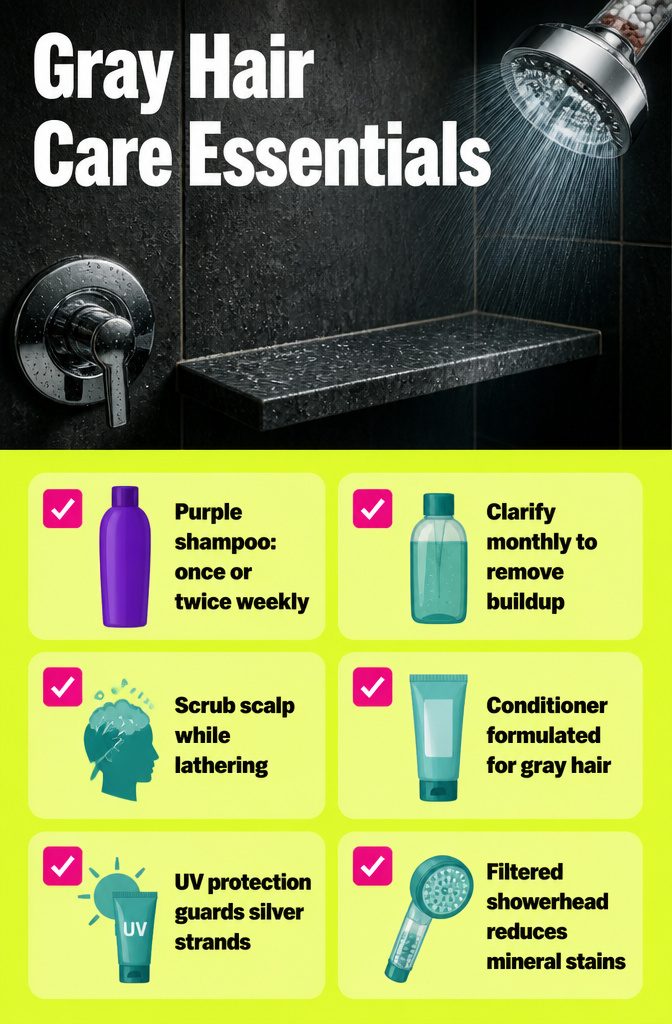
Gray hair lacks the melanin that once shielded the keratin inside each strand from UV damage, so protection and moisture move from nice-to-have to baseline. A few changes keep the color crisp and the texture under control.
Silver or purple shampoo 1–2 times a week cancels the yellow tones that show up from smoke, pollution, and product residue.
A clarifying shampoo once a month strips away buildup that dulls the silver. Between washes, scrub the scalp when you lather and follow with a conditioner formulated for gray hair.
- UV-protective products guard against sun damage that yellows lighter strands
- Oil-rich styling products like molding gel or pomade condition as they hold and add shine
- Filtered shower heads cut down on mineral deposits that stain gray hair
The texture shifts too. Gray hair often comes in coarser and drier than it was, so the routine that worked at thirty may leave it looking rough by forty-five.
Embracing Natural Gray Against Coloring or Blending
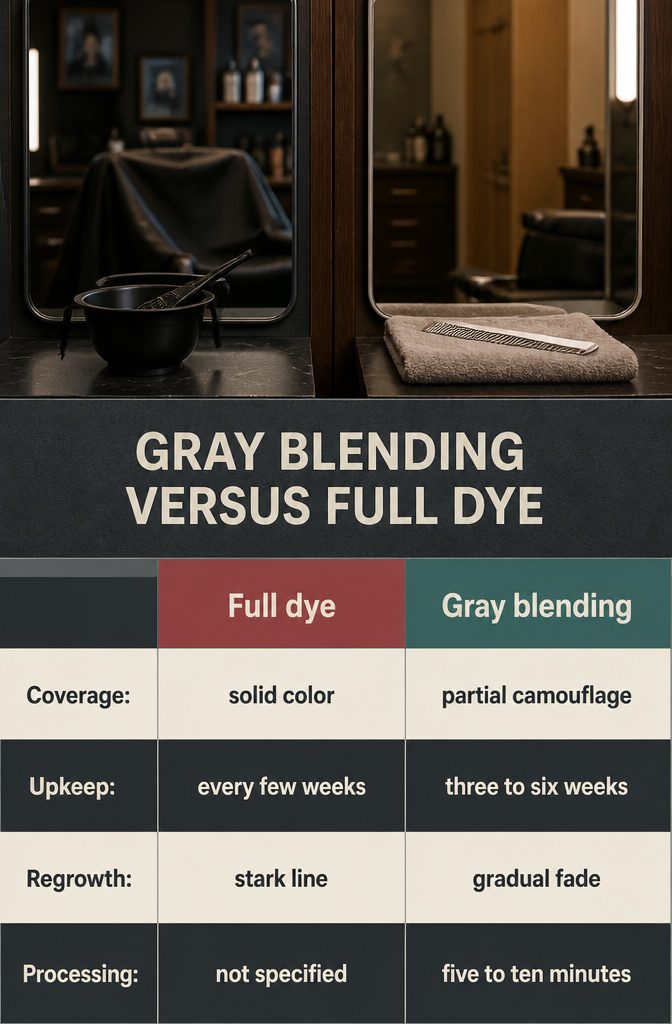
The first decision is whether to keep natural gray, cover it completely, or land somewhere between.
Full dyeing delivers one solid color but demands retouching every few weeks as roots grow in, and the stark line between dyed and natural hair tends to look deliberate rather than organic.
Gray blending splits the difference, leaving some gray visible while camouflaging the rest.
It processes in five to ten minutes once the color is applied and lasts three to six weeks, fading gradually without the hard regrowth line a full dye job leaves behind.
Grey blending is for the client looking for a more natural way to blend or camouflage the greys they currently have.
That partial coverage matters if you want contrast but your base hair is dark enough that gray reads sparse rather than balanced. Dark hair sometimes needs dyeing or bleaching to create recognizable salt-and-pepper distribution in the first place.
Home dyeing costs less and fits your schedule, but getting the color even takes practice.
Salons cost more and run on their timetable, but the results tend to look cleaner and the stylist handles the blending you would otherwise need to troubleshoot yourself.
Frequently Asked Questions
Does salt and pepper hair look good on men, or does it make you look older?
It looks good and doesn’t age you.
The mix of dark and gray has stayed in style season after season, and it suits all hair types and skin tones. A sharp cut and well-kept, moisturized hair keep it looking deliberate rather than tired.
What is the best haircut for men with salt and pepper hair?
No single cut wins, but a textured top with shorter, faded sides shows off the two tones best. Varied lengths on top let light and dark strands catch light at different heights, and a fade makes the gray stand out.
If you want low effort, a crew cut needs only a cleanup every 2–3 weeks; if you have a round face, a quiff adds helpful height.