That spectrum runs from styles that ask almost nothing of you in the morning to ones that need heat, product and a few minutes of intentional work.
Wavy hair carries movement without product, straight hair sits flat unless you layer it, and curls need length to coil properly and build volume.
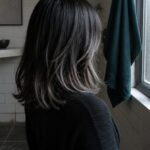
1. Medium Length Layered Hair
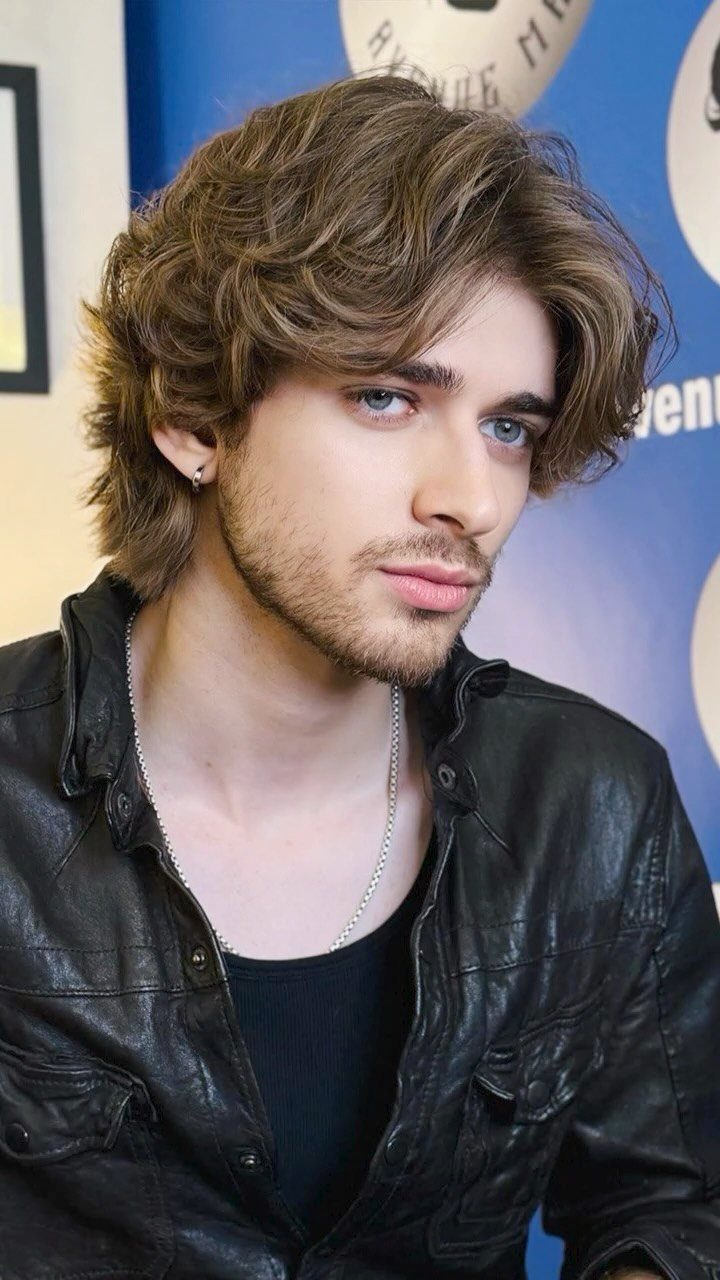
Layers are cut through the length to remove bulk and add shape, with shorter sections on top creating movement through the mid-lengths and ends. It moves naturally without product and sits fuller around the head instead of hanging flat.
If your hair is thick or heavy, this cut lightens it without taking much off the ends. Ask for point cutting or slide cutting so the edges stay textured instead of blunt.
This works on straight or wavy hair and needs a trim every 6 to 8 weeks to hold its shape.
2. Bro Flow
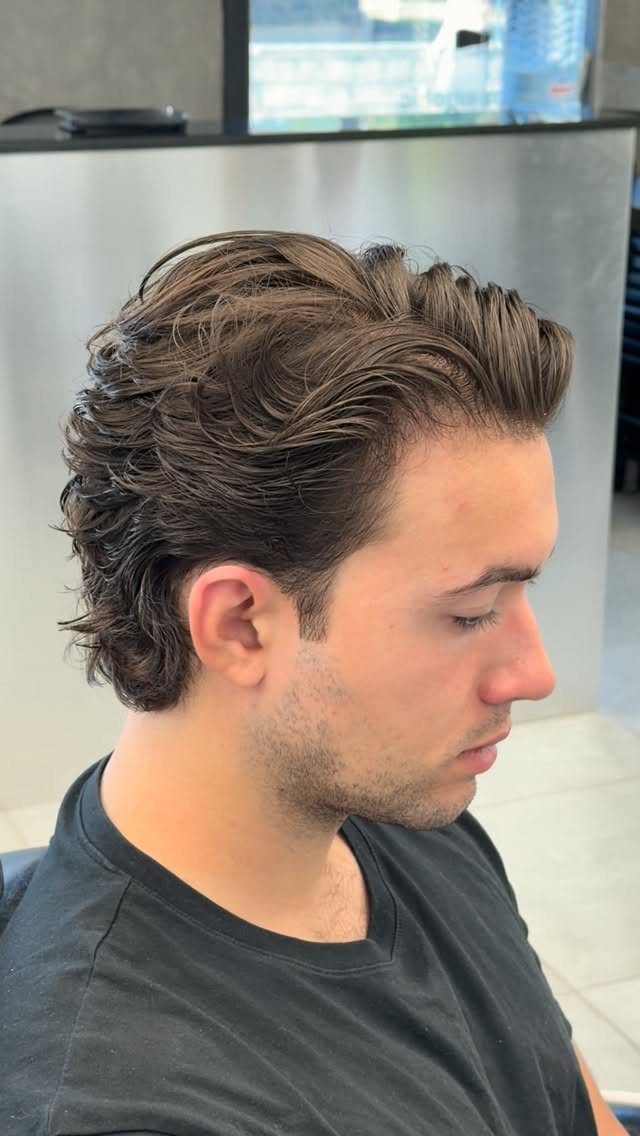
Hair grows past the ears and sweeps back from the face with natural volume, no hard part or slick finish. The length gives it movement, and the direction keeps it off your forehead without looking styled into place.
This cut needs several inches on top to flow backward and works best on hair with some natural wave or texture.
Straight hair can do it but takes more product for the sweep to stay put. Towel dry, add a light cream or sea salt spray, and push it back with your fingers while it air dries.
The sides stay shorter to keep the shape balanced, but not short enough to call it an undercut. Plan on regular cleanups.
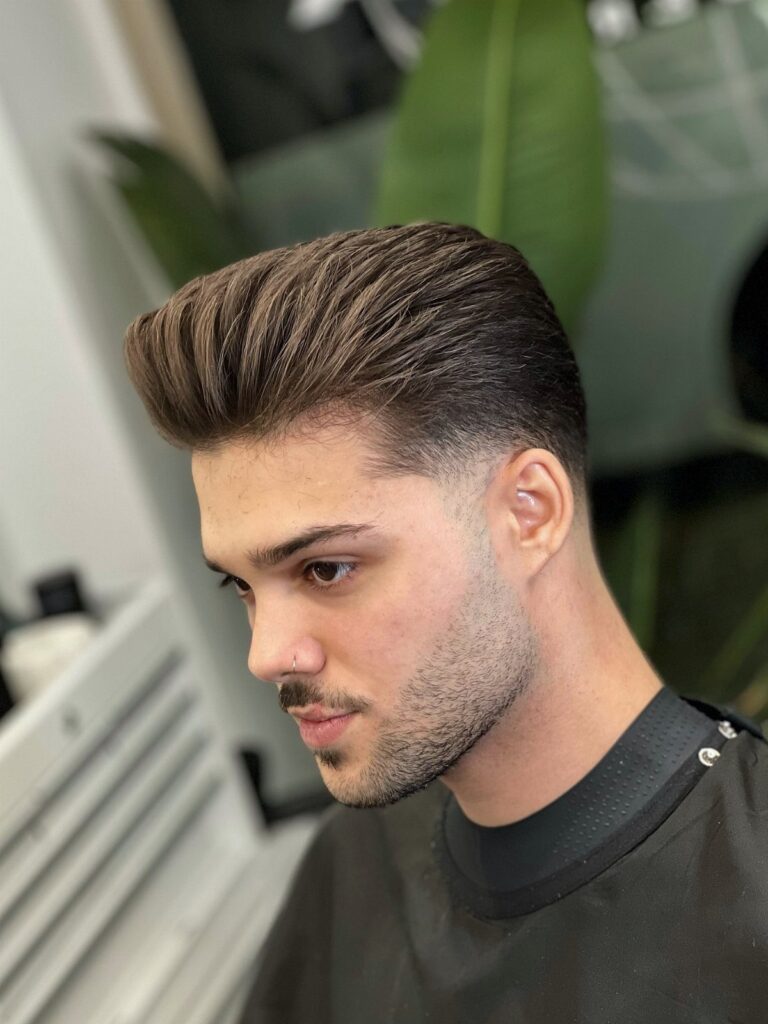
3. Medium Pompadour
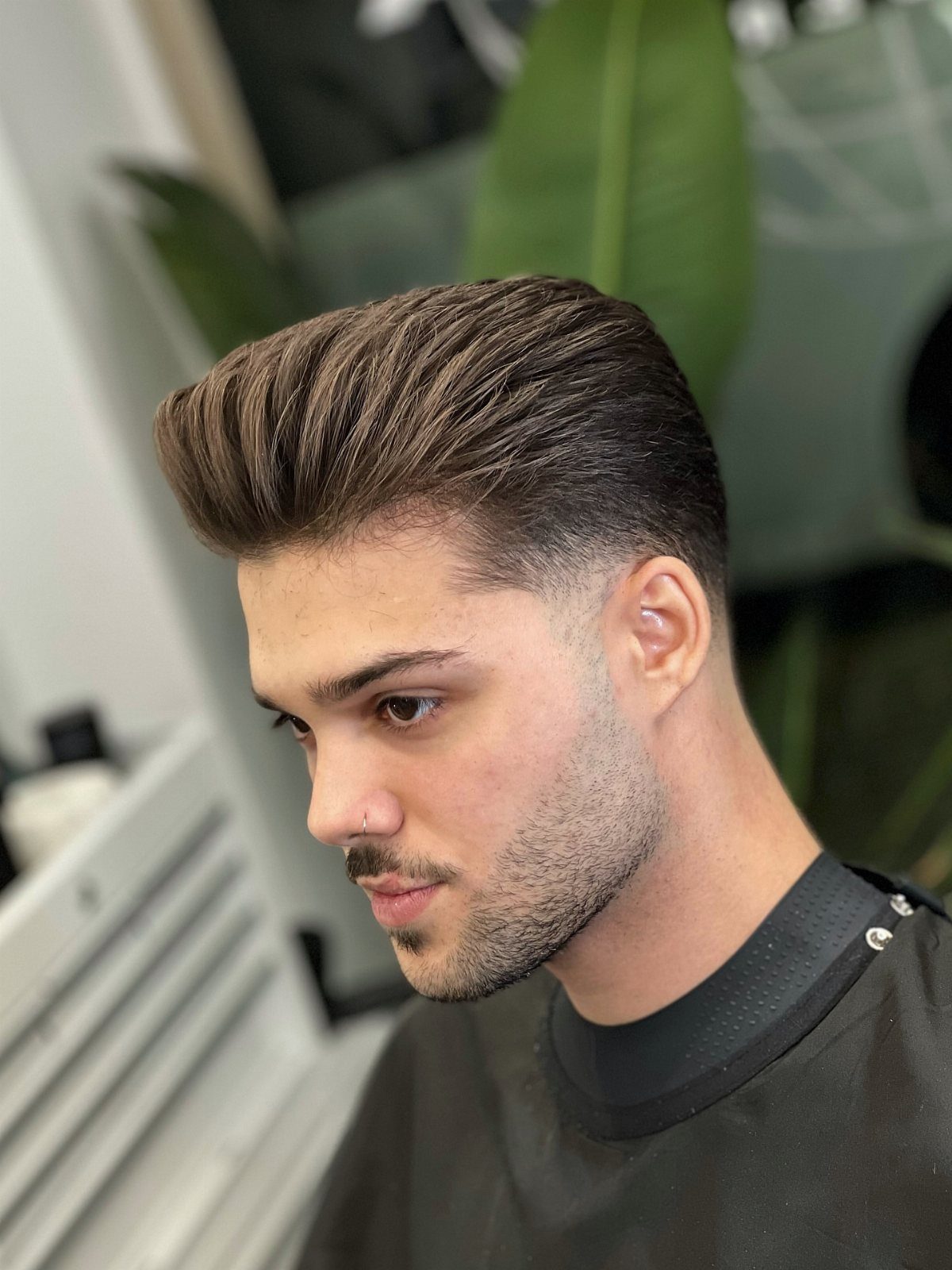
The top is cut long and pushed upward and back for height, then shaped to hold volume without tipping forward. Sides are faded or tapered short to make the top stand out.
This cut needs a blow dryer and a round brush to build the lift, then pomade or wax to lock it in place.
Styling takes a few minutes each morning, and the hold lasts all day if you use a product with good grip.
A medium pompadour sits lower than the classic rockabilly version but still gives noticeable height.
If your hair is fine, the volume helps, but if it’s thick, the weight can pull the shape down by midday unless you use a strong-hold product. The sides need frequent trims to keep the contrast sharp.
4. Medium-Length Fringe
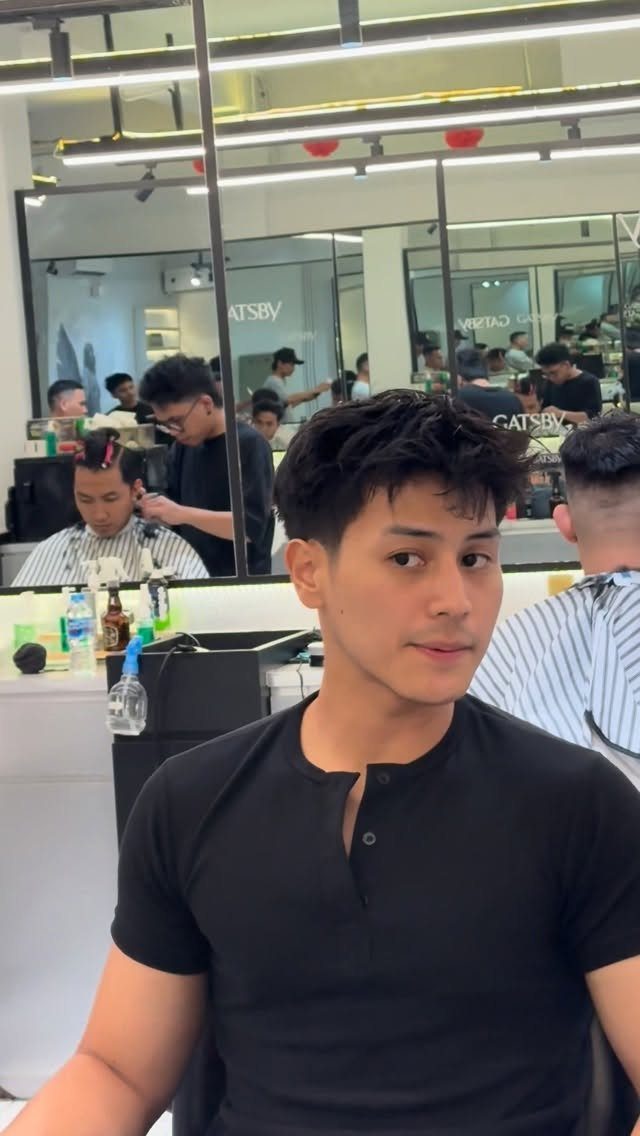
The front stays long enough to fall forward, either resting just above the eyebrows or sweeping across the forehead depending on where you brush it. The rest stays medium length, so the fringe is the standout detail.
This cut works on most hair types and skips the high-maintenance styling that a pompadour or slick back demands.
Blow dry the fringe forward or to the side, add a light styling cream for hold, and you’re done. If your hair is straight, the fringe sits clean and sharp; if it’s wavy, it adds texture without looking messy.
The fringe grows out fast and can block your vision or look uneven within a few weeks, so book cleanups regularly.
If you don’t want to deal with that, ask your barber to cut it slightly shorter than you think you need.
5. Comb Over
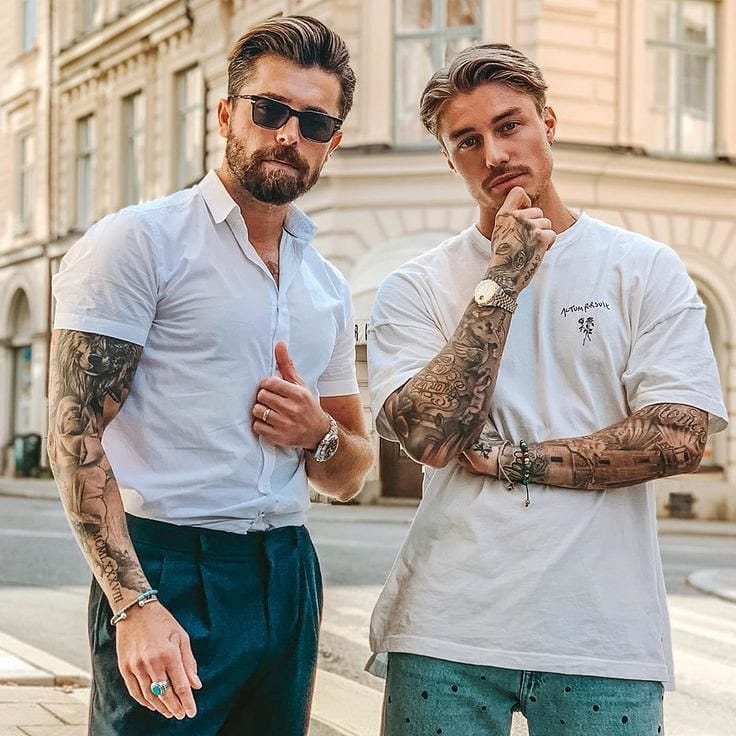
Hair on top is parted to one side and combed across, creating an angled line that follows the direction of the part.
The sides are cut shorter to keep the focus on the top, and the length gives the combover a softer, less formal look than the close-cropped version.
Blow dry the top in the direction you want it to sit, apply product while it’s still slightly damp, and comb it into place.
If your hair is thick, the volume adds weight to the side you comb toward, so ask your barber to thin it slightly to keep it from bulking up.
The part can be shaved in as a hard part or left natural, depending on how defined you want the line. A natural part blends better as the hair grows, but a hard part needs a touch-up every 2 weeks.
6. Medium-Length Ponytail
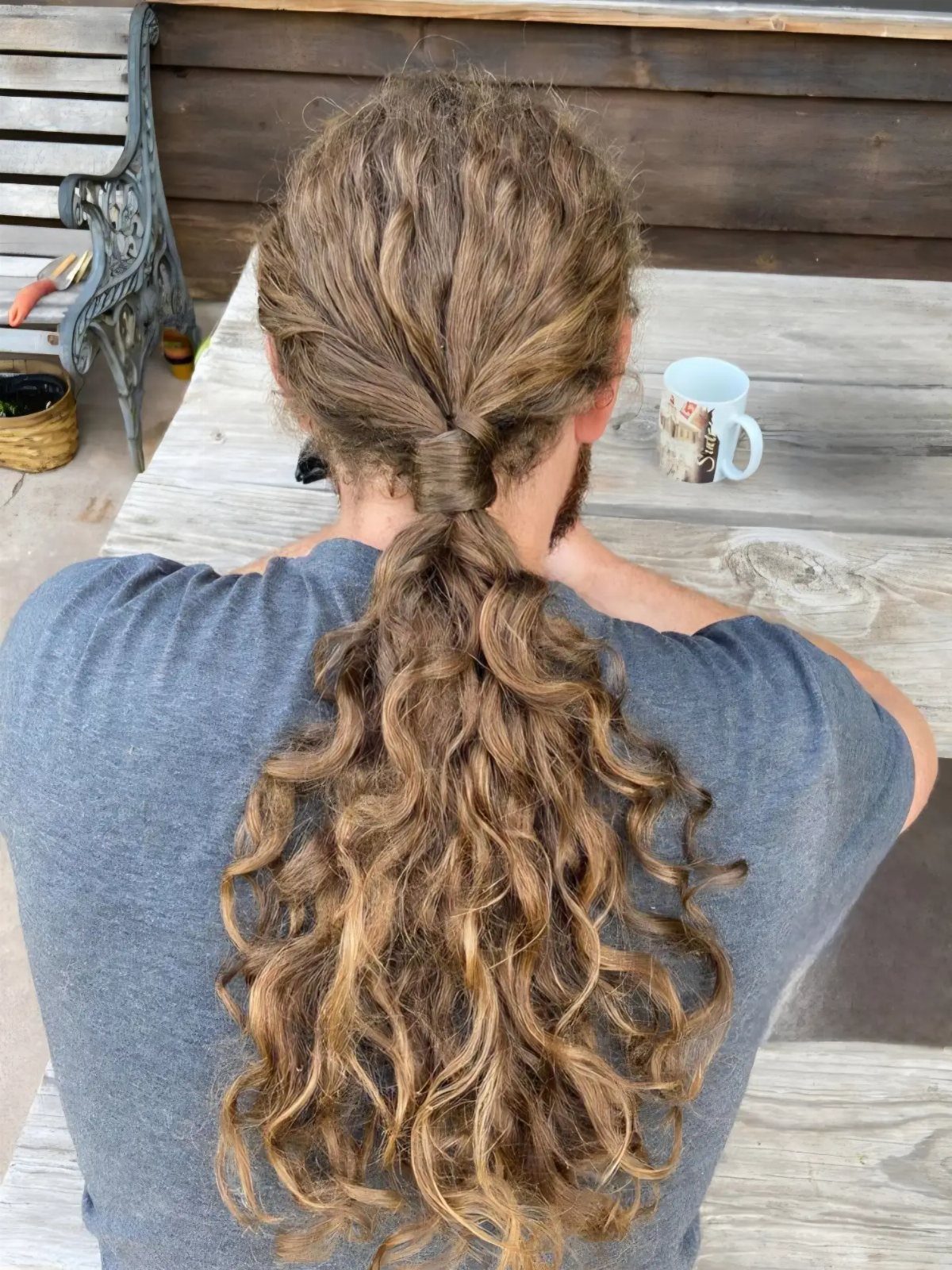
Once hair reaches past the ears, it can be gathered at the back of the head and secured with an elastic.
The ponytail sits low or mid-height depending on how much length you have, and the front can be left loose or pulled back tight.
This style works on all hair types and takes the hair off your neck and out of your face in under a minute.
If your hair is curly or textured, the ponytail adds volume and shows off the curl pattern. Straight hair sits flatter but still clears your line of sight and keeps you cooler in warm weather.
A half-up ponytail pulls back the top section while leaving the rest down, which works if your hair is still growing and not all of it reaches the tie yet.
Skip the tiny elastics that snap and grab hair; a fabric-covered band or a thicker elastic slides out cleanly and does less damage.
7. Medium Straight Hair
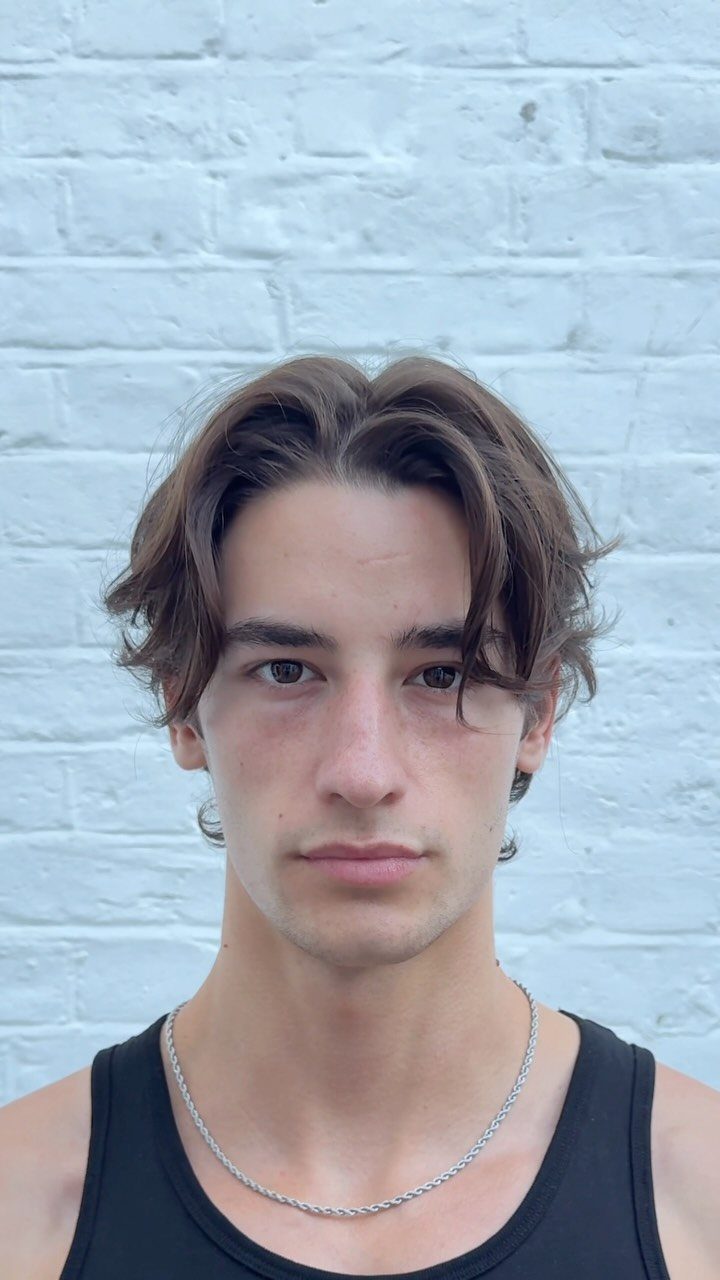
Straight hair at medium length can sit clean with minimal effort if it’s cut with some layering to remove weight and give it shape. Without texture or wave to add movement, the cut itself does the work.
A center part or side part keeps it looking intentional rather than flat.
Air dry or blow dry smooth, and add a light styling cream if the ends tend to stick out. Straight hair shows every uneven section, so trims matter more here than with textured cuts.
This suits someone who wants length without daily heat styling or product. It grows out evenly and looks presentable with a quick comb.
8. Medium-Length Waves
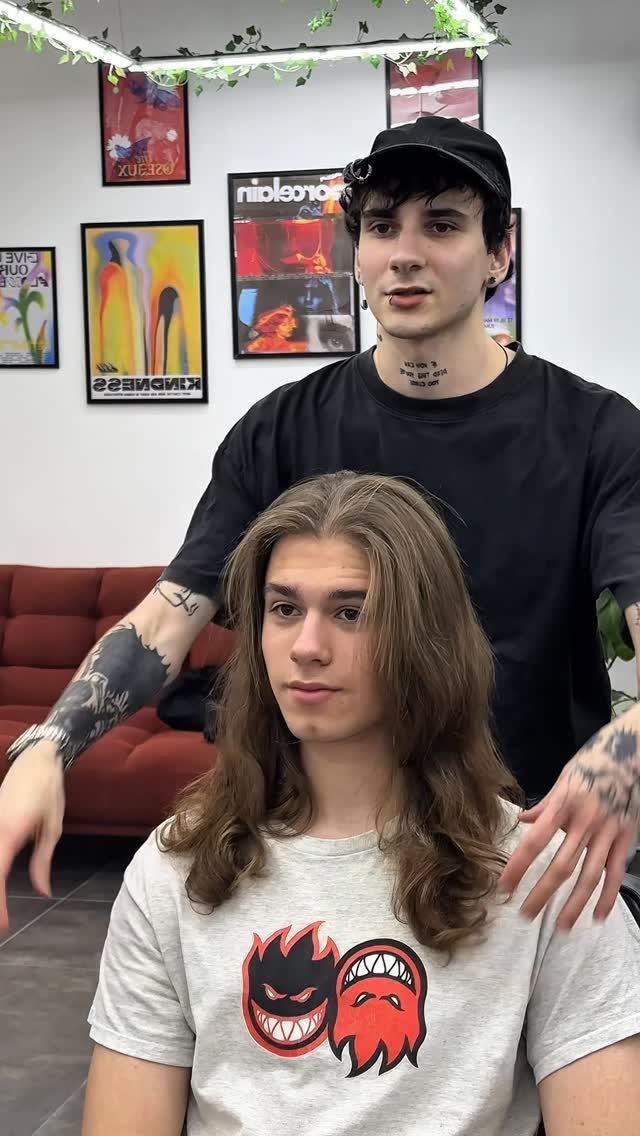
Wavy hair at medium length moves on its own and adds volume without needing product to create texture. The wave pattern softens the overall shape and keeps it from sitting flat against the head.
Air drying gives a loose, natural finish, or run a diffuser through it when you want more shape with less flyaway.
A small amount of cream or mousse while damp helps hold the wave without making it stiff. If your hair is wavy but tends to frizz, skip the towel and blot it dry with a t-shirt instead.
This cut needs less styling time than straight hair at the same length because the waves do the shaping. Regular trims stop the ends from splitting and keep the texture from turning stringy.
9. Two-Block Cut
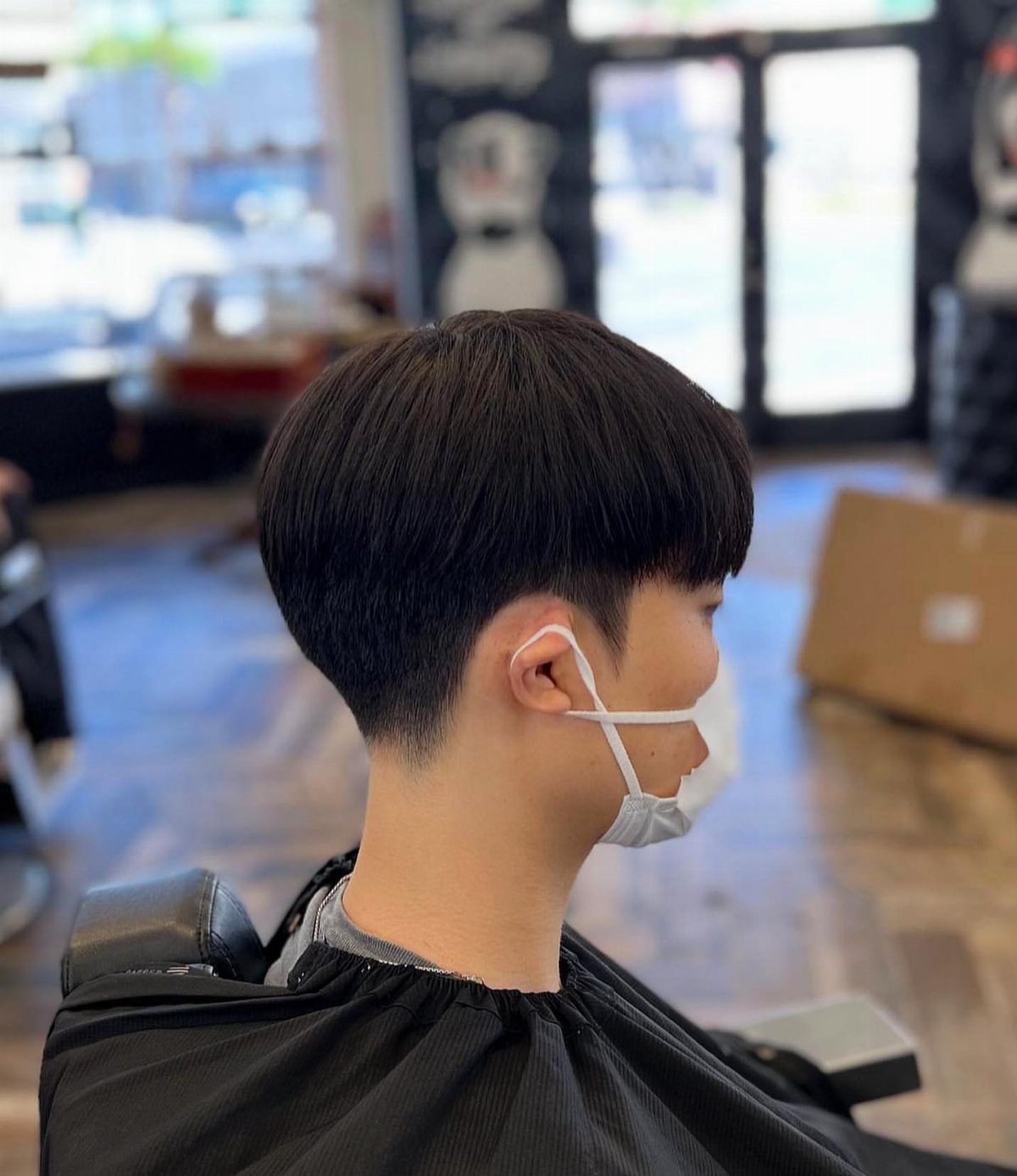
The top and front are left long while the back and sides are cut short, creating a visible line where the 2 sections meet. That contrast is the defining feature, and it works on straight or wavy hair.
The longer top can be styled forward, to the side, or brushed back depending on your hair type and what you prefer.
The short sides keep it clean and reduce bulk, so the cut reads sharp even when the top is casual. Blow dry the top for more control, or let it sit naturally if your hair has enough texture.
The line between sections grows out within a few weeks, so this cut needs regular maintenance to hold its shape. Frequent barber visits keep the contrast sharp; skip them and the line between lengths softens fast.
10. Surfer Hair
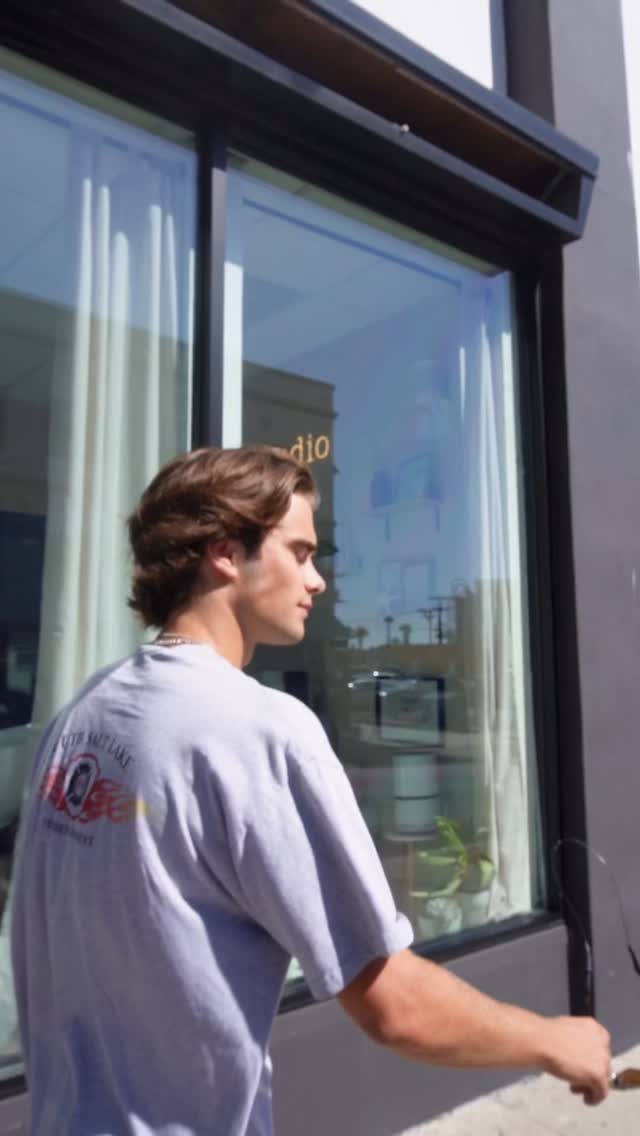
This cut relies on natural or styled waves that fall loosely around the face and back, giving it a windblown, lived-in look. The length sits somewhere between the ears and shoulders, and the texture keeps it from looking unkempt.
A few pumps of sea salt spray while it’s still damp gives you that textured, windblown finish year-round. Scrunch it while it dries, and skip the comb so the waves stay separated and textured.
If your hair is straight, you’ll need the spray and some effort to get the tousled finish. Wavy or curly hair does most of the work on its own.
Surfer hair looks better slightly messy than perfectly neat, which makes it forgiving day to day.
11. Man Bun
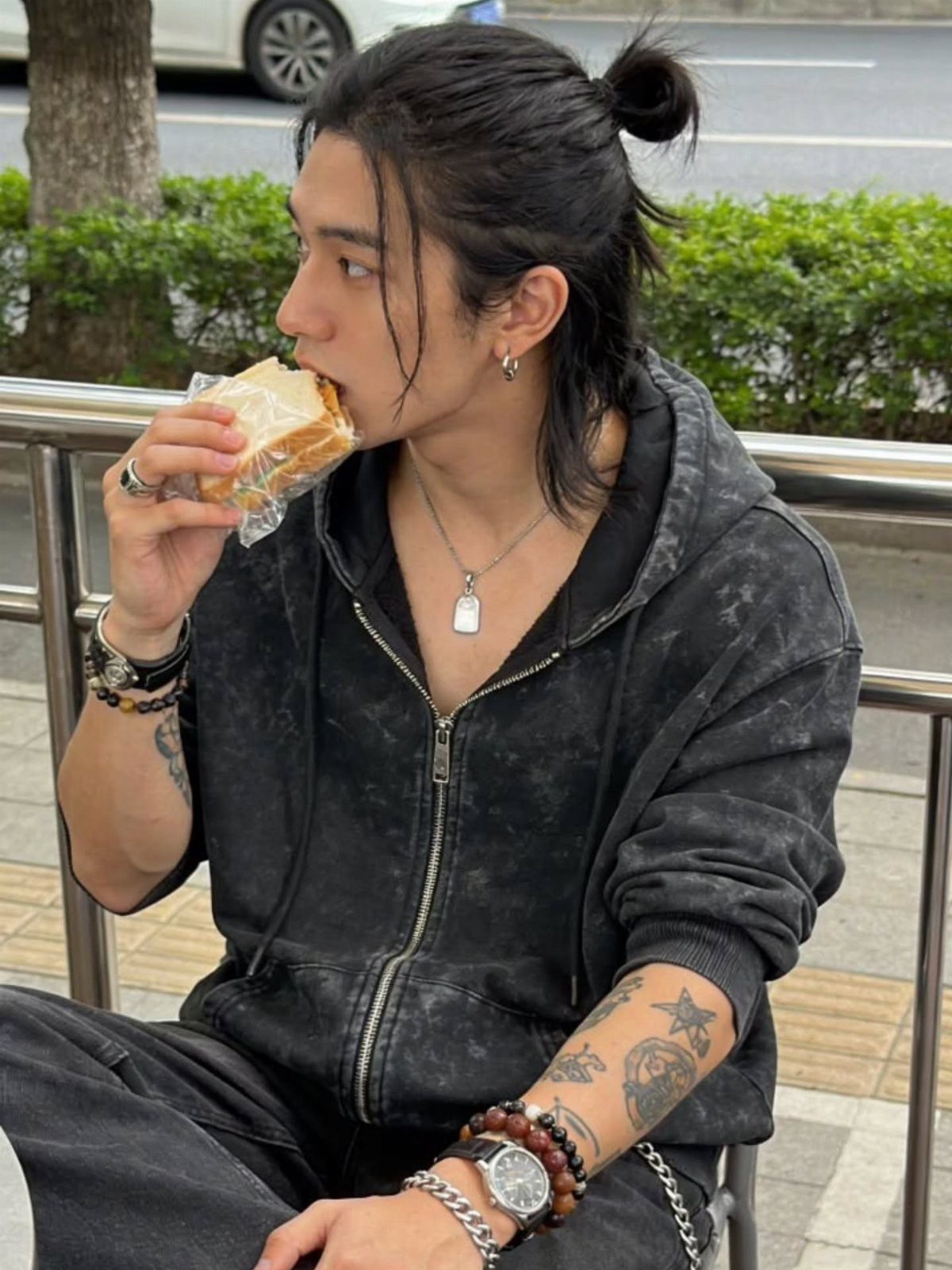
Hair is gathered at the back or top of the head and twisted into a bun, with the option to leave some length down or pull it all up.
A full bun clears your neck and face completely and takes seconds to tie. Use a fabric-covered elastic instead of a rubber band to avoid breakage, and don’t pull it tight enough to cause tension headaches.
If your hair is thick, the bun sits fuller; if it’s fine, it may need a few loops of the tie to stay secure.
This style needs enough length to reach the tie point without short pieces falling out. Plan on several months of growth if you’re starting from a shorter cut.
12. Hard Part
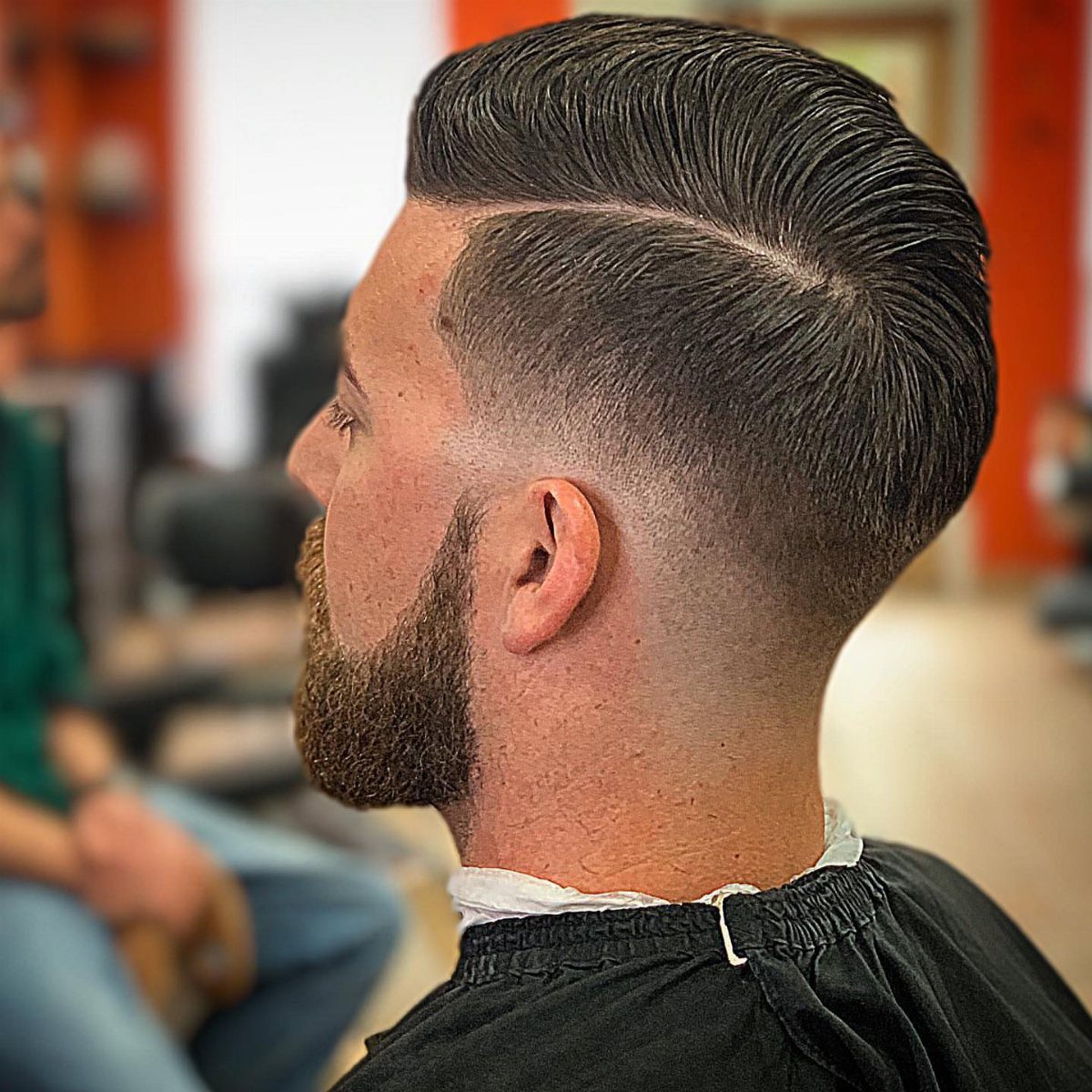
A shaved line runs along the part, separating the top from the shorter sides and making the part a permanent feature of the cut.
The line stays visible even without styling, and it gives the cut a sharper, more defined look than a natural part.
The top is usually combed over to one side, and the hard part emphasizes that direction.
It works best when paired with a fade or taper on the sides so the line stands out against clean, short hair. Style the top with pomade or cream and comb it into place; the part does the rest.
The shaved line grows back quickly, so count on regular touch-ups to keep it looking deliberate.
13. Medium-Length Mullet
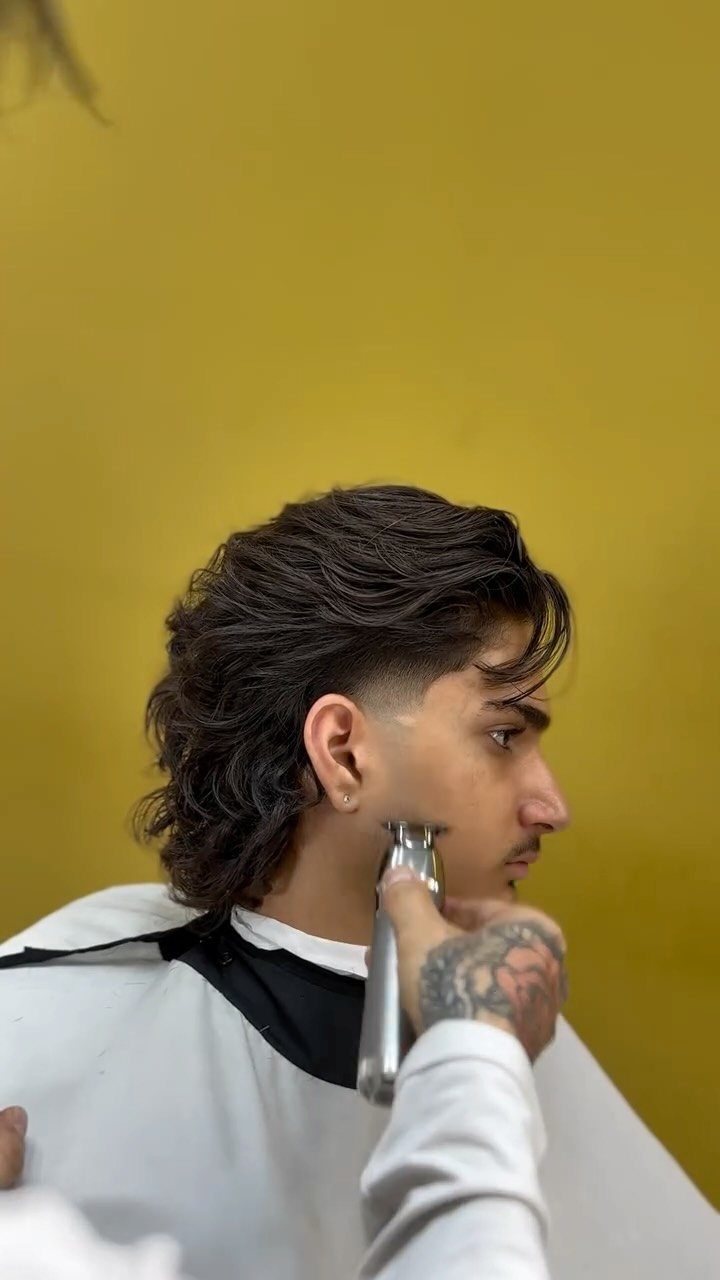
The top and sides are kept shorter while the back grows longer, creating a front-to-back contrast that defines the cut. How much contrast depends on how short you go on top and how far you let the back grow.
This cut needs regular trims to keep the proportions intentional. Let the back grow too long without shaping the top and it reads less like a style choice and more like you forgot to finish the haircut.
Styling the top with a bit of texture or volume keeps the balance from tipping too far toward the longer back.
Men’s medium length hairstyles can be just as daring as longer styles. Better yet, if you have the confidence, a modern-day mullet is a low-maintenance look that suits most face shapes, hair types, and textures.
14. Medium-Length Curls
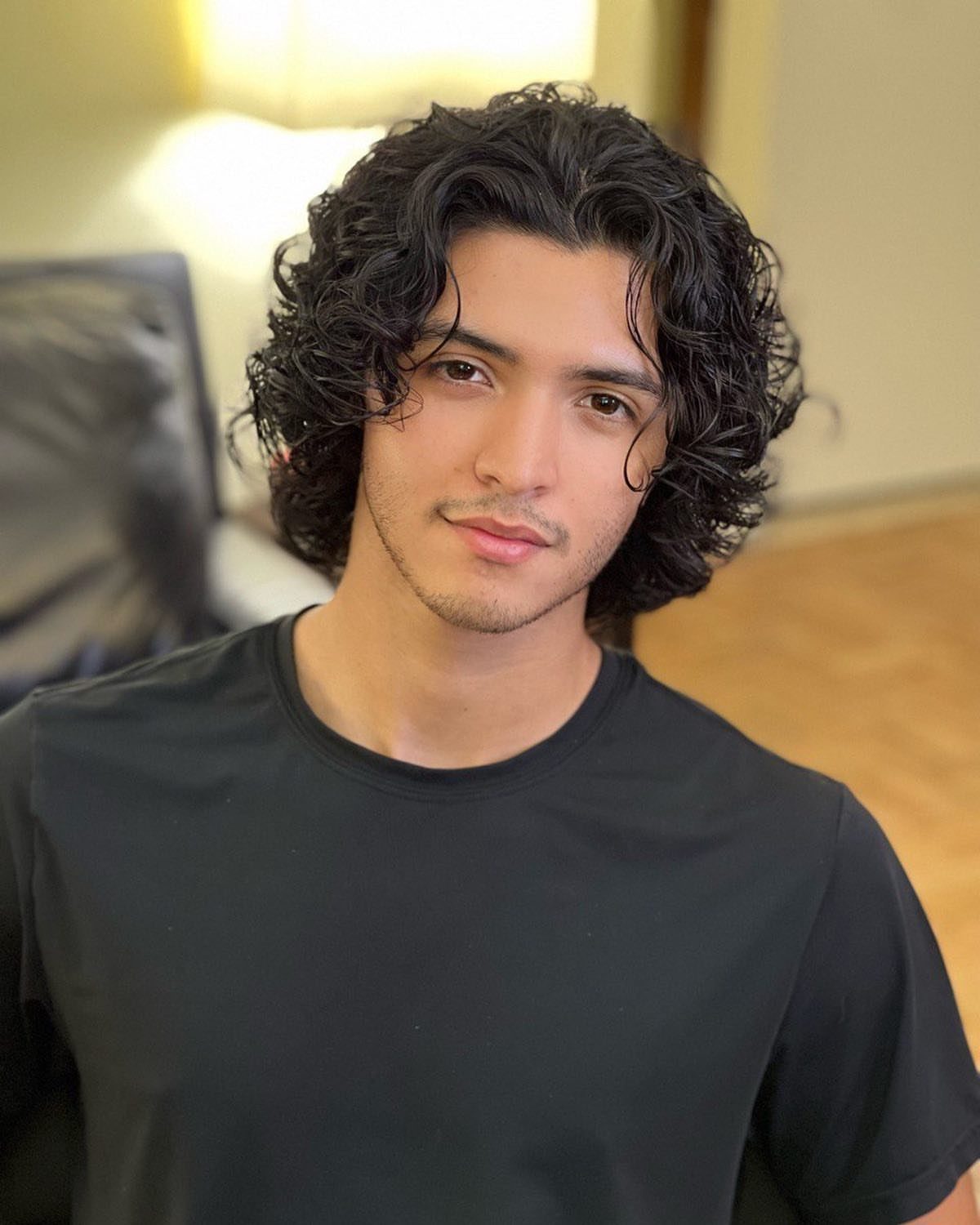
Curls at medium length define themselves when left long enough to clump and form a full shape around the head.
The natural curl pattern does most of the work, and the length gives each curl room to coil without springing too tight.
Apply a curl cream or leave-in conditioner while the hair is still wet, scrunch it to encourage the curl, and let it air dry or use a diffuser on low heat.
Skipping the towel and blotting with a t-shirt cuts down on frizz.
Cut the ends before they split and the shape starts to fray.
15. Medium-Length Taper
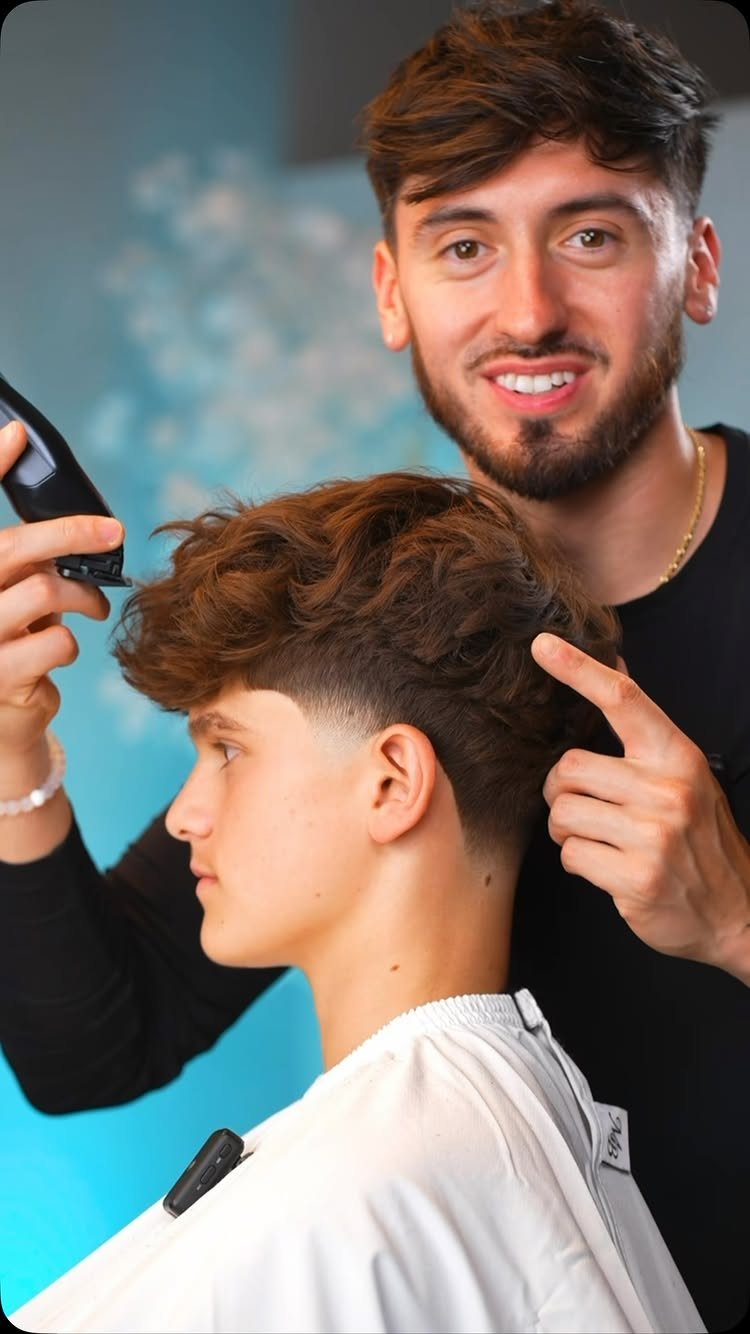
The sides and back gradually shorten as they move down toward the neckline and ears, while the top stays long enough to style or leave natural. The taper blends the lengths smoothly instead of creating a hard line.
This cut works on most hair types and gives you options for the top without committing to a full undercut or fade. A taper grows out cleaner than a fade, so the time between trims stretches slightly longer.
Ask for a low, mid, or high taper depending on where you want the blend to start.
16. Top Knot
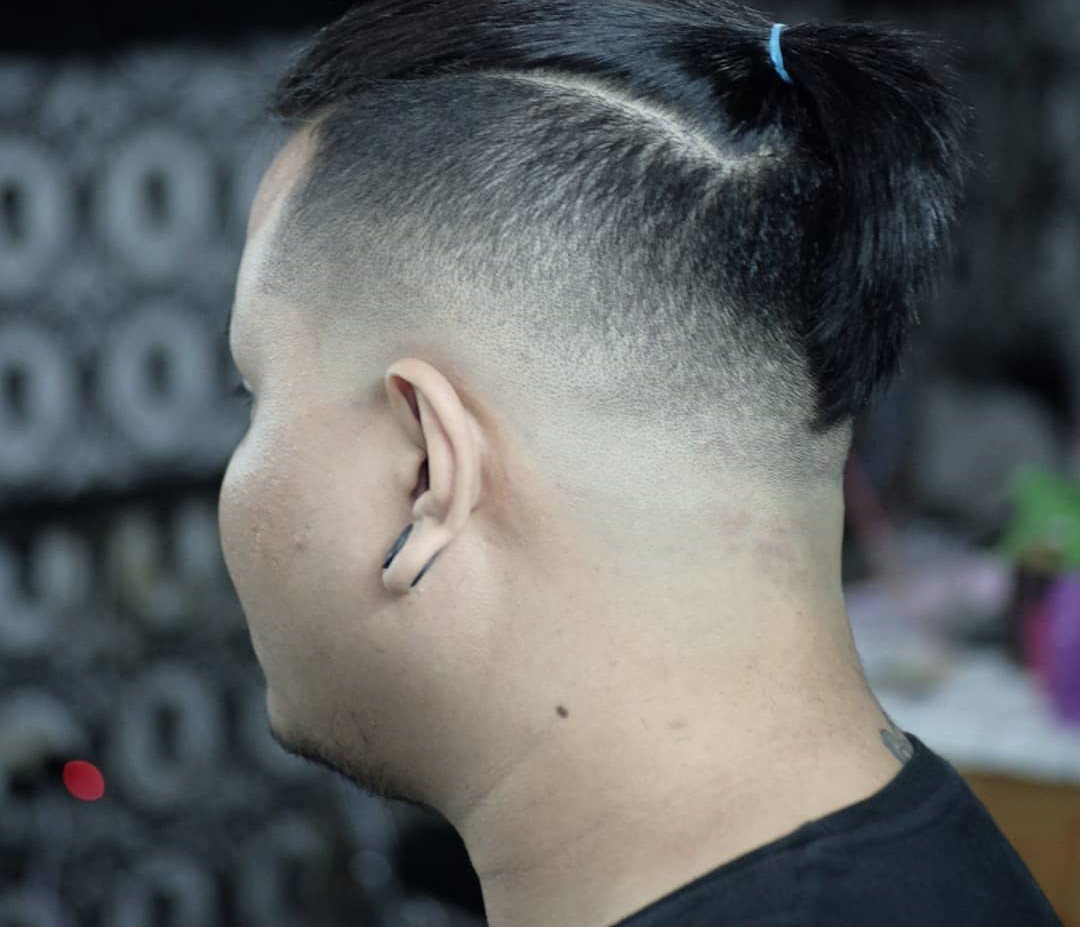
The knot sits high, and keeping the sides short puts all the attention on the length you tied up. The knot sits higher than a bun and creates a vertical silhouette.
Use a fabric-covered elastic and twist the hair just enough to secure it without pulling tight. A looser knot looks more relaxed; a tighter one holds all day but can cause tension if you overdo it.
17. Mid-Length Locs
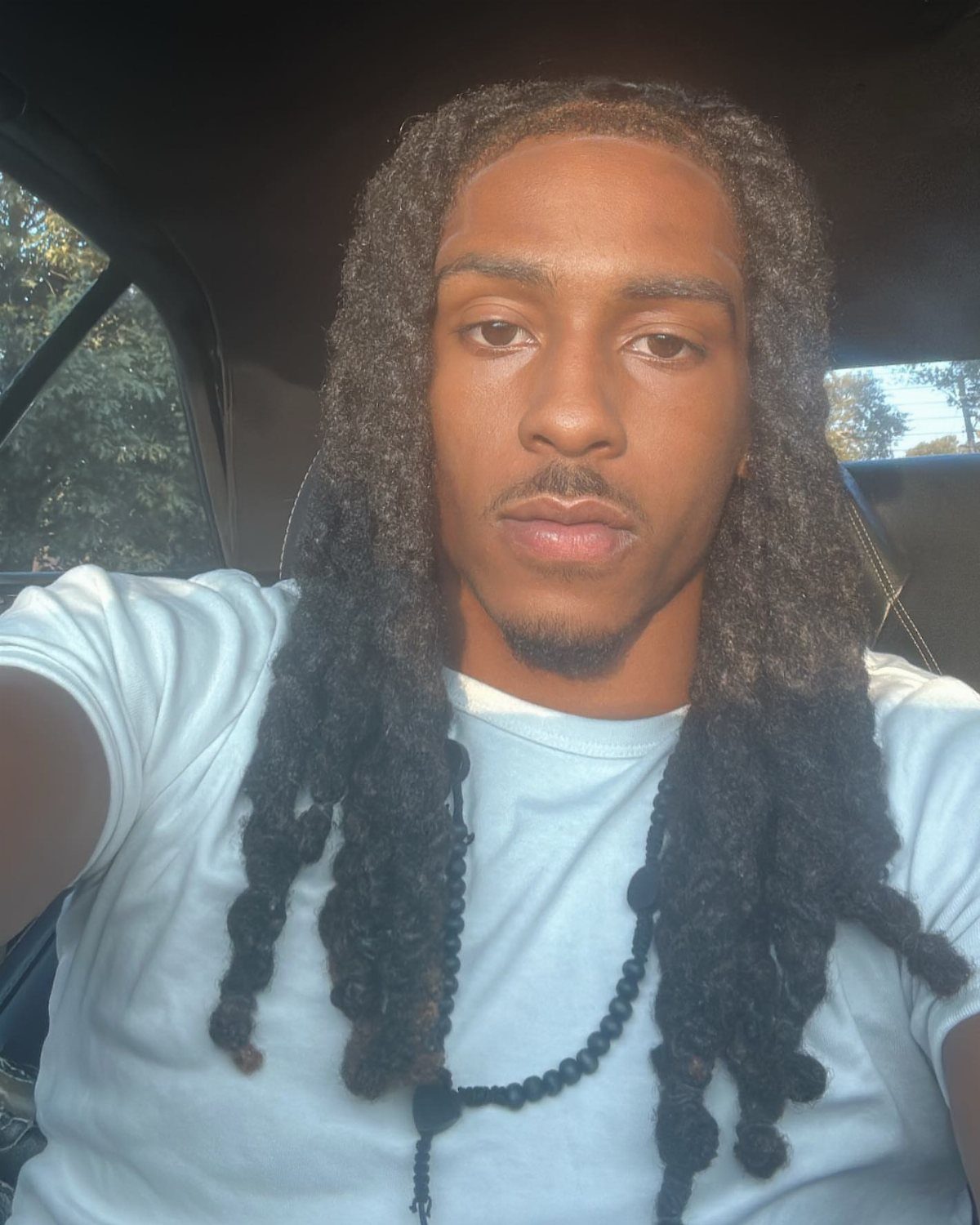
Locs at medium length fall somewhere between the ears and shoulders, giving the hair structure and weight without the full commitment of waist-length growth.
Each loc forms as the hair mats and tightens over time, and the length lets the locs move and show their shape.
Starting them takes patience, and regular retwisting keeps each loc tightening at the same rate. Mid-length locs are easier to manage than longer ones and still give you enough length to tie them back or let them fall naturally.
Once the locs mature, maintenance drops to scheduled palm-rolling and root tightening every few weeks.
18. Thick and Textured with Low Temp Fade
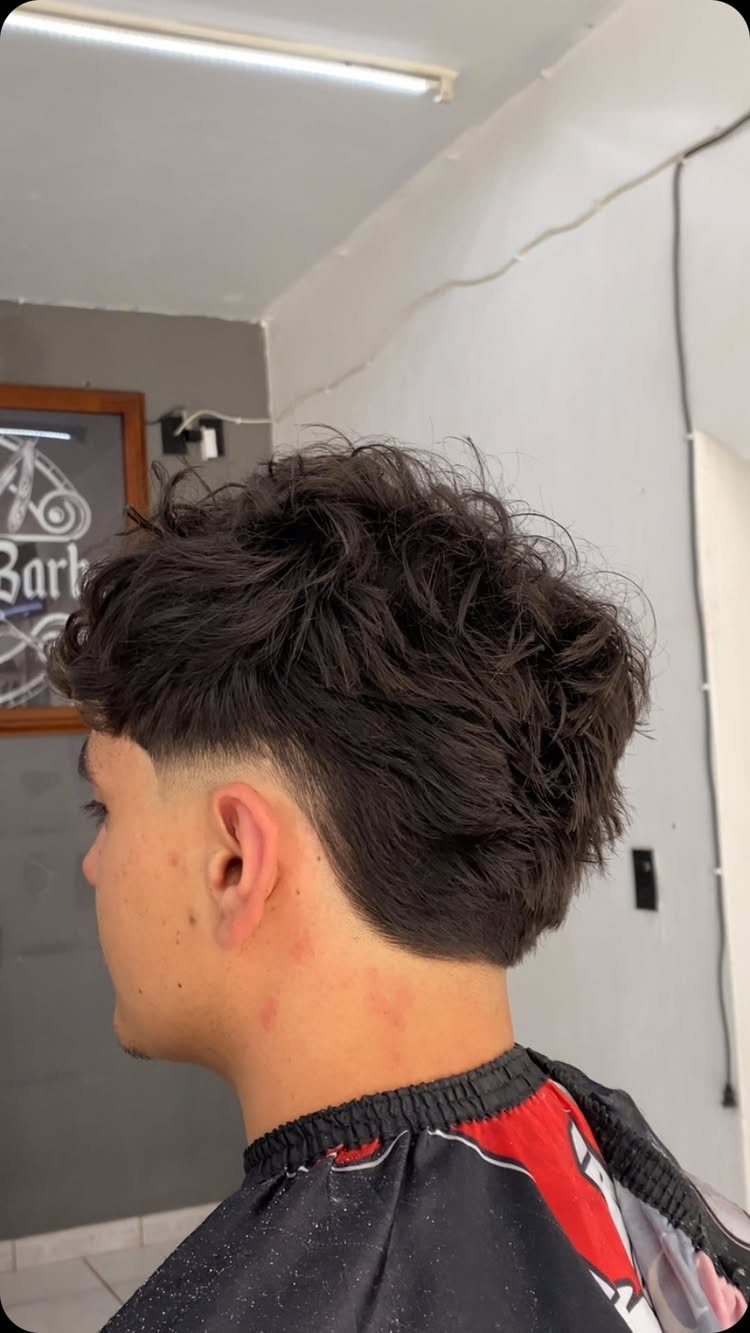
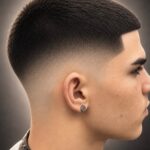
The top is left thick with visible texture, and the sides fade low and gradually down to the skin, creating a clean contrast without taking the fade too high.
The texture on top adds movement and keeps the cut from looking heavy.
Thick hair needs texture cut into it or it sits heavy and flat, so point cutting or slide cutting thins the bulk without shortening the length.
A low temp fade starts the blend closer to the ears and neckline, which makes it slightly less severe than a mid or high fade.
Style the top with a matte cream or clay to keep the texture separated and natural-looking.
19. Burst Fade
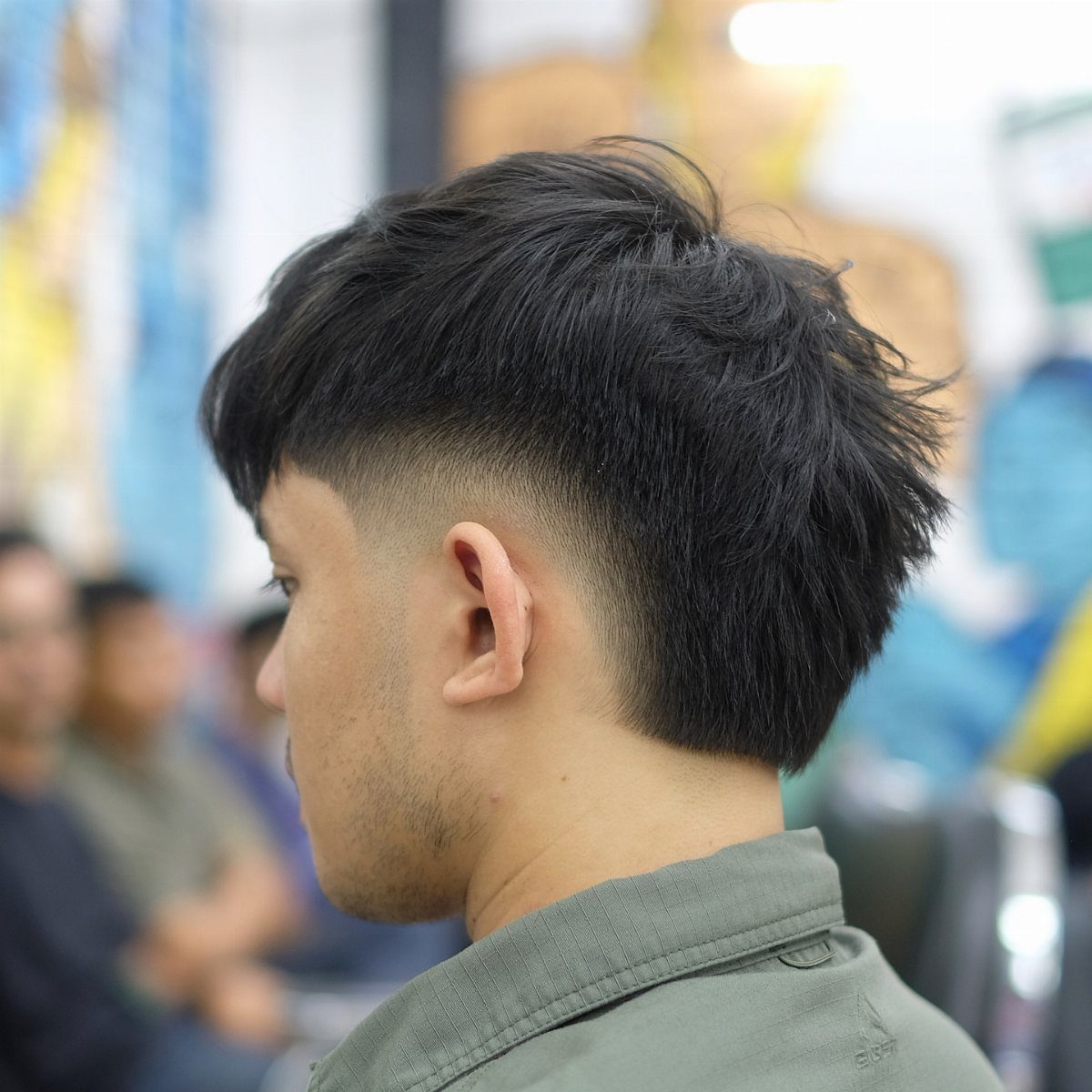
The fade curves around the ear in an arc instead of dropping straight down, and the back stays longer rather than fading all the way.
That curve follows the natural line behind the ear and creates a different silhouette than a standard drop or high fade.
The longer back keeps more weight and length at the nape, which suits someone who wants the clean sides of a fade without cutting everything short.
The burst shape works well with curly or textured hair on top because it frames the volume without competing with it.
The fade itself needs regular touch-ups to keep the curve clean and prevent it from growing out unevenly.
20. Medium Afro
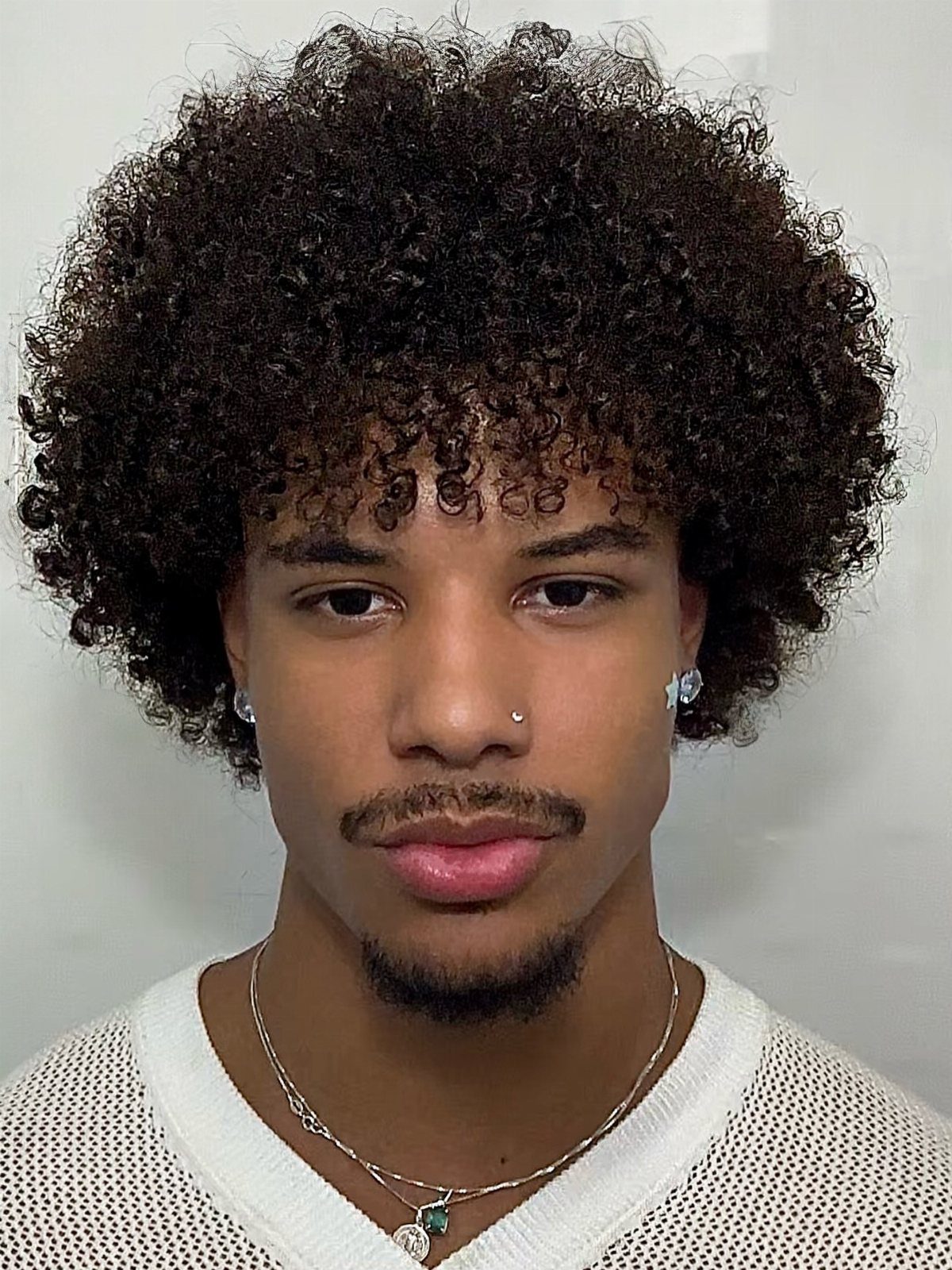
It forms a rounded silhouette that frames the head evenly on all sides. The length gives it fullness without letting it grow wild, and the shape stays deliberate with regular trimming.
A pick lifts the roots and keeps the shape round, and a light oil or moisturizer keeps the hair soft without weighing it down.
Afro hair dries out faster than other textures, so moisture matters more here than with straight or wavy cuts.
Clean up the edges regularly to keep the shape intact and prevent it from going lopsided.
21. Cornrow Braids
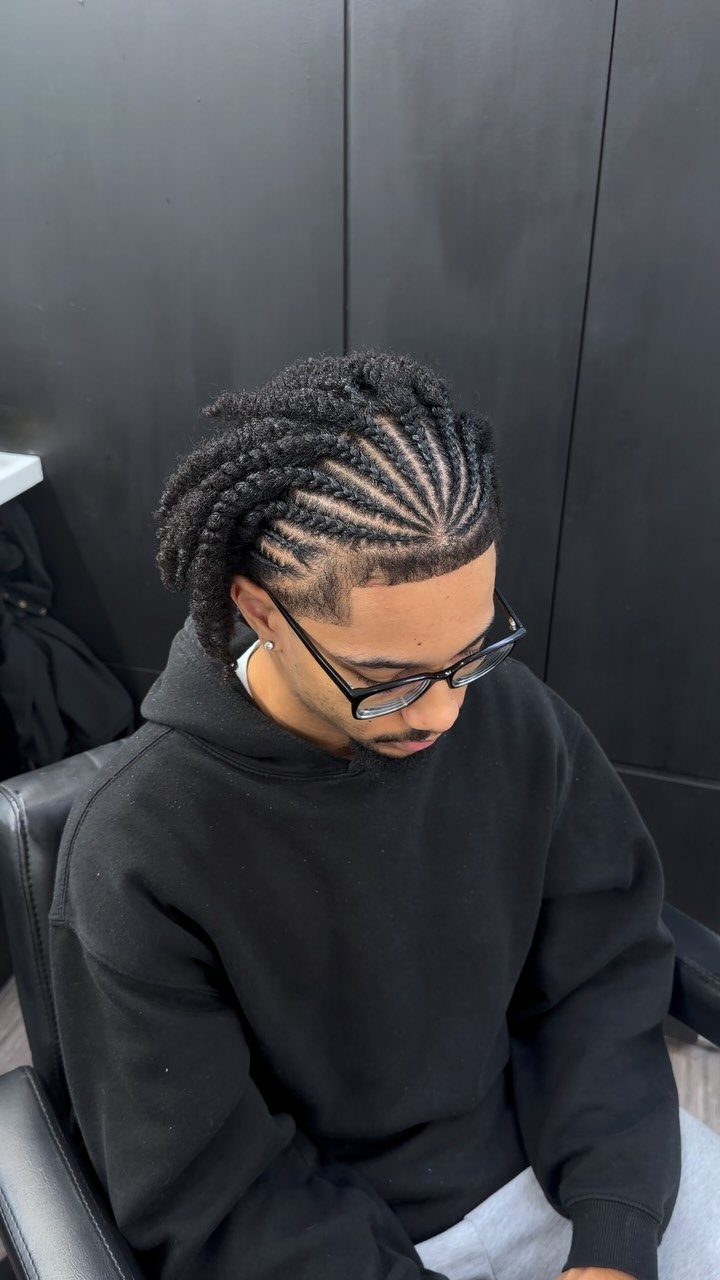
Hair is divided into rows and braided tight against the scalp, running straight back or following a pattern. The braids sit flat and last for weeks without needing daily styling.
Cornrows work on most hair textures but hold best on coarser, tightly coiled hair.
The rows can run parallel, curve, or form a design depending on what you ask for. They take an hour or more to install, and they protect the hair from daily manipulation while they’re in.
Take them out before the hair starts matting at the roots.
22. Shaved Hair Design
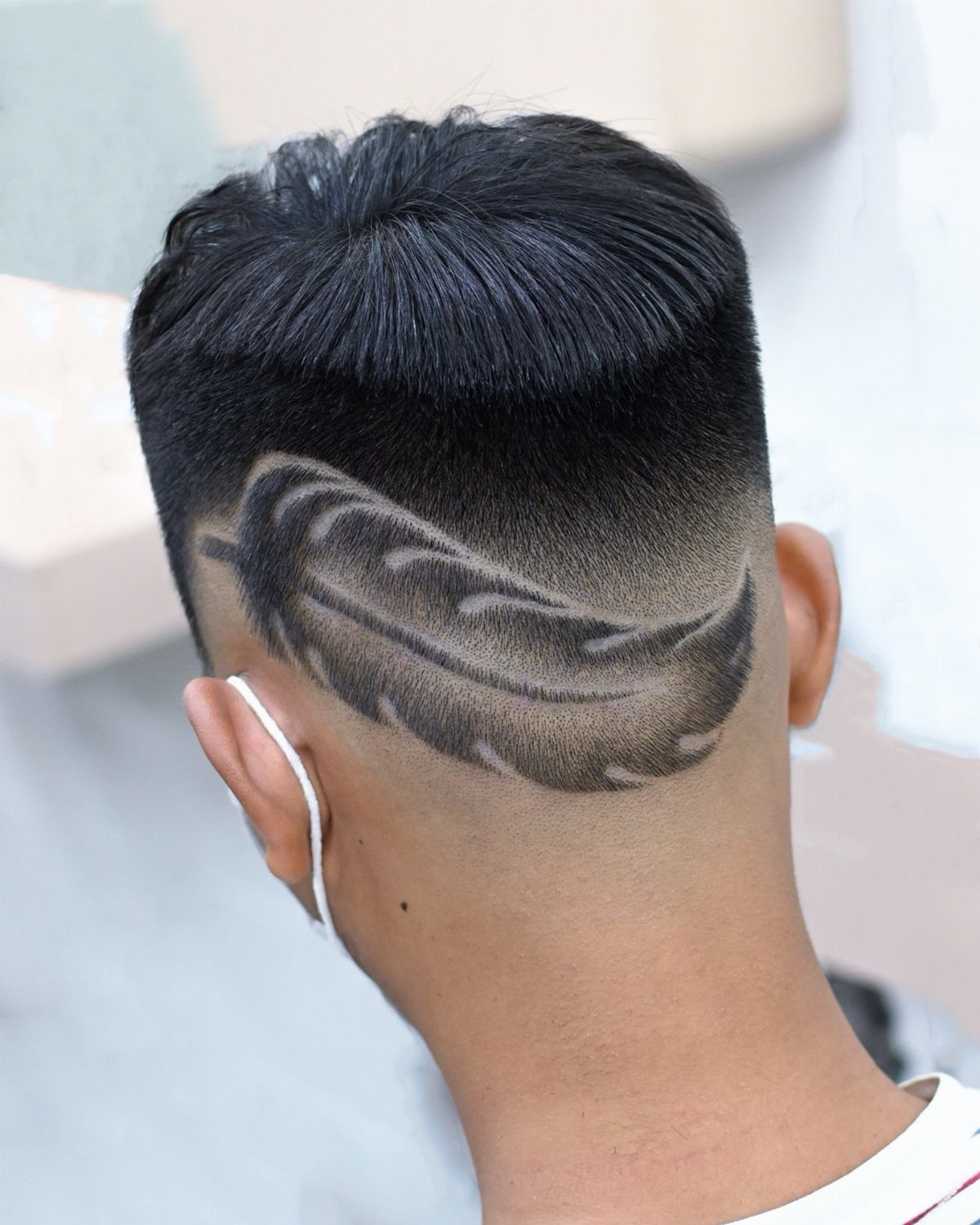
A barber uses clippers and trimmers to carve a pattern into short hair, creating a temporary design that shows against the scalp or a shorter fade.
The design can be geometric, a line, or something more detailed depending on the barber’s skill and how much contrast you want.
The pattern grows out within a week or 2 as the hair lengthens, so this is a short-term addition rather than a permanent feature. The design shows best on darker hair where the contrast between skin and hair reads clearly.
If you want it to last, plan on getting it recut every time you come in for a trim.
23. Mid-Length Layered Cut
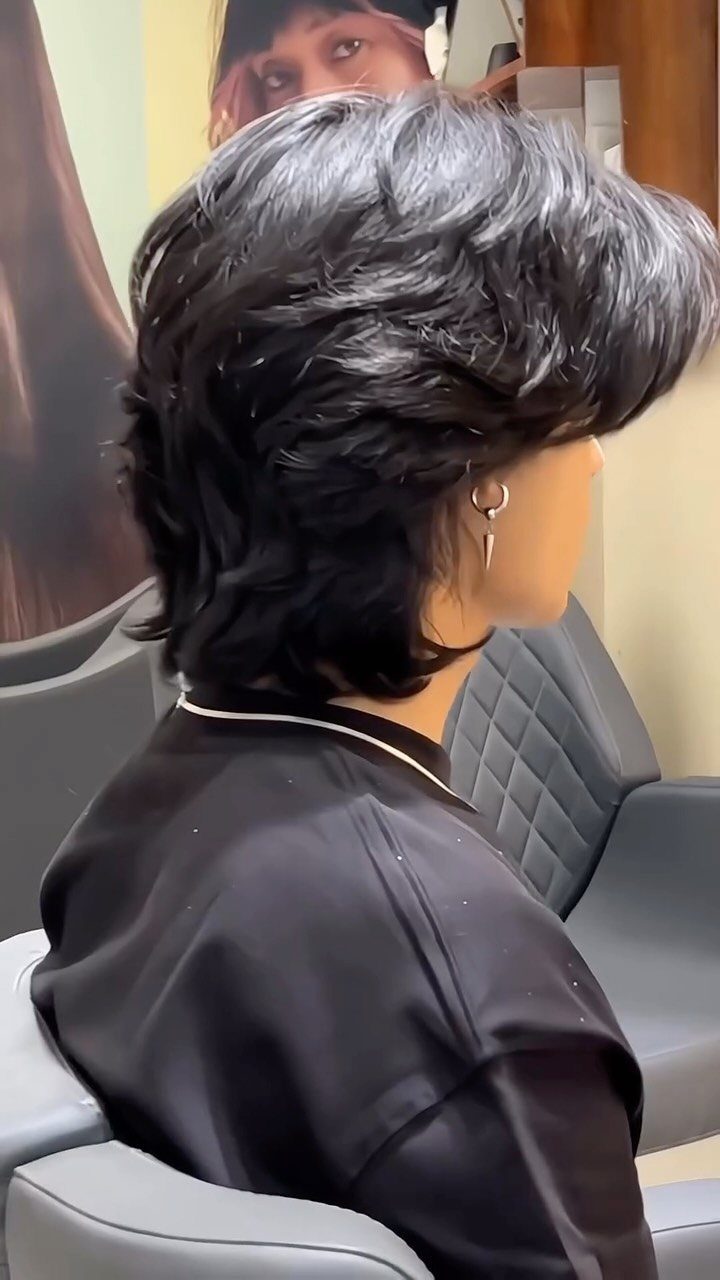
Layers cut at different lengths through the hair add movement and prevent it from sitting flat or heavy.
The shortest layers sit near the top, and the longest fall toward the ends, which gives the cut shape without removing too much length.
This works well on thick or dense hair that would otherwise look bulky at medium length. The layers lighten the overall weight and let the hair move more naturally, whether you style it or leave it to air dry.
A stylist cuts the layers with scissors, and the finish depends on how much layering you ask for. Light layers add subtle shape; heavier layers create more separation and texture.
24. Medium Locs
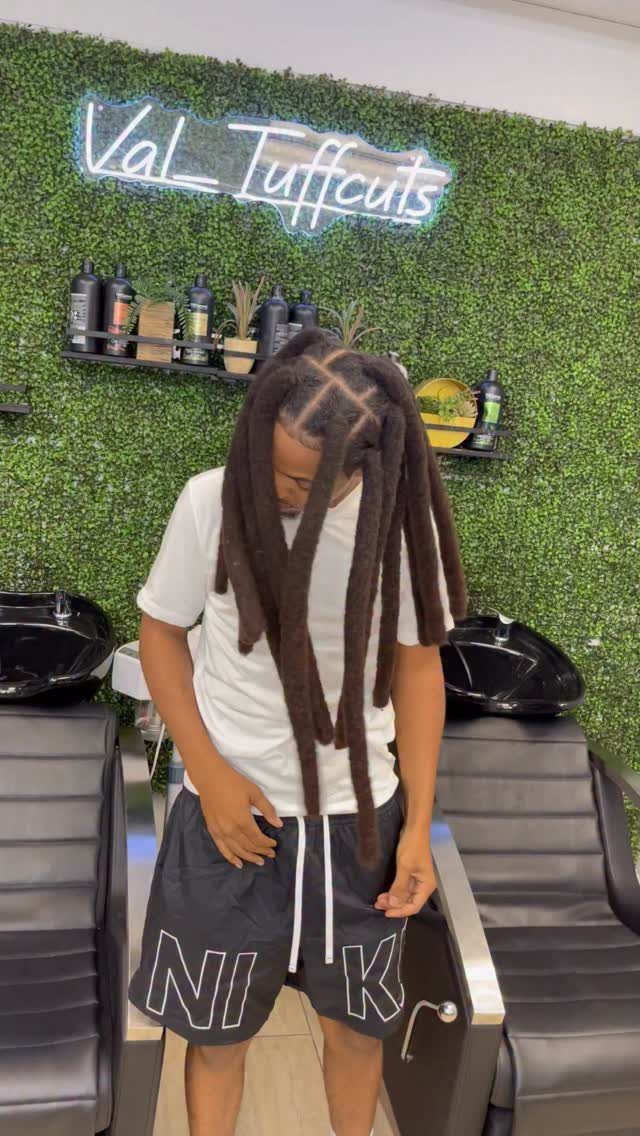
Locs at this length fall past the ears but not yet to the shoulders, giving them enough weight to hang naturally while staying easier to manage than longer locs.
The sides can be left at the same length or cut shorter for contrast, which keeps the top or back as the focal point.
Once the locs mature, they need less frequent retwisting than shorter ones because the length holds them in place.
Medium-length locs are easier to tie back or style up than shorter ones and dry faster than locs that reach the shoulders or below.
Regular retwisting at the roots keeps each loc defined and prevents them from merging or thinning unevenly.
25. Korean Perm
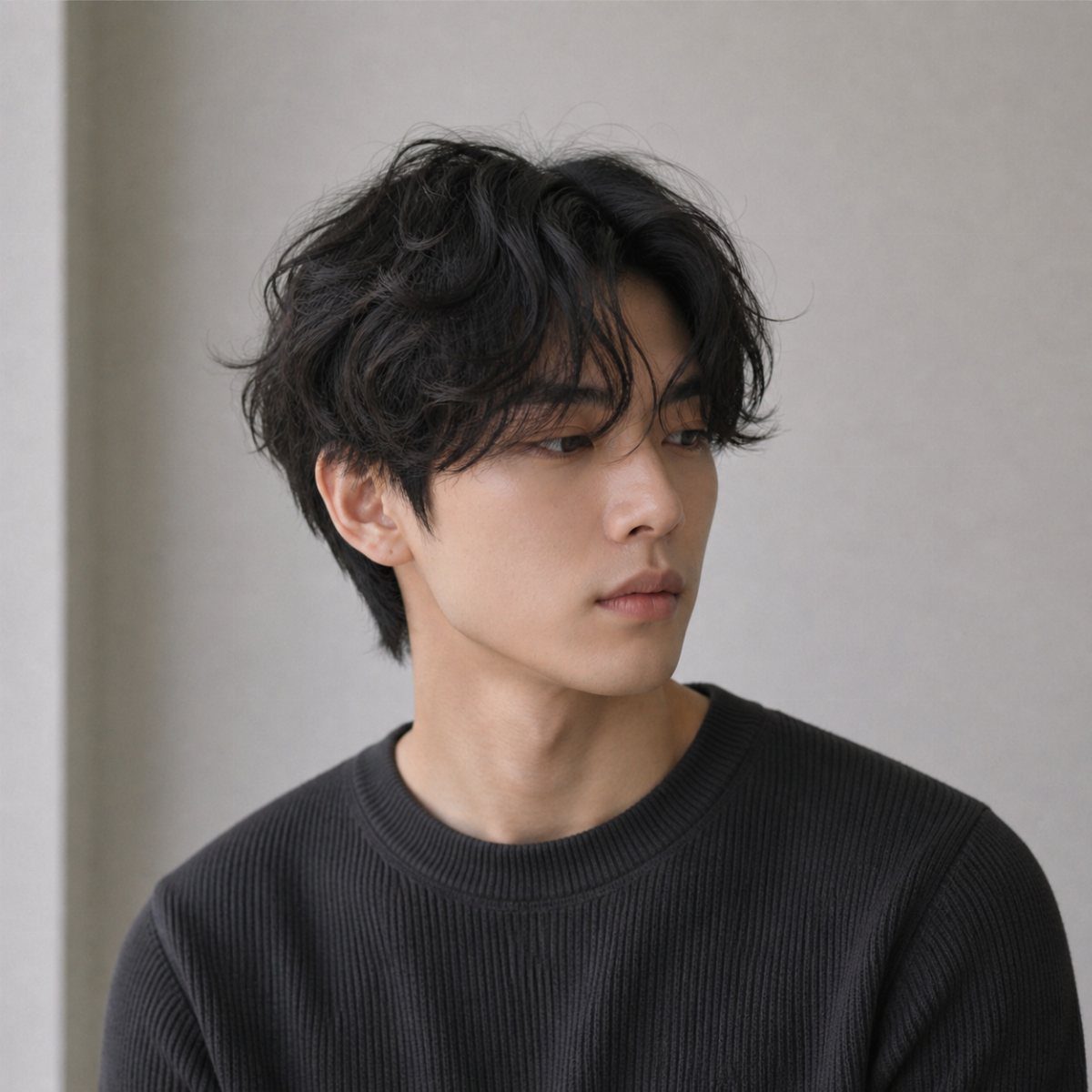
A perm adds loose, natural-looking waves to straight or fine hair, giving it body and movement without heat styling. The waves sit soft rather than tight, and they last several months before growing out or loosening.
Hair is wrapped around rods and treated with a solution that resets the hair’s structure into a wave pattern. The process takes a few hours at a salon, and the result is hair that dries with shape already built in.
Fine hair gains volume from the wave, and thick straight hair gets texture it wouldn’t have otherwise.
26. Broccoli Haircut
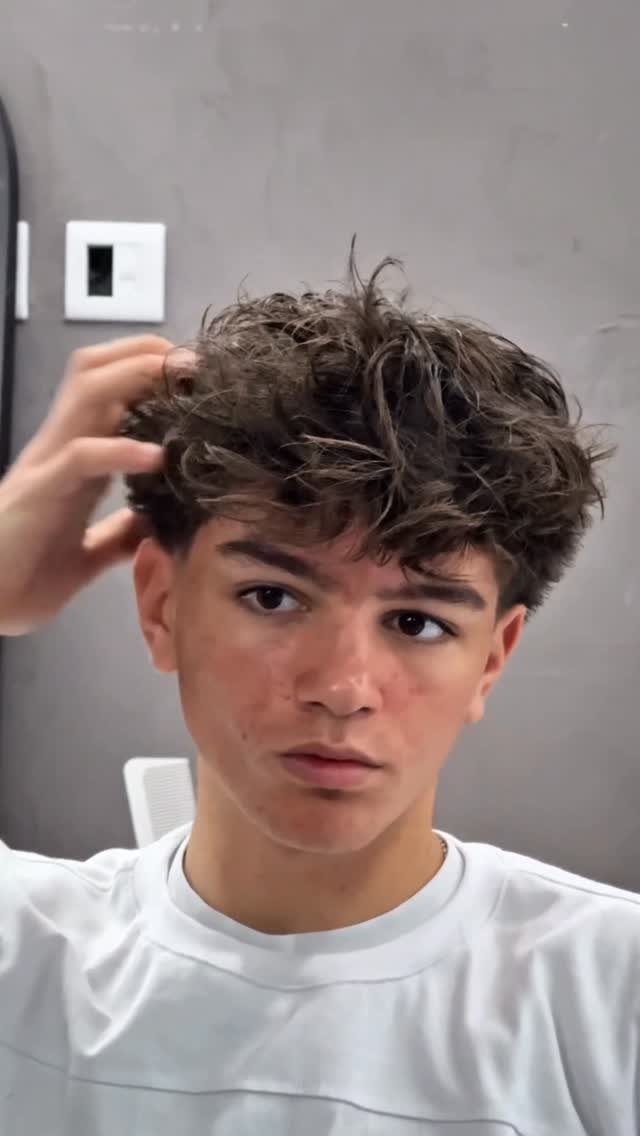
Curls spring up and out on top while the sides fade down to skin or near it, creating a rounded silhouette that sits high above a clean perimeter.
The shape depends on the curls holding volume, so this cut works best on naturally curly or tightly coiled hair.
The fade keeps the sides from adding width, and the curls on top form a dense, rounded crown. Style with a curl cream or leave-in to define the curls and keep them separated rather than matted together.
The fade needs frequent touch-ups to stay sharp.
27. Disconnected Undercut
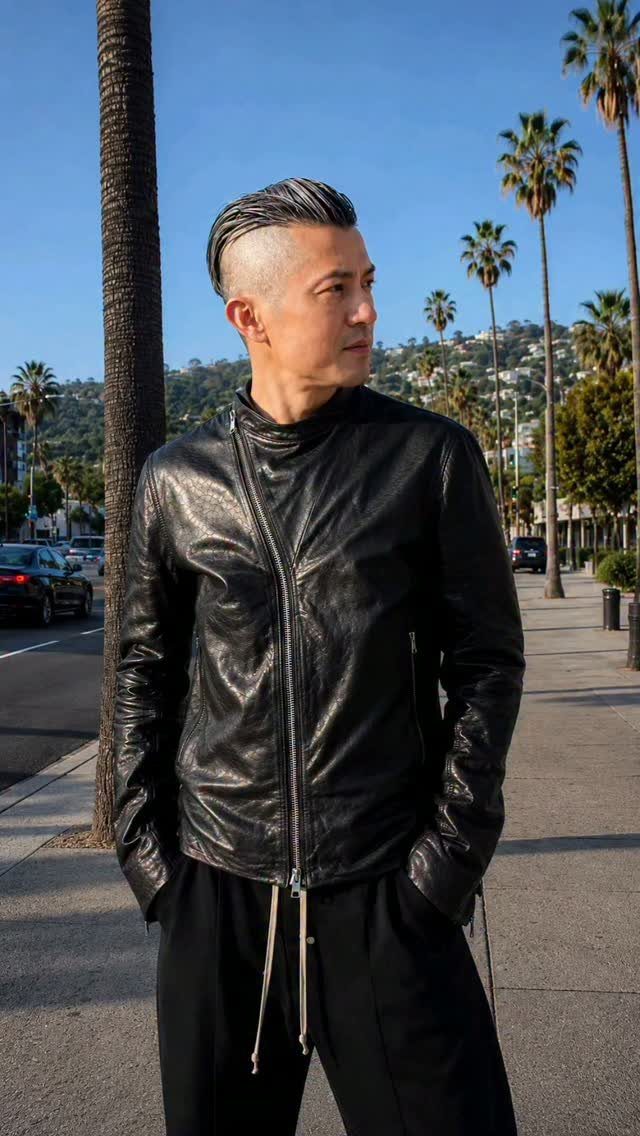
The sides are buzzed or shaved very short, and the top is left medium length with no gradual blend between them. The contrast is abrupt, and that sharp line is the point.
This cut creates a strong division between the top and sides, which makes the longer hair on top the focus. It works on straight, wavy, or curly hair, and the top can be styled several ways or left natural.
The disconnect means the cut grows out less evenly than a fade, so plan on maintaining that line or letting it soften over time.
28. Medium Scissor Cut
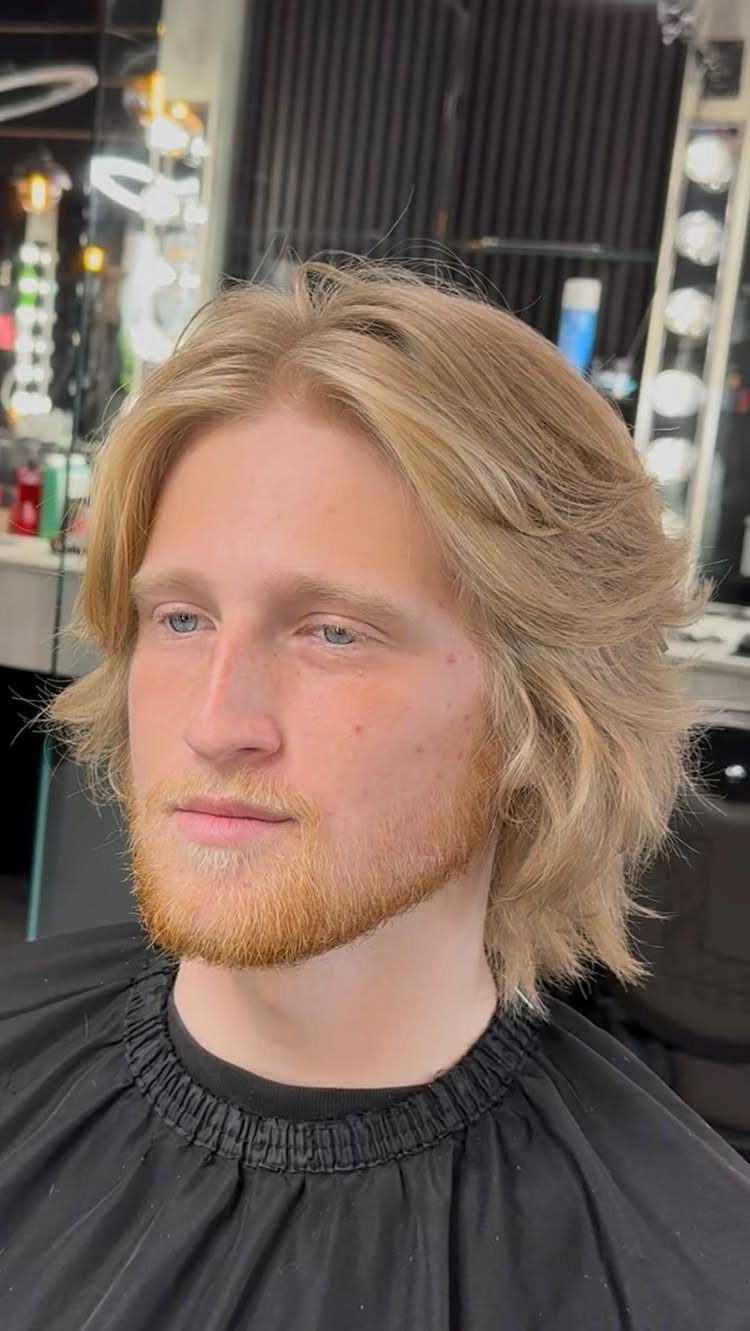
Scissors shape the entire cut without clippers, and layers are cut into the hair to soften the edges and add movement. The result is a more natural, blended look than a clipper-over-comb cut or a style with shaved sides.
Scissor cuts give the stylist more control over texture and length, and they grow out with softer lines. This cut works well on wavy or straight hair and suits someone who wants a medium-length style without a fade or undercut.
Ask for light layering if you want subtle shape, or heavier layers if the hair is thick and needs thinning.
29. Medium-Length Hair Twists
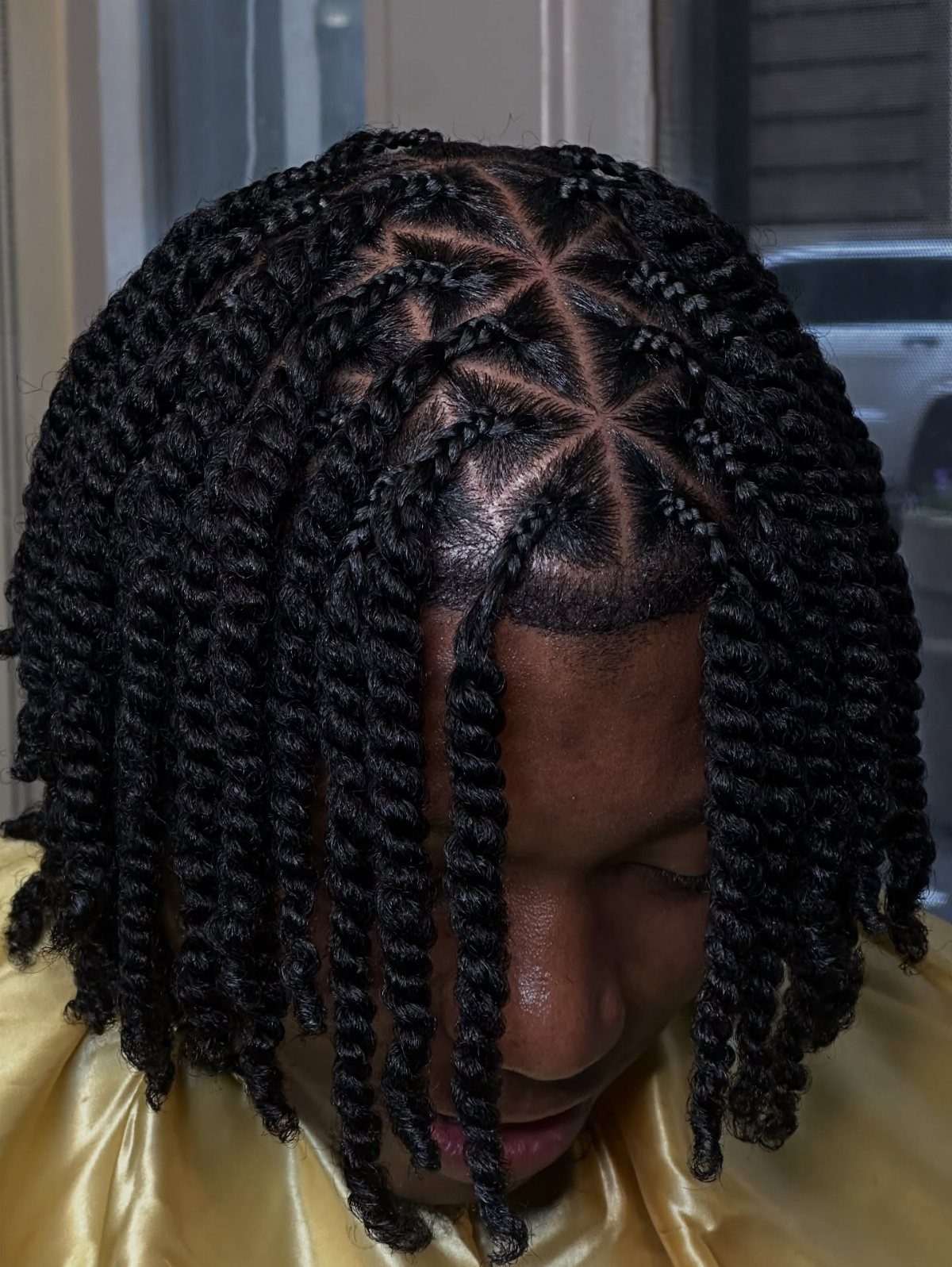
Each section of hair is twisted from root to end, forming individual coils that hold their shape for days or weeks. The twists can be left loose or pinned up, and they protect the hair from daily styling.
Twists work best on coarser, textured hair and take an hour or more to install depending on how many sections you divide the hair into.
Apply a leave-in or twisting cream to each section before twisting to keep the hair moisturized and help the twist hold.
Take them out before the roots start to mat or loosen.
30. Twisted Space Buns
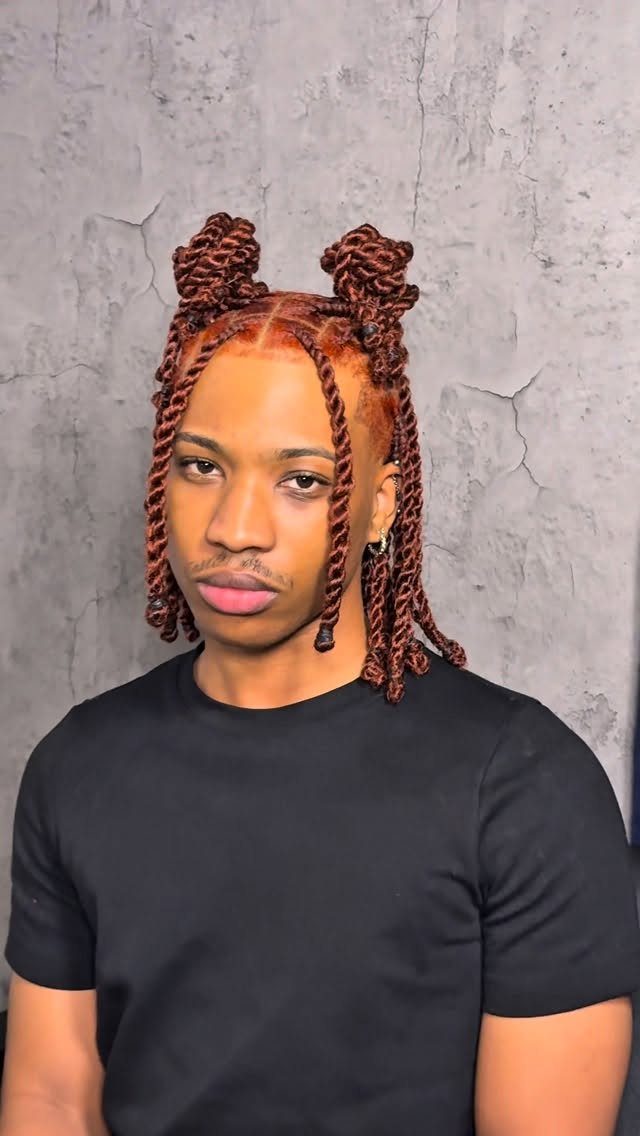
Hair is twisted into sections and gathered into 2 small buns on top of the head, with some twists left loose around the face and sides. The buns sit high and create a playful, asymmetric silhouette.
This style works on medium-length hair that’s already twisted or coiled, and it takes a few minutes to tie up once the twists are in. Use fabric-covered elastics to secure the buns without snagging the hair.
The loose twists frame the face and soften the look, and the buns can be adjusted for size depending on how much hair you gather into each one.
31. Medium Slick Back
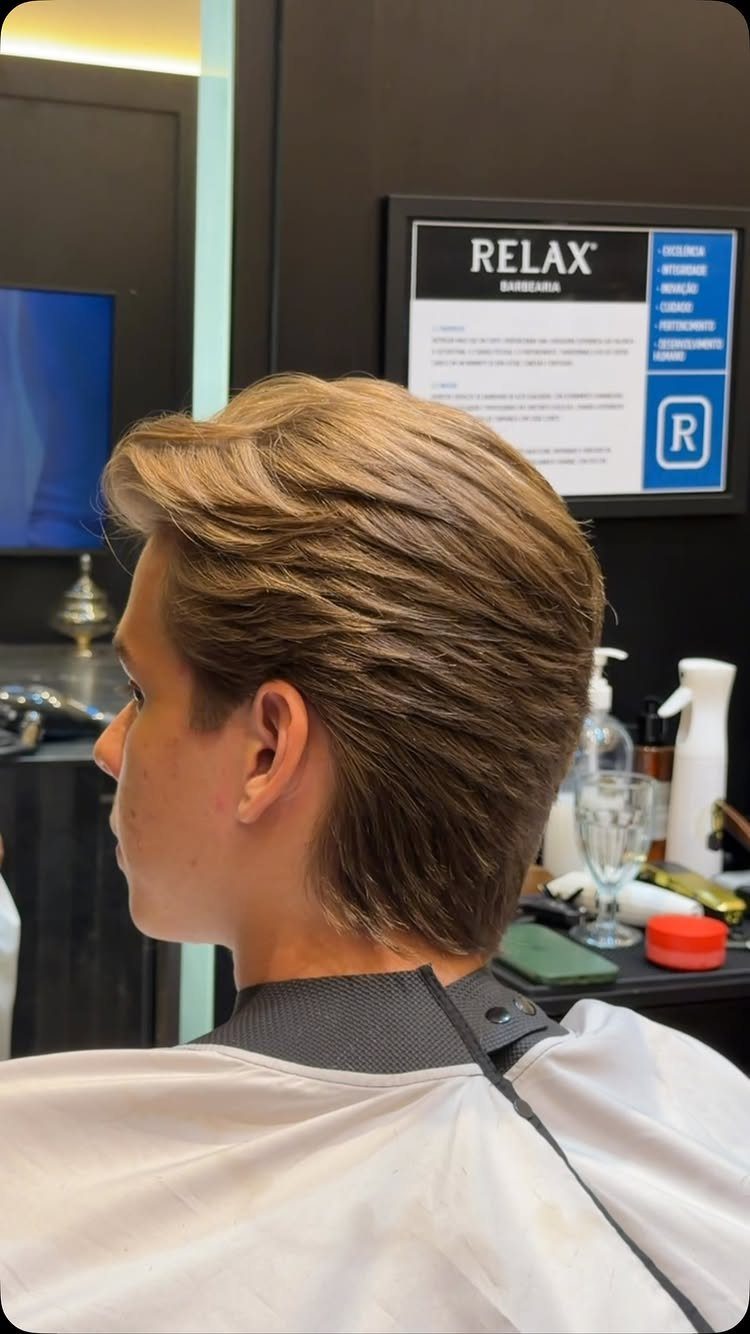
You’re brushing everything back off the forehead and fixing it there with pomade or gel, enough hold to keep it in place without turning it into a helmet.
The style works on straight or slightly wavy hair that’s long enough to stay back without falling forward.
A firmer hold keeps it in place all day; a lighter product lets some texture show through.
32. Medium Hair with High Fade
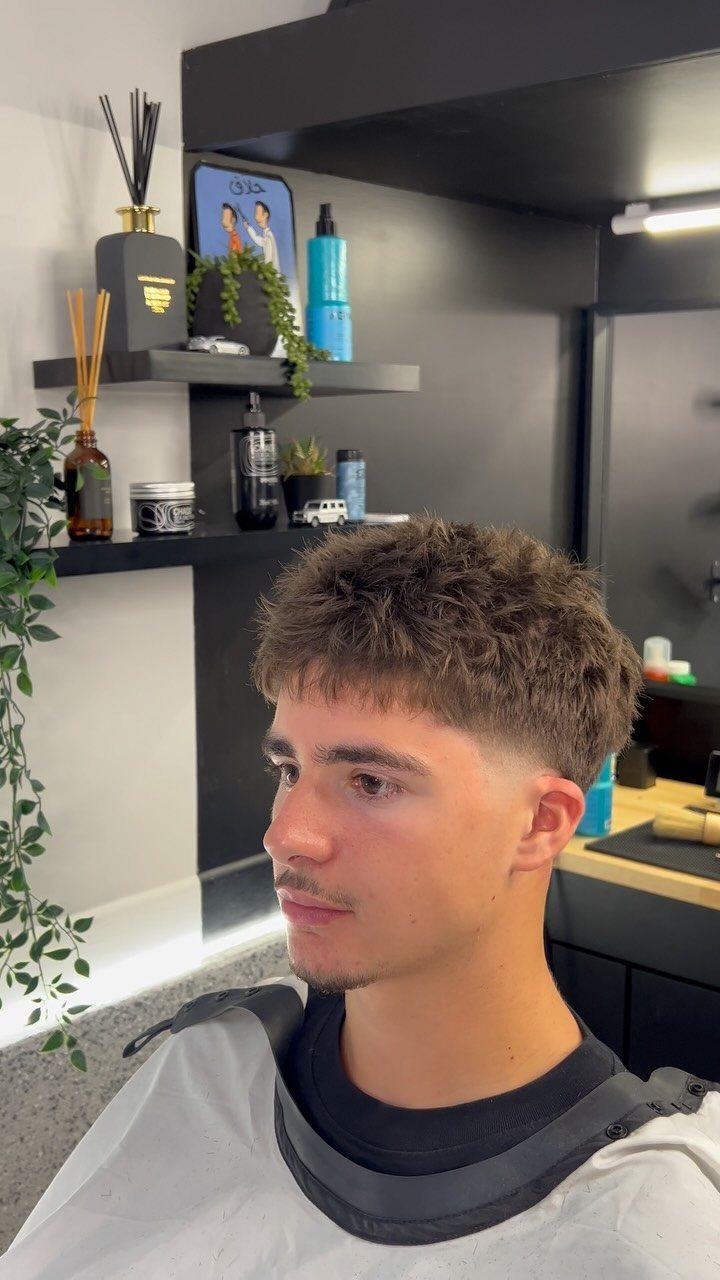
Length stays on top with visible texture, and the sides fade high up the head before blending into the longer hair.
The high start point creates a sharp contrast and keeps the sides very short while the top holds enough length to style several ways.
A matte paste or cream keeps the texture separated without shine.
Trim Intervals and Grow-out
If you’re growing your hair out from a shorter cut, plan on trims every 2 to 3 months. Ask your barber to reshape and clean up the perimeter instead of cutting length off the top.
Push through them. Most guys quit here, but the length on the other side is worth it.
Choosing by Hair and Face Shape
Texture sets the ceiling.
Square and oval faces handle almost anything.
Be honest about effort.
Some of these cuts look their best straight out of a 5-minute routine. Match the cut to the time you’ll actually spend on it.
Washing and Styling Routine
Wash 2 or 3 times a week, not daily. Condition every time you shampoo to keep it manageable.
Apply hold products to damp hair so they distribute evenly and lock in as it dries.
Air-dry curls and waves when you can.
Frequently Asked Questions
What is a medium-length hairstyle for men?
A length that falls somewhere between the ears and shoulders, giving you enough hair to add volume and texture while still being short enough to control and style.
It moves naturally and lets you choose between structured cuts like a pompadour or comb over and looser styles like bro flow or surfer hair.
The length works on most hair types and fits daily wear without needing the commitment or maintenance of long hair.
How to style men’s medium length messy hairstyles?
Work a reasonably strong styling product into towel-dried hair and let it settle where it lands, scrunching lightly if you have waves or curls.
Sea salt spray adds texture without stiffness, and a matte clay or cream holds the shape without making it look slick.
Choppy layers cut into the length keep the volume from flattening out, and skipping the comb lets the hair stay separated and textured instead of uniform.
How often should you shampoo medium length hair?
Washing every other day or every third day suits most guys with average oil production, though your mileage depends on scalp type and hair thickness.
When your hair starts to feel heavy or your scalp itches earlier, wash it then instead.
Some cuts trap more product than others, and buildup means you’ll wash more often or deal with hair that feels coated and a scalp that never quite feels fresh.