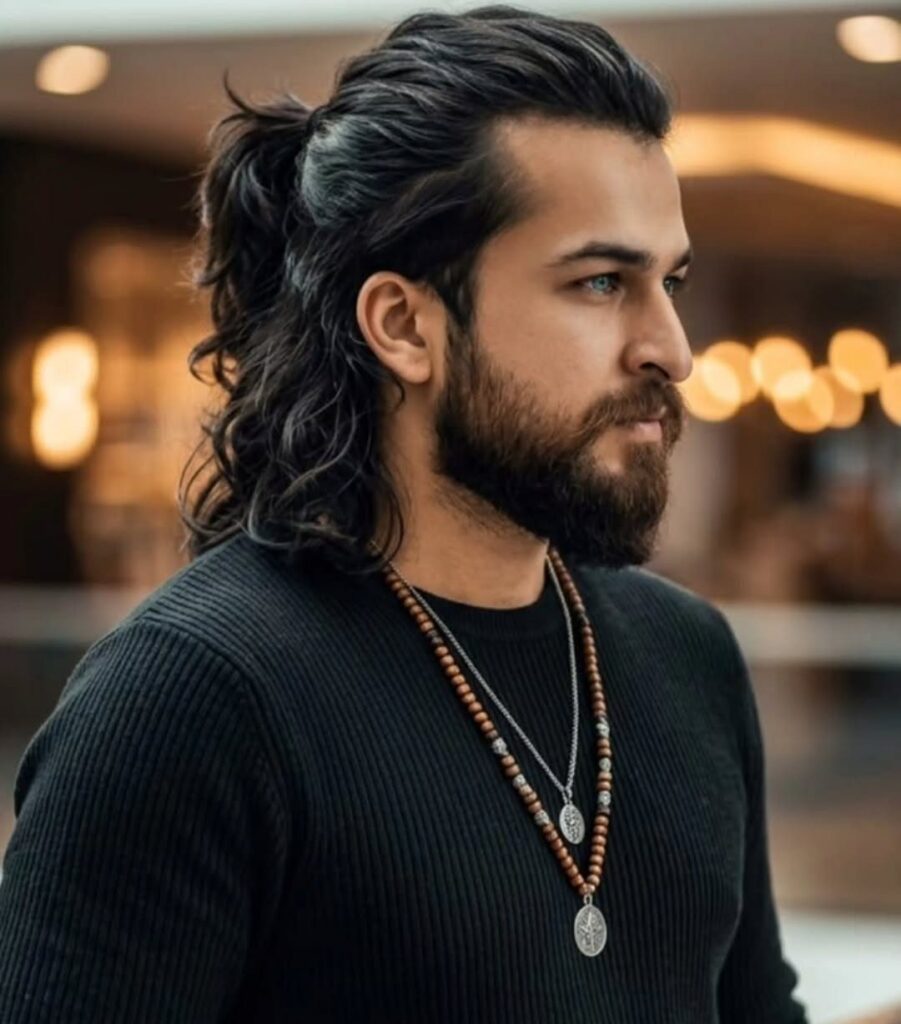
Long hair for men ranges from a man bun that takes seconds to twist up to dreadlocks or braids that need regular maintenance, and the choice comes down to how much time you’ll spend on it each morning and how often you’re willing to sit for a trim.
1. Man Bun
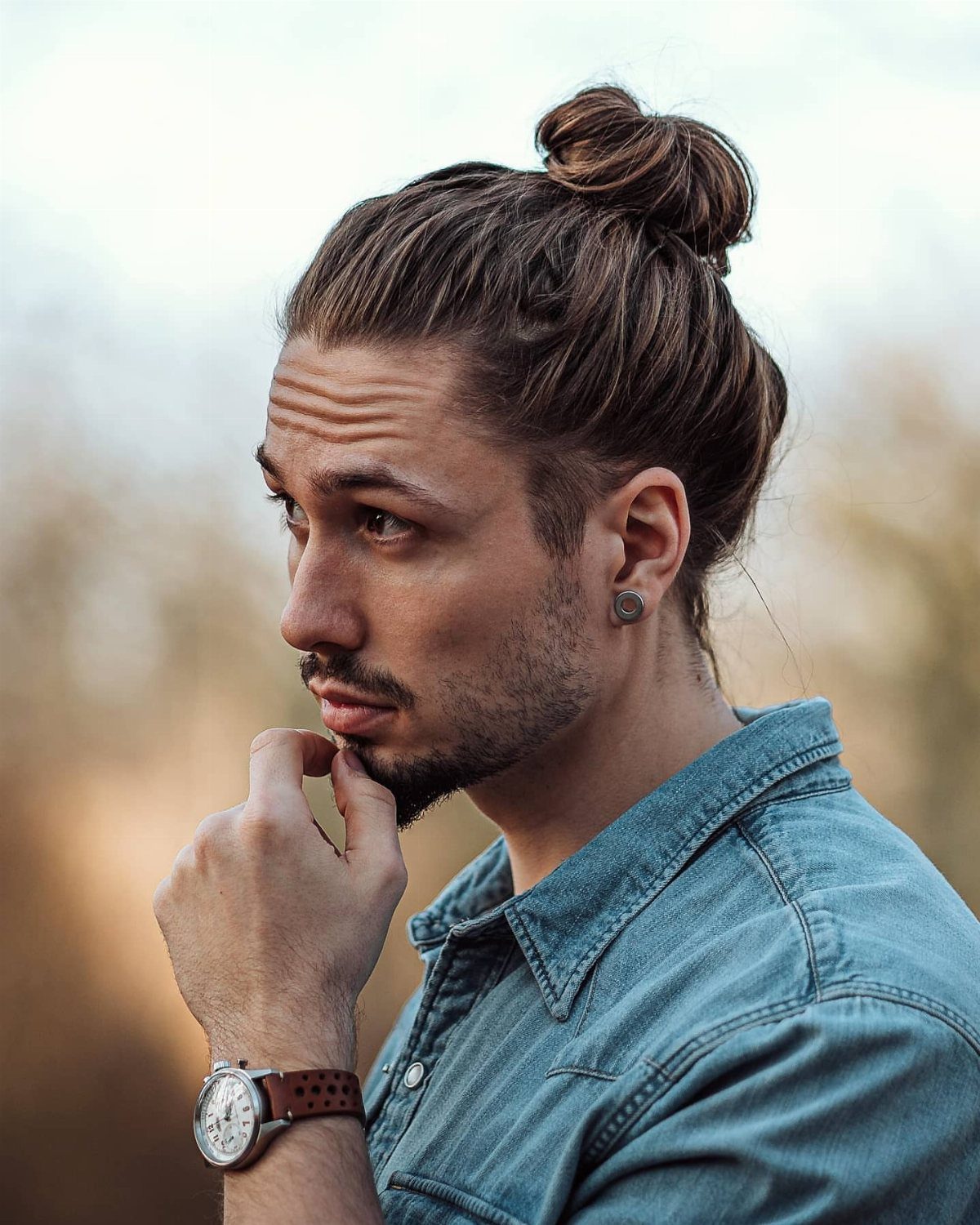
Hair that reaches the crown can coil into a bun and stay up without pins or ties if the texture has any grip, and a quick twist gets it off your neck fast.
Position changes the look: high reads athletic, low leans formal, and mid-height sits neutral enough for most settings.
A barber visit keeps the ends even, though plenty of guys stretch that longer if the texture hides splitting. Daily styling time is whatever it takes to gather and twist, usually less than brushing short hair into shape.
2. Long Slick Back
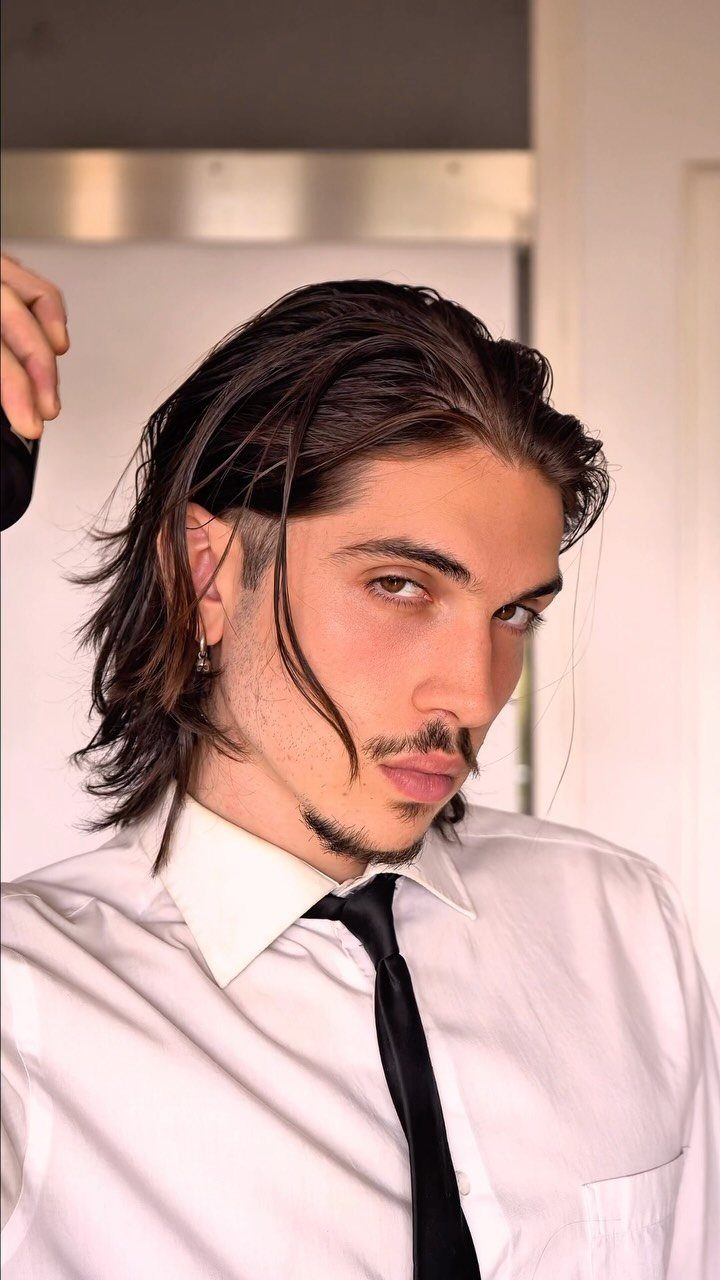
Combing or brushing length straight back from the hairline gives a finished look that works for anything formal without cutting the hair short.
A dime-sized dab of pomade or gel keeps it in place through the day, and reapplication after lunch handles any loosening.
Hair needs to be at least shoulder length to stay back without falling forward. Drying it back after a shower sets the direction before product goes in, which cuts down on the amount needed and keeps it from looking stiff.
3. Side Part
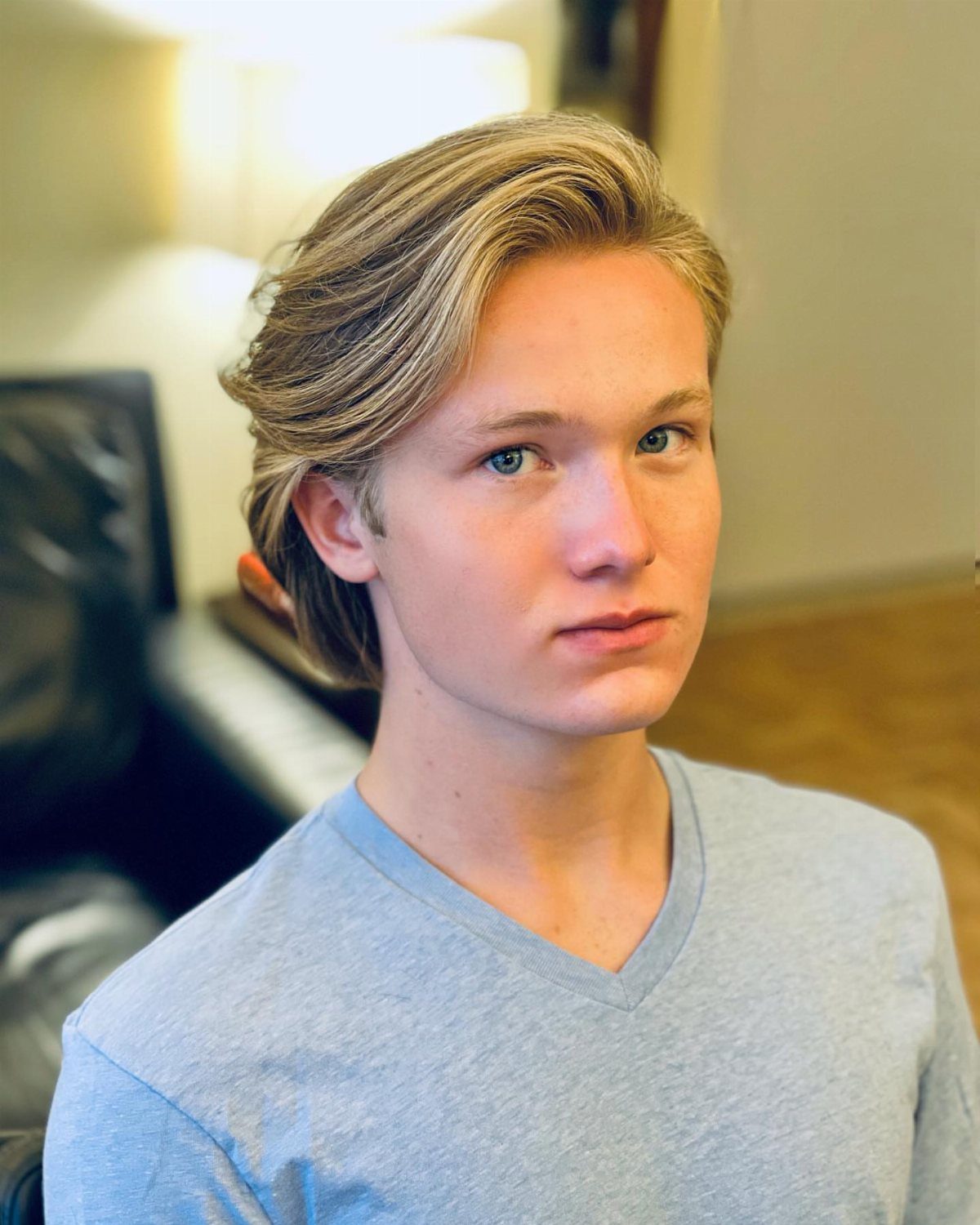
A side part on long hair puts the weight to one side and keeps the front section from falling across both eyes.
Combing it in while the hair is damp locks the line, and a pass of light cream or paste holds it through the day without looking set.
Hair shorter than chin length tends to flip out at the ends when parted, so this reads cleanest once the hair reaches the shoulders.
Styling time is under a minute once the part is established, and it stays neat between cuts.
4. Half-Up Bun
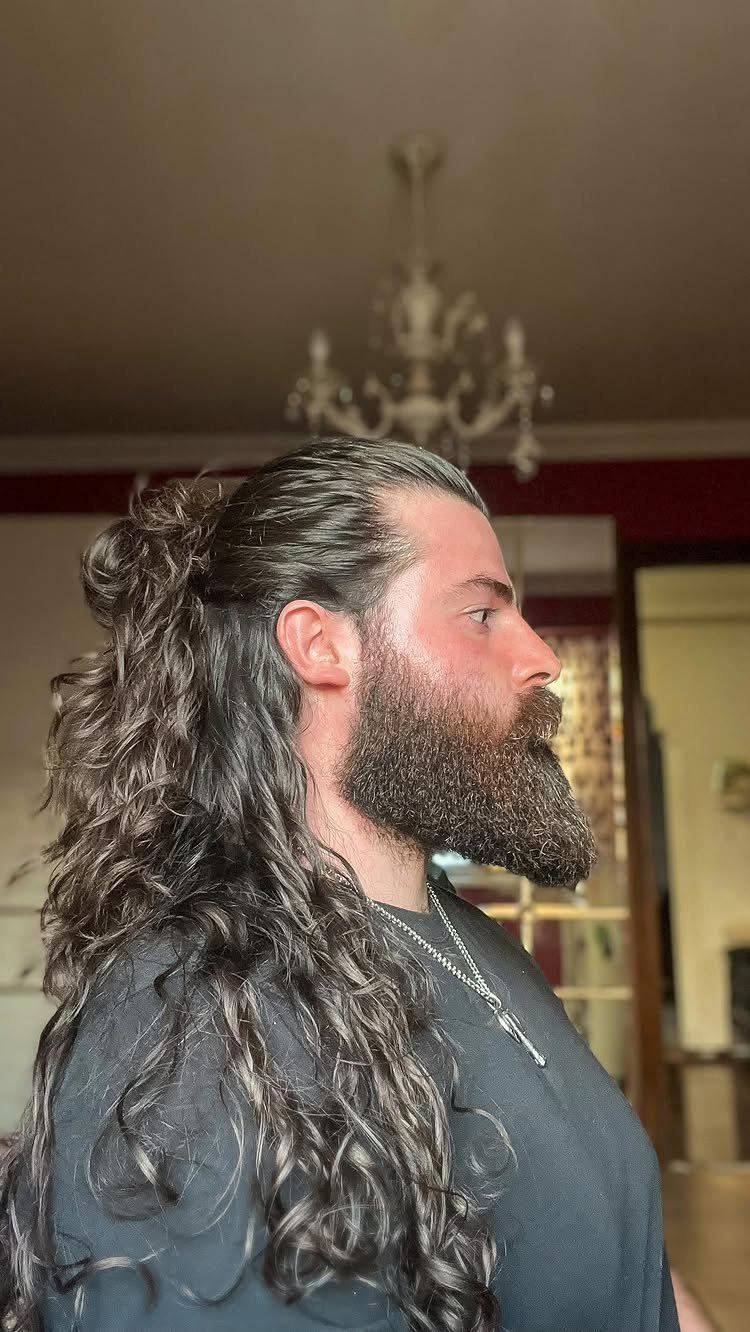
Tying the top section back while leaving the rest loose keeps hair off the face and gives you the option to pull more up later.
One tie secures it, and the bun sits wherever feels balanced, usually mid-crown or slightly higher.
Curly or wavy texture grips itself better than straight hair, which can slide loose by midday if the strands are fine.
Styling is quick, and letting the loose section air-dry after a shower keeps the texture intact. A barber can add light layers to the bottom half to prevent the loose hair from hanging flat.
5. Long Curly Hair
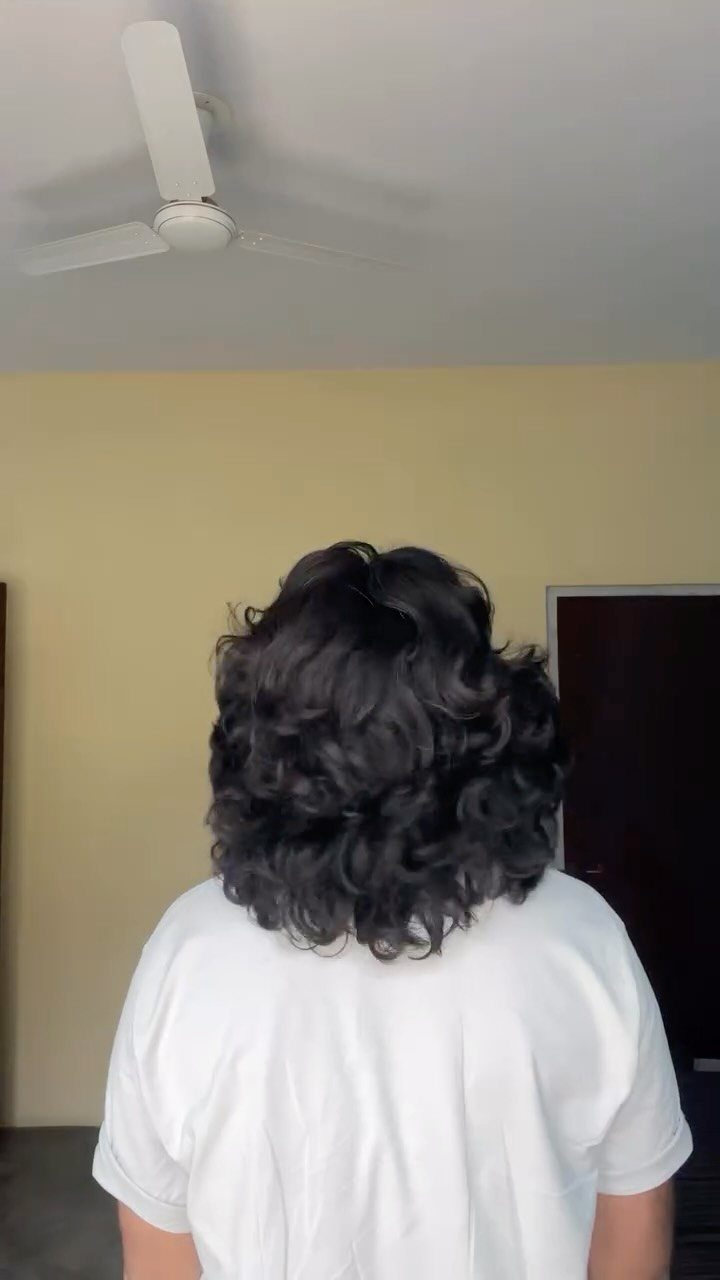
Natural curl patterns stay defined when the hair is long enough for the weight to pull them into shape rather than springing out in all directions.
A leave-in conditioner or curl cream applied to damp hair keeps the curls separated and reduces frizz, and air-drying lets the texture form on its own.
Trimming prevents the ends from knotting, though some curl types can stretch that longer. Morning styling is minimal if the hair dries overnight, and a light mist of water in the morning reactivates the product without needing to start over.
6. Long Layered Hair
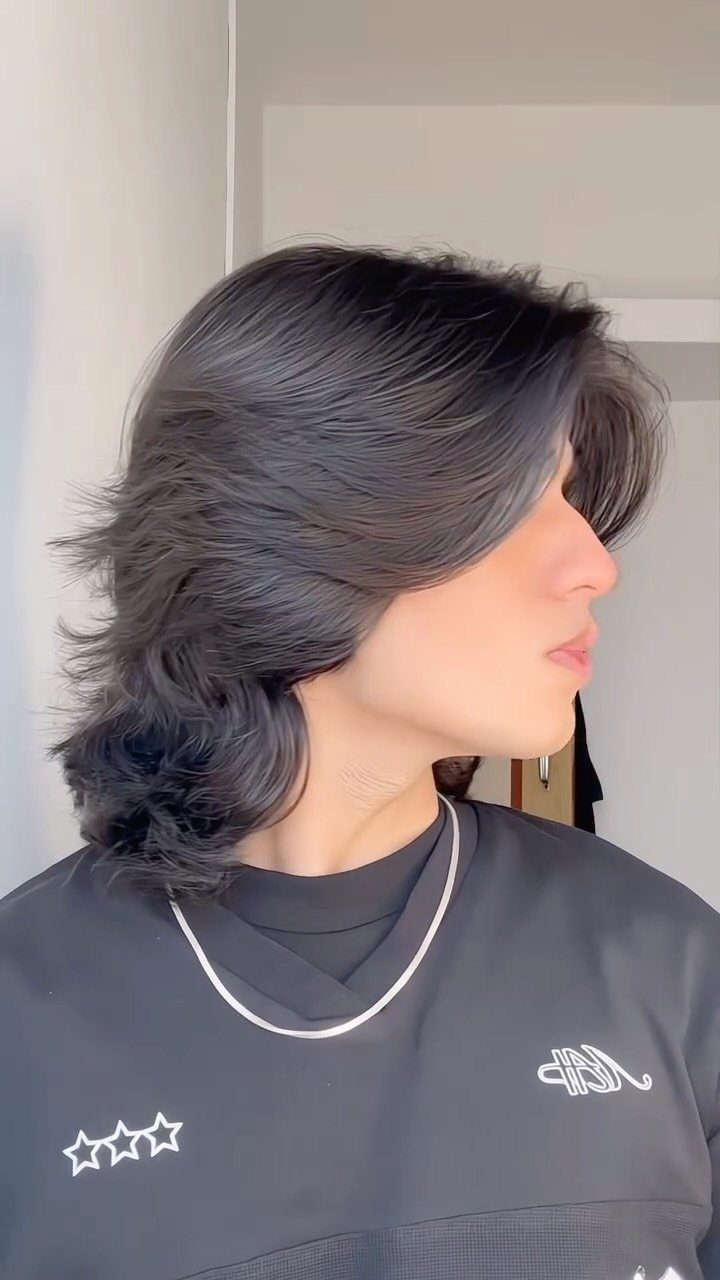
Layers cut through the length remove weight and let the ends move instead of hanging in one block.
A barber cuts them at different lengths to stack the weight, and the difference shows most when the hair is air-dried or blown with any movement.
Styling time depends on whether the hair is left natural or blown straight, but layers speed up drying either way since the air reaches more surface area.
7. Long Wavy Hair
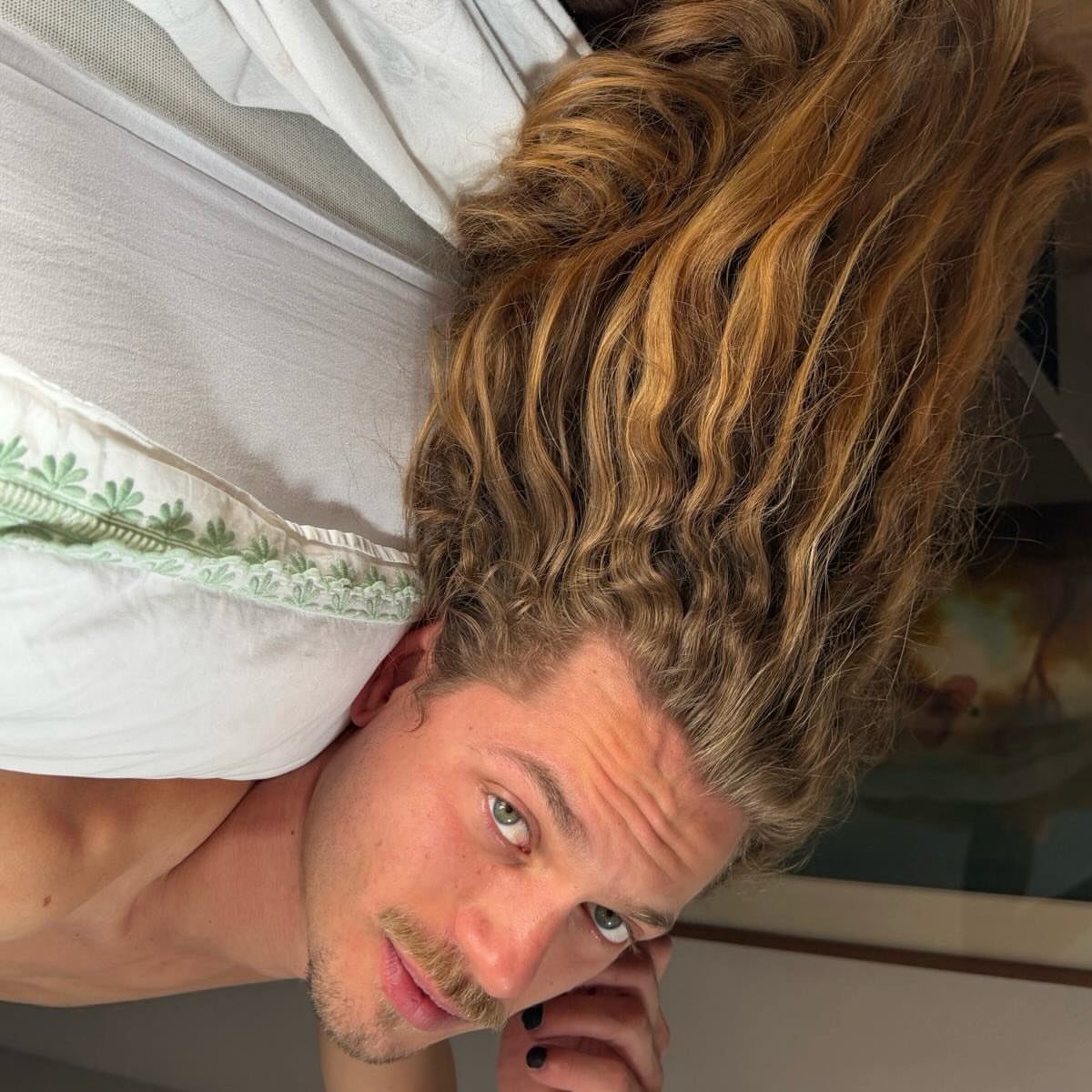
Waves add volume and movement without needing much intervention if the texture is there already.
Scrunching a mousse or sea salt spray into damp hair and letting it air-dry brings out the natural pattern, and finger-combing afterward softens any clumps that dried too tight.
Straight hair holds a wave if it’s curled in sections with a flat iron, though that adds time to the morning. Either way, the length keeps waves from looking juvenile the way shorter wavy styles sometimes do.
8. Long Ponytail
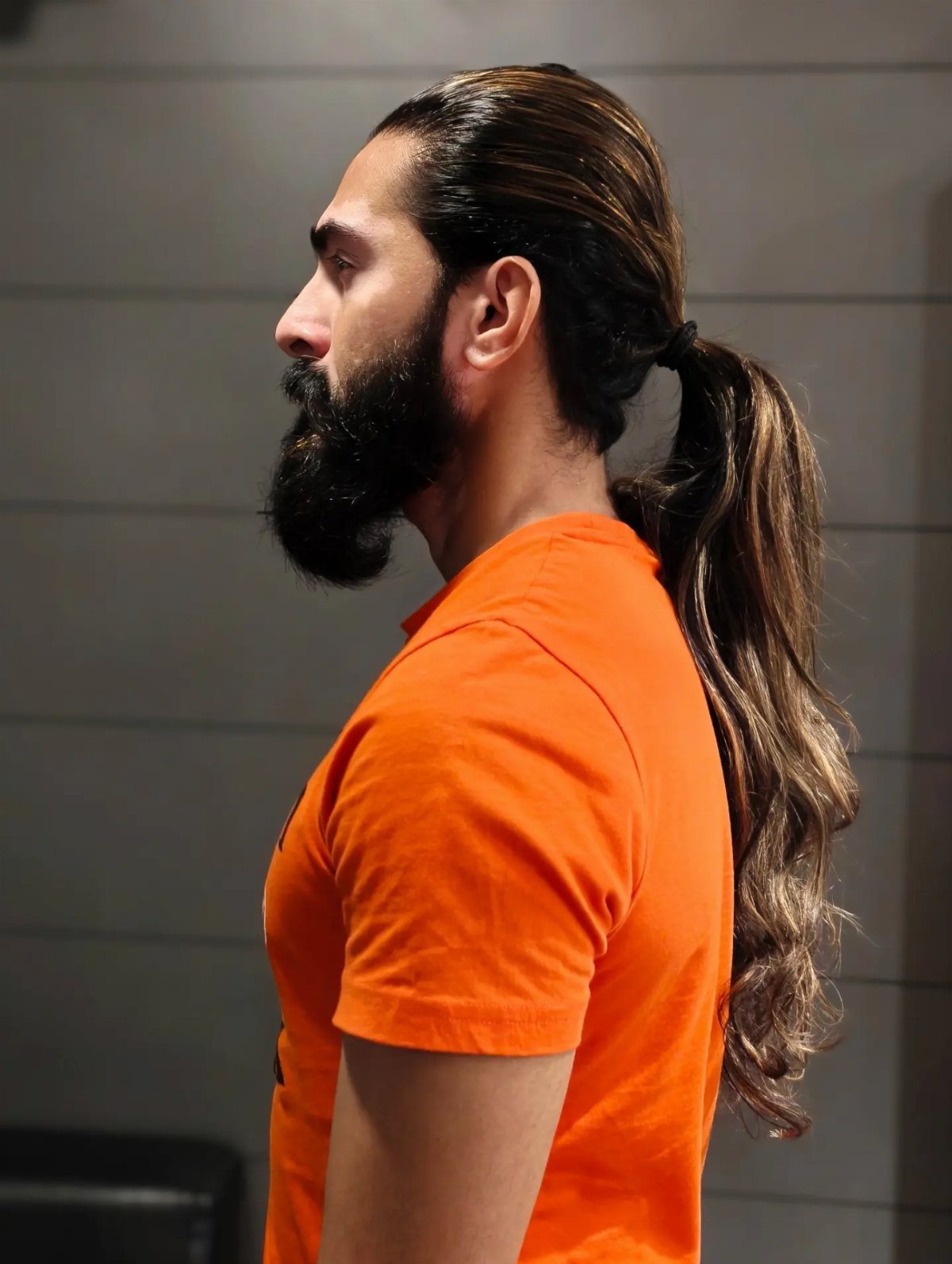
One tie secures all of it, and placement changes the formality. Low at the nape looks deliberate and works for anything that requires a finished appearance, while mid-height and high both lean casual.
Fine hair benefits from a light spray before tying to add grip and prevent the elastic from sliding down.
9. Long Shag
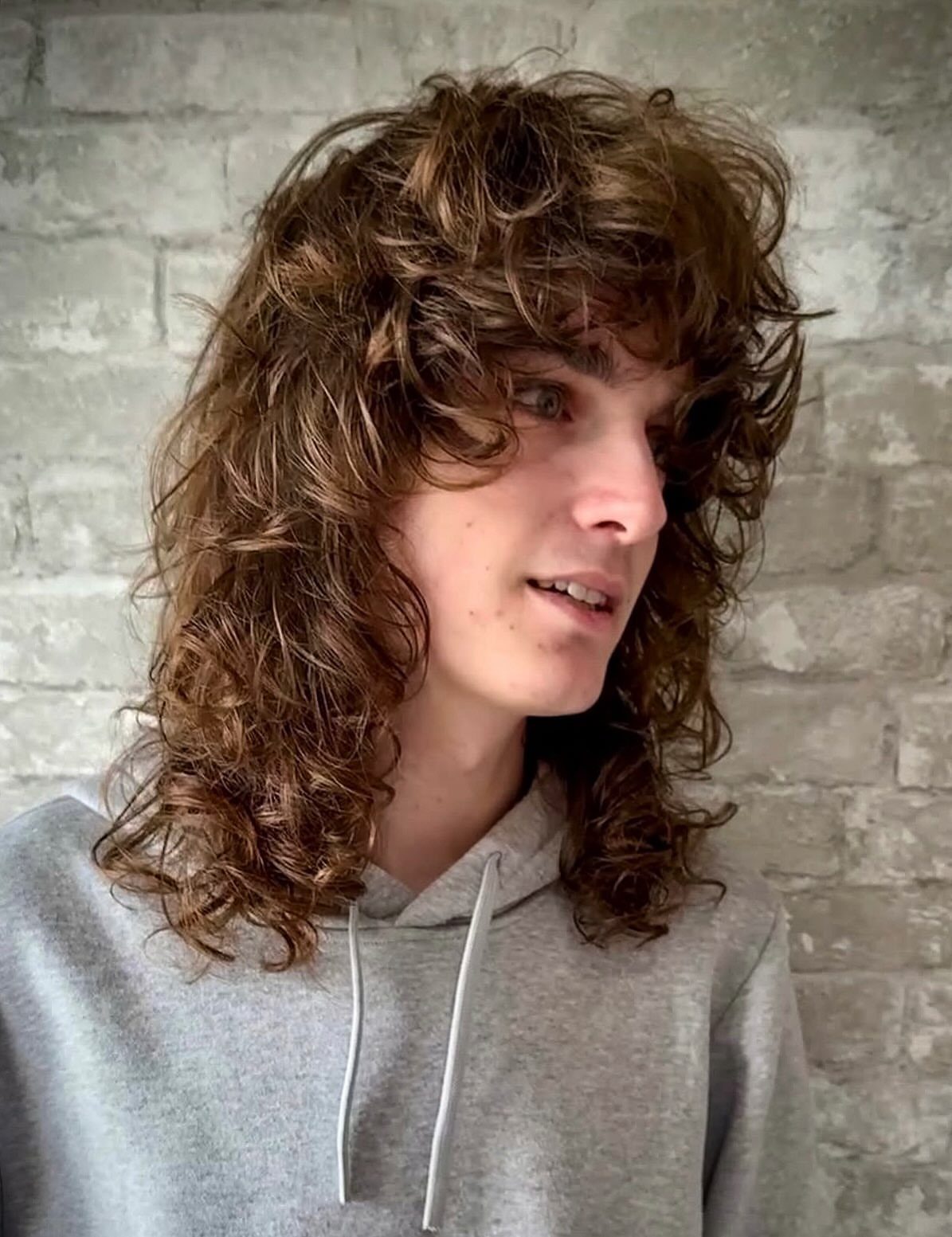
Choppy layers at different lengths give the hair a lived-in texture and keep it from sitting flat.
A barber cuts them unevenly on purpose, sometimes shorter around the face and longer in back, and the result looks best when the hair is left to dry naturally rather than brushed into uniformity.
Styling is minimal if the cut does the work.
Running a small amount of texturizing paste through the ends separates the layers and adds definition, and the fringe option keeps hair out of the eyes without needing to tie anything back.
Instead of cutting your strands straight across, your stylist will lift your hair straight from the scalp and snip it at an angle. The result is a look long at the top but tapered near the neck, like a ’90s movie star.
— Hair.com
10. Long Undercut
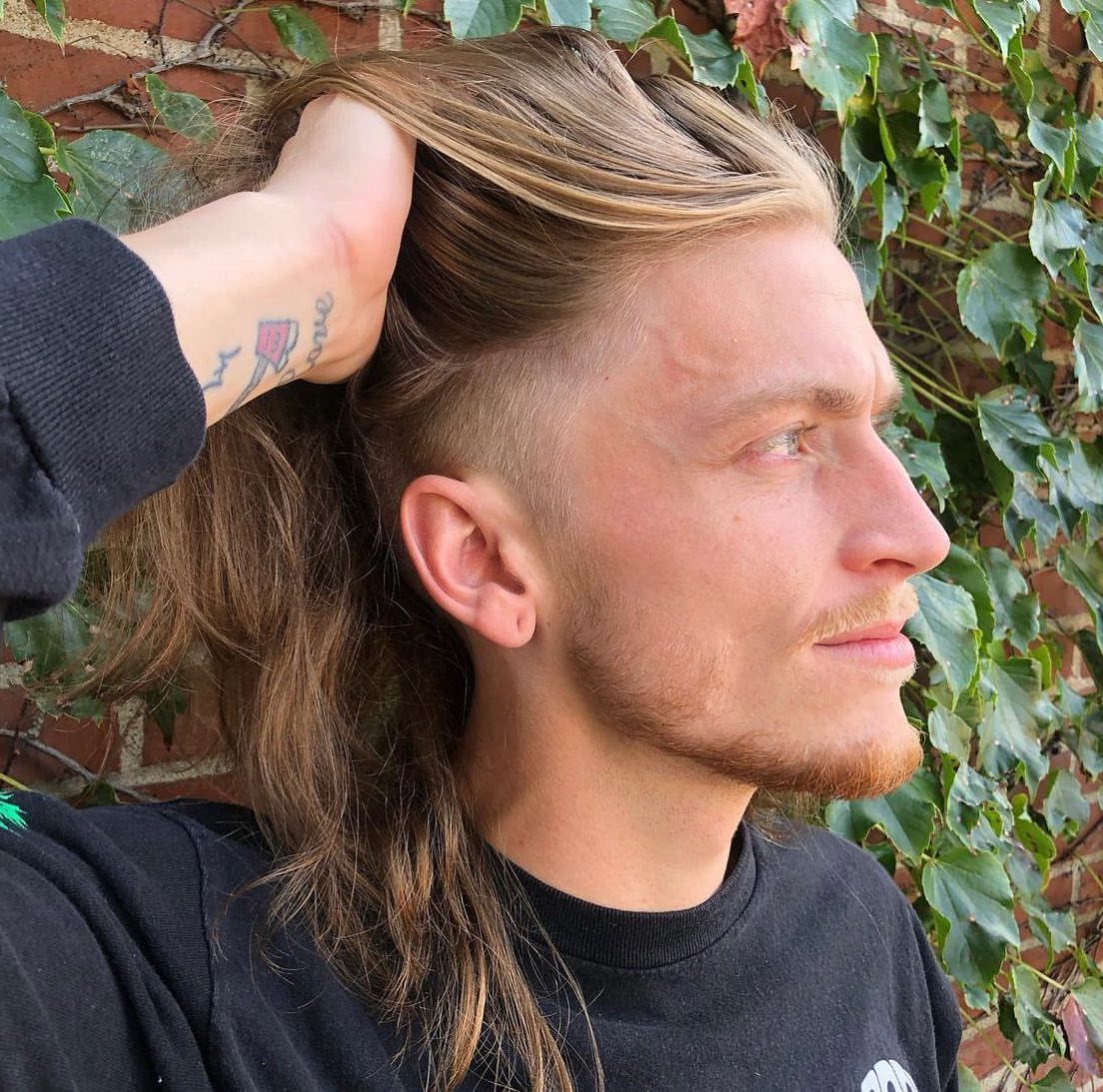
Shaving the sides short or taking them down to skin makes the top length stand out instead of blending in, and the contrast reads sharper the longer the top grows.
A barber trims the undercut regularly to keep the line clean, while the top can stretch months between cuts.
The long section can be worn down, tied back, or slicked over to one side depending on the day. Drying time is cut in half compared to hair that’s long all over, and the shorter sides stay cooler in summer.
11. Men’s Braids
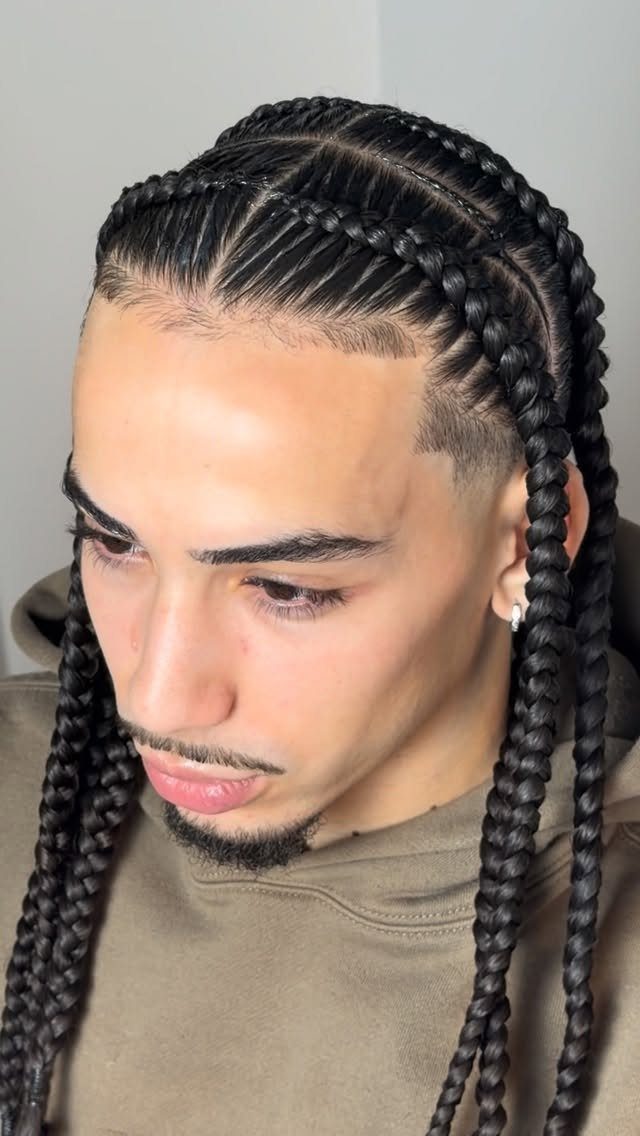
Braids hold hair in place for days at a time and remove the need to style it every morning.
Cornrows sit close to the scalp and last with proper care, while loose braids or a single braid down the back take minutes to redo and work on most textures.
A barber or braider can set up cornrows, or you can learn to braid the hair yourself if the pattern is simple.
Washing happens less often than with loose hair since the braids stay intact, and a light oil on the scalp prevents dryness.
12. Long Mullet
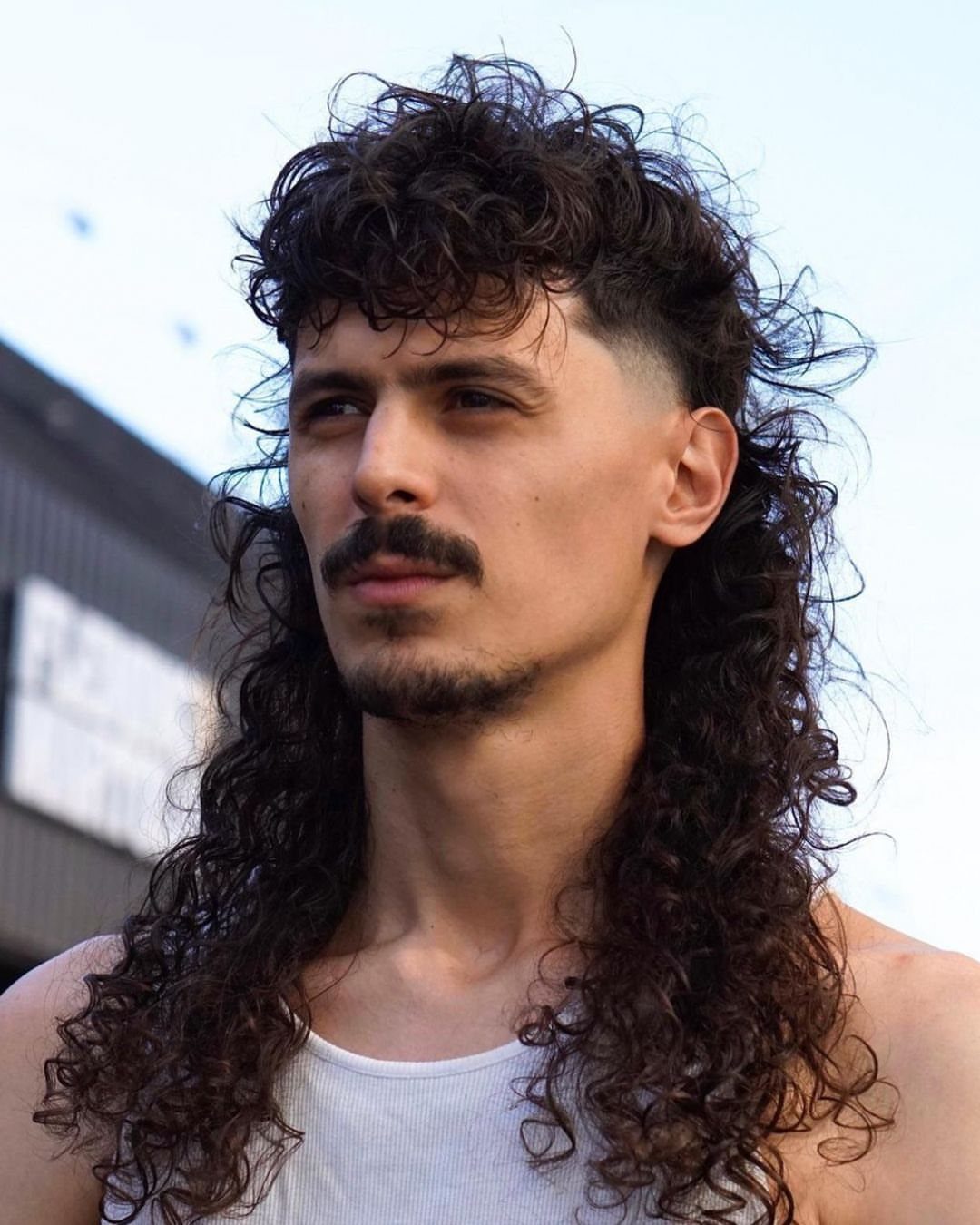
Keeping the sides and top shorter while letting the back grow past the collar brings back the mullet silhouette, and it works best when the hair has enough texture to keep the back from hanging limp.
A barber cuts the sides to whatever length suits the face, usually faded or kept short, while the back can reach the shoulders or stop just below the neckline.
Styling the top with a matte paste or clay keeps it lifted and separate from the length behind it. The cut grows out distinctly, so plan on trimming the sides regularly if you want the shape to hold.
13. Long Hair with Bangs
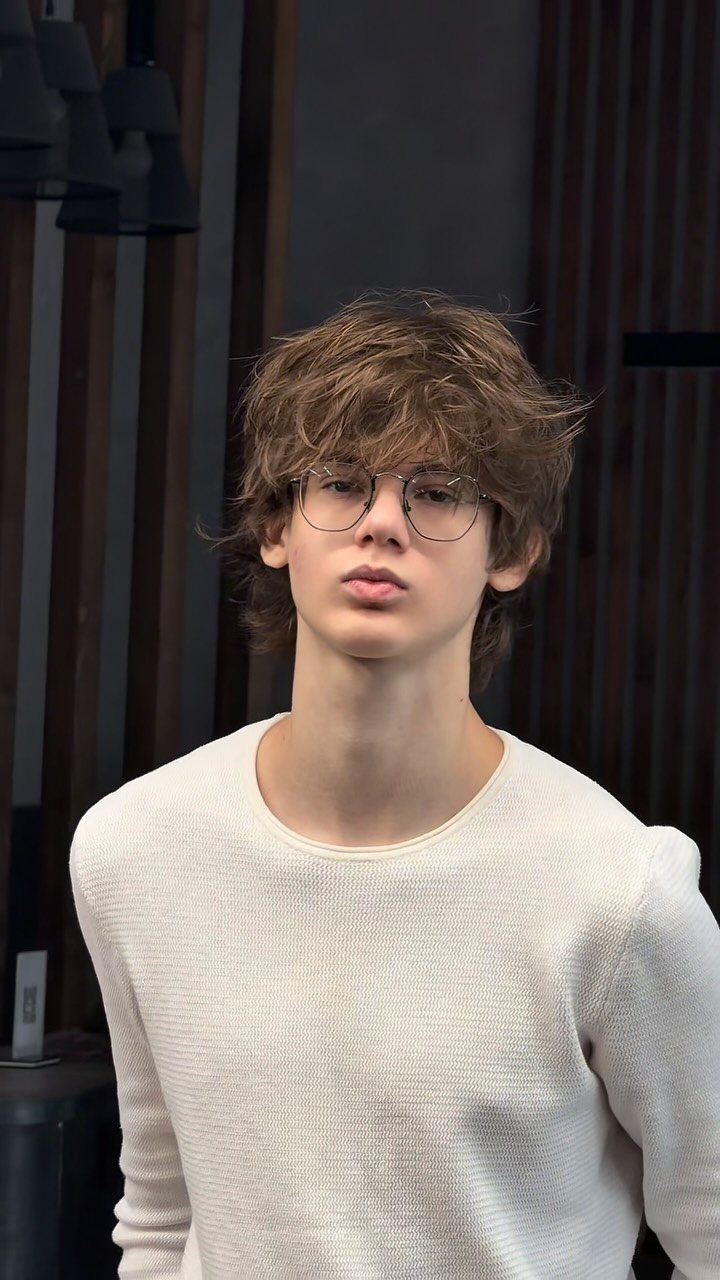
Cutting a fringe that ends above the eyebrows or just below them keeps the forehead covered while the rest of the hair grows long, and the fringe stays in place without pinning or tying anything back.
Styling takes a minute if the fringe is blown dry in the direction it sits, and a light pomade or cream smooths any pieces that dried unevenly. Straight or slightly wavy hair holds the shape cleanest.
14. Side-and-Back Swept Mane
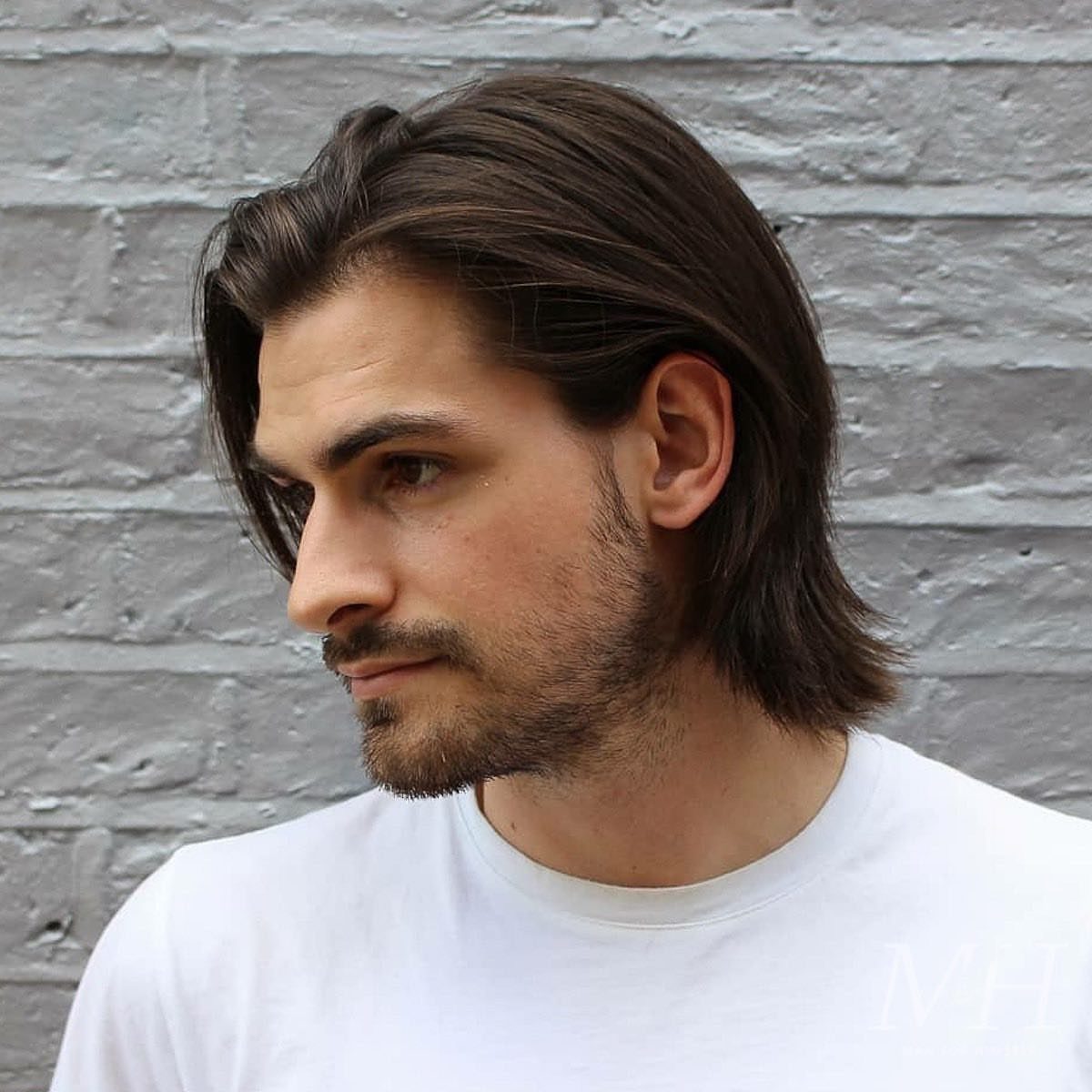
Pushing thick hair back with the fingers while it’s damp sets the direction, and a side part gives it structure without needing a comb.
A light paste or cream worked through the lengths holds the sweep in place and keeps the hair from falling forward, and the texture shows through instead of getting slicked down flat.
This works best on hair that’s at least shoulder length, since shorter hair tends to flip out at the ends instead of following the sweep.
Drying it partway with a towel before styling adds grip and cuts down on the amount of product needed.
15. Bedhead Long Hair
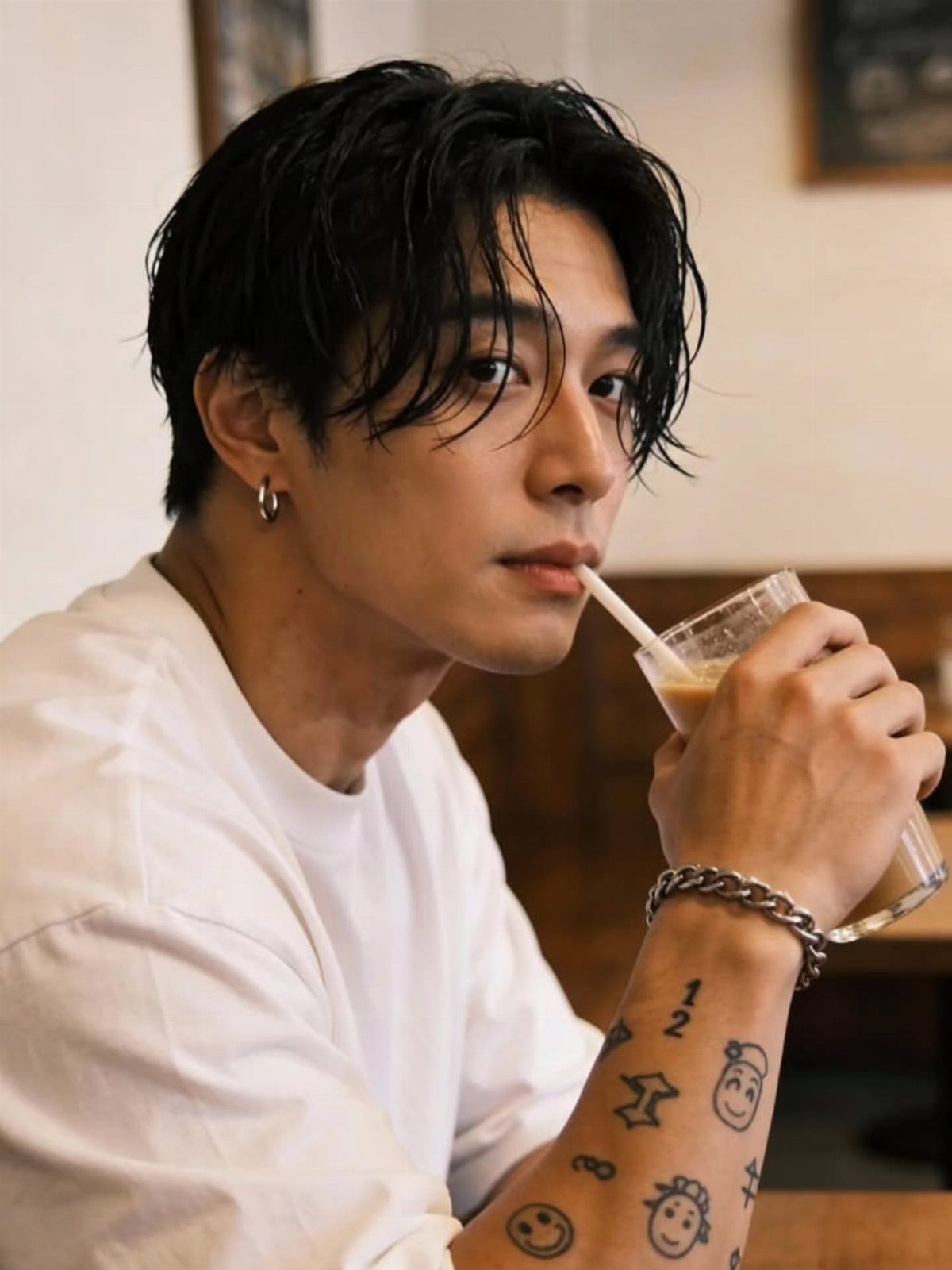
Letting long hair dry without brushing or styling it keeps the natural texture and any bends or waves that form overnight, and the result looks intentionally undone rather than accidental if the hair is clean and the ends are trimmed.
A small amount of sea salt spray or texturizing cream scrunched into damp hair exaggerates the messiness, and air-drying locks it in.
This reads casual and works better in settings where polished isn’t required.
16. Layered Textured Waves
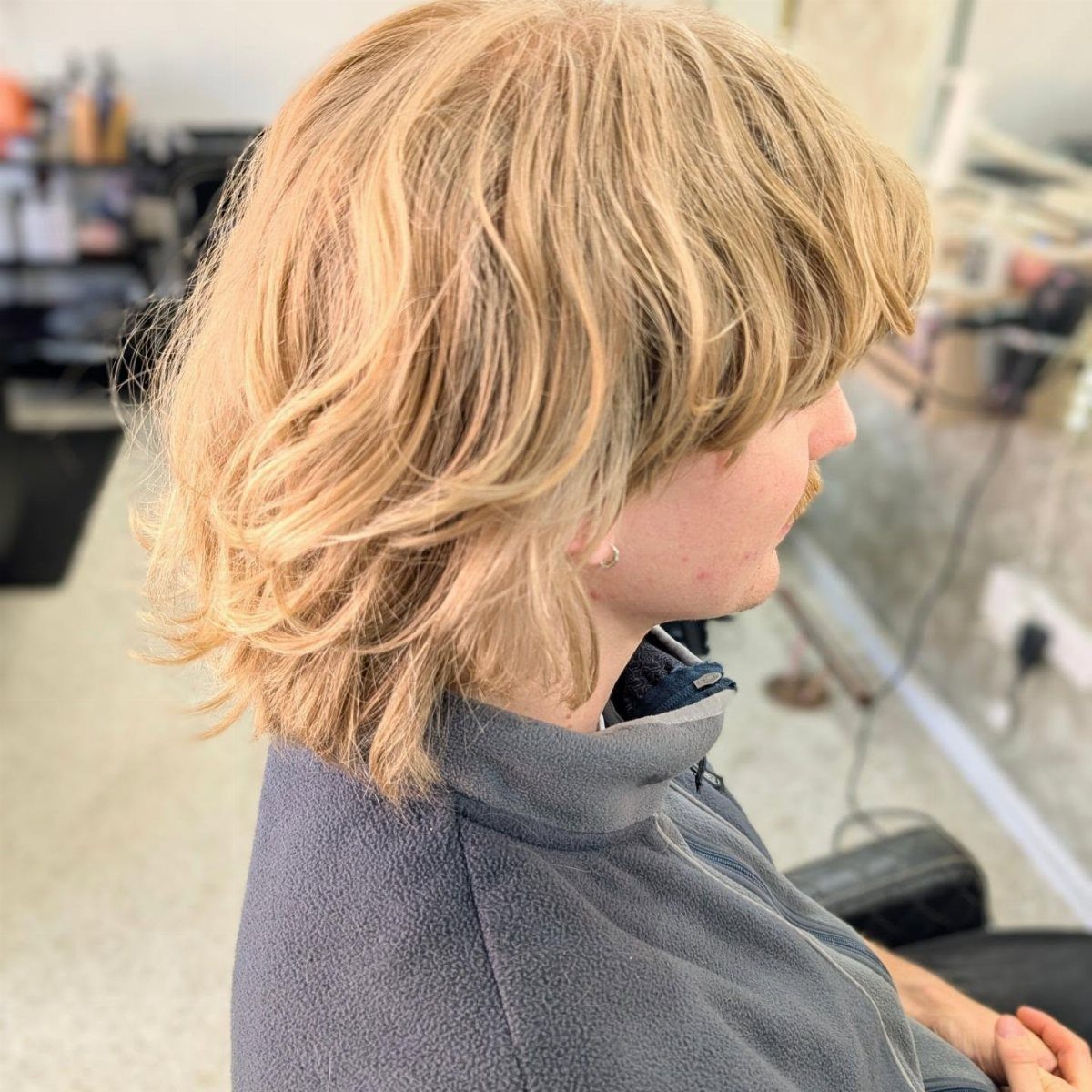
Styling time is minimal since the layers dry faster than uncut length, and finger-combing afterward separates any clumps. Waves with more definition benefit from this cut more than loose or barely-there texture.
17. Long Straight Hair
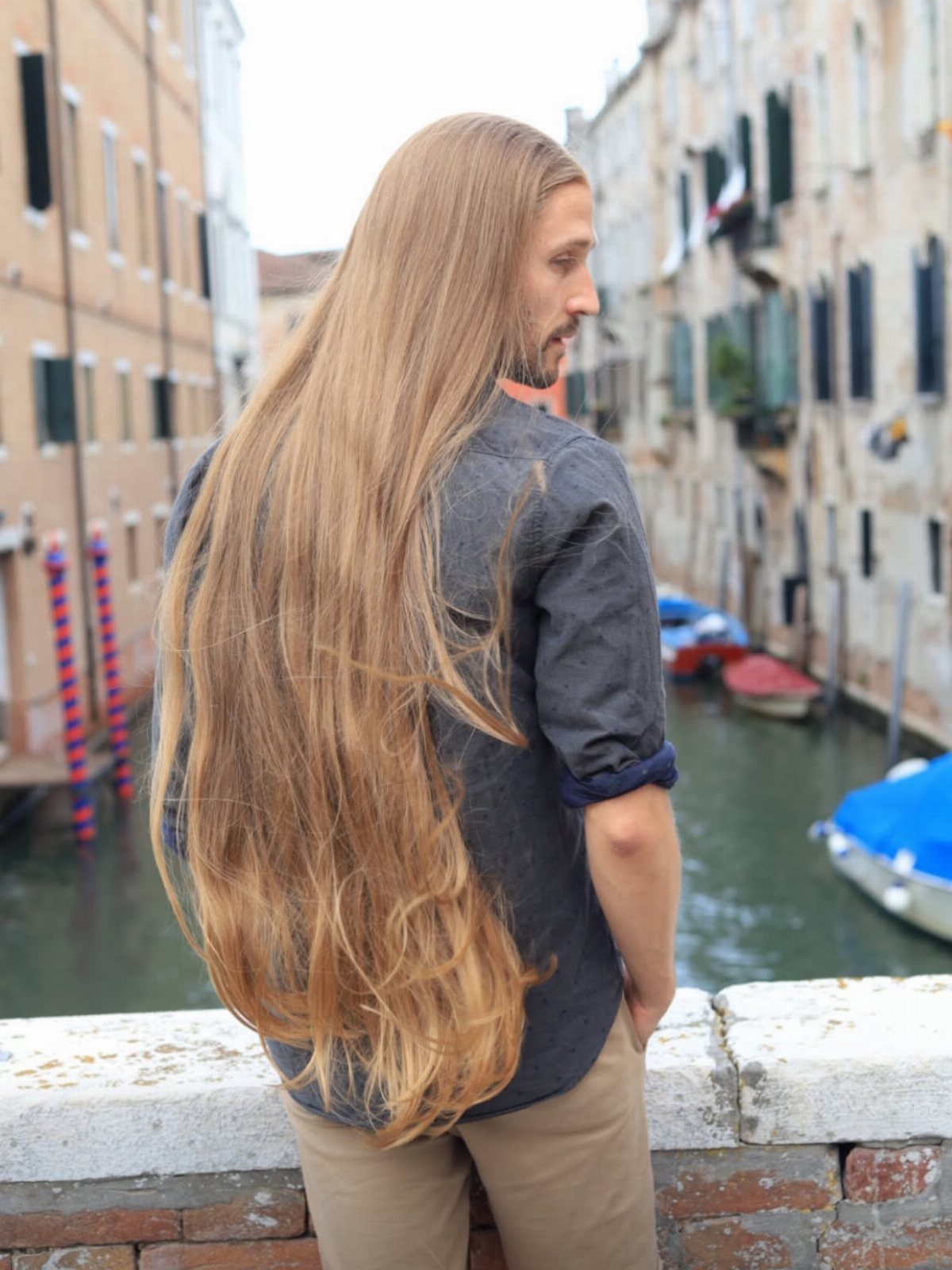
Straight hair worn long hangs in one unbroken line and reflects more light than textured hair, so it reads sleeker even without product.
Keeping the ends trimmed prevents splitting, which shows up faster on straight hair than on curly or wavy types, and a leave-in conditioner or smoothing cream applied to damp hair reduces any frizz that forms as it dries.
Blow-drying with a brush straightens it further and adds shine, though air-drying works if the hair is naturally straight.
Fine straight hair can look flat once it’s past the shoulders, and light layers through the ends add movement without shortening the overall length.
18. Long Hair with Tapered Sides
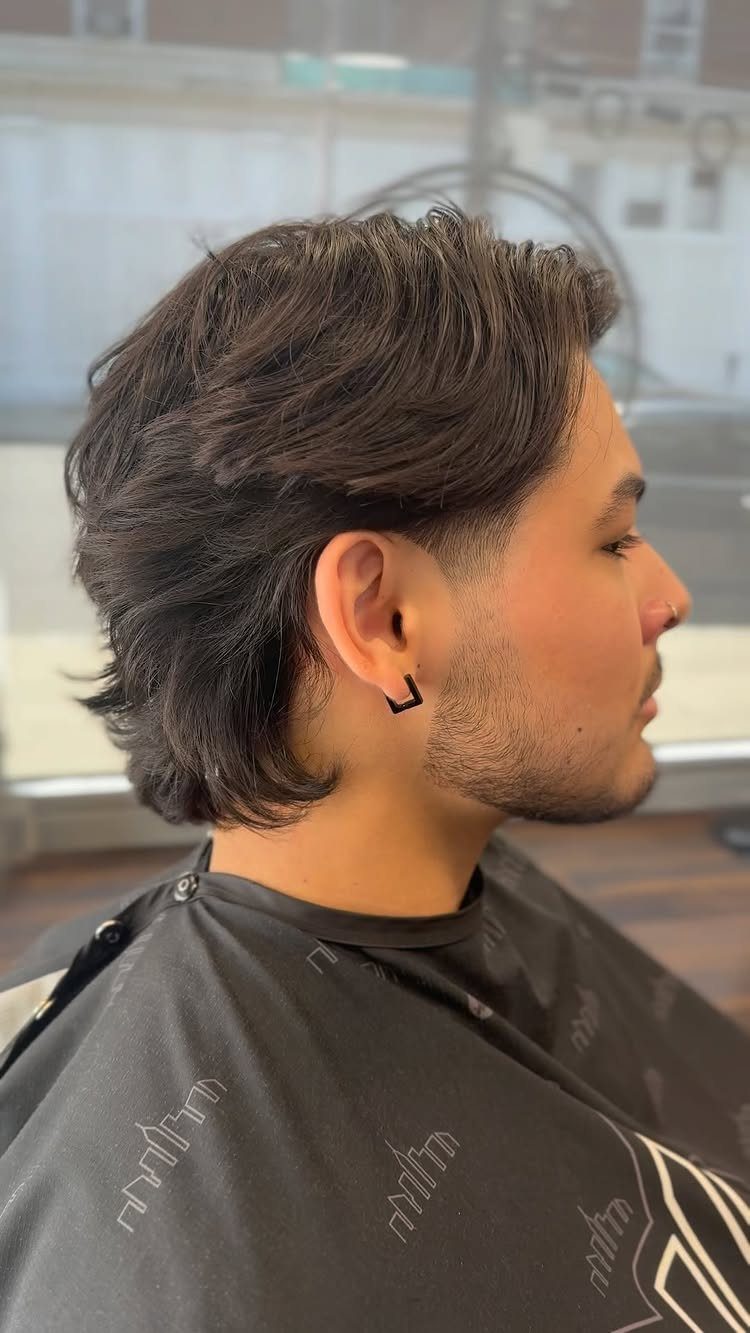
A taper that starts short at the temples and gradually blends into the longer hair at the back keeps the sides neat without cutting the length everywhere.
A barber fades the taper up into the top and back sections, and the contrast is subtle enough to work in formal settings while still keeping the hair manageable.
The sides need trimming more frequently than the long section to hold the taper.
19. Long Dreadlocks Ponytail
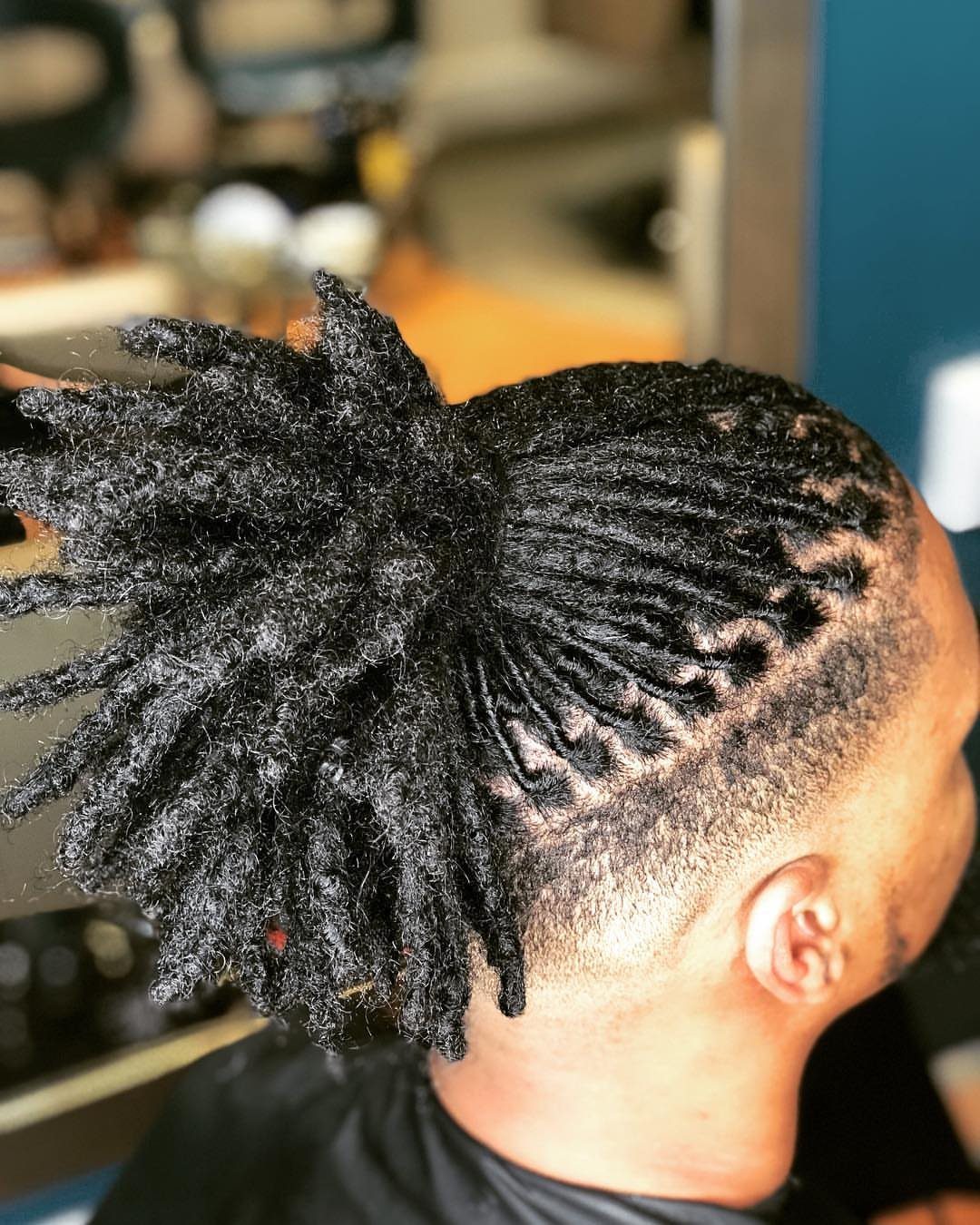
Tying long locs at the crown while keeping the sides and back shaved gives you the length without the weight around the perimeter.
The undercut stays cool and shows the scalp texture, and the ponytail holds its shape without slipping since locs grip themselves.
Maintenance splits between the 2 sections. The shaved portion needs regular clipping to stay clean, while the locs can go longer between retwists depending on how tight you keep them.
20. Viking-Inspired Long Braids
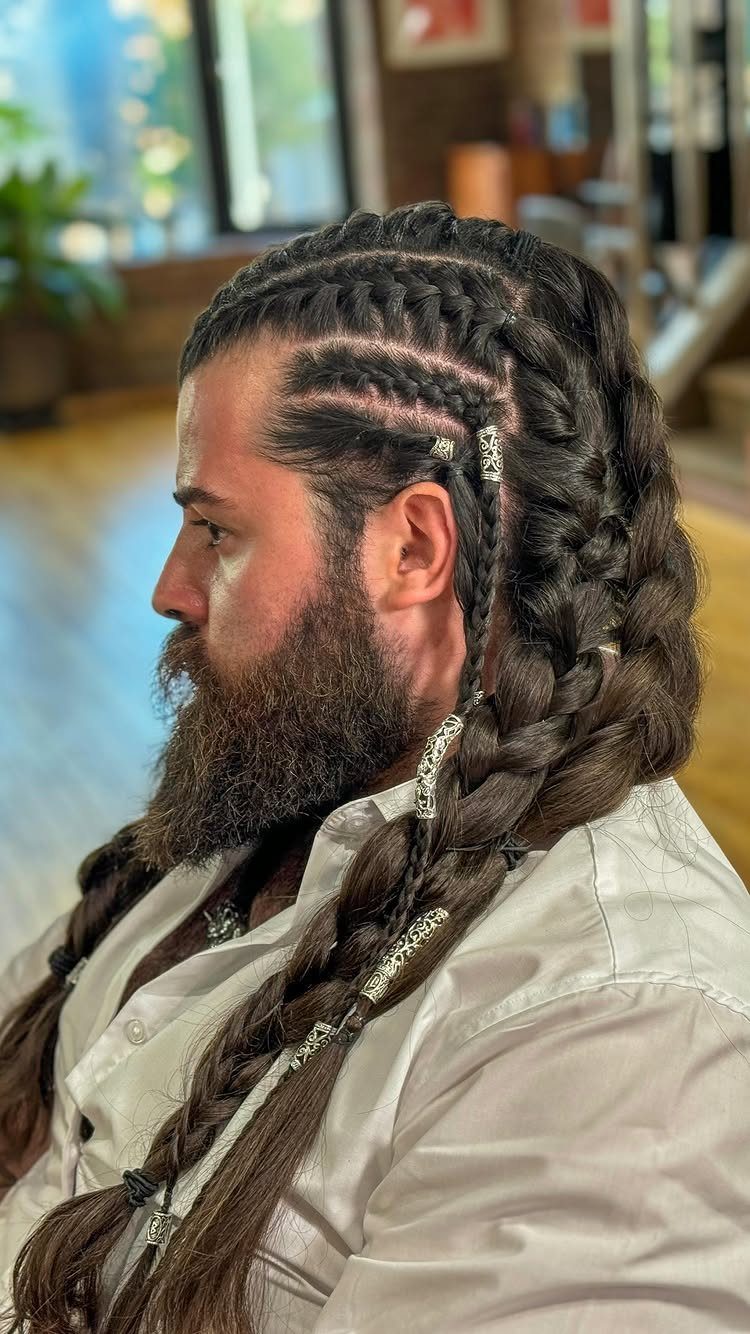
Multiple small braids worked into patterns and threaded with metal rings or beads turn long hair into something that reads historical without looking like costume.
The braids can start at different points on the scalp, some tight to the head and others hanging loose, and the metal catches light without adding much weight.
Setting this up takes time or help, and the braids hold for several days before needing to be redone. Thicker hair grips the rings better than fine strands, which can slide free if the braid loosens.
21. Bro Flow
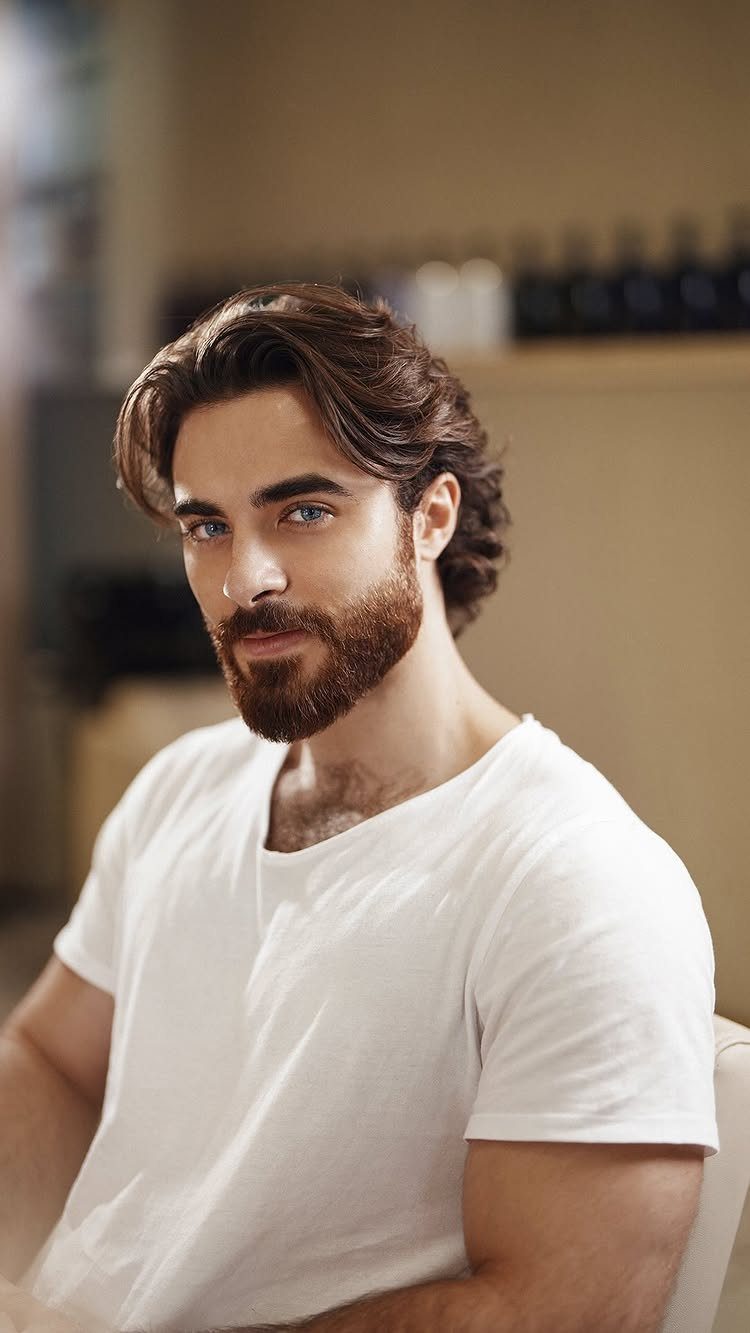
Growing the hair to collarbone length or slightly past it and brushing it straight back from the forehead lets the natural texture show without styling it into a specific shape.
The look depends on the hair having enough body to stay off the face once it’s pushed back, and a small amount of matte paste or cream keeps any forward pieces in place.
Wavy or slightly textured hair holds this better than pin-straight hair, which tends to fall forward by midafternoon. No part, no tie, and the length stays loose.
22. Low Twisted Bun
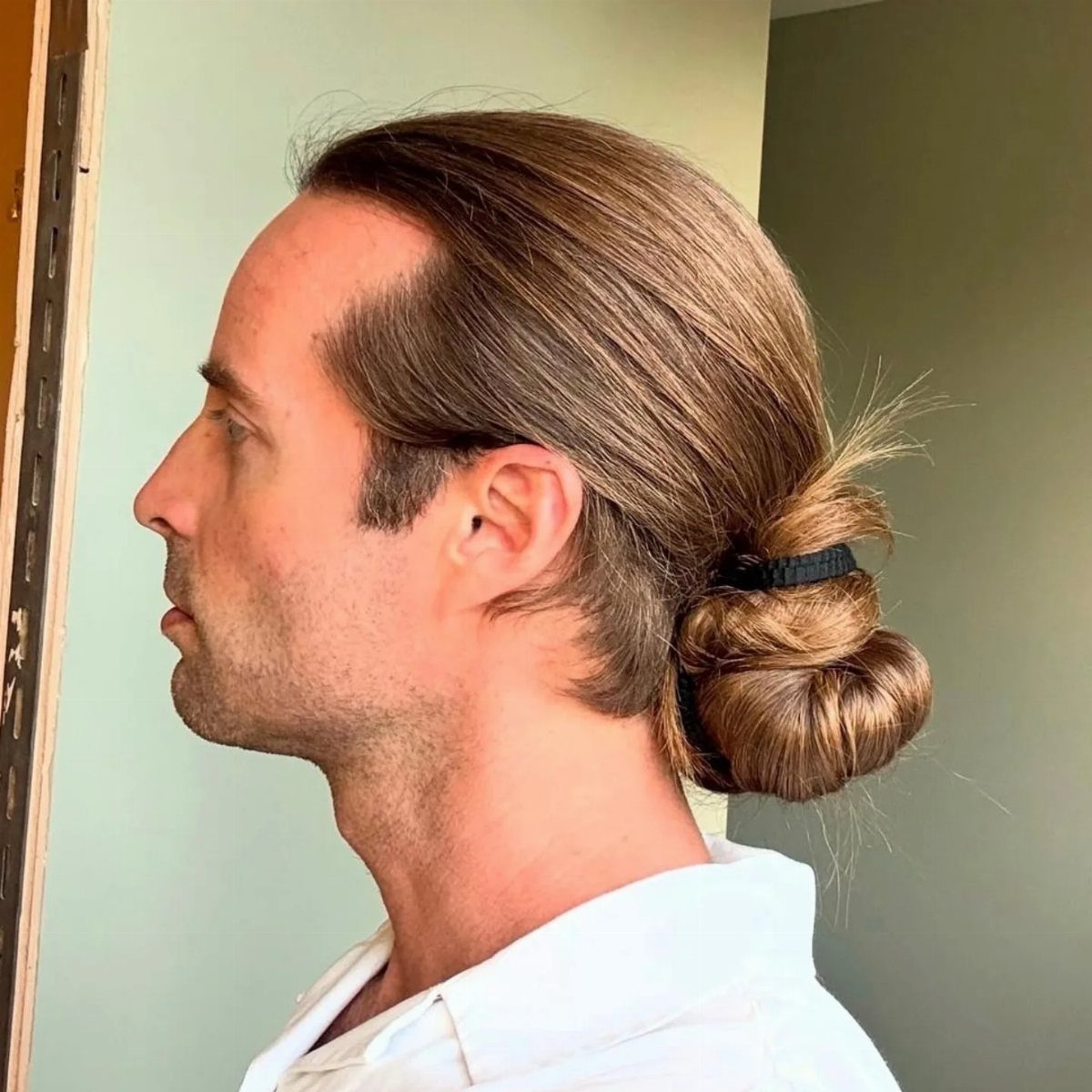
Dividing the hair into 2 sections and twisting each one before wrapping them together into a low bun at the nape secures the hair without a structured knot.
The twist adds grip, so the bun stays in place with a single tie, and the texture keeps it from looking too finished.
Hair past the shoulders gives enough length to twist and wrap without leaving short ends sticking out. Loosening a few strands around the face takes the edge off if the bun looks too severe.
23. Free-Flowing Locks
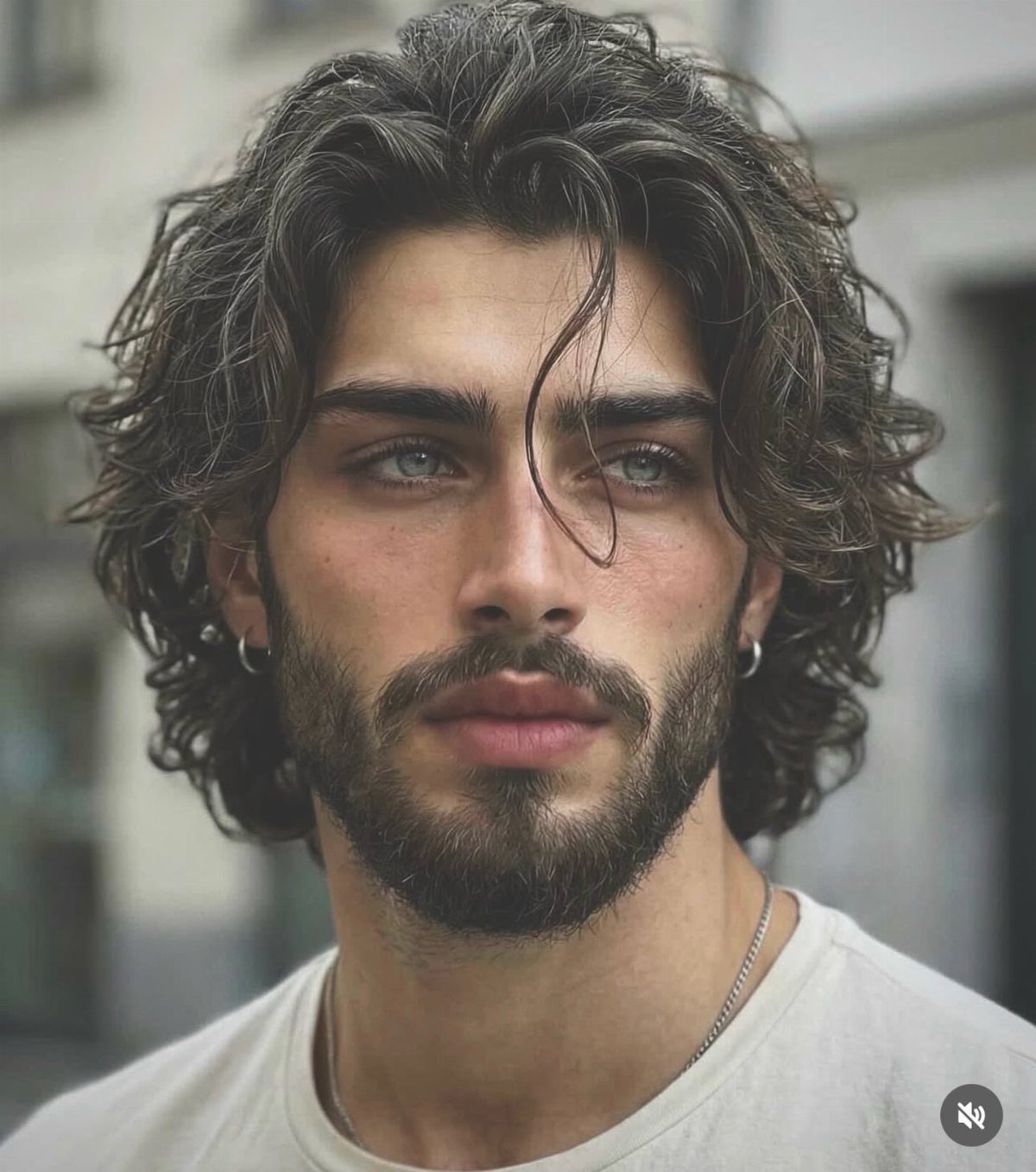
Parting the hair slightly off-center and letting it hang loose past the shoulders keeps the styling to almost nothing while the length does the work.
Bangs that fall to eyebrow level or just past them keep the forehead covered without needing to be pinned back, and the rest of the hair moves on its own if the texture is there.
A smoothing cream or light oil worked through the lengths after washing reduces frizz and keeps the hair from tangling as it dries.
This works best when the hair has natural wave or movement, since completely straight hair can hang flat once it reaches this length.
24. Shoulder-Length Curls
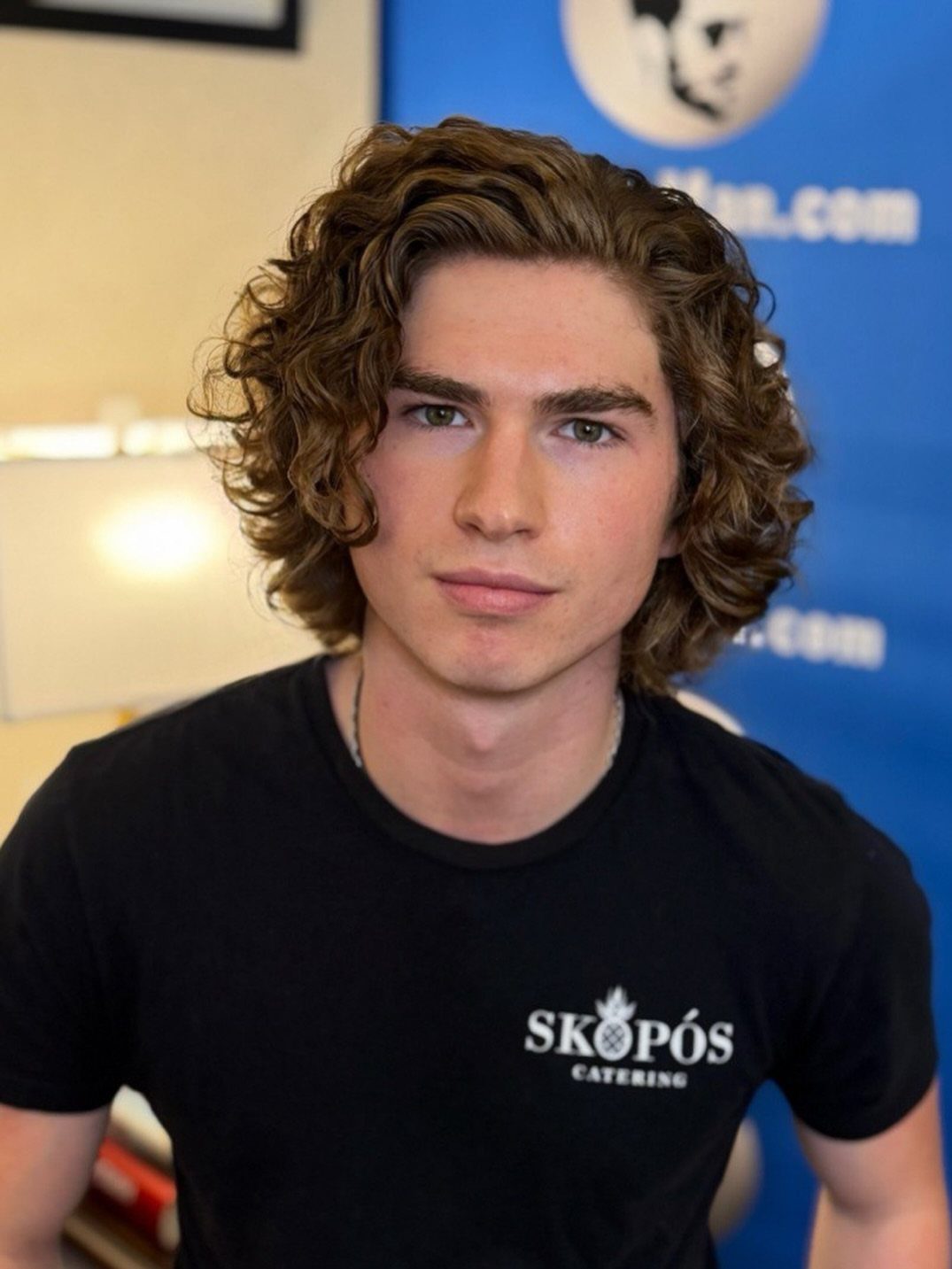
Cutting light layers into curly hair that falls to the shoulders removes some of the weight at the ends and lets the curls form in tighter, more defined spirals.
The layers stack so that the curls sit at different heights instead of all ending at the same line, and the shape fills out around the face without looking bulky.
A curl cream applied to damp hair and scrunched in by hand brings out the pattern, and air-drying keeps the curls soft. Morning refresh is just water and a finger-comb if the curls flatten overnight.
25. Smooth Man Bun
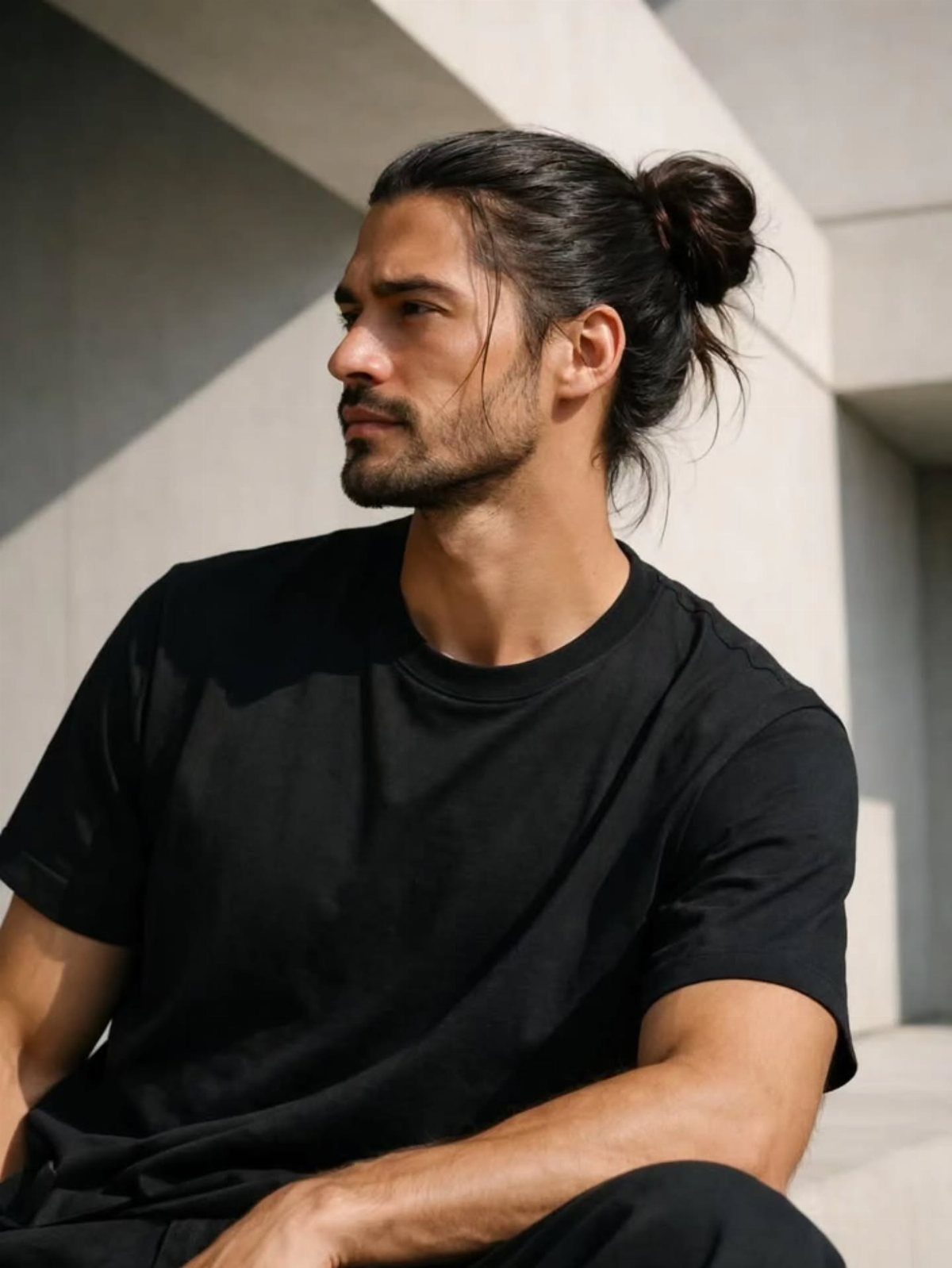
Gel applied to damp hair and combed straight back before tying flattens the surface and keeps every strand in place.
The bun itself sits small and tight, rolled rather than twisted, and no flyaways break the line from forehead to nape.
This takes more product than a casual bun and holds better on hair that’s at least chin length when pulled straight. Reapplying gel to any loosened sections near the hairline keeps the shape through the day.
26. Messy Surfer Waves
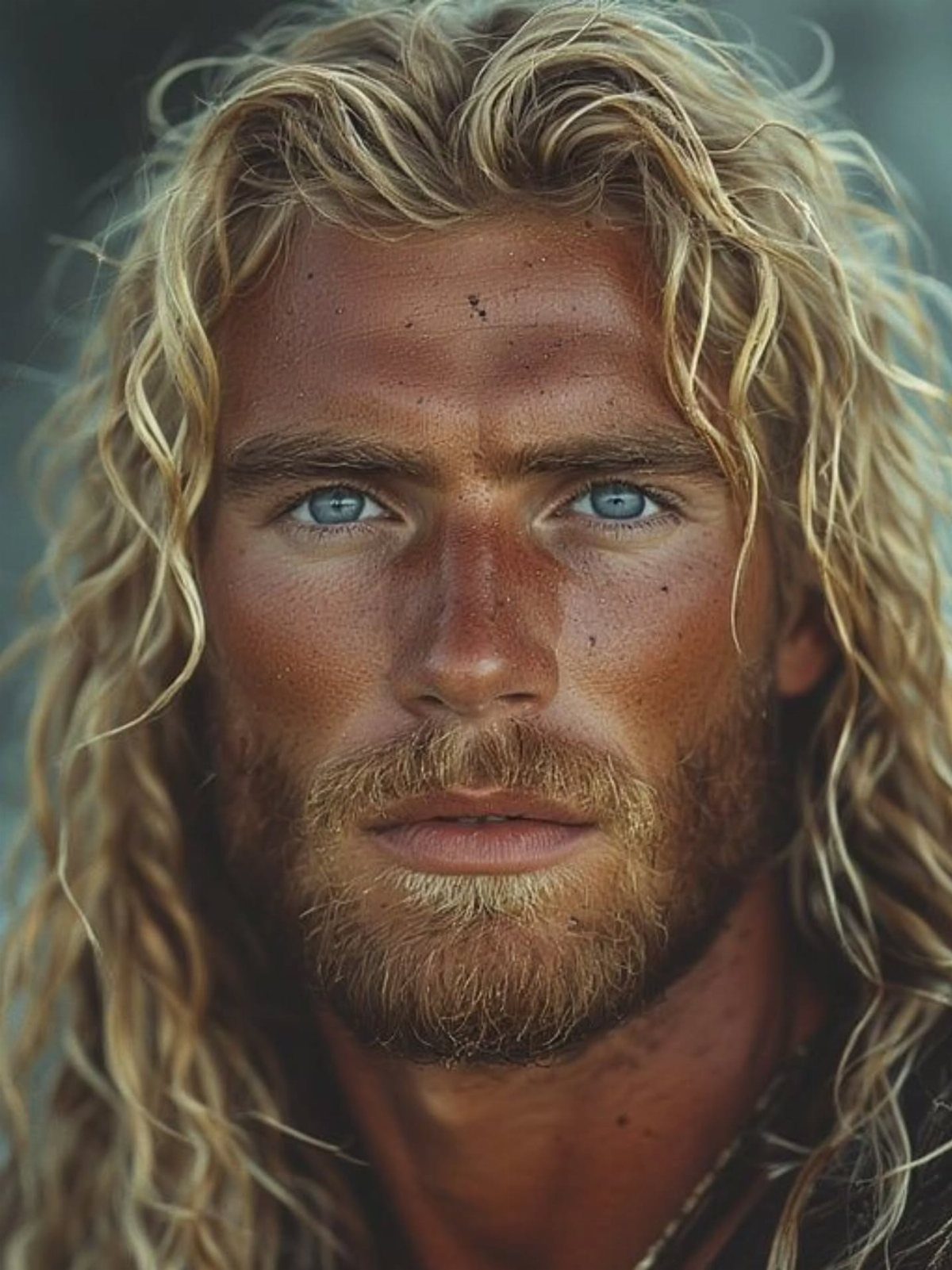
Letting salt spray dry into long, textured hair without combing it afterward leaves the waves uneven and separated, and the result looks like it came from ocean water and wind rather than intentional styling.
Scrunching the hair while it’s damp and then leaving it alone locks in the bends.
Blonde or sun-lightened hair shows the texture most clearly since the different tones catch light at different angles. Hair that’s naturally wavy takes this with almost no effort, while straighter hair needs the salt spray to hold any movement.
27. Long Dreadlocks
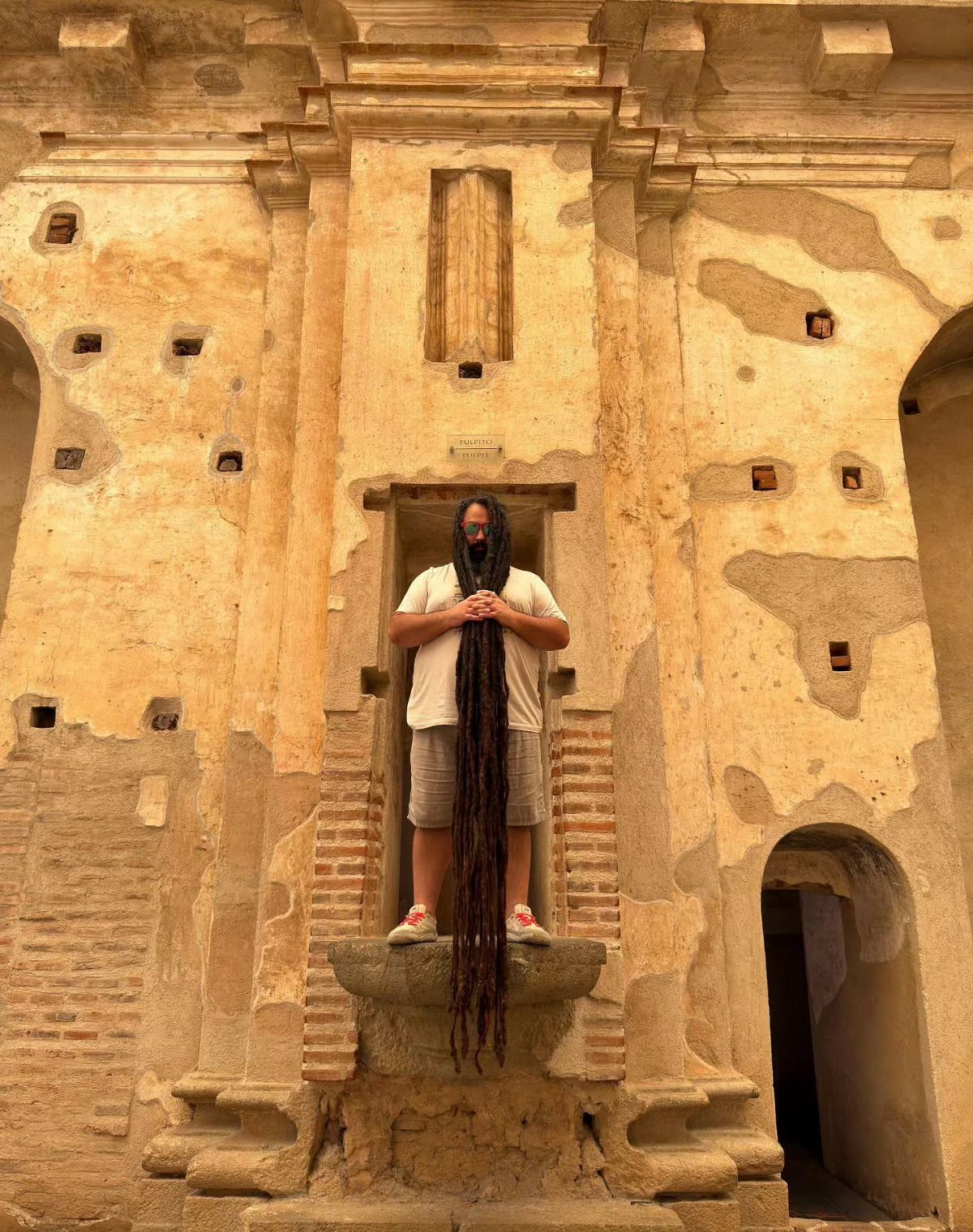
Growing locs past the waist takes years of patience and consistent retwisting, and the weight increases steadily as the length adds up.
At this stage the locs become a defining feature rather than just a hairstyle, and the maintenance schedule stays the same whether they stop at the shoulders or hang to the hips.
Washing happens less frequently than with loose hair to keep the locs from unraveling, and a light oil on the scalp prevents dryness without leaving residue on the length.
Tying them back or wrapping them at night keeps the ends from dragging.
28. Twists with High Bun
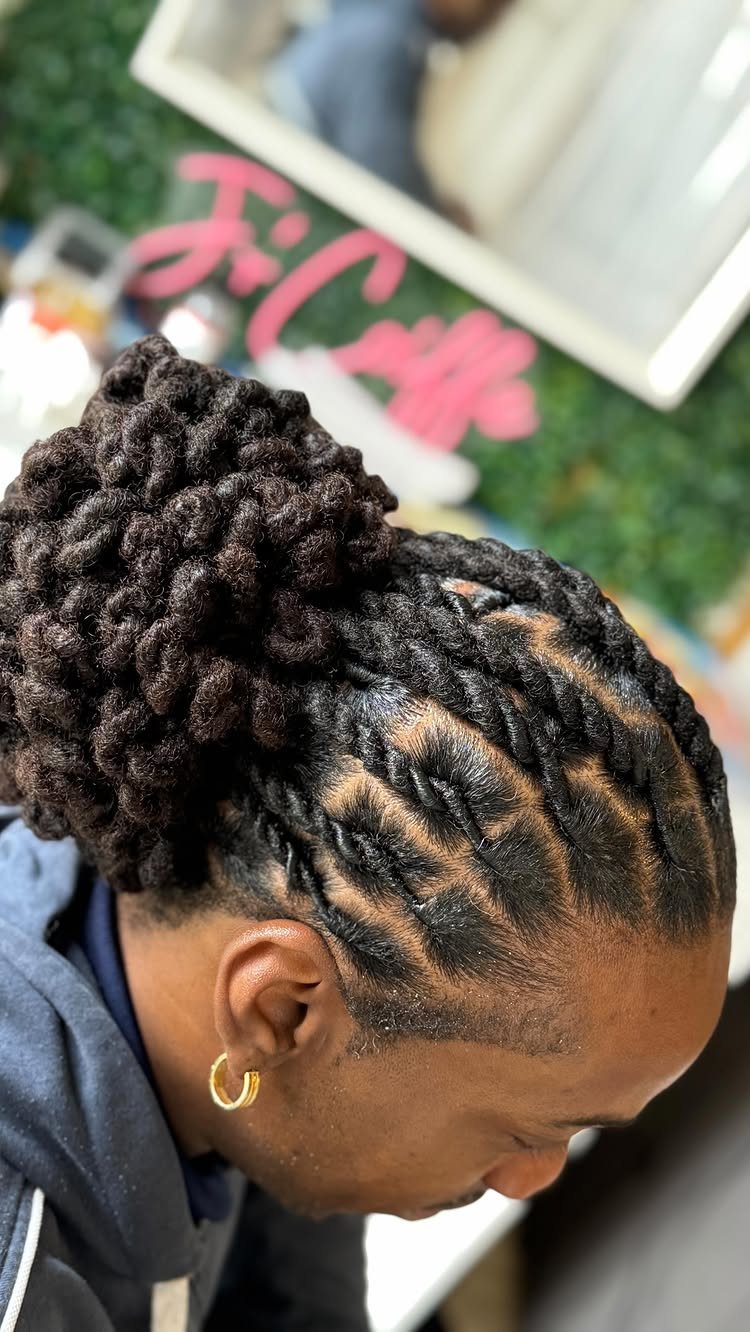
Twisting the hair into thick sections before gathering it at the crown gives the bun texture and volume, and the twists keep their shape even after being tied.
The high placement pulls the hair off the neck and stays secure without needing multiple elastics, and the size of the bun depends on how thick each twist is before it’s wrapped.
Setting up the twists takes longer than pulling loose hair into a bun, but the result holds for the entire day.
This works best on hair that’s at least shoulder length and has enough grip to twist cleanly without slipping apart.
Face Shape and Long Hair
Ponytail height changes how your face reads. Low at the nape lengthens what you see in the mirror, while high shortens it and draws attention to the forehead.
If your face is already long, skip styles that add height on top and look for cuts that put volume at the sides instead.
A center part emphasizes width, which works when your face is narrow but makes round or wide faces look wider.
Bangs shorten the face visually by covering the forehead, and side-swept length balances things out without needing a part down the middle.
A high fade pulls the eye upward and stretches an already long face even more. If that’s not the direction you’re after, keep the sides fuller or let the hair hang past the temples.
Growing and Trimming Hair
Hair past the shoulders can go months between cuts, but getting there without looking like you forgot about it takes trims every 6 to 8 weeks while it’s growing.
Those trims take off the split ends before they travel up the strand and force you to cut more later.
A botched short cut fixes itself in a month or two. Layers cut in before the hair looks flat make the difference between hair that moves and hair that hangs in one block.
Medium-long hair between 4 and 6 inches needs more frequent trimming than hair that’s fully long, since it’s in the range where uneven ends show up fast.
Long-hair Care Routine
Shampoo and conditioner are the foundation, and a clarifying shampoo once a week or every other week strips out product buildup that makes hair look dull.
Curls keep scalp oil from sliding down the strand, so the ends dry out faster and need conditioner to stay soft.
A wide-tooth comb works through tangles without pulling hair out the way a brush does, and detangling spray on damp curls cuts down on breakage.
If the hair feels dry or brittle, a conditioner that fortifies the strands keeps them from snapping off as the length builds.
Air-drying preserves texture, but blow-drying speeds things up if you comb through while the dryer runs.
Frequently Asked Questions
What is a long hairstyle for men?
Hair longer than 6 inches counts as long, which is enough length to tie into a ponytail or let hang loose past the ears.
At shoulder length and beyond, you have full access to buns, braids, and flowing styles. Anything shorter than 6 inches stays in the short or medium category.
How do you find the right length hair for your face shape?
An oblong face benefits from volume at the sides rather than height on top, which shortens the face visually.
Round faces need length on top and shorter sides to add vertical balance, while oval faces can handle nearly any length and placement.
Square faces look better with hair that’s longer on top and shorter on the sides to soften the angles.
How do you grow out your long hair?
I cut damaged ends first, then trim every 6 to 8 weeks so splits don’t climb higher.
Growth takes time, and patience through the awkward in-between stages is the only way to get there. Keeping the ends clean speeds up the process since healthy hair grows faster than damaged hair.
Is long hair on guys in right now?
Yes, and the trend has held steady even after the pandemic ended and barbers reopened.
Celebrities from film to sports continue wearing longer hair, and plenty of men who grew it out during lockdowns decided to keep it. Long hair on men signals individual style rather than following a single grooming norm.
What styling products work best on men’s long hair?
Pomade and clay hold shape and add texture without weighing the hair down, while sea salt spray brings out natural waves. Straight or fine hair works better with lighter products like matte paste or texturizing powder to avoid looking greasy.
Should men with long hair use a comb or hairbrush?
Brushing long hair straight back from the hairline works for slicked or swept styles, while combing sets a side part cleanly when the hair is damp.
Curly hair benefits from finger-combing instead of a brush to keep the curls intact, and a wide-tooth comb detangles without pulling the texture apart. The tool depends on the style and texture rather than the length alone.
Will bangs work if I have a receding hairline?
Yes, side-swept bangs or curtain bangs cover thinning areas and shorten the forehead visually.
The hair falls across the receding spots instead of exposing them, and the length keeps the forehead from looking too tall. A textured fringe works the same way and reads casual rather than formal.
What product should I use if my hair is very fine?
Matte clays and light pastes add density without weight, and texturizing powder lifts the roots to create volume.
Fine hair looks flat with too much product, so start with a small amount and add more only if needed. Avoid heavy gels or creams that weigh the strands down and make the hair look greasy.
How often should I trim to maintain proportions?
Trim every 3 to 6 weeks to stop the silhouette from piling upward, adjusted for your growth rate.