Demi-permanent color covers up to 70% of gray and fades without a hard line, while permanent formulas cover up to 100% and last through 6 to 8 weeks of regrowth.
Purple shampoo, moisturizing conditioners and topical serums with palmitoyl tetrapeptide-20 amide each address a different part of the problem, but most men skip the one step that resets buildup when nothing else works: clarifying shampoo once or twice a month.
Why Hair Turns Gray and What Melanin Does
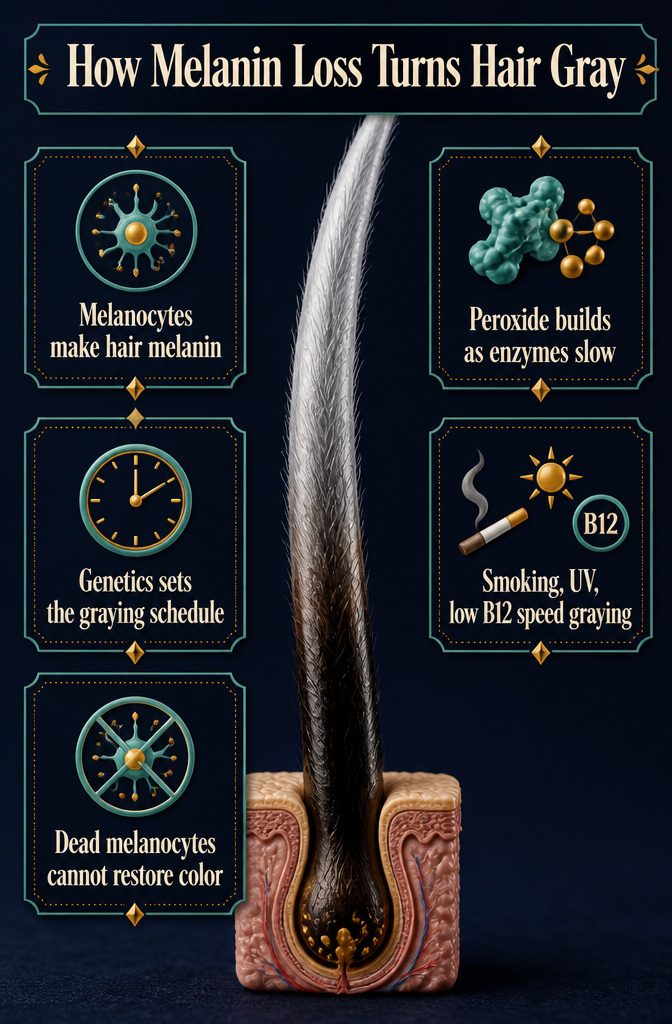
Every hair follicle contains melanocytes, cells that make melanin, the pigment behind hair color.
They also produce hydrogen peroxide as a byproduct, and in younger people enzymes neutralize it. With age those enzymes slow down, peroxide builds up, and the strand grows in gray, then white once the pigment is gone.
Genetics sets the schedule: if your parents grayed early, expect the same. Smoking, UV exposure and low B12 can speed it up.
Once the melanocytes in a follicle die off, it won’t make color again, so silver strands keep growing silver.
Graying driven by stress or a nutrient shortfall is the one case where I’d hold out hope for some recovery, but I wouldn’t count on it.
1. Demi-Permanent and Permanent Color for Coverage
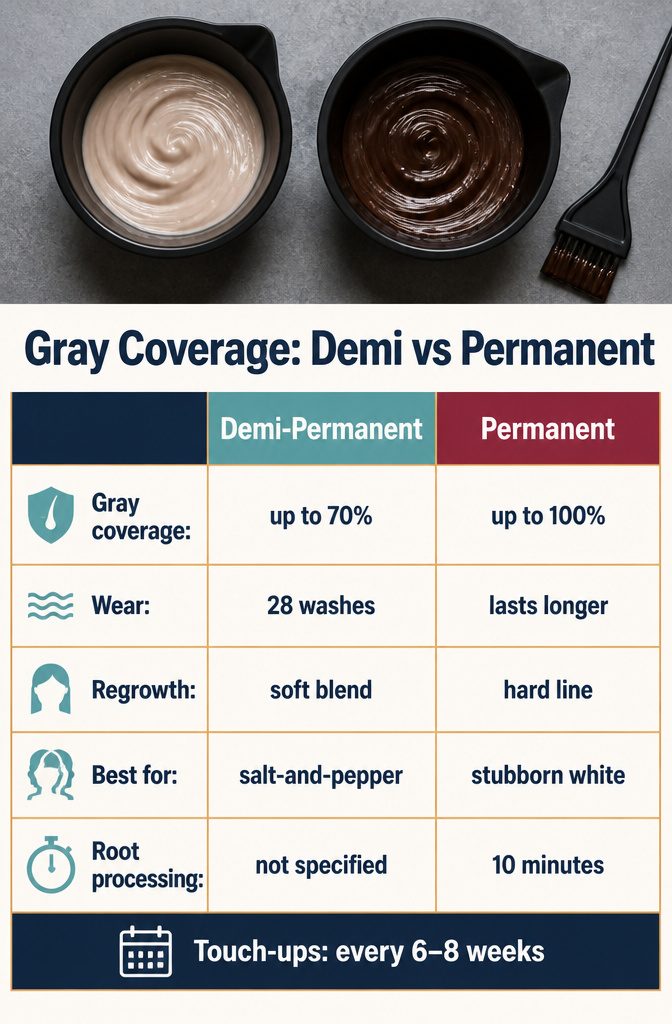
Demi-permanent color covers up to 70% of gray and fades over 28 washes, so regrowth never shows a hard line.
That soft blend is why I’d steer anyone with a salt-and-pepper mix toward Wella Color Touch, which has 90+ shades to match the brown or black that’s left.
Permanent color covers up to 100% and lasts longer.
For stubborn, mostly white hair, it’s the only type I’d trust. Koleston Xpress is built for roots alone and covers regrowth in 10 minutes, which makes it a good stopgap between full applications.
With either type, plan on a touch-up every 6–8 weeks.
2. Shampoos, Conditioners and Masks for Dryness and Texture
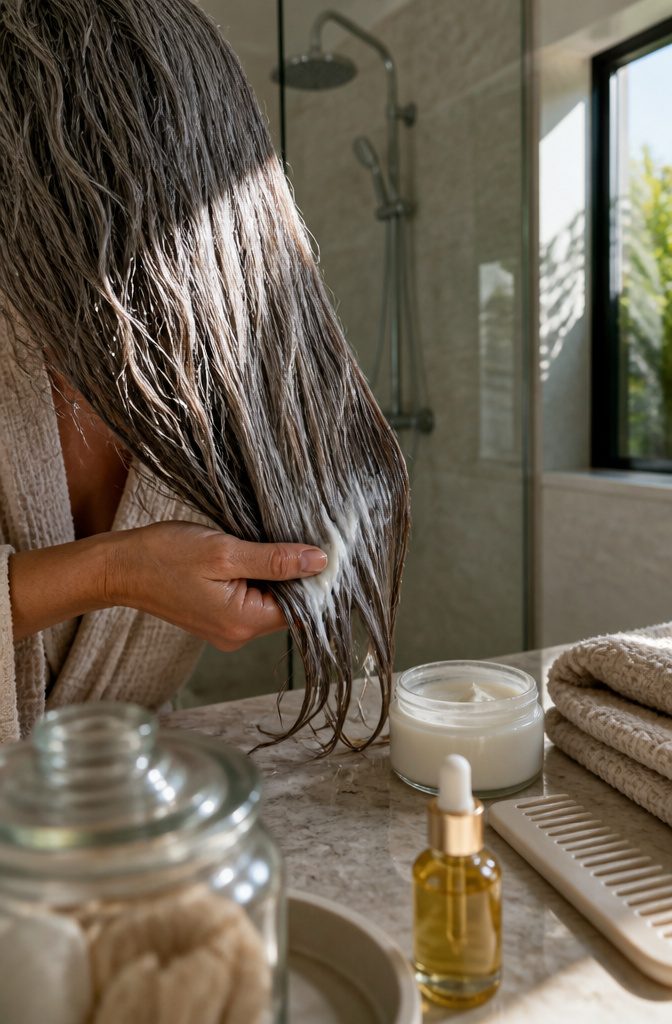
Gray hair loses moisture faster than pigmented hair, and the texture often shifts from smooth to wiry or dull. Moisturizing shampoos and conditioners bring back softness and manage that coarseness without weighing the hair down or making it look greasy.
I find that switching to a gentler, hydrating formula makes a visible difference within a week or two, especially if the hair has started to feel rough or look flat under indoor light.
Weekly masks add another level of conditioning for hair that still feels dry after regular shampooing. Applied for ten to fifteen minutes, they penetrate deeper than a quick rinse conditioner and help restore shine that gray hair tends to lose.
For faster results, some repair treatments work in ninety seconds and target damage from heat styling or chemical processing.
Oils can be worked through damp ends to seal in moisture, though they should be used sparingly to avoid a heavy finish.
3. Purple Shampoo for Yellow and Brassy Tones
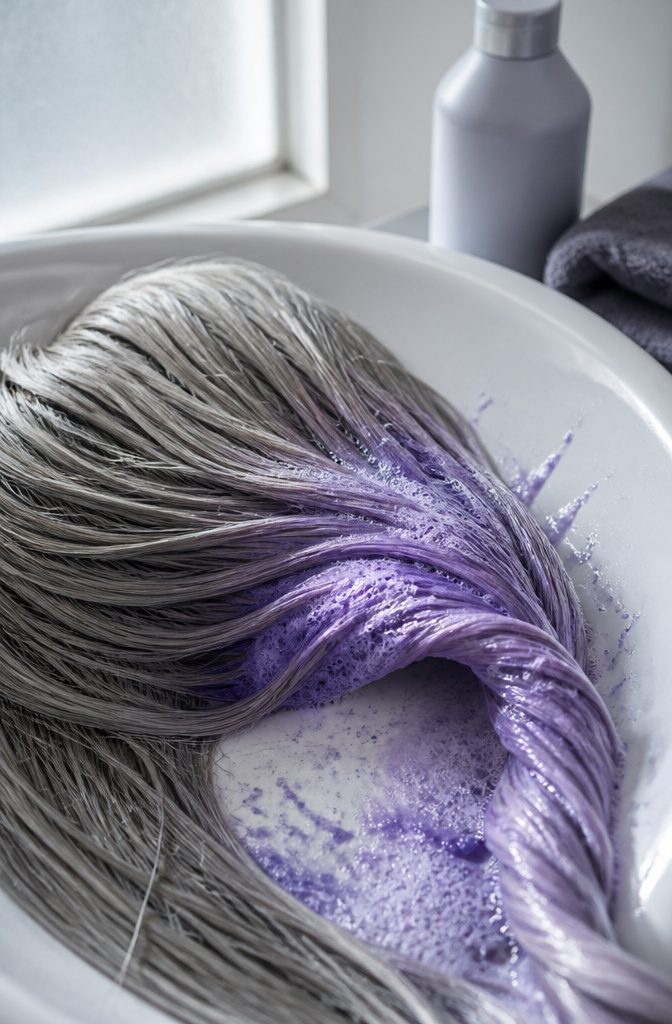
Gray hair can turn yellow or brassy from hard water, sun exposure, pollution and the buildup from other products you use.
Purple shampoo counters that discoloration because the pigment balances out yellow tones, keeping the hair bright and silvery instead of dull. Color theory at work: purple sits opposite yellow on the wheel.
A little purple pigment balances out the yellow tones or brassy tones that gray hair can get from, well, almost everything: hard water, sun exposure, pollution, your other hair products.
— GQ
Most men with gray hair need purple shampoo once a week, adjusting up or down depending on how fast the yellow comes back.
When you do use it, let it sit for one or two minutes so the pigment soaks in.
Watch the clock: leave it too long and you get the lavender tint some older women wear, which may or may not be what you want.
Olaplex No. 4P runs $30 and does the job. Purple shampoo lasts longer than your daily cleanser because you reach for it less often.
4. Clarifying Shampoo to Reset Buildup
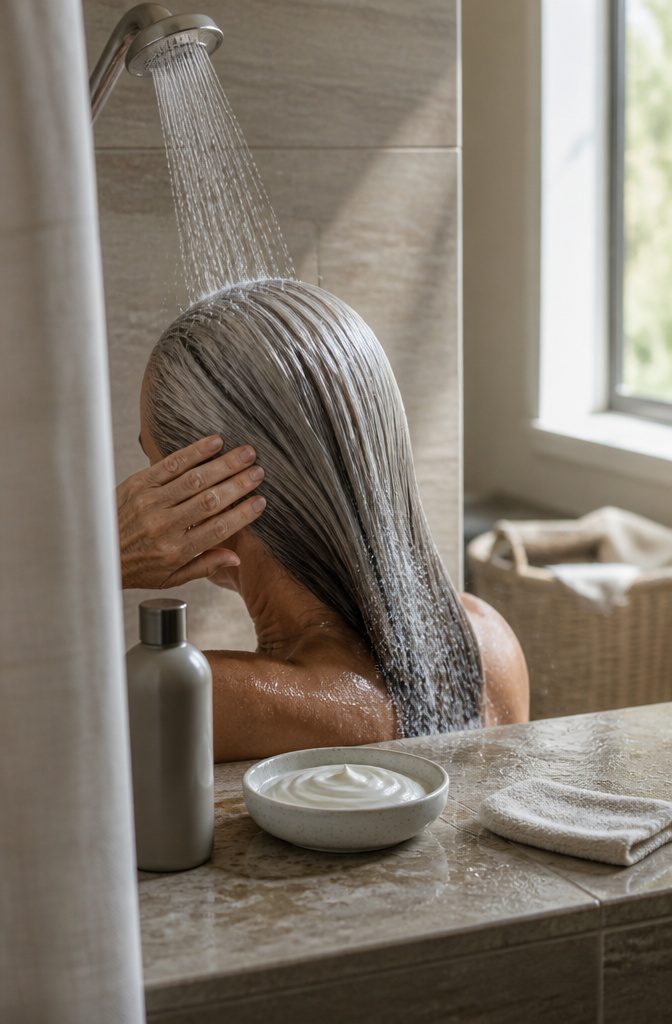
Clarifying shampoo strips buildup from hard water, styling products and the mineral deposits gray hair tends to attract, but it also strips moisture and natural oils.
Use it once or twice a month as a reset, not as your regular wash.
Think of it as a deeper clean that gets your hair back to neutral when purple shampoo or smoothing formulas stop working the way they did a few weeks ago.
Moroccanoil Clarifying Shampoo ($26) does the job without feeling like steel wool. Follow it immediately with conditioner, and if your hair feels tight or straw-like after rinsing, reach for a mask next.
The clarifying shampoo takes everything off, so the conditioner and mask put back what the hair actually needs: moisture, flexibility and a surface that catches light instead of scattering it.
5. Topical Serums and Products Claimed to Preserve Pigment
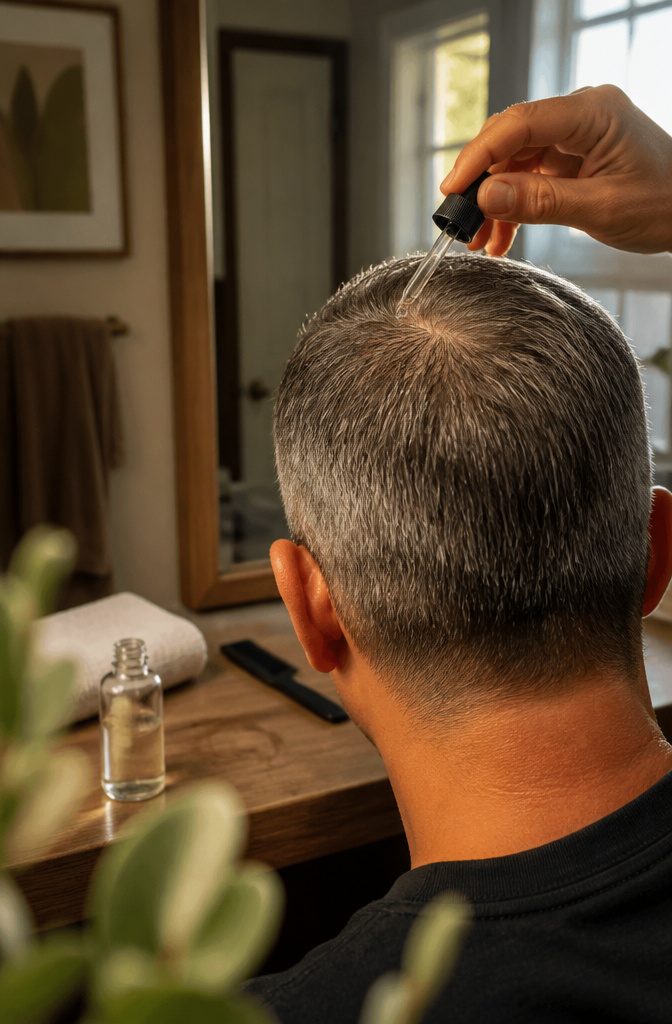
A handful of serums and scalp treatments now carry peptides or antioxidants with claims that they can preserve melanin or slow the arrival of new gray.
The ingredient getting the most attention is palmitoyl tetrapeptide-20 amide, a peptide tested in a 2018 study of 15 men who applied a daily lotion for three months; a separate consumer study of 104 participants reported that 31% saw fewer grays after one month and 64% after three months.
Evidence remains limited and has not been backed by double-blind placebo-controlled trials yet.
Products carrying it include Arey To The Root Serum ($55), Hey Hair Root Revival ($130), Vegamour Gro Ageless ($78), and Leonor Greyl Serum Énergisant ($120).
Living Proof Scalp Care Density Serum ($64) takes a different route with an amino acid derivative; an in-house trial of 30 people over 90 days reported that 100% saw increased thickness and over 75% saw reduced grays.
The idea behind all of them is preserving pigment you still have, not reversing a full head of gray overnight.
6. Supplements and Nutrients for Hair Health

Correcting a deficiency can help if one exists, but supplements aimed at graying make claims that vary widely in how much evidence sits behind them.
Vitamins B12, copper, zinc, and iron are tied to melanin production and hair pigmentation, and addressing deficiencies in these areas supports hair health rather than promising outright reversal.
Products marketed specifically for gray reduction include Catalase CORE 30,000, Root Revival, Gray Escape, and Gray Escape Advanced Anti-Gray Hair Growth Supplement.
One source notes that many people start to see improvements within three to six months of consistent use, though the same passage admits that catalase supplements carry digestive side effects and lack strong scientific backing for their anti-graying claims.
The play here is realistic: if bloodwork shows a deficiency, correcting it may slow further graying. If nutrient levels sit normal, a supplement is a longer bet.
7. Natural Remedies: Fo-ti, Mushrooms, Ashwagandha and Luteolin

Fo-ti, a root used in traditional Chinese medicine, and mushrooms like maitake and reishi both appear in formulas aimed at slowing gray.
Mushrooms work by lowering oxidative stress, which keeps follicles healthier and better able to hold on to pigment. Ashwagandha has been used in Ayurvedic medicine for over 2,500 years and targets stress, one of the pathways that speeds graying.
MDhair reported that 65.1% of participants saw favorable root-color change after six months on a supplement blend that included ashwagandha. The newest candidate is luteolin, an antioxidant found in celery, broccoli, carrots, onions, and peppers.
A December 16, 2024 paper in Antioxidants (DOI: 10.3390/antiox13121549) tested luteolin, hesperetin, and diosmetin in mice bred to gray like humans. Only luteolin preserved fur color, working by keeping endothelin expression intact and melanocytes active rather than affecting hair growth.
8. Lifestyle Steps: Stress, Smoking, UV Protection and Nutrition
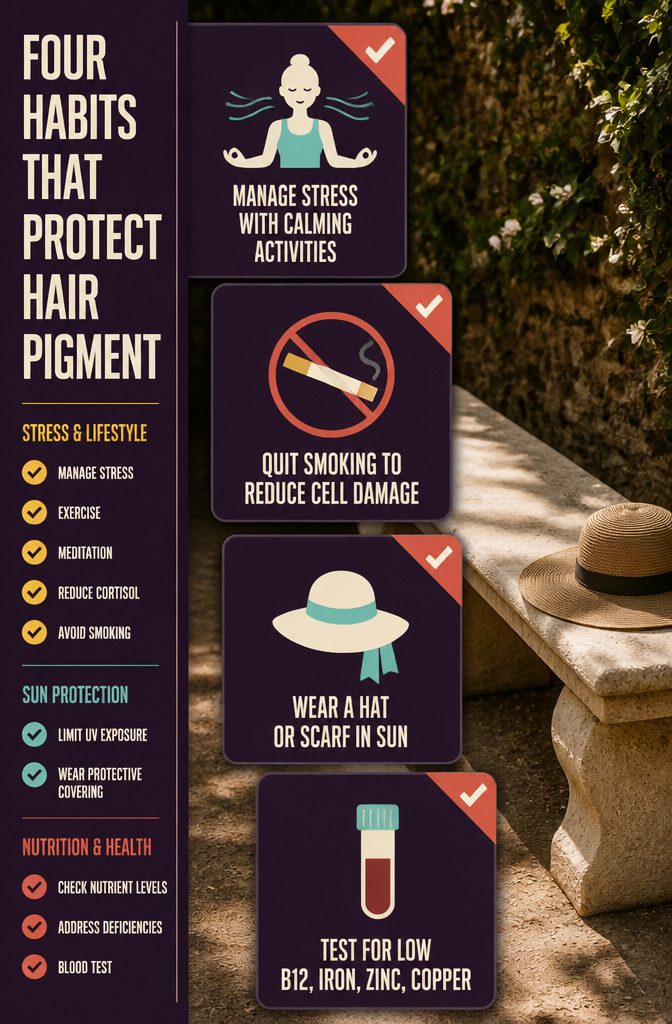
Stress, smoking, UV exposure and poor nutrition can all speed up premature graying, though they support rather than reverse the process once pigment is lost.
The steps that help:
- Manage stress through exercise, meditation or other activities that bring cortisol down. Prolonged stress releases norepinephrine, which burns through melanocyte stem cells faster than your follicles can replace them.
- Quit smoking. Cigarette chemicals increase oxidative stress and inflammation, both of which damage melanin-producing cells.
- Protect hair from UV rays with a hat or scarf. UVA exposure damages pigment directly; UVB breaks down keratin. Sunlight delivers both.
- Address nutrient gaps if a blood test shows low B12, iron, zinc or copper. Deficiencies in these can trigger graying, though supplementing when levels are normal does nothing extra.
9. Herbal-Based Dyes for Blending Silver and White Strands
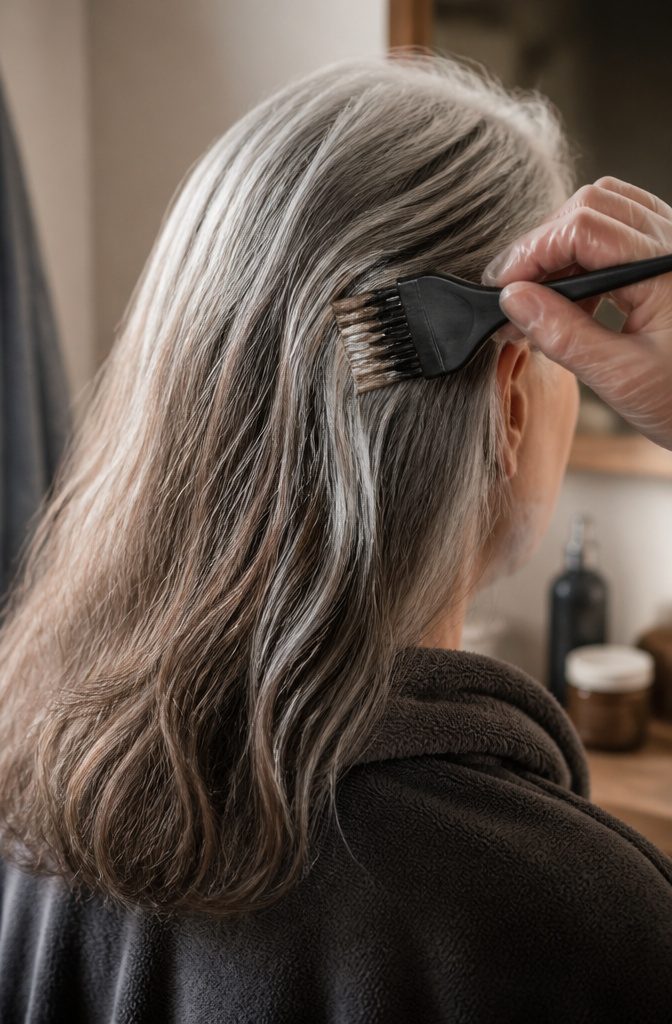
Herbal-based color is the gentler route for men who want silver and white strands blended in rather than painted over.
Chemical dyes can be harsh on hair and scalp, and that damage can feed further graying, so a plant-based formula makes sense if your scalp already gets irritated.
The range comes as a shampoo, a conditioner and a spray. Shampoo starts at $23.99, conditioner is $26.99 reduced to $23.99, and the spray is $37.99 reduced to $33.99.
I’d pick the shampoo or conditioner first, since either one slots into a wash you already do and costs the least.
The spray is the priciest, so it suits spot touch-ups between washes. Treat the whole line as a way to soften the contrast, and move to permanent color if you want full coverage.
10. Accepting Gray Hair and Caring for It
Graying permanently changes how hair behaves, and moisturizing becomes the main job once you stop chasing reversal.
Melanin loss leaves strands coarser, drier and more prone to frizz because oil glands produce less sebum. You’ll notice gray hair turns rough and loses shine faster than pigmented hair did.
A routine built around hydration matters more than the color itself. Conditioners and hair oils prevent the brittle texture that makes gray look dull.
Scalp exfoliation clears buildup and keeps circulation steady, which supports whatever growth you still have. Trims every six to eight weeks stop split ends from working their way up the shaft.
Styling products for gray hair should soften rather than lock strands in place.
Even coarse gray benefits from conditioning ingredients in gels, creams and pomades. High-hold products glue hair down without addressing the dryness underneath, which only makes texture worse over time.
Why Gray Hair Changes Texture and Shine
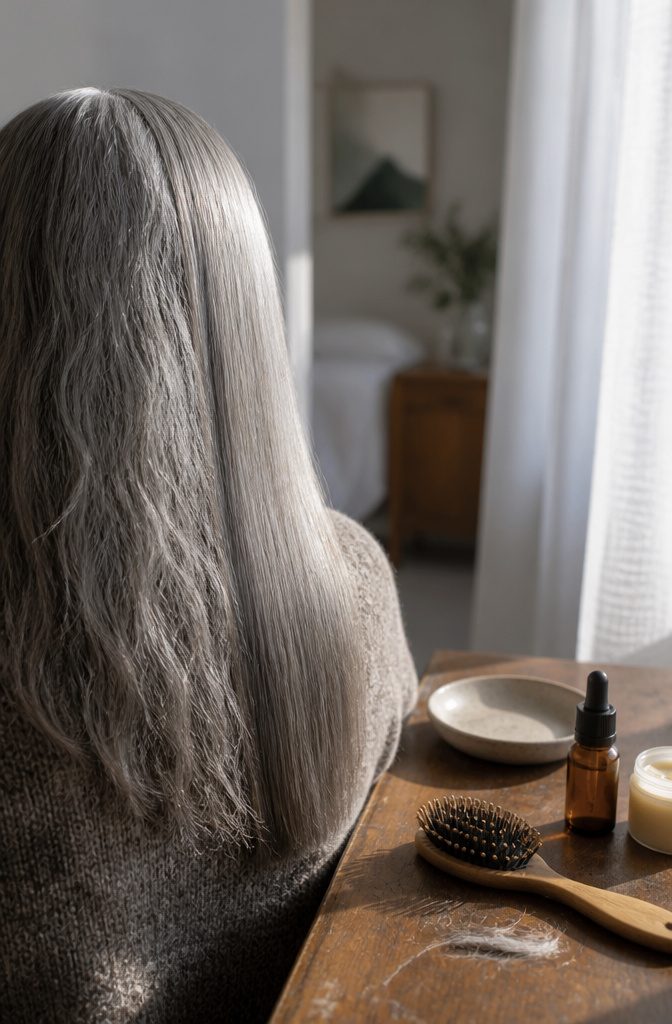
Gray hair loses the oil and pigment that kept younger hair soft and glossy, which changes how it behaves and what it needs from you.
The follicles produce less sebum as melanin drops, leaving strands dry, coarse, and prone to frizz. Gray hair retains some melanin; white hair has none, and that absence makes the texture even more brittle and the surface rougher.
The shift matters because conditioning and moisture move from optional to required. Without enough natural oil, gray hair turns dull and wiry.
Every styling choice should soften rather than stiffen the strand, which means rethinking high-hold products and leaning harder on hydrating oils, moisturizing conditioners, and anything that puts slip and shine back into hair that no longer makes its own.
When Graying Starts and What Premature Means
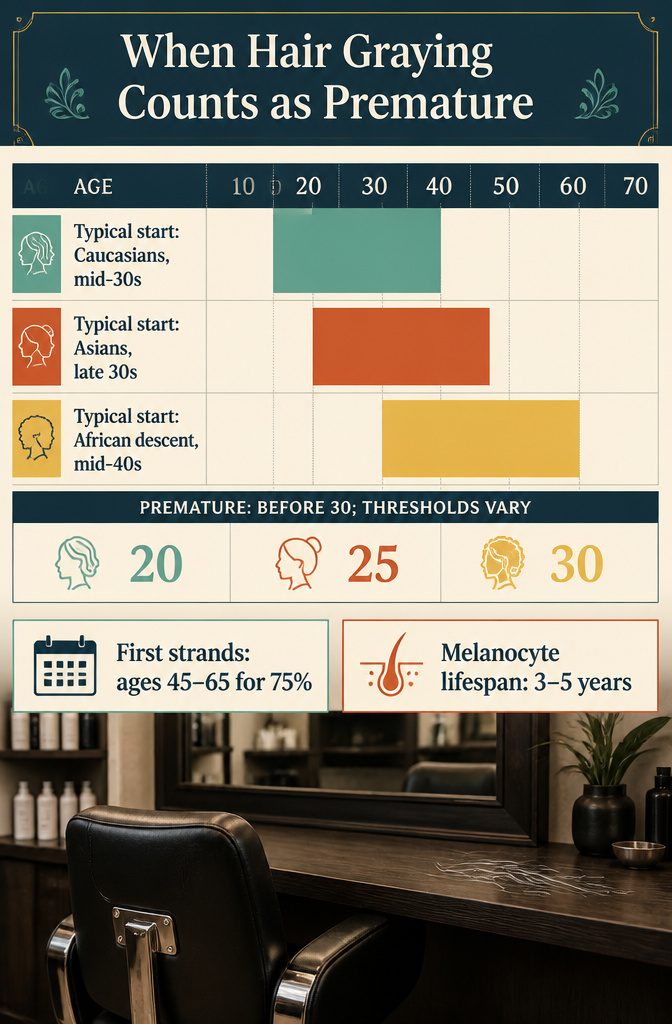
Graying typically starts in the mid-30s for most Caucasians, late 30s for Asians, and mid-40s for people of African descent, though the range is wide enough that someone seeing their first silver at twenty-two is not far outside the pattern.
Premature graying usually means any significant silver before thirty, with Caucasians sometimes seeing it as early as twenty, Asians at twenty-five, and Black populations closer to thirty. About three quarters of people notice their first strands between forty-five and sixty-five.
The cells that produce pigment, melanocytes, live about three to five years before they die off or stop making color, which explains why graying happens gradually rather than all at once and why some follicles turn silver long before others on the same head.
Frequently Asked Questions
What causes gray hair and can you reverse it?
Gray hair happens when melanocytes in the follicle die off or stop producing pigment, driven by genetics, age, stress, smoking, nutrient deficiencies, and UV exposure.
Once those cells are gone, the follicle won’t make color again, so reversal isn’t possible except in rare cases tied to temporary stress or a correctable deficiency. The only real fix is color or acceptance.
How often will I need to touch up gray coverage?
Plan on a touch-up every 6 to 8 weeks, whether you use demi-permanent or permanent color. Regrowth speed and how much gray you have will shift that window slightly, but that range holds for most people.
What age is normal for gray hair?
Most Caucasians start seeing gray in their mid-30s, Asians in their late 30s, and people of African descent in their mid-40s. Premature graying means significant silver before 30, and about 75% of people notice their first strands between 45 and 65.
What helps with gray hair?
Moisturizing shampoos, conditioners, and weekly masks address the dryness and coarse texture that come with lost pigment.
Purple shampoo keeps white and silver strands from turning yellow, and clarifying shampoo clears buildup once or twice a month. For coverage, demi-permanent color blends salt-and-pepper, while permanent color handles stubborn white.
Should you pluck gray hairs?
No.
Repeated plucking can damage the follicle and stress the root, which may stop new growth or make the problem worse over time. If you want the strand gone, trim it or cover it with color.
How do I prevent gray hair?
Address nutrient deficiencies in B12, iron, zinc, or copper if blood work shows them, quit smoking, manage stress through exercise or meditation, and protect hair from UV rays with a hat.
These steps slow premature graying but won’t stop the process once genetics and age take over.
Can hair turn gray overnight?
No. Hair strands don’t change color once they’ve grown, but synchronized shedding of pigmented hairs can leave mostly gray hairs behind and make it look like an overnight shift over several days.
Why does hair turn white instead of gray sometimes?
Hair turns white when melanin production stops completely, while gray hair still holds some residual pigment. The difference is how much melanin the follicle has left before it shuts down for good.
How long does it take to see results from gray hair treatments?
Most people see improvement within 3 to 6 months of consistent use, though results vary by treatment type and how much gray you started with.
Topical serums and supplements work slowly because they’re trying to preserve pigment cells that are already in decline.
Can these treatments completely reverse gray hair?
No.
Treatments like peptide serums and supplements may slow new gray or preserve remaining pigment, but they won’t bring back color to strands that have already turned. These treatments aim to delay gray hair, not reverse it.
Are there any side effects to these treatments?
Some supplements, especially catalase formulas, can cause digestive issues, and topical serums may irritate sensitive scalps. If you notice anything unusual, stop and talk to a healthcare provider before continuing.