Short beard styles range from 1 mm light stubble you trim daily to 5 mm heavy stubble that needs attention every few days, with shaped options like goatees and circle beards sitting in between.
Growth density on your cheeks decides which style works: if coverage is patchy higher up, a goatee or circle beard keeps hair where it grows densest, while even growth across the jaw supports a boxed beard or chin strap.
1. Light Stubble

Light stubble is a 1- to 2-day shadow kept trimmed at one length instead of letting it grow out. The length stays short enough to avoid looking unkempt, but long enough to shape the jawline and add definition.
Most trimmers handle this at a 1 mm or 2 mm guard. You trim every day or every other day to hold the length, and the upkeep takes under a minute.
Density matters: patchy growth at this length reads as unintentional, so this works best when coverage is fairly even across the jaw and cheeks.
2. Heavy Stubble

Heavy stubble is where you let growth reach 4 mm to 5 mm and hold it there with a trimmer.
It gives more coverage than light stubble without crossing into full beard territory, and the length is forgiving if your growth is uneven in spots.
You trim regularly to keep the edge clean and the length consistent.
The style softens a narrow face and adds weight to a lighter jawline. Maintenance is low, but it does need attention: let it go a week and it loses the groomed look that separates this from just not shaving.
3. Goatee

A goatee isolates hair on the chin and leaves the cheeks bare.
Some versions connect a mustache, others keep the chin patch on its own. Either way, the shape stays compact and the edges stay sharp.
Growth density on the cheeks does not matter here, which makes this a practical choice if your coverage is patchy higher up.
You shave or trim the rest of your face every few days and maintain the goatee edges with a trimmer or razor. The look elongates a round face, but on a longer face it can make the chin appear heavier.
4. Chevron Mustache
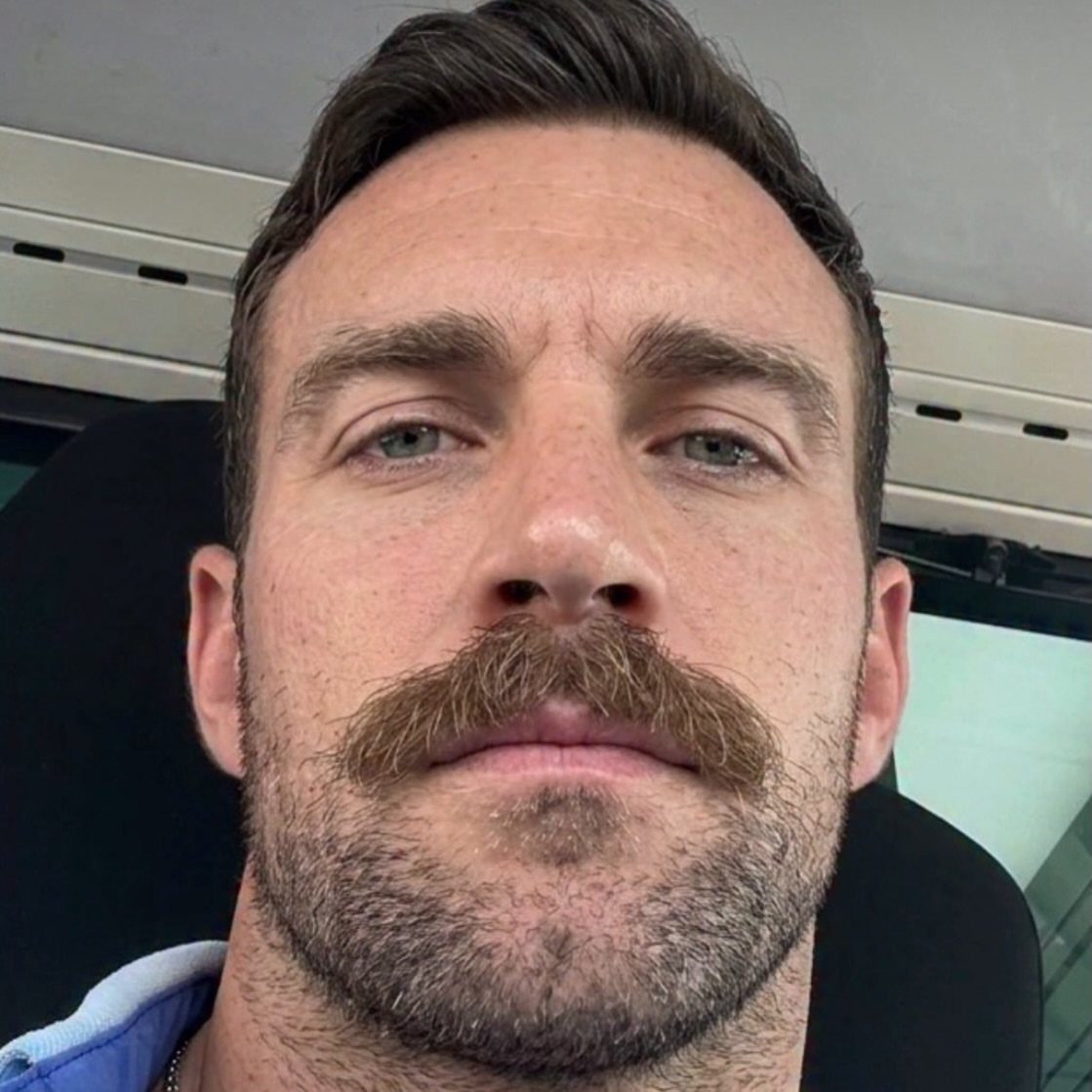
The chevron runs the width of your upper lip, stopping at each corner, with its lower edge meeting or slightly crossing the lip line.
The thickness and width give it weight, and it requires dense upper-lip growth to fill in properly.
You let the mustache grow out for a few weeks, then trim the length to keep it from covering your mouth. The sides stay untrimmed or lightly shaped, never waxed into points.
Maintenance is a weekly trim and daily grooming to keep stray hairs out of your mouth. Pair it with stubble or a closely trimmed beard if you want coverage elsewhere, or wear it alone for a cleaner look.
5. Boxed Beard
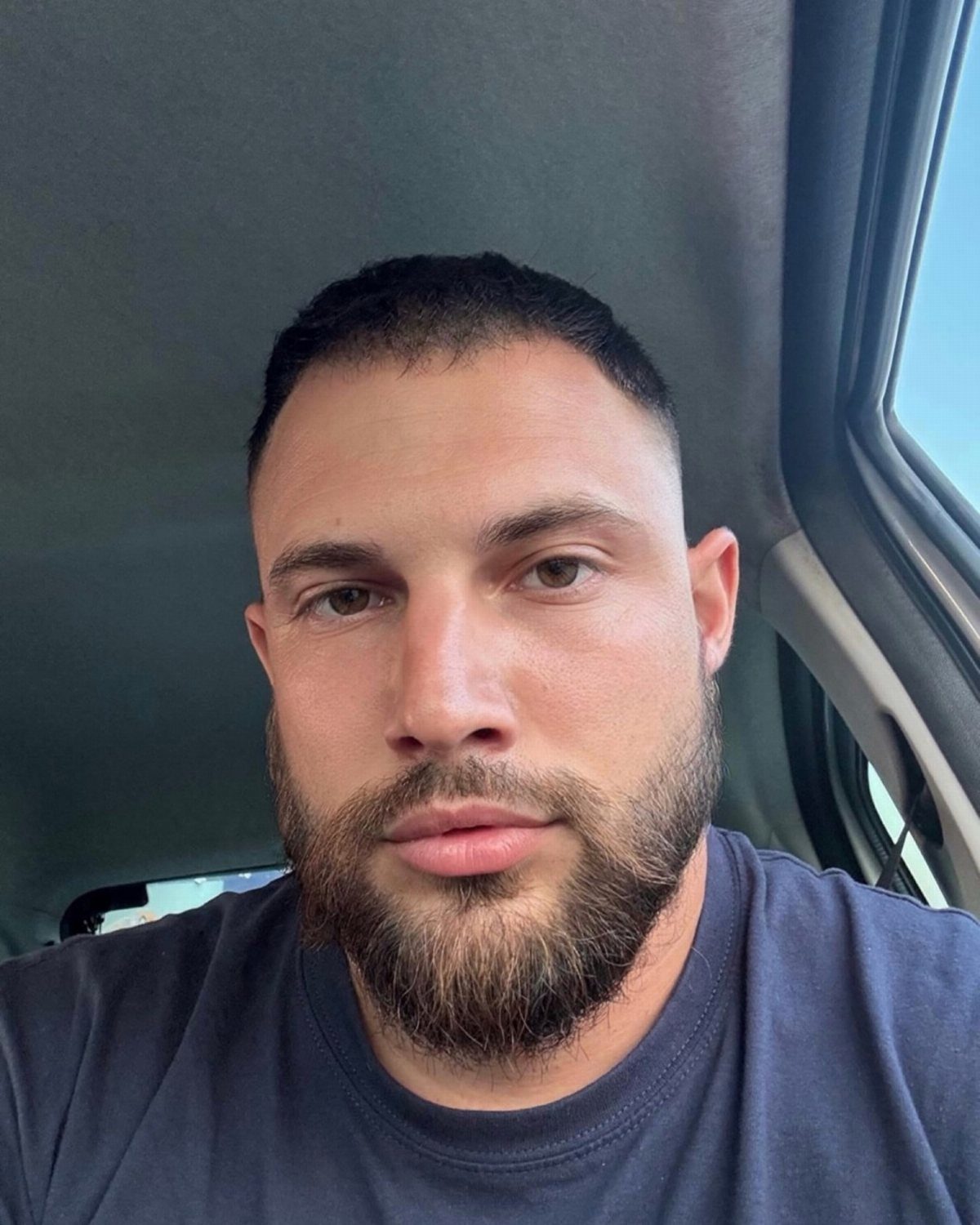
A boxed beard gives full coverage across the lower face with hard, defined lines along the cheeks and neck. The beard itself stays short and the edges are sharp enough that the shape holds between trims.
You set the cheek line below the natural growth boundary and the neckline above the Adam’s apple, then maintain both with a trimmer or razor every few days.
The style suits most face shapes because the edges can be adjusted to add width or length where you need it.
Upkeep is straightforward if your growth is even, but patchy areas show more at this length than they do in stubble.
6. Circle Beard
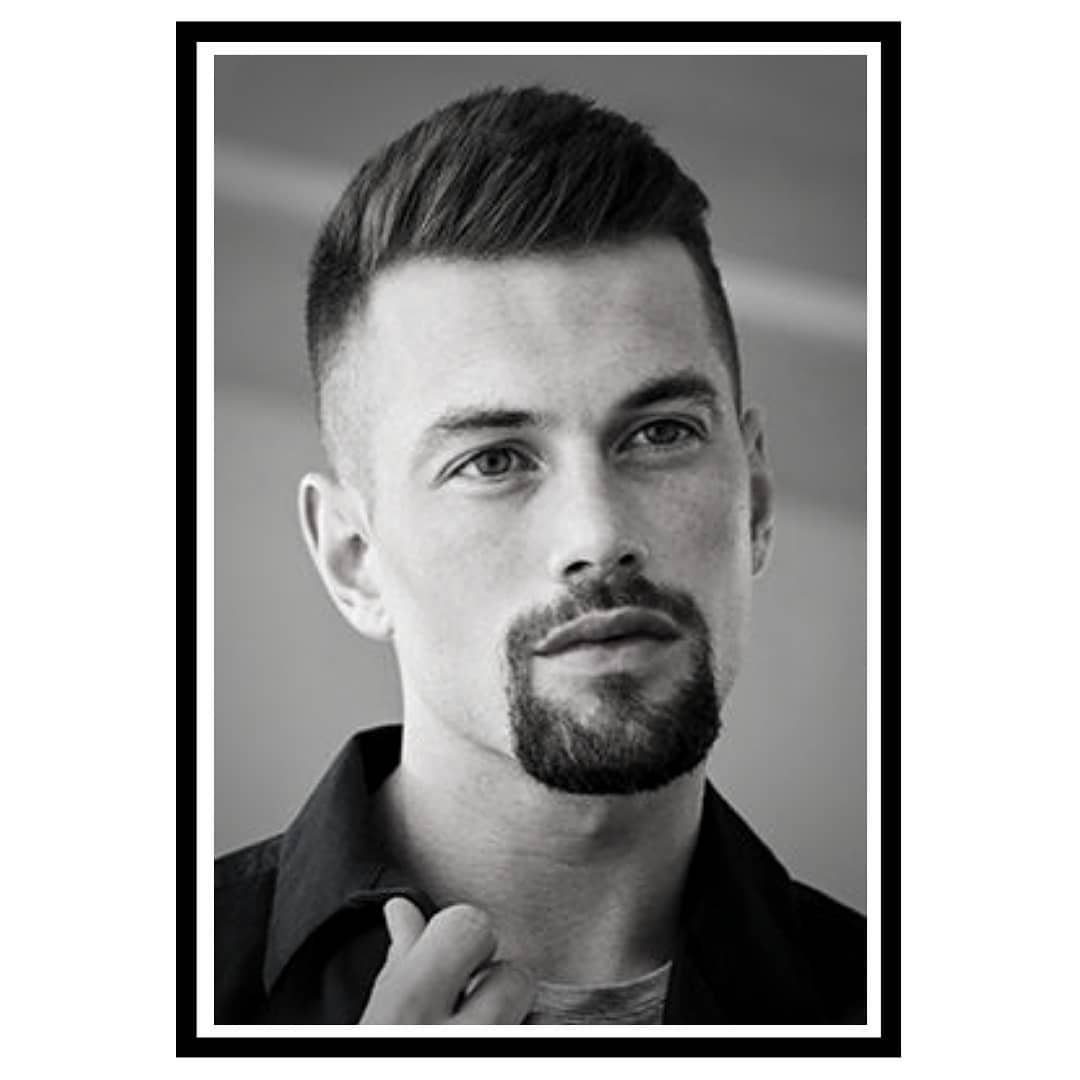
The circle beard joins a goatee to a mustache, the two meeting in a ring that sits around your mouth. Everything outside that circle stays shaved, and the edges are kept neat with frequent trimming.
This works well if cheek coverage is light or uneven, since you are only growing hair where most men have the densest growth.
You shave the cheeks and neck regularly and trim the beard and mustache to the same short length.
The shape adds balance to a square jaw and elongates a round face, but it can make a narrow face look narrower if the circle is too tight.
7. Beardstache

The beardstache lets the mustache grow thick while keeping the rest of the face trimmed down to stubble length. The contrast puts weight on the upper lip without the bulk of a full beard.
The mustache needs regular grooming to keep it from looking wild, and the stubble gets trimmed every few days.
This suits a narrow face by adding width across the middle, and maintenance stays quick if you trim both at different intervals.
8. Corporate Beard
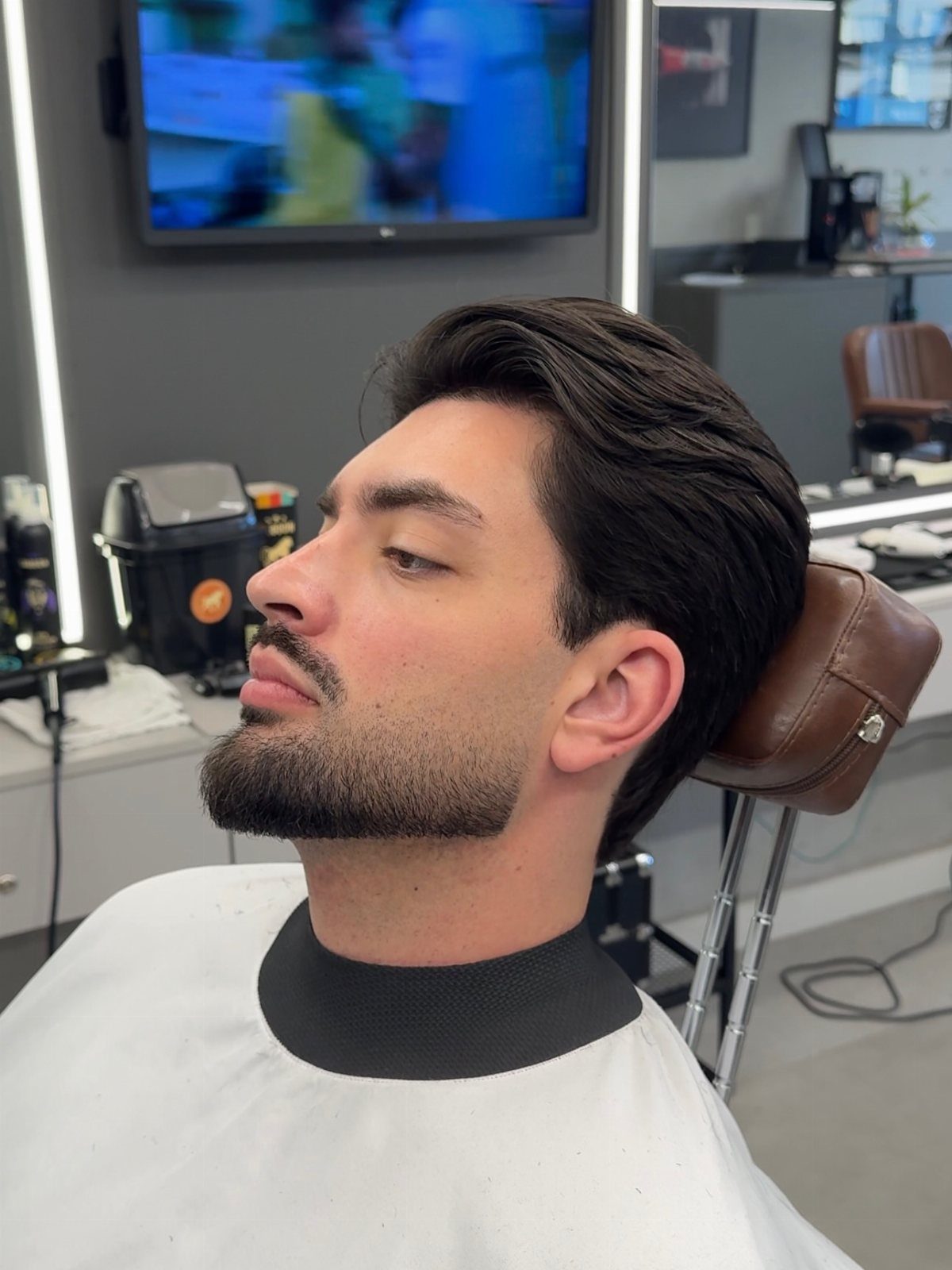
The corporate beard stays short, even across the face, and trimmed close enough that it reads as intentional rather than casual. The edges are neat but not aggressively sharp, and the length stays within what most workplaces allow.
You keep it short and trim the cheek and neck lines every few days.
The style works across face shapes because the length is forgiving and the grooming signals effort without looking high-maintenance. It requires dense, even growth to avoid patchy spots that show at this trim level.
Quite the opposite, in fact. A short beard is a smart, neat facial-hair option that can be styled to mitigate even the patchiest of growth.
9. Chin Strap Beard
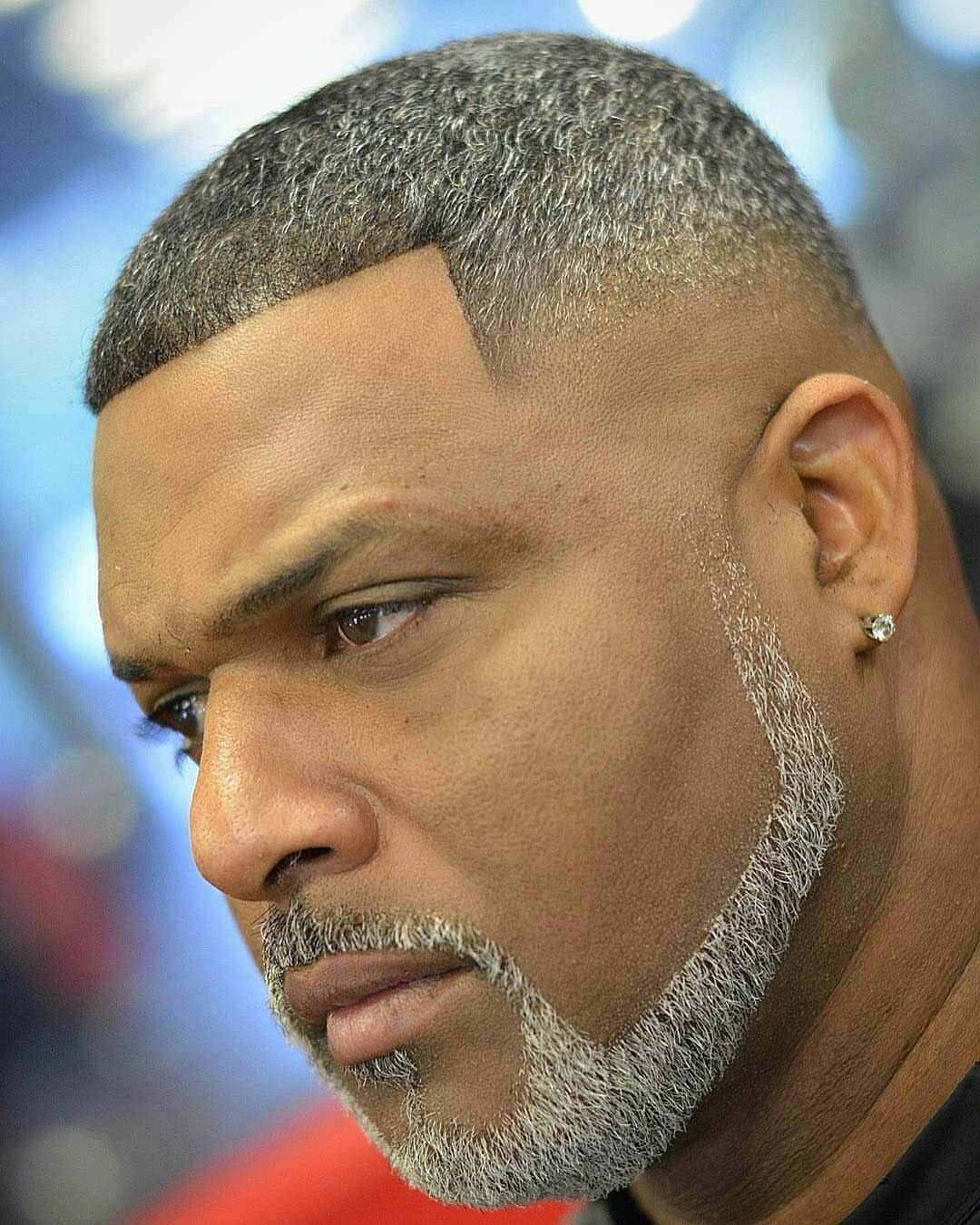
A narrow line follows the jawline from ear to ear, and the rest stays shaved. The width stays thin, usually under half an inch, and the line follows the bone.
You define the edges with a trimmer and shave the cheeks, neck and lower chin regularly.
This elongates a round face by tracing the jaw, but it shows every gap in your growth pattern, so it only works if your coverage along that line is solid.
Upkeep is frequent: the contrast between the strap and bare skin disappears quickly if you let it grow out.
10. Medium Stubble

Medium stubble sits at 3 mm, between light and heavy, and gives enough coverage to add shadow and definition without the density of a short beard. The length hides minor patchiness better than shorter stubble while staying quick to maintain.
You trim every 2 or 3 days with a 3 mm guard and clean up the neck and cheek lines as needed.
It gives softer jawlines more definition and works across different face shapes. If you skip a week, it crosses into beard length and loses the clean stubble look.
Working with Patchy Growth
Patchy cheeks are common, genetic, and not something patience solves. The fix is choosing a style that puts hair where your growth is dense and leaves sparse areas bare.
When chin and mustache coverage is strong but cheeks are light, a circle beard or goatee reads as intentional design rather than a failed attempt at full coverage. These styles only require growth where most men already have it.
If patchiness is even across the face, keep the length short.
Asymmetric growth is harder to hide at a single flat length. A chin strap or boxed beard with sharp lines will show every gap along the edge, so those styles need solid coverage wherever the line sits.
Frequently Asked Questions
What are some very short beard styles?
Light stubble at 1–2 mm, medium stubble at 3 mm, and heavy stubble at 4–5 mm give you coverage without crossing into full beard length.
A goatee or circle beard works if cheek growth is patchy, and a boxed beard or corporate beard gives full coverage at short length with defined edges.
How to stop a beard from looking scraggly?
Trim every few days to hold the length and keep edges clean, using a trimmer for even coverage and a razor for the cheek and neck lines.
Wash it 2 or 3 times a week with a beard shampoo, then follow with beard oil to keep the hair soft and the skin underneath from drying out.
Is 5 mm too short for a beard?
5 mm is heavy stubble, which sits right at the upper edge of short styles and gives more coverage than light or medium stubble without needing scissors.
It hides minor patchiness and adds weight to the jaw, but you trim regularly to keep it from crossing into beard territory.
Should I grow a short beard?
Short beards need frequent trimming and clean edges, so grow one if you can spare 10 minutes every few days for upkeep.
Which short beard style will suit me?
A round face needs angular lines from a goatee or chin strap to add length, while a square jaw looks better with softer edges like stubble or a corporate beard.
Heart and diamond faces carry more weight on the chin and lower jaw well, and an oval face fits most styles without needing adjustment.
What are the best short beard styles for men in a corporate setting?
A corporate beard stays short and even across the face with neat edges, reading as intentional without looking high-maintenance. Stubble at 3–4 mm and a boxed beard both stay professional and take only a few minutes to trim every few days.
Are short beard styles easier to maintain?
Short styles take less time per session than long beards, but they grow out faster and need more frequent trimming to stay sharp. Expect to trim every few days and clean the edges regularly to keep the look intentional.
How often should I trim my short beard?
Trim every 2 to 5 days depending on the style and how fast your hair grows. Light stubble needs daily or every-other-day trimming, while heavy stubble or a boxed beard can go 3 to 5 days before the edges blur.
Is a short beard suitable for all face shapes?
Short beards work across all face shapes if you choose a style that adjusts for your proportions.