Why Beard Shape Matters for a Round Face
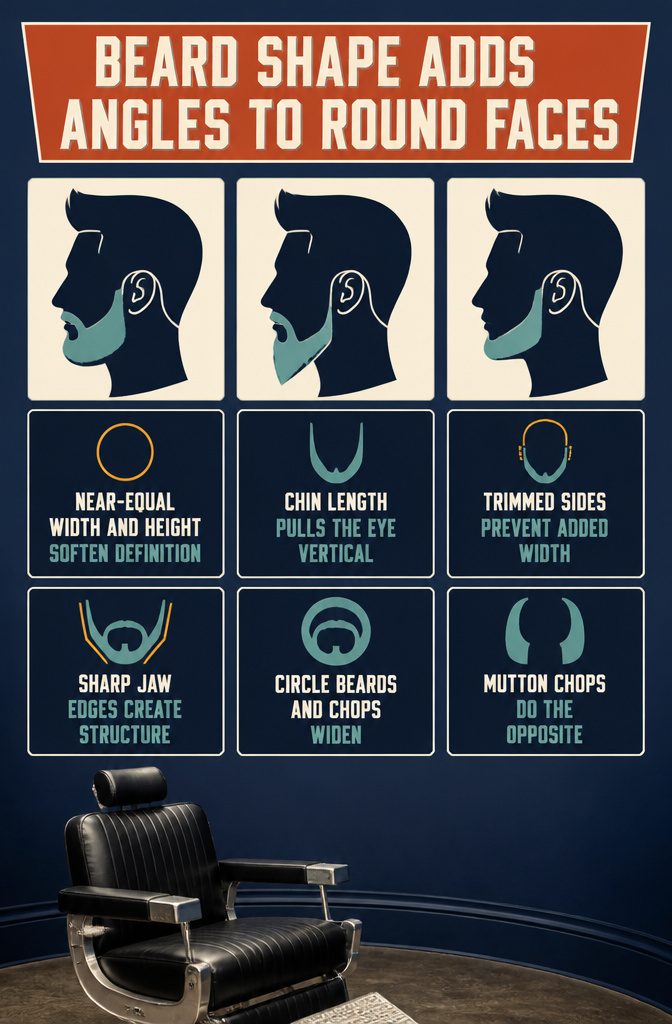
A round face reads as soft because the width and height sit close to equal, with gentle curves where definition would normally show.
Growing a beard fixes that by moving length to the chin and keeping the sides trimmed, which pulls the eye vertical and carves angles where the jawline blurs.
The mechanics are simple: longer growth below the chin adds apparent height, shorter sides prevent extra width, and sharp edges at the jaw create structure a round face lacks on its own.
A full circle beard or mutton chops do the opposite, widening what already reads wide. You’re always working toward the same shape: more oval or squared off, using hair to build the proportion your bone structure doesn’t give you.
Shape matters more than length alone, because where you carry the weight decides whether you look taller or rounder.
1. Goatee and Chin-Focused Styles
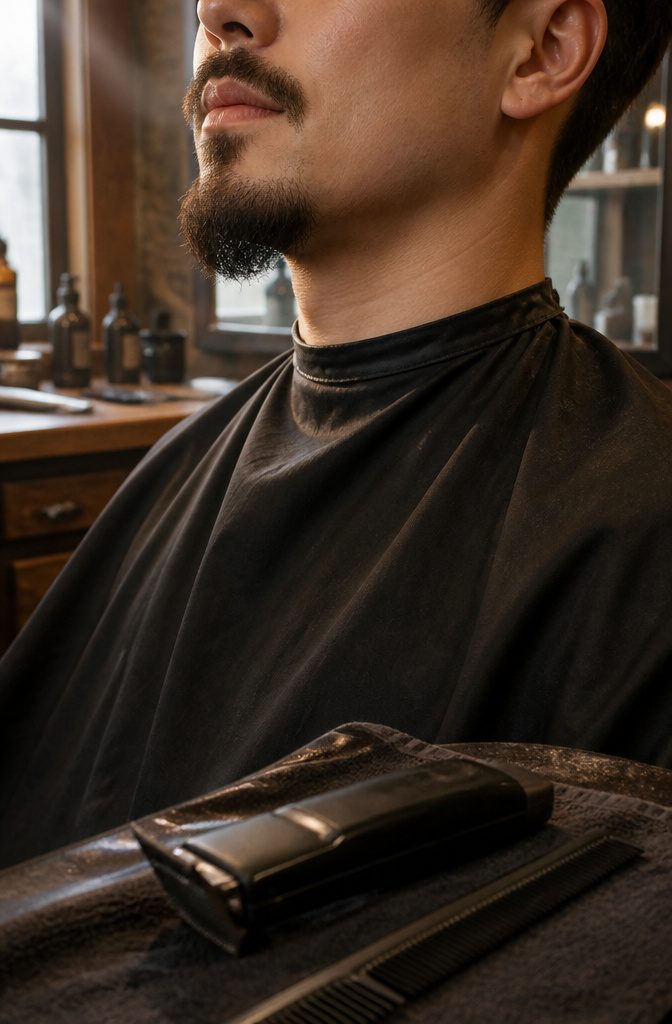
The classic goatee keeps hair on the chin and clears the cheeks entirely. Grow for a few weeks before shaping so you can see density and texture, then shave everything except the chin patch.
Pair it with a mustache or leave it detached depending on how much coverage you want. The look pulls focus downward and away from the widest part of a round face.
An extended goatee connects chin hair to the mustache, adding vertical continuity without full-cheek coverage.
Idris Elba and Will Smith have worn this version, and the unbroken line from lip to chin gives more perceived length than a floating patch alone.
The Van Dyke splits the mustache from the goatee, creating distinct angular shapes that break up roundness. The anchor beard follows a similar principle but traces the jawline in a shape that resembles its name.
Johnny Depp and Zac Efron have both used the anchor to sharpen their profiles. Either style keeps the cheeks bare and the chin defined, which is exactly what a round face needs.
2. Chin Strap
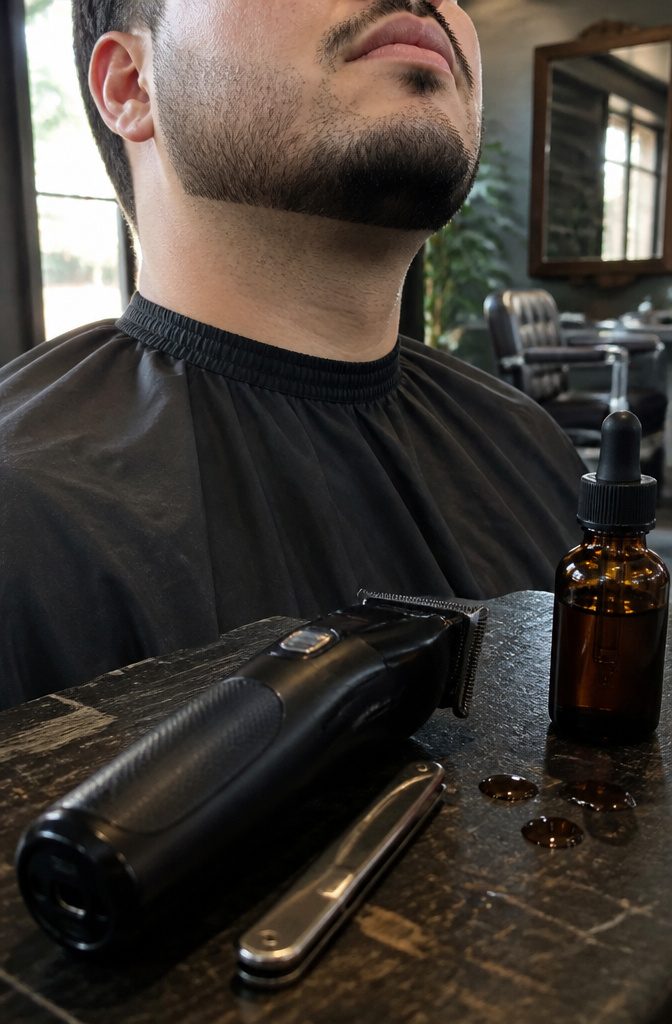
Hair that follows the jawline and connects at the chin traces the lower edge of your face and gives a round shape something closer to a border.
The chin strap sits tight to the jaw, thin enough to read as an outline rather than coverage, and that line does most of the work.
If the width shifts or the edges blur, the effect softens and you lose the definition you came for.
Consistent length across the whole strap keeps it looking deliberate. An electric trimmer with a guard handles the bulk of the work, and a razor cleans up the edges once the shape is set.
The sideburns run narrow all the way down, meeting at the chin without flaring or thinning out along the way.
A couple of drops of beard oil keeps the hair soft and manageable, and a small amount of balm or wax holds it if you want any control beyond what the trim provides.
3. Balbo
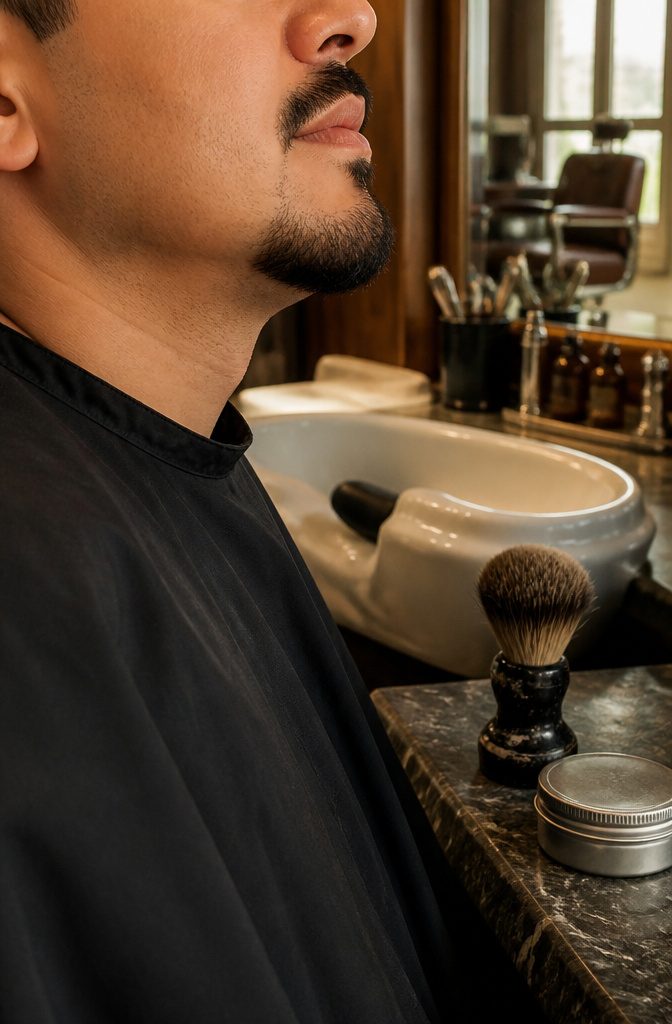
The Balbo is a goatee with a mustache that floats above it, never touching the chin hair. Descriptions differ on the exact shape of the goatee, but the gap between mustache and beard is what makes it a Balbo.
For a round face, I like it because the separate pieces pull the eye to the chin and give you a focal point, and the clean, well-trimmed lines add an angular edge. Skip the sideburns.
Keep both pieces short for a tidy look, or let them grow for a musketeer feel; at that length I’d reach for sculpting balm or beard wax to hold the shape.
Upkeep is light: keep the edges sharp and the length even.
4. Stubble

Stubble sits around 2 mm and takes about three to five days of growth to reach.
It gives you that easy 3-day stubble look without much upkeep, just a trimmer with a guard and a steady hand every few days to keep the length consistent.
The heavier and darker the stubble, the better it defines the edges of your face and adds some shadow where a round shape usually reads soft.
That said, the advice splits. Some sources call stubble a good low-effort option that adds maturity and a little edge, especially if you let it run slightly longer and darker along the jawline.
Others warn against very short beards entirely for round faces, arguing they do the opposite of what you need:
Avoid really short beards or stubble if you have a round face. It just highlights the fact that you don’t have a chin.
If your stubble grows in dark and you shape it carefully along the jaw and under the chin, it can add definition.
If it comes in patchy or light, it probably reads as unfinished rather than angular, and longer styles will do more.
5. Short Boxed Beard
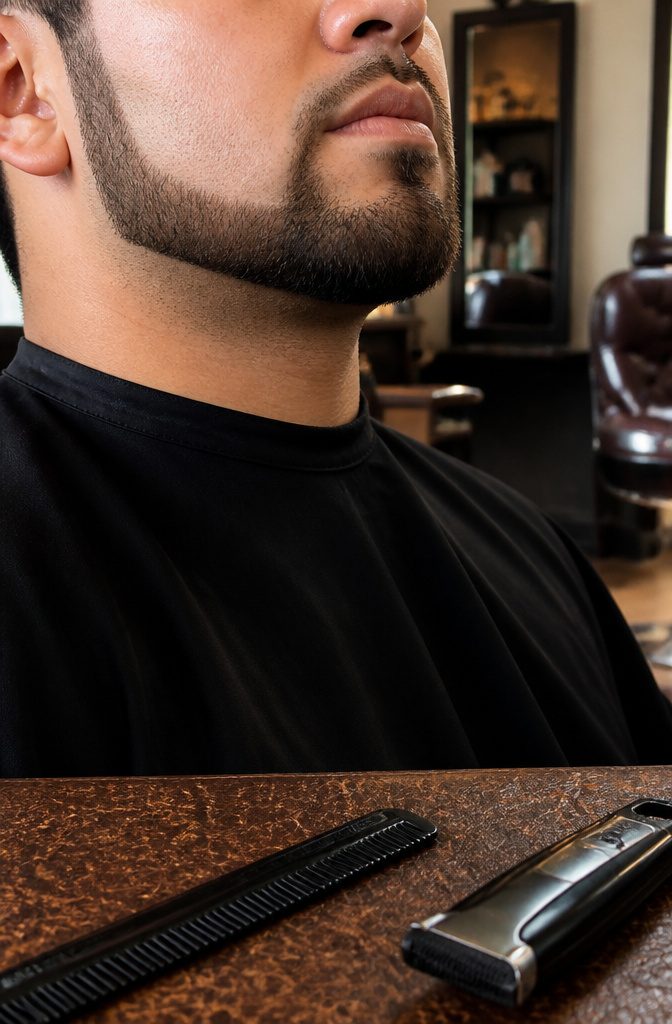
A short boxed beard is a chin strap joined to a full goatee, and its squared outline is what flatters round features.
The cheeks stay bare, so it runs shorter and tidier than a full beard. I treat the edges as the whole job: shave the cheeks clean and trim the sideburns carefully so every line is sharp.
The sideburns run into the goatee, so the whole frame should sit at one even length. A patchy join looks soft, and soft is what you’re working against on a round face.
Sideburn width is your call. Thicker ones give a heavier frame, thin lines look sharper, and the goatee can be trimmed to whatever length suits you.
6. Corporate Beard
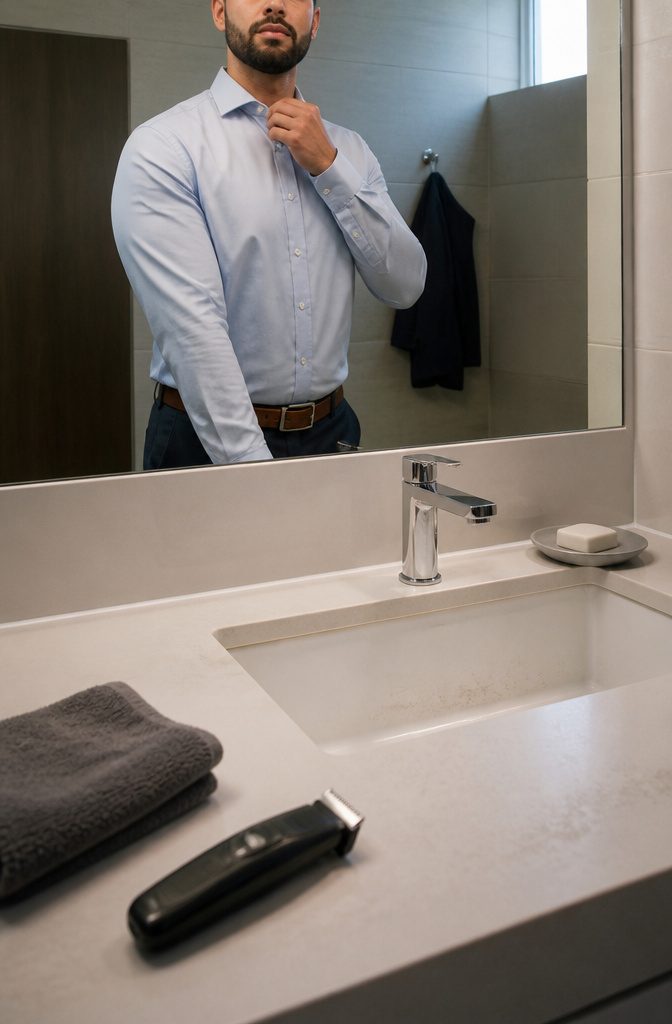
The corporate beard takes the short boxed beard one step further: it keeps the squared lower edge and clean neck line but adds hair on the cheeks instead of shaving them bare.
That fuller coverage softens the look slightly while the square perimeter still adds the vertical line a round face needs.
The cheek hair gives you more material to work with when you want a polished, professional appearance without looking like you only grow facial hair below the jawline.
I find it reads as intentional rather than patchy, and the squared shaping prevents it from widening your face the way an unkempt full beard can.
Same grooming rhythm as the short boxed: trim the edges every few days to hold the square, keep the length even with clippers, and edge the cheek line so it stays clean rather than creeping upward.
It grows out faster than a goatee because there’s more surface area, but you gain the coverage and the boardroom-ready look.
7. Square Beard
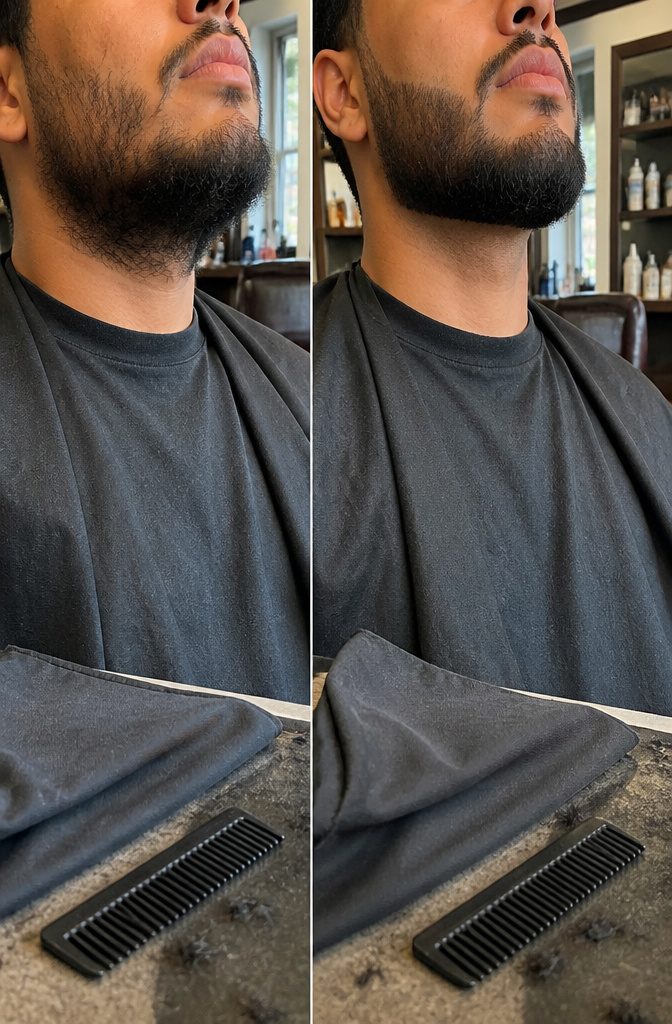
Square beard is a shape more than a strict recipe, and I’d treat it that way: keep the sides shorter and let the bottom run fuller, so the lower edge reads as a flat, angular jaw instead of a curve.
The fuller bottom is what creates the illusion of a more defined jawline, and a medium length is enough to get it. Extra length below the chin also pulls a round face toward oval, which helps.
When you sit down in the chair, I’d say shorter sides, fuller bottom, flat lower edge.
Chris Hemsworth and Leonardo DiCaprio both wear the look, and it adds a touch of sophistication. At medium length it’s also easy to keep up.
8. Full Beard
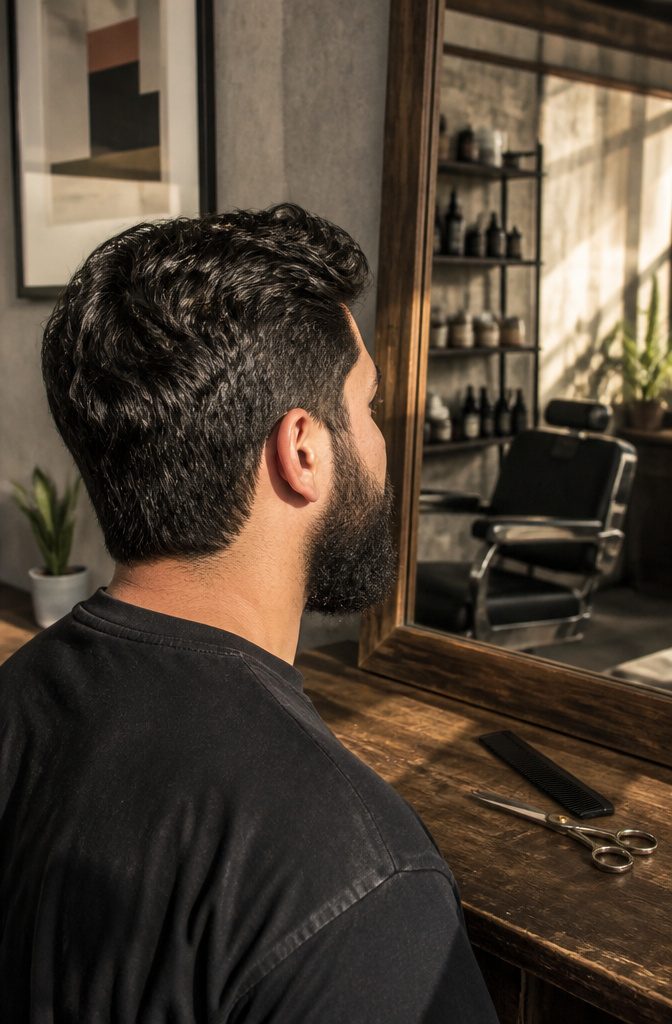
Full coverage means cheeks, jaw, chin and upper lip all filled in, and barbers disagree on exactly how long to run it and how to shape it.
The range I trust is half an inch to two inches. It flatters more face shapes than any other length, and on a round face it adds vertical length instead of extra width.
Keep the sides shorter than the chin so the eye travels down, not across. Heavy, wide sides do the opposite, so I’d trim them first.
A defined neckline matters most. With a natural cheek line above it, the beard looks intentional rather than like a shapeless mass under the jaw.
9. Ducktail
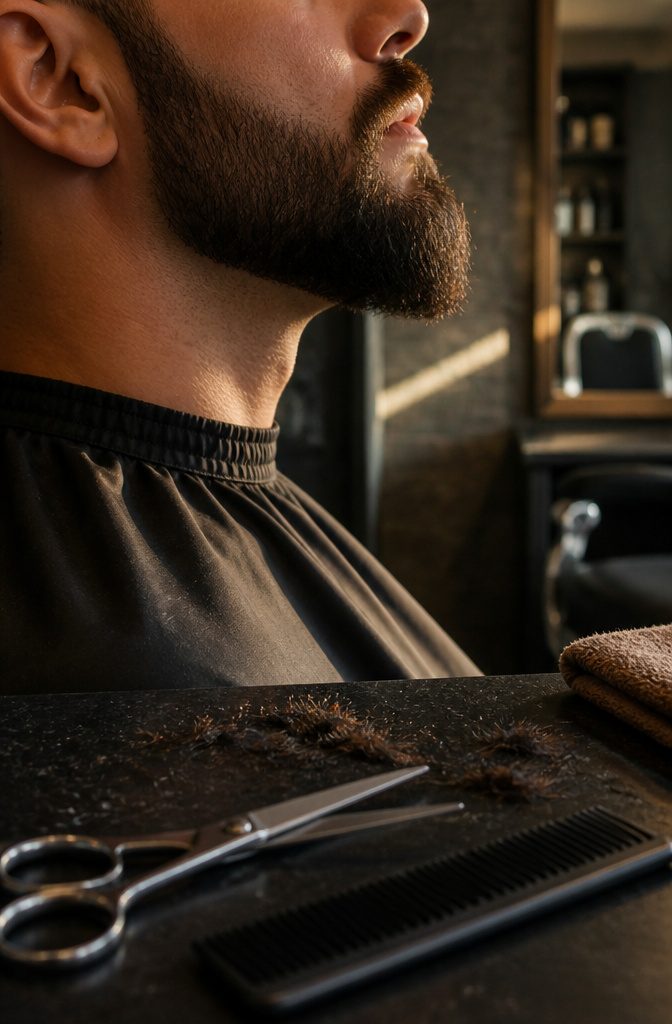
A ducktail is a full beard with the cheeks kept short and the length saved for the chin, so the outline narrows to a V pointing down.
On a round face that point pulls the eye toward the chin and adds the vertical length the face lacks.
Clear any stray or patchy hairs off the cheeks and taper the sides tight to the face, then leave the chin growth alone. The moustache can sit at whatever length looks tidy.
I’d go heavier rather than lighter. A lightweight ducktail is easier to live with, but a fuller one shows off the point, which is why you’d pick this style.
Don’t round off the bottom, since a blunt end drifts toward a circle beard, which widens the face.
10. French Fork
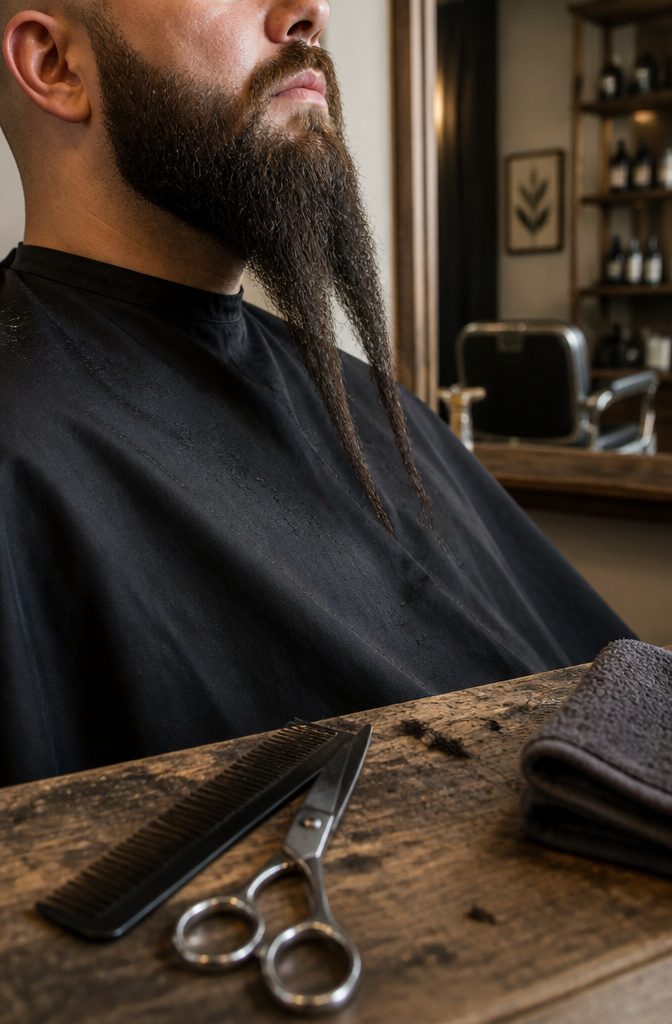
The longer chin section divided into two distinct points is what sets this apart, and getting there means committing to substantial growth before you can start shaping.
You’ll be waiting longer than most other styles on this list, because the fork needs enough length at the chin to define the split clearly.
While the chin grows out, keep the rest groomed as usual: cheek lines tidy, mustache trimmed, stray hairs removed.
The chin hair stays longer and gets shaped into a pointed V at the bottom of your face. Once you have the length, use a comb and scissors to separate the beard under your chin and define the two prongs.
Holding the shape throughout the day takes beard balm and regular maintenance. Carry a comb, because the fork will need touch-ups between morning and evening.
11. Old Dutch
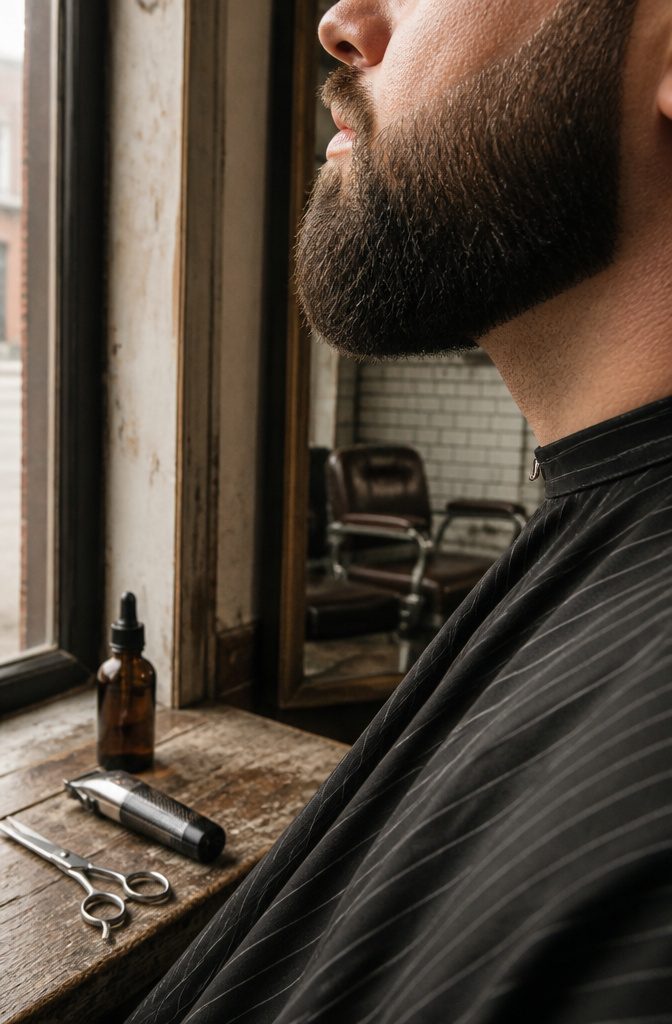
The Old Dutch runs one continuous line from the sideburns around the jaw, then ends in a bottom that is either flared or squared off.
On a round face I’d pick squared: a blunt, flat bottom edge squares the chin and gives the lower face the corners it lacks. Thick growth does the work here, so patchy cheeks will fight you.
The mustache is usually left out. That means a clean-shaven upper lip, with the sideburns, chin and jawline carrying the look.
Keep a trimmer for the cheek lines and beard scissors for the bottom edge, because this length takes real upkeep. Longer bristles dry out fast, so use beard oil regularly.
12. Yeard
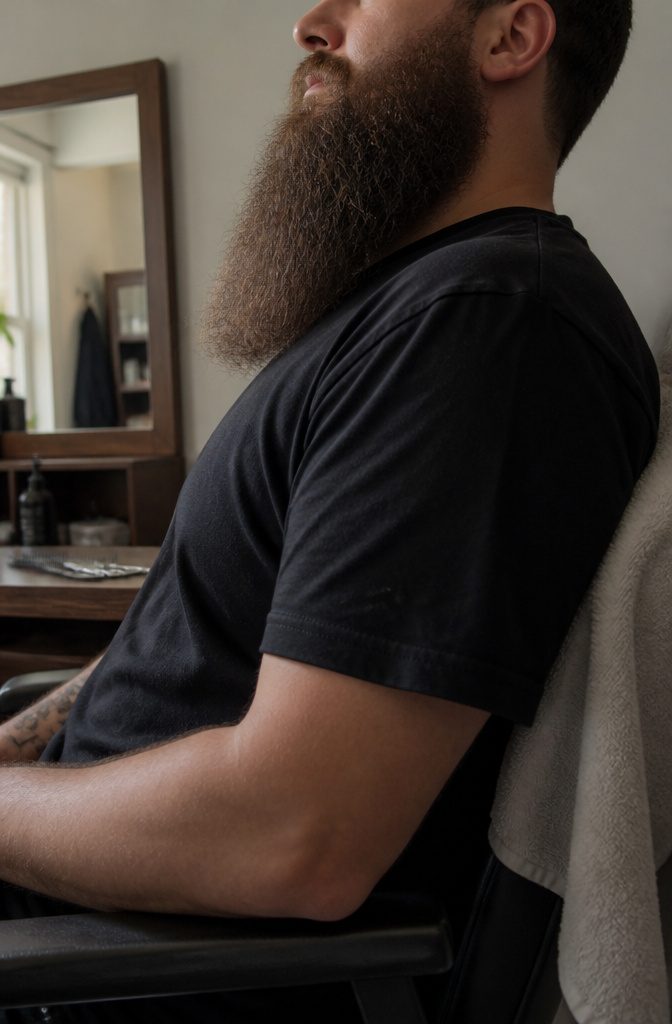
A yeard is a beard grown without interference for at least a year.
The name is blunt and the commitment matches it. This is a dramatic, face-covering option that requires patience and a tolerance for looking a little rough through the awkward middle months.
For a round face, the volume works in your favor.
The beard covers enough real estate that it redraws the lower half of your face entirely. Simple strategy, but effective.
You pay for it in maintenance.
There’s a lot of hair to control, and you will likely need a barber to keep it trim and tidy. Doing it yourself with scissors is possible but a mammoth task.
If you can keep it maintained properly, though, the yeard is a majestic look and places you in the upper tier of beard growers. Wear it with pride.
13. Garibaldi
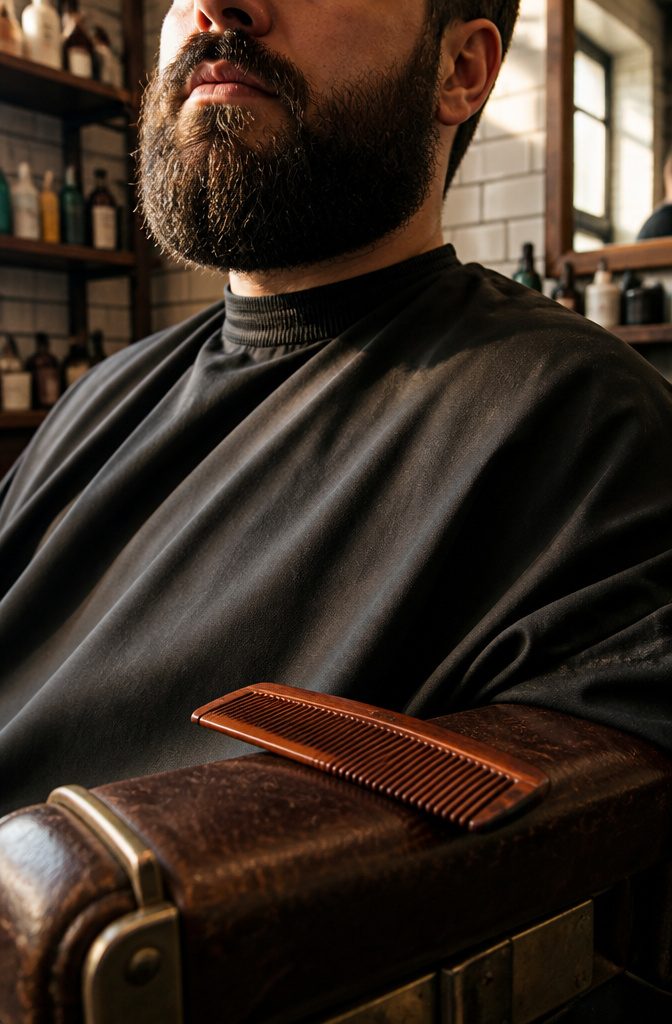
A Garibaldi is a full beard that ends in a rounded bottom instead of the point a ducktail draws at the chin.
Both run full across the cheeks and jaw, so the difference sits entirely at the base. Because nothing is cut to a sharp line, the Garibaldi looks looser and more natural.
On a round face, that softness cuts both ways.
A rounded base echoes the curve you already have, so it adds less definition than a pointed shape does. If angles are the goal, the ducktail wins.
I’d pick the Garibaldi for a fuller, easygoing look, and I’d keep it fuller at the chin than at the cheeks. A wide, short, evenly round bottom only makes the face look rounder.
14. Circle Beard
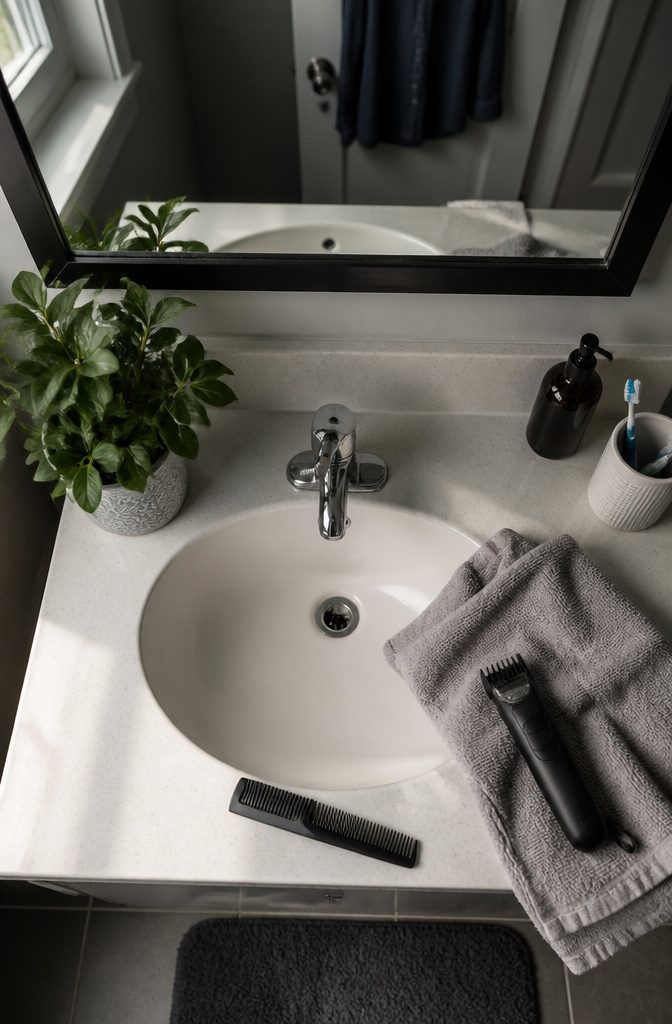
A circle beard connects your mustache to a goatee in a continuous loop around the mouth, creating a contained shape that keeps the focus tight and vertical rather than letting facial hair spread wide across the cheeks.
The geometry works well for a round face because it draws the eye to the center and suggests length where the face is naturally full.
The contained shape also keeps grooming straightforward. You shave everything outside the circle, which means clean cheeks and a defined edge that holds its shape for several days before needing a pass with the trimmer.
Pairing it with longer hair on top balances the proportions better than cropping close, since the beard already sits low on the face and a buzz can make the whole silhouette look bottom-heavy.
15. Faded Goatee or Faded Beard
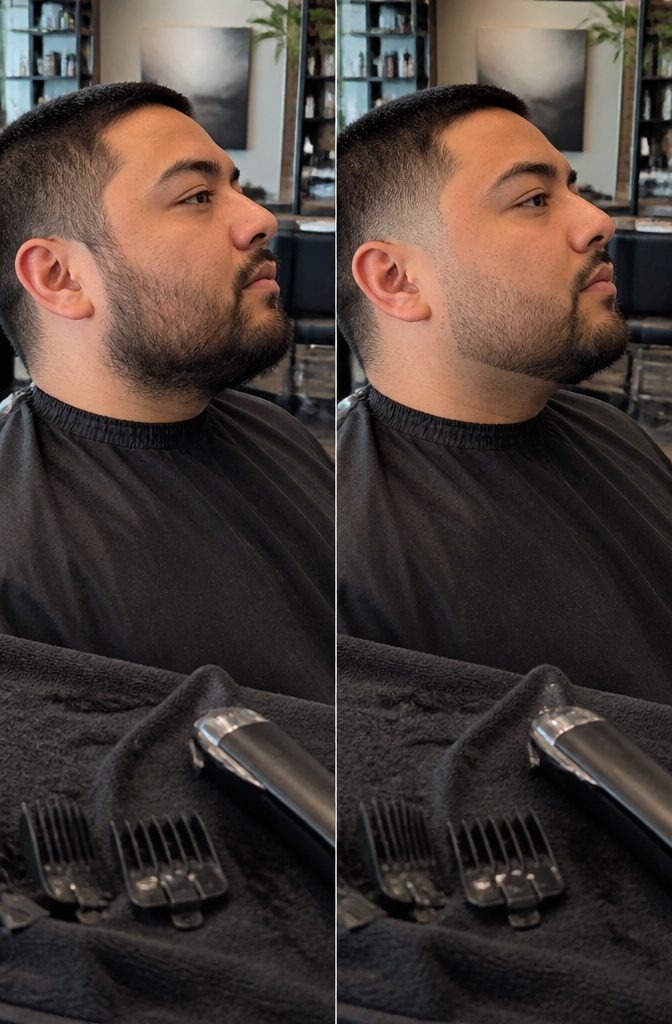
A faded beard keeps length shortest near the cheekbones and lets it build gradually as it moves down toward the jawline, shaping the face through controlled contrast rather than a uniform guard setting.
The approach works particularly well on round faces because the fade pulls attention downward instead of spreading density evenly across the width of the cheeks, which can make the face read wider than it is.
The fade itself starts at a short setting near the sideburns, often a 1 or 2 guard, and steps up through progressively longer guards as it descends.
By the time it reaches the chin and mustache, the length might sit at a 4 or 5, sometimes longer if the fullness supports it.
The transition needs to be smooth enough that no single line stands out, but defined enough that the shift in volume actually reads as structure.
16. Scruffy Beard
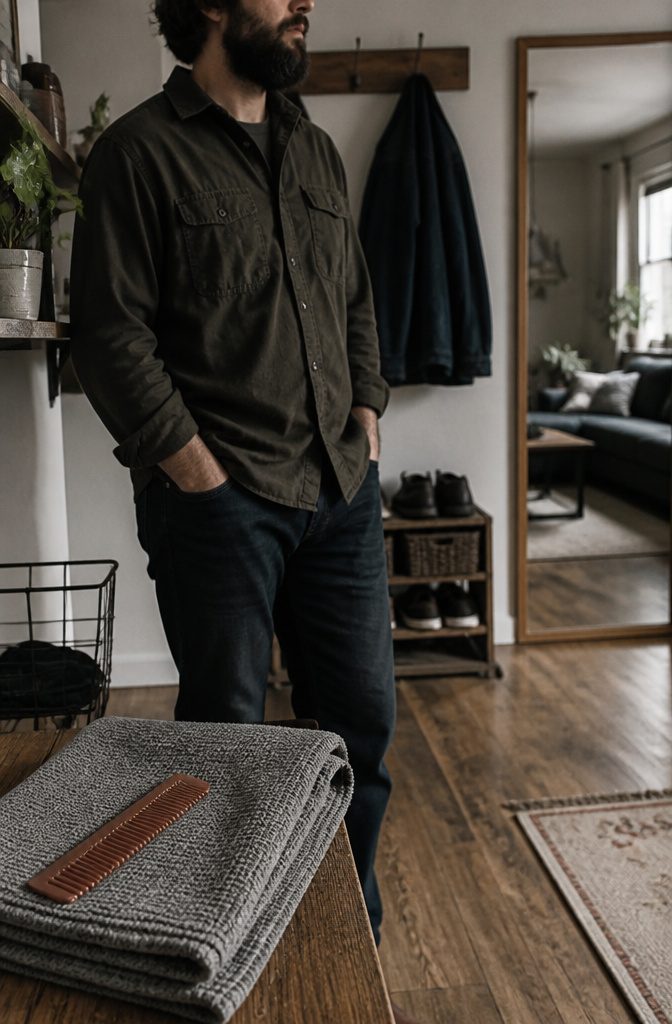
A scruffy beard is what happens when you let natural growth run for a few months without shaping lines or trimming edges.
No guard numbers to remember, no weekly lineup appointments, no strict grooming rules beyond washing and keeping it clean.
The length and fullness come from time rather than technique, and that unstructured volume adds width across the lower face, which helps balance roundness and draw the eye down.
You need enough density for the beard to fill in unevenly without looking patchy. Thin or sparse growth shows gaps that defeat the point of the style, so wait at least a month before deciding whether this is the move.
Texture matters less than coverage here. The look reads as intentional when the beard is genuinely full, not when it is fighting its way through slow growth.
17. Bandholz Beard
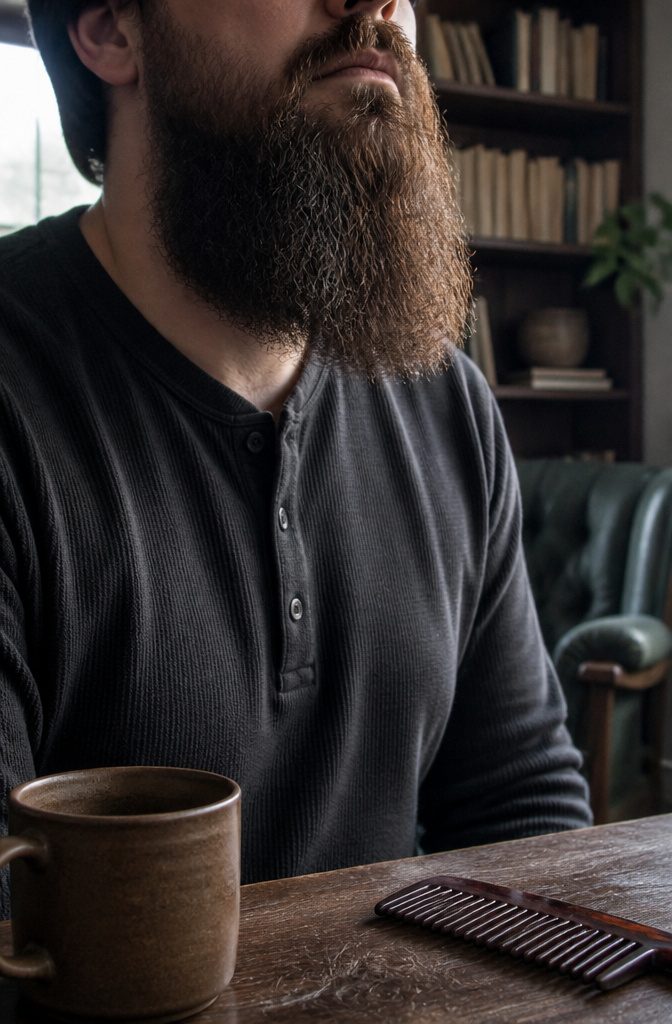
The Bandholz beard is a full beard with the mustache left intact and almost no rules. There’s no fixed neckline, no sculpted cheek line and no set length, so you let it come in the way it wants.
That makes it one of the lowest-effort looks on the list, and full growth is the most popular choice for a round face.
I’d still watch the sides. Bulk at the cheeks widens a round face, so let the length gather under the chin rather than push out past the jaw.
Brushing downward trains it to fall that way. Past that, I’d skip the fuss and let it grow.
18. Verdi Beard
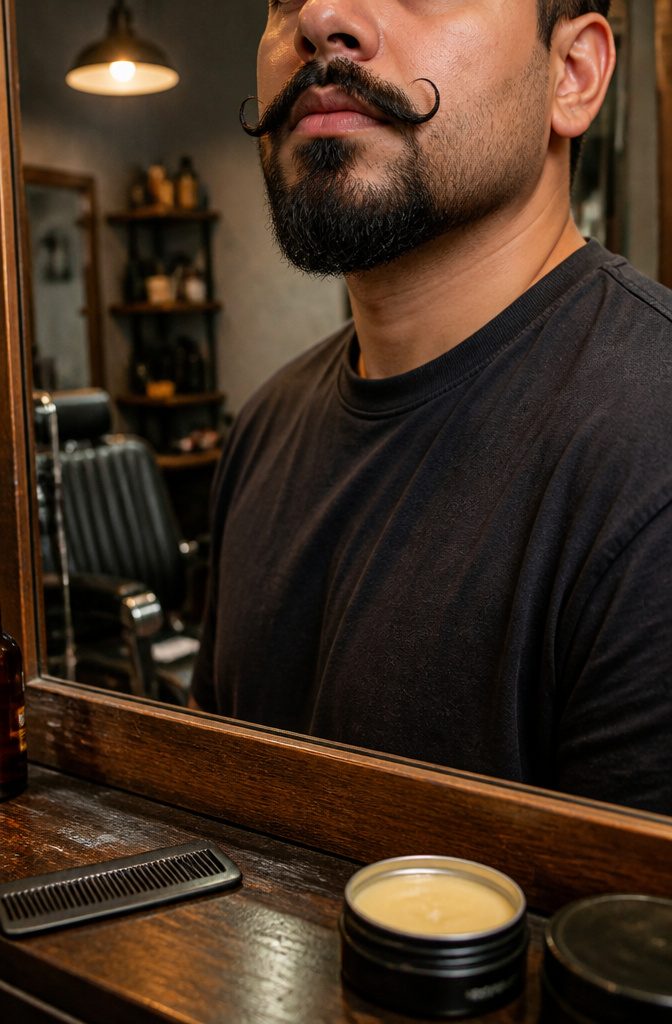
The Verdi is a structured goatee: a rounded beard on the chin and a mustache with distinct curled ends on either side, with no connection between the two.
That gap is the design. Because the mustache stands alone, the chin patch reads as its own shape instead of a loop around the mouth.
On a round face, I’d treat the rounded chin as the risk.
A soft curve under a soft jaw can add to the roundness, so I’d keep the chin patch compact and the outline crisp, and let the curled mustache ends supply the sharpness.
Those ends won’t hold a curl by accident, so expect to shape them on purpose rather than just trim.
19. Chin Strip
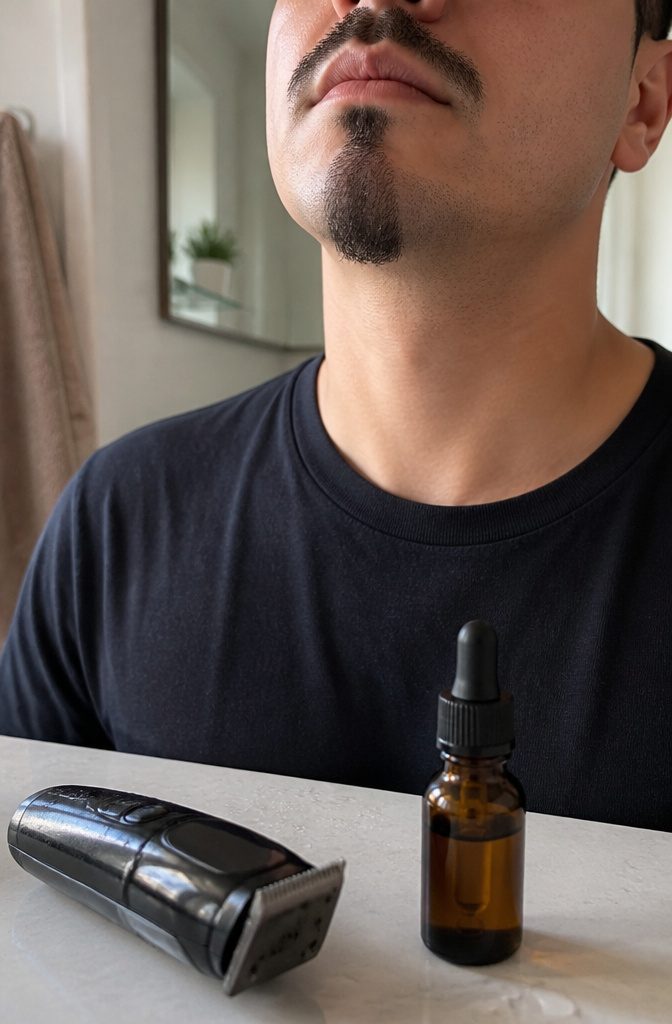
A chin strip is a narrow band of hair down the center of the chin, with the cheeks and jaw left bare.
It pulls the eye to one spot, and adding a mustache widens that focus to the whole lower face. On its own, I think the strip can look like it’s floating, so I’d lean toward the mustache pairing.
Upkeep is all about edges.
Keep the length consistent from top to bottom of the strip, since an uneven one looks odd fast. Set the length with an electric trimmer and a guard, then shave stray hairs outside the lines.
A couple of drops of beard oil keep it soft, and a small dab of balm or wax gives light hold. The thin, sharply lined versions are the trendy ones, and they need regular trims to stay that way.
Matching the Style to Your Growth and Features
Matching the Style to Your Growth and Features
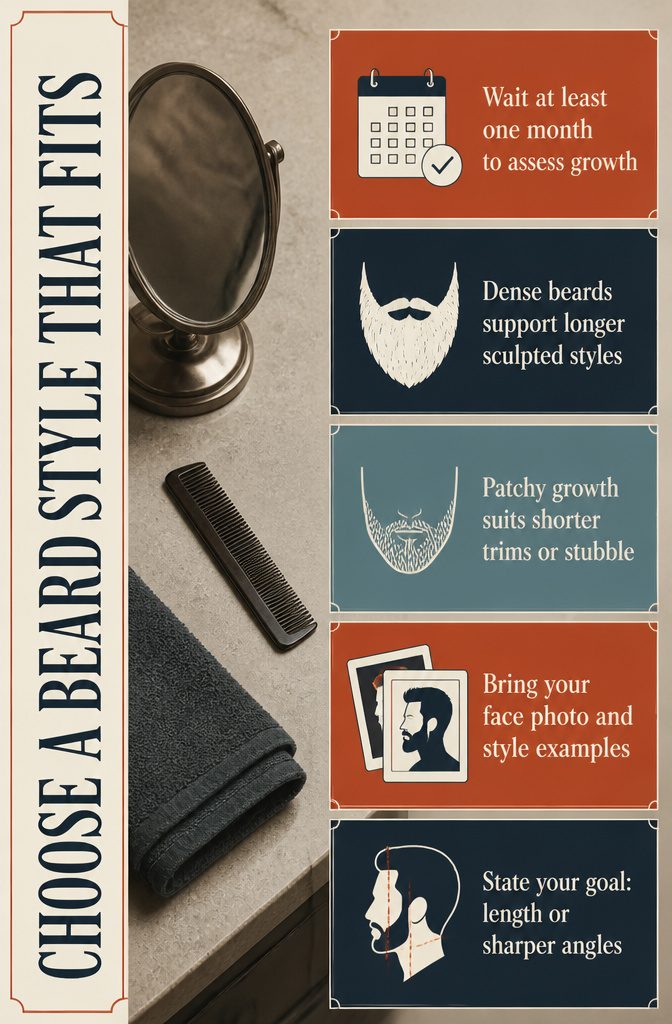
Grow for at least a month before you pick a style. After a few weeks, density and texture become clear enough to see what you’re actually working with.
A thick, full beard can carry longer styles and more sculpted lines; patchy or less dense growth tends to look cleaner in shorter, trimmed styles or stubble that doesn’t ask for coverage you don’t have.
If you’re planning to visit a barber for a style you haven’t worn before, bring a reference photo.
Walking in and asking for a beard shaped for a round face gives almost nothing to work with, since the real decisions depend on your jawline, growth pattern, and density far more than the shape label alone.
A photo of your own face plus one or two examples of styles you like on a similar shape communicate more than the terminology ever will.
Mention your goal out loud, too. Stating that you want to add length or sharpen angles gets you a more precisely tailored result than leaving the barber to guess.
Grooming and Upkeep
Grooming and Upkeep
The neckline decides whether a shaped beard looks deliberate or scruffy.
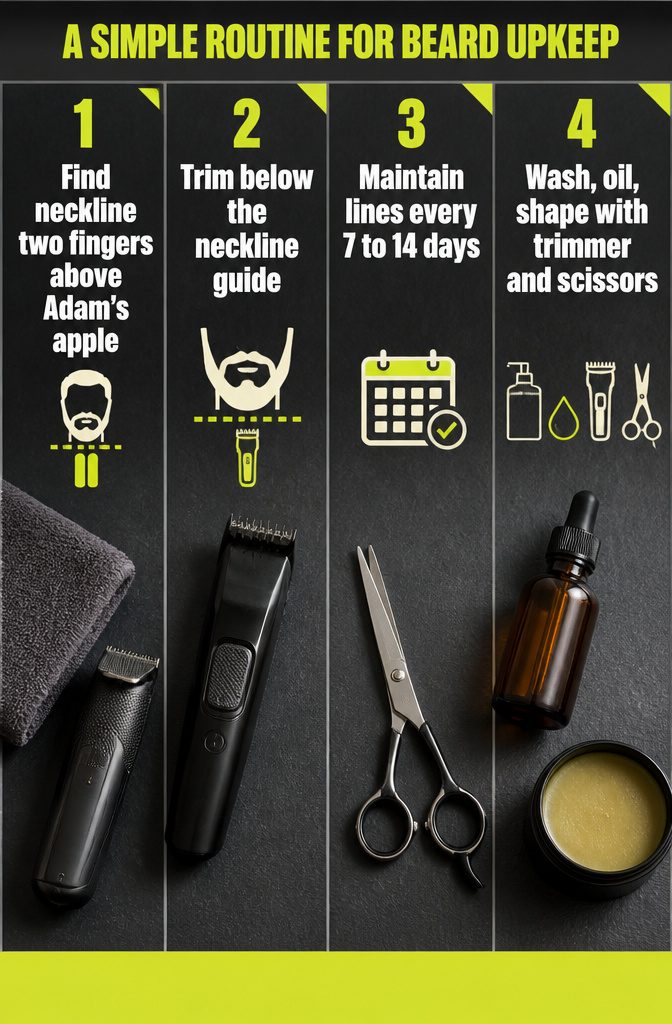
I place two fingers above the Adam’s apple and trim everything below that line with an electric shaver. That guideline holds regardless of which style you choose.
The neckline, cheek line, and overall shape need attention every 7 to 14 days to stay sharp. If you have a round face and you’re keeping the sides trimmed tight for vertical definition, those sides may need work every 7 days.
Beard oil keeps coarse hair pliable enough to take the shape you trimmed.
Balm adds light hold so the cheek and chin lines stay where you put them. Wash prevents buildup that makes the hair stiff.
A trimmer with guards handles length; scissors finish the edges. Longer styles dry out faster, so oil matters more the further you grow past stubble length.
Checking Whether Your Face Is Actually Round
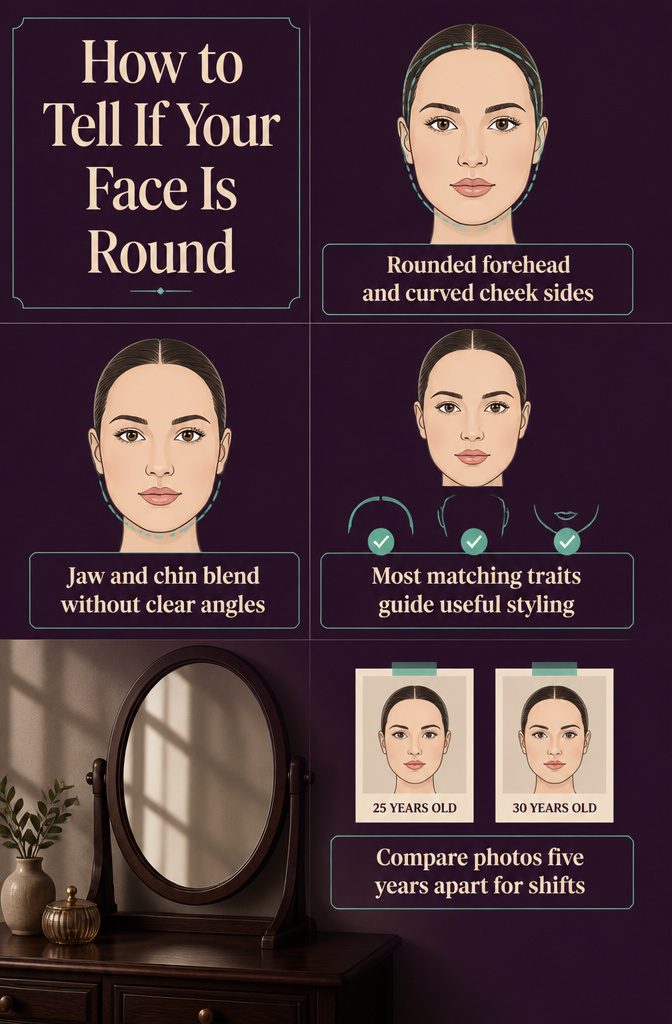
Stand in front of a mirror with good light and look straight on.
A round face reads rounded at the forehead, curved rather than straight down the sides of the cheeks, and without much definition where the jaw meets the chin. All three areas blend into one shape instead of breaking into angles.
Faces share traits across shapes more often than they fit one description cleanly. Your forehead might be rounded while your jawline holds some definition, or your cheekbones might be wider than your forehead but your chin still rounds off.
Associating yourself with the shape that fits most of the description gets you closer to useful styling guidance than waiting for a perfect match.
Weight changes and aging shift proportions over years. Weight loss or gain alters cheek fullness and jaw definition, and a face that read as round at twenty-five may carry more angles at forty-five.
Comparing photos from five years apart shows the shift more clearly than day-to-day mirror checks, where the change happens too gradually to notice.
Frequently Asked Questions
What beard is best for a round face?
Styles that add length at the chin and keep the sides short work best: goatee, Balbo, ducktail, short boxed beard, or any chin-forward shape.
These pull the eye vertical and carve angles where the jawline lacks definition. Avoid full circle beards and mutton chops, which widen what already reads wide.
Should I shave my beard if I have a round face?
No.
The right beard actually adds definition and balance to a round face by creating vertical length and angular structure where the bone structure doesn’t provide it. Shaving removes the tool that fixes the proportions.
What is a boxed beard style for round face?
A short boxed beard joins a chin strap to a full goatee, creating a squared outline that adds angles to round features.
The cheeks stay bare and every edge is kept sharp, giving a neat, structured frame that defines the lower face.
What is a balbo beard for round face?
The Balbo is a goatee with a floating mustache above it that never touches the chin hair.
The separate pieces pull the eye to the chin and add angular edges, while the clean lines break up roundness. Skip the sideburns.
What is a chin strap beard for round face?
A chin strap follows the jawline and connects at the chin, tracing the lower edge of your face like a border. The thin line outlines the jaw and gives a round shape visible definition where it lacks it naturally.
Does a beard make your face look less round?
Yes. A beard shaped correctly adds vertical length below the chin and keeps the sides trimmed, which pulls the eye downward and carves angles where a round face blurs.
The hair redraws the lower face and shifts the proportions toward oval or squared.
Should round faces have beards?
Yes.
Growing a beard helps elongate a round face by adding length below the chin and creating structure along the jawline. You can choose the style or length that suits your density and the amount of definition you want.
Does beard color affect the shape choice?
Slightly.
A darker beard against lighter skin adds more visual weight, so darker beards on round faces should be kept a touch shorter to avoid widening the face. Lighter beards blend more and can carry extra length without the same risk.