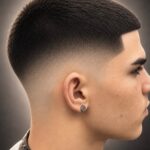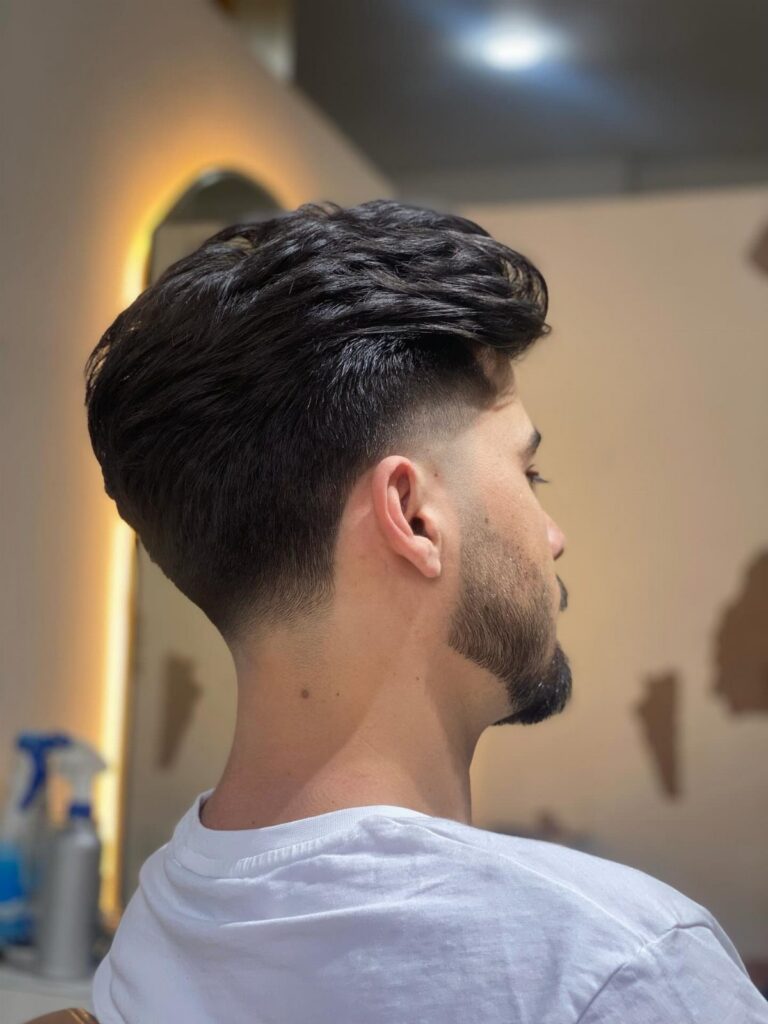
A taper fade can stretch 3 to 4 weeks between visits if the blend leaves stubble visible all the way down, or need cleanup every 2 weeks if the sides go to skin.
The fade height changes how much contrast you get: a high taper sits above the temple and leaves less length to grow out, while a low fade starts closer to the ear and stretches longer between cuts.
Texture on top pairs well with a low fade or drop taper because both keep the transition gradual and let the natural movement do the work.
1. Skin Fade
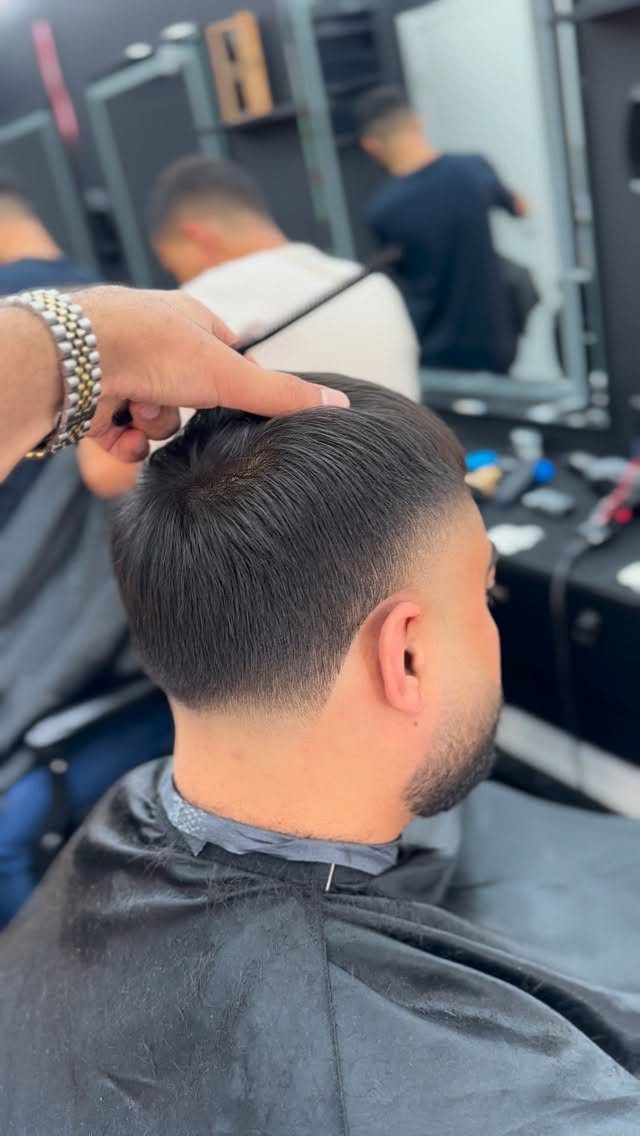
The blend reaches bare skin at the bottom, making the contrast sharper than a taper that leaves stubble visible all the way down.
A barber uses clippers without a guard to take the sides to skin, then blends upward with progressively longer guards.
The fade itself needs attention every 2 weeks to stay clean; past that, the line where skin meets hair starts to blur.
Styling time depends entirely on what sits on top. The sides take care of themselves.
2. Low Skin Fade
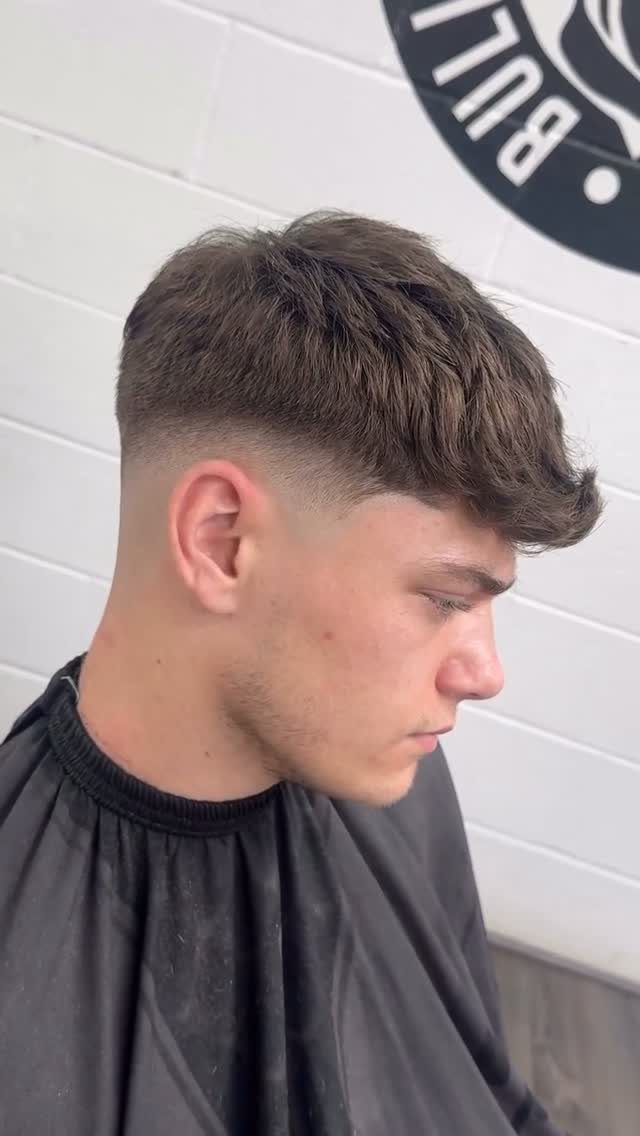
A skin fade that starts low keeps most of the taper near the ear and nape, leaving more length above it than a mid or high fade would.
The barber brings the blend to skin around the temple and sideburn, but the transition stays compressed in the lower third of the head.
That keeps the proportions close to a classic taper while still delivering the clean, sharp finish of a skin fade.
It grows out more gradually than a high fade, so you can stretch cleanup appointments to 3 weeks if the top stays tidy.
3. Skin-Tight Low Fade
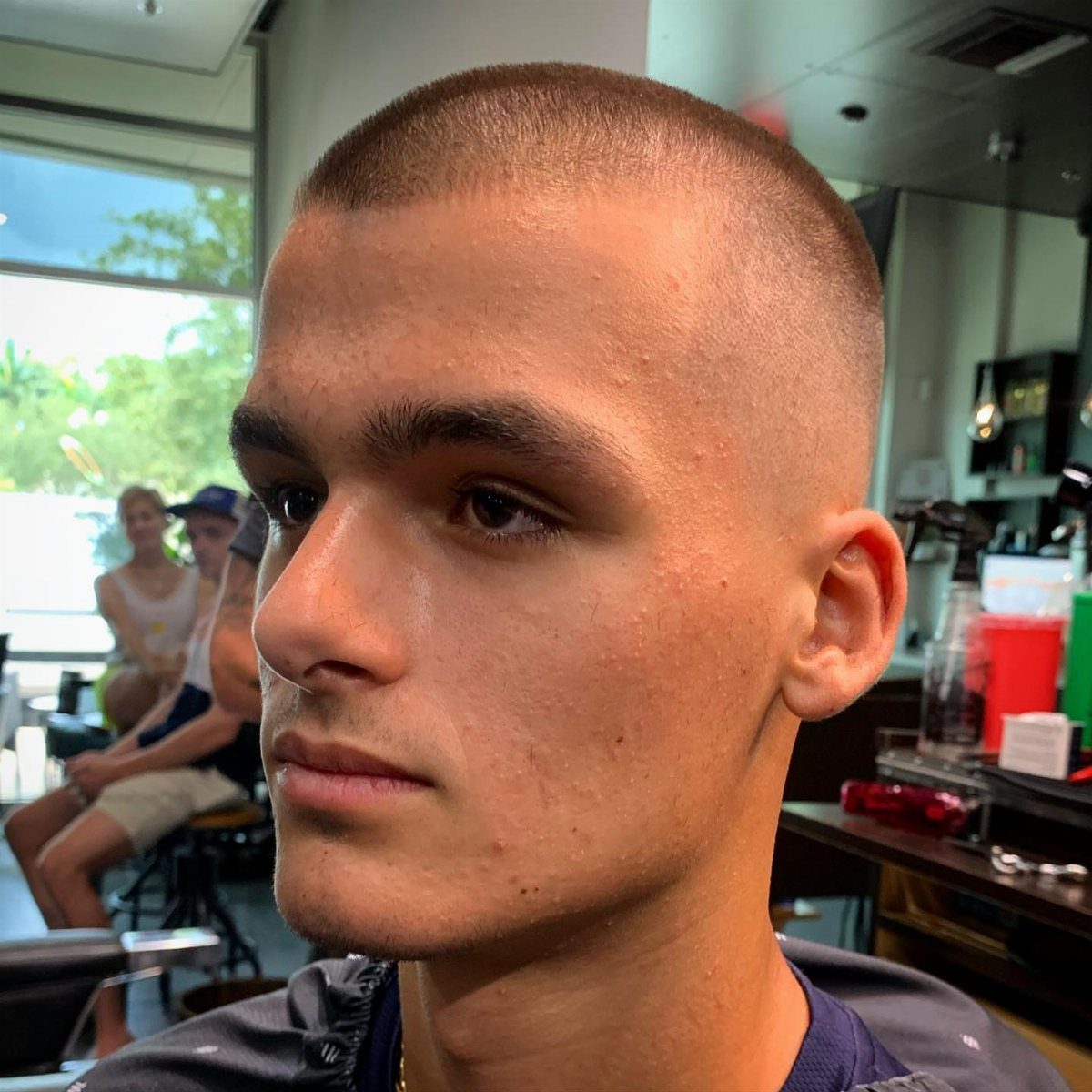
A low fade keeps the sides very close without adding much length on top. The result reads as a tight, minimal cut rather than a style with contrast between long hair and faded sides.
The barber works the blend low and keeps the top short, often buzzed to a half inch or less. There is no styling routine here: out of the shower, the cut is already finished.
Maintenance is every 2 weeks. The proportions suit a round or square face, where a taller silhouette can look unbalanced.
4. Taper Fade with Beard
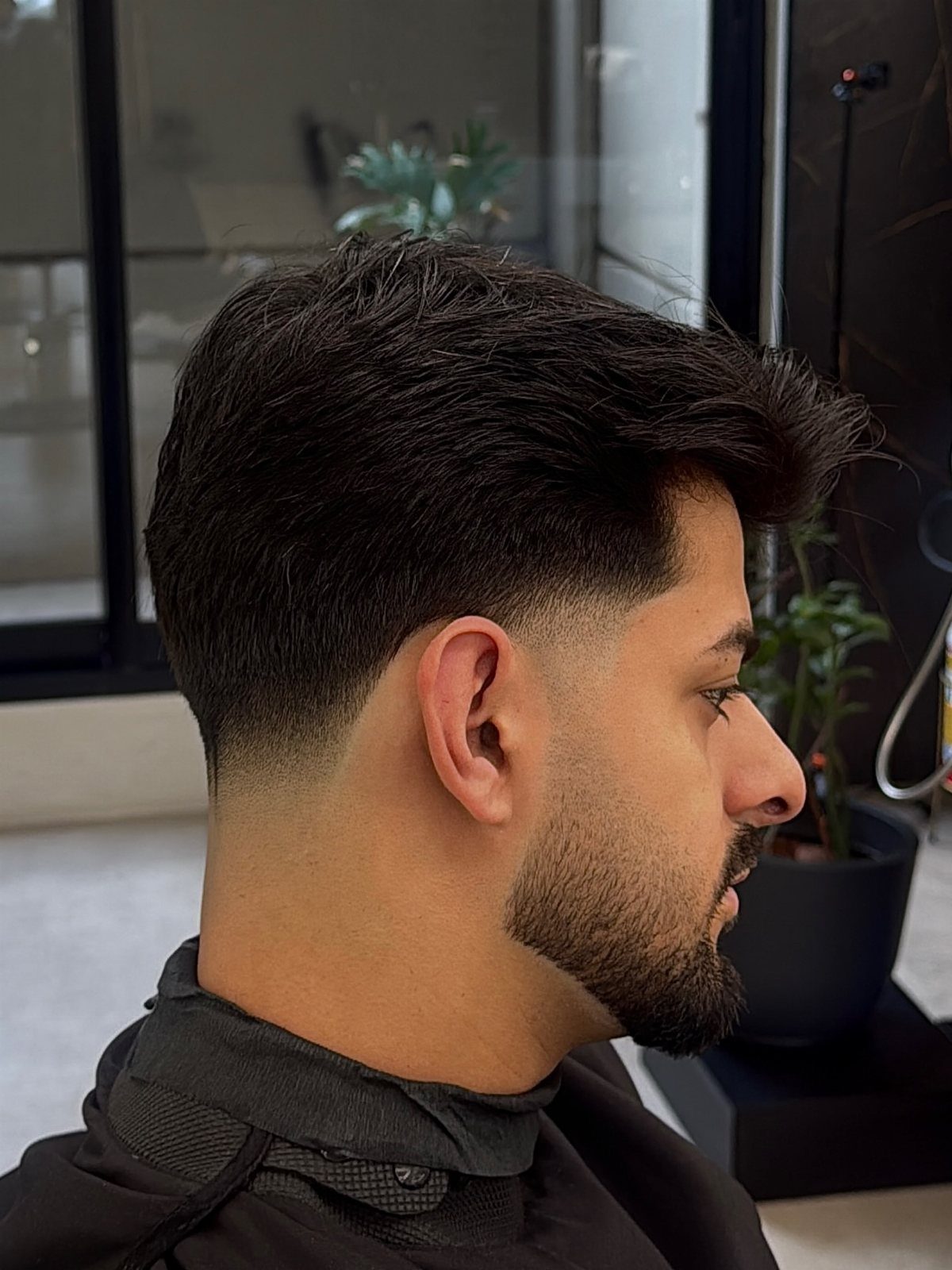
The sideburns taper into the beard line instead of stopping abruptly, so the haircut and facial hair read as one shape rather than two separate elements.
A barber who knows beard work will blend the fade into the sideburn, then carry that taper down into the beard using a trimmer. The transition should be smooth enough that you cannot spot where the hair changes direction.
If the beard grows in patchy near the jaw, the blend will expose that. A fuller beard hides the seam better and makes the whole shape easier to maintain.
5. Textured Low Fade
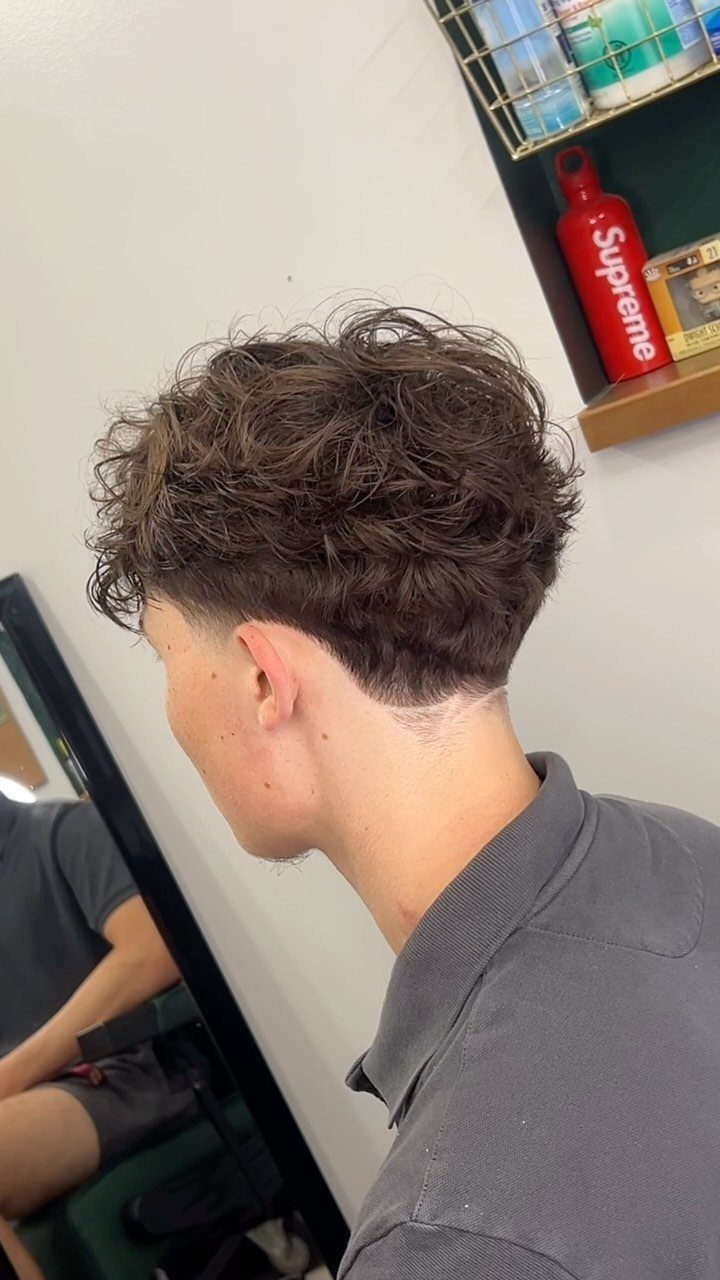
A low fade leaves enough length on top to let wavy hair keep its natural movement, while the taper stays subtle enough that the texture does not compete with a high-contrast fade.
The barber cuts the top with scissors or shears to preserve the wave pattern, then fades the sides low.
Run a small amount of styling cream or sea salt spray through the top to lift the texture and keep it movable.
Wavy hair grows out better than straight hair in this cut because the movement softens the line where the fade meets the top.
The top can grow out a fair bit before it needs attention, but the fade will start to blur sooner.
6. Textured Drop Taper
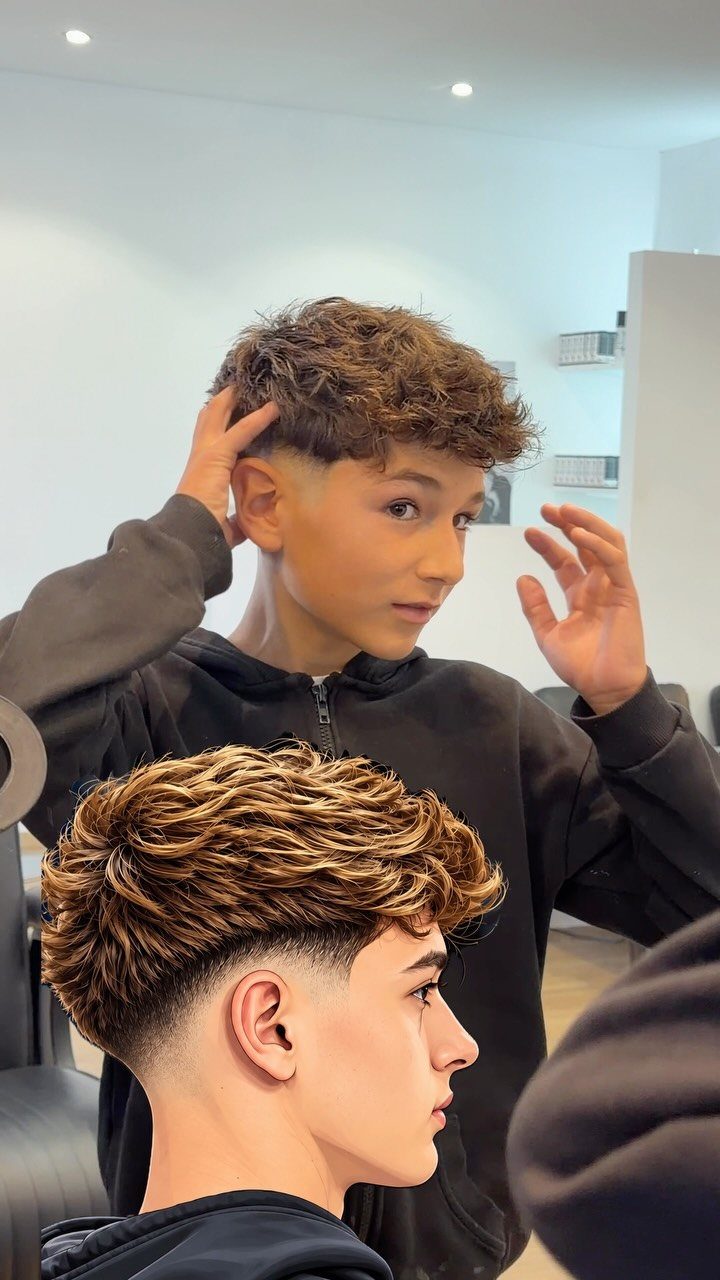
A drop behind the ear follows the natural curve of the head, so the fade arcs downward at the back instead of running straight across.
Paired with a textured top, it adds dimension without the high-contrast look of a skin fade.
The barber drops the fade line as it moves from the temple toward the nape, creating a subtle curve. The taper itself stays gradual, blending with a guard rather than going to skin.
This cut suits an oval or oblong face, where the drop adds width at the sides. It grows out cleaner than a straight taper because the curve keeps the blend proportional as the hair lengthens.
7. High Taper
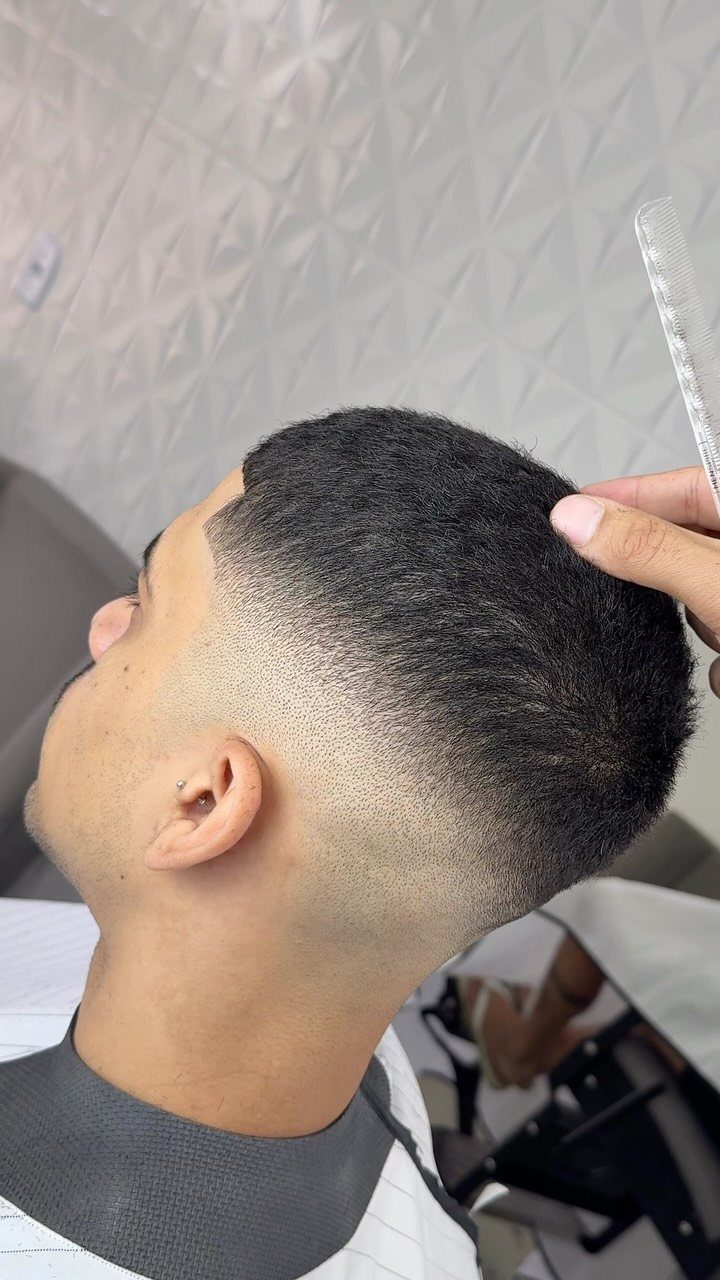
The blend starts higher on the sides, so the contrast between short and long arrives sooner than it would in a low taper.
A barber begins the fade above the temple, leaving less length below the transition point. The result adds height to the silhouette, which suits a round face better than a low taper does.
The sides stay clean for a bit before the line softens and the fade needs attention.
8. Textured Crop
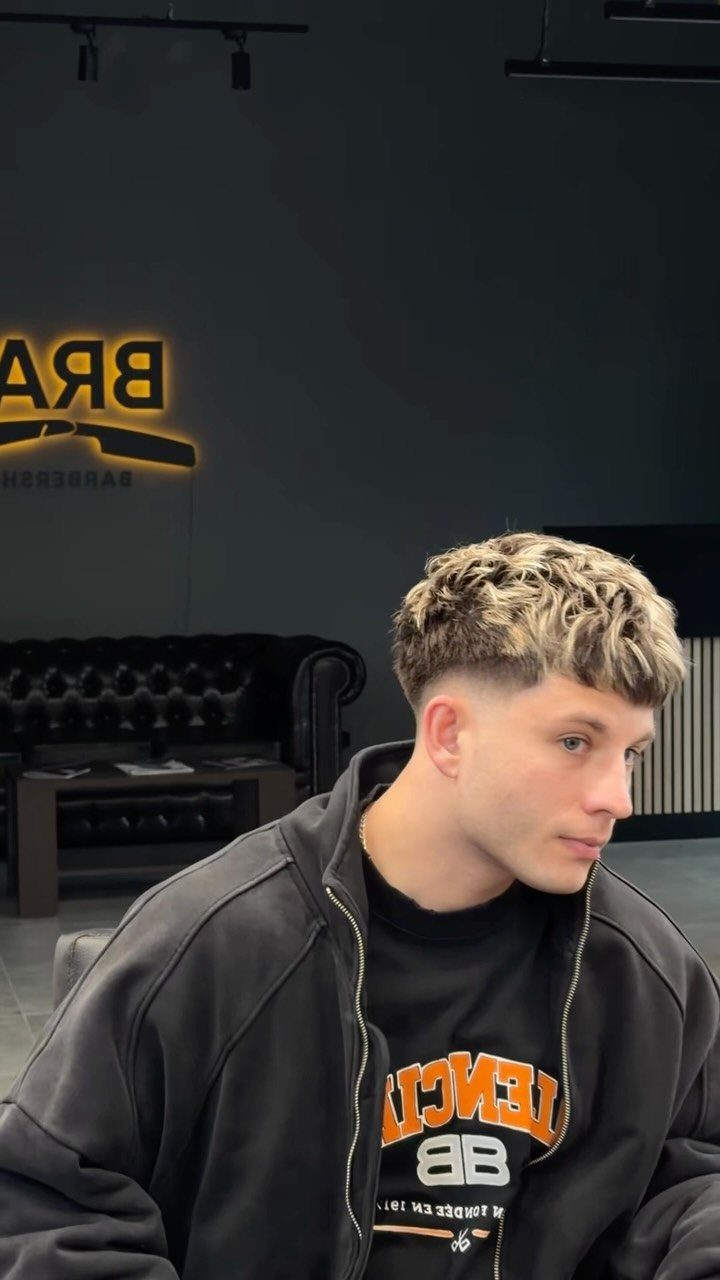
The top is cut short and choppy, leaving enough texture to stand up without needing much length. Tapered sides keep the proportions tight.
A barber uses scissors or point-cutting to create texture on top, then tapers the sides with clippers. In the morning, work a small amount of matte paste through damp hair and push it forward.
The cut grows out well because the texture hides uneven length. Plan on regular trims to keep the crop from getting heavy.
9. Taper Fade Pompadour
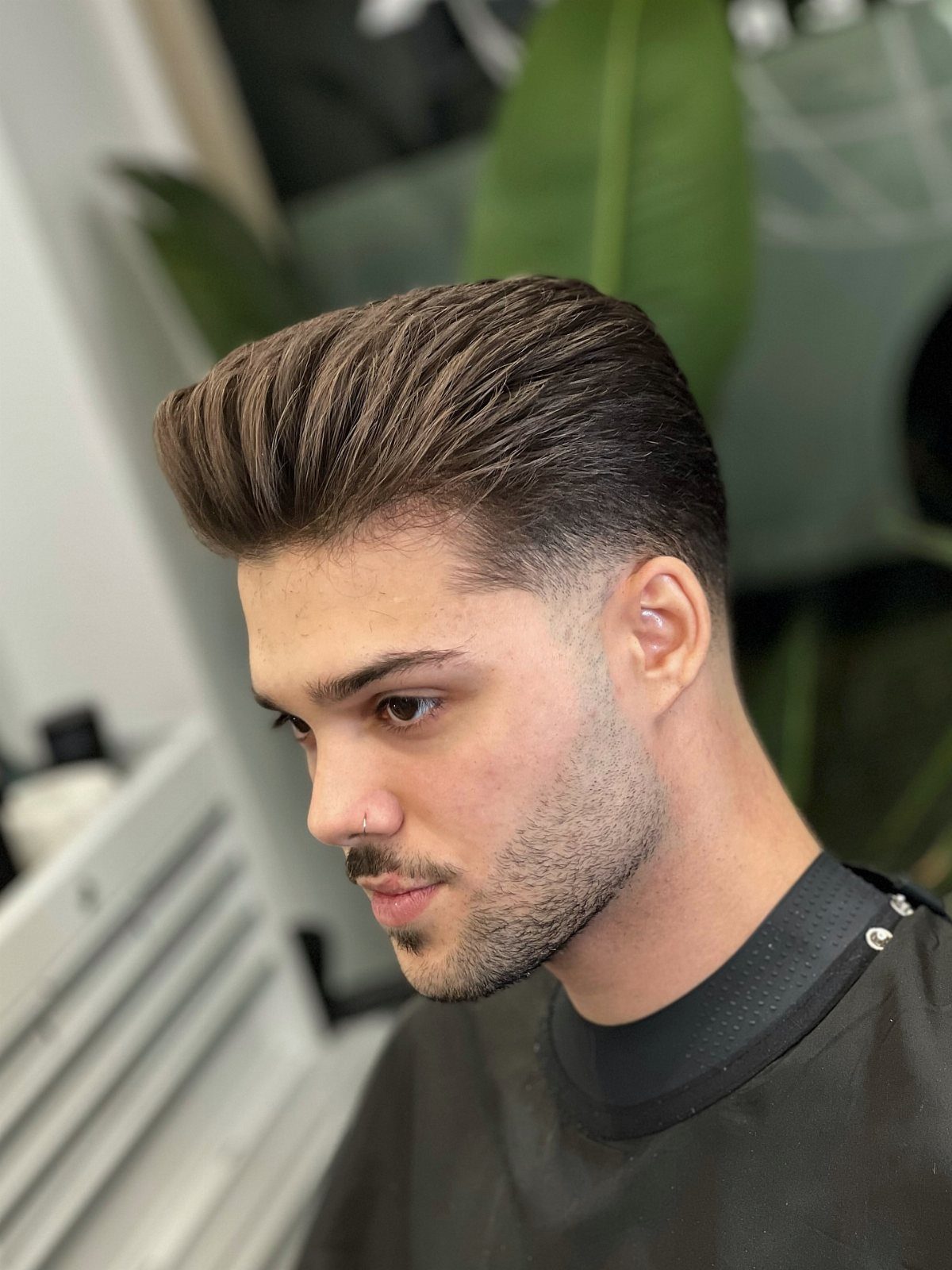
Volume comes from brushing the top up and back, while tapered sides keep the shape from looking top-heavy.
After towel-drying, apply a medium-hold pomade or mousse, then blow-dry the hair upward and back with a round brush. The height holds better if the top has some length.
The style takes 5 minutes in the morning, longer if you let it air-dry first. A taper fade needs regular cleanup.
10. Taper Fade Quiff
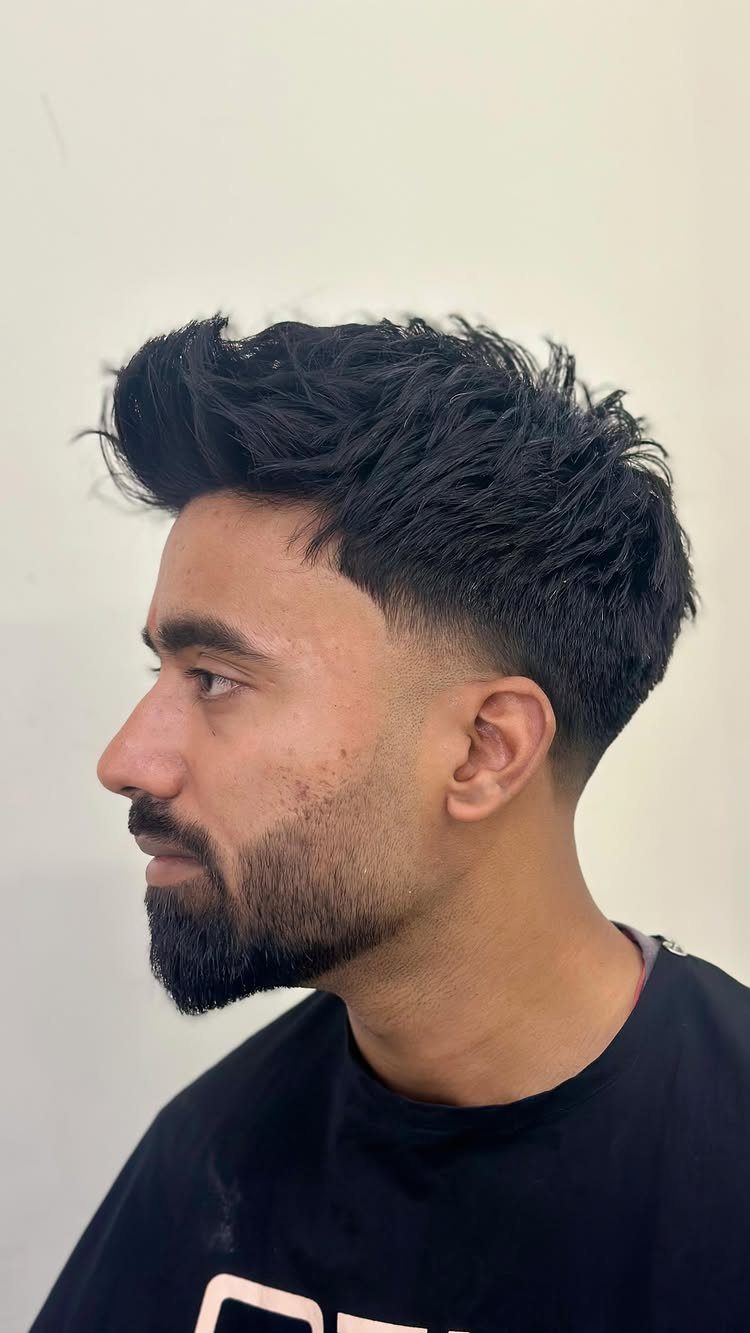
Lift at the front gives the cut its shape, and the taper keeps the sides from competing with it.
Blow-dry the front upward and slightly back, using a vented brush or your fingers. A volumizing mousse or light pomade holds the lift without weighing it down.
The quiff takes less time than a pompadour because only the front needs attention. If the sides are tapered rather than skin-faded, you can stretch out barber visits a little longer.
11. Taper Fade Slick Back
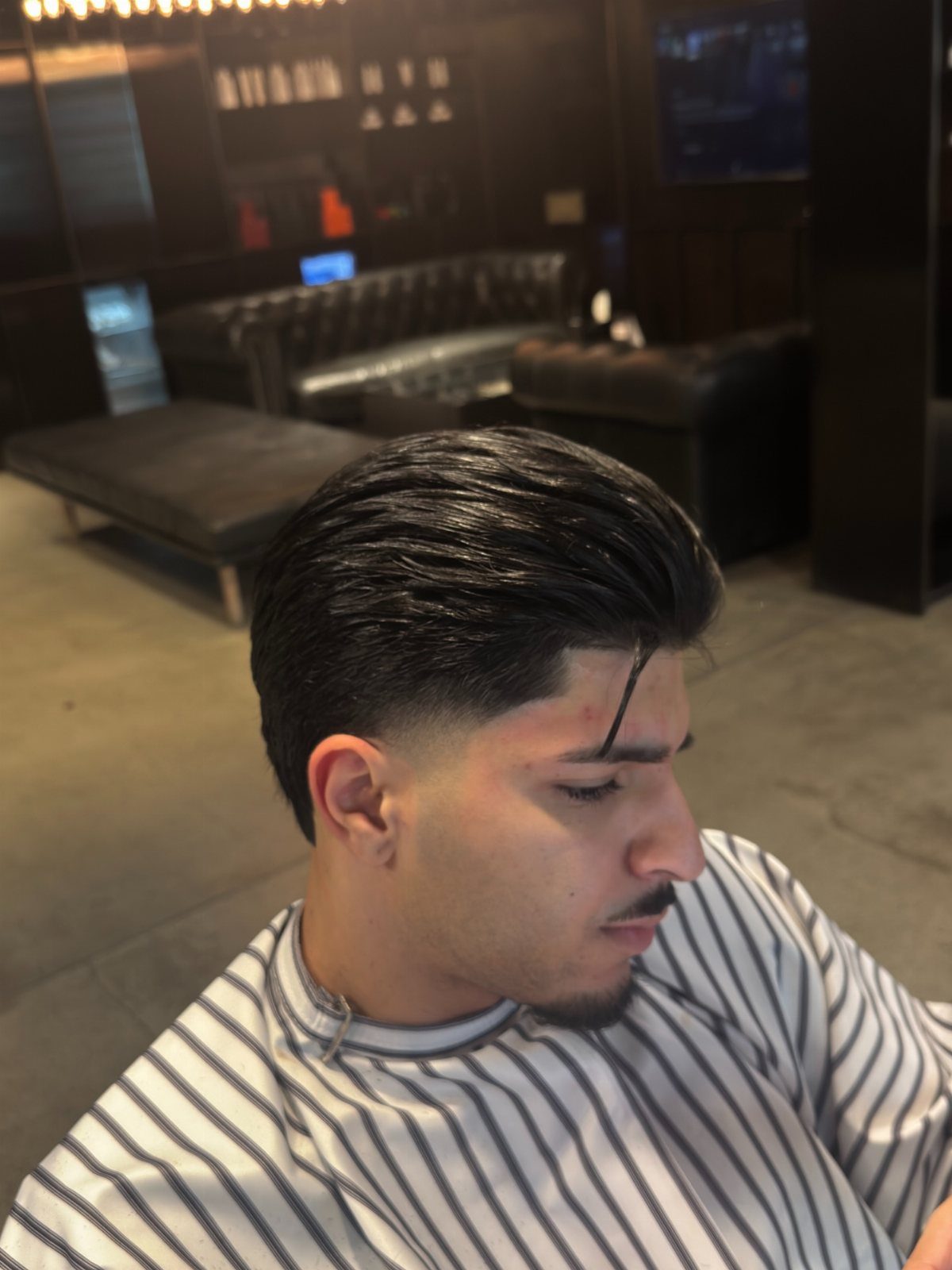
All the hair on top moves backward in one direction, with tapered sides that keep the silhouette narrow.
Work a medium to strong-hold pomade through damp hair, then comb straight back from the hairline. The look stays polished all day if you use enough product, but it will loosen if the hair is too short to hold direction.
Some length on top makes this easier. The taper needs regular attention.
12. Tapered Hard Part
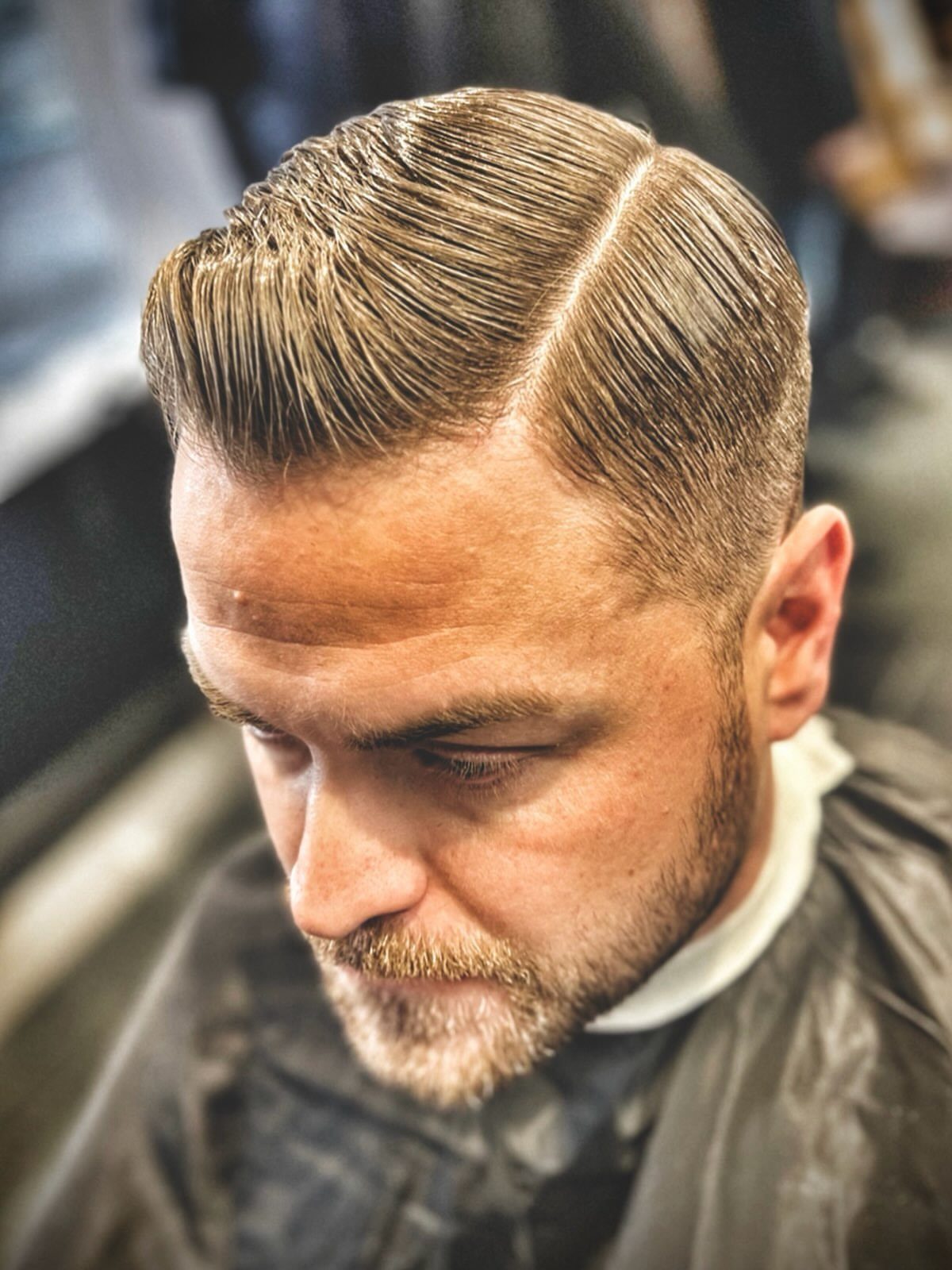
A shaved line separates the longer hair on top from the tapered side, making the part more defined than a combed one would be.
The barber shaves the part with a straight razor or trimmer, placing it where the hair naturally falls or where the style needs it. The line grows out fast, so this cut needs more frequent visits than a standard taper.
A hard part suits hair that lies flat. If the hair is wavy or stands up, the line will blur faster.
13. Wavy Crop Classic Taper
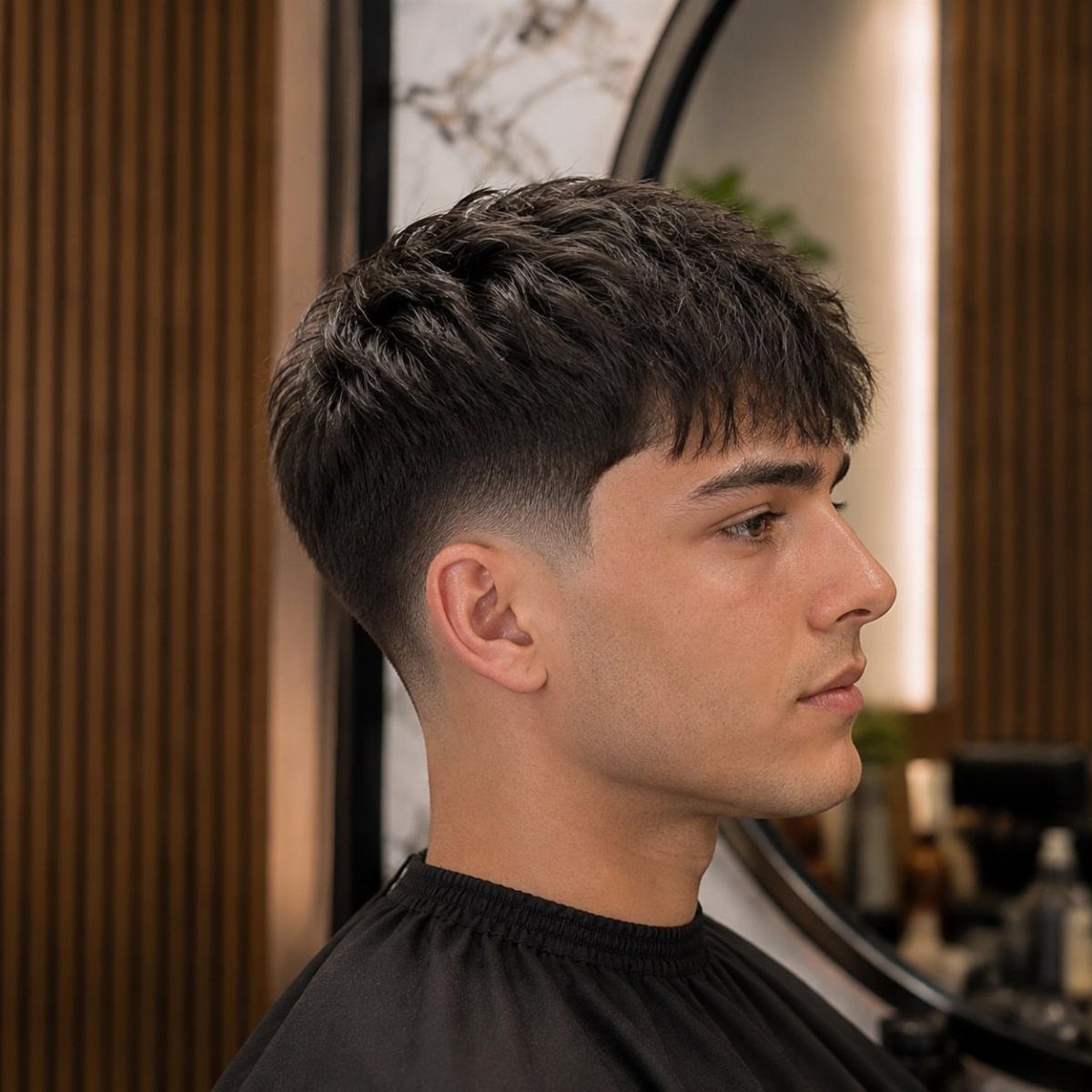
Wavy hair keeps its natural movement on top while the taper stays traditional, blending gradually rather than dropping to skin or adding a hard line.
The top stays short but keeps enough length for the wave to show, while the sides taper down through gradual guard steps.
A fingertip of cream or mousse run through while the hair is still damp lifts the wave and holds it without weight.
The wave softens the shape as it grows, so the cut holds up longer between visits than a straight-haired crop would.
14. Taper Fade Short Hair
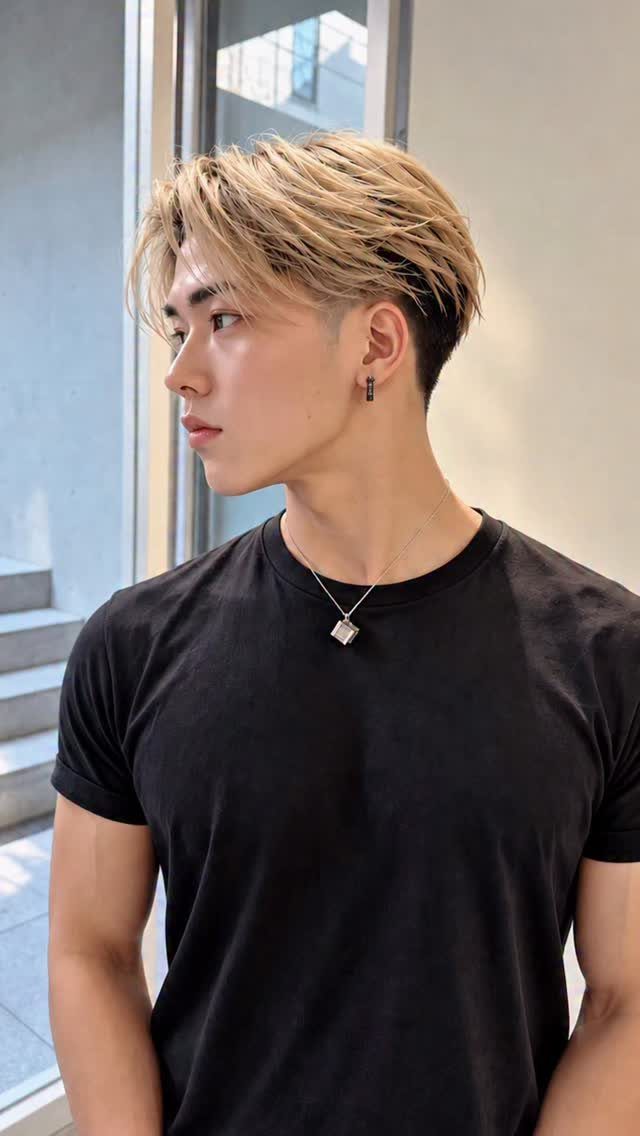
Keeping the top short while blending the sides means less styling time and a tighter silhouette than cuts that rely on length for shape.
The top holds just enough length for light texture, while clippers taper the sides clean. Towel off and you’re done; no product step exists.
Best for hair that sits close to the head or shows little natural movement. If the hair is thick or coarse, the short top can stick up unevenly as it grows.
15. Low Fade
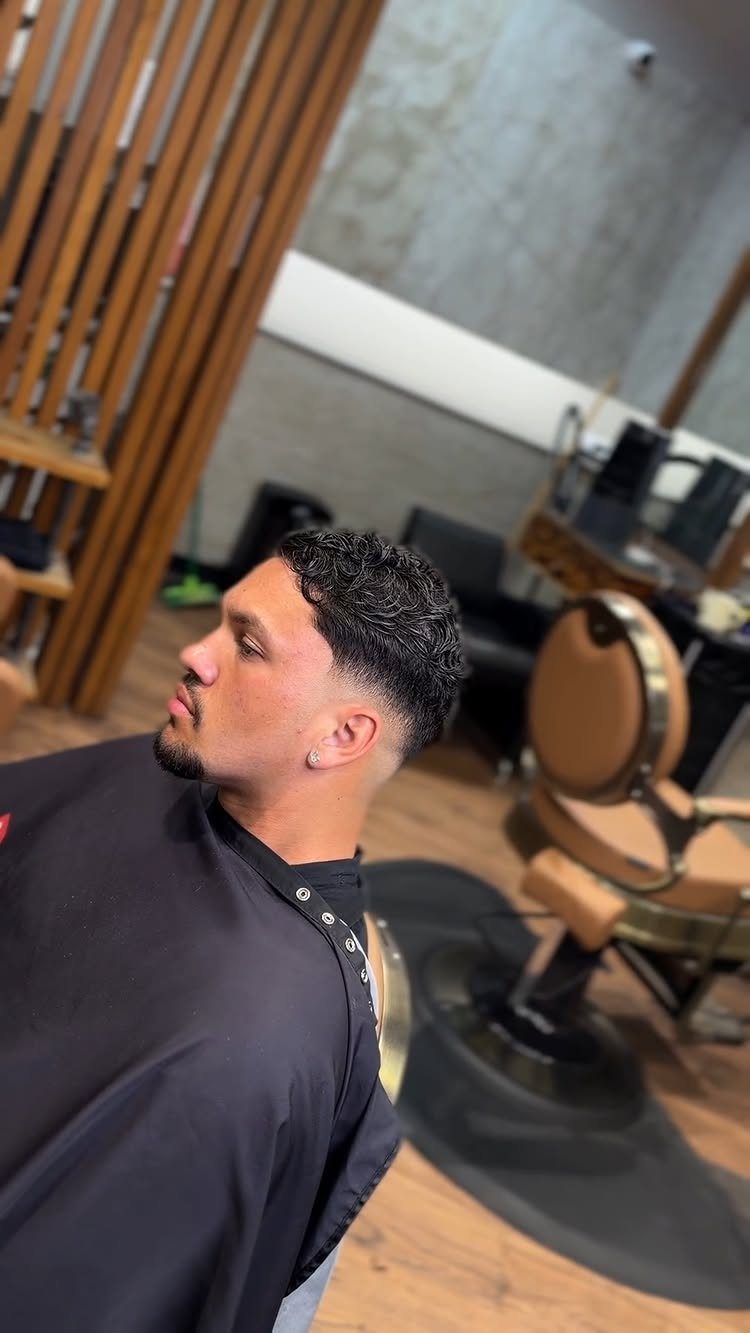
The taper begins right above the ear and holds length through most of the side before it blends, so you never approach skin.
A barber works the taper in a narrow band near the bottom, leaving more hair above it than a mid or high fade would.
The gradual transition suits someone who wants a cleaner shape than a basic taper but does not want the sharp contrast of a skin fade.
It grows out slowly enough that cleanup can stretch to 3 weeks without the sides looking overgrown.
16. Mid Taper
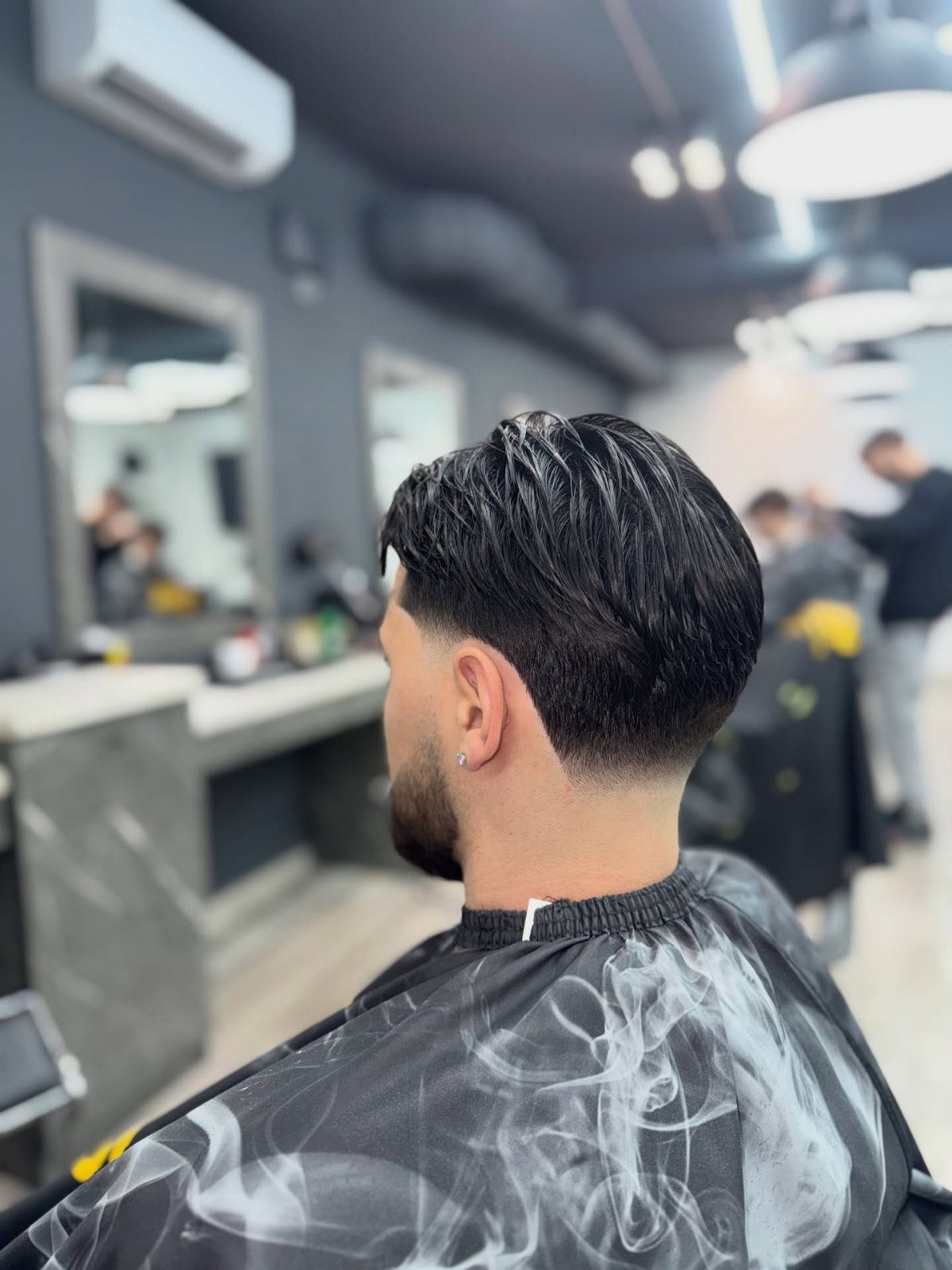
The blend sits around the midpoint of the sides, higher than a low fade but not as high as a taper that starts near the crown.
A barber places the transition around the top of the ear or just above it, creating moderate contrast between the top and the sides.
The mid-height placement suits most face shapes because it balances the proportions without adding too much height or keeping too much length.
The fade stays clean for about 2 weeks before it softens.
Explain Taper Versus Fade
Others draw a line between them based on whether skin shows. The term alone will not get you the cut you want.
A reference photo showing the side profile makes that faster than any description.
Barber Communication and Upkeep
Name the fade height first: low, mid, or high. Then specify the shortest length at the bottom, either by guard number or by saying you want it taken to skin.
Describe the top in length and direction.
"2 inches, textured, styled forward" gives the barber a plan. "Short on top" does not.
Pick a neckline shape.
Squared, rounded, or tapered. Most guys skip this and end up with whatever the barber defaults to.
Bring 2 photos: one from the front, one from the side. Multiple angles clarify what words leave vague.
Mention your hair type if it is coarse, fine, curly, or coily. The texture changes how the barber blends and which guards work.
Tapers that leave stubble visible can stretch to 3 or 4 weeks before the shape softens.
Match Height to Face Shape
High tapers can make an oblong face look longer than it already is.
Oval faces work with any taper height. The proportions stay balanced regardless of where the fade starts.
Heart-shaped faces benefit from a low to mid taper that keeps attention off the wider forehead.
If your face is markedly wider at the temples than the chin, then a taper haircut will exaggerate that feature rather than soften it. For everyone else, it should be a default setting.
Frequently Asked Questions
What is a low taper fade?
A low taper fade blends the hair gradually starting just above the ears, leaving more length on the sides than a mid or high fade.
The fade sits low, closer to the ear, which means the blend happens fast and the cut holds its shape longer than higher fades.
What are the different types of fades in haircuts?
Fades are categorized by height and finish.
Low, mid, and high refer to where the blend starts on the sides, while skin fades reach bare skin at the bottom. Drop fades arc downward behind the ear instead of running straight across, adding dimension to the shape.
How do I find my face shape?
Compare basic features like face length, width, jaw, forehead, and cheekbones.
Measure your face in a mirror: oval means balanced and slightly longer than wide, round means full cheeks with similar dimensions, square shows a strong jawline and wide forehead, oblong runs noticeably longer than it is wide.
Bringing a photo to your barber and asking for their read is faster than measuring at home.
Are taper fade styles good for school and work?
Low tapers stay conservative enough for most offices and schools while still reading as a deliberate cut rather than something overdue.
Tapered sides paired with a combed top or side part suit professional environments, while textured crops or messy fringes read as more casual. Skin fades add more contrast and edge, which fits creative industries better than conservative offices.