An Italian beard fade combines a sharp diagonal cheek line, a disconnected mustache, and graduated density from cheek to chin.
The diagonal runs straight from the outer corner of your top lip to the base of your ear, and any curve in that line breaks the geometry the whole style depends on.
The fade itself builds through three overlapping guard passes—1 mm, 3 mm, then 5 mm—with the overlap between them determining whether the transition reads as smooth or striped.
What Defines an Italian Beard Fade
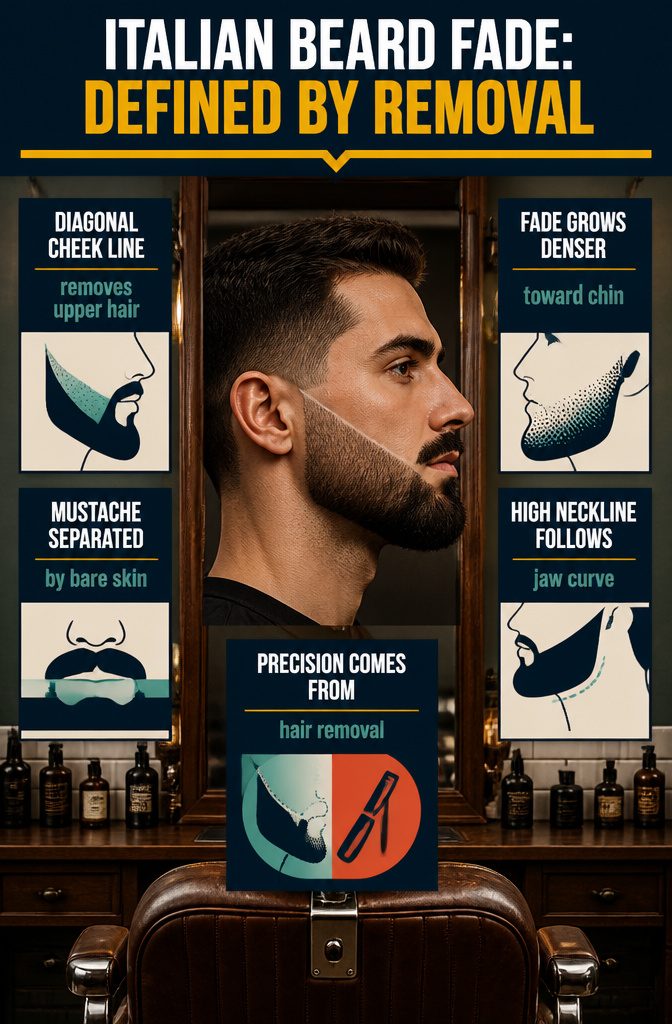
The diagonal cheek line creates the style’s strongest visual signature.
It runs as a straight geometric line from the outer corner of the top lip to the base of the ear, removing a large section of facial hair above it. That diagonal establishes the structure everything else hangs on.
The disconnected mustache sits above a visible gap of bare skin between the mustache and the beard below.
No bridge connects them. The gap is structural, not incidental.
The fade graduates from very short hair near the cheek line to fuller density at the chin and jaw. Density increases as you move down the face, creating a transition rather than a hard edge between trimmed and full zones.
The high neckline sits above the Adam’s apple and follows the jaw curve behind each ear. Most beards drop lower; this one climbs.
What sets the look apart is that the defining characteristics are created by removal rather than growth.
The cheek line removes hair, the disconnection removes the bridge, and the fade reduces density systematically from cheek to chin. What remains is defined by the precision of what was taken away.
1. Wash and Dry Before You Shape

Wash the beard thoroughly and let it dry completely before you touch a trimmer.
Oil, product buildup, and dead skin all sit in the beard after a few days, and cutting through that layer means the trimmer drags instead of gliding.
The fade relies on smooth upward strokes that remove exactly what you intend, and a gummed-up blade catches unevenly.
I wash with warm water and a small amount of beard wash, work it down to the skin, rinse until the water runs clear, then pat it nearly dry with a towel.
Air-dry the rest of the way or use a dryer on low if time is short.
Damp beard hair clumps and lies flat against the face, which hides the actual length and makes it impossible to see where the fade zones should sit.
Bone-dry hair stands out from the skin and shows you the real shape you are working with.
2. Set the Diagonal Cheek Line
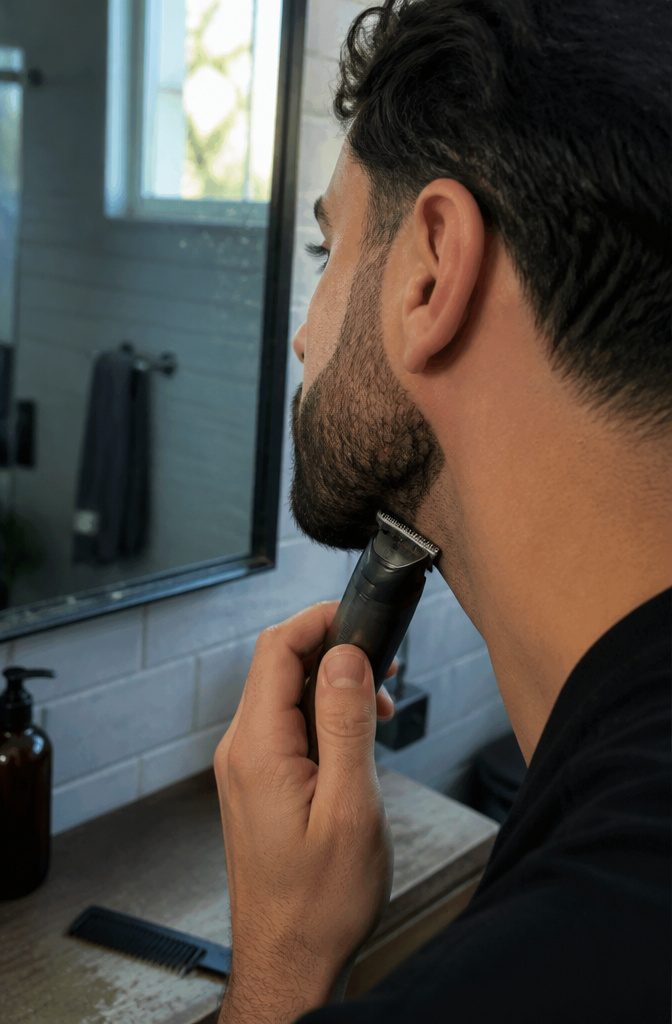
The cheek line is one straight diagonal from the outer corner of your top lip to the base of your ear.
Straight is the whole requirement: no curve, no dip toward the cheekbone. The geometry is what makes the beard read as Italian instead of just trimmed.
Locate both endpoints first and sight the line in the mirror before any hair comes off.
Then cut along it in short strokes, stepping back to check it straight on. This stage has no separate tool or guard setting of its own, so I’d stay with whatever trimmer you’re already holding.
Everything below the line is where the fade happens: very short hair near the cheek, building to fuller density at the chin and jaw.
3. Cut the Mustache Disconnection

The mustache sits apart.
A visible strip of bare skin runs between the bottom edge of the mustache and the top of the beard growth below it, and keeping that gap clean is what makes the style read as intentional rather than patchy.
The line is not subtle. You want someone looking at your face to see that separation immediately.
Shave or trim the gap every few days. I find a safety razor works cleanly for this, though a trimmer without a guard gives the same result if you prefer it.
The width is not standardized, so the choice comes down to proportion: too narrow and the disconnection disappears from a few feet away, too wide and the mustache looks marooned.
Shave just enough that the gap holds its shape between touch-ups without eating into either the mustache or the beard line below.
4. Build the Side Fade in Three Passes
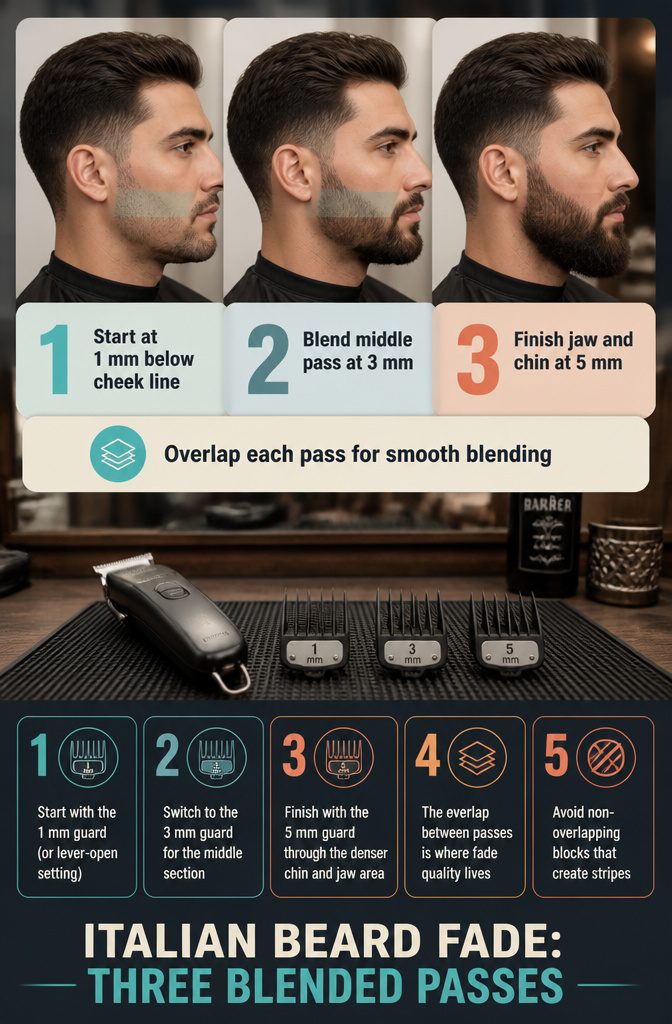
- Start with the 1 mm guard (or lever-open setting) about 1 cm below the cheek line. Work downward in short upward strokes, covering the shortest zone of the fade.
- Switch to the 3 mm guard for the middle section. Overlap the top edge of the previous pass so the transition blends rather than stepping visibly from one length to the next.
- Finish with the 5 mm guard through the denser chin and jaw area, again overlapping the zone above it. The overlap between passes is where fade quality lives. Treating each guard as a separate, non-overlapping block produces a striped appearance instead of a smooth gradient.
5. Define the High Neckline

The high neckline sits above the Adam’s apple and follows the natural curve of the jaw as it runs behind each ear.
It defines where the beard ends below the chin, and getting the placement right keeps the style structured rather than scruffy as it grows.
I hold a trimmer inverted and shave upward from the throat, stopping just above the Adam’s apple at the front and tracking the jawbone as the line moves toward the ear on each side.
The line should feel geometric when you run a finger along it but still follow the bone underneath.
Too low and the beard loses definition; too high and the proportions shift toward the face in a way that shortens the whole silhouette. One pass establishes the line, then a second cleans up any stray hairs below it.
6. Detail the Edges and Check Symmetry

Take the guard off the trimmer and run the bare blade along the cheek line and neckline, or use a straight razor if you’re comfortable with one.
Keep the skin taut and use short, light strokes so the edge reads as a crisp line against smooth skin.
Then step back. Check the cut from the front and from both profiles, because a cheek line that looks even head-on can sit higher on one side once you turn.
I’d match the sideburns, cheek lines and fade transitions side to side. Fix any patch or stray length in small passes, taking less off than you think you need.
Rinse away loose hair, pat dry, work a few drops of beard oil through, and comb it out to settle the fade.
Daily Care Between Trims

Skip the body soap. It strips the skin’s natural oils, and the skin answers by overproducing sebum, which leaves oily skin under dry, brittle hair.
That is the opposite of the clean lines this cut needs. A gentle face cleanser or a dedicated beard wash does the job, followed by a rinse in cool or lukewarm water, since hot water strips the skin barrier further.
Work 3–5 drops of beard oil, warmed between your palms, through the beard.
Then run a fine-tooth beard comb in the direction of growth. The whole routine takes under 5 minutes.
Exfoliate 2–3 times a week with a gentle facial exfoliant or a soft-bristle beard brush. Daily is too often.
Two Maintenance Sessions to Keep the Lines Sharp
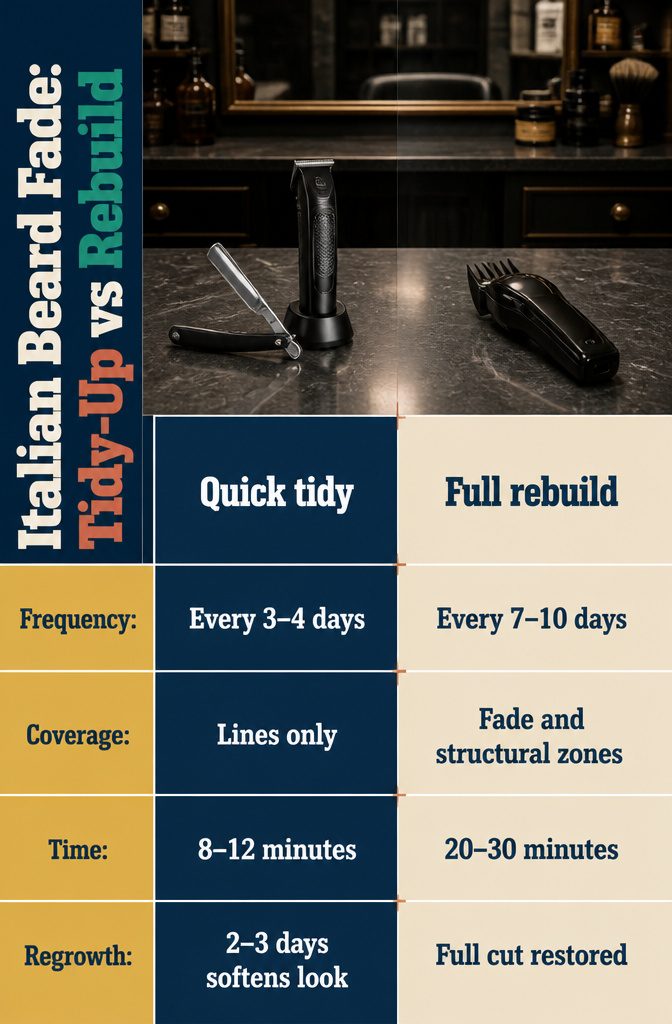
The first session never touches the fade. Every 3–4 days, run a bare-blade trimmer or straight razor along the cheek line, the mustache gap, and the neckline, taking off 2–3 millimeters of regrowth.
Work shaving gel into the cheek and neckline before the razor pass, even for a quick tidy, because that skin meets a blade every few days. Once you have the rhythm, expect 8–12 minutes.
Every 7–10 days, rebuild the whole cut, fade and every structural zone included.
Budget 20–30 minutes for it. Regrowth starts softening the look within 2–3 days of a trim, so I wouldn’t stretch the quick sessions to save the rebuild.
Frequently Asked Questions
How to cut a beard fade?
Start with a 1 mm guard about 1 cm below the cheek line and work downward in short upward strokes.
Switch to 3 mm for the middle section, overlapping the previous pass, then finish with 5 mm through the chin and jaw area. The overlap between guard passes creates a smooth gradient instead of visible steps.
Is a faded beard attractive?
A faded beard creates a clean, structured appearance by transitioning from very short hair near the cheek to fuller density at the chin and jaw.
The graduated density prevents hard edges and gives the beard a deliberate, tailored look rather than an unkempt one.
Is Italian beard look good on a round face?
The diagonal cheek line runs as a straight geometric line from the outer corner of the top lip to the base of the ear, which can add angular definition to a round face.
The high neckline sitting above the Adam’s apple also lengthens the appearance of the face rather than shortening it.
Are beards out of style in 2026?
Structured beard styles like the Italian fade remain current in 2026, prioritizing clean lines and defined geometry over length alone.
The style relies on precision maintenance rather than natural growth, which aligns with contemporary grooming standards that favor intentional shaping over casual wear.