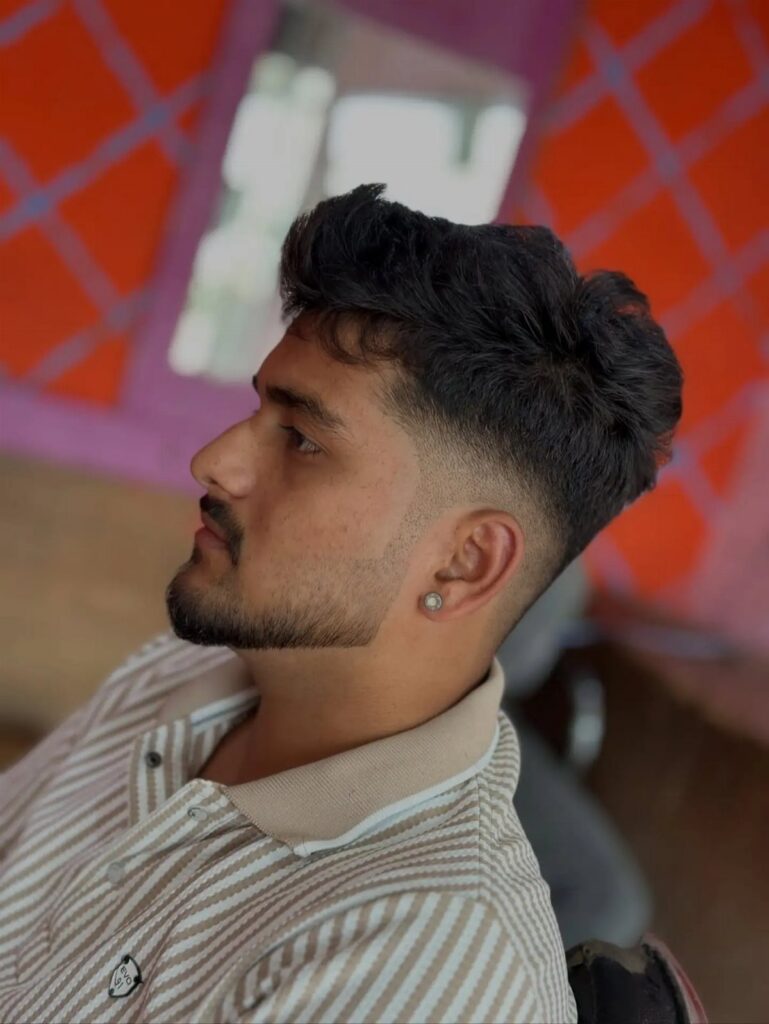
The starting height affects maintenance frequency and which face shapes the fade flatters most. A skin fade needs touch-ups within a week, while mid and low fades last closer to 3 weeks.
1. Mid Fade
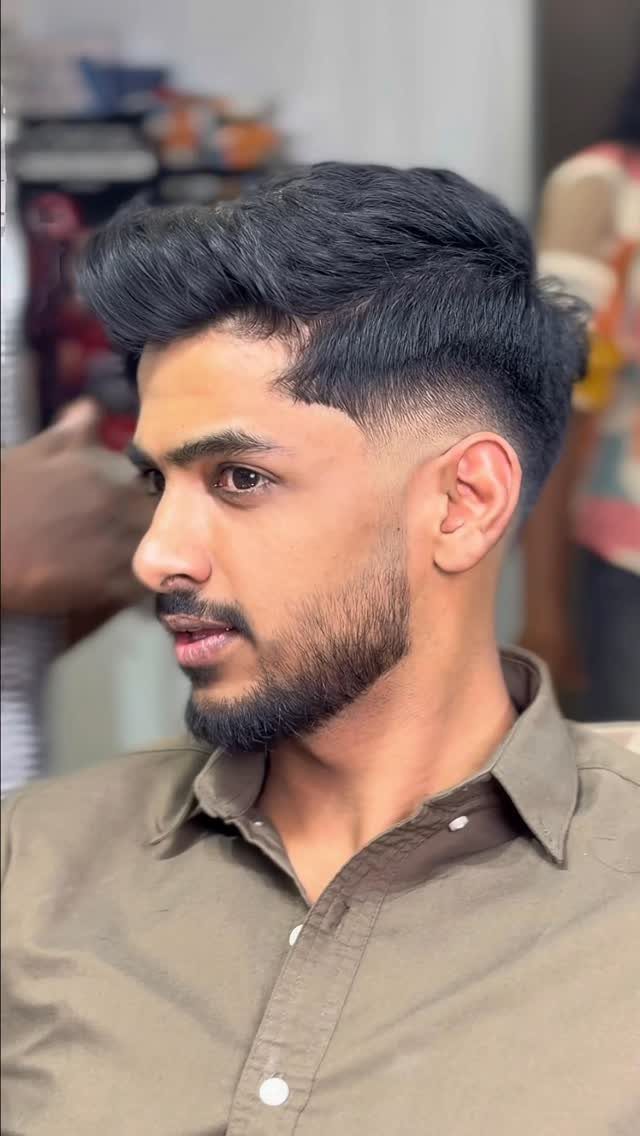
The blend begins around the temples or middle of the sides, offering a balance that reads clean without going too short too fast.
Most face shapes can carry it, and the starting point sits high enough to frame the face while keeping enough coverage that you’re not back every week.
Ask for a mid fade and specify where you want the blend to start; most barbers default to temple height. Length on top is your call, but texture up there makes the contrast work better than one flat plane.
2. Taper Fade
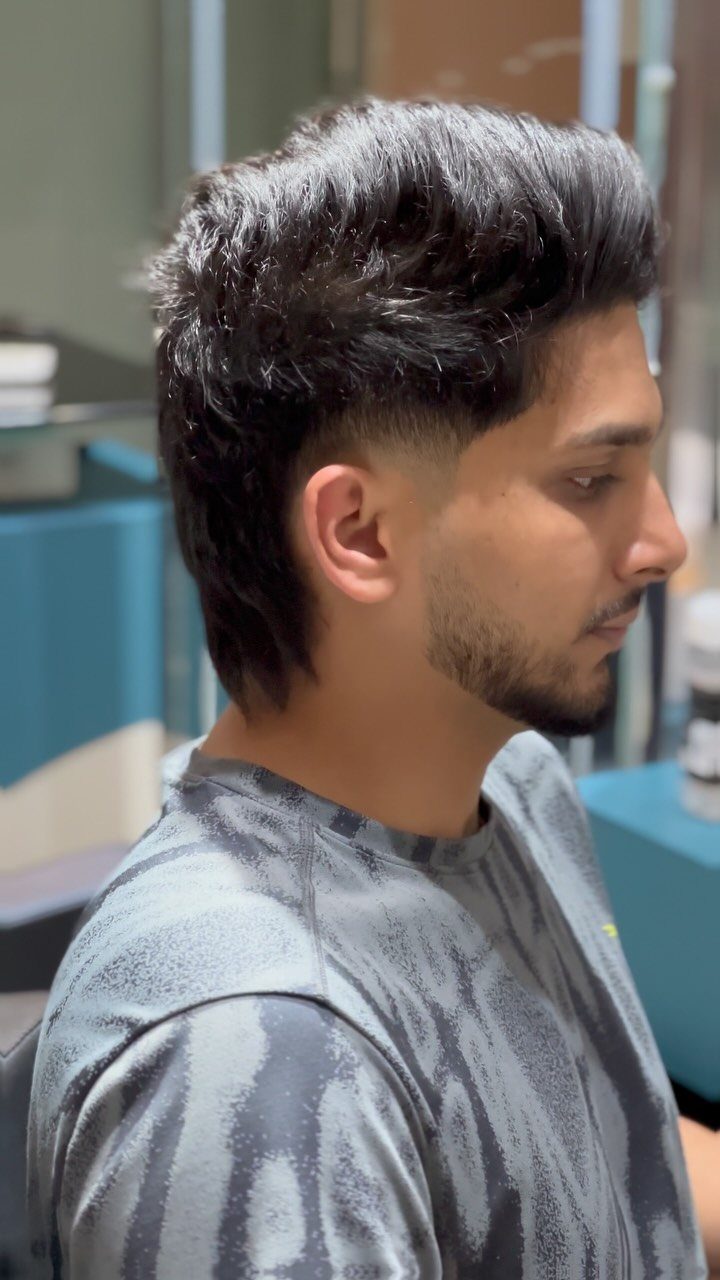
A taper focuses on the edges rather than a full fade, keeping some length throughout while gradually shortening toward the sideburns and nape.
The sides stay darker than a fade would leave them, so the contrast is gentler and the grow-out period longer.
This suits men who want definition without frequent barber visits or who work in settings where a skin-close fade feels too sharp. The subtlety also helps when hair texture or density makes a stark fade harder to blend smoothly.
Specify a taper if you want the graduations kept to the perimeter rather than worked up the sides.
3. Mid Fade Taper
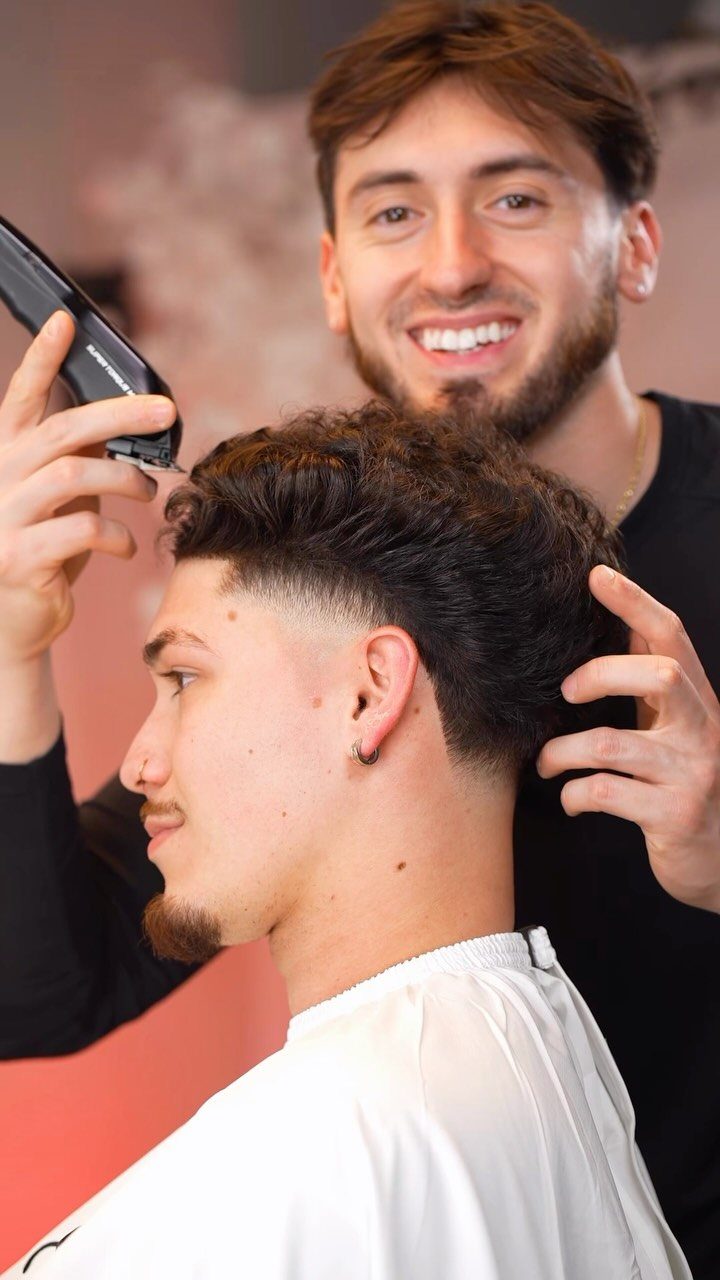
The mid fade here tapers into the silhouette rather than dropping to skin, which softens the transition while still giving you the height and shape a fade provides.
Texture on top, whether from natural wave or styling product, keeps the look from reading too uniform.
This combination works well for men with straighter hair who want movement without clipper lines that feel too rigid. The taper element means you can stretch cleanup appointments an extra week compared to a hard fade.
Ask for a mid fade with a tapered finish and leave enough length on top for styling room.
4. Taper
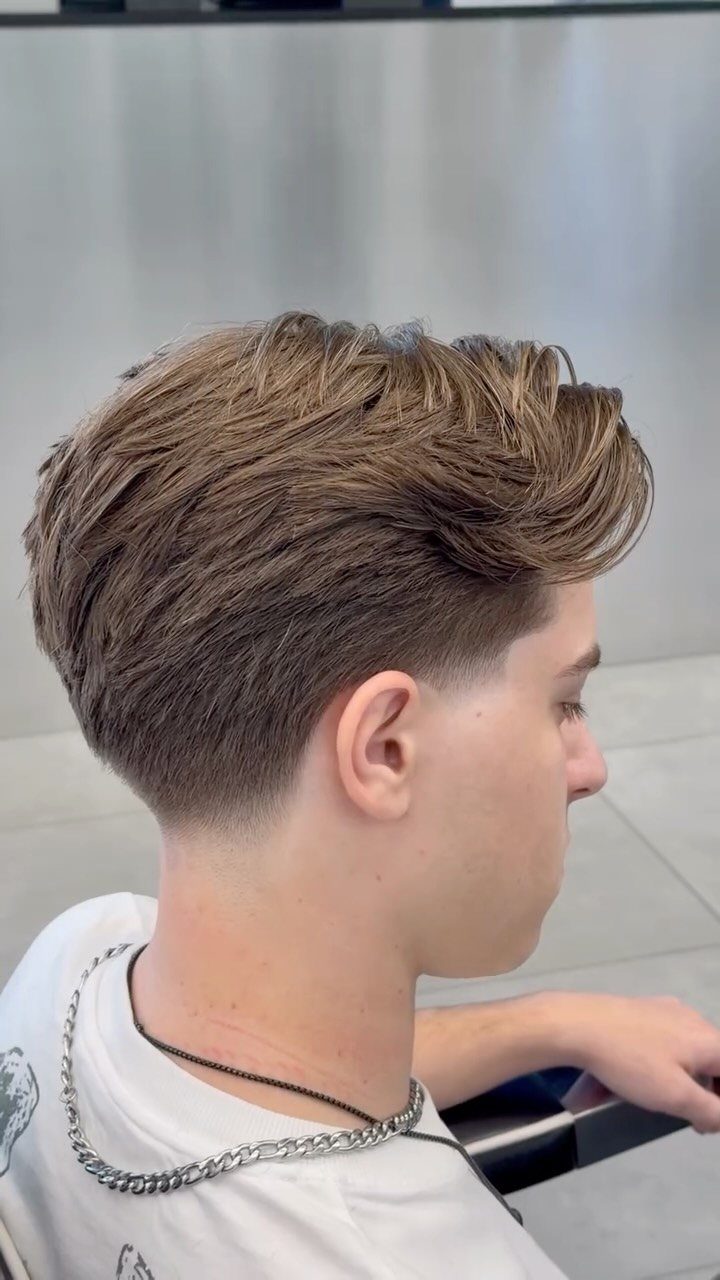
Hair shortens gradually from top to sides without ever reaching skin, so you keep visible length all the way down.
The sides stay covered, which makes this the right move for men who want shape and polish but prefer not to expose scalp or deal with the upkeep a fade requires.
A taper suits professional settings where subtlety matters and grows out more gracefully than a fade. It also works better on hair that’s too fine or sparse to blend a true fade smoothly.
You’ll get more time before it needs attention, longer than most fades allow.
5. Low Fade
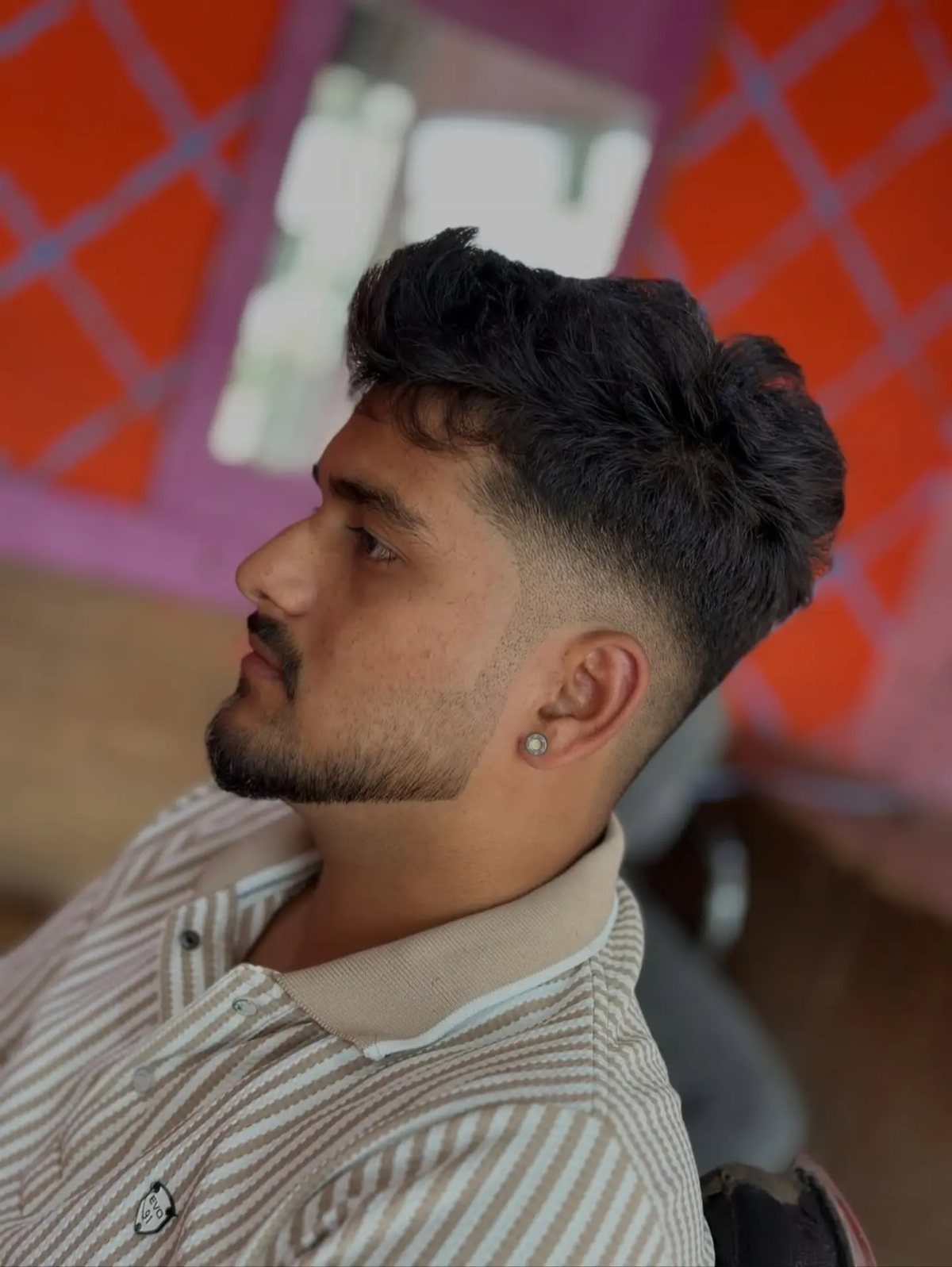
The blend starts low, near the top of the ear, so most of the side stays covered and the transition feels understated.
This keeps the look conservative enough for any setting while still giving you a clean perimeter and defined shape.
Low fades suit men with rounder or wider faces because the extra coverage on the sides balances proportions without adding visual width. They also grow out more gradually than higher fades, which stretches the time between cuts to around 3 weeks.
Specify low fade and point to where you want the blend to begin if your barber’s default sits higher.
6. High Fade

The blend begins high on the head, above the temple line, which exposes more of the sides and creates strong contrast between the top and the fade.
This works best when you have enough length and density on top to make that contrast intentional rather than sparse.
High fades also require the most frequent maintenance since the fade shows stubble quickly once it starts growing back.
Ask for a high fade and confirm the starting point; an inch too low changes the whole shape.
7. Skin Fade
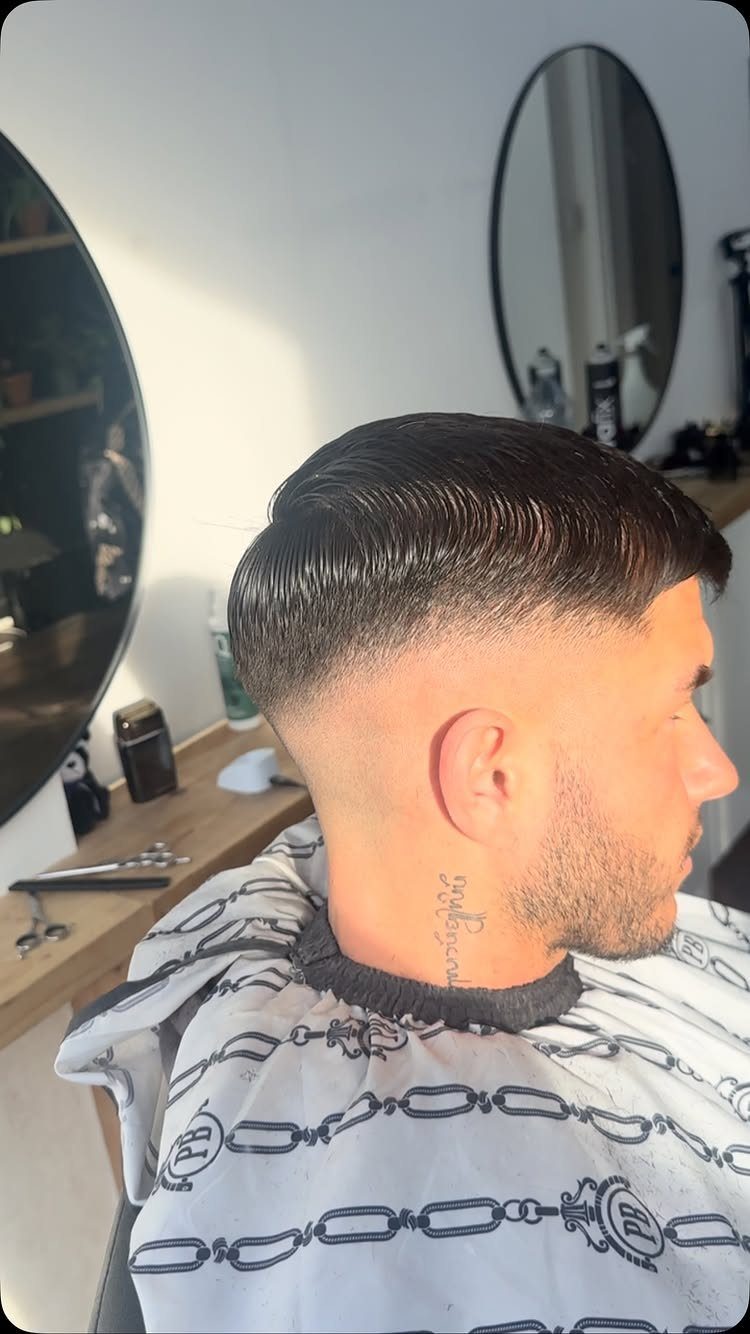
The sides blend all the way down to bare skin, which gives you the sharpest contrast possible between the top and the perimeter. That clean edge reads precise, but it also means you’re showing stubble within days.
This one needs a cleanup more often than most fades if you want the line to stay crisp. The blend itself requires a skilled hand since any unevenness shows immediately against bare scalp.
8. Drop Fade
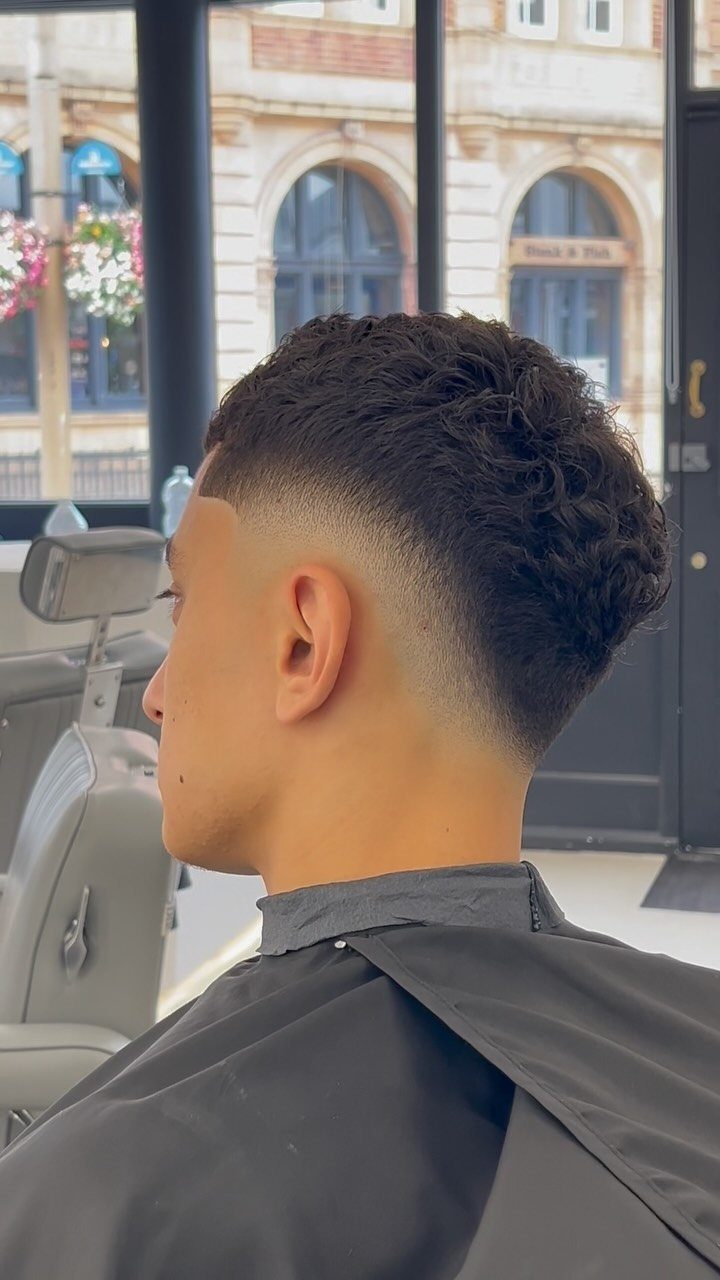
The fade curves lower as it moves behind the ear, following the natural shape of the head rather than staying level.
That arc softens the transition and keeps more coverage at the back, which suits men who want a fade that feels less uniform.
The drop works especially well with longer styles on top since it preserves weight where you need it while still giving you clean sides.
9. Burst Fade
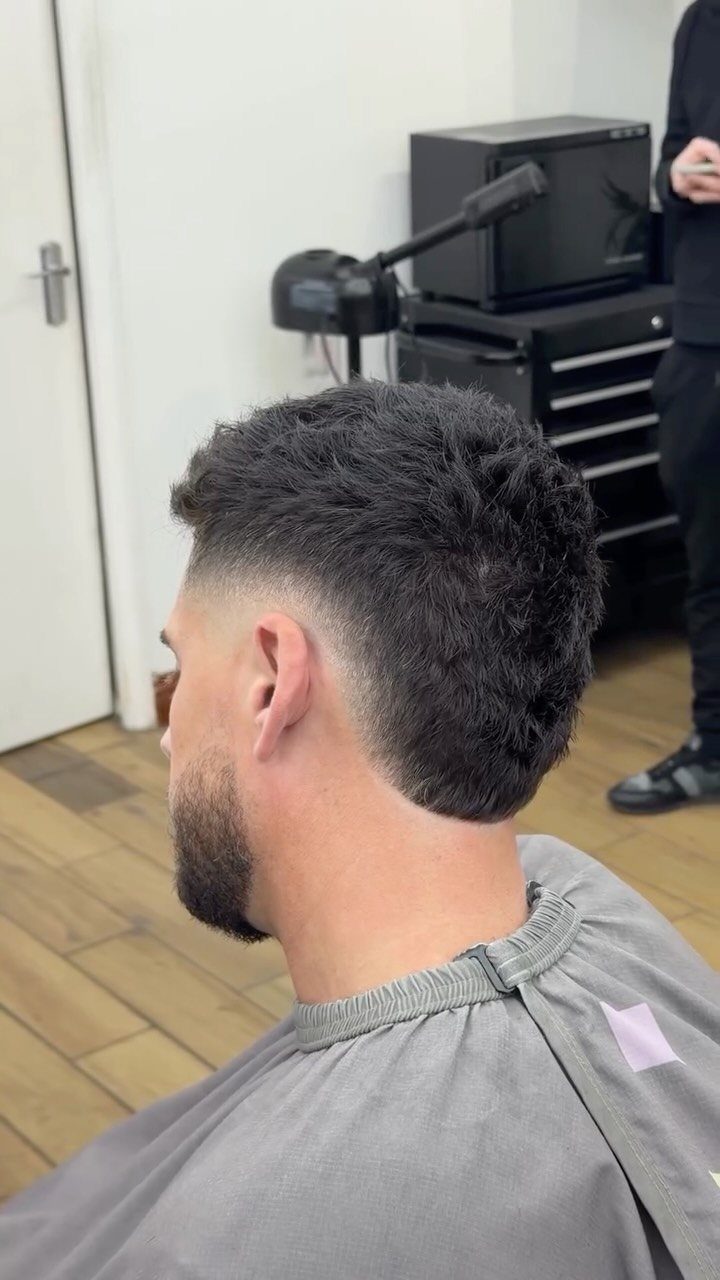
The fade sweeps in a curve around the ear rather than following a straight line, and the back keeps its length.
That shape keeps bulk behind while fading only the sides, which suits styles like mohawks or faux hawks where you want the center strip to stand out.
The rounded edge also works well with curly or textured hair since the fade doesn’t fight the natural volume. Ask for a burst fade and clarify how much length you want left at the back.
10. Mid Burst Fade
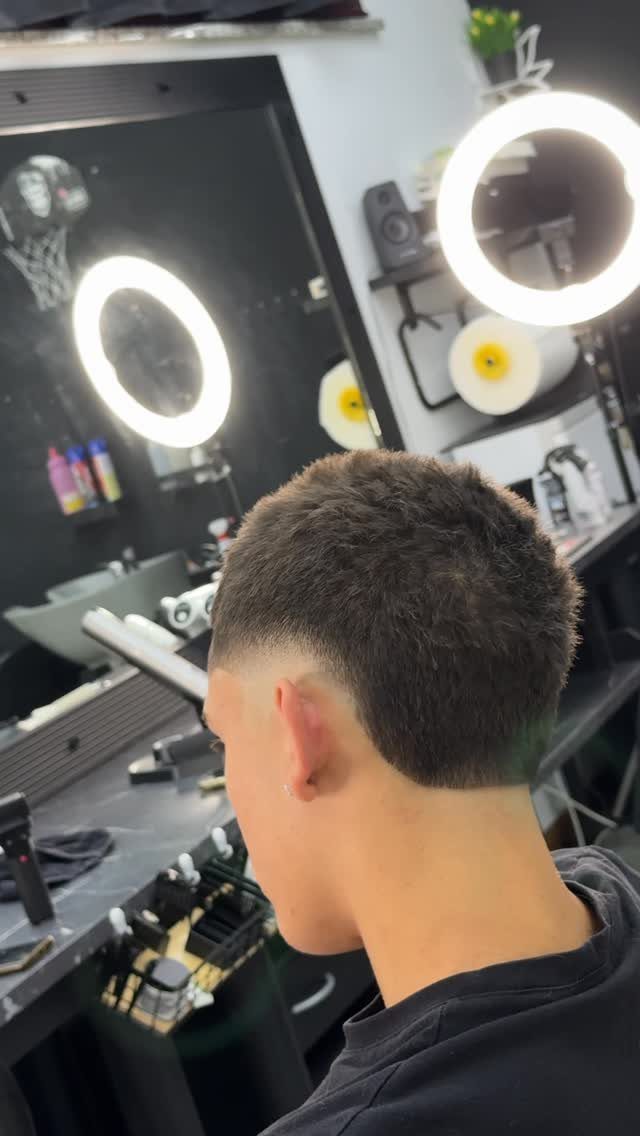
The burst shape starts at mid height rather than low, so the arc around the ear sits higher and shortens more of the side. This gives you the definition of a burst without as much bulk left behind.
Men with rounder face shapes often prefer this version since the higher starting point adds vertical length without widening the silhouette.
The curve still feels softer than a straight mid fade, so it grows out with less of a harsh line.
11. Curly Fade
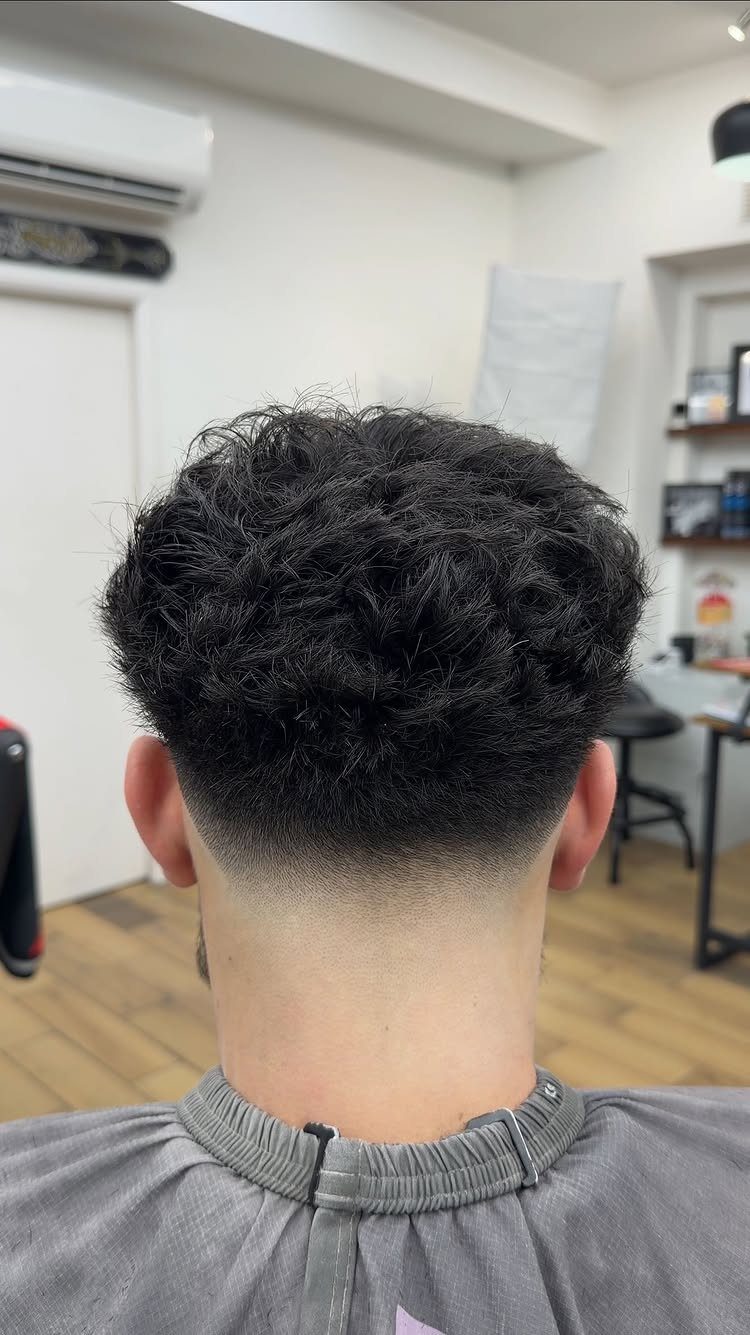
Curls stay full on top while the sides fade down, which creates contrast without flattening the texture that makes the cut work.
The fade keeps the shape clean and defines where the volume sits, so curls read intentional rather than overgrown.
This suits men whose curls add enough density that an all-over length loses structure.
The fade also reduces bulk on the sides, which keeps the focus on the top and makes styling faster since you’re only working with the curls that show.
12. Side Part Fade
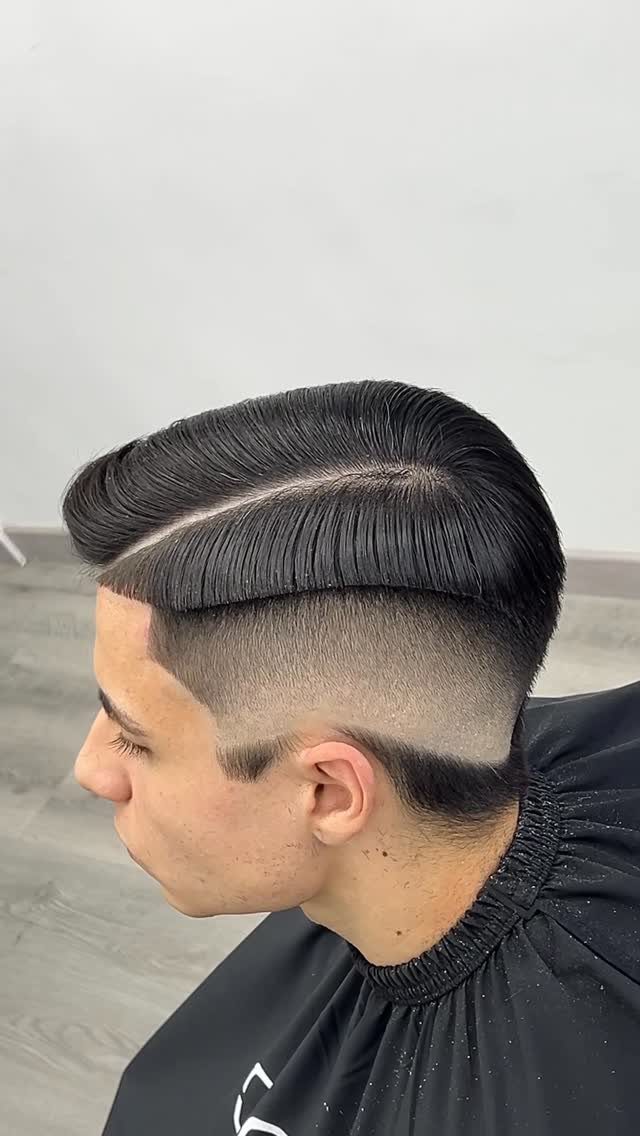
A defined part runs through the top, usually on one side, while the surrounding hair stays longer and is styled over. The fade underneath keeps the sides clean and makes the part itself stand out as a deliberate line.
This reads more formal than most fades and suits professional settings where polish matters.
You’ll need a comb and a light product to set the part each morning. Ask for the part to be cut in if you want it to hold position without constant combing.
13. Hard Part Fade
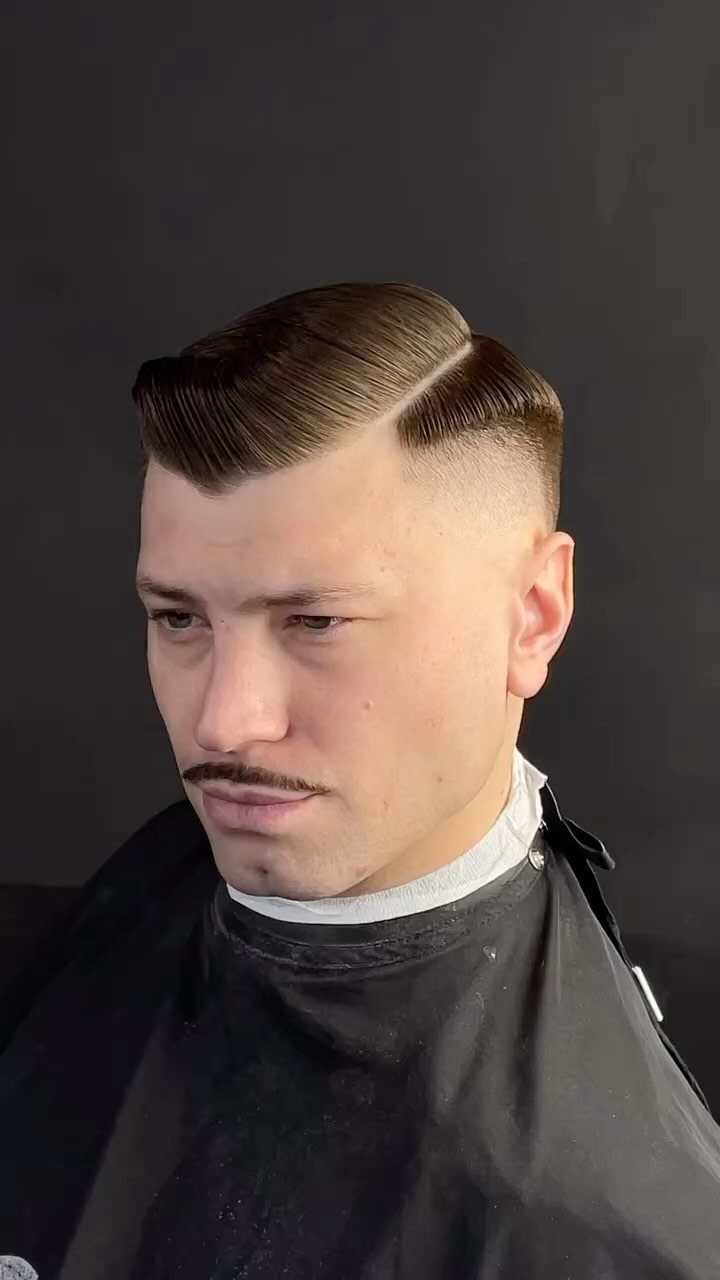
A razor or trimmer carves a clean line where the top meets the fade, making the separation sharp and visible.
That line holds its definition longer than a soft part would, so the structure stays clear even as the rest grows.
This suits men who want a polished look with minimal daily work since the part doesn’t need combing to stay in place. The shaved line blurs as it grows, so keep a trimmer handy or book return visits.
Ask your barber to cut the part in and specify whether you want it straight or slightly curved.
14. Buzz Cut Mid Fade
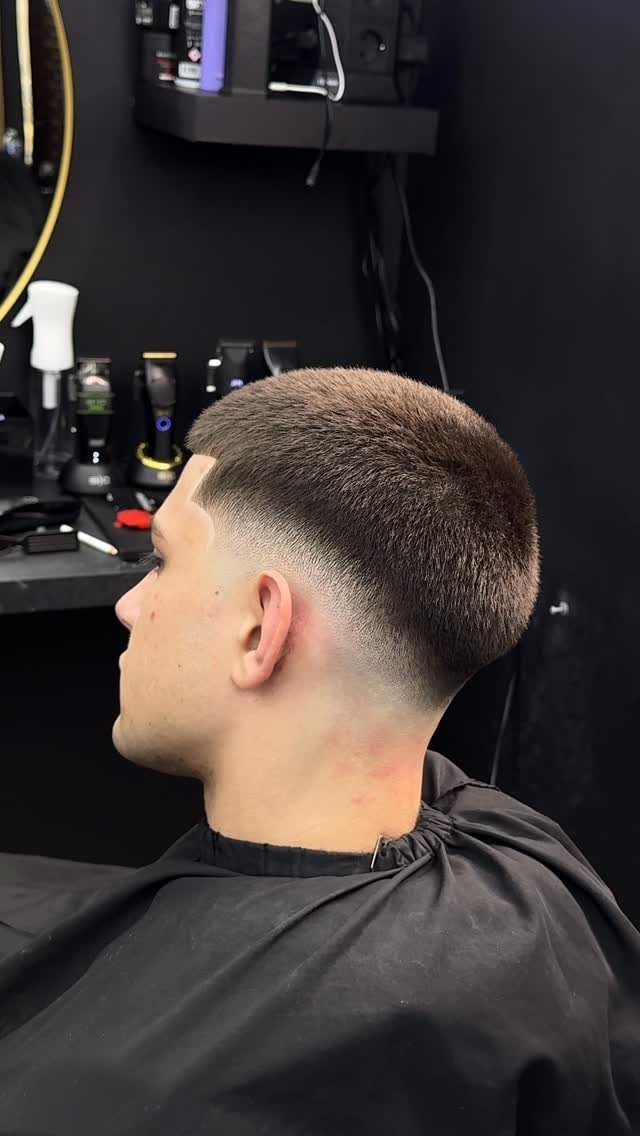
The top stays uniformly short while the sides fade from that same buzzed length down to skin or near it. Maintenance is minimal since styling takes nothing and the whole cut dries in seconds.
This works well for men who want the clean look of a fade without any daily routine. The buzzed top also suits thinning hair since the uniform length keeps any sparse areas less visible than longer styles would.
Growth shows fast, so expect regular cleanups to keep the fade looking fresh.
15. Bald Mid Fade
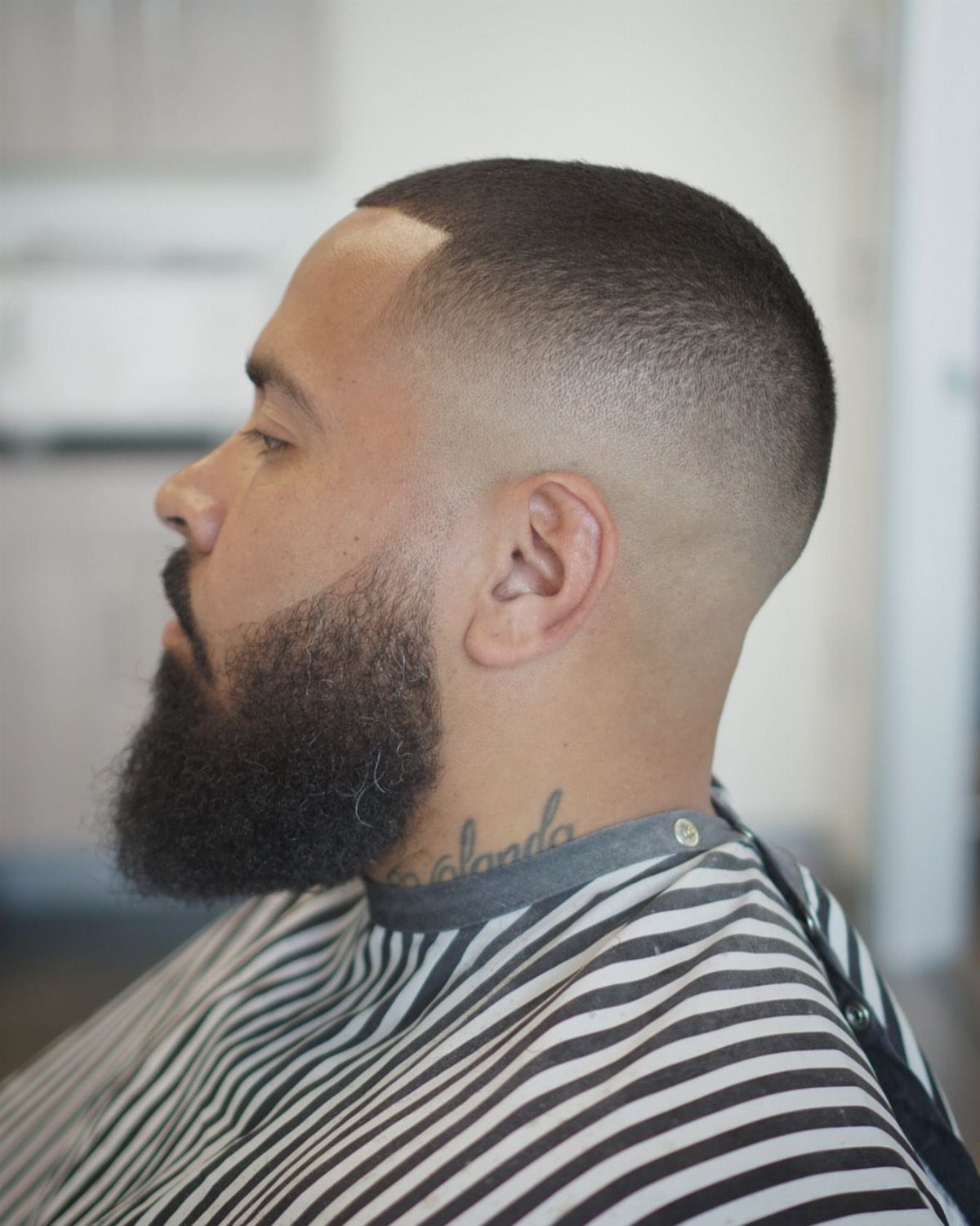
The top sits close to the scalp with clippers set to the shortest guard, and the fade drops from there.
This creates strong contrast without requiring any length on top, which makes it the right choice when thinning hair or low maintenance matters more than styling options.
The short top also keeps you cool in warm weather and eliminates any morning routine beyond washing. The fade softens quickly as hair grows back in, so frequent barber visits keep it looking clean.
16. Mid Fade Comb Over
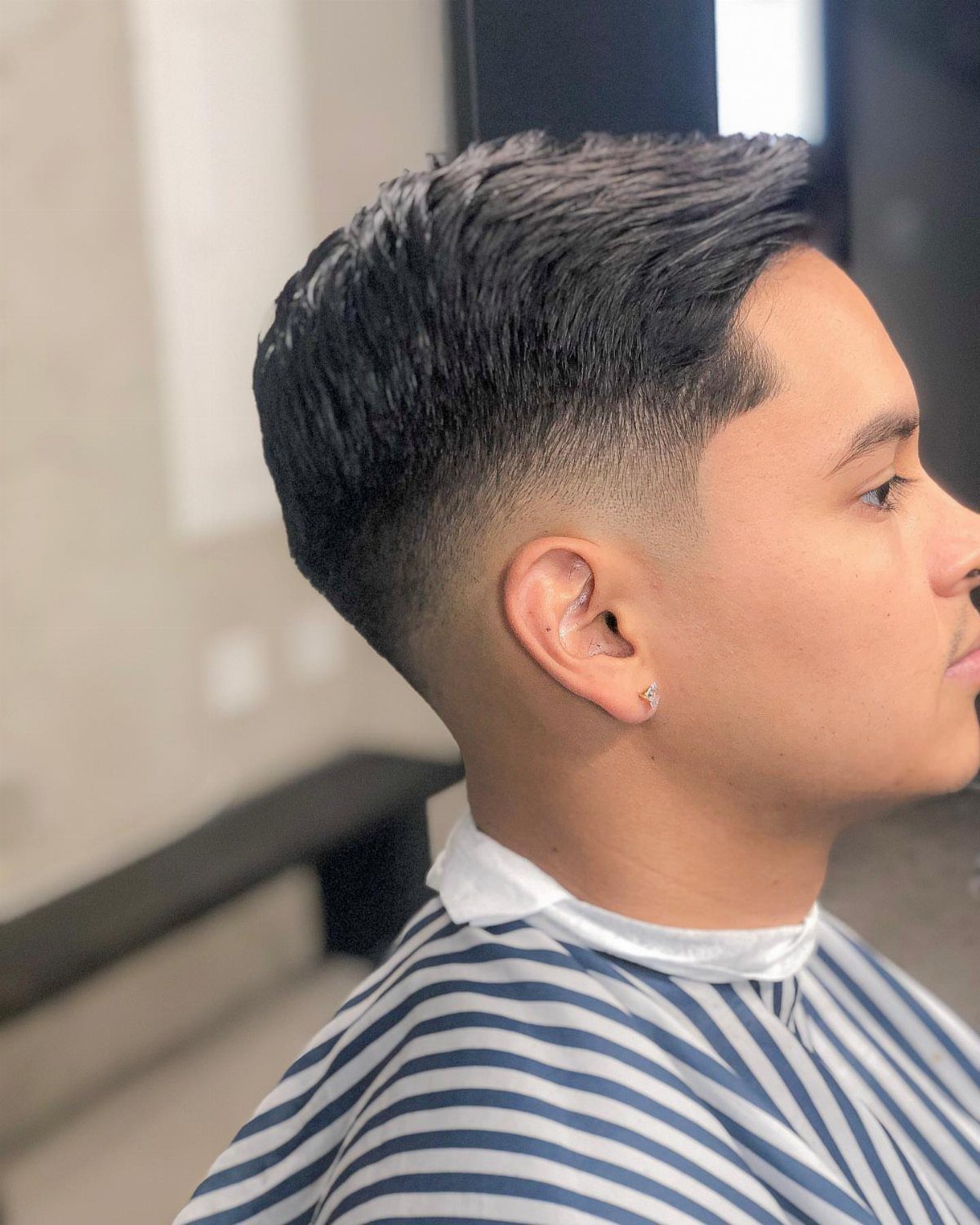
Longer hair on top is combed to one side and styled smooth or with slight texture, while the mid fade keeps the sides clean.
The sweep gives you a more formal look than a messy top would, and the fade balances the volume so the comb over doesn’t feel too heavy.
The style grows out well since the combed top can be adjusted as length increases.
17. V-Shaped Fade
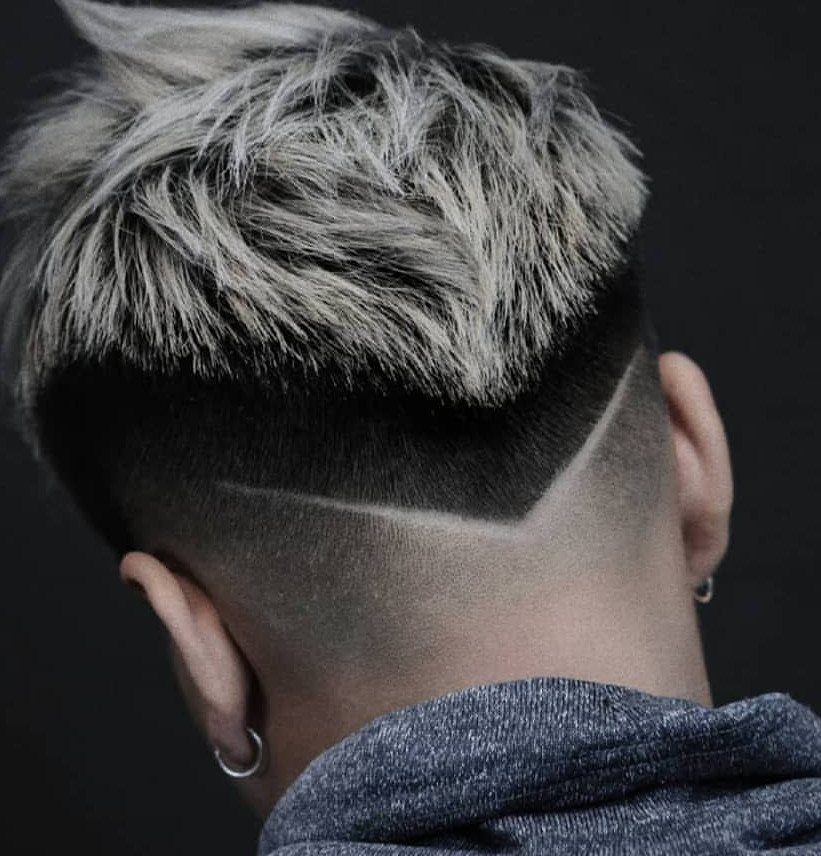
The fade at the back of the neck drops to a point rather than following a straight line across. That V shape adds a deliberate detail to a cut that otherwise looks standard from the front and sides.
This works well when you want something distinct without changing the overall silhouette or adding maintenance beyond what a normal fade requires.
The point does need attention during cleanups to keep it symmetrical, so make sure your barber knows you want it maintained.
18. Faded Mohawk
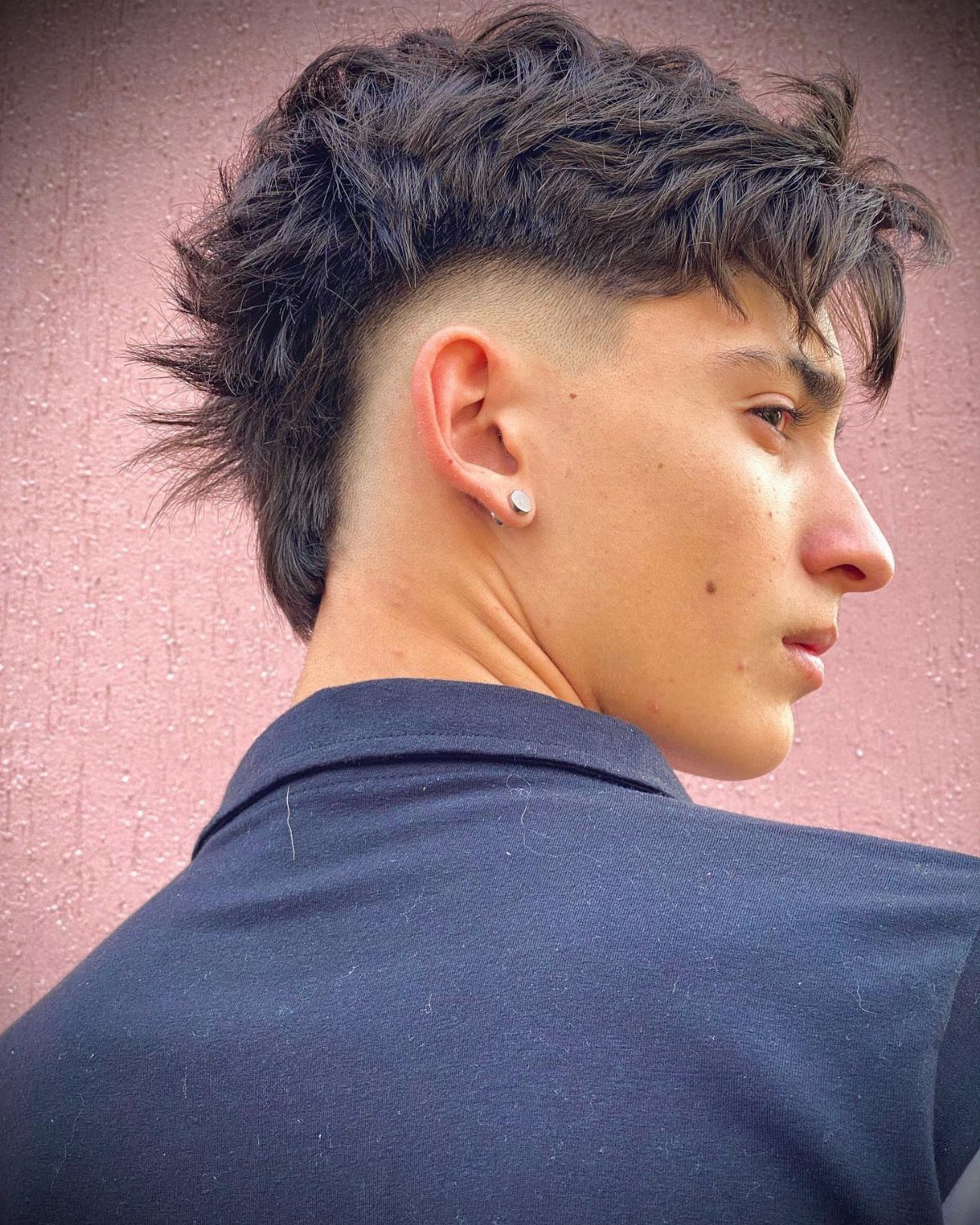
Longer hair runs down the center while the sides taper short, giving mohawk shape without the work of standing spikes or daily styling.
The center can be worn textured, brushed forward, or left natural depending on how much time you want to spend styling.
This suits men who want an edgier look that still works in most settings.
The contrast between the strip and the faded sides is strong enough to read clearly without product, though a light matte paste helps define the texture if you want more control.
19. Comb Over Fade
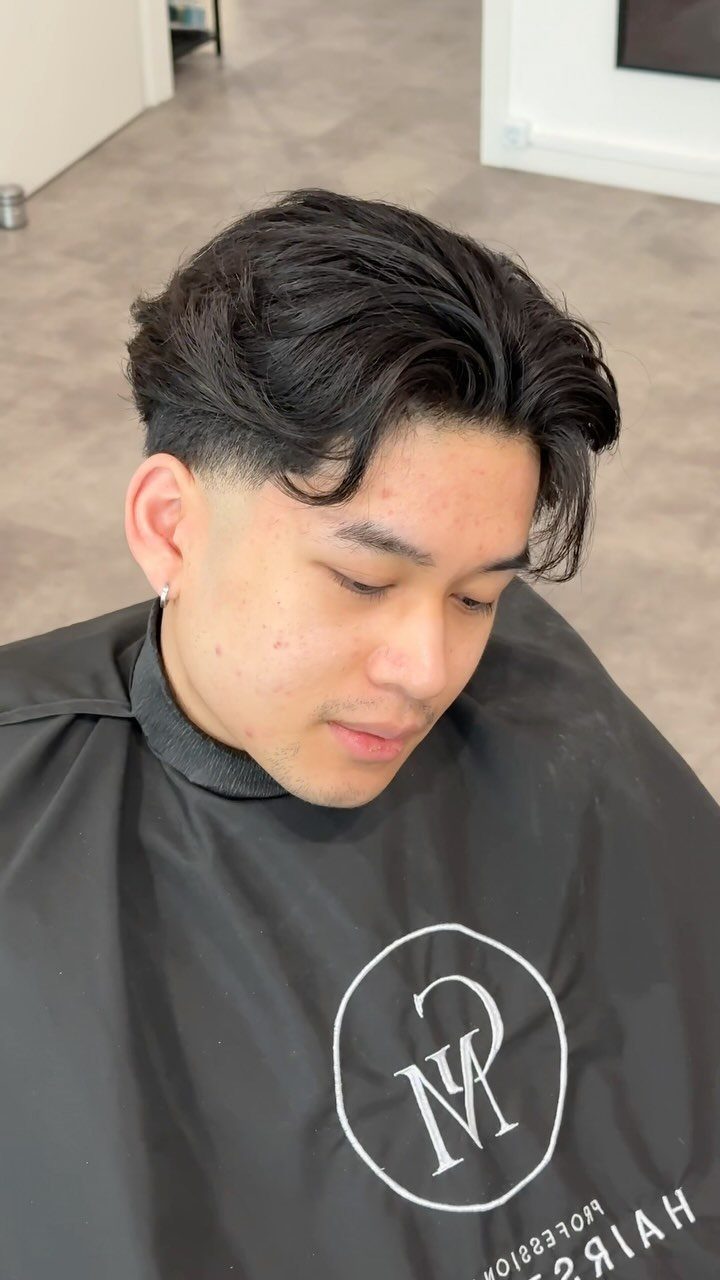
The length on top sweeps to one side over a fade that keeps the sides and back clean. This reads slightly more dressed than a textured or messy top while still giving you movement and shape.
The swept top adds coverage for men with hairlines that have receded slightly, and the fade keeps the overall look sharp without extra work on the sides. A light pomade or cream holds the sweep in place without stiffening it.
Ask for enough length on top to comb over and specify fade height based on how often you can return for cleanups.
20. Textured Crop Mid Fade
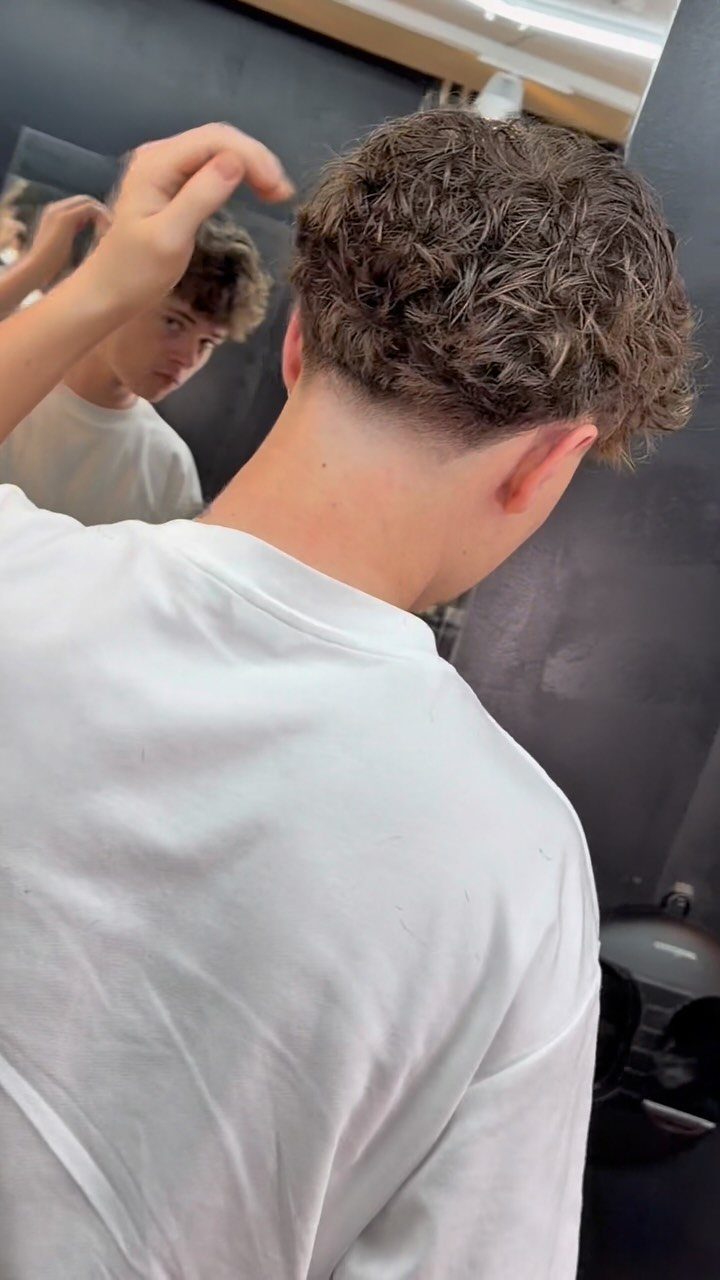
Short, choppy layers sit on top while the mid fade cleans up the sides. The texture breaks up the uniformity, so the cut feels less rigid than a buzz or crew cut but still dries fast and needs minimal product.
This suits men who want definition without a comb over or slicked look. A small amount of matte paste worked through damp hair gives separation, or leave it natural if your hair holds texture on its own.
The mid fade keeps maintenance reasonable between visits.
21. Mid Fade Afro
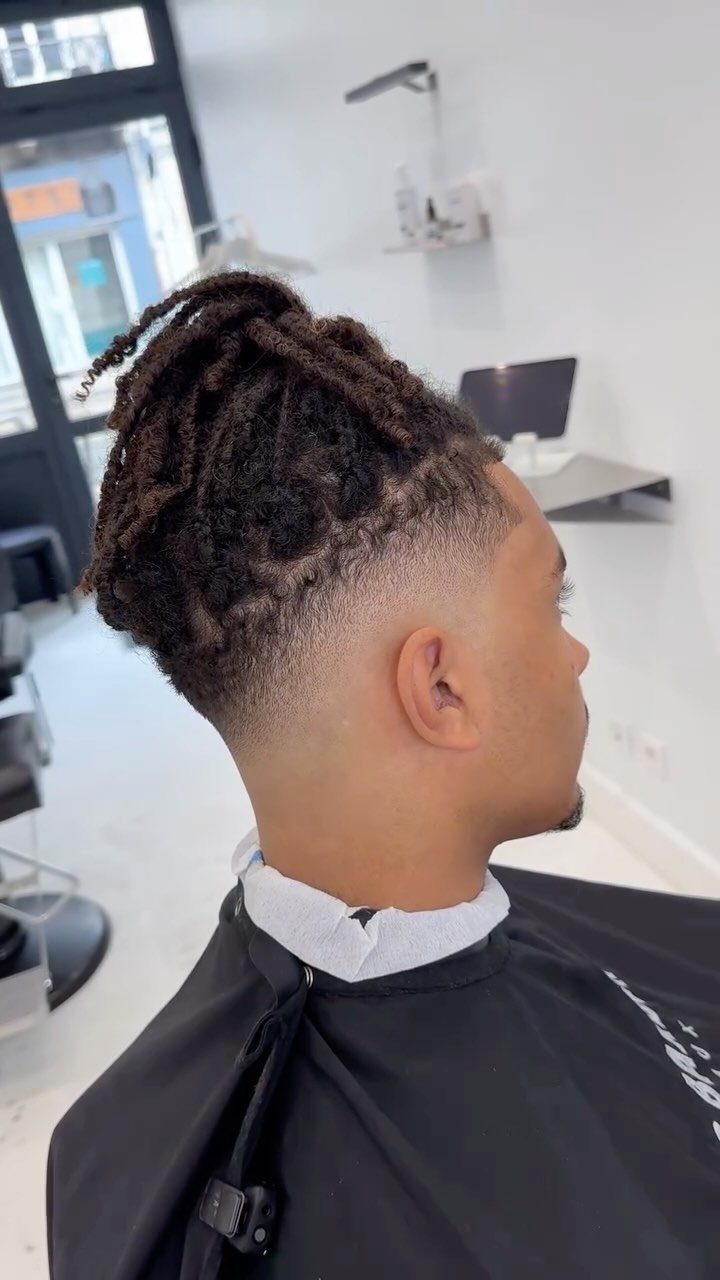
Volume stays full on top while the fade defines where the coils or locs end and the clean perimeter begins. That contrast keeps the shape intentional and balances the density natural texture brings.
Moisture and a light oil keep the texture healthy, and the fade itself needs attention every 2 to 3 weeks to stay sharp.
Specify fade height and whether you want the top left natural or shaped.
22. Tousled Mid Fade Haircut
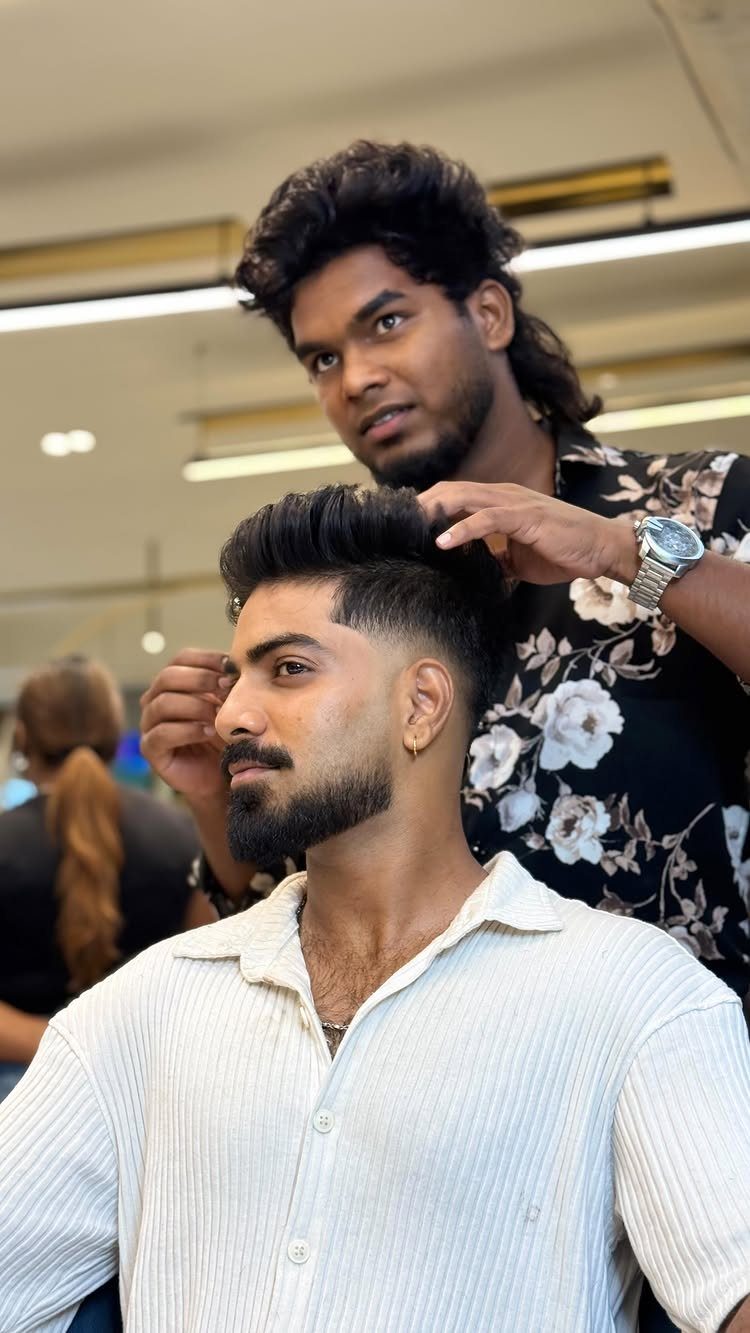
Loose, unstructured texture on top sits over a mid fade that cleans up the sides without adding formality. The tousled finish gives movement and feels relaxed, so the cut reads casual even when freshly trimmed.
This works well for men with natural wave or slight curl since the texture shows without needing much product. A small amount of sea salt spray or light cream adds separation if your hair sits flat otherwise.
The mid fade keeps appointments manageable, and the textured top hides minor growth better than a slicked or combed style.
23. Temple Fade
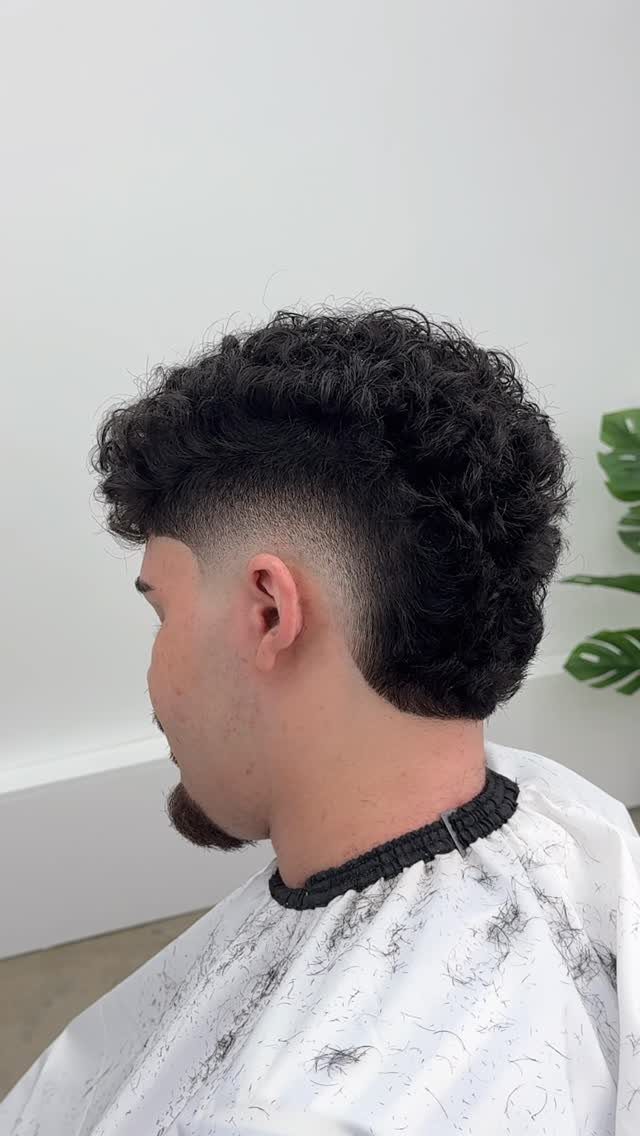
The blend happens only at the temples and may curve lower toward the back, but the rest of the sides keep length.
This gives you a clean perimeter without the full commitment of a fade that runs all the way down.
Men with curly or wavy hair often prefer this since it keeps volume on the sides while still defining the hairline. The limited fade also means less frequent barber visits.
Specify temple fade and clarify how far back you want the blend to extend.
24. Crew Cut Fade
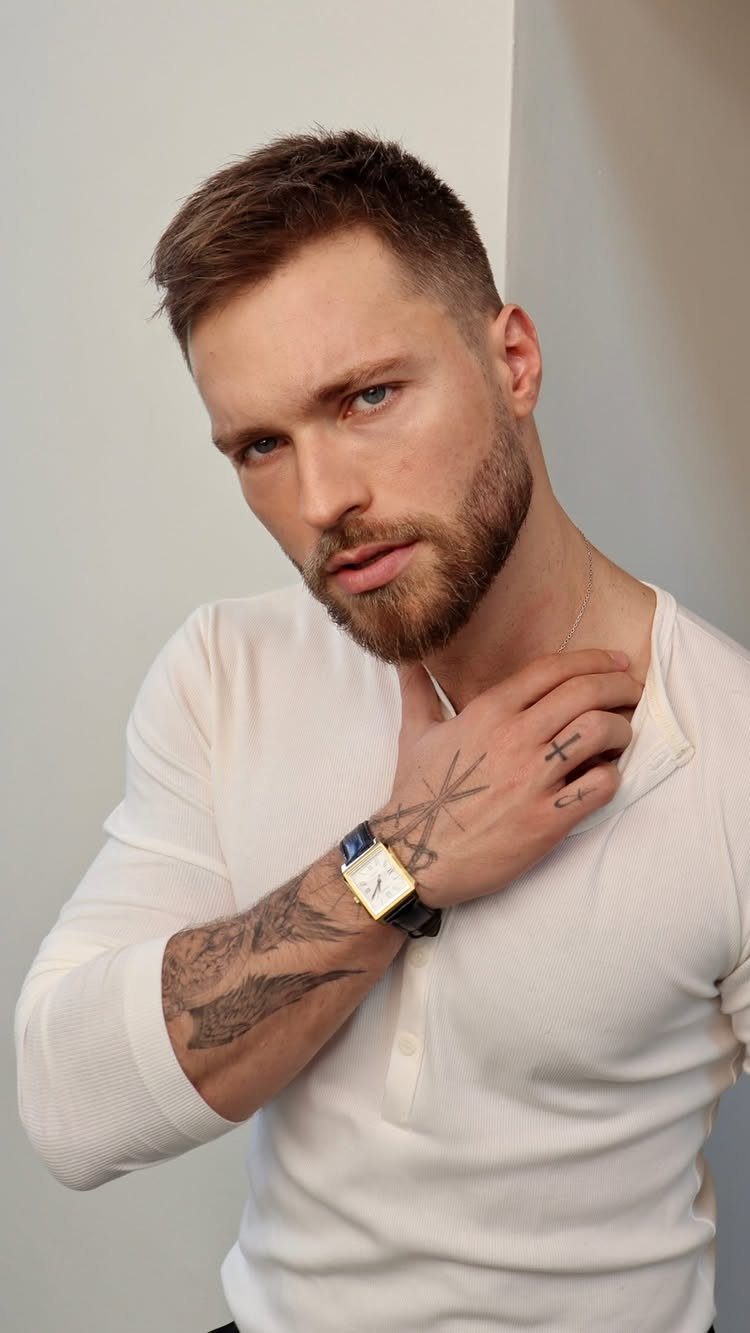
The top stays short and uniform, usually around half an inch, while the sides fade down to create contrast without leaving much styling length. This combines the low maintenance of a crew cut with the clean perimeter a fade provides.
Styling takes seconds since the short top needs nothing beyond towel drying, and the fade keeps the shape defined even as it grows.
Fade Upkeep and Regrowth
Sharp fades show regrowth faster than softer ones. A skin fade or high fade can look fuzzy within a week, while a low or mid fade holds its shape closer to 3 weeks before the blend starts to blur.
How fast your own hair grows decides how soon you notice. Stretch it to 4 and the transition softens, perfectly fine when precision isn’t the point.
Between visits, a trimmer can clean up the outline around the ears and nape if you’re comfortable doing it yourself.
Keep the blades clean and sharp so the line stays even. If the fade itself needs blending, that’s barber work.
Choosing a Fade for Hair
A high fade or faded mohawk won’t look unbalanced because you have the volume to support the contrast.
Explaining the Cut to a Barber
Specify where the blend starts and how much skin you want showing.
A reference photo helps, but faces differ. What works on someone else’s proportions may need adjusting for yours, so stay open to your barber’s read on where the fade should sit.
If you want a drop or burst shape, say so. The default fade runs level unless you ask for the curve.
“From a barber’s perspective, the biggest difference is where the graduation begins,” Aaron Chan, cofounder of Kings Domain barbershop in Melbourne, Australia. “The higher you move the fade, the more contrast you create.”
— GQ
Frequently Asked Questions
What is a fade haircut?
A fade gradually shortens hair down the sides and back, blending from longer length on top toward the perimeter.
The shortest section can reach bare skin or stop just above it, depending on the style. The transition stays smooth rather than showing distinct clipper lines.
What is the difference between a taper and a fade?
A taper keeps visible length throughout, shortening gradually toward the edges without ever reaching skin.
A fade can blend all the way down to bare scalp, creating sharper contrast. Tapers grow out more gracefully and need less frequent maintenance than most fades.
What is the difference between a low fade and a mid fade?
The blend sits just above the ear and leaves more hair covering the side of the head.
A mid fade begins around temple height, exposing more of the side and creating stronger contrast. The mid fade requires slightly more frequent cleanups since the blend sits higher.
What are the types of fades?
The main types are low, mid, and high fades, defined by where the blend begins on the head. Skin fades take the sides down to bare scalp regardless of height.
What is the best fade for guys?
A mid fade works well for most men because it balances contrast with coverage, sitting high enough to define the shape without exposing as much scalp as a high fade.
It suits nearly all face shapes and hair textures, and the maintenance window stretches longer than higher fades allow.
Low fades suit rounder faces or conservative settings, while high fades work best when you have enough density on top to support the contrast.
What type of fade is most flattering for a round face?
A mid or low fade with volume on top helps add vertical length to a round face. Keeping more length at the sides prevents the head from looking wider, and height or texture on top shifts attention upward.
How long does a fade last before it needs to be touched up?
A skin fade or high fade shows stubble within a week and needs cleanup every 1 to 2 weeks to stay sharp.
Fades that start lower tend to hold their shape closer to 3 weeks. Hair grows at different rates, so you can push it to 4 weeks if you’re willing to lose some crispness.
How do I ask for a fade haircut?
Tell the barber where the blend should begin (low, mid, or high) and whether you want any skin showing through.
Mention whether you want a drop or burst shape if the default level fade isn’t what you’re after. A reference photo helps, but be open to adjustments based on your own proportions rather than copying the photo exactly.
Can I have a fade if I have a receding hairline?
A fade can work with a receding hairline if the barber adjusts the placement and balance. A mid fade or a style with longer hair combed forward at the front adds coverage where the hairline has pulled back.