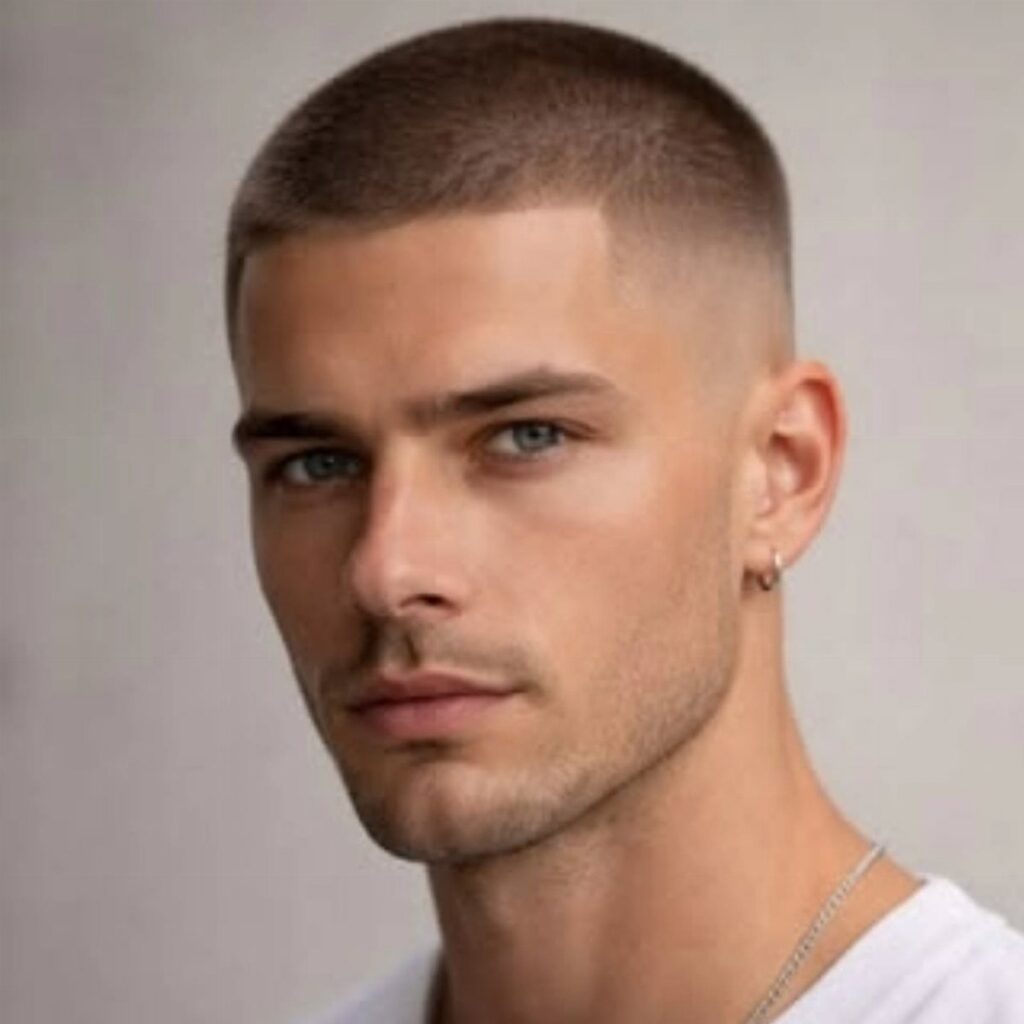
A buzz cut spans everything from a uniform induction at a #0 to a textured burr at a #4, with or without a fade or drop fade that takes the sides to skin.
The fade height decides how often you need a cleanup: a high fade or drop fade demands a trim every 10 to 14 days to keep the blend sharp, while a uniform buzz lets you stretch maintenance to 3 or 4 weeks without looking uneven.
1. Buzz Cut Fade
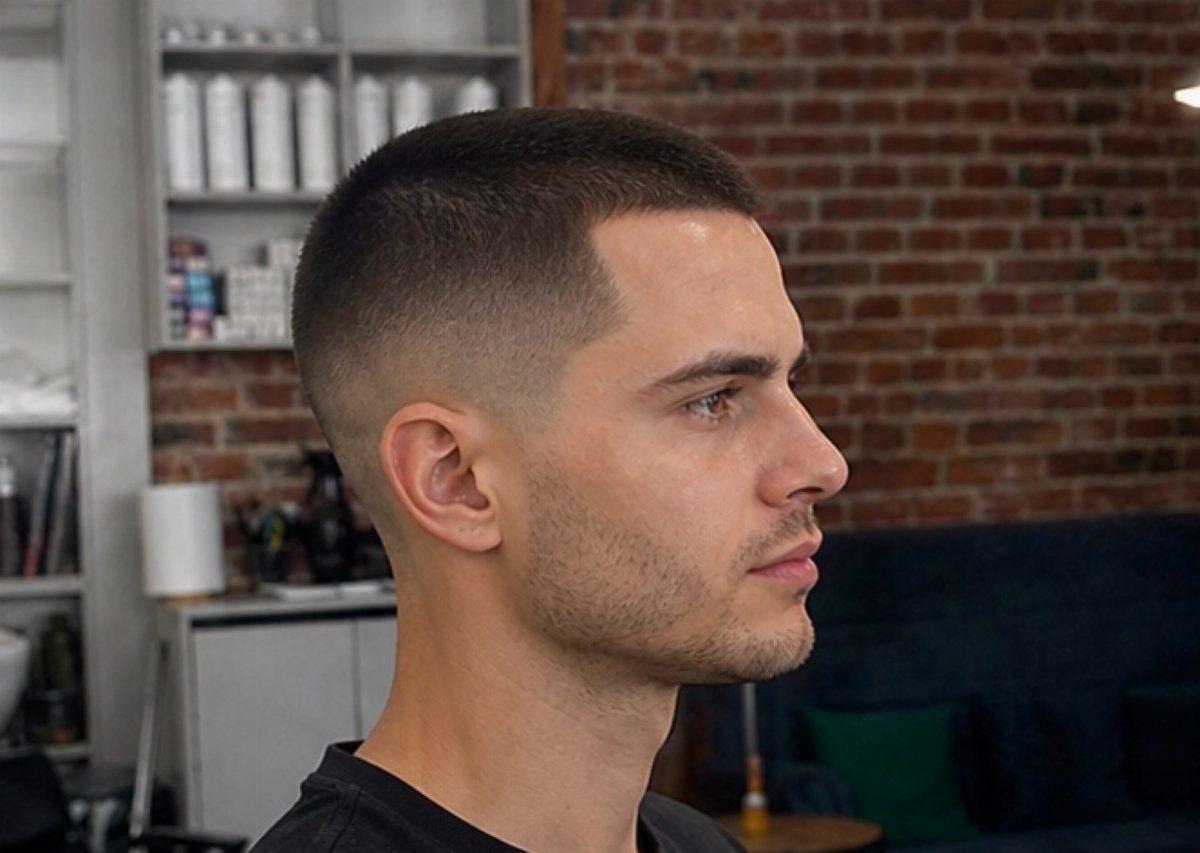
The top sits at one length while the sides and back taper down through progressively shorter guards. Ask for a low, mid or high fade based on where you want the blend to start.
Most barbers will suggest a #3 or #4 on top and take the sides down to skin or a #1. The cut needs a cleanup more often than a uniform buzz to keep the fade sharp.
Works well if you want the low effort of clipped hair but prefer some contrast between the top and sides.
2. Buzz Cut with Drop Fade
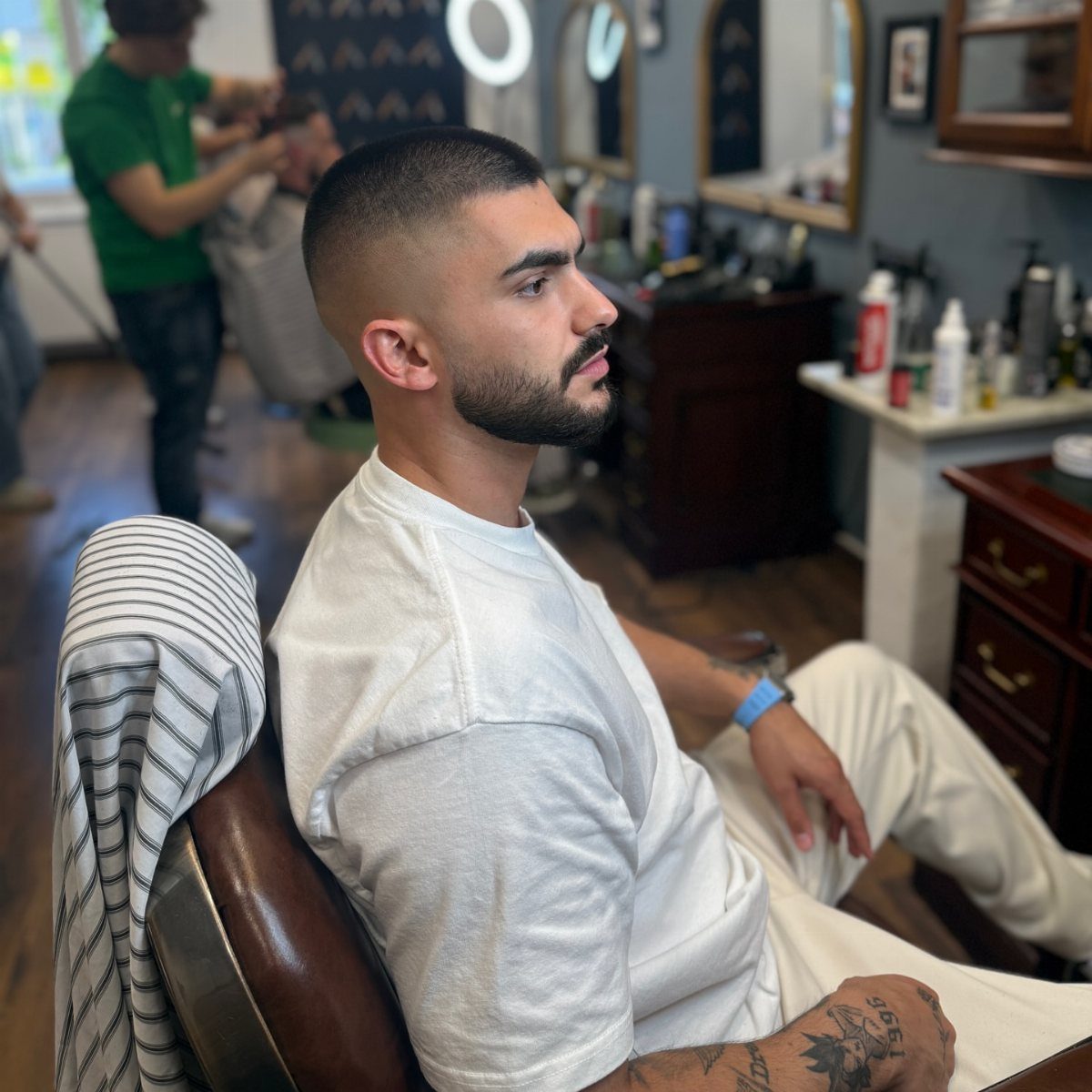
The fade curves down and around the ear instead of following a straight horizontal line. That arc softens the transition and suits rounder face shapes better than a standard fade.
Request a drop fade and specify the guard length on top. The barber will arc the fade from the temple down behind the ear, usually ending at a #0 or skin.
Expect the same maintenance schedule as a straight fade, since the taper grows out just as fast.
3. Burr Cut

Clipped uniformly across the entire head, the burr sits between the barely-there induction and anything long enough to show texture. It reads as hair rather than stubble, which makes it easier to pair with facial hair or glasses.
Some barbers will blend the neckline slightly shorter for a cleaner edge.
Growth is more forgiving than shorter cuts. You can stretch trims to 3–4 weeks before it starts looking uneven, and styling takes no time at all.
4. Buzz Cut with Beard
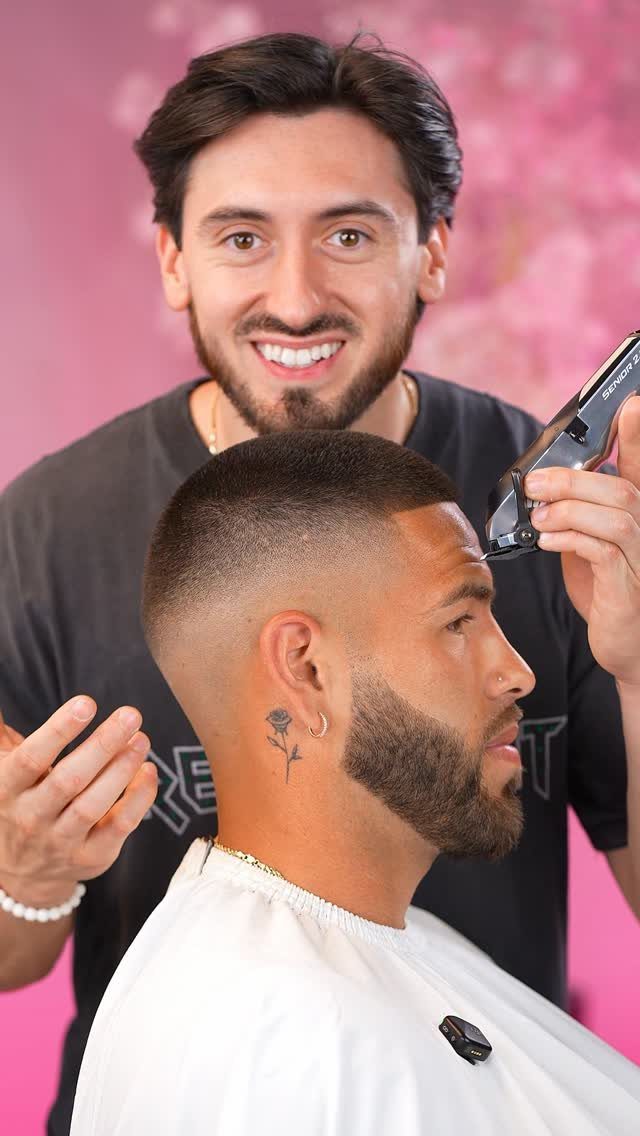
A full beard or even a few days of stubble gives structure to the face when the hair is clipped short. The contrast keeps the look from reading as too stark, especially on guys with softer jawlines or rounder faces.
Keep the beard trimmed to a consistent length so it does not overpower the buzz. If the hairline is sharp, carry that same clean edge down the cheek and neckline of the beard.
The combination cuts down grooming time overall, since both the hair and beard can be maintained with clippers.
5. Types of Buzz Cuts
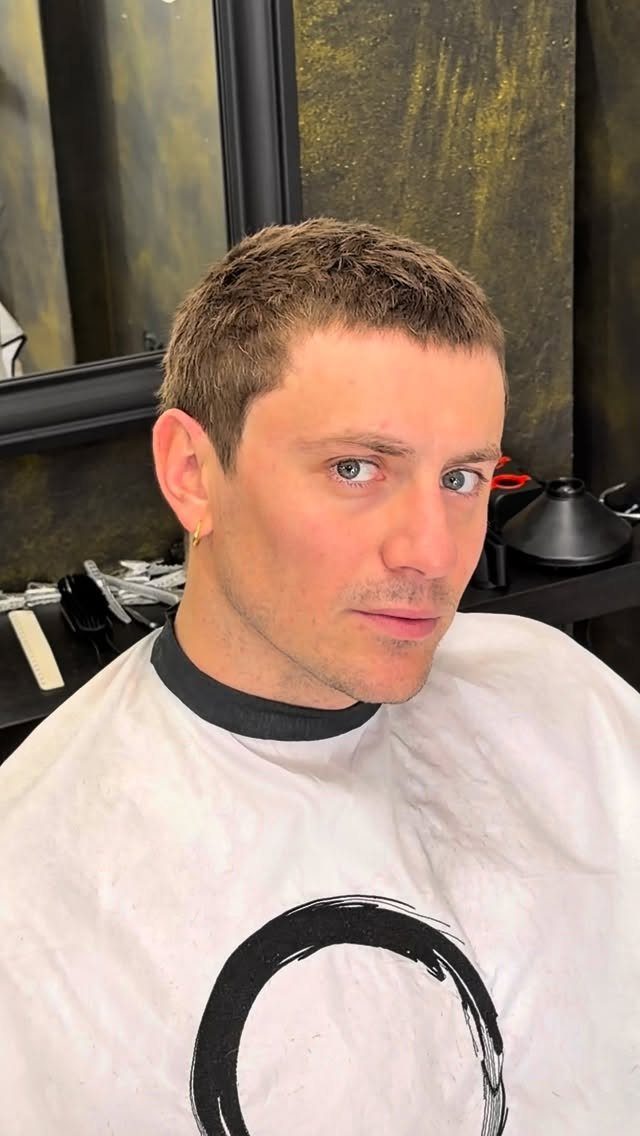
A single guard length across the entire head, no fade, no taper, no variation. Usually clipped between a #1 and a #4 depending on how much coverage you want.
This is the fastest option at home and the easiest to maintain.
Run the clippers front to back, then side to side for even coverage. Touch it up weekly or let it go a month, it will not look scruffy either way.
Best for guys who want zero styling and minimal trips to the barber. Grows out evenly, so there is no deadline to get it recut.
A buzz cut is more nuanced than it might seem. In fact, it’s not just one cut—but an entire language of restraint, defined by millimeters, guard numbers, and gradients of control.
— GQ
6. Buzz Cut with Line-Up
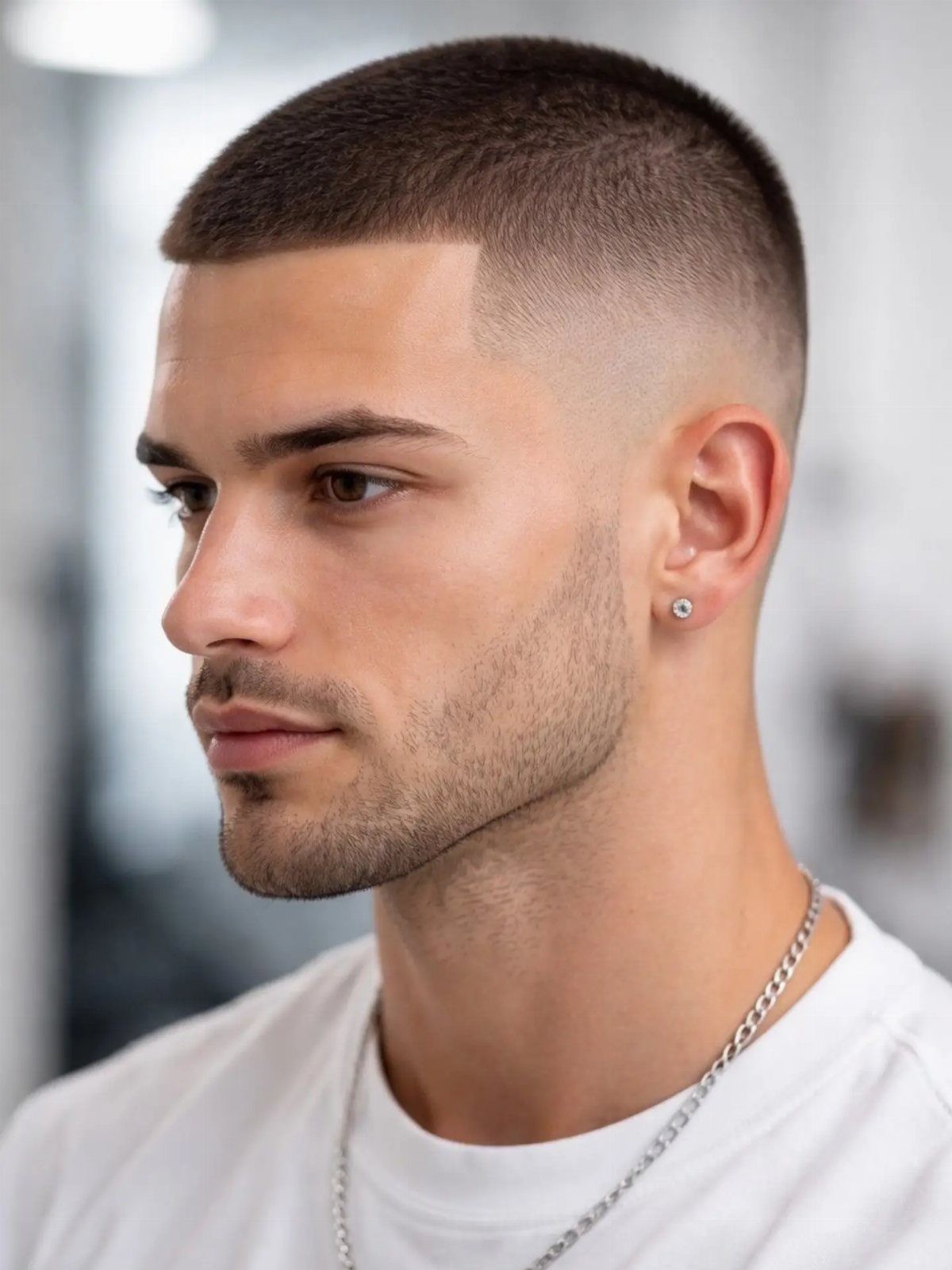
A sharp hairline along the forehead and temples frames the buzz and makes the whole cut look deliberate. The edge is usually trimmed with a straight razor or the corner of a trimmer blade.
Request a line-up or shape-up when you get the buzz. If you maintain it yourself, use a handheld trimmer with a fine blade and follow your natural hairline, cleaning up strays without cutting too far back.
The line grows out faster than the rest of the cut, so plan on touching it up every week or two if you want to keep that crisp look.
7. Tapered Buzz Cut
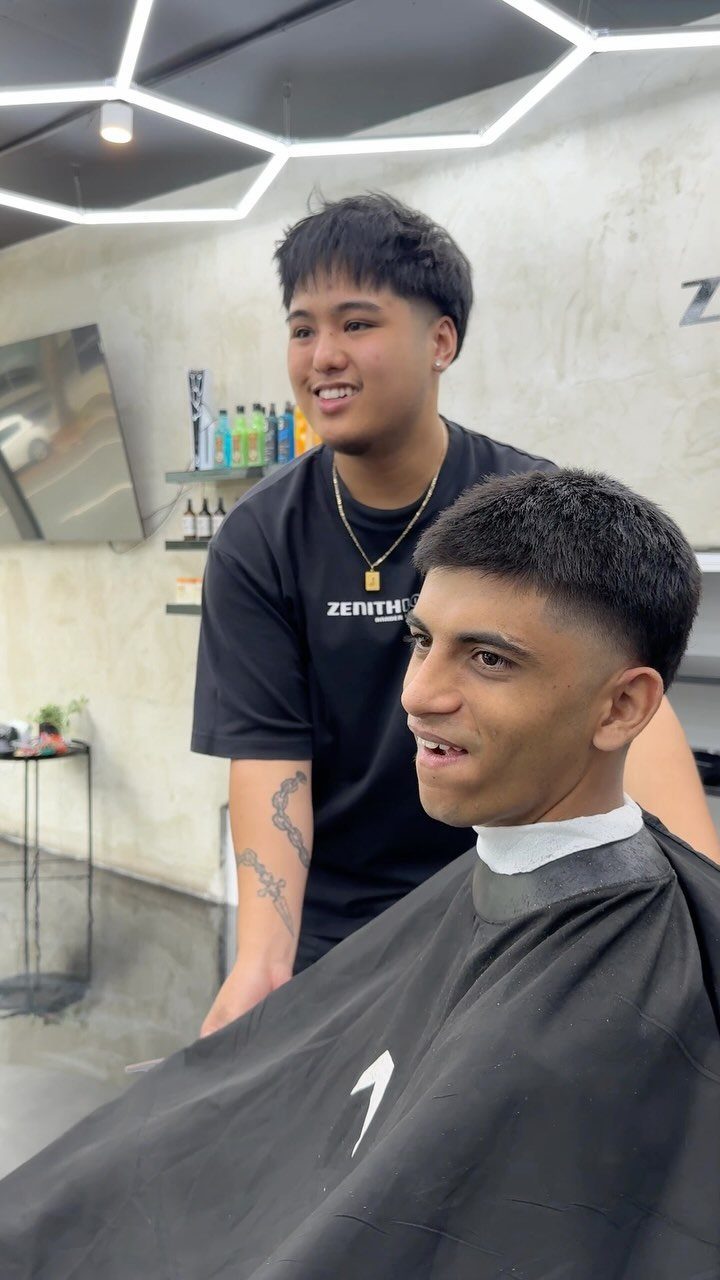
The sides and back are clipped shorter than the top, but there is no defined fade line. The taper blends gradually from the longest point down to the neckline and around the ears.
Ask for a tapered buzz and give the barber your top length. Most will use a #3 or #4 on top and work down to a #1 or #2 at the edges, keeping the transition subtle.
Maintenance sits between a uniform buzz and a full fade. The taper does not need constant attention to stay clean, so you can let it grow out longer before needing a trim.
8. Mohawk Buzz Cut
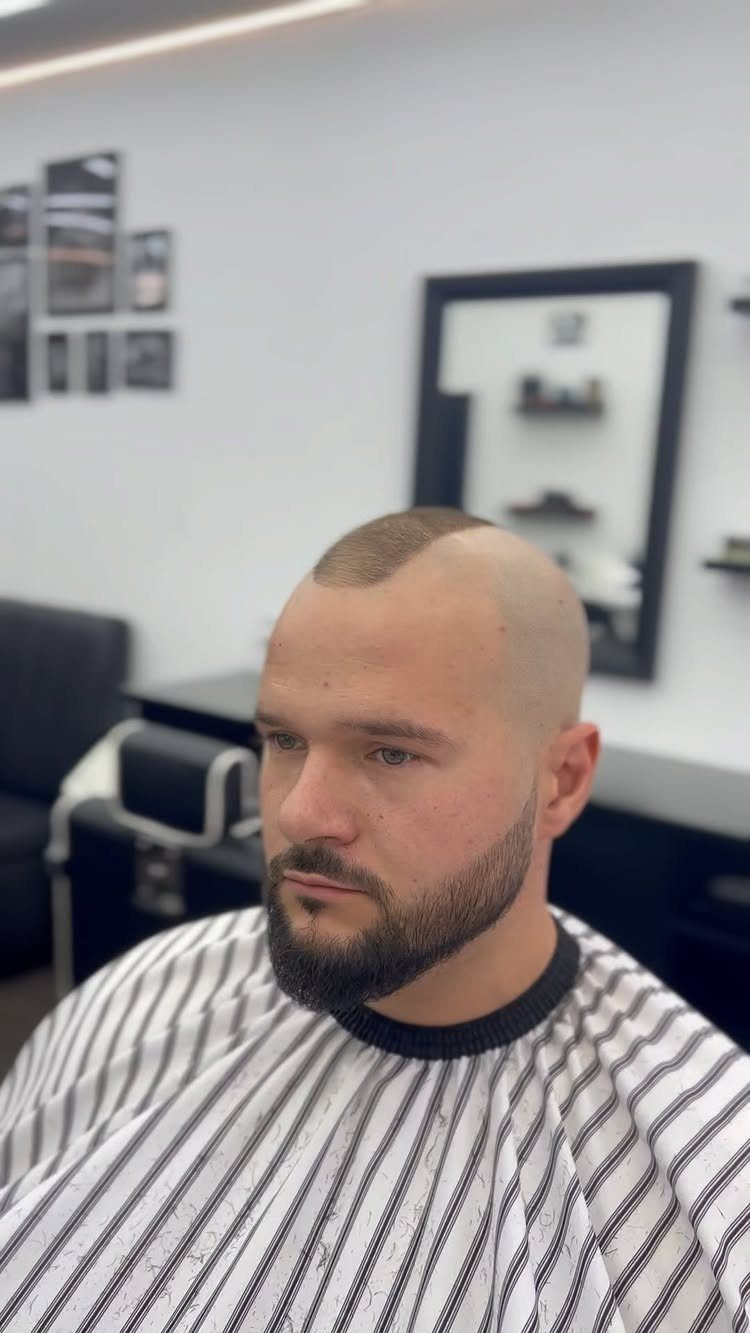
The sides are taken down to a #1 or skin while the center strip stays longer, usually a #3 or #4. The strip runs from the forehead back to the crown, and the width depends on how bold you want the contrast.
Ask for a mohawk buzz and specify how wide you want the center. A narrow strip reads subtler, a wider one makes the shape more obvious.
Grows out faster than a uniform buzz because the difference between the sides and center becomes less defined as length returns. Plan on more frequent touch-ups if you want the strip to stay distinct.
9. Bleached Blonde Buzz Cut
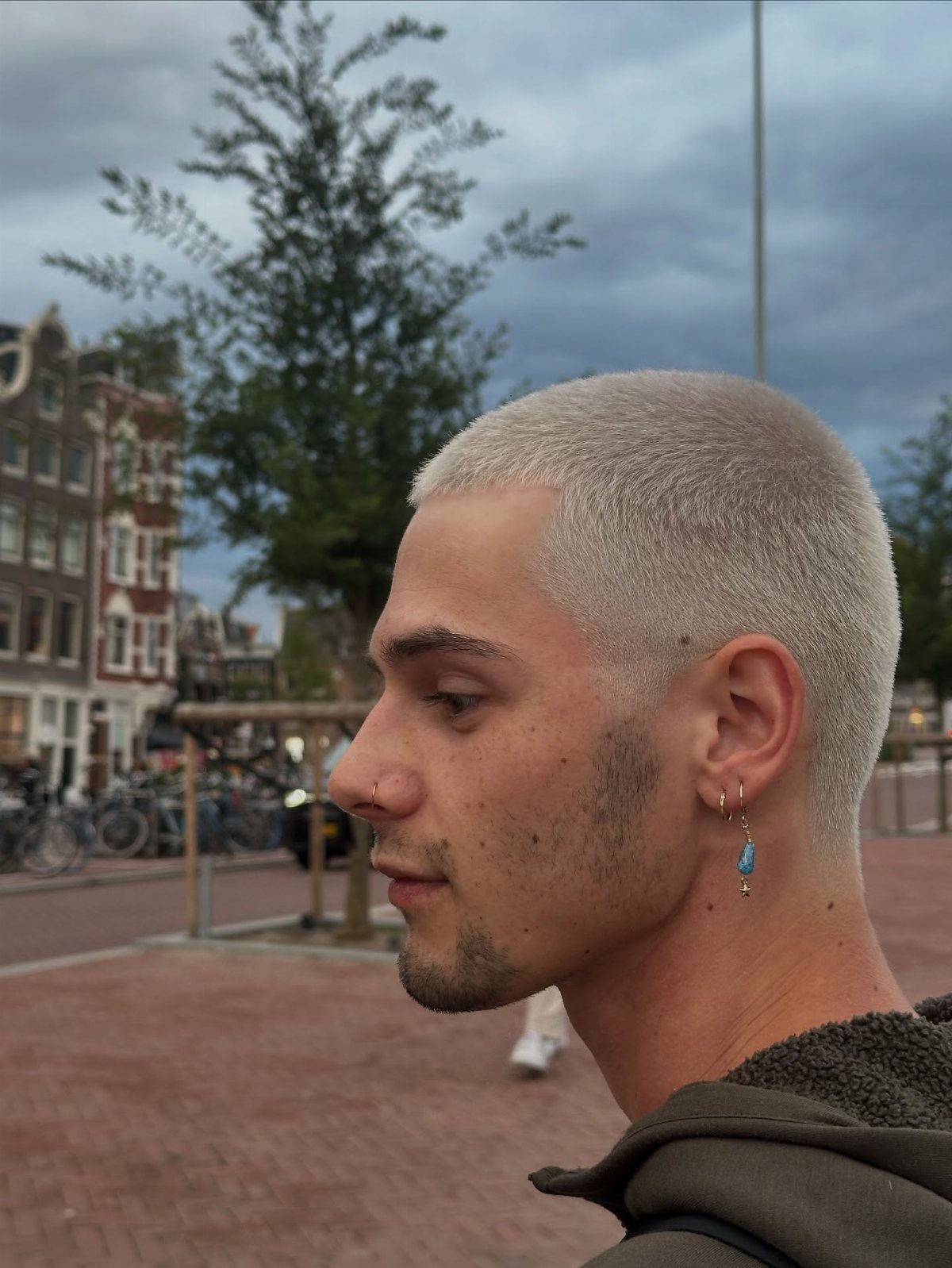
Short clipped hair dyed a pale blonde or platinum tone stands out more than natural color at the same length. The color makes the texture easier to see, so even a #2 or #3 reads as hair rather than near-scalp stubble.
Bleach lifts the natural pigment, then toner neutralizes any yellow or brassy warmth. Most barbers will refer you to a colorist unless they handle color themselves.
Color fades as the hair grows, and new growth shows your natural tone within a week or two. Touch-ups keep the tone even, but frequent bleaching on short hair means you are re-dyeing new growth every few weeks.
10. Uniform Induction Cut
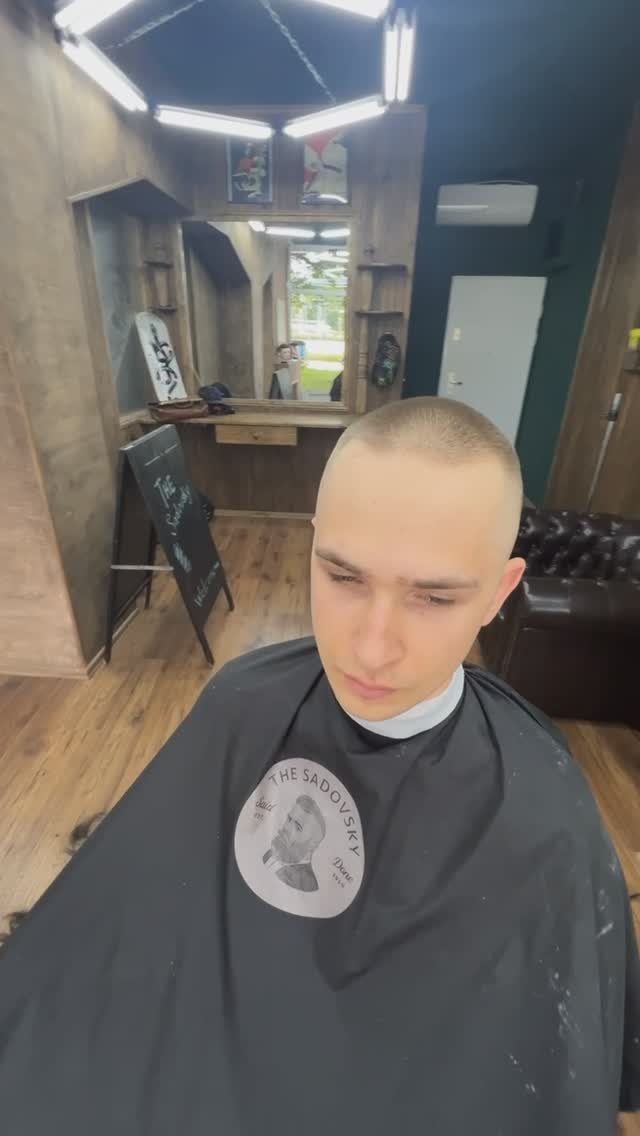
Clipped with a #0 or #1 guard across the entire head, this is as short as you can go with clippers before switching to a razor. The hair barely lifts off the scalp, and the cut takes minutes.
Some barbers will clean up the neckline with a trimmer or razor, but the rest stays uniform.
Maintenance is optional.
You can buzz it again in a week or let it grow for a month without it looking uneven. Best for guys who want the absolute minimum in grooming time and do not mind the look of near-stubble.
11. Buzz Cut with Shaved Design
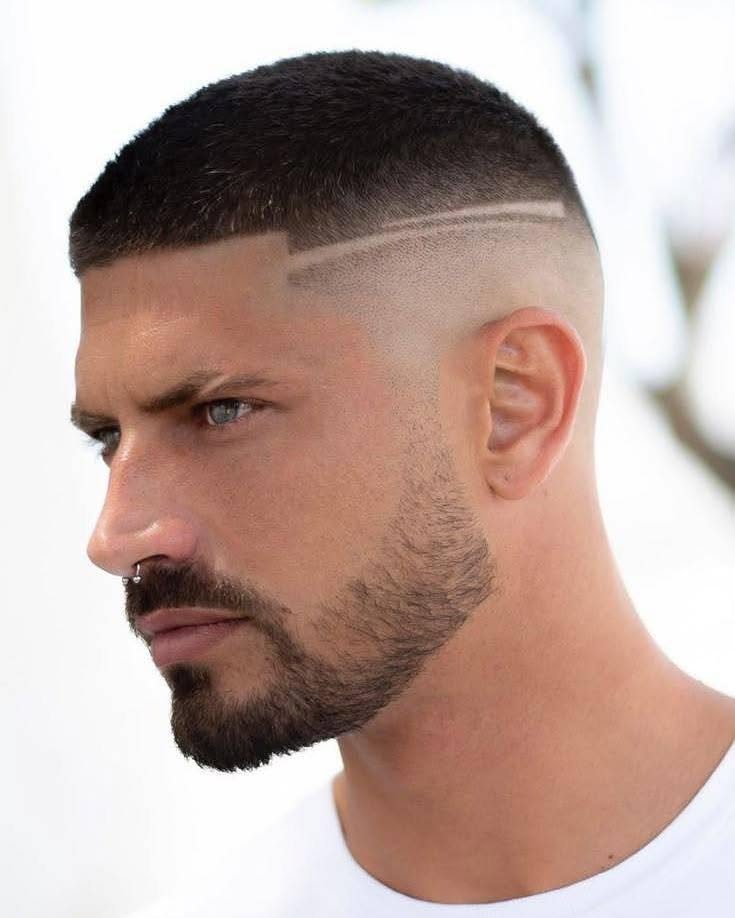
A line or geometric pattern is shaved into the side using a trimmer or razor, usually placed where the fade meets the longer hair on top. The design can be a single stripe, parallel lines, or more detailed shapes.
Request the design after the buzz and fade are done. The barber will freehand it or use a stencil depending on the complexity.
The design grows out within a week as the surrounding hair catches up in length. If you want to keep it visible, plan on regular touch-ups or let it fade into the rest of the cut.
12. Silver Dyed Buzz Cut
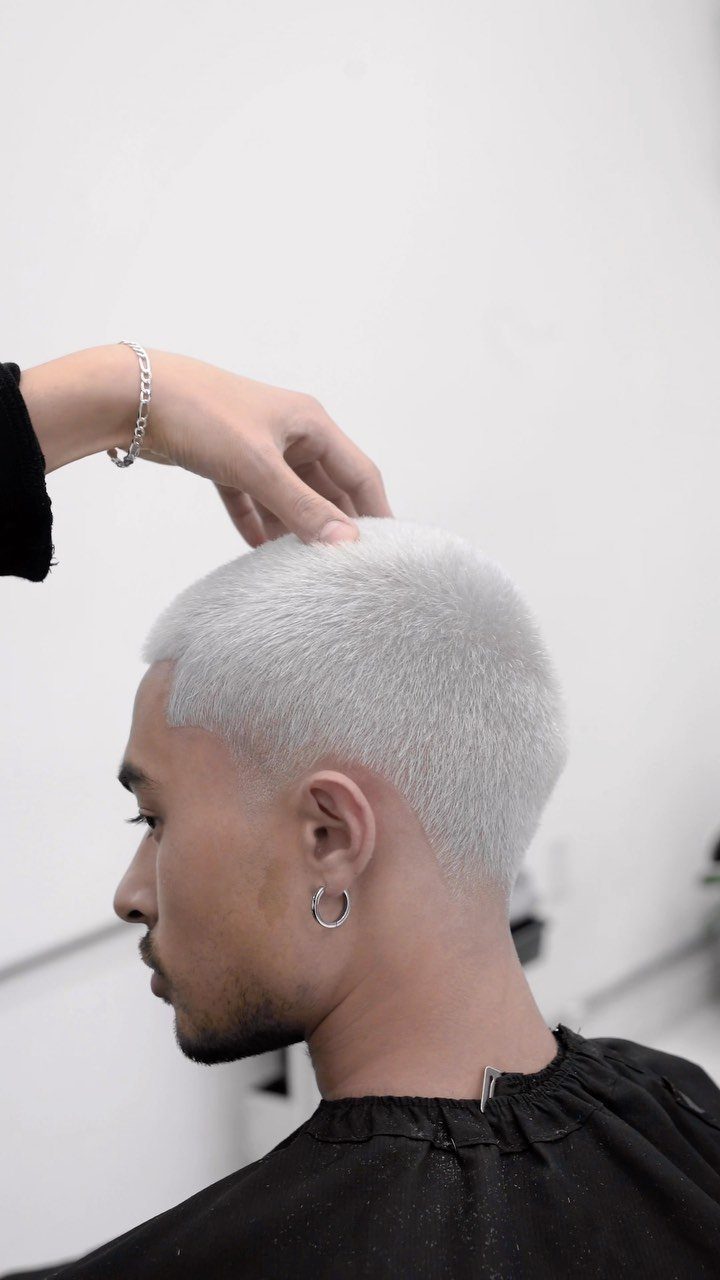
Short buzzed hair dyed a cool metallic silver or gray tone. The color shows up best on hair that has been pre-lightened to pale blonde, so expect a bleach step before the silver toner goes on.
Silver toner fades faster than most colors, often turning brassy or dull within 2 weeks. Purple-tinted shampoo helps maintain the tone between salon visits.
New growth becomes visible quickly at this length, so keeping the color consistent means re-dyeing regularly. The upkeep is higher than a natural buzz, but the contrast makes even a #2 or #3 guard look deliberate.
Hair and Face Suitability
Face shape mostly decides where the fade should start.
Rounder faces gain definition from a high fade that pulls the eye upward, while square or angular jaws suit a low fade that keeps weight near the neckline. Oval faces handle nearly any fade height without distorting proportion.
Hair density matters more than texture once you go this short. Medium to thick hair holds a uniform buzz without looking patchy, and wavy hair still shows some movement even at a #3 or #4.
Sparse or fine hair can make a #1 or induction cut look closer to bald than buzzed, since the scalp shows through easily.
Afro-textured hair benefits from a low fade that preserves the natural curl pattern on top. Higher fades work, but they expose more scalp and require sharper edges to stay clean.
Upkeep and Daily Effort
Daily effort is close to zero.
No product, no blow-dryer, no mirror time in the morning. Towel off after a shower and the hair is dry before you finish getting dressed.
Maintenance depends entirely on whether you added a fade.
Lines fade softer within days, so faded buzz cuts ask for edge-ups more often. Plan on a cleanup every 10 to 14 days to keep the blend tight and the lines crisp.
If you clip it yourself at home, the uniform cut takes 5 minutes. Fades need a barber unless you can reach the back of your head with a steady hand and a handheld mirror.
Scalp Care and Visibility
Scalp visibility jumps once you go below a #2. Fades that drop to skin or a #0 put the entire side of your head on display, so bumps, scars, or uneven texture become part of the look.
If you have anything you would rather not highlight, talk to the barber about keeping the fade lower or the shortest guard at a #1 instead of skin.
Exfoliating the scalp once or twice a week prevents buildup and keeps the skin smooth, especially if you sweat or wear hats often.
A light moisturizer keeps the scalp from drying out, but skip anything heavy or greasy that will sit on the surface.
Sunscreen becomes necessary if you spend time outside. A buzzed scalp burns faster than covered skin, and the top of the head catches more sun than most people expect.
Frequently Asked Questions
Are buzz cut men attractive?
There is no single answer, since preferences vary. Some people read short hair as more masculine or find the look appealing, while others prefer longer styles.
A buzz cut does put your whole face on display, which can work in your favor if you have strong bone structure or want to show off your jawline.
Can everyone pull off a buzz cut?
A uniform buzz cut works across most face shapes and hair types, but the specific style matters.
A high fade adds vertical lines that elongate round faces, and a low fade softens the edges of a strong jawline. Fine or thinning hair often needs a longer guard to keep the scalp from showing through in patches.
What is the perfect buzz cut for men?
The right cut depends on how much scalp you want to show and whether you want contrast between the top and sides.
A uniform buzz clipped at one guard length offers the lowest maintenance, while a fade or taper adds shape and needs more frequent cleanups. Face shape and hair density both affect which option looks best on you.