Length here runs from chin to past the shoulders, and the span covers everything from loose waves and layered shags to dreadlocks, man buns and the long mullet.
The cut that works depends on your hair type and how much time you’ll give it each morning.
Wavy and curly hair fills out shoulder-length cuts and long shags without extra product, while straight hair needs a light serum or styling cream to keep the shape from lying flat.
Braids and twists hold for days or weeks once they’re set, and a slicked-back style or textured quiff takes a few minutes with pomade or clay.
1. Surfer Hair
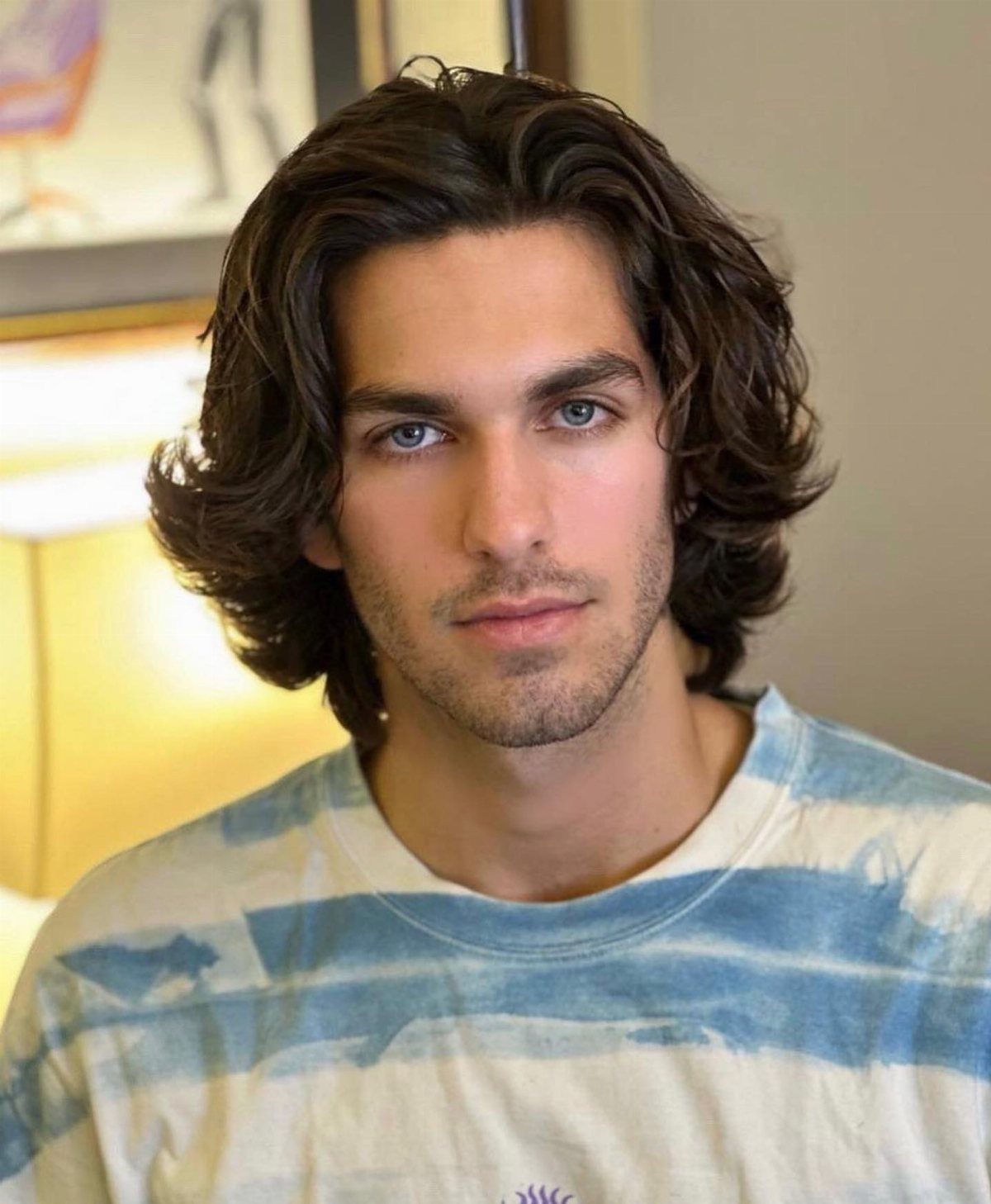
Loose waves with just enough movement to look like they dried in salt air. The shape falls somewhere between casual and unkempt, which means it reads relaxed without looking like you forgot to comb it.
This works for wavy hair and straight hair alike.
Straight hair picks up texture from a light spray or mist. If it’s already wavy, let it air-dry and scrunch it while damp.
The length here sits just past the ears and down to the collar. You can tie it back when you need to, and it stays loose enough that tangles don’t build up.
2. Long Mullet
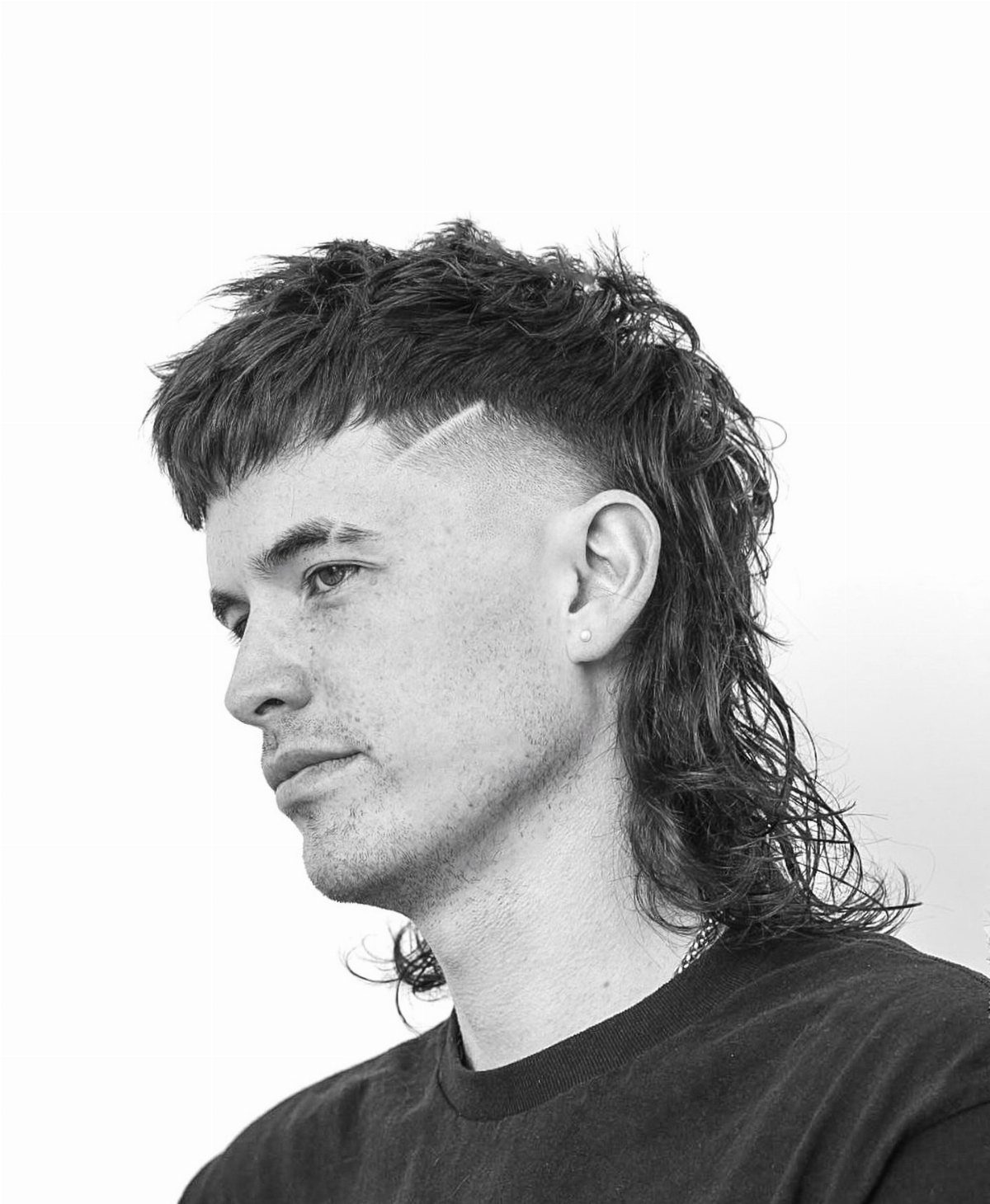
Short on top and at the sides, long at the back. The contrast is the whole idea, and how far you take it decides whether it reads subtle or loud.
A shaved line or fade at the temple sharpens the shape and gives the barber a clear stopping point. Without that line, the sides blend into the back more gradually and the cut looks softer.
Length in back can stop at the collar or keep going to the shoulders. Longer versions take time to grow, and the shape needs regular cleanup so the cropped sections don’t blur the contrast.
“Longer hair has become another way for men to express individuality rather than maintain a uniform,” celebrity hairstylist Sami Knight says. “Also, if you’ve a great hairline, it’s well worth showing off.”
— GQ
3. Long Shag
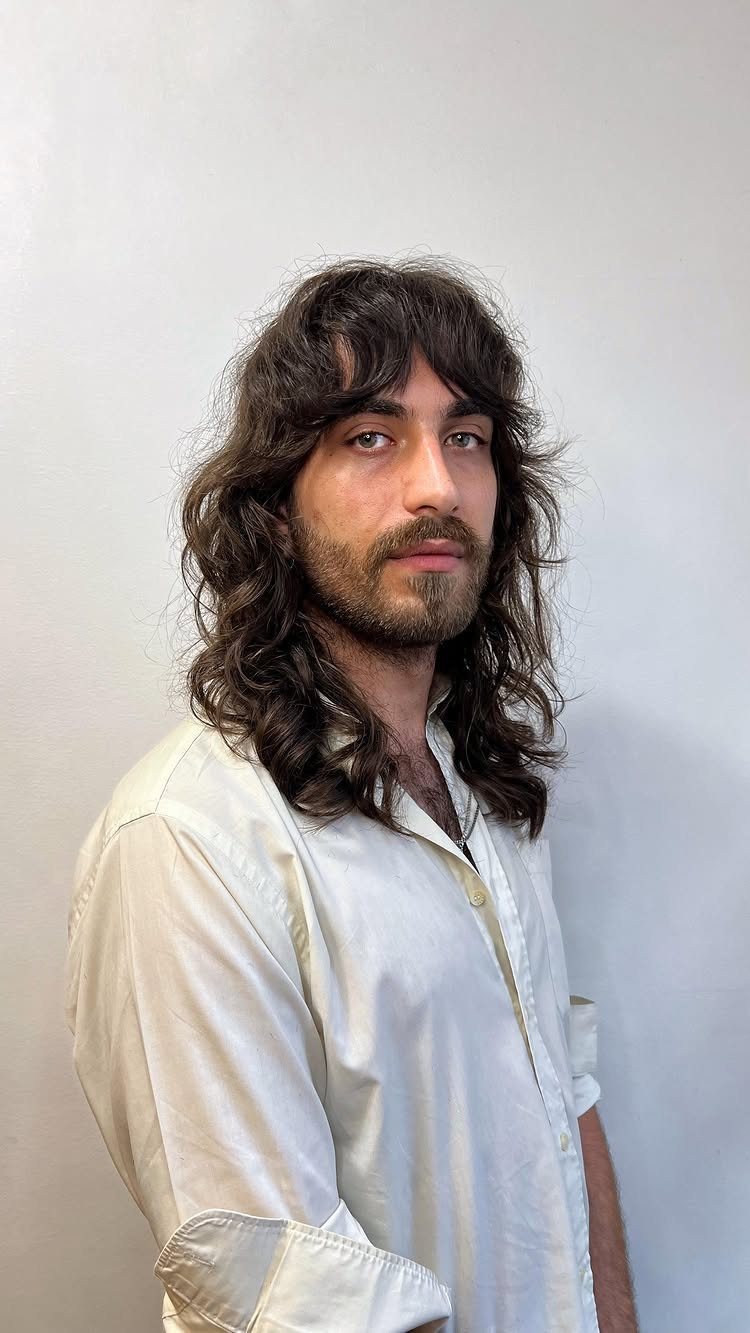
Choppy layers that sit loosely around the face and shoulders. The cut is meant to look a little undone, so precision isn’t the goal.
The layers begin around the cheekbones and run through to the ends. The top layer should be shorter than the bottom, which gives you movement without removing too much length.
If yours is wavy, the texture does most of the work. Straight hair needs a small amount of styling cream or mousse to keep the layers from lying flat.
The cut needs regular cleanup. The shag can handle some growth, but once the layers merge the shape is gone.
4. Long Curly Hair
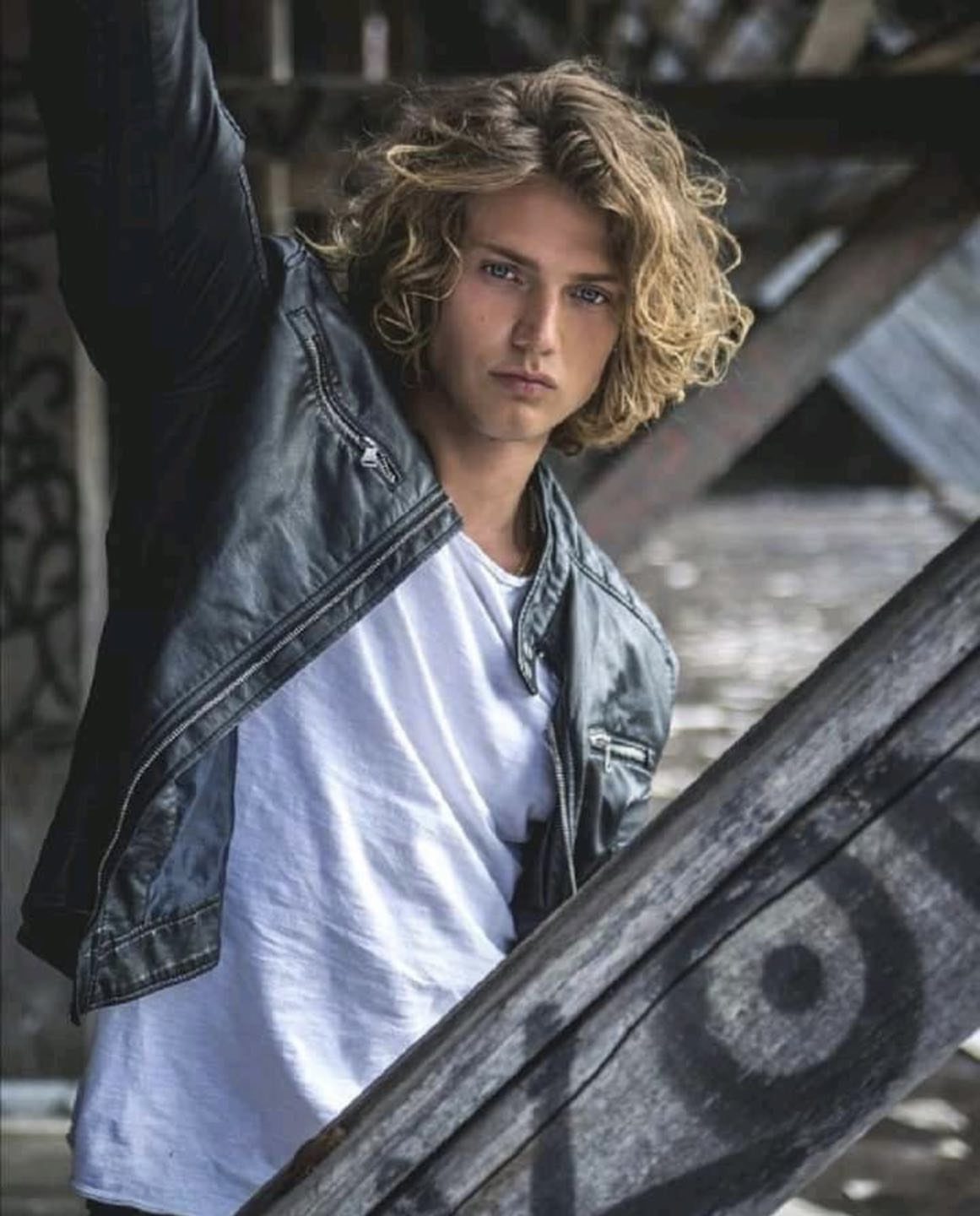
Curls left long and allowed to build volume as they grow. The cut follows the natural curl pattern instead of fighting it, so the shape is fuller at the top and sides.
Length here falls past the shoulders when the curls are stretched.
Dry, they sit higher and frame the face. The barber trims curls dry so the finished length matches what you’ll actually see.
A leave-in conditioner or curl cream keeps the curls defined and cuts down on frizz. Work it through damp hair and leave it to dry, or use a diffuser when you’re in a hurry.
Curly hair pulls tighter as it dries, so wet length doesn’t predict what you’ll see in the mirror.
5. Afro
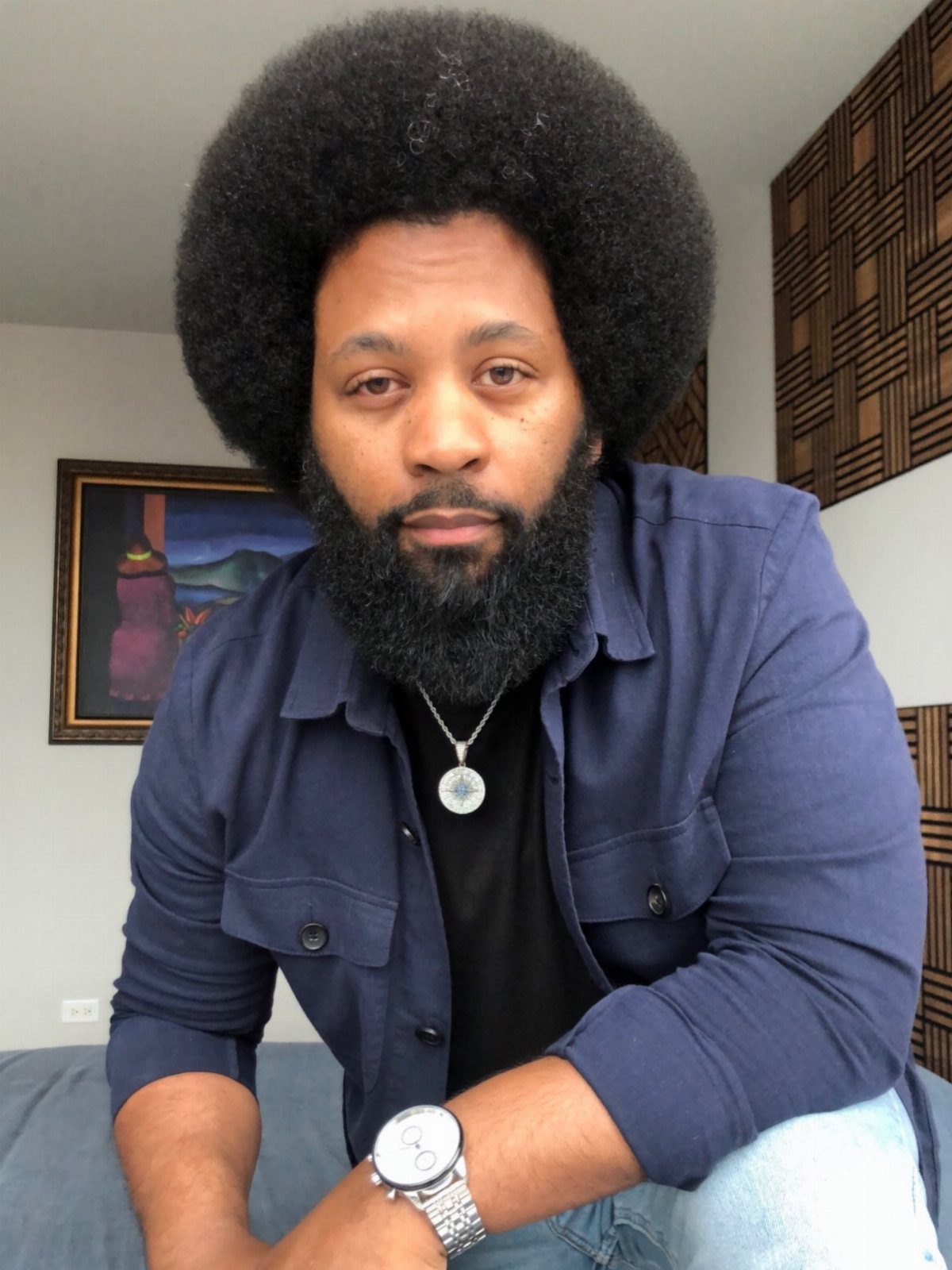
A rounded, full shape that grows outward rather than down. The curls form a cloud of texture that holds its volume without collapsing.
This works best with tightly coiled hair.
As it grows, the curls stack on each other and build height. A barber who knows how to shape natural hair can round the silhouette and remove bulk without losing the fullness.
Moisture is the maintenance. Pick it out while damp to lift the roots and even out the shape.
The afro doesn’t ask for daily work, but moisture matters and the edges need cleanup on a regular schedule.
6. Man Bun
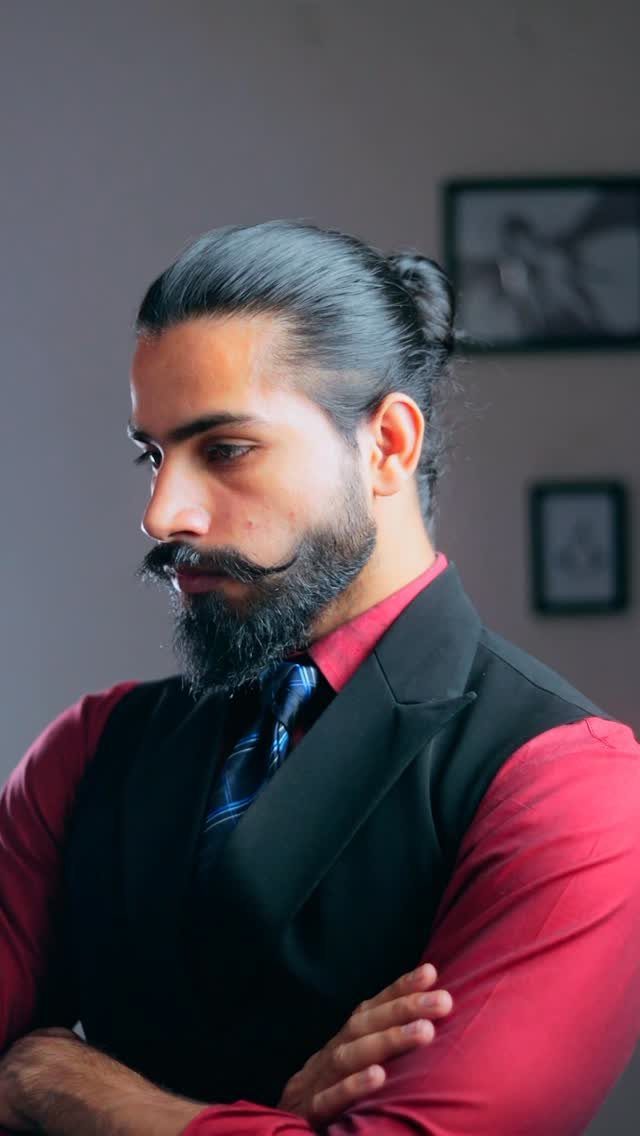
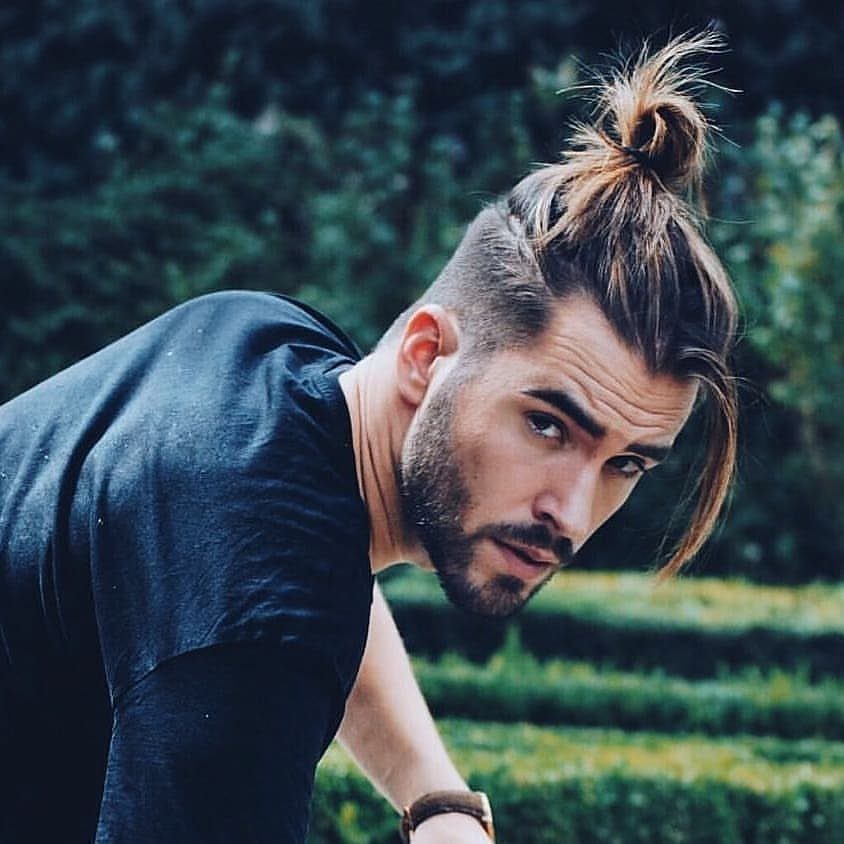
Hair pulled back and twisted into a bun, usually positioned low at the back of the head or higher at the crown. Hair stays clear of your face and neck, and you keep the length.
The bun needs enough length to gather and hold without a tie. Shorter hair can still be tied back, but the bun will be smaller and may need an elastic to stay secure.
A low bun sits at the nape and looks more formal.
A high bun, closer to the crown, reads casual and works well for workouts or long shifts. Both versions take seconds to set up in the morning.
The hair itself still needs care. Condition regularly and clean up the ends so splits don’t climb.
7. Long Straight Hair

Hair that falls past the shoulders without curl or wave. The length shows cleanly because there’s no texture to hide uneven ends or splits.
This needs regular trims. Straight hair telegraphs damage faster than wavy or curly types, and a rough edge will stand out.
A light serum or leave-in smooths the surface and cuts down on static. A paddle brush and blow dryer flatten any wave and make the cut look sharper.
The shape stays simple. No layers, no volume tricks, just length kept clean.
8. Long Curly Layers
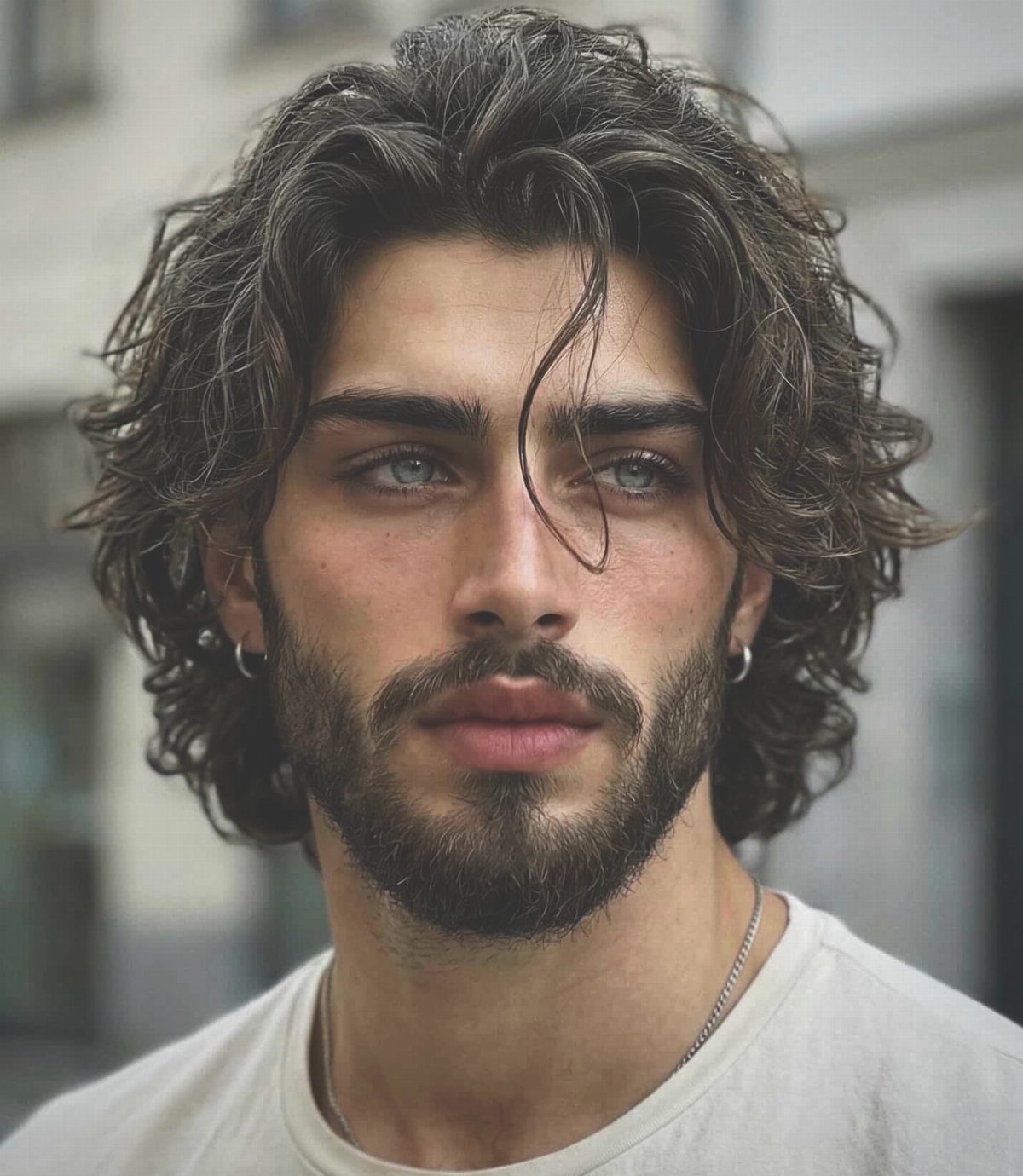
Layers cut into long curls to lighten the weight and bring out the curl pattern. Without them, curls can hang heavy and lose their shape.
The barber cuts this dry so the layers land where the curls actually sit. Each layer should be slightly shorter than the one beneath it, which keeps the curls stacked and moving.
This suits medium to thick curls that need definition. Fine curls may lose too much volume with heavy layering.
A curl cream or gel worked through damp hair keeps the layers distinct.
9. Braids for Long Hair
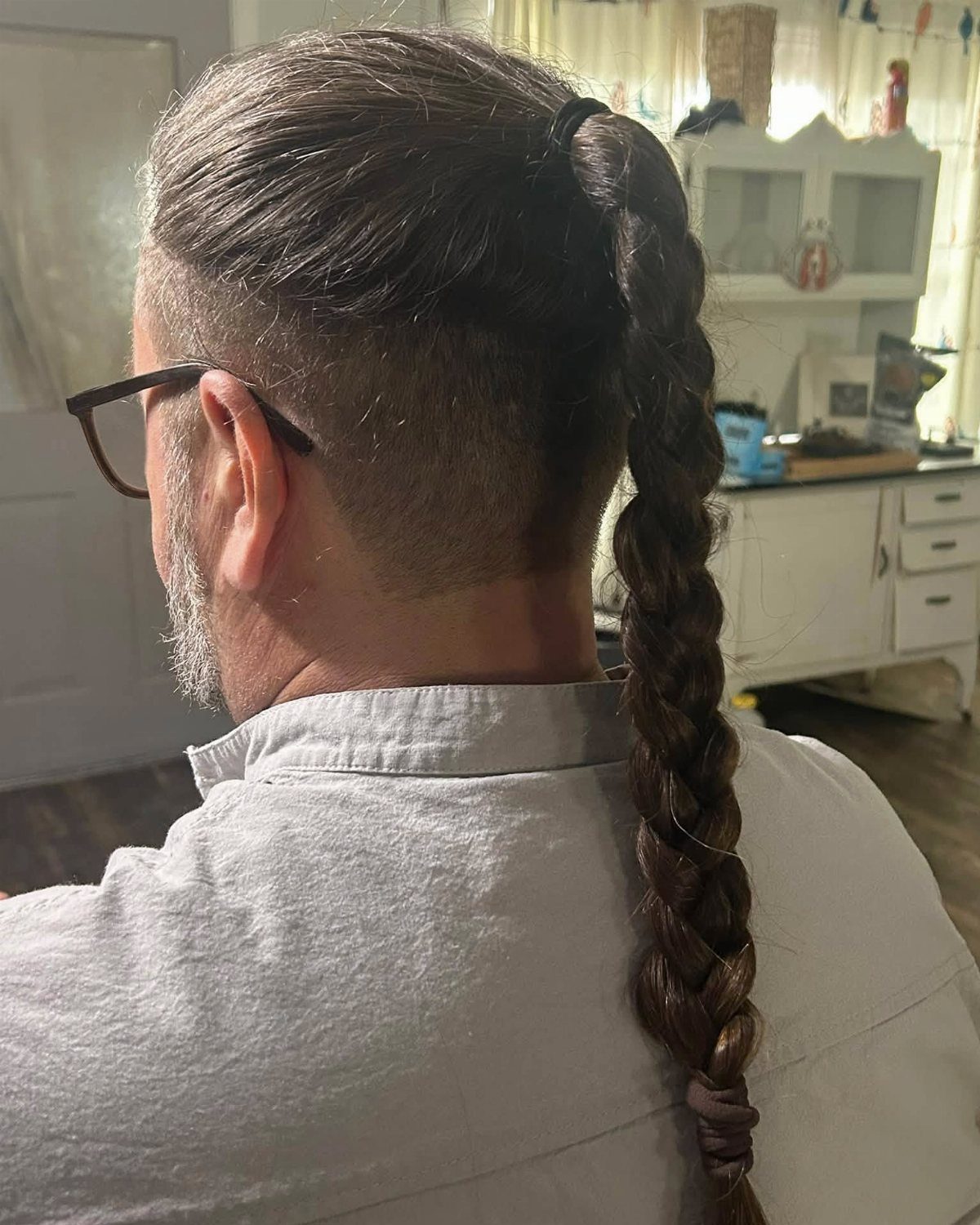
Hair woven into one or more braids to keep it contained and off your face. A single braid down the back is the simplest version and takes under a minute once you know the pattern.
Braiding works on most hair types.
Straight hair may need a tie at the end to hold it. Curly or textured hair grips itself and stays in place longer.
Multiple braids, cornrows, or box braids take more time and often need a barber or stylist to set up. Once they’re in, they last days or weeks depending on the style.
Braids give you length without the daily maintenance, and they hold through workouts and long shifts.
10. Shoulder-Length Cut
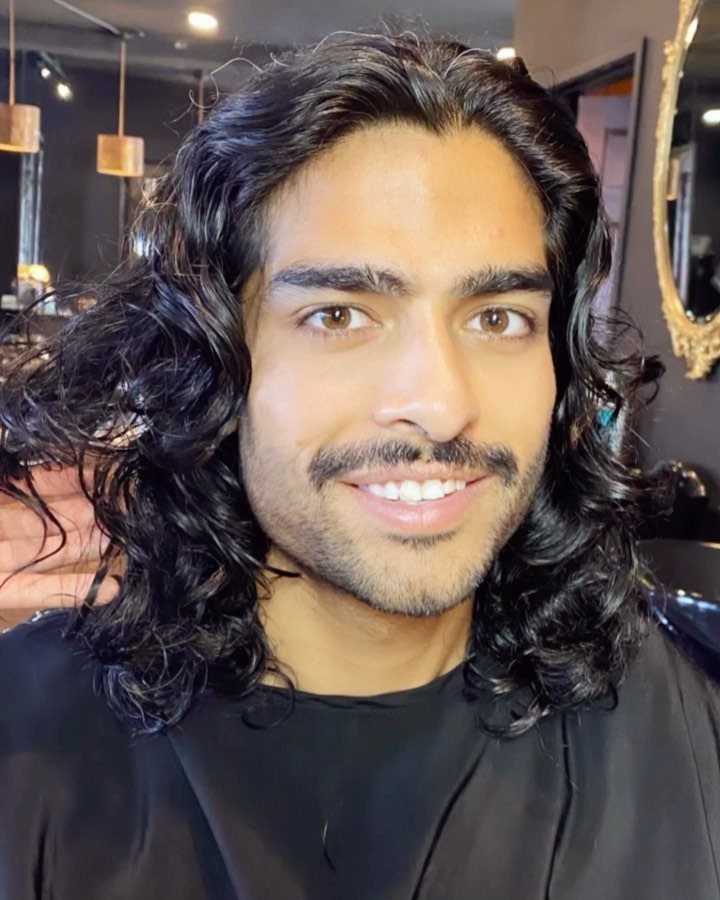
Length that lands at the shoulders, usually with layers to stop it from looking heavy or shapeless.
This suits wavy and curly hair because the texture fills out the shape.
The cut grows out evenly, so you can wait a few months between trims without the shape collapsing. Cleanup at the back of the neck keeps it looking intentional.
Shoulder-length is long enough to tie back but short enough that drying doesn’t take half the morning.
11. Layered Cut
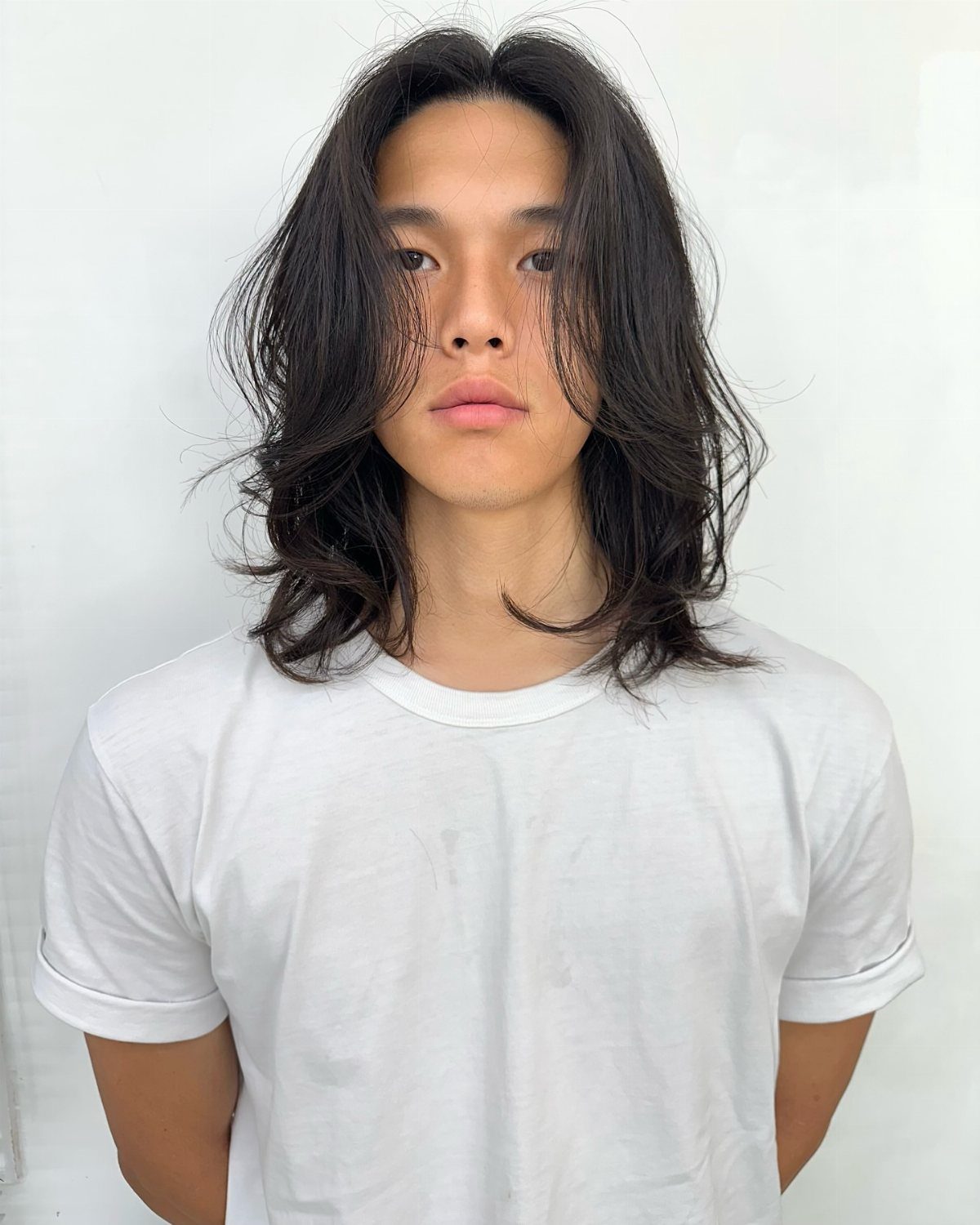
Layers staggered through the length to remove bulk and add movement. The longest pieces stay near the shoulders or below, and shorter layers start higher, around the cheekbones or crown.
This works for most hair types.
Thick hair lightens up without losing length. Fine hair gains movement and doesn’t cling to the scalp.
Ask the barber for long layers if you want a subtle effect, or shorter layers if you want more lift and separation. The cut should still read as long hair, not a choppy mid-length.
I let mine air-dry or run my hands through it while it dries.
12. Slick Back
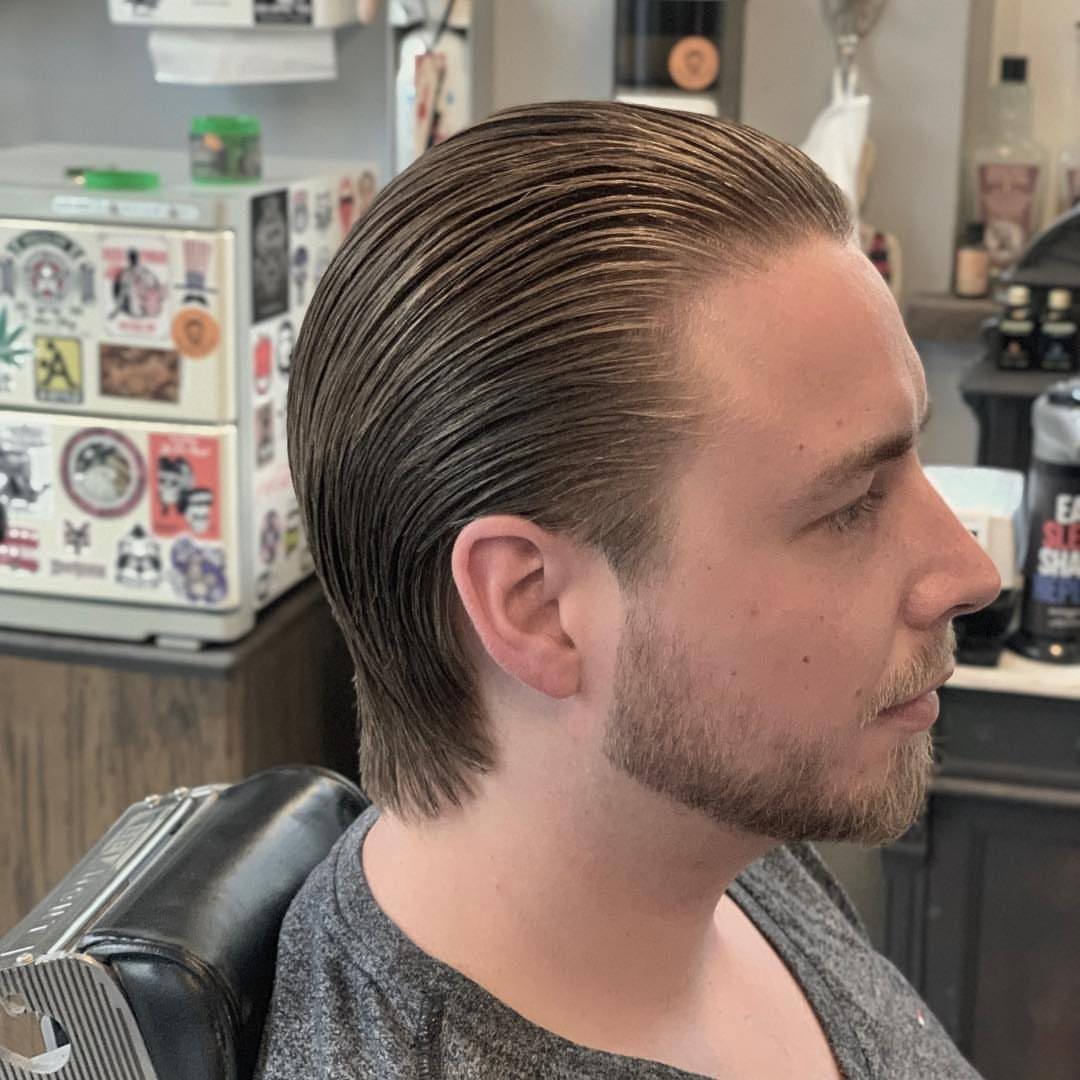
Hair combed straight back from the forehead and held in place with pomade or gel. The finish is smooth and controlled, and the length stays visible without falling forward.
This needs enough length to comb back past the ears. Shorter hair won’t stay in place without a heavy product, and the weight can make it look stiff.
A water-based pomade gives hold without turning your hair into a helmet. Work it through damp hair and comb it back with a fine-toothed comb.
The slick back reads formal, so it suits work or events more than casual wear. It also exposes your hairline, which matters if yours is receding.
13. Textured Quiff
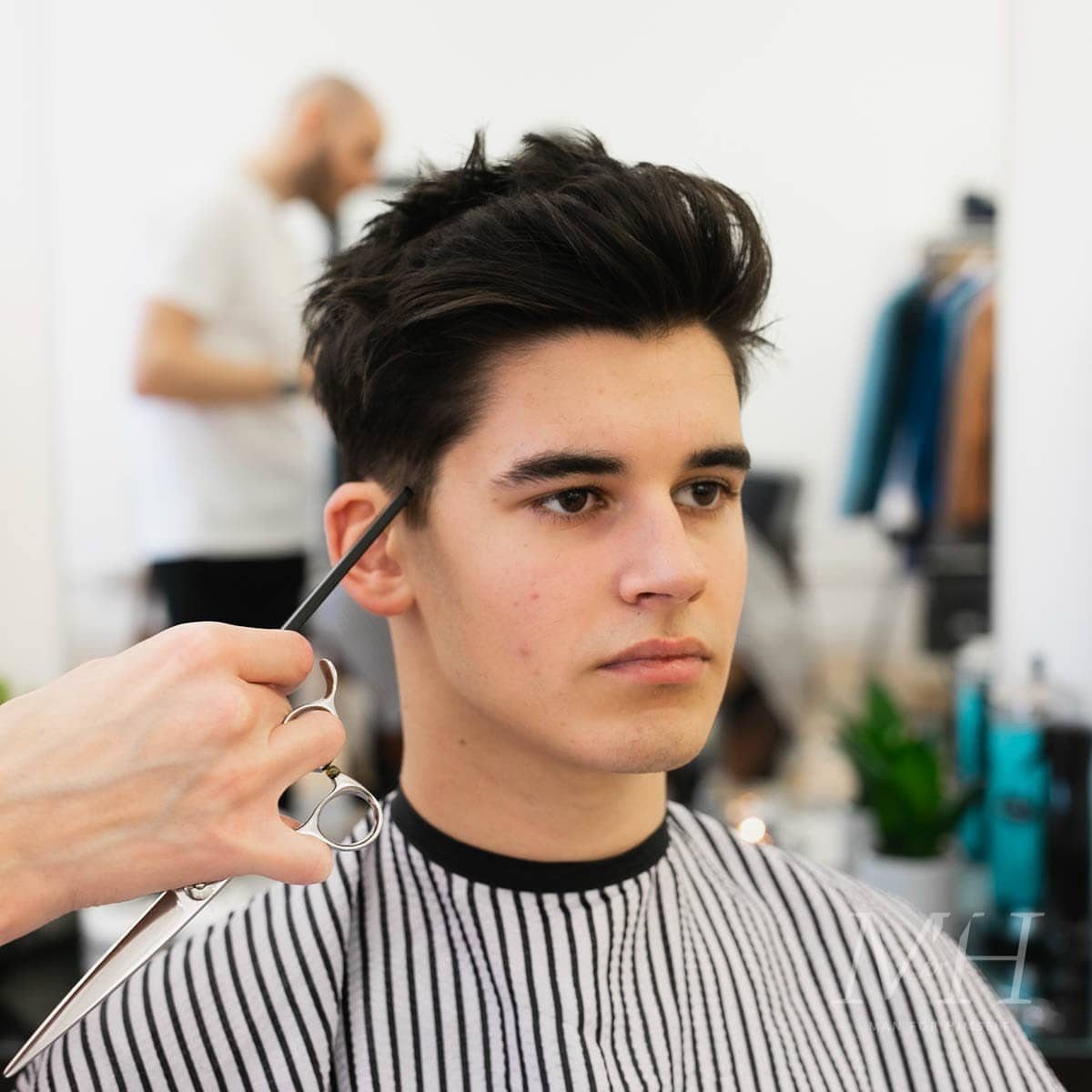
Volume and lift at the front, styled back or to the side with enough texture that it doesn’t look stiff. The sides stay shorter, and the contrast keeps the top from blending into the rest of the cut.
This needs length on top and enough product to hold the shape without weighing it down. A matte paste or clay gives grip and keeps the finish natural.
Blow-dry the front upward and back while it’s damp, then work the product through. The quiff should look deliberate but not frozen.
14. Long Waves
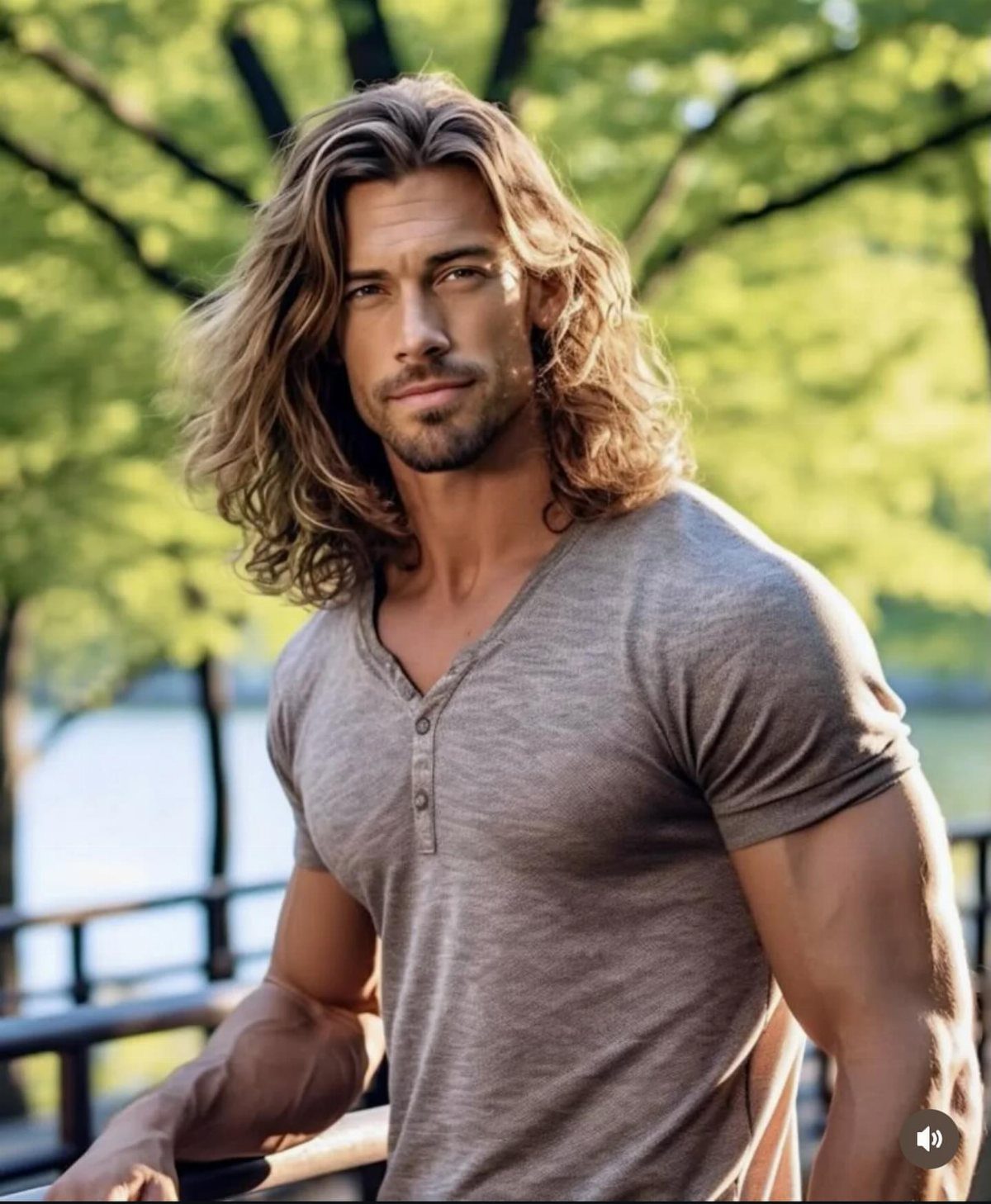
Waves that fall loose and build movement through the length. The texture sits naturally, so the shape doesn’t need much work in the morning.
This suits wavy hair left to dry on its own.
Length here reaches the shoulders or past them. Waves add bulk, so regular trims keep the ends from looking heavy or uneven.
15. Long Waves with Side Sweep
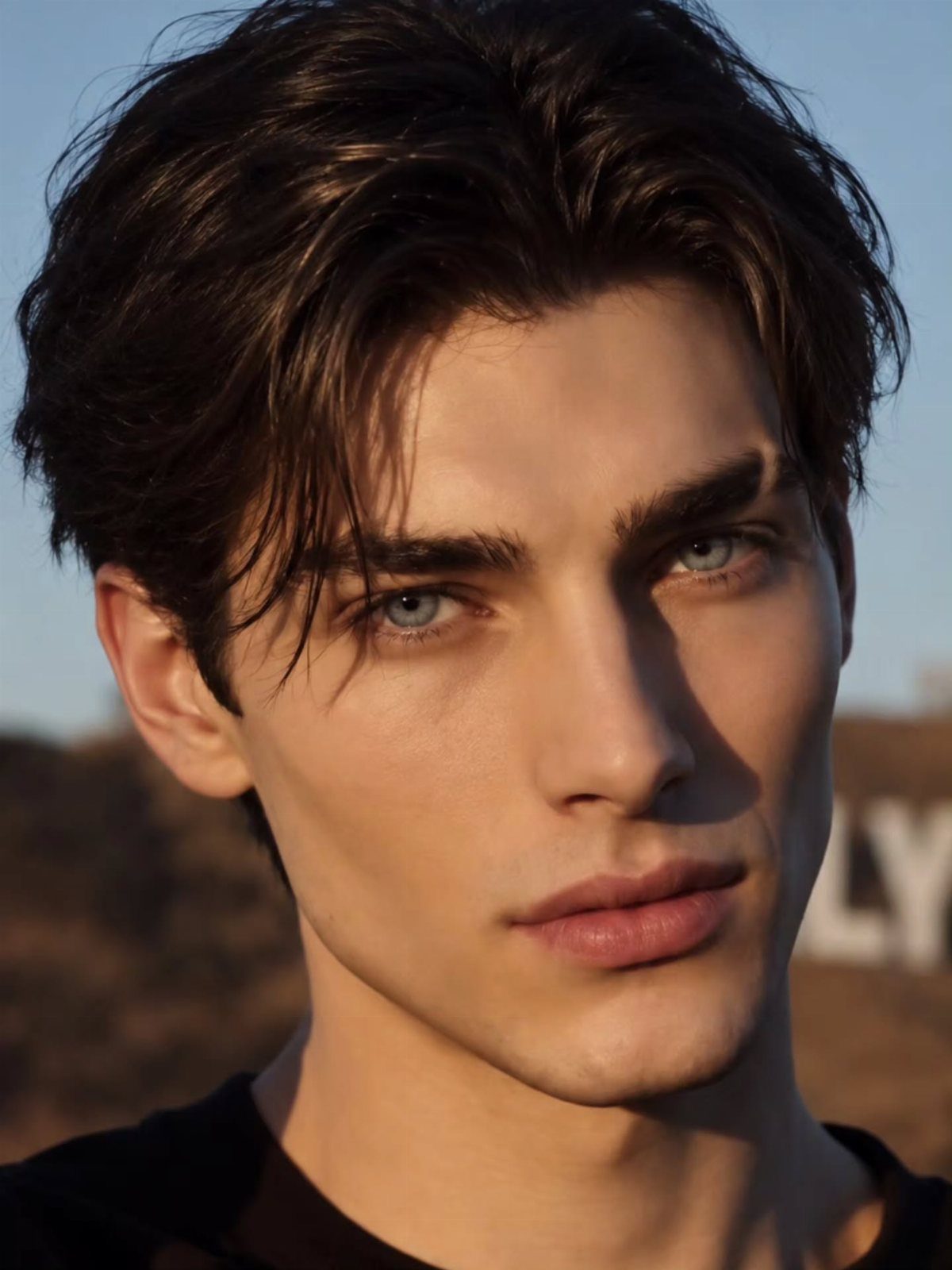
Wavy length parted to one side and swept across the forehead or back over the ear. The part gives the cut direction, and the sweep keeps hair off your face without tying it back.
A side sweep adds direction to length that falls past the ears. The side part should sit where your hair naturally wants to divide, or close to it.
A light styling cream or serum smooths flyaways and holds the sweep in place. Comb it into position while damp and let it dry.
The sweep reads casual but still looks intentional, so it fits most settings.
16. Wolf Cut

Choppy layers that stack through the top and sides, with longer pieces at the back and around the face. The cut borrows the shag’s texture and the mullet’s contrast, and the result sits somewhere between the two.
The layers are uneven by design.
The top lifts and separates, and the back keeps more length. A barber familiar with the cut can shape it to suit your hair type and density.
17. Bro Flow
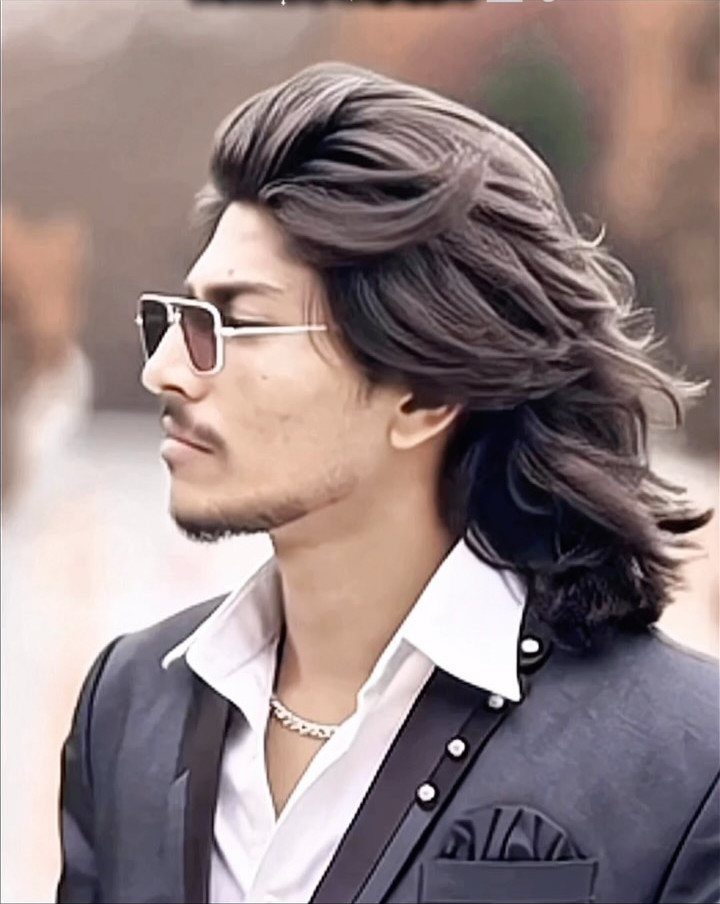
Hair swept back from the forehead with soft movement through the length. The shape falls naturally without much styling, and the name comes from the way it flows back rather than sitting forward or flat.
This works for straight or wavy hair grown past the ears. The cut needs enough length to clear your face when you push it back, but not so much that it collapses under its own weight.
A light product keeps it in place without making it stiff.
18. Twists for Long Hair
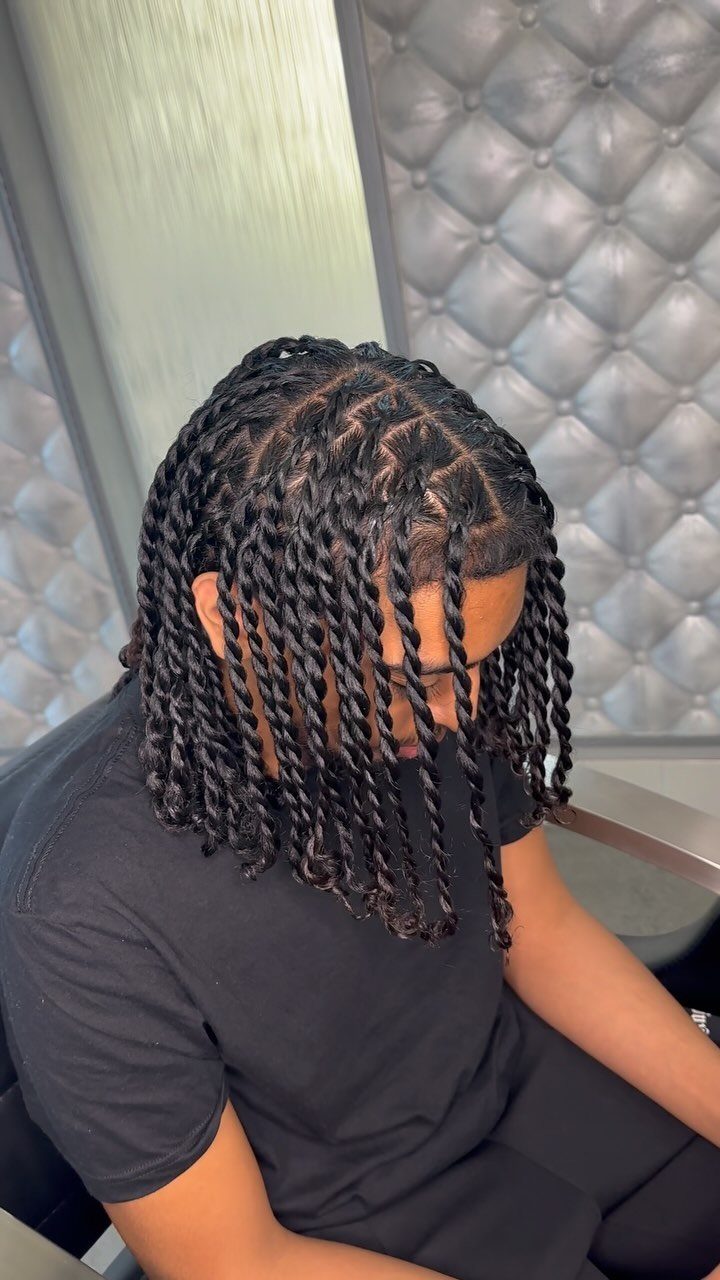
Hair divided into sections and twisted into rope-like strands that hang loose or gather at the back. Each twist holds its shape and stays in place for days or weeks.
This works for textured or coily hair. The twists can be two-strand, where two sections wind around each other, or single-strand, where each piece twists on itself.
A barber or stylist sets these up, and the process can take a few hours depending on the length and thickness. Once they’re in, they hold for days without restyling.
Moisture matters. A light oil or leave-in keeps the twists looking clean and stops them from drying out.
19. Men’s Ponytail
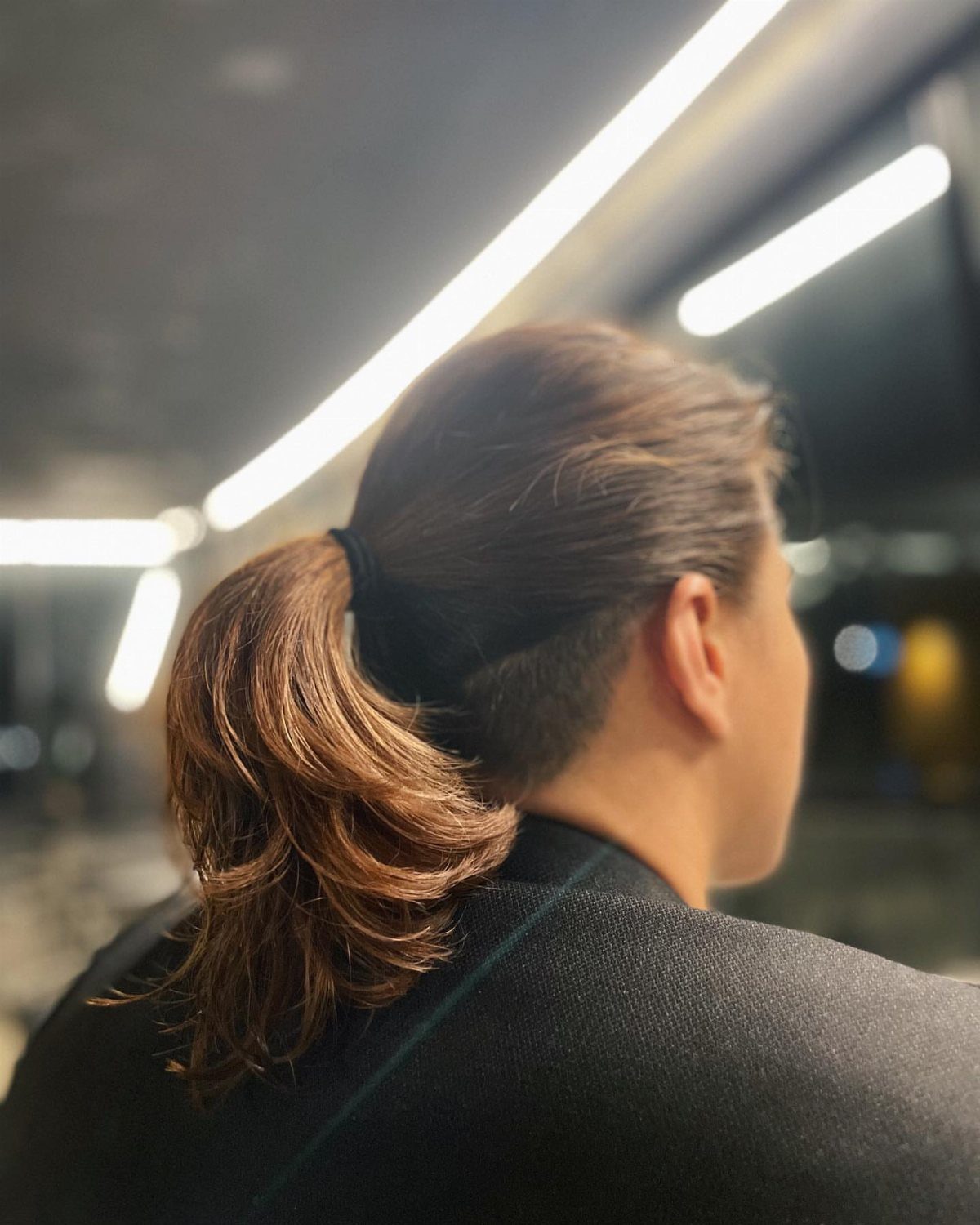
Hair gathered at the back of the head or nape and secured with a tie.
Tie it higher and it shifts casual.
The tie does the work. Hair stays in place through a shift or a workout, and you can pull it out in seconds when you’re done.
20. Half-Up Ponytail
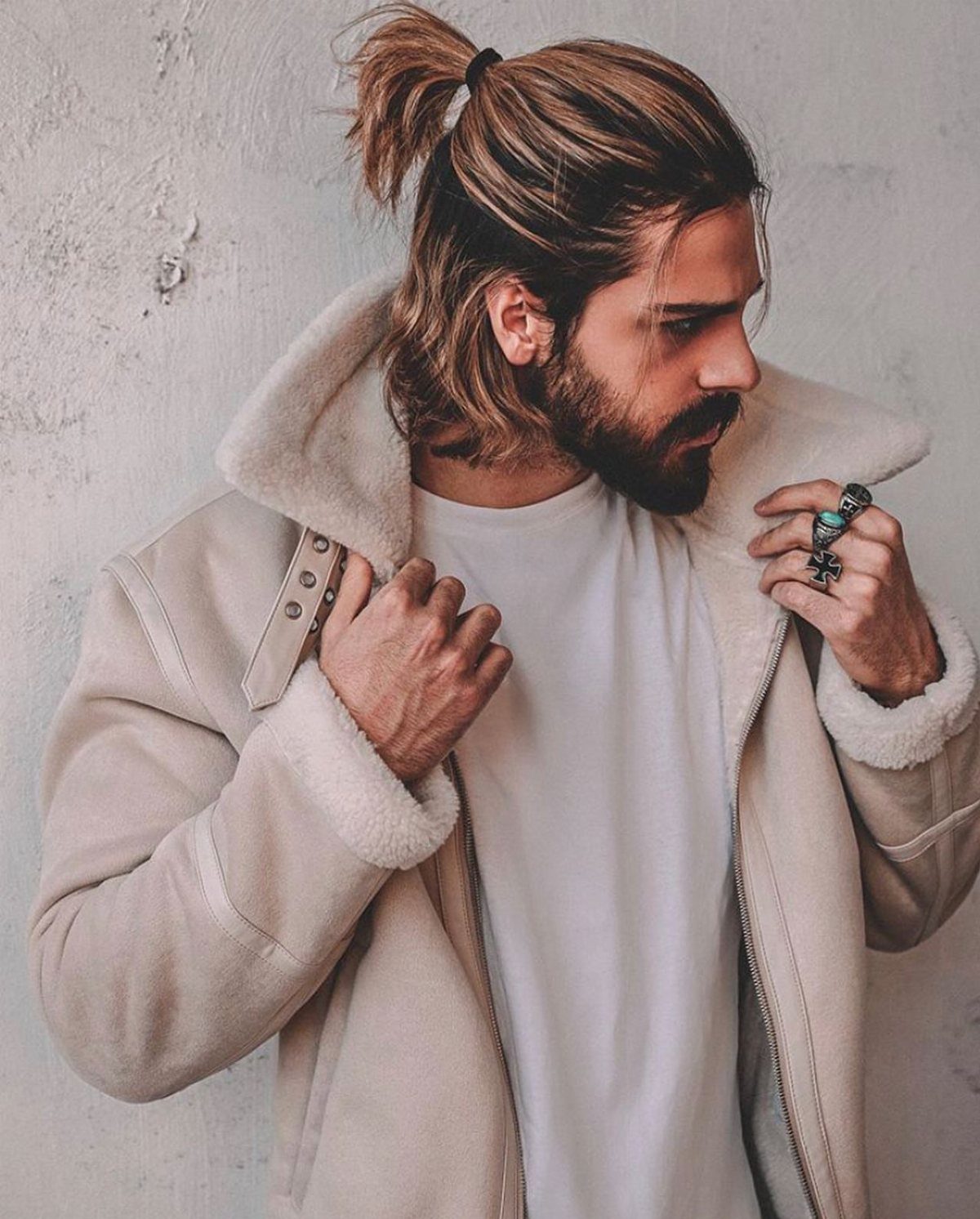
The top section of hair pulled back into a small ponytail while the rest hangs loose. Half stays off your face, half keeps the length visible.
This suits shoulder-length or longer hair.
Gather the top layer from temple to temple and tie it at the crown or slightly behind. The rest falls naturally.
The half-up reads casual and takes less than a minute to set up. Hair at the back stays loose, so you keep the movement without everything falling forward.
21. Chin-Length Waves

Wavy hair cut to land around the chin with natural movement left in. The waves give the cut shape without adding bulk or weight.
Straight hair can still work, but the waves do most of the shaping here.
A trim every few months keeps the ends even. The cut grows out cleanly, so you can stretch the time between cleanups if needed.
Chin-length waves need almost no styling. Let them air-dry and the texture handles the rest.
22. Dreadlocks
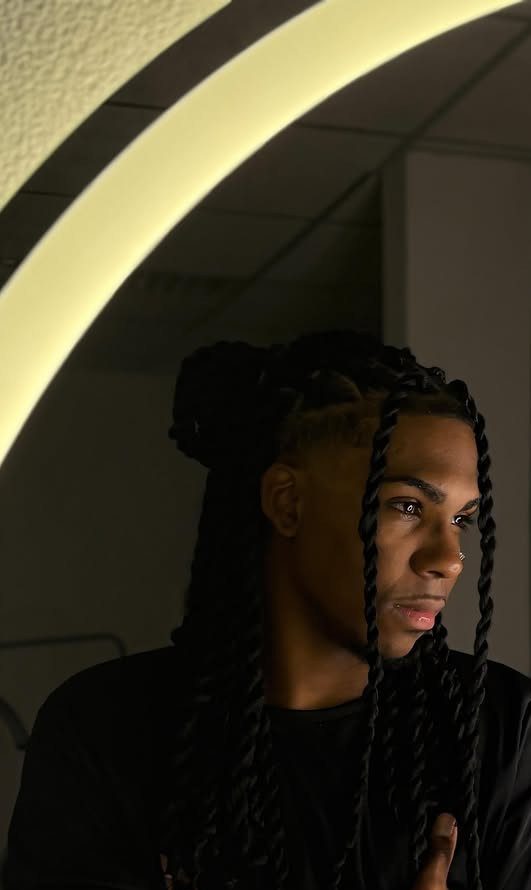
Each loc forms over time as the hair mats and tightens.
Locs work for textured and coily hair. A barber or loctician starts them, and they tighten and mature over months or years.
Once they’re established, locs need moisture and regular maintenance to stay clean and shaped. A retwist at the roots keeps them looking sharp.
Length builds slowly, but locs hold their structure and don’t need daily styling.
Growing Through Awkward Stages
The stretch from a short cut to something you can actually tie back sits somewhere between 3 and 6 inches, and most tie-up styles need 8 or 9 inches to hold.
That middle ground can look formless if you let it grow without a plan.
The barber cleans up the edges and reshapes the sides while the top and back keep adding length. You’re not cutting it short again, just giving it structure while it catches up.
A side part or a light product can give direction to hair that isn’t long enough to pull back yet. The awkward stage has a finish line, and small adjustments make the wait easier to live with.
Long Hair Care Routine
You’re not losing length, just cutting off damage that would break off anyway.
Wash it 2 or 3 times a week.
More than that dries it out, less than that and it starts to look flat or greasy. Conditioner after every wash keeps it from tangling, and a heat protectant goes on before you use a dryer or iron.
Long hair asks for more upkeep than short cuts, but the routine itself is straightforward. Keep the ends clean, don’t overwash, and protect it when you apply heat.
Face Shape and Proportion
A long or rectangular face gets longer when you add height on top or pull everything back tight.
Volume at the sides balances the proportions, and bangs or a low fade shortens the face visually. Fades that climb too high or trim the sides close will make the taper worse.
Round faces work the other way.
Height at the crown and swept-back styles add length where there isn’t much. Layers soften a square or angular jaw without losing structure.
The cut that suits your face shape isn’t always the one you see most often. Match the proportions to what you’re starting with, not what looks good in a photo of someone else.
Frequently Asked Questions
What to do with longish hair for men?
Wear it loose with texture, sweep it back or to the side with product, or pull it into a bun or ponytail to keep it off your face.
Layers, waves, and braids add shape and control to the length. Hair type and styling time decide which direction makes sense.
What are the trending men’s longer haircuts for 2026?
Mullets, wolf cuts, shags, and grown-out curls are all trending right now.
Wavy styles, Afros left to build volume, and textured layers that look undone are showing up more than polished shapes. The trend leans toward cuts that have contrast or movement rather than uniform length.
How to tell if you have a long face?
A long face measures at least 1.5 times longer than it is wide, and you’ll often see a high forehead or pronounced chin.
Stand in front of a mirror and check if the center of your face looks stretched between your forehead and chin. Long faces want width through the sides and temples, not extra height stacked on top.
How to ask your barber for a haircut?
Use simple instructions like less height on top, more volume at the sides, soft bangs, or a low fade instead of a high one.
You don’t need technical terms. Any barber worth the chair fee will take what you said and adapt it to what your hair actually does.
Will bangs work if I have a receding hairline?
Yes. Side-swept bangs or curtain bangs cover thinning areas and shorten the forehead visually.
A textured crop with front texture also fills in that space and reduces how much vertical length your face shows. Bangs give you coverage without making the hairline the focal point.
What product should I use if my hair is very fine?
Matte clay or a light paste adds grip and body without making fine hair look flat or greasy.
Texturizing powder lifts at the roots and builds width where you need it. Heavy pomades or oily creams will weigh fine hair down and make it look flat, so stick with lightweight options.
Does a beard help balance an elongated face?
Yes. A short beard, especially one with fullness under the chin, shortens a long face and spreads visual weight around.
The beard adds width at the lower part of your face, which balances the length and keeps your proportions from looking too stretched.
How can I maintain my haircut if I wear a helmet every day?
Keep a small tin of matte pomade or a travel-size texturizing spray in your bag and work it through the front and sides once the helmet comes off.
This restores the shape without needing a mirror or a comb. The product gives you enough hold that the cut doesn’t flatten completely under the helmet.