Cornrow sessions run 1 to 3 hours depending on braid size and pattern complexity, and the finished rows last 2 to 6 weeks before they need a redo.
If you want the rows gathered high, a bun or top knot pulls them off your neck; if you need the sides cleaned up, a fade, taper or undercut keeps the look sharp.
Straight backs finish faster than designs that zigzag, curve or swirl, but micro rows hold fine detail longer and jumbo braids cut the chair time in half.
1. Cornrow Fade
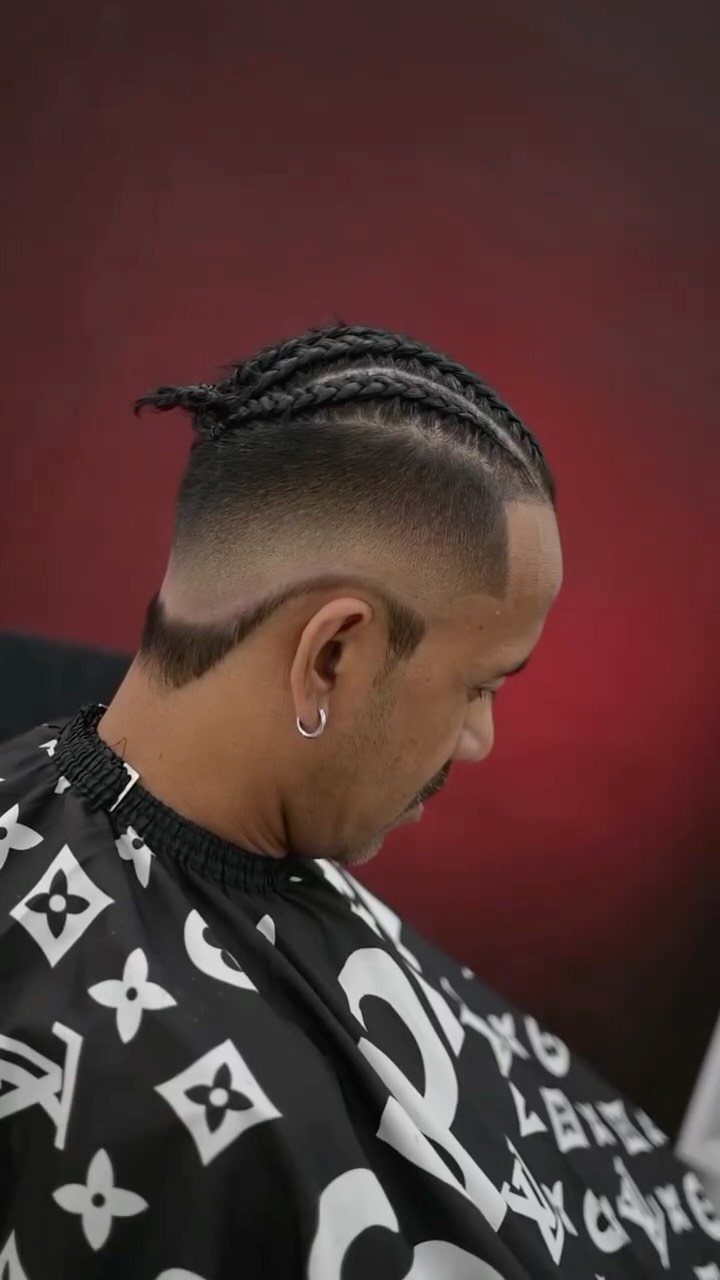
Braids stay on top, skin or low fade runs the sides and back. The split keeps the pattern clean without the full commitment of an all-over braid, and you get back in the chair regularly to keep the fade crisp.
If you want cornrows but need something office-safe or prefer a tighter look around the ears, this does it. The fade also buys you options: leave it tight and sharp or let it grow softer between touch-ups.
2. Pop Smoke Braids
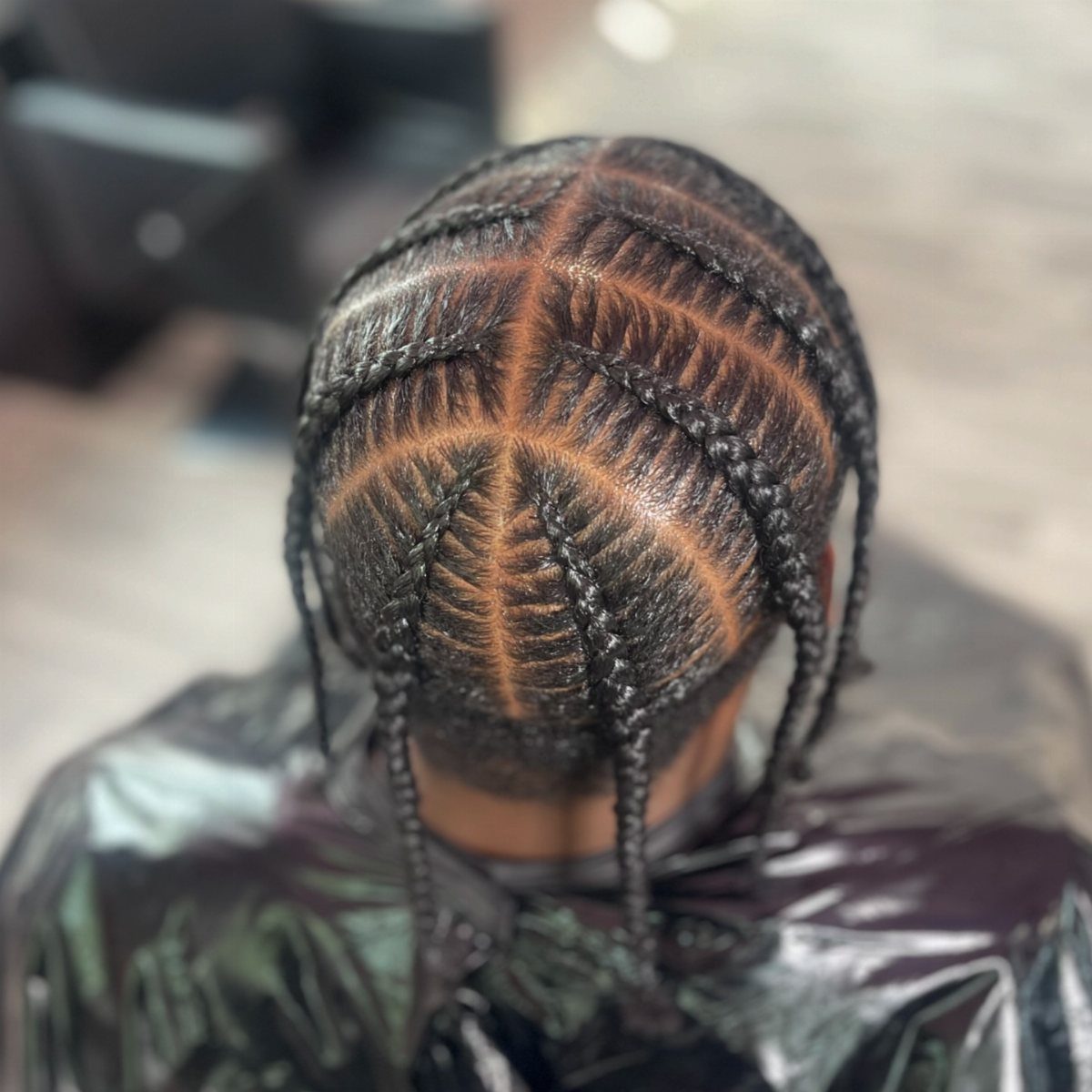
Rows run straight back from a center part, matching on both sides. The symmetry decides the look, and it reads cleanest with an even number of braids so the part stays visible.
This works well if your hairline is even and you want a look that photographs the same from either angle.
Most braiders can knock this out in a single session depending on braid size. Hair needs enough length to hold the rows without slipping.
3. Zigzag Cornrows
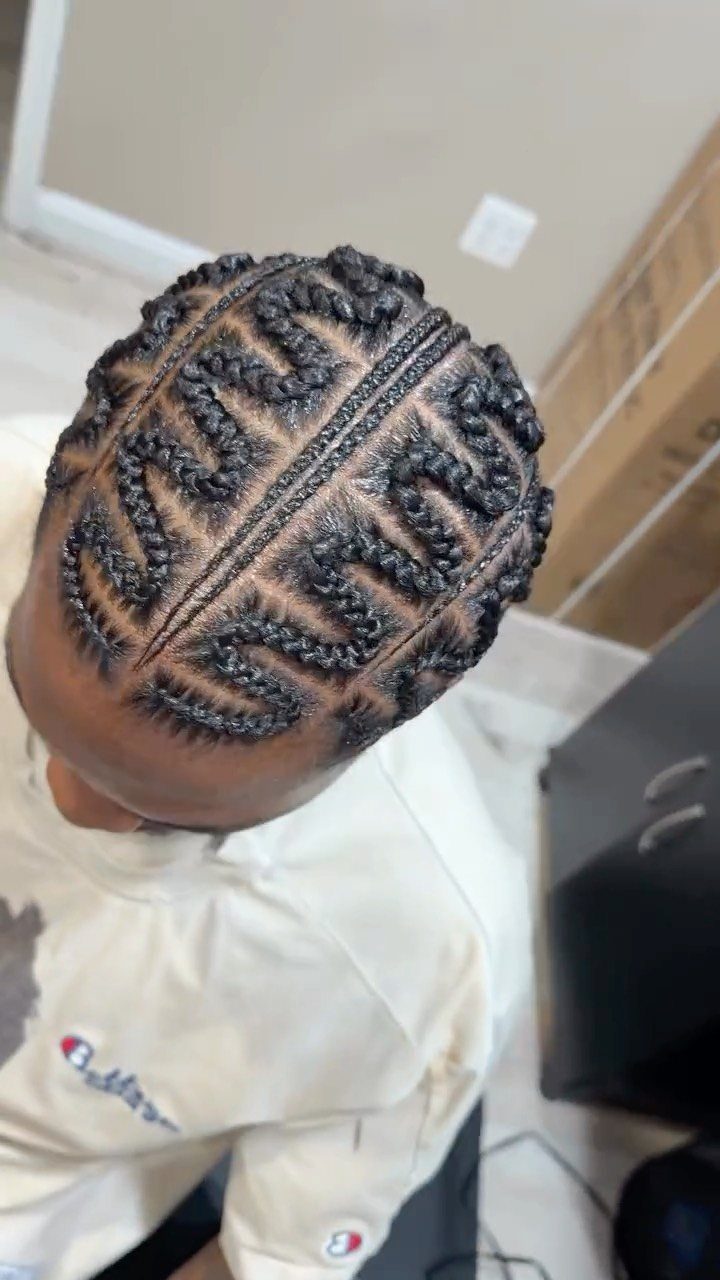
Instead of running straight, the braids change direction mid-scalp and form sharp angles. The pattern takes longer than straight backs because the braider has to plan the layout before starting, but the result is harder to miss.
If your braider charges by complexity, this costs more than a standard set. The zigzag also means more tension at the turns, so speak up if it feels too tight during the session.
4. Cornrow Designs
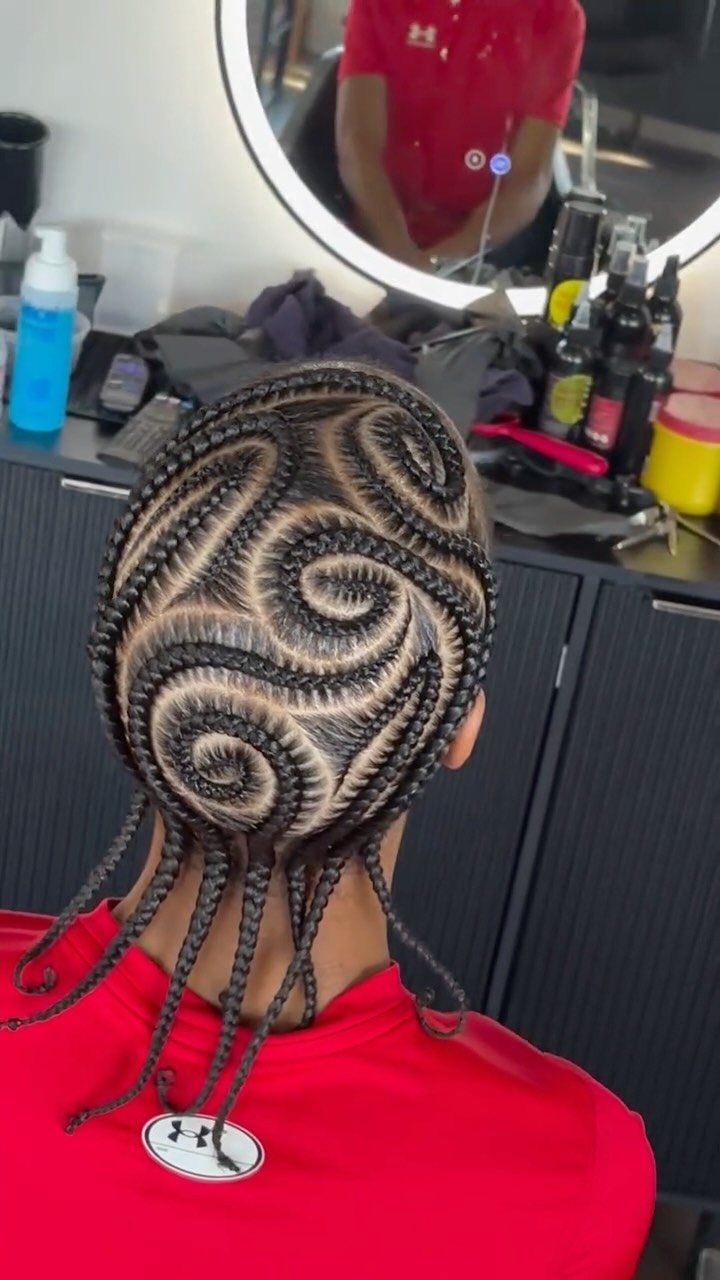
Rows curve, spiral, or branch into shapes that turn the scalp into a deliberate layout. Some designs mirror left to right, others fill the whole head with one continuous pattern.
This is a conversation with your braider.
Bring a reference photo if you have one in mind, or ask what they can do with your hair length and density. Simpler shapes hold up better as they grow out.
5. Spider Cornrows
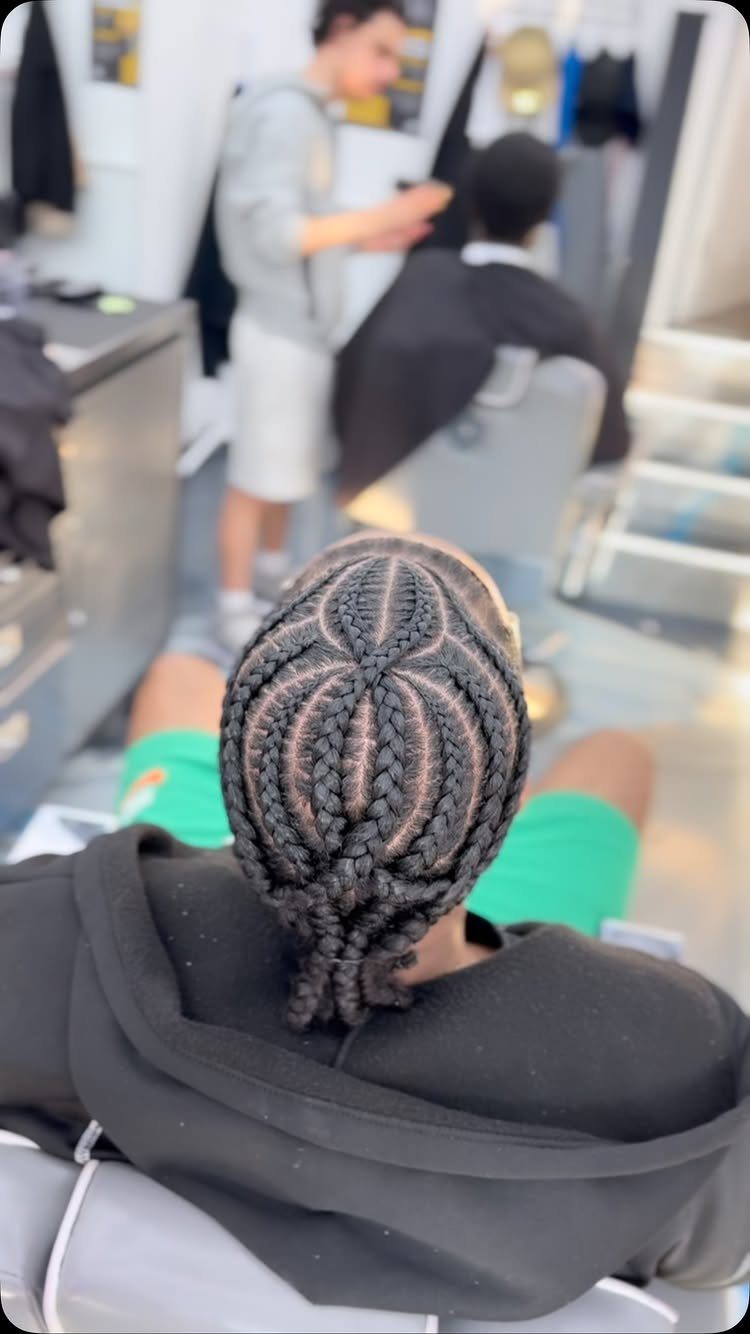
Rows radiate from a single center point, usually at the crown, and fan outward in all directions. The effect depends on symmetry, so this needs a braider who can section evenly and keep tension consistent as the rows spread.
Hair length matters here.
If it’s too short, the rows won’t reach far enough to show the full pattern. Budget closer to the higher end of your braider’s rate because this layout takes more planning than straight rows.
6. Cornrows Into Twists
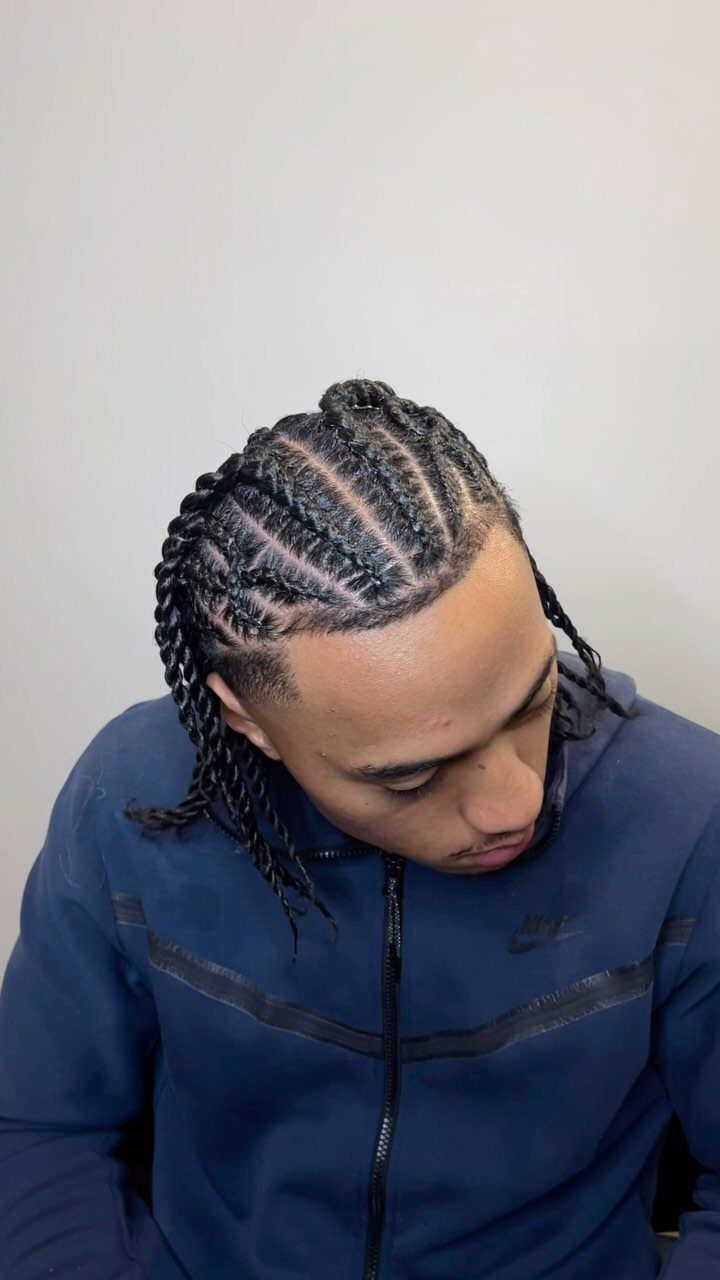
Cornrows run partway back, then release into two-strand twists that hang loose. The switch happens wherever the braider stops feeding in new hair, usually around the crown or just past it.
This gives you length and movement without committing to all braids or all twists.
The twists are easier to redo on your own if one unravels, and the style grows out more gradually than rows that end blunt. Session time depends on how many rows you start with.
7. Cornrow Bun
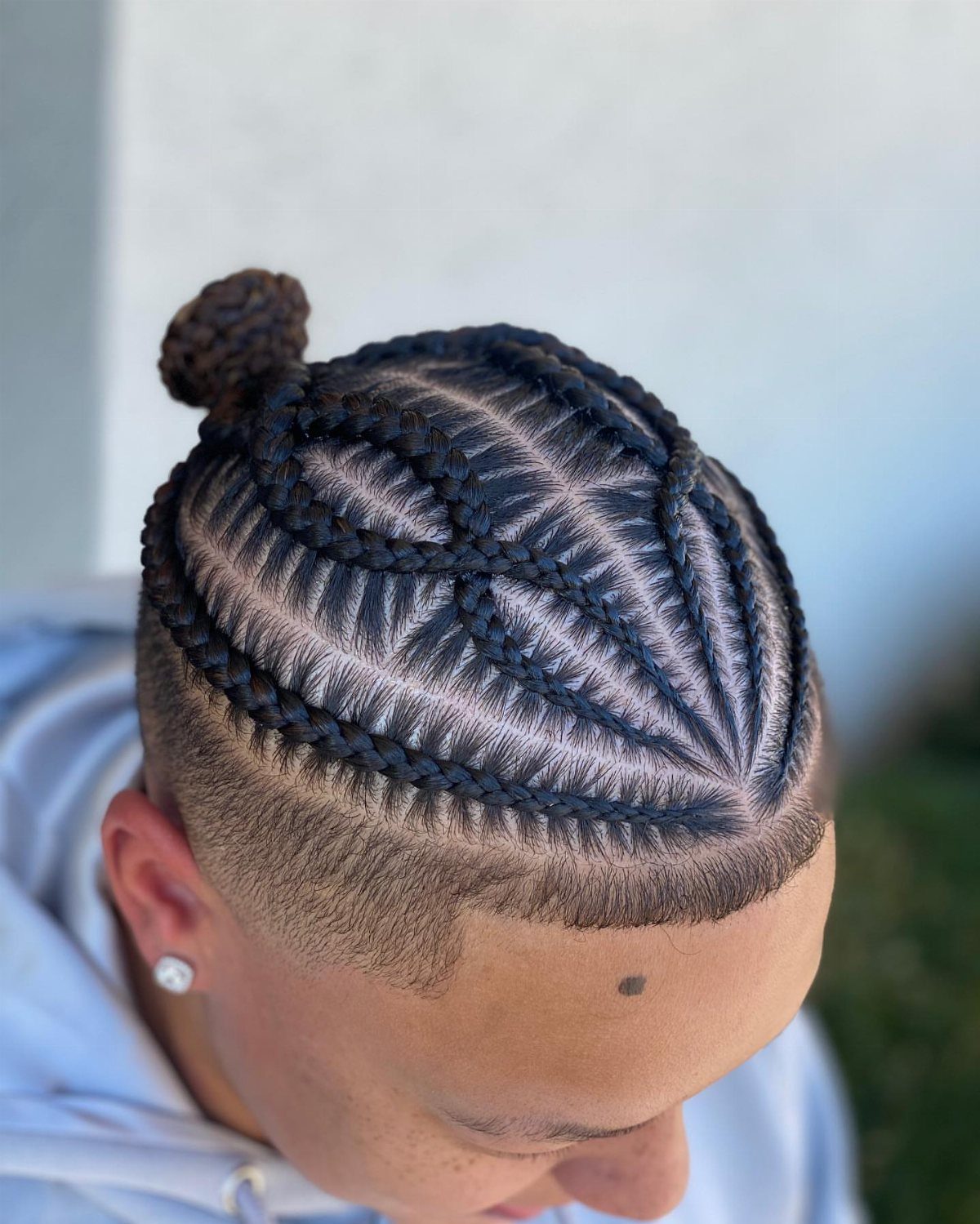
Braids run back and gather into a bun wherever they meet, usually at the crown or just behind it. The bun keeps everything off your neck and works when you need the braids contained without cutting them short.
This suits jobs or settings where loose braids hang too long or get in the way. The bun also gives you 2 looks: wear it tied up most days and let the braids hang when you want length back.
8. Undercut with Cornrows
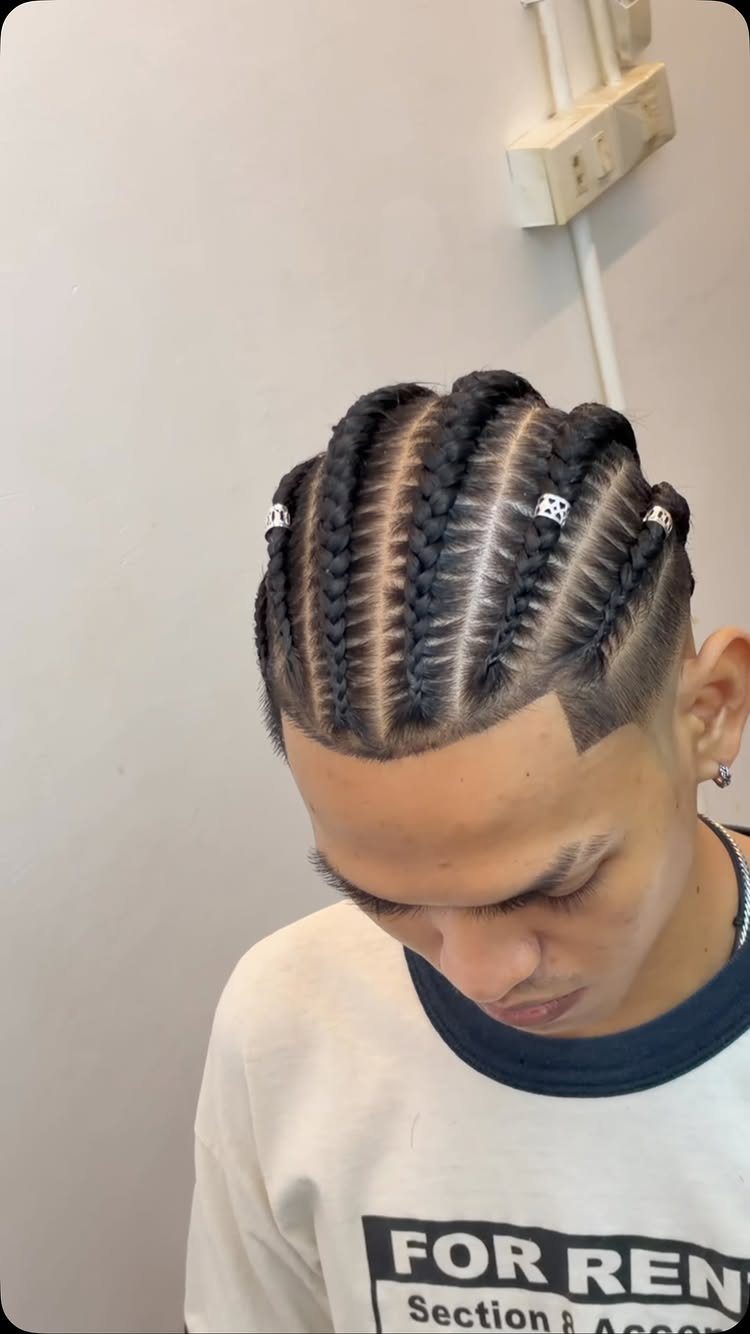
Braids sit on top, sides and back clipped short or shaved clean. The contrast is sharp, and the undercut means less surface area to braid, so session time drops compared to a full head.
You will need regular touch-ups on the undercut to keep the line between braided and shaved looking deliberate. If you like the look of fresh sides but want the low maintenance of braids elsewhere, this splits the difference.
9. Beaded Cornrows
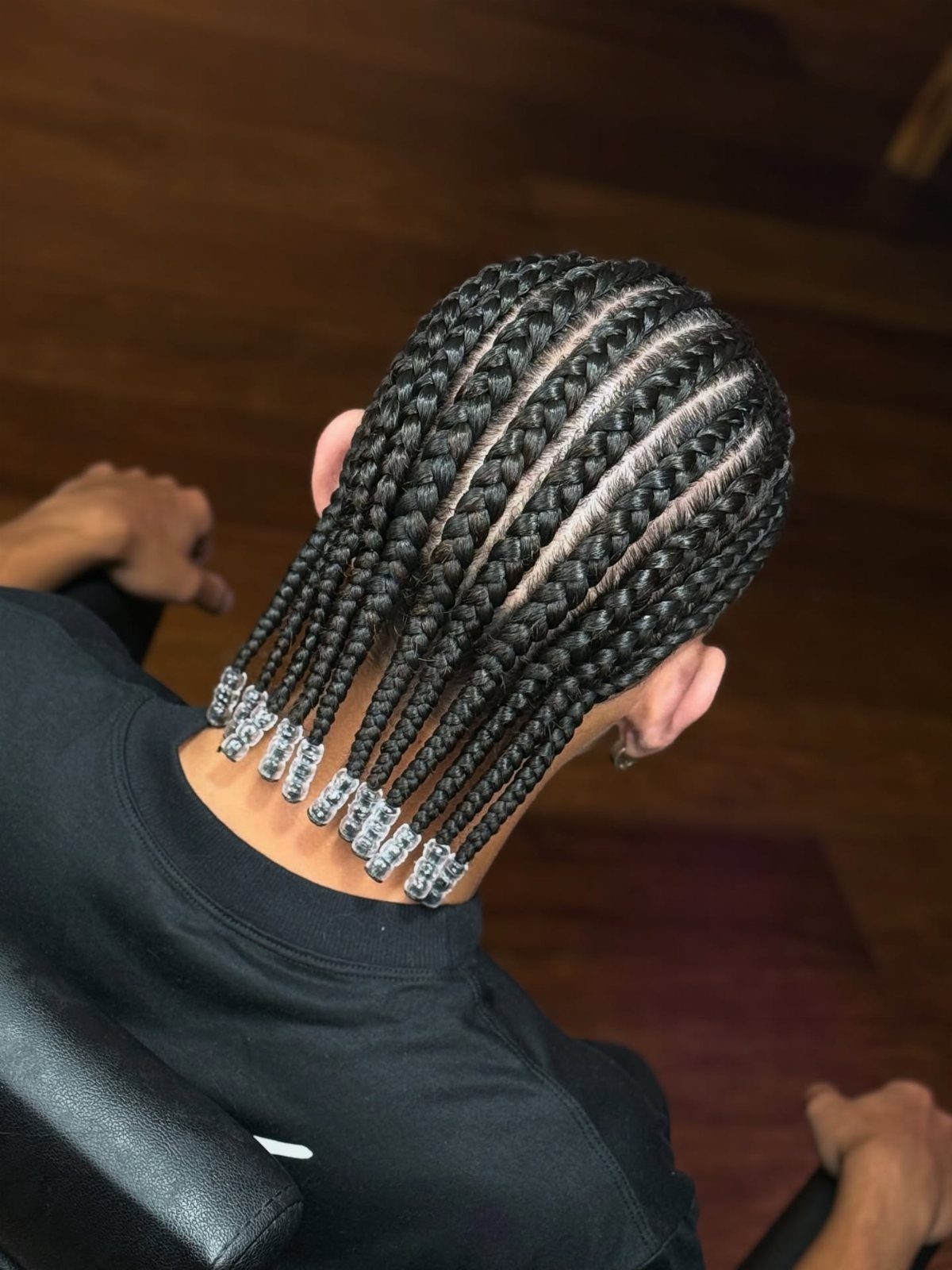
Beads slide onto the ends of each braid, either one per row or stacked several deep. They add weight, so the braids hang straighter, and they click when you move.
Metal beads last longer than plastic and stay put better.
Wood is lighter if the weight bothers you. The beads come off whenever you want, and you can swap colors without redoing the braids.
10. Cornrow Twists
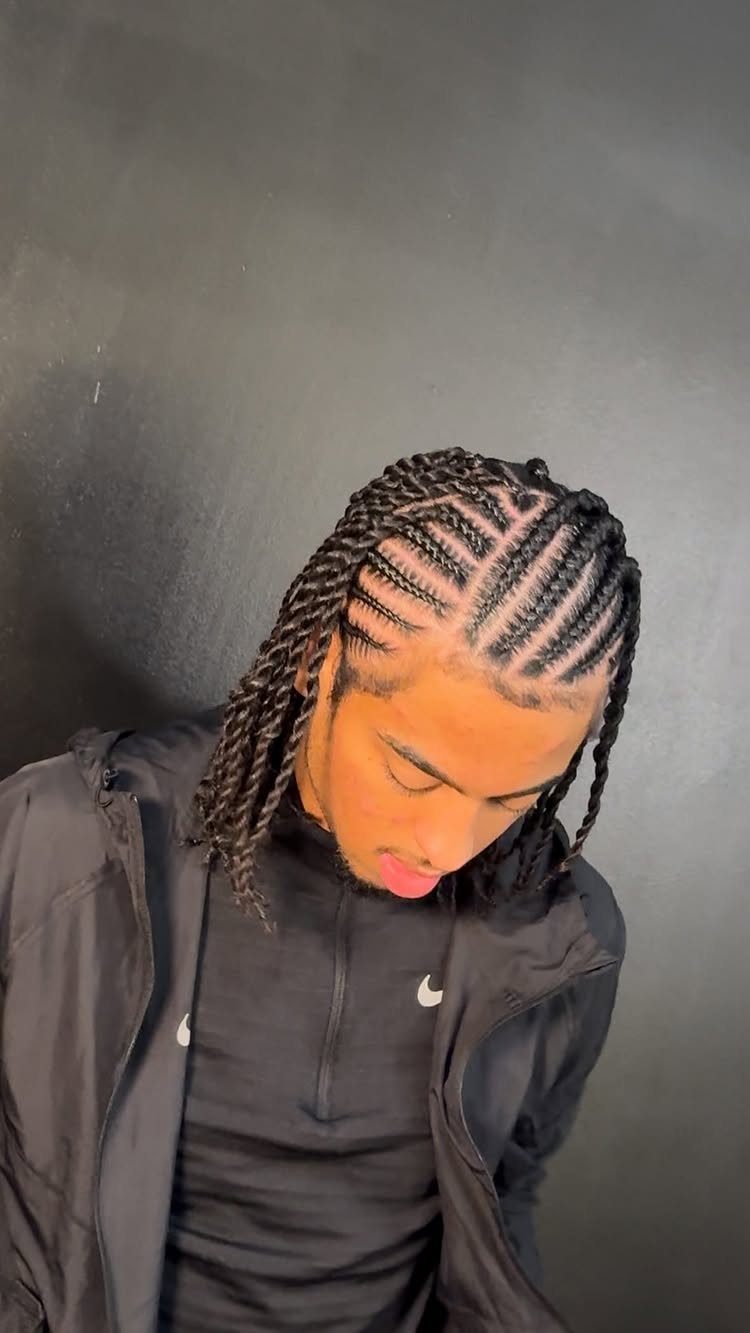
Instead of the standard 3-strand braid, the hair twists in 2 strands close to the scalp. The texture is rounder and the rows sit slightly higher off the head compared to flat braids.
Twists unravel faster than braids if the tension is uneven, so this needs a braider who can keep it tight from root to tip. Session time is usually shorter because there are fewer strands to manage per row.
11. Crossed Cornrows
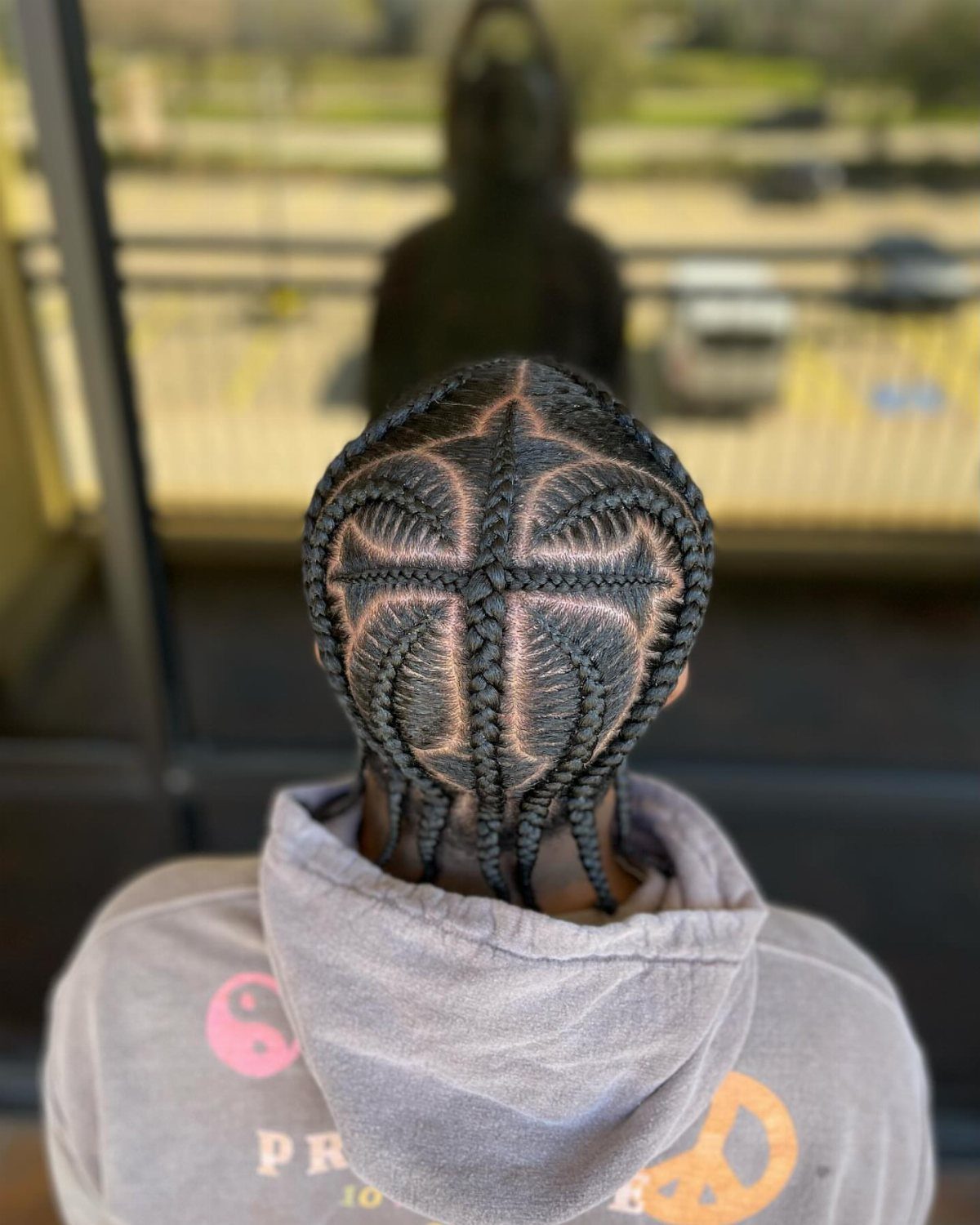
Rows start at different points and braid over and under each other, forming an intersecting pattern across the scalp. The layout takes planning because each row has to cross at the right angle to keep the design readable.
This is not something most braiders can freehand.
Bring a reference photo and expect to pay more than you would for straight rows. The crossed sections also mean more tension where the braids overlap, so mention it if anything pulls too hard.
12. Fishbone Cornrows
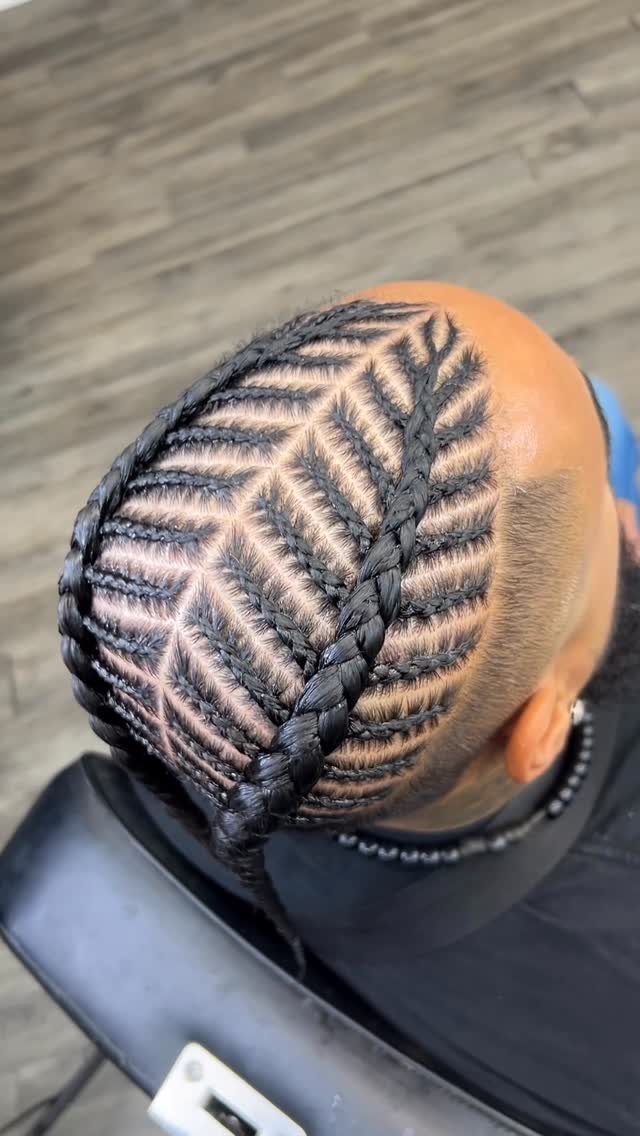
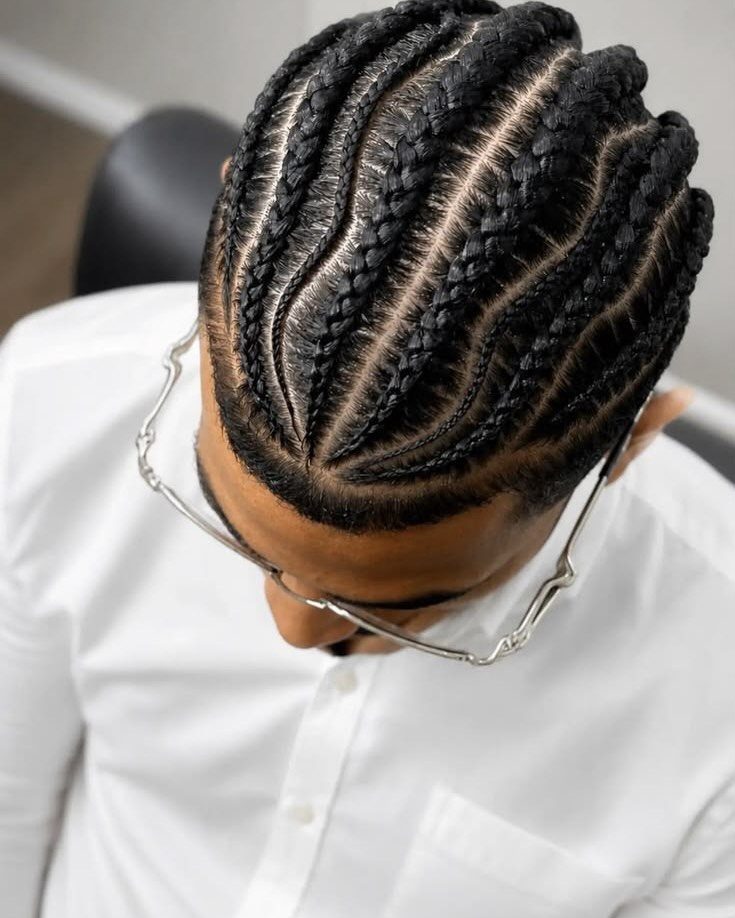
A central braid runs down the middle with smaller diagonal rows feeding into it from both sides, forming a spine-and-rib pattern. The layout reads clearly when the side braids are smaller and angled sharp.
Thinner hair shows more scalp between the braids, which changes how clean the pattern reads. If your hair is too fine or sparse, the side braids may not show enough contrast against the center.
The diagonal work takes more chair time since each piece has to meet the next at the right angle instead of running parallel.
13. Classic Straight Backs
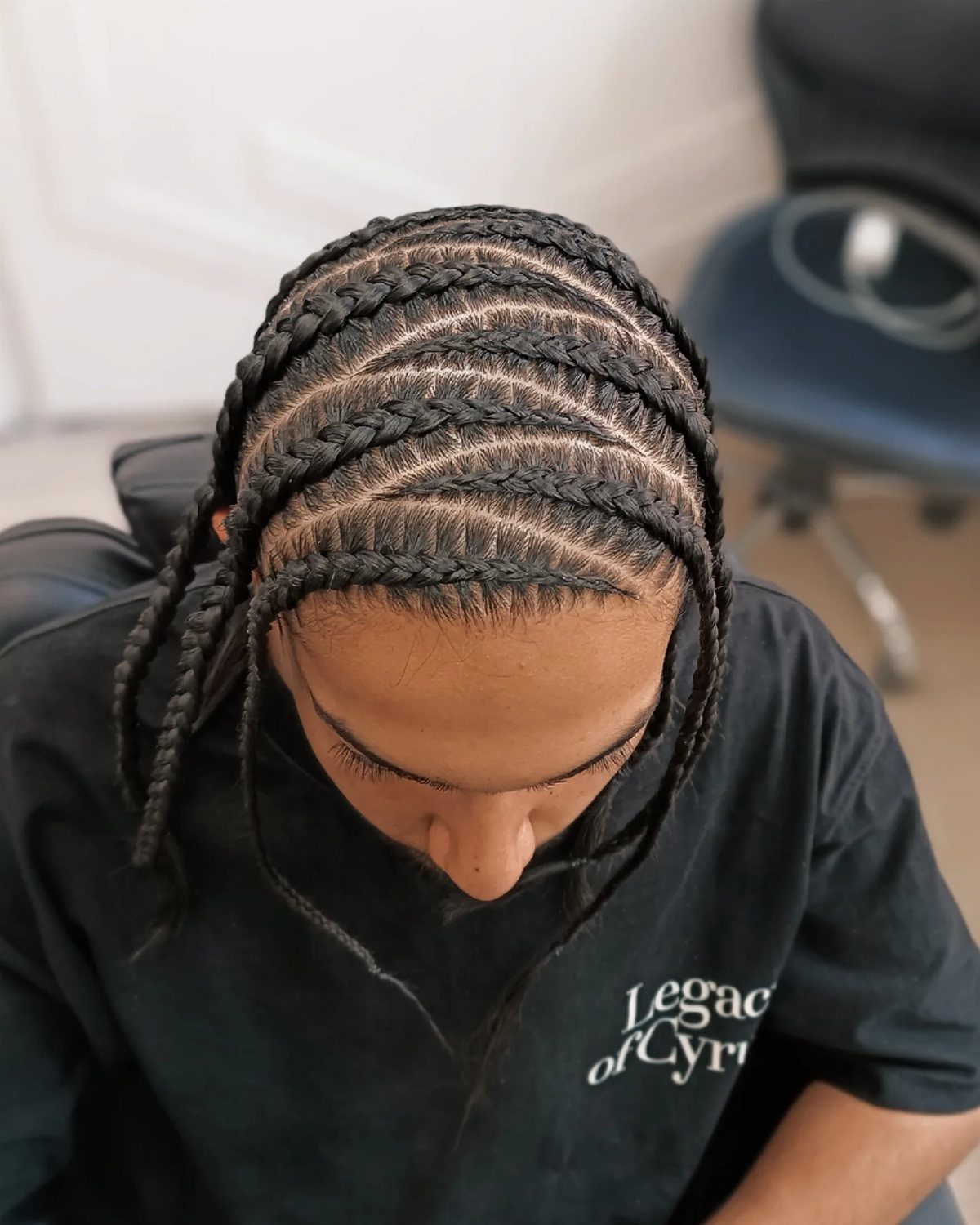
Rows run parallel from the hairline straight back to the nape with no curves or pattern shifts. The layout is clean, repeatable, and the least expensive option most braiders offer because the sections are straightforward and the work moves quickly.
If you want cornrows without extra design time or cost, this is where you start.
The style also grows out evenly, and when it’s time for a redo, any braider can match the original layout without needing to reference a photo.
14. Straight-back Cornrows with Zigzag Parts
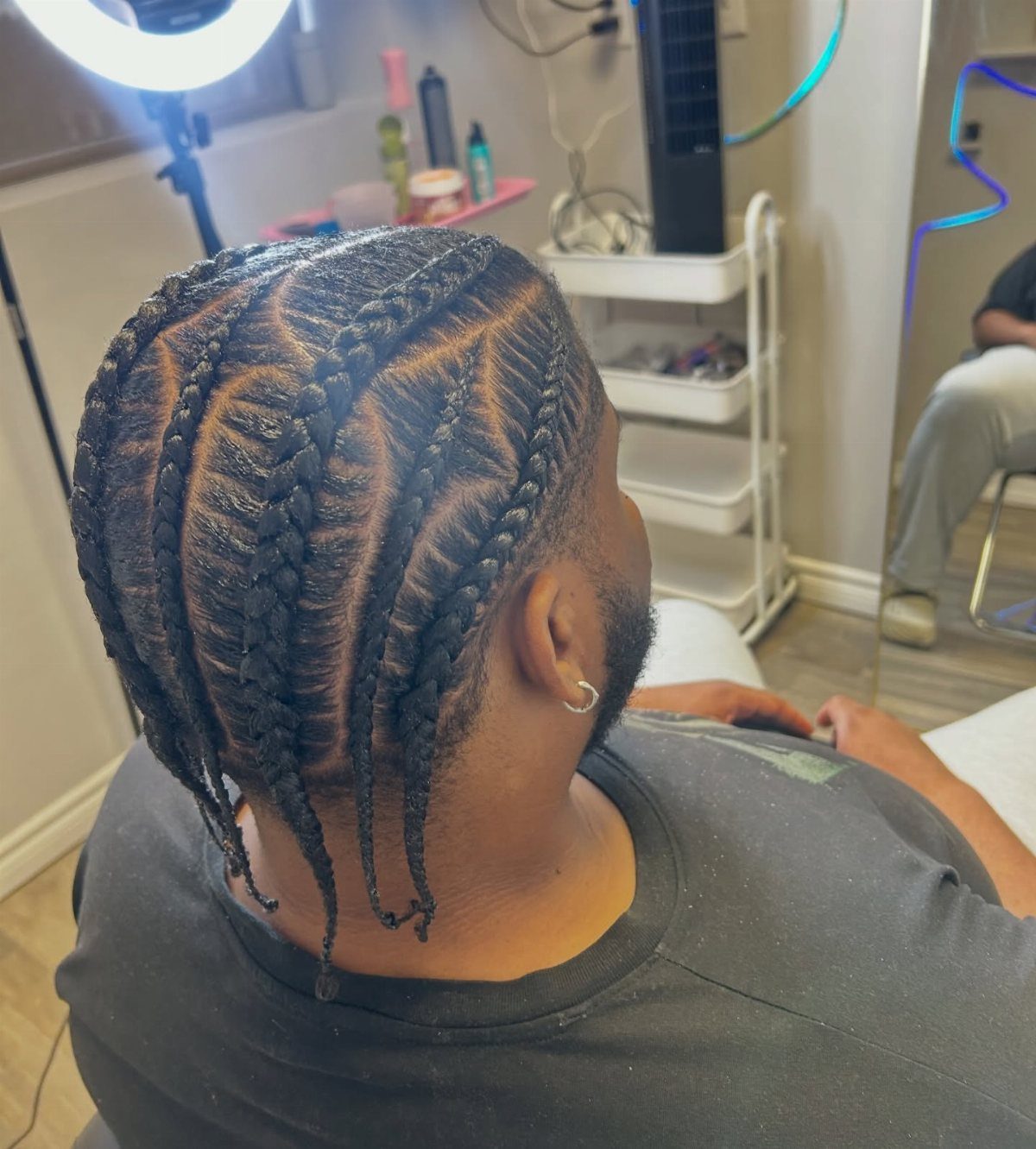
The parts between the rows zigzag, but the braids themselves still track straight from front to back.
The contrast between angular parts and parallel braids is what separates this from full zigzag rows, and it takes less time in the chair because the braider only adjusts the sectioning, not the direction of each braid.
If your hair is thin or the parts are too wide, the zigzag reads faint. Tighter spacing between rows shows the pattern more clearly.
15. Multi-sized Cornrows
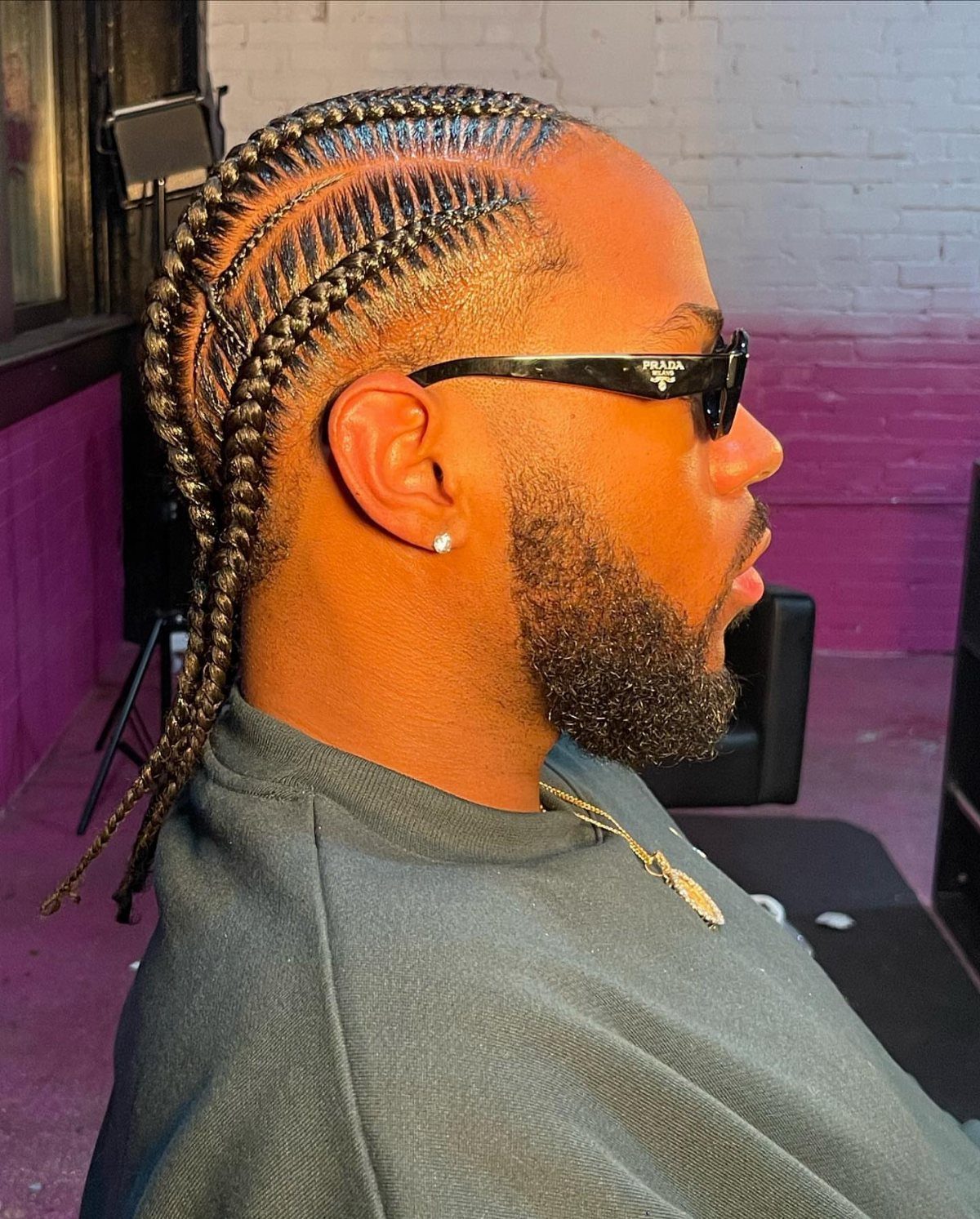
Thick and thin braids sit side by side in one set. The variation breaks up the uniform grid most cornrow styles lean on, and it gives the braider room to adjust spacing based on your hairline or scalp shape.
Session time stays close to standard straight backs because the technique is the same, just the section widths change. If one braid size suits your hair better than another, mixing them lets you keep both without compromising the layout.
16. Straight-back Feed-in
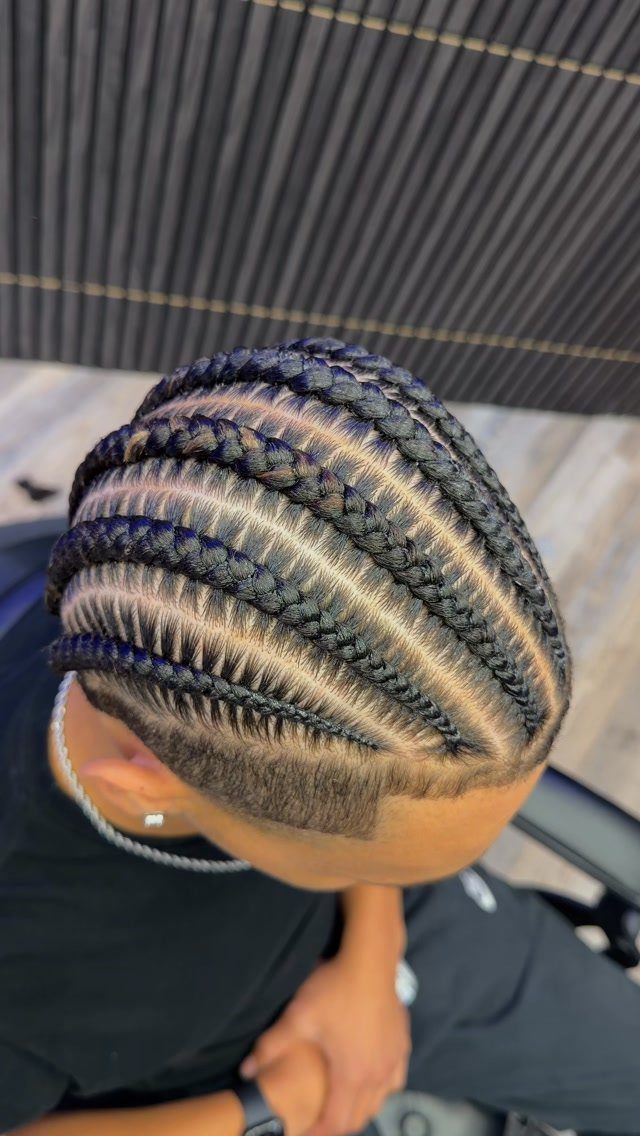
Hair gets added gradually as the braid moves back, so the rows start thin at the hairline and thicken toward the crown.
The taper makes the front look less bulky and the transition from scalp to braid reads smoother than rows that start thick and stay thick.
This technique takes longer than standard cornrows because the braider controls how much hair enters each pass. If your hairline is uneven or thinning, feed-ins hide the gaps better than blunt-start braids.
17. Stitch Cornrows
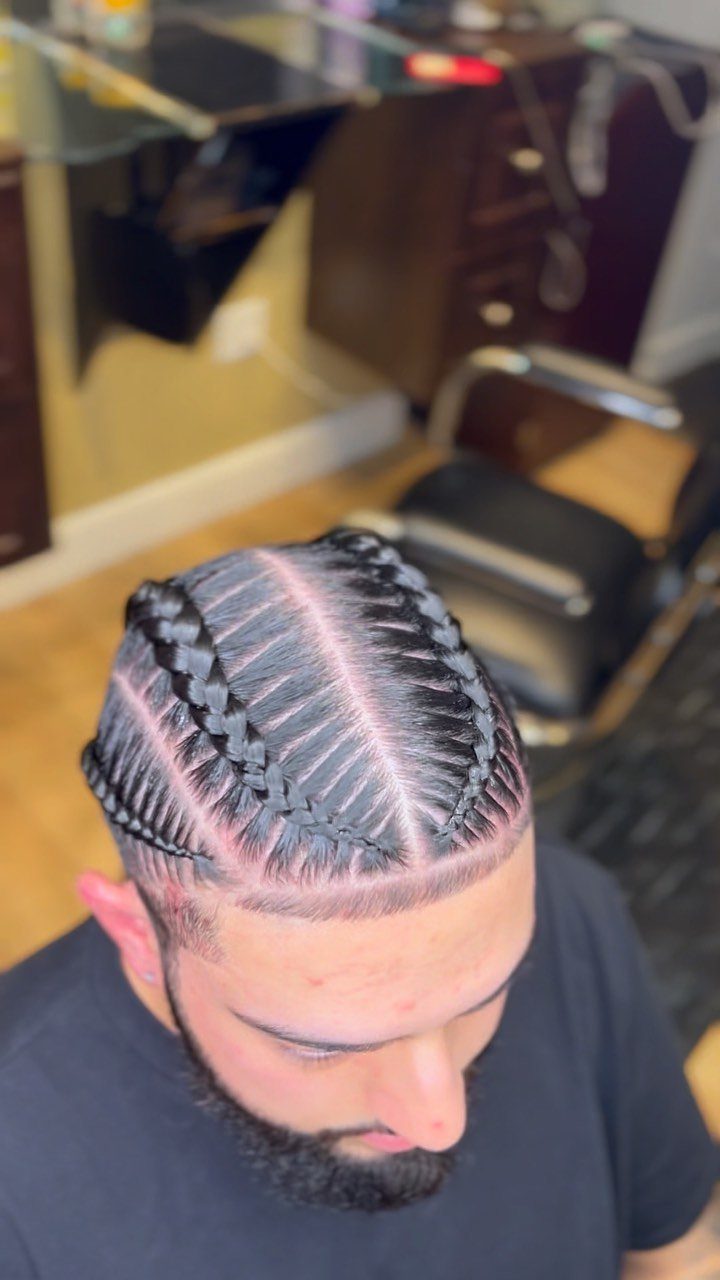
The hair gets pulled tighter at each crossing, forming a raised ridge along the center of each braid. The texture sits more defined than standard cornrows, and the rows hold their shape longer before they start to fuzz.
Stitch braids cost more because the extra tension at each pass slows the session down.
If your scalp is sensitive, this may feel tight for the first day or two. The trade is durability: rows last longer without needing edge control or touch-ups between washes.
18. Cornrows with Box Braids
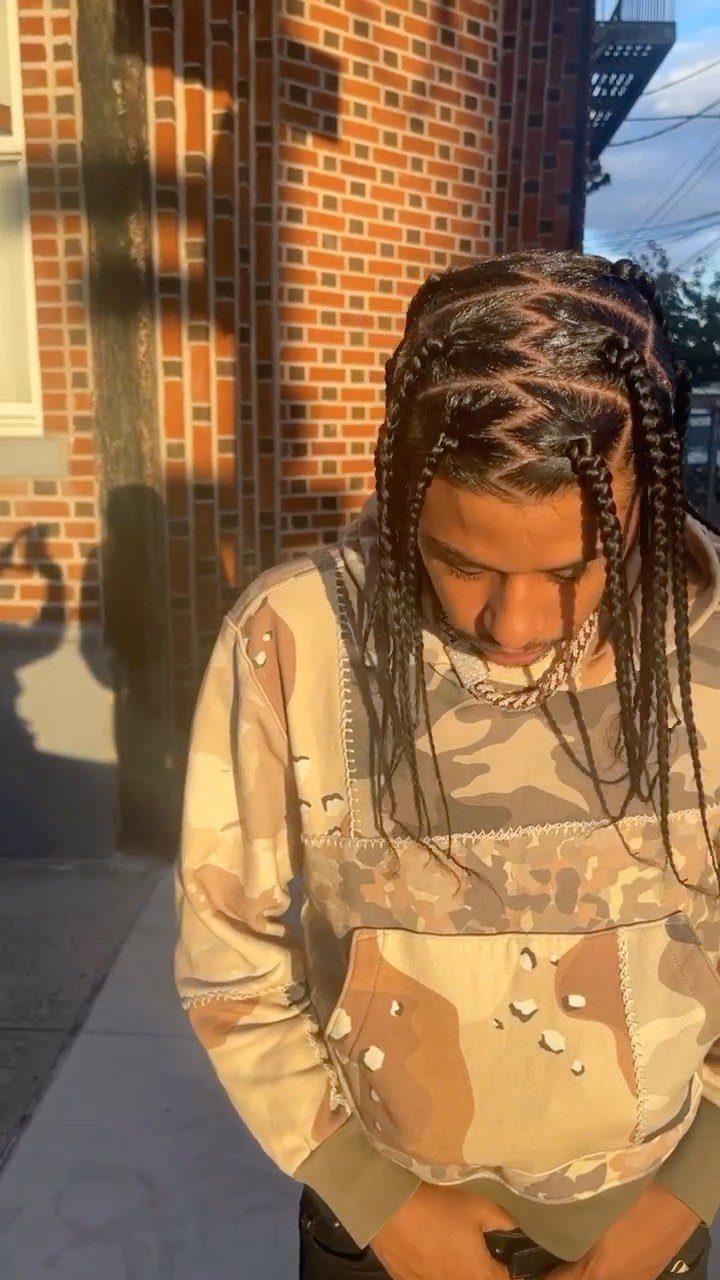
Cornrows cover the front and sides, then transition into individual box braids that hang loose from the point where the rows end.
The switch gives you structure up top and length in the back without committing to one technique for the whole head.
Box braids take longer to install than cornrows, so expect a longer session than you would for rows alone.
If a box braid unravels, you can redo just that one without touching the cornrows. The length also means more weight, which some people feel by the end of the day.
19. Top Knot Cornrows
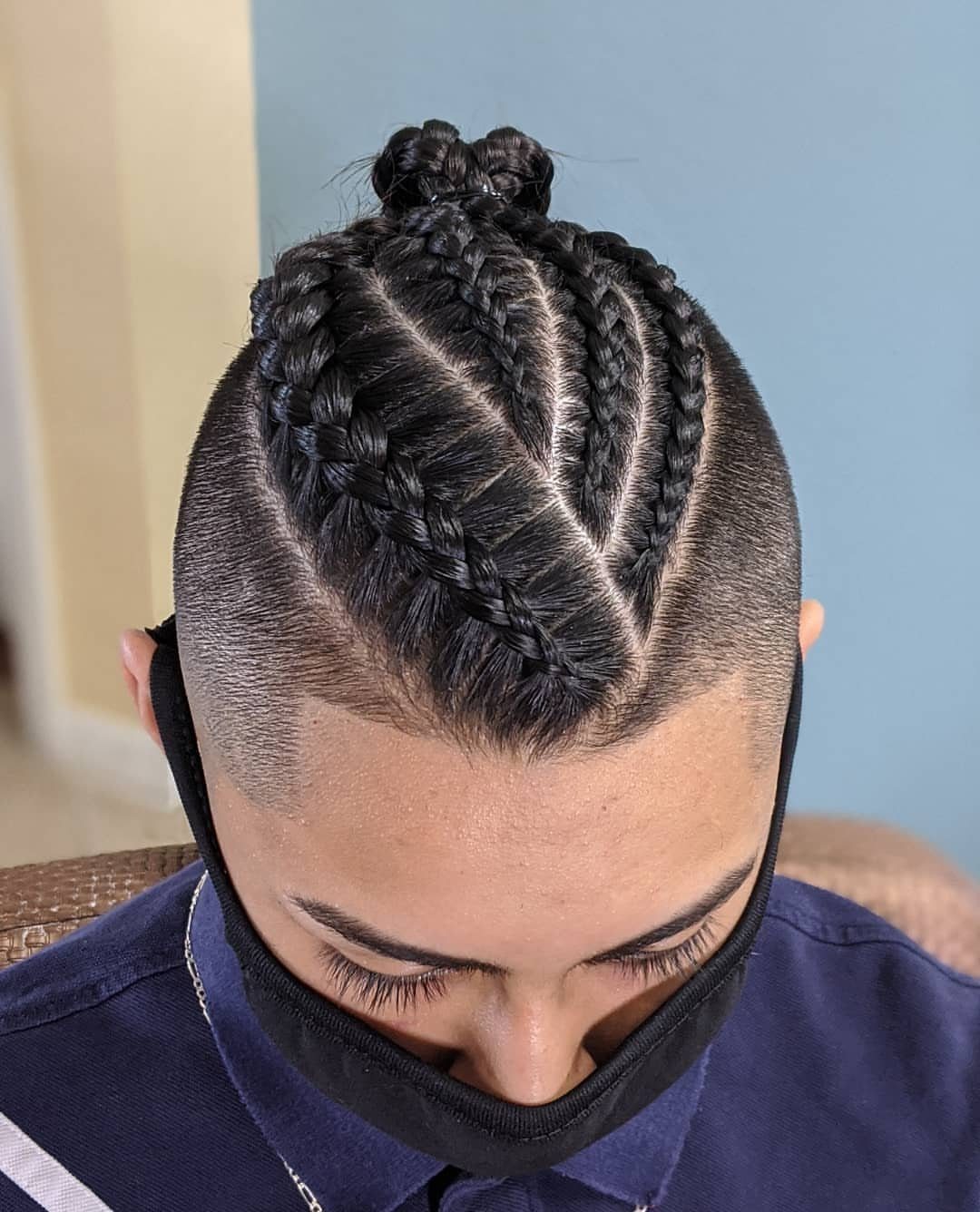
The rows run back and gather high, tied into a knot that sits on top instead of lower at the crown.
This keeps the length off your neck and reads sharper than a low bun when you need the braids up but want the height visible.
If you work somewhere that wants hair contained or you spend time in heat, the knot does both without cutting the braids short. You can also drop it when you want the rows to hang.
20. Micro Cornrows
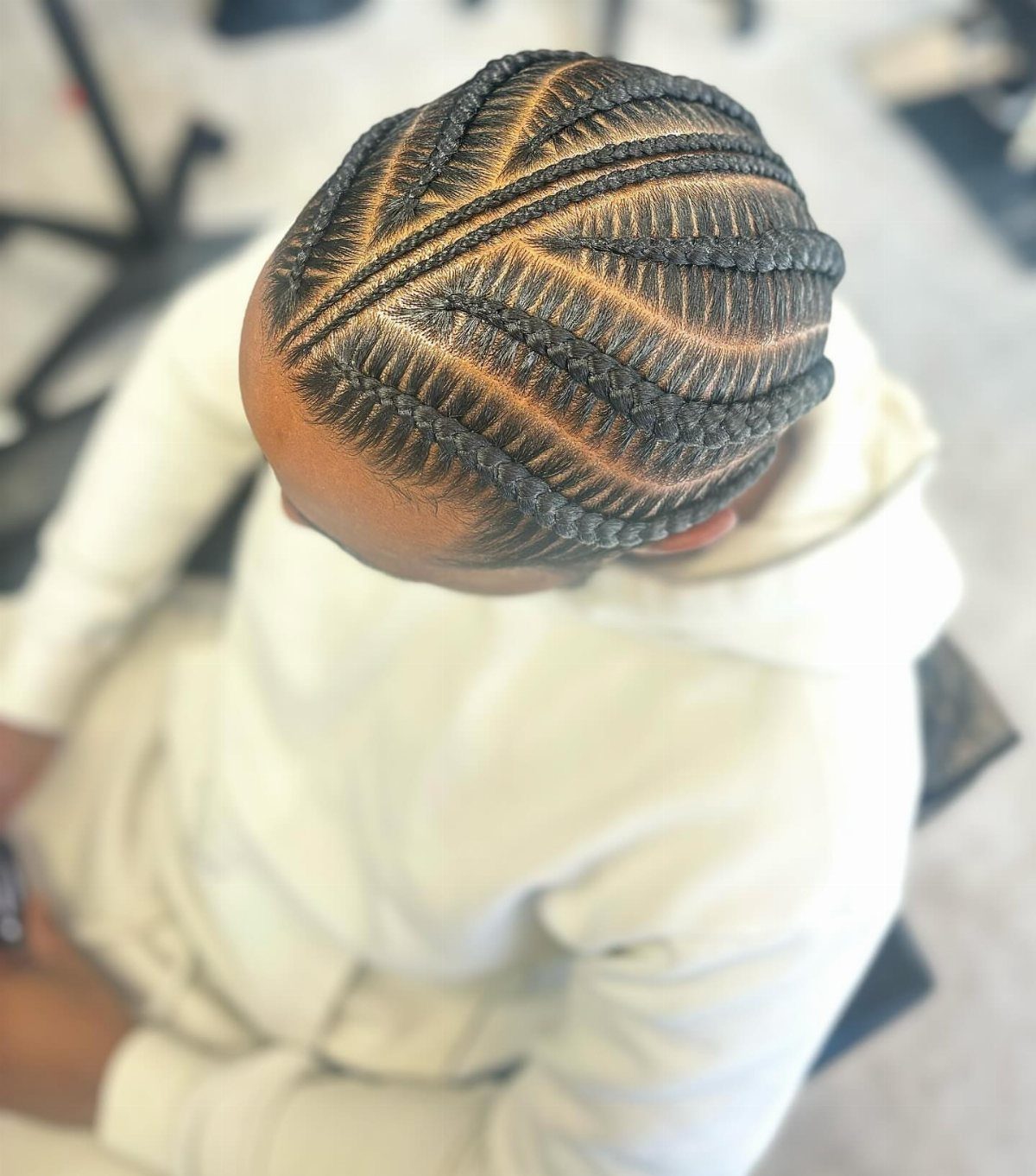
Thin rows mean more braids across the scalp, and that density opens up room for tighter curves and more complex geometry than thick braids allow. The downside is chair time: smaller sections take longer to finish.
If your hair is fine or you want a pattern with sharp angles, micro rows show more detail. They also last longer before they start to look loose because there is less weight pulling on each braid.
21. Jumbo Cornrows
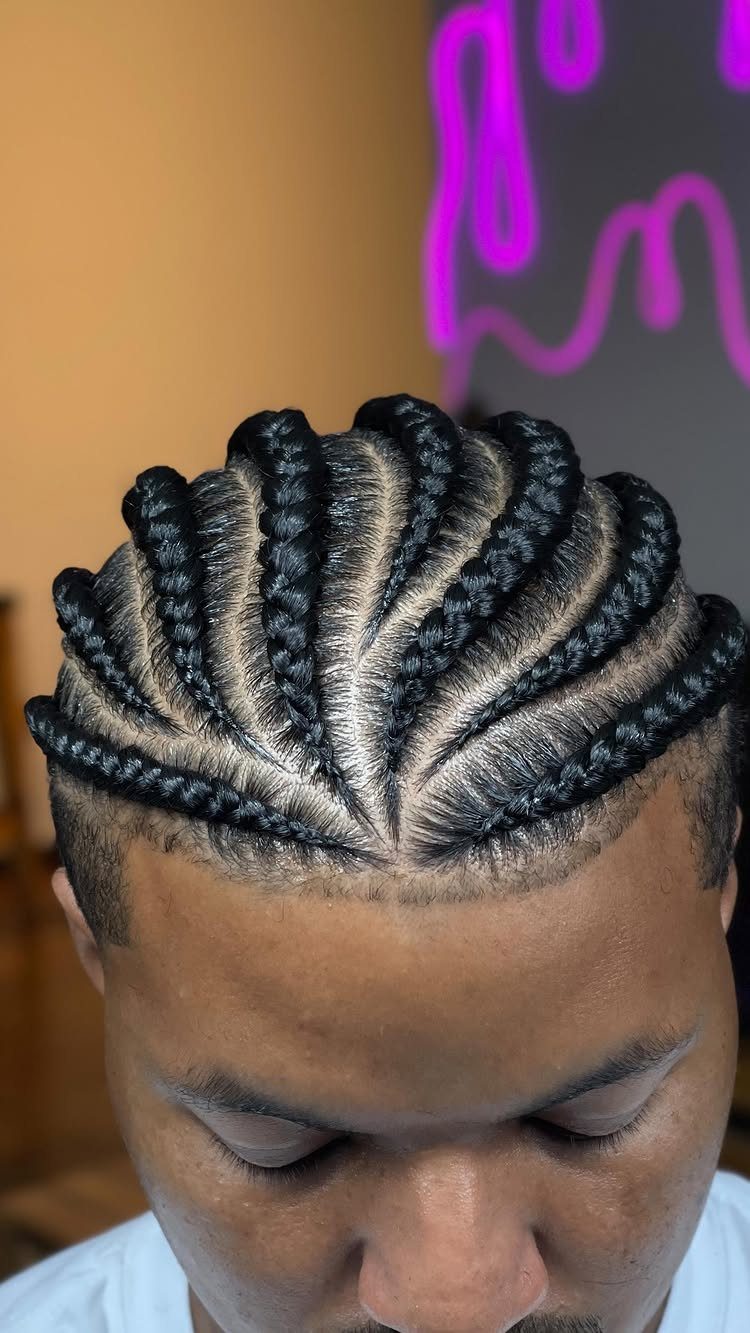
Thick braids cover the head in fewer rows, which cuts session time compared to standard or micro sizes. You get the structure of cornrows without sitting for hours, and the wider sections mean less tension on your scalp.
If you want braids but your schedule or budget is tight, this is the fastest install. The trade is durability: thicker rows loosen and fuzz sooner than thinner ones, so plan on redoing them more often.
22. Cornrows with Taper
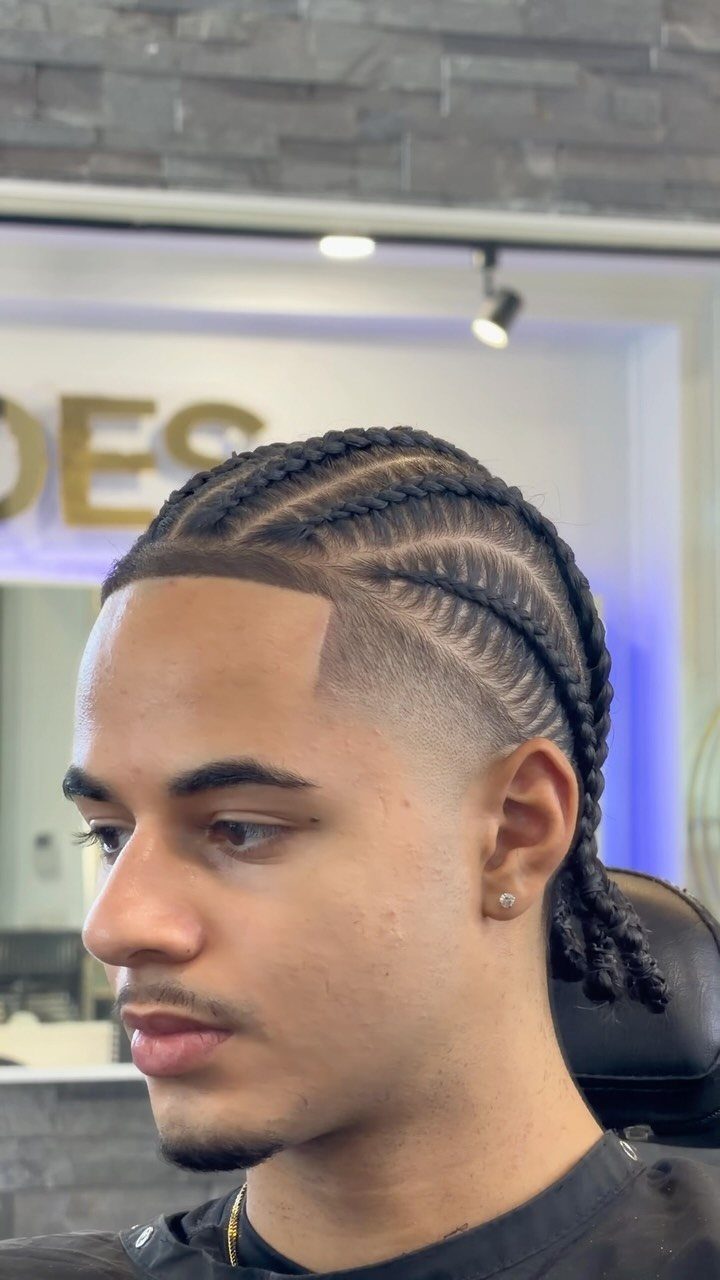
Rows stay on top, taper fades the sides and back. The gradient is softer than a skin fade and grows out without turning into a hard line, so you can stretch the time between barber visits if you need to.
This gives you braids where they show and a clean taper where they do not. If you want the look of cornrows but prefer something less uniform than a full head, the taper splits the difference.
23. Curved Cornrows
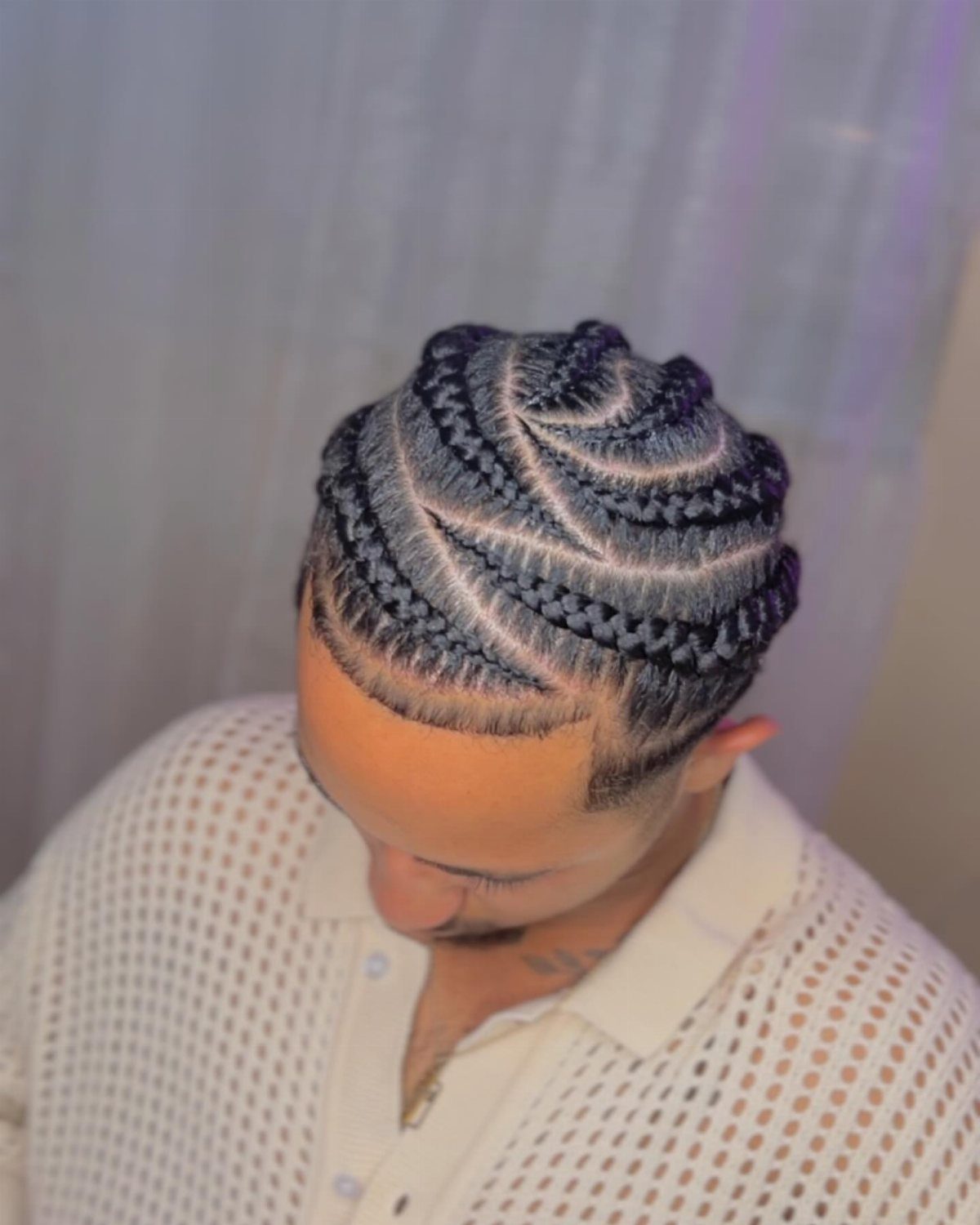
Rows arc across the scalp instead of tracking straight, and the curves can follow your head shape or form deliberate swoops.
Curved paths add time to the chair because each section has to follow the arc without bunching or crossing the line beside it.
If your hairline is uneven, curved rows can follow the natural shape instead of fighting it. The curves also mean the style grows out less uniformly than straight rows, so plan on a redo when the pattern starts to blur.
24. Cornrow Locs
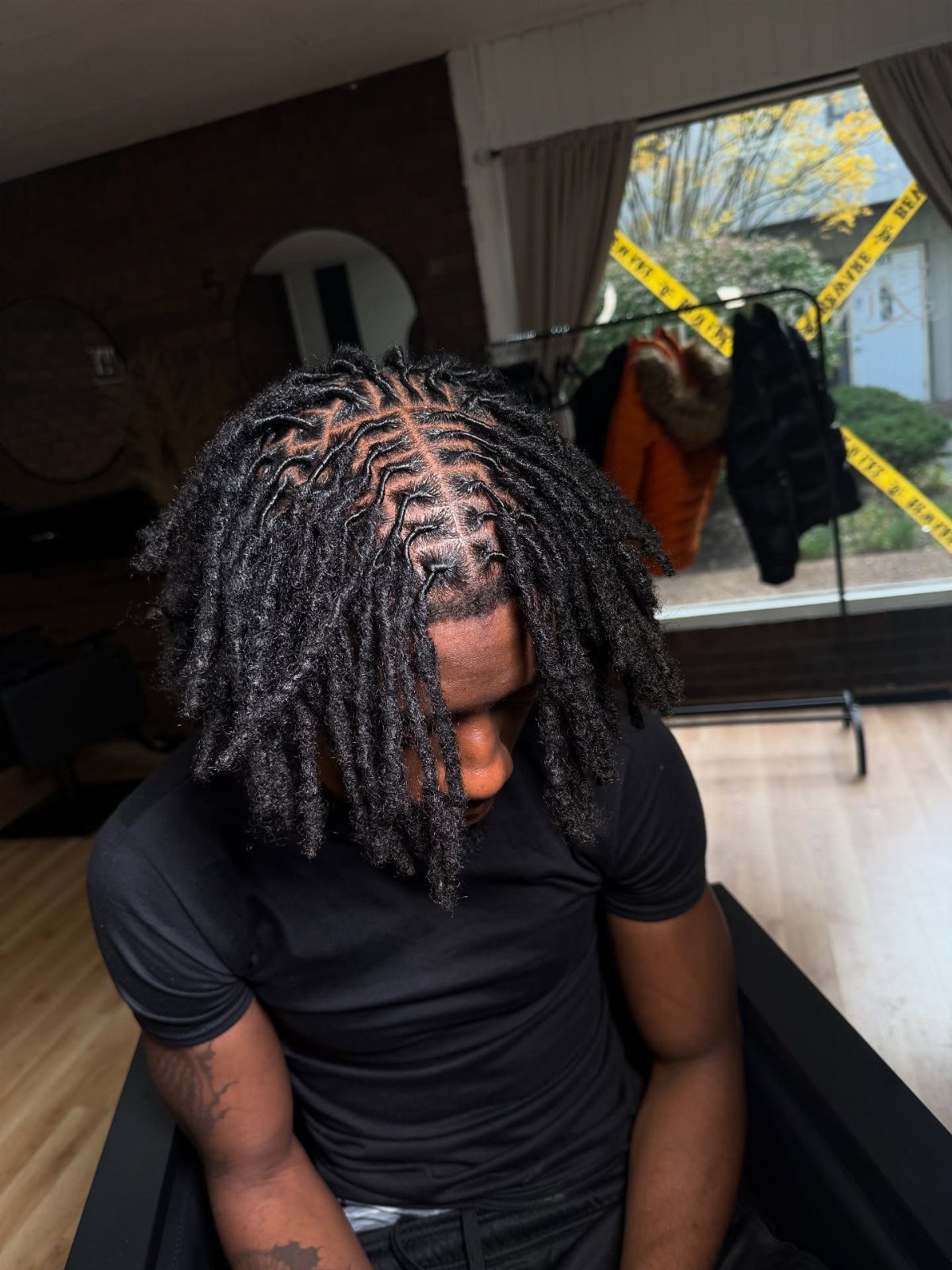
Locs get braided into rows instead of hanging loose, so the texture stays but the volume compresses closer to the scalp.
The look depends on loc thickness: thinner locs braid tighter and show more rows, thicker ones sit higher and cover more scalp per braid.
If your locs are long enough, cornrowing them partway down keeps the bulk controlled while the loose ends still fall free. The rows also put less weight on your edges than letting the locs hang forward.
25. Wavy Part Cornrows
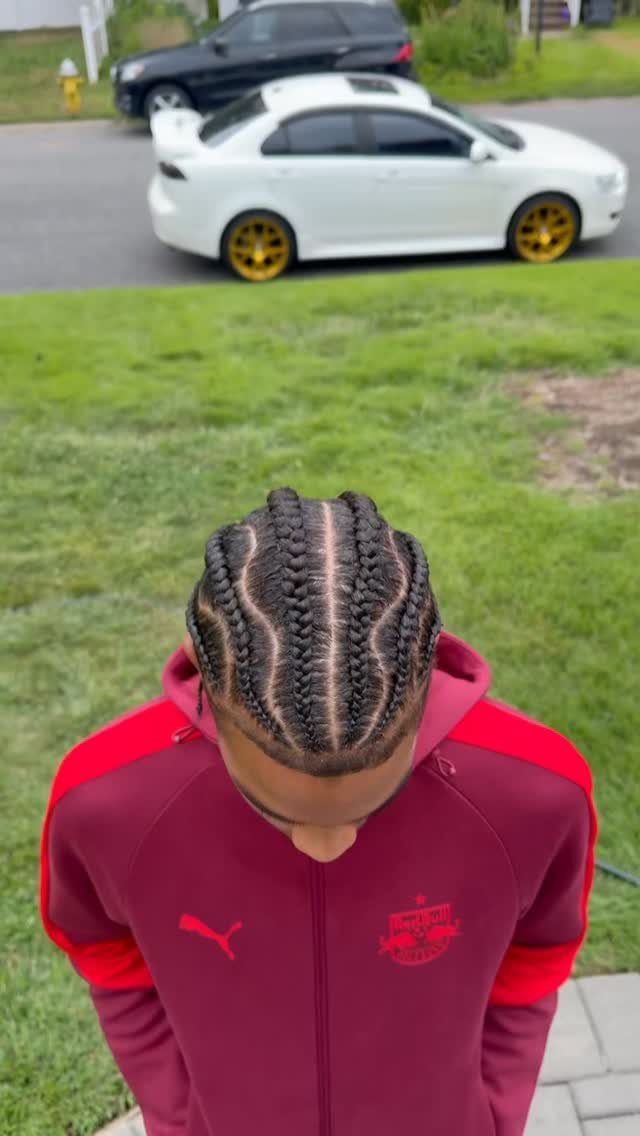
The parts between rows curve in smooth waves instead of running straight or cutting zigzags. The braids themselves still track predictably, but the wavy sectioning softens the whole layout without adding pattern complexity.
This takes about the same chair time as straight backs because the braider only adjusts how the hair is parted, not the braid direction.
If you want something less rigid than parallel lines but simpler than geometric designs, wavy parts add movement without sitting in the chair longer.
26. Cornrow Swirls
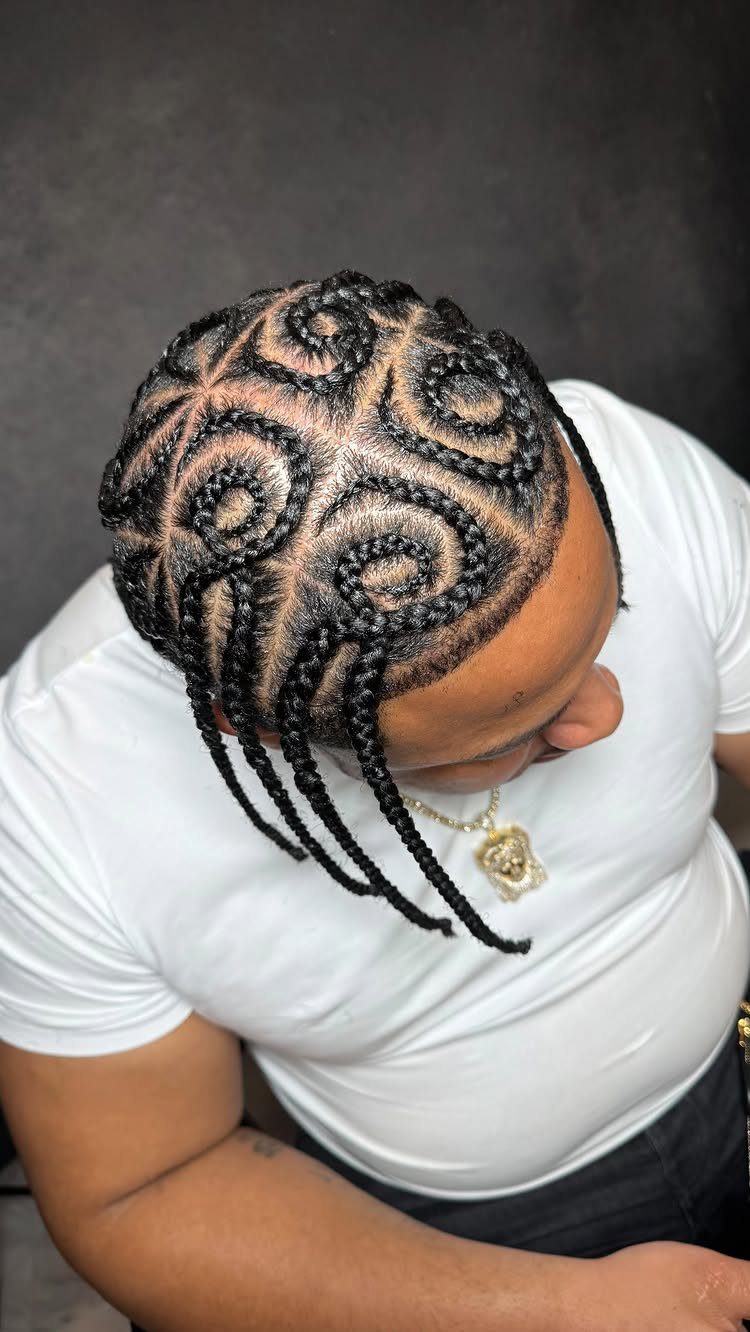
Rows spiral out from a center point or curve into circular shapes across the scalp.
The swirls can concentrate in one area or cover the whole head, and the layout depends on where the braider starts and how tight the curves need to be.
Session time runs longer than straight rows because each braid has to follow a curve without crossing into the next swirl.
If your hair grows unevenly, the spirals blur faster than parallel braids, so plan on redoing them when the pattern loses definition.
Cornrow Upkeep and Protection
Wash them when they need it, but not so often that you dry them out. Overwashing dries out the scalp and loosens the braids faster than they should move.
Keep them moisturized with a leave-in conditioner and a cream that skips heavy oils. Skip anything with oil listed in the first few ingredients; it builds up on the braids and attracts lint.
Sleep on a satin pillowcase or wear a satin durag. Cotton pulls moisture out and roughens the texture, which means more frizz by morning.
If the scalp itches, dilute a small amount of witch hazel or tea tree oil in water and apply it with a cotton pad between the rows.
Scratching loosens the braids at the root and wears them out faster than normal growth does.
Braiding Time and Upkeep
Most cornrow sessions run 1 to 3 hours depending on braid size and whether the pattern stays simple or branches into geometry. Straight backs finish faster than designs that need planning before the first section gets parted.
Rows last 2 to 6 weeks before they start to fuzz or lift at the scalp. If you let them go past 6 weeks, the new growth at the root puts enough tension on the braid to stress the hairline.
Book the redo before the rows look loose. Waiting until they unravel costs you more chair time because the braider has to work around matted sections.
According to internal data, cornrows cost $38 to $183 in the United States. This cost varies a lot because cornrows are customizable based on hair length, braid size, and whether or not you want cornrow designs.
Hair Length and Braid Suitability
Curly hair braids well once it reaches a few inches. Straight or wavy hair may need more length because it slips easier; thick straight strands work better over 12 cm.
If your hair sits between 3 and 4 inches and you want cornrows anyway, extensions fill the gap.
The braider feeds them in as the row builds, and the added length gives the braid enough grip to hold without slipping loose in the first week.
Fine or thinning hair shows more scalp between the rows. If density is low, straight backs with moderate spacing read cleaner than patterns that depend on contrast.
Frequently Asked Questions
Do cornrows look good on men?
They work for men after a protective style that requires almost nothing once it’s in.
The look depends on pattern choice: straight backs work for most settings, while designs and fades add contrast if you want something less uniform. Once they are in, upkeep is minimal beyond washing and moisturizing.
How much do men’s cornrows cost?
Expect to pay $38 to $183 depending on hair length, braid size, and whether you add a pattern.
Straight backs sit at the lower end because the sectioning is simple and the work moves quickly. Designs with curves, zigzags, or crossed rows cost more since they take planning and slow the session down.
Can you shower with cornrows?
Wash when the scalp needs it, not on a fixed schedule that overwets the rows. A net protects the rows from frizz and keeps flyaways from forming while the braids are wet.