Shoulder-length hair can be tied back in minutes, while a long quiff or slicked-back mullet needs product and a few minutes with a dryer.
A man bun or slicked style takes product and a couple of minutes, while textured waves or a bro flow can air-dry without much input from you.
1. Man Bun
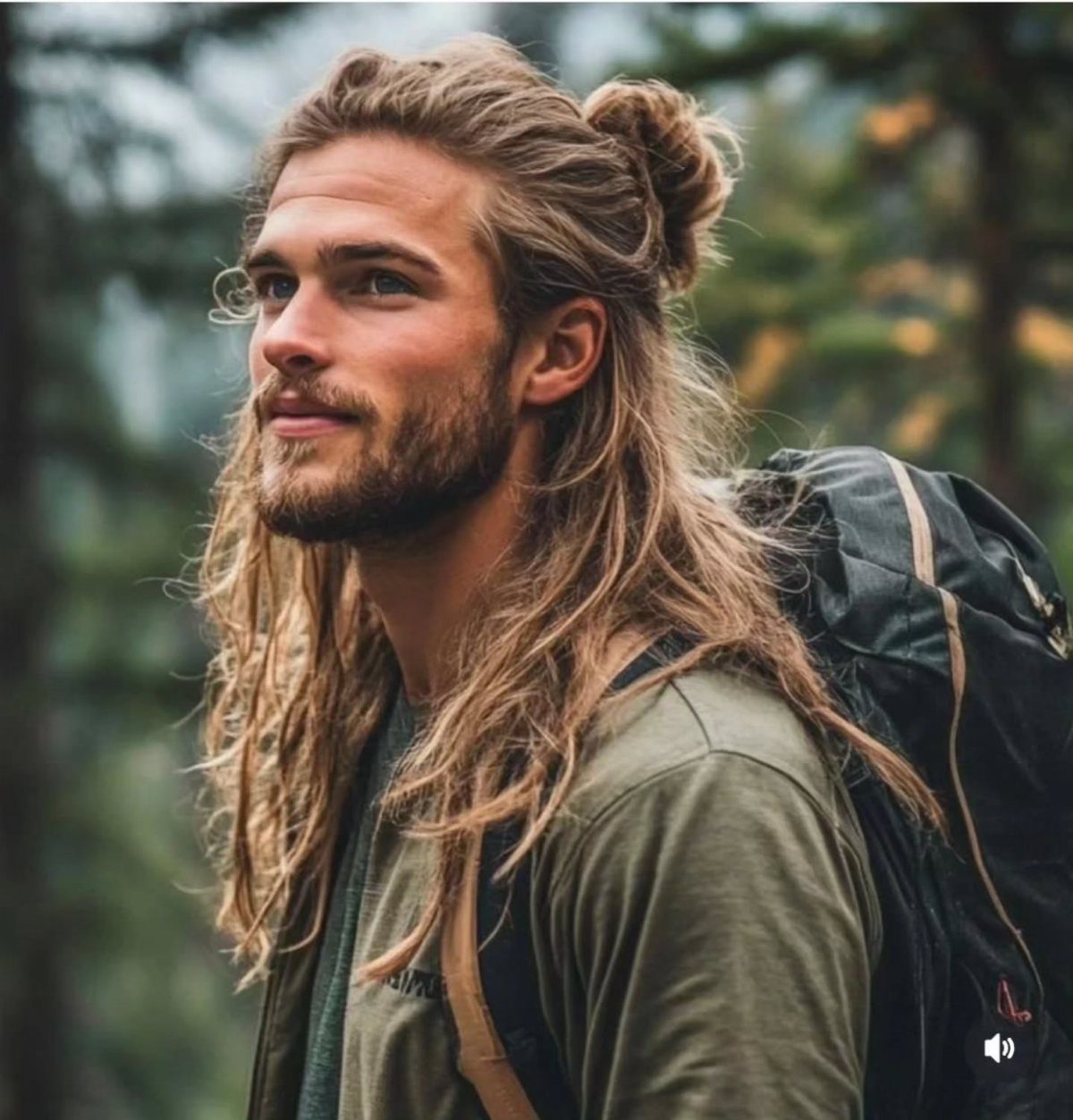
Long hair gathered and twisted into a bun at the crown or back of the head, worn loose and textured or smoothed tight with pomade or gel.
Styling time depends on how clean you want it. A casual bun is quick: gather, twist, wrap.
A slicked version needs pomade or gel worked through damp hair first, then combed back before you tie it off. The bun itself can sit high, mid, or low; I prefer mid-height for balance.
Hair needs to reach past your shoulders to stay secure without pins. Trim the ends regularly to prevent splitting.
2. Long Textured Waves
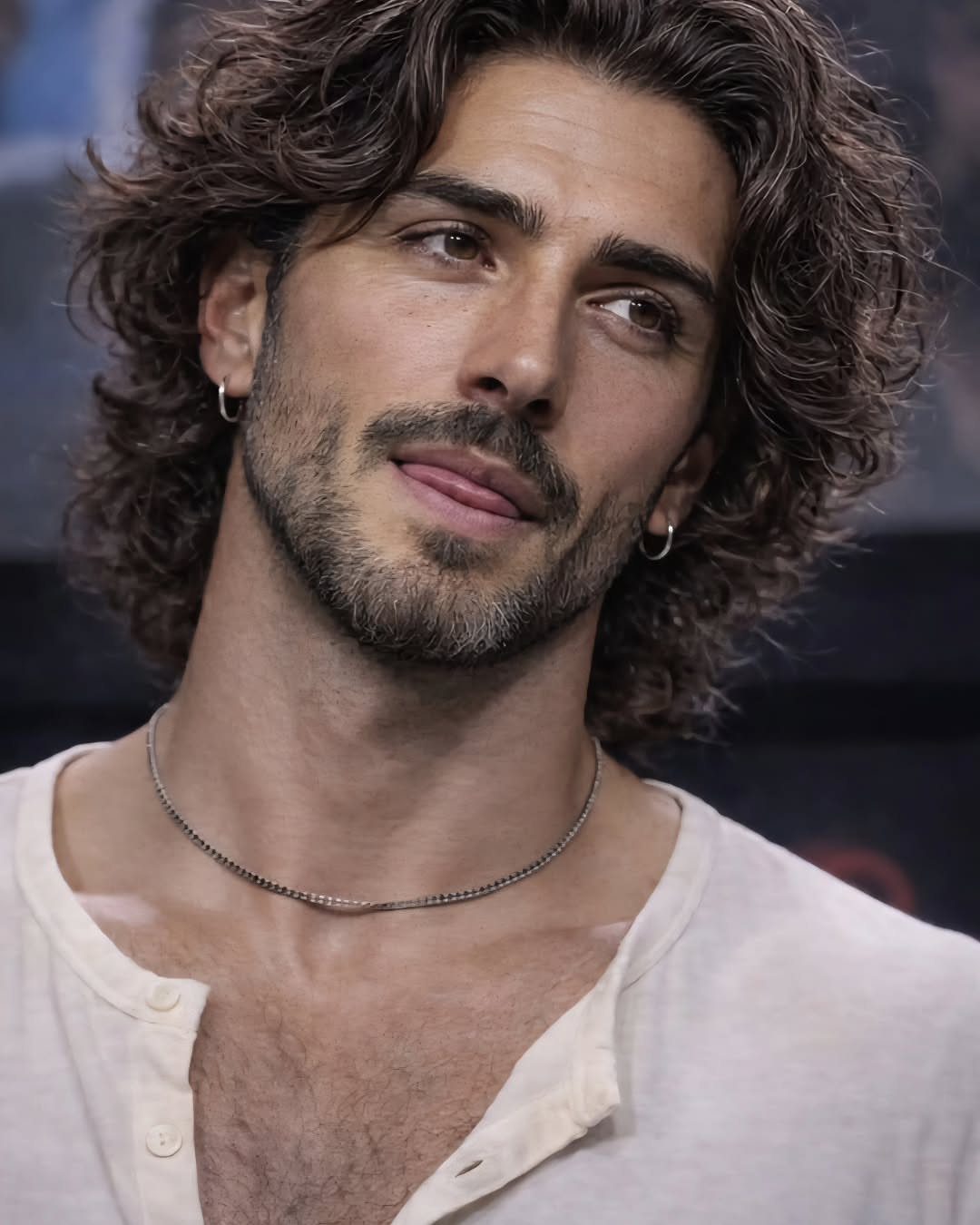
Hair past the shoulders, allowed to move in its natural wave or lifted with sea salt spray and light mousse.
Wash and condition, then work product through damp hair and let it air dry, or use a diffuser on low heat if you need it done faster.
Waves hold better with a bit of weight, so collarbone length or longer gives you the best result.
Styling is fast most mornings. A quick scrunch refreshes the texture, and a dime-sized amount of pomade tames any frizz without flattening the wave.
3. Long Slicked-Back Mullet
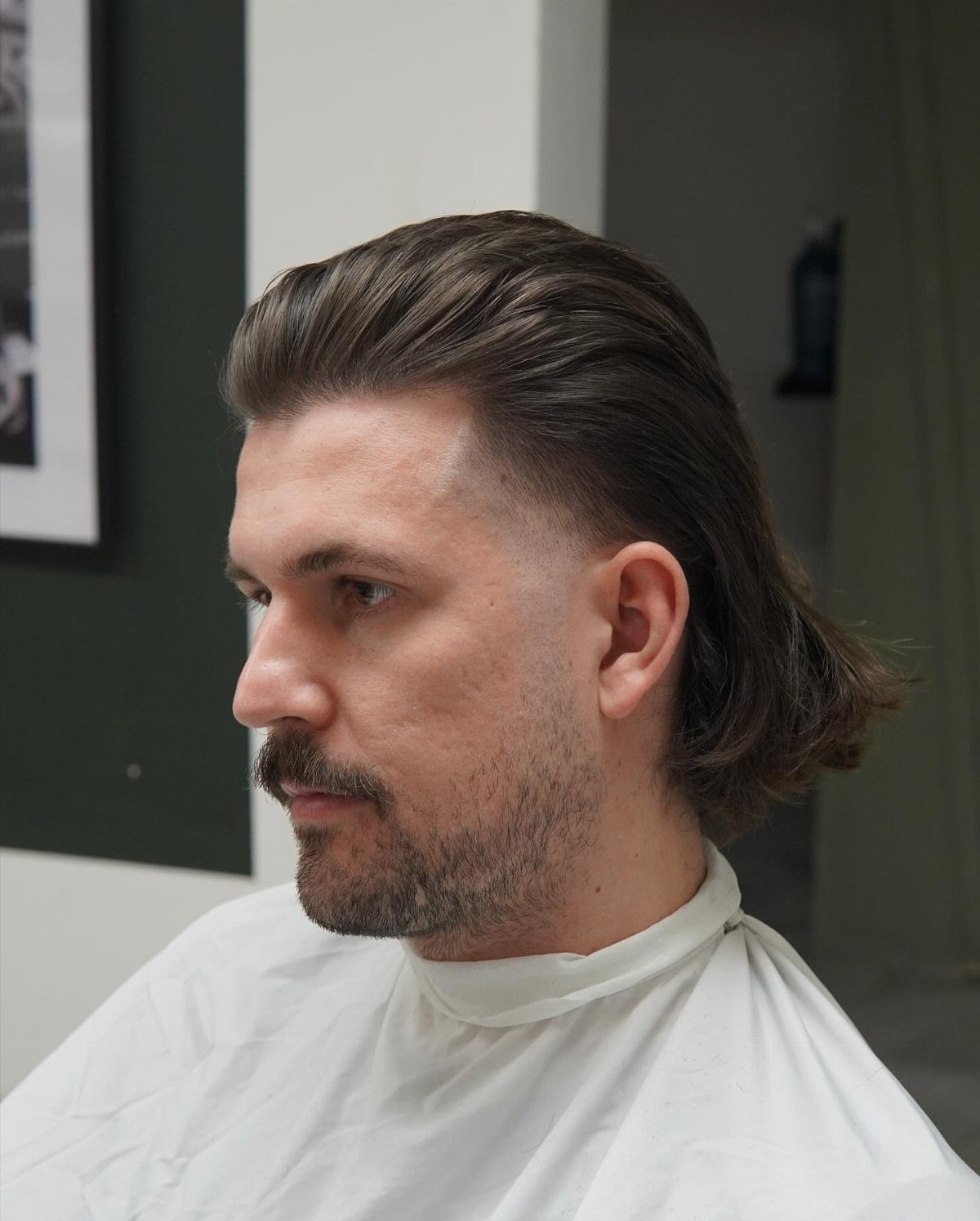
Front section lifted and slicked into a tall quiff, back left long and flowing past the collar. The structured top and loose length give this cut its shape.
Ask for length in the back with enough height at the crown to support volume.
Blow-dry the front upward with a round brush, then lock it with a strong-hold pomade or gel. The back can stay natural or be smoothed with a lighter product.
Styling is quick once you know the routine.
4. Slicked-Back Straight
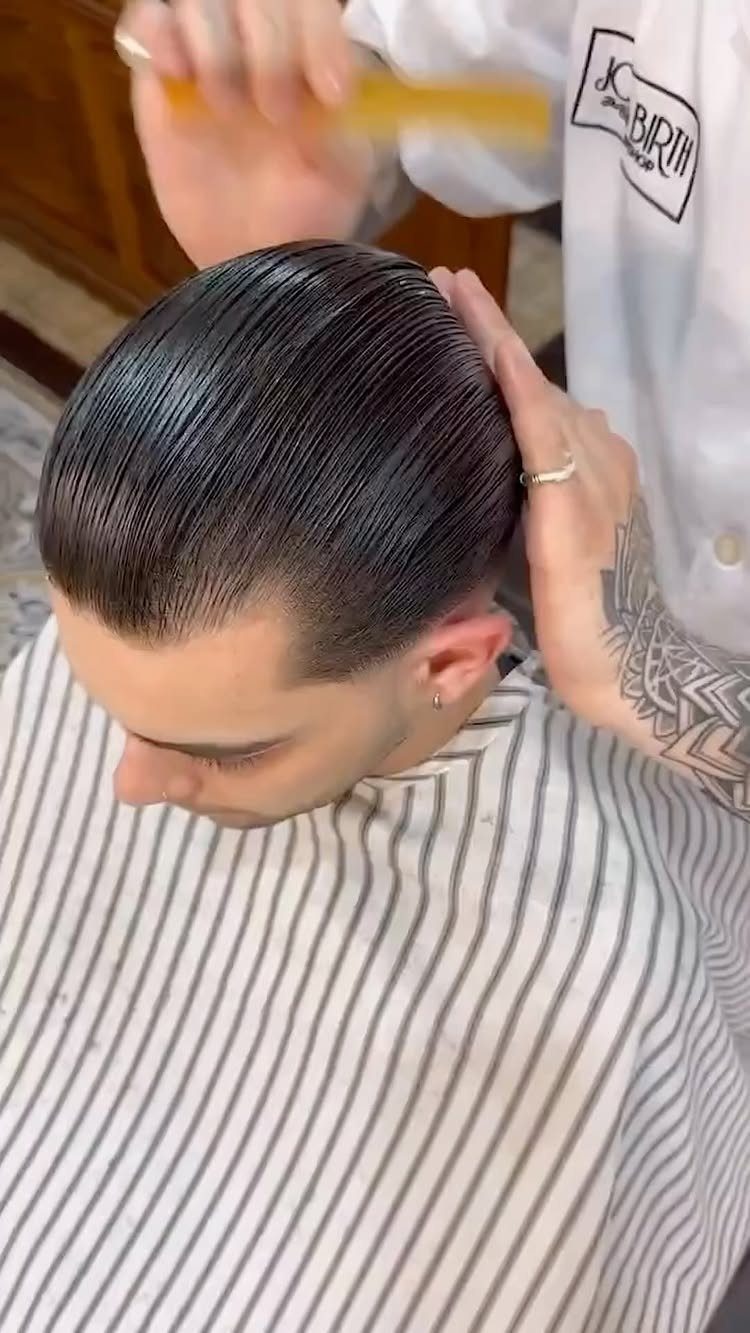
Straight hair combed back from the forehead and held in place with pomade, gel, or a styling cream. The finish is smooth, with no visible texture or separation.
Start with damp hair.
Apply product from root to tip, then use a fine-toothed comb to pull everything back in one clean sweep. A blow dryer on medium heat sets the hold and adds a bit of shine if you want it.
Works best on naturally straight or lightly wavy hair; curls fight the structure and need more product to stay flat. Styling is quick, and regular cleanups keep the length even.
5. Layered Textured Waves
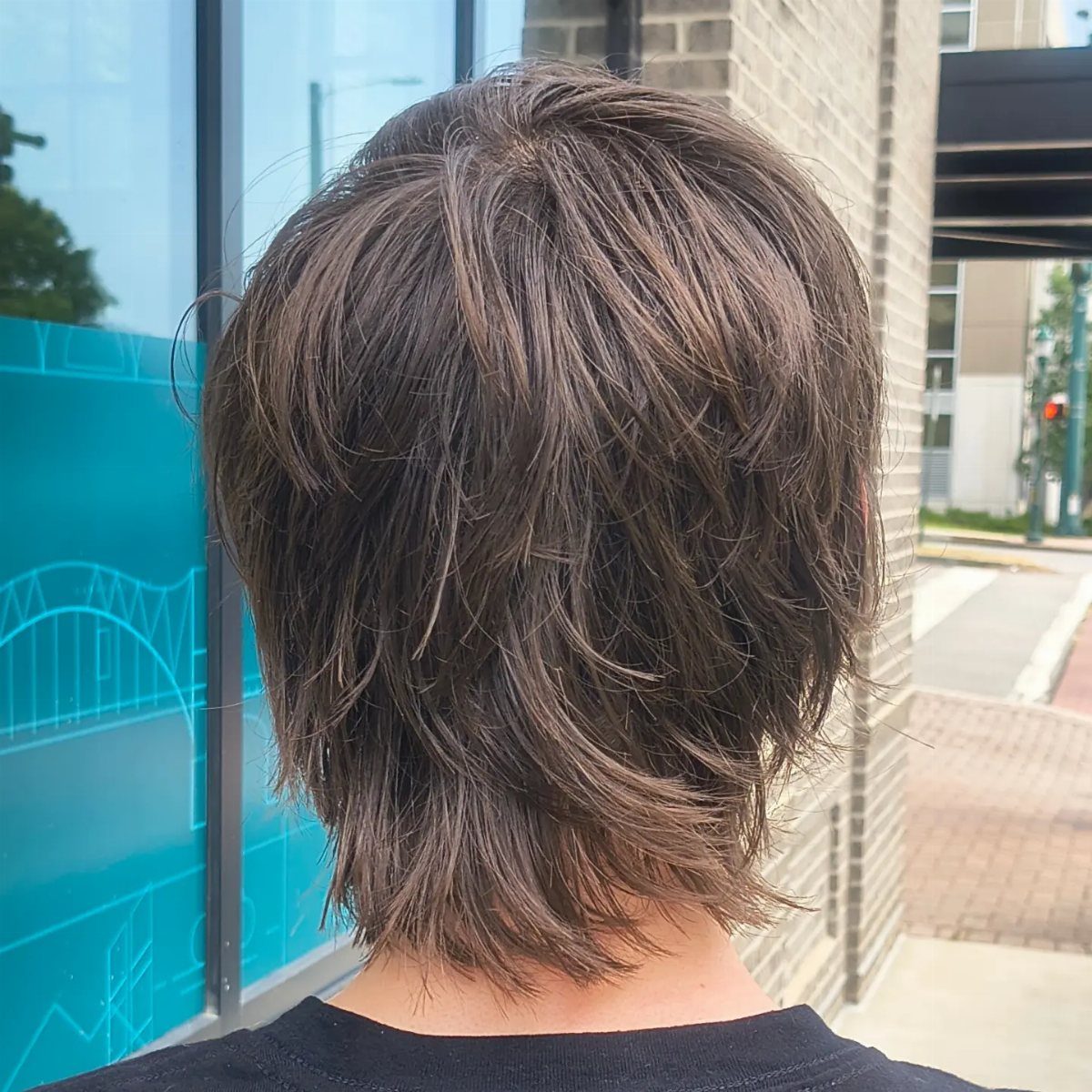
Layers cut throughout wavy hair to create depth and prevent the weight of long hair from pulling the wave flat. The shortest layers frame the face, while the longest fall past the shoulders.
Ask your barber to layer from the cheekbones down, leaving enough length at the bottom to keep the overall shape.
Product is optional: a light styling cream works through damp hair will hold definition, but the cut carries most of the work.
Grows out well because the layers blend as they lengthen.
6. Glossy Waves
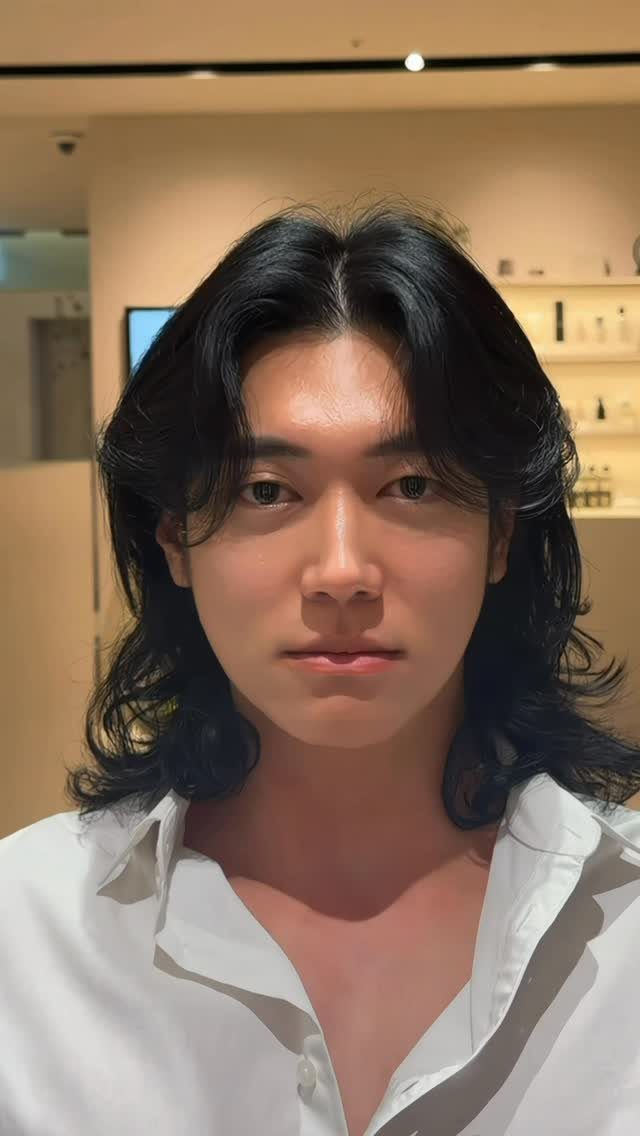
Long waves styled with a shine-enhancing product to give a polished, almost wet look. The hair reflects light cleanly and feels smooth to the touch.
Apply a glossing serum or lightweight oil to damp hair, then blow-dry with a concentrator nozzle to smooth the cuticle.
A paddle brush helps pull the wave into a softer pattern without erasing it completely. Finish with a second pass of serum on dry hair if the shine fades.
Holds through the day. Straight hair picks up the gloss more evenly than coarse or very curly textures, which can look greasy with too much product.
7. Long Curly Hair
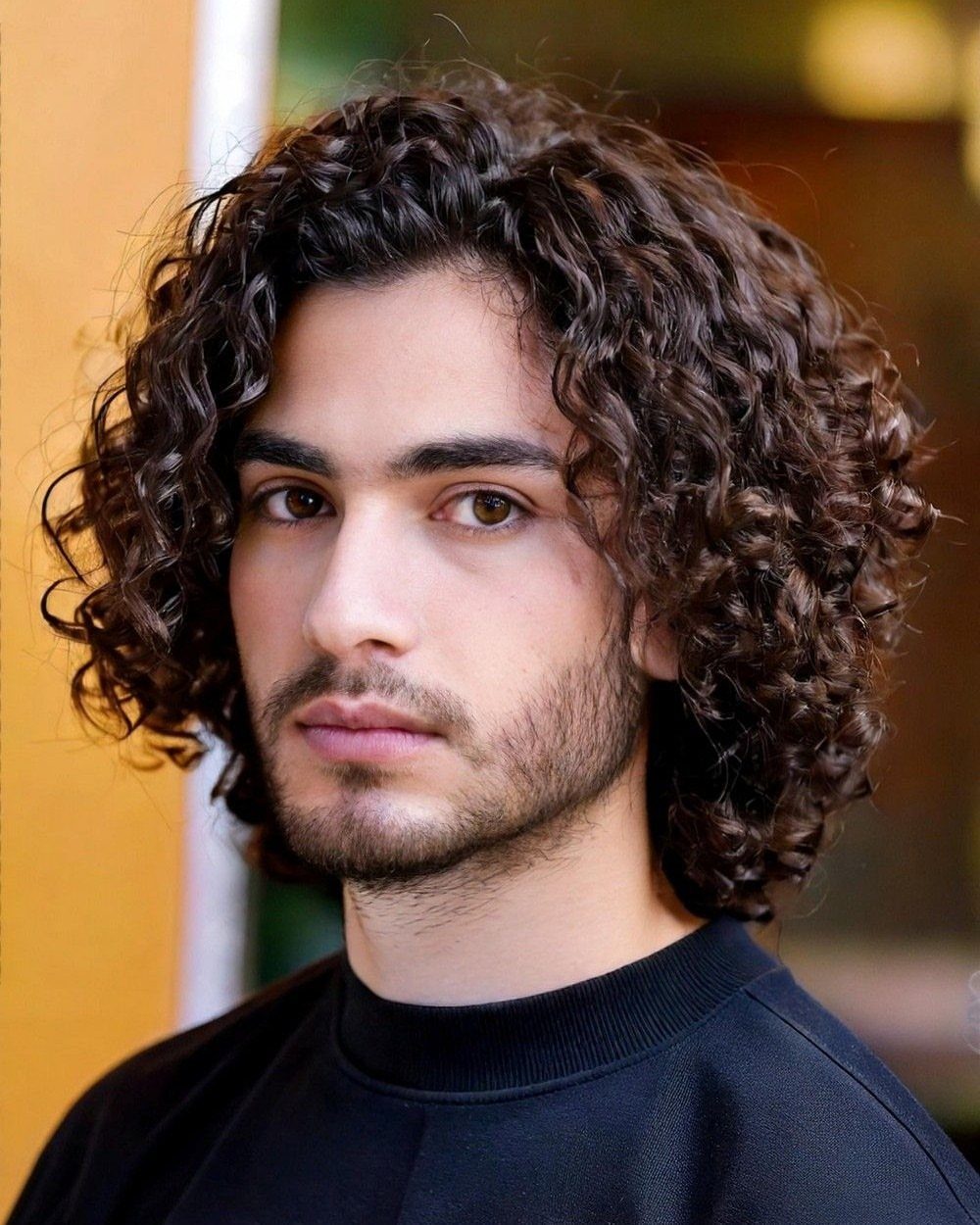
Natural curls left to grow past the shoulders, with volume and texture sitting in the curl pattern itself rather than in product or styling.
Wash with a sulfate-free shampoo and condition thoroughly to keep the curl defined and prevent frizz.
Most of the work happens in the shower.
Once dry, curls hold their shape with minimal touch. Finger-comb instead of brushing to avoid breaking the curl.
8. Long Ponytail
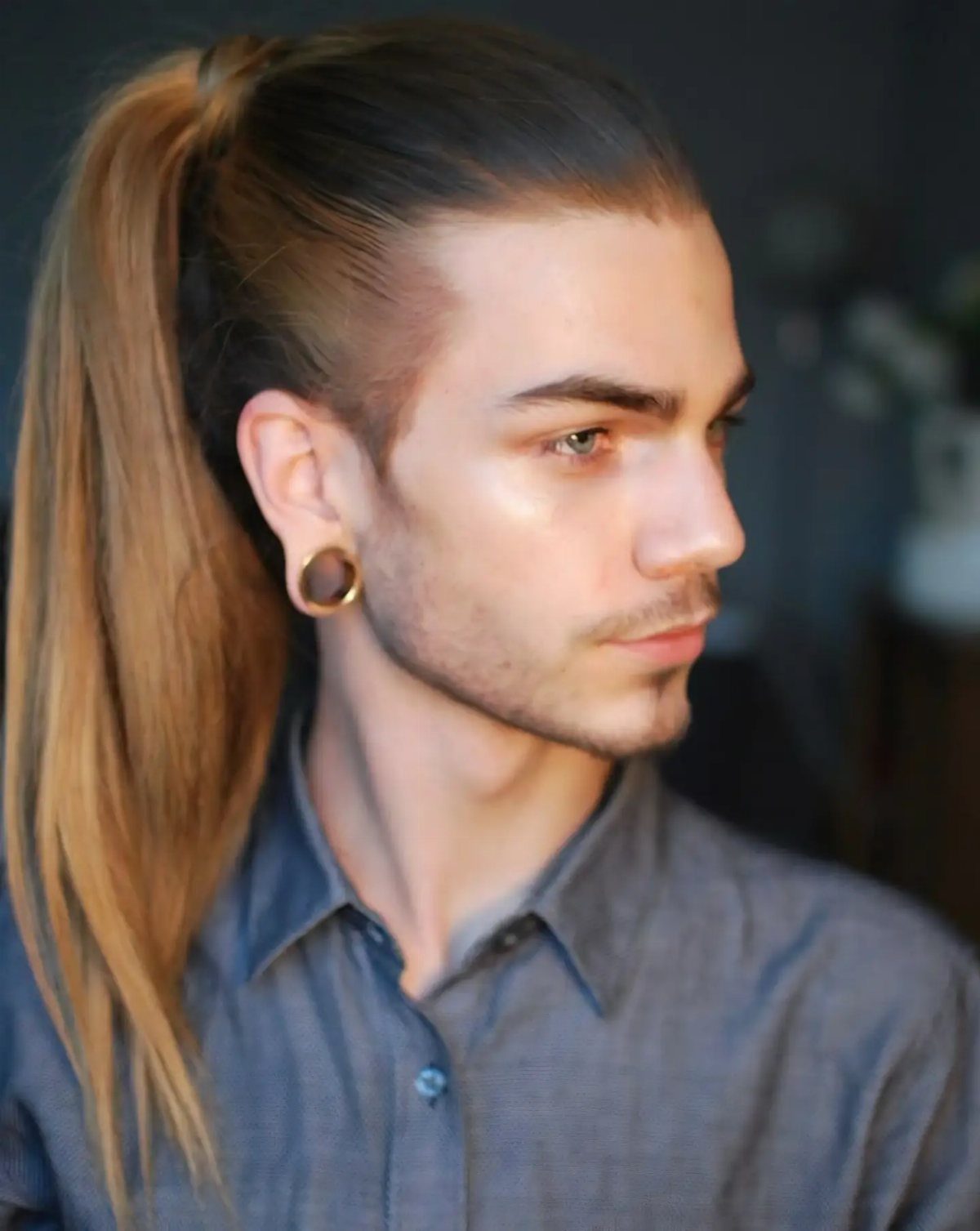
Hair pulled back from the face and secured with an elastic tie at the crown or nape, sitting anywhere from mid-back to past the shoulders.
Brush the hair smooth before tying it off, or leave some texture if the hair is naturally wavy.
A low ponytail sits at the nape and feels more casual; a high one at the crown looks cleaner and keeps hair off the neck in warm weather.
Fast to style and holds all day. Hair needs to reach at least shoulder length to tie securely without shorter pieces falling out.
9. Half-Up, Half-Down
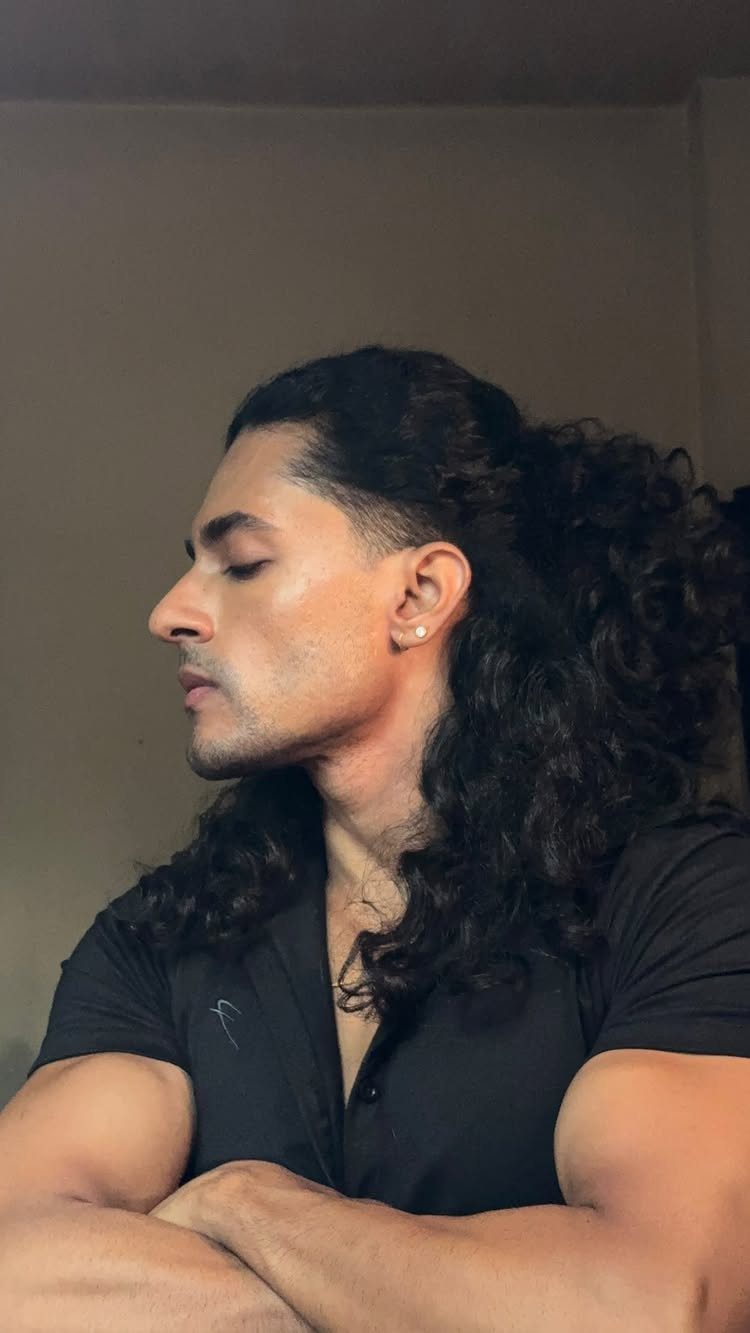
Top section pulled back and tied while the rest hangs loose, splitting the weight and keeping hair out of the face without hiding the length.
Gather hair from the temples to the crown, secure it with a tie, and leave the rest down. The tied section can sit flat or have volume depending on how much you tease it before tying.
Works on straight, wavy, or curly hair.
The lower half still moves and shows texture, while the top stays controlled. Styling is quick and the tie holds through most of the day.
10. Long Braids
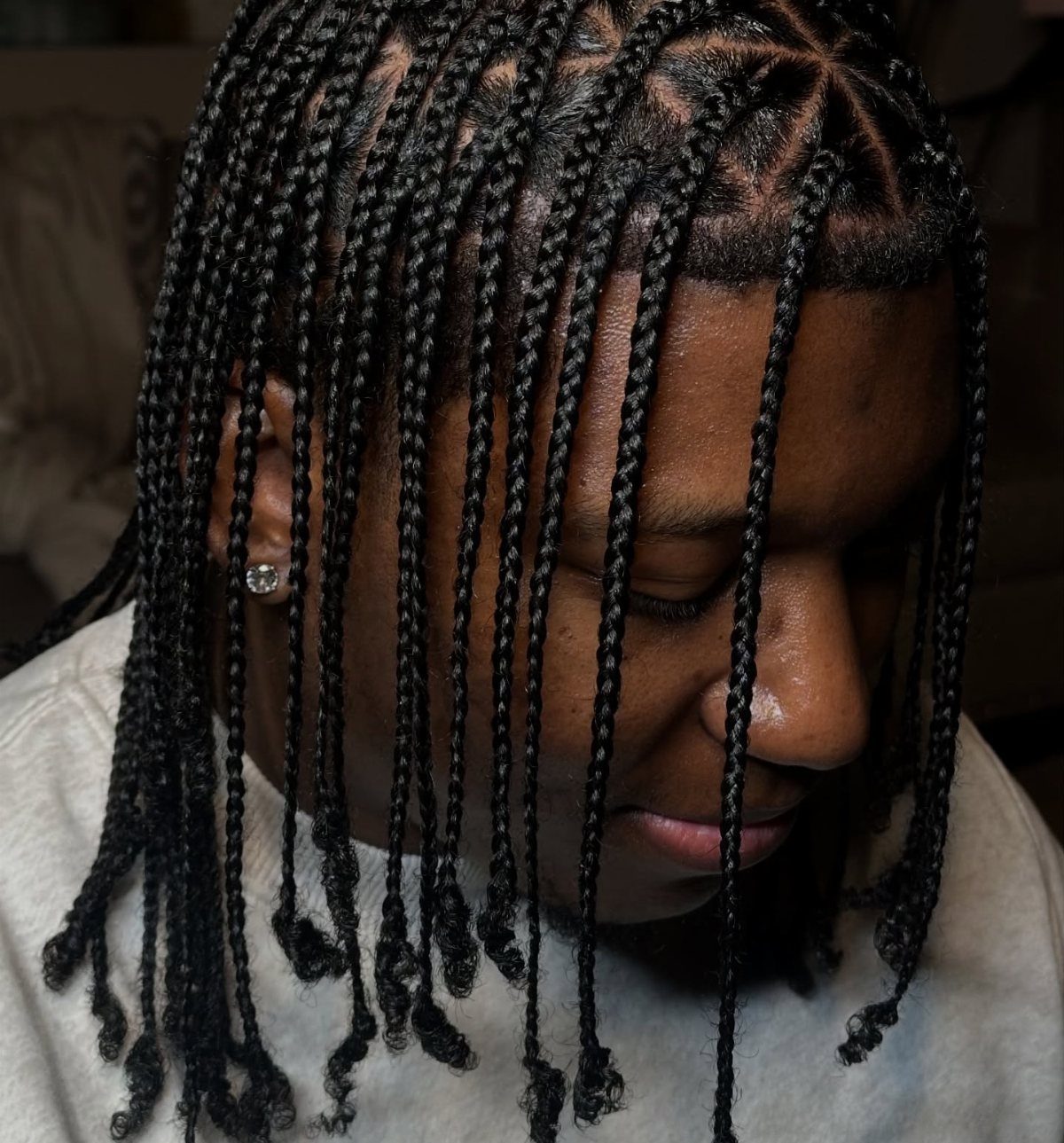
Hair sectioned and woven into individual braids that hang long, including box braids, cornrows, or loose plaits.
Braiding takes time up front but holds for weeks with minimal daily styling.
Box braids need synthetic or natural hair added for length and thickness, installed by a braider who sections the hair into small squares and weaves each one from root to tip.
Wrap at night to stop frizz, apply a scalp oil when it feels dry, and smooth the edges with a gel if they lift. Braids protect natural hair while it grows.
11. Long Hair Undercut
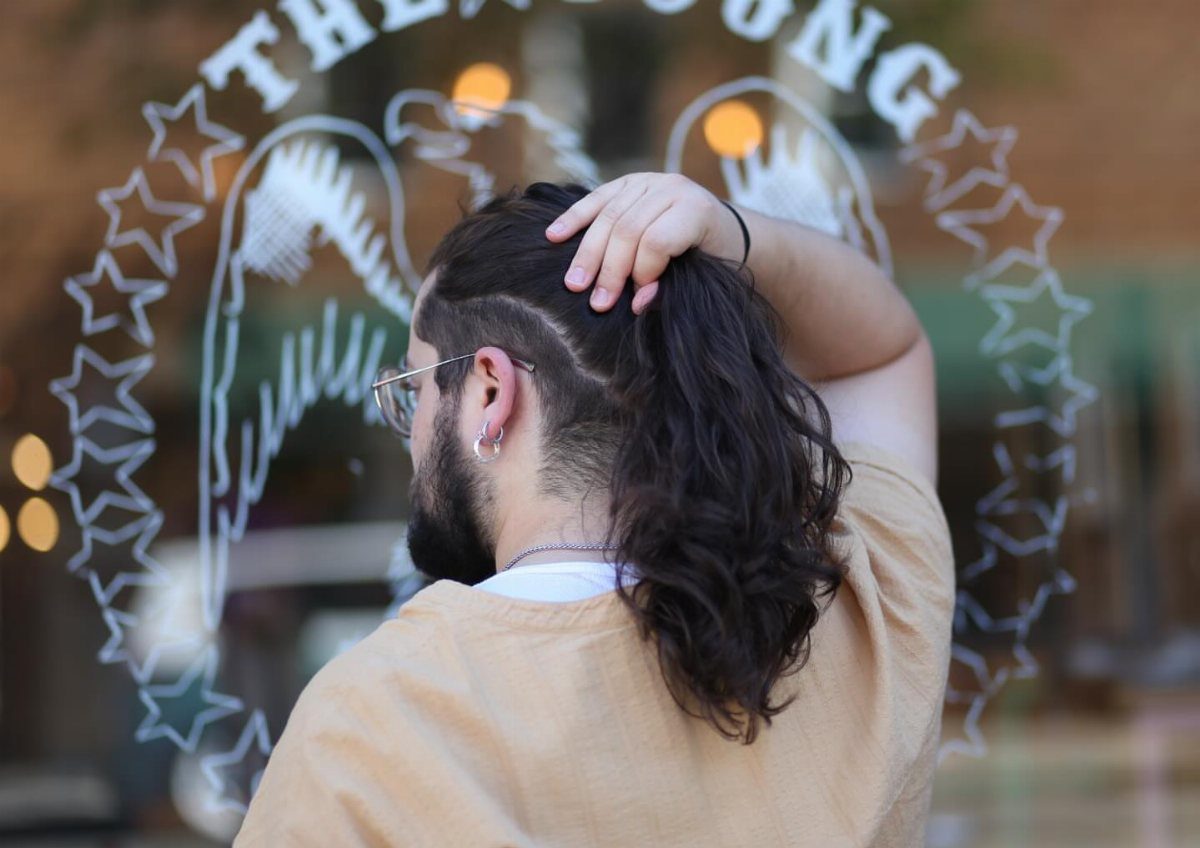
Sides and back clipped short or shaved, with length left on top to hang past the ears or shoulders.
Ask for a skin fade, a #1 guard, or a line where short meets long depending on how much contrast you want. The long section can be worn down, slicked back, or tied up.
Styling the top is the same as any long hair: brush it, add product if needed, and let it fall where it will. The undercut needs a trim every few weeks to stay sharp.
12. Long Hair with Middle Part
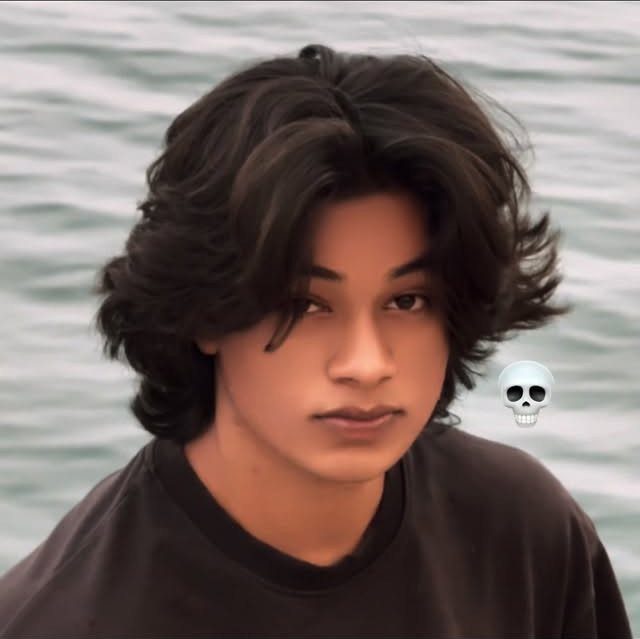
A straight part drawn down the center of the scalp, letting hair fall evenly on both sides of the face.
Comb damp hair straight back, then use the tip of the comb or your finger to draw a line from the forehead to the crown. Let the hair dry naturally or blow-dry it straight, keeping the part clean.
13. Man Bun with Fade
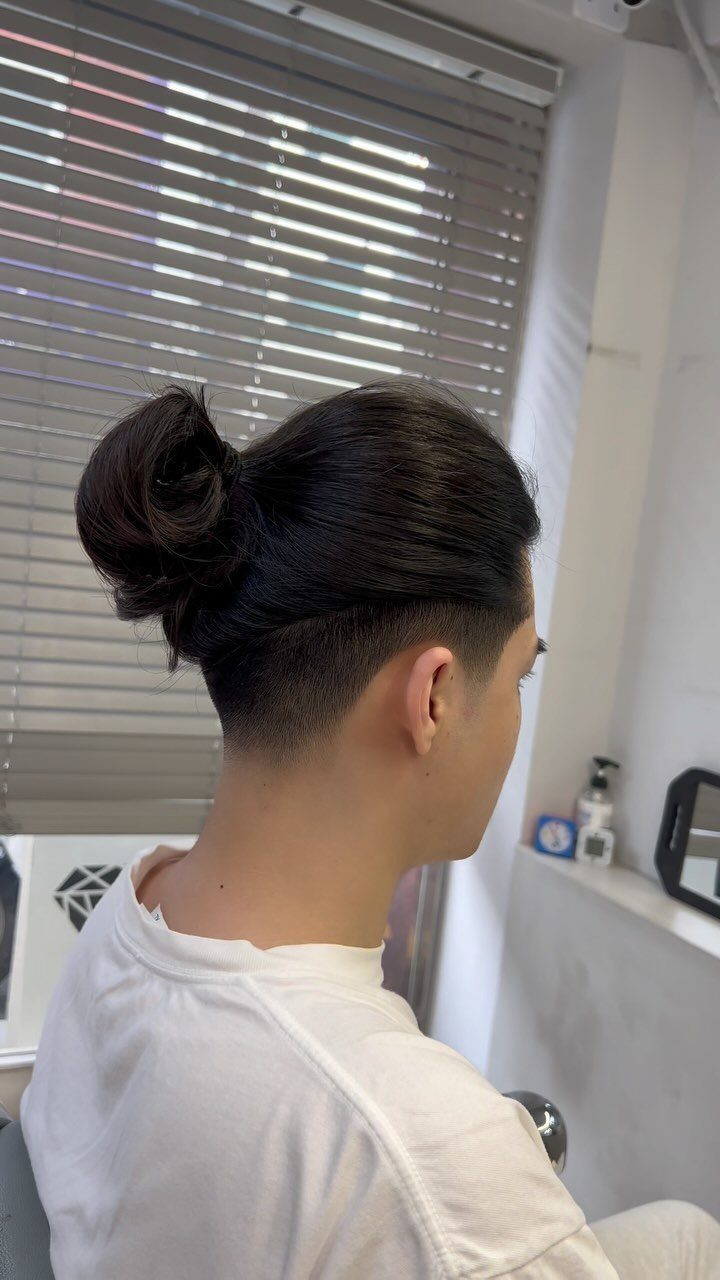
A bun gathered at the crown or back, with sides and back faded short to skin or a close guard.
The fade adds contrast and keeps the sides clean without the weight of length everywhere. Ask for the fade height and blend you want, then leave enough length on top to tie securely.
Styling the bun is quick. The fade needs regular cleanup to stay sharp, while the top grows as long as you let it.
14. Long Quiff
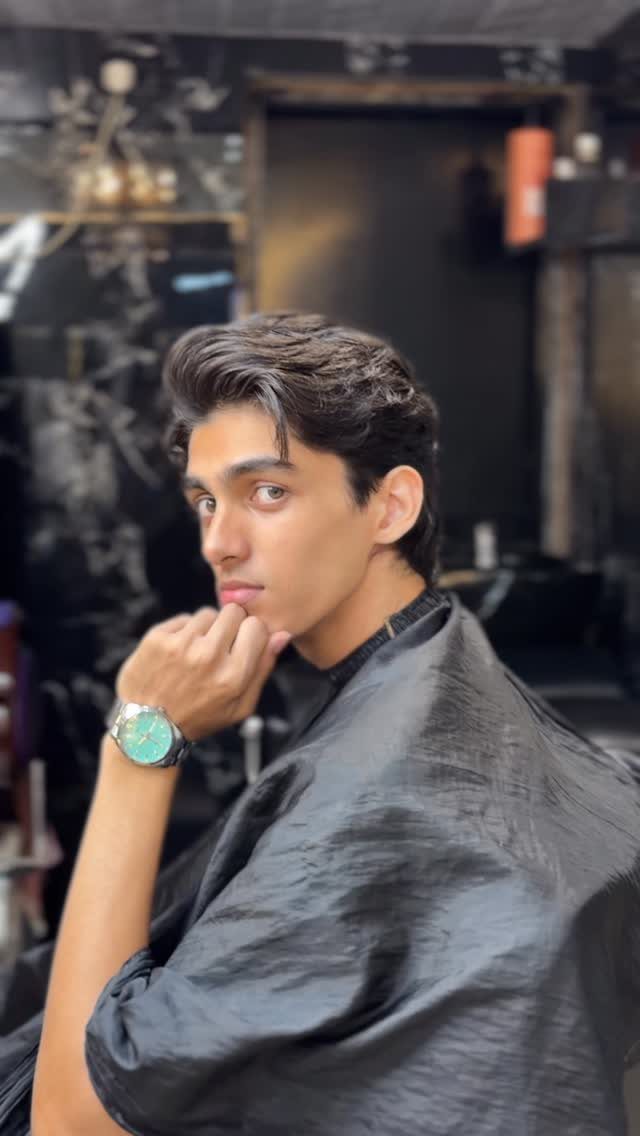
Front section blown upward and back into volume, with length left to hang behind it.
Work a volumizing mousse or blow-dry spray through damp hair, then use a round brush to lift the front while you dry it on medium heat.
Once the volume is set, apply a medium-hold pomade to lock it in place. The back can hang loose or be tied off.
Takes more time than a standard slicked style but holds through most of the day. Hair needs enough length at the crown to support the lift.
15. Messy Bun
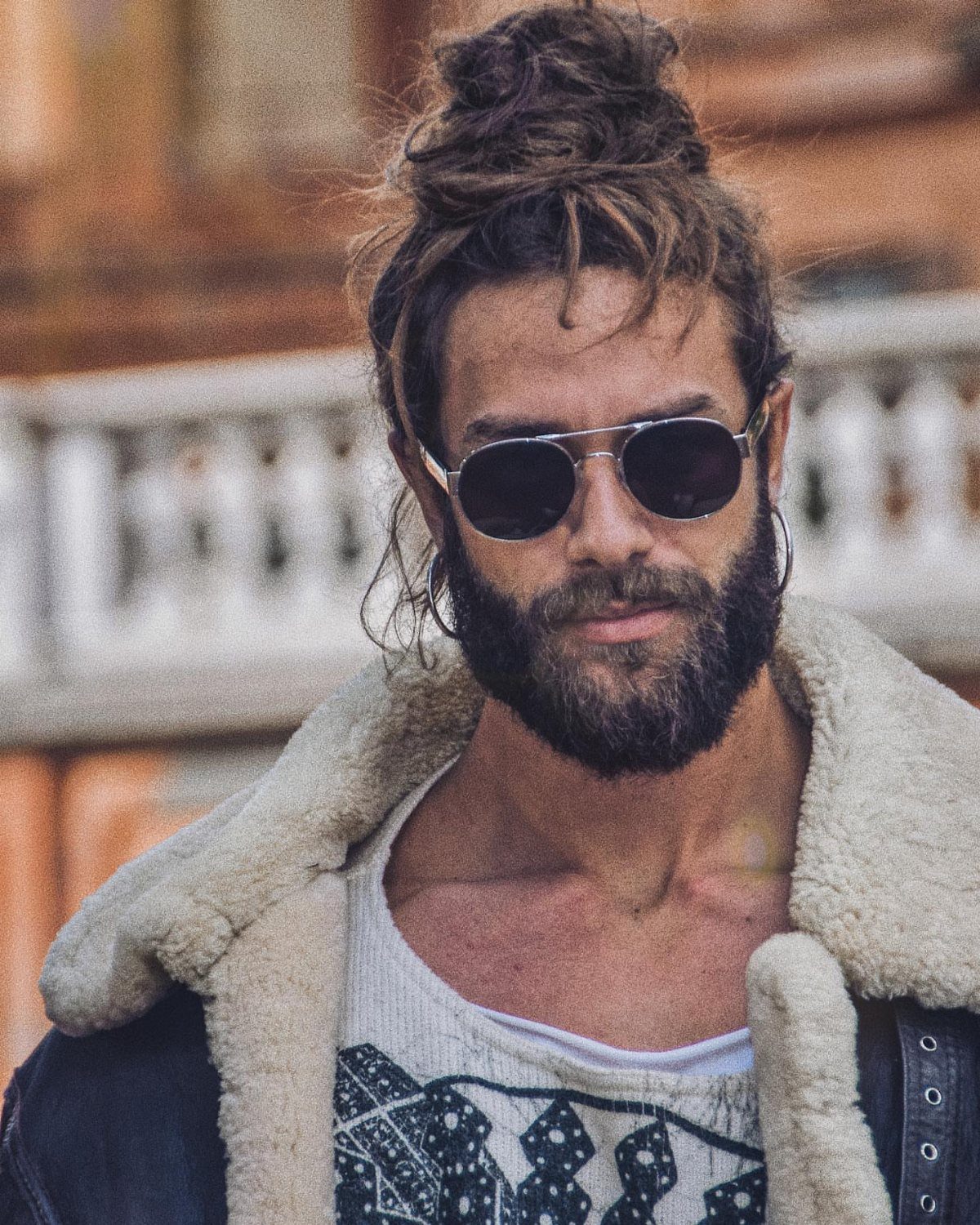
Hair gathered loosely at the crown or nape, with strands left out and the bun itself sitting relaxed rather than tight.
Pull hair back without brushing it smooth first, twist it once or twice, and wrap the elastic without pulling everything through. A few pieces will fall naturally, and the bun will sit softer than a structured one.
Styling is faster than a clean bun and suits wavy or textured hair that fights a polished finish. Holds well enough for a full day.
16. Long Hair with Beard
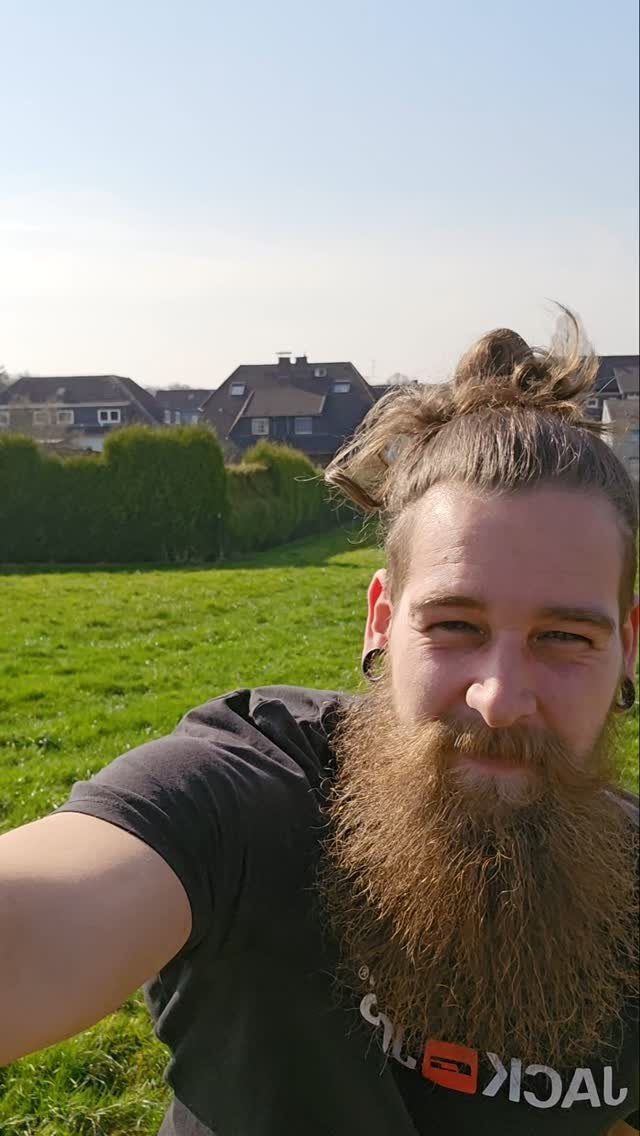
Long hair paired with a full beard, both grown to balance each other.
The two need regular trims to stay proportional.
A barber can shape the beard and clean up the hair ends in one visit. Keep both conditioned to prevent dryness and frizz, especially if the beard is coarse.
Styling time stays low if both are left natural. A beard oil softens the hair and adds a bit of shine without weighing it down.
17. Bro Flow
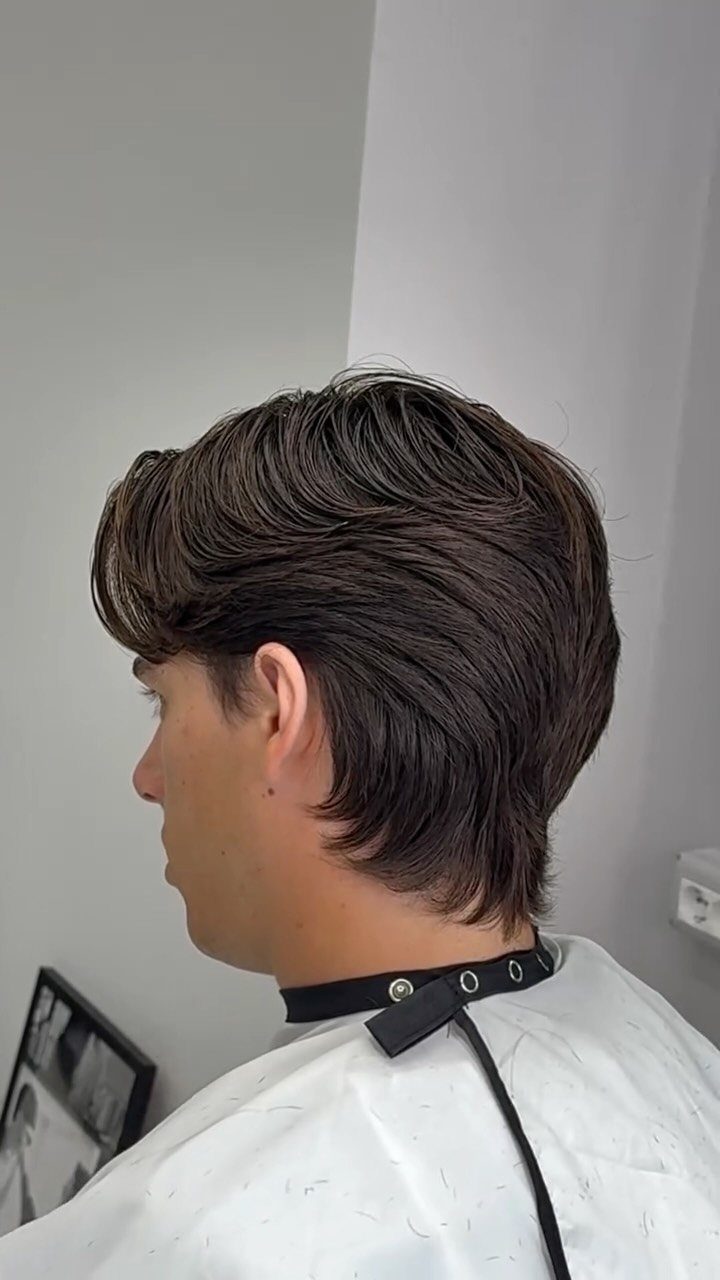
Mid-length hair layered and swept back from the forehead, moving naturally without product or structure.
Ask for layers that start around the ears and taper toward the back, leaving enough length to fall past the collar.
The cut does most of the work, so styling is minimal: wash, towel dry, and let it air dry or blow-dry it back with your fingers.
Works best on straight or wavy hair that holds a backward direction without lifting at the roots.
18. Long Mullet
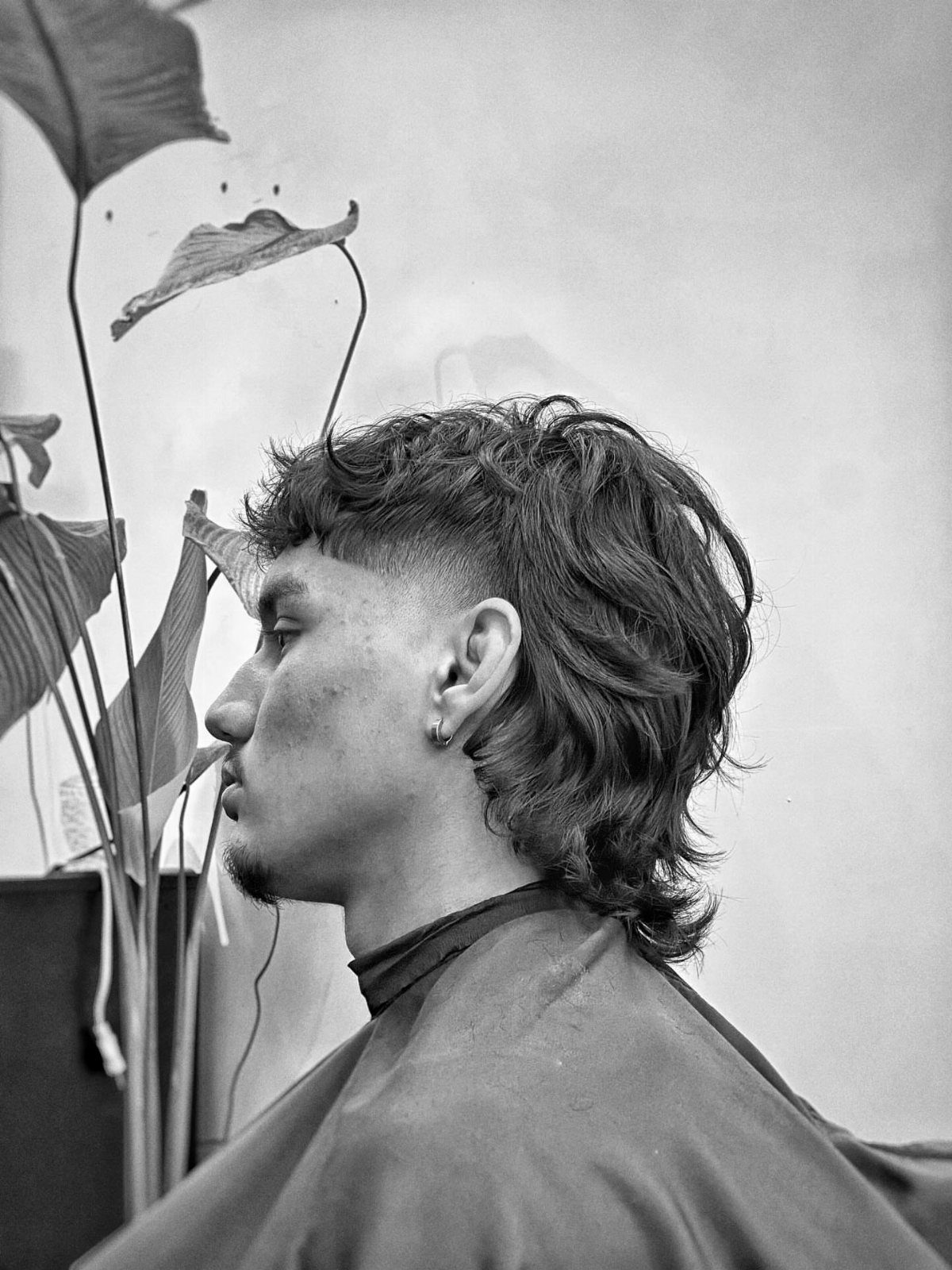
A mullet grown past the collar, with the back falling in waves or hanging straight down the neck.
Ask for short sides and a longer back, specifying how much length you want at the nape.
The front can stay short or be left longer to balance the weight. Styling depends on texture: wavy hair holds shape on its own, while straight hair might need a light product to add separation.
Trims keep the shape defined. The back grows faster than the sides, so cleanups focus there.
19. Viking Hair
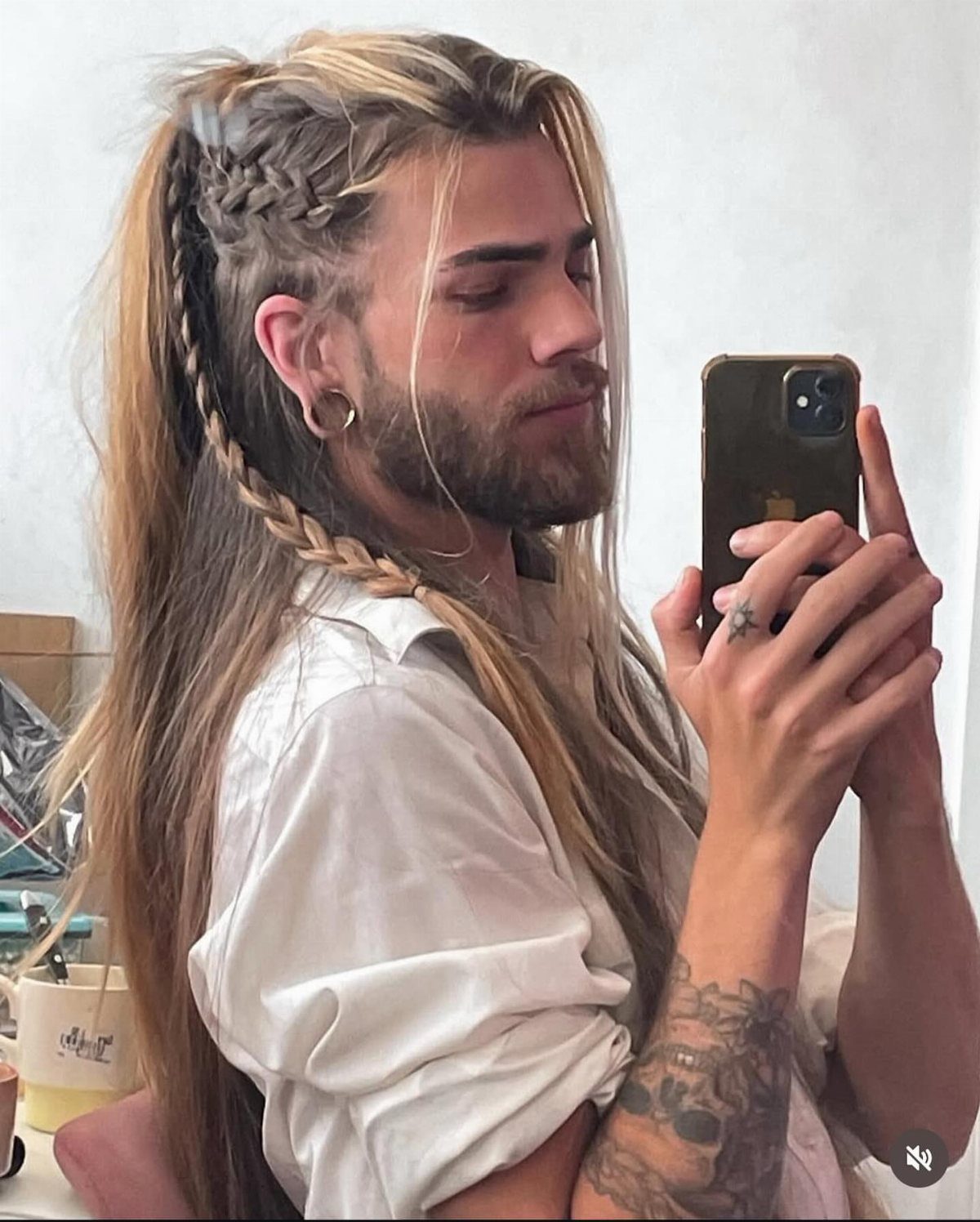
Long hair left down or braided along the sides, often paired with a beard to match the length. The look balances groomed length with a bit of edge.
Braids at the temples or along the scalp keep hair controlled without tying all of it back.
A three-strand braid works if the hair is long enough to hold tension, and a small elastic secures the end. The rest hangs loose or gets tied at the nape.
Conditioning prevents frizz in both the hair and beard.
20. Long Layered Hair
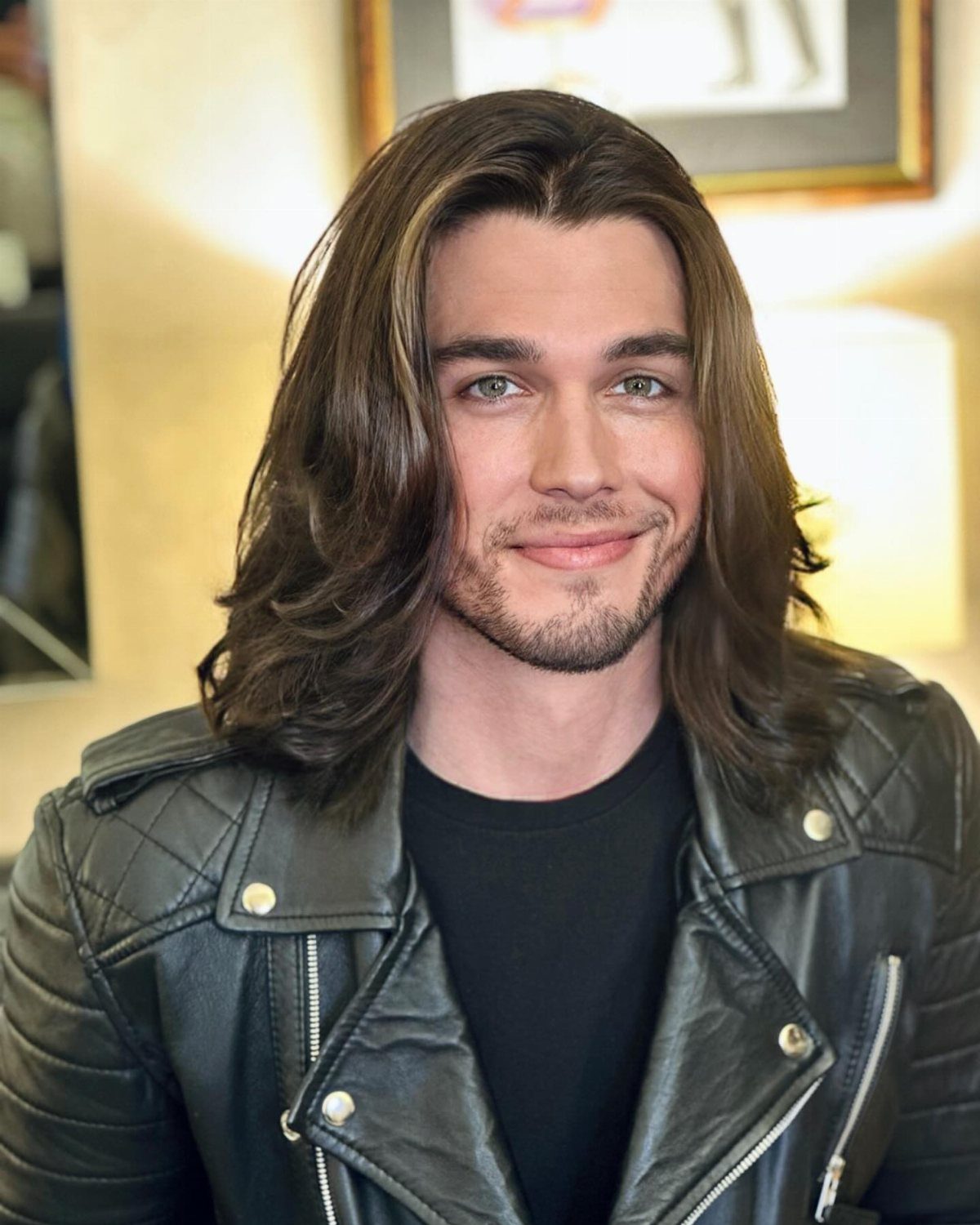
Layers keep long hair from hanging limp, cutting steps that lift away from the scalp.
Layers lift the hair by removing bulk at different points rather than one straight line across the bottom. Wavy hair shows the layers more clearly than straight hair, which can look blended unless the cuts are more aggressive.
Styling is minimal. A texturizing spray adds separation if the hair feels too smooth.
21. Modern Mullet
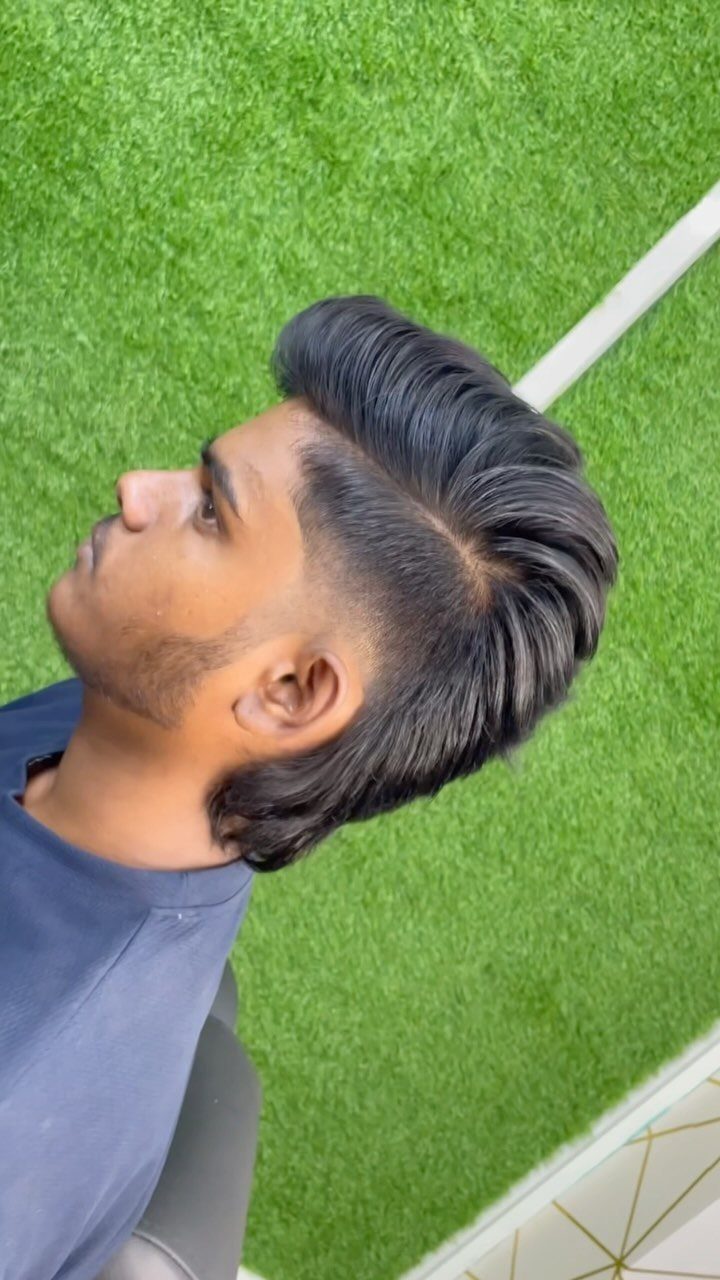
Sides faded short with longer hair on top and at the back, but the back stays controlled instead of hanging past the collar. The fade keeps the shape modern without losing the mullet entirely.
Ask for a mid or high fade on the sides and enough length at the crown to style upward or back.
The back should reach the nape or just below it, not drop past the shoulders. Blow-dry the top with a bit of volume if you want lift, or leave it natural if the texture holds on its own.
Trims every few weeks keep the fade sharp.
22. Choppy Turquoise Shag
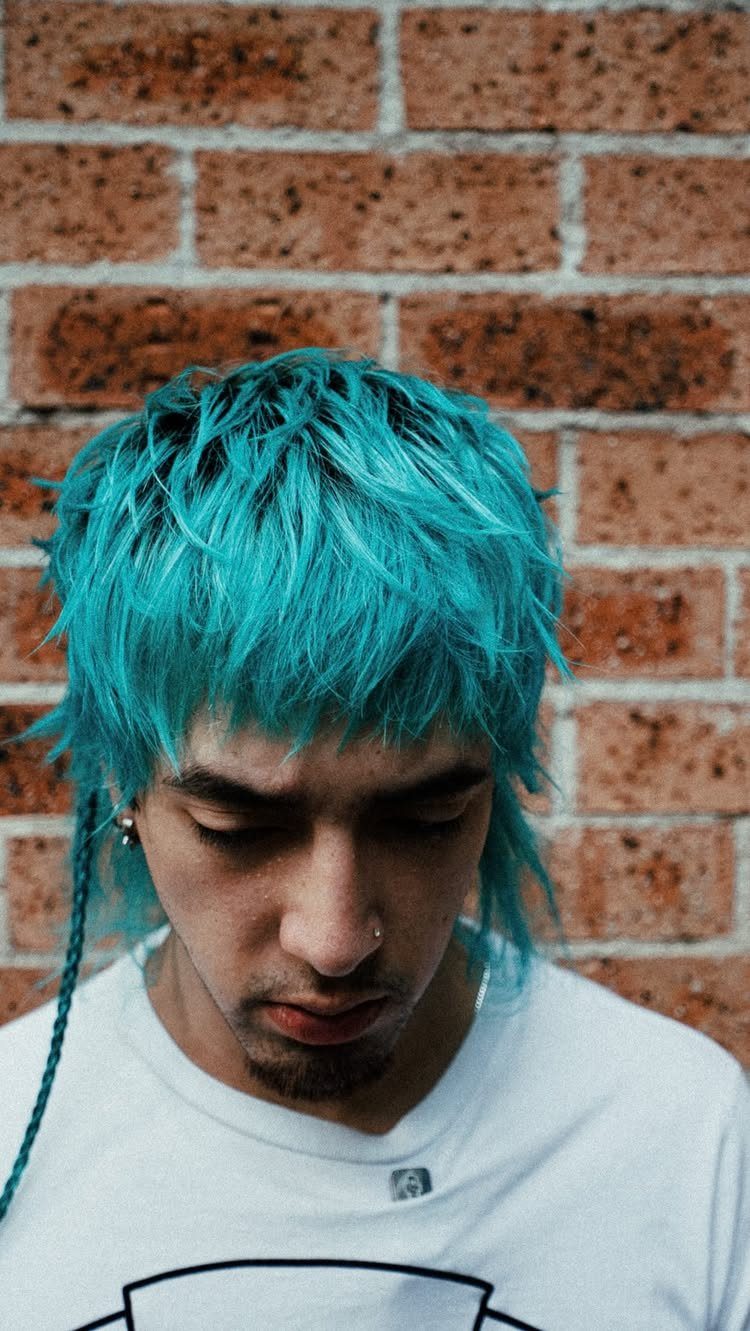
Bright turquoise hair cut into choppy layers with bangs across the forehead and length falling to the shoulders. The color and the jagged layers both demand attention.
The color requires bleaching and toning to reach that shade, then regular maintenance to stop it from fading to green or pale blue. The cut itself is layered heavily to create separation, with the bangs sitting just above the eyebrows.
Dye deposits on everything it touches when wet, so rinse in cold water and use a color-safe shampoo. Styling is quick because the layers hold texture on their own.
23. Swept-Back Medium Length
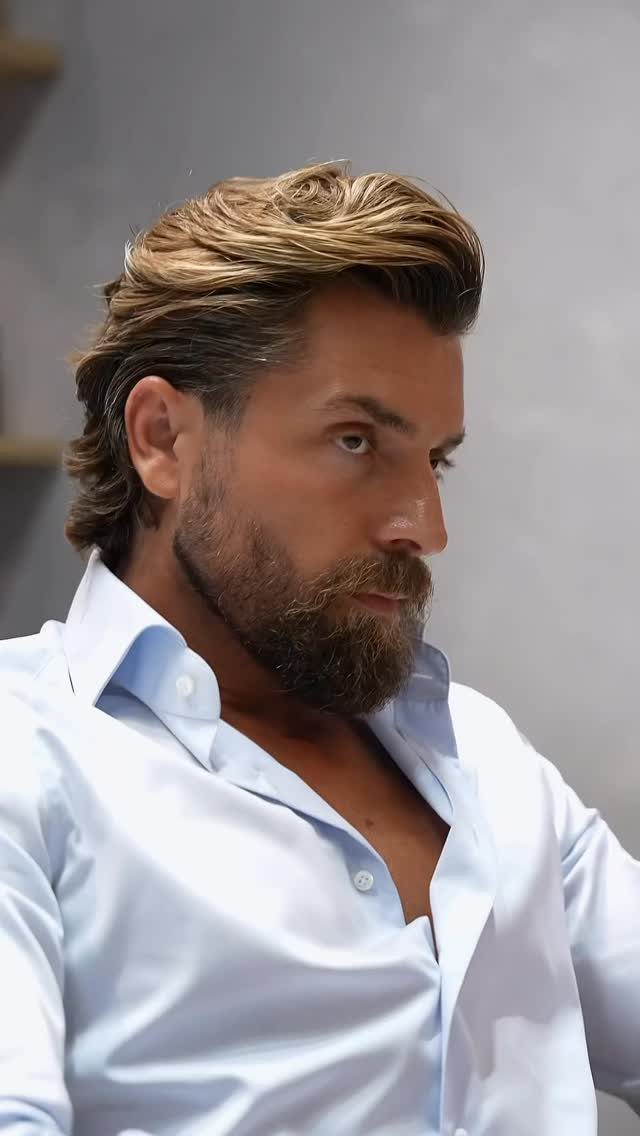
Medium-length hair blown back from the forehead with volume at the roots, sitting smooth without a visible part. The beard adds balance and keeps the face from looking bare.
A light pomade holds the shape without flattening the volume. The beard stays full but shaped close to the face.
24. Waist-Length Natural Hair
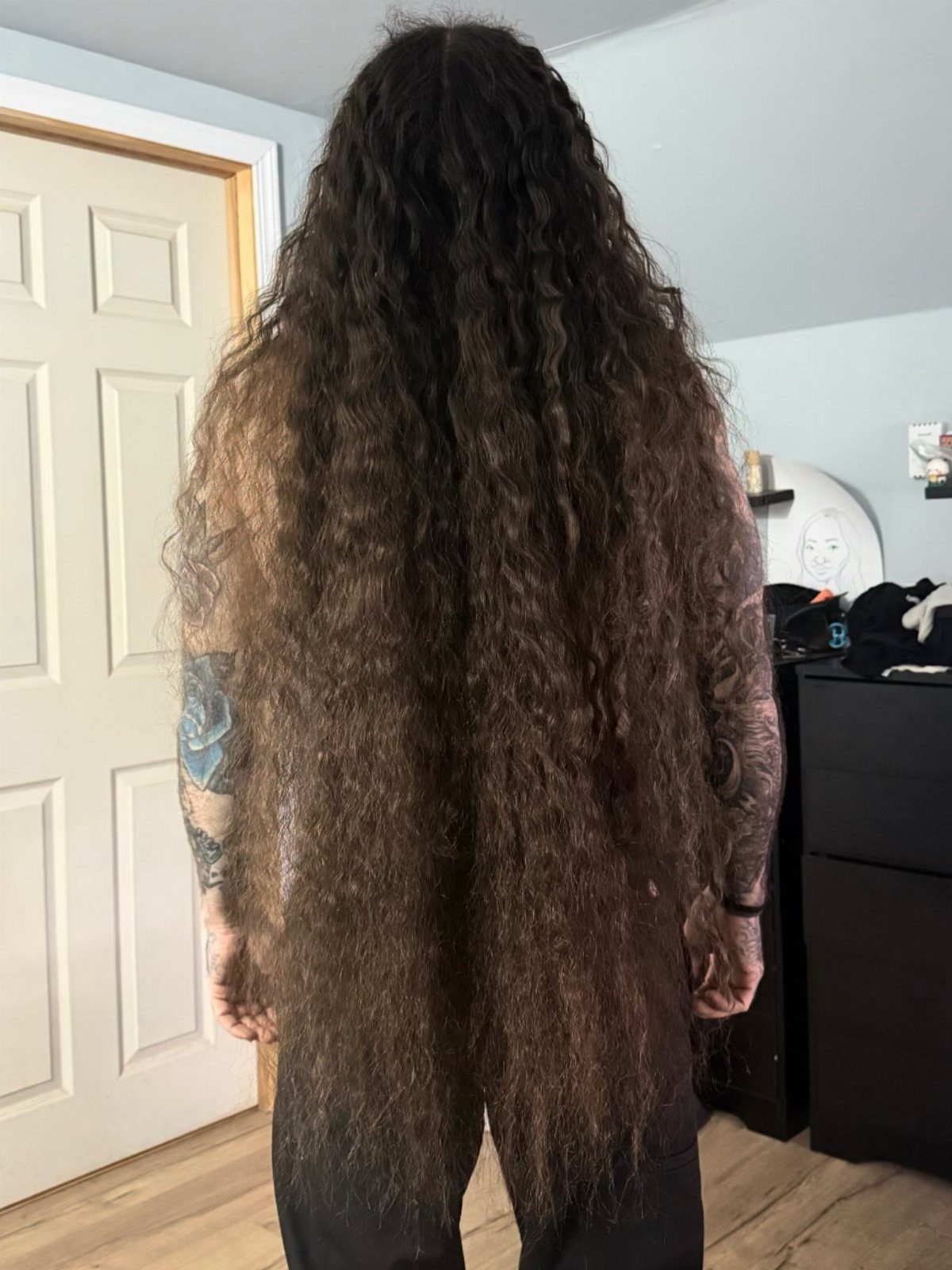
Natural hair grown long enough to reach the lower back or waist, with waves or texture left as they fall.
Getting there takes time. Hair grows about half an inch per month, so waist length from a short cut can take years.
Regular trims every few months keep the ends from splitting without cutting much length. Conditioning after every wash prevents dryness and tangling.
Styling depends on texture. A braid or bun keeps it controlled when needed.
25. Braided Ponytail
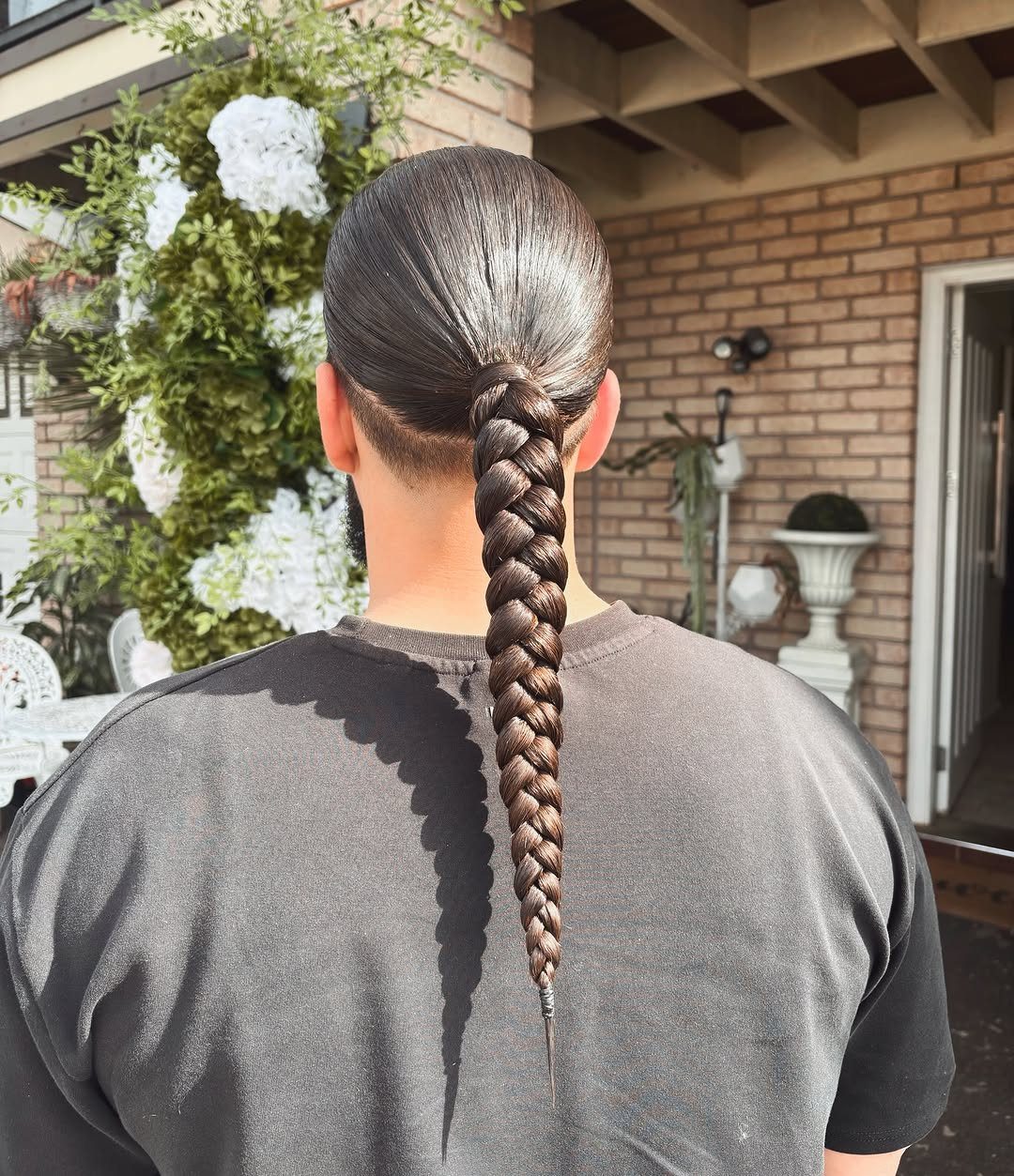
Hair pulled back into a high ponytail, then braided from the base down into a single thick plait that hangs straight down the back.
Tie the ponytail first, securing it at the crown or just below.
Then divide the length into 3 sections and braid from the elastic to the ends, keeping tension even so the plait sits tight. Secure the bottom with another tie.
The braid keeps length controlled without bulk at the nape. Hair stays off the neck and out of the way all day, and the plait prevents tangling better than a loose ponytail.
26. Very Long Red Hair
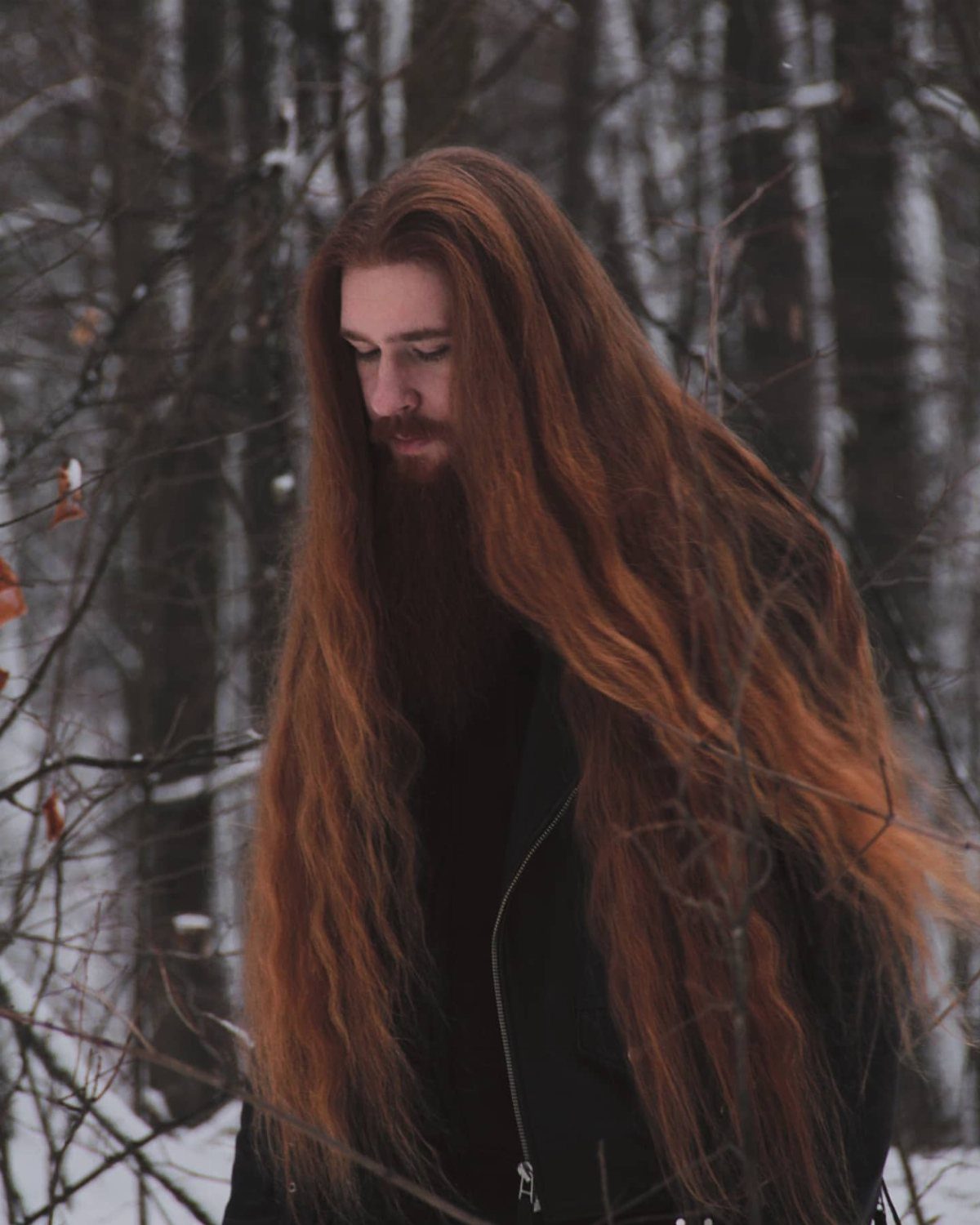
Natural red hair grown to waist length, left down with waves, paired with a full red beard.
Getting the color to stay bright means protecting it from sun exposure, which fades red faster than other shades.
A color-depositing conditioner keeps the tone from going orange or dull between dye sessions if the red is treated, though natural red needs only regular conditioning to prevent dryness.
Both need regular trims to hold their length and keep the ends from splitting. Conditioning both keeps them soft and prevents the coarse texture some red hair develops when long.
Growing Out and Trim Timing
Taking off half an inch to an inch each time stops splits before they run up the hair and snap it off higher.
Letting it go for a year to keep every inch usually lands you at your target length with thinner, more ragged hair than if you had trimmed along the way.
Layering through the mid-lengths gives long hair shape and movement.
Without layers, long hair sits flat against the head with no lift or texture. Layering changes how the hair sits and moves but adds nothing to your routine in the morning.
If you’re growing from a short cut, start with a trim to remove any damaged ends.
For instance: You have to strike the right balance between patiently letting your hair grow (read: ignoring it), and paying enough attention that it grows out the right way (which means going for the occasional trim).
— GQ
Long-hair Care and Product Use
Curly hair needs more conditioner than straight hair because oil from the scalp crawls down a curl much slower than it slides down a straight strand.
Straight and wavy hair can get by with less, but if the hair feels dry or looks dull, a nourishing conditioner or a strengthening treatment helps.
Clarifying shampoo removes product buildup, hard-water minerals, and oil residue that weigh hair down or make it look flat.
Choose products based on your hair type and texture rather than reaching for whatever works on short hair.
Choosing by Face Shape
Round faces need length on top and less volume at the sides to avoid widening the face further. A style that adds height pulls the eye up and makes the face look longer.
A square face looks less angular with shorter sides and length on top, pulling the proportions closer to oval. An oblong face reads shorter when you add width at the sides.
Oval faces suit almost any length or part, so the choice comes down to texture and how much time you want to spend styling.
Middle parts work well on oval and longer faces, while side parts can balance out round or wide faces by breaking up the symmetry.
Diamond and triangle faces need fullness at the top or temples to balance a wider cheek or jaw.
Frequently Asked Questions
How do you style long hair for men?
Pick a style that fits your natural texture and apply product to damp hair before blow-drying or air-drying, then finish with pomade or cream if the style needs hold.
Most long styles need minimal daily work once the hair is cut right. Slicked-back looks take more product and a comb, while loose waves or curls hold shape with just a scrunch and light product.
Is long hair high maintenance?
Daily styling is quick for most long styles, but the hair itself needs regular conditioning and trims every few months to prevent splits.
Curly hair requires the most upkeep because natural oils move slowly down the curl, leaving ends dry without leave-in conditioner or deep treatments.
Straight and wavy textures need less product but still benefit from conditioning when the hair looks dull or feels rough.
What are the benefits of long hair for men?
Long hair offers more styling options than short cuts, from wearing it down to tying it back in a bun or ponytail.
The variety lets you change your look without cutting it all off, and hair past shoulder length can hold a braid by friction alone.
Length also gives you room to express personal style through texture, color, or how you wear it.
What does men’s long hair mean?
Hair longer than 6 inches is generally considered long, and shoulder-length hair is the most common reference point for long styles.
The exact length varies by person, but anything that reaches past the ears and requires more than basic short-hair maintenance falls into the category.
Which long hairstyle is best for you?
Match the style to your texture first, then consider whether you’ll reach for product every day or keep morning prep under a minute.
Wavy hair suits textured styles that move naturally, while straight hair works better for slicked or middle-parted looks. Round faces need length and volume on top to balance width, while square faces benefit from styles that soften the jawline.
How do you find the right length hair for your face shape?
Round faces look better with styles that add height on top and keep the sides shorter or slicked back to lengthen the face.
Angular jaw and temples soften with length through the sides and top; most other proportions adapt to nearly anything. Oblong faces balance better with volume at the sides, and diamond faces need volume at the temples to widen the forehead.
How do you grow out your long hair?
Start with a trim to cut off damaged ends, then get trims every few months to stop splits from traveling up the strand and breaking off higher.
Expect 6 months minimum to clear your ears, closer to 18 to brush your collar, and plan trims every 8 weeks to keep the shape intact while it grows.
Regular conditioning keeps the hair healthy as it grows, and layering through the mid-lengths adds shape once you reach the length you want.
What are the best ways to style shoulder-length hair?
Wear it down with a part on the side or middle, or tie it back in a low ponytail or bun.
Shoulder length gives you enough hair to secure without shorter pieces falling out, and the weight holds a natural wave or straightened texture through the day. Styling time stays low because the length carries most of the shape.