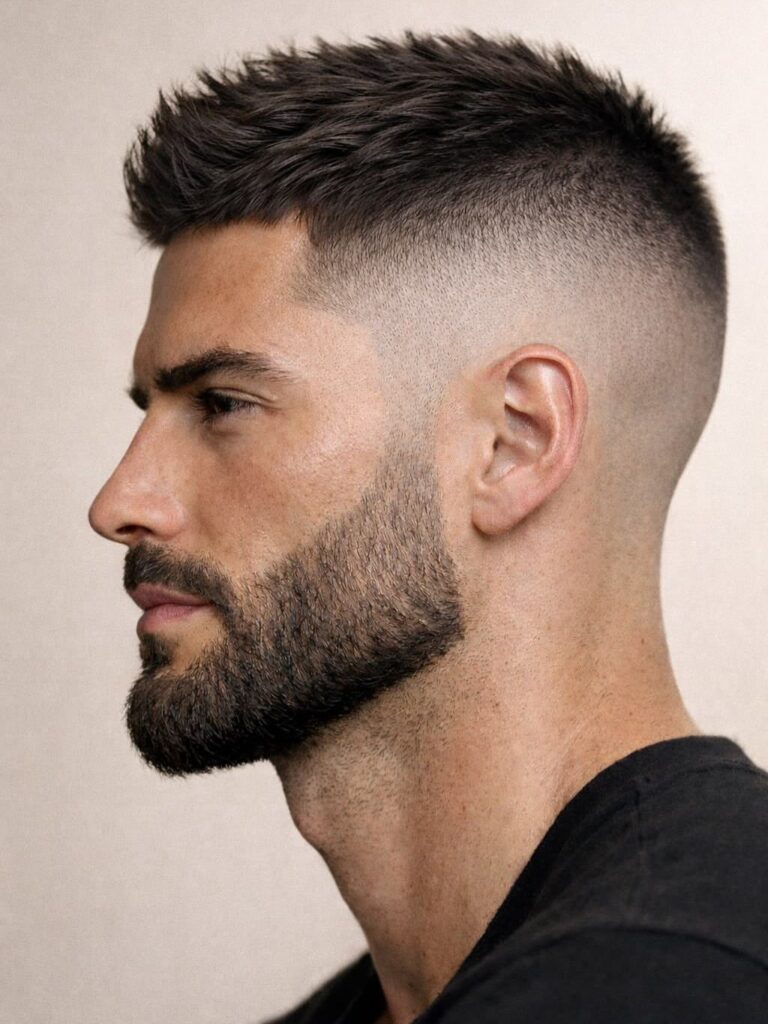
Short cuts split into 3 groups: the ones that need zero morning work, the ones that ask for 60 seconds with product, and the ones that won’t hold shape without a blow-dryer.
How much mirror time you’re willing to give it before walking out the door decides which one works. Most of these cuts need a cleanup every 1 to 2 weeks to keep the fade sharp and proportions from shifting.
1. Buzz Cut with Fade
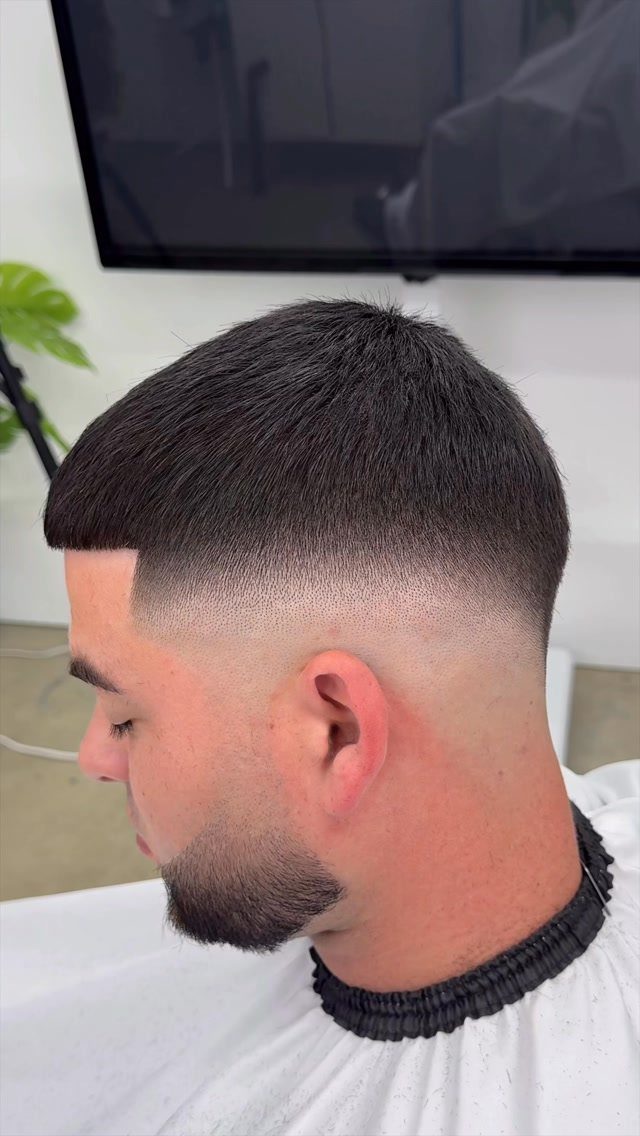
A short buzzed top paired with faded sides and back. The contrast between the uniform length on top and the gradual taper gives the cut more definition than a standard all-over buzz.
Ask for a number 2 or 3 guard on top, then have your barber fade the sides starting from a zero. The fade line can sit anywhere from mid-head to just above the ear, depending on how much contrast you want.
The fade grows out fast, so book the next cut before you leave. Styling time is zero, and it works for any hair type since texture disappears at this length.
2. Crew Cut
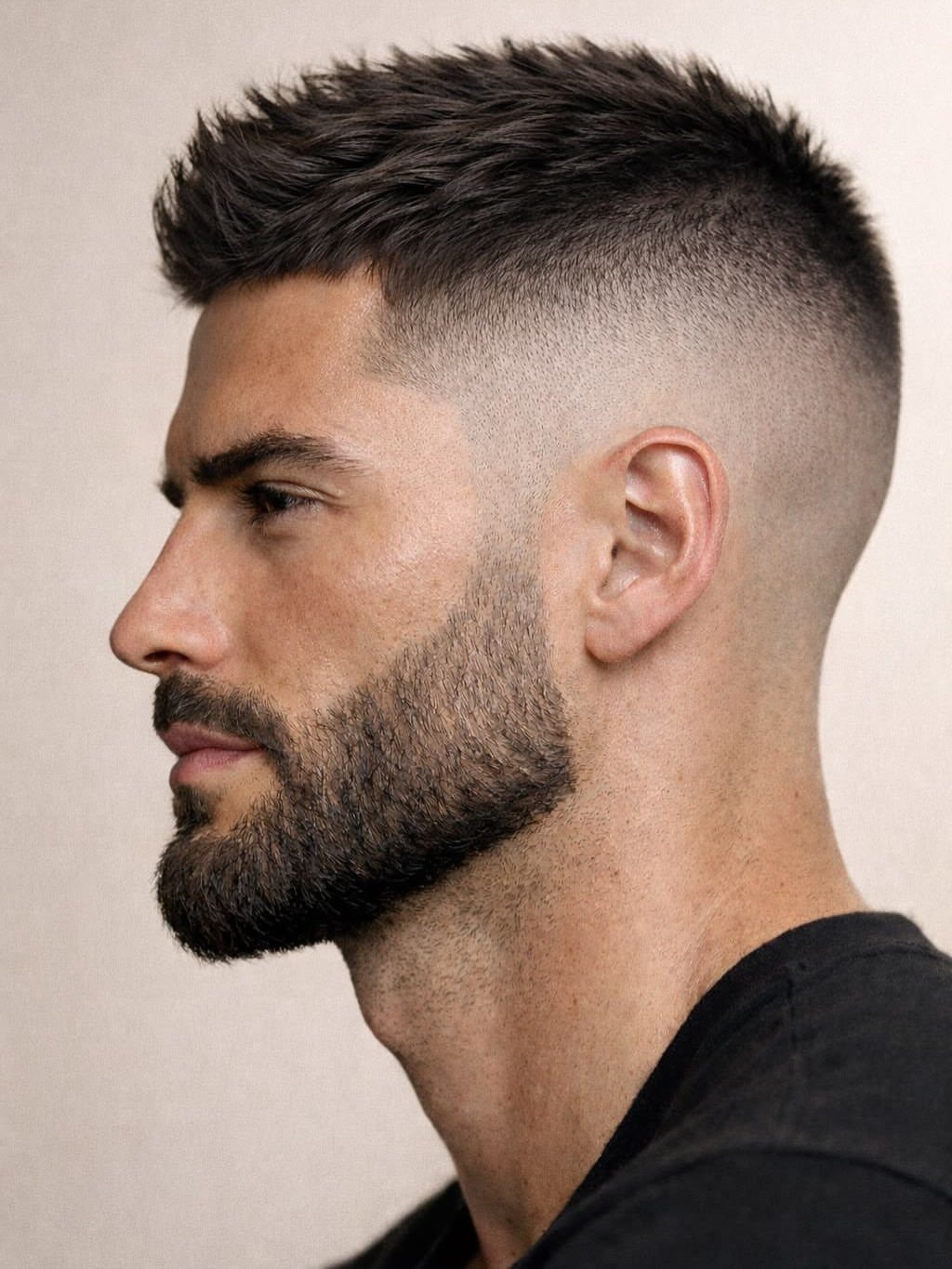
The sides and back sit close to the head, the top runs longer, and the whole thing tapers instead of stopping at one guard length. The top runs longer at the front and graduates shorter toward the crown.
Guards typically range from a 3 to a 5 on top, with sides taken down to a 1 or 2. The front can be styled forward or brushed up with a small amount of product, or left flat for a cleaner look.
You’ll need a trim often enough to keep the taper clean, and most mornings you can walk out the door without touching it.
3. French Crop
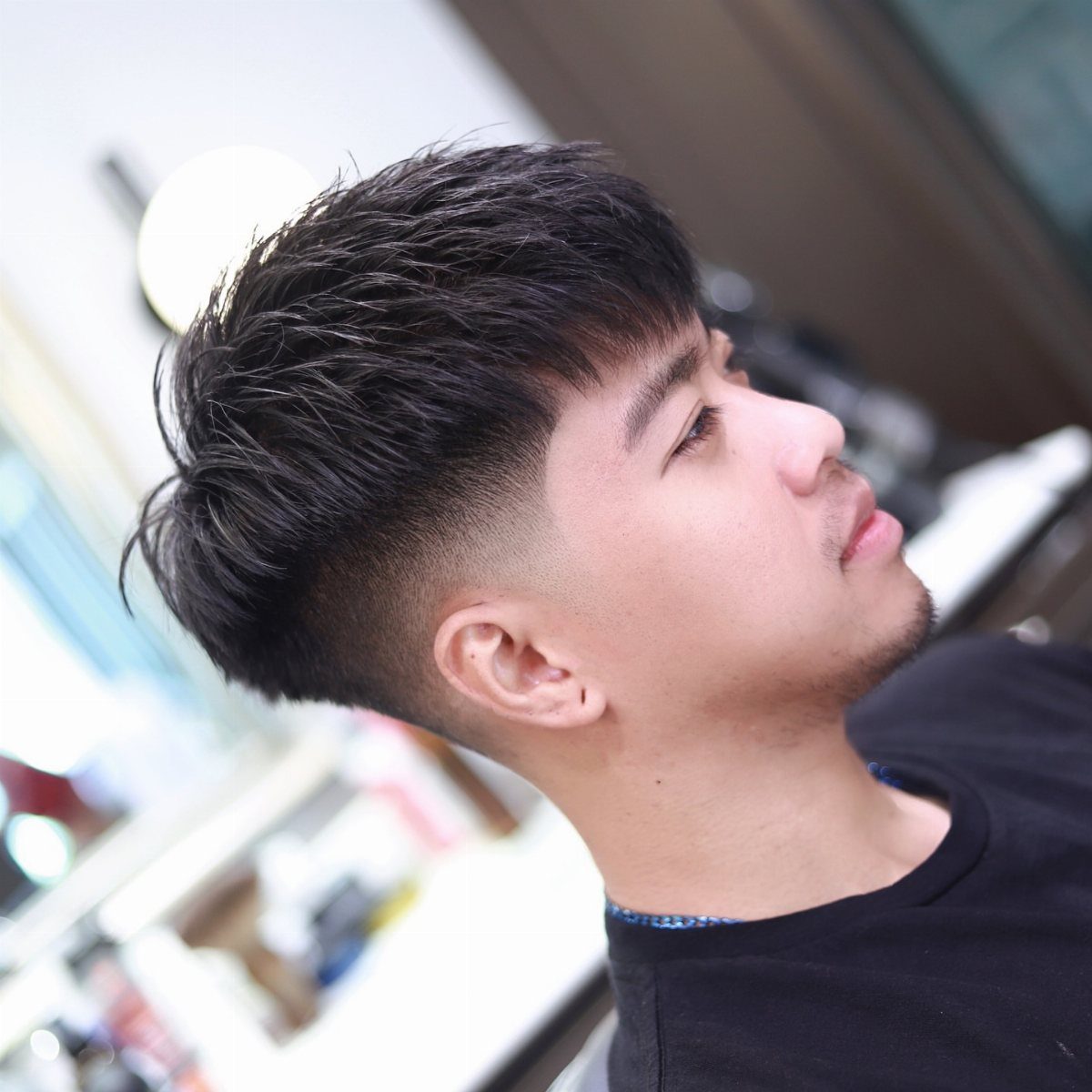
The sides stay short, the fringe sits across the forehead, and the whole cut leans forward. The fringe usually sits just above the eyebrows, and the top is cut to one blunt length rather than layered.
The contrast between the fade and the forward fringe makes this cut work on rounder faces, where the horizontal line adds width. It also hides a receding hairline if that’s a concern.
Styling is minimal. A small amount of matte paste or clay keeps the fringe in place without making it look stiff.
Messy fringe styles are best suited to short hair as longer styles will naturally fall and part due to the weight. As a result, you should look to clipper the sides to a 2 or 3, leaving around two to four inches of hair on top.
4. Textured Crop
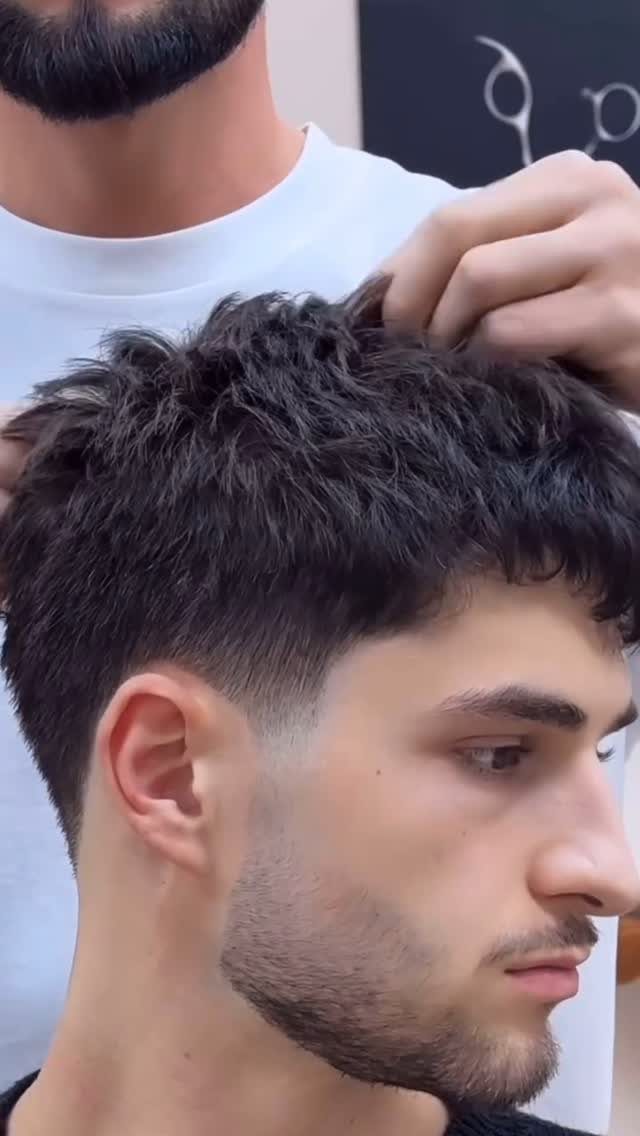
A short, choppy top with texture and often a forward fringe. The top is point-cut or razor-cut to create separation between strands, giving the cut a less uniform finish than a standard crop.
This version suits thicker hair, where the texture stops the top from lying flat. If your hair is fine, the choppy cut can look sparse rather than textured.
Styling takes a minute. Work a small amount of clay or fiber through damp hair, then push it forward or to the side depending on where you want the fringe to sit.
5. Fade
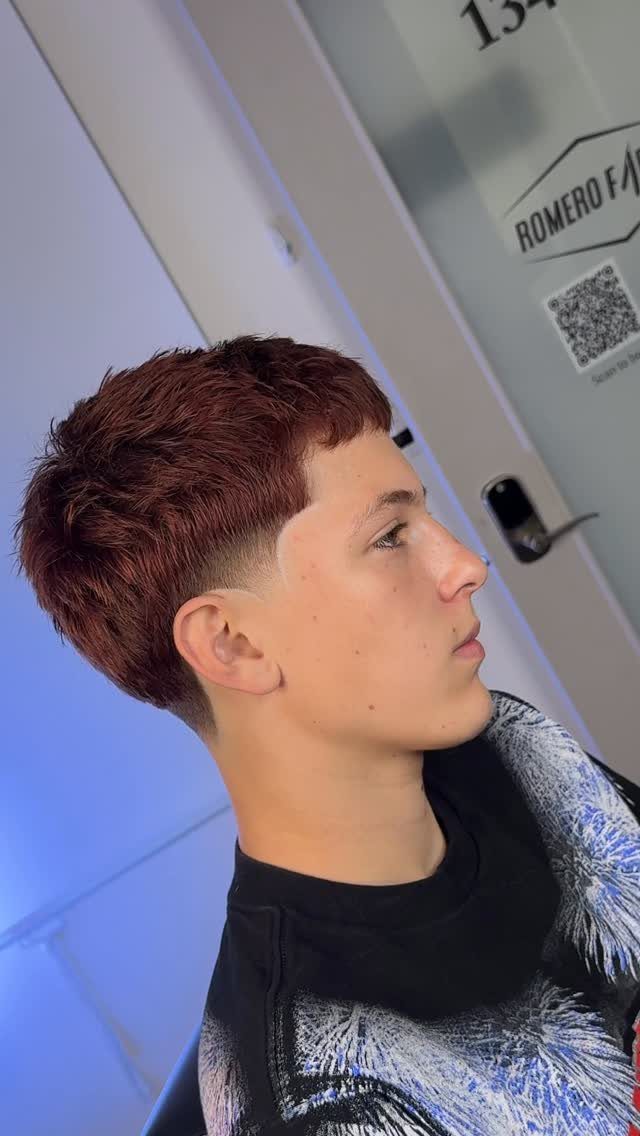
Clippers blend the hair from longer on top down to almost nothing, or bare skin, at the sides and back.
The fade itself is the technique, not the full cut, and it can pair with almost any length or style on top.
Fades are named by where the taper starts: a low fade begins just above the ear, a mid fade starts higher, and a high fade begins near the temple. The tighter the fade, the more often it needs maintenance.
That blend softens fast, so expect to sit back in the chair more often than you would with a one-length cut. The top dictates styling time, but the sides take care of themselves.
6. Quiff
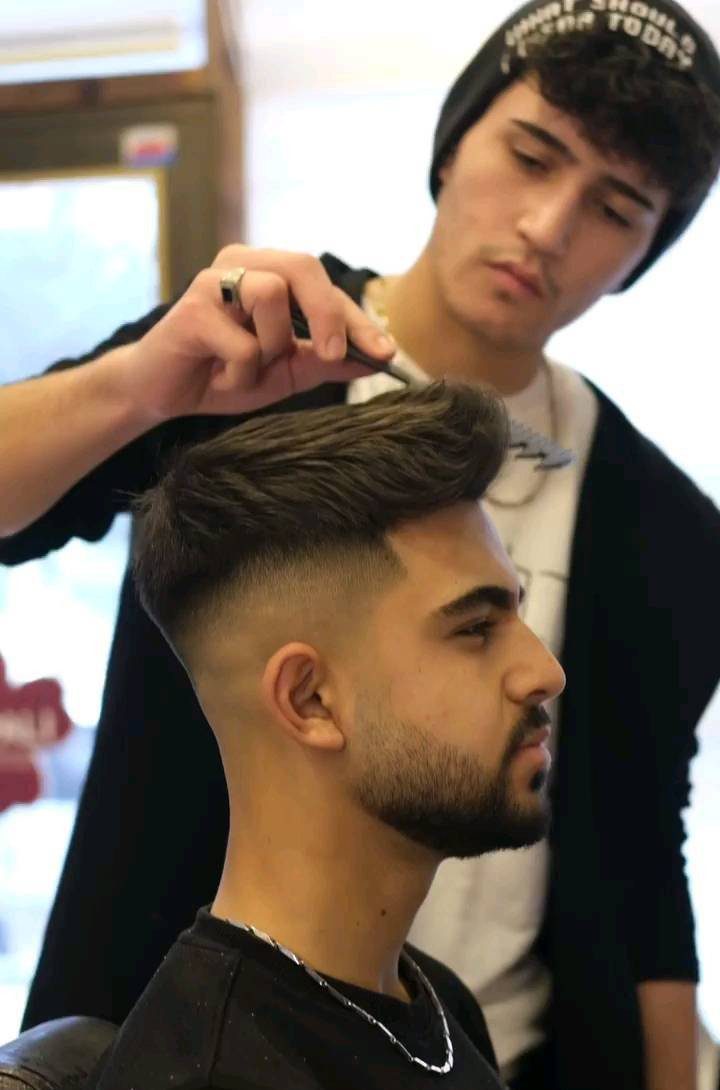
The front lifts up and sweeps back, built on length that gives it room to stand. The sides are usually faded or cut short to keep the focus on the volume up top.
You need real length at the hairline or the front won’t lift. Blow-dry the front section upward while it’s damp, then hold it in place with a medium-hold pomade or a strong styling cream.
This one asks for the most work in the morning, blow dryer in one hand and product in the other. If you skip the blow-dryer, the front falls forward and the cut loses its shape.
7. Curly Taper Fade
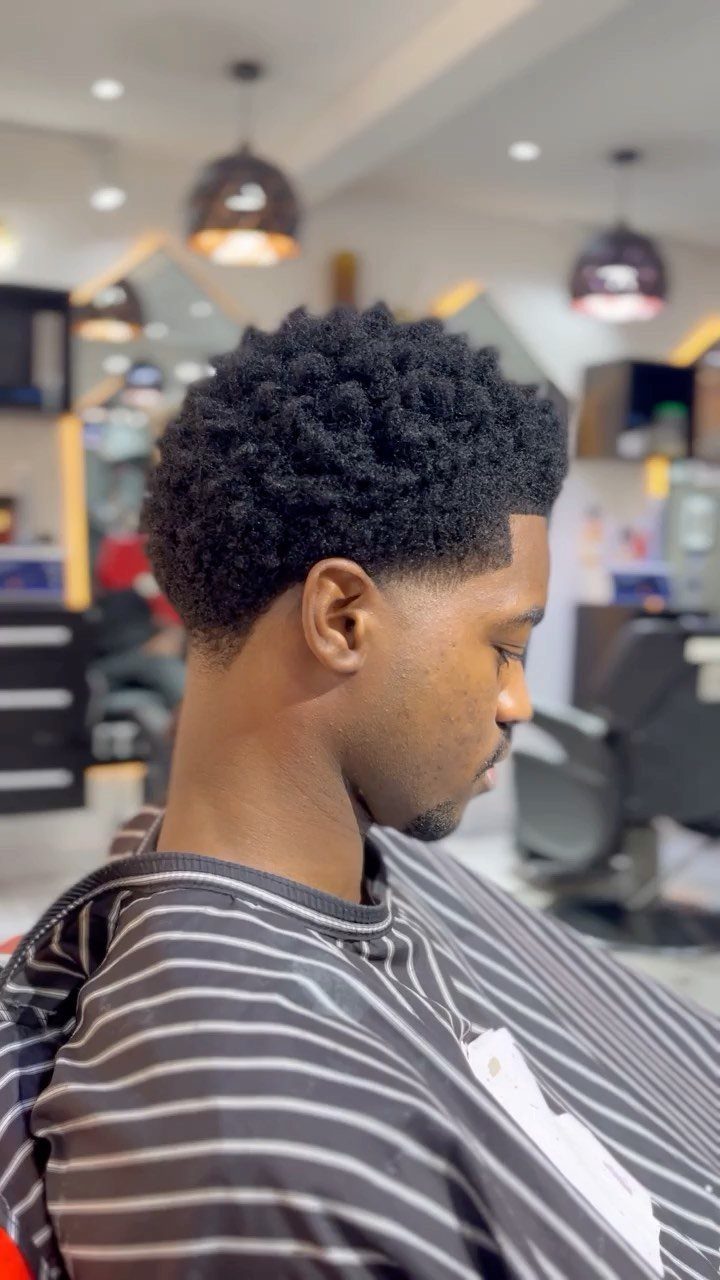
Curls stay at full length on top while the sides taper down gradually. The fade can start low, mid, or high depending on how much curl you want to keep visible from the front.
This cut works with your curl pattern instead of fighting it. The taper keeps the sides clean without asking you to stretch, brush, or flatten anything on top.
Styling is optional. Most mornings the curls hold their shape on their own, though a curl cream or light oil can add definition if the hair dries out.
8. High and Tight
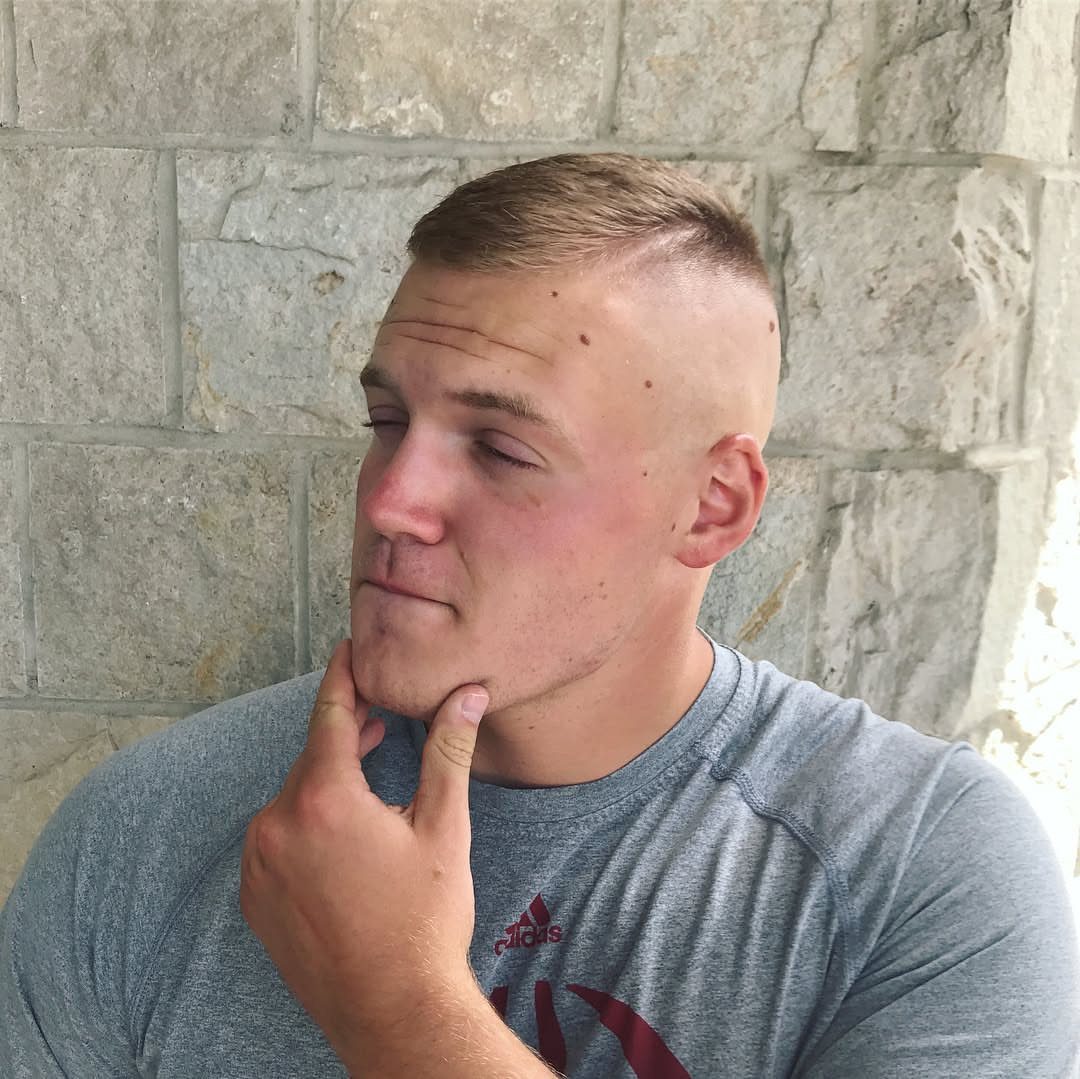
Sides and back are clipped down to bare skin or nearly nothing, with a small patch of slightly longer hair left on top. The line between the 2 is abrupt, not blended.
This cut started in military settings where maintenance time and mirror access were both limited. It still suits anyone who wants a clean look without daily upkeep.
Either way, the cut reads as intentional rather than grown out.
9. High and Tight Fade
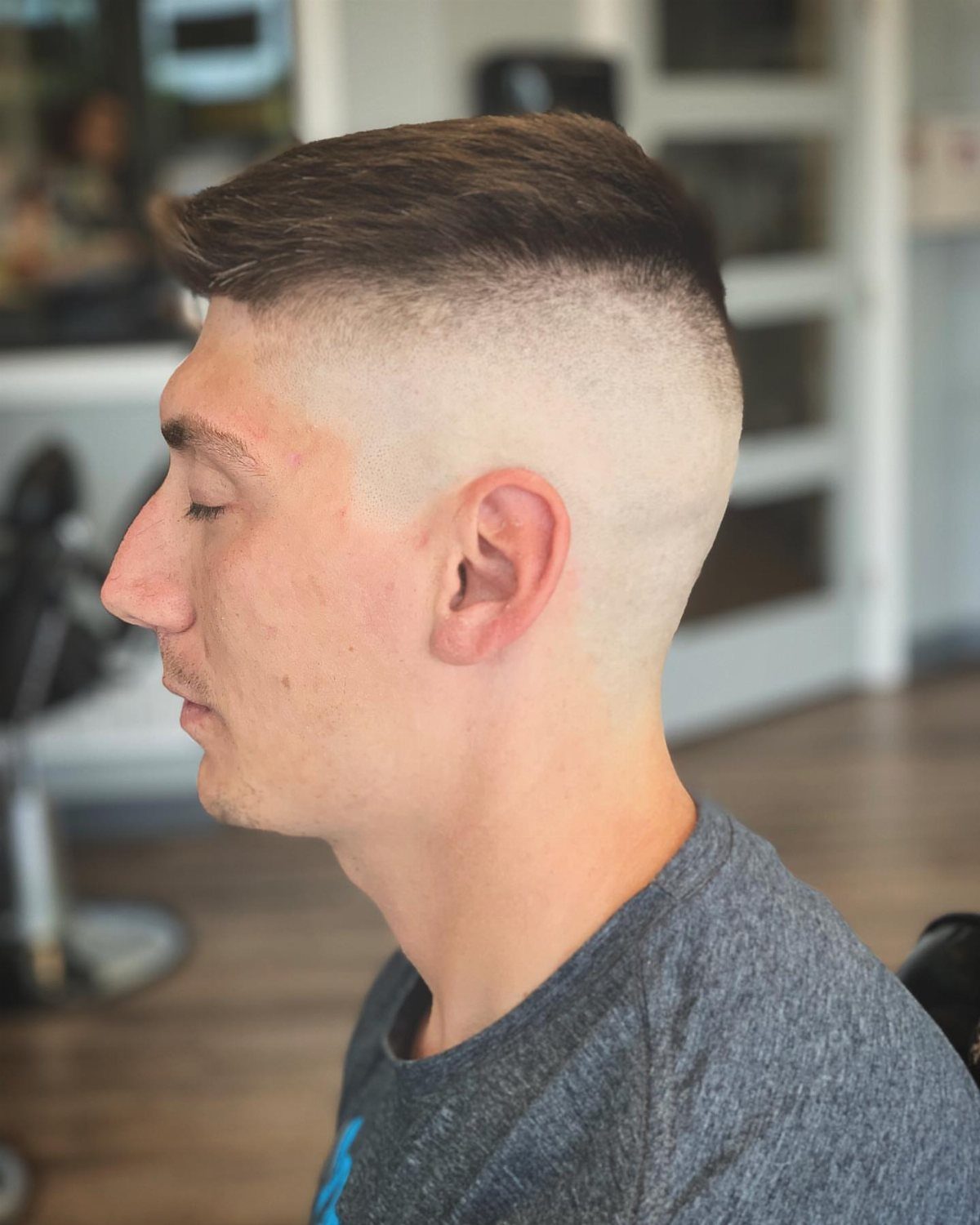
The high and tight shape stays, but the hard line between top and sides is replaced with a blended fade. The fade starts high on the head, near the temple, and tapers down to skin.
The blend softens the look compared to the original high and tight, making it less severe for settings where the military edge feels out of place.
The fade will blur after a week or two, so plan on sitting back in the chair more often than you would with a clipped line.
10. Pompadour
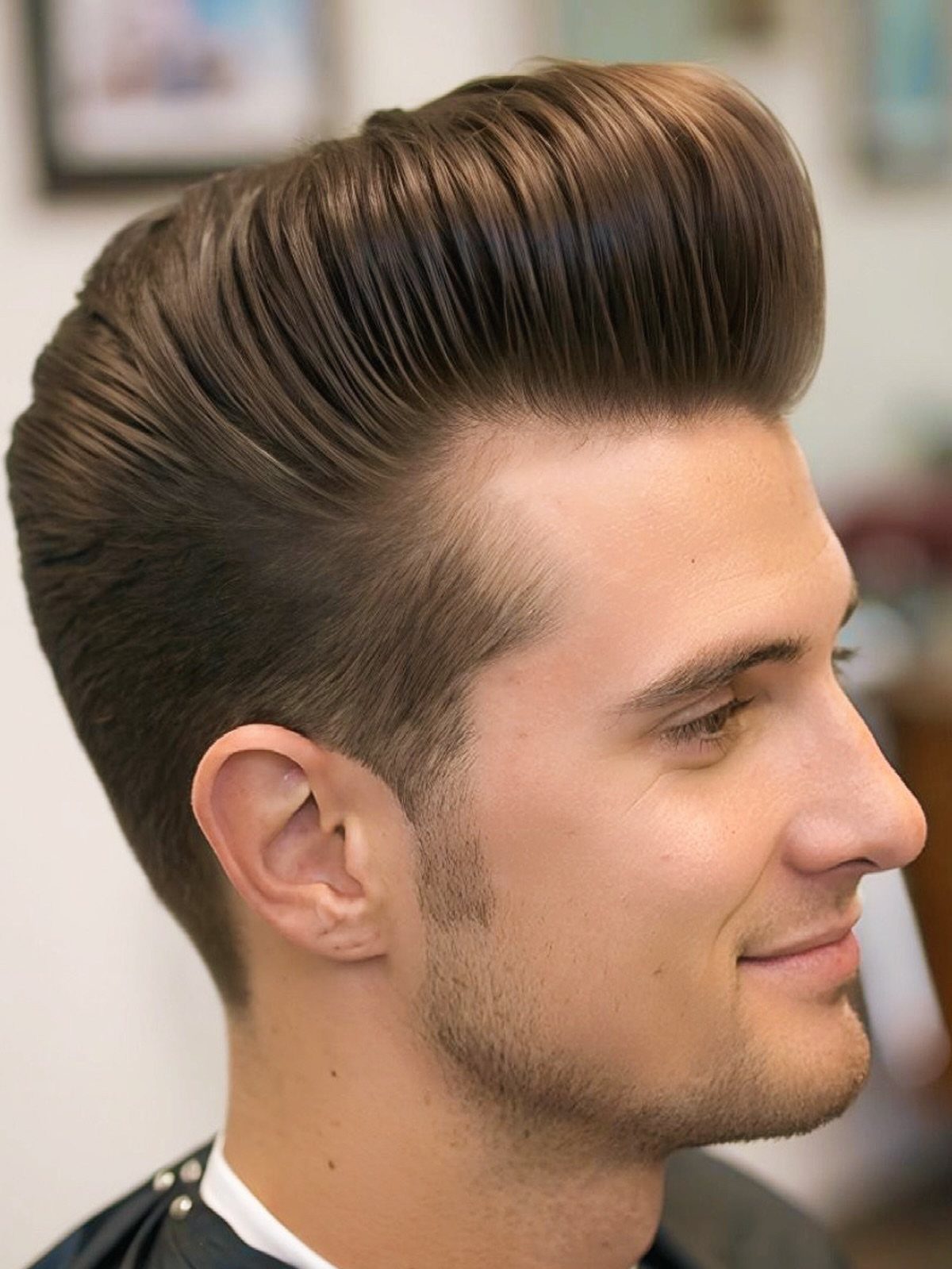
Length on top is swept upward and back, creating a tall, rounded shape that lifts away from the forehead. Most of the volume sits at the front, so the sides stay short or faded.
You need length at the front, or the hair won’t stand.
Skip the blow-dryer and the whole thing collapses forward.
11. Side Part
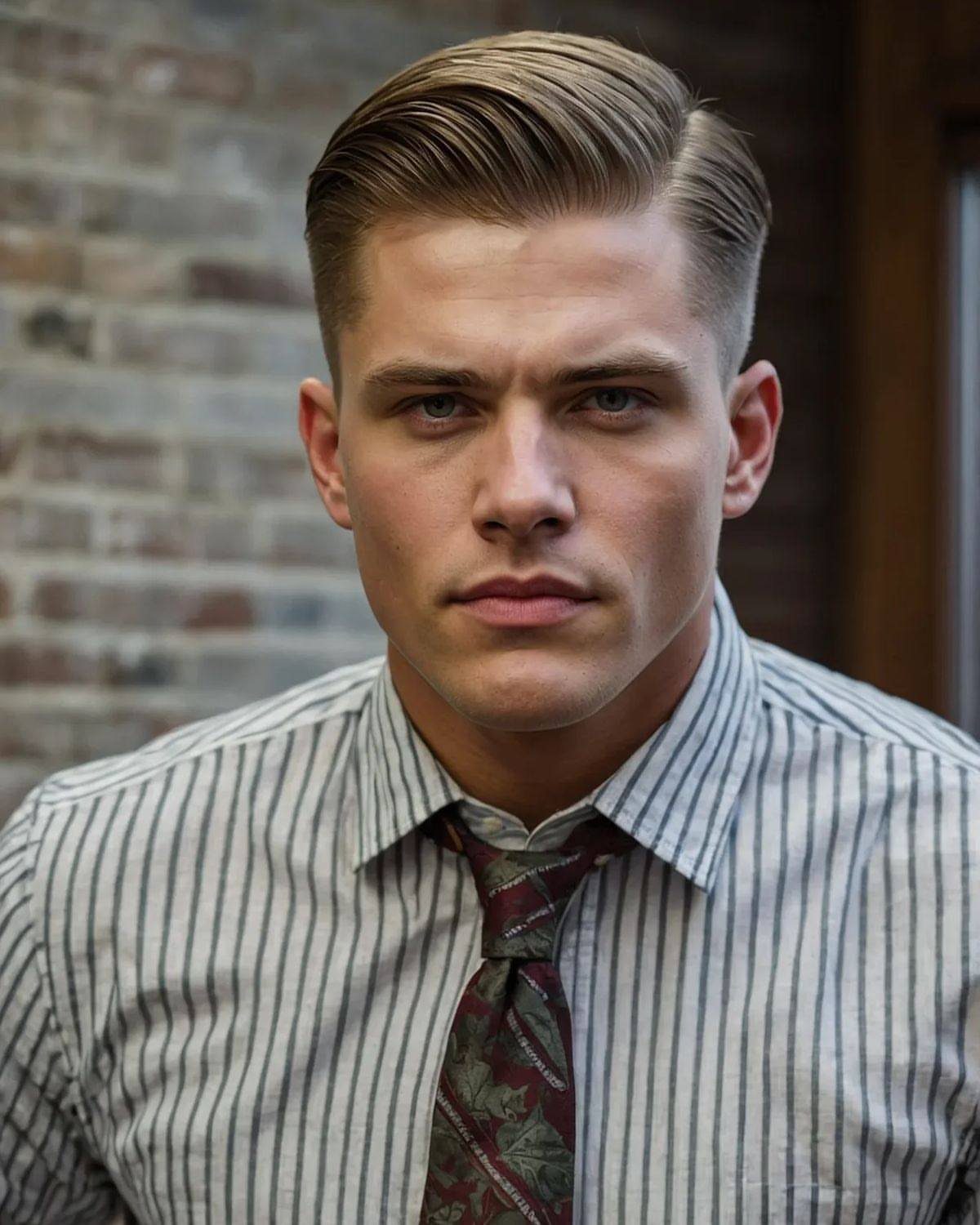
Hair on top is parted cleanly to one side and combed over, with the part running from the front hairline back toward the crown.
Sides can be faded, tapered, or left longer depending on how formal you want the cut to feel.
The part can sit anywhere from just off-center to a hard line near the temple. A comb and light pomade hold the part in place without the hair feeling stiff.
This one suits workplaces where a neat finish matters. The part grows out cleanly, and you can stretch the time between cuts longer than you could with a fade.
12. Slicked-Back Undercut
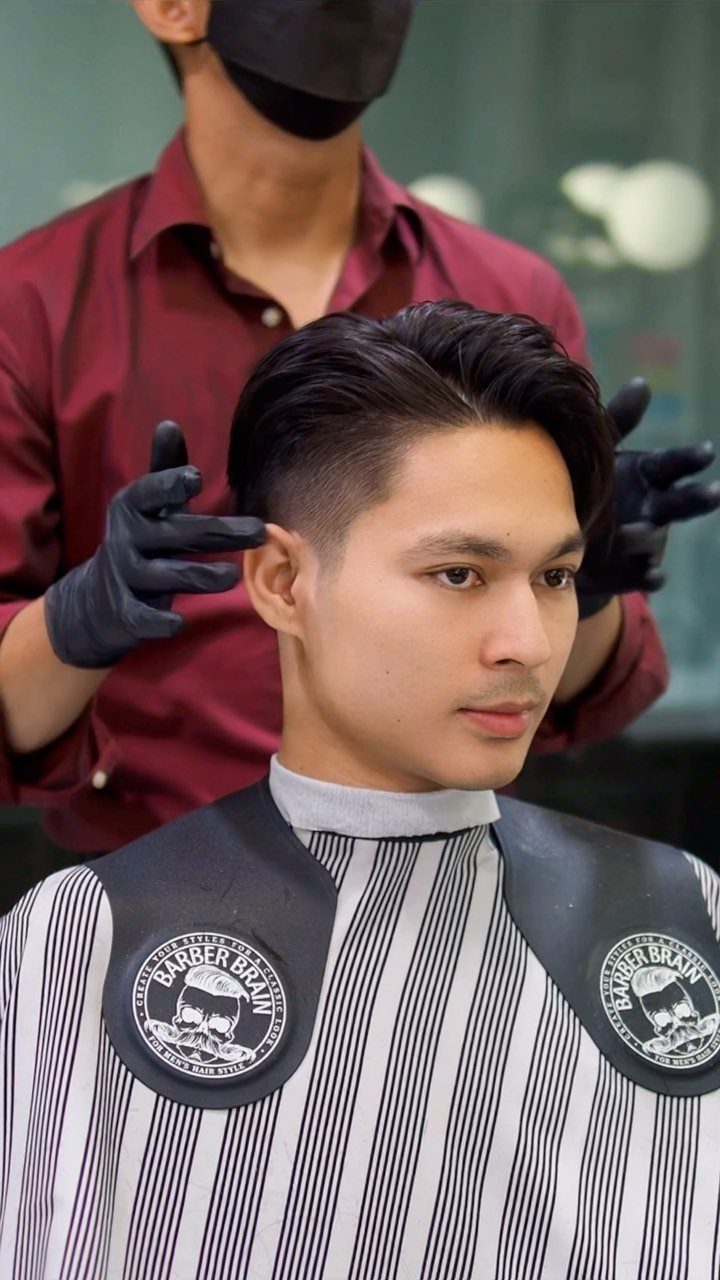
Length on top is combed straight back, while the sides and back are clipped short or faded with no gradual taper connecting the two. The disconnect between top and sides is visible, not blended.
You need length on top for the hair to reach back past the crown without standing up. Apply pomade or gel to damp hair, then comb it back in one direction from the hairline.
The sides grow out fast, and the disconnect becomes less obvious within a week. Plan on frequent cleanups if you want the contrast to stay sharp.
13. Mid Fade
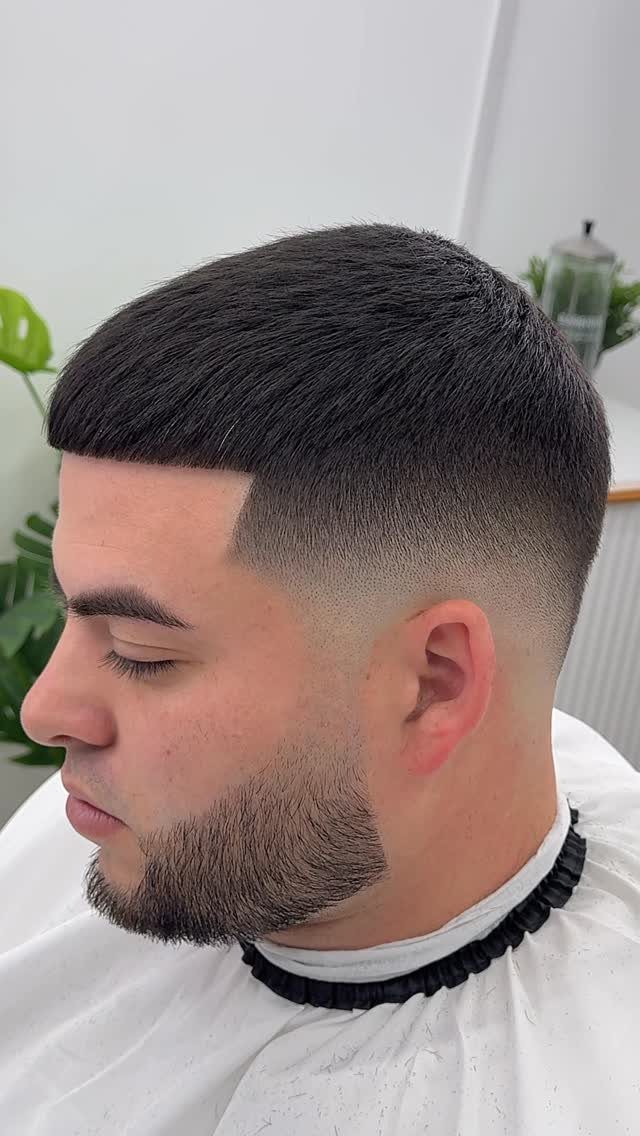
The fade starts roughly halfway up the side of your head, somewhere between your ear and where your temple begins.
This position splits the difference between a low fade that keeps more length visible and a high fade that starts closer to where the top begins.
Ask for the fade to start at the middle of the head, with the sides blending down to a zero or a skin line at the bottom.
The exact starting point can shift up or down depending on where your natural hairline sits and how much contrast you want between the top and the sides.
Most barbers default to a mid fade when you ask for a fade without specifying the height. It grows out at a moderate pace, slower than a high fade but faster than a low one.
14. Drop Fade
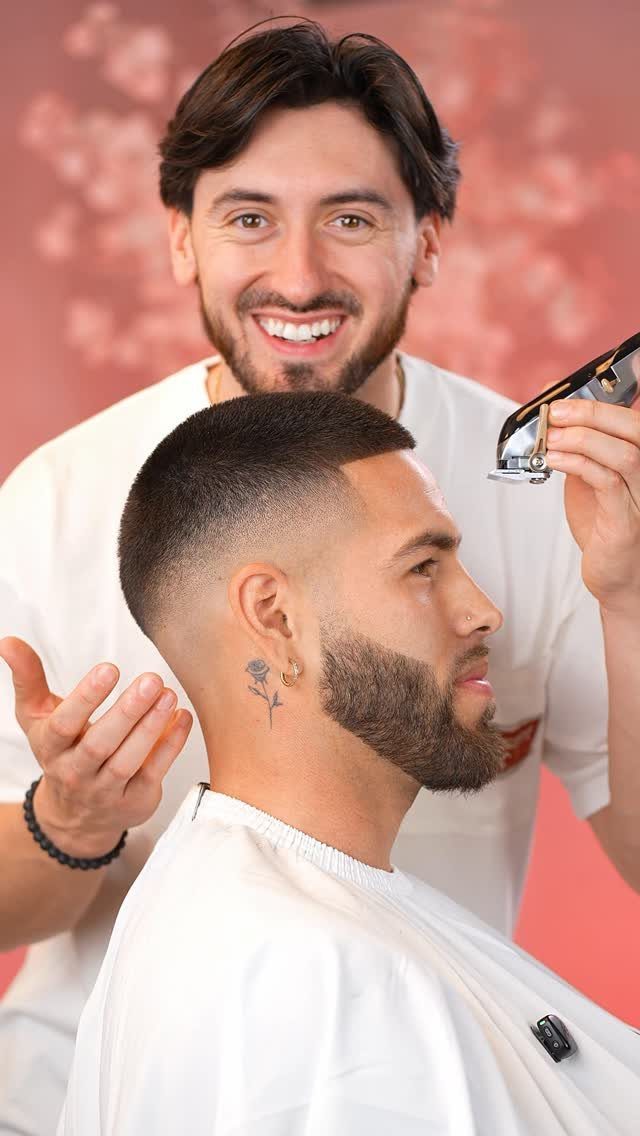
The fade curves downward behind the ear instead of running straight across the head. That arc follows the natural shape of the head and creates a rounded silhouette when viewed from the side.
The drop can start at any height, low, mid or high, and then curve down as it moves toward the back of the neck.
The curve keeps more length visible behind the ear, which suits heads where a straight fade line would sit too high or feel too stark.
This one takes more time in the chair than a standard fade, since the barber has to taper along a curve rather than a straight guideline.
The same fade blur applies: after a week or two, the line softens and the shape loses definition.
15. Textured Fringe

Choppy, separated strands sit across the forehead instead of lying in one smooth line. The texture comes from point-cutting or razor work that breaks up the blunt edge and gives each strand room to move on its own.
Straight hair or hair with a slight wave holds the separated strands better than anything too curly. Fine hair can look thin rather than textured, and tight curls won’t show the choppy finish.
The texture holds without product, but the fringe sits flatter and loses definition.
16. High Fade
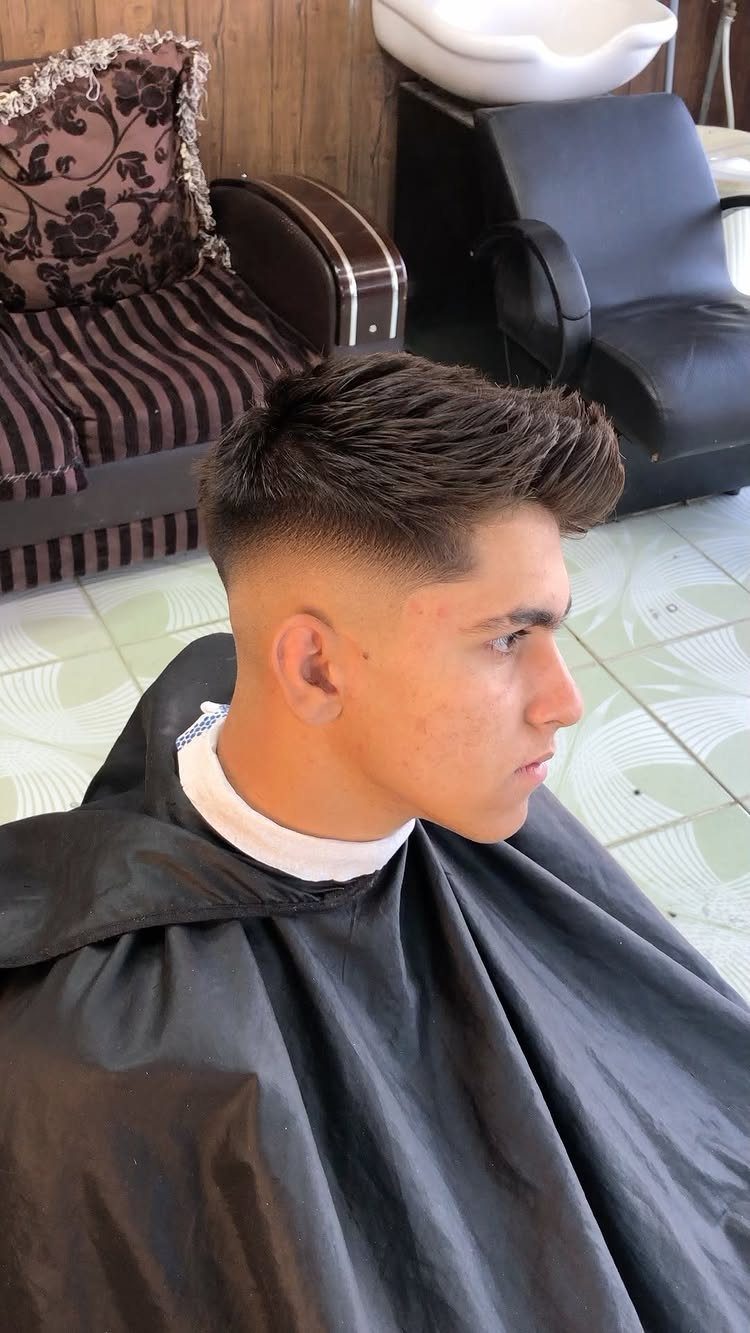
The taper begins near the temple, close to where the top section starts. That high starting point creates maximum contrast between the longer hair on top and the skin or near-skin at the sides.
This fade shows the most scalp and gives the cleanest line when fresh. It also grows out the fastest, since even a small amount of regrowth at the top of the fade blurs the sharp transition.
The top dictates how much styling time you’ll spend, but the sides stay short enough that they don’t move on their own.
17. Short Crop
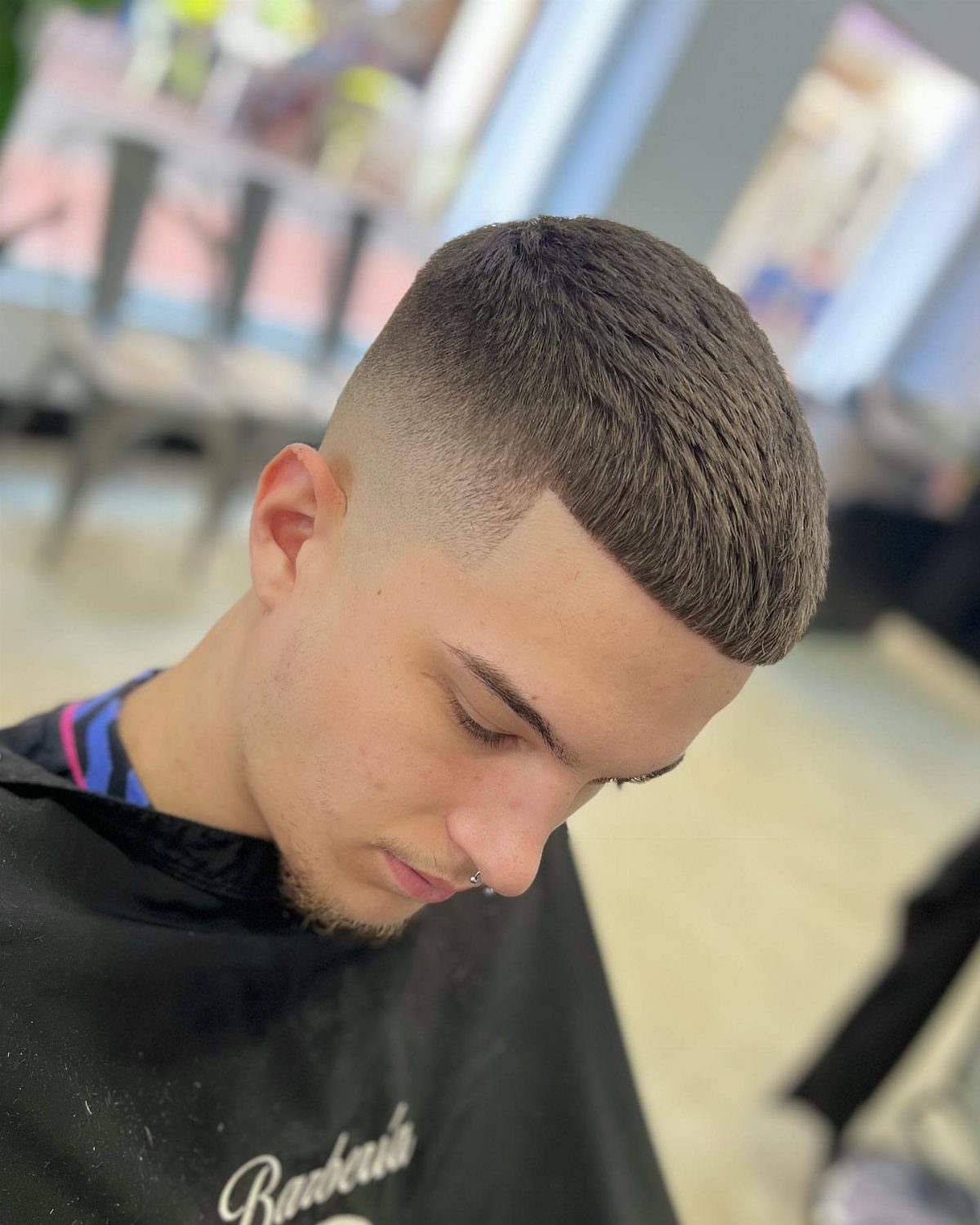
The top sits short and textured, cut to one forward-facing length with a blunt fringe that stops above the eyebrows.
Work a bit of matte paste into damp hair and comb or push it toward your forehead. The blunt fringe holds its shape without looking stiff, and the texture stays visible even as the hair dries.
18. Skin Fade
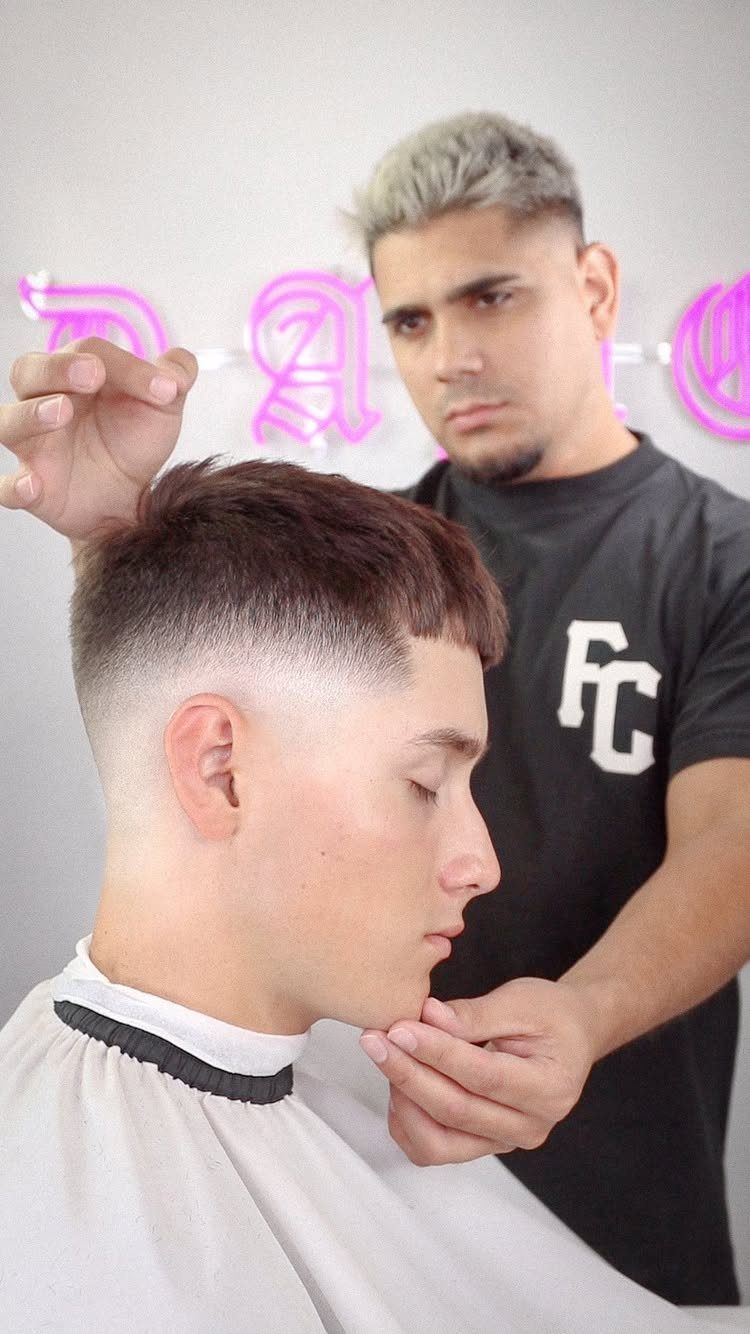
The fade tapers all the way down to bare skin at the sides and back, with no stubble or shadow left at the bottom. The blend starts wherever you place it, low, mid or high, and finishes at true zero.
This fade gives the sharpest contrast and the cleanest finish, but it also demands the most frequent maintenance. Bare skin means the regrowth shows immediately, and within days the fade loses its crisp edge.
The top can be anything, but the sides will always read as freshly shaved when the fade is new.
19. Afro
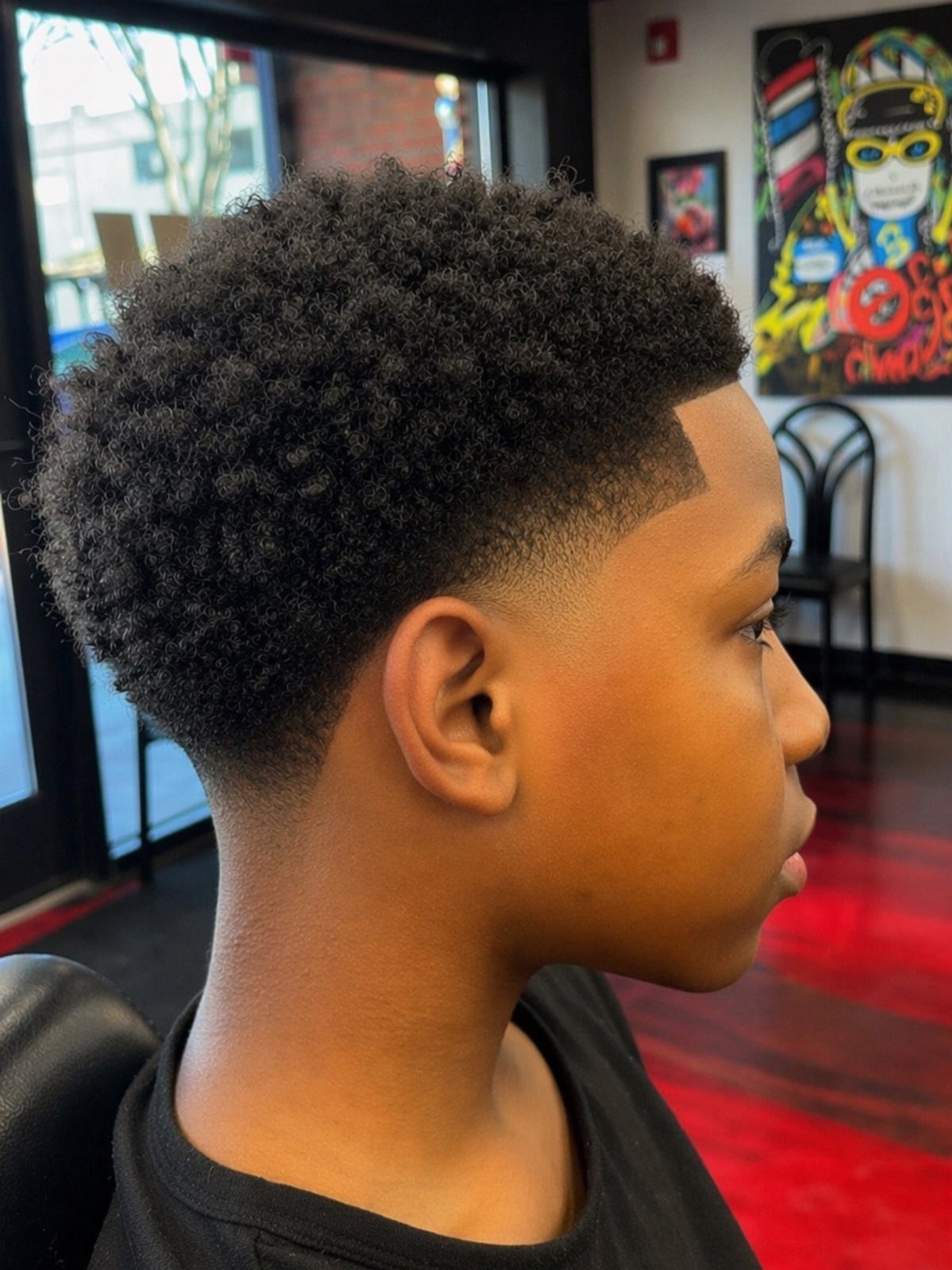
Natural texture sits short and rounded on top, with the sides tapered down for shape and clean edges. It brings the sides in close while letting the texture do what it does naturally.
A line-up sharpens the hairline and temples, which holds the shape longer between cuts. The fade itself will soften after a week, so plan on sitting back in the chair if you want the taper to stay crisp.
Moisture matters more than styling products. A light oil or curl cream keeps the hair from drying out, but the shape holds on its own.
20. Flat Top
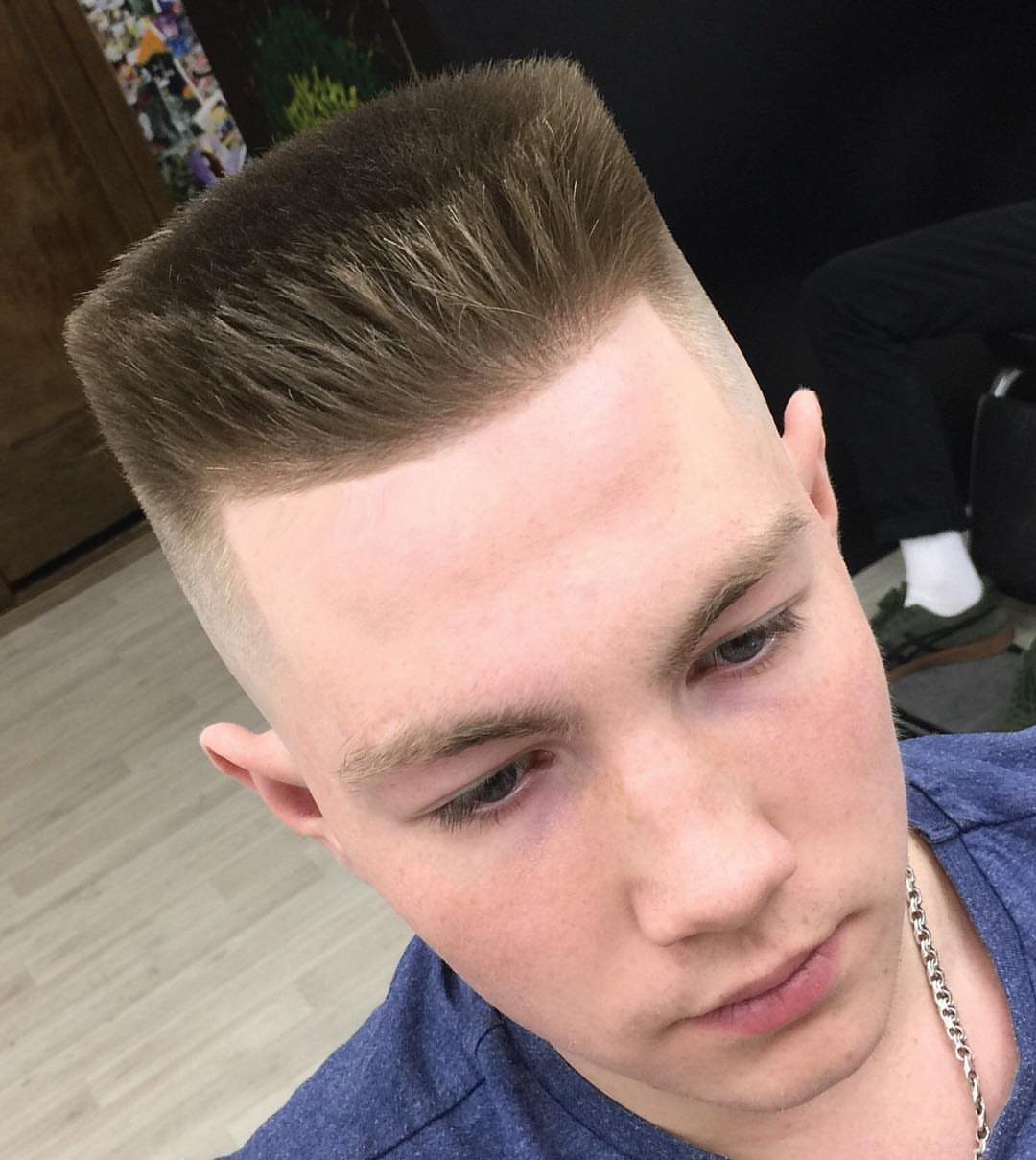
The top is cut level across, standing straight up rather than lying flat or tapering back. Sides fade down to skin or close to it, leaving a sharp horizontal plane on top.
Clippers and a comb lift the hair upward while it’s cut, then the top is leveled with a straight edge. The height can vary, but the flat surface is the defining feature.
This cut needs coarse or tightly coiled hair to stand on its own. Fine or straight hair won’t hold the vertical shape without constant work.
21. Neat Short Haircut

Top length sits just long enough to comb forward or sweep to one side, no product required. The whole cut reads as intentional without asking for mirror time each morning.
This one suits straight or slightly wavy hair, where the top lies flat or forward on its own. If your hair has any texture, it will show, but the short length keeps it from standing up or looking unruly.
No product required unless you want the top to sit a specific direction.
22. Buzz Cut with Shaved Design
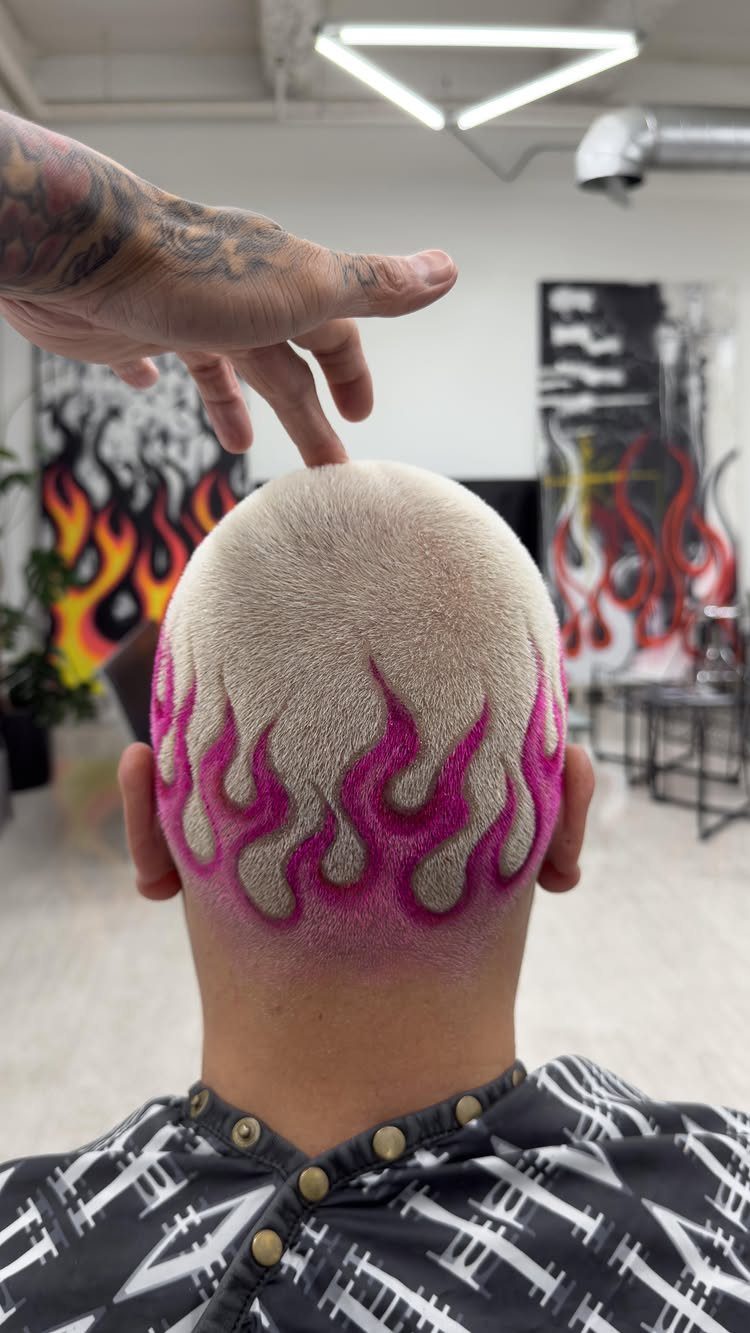
A short buzz across the entire head, with patterns shaved into the sides or back using a trimmer or razor.
The design can be anything from simple lines to more detailed shapes, and the contrast shows best when the base length is uniform.
The design only lasts as long as the hair stays short. Once the buzz grows out past a quarter inch, the pattern blurs and disappears.
Find a barber who does freehand clipper work regularly. The clean lines and symmetry depend on steady hands and a good eye for spacing.
23. Outgrown Buzz Cut
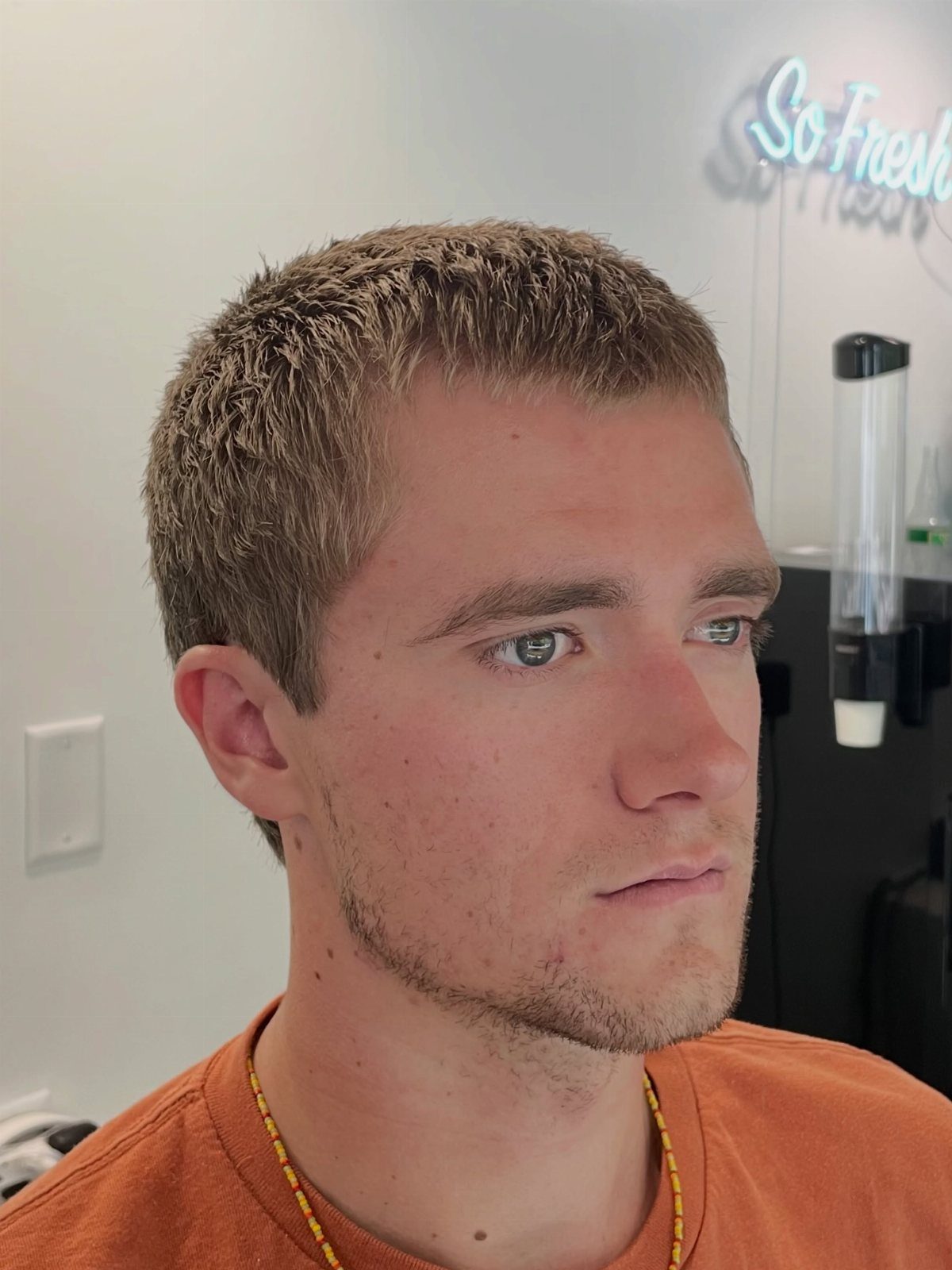
A buzz cut left to grow for a few weeks, where the top has enough length to show texture but the sides still sit close to the head.
The difference between top and sides becomes visible without a fade or taper softening the transition.
This stage works if your hair has natural texture or wave. Straight hair at this length can look patchy rather than intentional.
Run your hand through it in the morning and you’re done. The length is short enough that it doesn’t tangle or need combing, but long enough that it moves.
24. Taper Fade
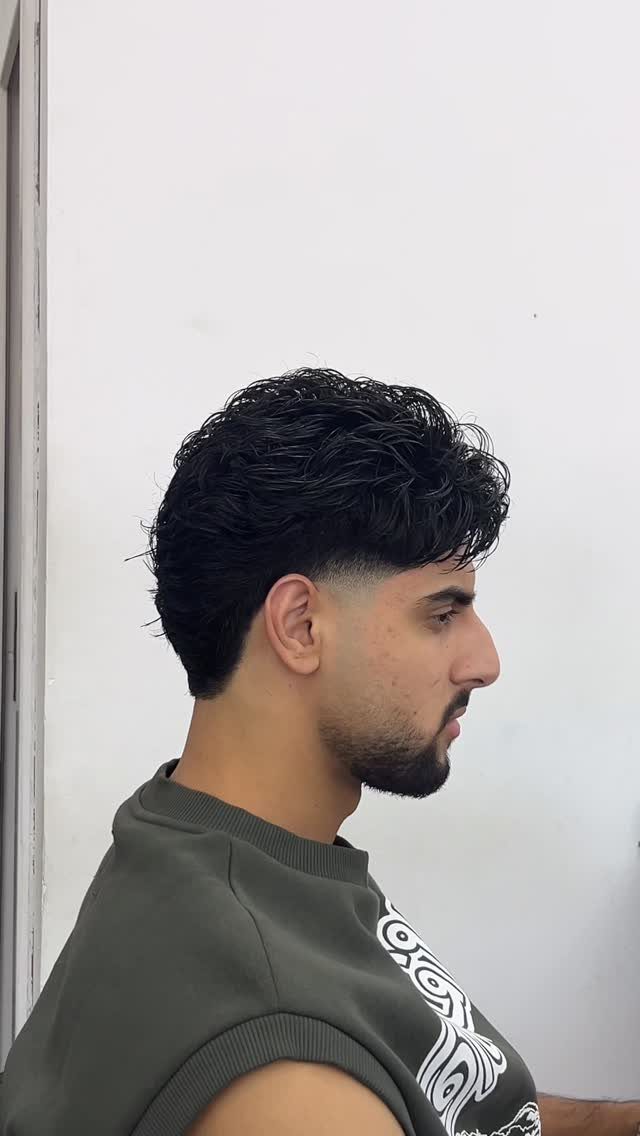
The sides blend gradually from longer hair on top down to skin or near-skin at the bottom, with a smooth transition rather than a visible line.
The taper can start at any height and works with almost any length or style on top.
The blend softens the contrast compared to an undercut or a clipped line, which makes this cut feel less severe in settings where a sharp disconnect would stand out.
Longer top lengths give you more styling options, but the taper itself needs no maintenance beyond the same cleanup schedule as any other fade.
25. Edgar Haircut
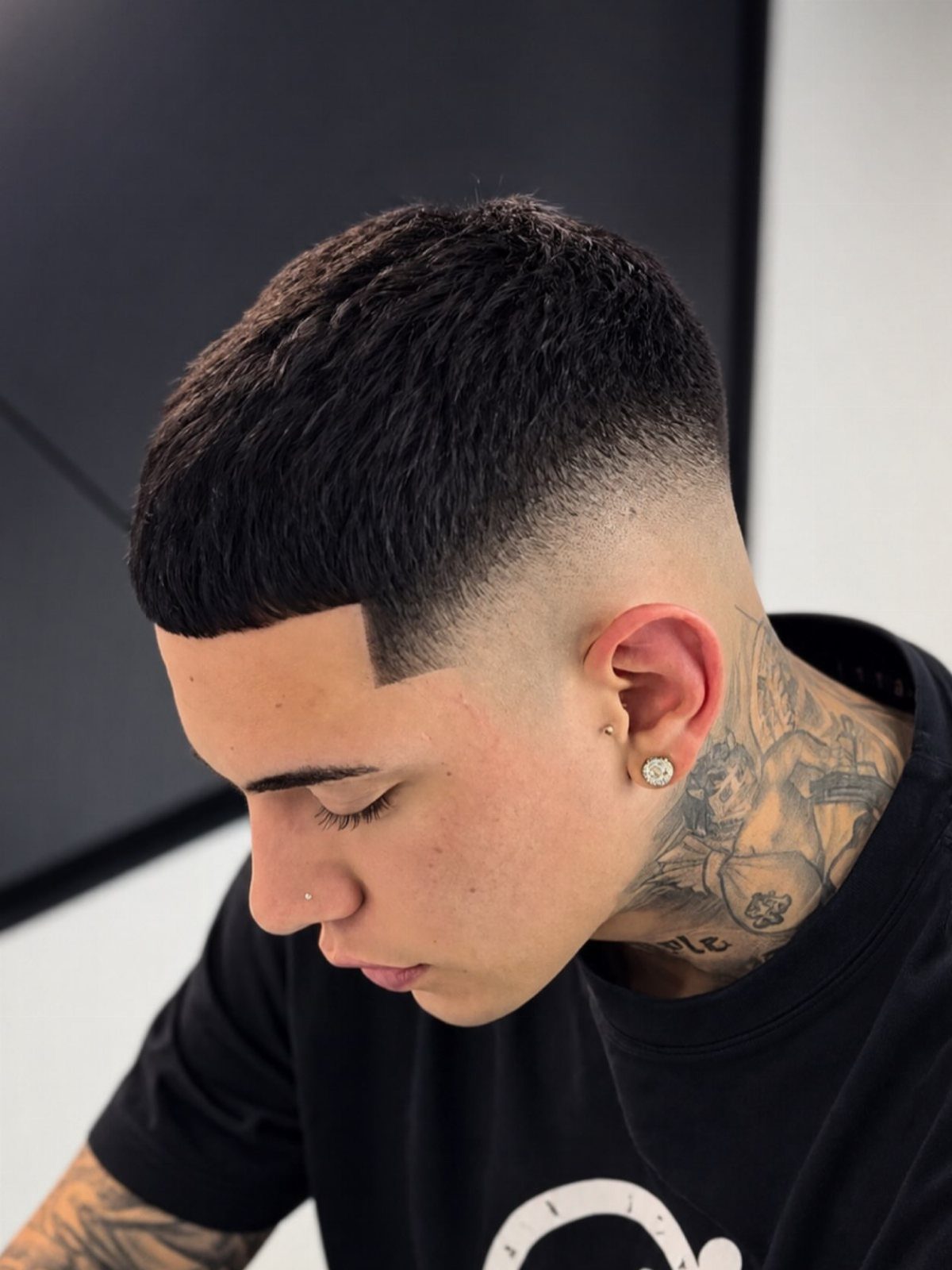
The Edgar centers on a thick, straight fringe cut horizontally low on the forehead, while a high fade takes the sides and back down to skin. The fringe line is sharp and horizontal, not textured or broken up.
The cut works best with straight or slightly wavy hair, where the fringe holds a clean edge without curling or separating. The high fade keeps the focus on the top.
Ask for the fringe cut straight across, just above the eyebrows, and specify where you want the fade to start.
26. 360 Waves
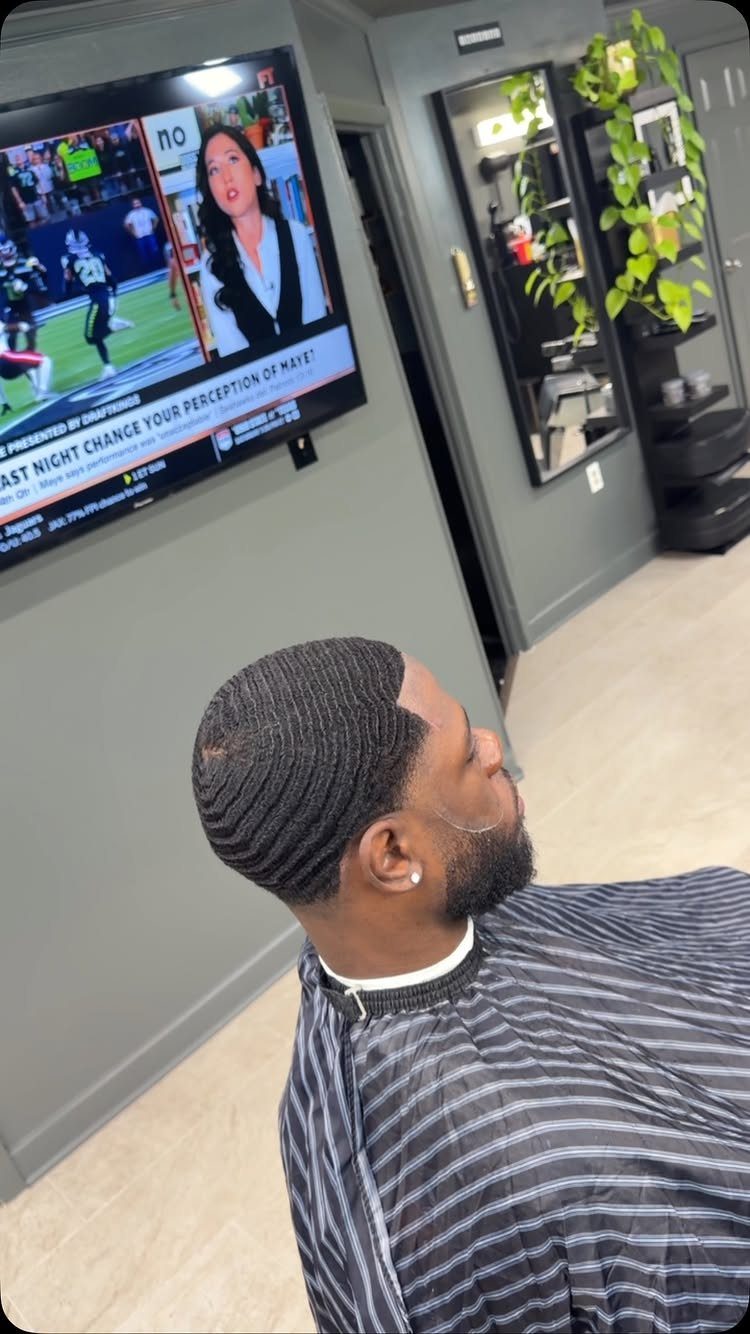
Hair is brushed in a circular pattern until waves form and ripple outward from the crown in all directions. The pattern sits close to the scalp, with each wave visible and evenly spaced.
Getting waves takes weeks of daily brushing in the same direction, always moving toward the wave pattern you’re building. A durag or wave cap at night keeps the pattern from flattening while you sleep.
The waves show best on short hair, cut close enough that the pattern stays tight. Once the hair grows past a certain length, the waves lose definition and the ripples blur together.
27. Short Mullet
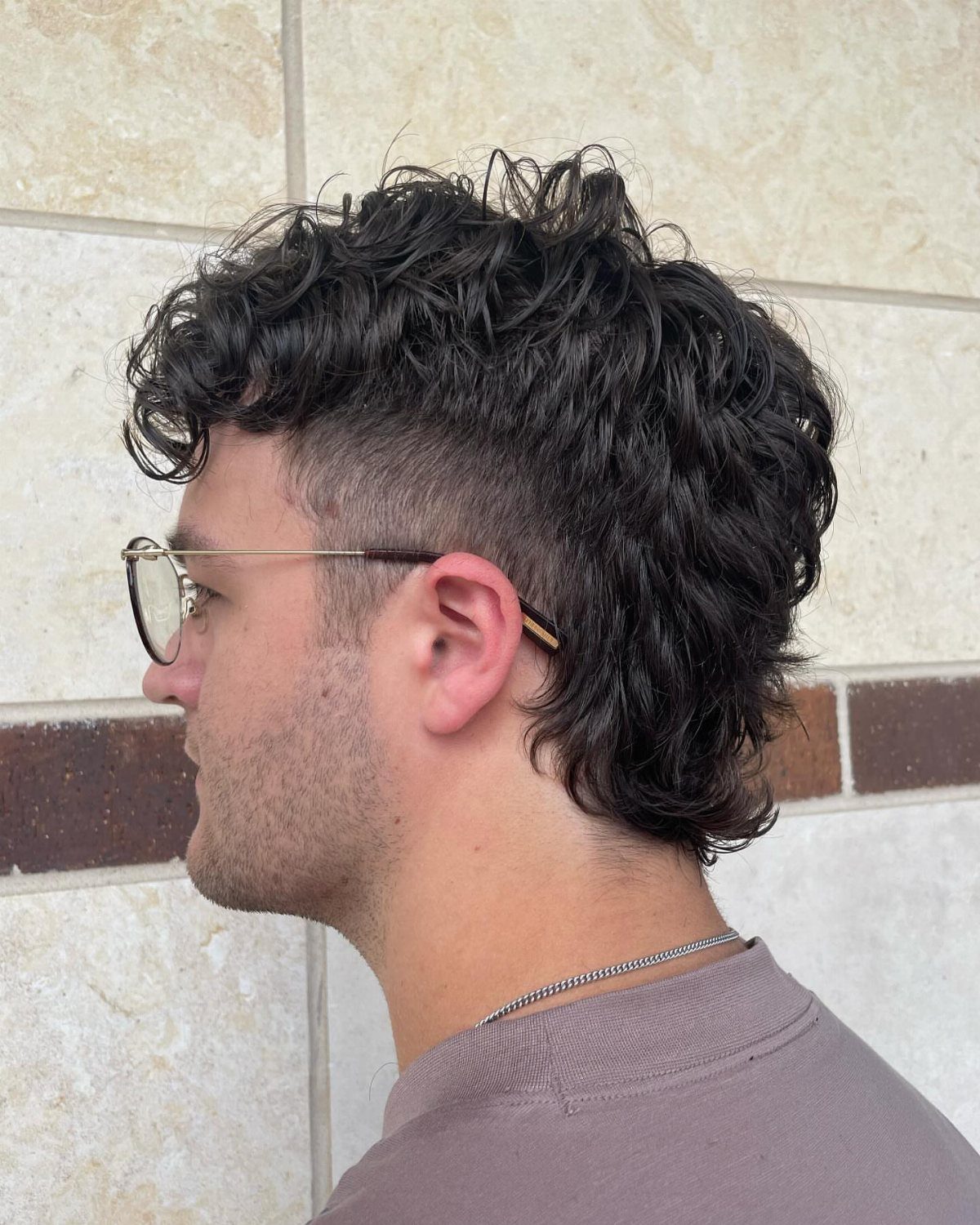
Length sits shorter at the front and sides, with the back left longer but still above the collar. The difference between front and back is visible without the back hanging past the shoulders.
This version keeps the mullet shape but cuts the maintenance time and styling effort in half. The shorter length means less weight pulling the back down, so wavy or curly hair holds more volume.
The back will grow out faster than the front, so if you want to keep the proportions steady, plan on regular trims. Let it go and the short mullet becomes a longer one.
28. Short Wavy Haircut with Short Sides
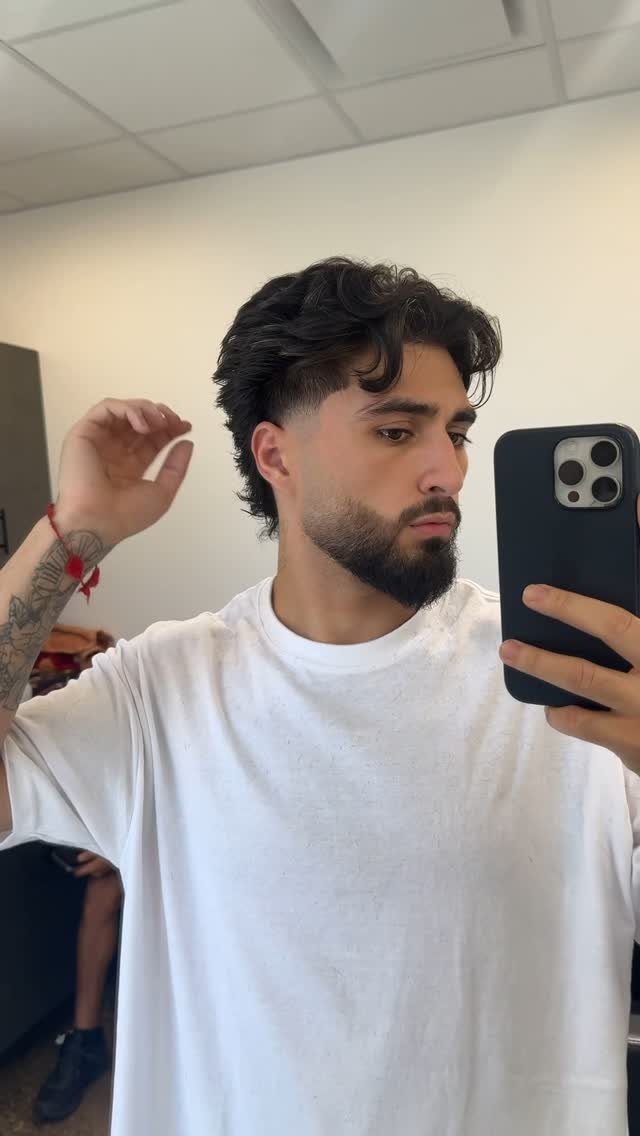
Wavy length on top is kept short enough to sit close to the head, with the sides tapered or faded down. The waves stay visible without standing up or adding bulk.
This one suits natural wave without fighting it. The short length keeps the waves from turning into curls or frizz, and the tapered sides bring attention to the texture on top.
Run your fingers through damp hair to separate the waves, then let it air-dry. A bit of light cream can define the wave pattern, but the texture holds without it.
29. Pattern-Dyed Buzz Cut
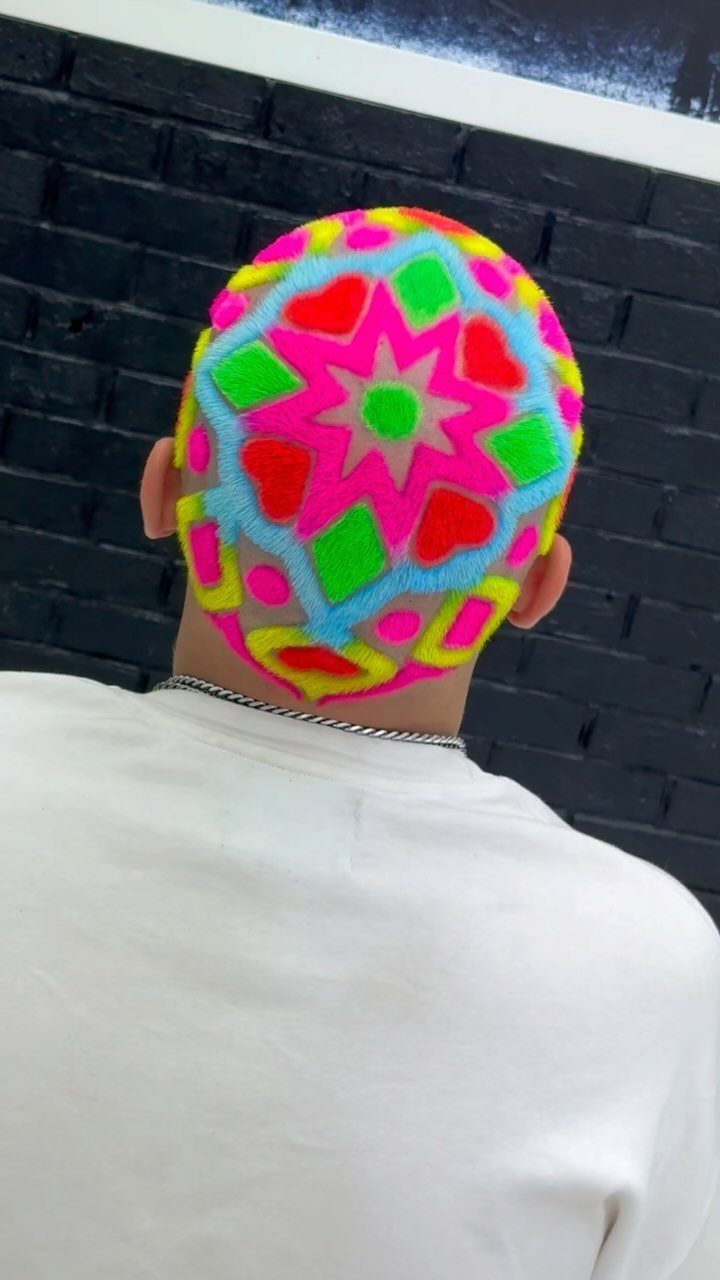
A buzz cut dyed in multiple bright colors arranged in geometric shapes across the scalp.
The pattern only shows when the hair is clipped short, so the base needs to stay close to the skin for the design to read clearly.
The dye sits on short hair, which means it fades fast and washes out in a matter of weeks. Reapplying the pattern takes time and precision, since each color needs its own section and the lines have to stay clean.
Find someone who does freehand dye work on buzz cuts. The pattern depends on steady application and color placement that follows the shape of your head.
30. Short Swept-Back Haircut
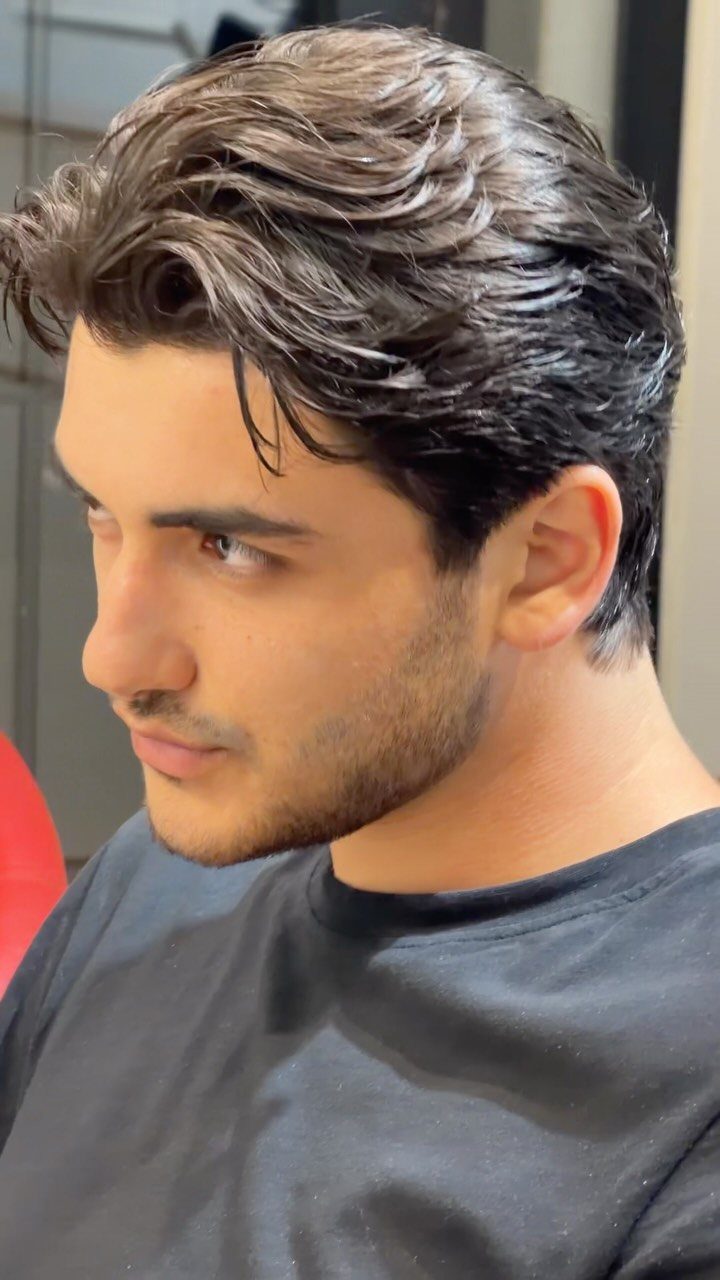
Hair on top is combed back away from the forehead, with enough length to hold direction but not enough to stand or add height. Sides stay short or faded, keeping the focus on the smooth line from front to back.
This cut suits hair with a slight wave, where the texture adds movement without the hair looking stiff. Straight hair can work, but it sits flatter and shows less dimension.
Work a dime-sized amount of pomade through damp hair and comb it back from the forehead in one direction. You get structure without weight or shine overload.
31. Shaved Neck Hair Design
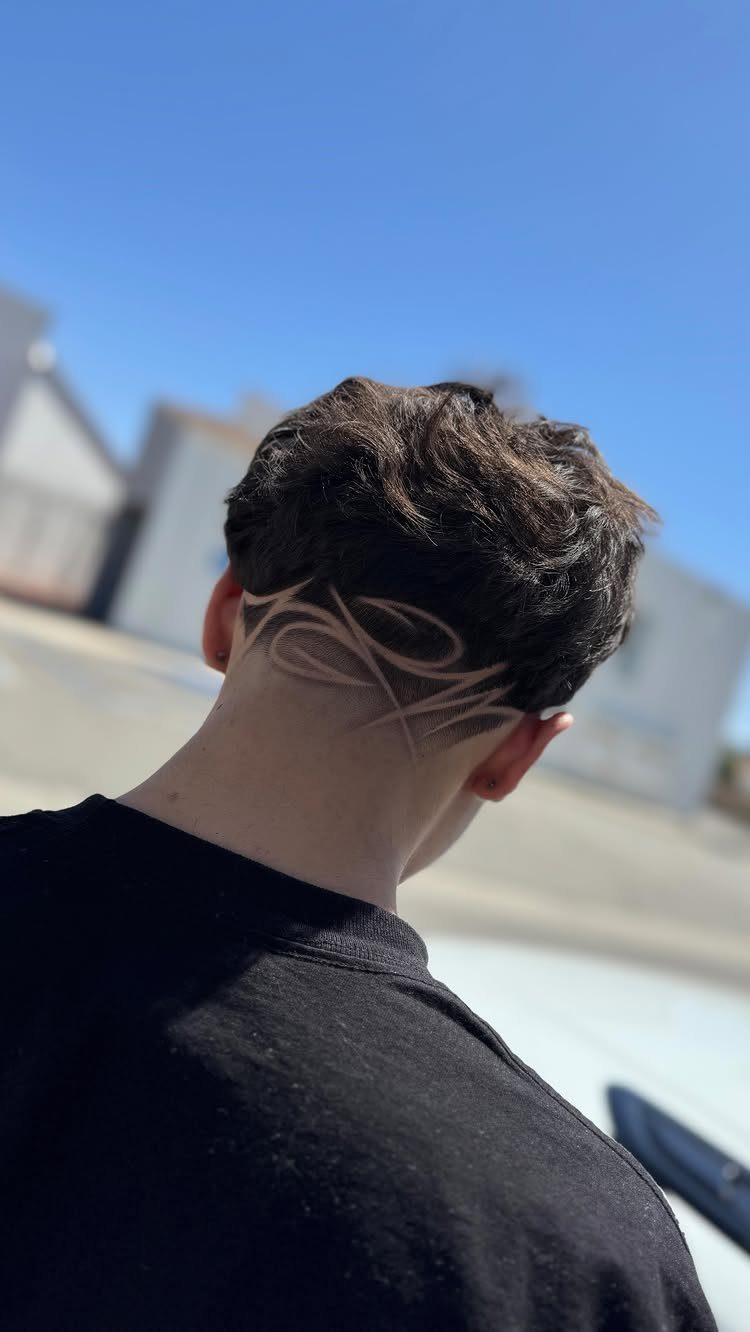
A design shaved into the nape, usually a curve, line or geometric shape that shows when the head tilts forward or the hair is tied up.
The pattern sits below the occipital bone, where the neck meets the skull, and reads best when the surrounding hair is clipped short enough to frame it.
The design lasts about as long as a fade. Once the shaved area grows past stubble, the edges blur and the shape loses definition.
Bring a reference photo and ask your barber to outline the design first before shaving it clean. Symmetry matters if the shape repeats on both sides.
32. Short Spiky Haircut
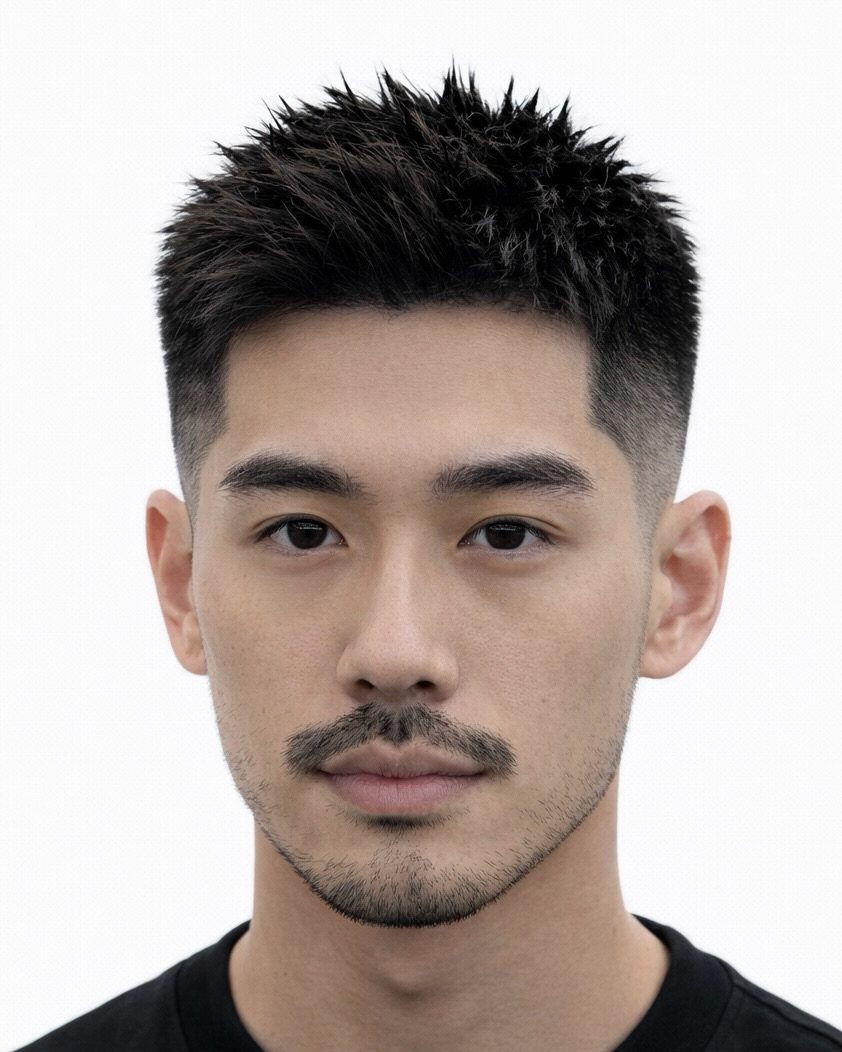
Short length on top is cut with texture, then styled upward into separated spikes using product. The sides stay close, usually faded or clipped short, so the height and texture on top stand out.
Spikes hold best on straight or slightly wavy hair. Fine hair may need more product to keep the spikes from collapsing, and coarse hair can be stubborn to lift without heat.
Work a small amount of strong-hold gel or wax through damp hair, then push sections upward with your fingertips. The spikes should separate rather than clump together.
33. Short High-Top Fade
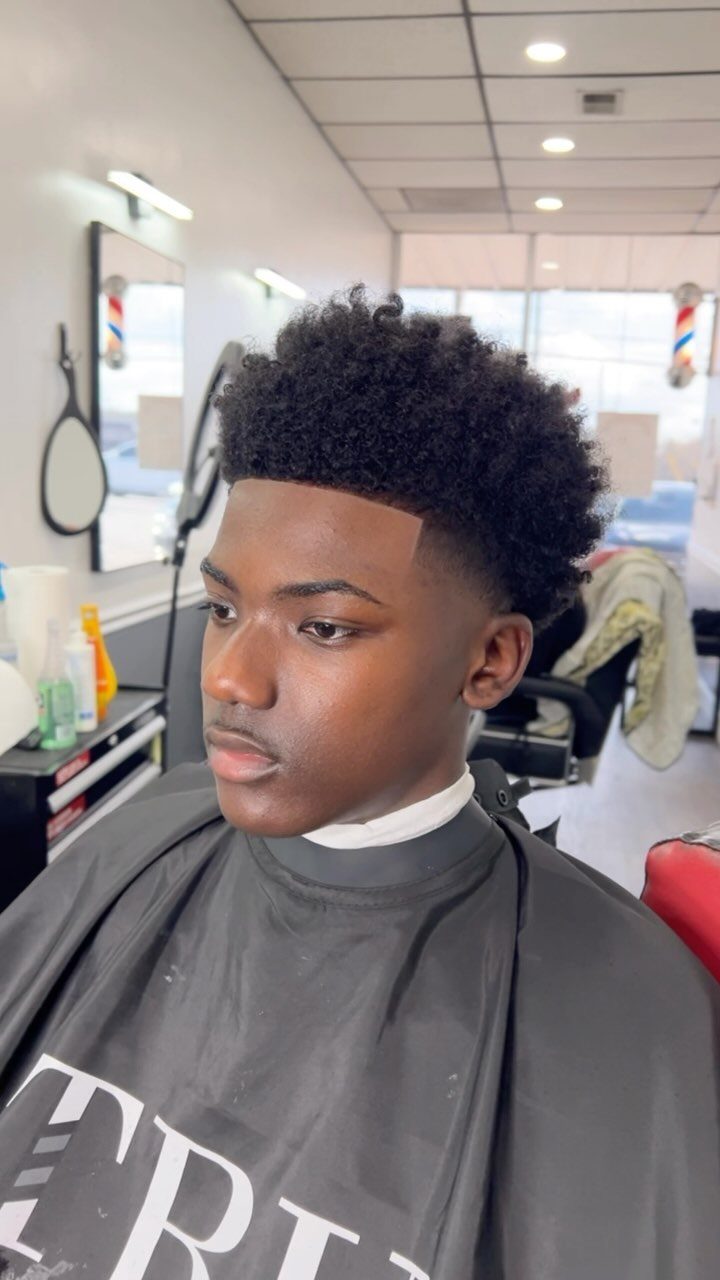
A flat top with added height, where the top section stands vertical and the sides fade down to skin. The shape is tall and boxy, with sharp corners at the temples and a level surface across the crown.
The fade will soften within a week, so count on regular cleanups if the crisp line matters.
34. Short Naturally Curly Haircut
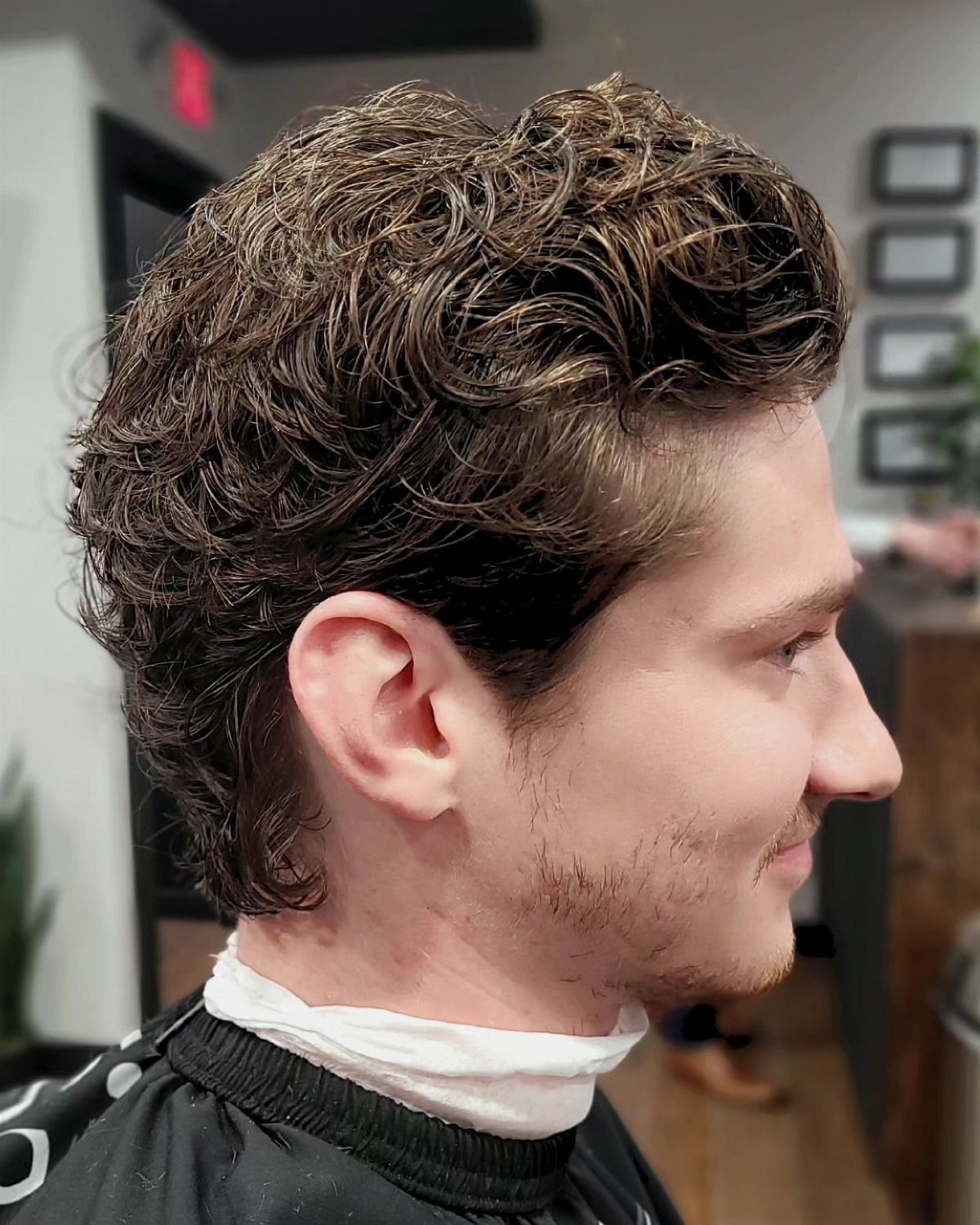
Natural curls are trimmed to a uniform short length all around, with each curl left to sit on its own.
The cut follows the curl pattern rather than fighting it, so the shape stays rounded and even without straightening or stretching the hair.
Moisture is the main concern.
Ask your barber to cut while the hair is dry, so they can see how each curl falls and adjust the length accordingly.
Match Hair and Routine
Texture and thickness both decide which of these cuts will hold their shape. Fine or straight hair can look thin at the same lengths, so structured cuts like a crew or side part work better.
Morning routine matters as much as the cut.
A pomade or gel gives you that wet shine slicked-back cuts and pompadours need. Clays, pastes, and waxes deliver a matte texture for crops and textured fringes.
A set of clippers at home handles edging touch-ups between visits. Buzz cuts are simple enough to do at home once you own clippers.
Barber Consultation and Upkeep
Bring a reference photo.
If the cut involves a fade, know which clipper guard number you want. Guard numbers set the length left behind, and a larger number leaves more hair.
Tell your barber how many minutes you’ll spend on it in the morning. That answer shapes which cut makes sense.
Pick a neckline shape that fits how often you plan to come back. The options are blocked, rounded, or tapered, and each changes how the cut looks from behind.
Tight fades and tapered sides start to look fuzzy after 1 to 2 weeks. Another recommends haircuts every 3 to 4 months, though fades blur faster than that.
Frequently Asked Questions
What is the most popular short haircut for men?
Fades, crew cuts, and textured crops are all trending right now.
These cuts suit different face shapes and hair types, so the most popular one depends on what works for your specific texture and how much time you want to spend styling each morning.
What is a good haircut for a 60 year old man?
Short, simple cuts work best because they make thinning hair look fuller and require less daily maintenance.
A crew cut, buzz cut with fade, or neat short cut keeps things clean without asking for styling time, and the shorter length adds volume where hair has thinned.
What is the short haircut trend for men in 2026?
The year belongs to high skin fades, French crops, and anything with enough texture to look intentional without product.
The trend leans toward cuts that show definition and contrast, whether that’s a high fade with a textured top or a French crop with a forward fringe.
How to choose the right hairstyle?
Face shape tells you what proportions to aim for, hair texture decides which cuts will cooperate, and your tolerance for morning styling narrows it to 2 or 3 real options.
Round faces benefit from height on top, thick hair suits textured cuts, and active lifestyles call for low-maintenance options like buzz cuts or crew cuts.
What is the best short haircut for your face shape?
Round faces need vertical emphasis, so I look for volume up top and tight sides; square faces can handle symmetry and let a clean taper show off the angle of the jaw.
Heart-shaped faces benefit from a fringe or side part to balance a wider forehead, and oval faces can pull off almost any short style.
Are bangs good for men?
Bangs can look great on men if they suit your face shape.
Blunt fringe shortens a long face by cutting across it, and a side sweep does the opposite for round faces by pulling the eye diagonally instead of straight across.
What are the best styling products for short men’s haircuts?
Matte paste or clay works for textured crops and short styles where you want separation without shine.
Pomade or styling cream suits slicked-back cuts and quiffs that need hold and a polished finish, while curl cream or light oil keeps textured or curly hair from drying out.
How to ask your barber for a short haircut?
Bring a photo that matches what you want, know which guard number you prefer for the fade, and tell your barber how much styling time you’re willing to spend each morning.
Discuss how you want the neckline trimmed, either blocked, rounded, or tapered, since that affects how the cut grows out.