Highlights on black hair run from brown tones that sit two or three shades off your base to platinum and lavender, and the deciding factor is how often you’ll book a chair.
Brown and caramel stretch to 6–8 weeks; platinum and bright blonde need touch-ups every 3–4 weeks, or the gap shows fast.
1. Sun-Kissed Golden, Caramel, or Honey Highlights on Dark Hair
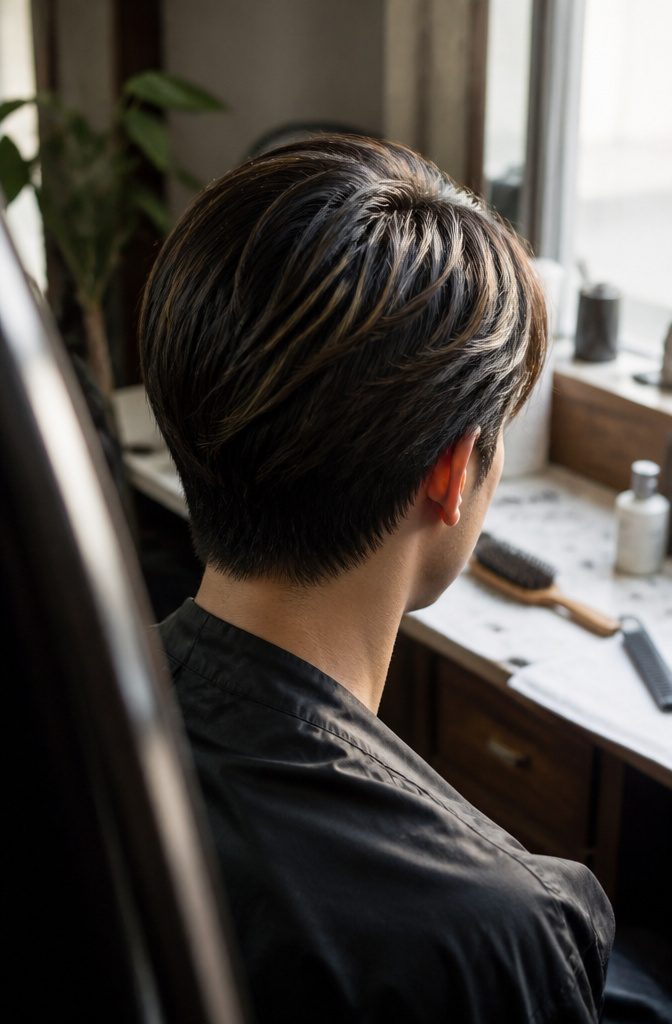
Golden, caramel, and honey tones give black hair a sun-kissed warmth without high contrast or the upkeep that comes with platinum.
The blend reads as natural, the kind of glow that looks like you spent time outdoors rather than hours in a chair.
This works best on straight hair cut short to medium, where the highlights catch light along clean lines and don’t fight texture you’re already managing.
The mix of gold, caramel, and honey creates dimension without announcing itself. It brightens your face, adds depth to the cut, and grows out more gracefully than stark blonde because the transition from root to highlight is softer.
If you want visible lift but not the maintenance schedule that comes with cooler or lighter tones, this is the range to ask for.
2. Blonde Highlights on Dark Waves
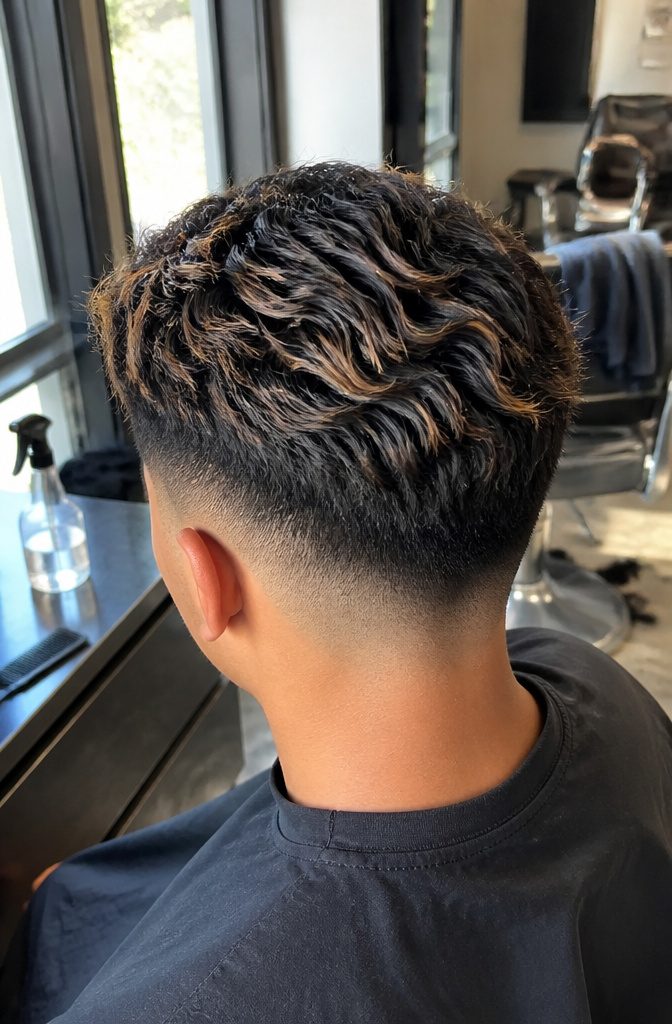
Blonde against dark waves delivers high-contrast visual punch that’s impossible to miss. The blonde tips catch light where dark waves curve, making every movement visible.
It works whether the sides are clipped tight in an undercut or tapered with a skin fade, because the contrast itself does the work. No styling effort required beyond what the waves already ask for.
The look reads bold without tipping into complicated maintenance during the first few weeks. Dark hair holds the structure, blonde locks define the movement.
If you’re in a setting where standing out is the point, this pairing gets you there. The sharpness fades as roots grow, but that first month after the chair is when the effect hits hardest.
3. Platinum Highlights on Dark Hair
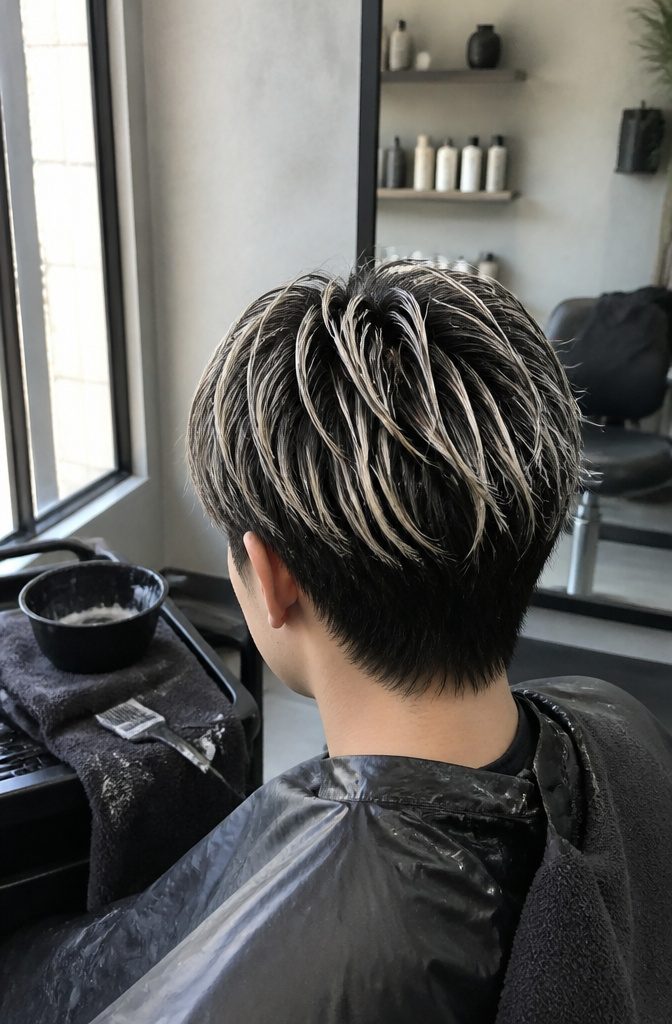
Platinum highlights sit at the opposite end of the spectrum: icy, high-contrast cuts that look like frost against black hair. The look screams confidence, but you need to know what you’re signing up for.
Platinum is high-maintenance. Touch-ups come every few weeks to keep that frosty edge from fading to brassy yellow, and the bleach required to lift dark hair that light means more time in the chair and more scalp care between visits.
If you can handle the upkeep, platinum delivers a rebel edge that blonde can’t quite match. It’s a bolder statement, colder in tone, and works best when you’re ready to commit to the maintenance schedule it demands.
4. Blonde Highlights on Short Curls
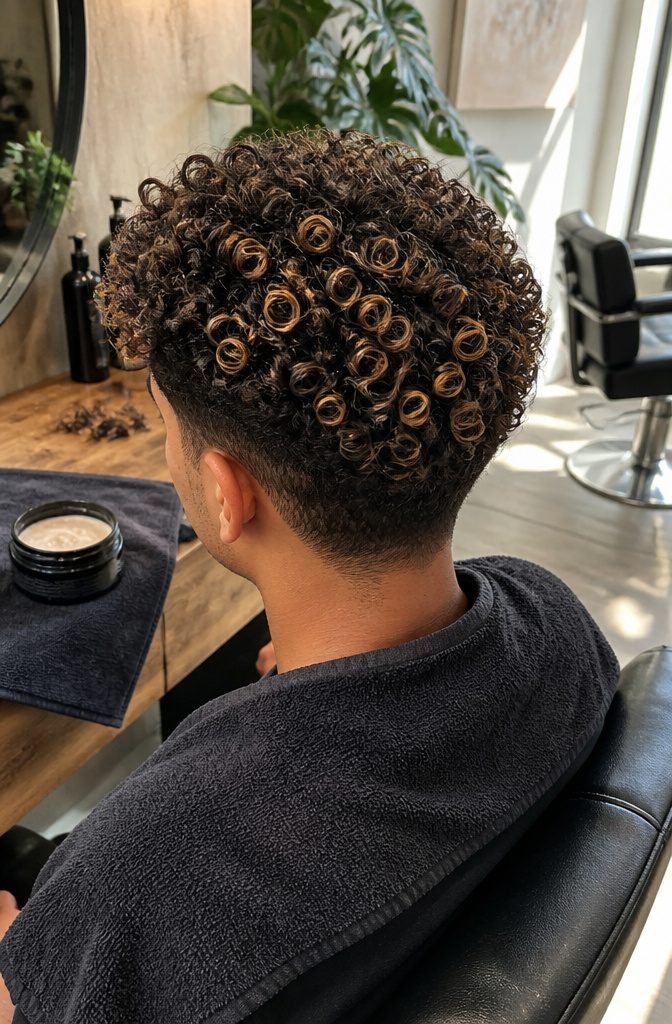
Blonde highlights brighten short curly hair in a way that feels immediate and natural.
The lighter tones catch differently on each curl, so what reads as flat or uniform in certain light suddenly has dimension you can see from across the room.
Textured hair already moves, and the contrast between dark base and blonde highlight gives every bounce something to show off.
The effect works because curls themselves are never still. A straight highlight sits where you painted it; a curly one spirals through the strand and reappears at angles the mirror did not predict.
Short length keeps maintenance lighter and keeps each curl compact, so the blonde stays bright and holds its edge.
Strategically placed lighter tones mean each curl gets its moment, and confidence follows when the texture finally gets the spotlight it was built for.
5. Natural Blonde Highlights on Brown Curls
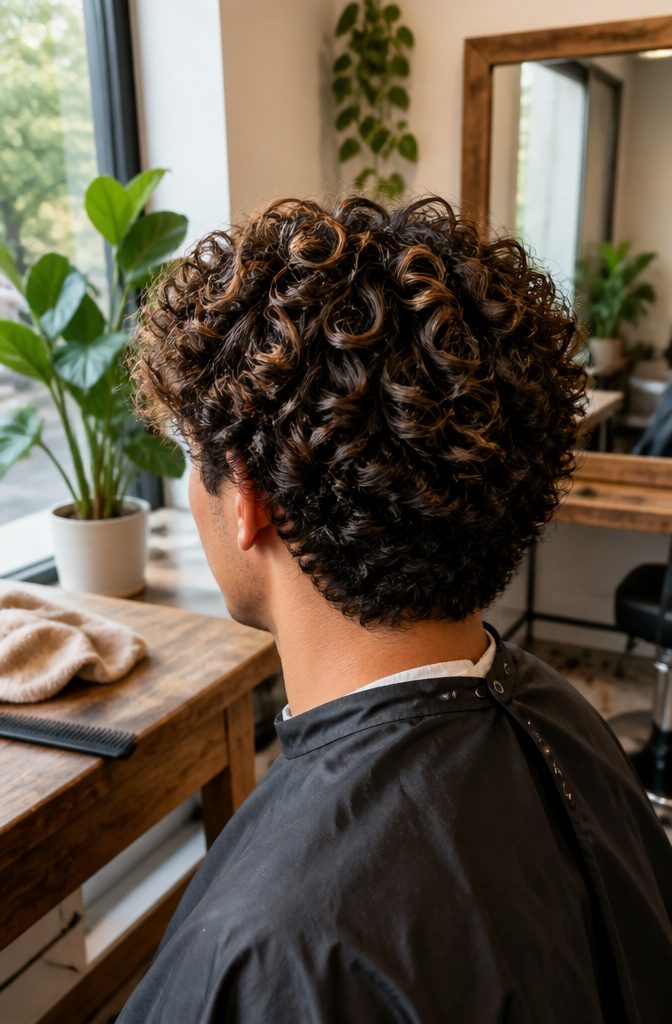
Natural blonde highlights on brown curls land softer than platinum and read closer to what sun does over time.
The lighter tones lift each curl just enough that you start seeing dimension instead of one flat color top to bottom, and the effect scales up with density: tight coils carry more surface area per inch, so the contrast shows.
Placement matters more here than coverage. Strategically placed light pieces near the face and crown catch daylight first and let the rest stay dark.
Go too wide and the blend turns brassy; keep it tight and you get something that looks like summer left it there. Curls already move, and blonde tones make that motion visible without fighting the texture underneath.
6. Subtle Golden Highlights on Sculpted Medium-to-Long Waves
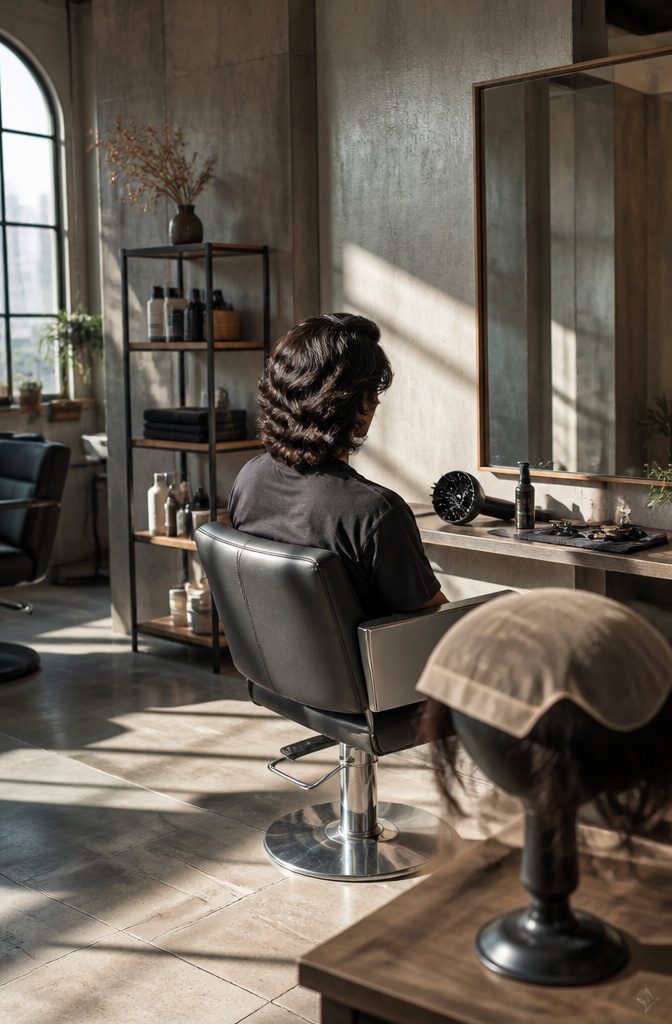
Waves are the best canvas for gold on dark hair, because every curve catches the color differently and the contrast shows up right where the hair bends.
On medium to long lengths, subtle golden highlights add definition without the drama of a bold shade like platinum or red. I’d keep the gold close to the base color so the finish reads as polished rather than striped.
Styling matters as much as the color here.
The waves need to look shaped and set, since highlights on loose, frizzy hair just look uneven. If you wear a hairpiece to fill out the look, a lace system suits waves well because it’s flexible and lightweight.
7. Creative Highlights on Dark Hair, Including Caramel or Gray
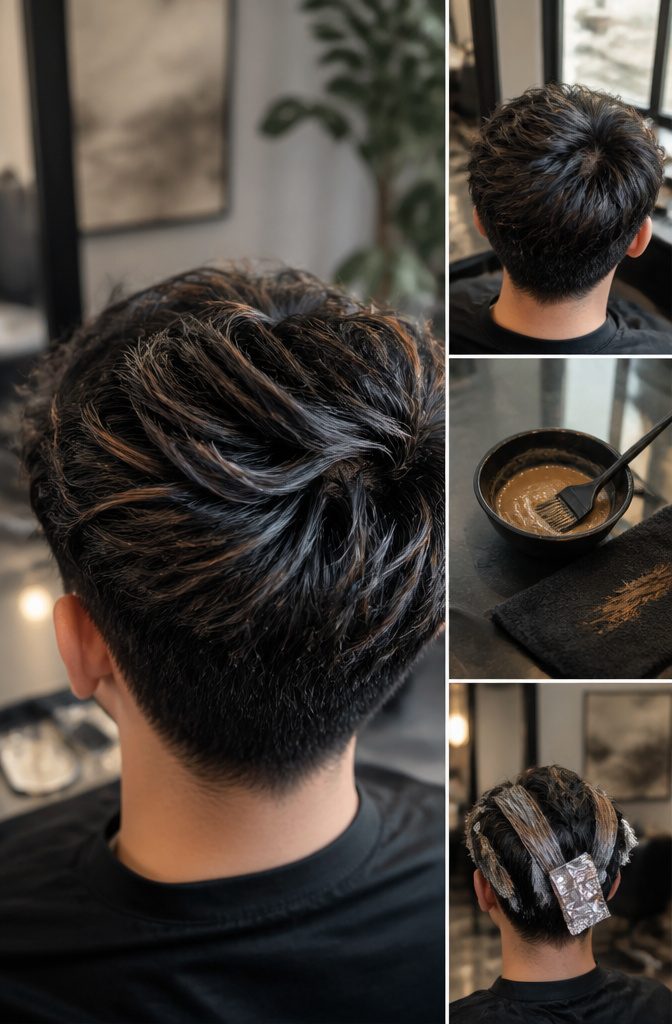
Caramel and gray are the two shades I’d reach for when plain brown feels too safe. Caramel brings buttery warmth without going full blonde, while gray cools the same dark base, so they pull in opposite directions.
Combining them is how you get a custom look: a few caramel streaks near the front with gray worked through the top gives textured, uneven color instead of one flat tone.
Gray is the bolder move and caramel the easier one.
Highlights suit dark hair in any hairstyle, but caramel especially rewards textured or wavy tops. I’d keep the streaks thin and scattered, since creative highlights should read as texture, not coverage.
8. Caramel Highlights for Brunette or Dark Hair
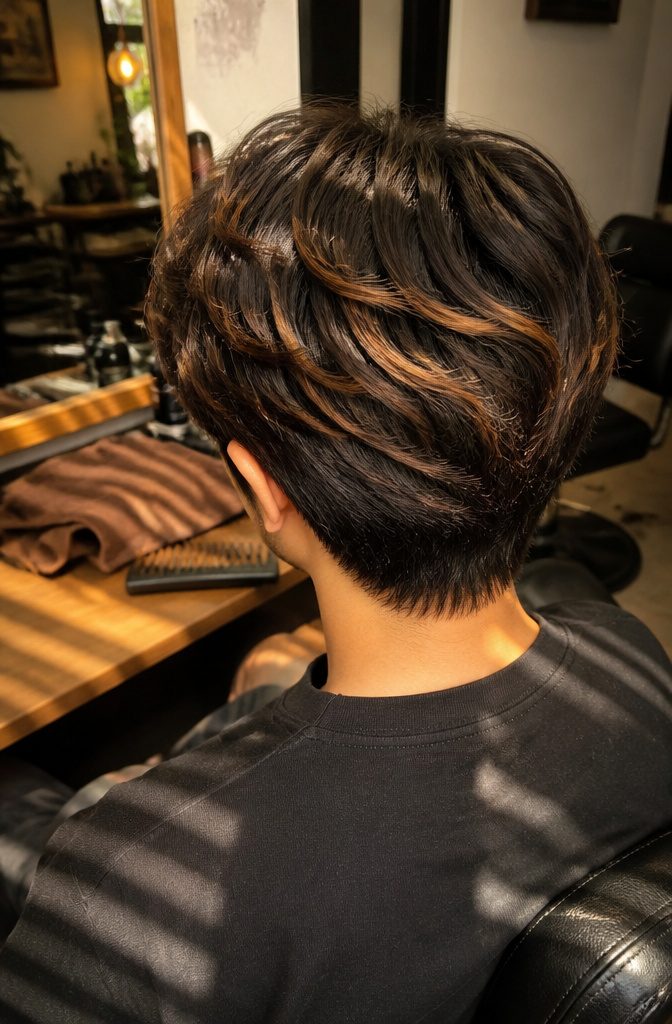
Caramel sits between subtle and bold, giving you warm, buttery tone without committing to full blonde.
If you have medium to dark brown or black hair and want a visible shift that still reads natural, this is the middle ground that does it.
The warmth shows up clearly on textured or wavy cuts where movement catches light, and it photographs well without looking processed.
The tone works especially well when you want contrast but not the maintenance that comes with platinum or ash. Caramel fades gracefully, growing out softer than cooler highlights that can turn brassy.
If your base is closer to true black, expect a richer caramel pull; on dark brown, you’ll land closer to honey. Either way, the color brings dimension without flipping the whole palette.
9. Golden Highlights or Tips on Dark Hair
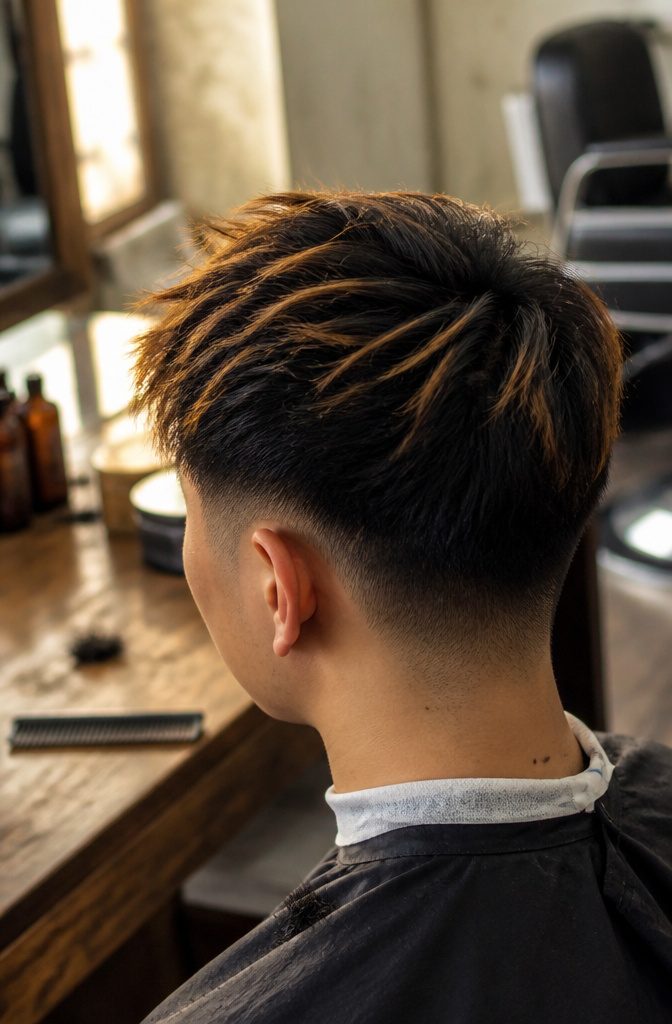
Golden tips have the same effect scattered through the lengths or bunched at the ends. Either way, dark hair gets a polished, finished look instead of a subtle one.
The contrast between black or dark brown roots and warm gold at the tips reads as intentional, not sun-faded, and the placement keeps it from looking like an abandoned ombré.
Tips alone are faster to maintain since the grow-out sits further from the roots, but scattered placement through the top and sides gives more movement when the hair is short or textured.
Both work on buzz cuts, crops, and medium waves.
The style leans nostalgic without copying the frosted spikes of the nineties, and it pairs well with an undercut or skin fade where the contrast between dark sides and bright tips sharpens the shape.
10. Red-Brown Highlights for Warmth
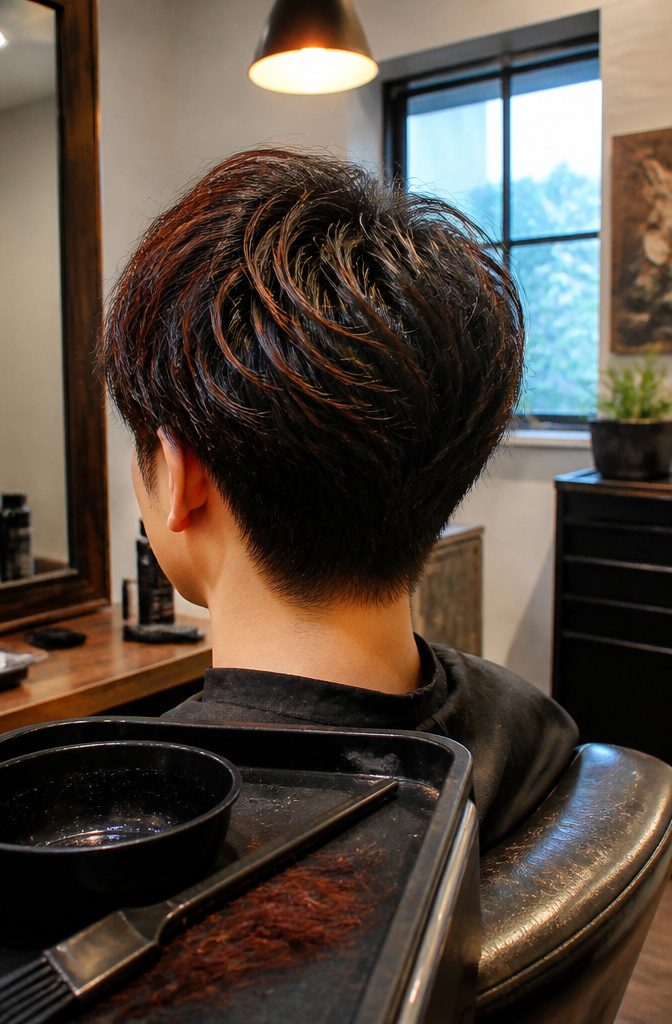
Red-brown highlights sit between caramel and auburn, giving dark hair a warmer tone without landing in copper or rust territory.
Where golden highlights lean bright and caramel reads closer to neutral, red-brown brings in deeper warmth that shows up more visibly against black or very dark brown bases.
The color works well if you want noticeable dimension but prefer something less stark than blonde or platinum. Red-brown catches light differently than cooler tones, which makes it easier to spot in indoor lighting where subtler caramel might disappear.
It also tends to fade more gradually, since the red pigment sits closer to your natural base than bleached-out blonde does.
11. Platinum Blonde on a Black Pompadour
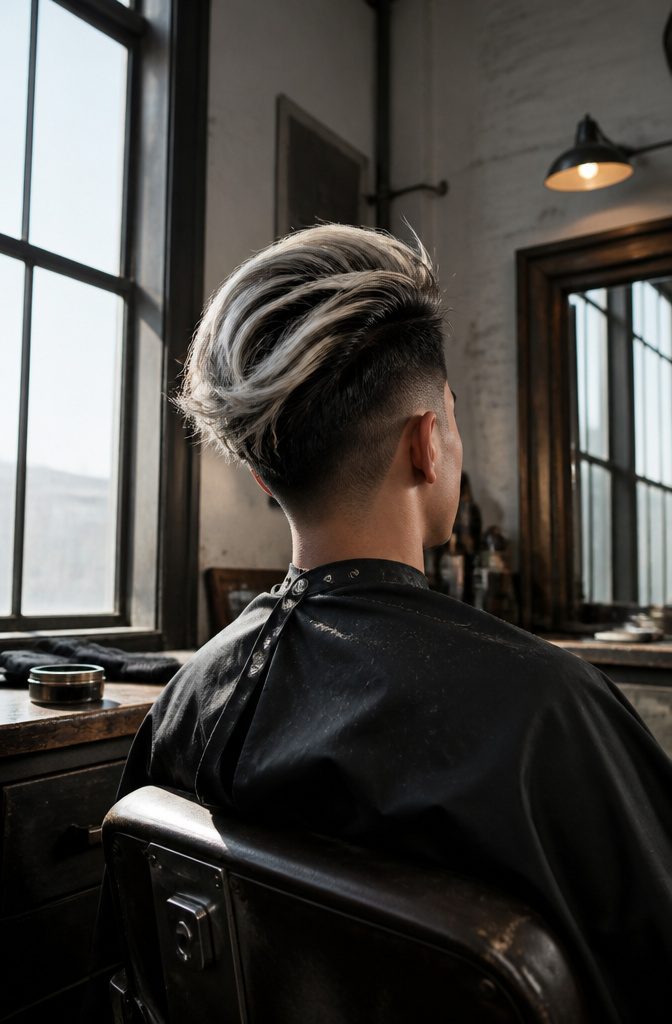
Platinum Blonde on a Black Pompadour
Platinum blonde over a black pompadour puts structure and shock value in the same cut.
The icy streaks sit high where the pompadour volume does, and the sharp undercut keeps everything crisp below. It reads bold without reading messy, and the geometry of the cut gives the color something to ride on.
Maintenance is the downside, since platinum on black hair needs frequent toning and root touch-ups to stay clean. Platinum fades fast and picks up brassiness if you skip toner appointments, so figure touch-ups every three to four weeks.
The pompadour itself needs daily styling with pomade or wax to hold that lifted shape, and the undercut grows out quickly enough that you’re back in the chair every two weeks to keep the sides clean.
If you’re ready for high-maintenance, this pairing delivers the rebel look with actual structure behind it.
12. Silver Highlights on Black Hair
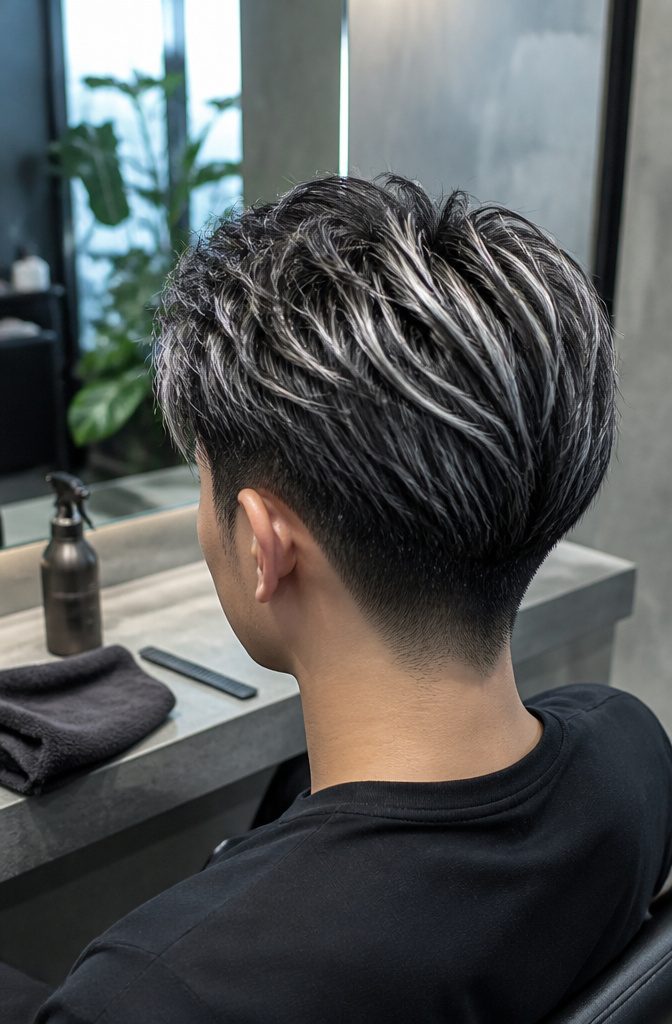
Silver highlights on black hair read sharp and futuristic, with a cool, modern edge that stands out without looking overdone.
The contrast between metallic silver and black base is high enough to catch light but sophisticated enough to avoid looking costume-y.
The look skews modern rather than warm. Silver pulls the palette into cooler territory, so it pairs best with contemporary cuts that already have clean lines: textured crops, structured fades, anything with defined shape.
On longer styles it can look sci-fi in a good way, particularly if the hair has natural movement or wave to break up the stripe.
Silver needs confidence.
It announces itself, so if subtlety is the goal, this is not the shade. But for men after something distinct without crossing into full color, silver on black delivers sophistication with an edge.
13. Sophisticated Brown Highlights on Dark Hair
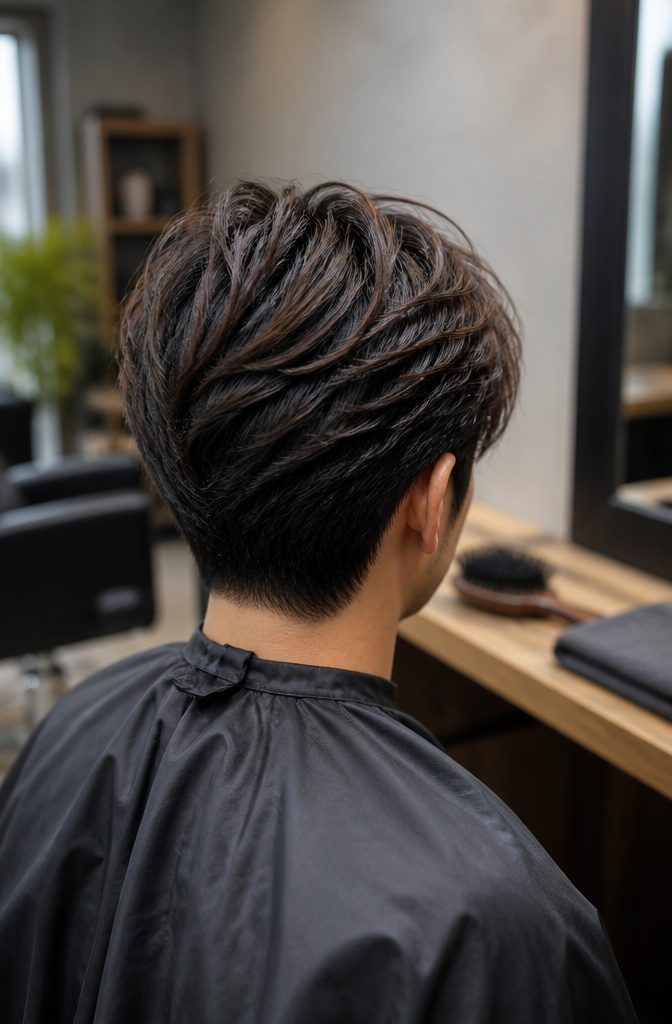
Sophisticated brown highlights on dark hair stay close enough to your natural base that the color reads as depth instead of contrast.
The shift is subtle enough that most people notice the dimension before they clock the highlights themselves. Brown on black gives you texture and movement without announcing the work you put in.
This sits at the lowest end of the contrast spectrum for highlights on dark hair.
The brown pulls light without fighting the base, so it works if you want lift but need the look to stay conservative for work or personal preference.
Visibility suffers: in low light or from a distance, the highlights may disappear entirely, which is either what you want or a reason to pick something warmer with more separation.
Ask for brown tones within two or three shades of your base. Darker placement near the roots and lighter through the ends keeps the grow-out period forgiving.
14. Bold Red Highlights
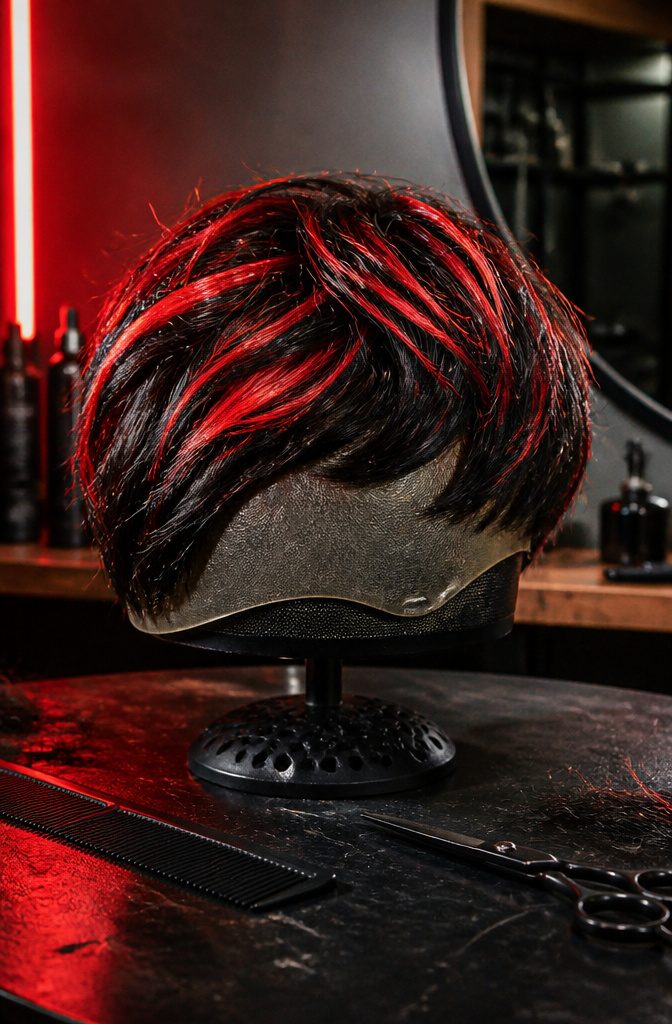
Bold red highlights land as hard as you’d expect: a deliberate, heads-turning choice that announces itself from across the room. The crimson sits vivid enough that anyone looking for a rebellious edge gets exactly that.
This ranks among the most dramatic color moves you can make on black hair.
Where caramel or honey warms things up without changing the overall read, red flips the script entirely. The contrast pulls focus, and the intensity holds it.
A PU (polyurethane) base works best if you’re building this into a hairpiece system.
The knotless construction keeps the red tones sharp and prevents the base from dulling the vibrancy, so the fiery effect stays fiery rather than washing out against a visible grid.
If attention is the point, this delivers. If subtlety is the point, this is not the shade.
15. Blonde Highlights on Brown Hair
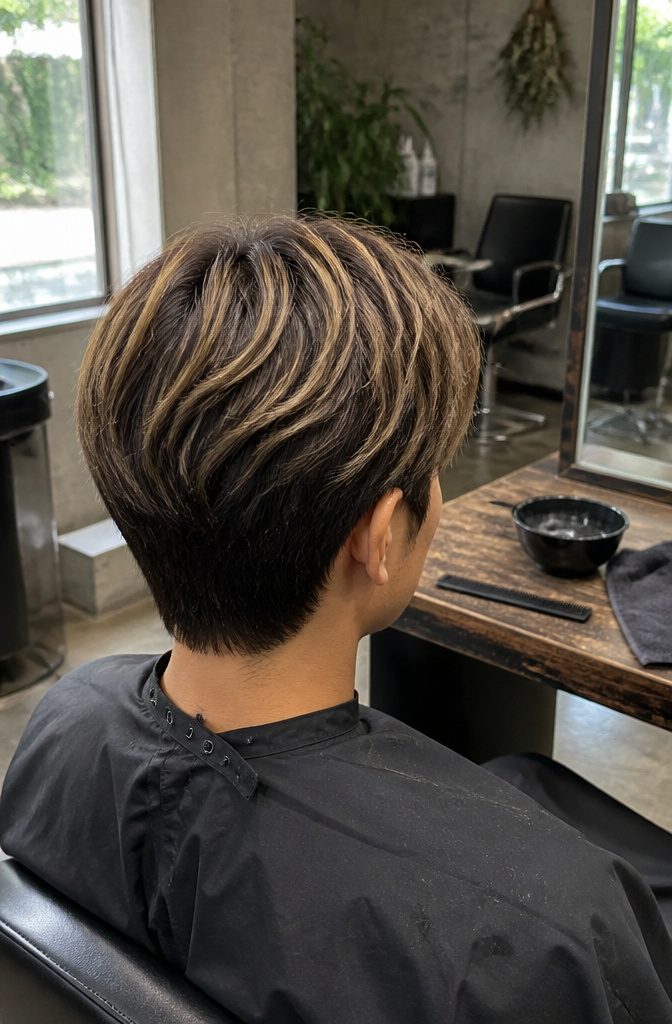
Blonde on medium or light brown hair adds brightness without a hard break from your base. The gap between brown and blonde is narrower than between black and blonde, so the result is softer and reads as more natural.
On black, blonde is stark contrast. On brown, it catches light and lifts the whole color, especially on top, where hair sits forward and gets noticed first.
I think it’s the better first round of highlights for that reason.
If you want it to show across a room, go a few shades lighter than your base. A single small step tends to vanish in daylight, and you’ve paid for color nobody sees.
16. Bronze Highlights on Brown Hair
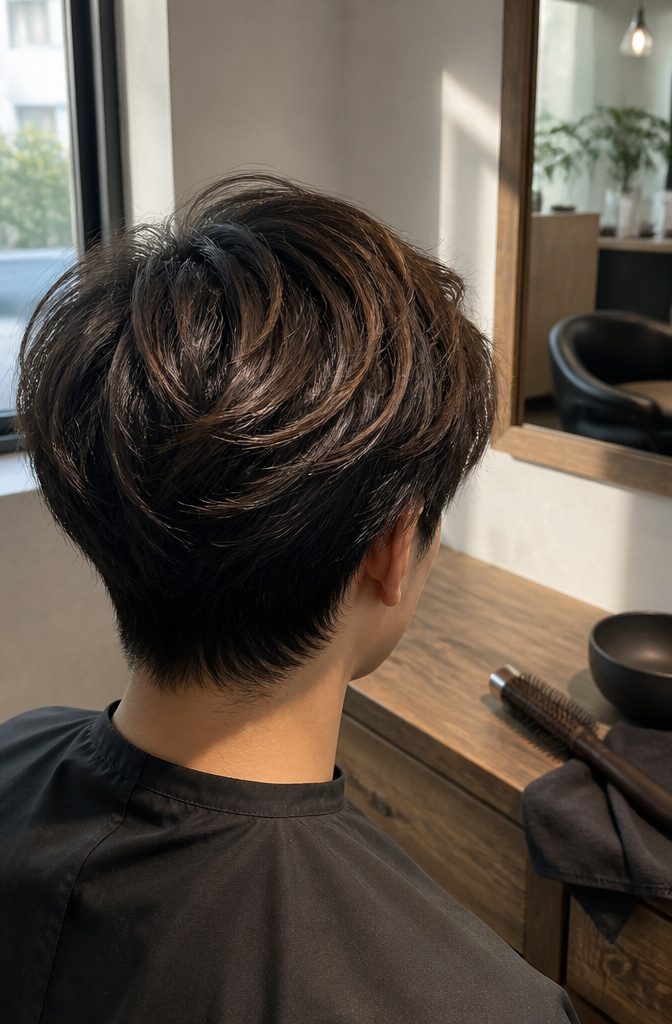
Bronze highlights land between the warm glow of golden and the deeper punch of copper, reading as a metallic middle tone that keeps brown hair from looking flat without pushing into red territory.
The warmth is there but restrained, closer to brushed metal than caramel.
They work best on medium to dark brown bases where the bronze catches light without jumping out as a separate color.
On true black hair the contrast climbs and the bronze reads more like copper; on lighter brown it can wash out unless the colorist goes richer than expected.
If you want warmth but found golden too yellow and copper too red, bronze splits the difference cleanly.
17. Amber Highlights on Medium Brown Hair
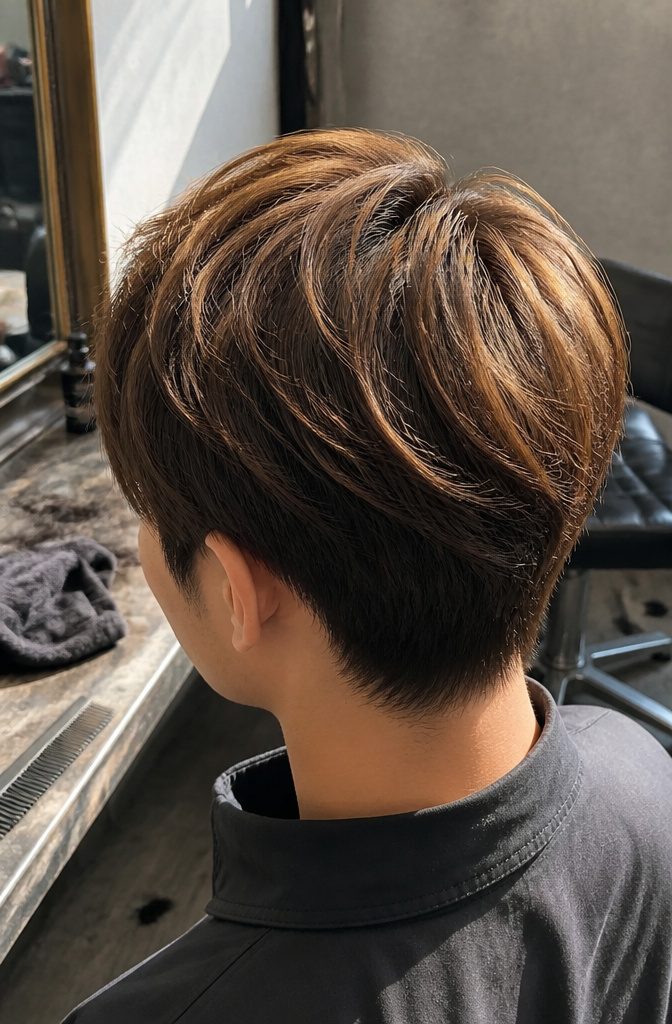
Amber is a warm, orange-toned highlight, and on medium brown hair it reads as polished rather than loud.
It suits anyone who wants to stand out without going overboard: the color sits close to the base, so the cut still does the talking and the highlights add a neat glow through the top.
I’d pick amber over a lighter, blonde-leaning shade when you want a change that looks planned.
Ask for soft, fine amber pieces, not thick chunks, because heavy streaks of orange can start to look harsh against brown. A clean short or medium cut shows it off best, since the color has a tidy shape to follow.
18. Lavender Highlights or Color
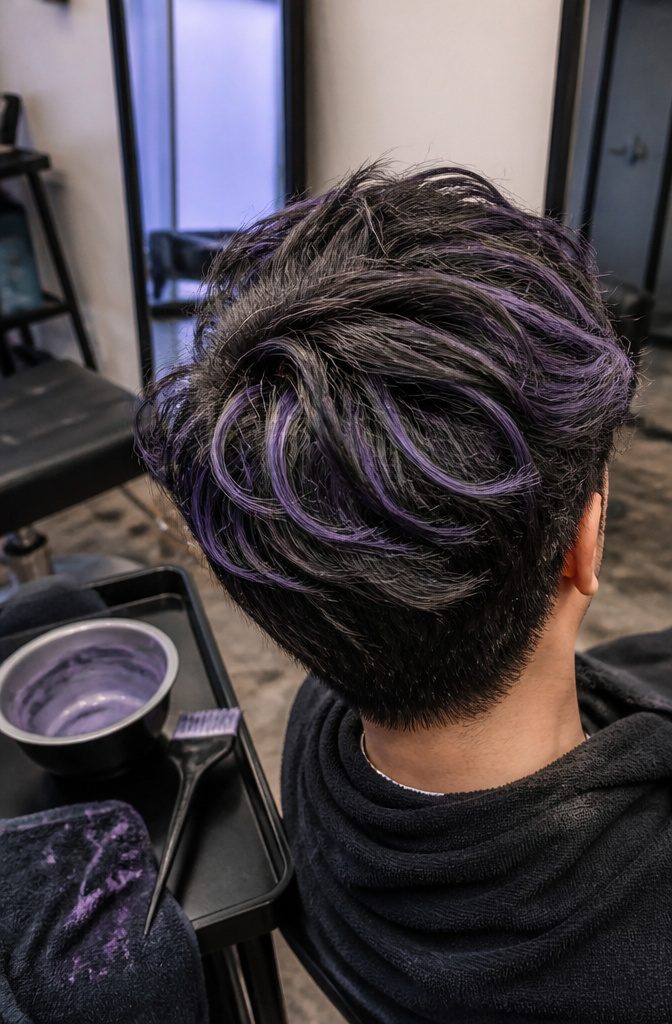
Lavender highlights sit at the experimental end of the color spectrum, the kind of choice that signals you’re comfortable with a look people will notice.
The shade reads as pastel and fashion-forward rather than subtle, and it shows up best on dark hair when applied as partial highlights or tips rather than an all-over tone.
The contrast between black or deep brown base and cool lavender creates a striking, intentional effect. It works particularly well with textured cuts where the highlights catch light at different angles, adding depth without looking one-dimensional.
You’ll want a colorist comfortable working with fashion color, since getting lavender to lift evenly on dark hair without going muddy takes skill and typically involves pre-lightening.
Upkeep matters more here than with brown or caramel. Lavender fades quickly, often shifting toward silver or ash within a few weeks, and you’ll need toning shampoo to keep the cool tone from turning brassy.
Frequent touch-ups make this a high-maintenance option, but you end up with a look few men commit to.
19. Dirty-Blonde Highlights on Medium Hair
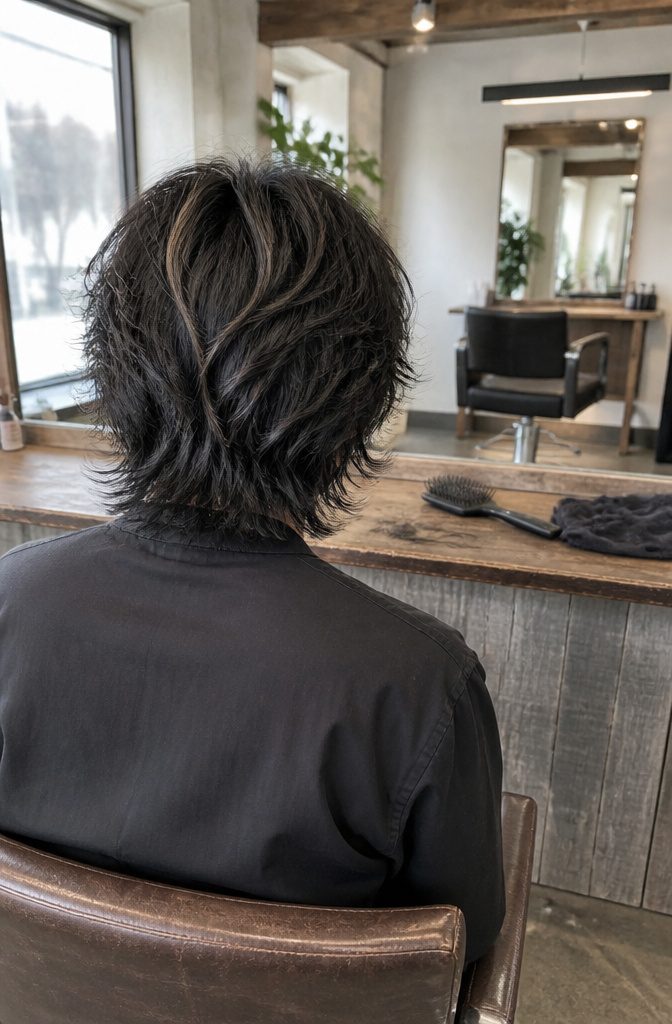
Dirty blonde is a muted, ash-toned blonde, and that softness is the appeal.
Against black hair it reads as natural instead of bleached. Medium length suits it because the loose, tousled shape gives the color room to show, and the brightness around the face gives a laid-back, cool look.
I’d pick it for a guy who wants a lift without people asking what he did to his hair.
Ask for ash-toned, muted blonde in fine pieces rather than chunky stripes, because thick streaks on black hair look striped, not sun-worn.
Skip warm gold tones here. They push the color toward a different look.
20. Ash-Brown Highlights on Dark Hair or Waves
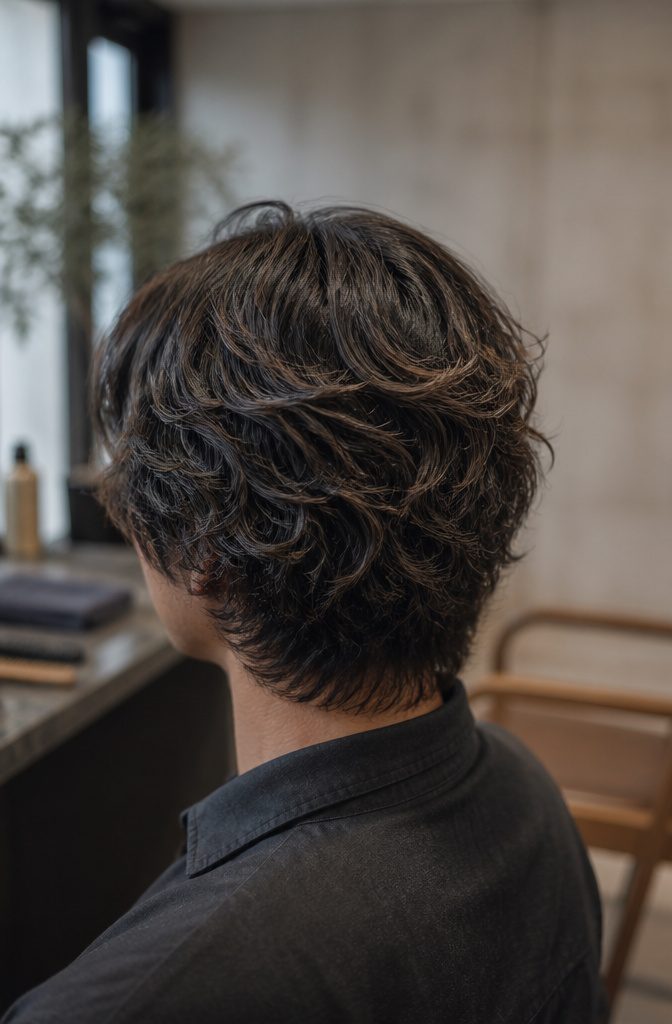
Ash brown reads cooler and more restrained than the caramel or honey tones that show up everywhere else on this list.
The difference sits in the undertone: ash brown leans gray or taupe rather than gold, so it lifts black hair without the warm glow most brown highlights carry. On waves especially, the contrast stays visible without fighting the base color.
The result looks intentional but not loud. Where golden highlights catch sunlight and announce themselves, ash brown stays quiet until someone is close enough to notice the dimension.
That makes it easier to wear in settings where bright color would feel out of place, and it grows out with less of a demarcation line than platinum or honey would leave behind.
Choosing a Shade for Your Base Color and Desired Effect
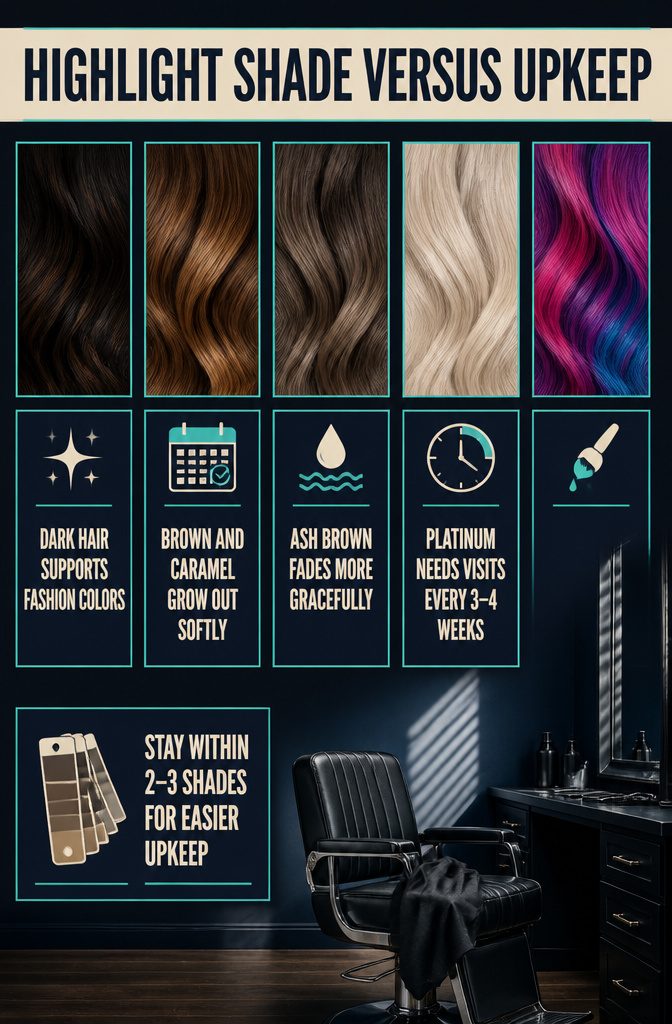
The shade you pick depends on how far you want to push the contrast and how often you’re willing to touch up. Dark hair holds anything from warm caramel and brown to platinum and fashion colors, so you have range.
Brown and caramel sit close to black and read subtle under most light; they grow out without a hard line and need less frequent visits.
Blonde and platinum jump off a dark base and look bold from across a room, but that gap shows fast as new growth comes in, so you’re back in the chair every three to four weeks if you want it clean.
Ash brown splits the difference: cooler than caramel, less stark than platinum, and it fades more gracefully than warm tones on dark hair.
If maintenance time matters more than the effect, stay within two or three shades of your base. If the contrast is the point, go lighter and plan for the upkeep that comes with it.
Matching Highlights to Your Hairstyle or Texture
Matching Highlights to Your Hairstyle or Texture
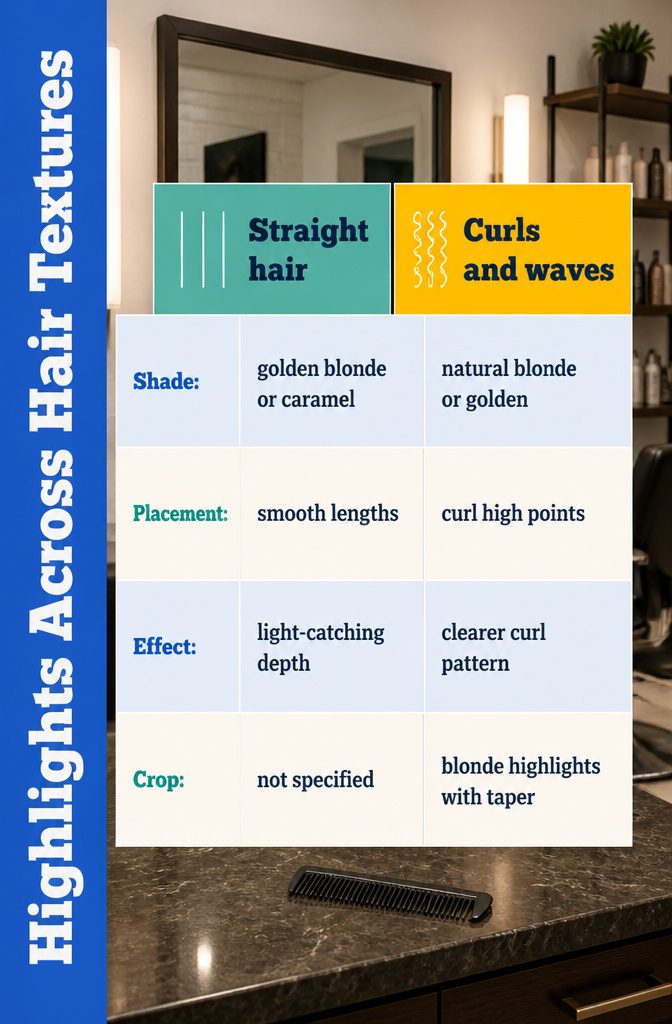
The cut you’re starting with shapes where highlights land and which shade will actually show up.
Straight short to medium hair takes golden blonde or caramel well because the surface is smooth enough to catch light without fighting texture. Sun-kissed blends of golden, caramel and honeydew add depth on straight lengths without looking patchy.
Curls and waves call for a different approach. Natural blonde tones placed through curls make each loop stand out instead of blending into one mass.
The lighter color catches at the high points of the curl, so the whole shape reads clearer. Golden tones work the same way on waves, lifting the pattern without flattening it.
A textured crop with blonde highlights stays sharp through the forward-styled texture, especially when paired with a taper. The contrast between dark base and lighter pieces makes the crop look intentional rather than grown out.
Maintenance and Upkeep
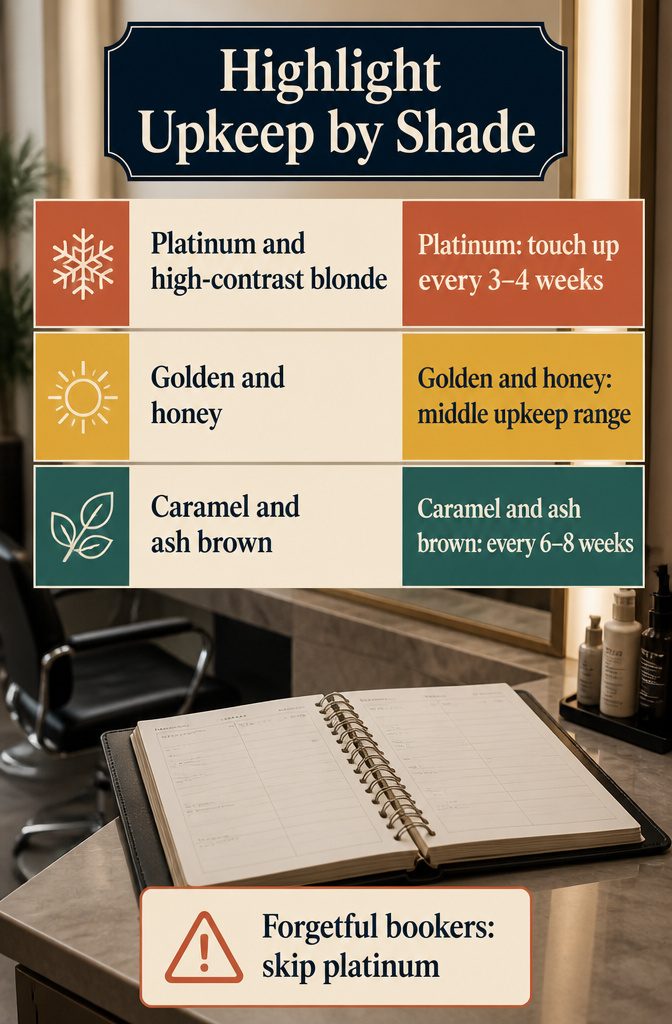
The color you choose decides how much chair time you’re booking.
Platinum and high-contrast blonde need touch-ups every three to four weeks to keep that icy cut from fading to brassy yellow, and the bleach process means you’re in for regular toning appointments if you want the look to stay sharp.
Caramel and ash brown sit at the other end: they blend as they grow, so you can stretch maintenance out to six or eight weeks without the roots screaming for attention.
Golden and honey tones fall somewhere in the middle, fading warmer rather than dull, which buys you a bit more time between sessions.
If you’re someone who forgets to book until the cut looks rough, skip platinum. The subtler shades give you room to be lazy without looking it.
Frequently Asked Questions
Does black hair look good with brown highlights?
Yes. Brown sits close to a black base, so it reads as depth and movement instead of obvious stripes, and highlights suit any man and any hairstyle.
Keep the brown within 2–3 shades of your natural color for the most natural result, though in low light or from a distance it may barely show.
What highlight color is best for black hair men?
No single shade wins; it depends on how much contrast you want.
Brown, caramel, and ash brown stay subtle, golden and honey add warmth, and blonde, platinum, and silver stand out from across a room. Caramel is the safest middle ground because it adds a buttery glow without going full blonde.
How do I choose the right highlights for my hair?
Start with how bold you want the result and how often you’ll sit in a salon chair. Shades within 2–3 steps of your base can stretch to 6–8 weeks between visits, while blonde and platinum need a touch-up every 3–4 weeks.
Texture also matters: curls and waves show off blonde or golden pieces, and straight short to medium cuts take golden blonde or caramel well.
Are highlights for men in style?
Yes, they’ve never gone out of style.
Current looks lean subtle and sophisticated, especially on dark or brown hair, adding depth and texture without going over the top. Bolder shades like platinum and silver are still there for guys who want a statement.