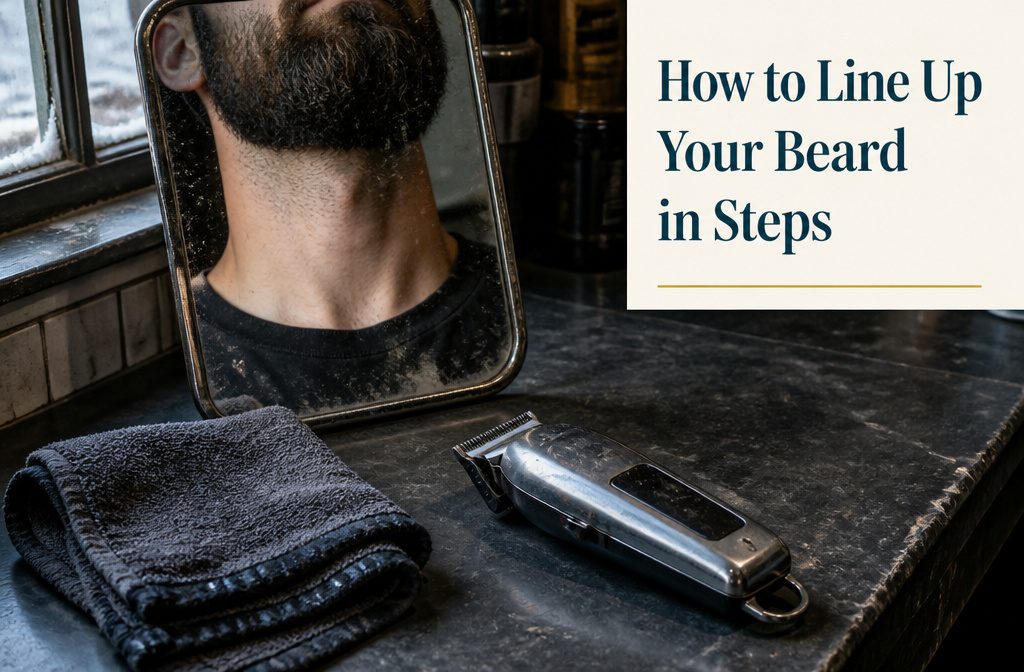
A clean neckline needs only a trimmer, a mirror and a dry beard, and the step people get wrong is the height.
Set the center point 2 fingers above your Adam’s apple. Go higher and the beard floats on your face, and the repair is a week or two without shaving your neck.
1. Wash and dry your beard, then check it in good light
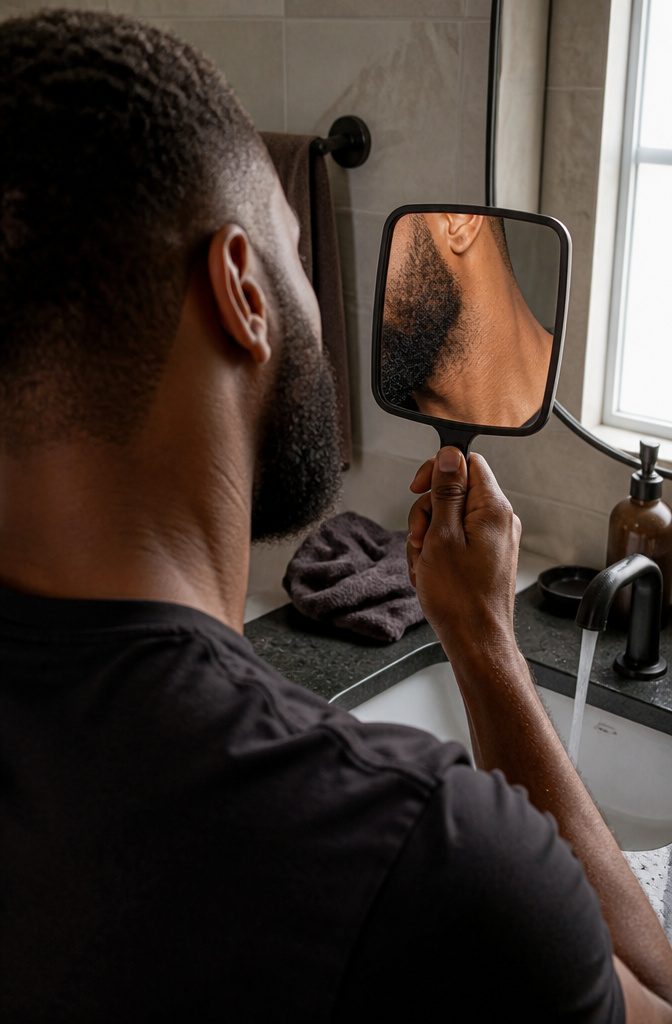
Wash your beard with warm water and towel it off, then wait until the hair is completely dry before the trimmer touches it.
Wet hair looks longer than it is, so a line set straight out of a hot shower takes off more than you meant to.
Stand facing the mirror with light coming from the front. Overhead light drops the neck into shadow, and the neck is where the line matters most.
A hand mirror shows the sides of your neck and behind the jaw. Run a fine comb through the beard to lift it, and look at where the hair really ends and what shape you want before you cut anything.
2. Set the center point above your Adam’s apple
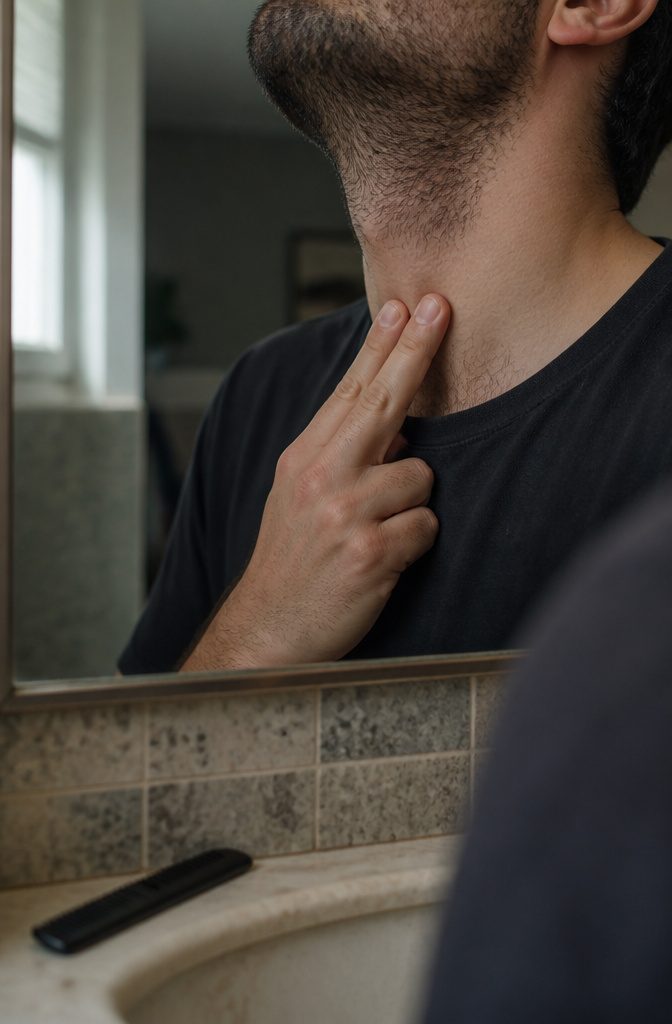
Tilt your head back and lay two fingers flat on your neck, with the bottom finger resting against the top of your Adam’s apple.
The top edge of those fingers is the center point of your neckline, the low spot of a U that curves up toward the ears.
Some guides call that distance about 1.5 inches instead, which helps if your fingers are thin, as one Reddit poster worried theirs were. A short beard or smaller face can sit closer, at one finger above the apple.
I’d start at two fingers. Too high and the beard floats on your face, and a lower line is easy to raise later.
3. Curve the line toward each ear
Start at the center and work toward one ear, then return to the middle and do the other side, so neither side gets a head start. Aim for a slight upward curve toward each ear.
A straight horizontal line fights the neck, which is not flat, and an overly round one looks forced. Stop at the earlobe; running ear to ear in one pass tends to leave the line uneven.
Then cut a vertical line below each earlobe that meets the under-chin line.
A sharp corner gives a chiseled look, while a lightly rounded one is softer. I lean toward the rounded corner for most guys, since it hides a slightly off hand.
4. Trim below the line, center outward
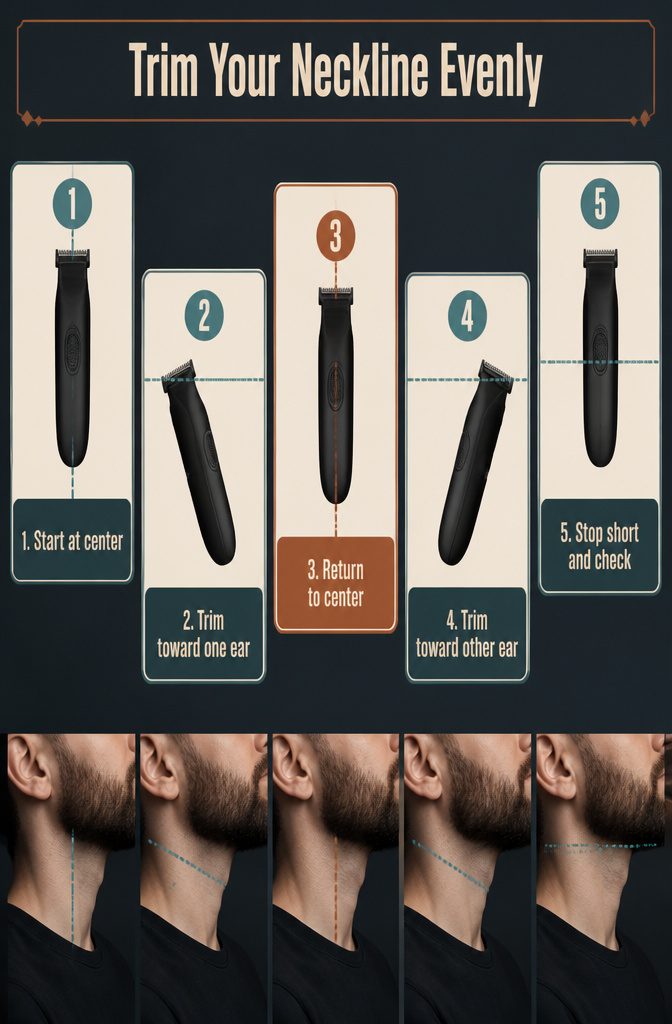
Start at the center point and work outward, one side at a time. Run the trimmer from the middle toward one ear, return to the middle, then do the other side.
Going ear to ear in one sweep tends to leave the line uneven. Keep your passes short and slow, and cut only below the line.
An unguarded trimmer or a razor gives the sharpest edge. If that feels risky, put a guard on and set it at least one setting below your beard length.
The edge comes out softer but more forgiving. Hair comes off easily and never goes back on, so I stop a hair short of where I think the line belongs and check before going further.
5. Clean the cheek line and remove strays
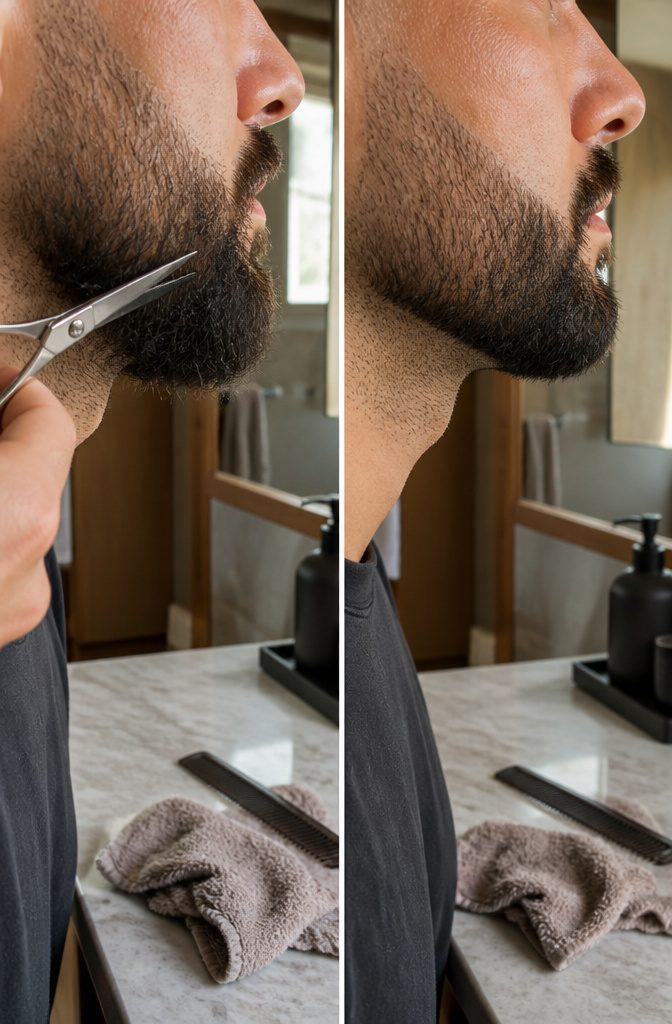
The cheek line is the top edge of your beard, running from the sideburn toward the mustache.
I lean natural: leave it where the hair grows and clear only the obvious strays. A defined line, straight or gently curved from the sideburn to the corner of the mustache, looks sharper.
Dropping it slightly makes a patchy beard look fuller, since the line starts where the hair is dense, but a cheek line taken too low makes the beard look thin. Keep both sides matched.
The lip line is its own edge and sets your mustache. Trim the hair hanging over the top lip for a short beard, or grow it out if you want length to style with wax.
6. Check from the front and correct both sides
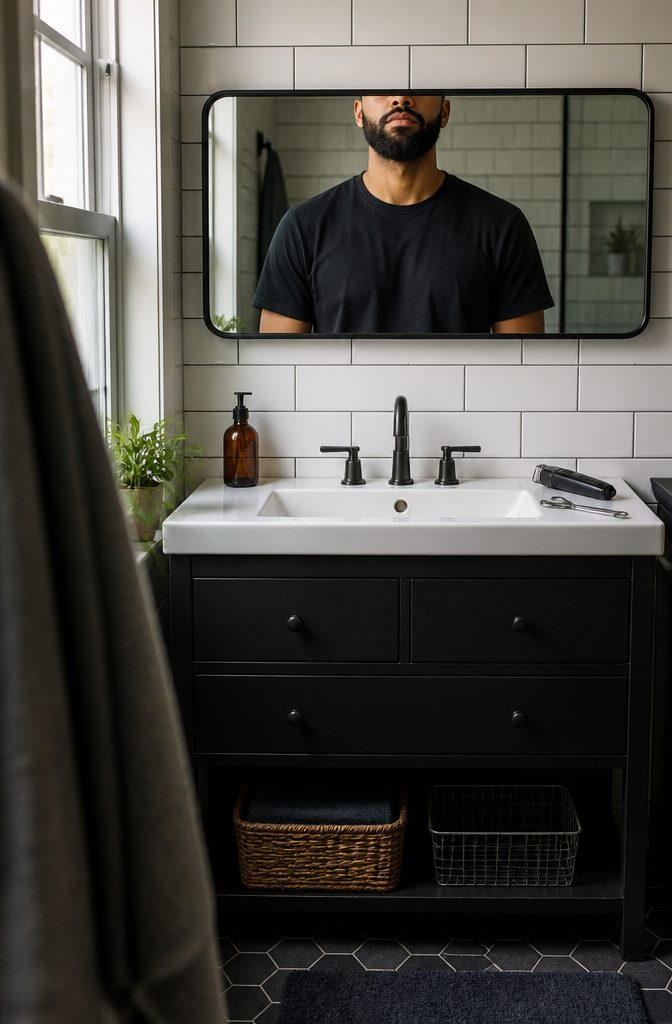
Face the mirror straight on before you put the trimmer down. From the front, the beard should still show beneath your jaw; if none is visible there, the line sits too high.
Compare the two sides for symmetry, then snip any strays above the cheek line with small scissors. Take only the escapees and leave the line itself alone.
Next comes a clean shave of the skin below the neckline, which makes the edge look sharp against a collar.
I’d do that before anything else goes on, because a shaky line shows more on bare skin. Finish with a dab of beard softener or your usual styling product for a smooth look and a fresh smell.
Tools I keep for home lineups
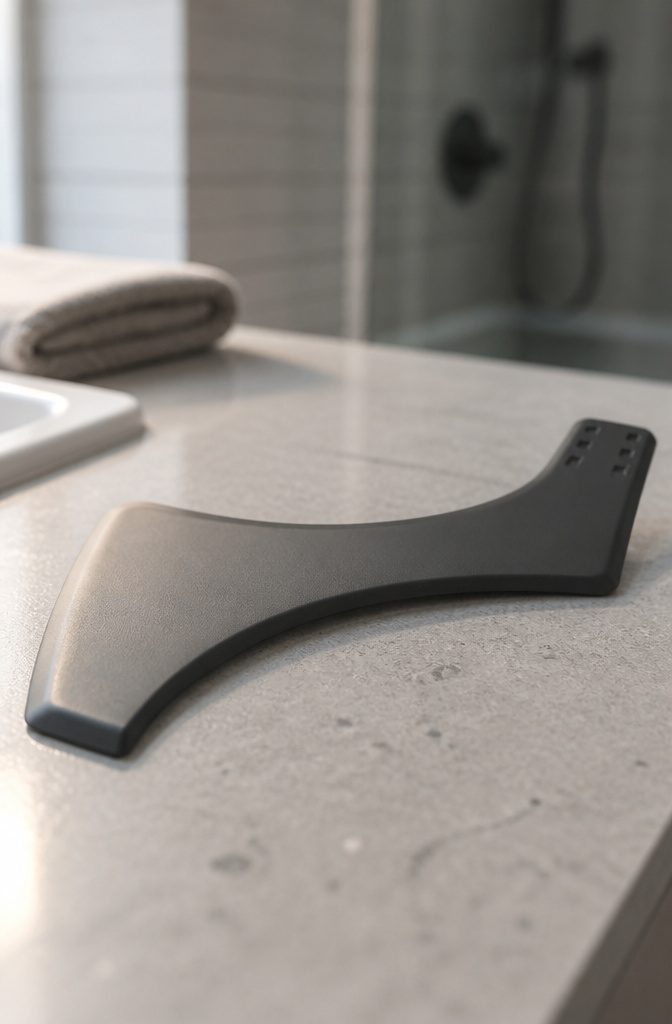
I keep the kit short, and a template is the one piece I’d add first:
- A trimmer with adjustable guards does most of the work. Braun’s Series 9 BT9560 offers 50 lengths.
- The Braun Series 7 AIO7580 is a 15-in-1 kit, which is more than a lineup needs.
- The Philips Norelco Multigroomer runs $50, reduced from $60, and covers the basics for less.
- Small scissors take stray hairs above the cheek line.
- A shaping comb holds hair flat while you trim.
- A beard shaping template helps beginners get symmetrical lines.
GQ names the two spots every tool has to handle:
The main areas of concern are the neckline and cheek lines.
— GQ
Judge a trimmer by how cleanly it reaches those two lines, not by its attachment count.
How often to line up your beard
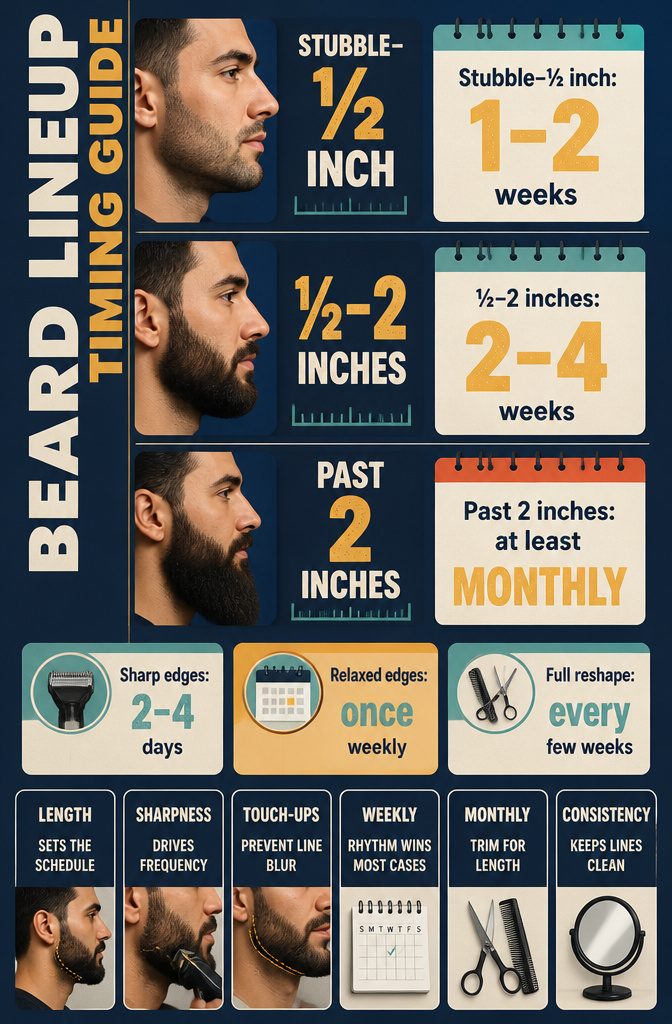
Length sets the schedule. Stubble to 1/2 inch needs a cleanup every 1–2 weeks, because the neckline and cheek line blur fast on a short beard.
A medium beard, 1/2 inch to 2 inches, holds its shape for 2–4 weeks. Past 2 inches, plan on a trim at least once a month.
How sharp you want it matters as much as length.
For a just-left-the-barber look, touch up the edges every 2–4 days. For a relaxed one, once a week is plenty.
Either way, a full reshape every few weeks resets the line. I’d pick the weekly rhythm for most guys: it keeps the edges tidy without turning grooming into a daily chore.
Where each cheek line works
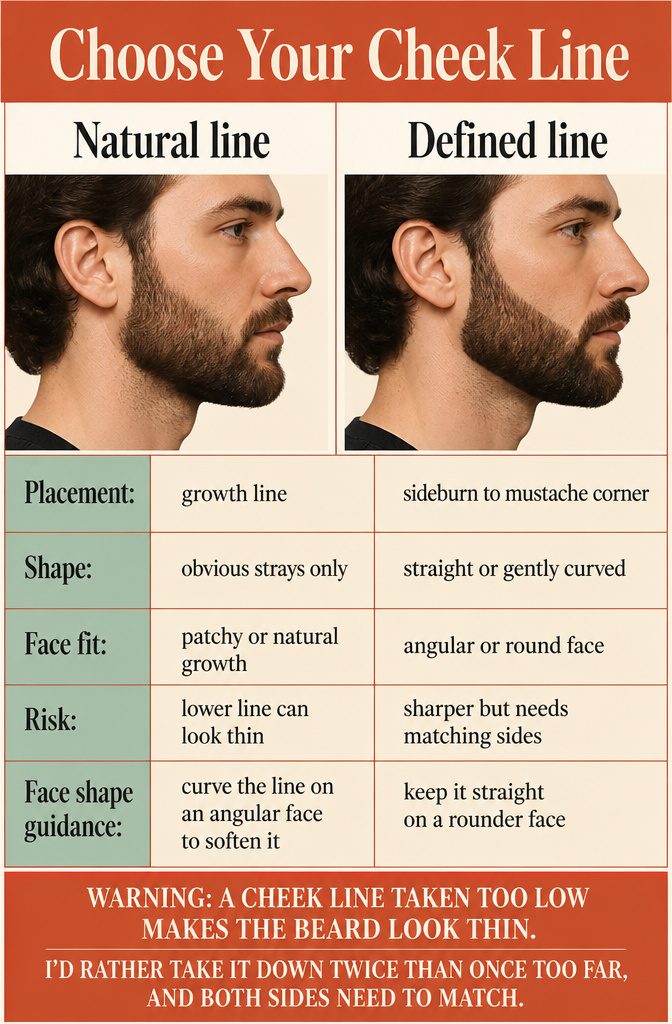
Natural wins for most beards: leave the line where the hair grows and remove only the obvious strays.
A defined line, straight or gently curved from the sideburn to the corner of the mustache, looks sharper and more groomed. Face shape can break the tie.
Curve the line on an angular face to soften it, and keep it straight on a rounder face. A pencil or ruler held from where the beard meets your ear to the corner of your lip makes a good guide.
A patchy beard can sit a little lower, since the line then starts where the hair is dense, but a cheek line taken too low makes the beard look thin.
I’d rather take it down twice than once too far, and both sides need to match.
What to do if you cut the neckline too high
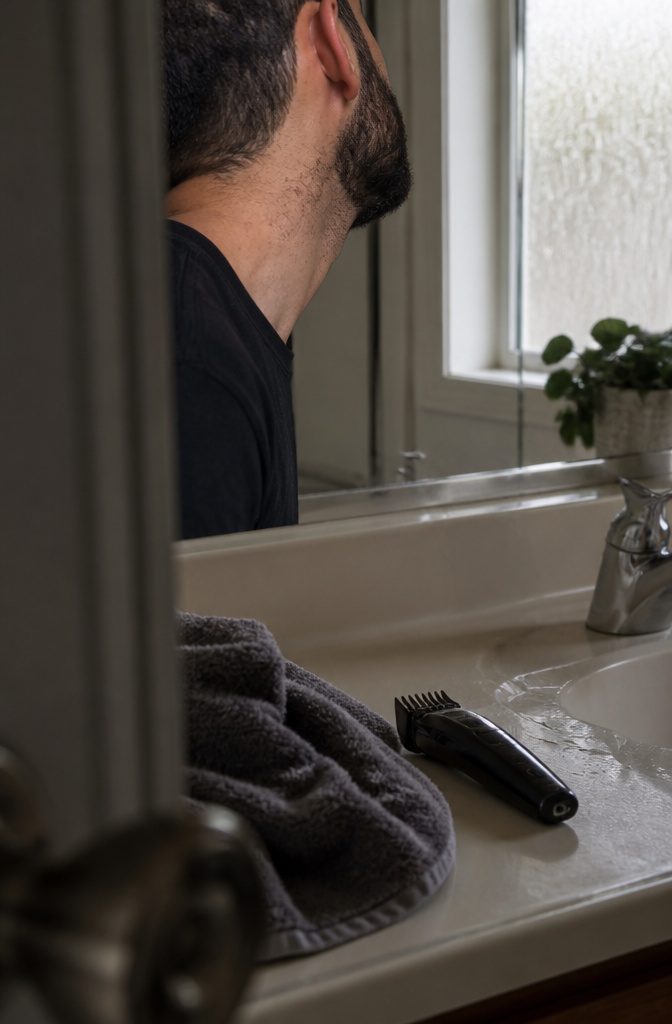
Going higher to even things out only makes it worse. Stop shaving the neck for a week or two and let the hair below the line grow back.
A few days can be enough for a small slip, but I’d wait the full stretch. Then set the line again at the right height, or hand it to a barber if you don’t want to risk a second round.
For a while your neck will look fuller underneath than you’re used to.
That’s the beard sitting where it should. When you reset the line at home, start with a longer guard and take hair off slowly, because cutting too much at once is how this happens.
Frequently Asked Questions
How often should I line up my beard?
It depends on beard length and how sharp you want it. Stubble to 1/2 inch needs a cleanup every 1–2 weeks, a medium beard (1/2 to 2 inches) every 2–4 weeks, and anything past 2 inches at least once a month.
For a just-left-the-barber look, touch up the edges every 2–4 days; once a week is plenty for a relaxed one.
Where should my beard neckline be?
Set the center point about 2 fingers’ width (roughly 1.5 inches) above your Adam’s apple, then curve the line up toward each ear.
A short beard or smaller face can sit at 1 finger. Don’t put it at the jawline: if no beard shows under your jaw when you face the mirror, the line is too high and the beard looks stuck on.
How do I line up my beard at home?
Start with a clean, completely dry, combed beard. Mark the center 2 fingers above your Adam’s apple, picture a slight upward curve to each earlobe, and trim only below that line, working from the middle outward one side at a time.
An unguarded trimmer or razor gives the sharpest edge, while a guard set one setting below your beard length is more forgiving.
Should I trim my beard wet or dry?
Dry.
Wet hair looks longer than it really is, so it’s easy to cut off more than you planned. Towel off after washing and wait until the hair is fully dry before the trimmer touches it.
Can a beard line up damage beard growth?
No. A lineup only cleans and sharpens the edges and doesn’t affect the follicles or how the beard grows.
The one real risk is a neckline set too high, and that hair grows back if you skip shaving the neck for a week or two.
What is the difference between a beard trim and a beard line up?
A trim manages the overall length and thickness of the beard. A line up defines the edges, meaning the cheek line, neckline and strays, and leaves the length mostly as it was.
What does “beard shape up” mean?
It refers to defining the edges of the beard, mainly the cheek line and neckline, so the outline looks clean and intentional. It’s the same edge work as a line up, not a change in how long the beard is.