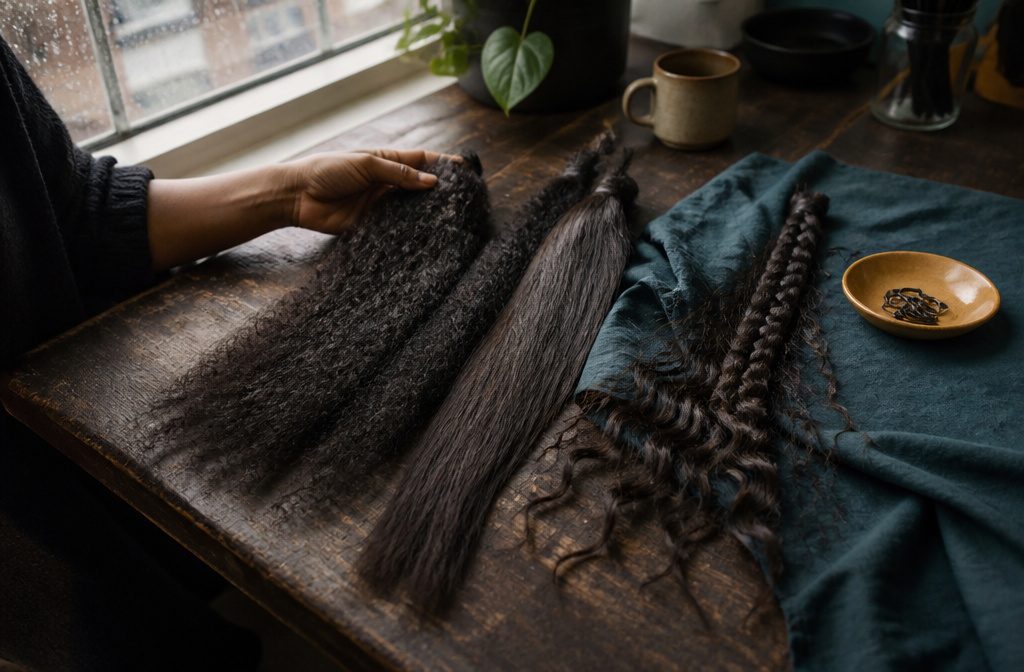
Human braiding hair is bulk human hair added to your natural hair before braiding, giving length and volume without a wig cap.
The texture has to match your own curl pattern or the mismatch shows where extension meets root, particularly in boho and goddess braids where loose ends hang free.
Tight Afro Kinky bulk runs around $40 per bundle, while Kinky Straight sits closer to $100 because straightening takes more processing before it ships.
1. What Human Braiding Hair Is and How It Works
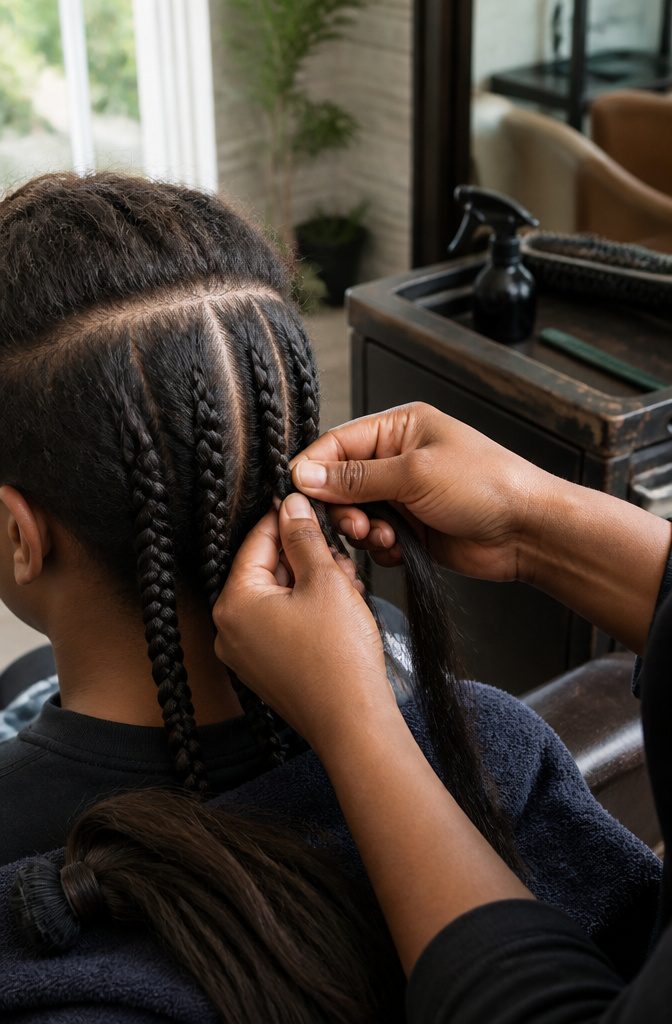
Human braiding hair is bulk human hair that gets added to your natural hair before you braid, giving you length and volume without the need for a wig cap.
The result looks more natural than synthetic alternatives because it’s actual hair, and because it’s worked into your own hair rather than sitting on top of it, your scalp stays exposed and can breathe.
The hair comes loose, ready to section and braid.
If you already have wefted bundles on hand, you can use those too by cutting the weft threads off the top. What’s left is bulk hair that works the same way for braiding.
The method is straightforward: the bulk hair integrates with your natural hair, then both get braided together into whatever protective style you’re after. No cap, no adhesive, just hair braided with hair.
2. Textures Available and Which Natural Hair They Match
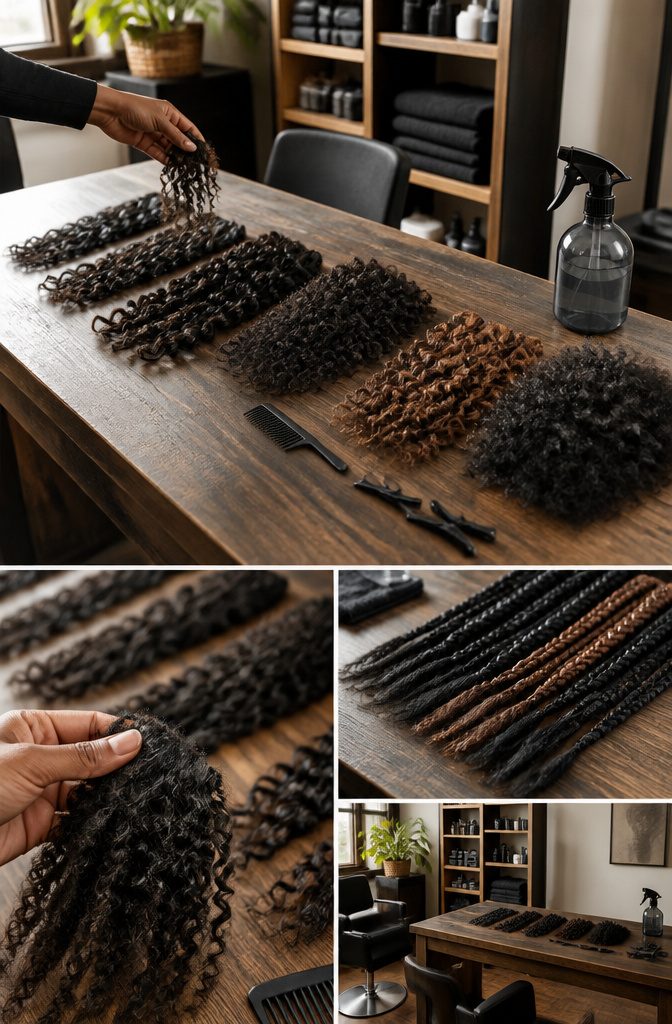
Human braiding hair comes in textures that match the full curl spectrum, and knowing where yours falls makes the blend look intentional rather than grafted on.
- Exotic Natural Curly pairs with 3a and 3b curl patterns, loose spirals that still hold a defined S-shape.
- Exotic Kinky Curly sits between 3b and 3c, tighter ringlets with more spring than bounce.
- Exotic Kinky Coily covers 3c and 4a, dense zigzag curls that shrink more when dry.
- Exotic Afro Kinky Coily works for 4a and 4b, tight coils with minimal stretch.
- Tight Afro Kinky is made for 4b and 4c, the finest coil pattern with sharp bends and no visible curl.
Straight, wavy, deep curly, and Afro curly options fill out the range. Color choices run from natural black through highlight brown for dimension without full dye.
3. Why I Would Choose Human Hair Over Synthetic
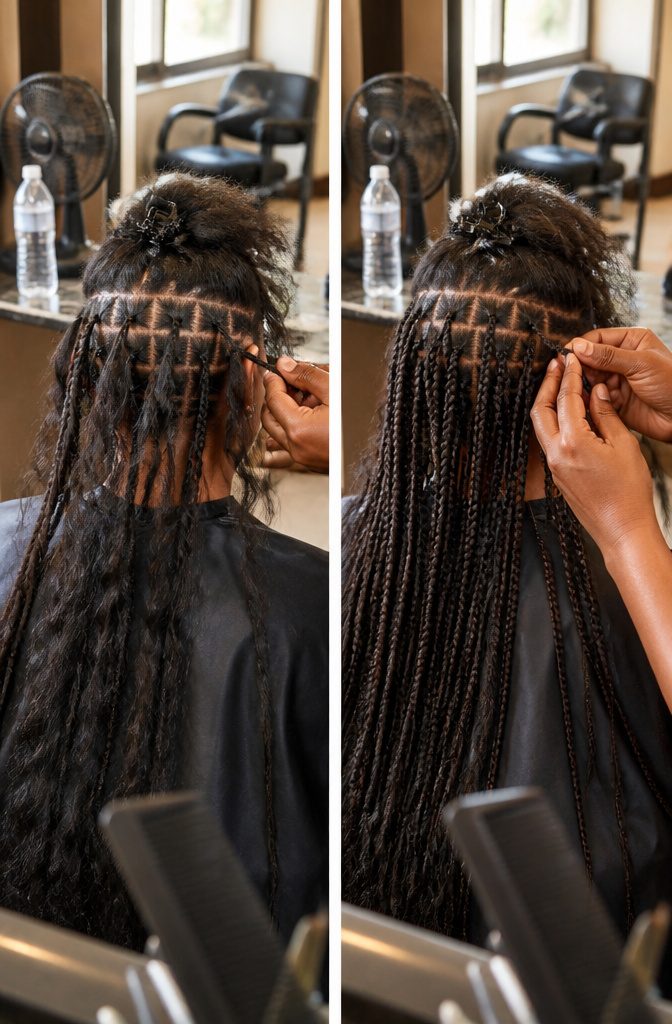
Human braiding hair blends with your natural texture in a way synthetic fibers struggle to match.
The texture sits flush against your own hair rather than creating a visible line where extension meets root, and when styled, it moves the same way the hair growing from your scalp does.
One customer noted that it blended seamlessly with her daughter’s natural hair after brushing it out with a little water, which tracks with what you would expect from actual human keratin rather than plastic.
The scalp stays exposed. No wig cap covers your head, so air reaches the scalp and sweat does not sit trapped under a layer of nylon mesh.
In summer heat, that difference matters. You can feel airflow at the roots, and there is no slipping or adjustment halfway through the day because nothing sits on top of your head in the first place.
Maintenance drops compared to a full wig. The hair is braided onto your natural hair and left alone for weeks, so daily styling time disappears.
Budget also tilts in favor of braiding hair, which costs less than a full lace unit while still delivering a finished protective style.
4. How to Match Texture to Your Own Hair
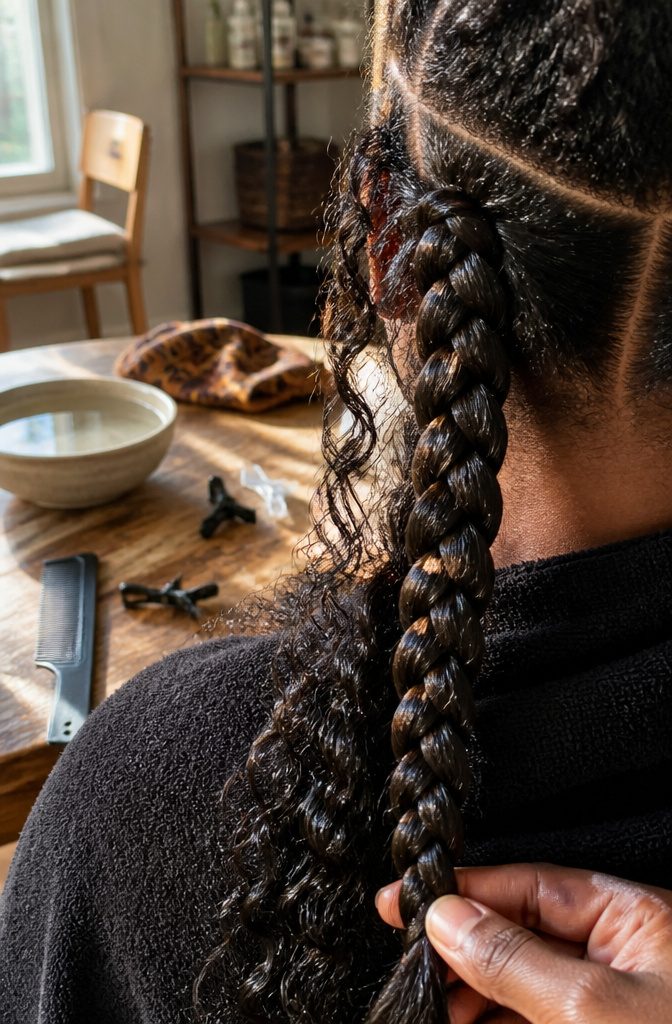
The texture that blends best is one that matches your natural hair or the finish you want the style to have.
If your hair has a natural wave or coil pattern, bulk hair with a similar texture disappears into the braid without a noticeable line where the extension begins.
Straight hair against kinky texture reads as two different materials, and the mismatch shows most where the braid tapers or where flyaways catch light.
Virgin human hair holds its original texture without processing, so it moves and reflects light the way natural hair does.
That consistency makes it easier to match. If you are working with boho or goddess braids where some of the hair hangs loose, the texture match becomes even more visible.
Brushed-out curls that blend seamlessly with your own hair look intentional; a sharp contrast in curl diameter or sheen looks like an add-on rather than an extension of what was already there.
5. How Many Bundles You Need for Different Lengths
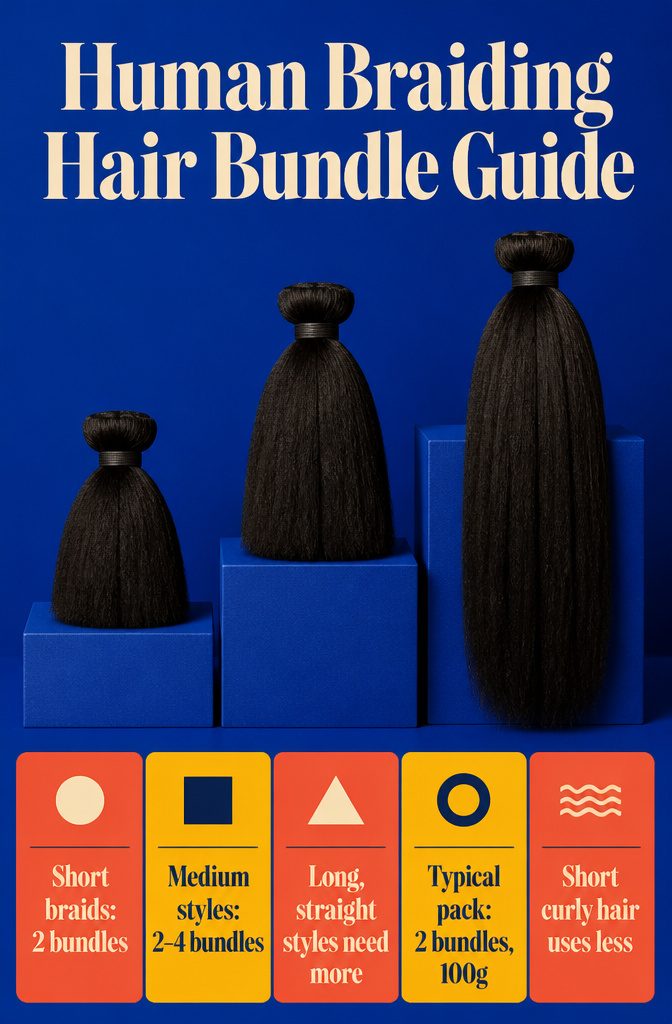
The number of bundles depends on how full you want the braids, how long they run, and the style itself.
Short braids may need 2 bundles. Medium-length styles typically fall in the 2–4 bundle range.
Long, straight styles with high density push the count higher still. A typical product is 100g, sold 2 bundles per pack, so one pack can be enough for shorter work or you may need two packs for fuller, longer results.
Curl pattern and natural density also change the math. Short, curly styles use less hair because the texture fills space on its own.
Straight, long braids need more volume to reach the same fullness. The difference matters when you are ordering, since buying short leaves you stuck mid-style and buying too much means unused bundles sitting in a drawer.
6. Braid Styles That Work With Bulk Human Hair
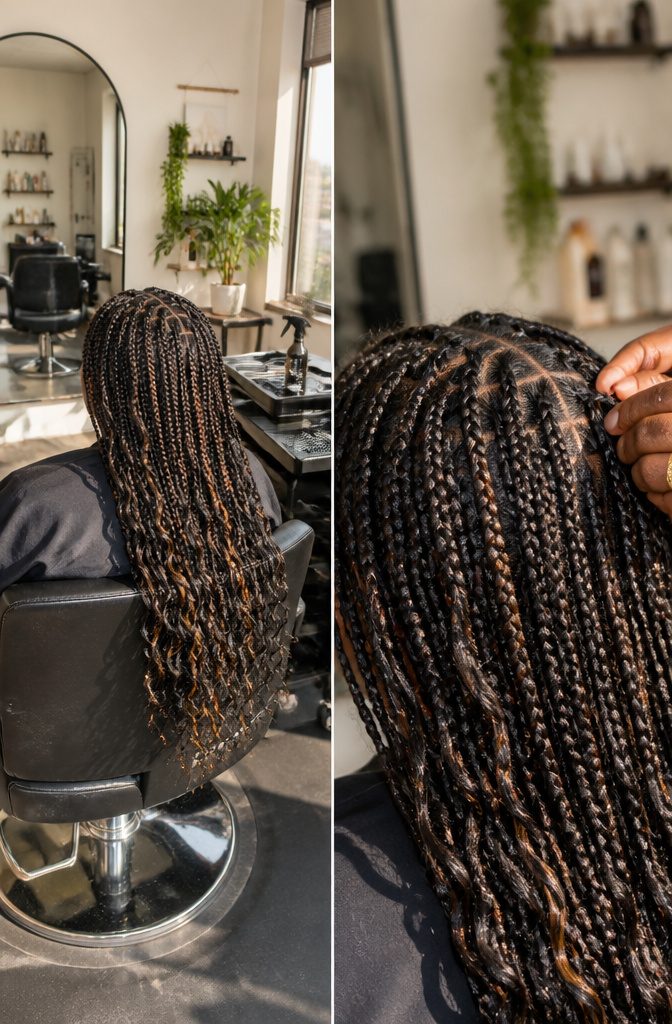
Bulk human hair fits box braids, knotless braids, goddess braids, boho braids, micro braids, natural twists, and crochet styles.
The format works because the hair has no weft attached, so you can feed it through each braid without bulk at the root.
If you already own wefted bundles, you can cut the weft off and use the loose hair the same way. That opens up hair you might have bought for a sew-in or wig construction.
The styles I see most often with bulk hair:
- Box braids – individual sections braided from root to tip, uniform size throughout
- Knotless braids – start with your natural hair and feed bulk hair in gradually for less tension at the scalp
- Goddess braids – larger, chunkier cornrows that lie flat or are braided into updos
- Boho braids – box braids or knotless with some curly pieces left loose for texture
- Micro braids – tiny, thin braids that take longer to install but last weeks
- Natural twists – two-strand twists using bulk hair to add length or volume
- Crochet – bulk hair can be looped through cornrows if you prefer that install method
Human bulk hair works across curly, kinky, and wave textures, so you can match your own hair or go for contrast.
7. How to Wash and Maintain Braided Human Hair
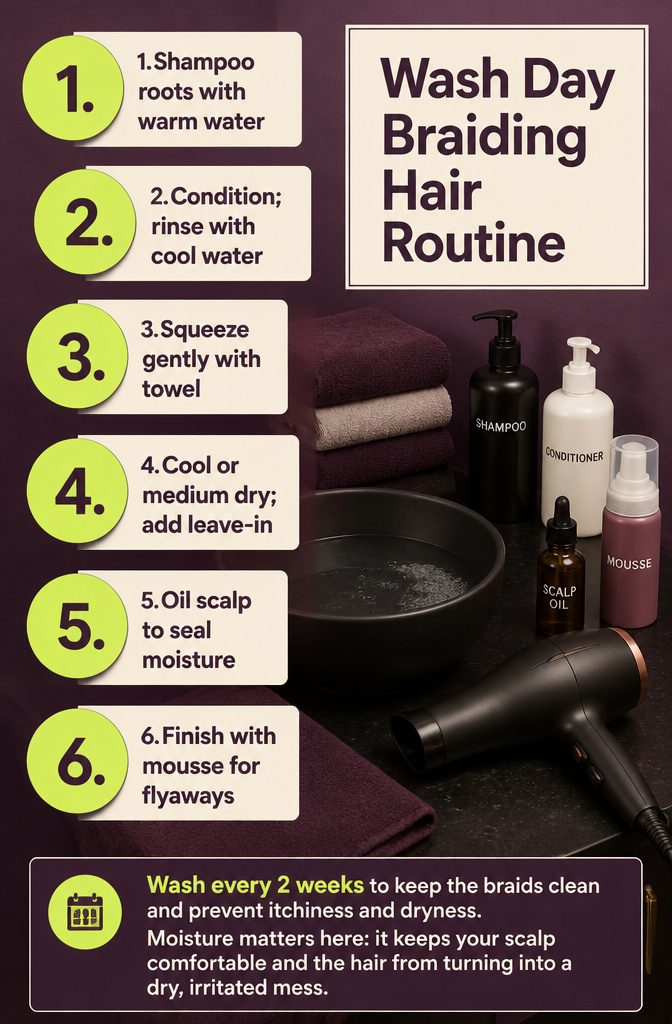
- Wet your braids with warm water and apply shampoo, focusing on the roots and scalp where buildup sits. Use the pads of your fingers to massage the scalp and work the shampoo through.
- Rinse out the shampoo with warm water, then coat the braids with conditioner to keep them flat and frizz-free. Rinse the conditioner with cool water.
- Gently squeeze out excess water with a towel. Don’t rub the braids or you’ll create frizz.
- Dry the braids on a cool or medium blow dryer setting, then apply leave-in conditioner for shine and moisture.
- Oil your scalp to seal in that moisture.
- Finish with mousse to lay down any flyaways.
Wash every 2 weeks to keep the braids clean and prevent itchiness and dryness. Moisture matters here: it keeps your scalp comfortable and the hair from turning into a dry, irritated mess.
8. How Long the Hair Lasts With Proper Care
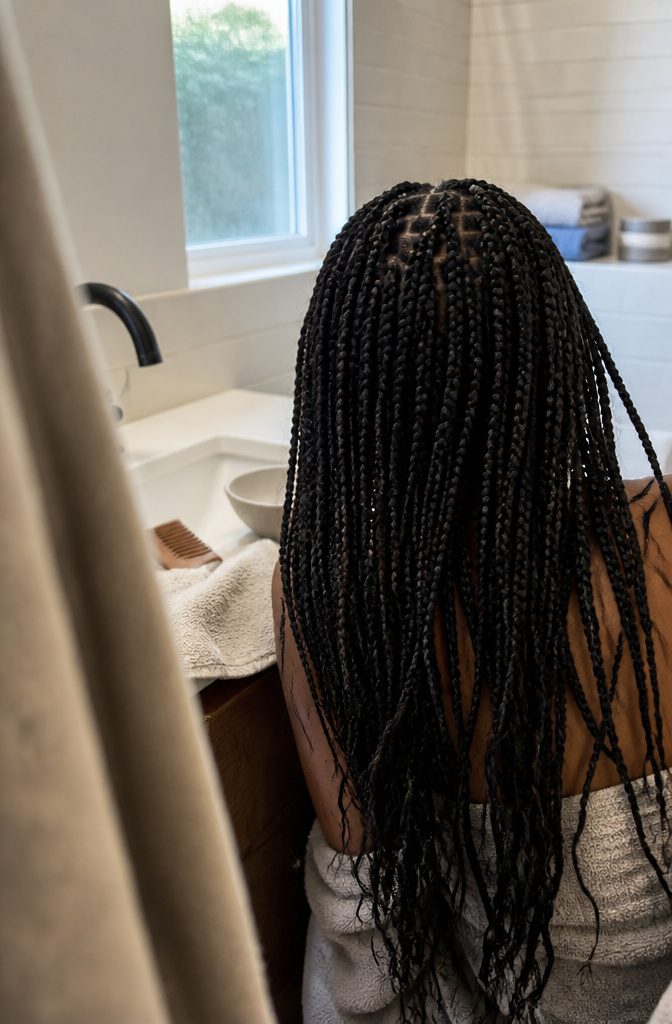
With proper care, human braiding hair can last 2–3 months and still look clean and intact.
The longevity depends on how you treat it between installation and takedown: washing the braids every two weeks keeps the scalp from itching and the hair from drying out, which both shorten how long the style holds up.
Individual results vary. One customer report noted wearing the style for about seven weeks, and the hair still looked stunning at that point.
That lines up with the upper end of the range if you are gentle with it and do not skip maintenance.
The takeaway is that human hair is reusable if you take it down in good shape, but the install itself ages over time and you will likely refresh before the hair itself gives out.
Product Types and Price Range
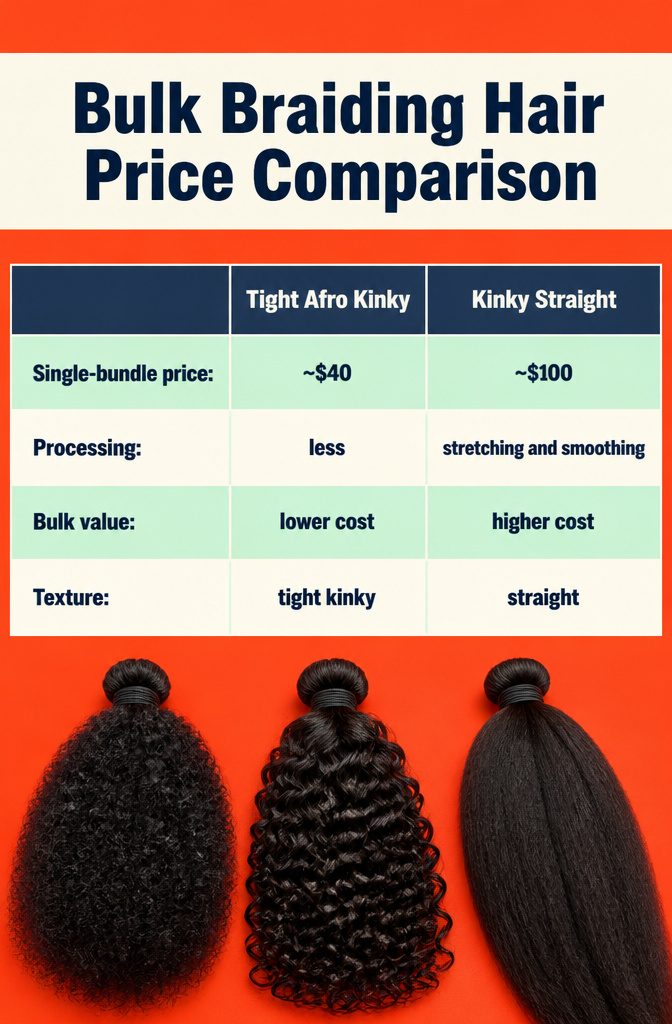
You’ll find human braiding hair sold in bulk by texture, with prices shaped by curl pattern and processing.
Tight Afro Kinky bulk runs around $40 for a single bundle, while Kinky Straight sits closer to $100 because the stretching and smoothing take more work before the hair ships.
Deep Curly falls between the two, usually in the mid-fifties before any sale pricing drops it lower.
Brands filter their own inventory by length (most start at 10 inches and climb to 26 or longer), color (jet black through medium browns, occasionally blonde pre-lightened), and whether the hair claims virgin status.
Virgin means unprocessed cuticle still intact, which matters less for bulk destined to be braided than it does for wefted extensions you’ll flat-iron weekly.
I check length and texture first, then let price sort what’s left, because a $60 difference between kinky textures tells you more about labor than about how long the hair will last.
Customer Experience With Softness and Curl Retention
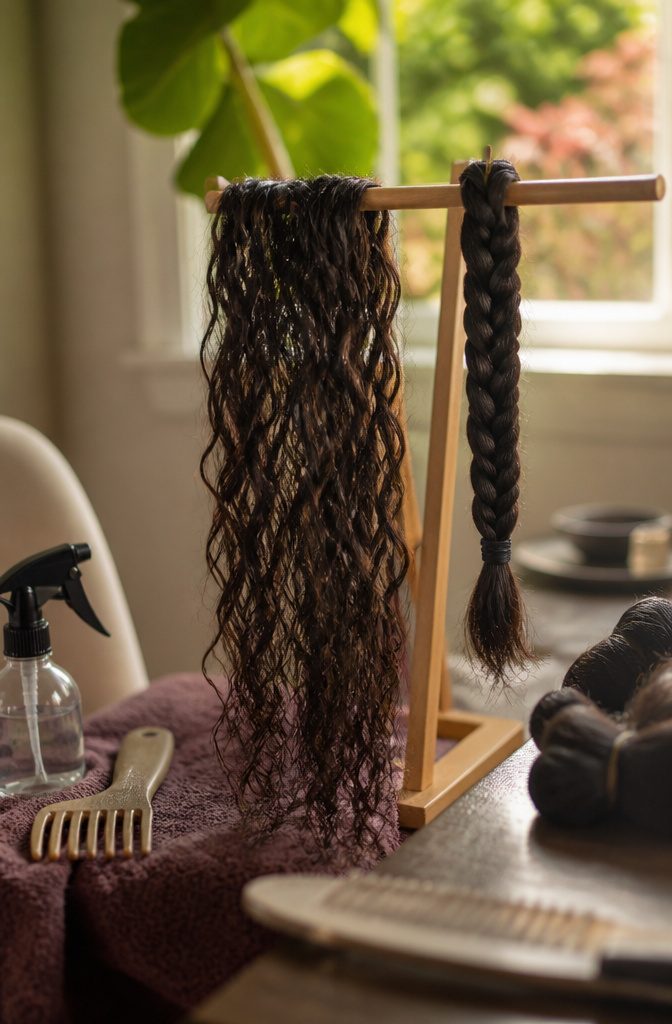
Customer reviews for human braiding hair mention softness straight out of the package, with several buyers noting the texture feels manageable without needing product added before installation.
One account describes the curl pattern holding well after wetting and air-drying, which matters if you want waves or curls to stay defined through daily wear. Another mentions no tangling and no shedding, both common complaints with lower-grade bulk hair.
The 100g 2-bundle pack shows up as enough volume for full styles in multiple reviews, though how far two bundles stretch depends on braid size and how densely you install.
HotBraids offers a 30-day return, giving some room to test whether a texture works with your own hair before you commit to braiding it in.
These are individual customer accounts, not controlled tests, so your own experience with hold and manageability will vary with installation method and how you care for the hair once it’s in.