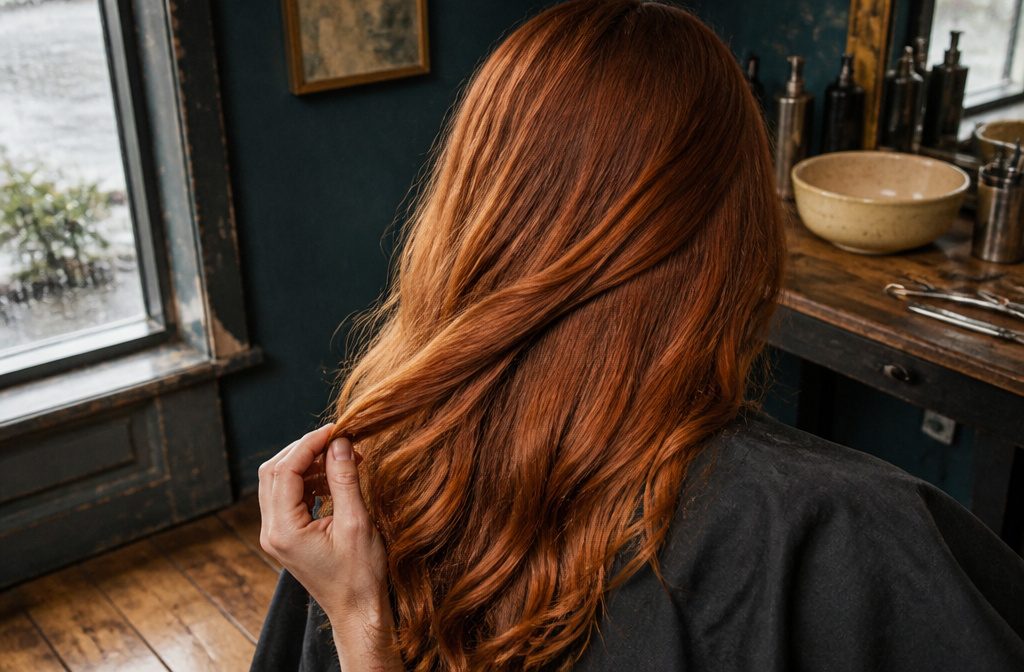
Cowboy copper is a muted, brown-leaning copper that sits between true copper and red-brown, and it changes with your natural base.
Very dark brown or black hair needs at least 5 levels of lifting first, often a separate lightening step, while medium brown or dark blonde can often get there in a single process.
What Cowboy Copper Hair Is
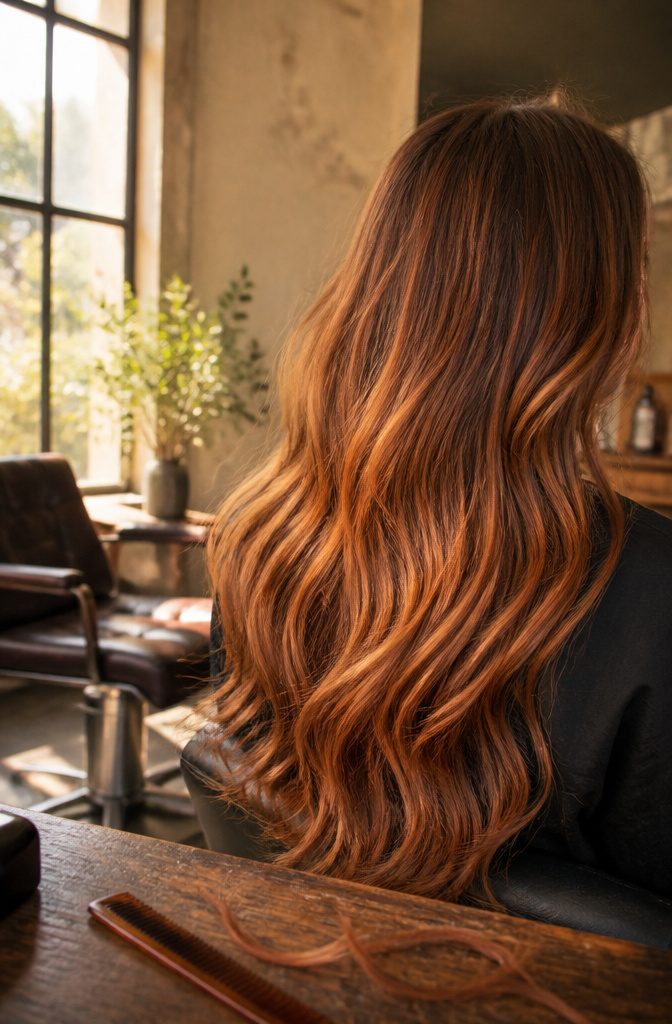
Cowboy copper sits somewhere between a true copper and a red-brown, softer and more natural than the bright copper you see in most color charts.
The shade blends copper with brown, gold, or red-gold tones, and the name comes from the warm, dusty feel of cowboy leather and the kind of sunsets you see in wide-open country.
It’s a muted take on copper, more subdued than fiery reds but warmer than plain chestnut.
The color started gaining traction in 2023, mostly on social media, and by 2024 it had become a major trend.
What makes it work across different skin tones is that your natural base color becomes part of the formula, so a colorist can lean deeper, softer, or more golden depending on where you start.
That customization keeps it from looking one-size-fits-all, and it’s why the shade reads differently in different light: more brown indoors, more orange near a window.
Who Cowboy Copper Suits
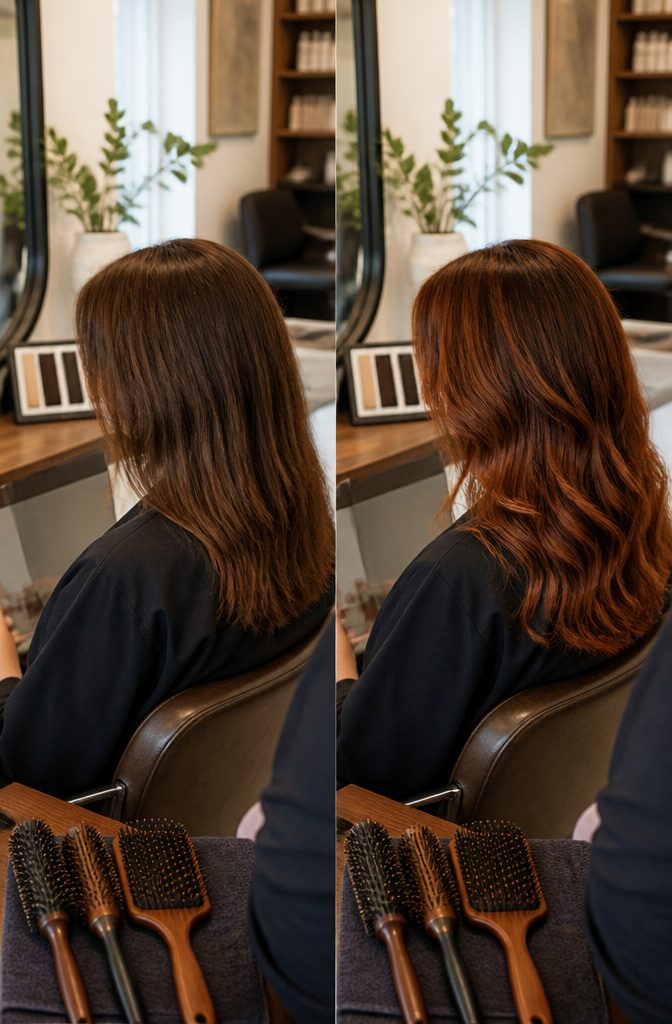
Cowboy copper adapts across most skin tones because the shade itself can shift.
Warm undertones often suit copper and gold tones, while neutral undertones can handle a wider range, from soft brown-copper to brighter copper. Cool undertones tend to look better with a more muted copper-brown mix that pulls back the orange.
Your starting hair color matters just as much. Dark brown hair may need lightening before it can reach a true copper result, while medium brown or dark blonde hair can get there with less work.
That is where the colorist consultation earns its time: you bring a reference photo, the colorist looks at your natural base and undertone, and together you pick the copper level that reads right on you rather than copying one image exactly.
1. Classic Cowboy Copper on Long Layers
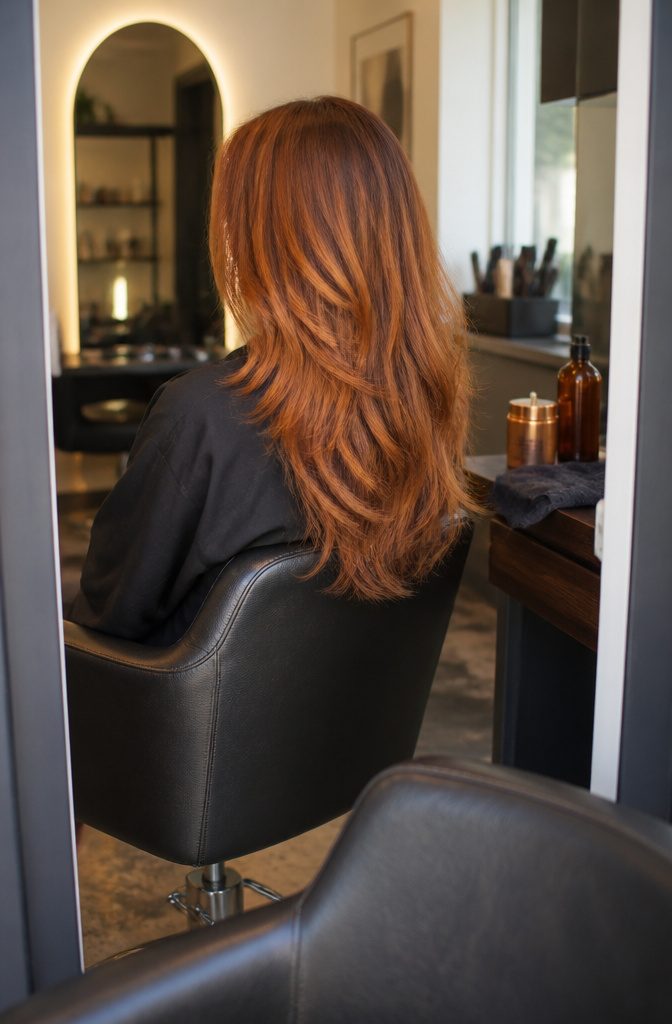
Classic all-over copper with darker roots creates dimension through cut alone when the color stays warm and even. The layering does the work: where light catches the different lengths, the copper reads deeper or brighter without needing highlights painted in.
Ask for a single-process warm copper with a natural root shadow and long layers starting below the chin. The grow-out stays soft because the root was left darker from the start.
Copper fades faster than most colors, so plan on a copper-depositing gloss or mask every two to three weeks at home and a salon gloss refresh every six to eight weeks. The maintenance schedule matters more than the initial appointment.
Without the gloss routine, the warmth turns brassy or washes out to a flat orange that no longer reads as copper. Long hair shows fade more obviously than a short cut because the ends have been through more wash cycles.
2. Deep Leathery Copper on a Sleek Long Bob
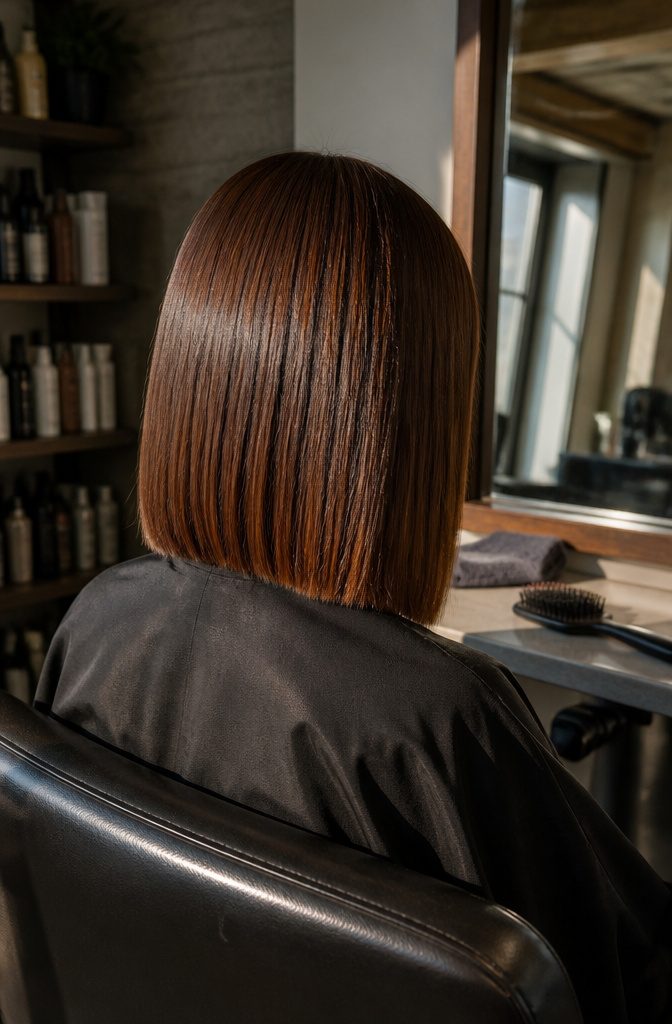
Brown undertones lead here, and they give deep leathery copper its moodier, more polished brunette look. In shade it reads as a rich brown, and the copper only comes through when light catches it.
Ask your colorist for a copper built on a brown base rather than a red or gold one, and name the long bob in the same breath so the color and the cut get planned together.
I’d pick this over a layered cut for the polished effect. A smooth, blunt line lets the color read as one dense shade, and frayed ends break that up fast, so regular trims matter more than any product.
It suits anyone who wants copper without a bright orange glare, especially people with darker natural hair who would rather stay close to brunette.
3. Bright Copper Waves with Auburn Glow
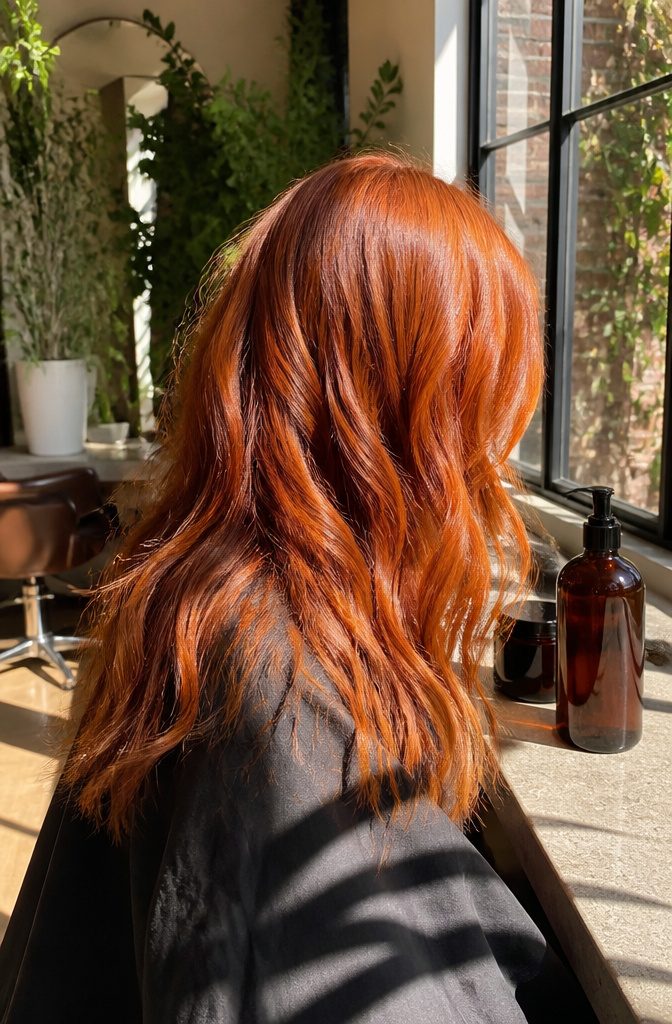
Vivid, sunlit copper worn in loose waves, with soft auburn lowlights placed mostly underneath, keeps the surface bright while stopping the color from reading flat.
The auburn adds dimension where light doesn’t hit directly, breaking the color into ribbons that shift as you move.
This version leans harder into brightness than the deeper styles, so it lifts fair to light skin noticeably and makes blue or green eyes stand out.
Waves are the ideal texture because they show the full range from bright copper on top to auburn in the shadows.
Ask your colorist for bright copper with auburn lowlights for depth and movement.
The lowlights go underneath so the top stays luminous. Bright copper fades fastest in sunlight, so protect it with a UV hair spray and refresh with a copper gloss at four to six weeks before the brightness dulls.
Wash two to three times per week with sulfate-free, color-safe shampoo, finishing with cool water to seal the cuticle. A pigmented copper conditioner once a week deposits fresh warmth and stretches time between salon visits.
4. Balayage Melt Over a Dark Base
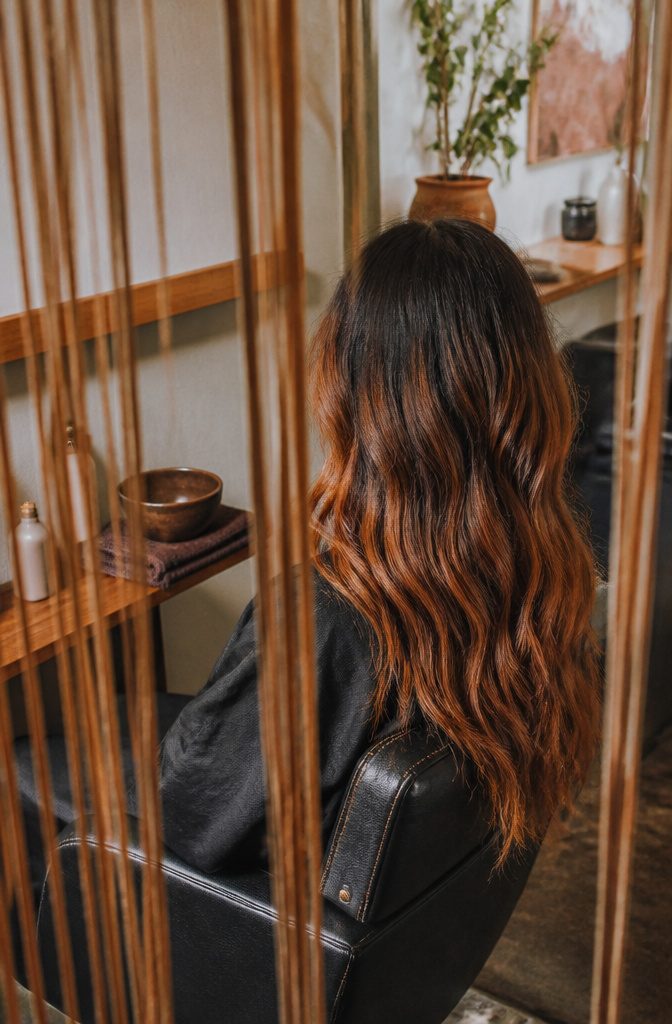
The lowest-maintenance way into cowboy copper is a balayage melt over your natural dark base.
Your colorist hand-paints ribbons of warm copper through the mid-lengths and ends, blending them into a soft root shadow so the copper glows out of your own dark hair.
The deep base makes the copper look richer, and you never fight your roots.
This suits naturally dark brown or black hair best. It shines on medium to long hair, where the balayage can cascade, and warm, golden, or olive skin tones look especially radiant in this deep-and-fiery combination.
Ask for hand-painted copper balayage with a soft root melt, no harsh stripes. Describe the goal as dark roots melting into warm cowboy copper ends, and bring photos showing how high the brightness should start.
A melt grows out softly, with no hard line at the roots. Most people touch it up only two or three times a year, with a copper gloss every eight to ten weeks to refresh the tone.
At home, color-safe shampoo keeps the pre-lightened ends from releasing pigment too fast, and a weekly mask keeps the painted sections supple.
5. Copper Curls on a Voluminous Curly Bob
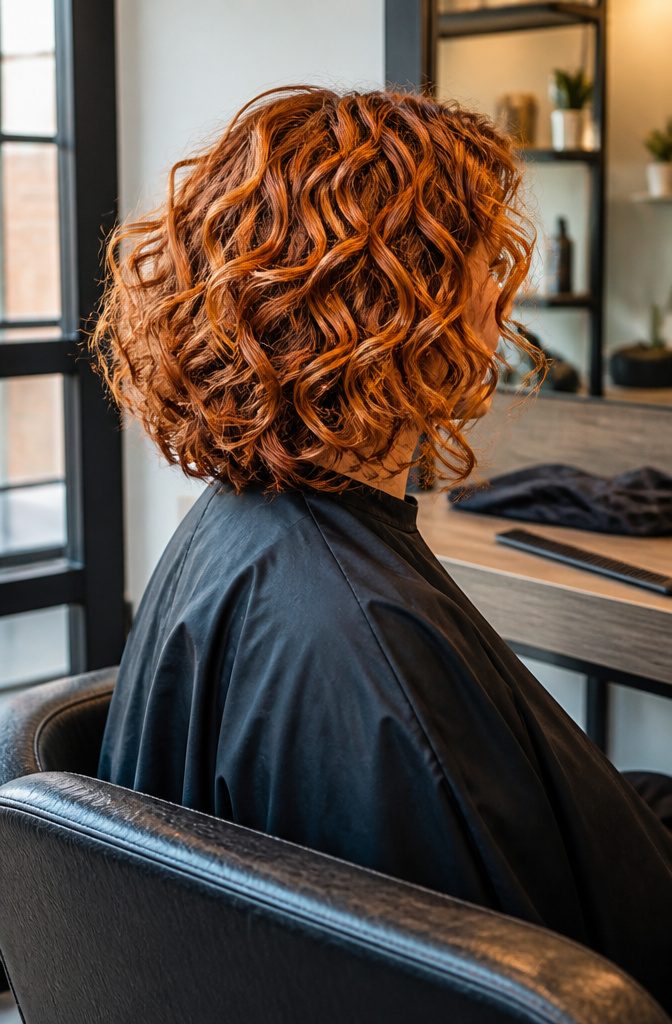
Copper follows the curl pattern here, and the brightness pools around the face where curls naturally lift and catch light. This is a voluminous curly bob where the color and the shape do equal work.
The cut falls somewhere between chin and collarbone depending on curl tightness, and the copper glaze wraps each curl without fighting the texture or flattening it with too much contrast.
Ask for a curly bob shaped for volume, then request copper applied so the lightest pieces frame your face. The colorist will concentrate brightness at the front and let it taper as it moves back.
This suits anyone whose curls already have body and who wants that body to register from across a room. Trims land every eight to ten weeks to keep the shape from sagging or the ends from splitting and losing bounce.
6. Soft Chestnut-to-Copper Ombré
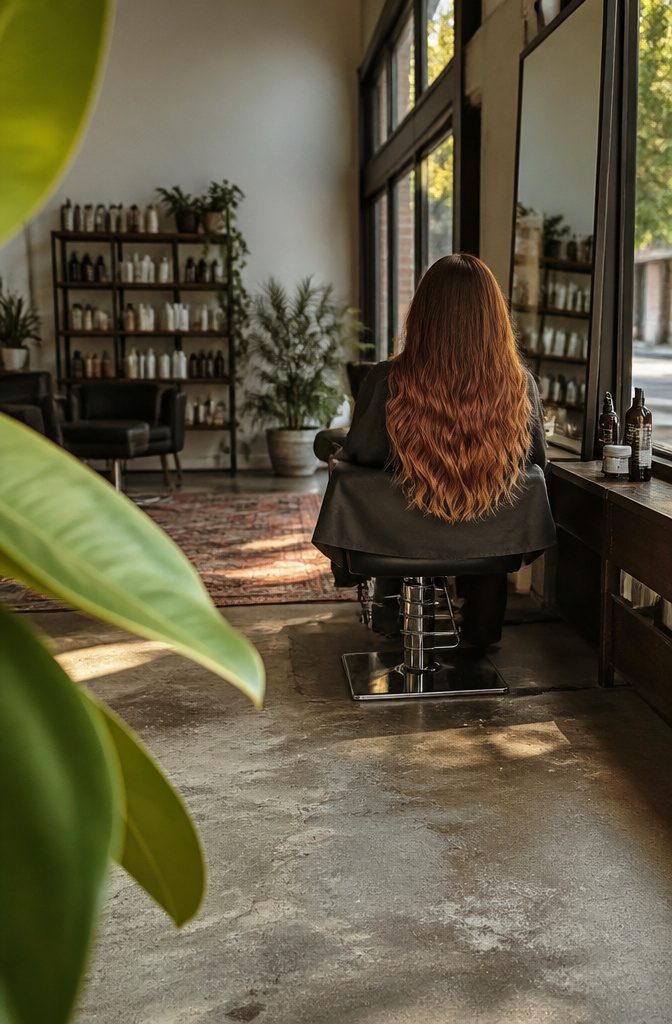
Chestnut roots melting into copper ends is the easiest version of this color to live with, since your own root growth simply joins the chestnut.
Ask for an ombré with no visible line, and have the transition start around chin level or lower.
A hard contrast near the roots reads dated. A gloss over the whole head at the end ties both tones into one finish.
It flatters warm medium skin tones and works on straight, wavy or curly hair, though long lengths show the melt best. If your hair is already warm brown, I’d color only the ends.
Refresh the copper with a gloss every 8–10 weeks. Wash 2–3 times weekly, mask the ends weekly, and add a copper-depositing conditioner when they look pale.
7. Face-Framing Copper Highlights
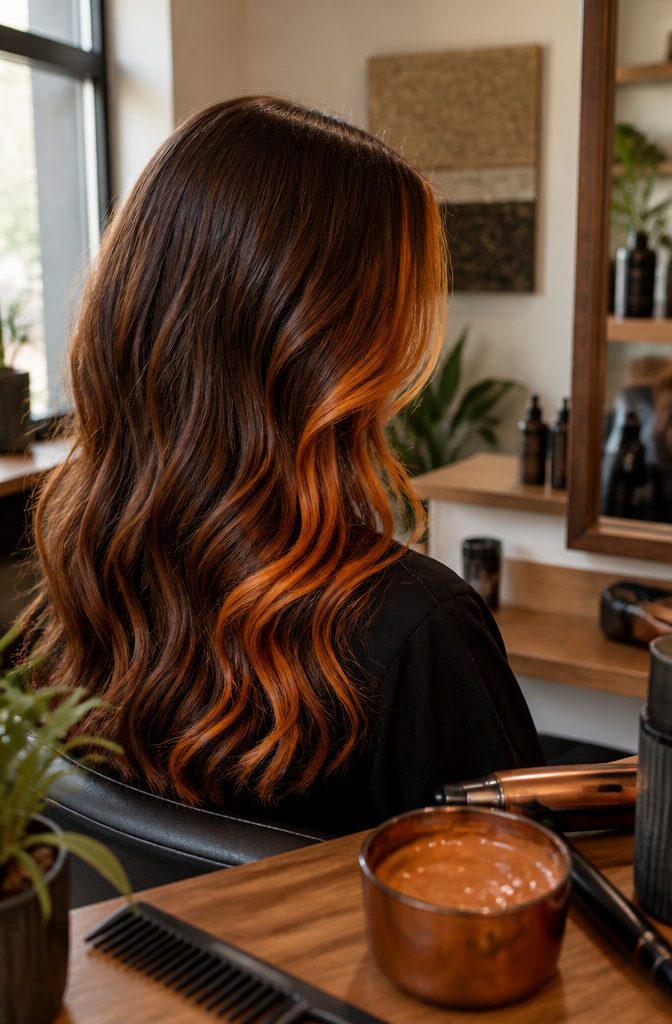
Two bright copper ribbons against a deeper copper or warm brown base is the easiest way into this color, and I’d start here if a full head feels like too much.
Ask for the brightness concentrated in front, "bold but blended," feathered so there are no harsh stripes or visible lines.
It flatters fair to light skin most and works on any texture, from a bob to long layers. A dark base gives dramatic contrast; light brown reads softer.
Refresh the pieces every 6 to 8 weeks.
Between visits, use a copper-toning mask every couple of weeks and keep heat off the front sections, which are the most fragile. Grow-out blends softly.
8. Copper Shag with Curtain Bangs
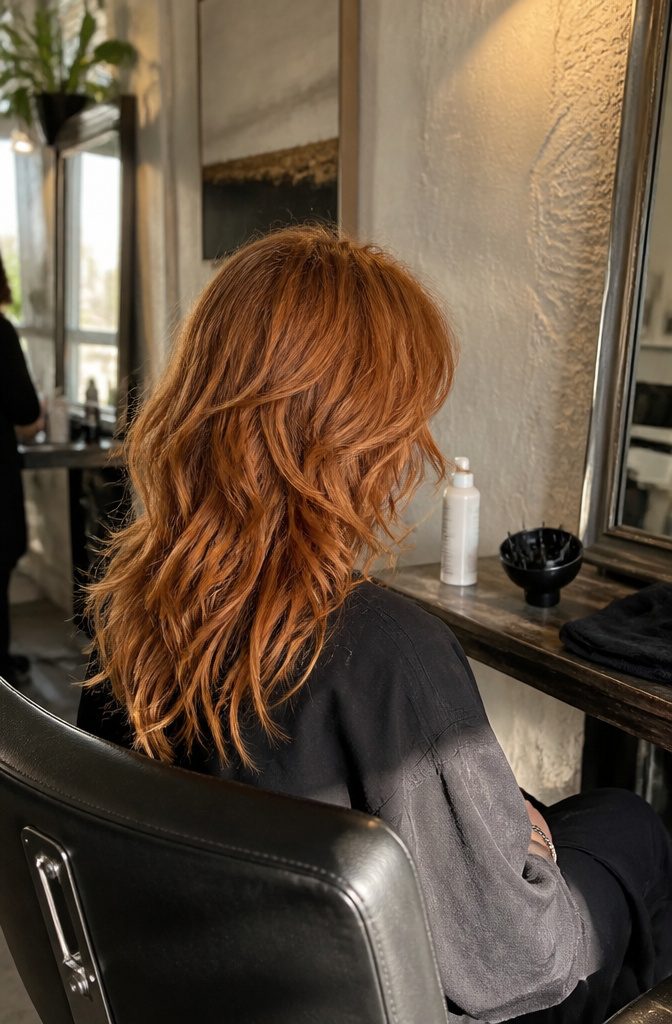
The shag’s choppy layers catch the copper in pieces, so the color shifts with every turn of your head.
Add curtain bangs swept to each side and you frame the face exactly where the warmth reads strongest: at the eyes and cheekbones.
The result is lived-in and loose, the haircut equivalent of a favorite leather jacket that only gets better with wear.
This suits oval, long, and heart-shaped faces, and the texture works especially well for fine to medium hair that needs movement without looking flat.
Ask for internal layering rather than just surface texture, and have the copper woven through in fine slices so no two layers look identical. The bangs should part in the middle and hit around the cheekbones.
Styling is blissfully low-effort: air-dry or diffuse with a little mousse, shake it out, and you are done.
The textured cut hides fading copper well, which keeps salon visits manageable. Trim the bangs every four to five weeks to keep them out of your eyes; the rest of the shag can go eight to ten weeks.
9. Blunt Bob with Mirror Shine
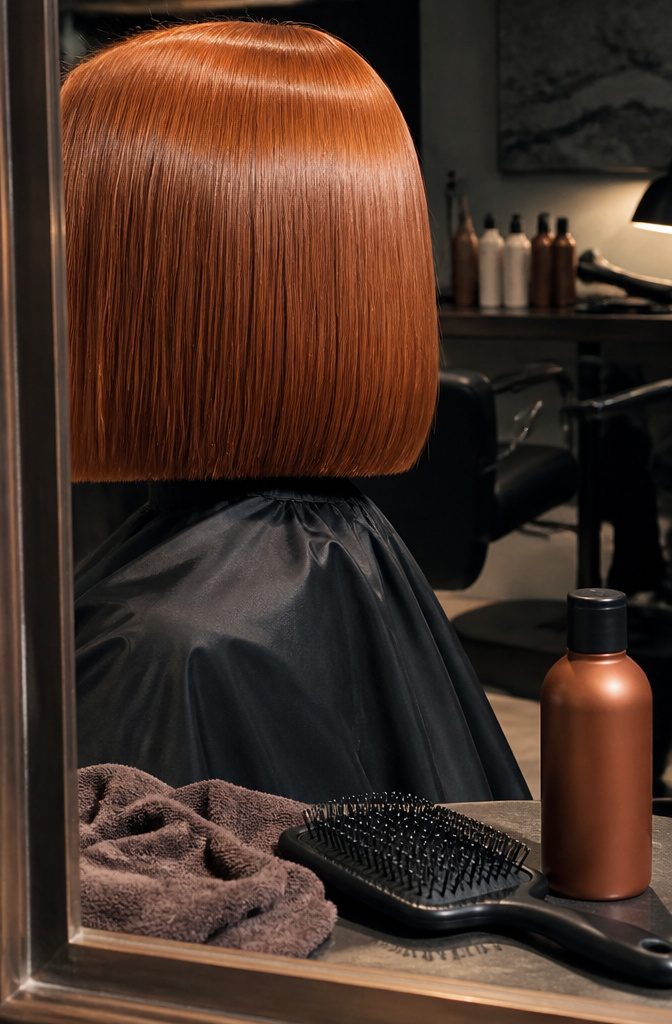
A saturated, even copper that runs from root to tip needs a blunt line to show off the consistency of the shade.
Without layers or texture breaking up the surface, light bounces cleanly off each strand and the color reads as one unbroken piece rather than a gradient or blend.
The cut itself sits somewhere between chin and collarbone, and the finish matters as much as the color: straightened smooth or blown out with a paddle brush rather than left to dry on its own.
This combination works best when hair is naturally straight or only slightly wavy, since anything with real curl or kink will scatter the light and soften the shine you are paying for.
If you ask for this, expect to return for an all-over color refresh every five to six weeks.
That is not a toner or a root touch, but a full reapplication to keep the copper from pulling brassy or dull at the midlengths where it fades fastest.
10. Updo with Loose Copper Tendrils
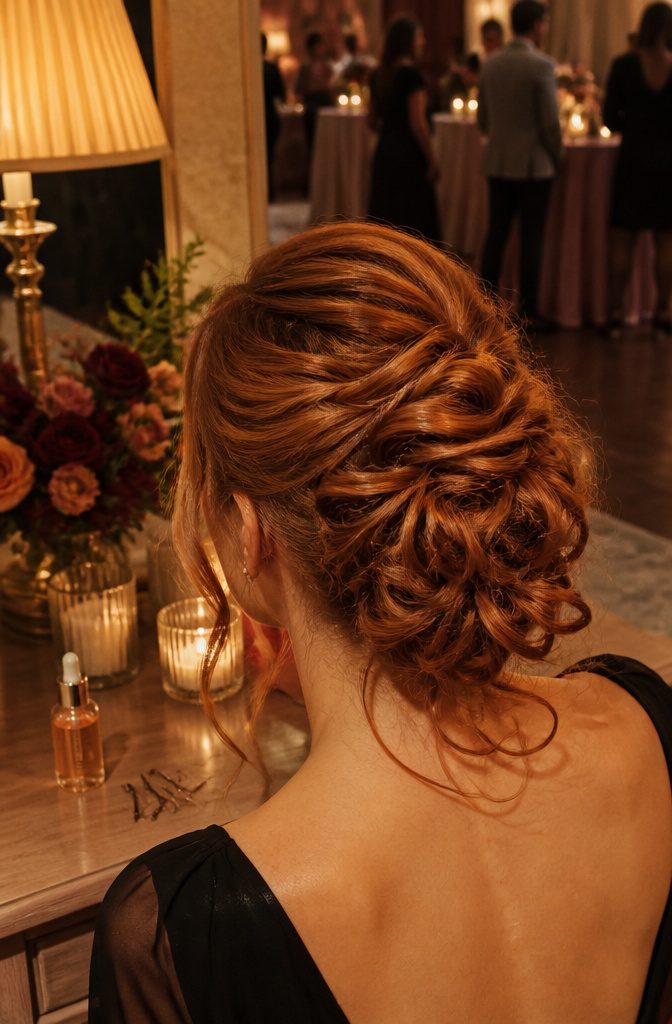
For weddings, parties, or any evening you want to glow, sweep cowboy copper into a soft updo and leave face-framing pieces loose.
Pinned-up curls and twists concentrate the color into a rich, dimensional cluster, while the tendrils around your face catch the light and keep the style romantic rather than severe.
The color does all the talking. Warm evening light makes copper look especially luminous, so this style truly shines after dark.
Ask your stylist for a textured, romantic updo with pieces left out, not a slick, severe style. Apply a flexible-hold hairspray in light layers as you pin, so the style holds yet looks soft.
Protect the tendrils with a tiny drop of shine serum to keep them glossy and frizz-free. Refresh your copper gloss a few days before the event so the color photographs at its richest.
11. Copper Pixie with High Shine
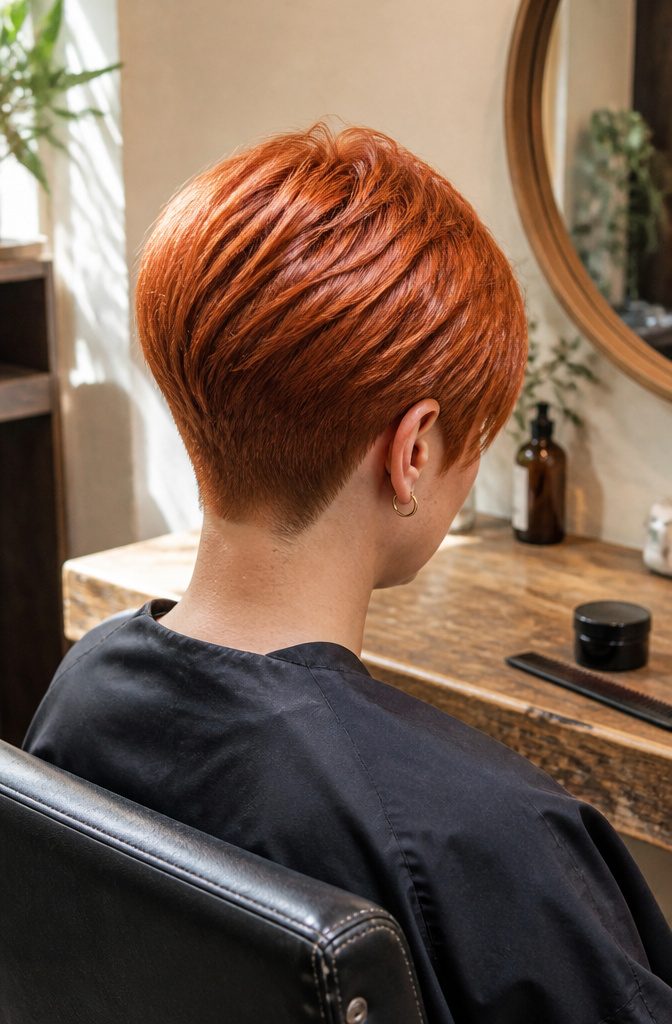
A short cut makes the color read as pure shine rather than as hair that happens to be copper. The length removes everything that could dilute the tone, and the color itself becomes the silhouette.
Fine hair gains visual weight because there is no length to pull it flat, and the cut creates the impression of fullness without teasing or product.
Request a pixie with tapered sides and enough length on top to shape forward or sweep to one side, then ask your colorist for cowboy copper with a high-gloss finish.
The request matters because matte finishes work against the effect: shine is what makes copper read as metal rather than as rust.
The maintenance schedule runs tighter than it does on longer styles.
Refresh the color every four to five weeks, since short hair shows root growth within days of it appearing, and trim every four to six weeks to hold the shape.
Skip either appointment and the style reads as grown out rather than intentional.
12. Sun-Kissed Copper with Fine Balayage Lights
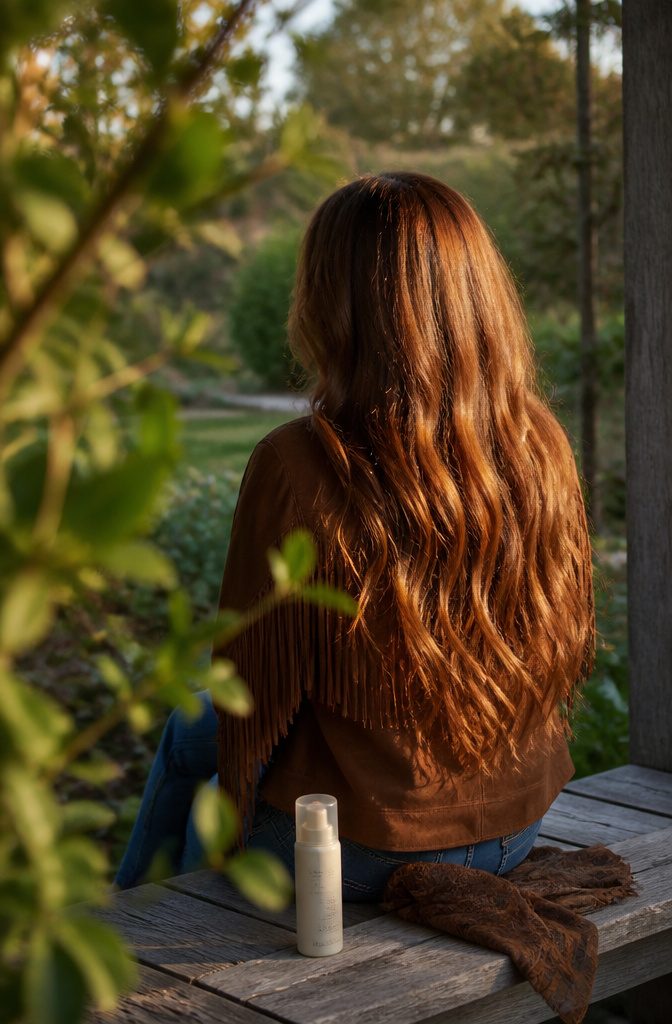
Delicate golden-copper ribbons scattered through a richer copper base bring the brightest, most radiant version of cowboy copper: lighter pieces placed where the sun would naturally bleach hair over a long summer.
The ribbons stay fine, never streaky, and the whole thing reads as sun-kissed rather than highlighted.
This works best on medium to long hair where the balayage can shimmer through the lengths, and it suits fair to medium skin tones particularly well.
Blue, green, and hazel eyes gain extra intensity against the mix of light and deeper copper tones.
Ask your colorist for fine, scattered balayage lights in golden copper over a rich cowboy copper base.
The lightened pieces fade faster than the rest, so protect them with a UV spray and apply a toning gloss if they start pulling too yellow.
A partial balayage refresh every ten to twelve weeks keeps the ribbons visible, with a gloss appointment in between to hold the tone.
How the Coloring Process Works
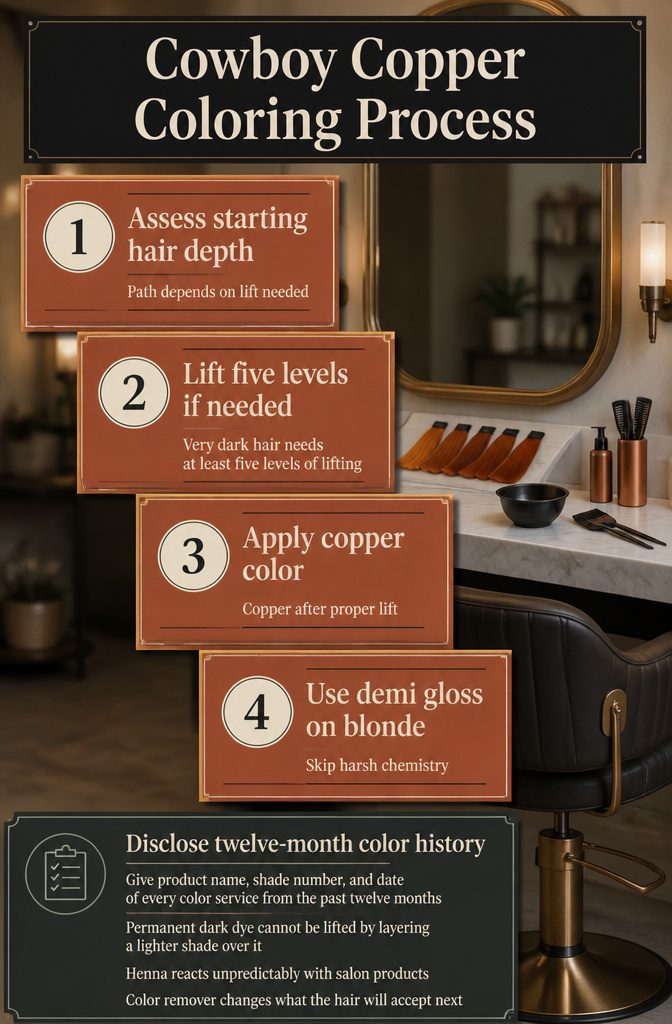
The path depends on where the hair starts and how much lift the target requires. Medium brown or dark blonde hair may reach copper in a single-process color session, which keeps chair time shorter and damage low.
Very dark brown or black hair needs at least five levels of lifting before copper can show, and that often means a separate lightening step before the color goes on.
Hair already blonde can move to copper with a demi-permanent gloss rather than permanent dye, which fades faster but skips the harsher chemistry.
Previously colored hair needs disclosure before anything happens. Permanent dark dye cannot be lifted by layering a lighter shade over it.
Henna reacts unpredictably with salon products, and color remover changes what the hair will accept next. Give the colorist the product name, shade number, and date of every color service from the past twelve months.
A home kit may work if the hair is untreated and close to the goal already, but dark or chemically treated hair belongs in a professional chair.
Bringing References to Your Colorist
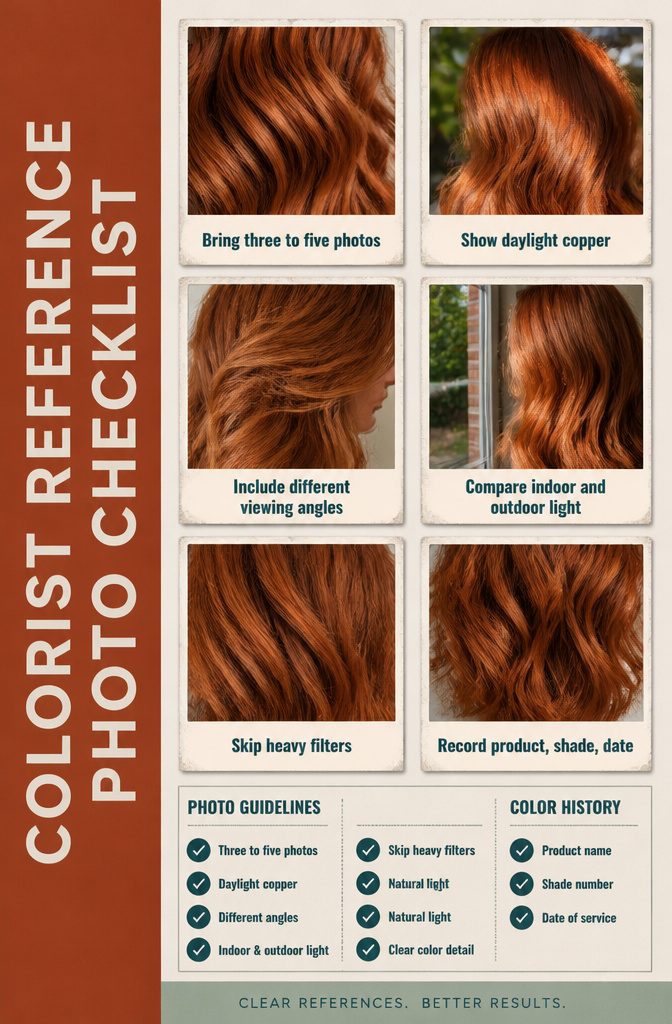
Three to five reference photos are enough to show a colorist what you’re after, and the detail inside them decides how close the result lands.
The photos need to show copper in daylight and from different angles so the balance of brown, red, and copper reads clearly at the roots, mid-lengths, and ends.
Skip anything with heavy filters or studio color grading. The shade shifts on screen, and a colorist can’t match what isn’t really there.
One photo taken outdoors and one taken indoors help reveal how much brown or copper holds under softer light.
Comparing them side by side in natural light before the appointment shows whether the references lean warmer or cooler than expected. Bringing the set together gives the colorist the pattern you want rather than a single isolated image.
The other piece that matters is your color history. A colorist needs the product name, shade number, and date of every service from the past twelve months.
Overlapping tones or previous lifts change how the copper takes, and guessing at what’s already on the hair turns consultation into damage control.
Keeping Cowboy Copper from Fading
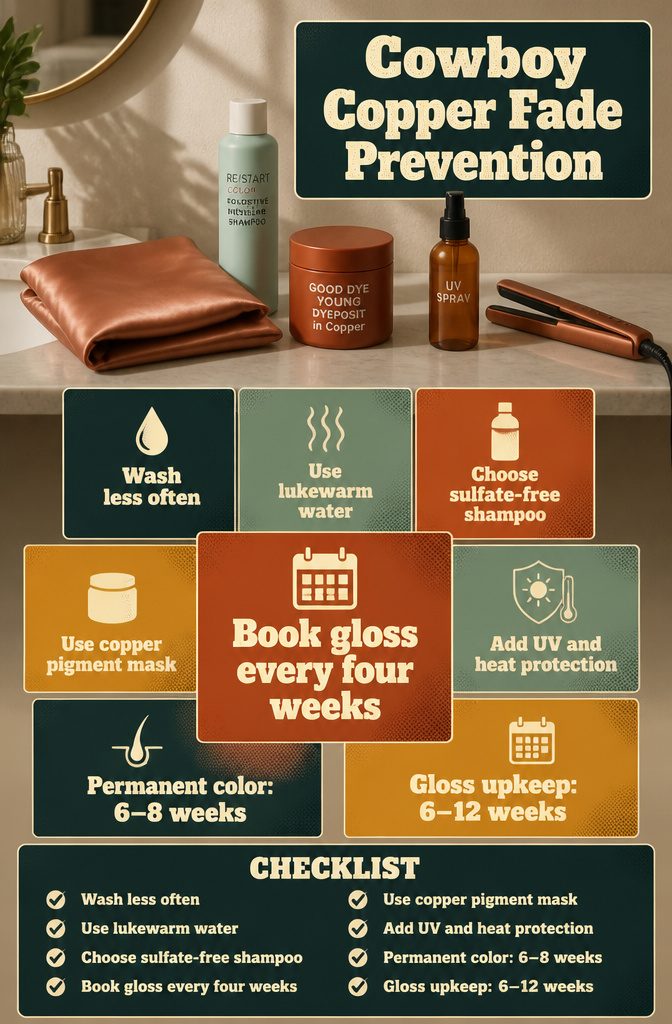
Red tones fade faster than almost any other shade, so the routine matters as much as the appointment.
Wash less often, as the American Academy of Dermatology advises for color-treated hair, using lukewarm water and a sulfate-free formula like RE/START Color Protective Micellar Shampoo.
Gloss timing is the rule worth copying:
"You need to get a Redken Shades EQ Gloss at the salon every four weeks," says Perry.
Book the next one before you leave the chair.
Between glosses, a pigment-depositing mask like Good Dye Young DYEposit in Copper ($20) or Christophe Robin Shade Variation Mask in Chic Copper ($53) tops up the tone.
Add a satin pillowcase, UV spray and heat protectant. Permanent color shows new growth in 6–8 weeks; gloss upkeep runs 6–12.
Frequently Asked Questions
What is cowboy copper hair?
Cowboy copper is a muted copper that sits between true copper and red-brown, blending brown with gold or red-gold tones.
It is softer than bright copper and warmer than plain chestnut. Your natural base color becomes part of the formula, so the result can lean more brown or more copper depending on where you start.
Why is it called cowboy copper?
The name comes from the color of cowboy leather and warm, dusty sunsets. It gives the shade a Western, outdoorsy feel.
When did cowboy copper hair become popular?
It began gaining traction in 2023, mostly on social media. By 2024 it was a major color trend.
Who looks good with cowboy copper hair?
Most skin tones can wear it, because the shade can be adjusted.
Warm undertones suit copper and gold tones, neutral undertones handle everything from soft brown-copper to brighter copper, and cool undertones look best with a muted copper-brown that pulls back the orange.
Your starting hair color matters as much as your skin tone.
Can dark hair reach cowboy copper?
Yes, but it usually needs lightening first.
Very dark brown or black hair needs at least 5 levels of lift, which often means a separate lightening step, while medium brown or dark blonde hair can sometimes get there in a single-process session.
A balayage melt over your natural dark base is the lowest-maintenance route, since the copper is hand-painted through the mid-lengths and ends.
Can I do cowboy copper hair at home, or should I book a salon?
A home kit can work if your hair is untreated and already close to the goal.
Book a salon if your hair is dark or has old dye, henna, bleach, or more than one previous color. Permanent dark dye can’t be lifted by layering a lighter shade over it, and henna reacts unpredictably with salon products.
How do I compare cowboy copper reference photos?
Bring 3–5 photos taken in daylight and from different angles, so the balance of brown, red, and copper shows at the roots, mid-lengths, and ends.
Skip photos with heavy filters or studio color grading, since the shade shifts on screen. Comparing one outdoor and one indoor shot shows how much brown or copper the color holds in softer light.
How long does cowboy copper last, and how do I keep it from fading?
Red tones fade faster than almost any other shade, so upkeep matters. Use a copper-depositing gloss or mask every 2–3 weeks at home and book a salon gloss every 6–8 weeks, or every 4–6 weeks for the brightest versions.
Wash less often with lukewarm water and a sulfate-free shampoo. Permanent color shows new growth in 6–8 weeks.