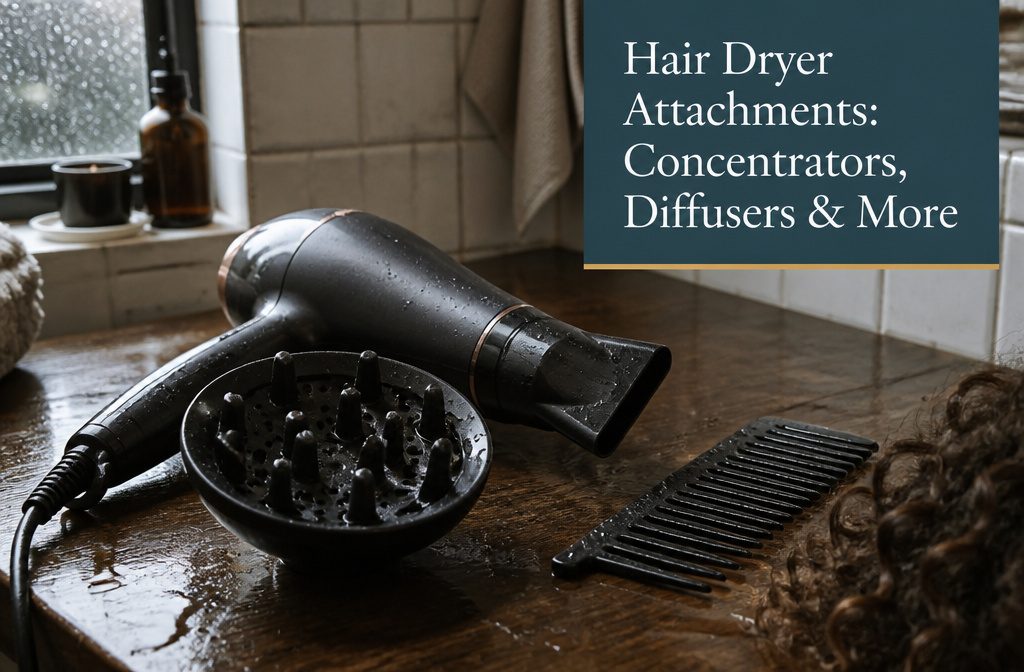
Hair dryer attachments change where the air goes and how hard it hits.
A concentrator narrows the stream so you can aim heat at one section; a diffuser spreads it across curls to keep them from blowing apart; a pick or comb works through tangles while the dryer runs.
The concentrator only makes sense once hair is already 60–70 percent dry, or you’re chasing hot spots instead of styling.
Concentrator Nozzles Focus Airflow Where You Need Control
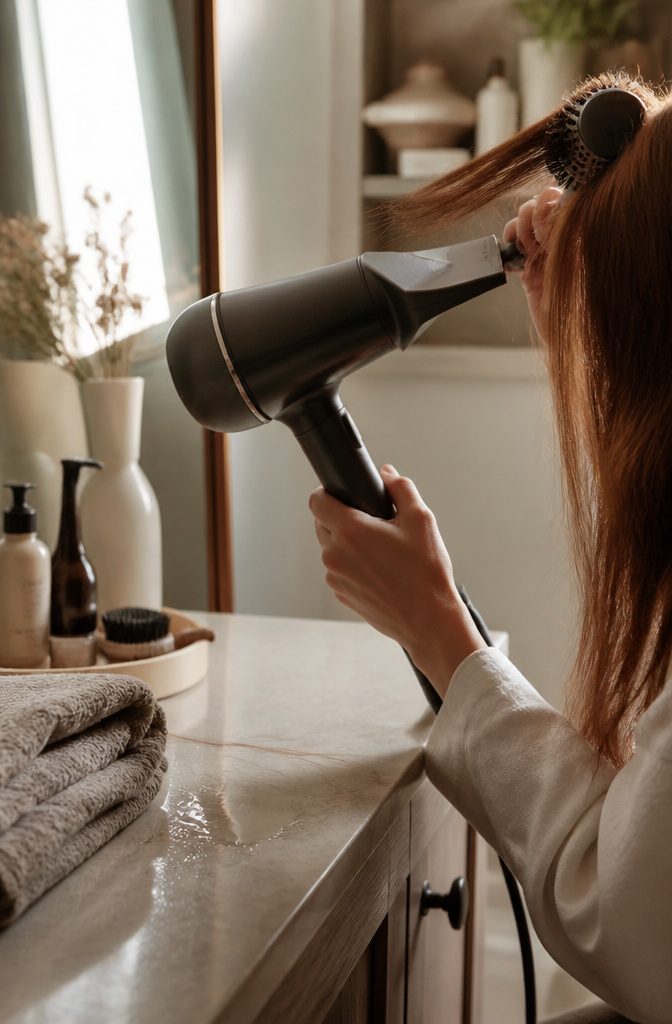
A concentrator nozzle narrows the dryer’s airflow into a flat stream you can aim at one section at a time.
That’s what makes it possible to blow your bangs straight, lift the roots without flipping the rest of your hair forward, or follow a round brush for an at-home blowout.
The nozzle gives you the control to dry in one direction instead of scattering air everywhere at once.
Timing matters here.
Hair should be about 60–70 percent dry before you switch to the concentrator. Starting with soaking-wet hair stretches the process and creates hot spots where the focused stream sits too long.
Once most of the water is out, hold the nozzle at a 90-degree angle along the hair and follow the direction you want.
Lift at the roots if you’re after volume, or angle downward along the length for sleek, smooth finish.
Drying every section this way takes longer than a quick all-over blast, and the focused heat can linger if you’re not moving the dryer.
For guys with straight hair or formal styles that need definition, the precision pays off. For texture or curl, the concentrator isn’t the tool.
Diffusers Spread Air to Preserve Curl Shape
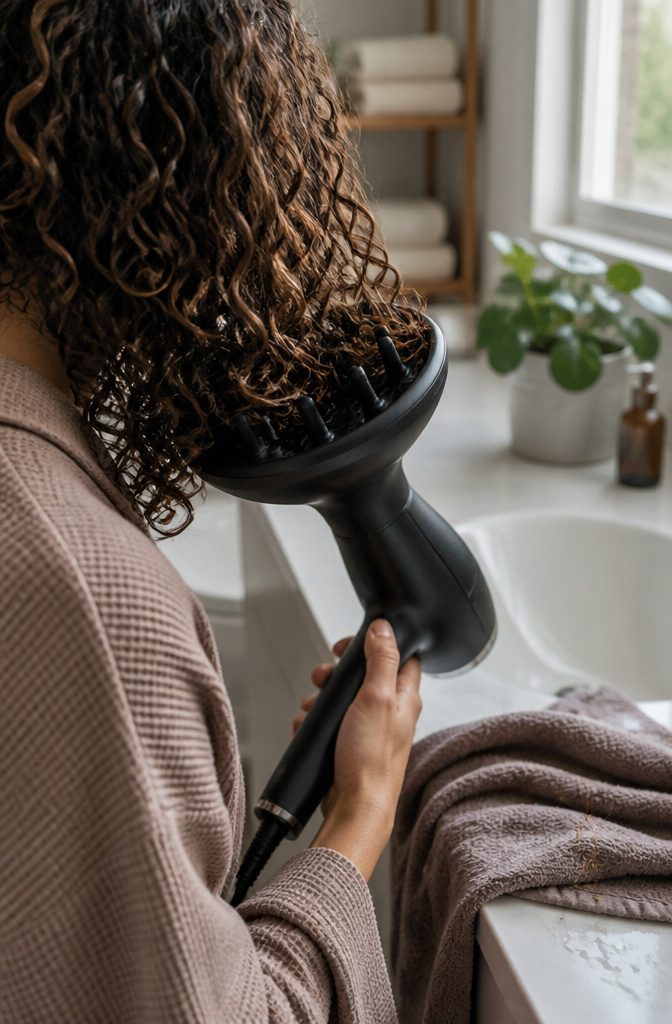
A diffuser spreads airflow across curls and waves instead of blasting it in a single direction, which lets you dry hair without disrupting the curl pattern.
The attachment looks like a bowl with short tines that let air flow through, and that design forces air to disperse rather than concentrate, so less direct heat hits any one spot.
Curls dry gently, stay defined, and frizz drops because you’re not roughing up the cuticle with a hard stream of air.
Start with the lowest heat and speed settings your dryer offers.
Dry roots first, moving in a circular motion at low speed and holding the dryer at a 90-degree angle from your scalp to lift hair away and build volume. Finish at the ends.
Point the dryer downward to keep the cuticle flat and minimize frizz. Lay your curls onto the diffuser instead of aiming air directly at them, and only increase heat or speed if your hair needs it.
Comb and Pick Attachments Work Through Hair for Lift and Detangling
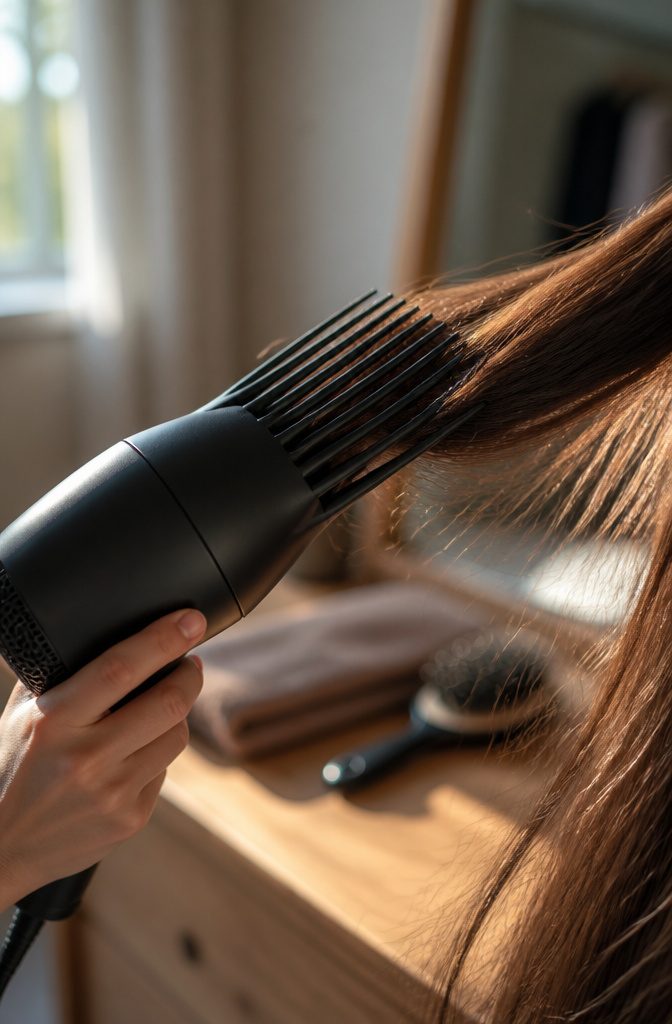
Comb and pick attachments put comb-like teeth or prongs in direct contact with your hair to detangle as you dry, stretch curls, or add lift at the roots.
A pick works through your strands while the dryer runs, so you get volume without needing to set the dryer down and switch to a separate tool.
Shorter picks suit shorter hair, longer picks suit longer hair. The prong length matters because it determines how far into your hair the attachment can reach without snagging or missing sections entirely.
A pick can also smooth or straighten overly curly hair if you work it through slowly while drying. The teeth stretch each section as heat hits it, giving you more length and less coil than air alone would.
Comb attachments do similar work but tend to focus more on detangling and reducing knots mid-dry, which speeds up styling and cuts down on breakage compared to working through tangles after the fact.
Blow-Dryer Brushes Combine Drying and Styling in One Tool
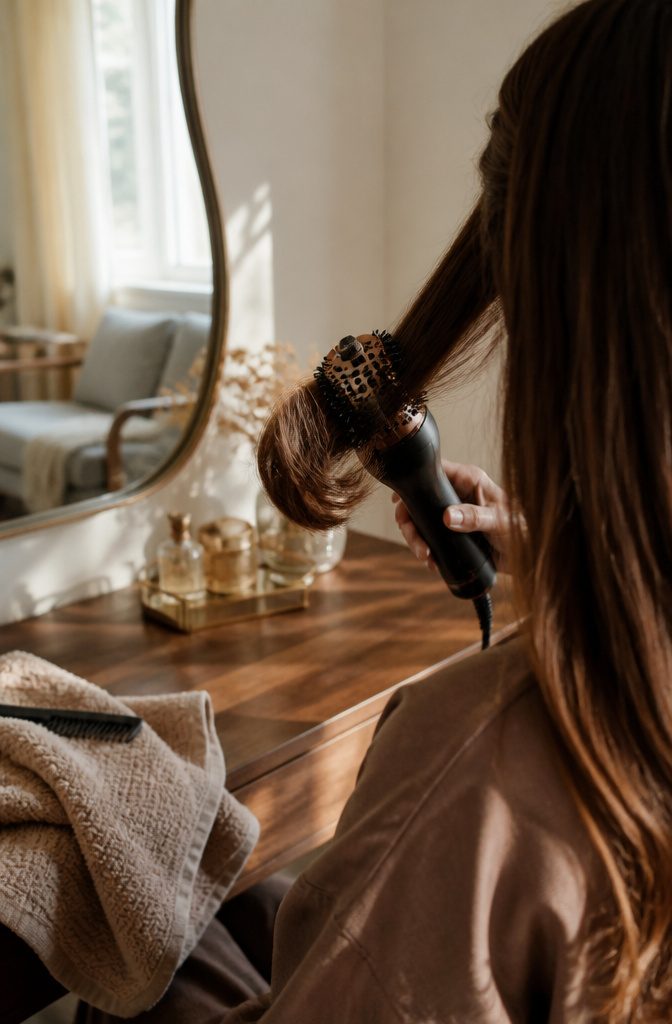
Blow-dryer brushes combine a round brush and a dryer in one handheld tool.
Air flows through holes in the barrel while the bristles smooth and shape hair, so the user holds a single tool instead of juggling two. The result looks like a proper blowout with less coordination required.
This tool suits someone who wants to blow-dry and walk out without reaching for a flat iron or curling wand afterward. The styling happens during drying, not after, which cuts the routine short.
For men growing hair past the ears, it means a cleaner finish than air-drying and faster results than working a dryer in one hand and a brush in the other.
The trade is visibility: holding the tool close to your head makes it harder to see what’s happening at the back until the section is already dry.
Match the Attachment to Your Hair Type and Style Goal
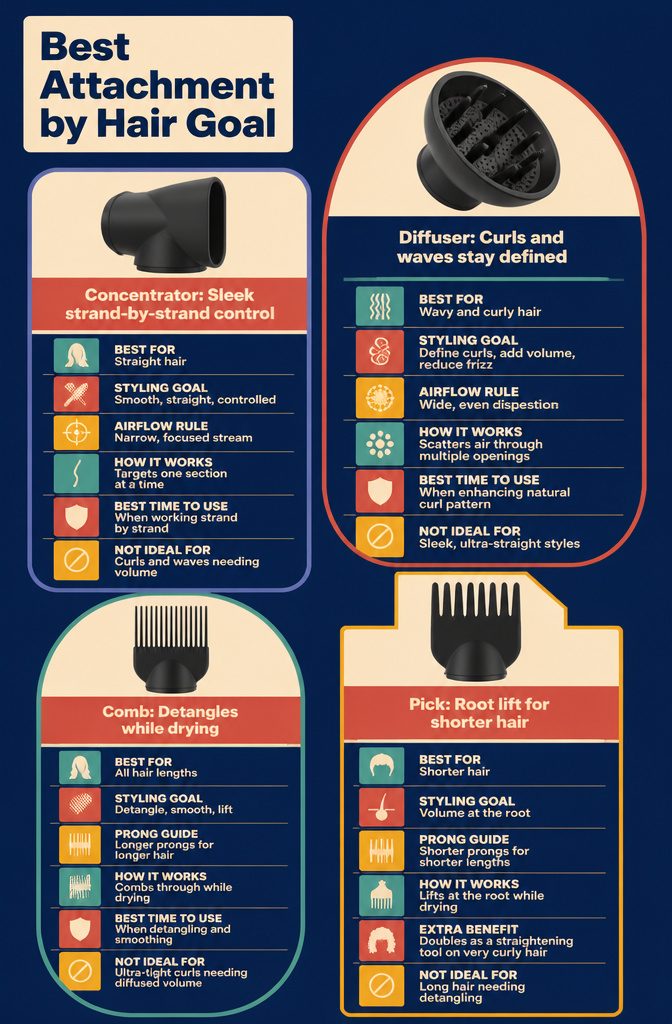
The attachment that makes sense depends almost entirely on what you’re asking your hair to do.
Concentrators narrow the airflow so you can aim heat precisely at one section, smoothing it down or pulling it straight with a round brush underneath.
That focused stream is what gives you sleek, controlled results, and it’s the attachment I reach for anytime I’m working strand by strand.
Diffusers spread air evenly across a wider area, which keeps curls and waves from blowing apart.
Instead of a concentrated jet that disrupts curl pattern, the diffuser scatters airflow through multiple openings, reducing frizz and adding volume without disturbing the natural shape.
If you have wavy or curly hair and want body without breakup, the diffuser wins.
Comb and pick attachments work through hair while the dryer runs, detangling as they go and lifting at the root.
Longer prongs suit longer hair; shorter prongs work better on shorter lengths. I use a pick when I need volume more than precision, and it doubles as a straightening tool on very curly hair if you comb through while drying.
How Attachments Change the Airflow
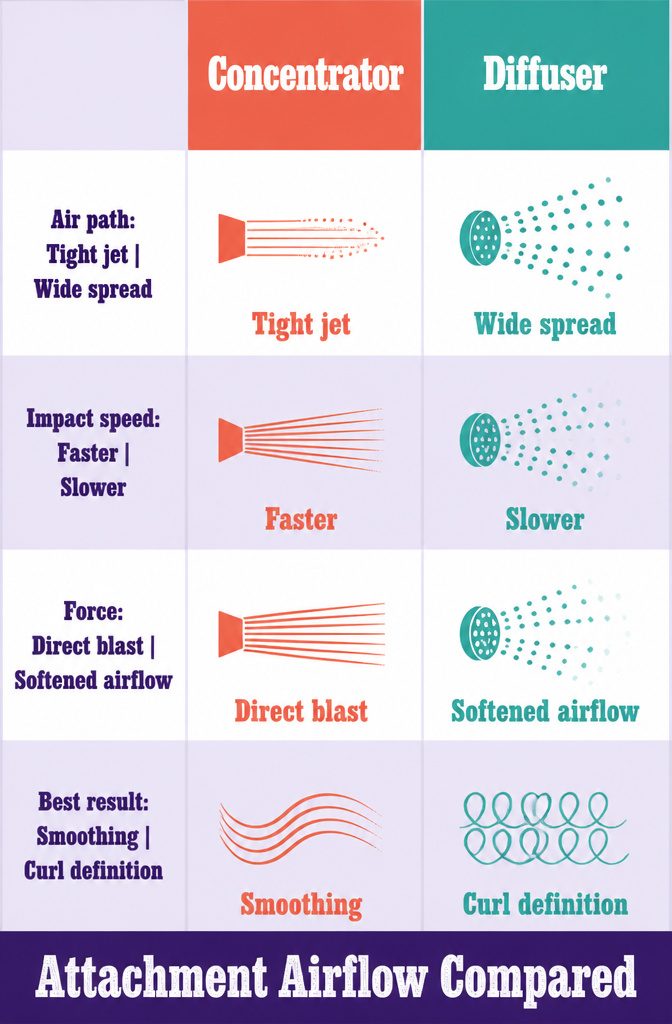
Every hair dryer attachment changes where the air goes and how fast it hits your hair, and that difference explains why each one does something completely different to the finished style.
Concentrators narrow the stream. Instead of blowing air in all directions, a concentrator nozzle funnels it down into a tight jet that you can aim at one section at a time.
That focused flow is what lets you straighten hair or smooth it flat against a round brush without scattering the strands around it.
Diffusers do the opposite. The wide, perforated head spreads air out over a much larger area, which slows down the speed and softens the force hitting each curl.
Less direct blast means less frizz and more definition left in whatever wave pattern the hair already has.
Comb and pick attachments run teeth through the hair while air flows around them.
The prongs lift strands away from the scalp as they dry, which adds volume, and they can work through tangles at the same time the heat sets the shape.