The haircut that pairs best with a beard depends on whether you want the two to read as separate shapes or as one continuous line.
A fade that stops at the sideburn keeps them distinct, while a fade blended into the beard treats the whole side of the head as a single gradient.
Stubble asks almost nothing from the hair above it and suits any short cut, while a full beard carries enough weight that it needs either matching length on top or a structured shape like a pompadour to balance the proportions.
Cleanup schedules range from every few days for a pompadour or fade to every 2 to 3 weeks for an undercut or textured crop.
1. Short Hair on Top with Beard
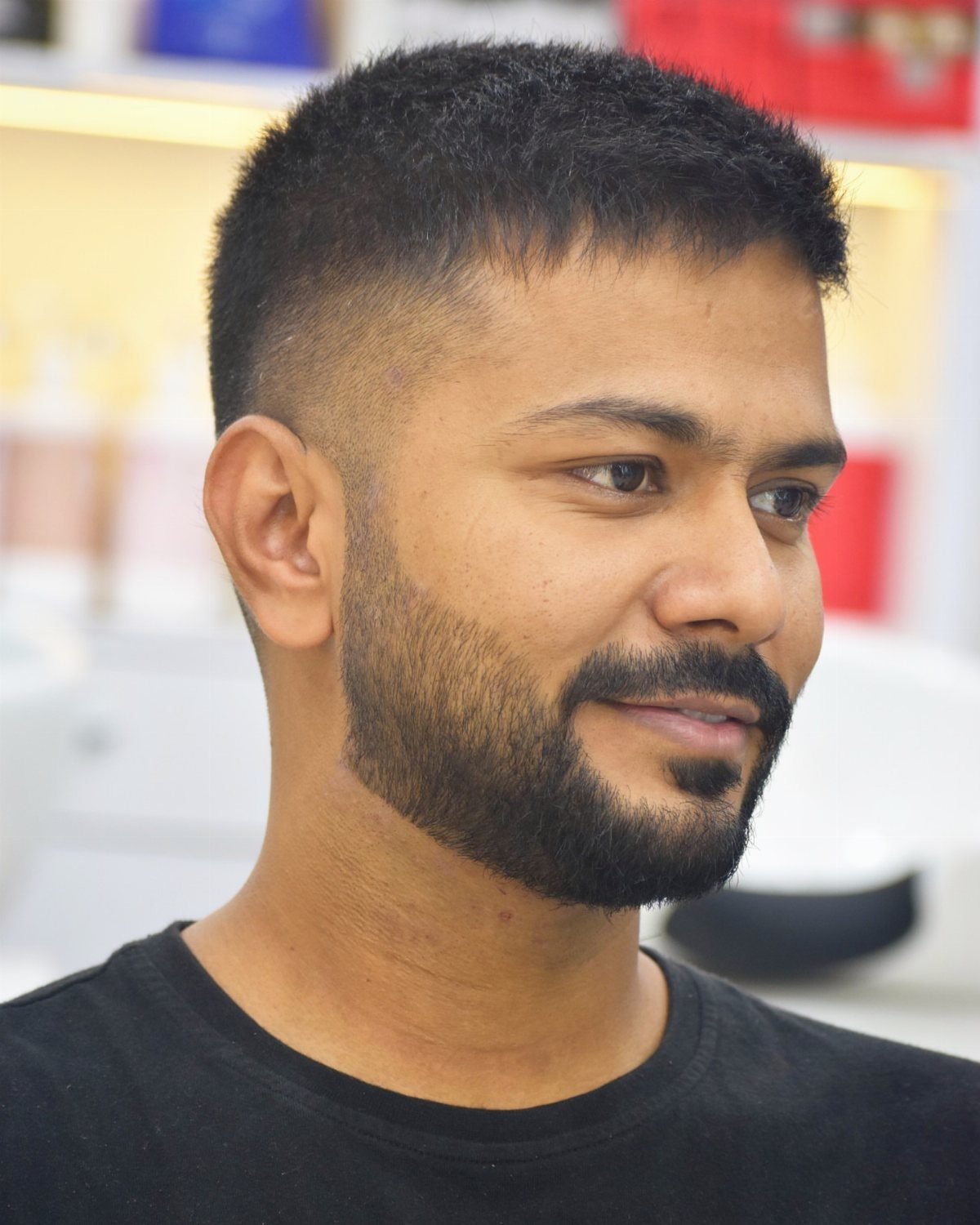
Keeping the top short puts all the attention on the beard.
The cut itself can be anything from a tight crew to a couple of inches left on top, as long as the sides stay shorter than the beard line and the whole shape stays simple.
This works when the beard is doing something worth noticing and the hair doesn’t need to. Styling time is under a minute most mornings, and you’ll need a trim every 3 to 4 weeks for clean proportions.
2. Full Beard
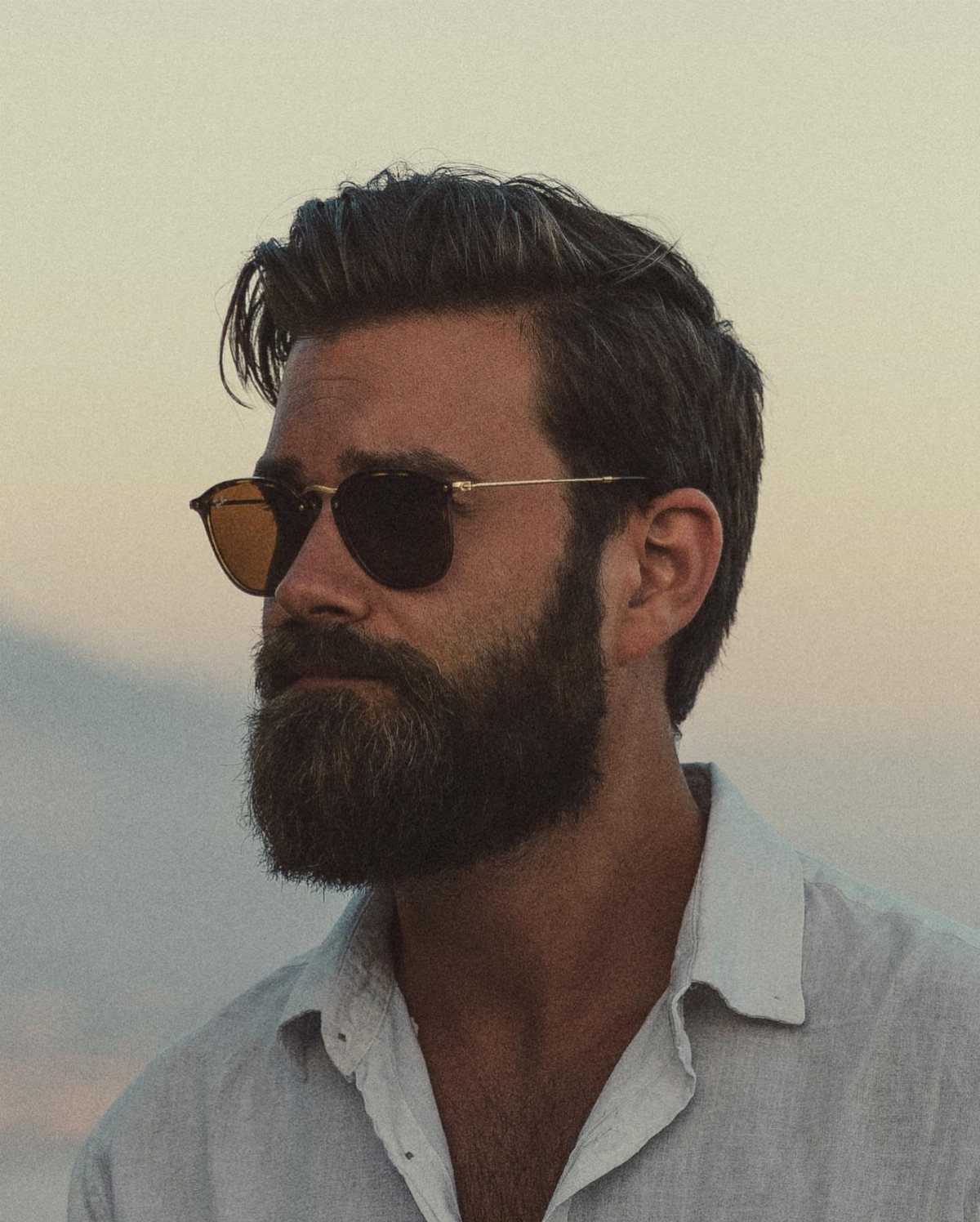
A full beard connects the mustache to the rest of the growth without gaps, covering the jawline and chin evenly. The length can vary, but the shape holds the same: no isolated sections, no hard lines between zones.
It pairs well with any haircut that doesn’t compete for volume. The beard takes longer to grow in than partial styles and benefits from regular trimming so the edges stay defined and the bulk stays even.
3. Fade Cut
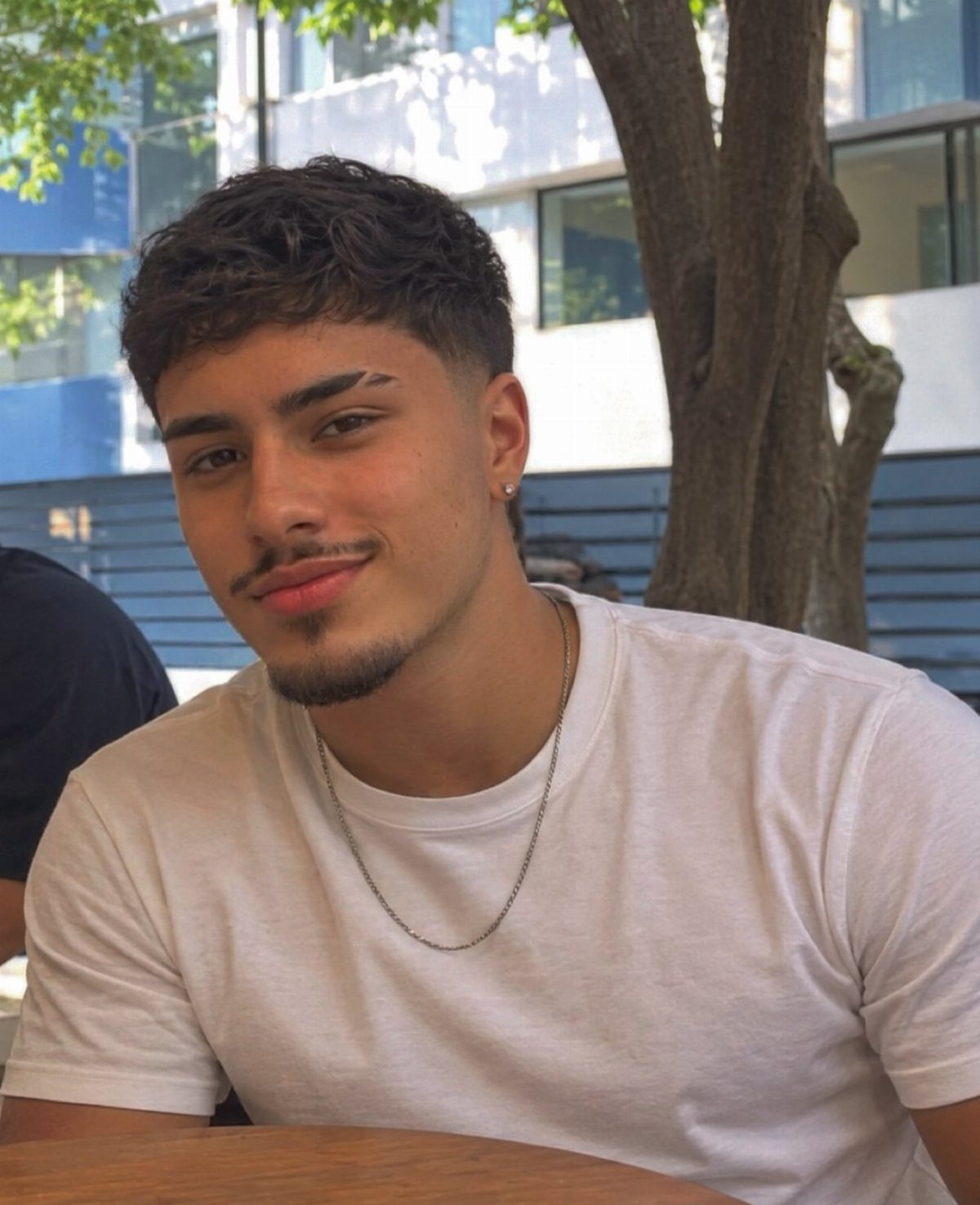
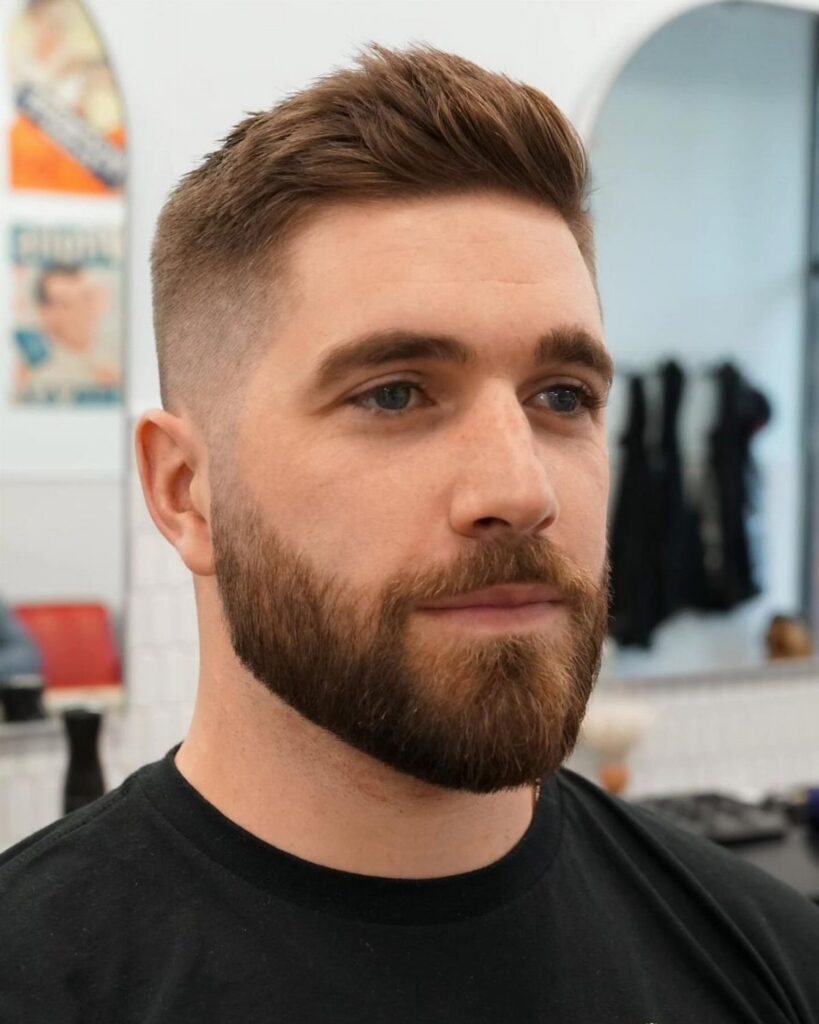
The fade transitions gradually from skin or very short sides up to longer length at the crown, and when you add a beard, the fade can stop at the sideburn or continue down into the beard line.
Either way, the taper gives the whole profile a clean, continuous shape.
Fades grow out faster than blunt cuts, so plan on a cleanup every few days to 2 weeks if you want to keep the gradient sharp.
The beard can be any length, but a trimmed, shaped version usually complements the precision of the fade better than an untrimmed one.
4. Undercut
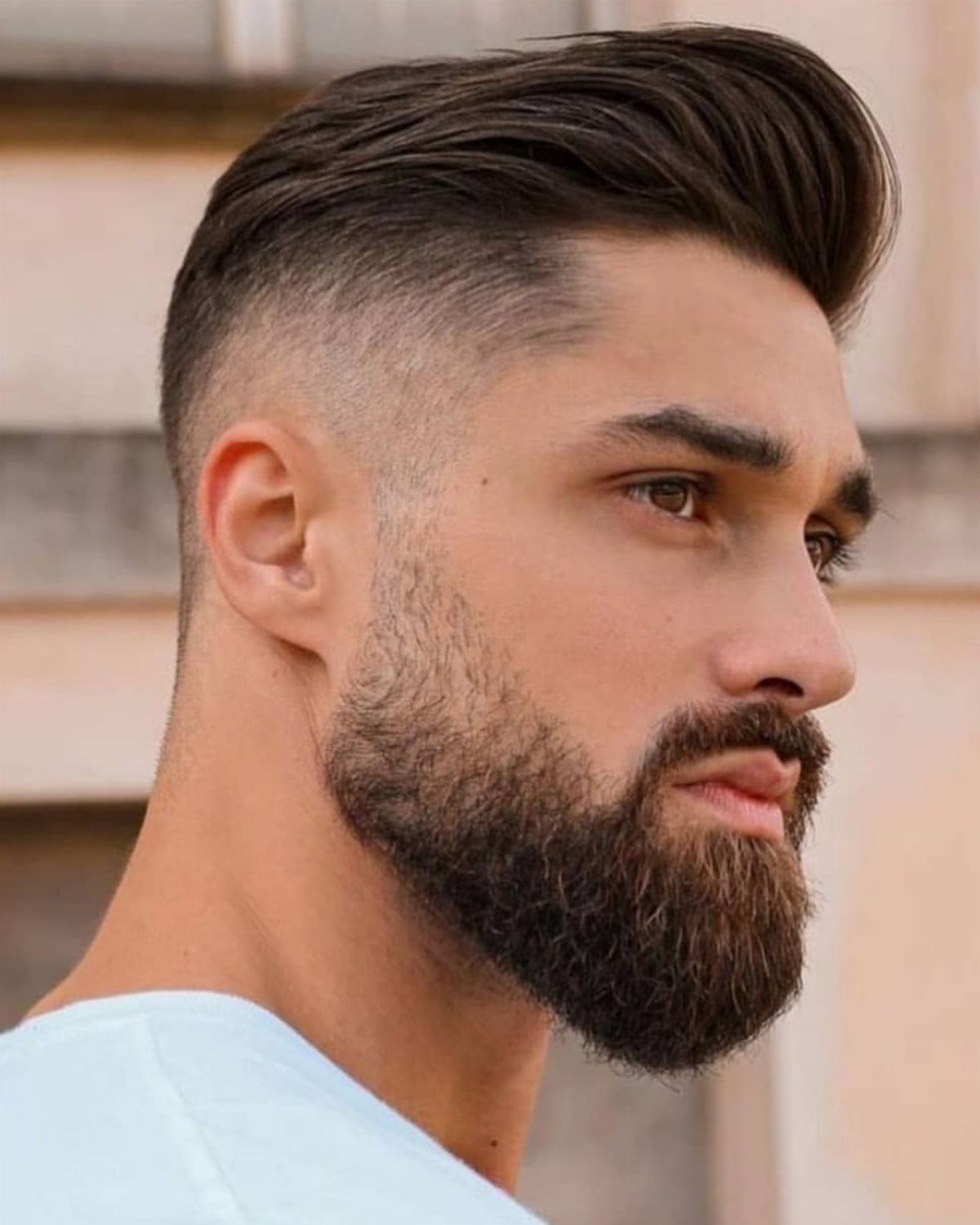
An undercut separates the top from the sides with no blend, leaving a visible line where short meets long. The contrast is sharper than a fade, and when paired with substantial facial hair, it creates 2 distinct zones of length.
This cut rewards a neat beard, since the undercut already draws attention to the jawline and any uneven growth becomes more obvious. The top needs product to hold shape, and the sides will need regular clipping to maintain the disconnect.
5. Long Hair with Beard
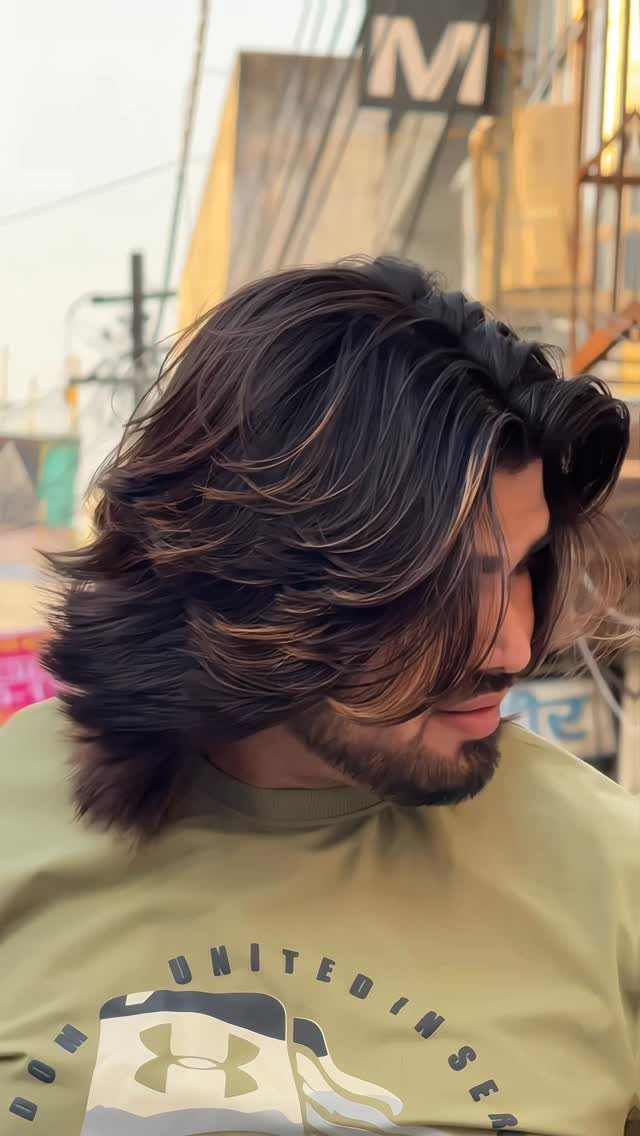
Long hair and a full beard both carry weight, so the combination reads bold and needs regular shaping to avoid looking unkempt. Both the hair and the beard benefit from regular trimming to keep ends clean and structure intact.
This pairing works when both are groomed to the same level of care.
If one looks maintained and the other doesn’t, the contrast will work against you. Styling time climbs if you’re blow-drying or using product, and conditioning both hair and beard becomes part of the routine.
6. Haircut Blended Into Faded Beard
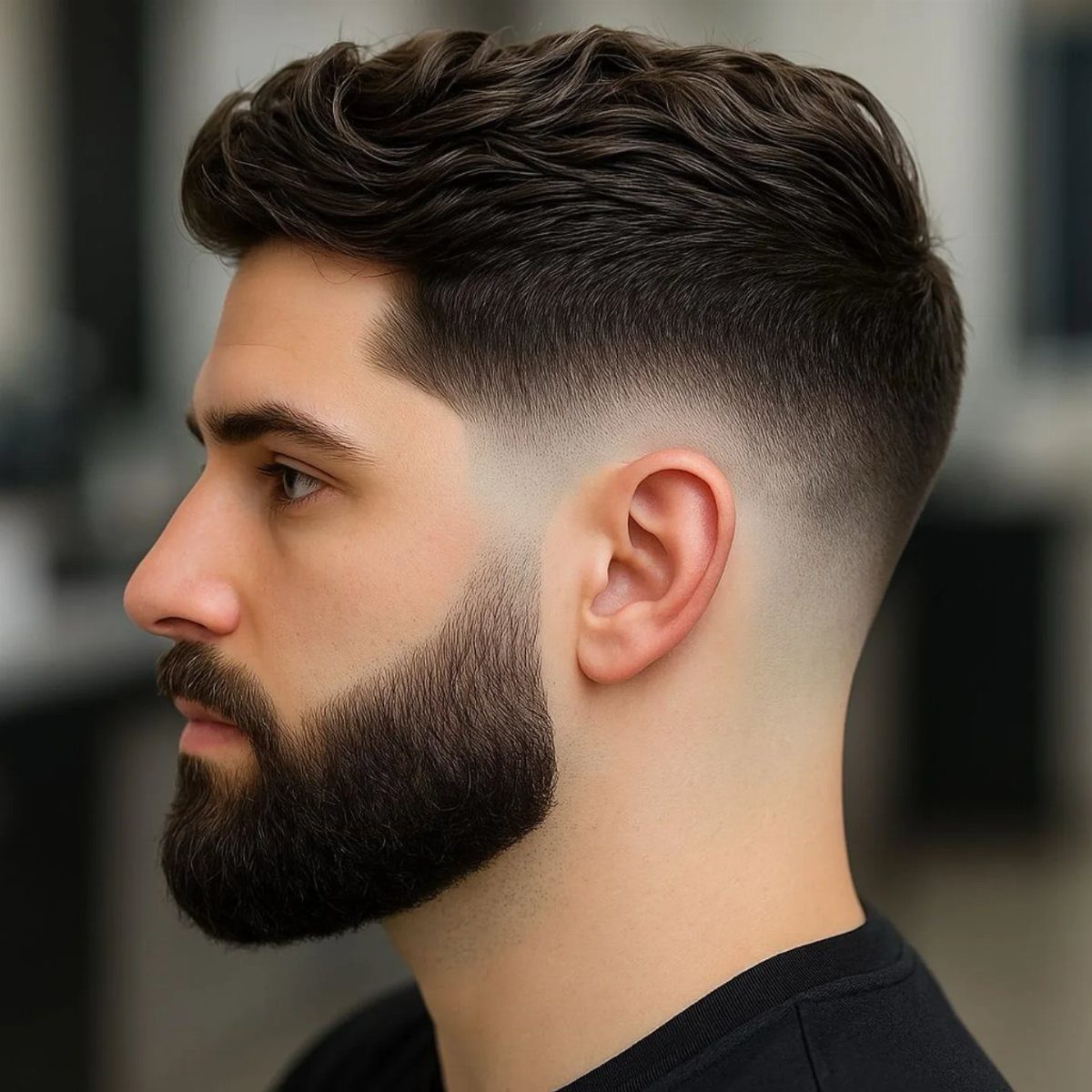
Blending the haircut into the beard means the fade continues down the sideburn and into the beard’s edge, so there’s no visible line where hair stops and facial hair starts.
The barber tapers both at once, treating the whole side of the head as one gradient.
This approach works best with shorter, well-shaped beards.
A longer or less defined beard makes the blend harder to read. The fade will need regular maintenance to stay crisp, and the beard trimming happens on the same schedule to keep the transition intact.
7. Man Bun Beard
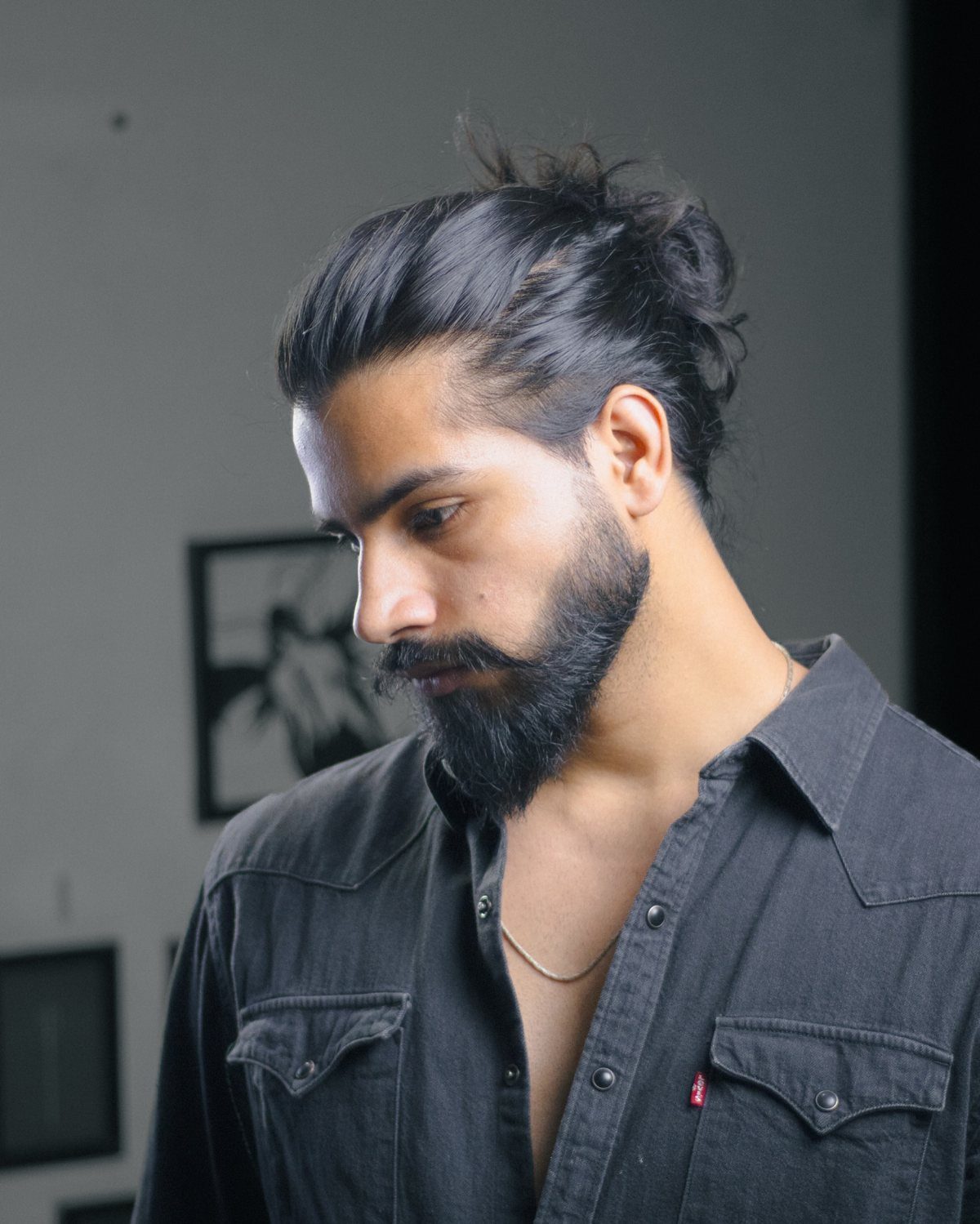
The bun pulls all the length up and off the face, which keeps the beard visible and stops the two from competing.
Hair needs to be long enough to hold the knot securely, and the beard grows however long you want it as long as both stay trimmed and shaped.
Styling takes under 2 minutes once the hair is long enough.
8. Pompadour
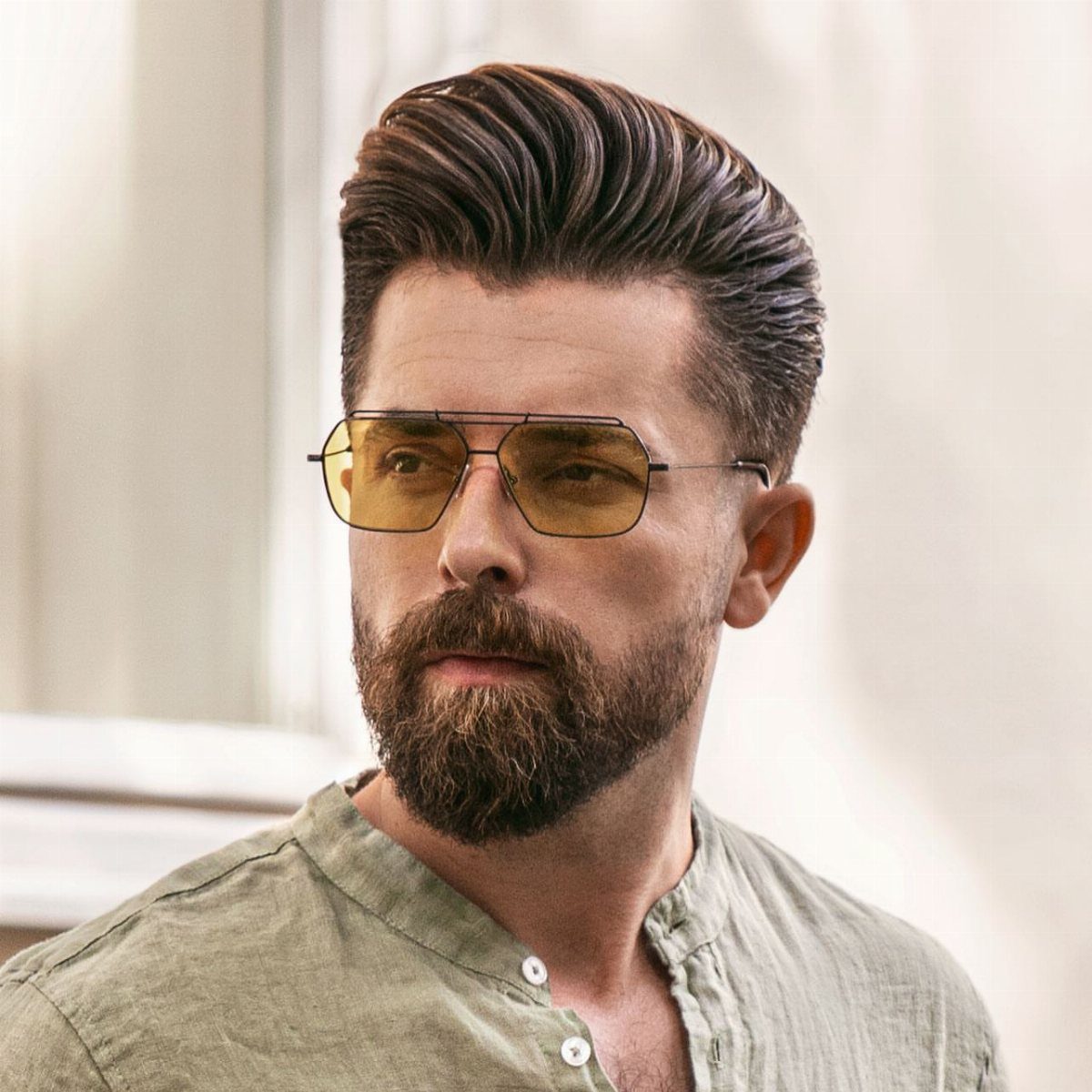
Height at the front balances the weight of a full beard, giving the top something to do instead of receding into the background. The volume comes from blow-drying upward and back, then holding it with pomade or wax.
Plan on some styling each morning and regular trims to keep the sides short enough that the height stays noticeable. The beard should be shaped and even so the proportions hold.
9. Goatee
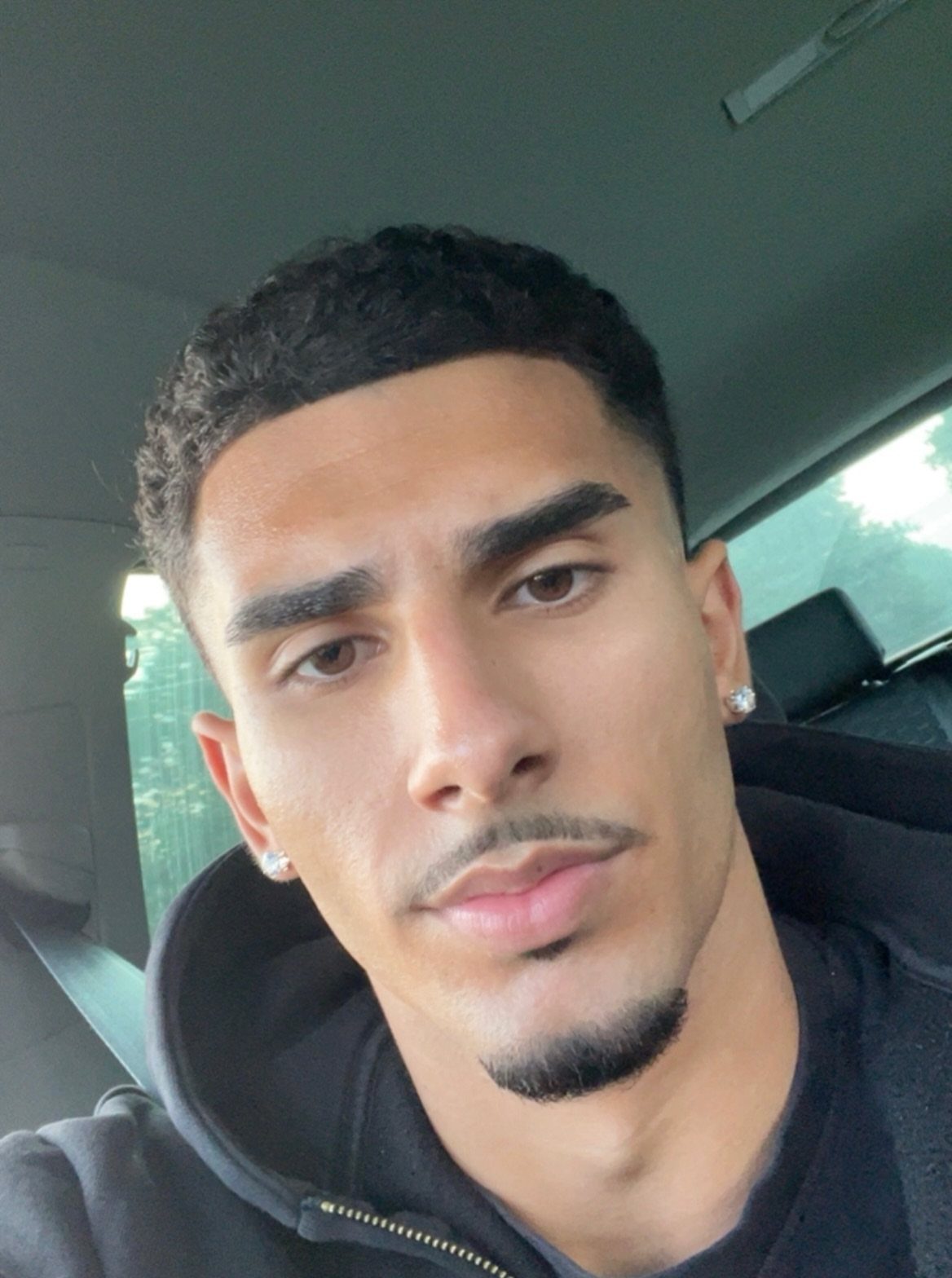
A goatee covers the chin and can run with or without a mustache, leaving the cheeks bare. It suits men whose facial hair grows unevenly on the sides or who prefer lighter grooming.
Shaping takes a few minutes every few days to keep the edges clean, and the rest of the face stays shaved. Pair it with any short to medium haircut; longer hair can overpower the smaller beard footprint.
10. Van Dyke Beard
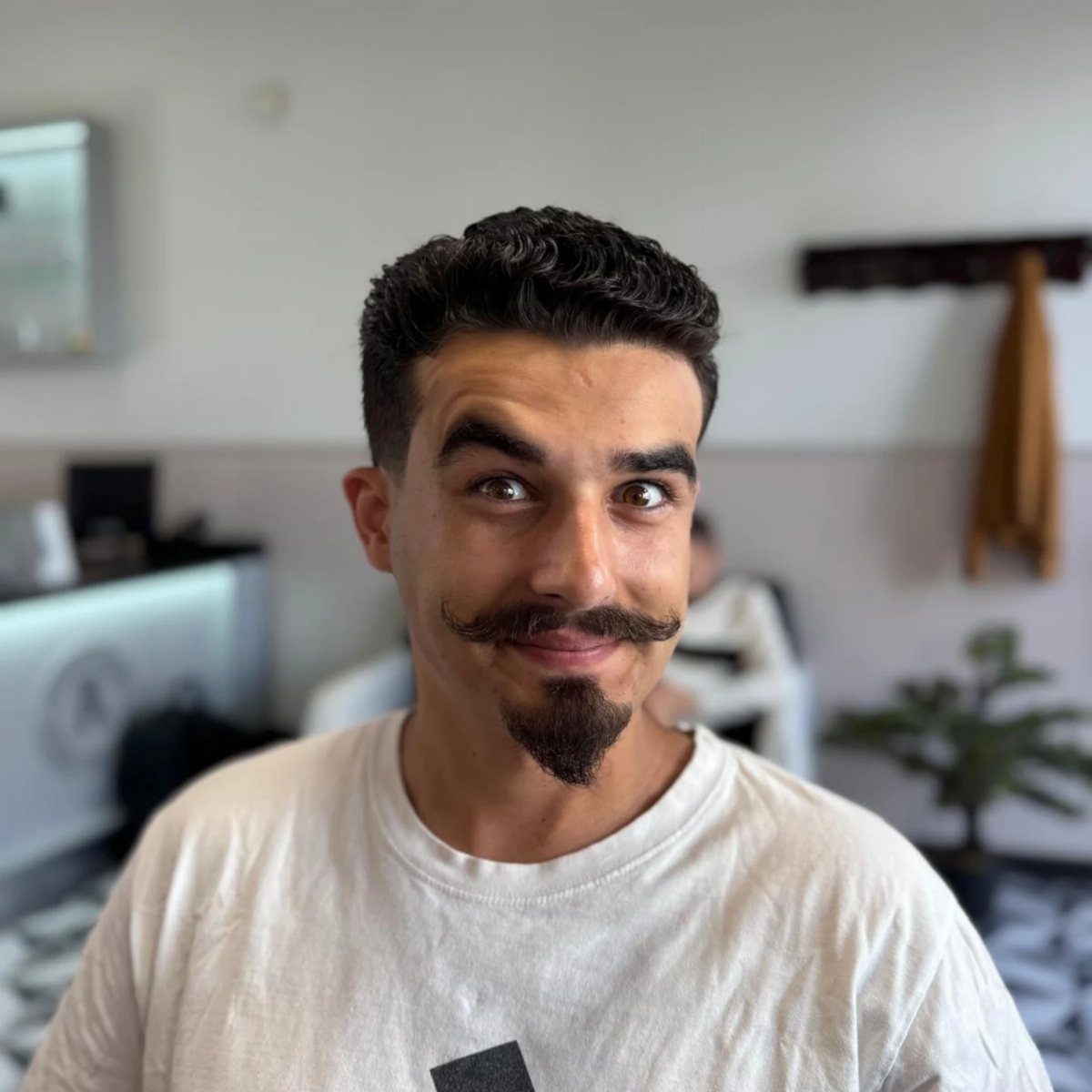
The Van Dyke splits the chin beard from the mustache with a clean gap on each side, giving it a more deliberate shape than a connected goatee. Both sections need regular trimming to stay defined, and the cheeks stay shaved.
This style reads formal and pairs best with neat, styled hair. It takes more upkeep than a full beard because any stray growth in the gap disrupts the look.
11. Taper Fade
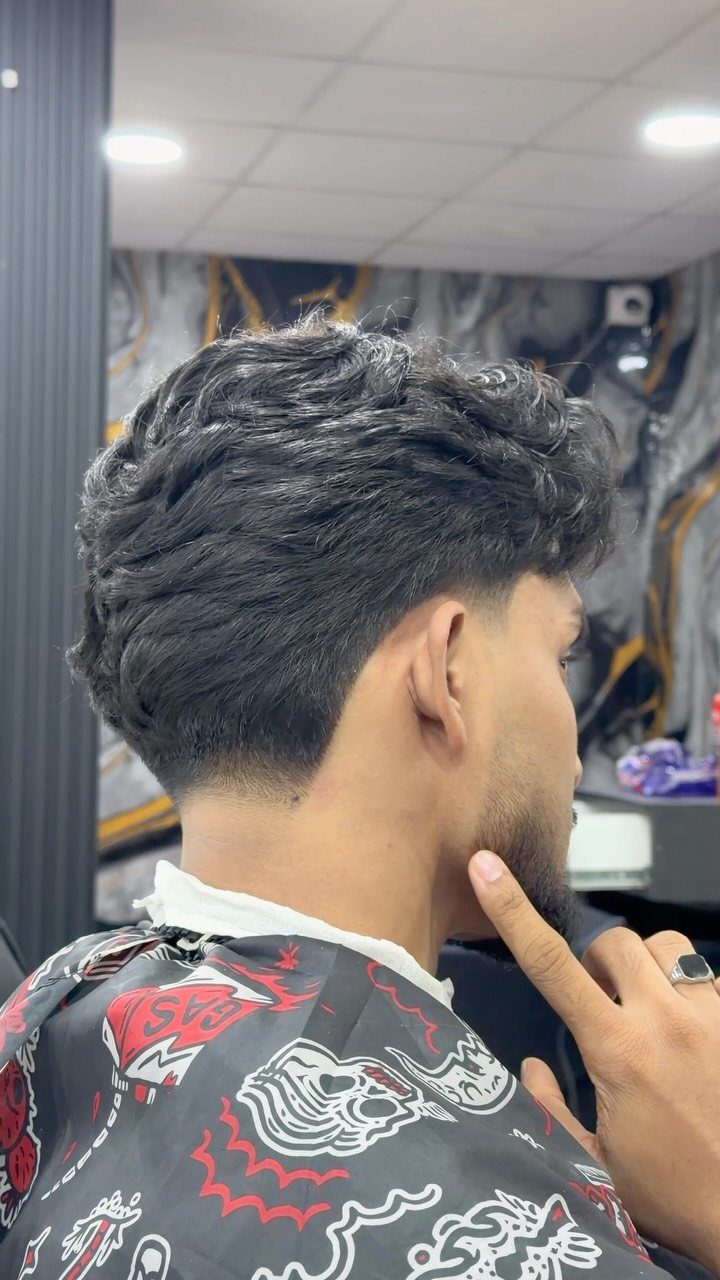
The taper fade shortens gradually from the top down to the skin, and when it continues into the beard line, the whole side of the head reads as one smooth gradient.
This works with medium to short beards that can hold a tapered edge.
The beard gets shaped on the same schedule, since the fade only works when both stay aligned.
12. Short Hair with Stubble Beard
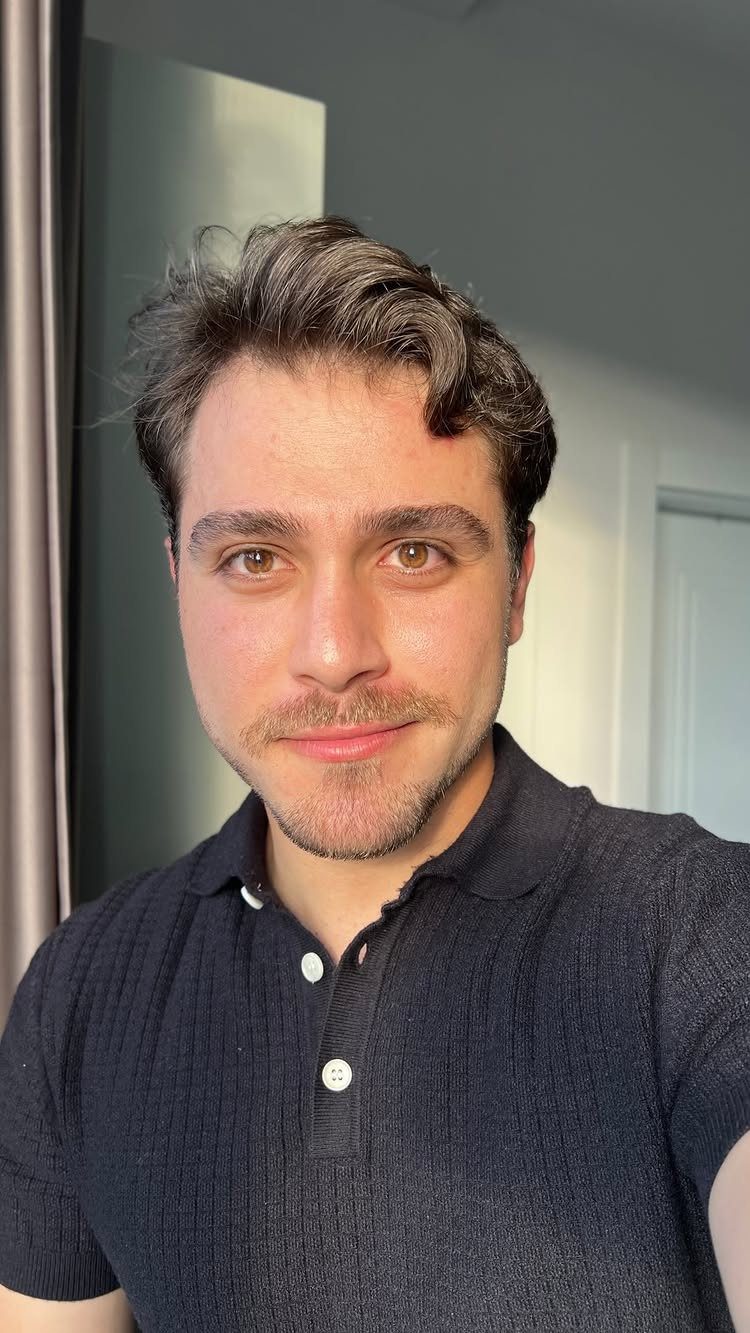
Stubble stays short enough that it barely needs trimming but long enough to shape the jawline. It pairs well with classic short haircuts because neither one demands much attention, and the whole look stays clean without daily effort.
Stubble grows in quickly and holds at that length with a quick pass of clippers every few days. Hair needs regular trims, and morning styling is optional.
13. Bald Head with Full Beard
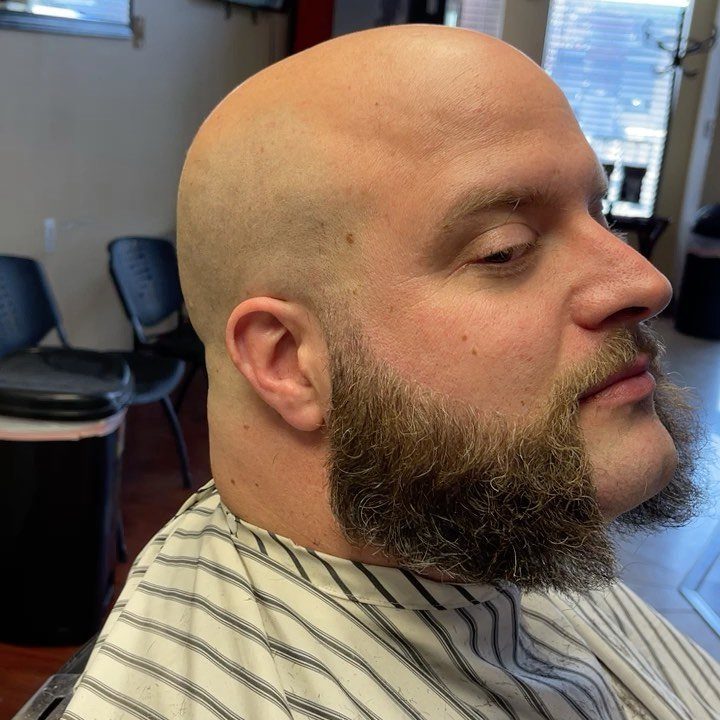
Shaving the head removes the question of what haircut fits the beard and leaves the beard to define the face on its own.
The look depends on keeping the scalp clean and the beard shaped, and both need regular attention to hold their contrast.
A full beard here should be trimmed to an even length and edged at the cheeks and neck so the shape reads deliberate.
The head will need shaving or clipping every few days, and the beard benefits from the same schedule. This pairing suits men whose hair has thinned or receded, or anyone who prefers to skip haircuts entirely.
14. Textured Crop with Beard
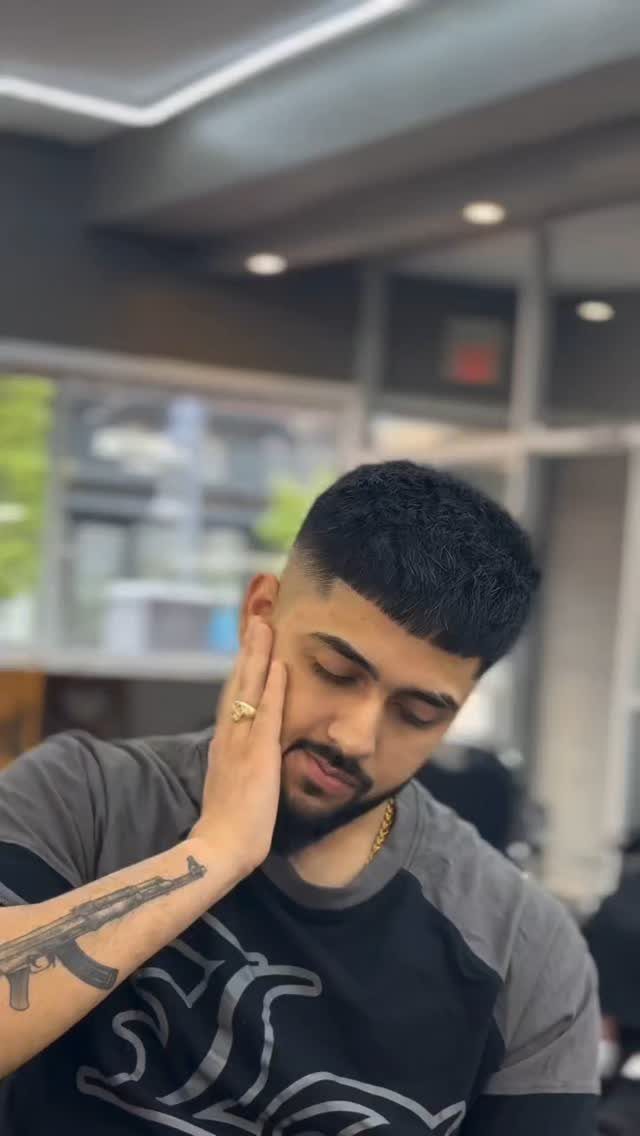
A textured crop keeps the top short but leaves enough length for the hair to sit in different directions, giving the cut movement without requiring much work each morning.
The sides stay tight, and the beard balances the proportions by adding weight below the jawline.
Texture shows best on hair with some natural thickness or wave. The beard should be trimmed to a consistent length so it doesn’t look heavier than the hair above it.
The crop grows out cleanly and needs regular trims to hold its shape. Styling takes a small amount of matte product worked through damp hair, or nothing at all if the texture holds on its own.
15. Curly Hair with Groomed Beard
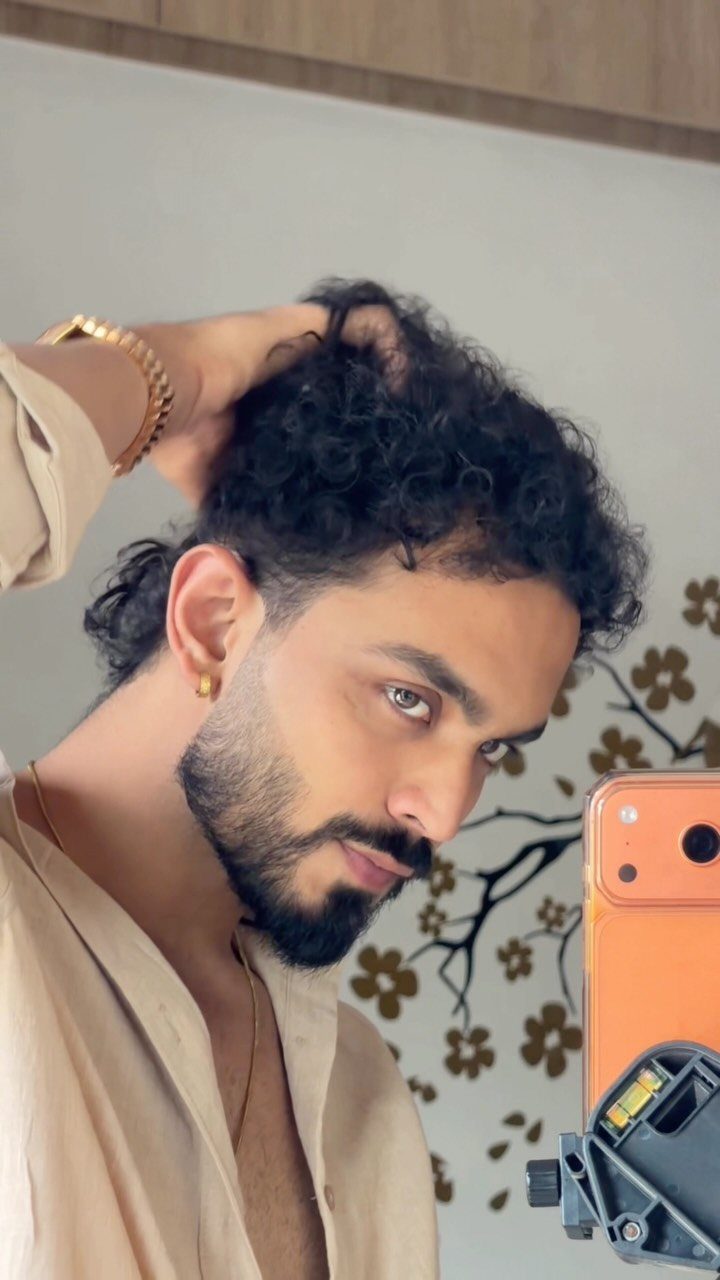
Curls add volume and shape on their own, so the haircut doesn’t need much length to fill out the top. Pairing that with a groomed beard keeps both halves proportional and stops either one from overwhelming the other.
The beard here should be trimmed to a length that complements the curl pattern without competing for volume.
Curly hair benefits from leave-in conditioner or curl cream to keep the shape defined, and the beard needs regular trimming to stay even. Both grow quickly, so maintenance appointments keep everything looking sharp.
16. Wavy Hair with Beard
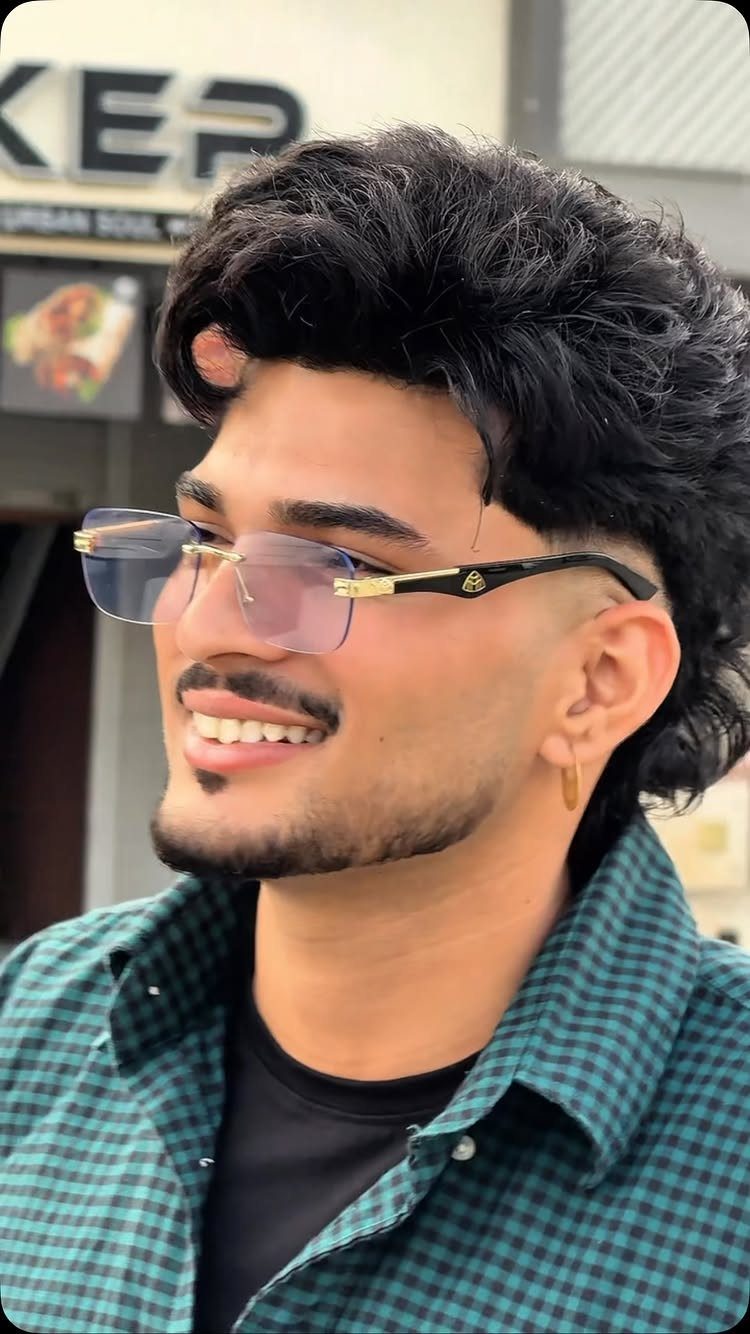
Wavy hair at medium length gives the top enough body to balance a fuller beard without needing product or styling. The waves sit naturally, and the beard defines the lower face while the hair frames the upper half.
The mustache connects to the beard and should be trimmed so it doesn’t cover the upper lip.
Wavy hair can be left to air-dry or blown out for more control, and the beard benefits from beard oil to keep the texture soft and the shape intact.
Choose by Face Shape
Styles like the Van Dyke, goatee, or ducktail pull the eye down and create angles that a rounder jawline won’t give on its own.
Square jaws already carry strong lines, so softer, rounder beard shapes like the circle beard or Balbo prevent the whole profile from looking too angular.
Oblong faces benefit from width at the sides and shorter length at the chin. Long pointed beards work against this and make the face look even longer.
Heart-shaped faces, wider at the forehead and narrower at the chin, need weight at the jaw.
Pull your hair back, snap a front-facing photo and trace around the edges if you need to see which shape you’re working with.
Keep Hair Beard Cohesive
Hair length and beard weight should feel matched.
Regular trims keep both halves looking intentional.
Beard oil softens the texture and adds light hold, and combing or brushing daily keeps longer beards from looking uneven. Conditioning applies to both the hair and the beard, especially when either one runs past a few inches.
Account for Beard Growth
Check how your facial hair actually grows before committing to a style. When the mustache and chin fill in faster than the cheeks, styles centered around the mouth work better than a full beard.
Styles like stubble, a goatee or the Balbo leave the cheeks bare or clipped tight, so any patchiness there stays out of view.
If your cheeks stay patchy after a few weeks of growth, a style that works around that will look sharper and need less maintenance than trying to fill in what isn’t there.
Frequently Asked Questions
What hairstyle suits a beard?
Styles that balance the beard’s weight work best: volume on top with shorter sides, like pompadours, undercuts, or man buns for longer beards, or simple short cuts when the beard itself carries more presence.
The hair and beard should feel matched in how much attention each one demands.
What’s the best haircut with beard for round faces?
Round faces need vertical breaks, so I pair a high fade or pompadour with a beard that runs longer under the chin and tighter on the cheeks.
The added height on top and length below work together to break up the roundness.
What is a 3 day beard?
Light stubble, around 3 days of growth, sits at 1 to 3 millimeters and gives the jaw subtle definition without needing much upkeep. It reads as intentional rather than accidental when you keep it at that length with regular trimming every 2 to 3 days.
How do I tell my barber to trim my beard?
Name the style if you know it, or describe the length you want and where the edges should sit: how high on the cheeks, how low on the neck, and whether the fade should blend into the haircut.
Bringing a photo helps when the shape matters more than a number.
What’s the easiest way to pick the best beard style for your face shape?
Pull your hair back and take a front-facing photo to see your actual face shape, then match the beard to what needs balancing: add length at the chin for round faces, width at the sides for oblong faces, or softer shapes for square jaws.
The beard should create proportions your natural bone structure doesn’t give on its own.
How do you keep your beard looking sharp and healthy?
Wash and condition it the same way you would the hair on your head, use beard oil daily to soften the texture, and comb or brush it to keep longer beards from looking uneven.
Regular trimming at the edges keeps the shape defined and stops the beard from looking unkempt.