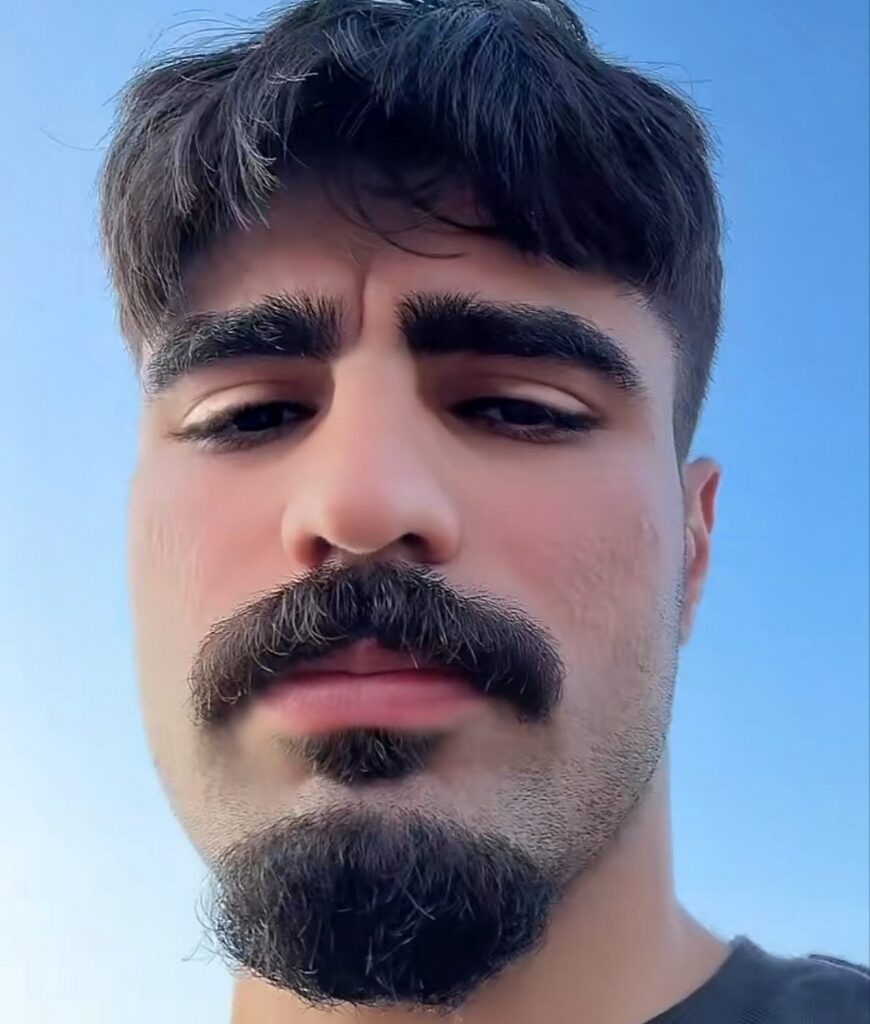
The mustache and goatee can meet at the corners of the mouth, stay separate with shaved skin between them, or wrap the mouth in an unbroken ring.
The shape you pick depends on how your facial hair grows naturally and how much daily grooming time you can spend.
1. Goatee Mustache
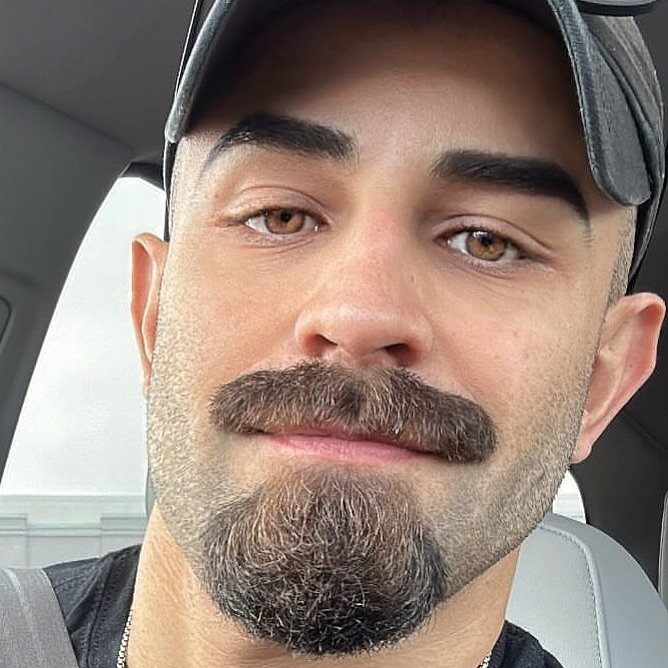
A mustache sitting above chin hair, the two either meeting at the corners of the mouth or staying separate.
This covers most of what people mean when they say goatee and mustache together, so the name works whether the pieces connect or not.
If the mustache and chin hair grow toward each other naturally, let them meet.
If they do not, keep them trimmed apart and the cheeks shaved clean. The look holds as long as both parts stay defined.
2. Van Dyke
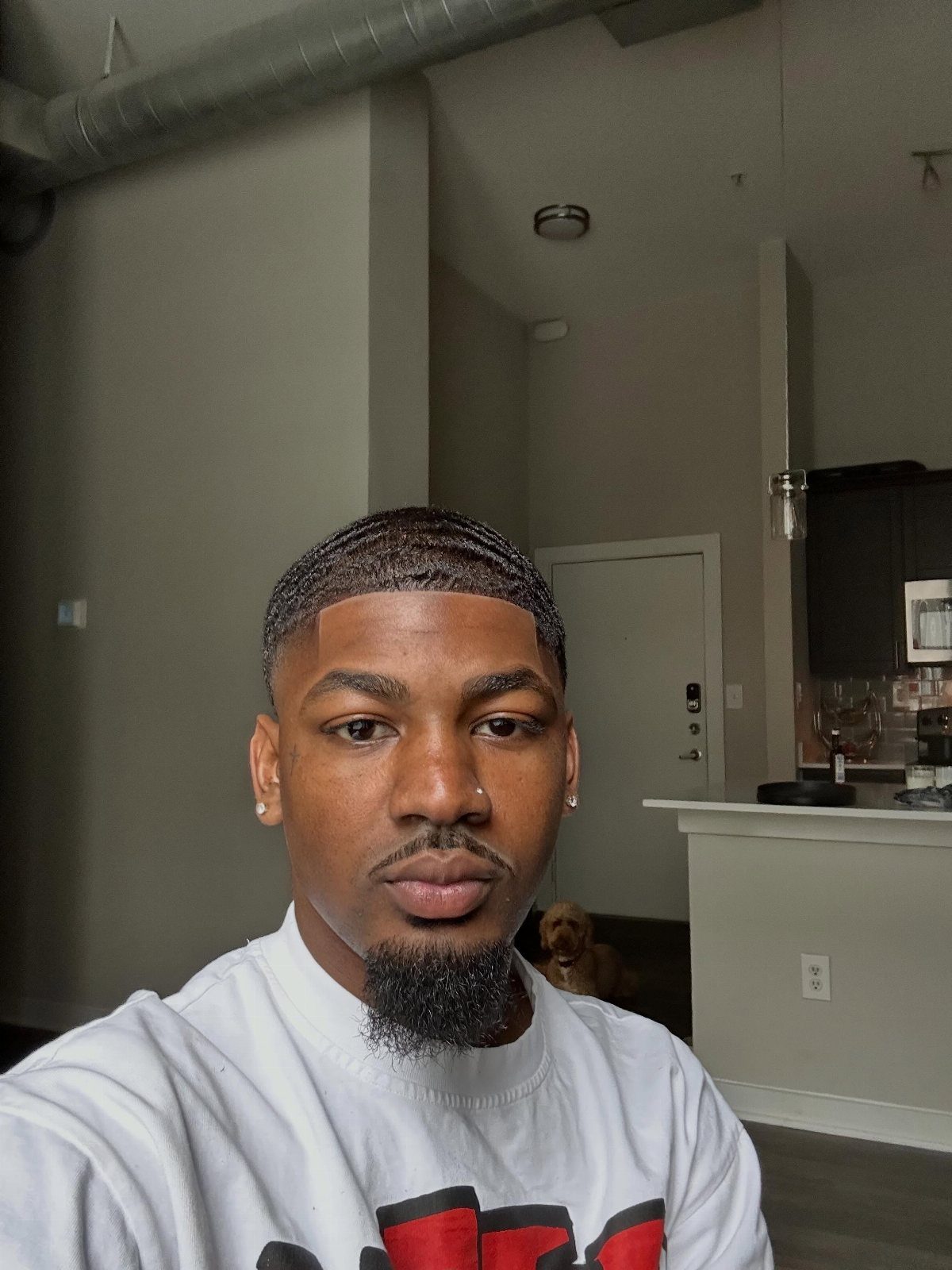
The mustache and chin hair stay apart here, with shaved skin between them where the corners of the mouth sit.
The chin hair can be pointed or rounded, but the gap at the sides is what makes this a Van Dyke instead of a circle beard.
Shave or trim the cheeks and the connector strips clean every few days.
The mustache and goatee can be any length as long as the separation stays visible. A pointed chin tuft reads more period, a rounded one more contemporary.
3. Circle Beard

The goatee meets the mustache and wraps the mouth in an unbroken ring. Cheeks stay shaved, and the outline is trimmed into a clean circle or oval that follows the shape of the lips.
This one needs frequent edging to keep the border crisp.
Use a trimmer with no guard to define the outer line, then shave everything outside it. The width of the ring can vary, but the connection at the corners of the mouth is non-negotiable.
4. Boxed Beard

A full beard trimmed into a tidy rectangular frame, with sharp lines along the cheeks and jaw.
The mustache connects to the chin hair and continues down the sides in a uniform shape that does not follow the natural curve of the face.
The boxed shape requires regular trimming to hold its geometry.
Set your trimmer to one guard length for the whole beard, then edge the cheek line and neckline with a razor or bare blade. This works best on dense, even growth that can fill the frame without patchiness.
5. Handlebar with Goatee
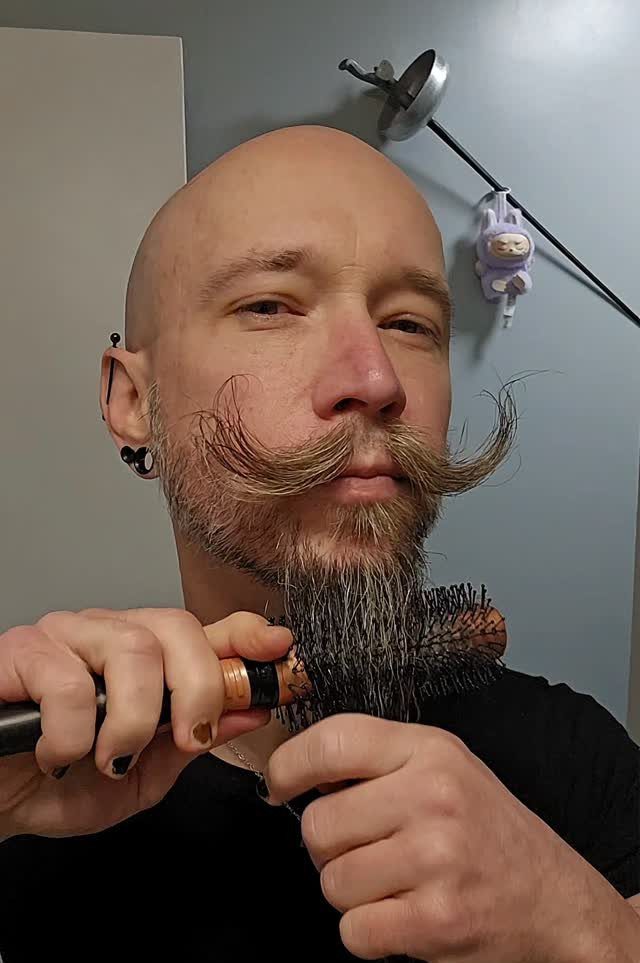
A handlebar mustache curls or extends past the corners of the mouth, paired with a goatee that grows from the chin. The mustache takes over as the focal point, and the goatee balances it without competing.
Growing a handlebar takes time. The ends need to reach past your mouth before you can shape or wax them.
Meanwhile, keep the goatee trimmed to a length that complements the mustache without overwhelming it. Mustache wax holds the curl or twist, applied after the hair is dry.
6. Hipster Goatee

A trimmed mustache above a small patch of chin hair, kept short and shaped close to the face.
The goatee here is smaller than the classic versions, often just covering the point of the chin rather than extending down or widening at the sides.
This style works with less facial hair density than a full goatee demands.
Keep both pieces short with a guarded trimmer, and shave the cheeks and neck clean. The proportions stay light, so the mustache should not overpower the chin hair.
7. Neat and Trimmed Mustache and Goatee

Both pieces trimmed to the same short length and edged clean at the borders. The look stays controlled without calling attention to itself, and the uniform length makes maintenance straightforward.
Trim the mustache and goatee with the same guard, then edge the cheeks, neckline, and upper lip with a razor or bare blade.
This needs regular passes to stay crisp. Works best when facial hair grows evenly, since any patchiness shows more at short lengths.
8. Mustache with Soul Patch
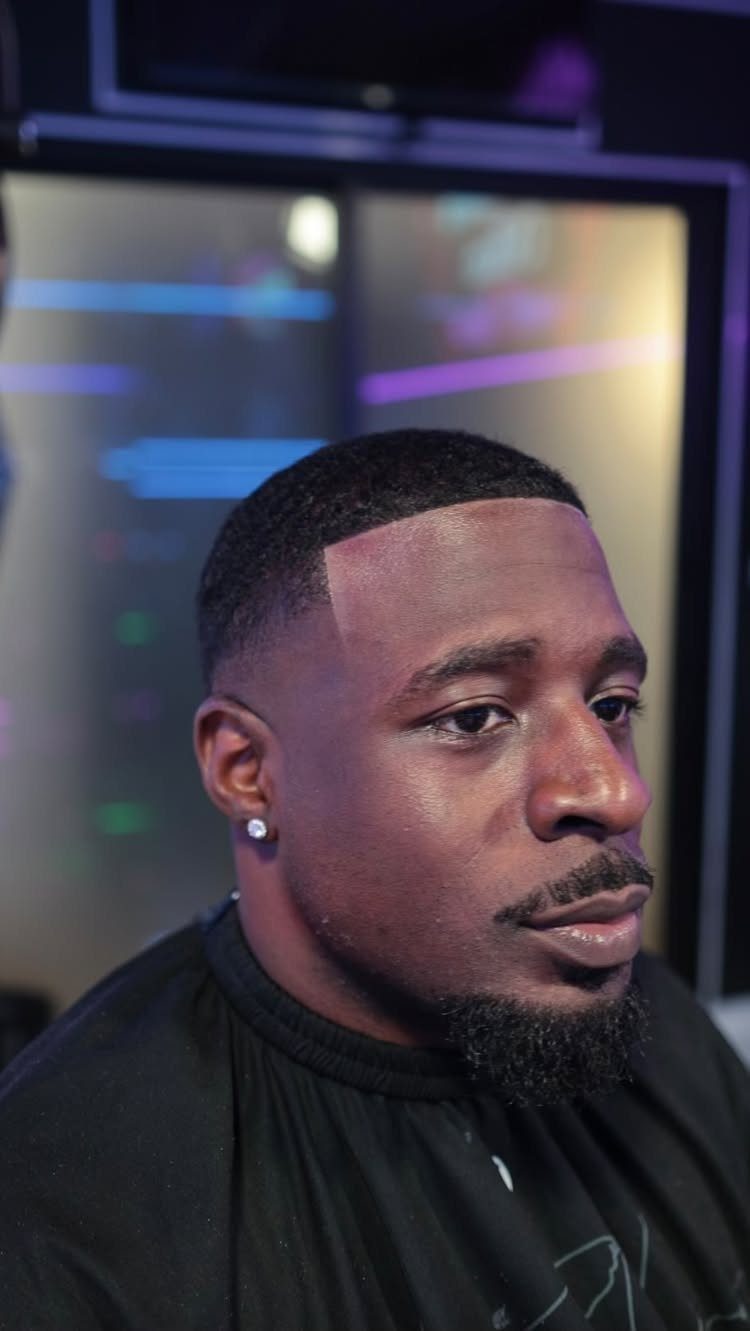
The soul patch stays separate from both the mustache and any chin hair, so the face reads as 2 distinct pieces rather than a connected shape.
Keep the soul patch narrow, no wider than the space between your lower lip and chin.
Trim it short enough that it holds its shape without curling. The mustache can be any width, but keeping it trimmed to the corners of the mouth balances the proportions.
9. Curled Mustache with Goatee
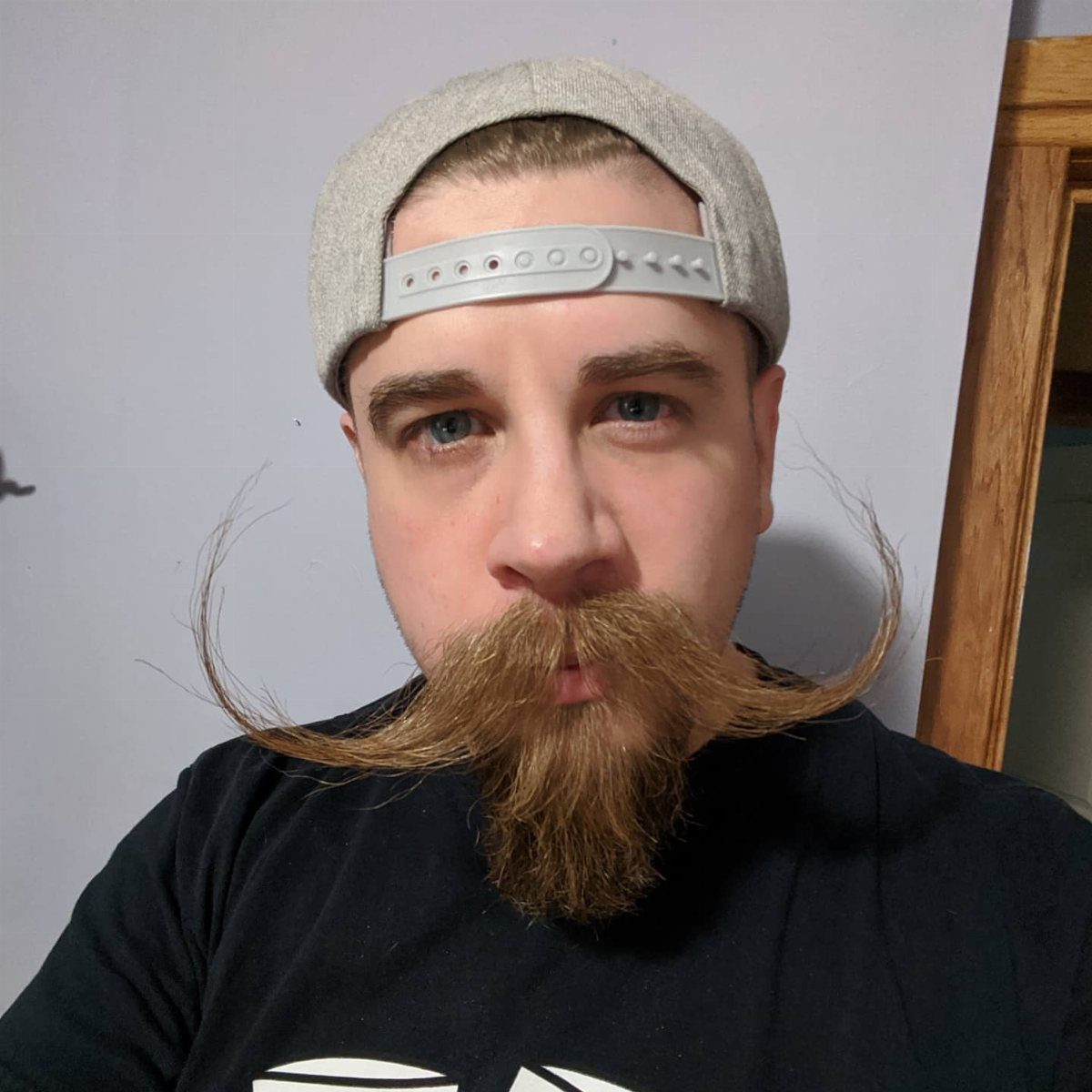
Long mustache ends twist or curl outward, paired with a pointed goatee below. The mustache takes more grooming than a handlebar that simply extends horizontally, since the curl has to be shaped daily.
Grow the mustache past the corners of your mouth before attempting the curl. Once it reaches length, apply wax after the hair is dry and twist the ends into shape with your fingers.
The goatee stays trimmed short to let the mustache dominate. Plan for a few minutes each morning to reset the curl.
10. Grey Mustache and Goatee

Grey facial hair holds the same shapes as pigmented hair, but the color change makes the mustache and goatee more visible against the skin.
The contrast works in your favor here, so the trim does not need to be as sharp to read clearly.
Coarse grey hair can feel wiry.
A beard oil or balm softens the texture and makes trimming easier. The style itself is any mustache and goatee combination you prefer, the grey just changes how it sits on your face.
Growing and Shaping Facial Hair
Pick the style before you trim anything. The shape you want determines where the borders go, and carving backward from random growth wastes time.
Give growth 2 to 3 weeks before you pick up a trimmer or razor. Washing and conditioning it before trimming makes the hair easier to cut and gives you a clearer view of what you have.
A small razor blade reaches detail lines a wide cartridge can’t. Trim any hairs that grow over your upper lip so they do not hang into your mouth.
Keep nose hairs trimmed back so they do not connect to the mustache. The line between mustache and nostril should stay clean.
Trimming Tools and Technique
Comb everything flat before trimming so you catch the true length. This shows you where the hairs sit and makes uneven lengths easier to spot.
Guards work for short to medium styles where uniformity matters.
Scissors let you control each cut when the goatee runs longer or the shape gets complicated.
Comb the hair against the grain to find stray ends, then clip them with scissors. Trim the bottom of the goatee following the curve of your chin rather than cutting straight across.
Point-cut the underside by angling the scissors into the hair rather than cutting horizontally. This leaves a more natural finish than a blunt edge.
Grooming and Upkeep
Shampoo and condition 2 to 3 times a week, the same way you would the hair on your head.
More often if your work gets dirt or grime into the hair. Conditioning keeps the hair from drying out and makes it easier to trim.
Apply it after washing or anytime the hair feels coarse.
Frequently Asked Questions
What is a goatee mustache?
Facial hair above the lip paired with hair below it, sometimes connected and sometimes kept apart. Most styles trim the mustache so it does not hang into the mouth.
How to grow a goatee mustache?
Let facial hair grow for 2 to 3 weeks before trimming anything, then pick the style you want and carve its borders with a trimmer. Wash and condition the hair before you start shaping so you can see what you have.
Goatee vs Van Dyke?
A goatee grows only from the chin and does not include the mustache, while a Van Dyke pairs a mustache with chin hair and keeps the two separated with shaved skin at the corners of the mouth.
The shape reads vertical rather than circular. A circle beard, which connects the mustache and goatee in an unbroken ring, is often mislabeled as a Van Dyke.
How to trim a goatee?
Comb first so no hair hides its real length, then take a trimmer to the outline. Guards work for uniform short to medium styles, while scissors give you more control for longer or complicated shapes.