Medium length gives you enough hair to slick back, part, wear textured, or let fall in waves without the morning work or frequent trims that come with longer styles.
The choice depends on your hair’s natural texture: waves and curls show best in cuts that let them open up, like textured waves or medium curls with a fade, while straight hair suits styles that rely on direction and product, like a slick back or side part.
Most of these cuts need a cleanup every 3–6 weeks depending on whether the sides are faded or tapered, and styling time runs from under 2 minutes for a textured crop to 5 minutes for a pompadour that needs a blow dryer.
1. Messy Fringe
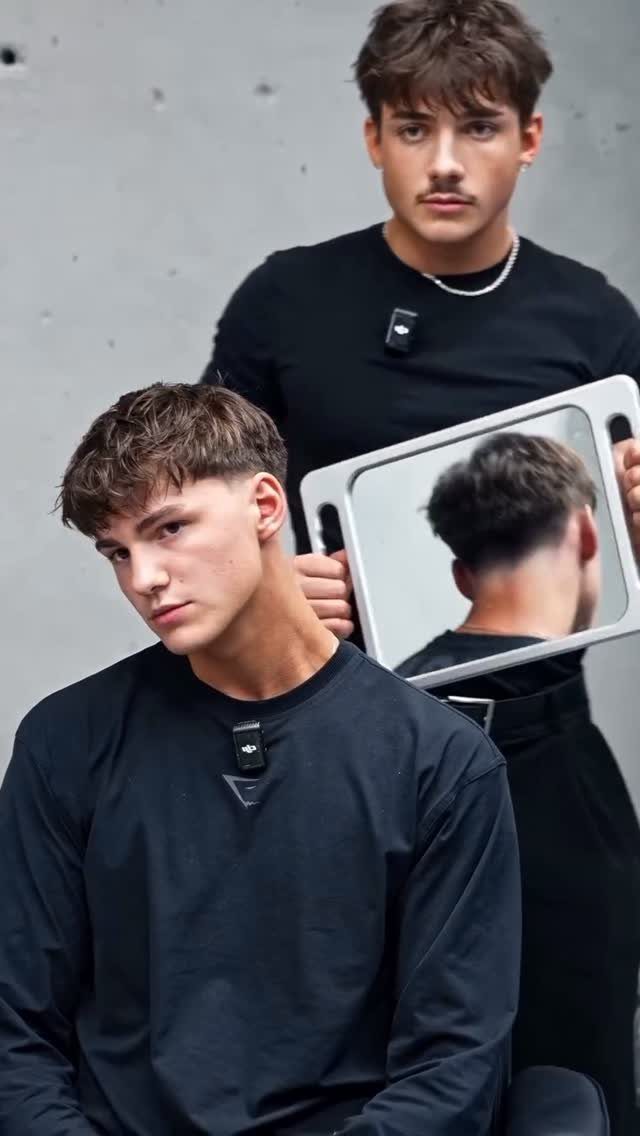
Layered hair is cut to sit forward over the forehead and styled with minimal product for an undone, textured finish. The fringe softens the face and works well on straight or slightly wavy hair.
Ask for layers through the top and longer length at the front.
Styling takes a few minutes: towel-dry, apply a small amount of matte clay or paste, and work it through with your fingers to separate the strands. No combing.
You’ll need more frequent cleanups. The fringe will need trimming to stay out of your eyes.
2. Textured Waves
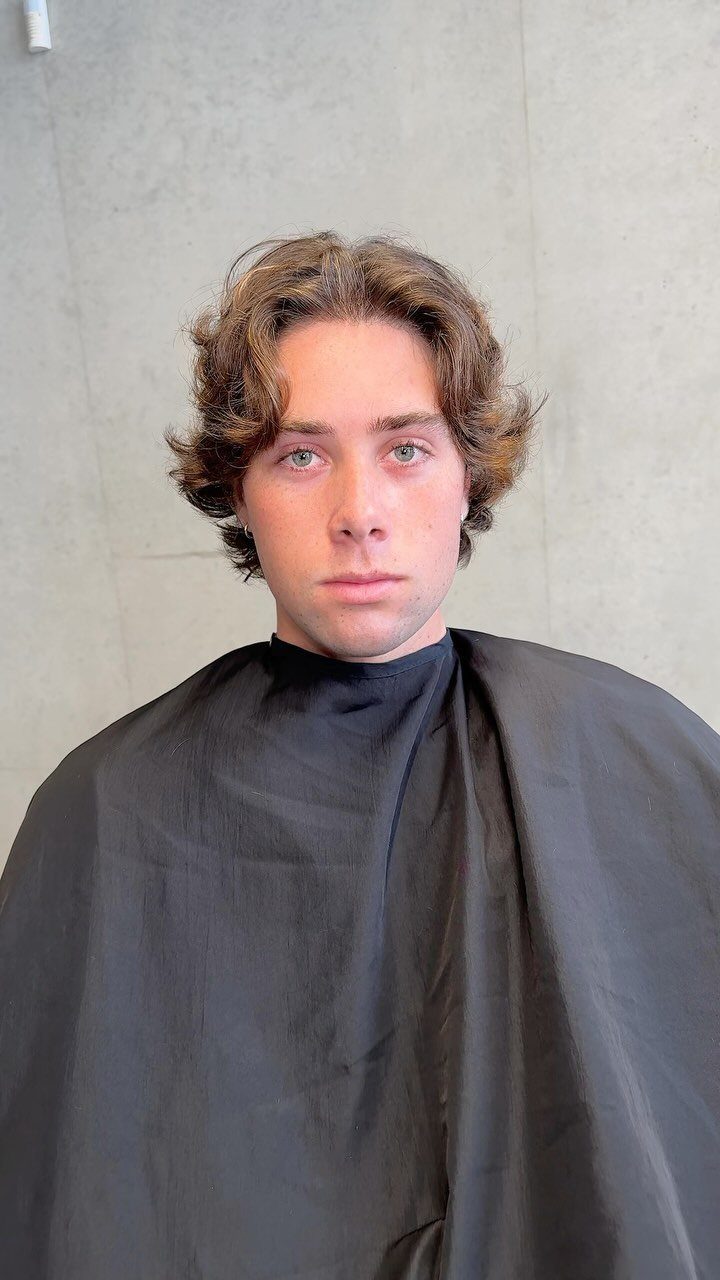
Natural wave is left visible and emphasized with minimal styling. The length sits between the ear and the collar, and the texture does most of the work.
This suits hair that already has some movement.
If yours is straight, you will not get this shape without heat tools or a perm. Wavy hair benefits from a leave-in conditioner or light cream applied to damp hair, then air-dried or diffused.
Once you know your hair’s pattern, morning work is quick. Maintenance is a trim every 6–8 weeks to keep the shape from getting bulky at the ends.
3. Undercut
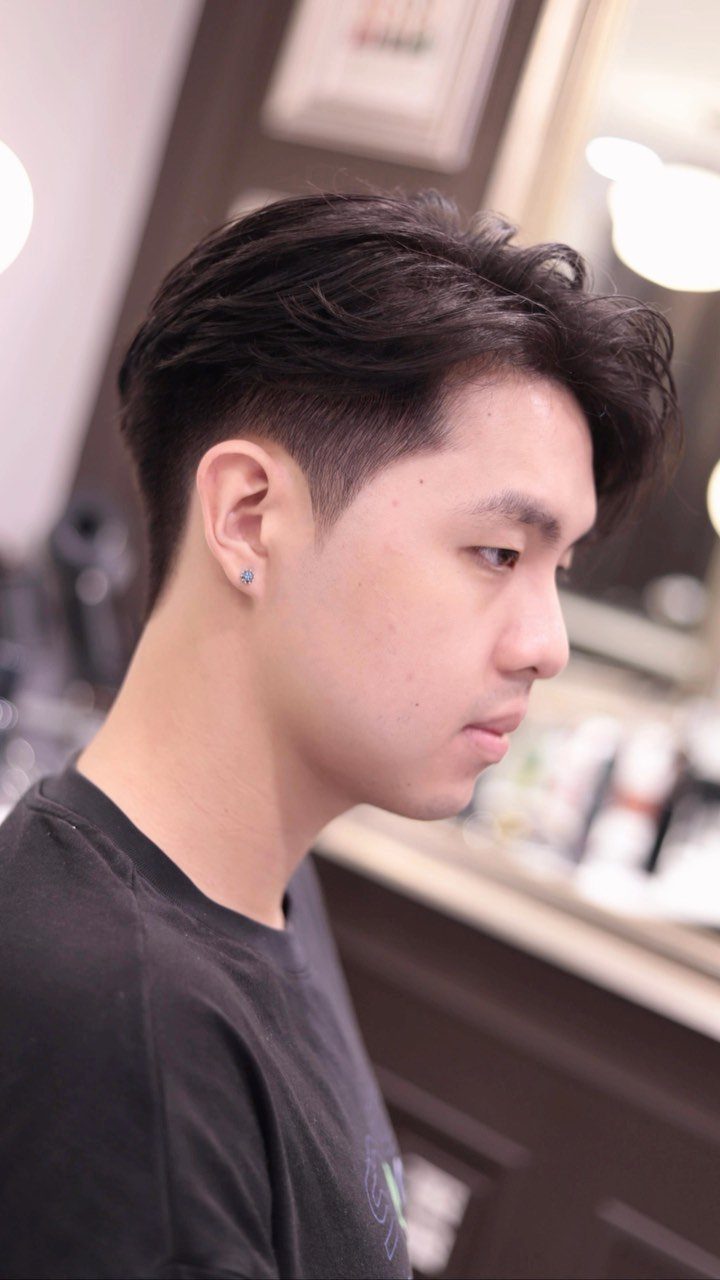
Sides and back are cut very short, often to a skin fade or guard 1–2, while the top is left at medium length. The contrast is the point.
This cut works for most hair types and gives options on top: you can wear it slicked back, brushed forward, or textured. The short sides keep it clean and reduce styling time.
Plan on a barber visit every 2–3 weeks.
The fade grows out quickly, and once the sides start filling in, the contrast softens. The top can go longer between trims if you are comfortable with added length.
4. Wings Haircut

Hair is cut to medium length with layers that create volume and movement, forming a relaxed, swept-back shape. The name comes from the way the sides lift and fall.
This cut needs hair with natural wave or curl.
Straight hair will not hold the shape without significant effort. Styling is minimal: towel-dry, apply a light mousse or salt spray, and let it air-dry or blow-dry with your fingers.
It grows out well for 6–8 weeks before it starts looking too heavy. The casual look suits weekends better than formal settings.
5. Textured French Crop
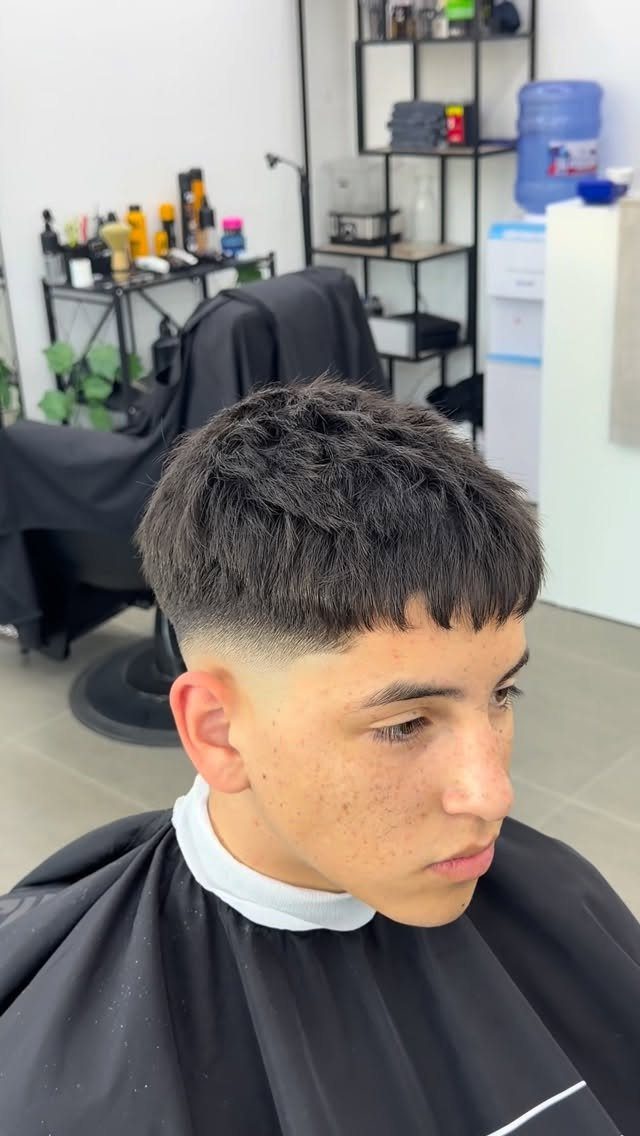
A short crop with faded or tapered sides and textured medium-length hair on top, worn forward in a horizontal fringe. The fringe is cut blunt or slightly textured, depending on preference.
Styling takes under 2 minutes: apply a matte paste or clay to damp hair and push it forward.
The fade needs regular cleanups. The top can go longer, but the fringe will need attention by week 4 to stay off your forehead.
6. Windblown Waves
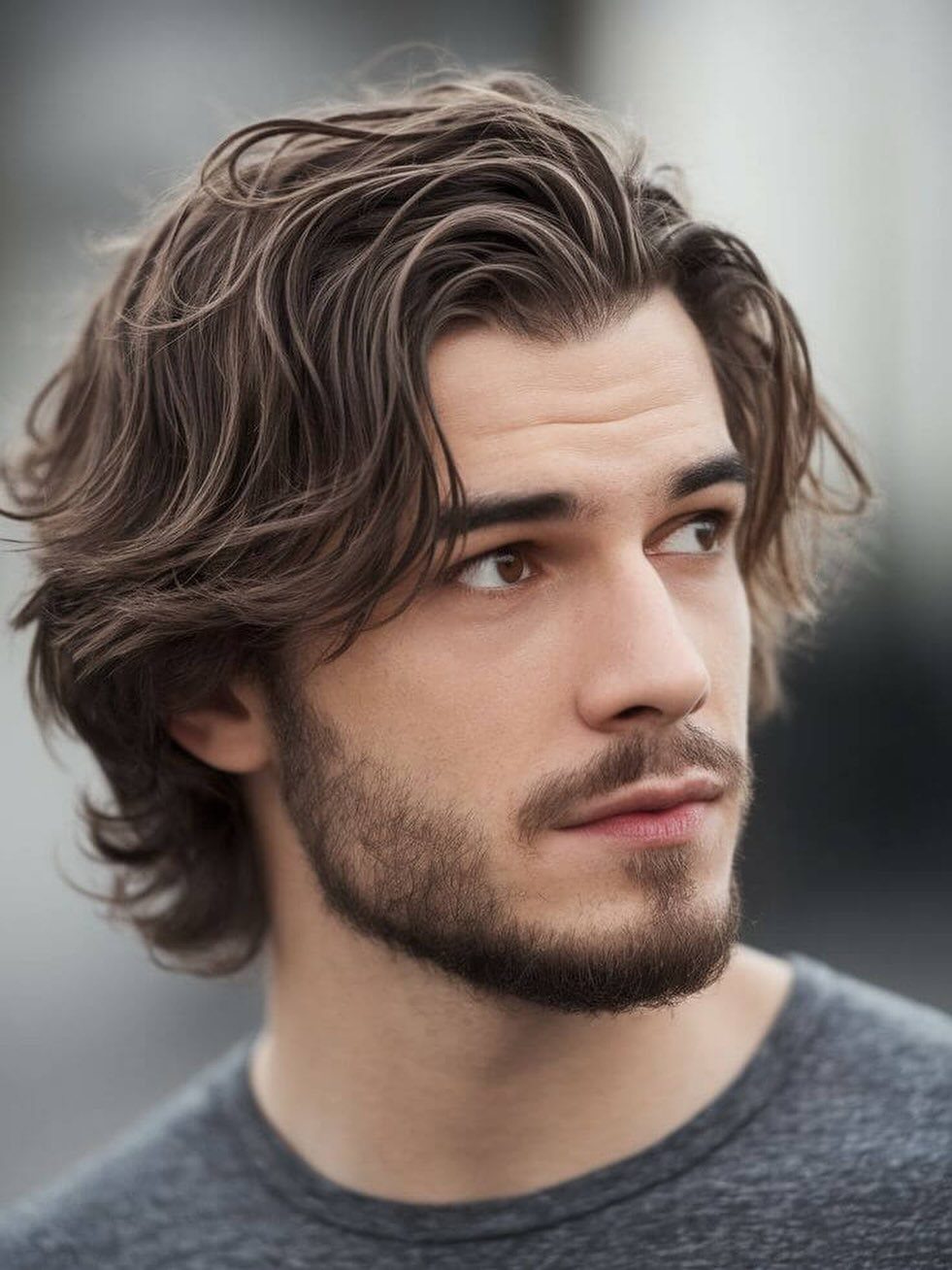
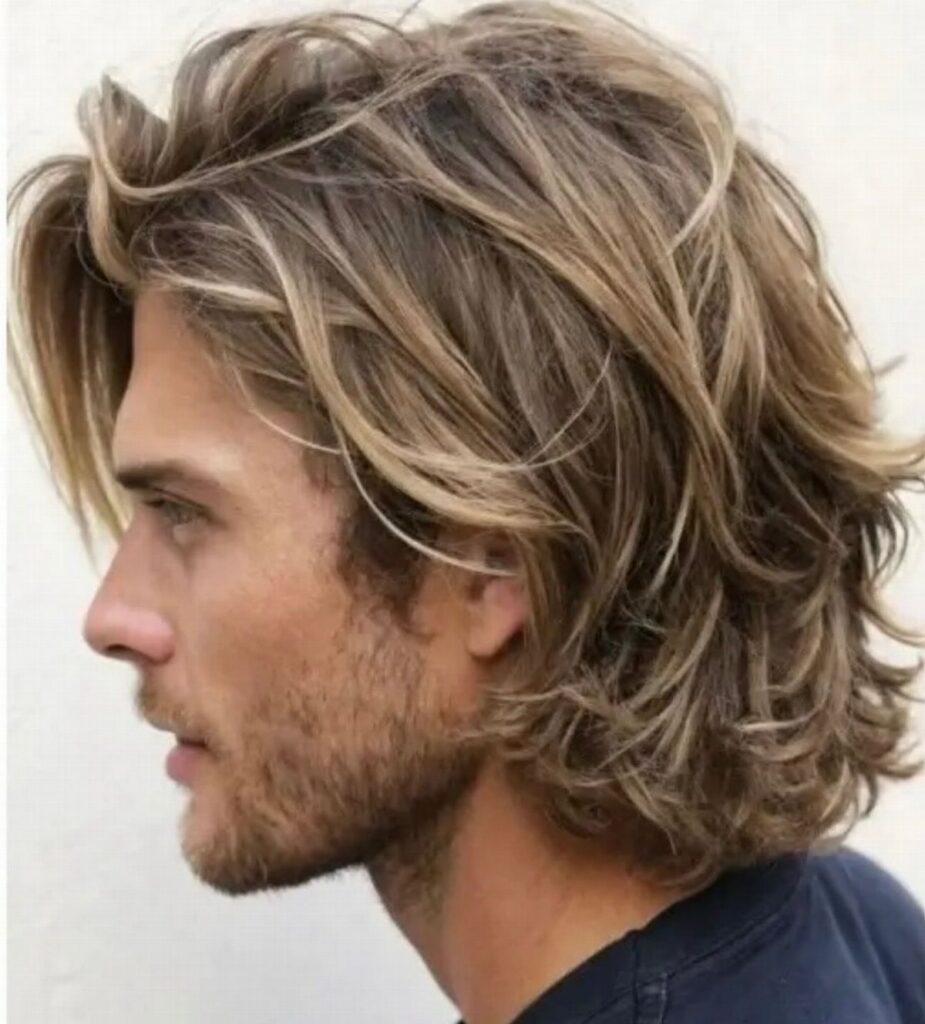
Medium-length hair is cut with layers and styled to look like it has been moved by wind. The texture is loose and undone, with strands falling in different directions.
Styling involves a sea salt spray or texturizing spray applied to damp hair, scrunched or blown with a diffuser, and left to dry. You’re after separation and volume, not a set shape.
Maintenance between cuts is low, but you will need a trim to keep the layers from looking uneven. This cut suits casual settings and pairs well with a beard for balance.
7. Slick Back
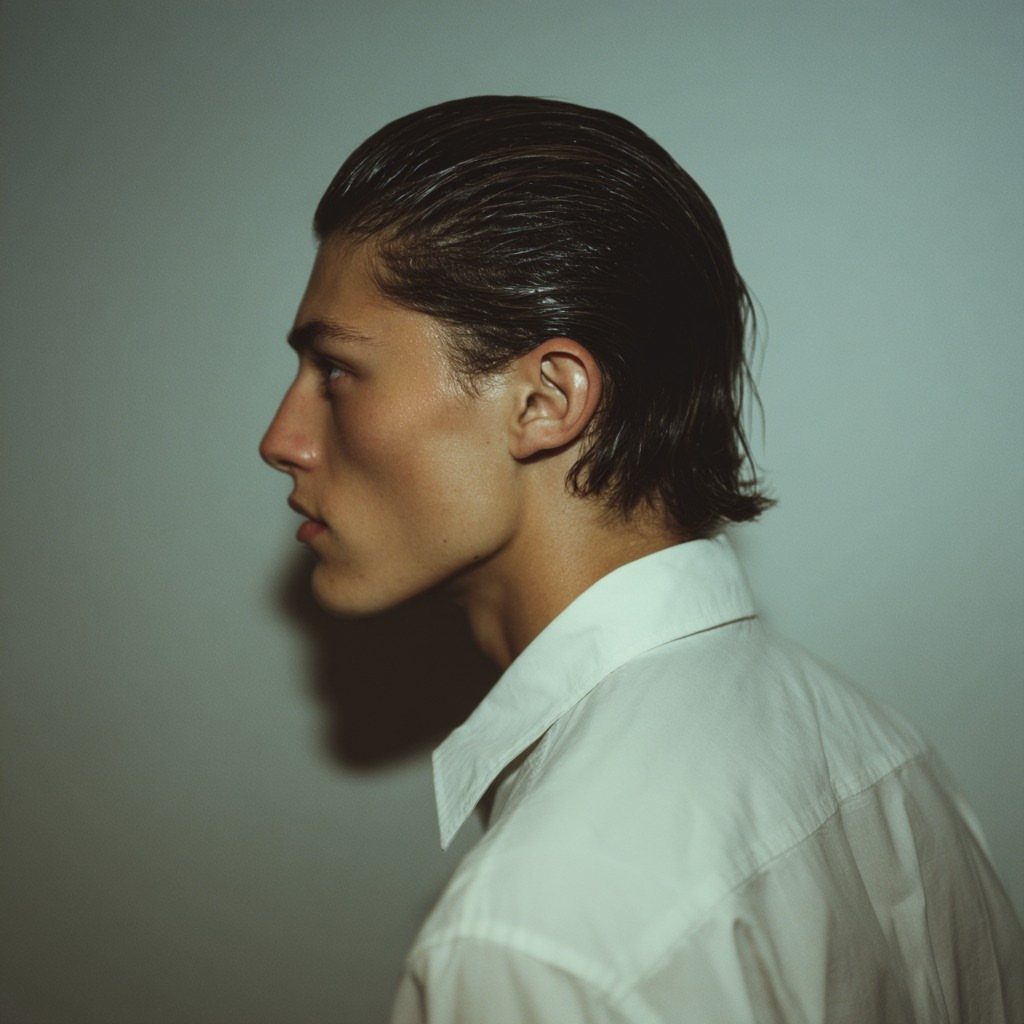
Hair is combed straight back from the forehead and held in place with product or left soft.
The finish depends on how much you use: a light pomade or cream gives a natural look with some movement, while more product and a comb produce a polished, set result.
Works for most hair types as long as the length clears the temples.
Styling time is under 2 minutes. Apply product to damp hair and comb or run your fingers through from front to back.
The top will need a trim every 6 weeks. Between cuts, the length lets you switch to a side part or wear it textured if you get tired of the look.
8. Side Part
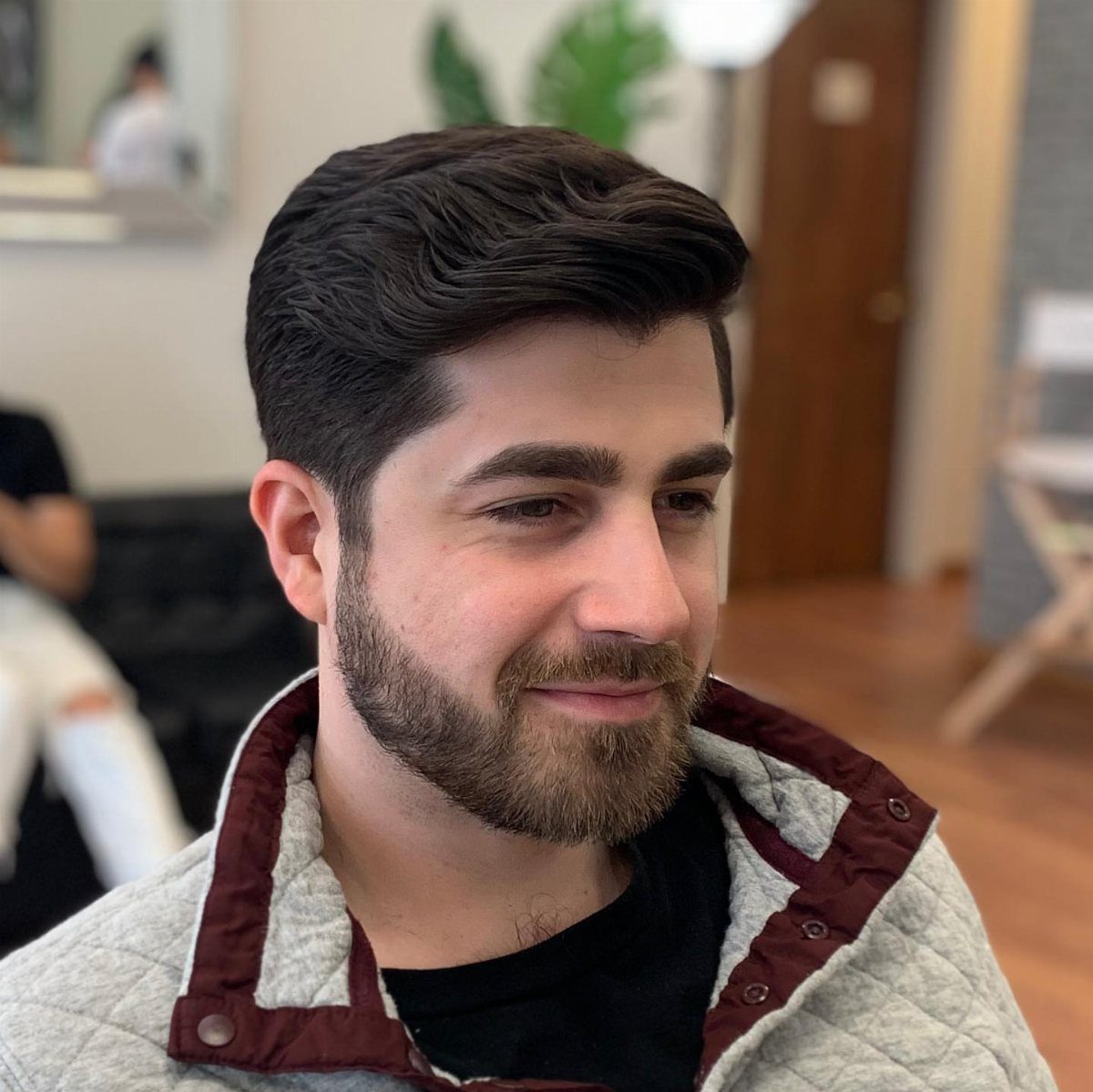
The part can follow your natural growth pattern or be created with a comb. Hair is then brushed to one side and back, with the heavier side covering more of the forehead.
This cut suits straight or slightly wavy hair.
Curly hair will fight the direction unless you use heat tools. Styling takes a few minutes: apply a light pomade or cream to damp hair, comb the part in, and brush the hair across.
A defined part looks more formal. If you want something casual, skip the comb and use your fingers.
9. Medium Pompadour

Front hair is blown or brushed up and back to create lift at the forehead, with the rest tapered or faded on the sides. The height can be subtle or pronounced depending on how much length you leave on top.
You’ll need a blow dryer, a round brush or vent brush, and a medium-hold pomade. Blow-dry upward while brushing, then apply product to lock the shape.
The sides need maintenance every 2–3 weeks. The top holds its shape longer but will need a cut by week 6 to avoid losing structure.
10. Middle Part

Hair falls evenly on both sides of the face, with the part running down the center of the scalp. Length typically hits between the ears and the collar.
Straight or slightly wavy hair shows the cleanest line. Curly hair will soften the part but still splits into 2 sections.
No product is required, though a light cream helps control frizz. Run a comb or your fingers down the center after washing and let it dry.
This style grows out without losing its shape. Pair it with a fade if you want more structure on the sides.
11. Natural Taper
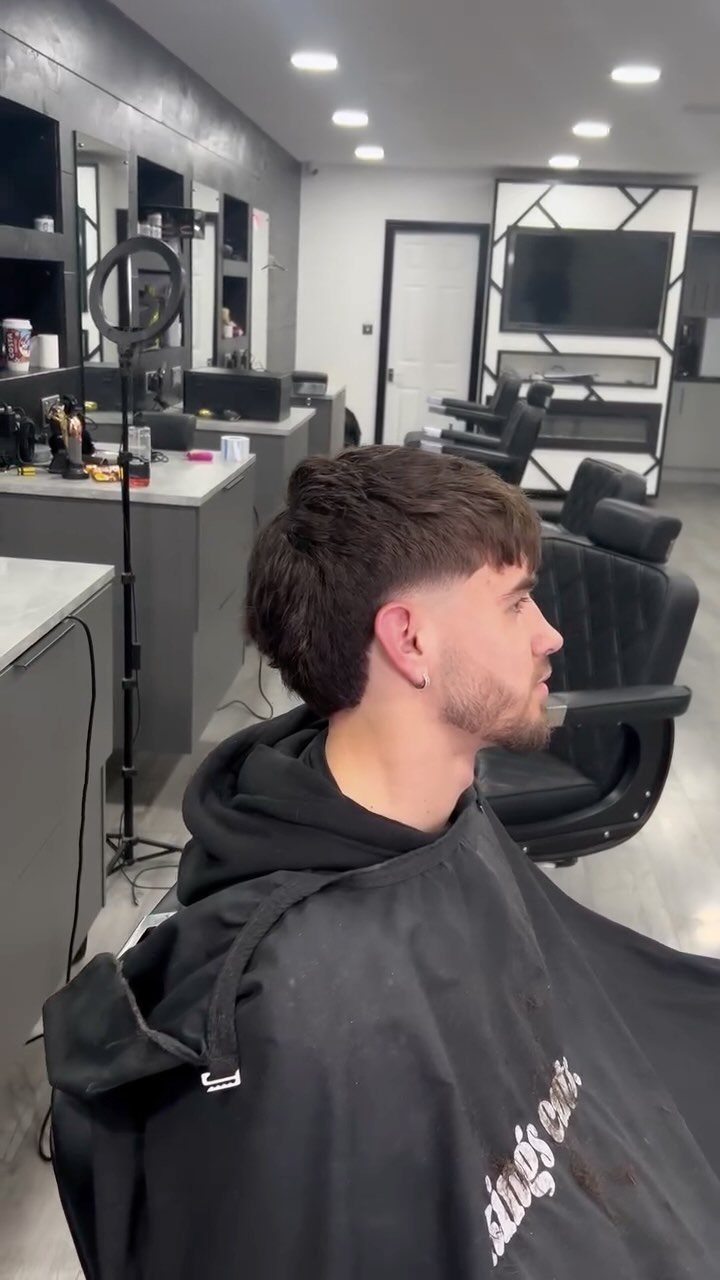
Scissors blend the sides and back gradually into the longer top without clippers, leaving texture and a softer transition. The result is less contrast than a fade and closer to how hair grows naturally.
Styling depends on the top: you can wear it forward, back, or to the side. The tapered outline stays tidy without looking sharp or fresh from the barber.
Maintenance is relaxed. If you want something low-effort that still has shape, this is the answer.
12. Classic Pompadour
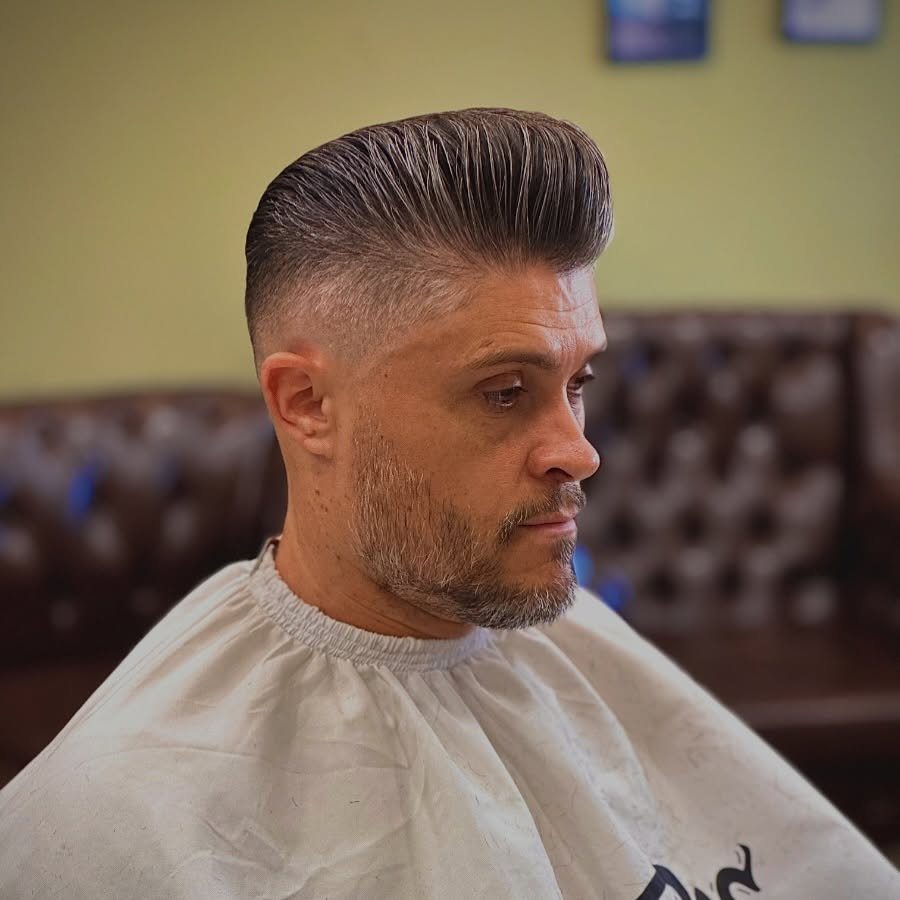
The front is blow-dried high and swept back with a rounded shape at the crown.
Product keeps it in place all day. Sides are cut short or faded, and the finish is smooth, not textured.
This requires length on top, at least 3–4 inches.
You’ll use a blow dryer, a comb, and a strong-hold pomade or gel. Dry the hair upward and back, then comb it into position and apply product.
The fade will need upkeep every 2 weeks.
The top can go longer, but once the length exceeds 5 inches, the shape gets harder to hold. This cut reads formal and pairs well with a suit or collared shirt.
13. Comb-Over
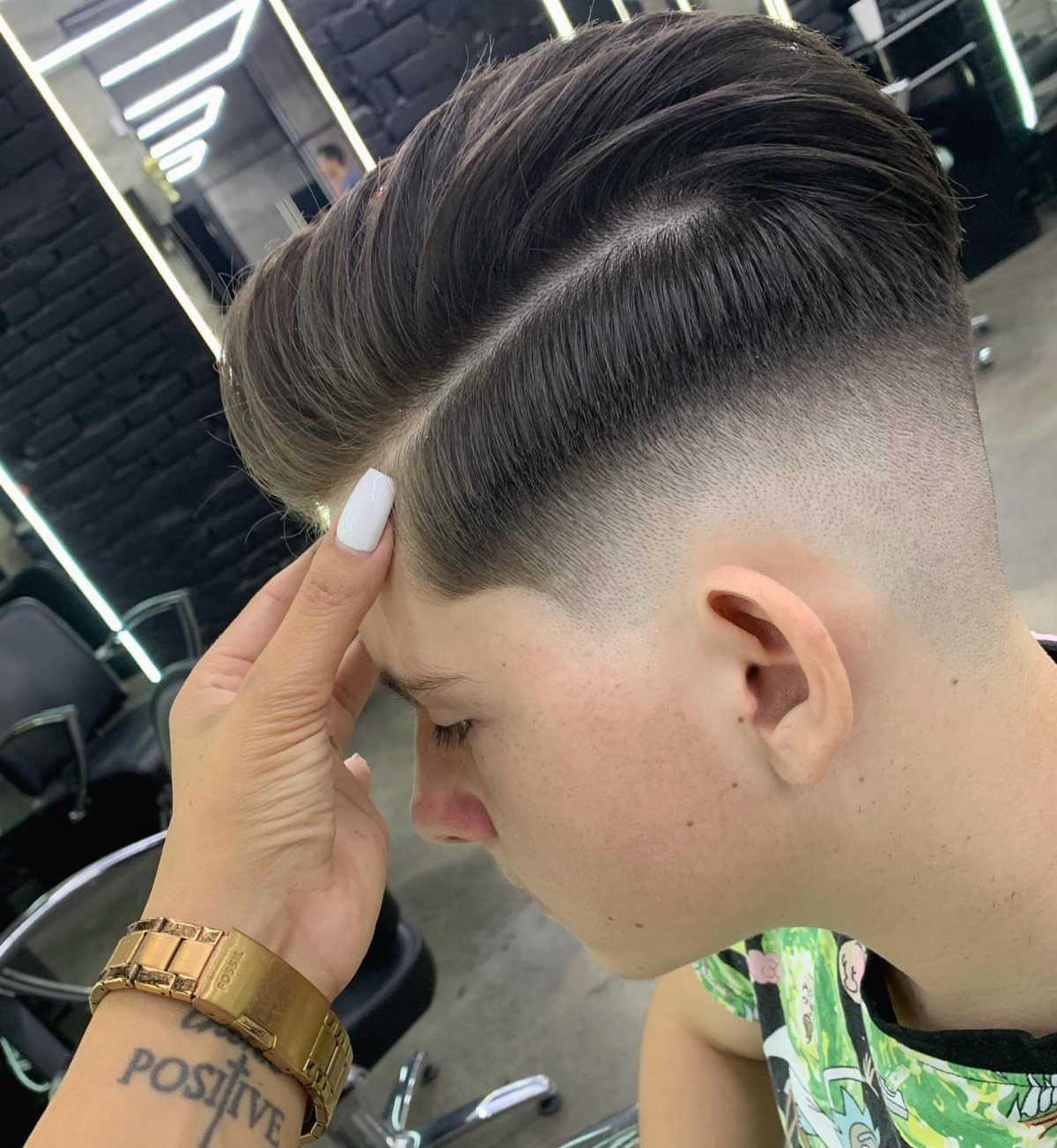
Hair sweeps across from a part, building volume over the ear or temple where it lands. The part can be sharp or soft depending on whether you comb it in or let it form naturally.
Wavy hair adds texture but still holds the direction.
The sides will need a cleanup every 3 weeks. The top can go longer before a trim.
14. Tousled Hair
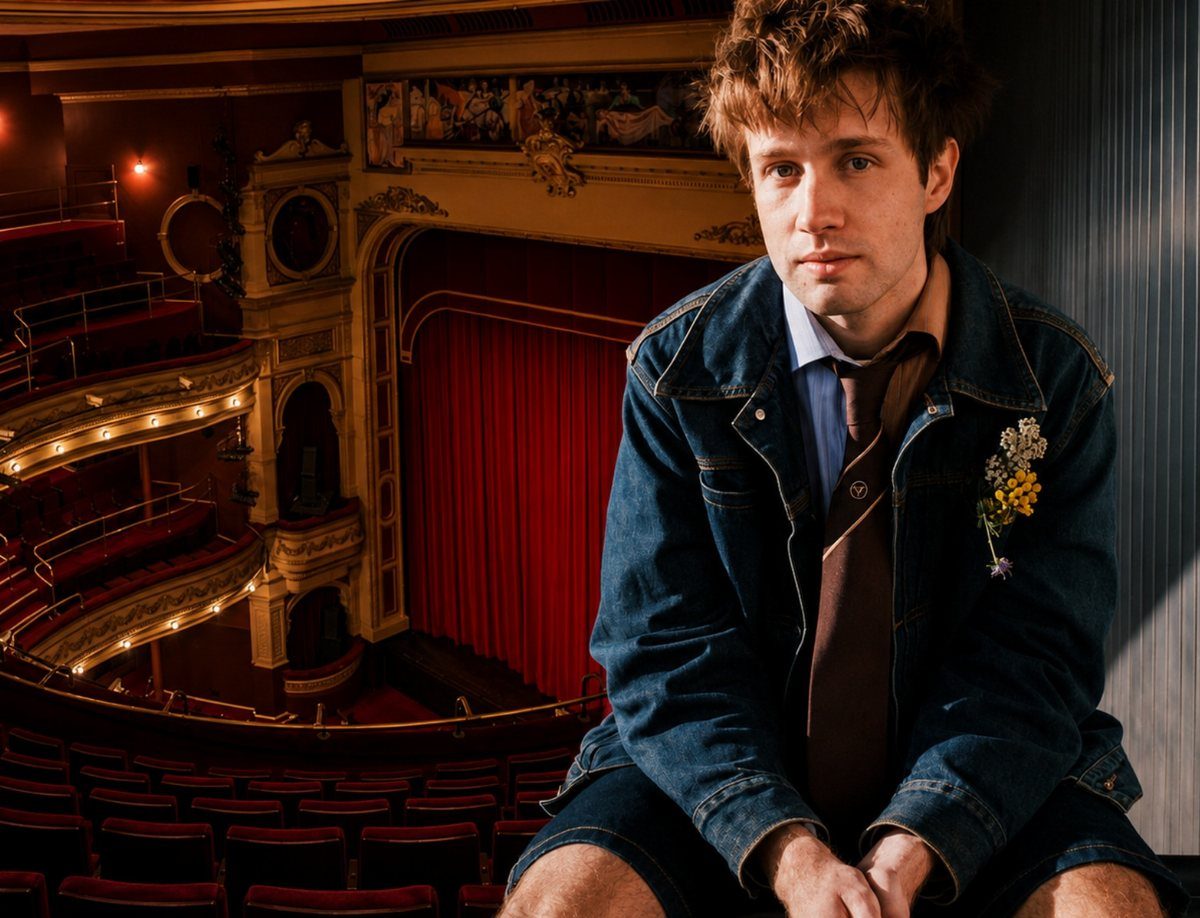
The texture is the finish, not a step toward something polished.
Work a small amount of matte paste or clay through damp hair with your fingers, then shake it out or rough it up.
You’re after separation and movement, not hold. Skip the comb.
This works for casual settings and keeps its shape as it gets longer.
15. Slicked-Back Undercut
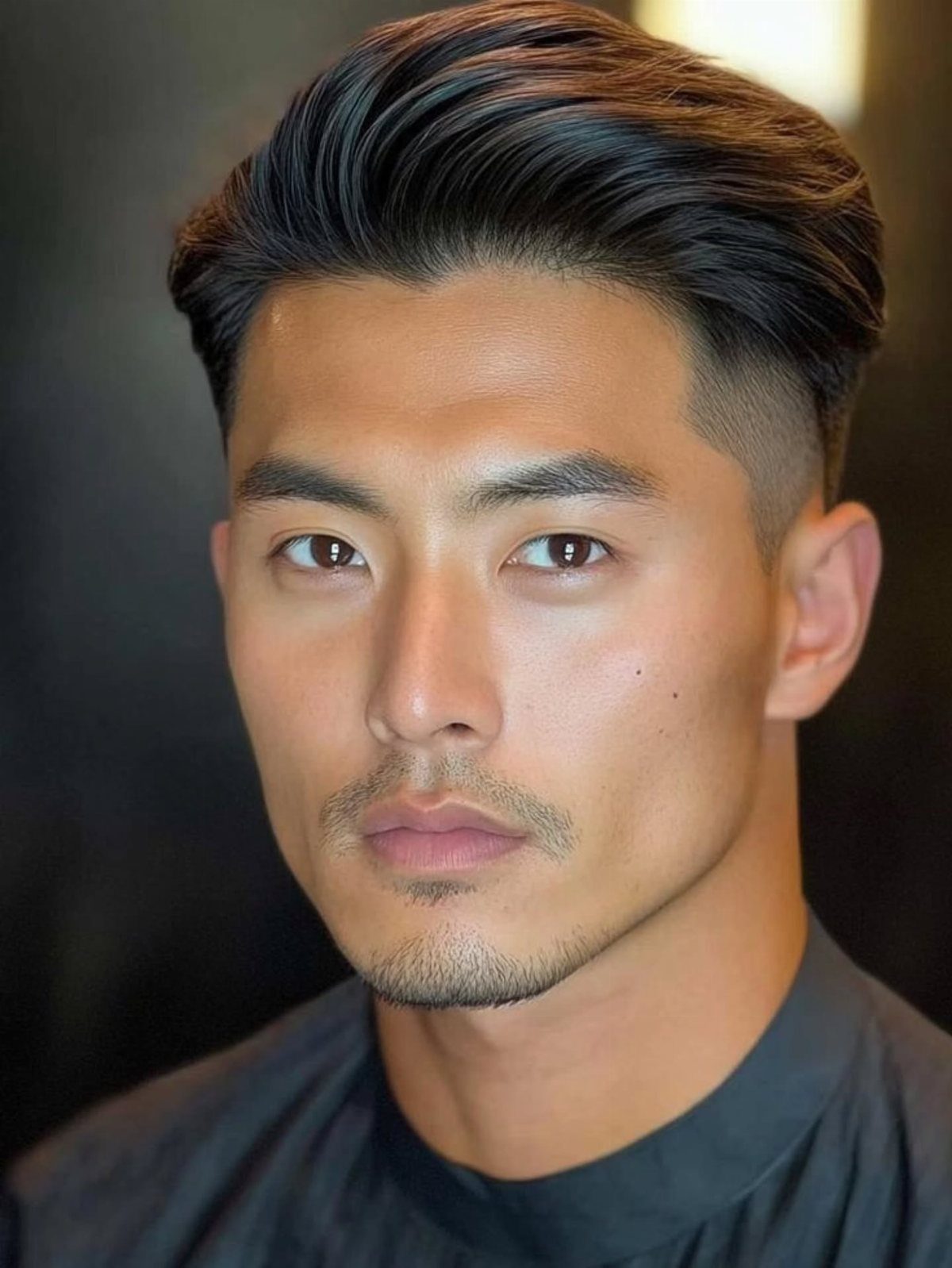
The top is combed straight back and held with product, while the sides and back are cut short or faded. Hair needs to reach past your temples to lie flat instead of poking up.
Apply pomade or gel to damp hair and comb it back from the forehead. More product gives a wet, set look; less leaves it softer with some texture showing through.
16. Modern Mullet
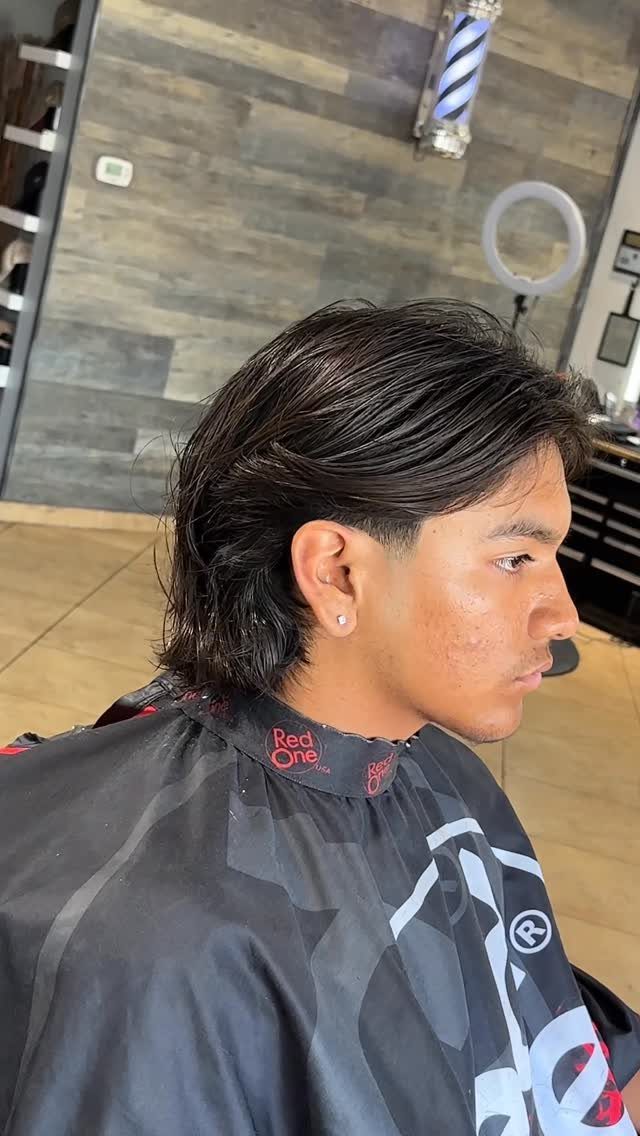
The top and sides are cut shorter with texture or a fade, while the back extends past the collar. Layers through the back keep it from hanging flat, and the contrast between sections is less extreme than older versions.
The back can be left loose or shaped under with heat.
17. Medium Flow
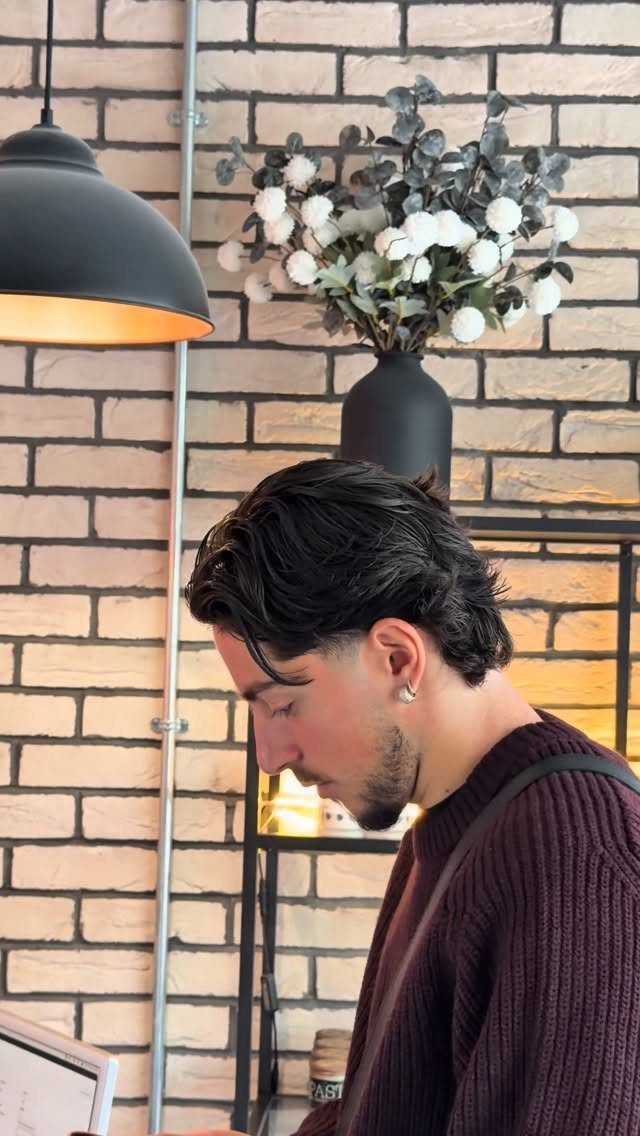
Hair is pushed back from the forehead and allowed to fall naturally around the sides and back, with the length hitting between the ears and collar.
Blow-dry with your fingers or let it air-dry after toweling off. Wavy hair holds the shape better than straight, which may need a quick blow-dry to add lift.
Between cuts, the length lets you pull it back or wear it loose.
18. Shag
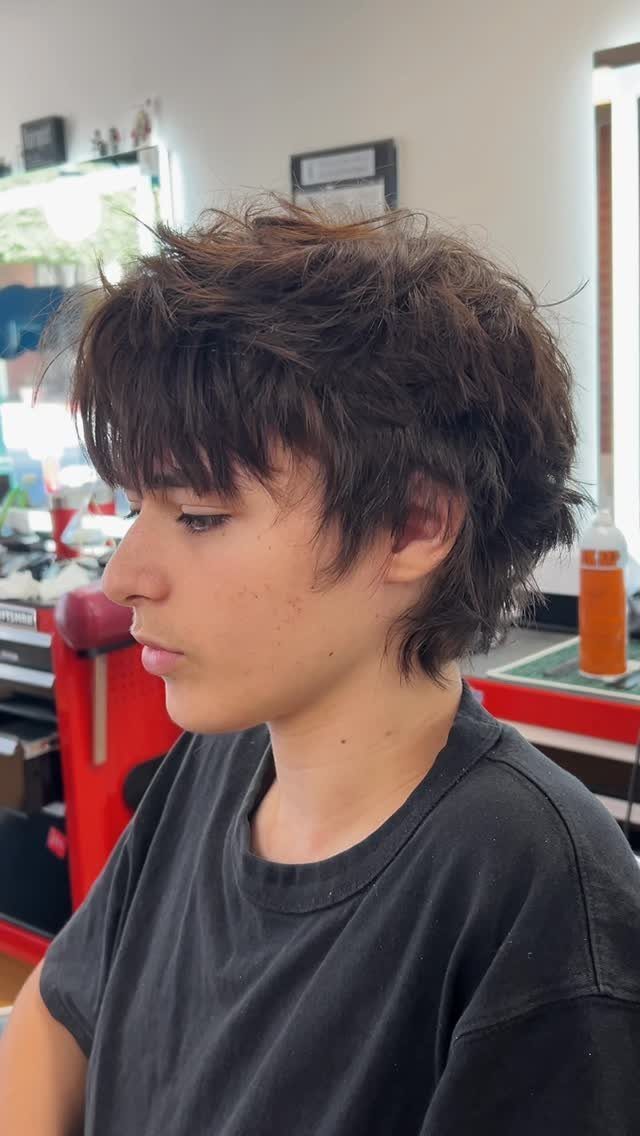
Layers are cut throughout medium-length hair to create volume and texture, with the ends often razored to add separation.
Curly hair will add more volume than the shape can control.
The layers will need attention every 6 weeks to keep the shape from looking grown out. Pair this cut with a beard to balance the texture on top.
19. Flowy Mid-Length Cut
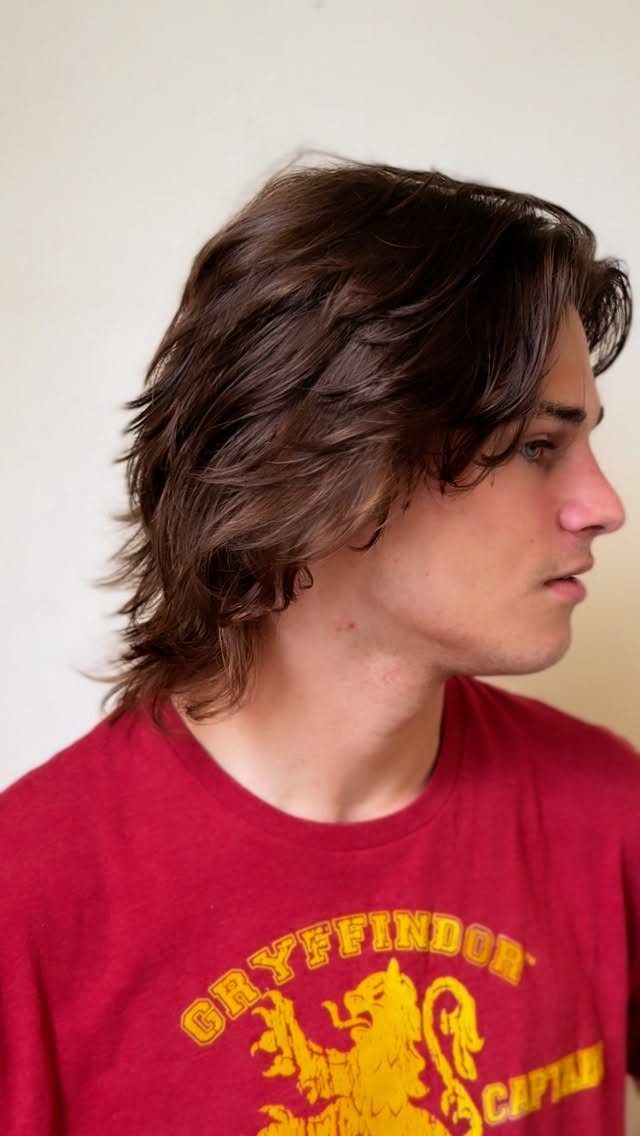
Hair cut to one length past the ears, with minimal layering and a natural finish. The movement comes from the hair’s weight and how it falls, not from product or styling.
Curly hair will spring up and lose the flow.
Wash, towel off, and either leave it or run a brush through while blow-drying to straighten the ends. No product needed unless you want to control frizz.
Between cuts, the length makes it easy to pull back when you need it off your face.
20. Medium Curls
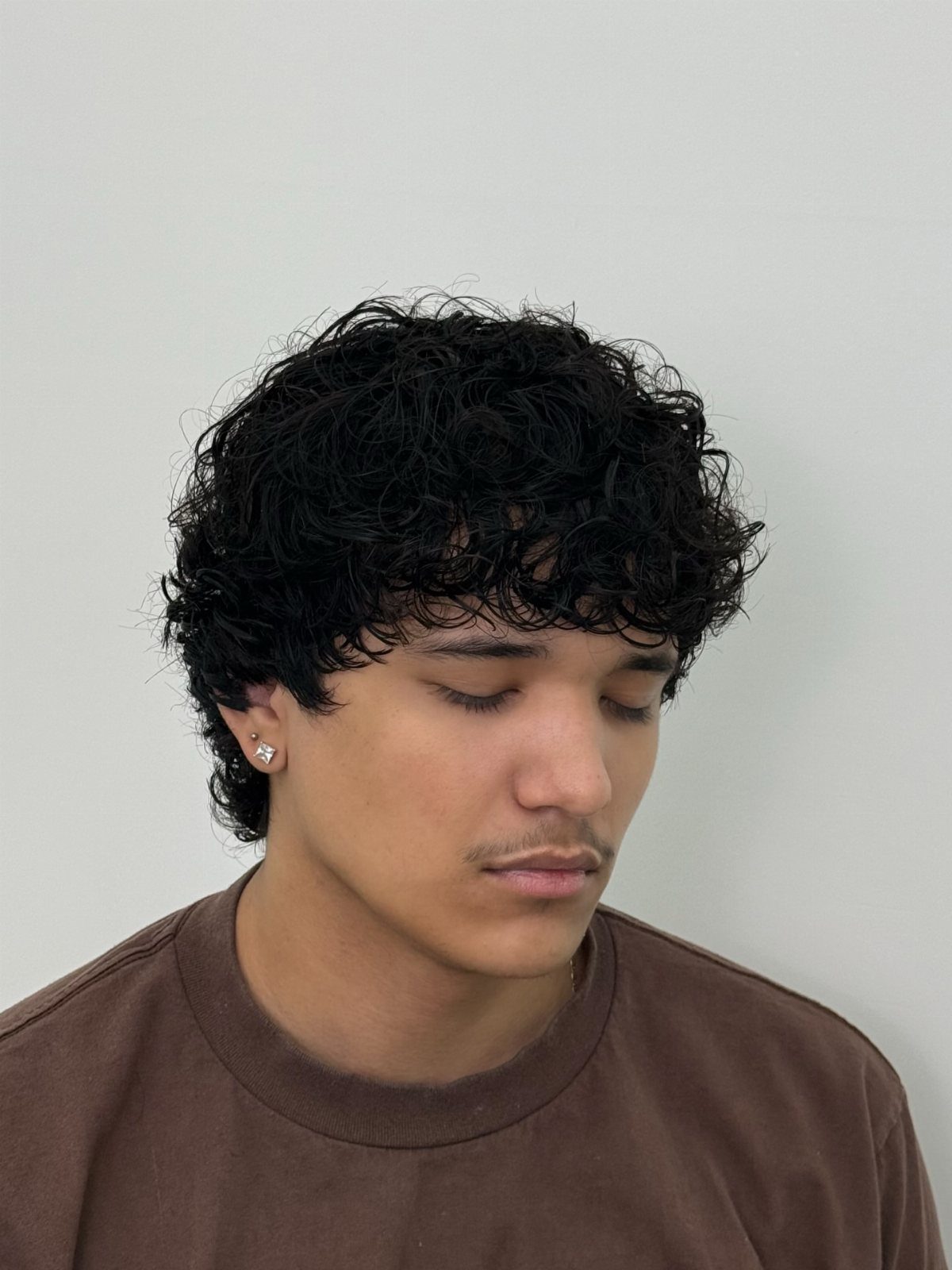
Curls at medium length sit fuller and more defined than short curls, with room to show their natural pattern. The extra length lets them open up instead of sitting tight against your head.
A curl cream or conditioner that stays in, worked through when the hair is still damp, pulls the curls apart and cuts down frizz.
Skip the dryer or use a diffuser set cool. No brushing after it dries.
Curly hair grows out without losing shape, but the ends will need a trim by week 8 to avoid dryness. This cut pairs well with a fade to keep the sides clean while the top stays full.
21. Layered Mullet
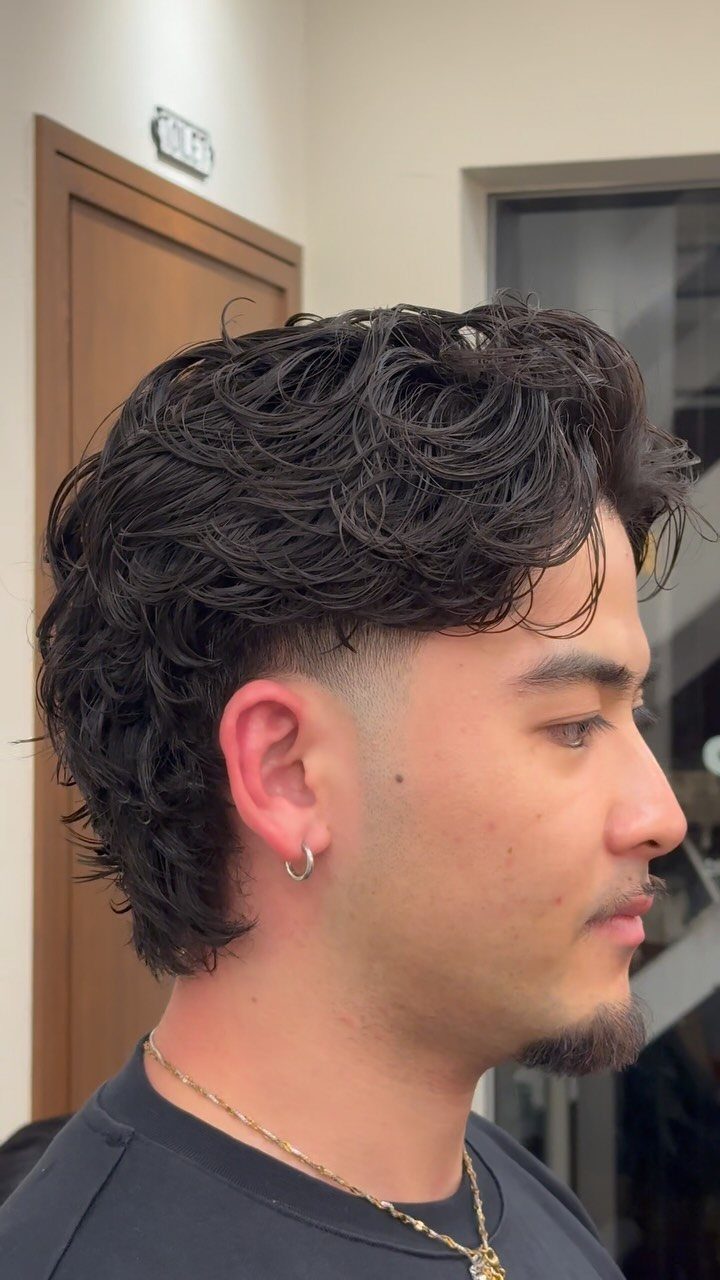
Shorter length through the front and over the ears, layered for lift, and the back hangs longer. The difference in length creates the mullet shape, and the layers keep it from sitting flat.
Wavy hair holds this cut best.
Straight hair can work but will need styling to add body. Apply a light cream or mousse, blow-dry with your fingers, and let the back air-dry for a relaxed finish.
The top will need attention sooner if you want to maintain the contrast.
22. Freeform Dreads
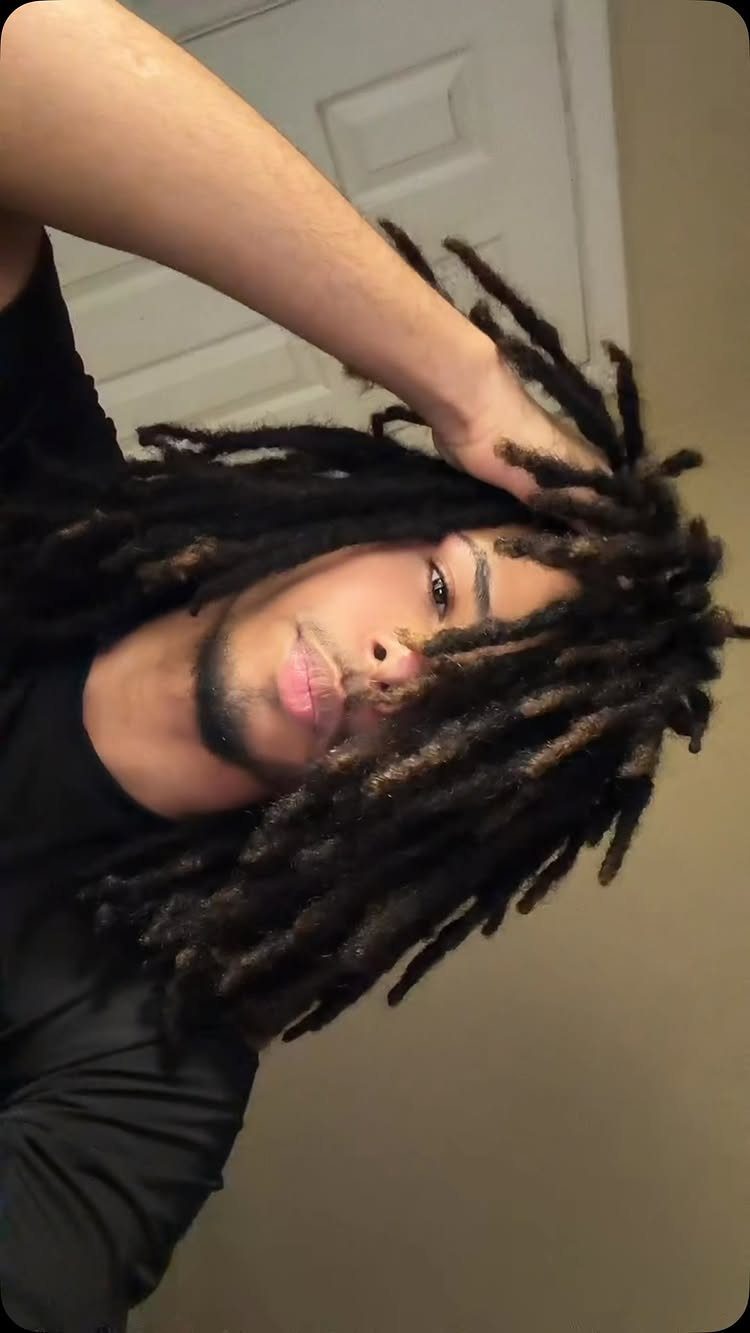
Hair is allowed to lock naturally without palm rolling, twisting or maintenance beyond washing and separating. The result is irregular, organic locs that vary in size and thickness.
This process takes months.
Curly or coily hair will lock faster than straight hair, which may not lock at all. Wash with a residue-free shampoo and separate the forming locs by hand to prevent them from joining.
Highlights can be added once the locs mature. Freeform dreads require patience, not product, and the look stays individual.
23. Natural Longer Hair with Beard

Medium-length hair worn loose, paired with facial hair that fills in at the cheeks and jawline. The combination softens the face and adds weight to the lower half.
Styling the hair is minimal: wash, air-dry or blow-dry, and leave it natural.
The beard needs regular trimming to keep an even length and a clean neckline. Beard oil helps if the skin underneath gets dry.
Shape the beard when it starts to look uneven next to the hair.
24. Edgy Mullet
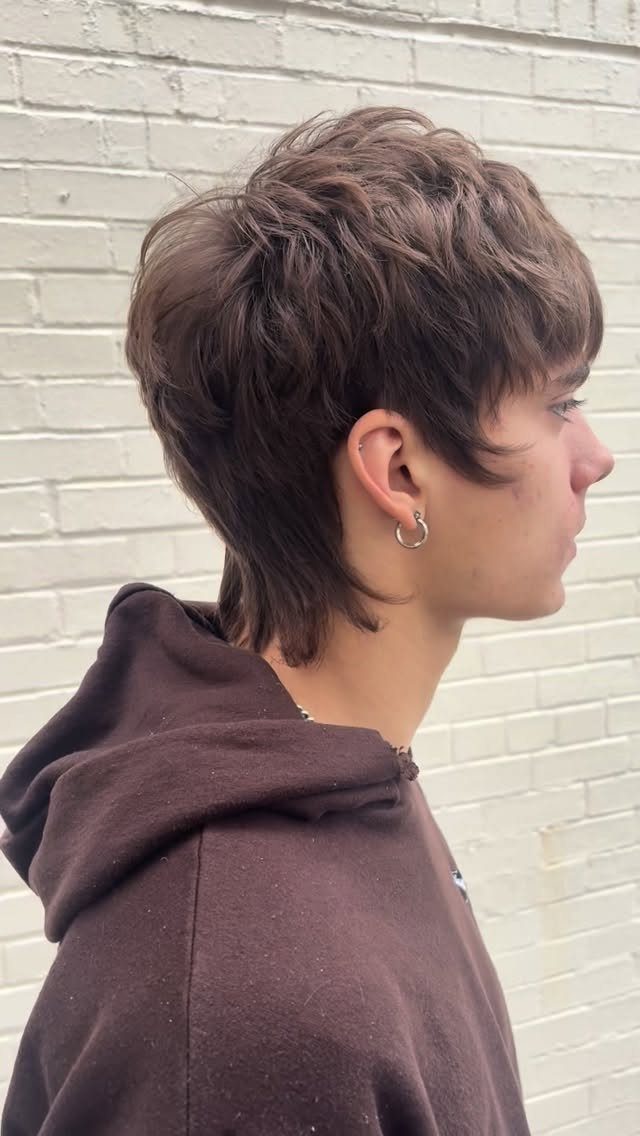
Sides are tapered or faded, the top is left with enough length to add height or texture, and the back extends past the collar. The shape is deliberate, not grown out by accident.
Tell your barber you want a fade at mid or high and layers through what sits on top.
Styling depends on the texture: use a matte paste for separation or blow-dry with a brush for volume. The back can be left to fall naturally or curled under with a blow dryer.
The top and back can go longer, but by week 6 the contrast starts to soften.
25. Windswept Hair
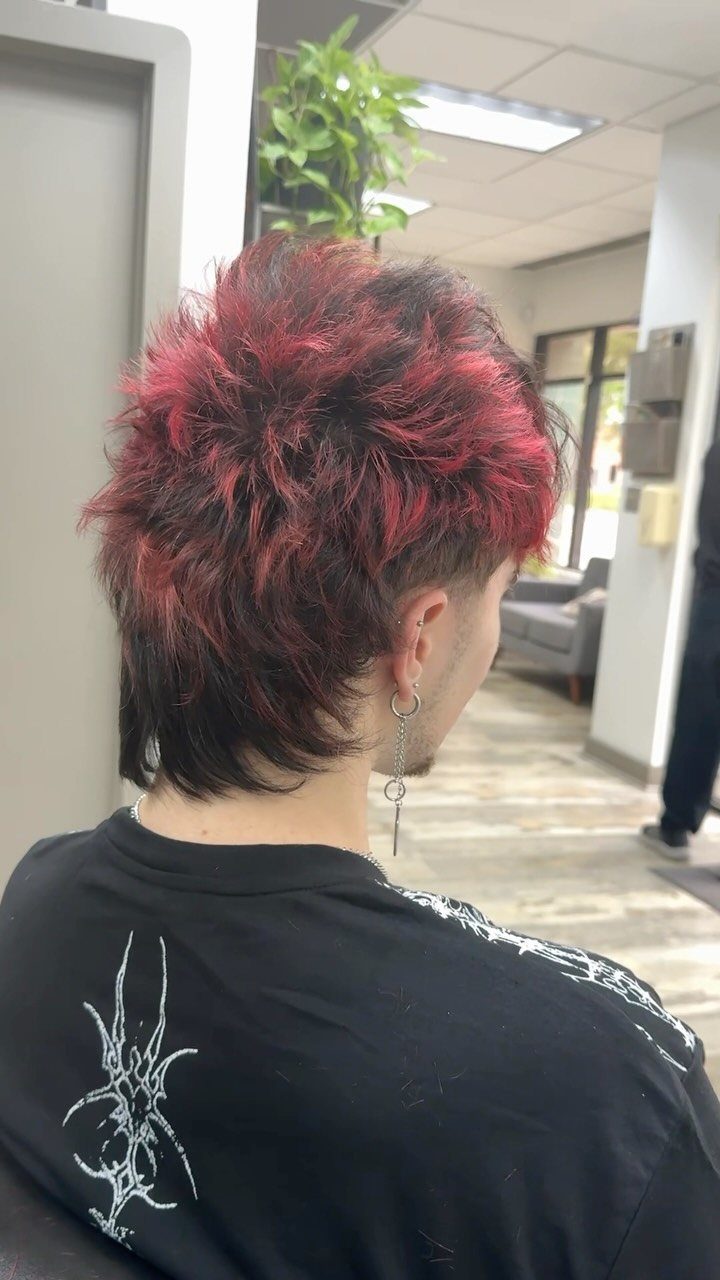
Hair is styled to look like it’s been blown back and to the side, with texture running in different directions. The effect is deliberate but still loose.
Apply a sea salt spray or texturizing cream to damp hair, then blow-dry while pushing it back and across with your fingers. Once dry, rough it up by hand to break up any sections that sit too neat.
This cut needs length to show the movement. Straight hair will need more product to hold the shape; wavy hair does most of the work on its own.
26. Man Bun
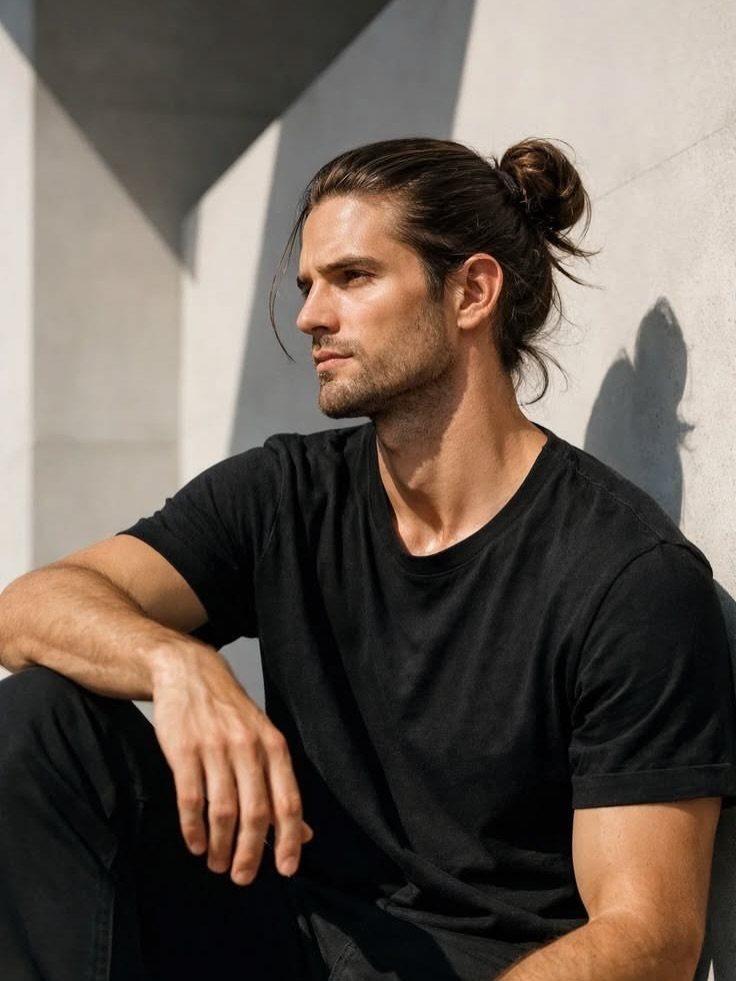
Hair is pulled back and twisted into a knot at the crown or mid-back of the head. The length needs to reach past your ears to gather cleanly.
Brush or comb the hair straight back, gather it with one hand, and wrap a hair tie around the base.
Twist the remaining length around itself and tuck the end under. If shorter pieces fall out at the sides, leave them or pin them back.
The bun can sit high for a tighter look or lower for something more relaxed. No product required unless you want to smooth flyaways.
27. Curly Hair with Fade

The contrast comes from volume concentrated at the crown and texture that shows when the sides sit tight.
Ask for a mid or high fade and leave enough length on top to let the curls open up.
Apply a curl cream to damp hair and let it air-dry or use a diffuser. The curls need room to form, so skip the brush.
The curls can grow longer without losing shape, but the fade keeps the cut looking fresh.
28. Medium Twists
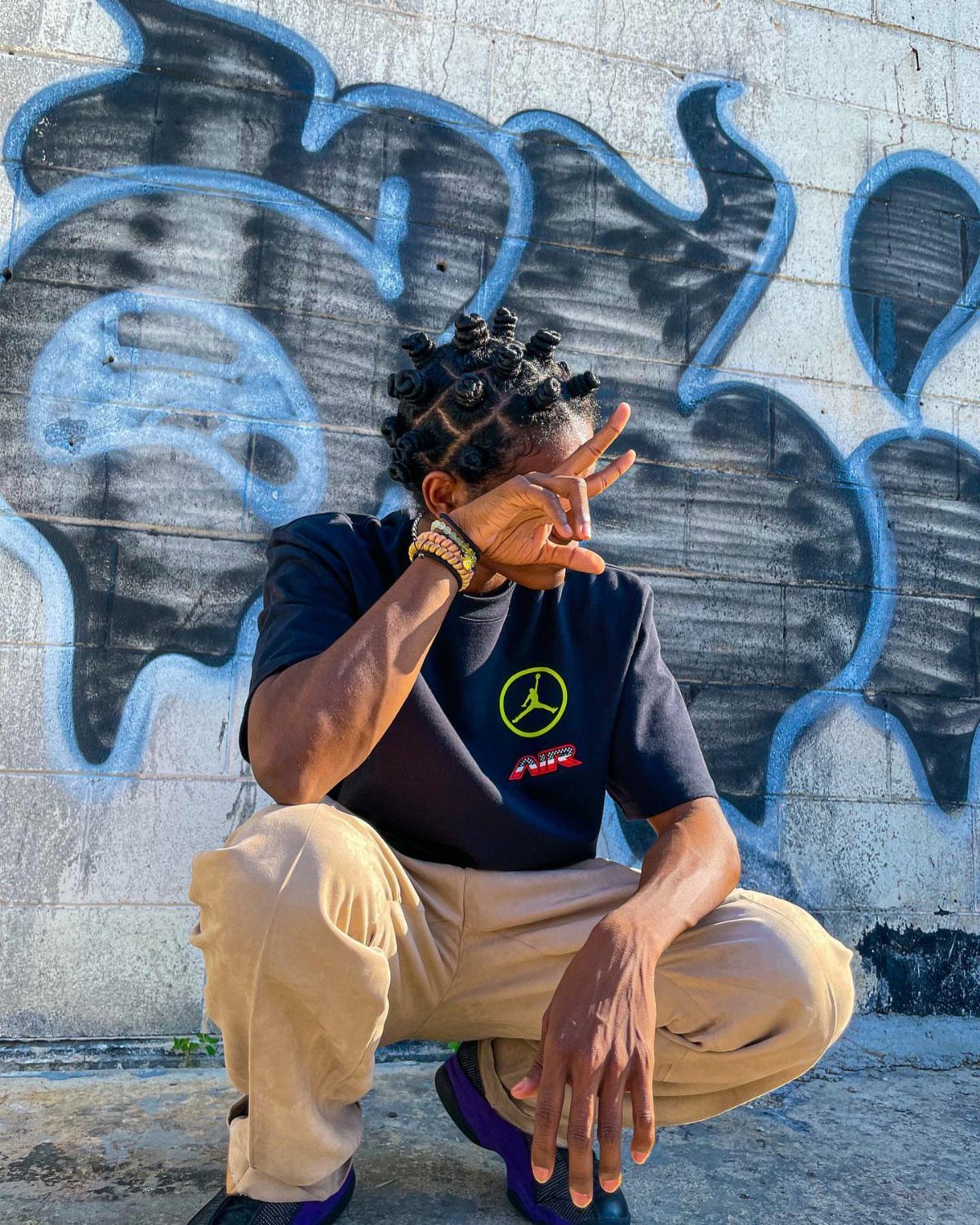
Sections of hair are twisted individually from root to tip, creating a rope-like texture that sits off the scalp. The twists can be uniform or vary in size depending on how much hair you grab.
Start with damp, detangled hair. Apply a twisting cream or gel, divide the hair into small sections, and twist each one tightly from the base to the end.
Let them air-dry or sit under a dryer. The twists will tighten as they dry.
This style lasts several days to a week. Retwist as needed when they start to unravel.
29. Brushed Up Quiff with Fade
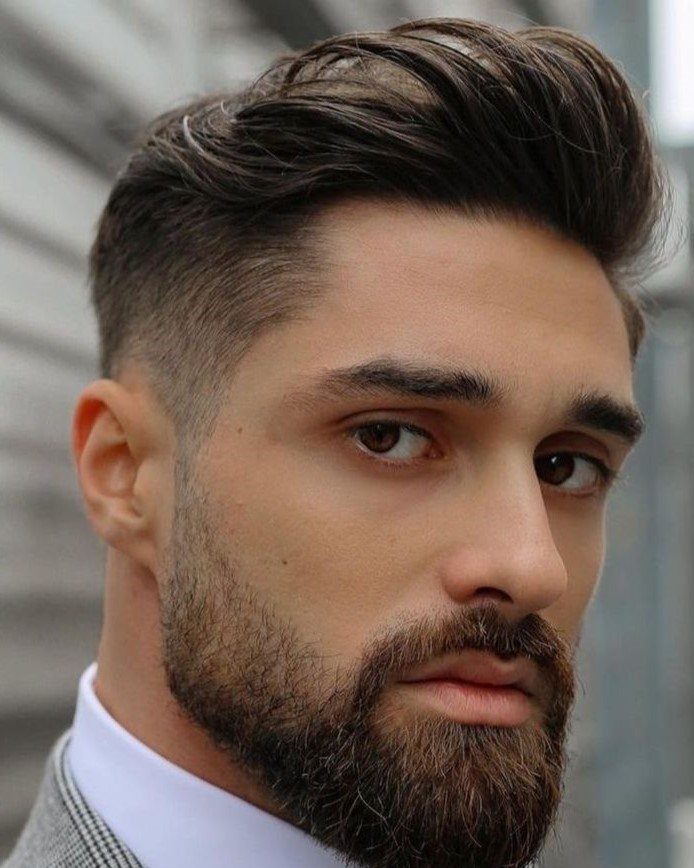
You blow the top upward and back so the front lifts and the volume sits where you want it. The finish is fuller than a slick back but still shaped, not loose.
Blow-dry the top while brushing it up and back, then apply a medium-hold pomade or cream to lock it in place. The fade keeps the sides clean and pulls attention to the volume on top.
The top holds its height better when kept long enough to support the lift.
30. Voluminous Blowout

Thick hair is blow-dried upward and back to build maximum lift and fullness, with the shape held by product or the hair’s natural body. The result is soft but structured, not flat or slicked down.
Towel-dry, apply a volumizing mousse or heat protectant, then blow-dry with a round brush or vent brush while lifting the hair at the roots. Finish with a light-hold spray if you need it to last all day.
This cut requires density.
Fine hair won’t hold the volume without extra product and heat. Maintenance is moderate: the sides can be trimmed every 3 weeks, and the top every 6.
Medium Hair Length Definitions
Definitions vary. One source sets medium at 2–4 inches.
Others draw the line at the nape and ears: if it reaches past them, it’s medium; if it stops well short, it’s not. A third specifies 2–4 inches on top.
The practical definition depends on where you measure.
The top can sit at 3 inches while the sides taper to skin or a guard 1. That still counts as medium length because the working hair, the part you style, falls in that range.
If you are looking at a cut and unsure whether it qualifies, ask yourself whether the length gives you styling options beyond pushing it forward or leaving it alone. If the answer is yes, you are in medium territory.
Nestled somewhere between the buzzcut and Braveheart’s William Wallace lies a happy compromise of medium-length haircuts. Medium haircuts provide freedom and flexibility with which short hair just can’t compete.
Frequently Asked Questions
What is considered medium hair for men?
Medium hair runs roughly 2–4 inches and sits past the temples but does not cover the ears completely or drop below the nape.
The length gives room for styling without the upkeep of longer cuts. Most of the cuts in this range can be worn textured, slicked, or parted depending on the day.
Who does medium length hair suit?
Medium length suits men with oval or oblong faces since the added length balances proportions and adds vertical dimension.
Wavy or curly hair holds shape at this length better than straight, and coarser, thicker hair keeps volume without needing much product. Avoid this length if your hair is thinning, since the extra length can make sparse areas more visible.
How often should I trim my medium-length hair?
Book the chair every 6–8 weeks if you want the cut to hold its outline instead of feathering out or stacking weight where you don’t want it.
Styles with fades or short fringes need attention sooner, closer to 2–3 weeks for the sides.
What products are best for styling medium-length men’s hairstyles?
Matte clay or paste works for textured, undone finishes; pomade or cream suits slicked or combed styles.
Sea salt spray adds texture and volume before drying, and a light hold spray locks it in if needed. Match the product to your hair type and how much hold or shine you want.
Can I achieve a professional look with medium-length hair?
Yes. A slick back or side part reads polished and suits formal settings when styled with a comb and light pomade.
Both cuts keep hair off the forehead and give a clean, controlled finish. You can loosen the look by skipping the comb and using your fingers instead.
Are there easy styles for men with wavy medium-length hair?
Textured waves work well because the natural movement does most of the styling.
Work a nickel of leave-in or styling cream through wet hair and either let it dry on its own or hit it with a diffuser on low. The wave pattern holds the shape without heat tools or heavy product.