Straight hair holds most cuts with less morning work than wavy or curly hair because it dries where you comb it and stays there without fighting back.
A pompadour or quiff takes a blow dryer and a minute or two of product work each morning, a crew cut needs 30 seconds of matte paste, and a buzz cut skips styling entirely.
1. Crew Cut
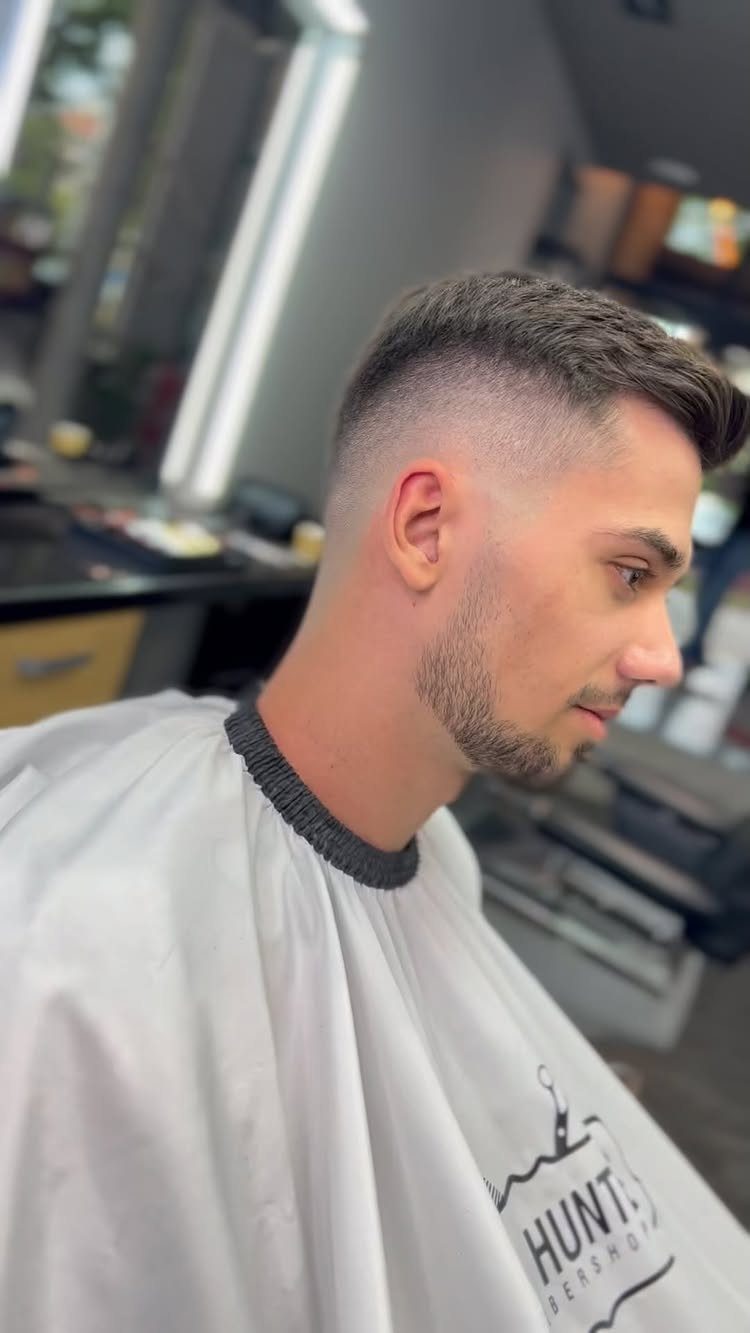
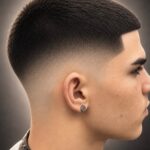
The top is left around half an inch to an inch long, trimmed evenly or with a slight taper toward the back, while the sides and back drop short through a fade or taper.
Straight strands keep the outline clean without much morning work.
Ask for a crew cut with a high fade when you’re after sharp contrast, or a taper when you prefer the sides to blend more gradually.
Styling takes about 30 seconds: a small amount of matte paste or pomade keeps the top in place without shine.
Plan on a cleanup every 2 to 3 weeks to keep the fade looking tight.
2. Layered Shag
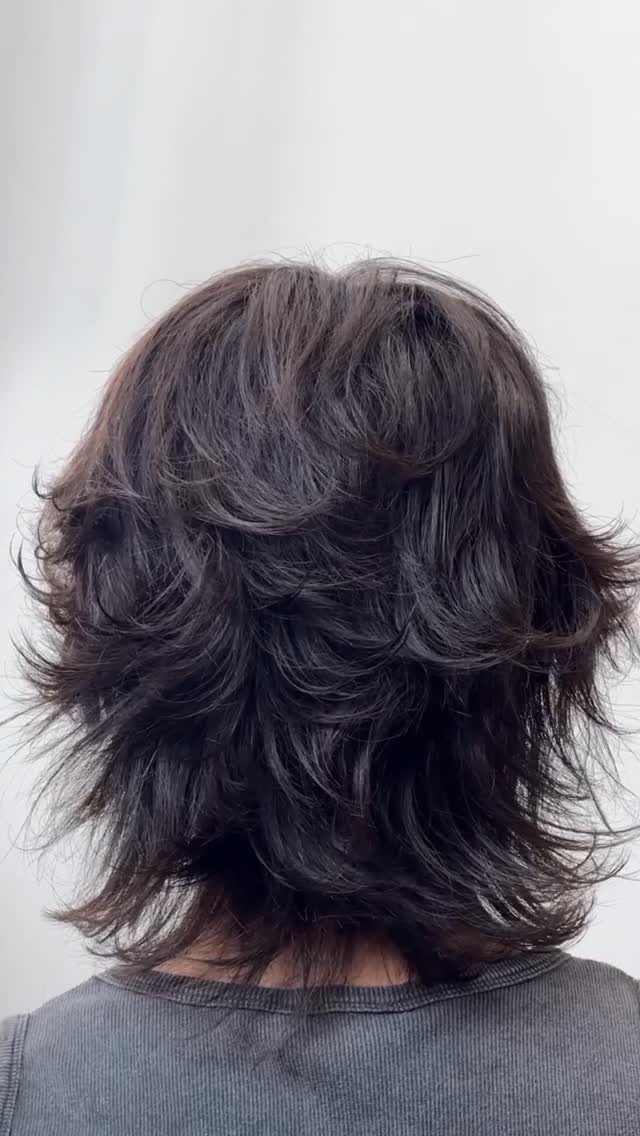
Layers cut at different lengths through the hair create volume and movement, which straight hair often lacks when left blunt. The choppy ends keep the shape from sitting flat against the head.
The cut suits medium to long hair when you’re after texture without daily styling.
The layers do most of the work on their own. A small amount of texturizing spray or sea salt spray adds definition when you want it, but the cut holds its shape air-dried.
Trim when the layers grow out heavy.
3. Textured Crop
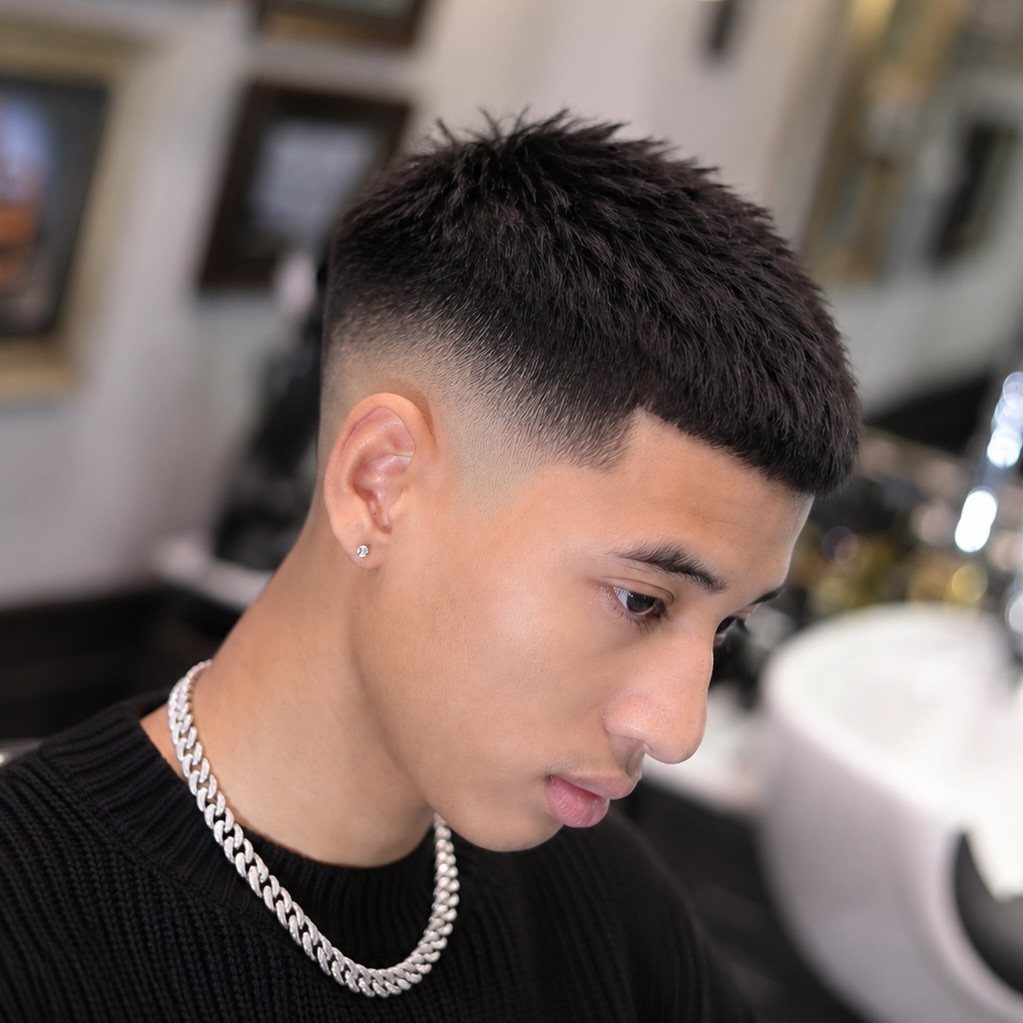
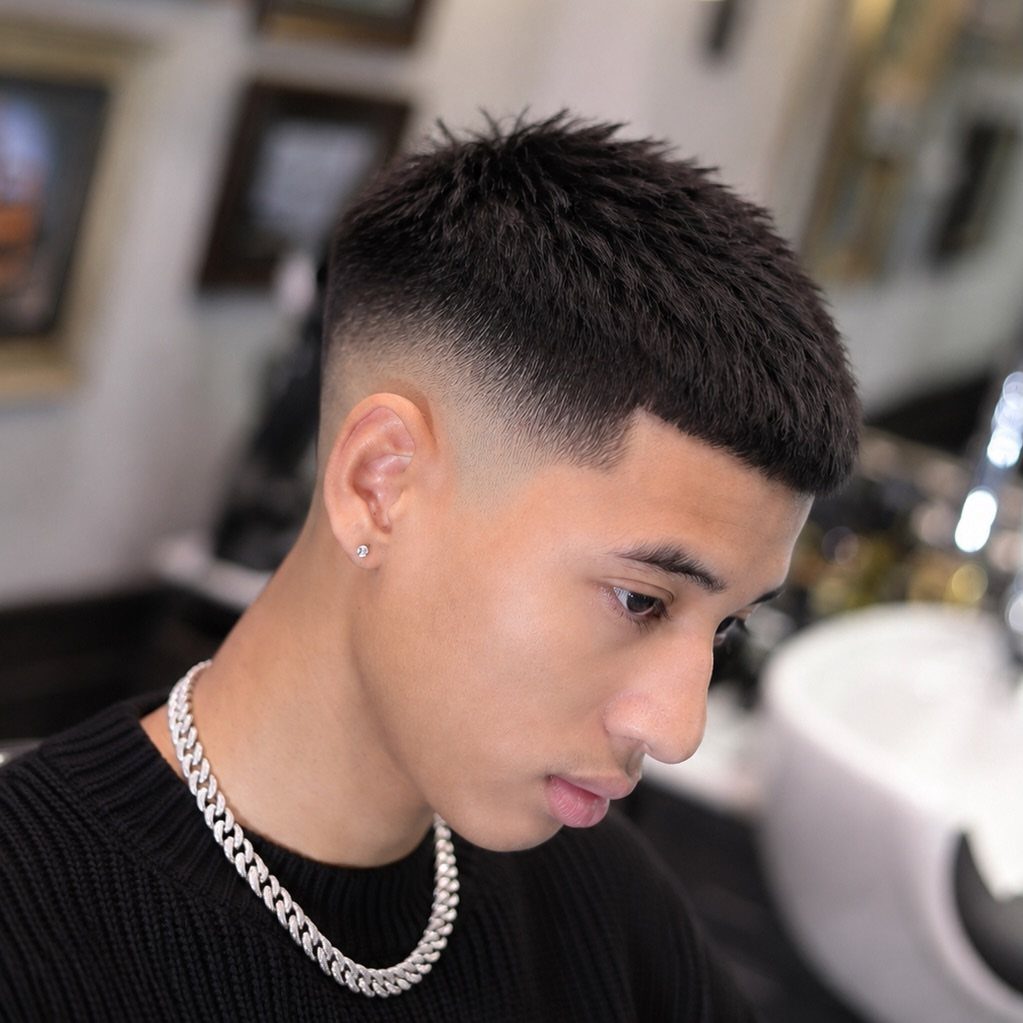
Short hair on top is cut with texture, either point-cut or razored to create uneven ends that break up the straight line. The sides drop into a fade, usually mid to high, so the contrast pulls focus to the top.
Straight hair benefits from this cut because the choppy layers add dimension that flat-cut straight hair does not have.
Styling takes a minute or two: work a small amount of matte clay or fiber paste through damp hair and push it forward or to the side.
4. Pompadour
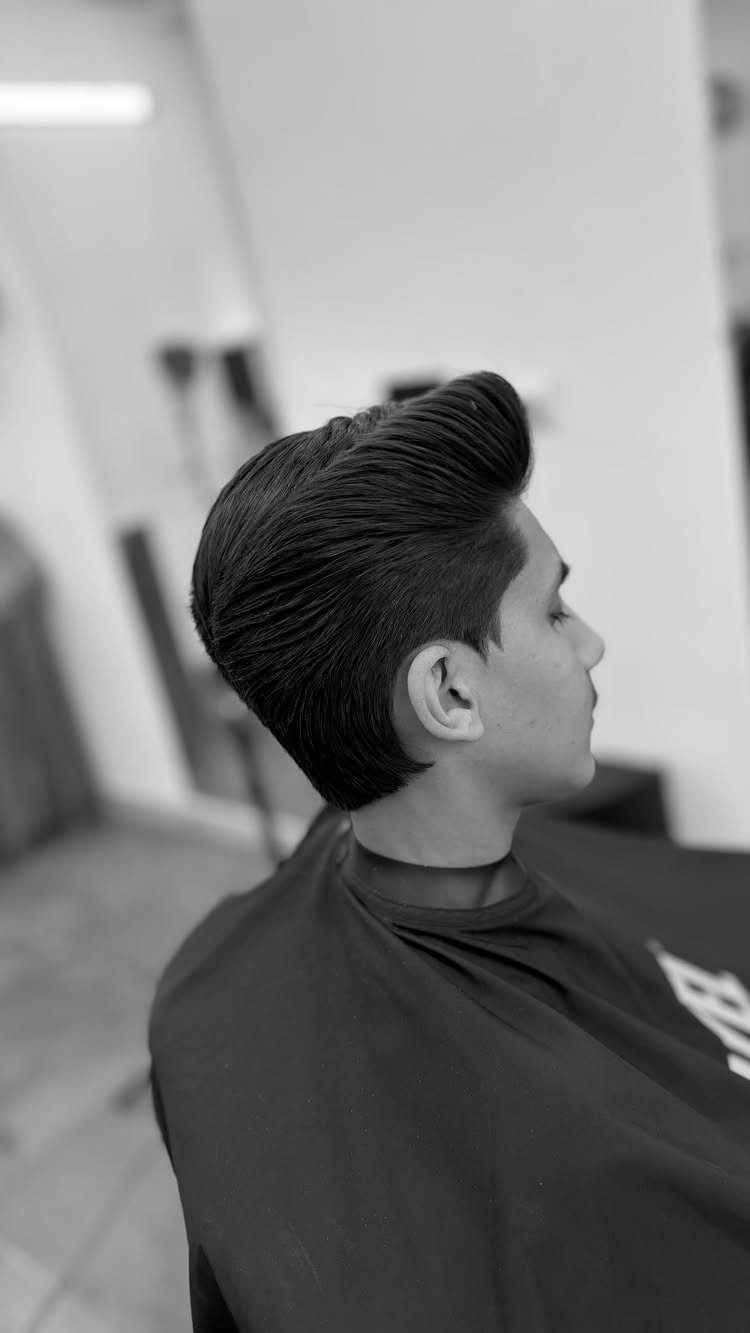
Hair at the front is left longer and lifted up and back to build height. The sides are cut shorter, often tapered or faded, to keep the volume where it belongs.
This suits straight hair because it holds the lifted shape without fighting a curl pattern. Blow-dry the front upward while it is still damp, using a round brush or your fingers, then set it with a medium to strong-hold pomade.
A pompadour needs frequent trims to maintain the proportions.
5. Quiff

The front section is brushed upward to create height, but instead of sweeping straight back like a pompadour, the quiff keeps most of the lift at the front and tapers down as it moves back.
The sides are usually shorter, faded or tapered.
Straight hair holds the shape well with a blow dryer and a medium-hold product. Dry the front upward and slightly back, then finish with a pomade or styling cream to lock it in place.
6. Side Part

A clean line is combed into the hair, usually on one side, and the hair is styled to follow that part. Straight hair shows the line cleanly and stays where it is combed without much effort.
The cut suits most face shapes and hair densities.
After washing, comb the hair while it is still damp and apply a light pomade or cream to hold the part in place. Total styling time is under a minute.
The part can be left natural or cut in with clippers for a sharper line. A cut part needs regular trims to stay visible.
7. Slicked Back
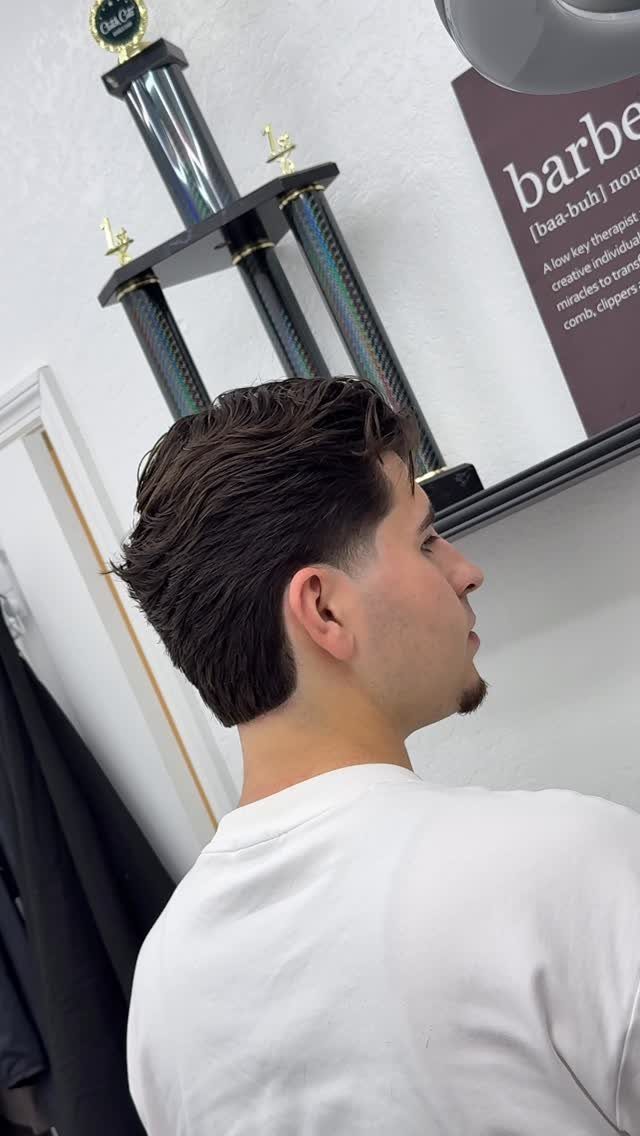
All the hair is pushed straight back from the forehead and held in place with product. Straight hair takes this well because it lies flat without waves or kinks disrupting the line.
Apply a medium to high-hold pomade or gel to damp hair, comb it back with your fingers or a fine-tooth comb, and let it dry. The finish can be glossy or matte depending on the product.
The sides can stay long and slicked back with the rest, or cut short through a taper to pull attention to the top.
8. Long Straight Hair
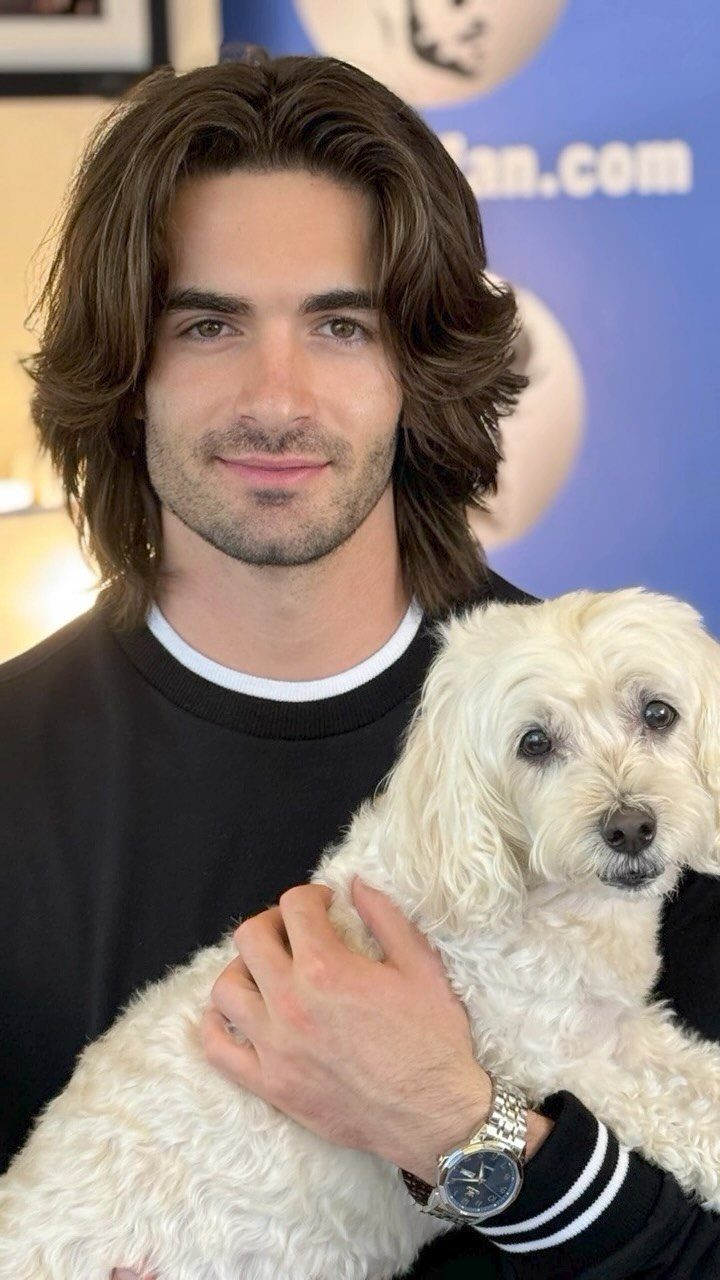
Straight hair grown past the shoulders keeps a clean line when air-dried and needs less product than wavy or curly hair to look finished. Tie it back when you want it out of your face, or leave it down.
Trim the ends every few months to avoid split ends that make the length look ragged. A leave-in conditioner keeps it from looking dry, but most days it is wash, dry, and done.
Low daily effort, but patience is required to grow it out past the awkward phase.
9. Side Swept Fringe

The front section is cut long enough to fall across the forehead at an angle, usually pushed to one side. Straight hair holds the diagonal line without needing heat or hold.
After washing, comb or push the fringe to the side while it is damp, then add a small amount of cream or paste to keep it there.
The sides are usually tapered or faded to keep the fringe the focal point.
Trim the fringe when it drops below the eyebrow or loses its shape.
10. Modern Mullet
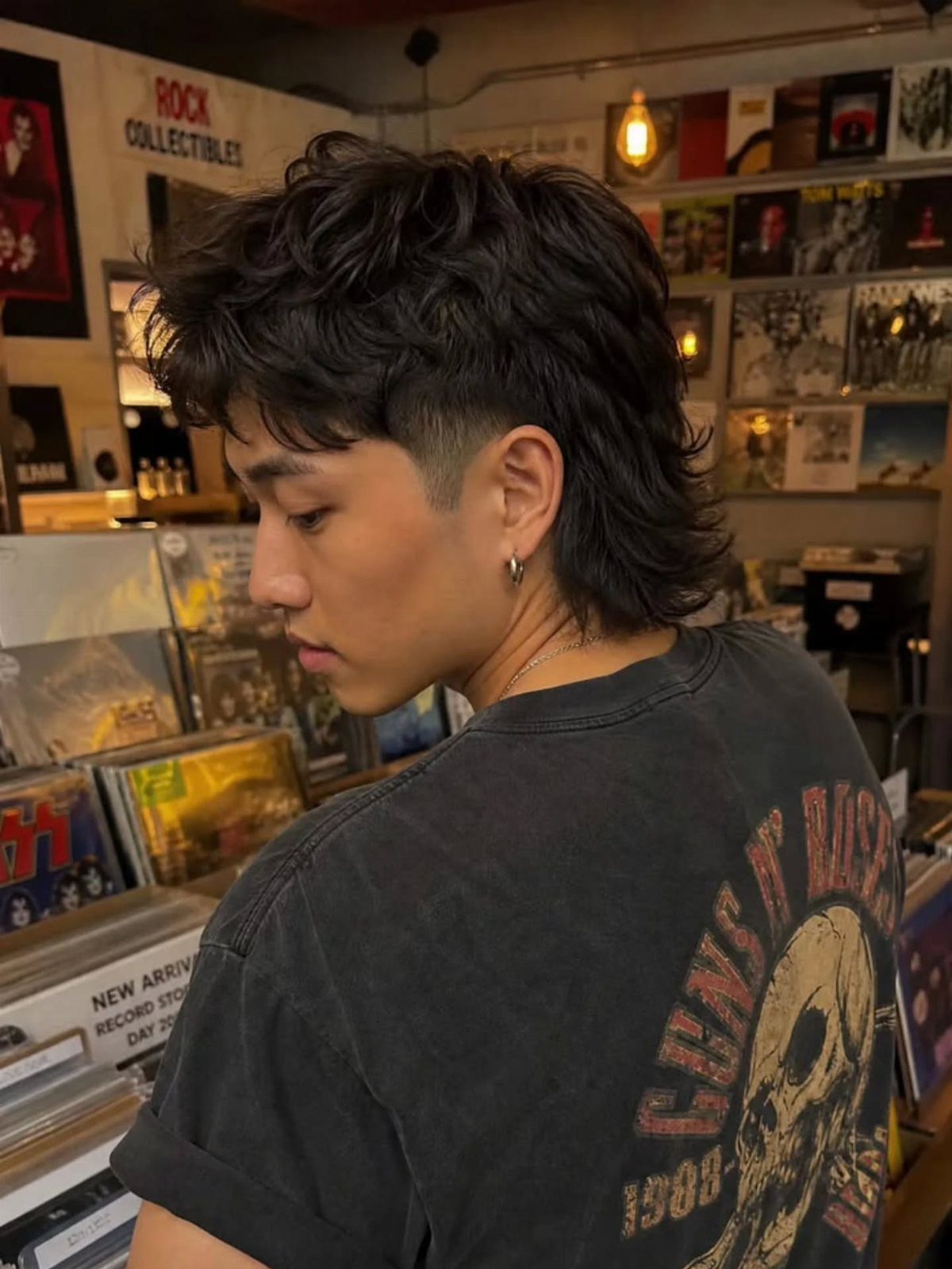
The top is left long enough to add texture or sweep forward, the sides are buzzed or faded tight, and the back extends past the nape. Straight hair shows the length contrast cleanly.
This cut suits someone who wants something that reads bold without daily styling. The top can be left loose or pushed forward with a light product, and the back falls straight on its own.
Expect regular side trims to maintain the tight-to-long contrast.
From the mullet in the ’80s to the faux-hawk in the 2000s, most men’s haircut fads don’t age well in photos. But classic cuts endure.
— GQ
11. Curtain Bangs
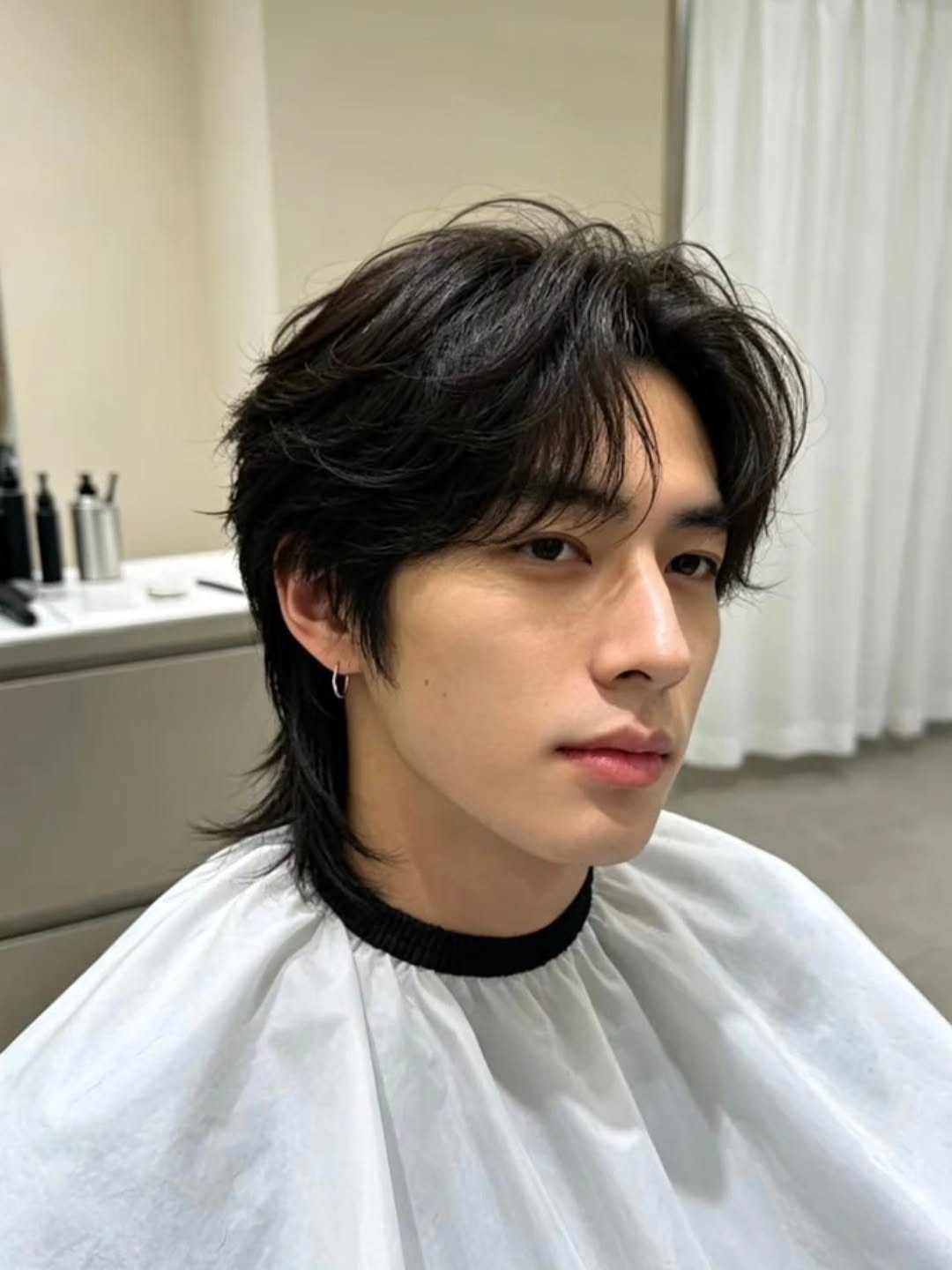
The front is cut to fall on either side of a center part, framing the face in 2 sections that taper at the ends. Straight hair makes the part and the framing pieces easy to read.
Blow the fringe away from the center with a round brush for volume at the root, or skip it and let them settle on their own.
12. Tapered Fade
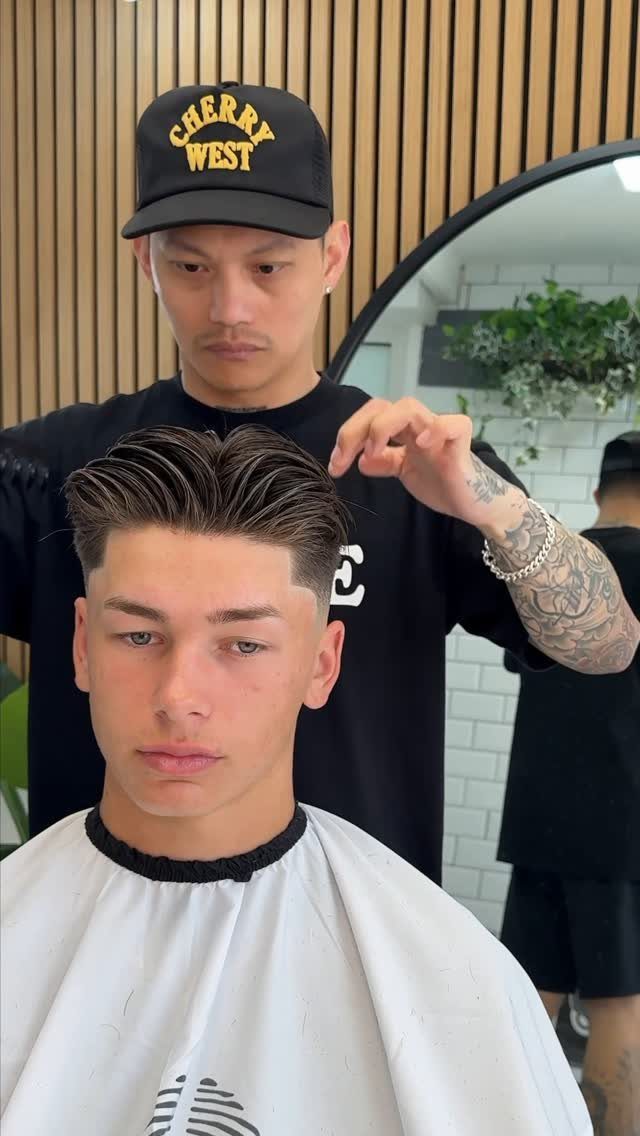
The sides and back gradually shorten from longer hair on top down to skin or a very short guard at the bottom. Straight hair on top can be styled forward, to the side, or swept back.
Ask for a low, mid, or high fade depending on where you want the taper to start.
Straight hair holds most top styles without fighting back, so the fade becomes the structure and the top does what you need it to.
13. Low Taper
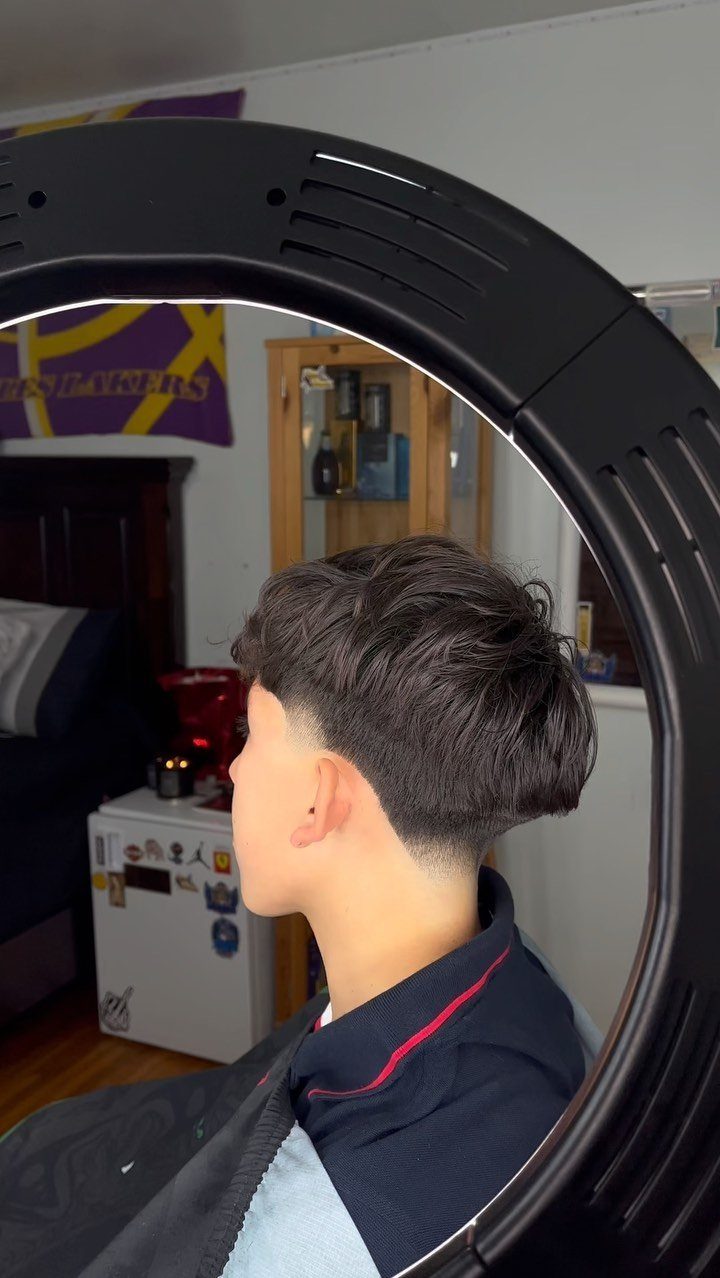
The sides and back shorten gradually, starting the blend low near the ears and nape while keeping more length overall than a higher fade. Straight hair on top can be worn textured, pushed to the side, or left loose.
This suits someone who wants definition without the sharp contrast of a mid or high fade. Styling depends on the top length: a small amount of paste or cream works for texture, or leave it air-dried for a cleaner look.
The taper grows out more slowly than a high fade, so you can wait longer between cleanups.
14. Modern Curtains
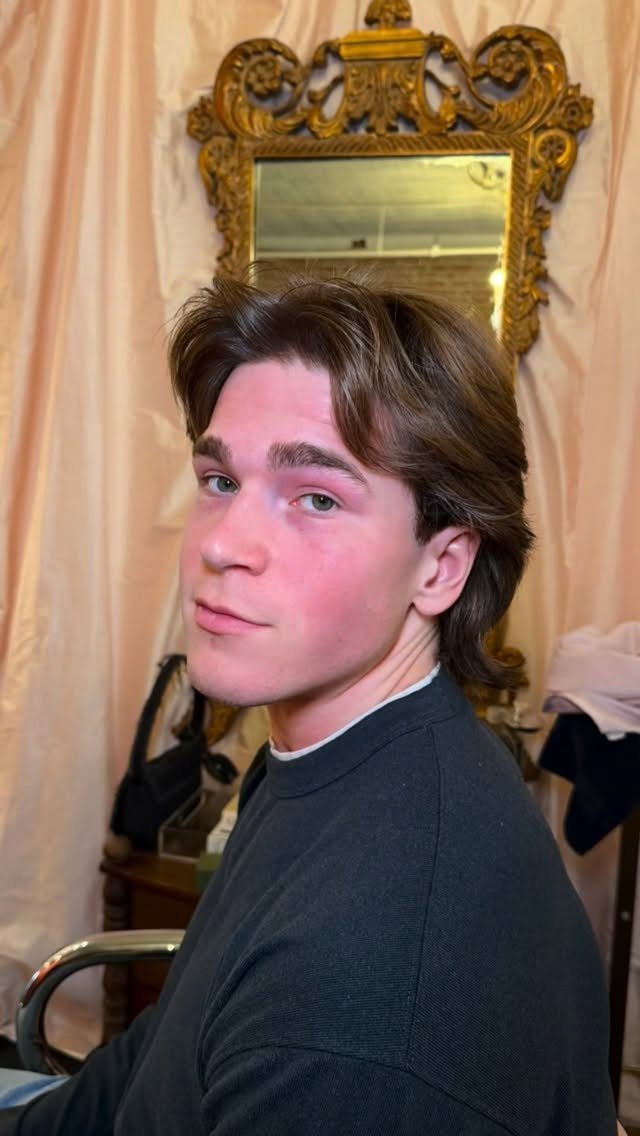
After washing, comb or push the hair away from the center part while damp, then let it air-dry. Light cream or sea salt spray lifts the root when the hair lies too flat.
15. Man Bun
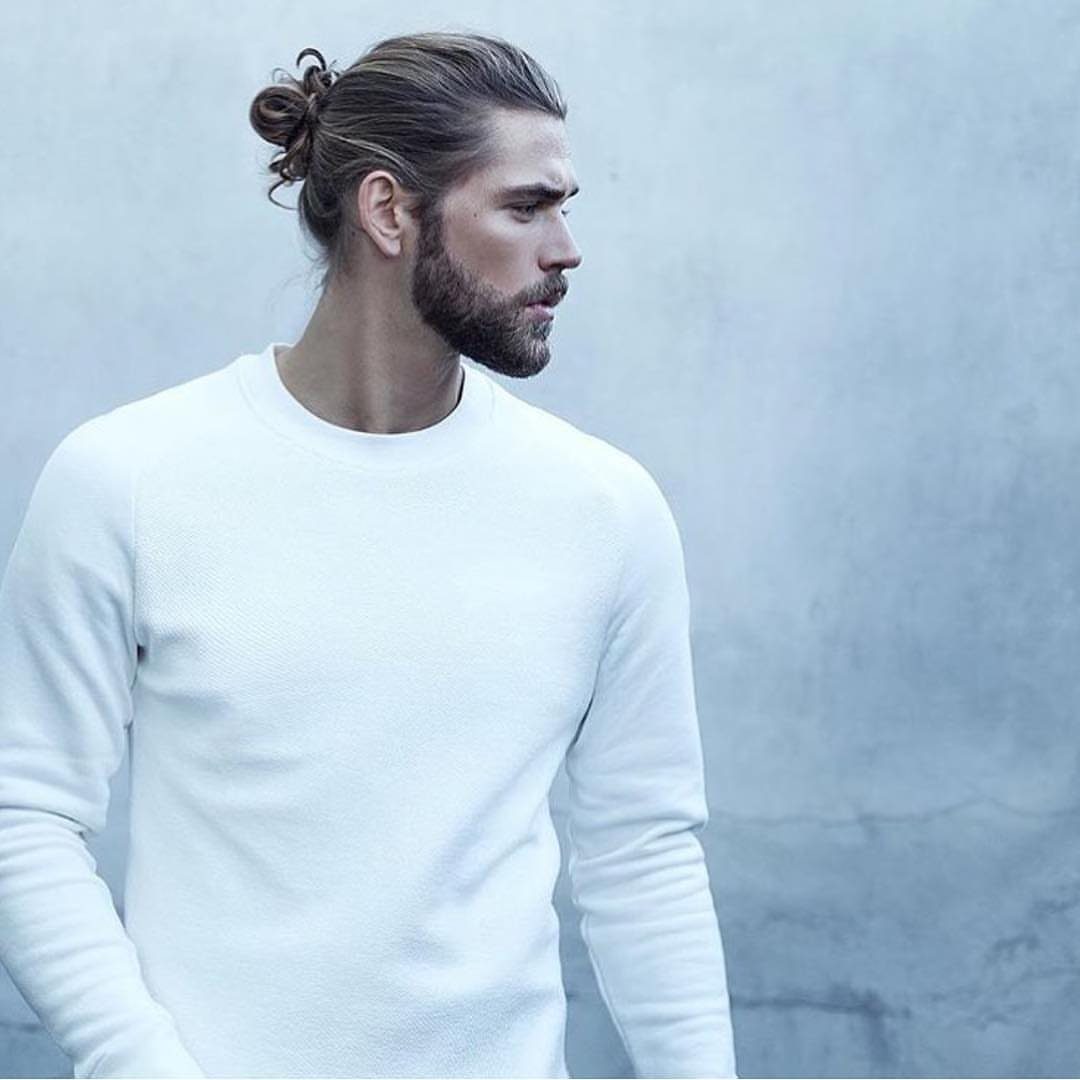
Straight hair grown long enough to reach the crown is gathered and tied at the back of the head. The bun keeps hair off the face and neck without needing a shorter cut.
Pull the hair back with your hands and secure it with an elastic.
A low bun sits at the nape, a high bun at the crown. Straight hair holds the shape without flyaways, so a bun ties fast.
Growing it out takes patience, but once the length is there, daily effort is minimal.
16. Textured Fringe
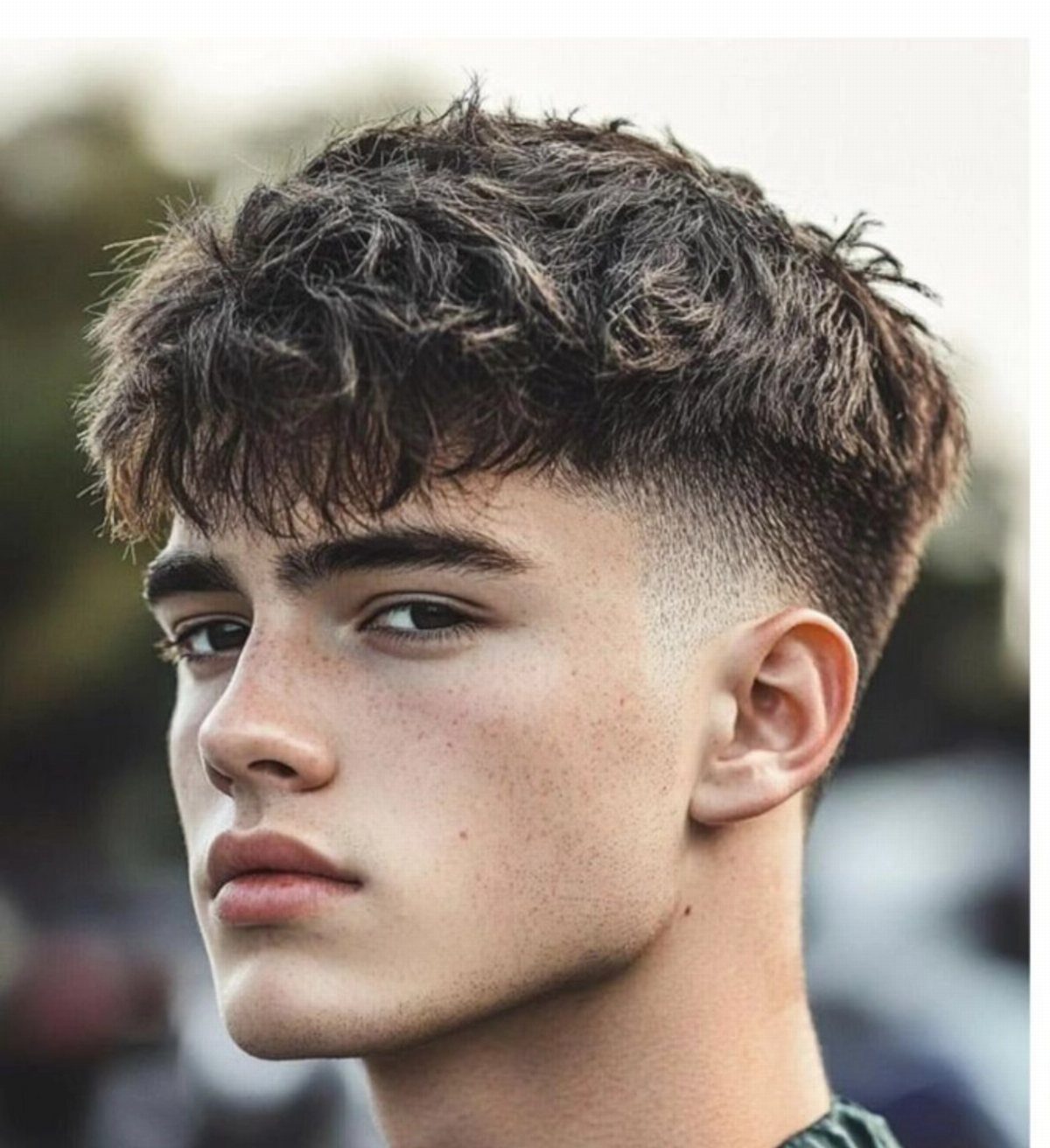
Choppy, uneven ends are cut into the front section so it falls forward with texture instead of a straight line.
Point-cutting or razor work creates the broken-up ends that give straight hair movement.
Fringe length can be trimmed when it crosses into the eyes or when the texture grows out blunt.
17. Hard Part Fade
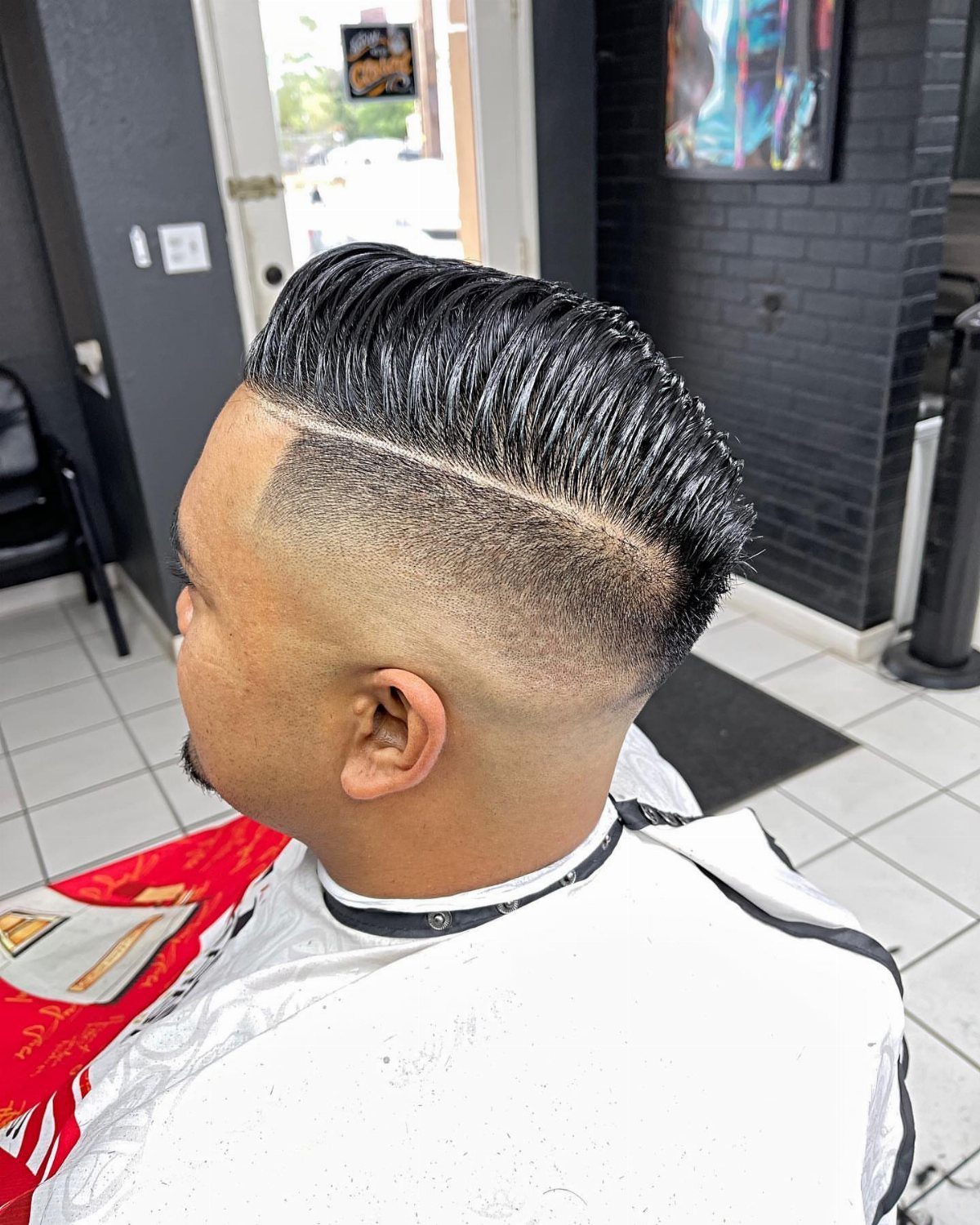
A razor or trimmer shaves a clean line into the side of the head, marking the part. The sides fade down from that line, and the top is combed or slicked over to follow it.
Apply pomade to damp hair and comb it over from the shaved line. The part itself needs to be recut regularly to stay visible.
The shaved line adds definition but requires regular maintenance.
18. Short and Spiky Hair

Short layers on top are pushed upward with product to create spikes that stand off the scalp. Straight hair holds the vertical shape without curling at the tips.
After washing, towel-dry until damp, then work a strong-hold gel or spiking wax through the top and push sections upward with your fingers.
Styling is quick. The cut needs a trim every 3 to 4 weeks to keep the proportions tight.
19. Edgar Haircut
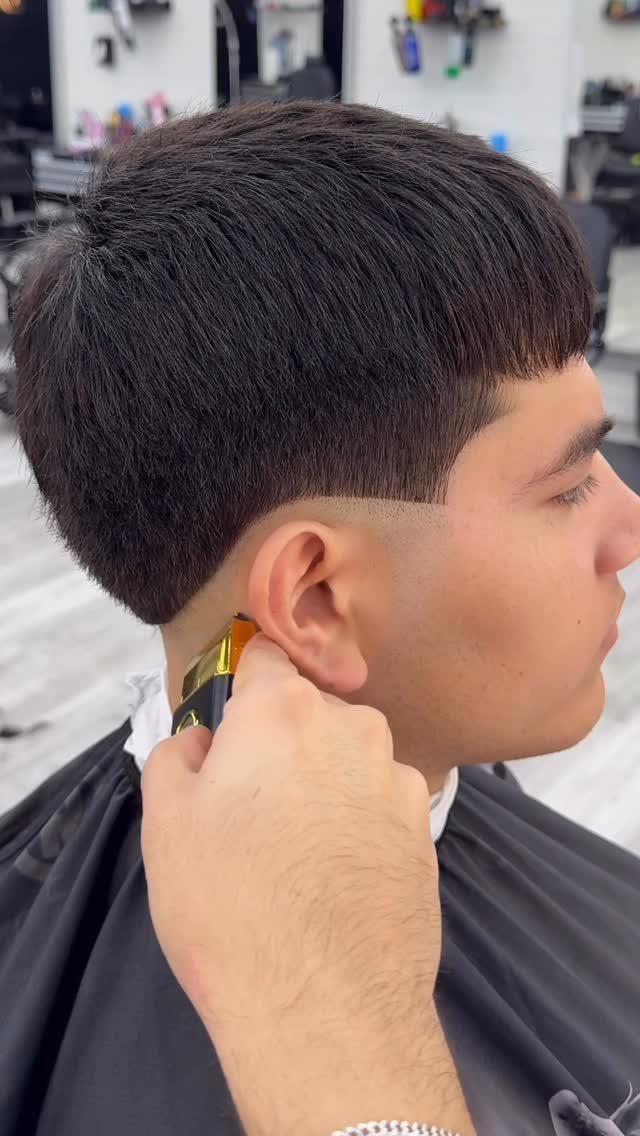
The fringe is cut straight across the forehead in a blunt line, while the top stays short and even. The fade, usually mid or high, makes that straight line across the forehead impossible to miss.
Straight hair holds the blunt edge without softening it.
Ask for a Caesar or Edgar cut with a high fade and a straight fringe. The top needs almost no styling beyond a quick comb forward.
Both the fringe and the fade grow out fast, so expect to book cleanup appointments often.
20. Bowl Cut
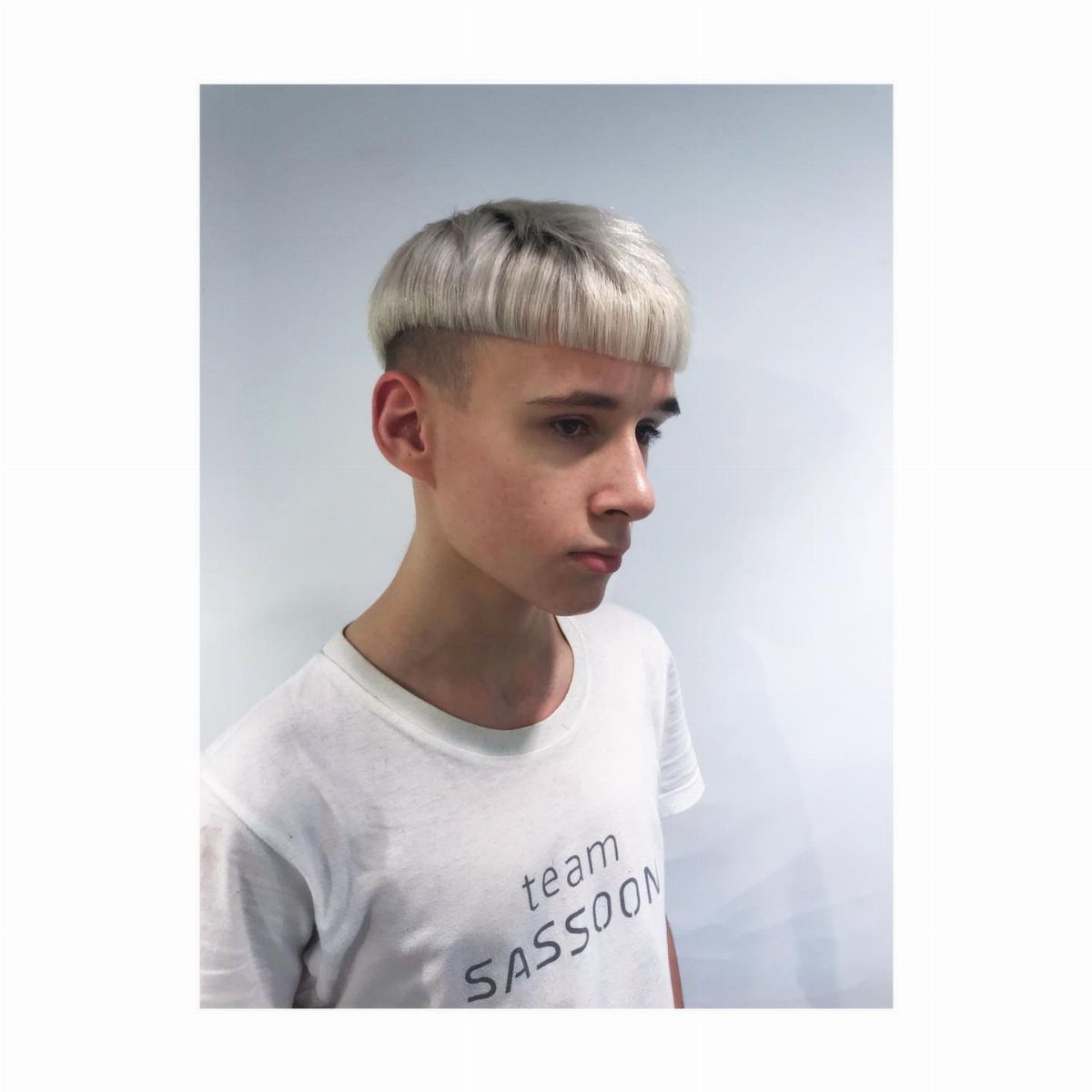
Hair is cut to the same length all the way around the head, creating a rounded shape that follows the curve of the skull.
Hair falls in a continuous line around the head, covering the forehead and ears in one unbroken curve.
Straight hair shows the rounded line clearly without disruption. This cut reads bold and needs little daily work beyond washing and combing into place.
Trim when the shape grows out uneven or the fringe drops too low.
21. Half-Up Half-Down
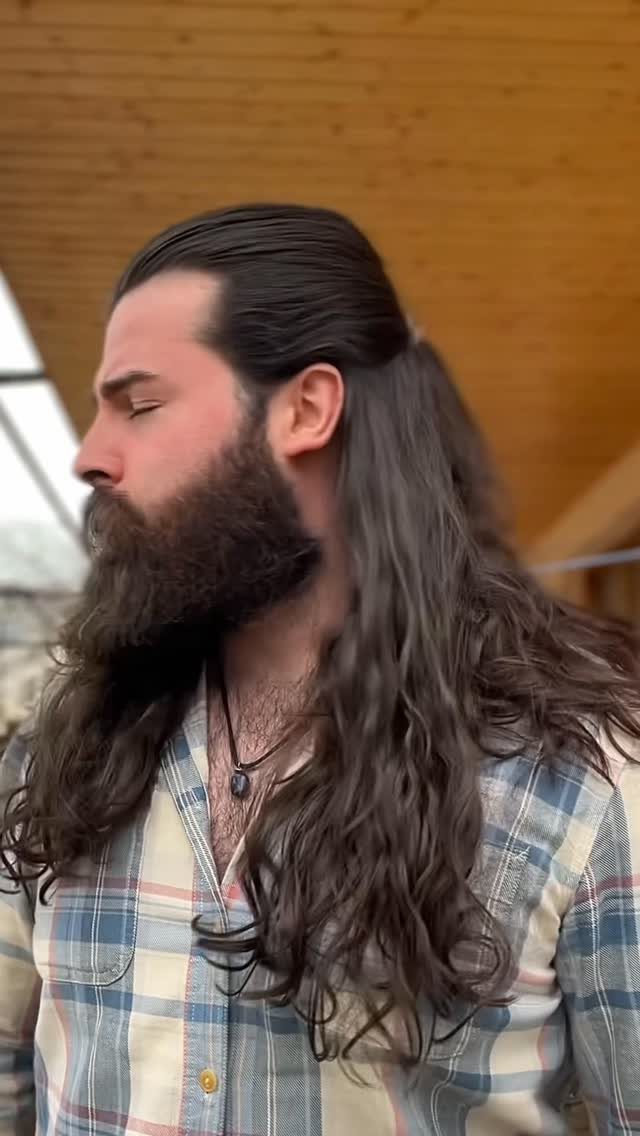
The top section is pulled back and tied while the rest hangs loose. The split between tied and loose reads clearly.
The tied section keeps hair off the face, and the loose section keeps the length visible.
The whole thing takes seconds and works once hair clears your shoulders.
22. Straight Hair with Headband
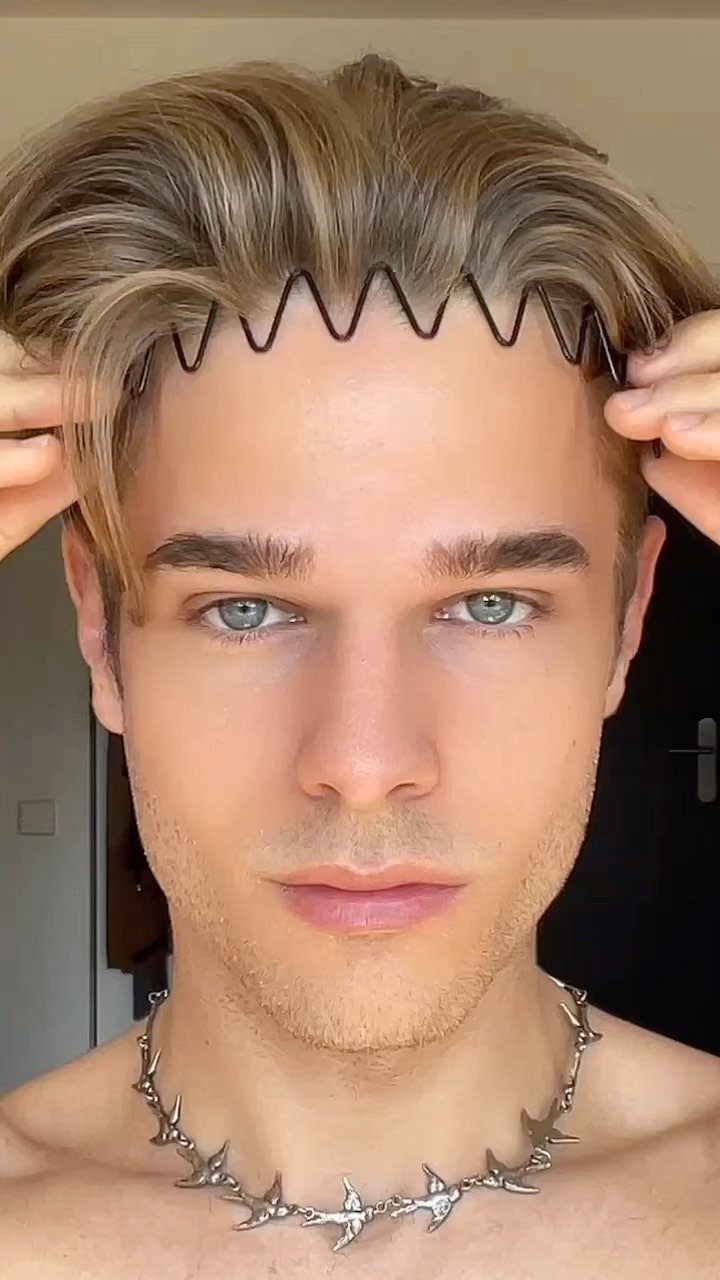
A headband pushes straight hair back off the face and holds it in place without tying or clipping. The zigzag shape adds texture across the front.
Slide the headband on after washing or anytime during the day. Straight hair stays where the band pushes it without needing product.
This takes zero styling time and works with any length that would otherwise fall forward.
23. Buzz Cut
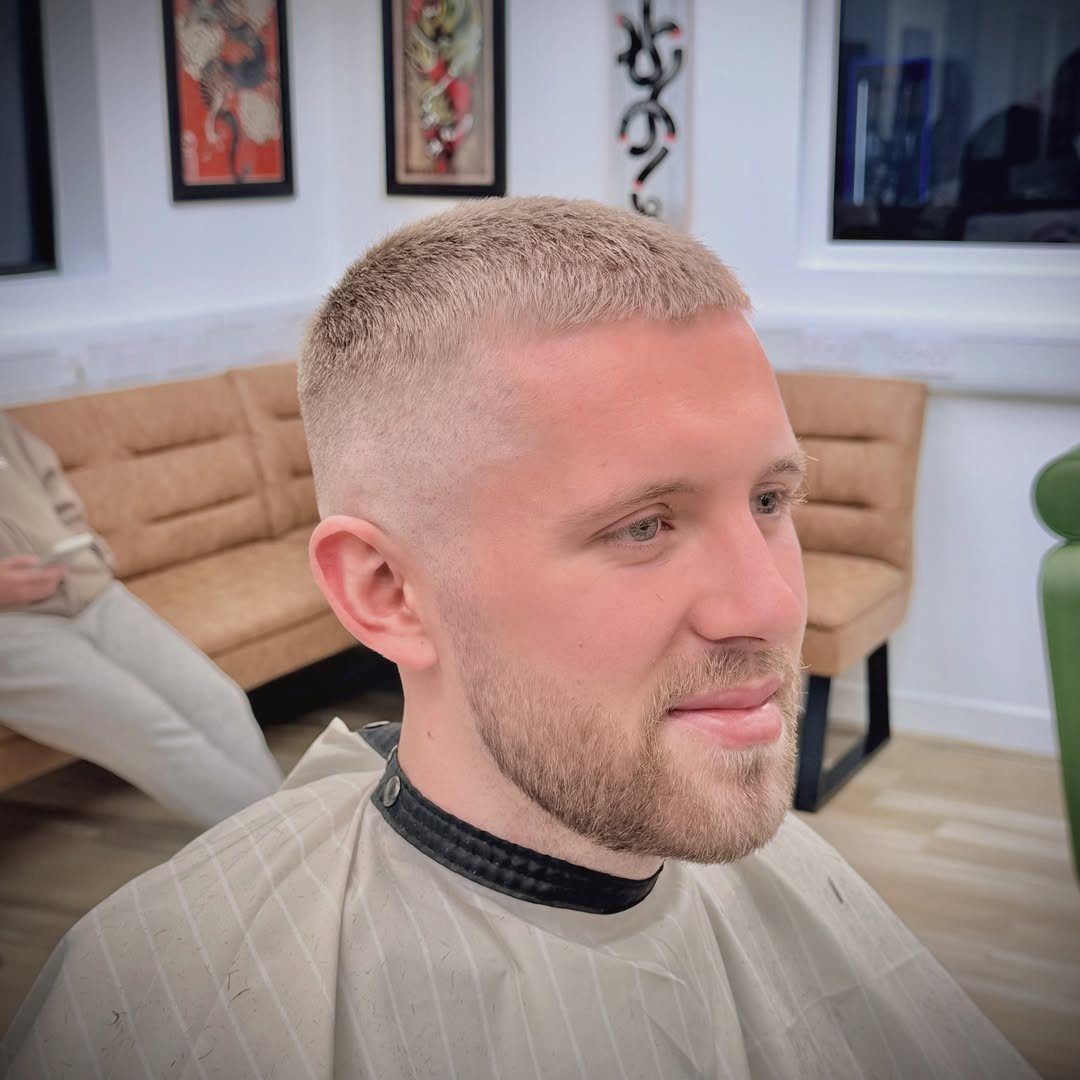
All the hair is clipped to the same short length with a single guard. Straight hair looks even across the scalp without patchiness.
Washing is fast, drying is one towel pass, and styling does not exist. A buzz cut grows out evenly and needs a fresh pass regularly to stay tight.
Low effort, low cost, and it works in any season.
Straight Hair Styling Basics
Straight hair spreads scalp oil down the strand faster than wavy or curly hair, so the top can look greasy by midday even when the scalp is not oily.
Wash with a volumizing shampoo and keep conditioner on the ends only, where moisture belongs, not near the roots.
Work it through damp hair before drying.
Blow-drying hair in the opposite direction from where it will finally sit gives it lift and holds the shape longer. If you’re styling it forward, dry it back first; if it sits back, blow it forward.
A round brush or vent brush adds lift at the scalp while drying. Once it cools, push it where it belongs and it holds the volume.
Trim and Haircut Upkeep
Faded cuts grow out fast because the contrast between top and sides disappears as soon as the shortest section gets long enough to show.
Longer hair without a fade can wait 4 to 6 weeks between trims. You’re cutting off split ends before they work their way up and keeping the outline where it should be, not chasing a fade.
A shaved part or a blunt fringe grows out in a week or 2 and reads messy before the rest of the cut does, so both add appointments.
If you skip one, the part disappears and the fringe drops below where it was cut.
Choosing and Asking for Cuts
Bring a photo of the cut you want. A name helps, but barbers interpret names differently, and a picture shows the fade height, the top length, and the finish in one reference.
Low starts the blend just above the ears, mid around the temple, and high near the top of the head. Each one changes how much contrast the cut carries.
Confirm the top length in inches or guards, not vague terms. "Short on top" means different things depending on who hears it, but half an inch or a number 4 guard is exact.
Mention whether you want the top textured or left blunt, and whether the finish should be clean or choppy.
Frequently Asked Questions
What are the top hairstyles for men with straight hair?
Crew cuts, textured crops, pompadours, and side parts rank high because straight hair holds their shape without fighting back. Faded cuts add contrast, while longer styles like slicked-back hair or curtain bangs frame the face with minimal effort.
Each one suits different face shapes and styling routines, so the best choice depends on how much time you want to spend each morning and how often you can get a trim.
Is straight hair attractive for men?
The structure reflects light cleanly, and most cuts sit the way they were meant to without much coaxing. The main challenge is keeping volume, since straight hair can sit flat or look greasy faster than wavy or curly types.
How do I choose the best hairstyle for straight hair?
Match the cut to how much time you have each morning and how often you can book a trim.
Face shape matters too: angular cuts like crew cuts or hard parts suit square faces, while softer styles like curtain bangs or side parts balance rounder ones.
How do I ask my barber for a straight haircut?
Bring a photo of the cut you want and confirm the fade height (low, mid, or high) and top length in inches or guard numbers.
Which fade is good for straight hair?
Any fade works with straight hair because it holds the shape on top without fighting back.
A low fade starts just above the ears and keeps more length overall, so the contrast is subtle and it grows out more slowly. Mid and high fades create sharper contrast and need more frequent cleanups.