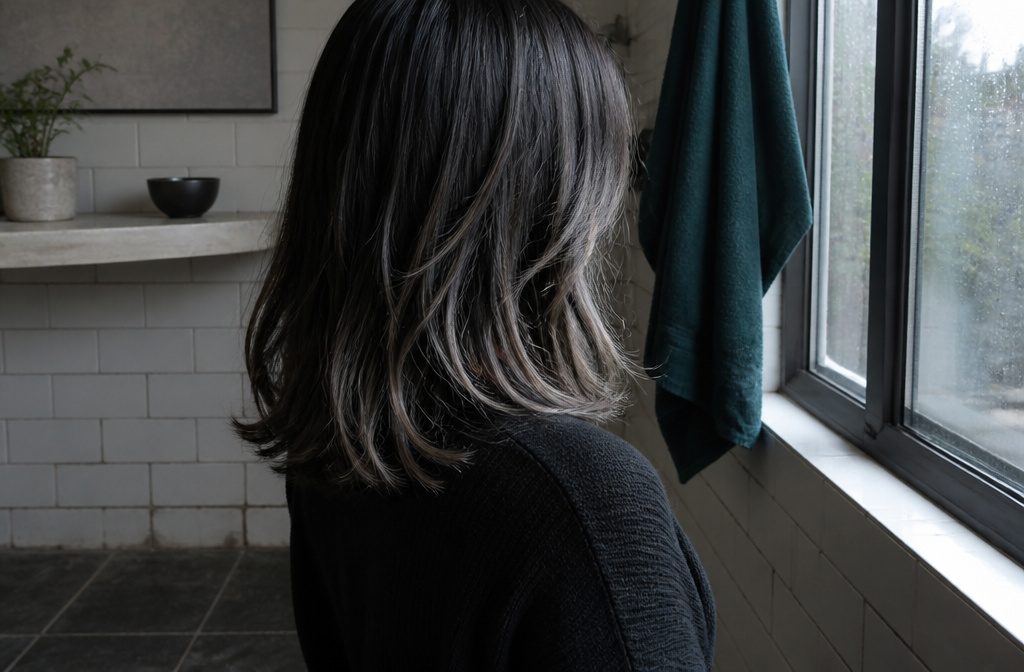
Frosting wins if you want scattered cool-toned dimension on black hair without the maintenance schedule highlights demand. You stretch touch-ups to six months instead of six weeks because the color lives on the ends and surface, not the root.
The catch is lift: very dark bases may need multiple sessions to reach the platinum, ash or beige contrast that makes frosting read against black.
What Frosted Tips Are and What Frosted Hair Is
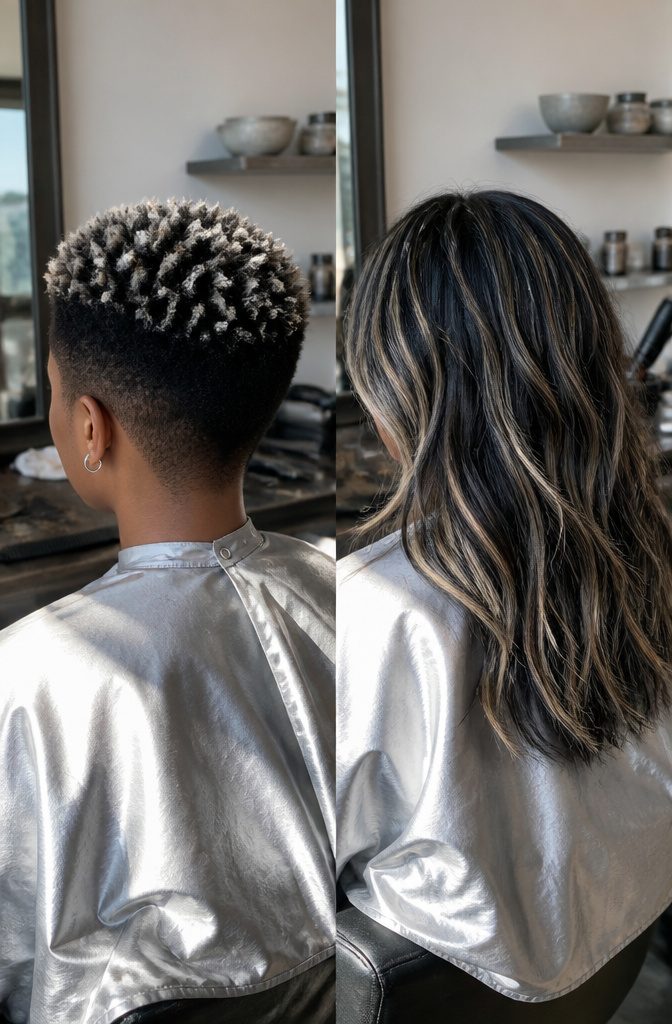
Frosted tips are the lightened ends of short hair, the effect you get when the last half-inch or inch has been lifted several shades lighter than the base.
Picture the tips dipped into lightener and stopped there. The contrast reads sharpest on cuts that are close at the sides and textured on top: crew cuts, short crops, anything where the tips catch light without much length below them.
Frosted hair is something different. The term describes a scattering of contrasting highlights through longer hair, typically in cool tones like ash, platinum or beige.
The highlights sit adjacent to natural pieces rather than grouped together, so the frosted effect comes from how the lightened strands stand out across the length.
You need enough hair to scatter the color through, which rules out anything buzzed short.
The two are not interchangeable.
Frosted tips live at the ends of short cuts; frosted hair runs the length of longer ones. Confusing them at the salon gets you the wrong look.
How Frosted Hair Differs from Balayage
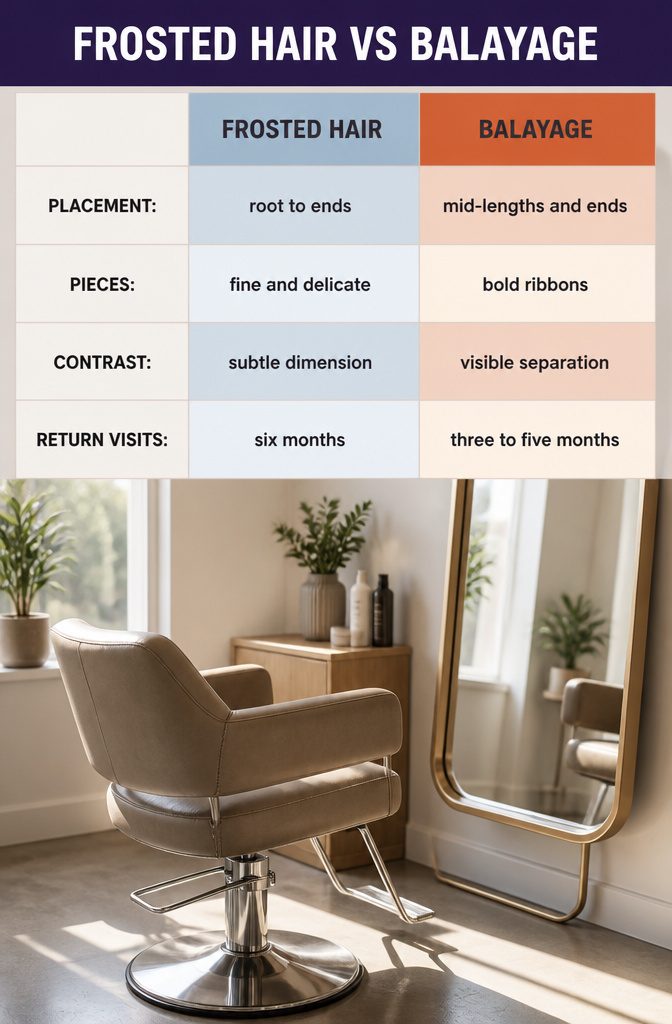
Frosting lifts the hair from root area to ends with fine, delicate pieces that frame the face softly and read as dimension rather than contrast.
Balayage places bolder ribbons through the mid-lengths and ends, often with a stronger face frame and more visible separation between lightened and natural sections.
The frosted result stays subtle enough that someone meeting you for the first time might not notice you colored your hair at all.
That subtlety stretches maintenance intervals. A frosted look grows out naturally enough to wait six months between sessions, while balayage typically brings clients back every three to five months.
The soft grown-out root that balayage is known for still shows more color work than frosting does, and the bolder placement means regrowth becomes visible sooner.
Frosting wins if you want sunkissed dimension without committing to frequent touch-ups or a look that announces itself.
How Frosted Hair Differs from Traditional Highlights
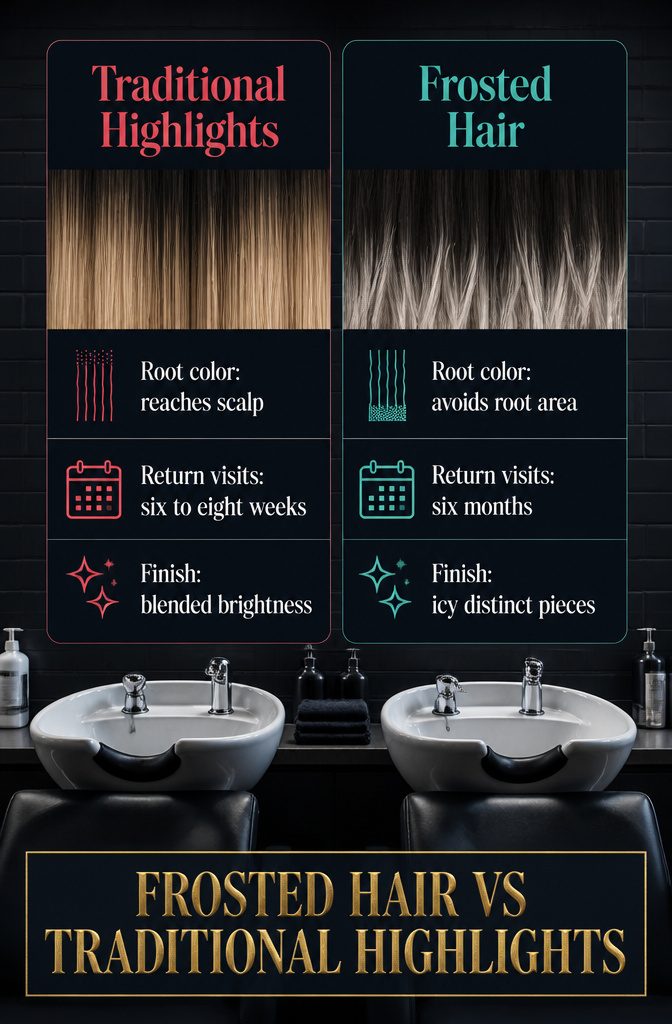
Traditional highlights are scheduled around return visits every 6–8 weeks because the color goes right to the root. That means commitment: you book the salon, you block the time, and the blonde stays bold and bright from scalp to ends.
The dimension comes from lowlights woven through, but the light pieces sit visibly at the root area, and that root area moves as your hair grows. The look is high maintenance by design.
Frosted hair turns that around.
The color lives on the ends and surface, not the root, so grow-out is gradual and regrowth is not the problem it would be with a rooted highlight. You stretch the interval to six months instead of six weeks.
The finish aims for stronger contrast rather than the seamless blend most highlighting goes for, so the frosted pieces read icy and distinct against the base instead of melting into it.
The Look and Placement of the Lightened Pieces
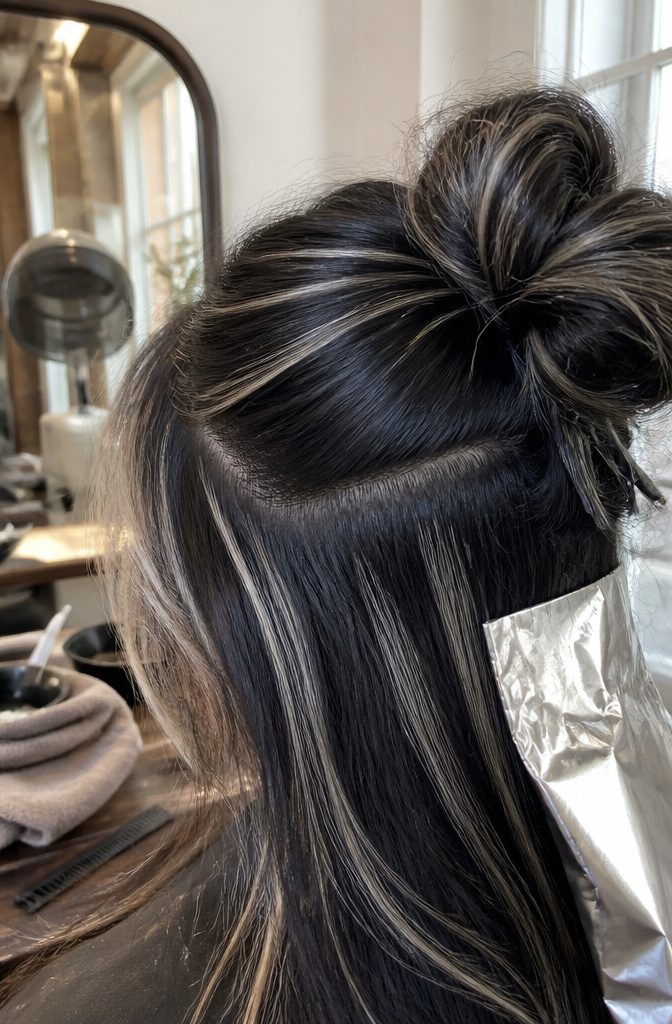
Frosting on black hair works through contrast: scattered cool blonde pieces in ash, platinum or beige, each lifted at least 3 shades lighter than the base.
Setting every light beside a natural dark piece is what makes it read, because the dark strand frames the pale one.
The salt-and-pepper effect comes from size.
Very small strands, sprinkled from regrowth to ends, look like flecks rather than stripes. Smaller sections also let a stylist build cooler tones, so I’d pick fine pieces over chunky ones if icy is the goal.
Where you part your hair and whether you often wear it up decide where the lights should sit, so tell the stylist both.
Lightener and Sectioning Choices
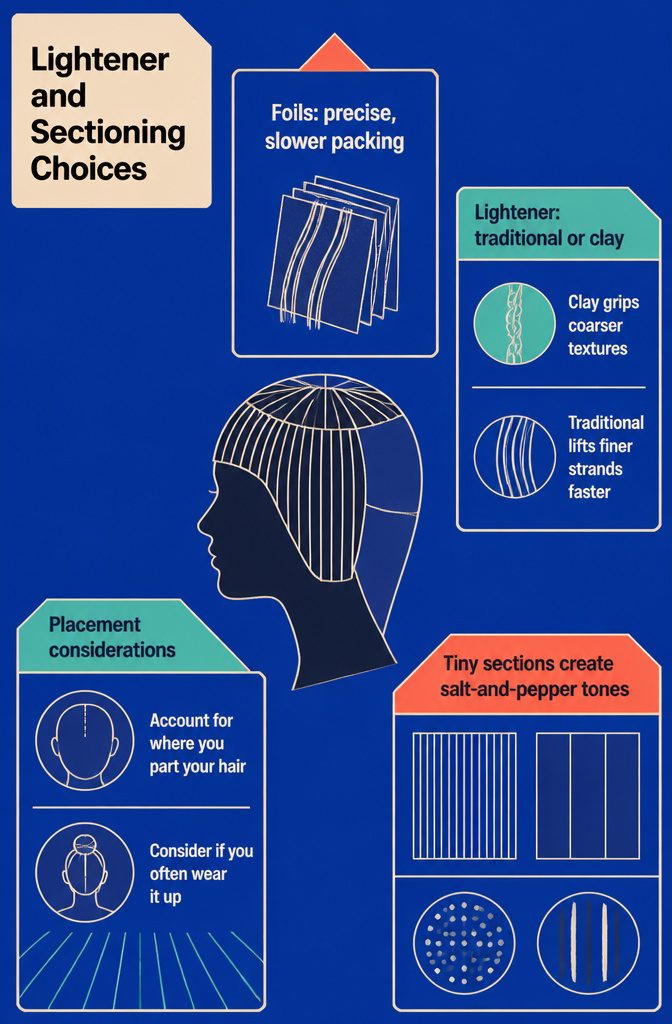
The two lightener options are traditional lightener or clay lightener, chosen by hair type and stylist preference.
Clay lightener tends to grip better on coarser textures, while traditional formulas lift faster on finer strands. Neither is objectively better; the choice comes down to what the stylist knows will behave on your hair without excessive damage.
Smaller sections support cooler tones. When you lift tiny strands rather than thick panels, the result reads as salt-and-pepper rather than chunky blonde streaks.
Placement should account for where you part your hair and whether you often wear it up, since frosting shows best where the contrast actually catches light.
Two application methods deliver similar looks.
High-volume foils with Blondor Multi Blonde Powder give precision, while freehand painting with Blondor Freelights offers softer edges. Both work; foils just take longer to pack in.
Who Can Get This Look
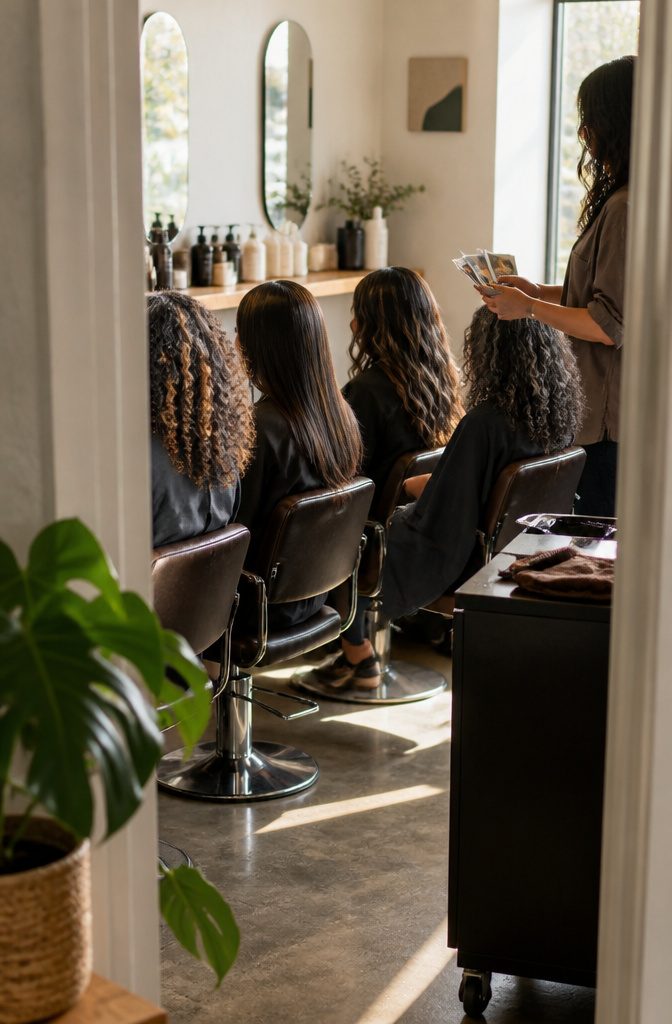
Frosting works on curly, straight, wavy, and textured hair. The technique adapts to whatever you bring to the chair, and stylists customize placement and density based on curl pattern and how you wear it.
Someone with tight coils might frost wider pieces to avoid patchiness; someone with straight hair can get away with finer sections because the color shows through without needing to wrap around a curl.
Gray coverage clients can also ask for a frosted look.
The lightener lifts what is underneath, whether that is natural pigment or previous color, and the result is a soft mixed finish rather than the hard line you get with traditional foil highlights.
Most of the examples that rank online show frosting on brown or blonde bases.
I did not find illustrations that address black hair specifically, so if you are working from a very dark natural base, bring reference photos and talk through how many sessions the lift might take.
How to Ask for This at the Salon
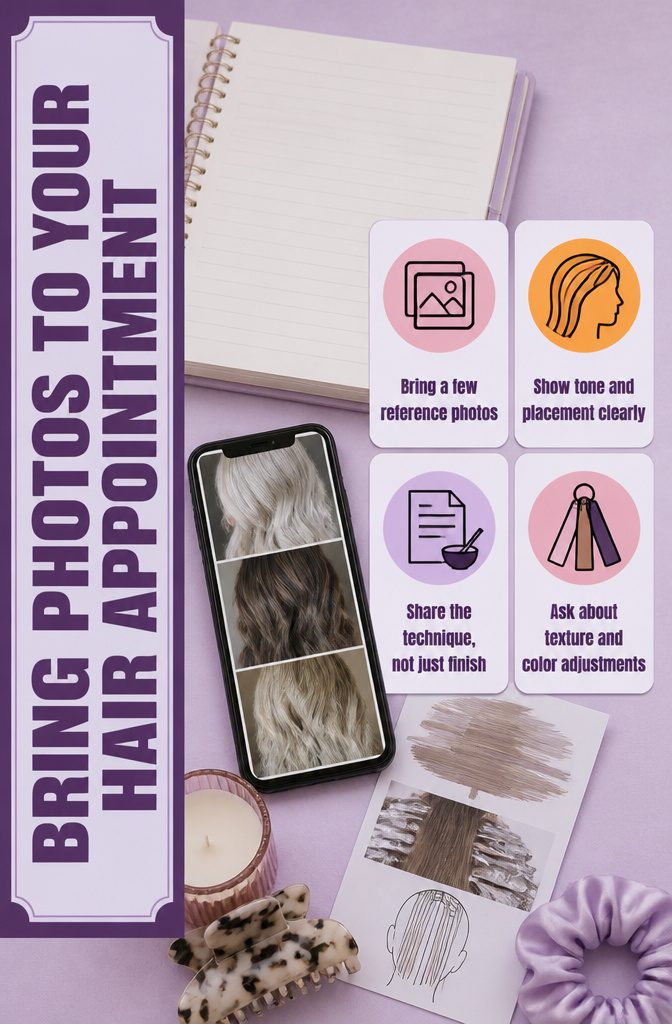
Bring photos. The version of "frosted" in your head and the version in your stylist’s head may be completely different, and a verbal description of tone or placement rarely closes the gap.
A few reference images make it obvious whether you want bright platinum chunks at the tips, subtle dimensional pieces through the midlengths, or something closer to highlights.
Sharing an article that walks through the technique helps too, because it gives your stylist the language and the method rather than just the finish.
Visual aids prevent the appointment from ending with a look you didn’t ask for, and they let the stylist flag any adjustments your hair texture or current color might require before the bowl comes out.
Frequently Asked Questions
What color is frosted hair?
Frosted hair uses cool blonde tones like ash, platinum, or beige, lifted at least 3 shades lighter than the base.
The lightened strands sit adjacent to natural dark pieces, creating contrast rather than a blended look. On black hair, the effect reads as icy scattered pieces against the dark base.
How to add frosted tips to hair?
Frosted tips require lightening the last half-inch or inch of short hair, typically with traditional or clay lightener applied through foils or freehand painting.
The technique works best on crew cuts, short crops, or textured styles where the tips catch light without much length below. A stylist will lift the ends several shades lighter than your base for sharp contrast.