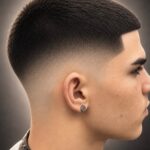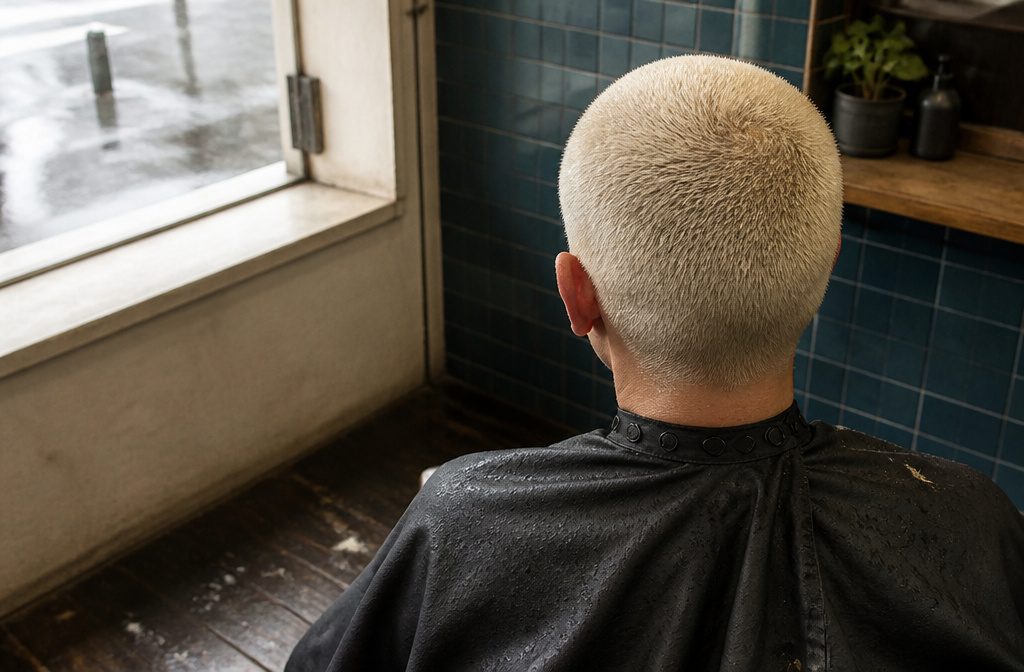
Bleaching a buzz cut means applying bleach powder mixed with developer directly to short clipped hair, usually lifting it through multiple levels in one session to reach platinum or prep for fashion color.
The challenge with very short hair is coverage: you need to coat the scalp thoroughly without missing patches, and any uneven sections from the clipper cut will show through the bleach.
Use a #4 guard if your hair is fine, since anything shorter lets too much scalp read through pale color, and stick with 20 volume developer unless your hair is very dark.
1. Choose Your Guard and Buzz the Hair
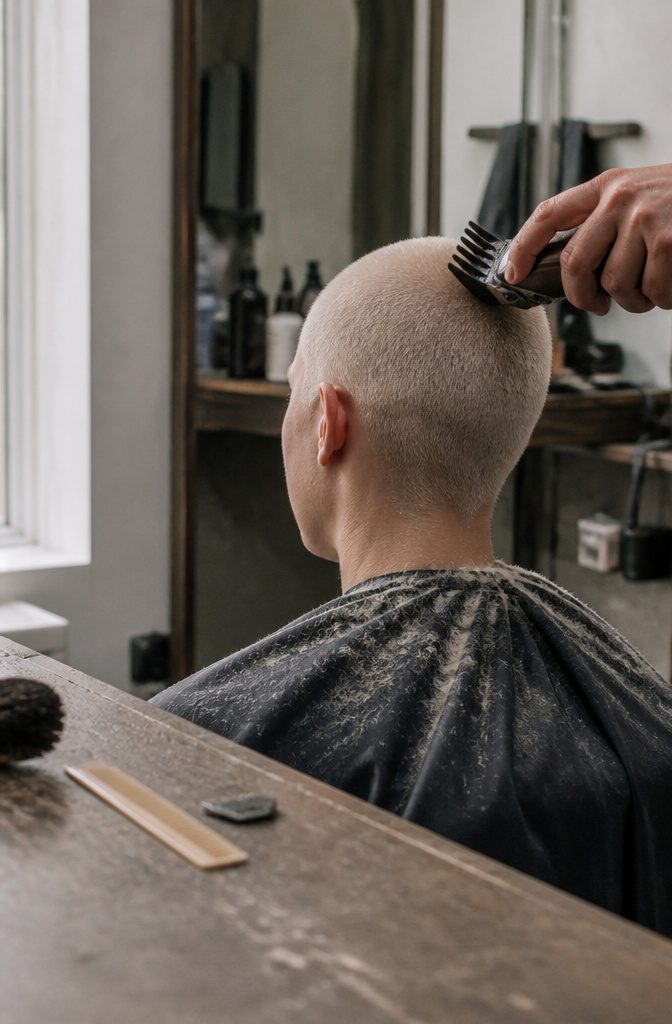
A #1 guard leaves 1/8 inch and a #3 leaves 3/8 inch, and the shorter you go, the more scalp shows through.
That matters most on pale hair. Dense, thick hair looks right at a #3, while fine, light hair needs a #4 or the skin will read straight through the color.
At home, start with a #4 and step down to a #3 or #2 only if it still looks long, since clippers take length off but never put it back.
I’d still pay a barber or stylist for this cut if the budget allows. An even buzz is the base the bleach sits on, and uneven patches show.
2. Mix and Apply the Bleach
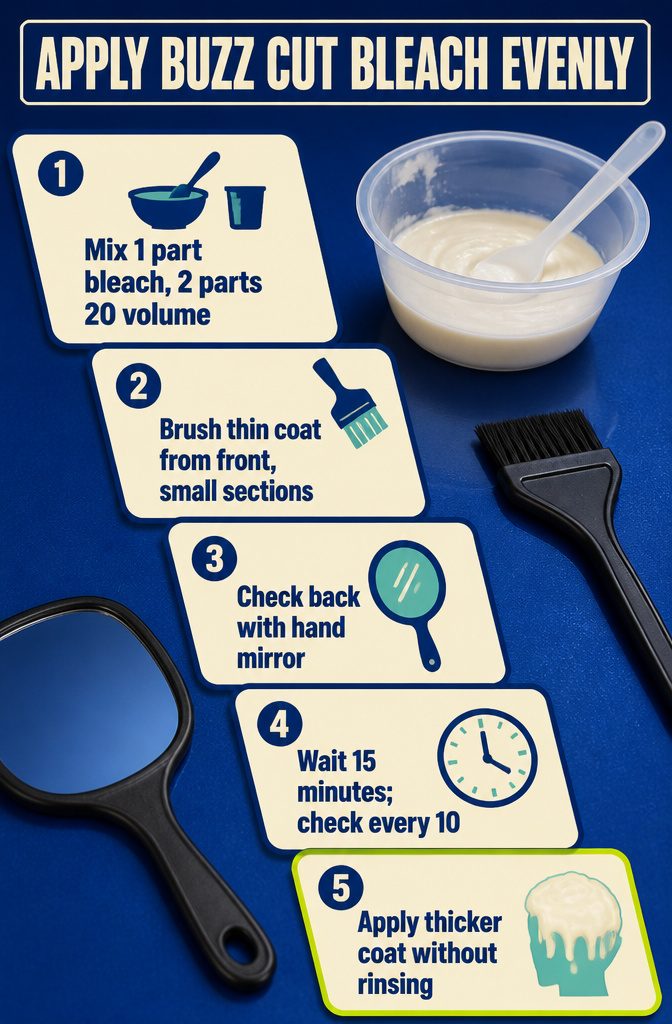
- Pour the powder and developer into a plastic bowl and stir with a plastic spoon, since metal reacts with the mix. Use 1 part bleach to 2 parts 20 volume developer.
- Stick with 20 volume unless your hair is very dark. Volume 30 and 40 lift more but can sting the scalp, and I’d only reach for them on darker hair. The powder can lighten up to 9 levels, while the L’Oréal Féria Platinum kit lifts up to 8.
- Starting at the front, brush on a thin coat in small sections. Check the back with a hand mirror.
- Wait 15 minutes. Wipe away a small spot every 10 minutes to watch the color move toward pale yellow.
- Brush on a thicker coat without rinsing between coats, until no hair shows.
3. Rinse With Cool Water
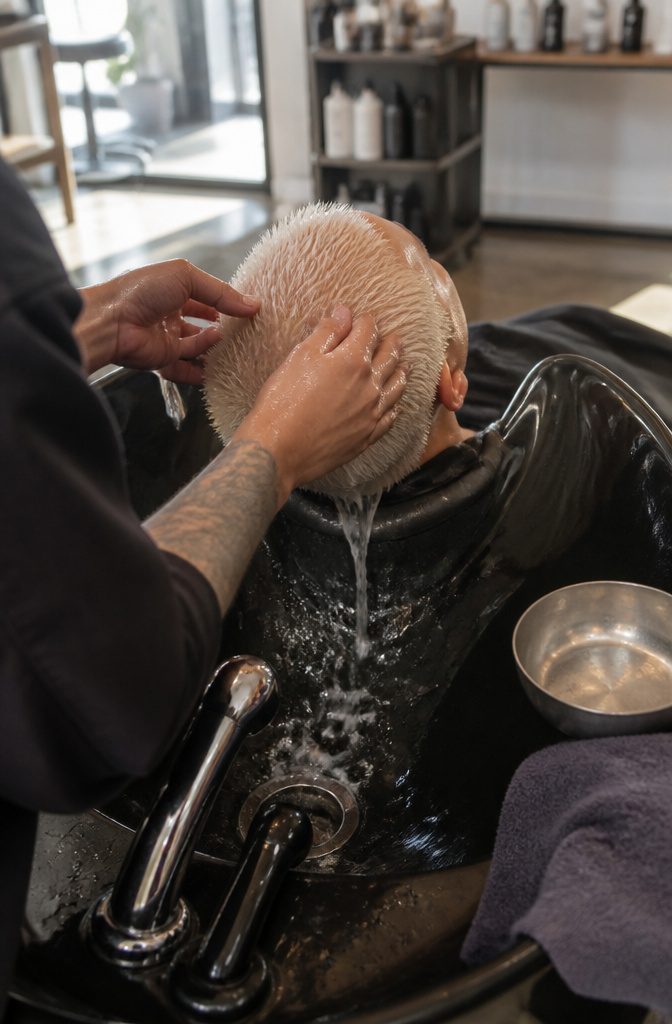
Once the timer goes off, take the bowl to the sink and rinse with cool water until it runs clear.
Cool water closes the cuticle back down after bleach has swollen it open, which matters more on a buzz cut than you might expect: even short hair can feel stiff and look dull if you rinse hot.
Work your fingers through in circles the same way you applied it, making sure no bleach sits against the scalp.
Once the water is no longer milky or yellow, shampoo twice. The first wash lifts whatever bleach is still clinging to the hair; the second actually cleans.
You will see some color in the drain, normal for any bleach job. Pat dry and check the color before you decide whether to tone.
4. Tone to Remove Yellow or Orange
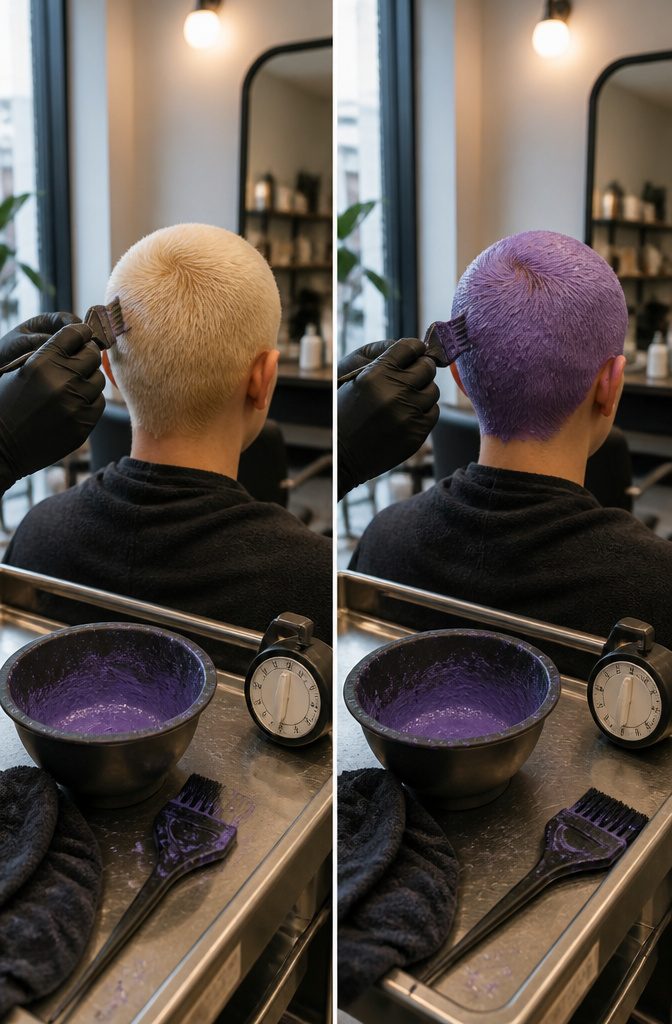
Toner pulls yellow or orange from bleached hair once it hits the lightest stage. Whether you need it depends on how light the hair lifted and where you want the final color to land.
Mix the toner with 7 or 10 volume developer and rub it onto the scalp. Processing takes somewhere between 10 and 20 minutes, shorter if the hair came out very light.
Purple toner goes on purple and looks alarming until you rinse it, at which point the yellow cancels out and you’re left with cleaner platinum or ash.
Watch the clock closely because leaving it on too long turns the hair purple instead of neutral.
If the first pass doesn’t get you all the way there, a second toning treatment can follow after three or four days once the hair settles.
5. Add Fashion Color If You Want It
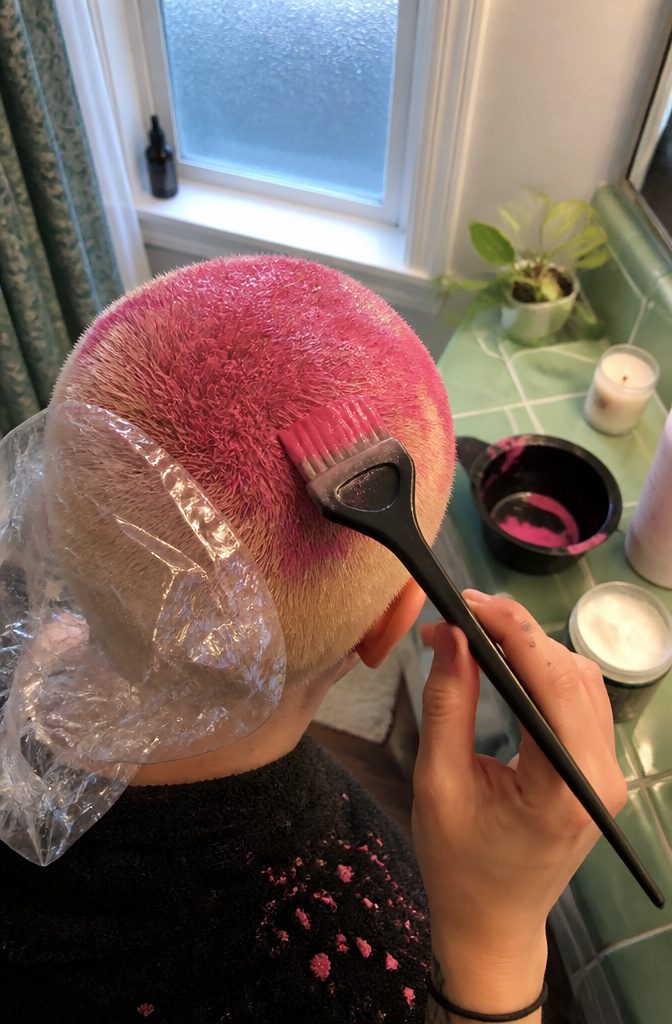
If you want a color beyond blonde or platinum, that needs a separate dye step.
Pre-mixed punk dyes typically need 45 minutes to process, while boxed kits only need 20 minutes. Check the label.
Apply dye with a tinting brush, working from the top of your head toward the back, then the front hairline and sides. A plastic shower cap keeps things cleaner and traps heat to help the dye take.
Wait one to two days after bleaching to minimize damage.
Rinse the dye out with cool water once processing time is up, then apply conditioner. Skip shampoo or the color fades before you leave the bathroom.
Keep the Color From Going Brassy
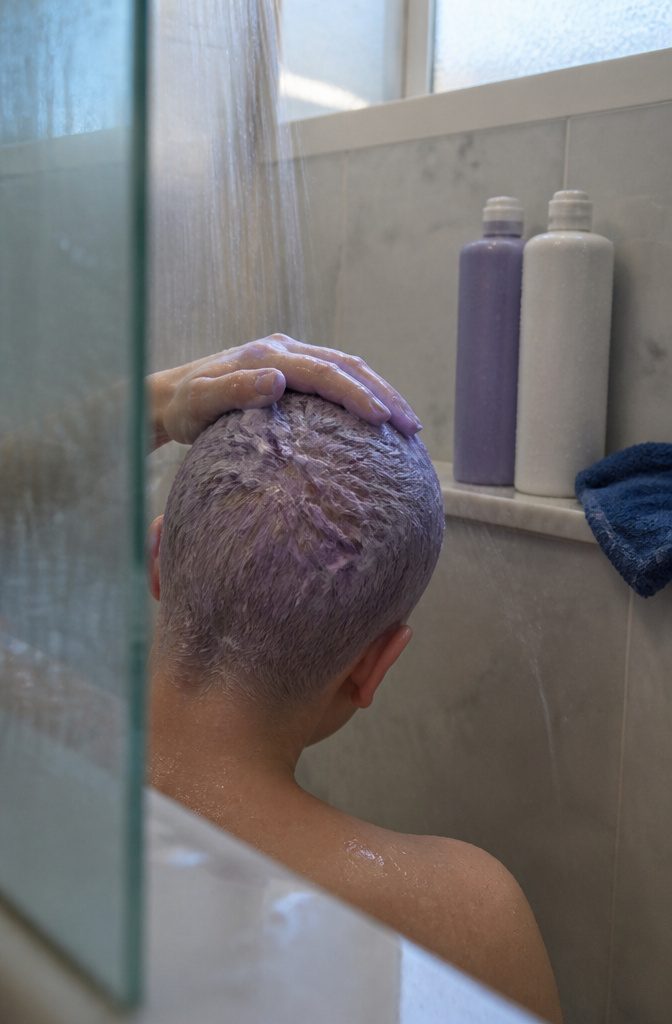
Purple shampoo cancels the yellow that creeps back after you bleach. The purple pigment neutralizes gold tones because they sit opposite each other on the color wheel.
Wash with regular shampoo first, then apply purple shampoo and leave it on for 3–5 minutes before rinsing. Once a week is enough, or every few washes if you prefer spacing them out.
Orange tones call for blue shampoo instead of purple.
Sulfate-free formulas work better on bleached hair because they clean without stripping moisture. Shu Uemura Yūbi Blonde and Matrix Brass Off both keep the color neutral between touch-ups.
For deeper toning, L’Oréal Féria Power Toner and EverPure Glossing Acidic Glaze tackle brass that shampoo alone won’t shift.
The glaze goes on wet hair after regular shampoo, sits for 1–3 minutes without rinsing, then you follow with conditioner. That extra minute makes the difference when the yellow won’t quit.
When to Touch Up the Cut and Color
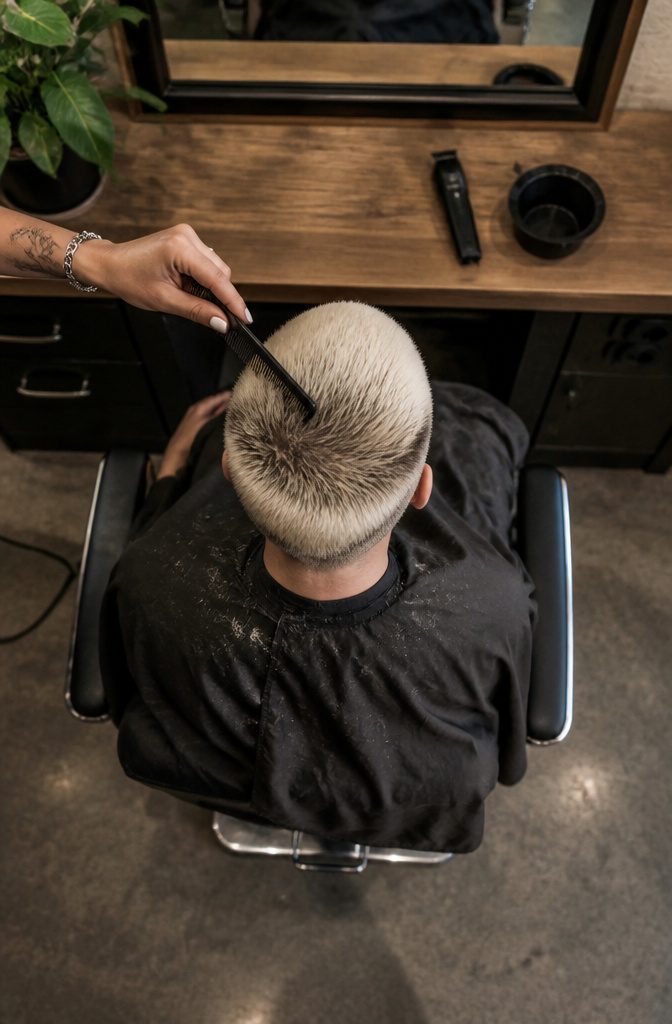
Trim a buzz cut every 2–4 weeks: closer to 2 on a short guard, 3–4 if your hair grows slowly. Color gives the game away sooner, since dark roots can show in as little as 1 week while lighter hair holds 2–3.
At this length I’d redo the bleach every 2–4 weeks, because partial regrowth reads as frosted tips. Waiting too long causes its own problem:
Wait about six weeks before you touch your roots up. Whenever you want to go platinum blonde, too much new [hair] growth will actually hinder the service and create banding, so you don’t want to wait too long.
— Hair.com
Book the bleach when you have about an inch of growth, and no later.
Condition to Offset Dryness
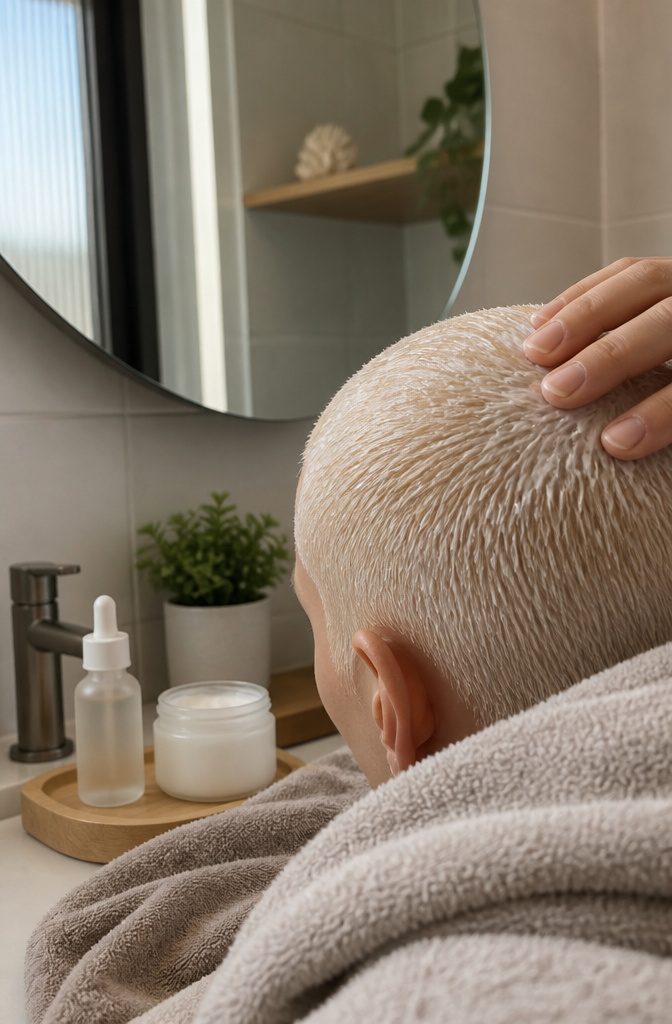
Bleached hair dries out fast, and buzz cuts are no exception. Short strands can still break from overbleaching, so deep-conditioning masks once a week help restore moisture.
Leave the mask on for 15–30 minutes before rinsing. Daily hydration matters too: a serum like Elvive Hyaluron + Plump Moisture Serum plumps the hair shaft with hyaluronic acid, and a follow-up with Everpure Simply Clean Sheer Oil locks it in.
Cut back on washing while the bleach is fresh. Once or twice a week keeps the scalp from stripping out what moisture you just put back.
When you buzz the whole thing down again and restart on virgin hair, that’s the moment for a sulfate-free scalp-cleansing shampoo. Avoid it while the color is still live, since those formulas can pull the dye right out.
Scalp irritation usually fades within 48 hours. Until then, stick with gentle products and let your skin settle.
Frequently Asked Questions
Can you bleach a buzz cut?
Yes, you can bleach a buzz cut the same way you would any short hairstyle.
Cut the hair first, then bleach it so you use less product and the lift goes faster. An even buzz is the base the bleach sits on, and uneven patches show through the color.
How long does a bleached buzz cut last?
Dark roots can show in as little as 1 week, while lighter hair holds 2–3 weeks before regrowth becomes noticeable.
Redo the bleach every 2–4 weeks, since partial regrowth reads as frosted tips. Book the bleach when you have about an inch of growth, and no later, or you risk banding.
Is bleaching a buzz cut bad?
Short strands can still break from overbleaching, so deep-conditioning masks once a week help restore moisture.
Cut back on washing to once or twice a week while the bleach is fresh. Scalp irritation usually fades within 48 hours, and frequent trims counteract the damage of constant bleach sessions.
How often should you touch up a buzz cut?
Trim a buzz cut every 2–4 weeks, closer to 2 on a short guard and 3–4 if your hair grows slowly. Color gives the game away sooner than length, so you may need to redo the bleach before the cut needs trimming.