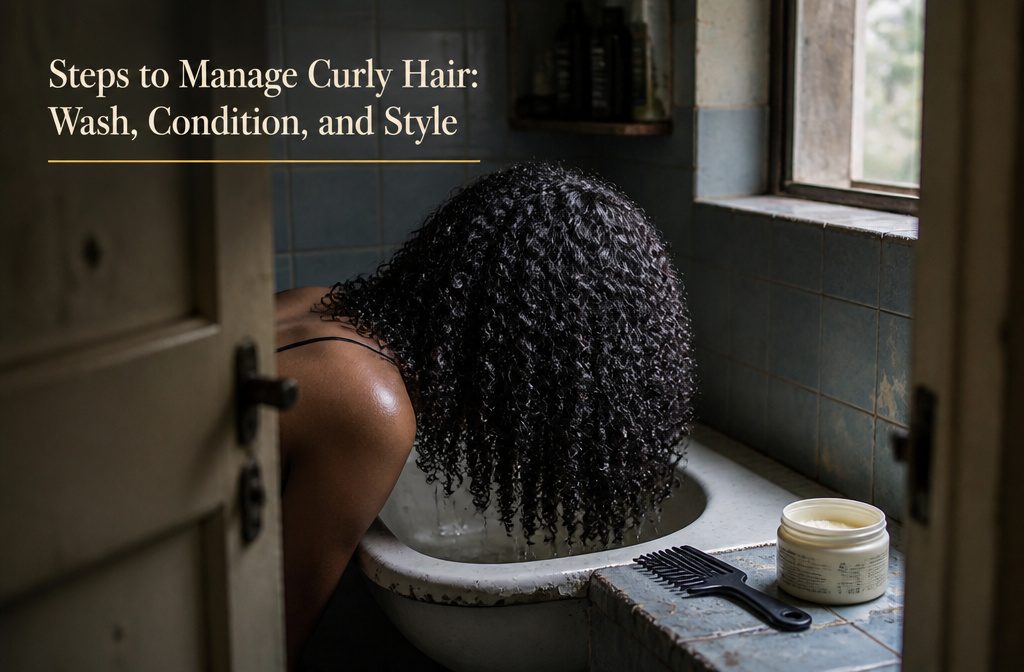
Managing curly hair means matching moisture to curl type. Wavy hair can look oily at the roots in two days and needs lighter formulas, while coily hair stays dry for a week and takes richer creams.
The tighter the spiral, the harder natural scalp oil travels down each twist to reach the ends, so conditioner does work sebum cannot.
1. Cleanse the scalp without stripping moisture
Curly hair holds less moisture than straight hair, so the shampoo you use decides whether your curls stay soft or turn to straw.
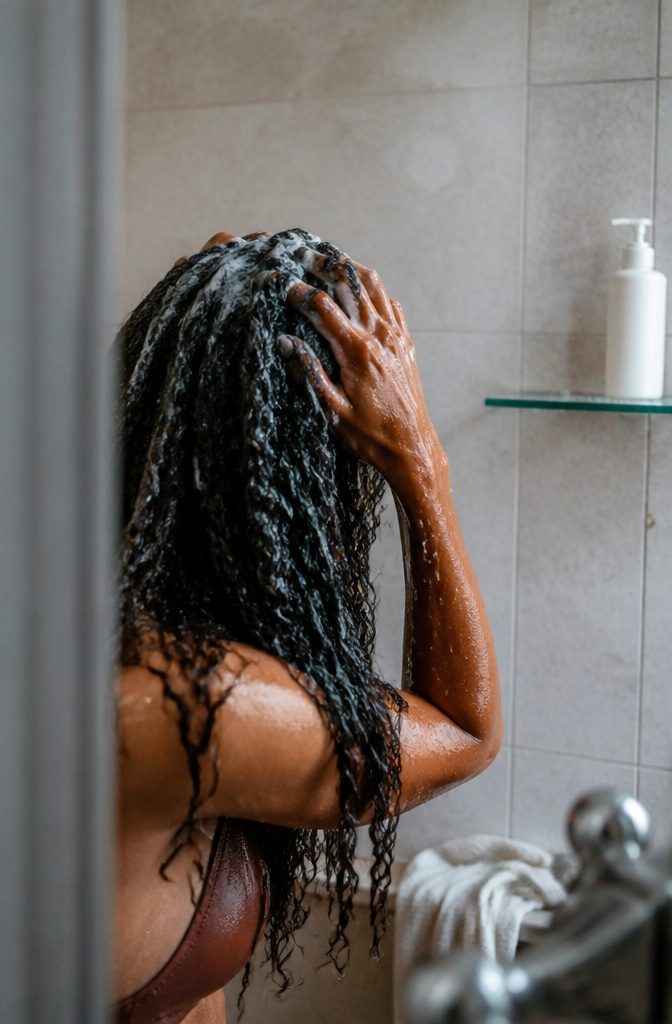
Sulfate-free formulas remove buildup without stripping the natural oils that keep each curl defined. Sulfates foam well, but they dry out fragile curly hair fast.
Concentrate shampoo on the scalp rather than working it through the lengths.
The lather runs down when you rinse, and that is enough to clean the rest without leaving the ends brittle. I work in sections when my hair is thick enough that reaching the whole scalp in one pass misses spots.
Thick, curly hair doesn’t need to be washed daily or even weekly. However, you should wash your hair a minimum of every 2 to 3 weeks for optimal scalp and hair health.
Frequency depends on how quickly oil shows at your roots.
Wavy hair may need washing every other day, while curly and coily types can stretch to a week. Going longer than three weeks risks dandruff from oil buildup, so at least biweekly washes keep the scalp balanced.
2. Condition and detangle while hair is wet
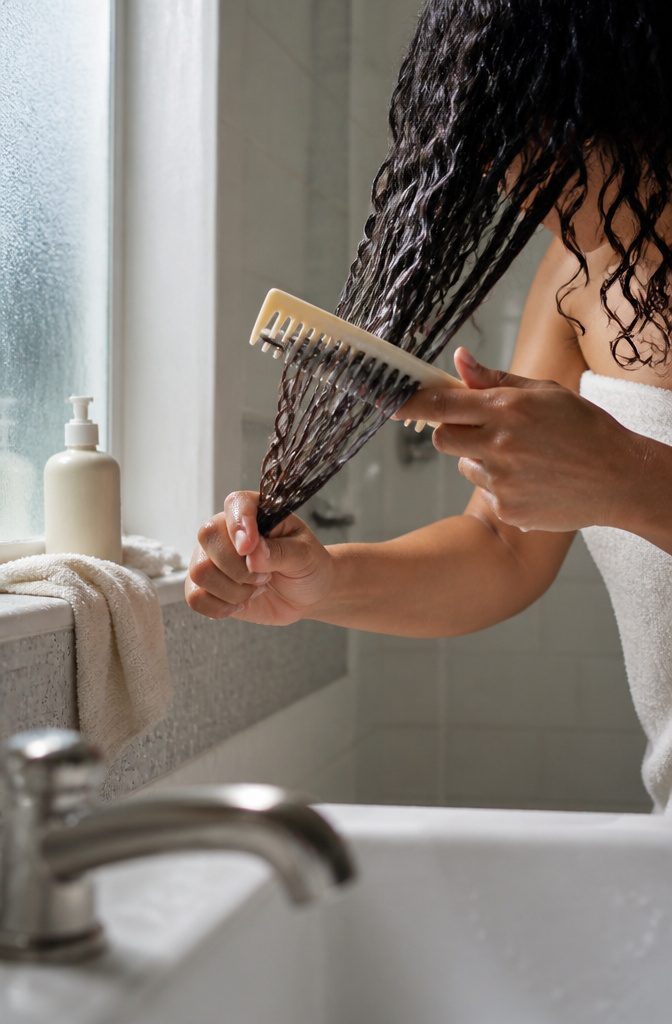
Conditioner makes detangling possible without tearing through the hair.
After cleansing, apply conditioner generously from mid-lengths to ends, where curls dry out fastest. Let it sit for a few minutes so the hair can actually absorb the moisture rather than just coating the surface.
While the conditioner is still in and the hair is slippery, work through tangles with your fingers or a wide-tooth comb, starting at the ends and working upward toward the root.
This approach keeps you from dragging a knot down through the entire length of the strand, which is where breakage happens.
Detangling dry curls with a brush pulls on hair at its most fragile.
Wet hair coated in conditioner has slip, and that slip lets strands separate without snapping. Rinse with cool water once you’ve worked through all the sections; closing the cuticle locks in what the conditioner delivered.
3. Add leave-in conditioner or deep treatment
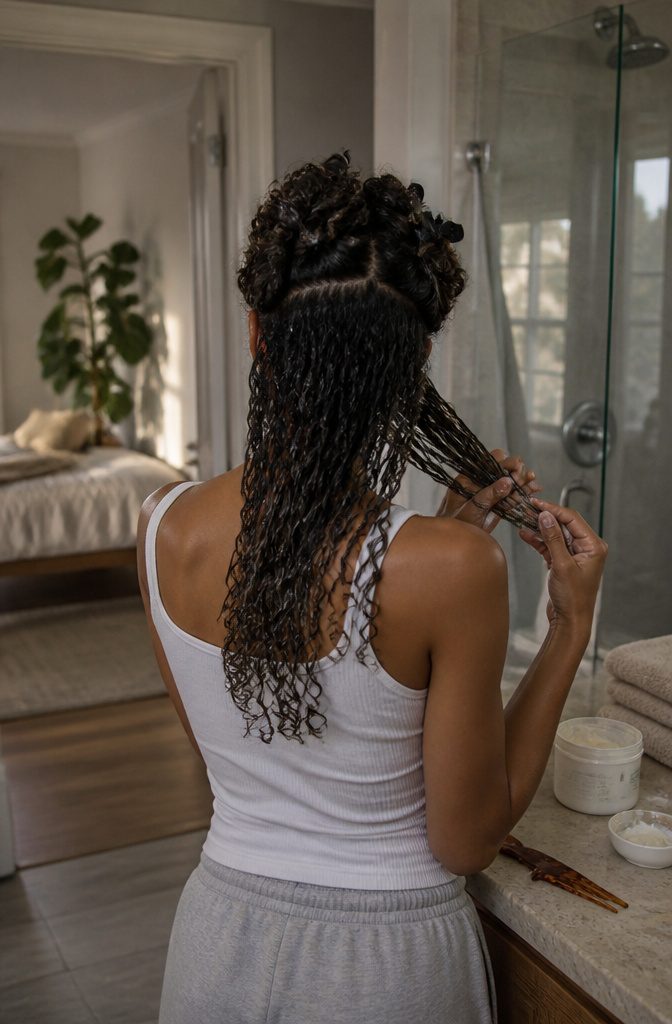
Leave-in conditioner sits between cleansing and styling and does work a rinse-out can’t: it stays put to smooth the cuticle, add slip for detangling, and keep moisture available while you apply whatever comes next.
After you’ve rinsed out your regular conditioner, work a leave-in through damp hair from mid-length to ends. It’s the standard post-wash step, not optional.
When curls feel particularly dry or look dull, a deep conditioner or hair mask replaces your regular conditioner and brings heavier moisture.
Leave it on for up to five minutes so the formula can absorb, then rinse. This can be done up to once a week depending on what your hair needs, not on a fixed calendar.
Clarifying shampoo handles buildup when styling products or hard water leave a film that weighs curls down.
Use it in place of your regular shampoo whenever you notice lackluster definition or extra frizz. A pre-shampoo treatment is optional but worth considering if your hair is especially fragile or over-processed.
4. Style with product while hair is damp
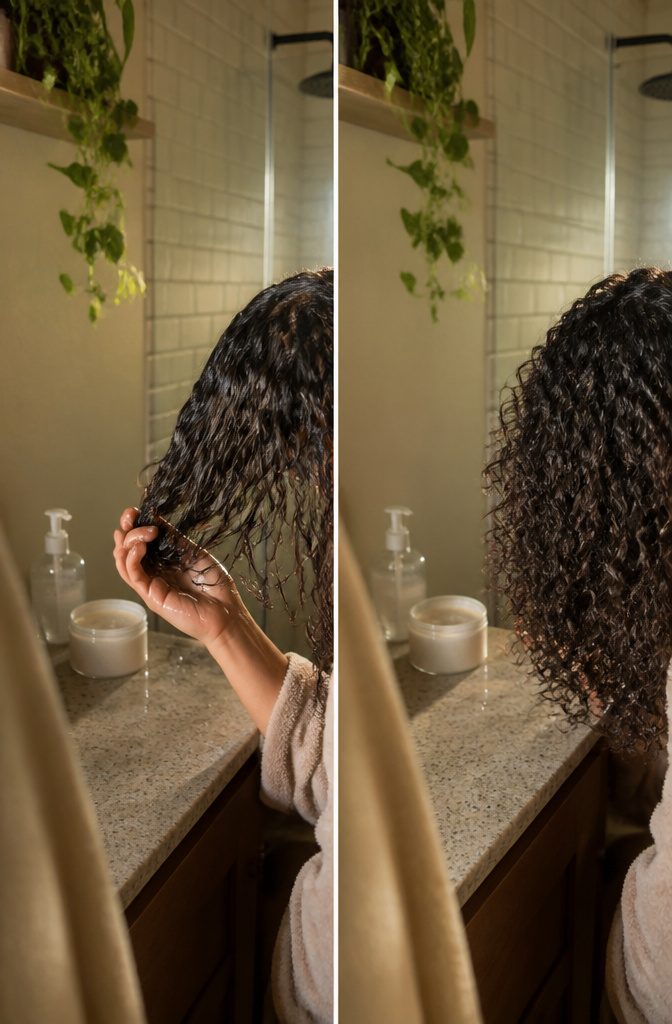
Apply product while hair is still damp, before flyaways spring into place.
Cream gives softer, natural definition. Gel gives stronger hold and more frizz control, and I’d pick it for hair that frizzes fast.
Mousse and balm are lighter options, and a serum or shine oil adds gloss. Wavy hair wants a lighter curl enhancer, while true curls do better with a definer.
To boost curl shape, scrunch the product in gently, section by section, tightening without bending curls out of shape. To elongate, twirl a small section around a finger and release downward, following the curl’s natural shape.
Try each on a different wash day. Once a gel cast dries hard, scrunch out the crunch, then keep your hands off.
5. Dry gently with soft fabric
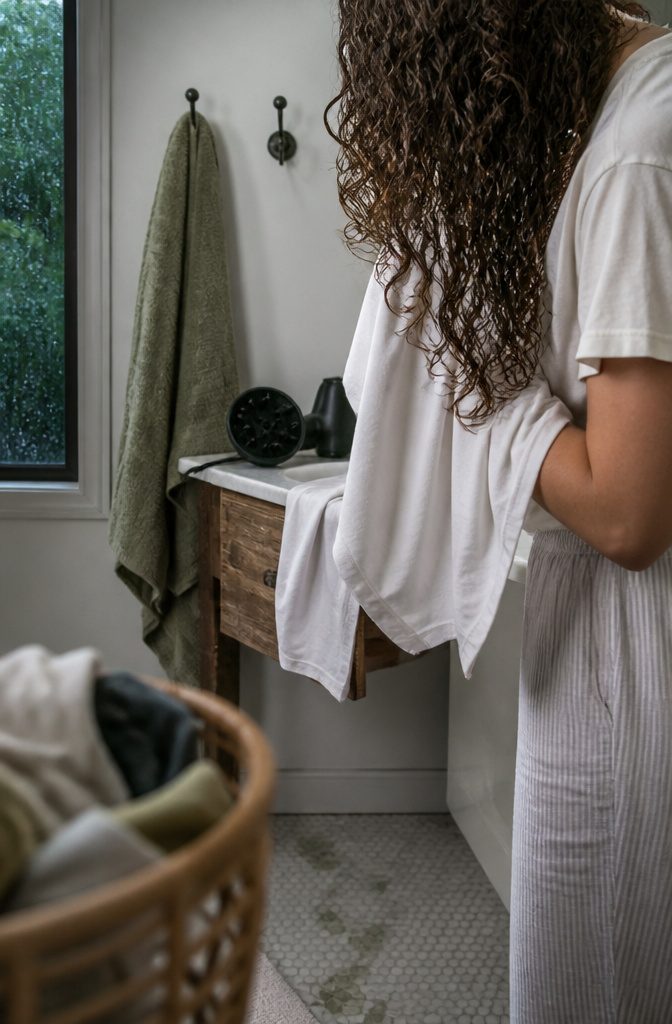
Once you’ve styled your curls, the way you dry them decides whether they stay smooth or turn into a frizz halo.
Blot water out with a soft cotton T-shirt or a microfiber towel rather than rubbing with a regular terry cloth towel.
The rough texture of a standard bathroom towel creates friction that weakens the cuticle, breaks the hair fiber, and lifts frizz. Blotting or a gentle scrunching motion pulls out moisture without disturbing the curl pattern you just encouraged with product.
Air-drying takes longer but causes the least damage. If you need speed, use a diffuser attachment on your blow-dryer and keep the heat low.
Diffusers spread air evenly instead of blasting one concentrated stream, which means less heat exposure and better-defined curls. Apply a heat protectant first.
The last move is the hardest: leave your curls alone while they dry.
Touching them mid-dry separates the clumps and invites frizz. Let them finish before you rearrange anything.
6. Refresh curls between washes
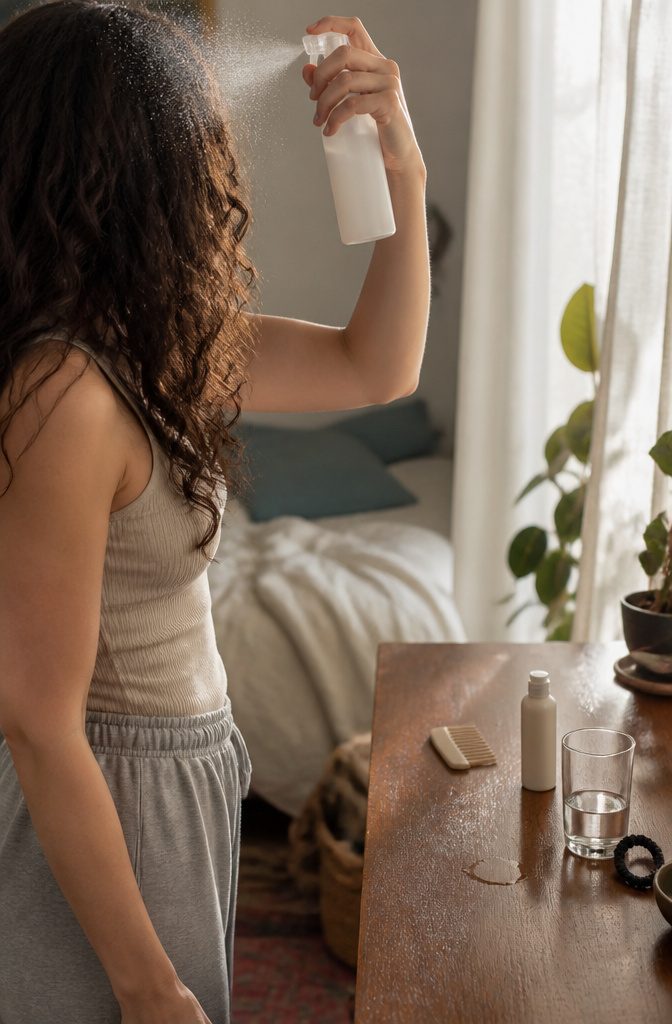
Curls that looked sharp on wash day can flatten or frizz by day two, and refreshing them takes less than a minute.
Mist your hair lightly with water or mix a small amount of conditioner into a spray bottle and spritz through dry hair. You’re reactivating whatever product you set your curls with, not soaking them again.
Once the hair is damp, scrunch gently to bring back definition or smooth sections down using the praying hands method if frizz is showing up around the crown.
A curl-refresh spray works the same way but often includes a light hold ingredient so you get both moisture and control in one step.
Fine curls usually need less between washes; coarser or drier hair benefits from a daily or every-other-day mist.
Avoid touching your curls too often after refreshing. The more you work them over, the more the pattern breaks down and frizz builds up.
Why curls need more moisture than straight hair
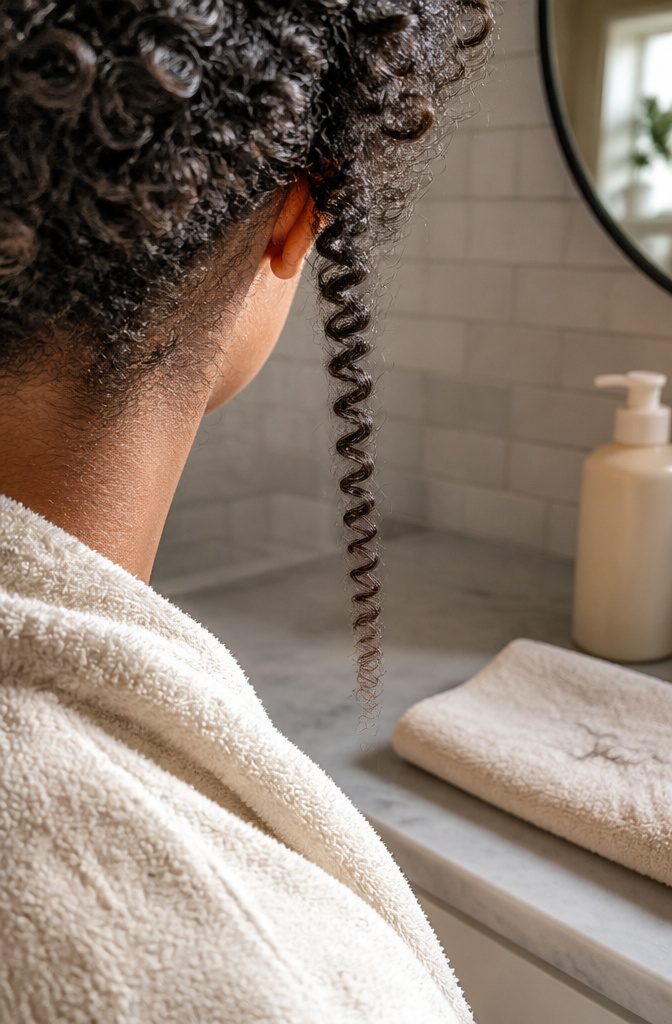
Curls bend and spiral, and that shape alone explains most of the dryness.
Natural scalp oil has to travel down each twist and turn to reach the ends, and the tighter the curl pattern, the harder that journey becomes. Straight hair lets sebum glide from root to tip without resistance.
Curly hair forces it through a maze, and coily hair tightens the maze even further. The result is lengths that stay dry even when the scalp produces plenty of oil.
That dryness shows up as frizz, breakage, and hair that feels brittle rather than soft. The cuticle on curly strands sits slightly open because of the spiraled structure, so moisture escapes more easily than it does on straight hair.
This is why the routine I walk through here leans heavily on conditioners, leave-ins, and deep treatments. Curls need help holding onto hydration, and product does what sebum cannot.
Match products and frequency to your curl type
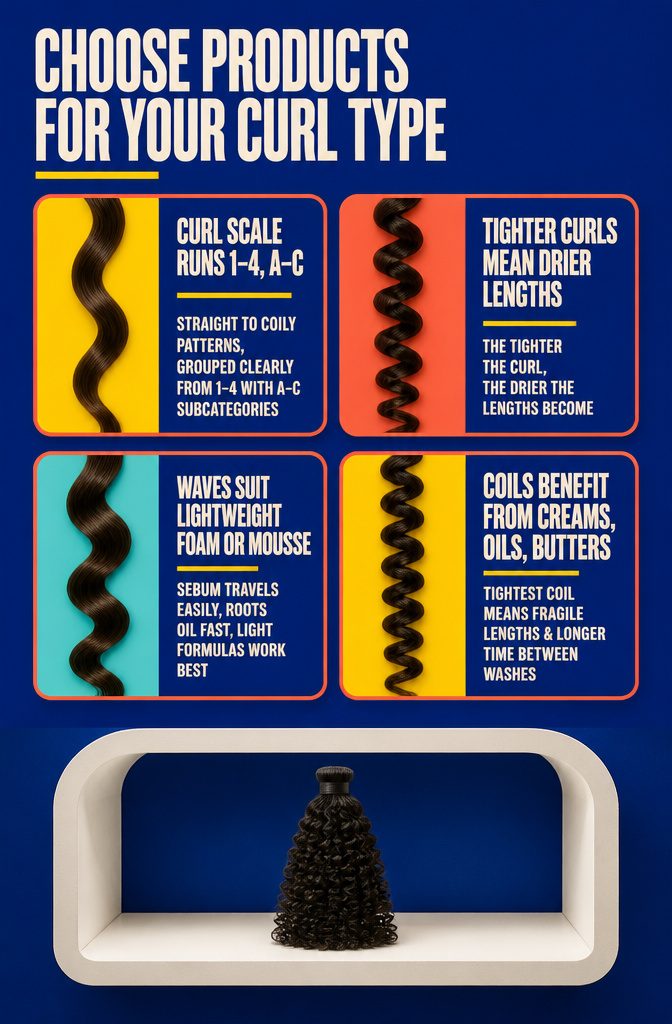
Curl type influences how often you wash and which formulas hold without weighing things down. The numbered scale from 1–4 with A–C subcategories groups patterns from straight to coily, and the tighter the curl, the drier the lengths become.
Wavy hair lets sebum travel down the strand more easily, so roots can look oily fast and benefit from lighter foams or mousses.
Curly hair develops spirals that slow sebum’s path, leaving roots slick but lengths dry and prone to frizz.
Coily hair holds the tightest coil or zigzag shape, making lengths fragile and able to go much longer between washes; richer creams, oils, and butters work better here.
Fine curls need airy products that add hold without drag, while coarse or tight curls take balms that eradicate frizz and shrinkage.
Try a method, watch how your hair responds over a week, and adjust frequency or formula weight from there rather than assuming one routine fits everyone.
Protect curls overnight

Curls that set well on wash day can still wake up flat, kinked in odd places, or frizzy. A loose pineapple, with hair gathered high on top of the head, keeps the pattern off the pillow.
A loose braid works for longer hair, and I’d choose it if a pineapple keeps slipping out overnight. Keep the tie loose either way, since a tight one flattens the very curls it’s protecting.
Friction is the other half. A silk or satin pillowcase lets hair glide instead of catch, which cuts down on breakage and tangles.
If you toss around a lot, a scarf or bonnet does the same job and stays put, because it travels with your head.
Frequently Asked Questions
What is the hair care routine for curly hair?
Cleanse with a sulfate-free shampoo focused on the scalp, condition from mid-length to ends, apply leave-in conditioner while damp, style with curl cream or gel, and blot dry with a soft T-shirt or microfiber towel.
Between washes, refresh curls by misting lightly with water and scrunching to reactivate product.
Can a curly hair routine reduce frizz?
Yes.
Using sulfate-free cleansers, hydrating conditioners, and leave-in products keeps moisture locked in and smooths the cuticle. Blotting with soft fabric instead of rubbing with a terry towel and avoiding heat also prevent frizz from forming.
How do I manage curly hair in winter?
Switch to richer conditioning products and oils when the air is drier, and wash less frequently to preserve natural moisture. Cut back on heat styling and protect curls overnight with a silk or satin pillowcase to reduce breakage.
Why does curly hair need a different routine than straight hair?
Sebum from the scalp has to travel down each twist and turn to reach the ends, and the tighter the curl, the harder that journey becomes.
Straight hair lets oil glide from root to tip without resistance, while curly hair forces it through a maze, leaving lengths dry and prone to frizz.
How long does it take to see results from a curly hair routine?
Small improvements like softer texture and less frizz can show up within a few washes. More significant changes in curl definition and moisture retention typically take a few weeks as the hair adjusts to consistent hydration and gentle handling.
How do you wash curly hair?
Use a sulfate-free shampoo on the scalp only, letting the lather rinse down through the lengths. Condition generously from mid-length to ends, detangle while the conditioner is still in, and rinse with cool water to close the cuticle.
How do you keep curly hair from frizzing?
Apply curl cream or gel to damp hair and scrunch gently to encourage clumps without disturbing the pattern. Blot dry with a soft T-shirt or microfiber towel instead of rubbing, and avoid touching your hair while it dries.
How can you improve natural curls?
Mist curls lightly with water or a curl-refresh spray between washes to reactivate product and bring back definition. Protect curls overnight with a loose pineapple or braid and a silk or satin pillowcase to reduce friction and preserve the pattern.
Does curly hair get curlier as you age?
Curl pattern can shift with age due to hormonal changes, but it doesn’t always get curlier.
Some people find their curls loosen or become coarser, while others notice tighter spirals. Texture changes vary widely from person to person.
Is curly hair the hardest to maintain?
Curly hair requires more moisture management than straight hair because natural oils can’t travel down the strands easily. Once you have a consistent routine built around hydration and gentle handling, maintenance becomes straightforward rather than difficult.
What not to do with curly hair?
Don’t brush or detangle dry curls, as this causes breakage and frizz. Avoid sulfate shampoos that strip moisture, rubbing with a terry towel, and touching your hair while it dries, all of which disrupt the curl pattern.