Hair growth for men comes down to two FDA-approved medications: over-the-counter minoxidil, applied twice daily, and prescription finasteride, which lowers DHT.
Neither works on scarred follicles, and stopping either one usually costs you the gains within 3–4 months. Expect 6–12 months of daily use before the results are visible.
Why Hair Loss Happens and Which Kind You May Have
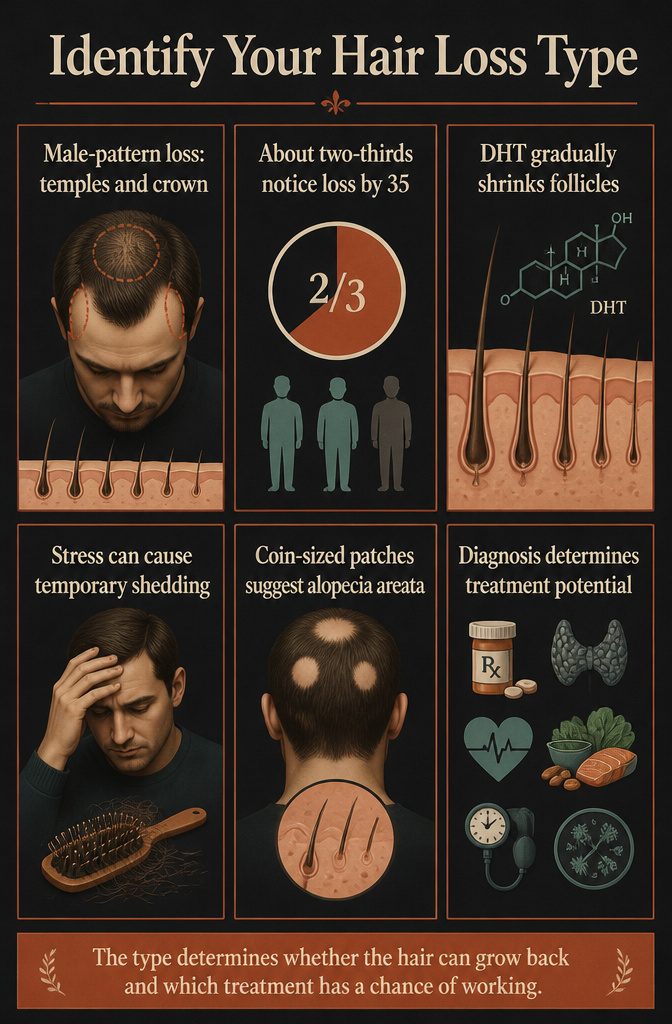
Male-pattern hair loss is the kind most men see: temples recede, the crown thins, and the process follows genetics and a hormone called DHT that shrinks hair follicles over time.
About two-thirds of men notice some hair loss by 35, and approximately 85% experience some degree of male-pattern loss during their lifetime.
By age 80, around 80% of men have male-pattern baldness. Over 50 million US men develop androgenetic alopecia.
But genetics are not the only driver. Telogen effluvium causes temporary mass shedding after stress, illness, or fever.
Alopecia areata is an autoimmune condition that attacks follicles in coin-sized patches. Medications for high blood pressure, heart conditions, gout, and acne can trigger hair loss.
So can thyroid issues, nutritional deficiencies, and fungal infections like ringworm. The type determines whether the hair can grow back and which treatment has a chance of working.
Whether Regrowth Is Possible in Your Case
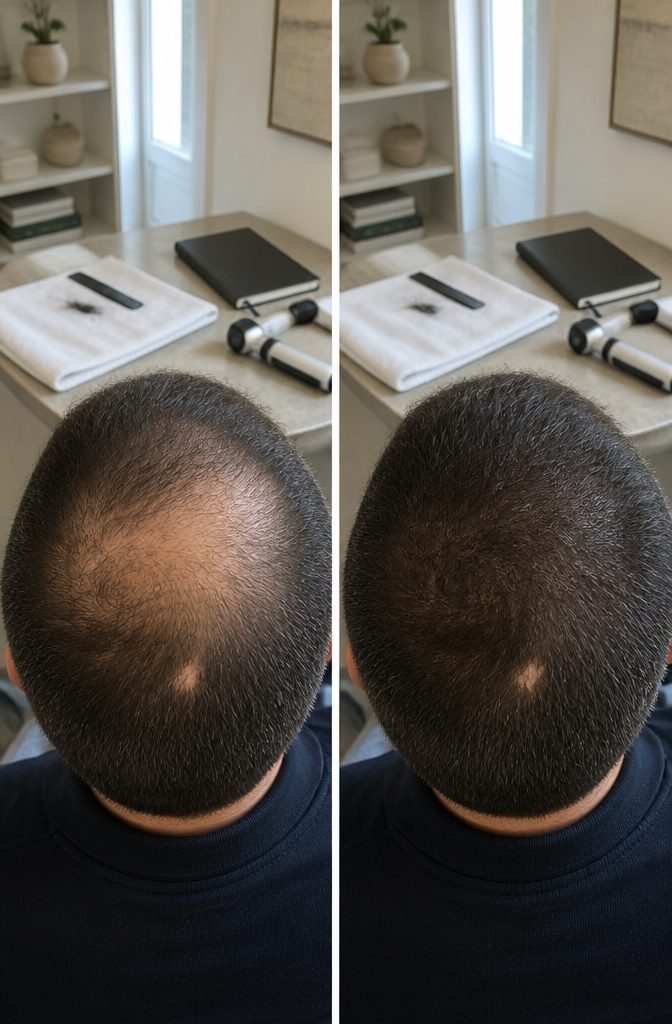
Whether hair comes back depends first on scarring. In non-scarring loss the follicle is still alive, and almost all of it can be reversed or at least improved.
Once a follicle has scarred and died, nothing brings it back. Burns and serious infections are more likely to cause that, and minoxidil and finasteride are unlikely to help scalp damage such as scars from staples after a head injury.
Stress or a change in nutrition usually lets hair regrow once the cause is fixed.
Hereditary loss is the timing case: early treatment may bring hair back, but male-pattern loss that has run for decades rarely returns a large amount. I’d start sooner rather than later.
How to Choose a Treatment Plan That Fits
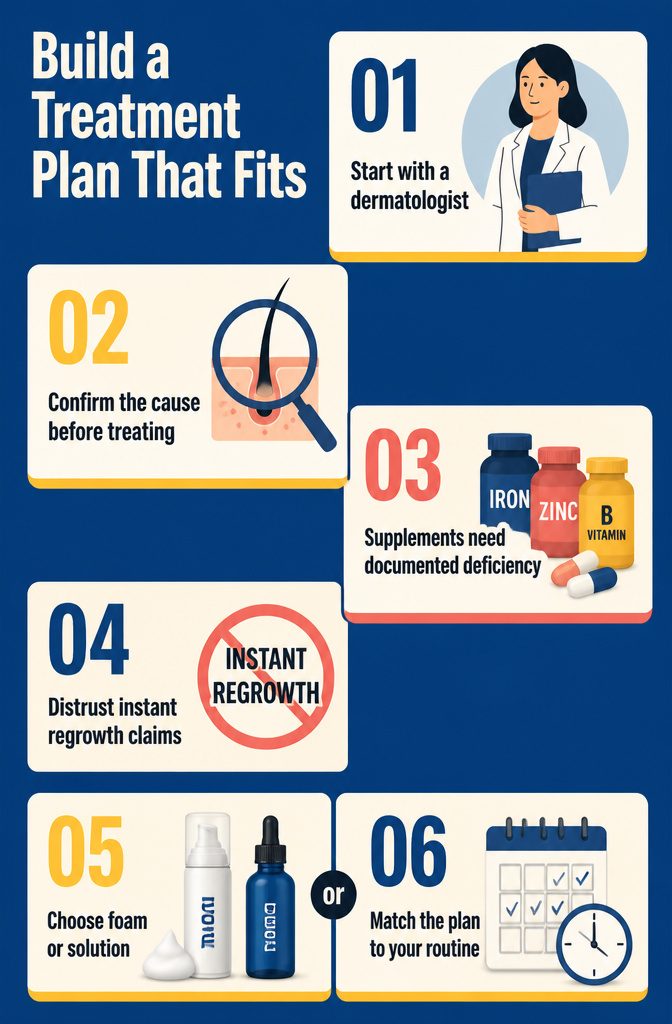
Start by talking to a dermatologist or health care professional.
The treatment that works depends on the correct diagnosis, and guessing the cause before you know it wastes time and money on things that may not help your particular type of hair loss.
A clinician can identify whether you are dealing with androgenetic alopecia, inflammation, a nutritional deficiency, or something else entirely, then help you choose a treatment plan that targets the actual problem.
Supplements marketed for hair growth rarely carry evidence behind them unless you have a documented deficiency in vitamin B, iron, or zinc.
Without that deficiency, the science backing those products thins out fast, and combo formulas make it impossible to tell which ingredient does what.
Be skeptical of products promising instant regrowth or guaranteed results. Those exaggerated claims often signal unregulated formulas that can irritate the scalp or make things worse.
Treatment fit also comes down to lifestyle and personal preference. Some people prefer solution formulas because they can target specific areas of the scalp; others pick foam because it is less messy.
One plan will not fit everyone, and a professional can walk you through what makes sense for your pattern, your goals, and how much hassle you are willing to take on.
Minoxidil and Finasteride: The Two FDA-Approved Medications
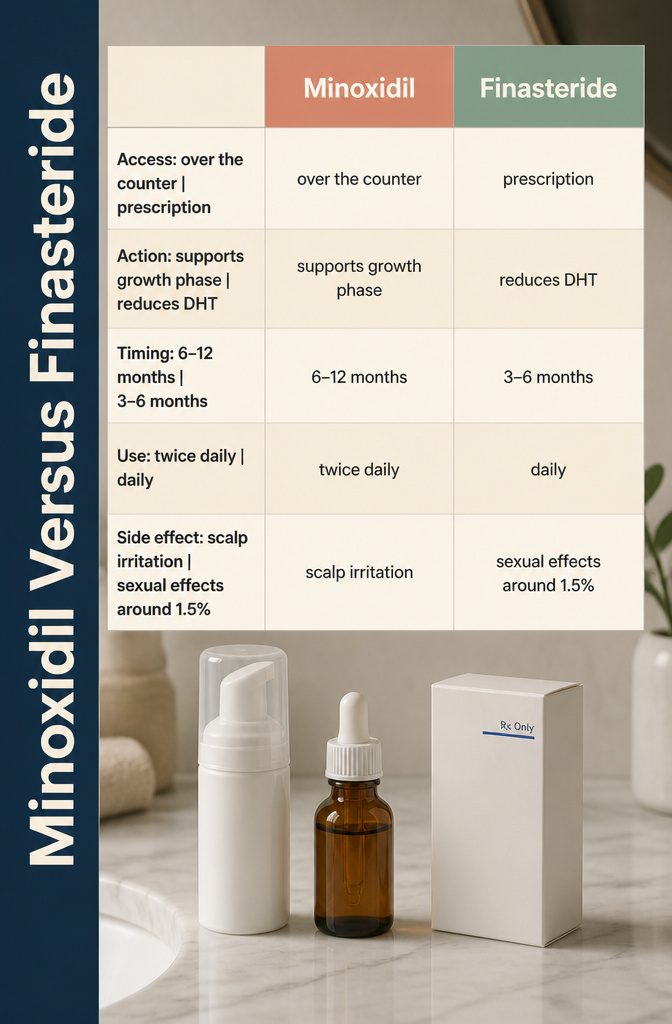
Minoxidil is the over-the-counter option: a topical treatment you apply twice daily that helps blood flow to the scalp and keeps hair in its growth phase longer. The highest OTC concentration sits at 5%, available as a foam or solution.
Finasteride takes the prescription route, working by reducing DHT, the hormone that shrinks follicles. Trials reported sexual side effects in around 1.5% of men, with resolution after stopping in over 99% of cases.
Both can be used alone or together.
Expect results in 6 to 12 months for minoxidil, 3 to 6 months for finasteride, or up to a year when combining them. Consistency matters: stopping either one typically means losing gains within three to four months.
Common downsides include initial shedding, scalp irritation from minoxidil, and the rare chance of lasting effects from finasteride. The combination approach often wins for advanced thinning, but both demand daily use and patience before anything visible happens.
Hair Transplants: FUT, FUE and What to Expect
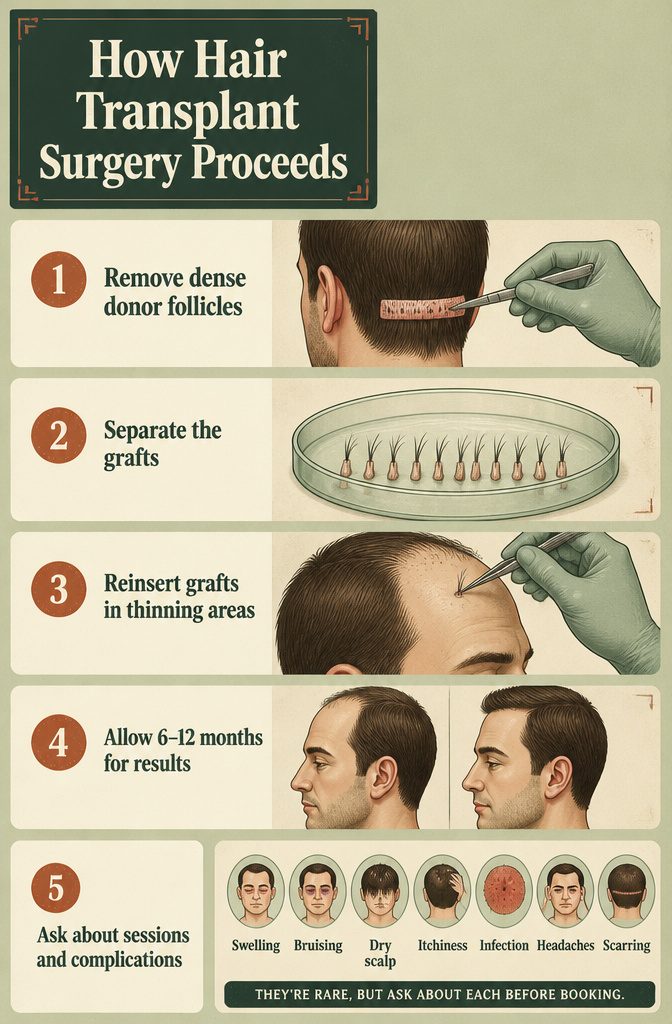
FUT, also called strip harvesting, is the classic method. A surgeon removes a strip of skin from the back of the scalp, where hair is dense, then separates the follicles and reinserts them where hair has thinned.
FUE skips the strip and takes follicles directly from the scalp. Both are grafting, done outpatient under anesthetic.
Scalp reduction cuts away bald skin so hair-bearing skin stretches over the gap. It can shrink the bald area by as much as half but does nothing for the frontal hairline, so I’d rule it out there.
Expect 6 to 12 months before results show, and some men need more than one session.
Swelling, bruising, dry scalp, itchiness, infection, headaches and scarring are possible. They’re rare, but ask about each before booking.
Red-Light Therapy, PRP and Other Procedures
Red-Light Therapy, PRP and Other Procedures
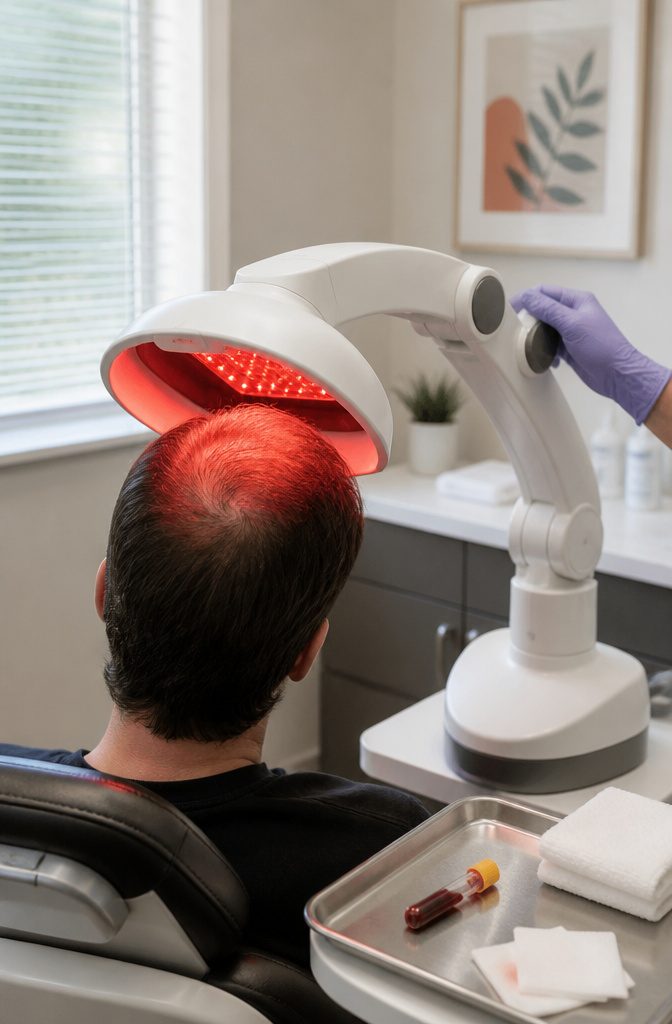
Low-level laser therapy sits somewhere between home care and surgery.
The idea is that red light reduces inflammation in the follicle, which can help in cases like alopecia areata. A 2023 study involving 53 people found LLLT safe and effective for male pattern hair loss, and a 2021 review reached the same conclusion.
That’s promising, but the evidence base is still thin. A 2019 review called for more research, which tells you where this stands: not experimental, not yet fully proven.
Platelet-rich plasma is another option, though the research varies more by treatment. I’d put both in the category of things to discuss with a dermatologist after you’ve thought through medication and transplant options, not as substitutes for either.
Supplements and Natural Remedies: What the Evidence Shows

The evidence here is limited and uneven, especially if you have no confirmed deficiency.
Saw palmetto slowed hair loss in studies that checked participants after four months and again at two years, with regrowth in about 30% of men in one trial.
An ashwagandha serum improved hair growth and density after 75 days, though the study included different types of hair loss and did not specify how much men with androgenic alopecia improved.
Rosemary oil matched minoxidil after six months. Pumpkin seed oil showed a 40% increase in hair count after 24 weeks in 76 men, compared with 8% on placebo.
Tea tree oil ran for 32 weeks in 30 men, and mixed vitamin E showed improvement after eight months in 17 participants. Biotin has been tested mostly in women with a biotin deficiency, leaving little evidence that supplementing does much without one.
Shampoos, Scalp Care and Hair Practices That Help
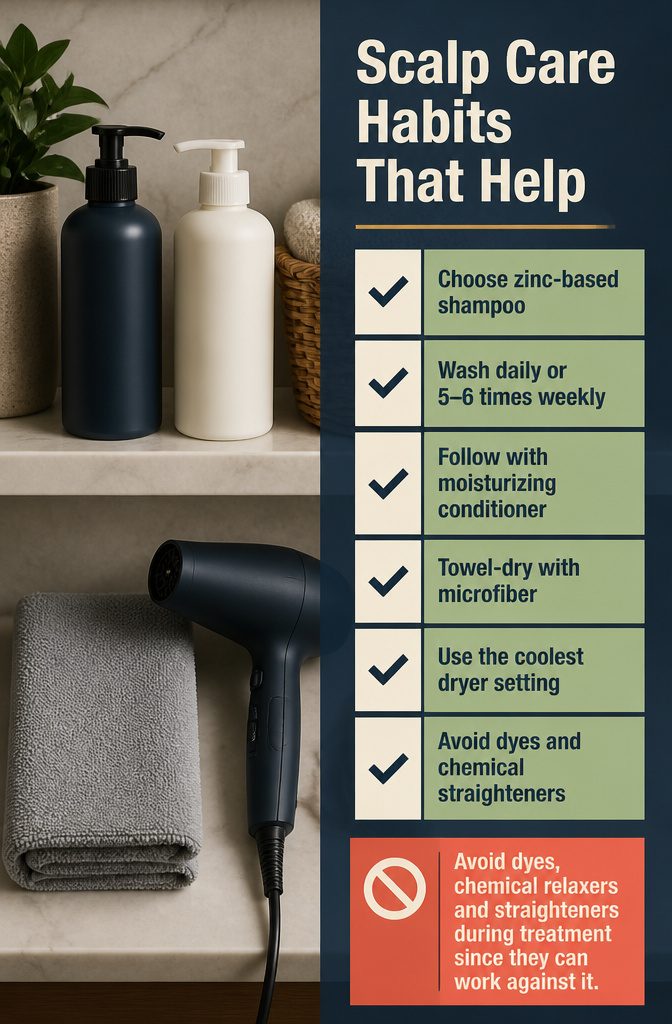
Inflamed follicles can start shedding hair, so I’d start with a zinc-based shampoo. Washing daily or 5 to 6 times a week was beneficial in a 2021 study of Asian populations, though some people do fine washing once or twice weekly.
Follow with a moisturizing conditioner, towel-dry with microfiber, and keep the blow dryer on its coolest setting. Skip hot oil treatments and limit flat irons.
Avoid dyes, chemical relaxers and straighteners during treatment, since they can work against it. Rosemary is promising but unproven: a 1% herbal lotion increased hair growth in a 2021 mouse study, and human studies are still needed.
How Long Results Take and Why Consistency Matters
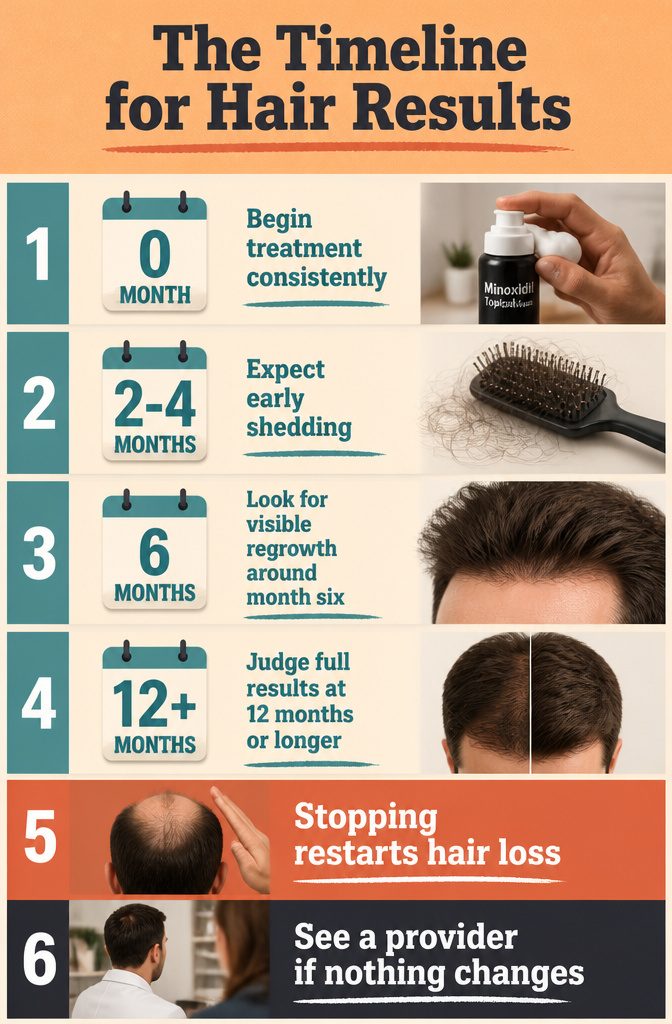
Finasteride takes about 3 to 6 months to slow shedding or bring in new hair, and Regaine can show results in 2 to 4 months.
Visible regrowth usually lands around month 6, and full results often take 12 months or longer. Some minoxidil products run 6 to 12 months, so I’d judge them on a full year.
Shedding can spike early, especially with minoxidil.
That usually means follicles are starting a new growth cycle, so don’t quit in week four. New hairs come in soft and light before they thicken.
Stopping is the costly mistake: hair loss starts again once treatment ends. If nothing has changed after several months, see a provider.
When to See a Doctor or Dermatologist
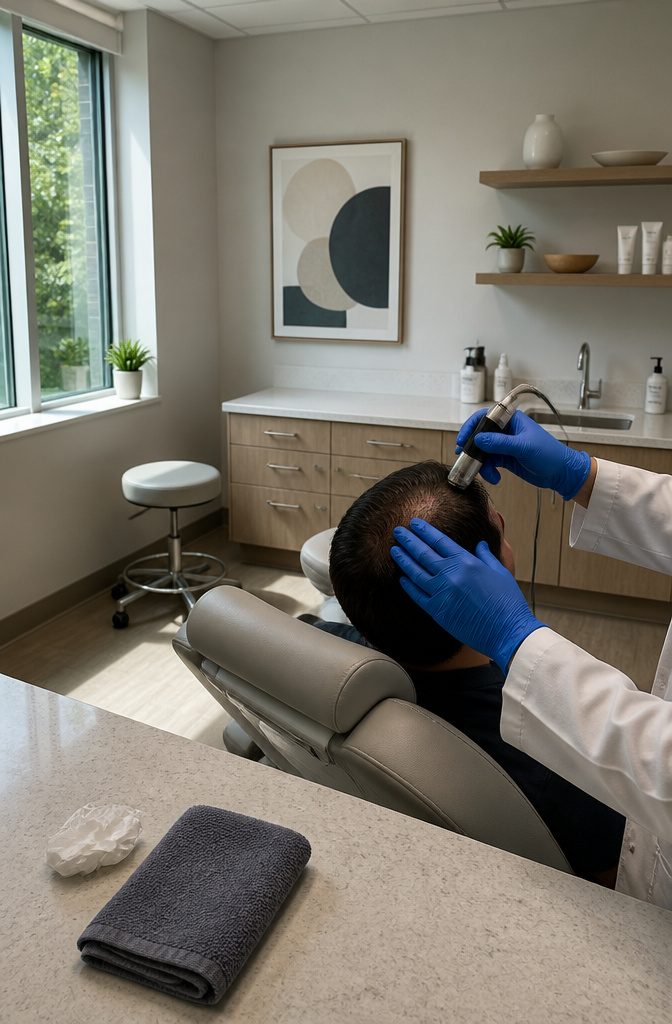
Hair that falls out suddenly, in patches, or with pain, itching, scalp sores or a new rash needs a doctor before it needs minoxidil.
Thyroid problems, scalp infections and alopecia areata can all look like ordinary thinning, and standard male-pattern treatments will not fix them. Some blood pressure and gout drugs, and isotretinoin, can also cause shedding.
I would book a visit if the cause is unclear, if several months of treatment show nothing, or if side effects worry you.
In trials, around 1.5% of men on finasteride reported sexual side effects, and minoxidil can irritate the scalp. A dermatologist confirms the diagnosis, picks the treatment and checks that any medication or supplement is safe for you.
Lifestyle Measures That Support Treatment
Hair is part of how a man looks and presents himself, so losing it can wear on confidence, and stress can feed shedding in return.
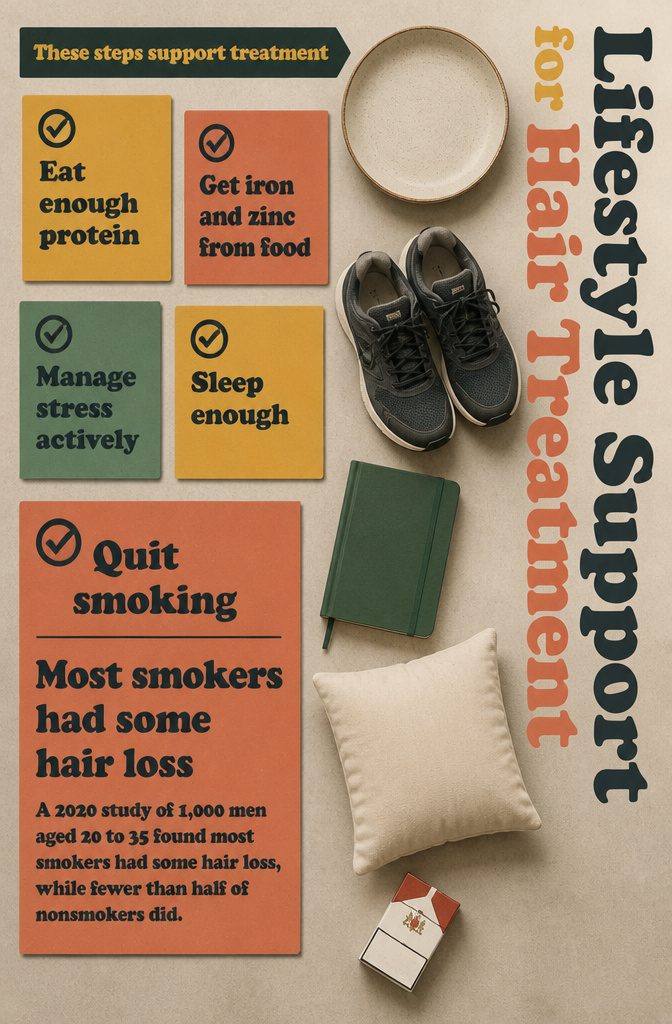
None of these steps is a regrowth treatment, but they give medical treatment a better footing:
- Eat a balanced diet with enough protein, and get iron and zinc from food.
- Manage stress with exercise, time with friends, a new hobby or mindfulness.
- Sleep enough, since good sleep helps any treatment work better.
- Quit smoking. A 2020 study of 1,000 men aged 20 to 35 found most smokers had some hair loss, while fewer than half of nonsmokers did.
Smoking is the one habit here with a number attached to it.
If you smoke, quitting may help decrease hair loss.
If you smoke, I’d start there, because the benefit reaches well past your scalp.
Daily Hair Loss: How Much Is Normal
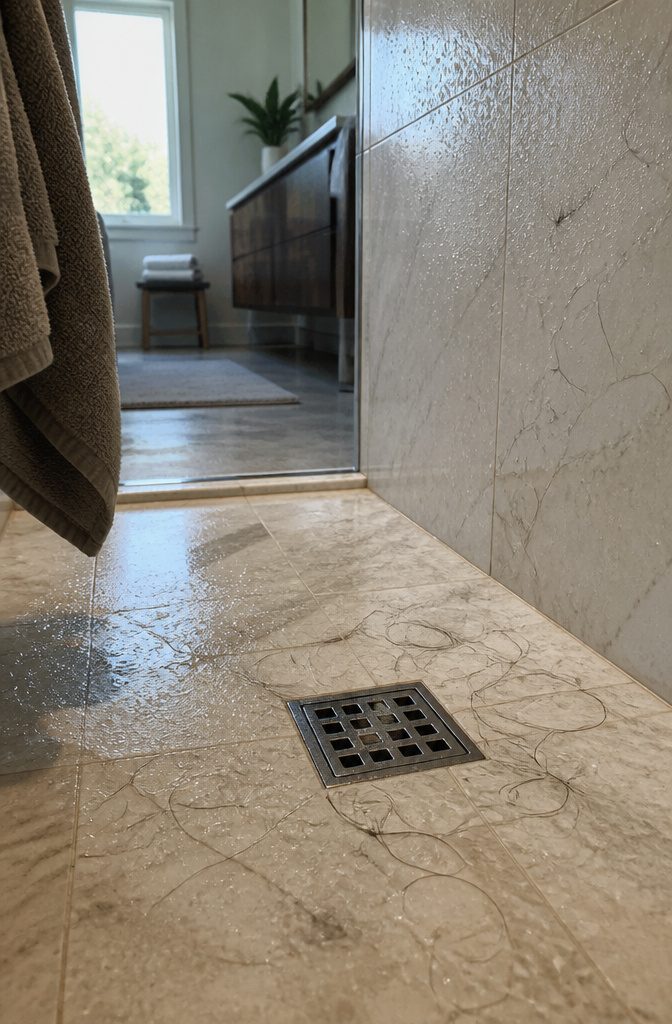
Your body sheds hair every day, and the figure most doctors cite is 50 to 100 hairs daily as normal range.
That can vary by person, though. What you’re watching for is a change from your own baseline: noticeably more in the shower drain, more on your pillowcase, thinning at the crown or temples that wasn’t there six months ago.
If you see increased shedding or thinning beyond what’s been normal for you, report it to a dermatologist or primary care physician.
Starting treatment promptly gives you the best shot at slowing loss and preserving what you still have. Men who act when they first notice the shift tend to see better results than those who wait until the thinning becomes obvious.
Hair follicles that have been dormant too long become harder to wake up, so catching it early matters.
Combining Treatments and What to Ask First
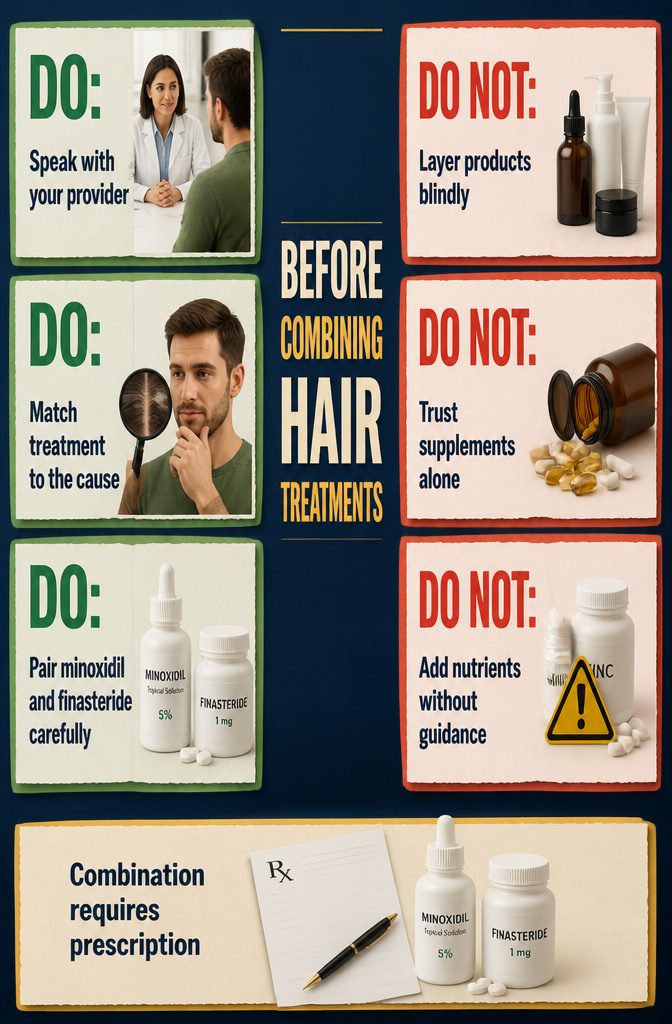
Combining treatments may help, but speak with your health care provider before layering anything. Hair loss often has more than one cause, and a multi-pronged approach can work better than a single option.
Many dermatologists recommend pairing minoxidil and finasteride, since minoxidil works at the scalp to regrow hair while finasteride addresses the hormone that drives thinning. The combination is available only by prescription.
Supplements are a different story. Much of the research suggests combinations of ingredients might offer some benefit, but studies so far are limited and most supplements work best alongside proven treatments rather than alone.
Too much of certain nutrients can actually cause hair loss. That risk alone makes professional input worth having before you add anything to the regimen, prescription or not.
Frequently Asked Questions
What works for hair growth for men?
Minoxidil (over the counter) and finasteride (prescription) are the two FDA-approved medications, and both can work when used daily for months.
Hair transplants are the surgical route, and red-light therapy looks promising but the evidence is still thin. No option works for everyone, so a dermatologist can match the treatment to your type of hair loss.
How long does it take for hair growth treatments to work?
Expect 6 to 12 months for minoxidil and 3 to 6 months for finasteride, or up to a year when you combine them.
Full results often take 12 months or longer. Extra shedding early on is common, especially with minoxidil, and usually means follicles are starting a new growth cycle.
Can a man’s hair grow back?
Often yes, as long as the follicle is still alive. Loss from stress, illness or poor nutrition usually reverses once the cause is fixed, and early treatment can bring back hair in hereditary loss.
Follicles that have scarred and died cannot be revived, and male-pattern loss that has run for decades rarely returns in large amounts.
Medications only hold their gains while you keep using them; stopping typically means losing the new hair within 3 to 4 months.
Can I use multiple hair loss treatments at the same time?
Yes, and many dermatologists pair minoxidil with finasteride because one works at the scalp while the other targets the hormone behind thinning.
The combination often does better for advanced thinning. Talk to your health care provider before layering anything, since the combination requires a prescription and too much of certain nutrients can cause hair loss.
What is the best DHT blocker for men?
Finasteride is the FDA-approved choice. It lowers DHT, the hormone that shrinks follicles, and is available by prescription.
Dutasteride is used off-label and may be more effective in some studies. In finasteride trials, about 1.5% of men reported sexual side effects, and over 99% of those cases resolved after stopping.
Can supplements help treat hair loss in men?
Only when you have a documented deficiency in vitamin B, iron or zinc; in that case correcting it often improves hair.
Without a deficiency, the evidence is weak, and combination formulas make it impossible to tell which ingredient does what. Supplements can also cause side effects or interact with medications, so check with a health care professional first.
How much hair loss is normal?
Most doctors cite 50 to 100 hairs a day as a normal range, though it varies from person to person.
Watch for a change from your own baseline, such as more hair in the shower drain or on your pillowcase, or thinning at the crown or temples that was not there 6 months ago.
What is the best way to stop early hair loss?
Start treatment soon after you notice increased shedding or thinning.
Men who act at the first shift tend to see better results than those who wait until thinning is obvious, because follicles left dormant too long are harder to wake up. A dermatologist can confirm the cause before you begin.
What are the early signs of male pattern baldness?
Receding temples and a thinning crown are the classic signs. You may also see more hair in the drain or on your pillow than usual.
Hair that falls out suddenly, in patches, or with pain, itching or scalp sores points to something other than ordinary pattern loss and needs a doctor.
Is hair loss genetic?
Largely, yes. Male-pattern loss follows genetics and the hormone DHT, which shrinks follicles over time, and over 50 million US men develop it.
A relative’s hair loss does not mean every family member will lose hair, and stress, medications, thyroid issues and nutritional gaps can also play a role.
Does aging always cause hair loss?
No, but it is very common.
Roughly 85% of men experience some male-pattern loss in their lifetime, and around 80% have it by age 80. That leaves a minority who keep their hair, and sudden shedding at any age can have causes unrelated to getting older.
Does wearing a hat cause hair loss?
There is no scientific evidence that regularly wearing a hat directly causes hair loss.
Studies are mixed, though very tight, warm hats could stress follicles. If you are worried about thinning, pick a hat that is breathable and not too tight.