Not every style survives every face or every growth pattern.
Disconnect styles call for a razor every few days or the gap fills in and the look collapses. Handlebar ends demand wax and finger time each morning once the length arrives.
Patchy cheek growth stays hidden in styles that leave those areas shaved, like the goatee or Van Dyke, but shows through in a classic full beard where coverage across the face matters.
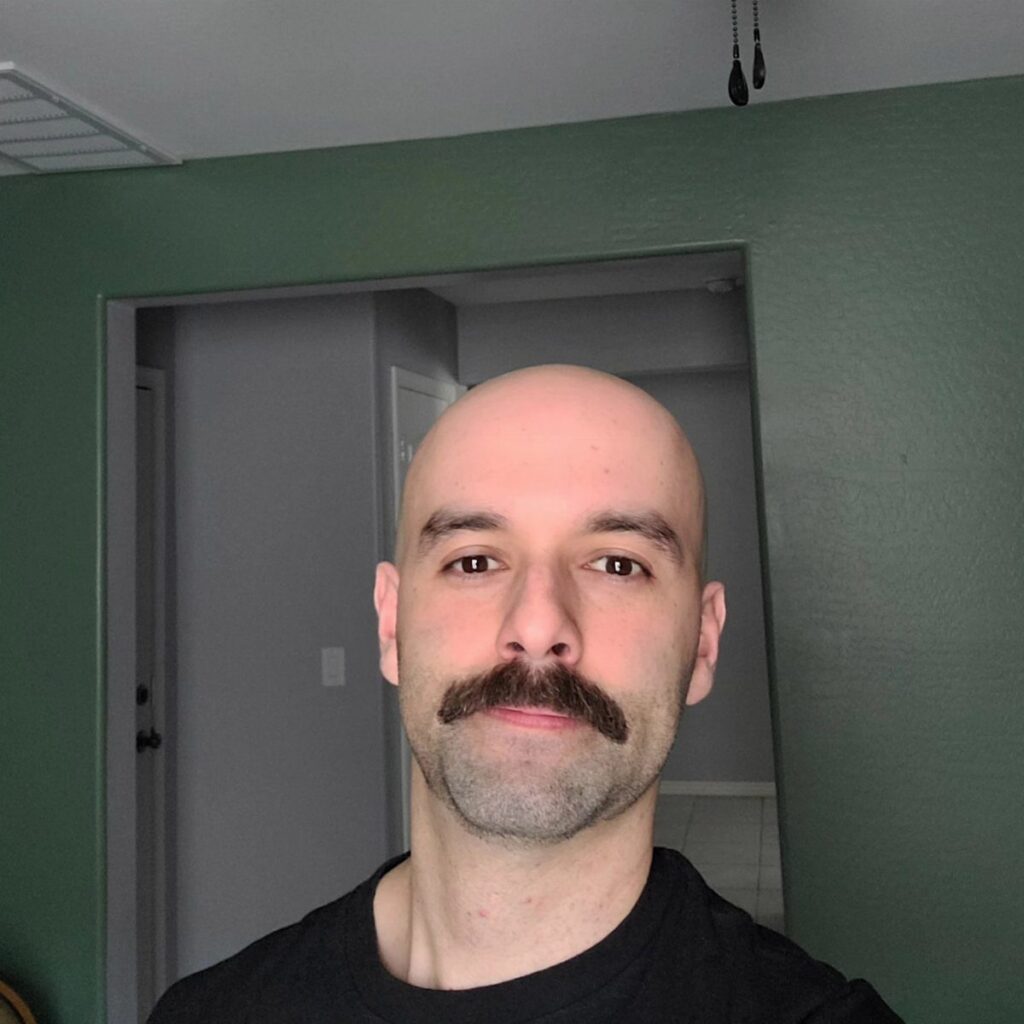
1. Chevron Mustache
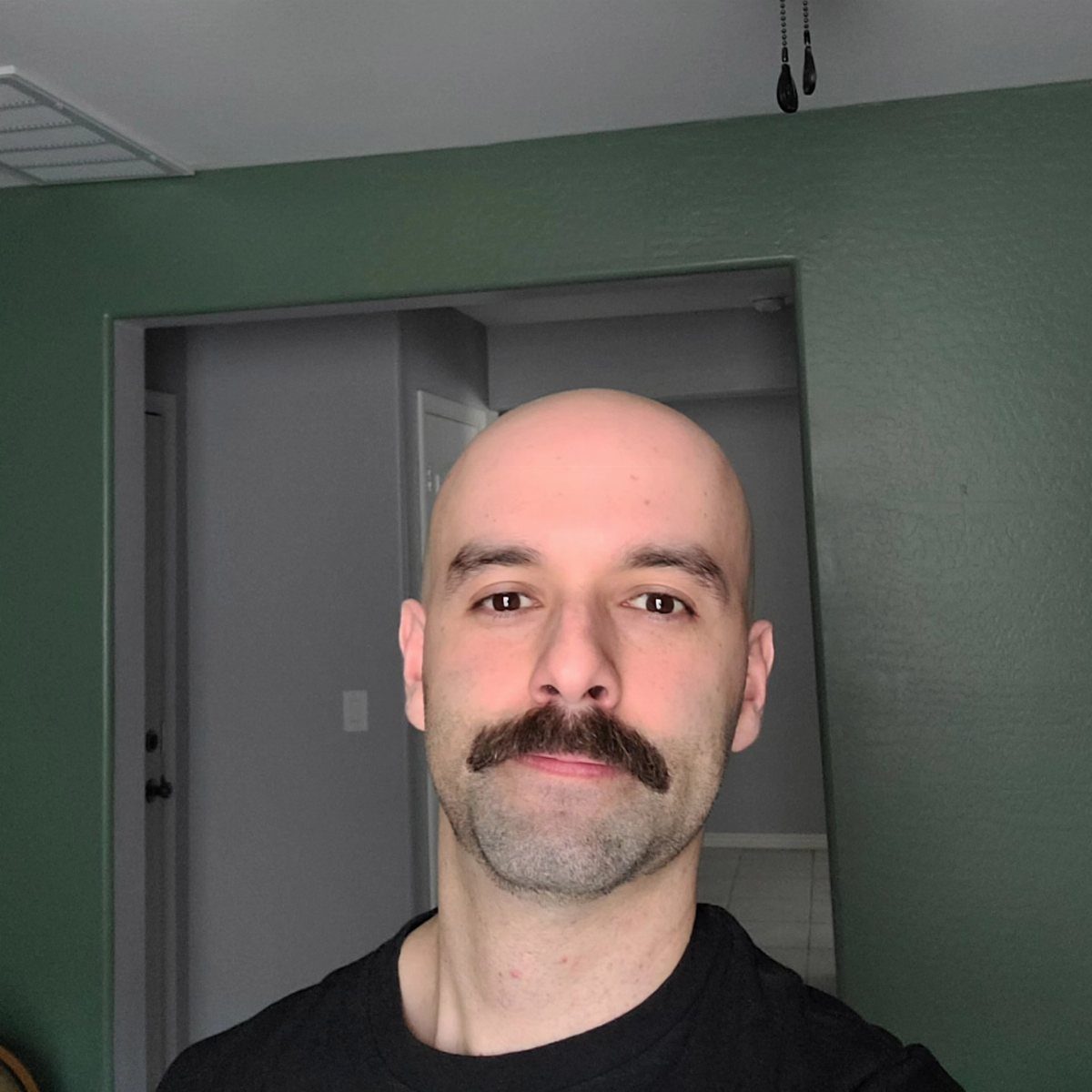
It follows the natural curve of the mouth, covering the full width of the upper lip and ending where the corners meet. Growth has to reach the lip line, which takes time from a clean shave.
The width suits faces with balanced proportions. Narrower faces can pull it off if the mustache is kept dense rather than sparse.
Trimming the bottom edge keeps it from crossing the lip.
Scissors work better than clippers for that line. Wax holds it in place if the hair grows forward or tends to spread.
2. Handlebar Mustache
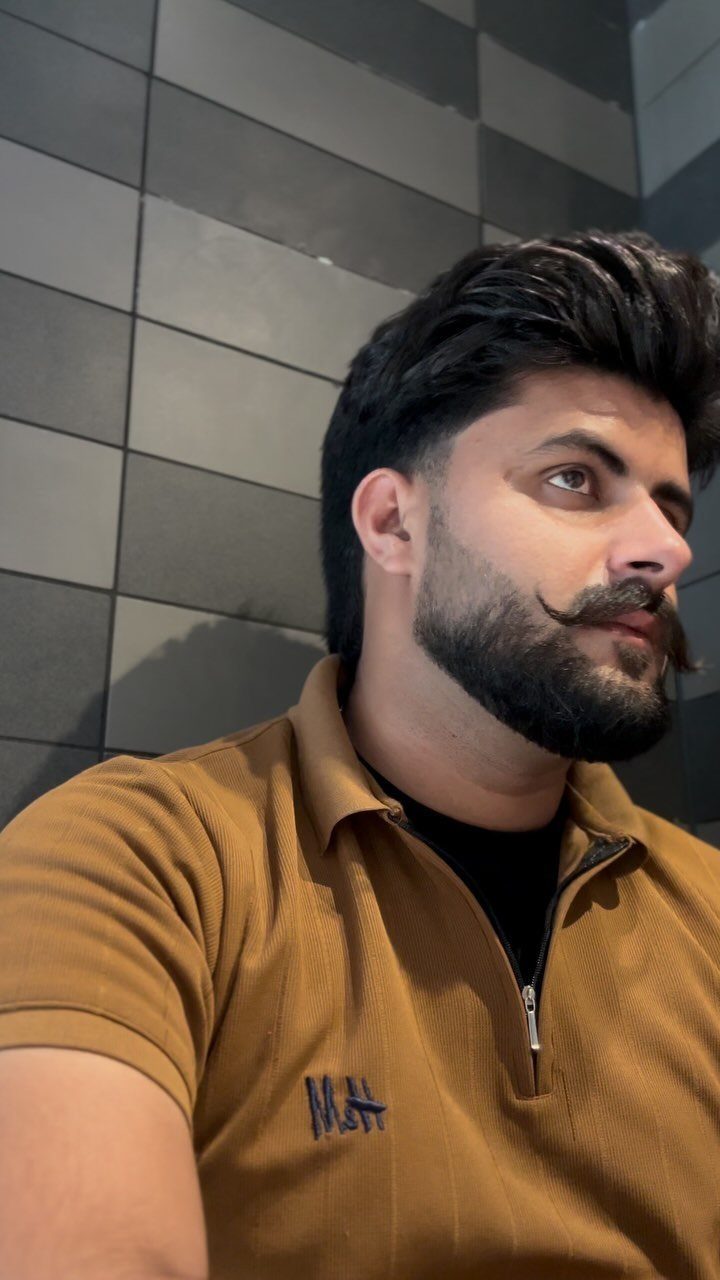
The ends grow past the corners, then twist and curl upward away from the mouth. That length takes 3–4 months to develop, and training the curl with wax becomes part of the daily routine.
Handlebar works best on men with thick, straight-to-wavy mustache growth. Fine or patchy hair struggles with the shape, and the curled ends lose definition by midday.
Styling takes time: apply wax to the ends, twist them upward, and let the wax set. The beard below can stay full or be trimmed shorter to keep focus on the mustache.
3. Horseshoe Mustache
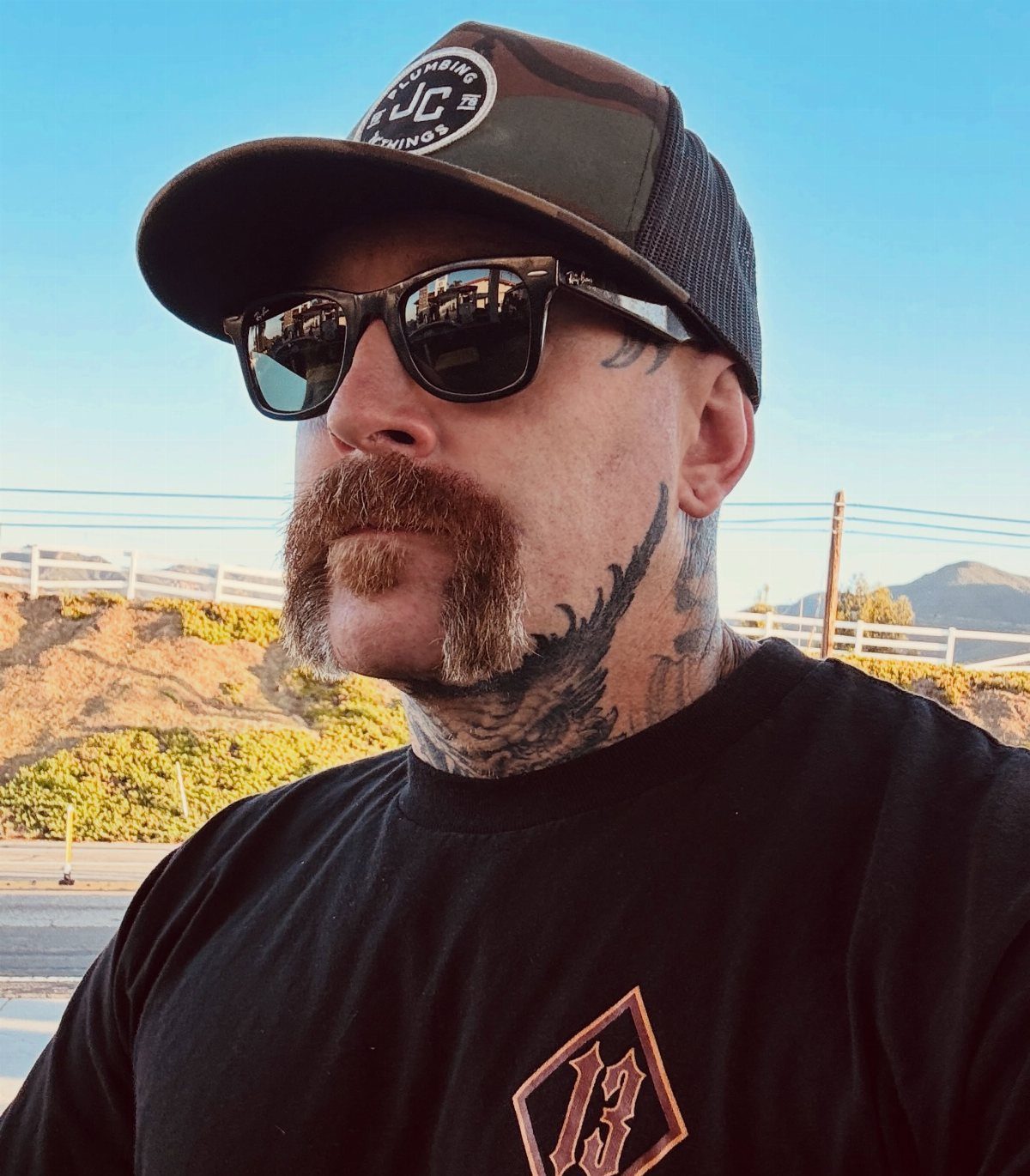
It runs across the upper lip, then 2 vertical sections drop down past the corners and extend toward the jawline. Cheeks and sideburns are shaved clean, leaving only the mustache and its downward bars.
This read works best on angular or square faces. Rounder faces can wear it if the bars are kept narrow.
Length on the dropping sections varies.
Some men stop them at the jaw, others let them reach the chin. Trimming keeps the edges sharp, and the style grows out fast if you change your mind.
4. Chevron Beardstache

A full mustache pairs with a short beard, usually kept at stubble length or slightly longer. The mustache is thicker and more prominent than the beard, which stays trimmed flat against the skin.
The contrast works when mustache growth is denser than cheek growth. Men with patchy beards can use this to their advantage: the stubble softens the jawline without needing full coverage, and the mustache does the visual work.
Clippers at a 1–3 guard maintain the beard, while the mustache grows freely and gets trimmed only at the edges. Upkeep is twice a week for the beard, weekly for the mustache.
5. The Horseshoe
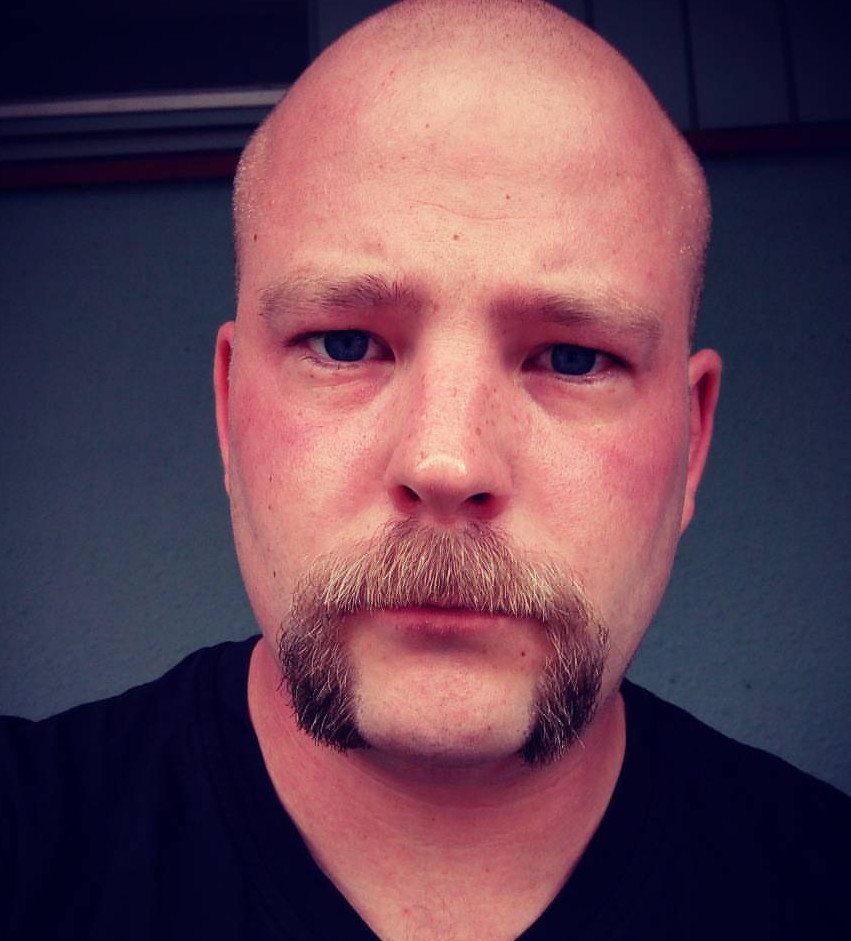
The mustache drops along the corners of the mouth but stops short of the chin, creating a partial frame around the mouth. Cheeks and sideburns are shaved, and the bars are narrower than the full horseshoe.
This version suits men who want the vertical line but prefer lighter upkeep and a shorter drop. Trimming is simpler, and the look stays contained.
Bar width can be adjusted.
Narrower bars suit longer faces, wider ones balance shorter faces. Clippers or scissors keep the bottom edge even, and the style reads cleaner when the bars are symmetrical.
6. Walrus Mustache
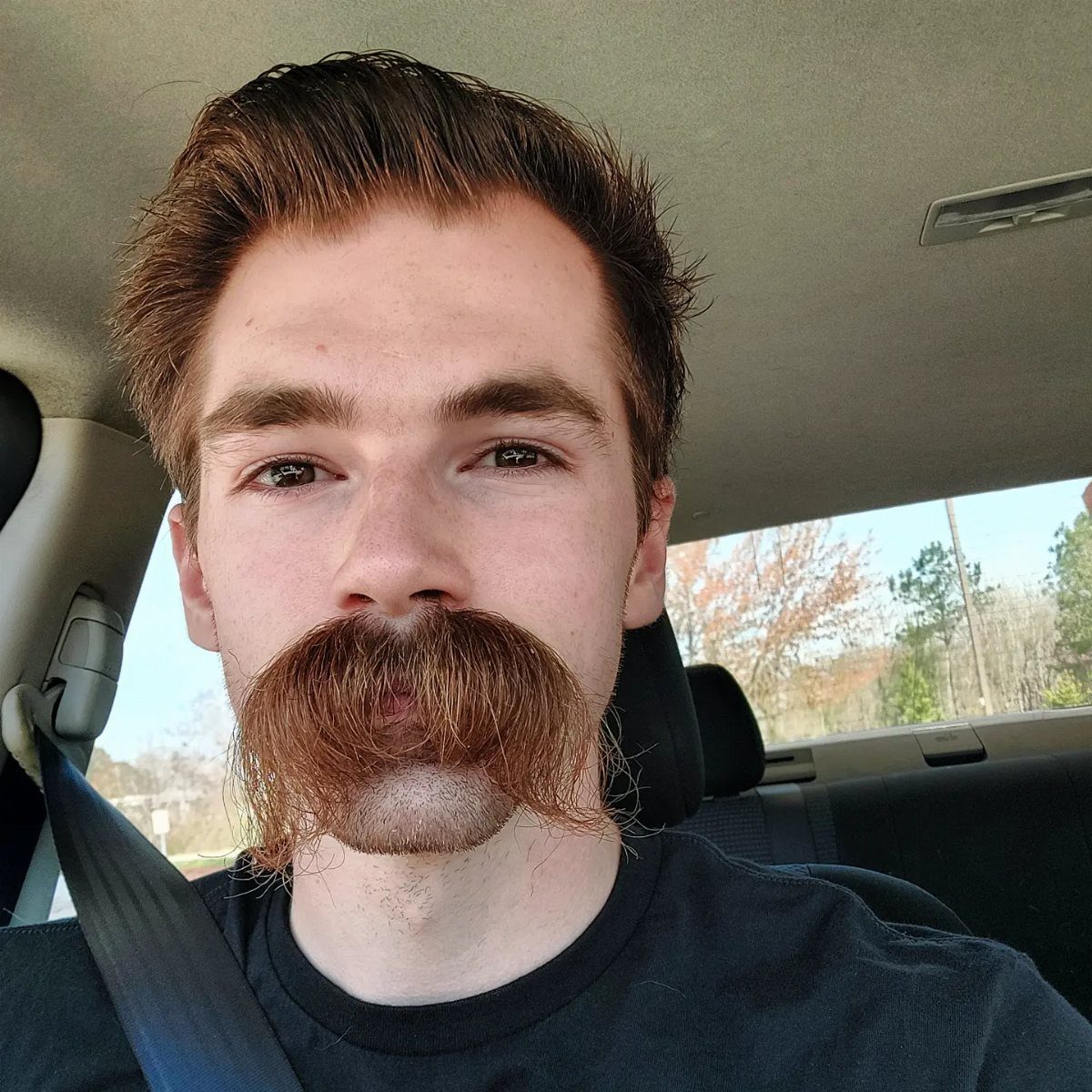
The mustache grows dense and wide, covering the upper lip and often hanging over it. The ends may extend past the mouth corners or stop at them, based on growth length.
This style needs thick, fast-growing mustache hair. Fine or sparse growth will not fill out the shape, and the drape across the lip requires length that takes time to develop.
Minimal trimming keeps the shape natural.
Some men comb it daily to encourage downward growth, others let it grow without intervention. The weight of the hair pulls it down naturally once it reaches a certain length.
7. Stubble Beard
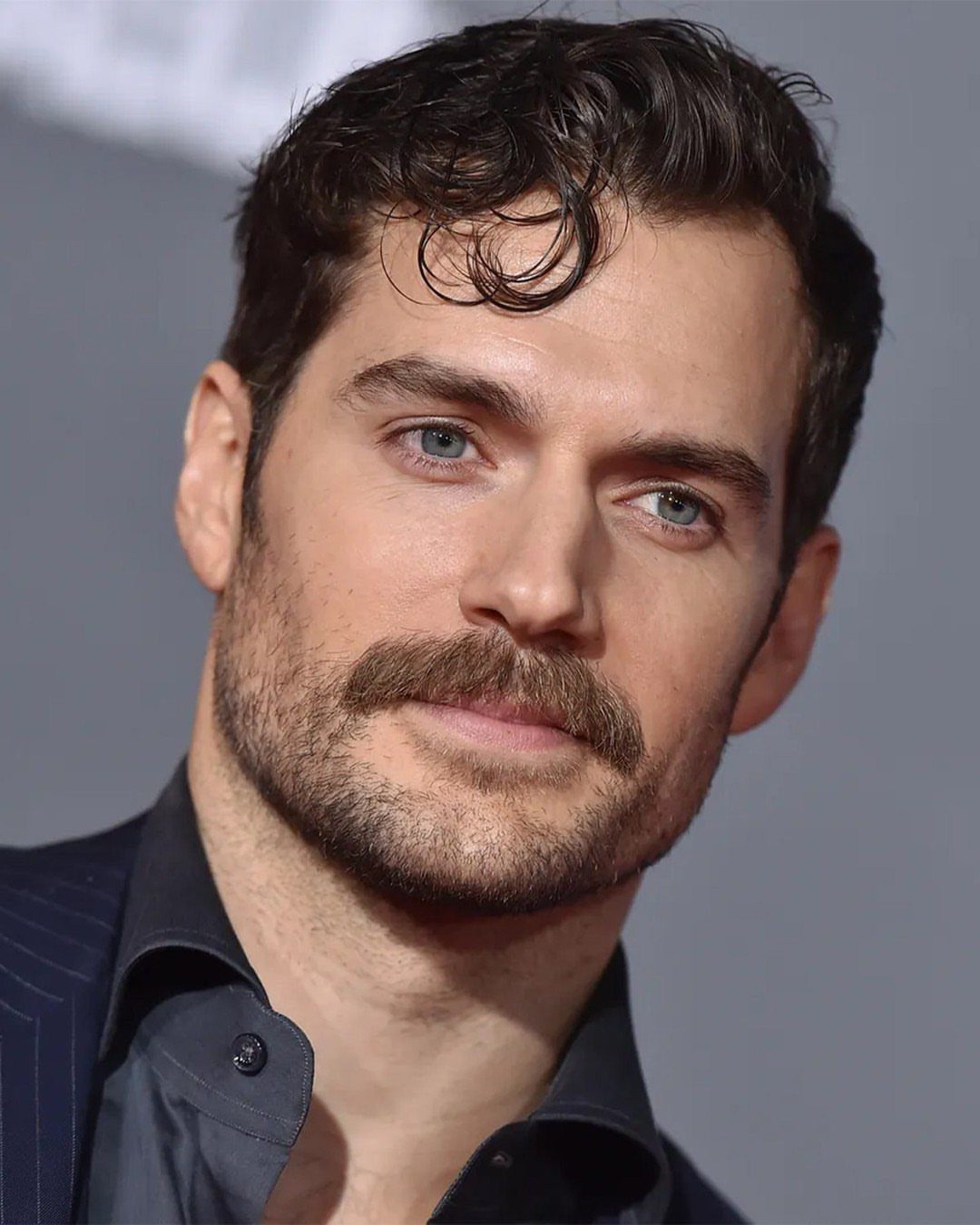
The beard sits at stubble length, enough to define the jawline without needing daily work. The mustache grows thicker and longer, creating contrast without sharp lines or careful shaping.
This suits men who want facial hair that does not require precision. Growth can be uneven in spots and still read intentional because nothing is being carved into a shape.
Run clippers without a guard across the beard every few days to keep it from turning into a full beard. Trim the mustache when it crosses the lip or starts catching food.
8. Van Dyke
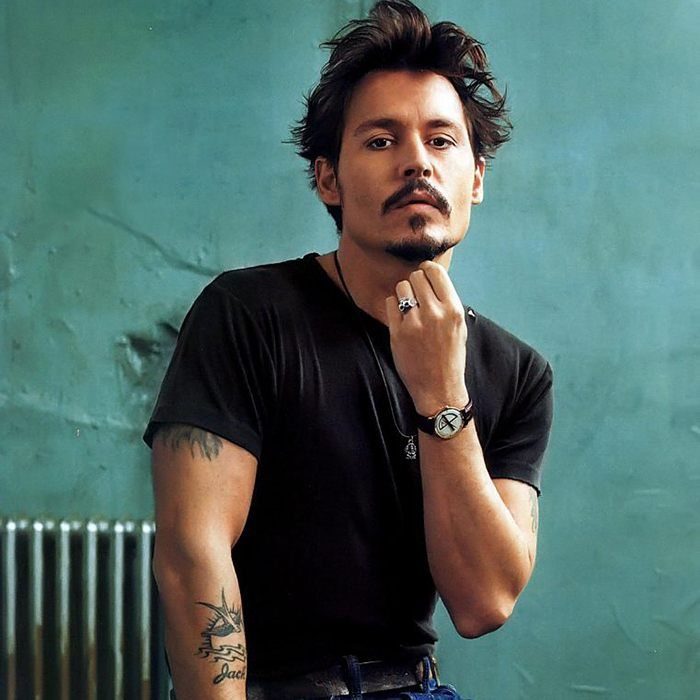
The mustache and chin beard grow separately, with shaved skin between them and along the cheeks. The chin portion tapers to a point or stays rounded, depending on how the hair is shaped.
Square and rectangular faces benefit from the vertical focus. The gap between mustache and beard makes rounder faces appear longer.
Cheeks need regular shaving to maintain the separation.
The chin beard can be trimmed with scissors to hold the point or clippers to keep it uniform. Connecting the 2 pieces turns this into a different style entirely.
9. Goatee
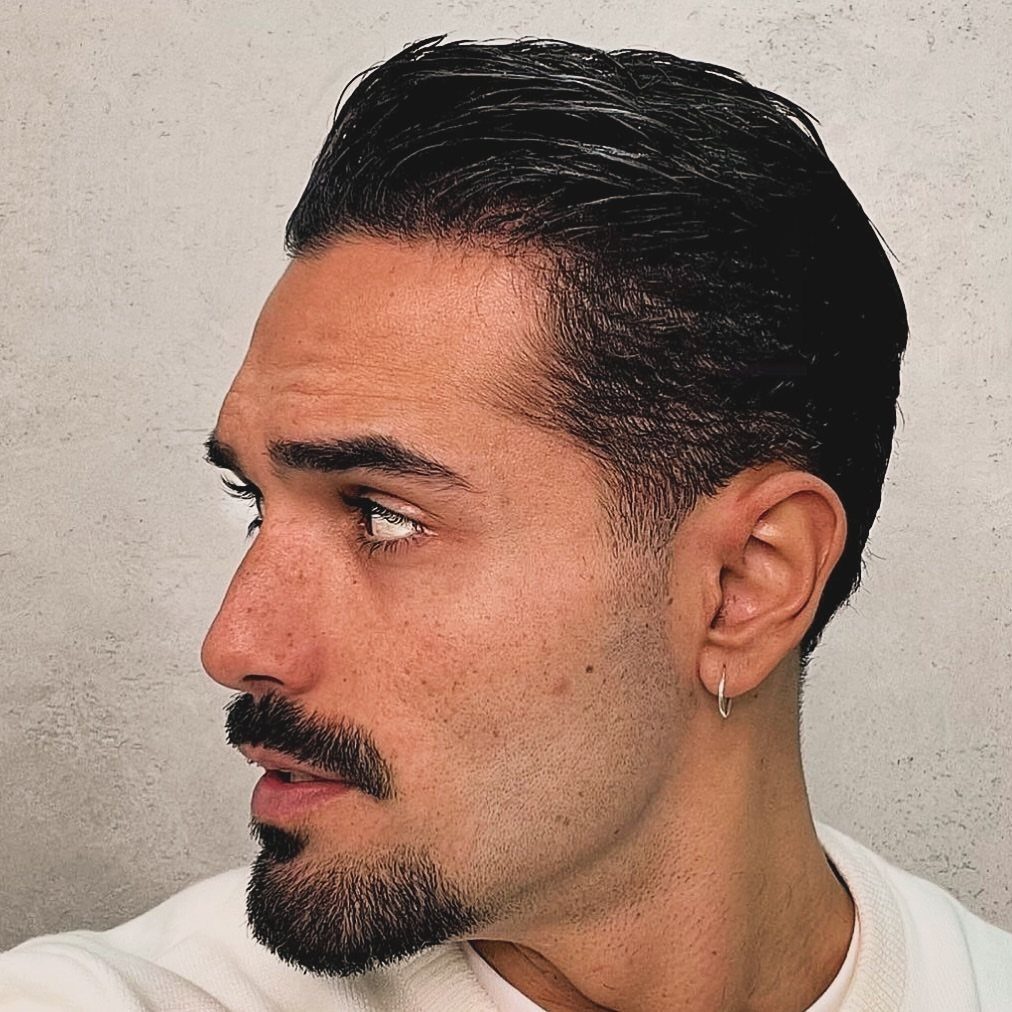
Hair grows around the mouth and down the chin, leaving the cheeks bare. The mustache flows into the chin beard at the mouth corners, forming one continuous shape.
Patchy cheek growth is no issue here since those areas stay shaved. The style reads cleaner on angular faces, though rounder faces can narrow the width to balance proportions.
Clippers with a short guard keep the length even, and the edges need trimming once a week. The connecting strip at the mouth corners determines the overall width.
If you study it closely, this facial hair style resembles an anchor, with a mustache that often cradles both sides of the mouth, as well as a pointed beard.
— GQ
10. Classic Full Beard
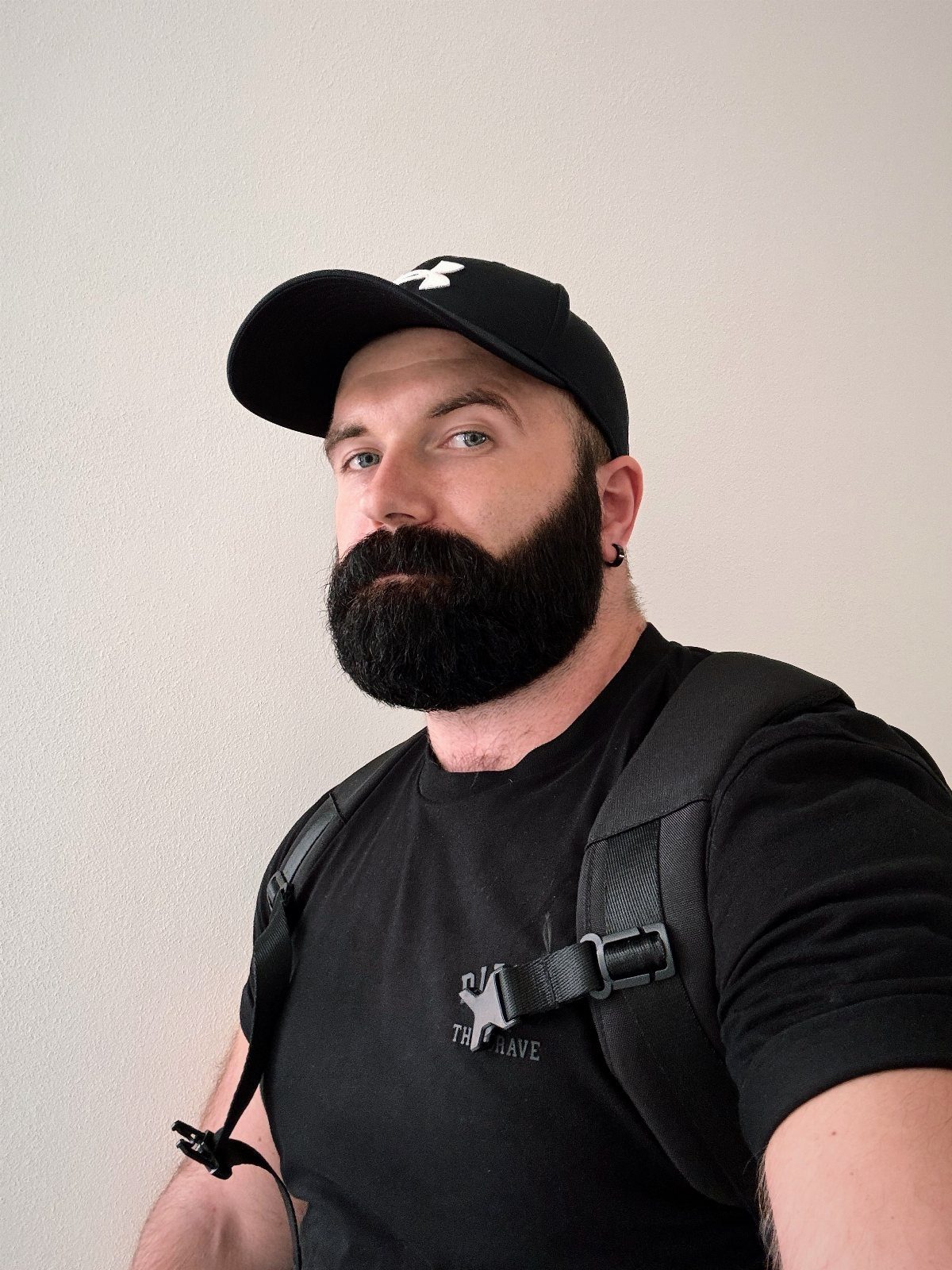
Growth covers the cheeks, jaw, and neck, with the mustache blending into the rest. Length varies, but the beard extends past the jawline and fills in naturally without tight shaping.
Thick, consistent growth across the face makes this work. Patchy areas show more in a full beard than in shorter styles, though longer length can sometimes cover gaps.
Let it grow before deciding on a length. Trim the neckline to keep it from looking unkempt, and scissors handle stray hairs better than clippers once the beard gets long.
11. Short Groomed Full Beard

The beard covers the face completely but stays trimmed close. Edges along the cheeks and neckline are defined, and the mustache integrates without standing out.
This balances coverage with control. Men with dense growth get a clean shape without the time a longer beard demands, and the short length keeps summer heat manageable.
Clippers maintain the length, and the cheek and neck lines need touching up twice a week. Fading the neckline instead of a hard edge softens the transition.
12. Mustache with Soul Patch
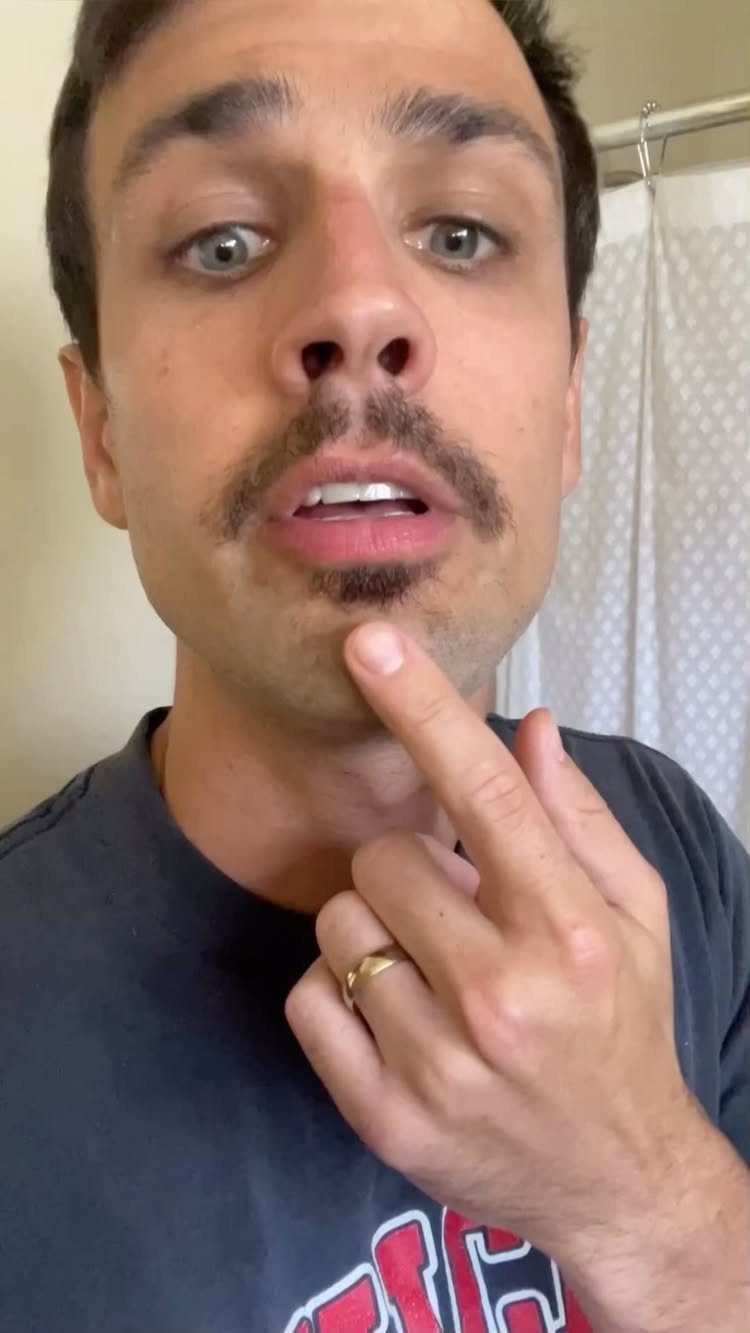
A mustache sits above the lip, and a small tuft of hair grows directly below the center of the lower lip. Everything else stays shaved.
The soul patch adds a focal point without the upkeep of a full beard or goatee. Men with lighter mustache growth sometimes use this to add balance.
The patch can be trimmed short or left slightly longer.
Keep it narrow so it does not spread past the width of the lip above it. Shaving the rest of the face takes a minute, and the mustache is trimmed as needed.
Choose for Growth and Upkeep
Growth density decides which styles stay on the table.
Thick, even coverage across the face opens up most options, while lighter or patchy growth narrows the field to styles that leave problem areas shaved or keep length short enough to hide gaps.
Face proportions guide the choice from there.
Upkeep frequency matters as much as the look itself.
Styles with defined edges or separation between mustache and beard need trimming twice a week to hold their shape. Natural styles with minimal shaping can go longer between sessions, and stubble-length beards reset quickly if you skip a few days.
Match the style to the routine you will actually follow, not the one you hope to start.
Wash and Groom Facial Hair
Wash facial hair once daily to clear oil and debris without drying the skin underneath. A light moisturizer on the face afterward keeps the skin healthy, which most men skip once a beard comes in.
Run a comb through your mustache each morning to train the hairs flat and stop them from knotting.
Daily brushing spreads natural oils through the beard and trains hairs to lie flat, which cuts down on flyaways and gives the whole thing a finished look.
I work beard butter in at night so it has hours to sink in and soften everything before I wake up.
Use wax or balm on styles that need hold, especially handlebar curls or shaped edges that lose definition without it.
Measure Face Shape
Write it down, then measure cheekbone width at the widest point, typically across the center of the face.
Measure jawline width from the angle of the jaw on one side to the other. Finally, measure face length from the hairline straight down to the chin.
Compare the numbers to identify face shape. Diamond faces show the longest measurement at face length, followed by cheekbones, then forehead, with jawline smallest and a pointed chin.
Other shapes follow different patterns: square faces have similar measurements across forehead, cheekbones, and jawline, while oval faces show length greater than width with a gently rounded jawline.
The measurements tell you which proportions a beard or mustache needs to balance or emphasize.
Frequently Asked Questions
What are the different beard styles available?
Styles range from minimal options like the mustache with soul patch and stubble beard through shaped looks like the goatee, Van Dyke, and horseshoe, to full coverage options including the classic full beard and short groomed full beard.
Mustache-focused styles include the chevron, handlebar, walrus, and beardstache variations.
How to fix a patchy beard?
When growth comes in patchy, go for a style that either clips those zones short or shaves them clean.
The goatee works well because it avoids the cheeks entirely, and stubble-length beards can mask uneven coverage without requiring precision. Longer length sometimes covers gaps in a full beard, though patchy areas show more than in shorter styles.
How long does it take to grow a mustache?
Most mustaches reach workable length in 4 to 8 weeks, while longer styled options like the handlebar take 4 to 6 months.
Mustache hair grows roughly 0.4 mm per day, about 12 mm per month. Genetics, age and overall health all affect how fast it fills in, and sparse patches sometimes need 8 to 12 weeks before you know if the look will land.
How can you make your mustache look fuller?
Beard dye makes sparse or blonde hairs look visibly thicker when matched to your hair color.
Minoxidil can encourage dormant follicles to sprout, though results vary and it cannot create growth where follicles do not exist. Precision trimming and daily combing train hairs to lie flat and give a finished look that reads denser.
Can you make your mustache grow faster?
Biotin supplements may help, though studies focus on hair loss rather than growth speed.
Beard oil applied daily, a vitamin regimen held for 12 weeks or longer, and derma rolling 2 to 3 times a week can wake up dormant follicles and thicken coverage. Genetics, age, and overall health control growth rate more than products do.
How do you style a mustache?
Comb it daily to train hairs flat and prevent knotting, then trim the bottom edge with scissors when it crosses the lip.
Styles like the handlebar require wax to twist and curl the ends, applied each morning and left to set. Natural styles need minimal shaping, while shaped styles demand wax, daily attention, and ongoing training.
How do I style my beard for a chubby face?
Add vertical length and keep the sides shorter to create angles and elongate the face.
Styles like the Van Dyke, anchor, and extended goatee work because they emphasize the chin and add definition. Avoid full round beards and mutton chops, which add horizontal width and emphasize circular shapes.
Should round faces grow a beard?
Round faces benefit from styles that add vertical length and sharper lines, pulling the eye down and carving out a more defined jaw.
Anchor beards, extended goatees and anything that stacks height at the chin while trimming the sides close will do the job.
Which beard is best for oval face shape?
Oval faces suit almost all styles because proportions are naturally balanced.
Full beards, goatees, chin straps, extended goatees, stubble beards, and short-boxed beards all work. The shape is the most versatile, so nothing looks wrong and you can experiment freely.